Leading up to the 2024 presidential election, U.S. Army veteran Sae Joon Park kept in mind a warning from an immigration officer: If Donald Trump were elected, Park would likely be at risk for deportation.
Park was 7 when he came to the U.S. from Seoul, South Korea. He joined the Army at 19 and received a Purple Heart after being shot in Panama. After leaving the military, he lived with PTSD, leading to addiction issues.
After a 2009 arrest on a drug charge, Park was eventually ordered deported. But because he was a veteran, he was granted deferred action, allowing him to remain in the U.S. while he checked in with immigration officials annually.
For 14 years he did just that, while raising children and building a new life in Honolulu. Then in June, when Park went in for his appointment, he learned he had a removal order against him. Instead of facing extended time in detention, he chose to self-deport.
“They allowed me to join, serve the country — front line, taking bullets for this country. That should mean something,” he said.
Instead, “This is how veterans are being treated.”
During his first term in office, Trump enacted immigration policies aimed at a group normally safe from scrutiny: noncitizens who serve in the U.S. military. His administration sought to restrict avenues for immigrant service members to obtain citizenship and make it harder for green card holders to enlist — actions that were unsuccessful.
Now, military experts and veterans say service members are once again targets of the president’s immigration policies.
“President Trump campaigned on a promise of mass deportations, and he didn’t exempt military members, veterans and their families,” said retired Lt. Col. Margaret Stock, a lawyer who helps veterans facing deportation. “It harms military recruiting, military readiness and the national security of our country.”
Both policies barred enforcement actions against active-duty service members, absent aggravating factors. Under the new policy, noncitizen relatives of service members are not addressed.
Some service members, like Park, are choosing to self-deport. In other instances, immigrant family members of soldiers or veterans have been detained — including Narciso Barranco, a father of three U.S. Marines who was detained earlier this year in Santa Ana, California.
“The people being ripped from our communities are hardworking, honest, patriotic people who are raising America’s teachers, nurses and Marines,” Barranco’s son, veteran Alejandro Barranco, testified in July to a U.S. Senate subcommittee. “Deporting them doesn’t just hurt my family. It hurts all of us.”
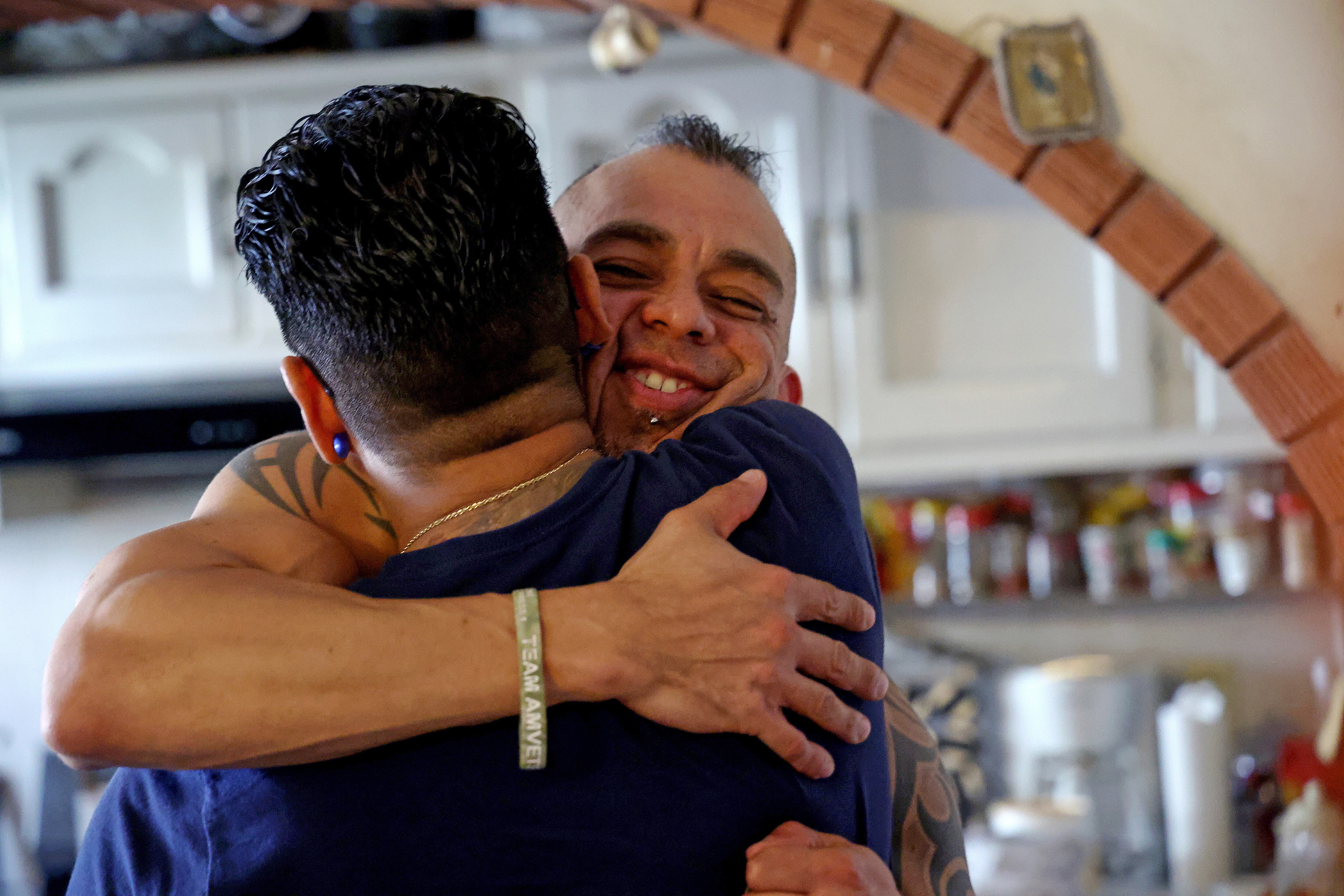
This image provided by News21 shows Michael Evans, a veteran who has been deported, hugging Diane Vega, a veteran and volunteer, at the Deported Veterans Support House on Saturday, June 28, 2025, in Ciudad Juárez, Mexico. (Sydney Lovan/News21 via AP)
There is no publicly available data on how many veterans are being affected, though ICE is supposed to track service member removals and the Department of Homeland Security is typically required to share that information with Congress.
A 2019 federal report found 250 veterans had been placed in removal proceedings between 2013 and 2018. News21 could find only two DHS reports tracking removals of veterans. One, covering the first half of 2022, said five veterans had been deported; another, for calendar year 2019, said three veterans had been deported.
In June, U.S. Rep. Yassamin Ansari, an Arizona Democrat, and nine members of Congress wrote to federal officials seeking the number of veterans currently facing deportation — noting “some estimates” put the overall number of deported veterans at 10,000.
Her office did not return messages. DHS and ICE also did not respond to questions.
Federal lawmakers have proposed several bills to protect immigrant service members and their relatives. One measure, introduced in May, would give green cards to parents of service members and allow those already deported to apply for a visa.
U.S. Sen. Tammy Duckworth, an Illinois Democrat and Army veteran, has sponsored some of that legislation. She told News21: “This is about the men and women who wore the uniform of our great nation, many of whom were promised a chance at citizenship by our government in exchange for their service. It’s about doing the right thing.”
As of February 2024, more than 40,000 foreign nationals were serving in active and reserve components of the Armed Forces, according to the Congressional Research Service. Another 115,000 were veterans living in the U.S.
Serving in the military has long been a pathway to citizenship, with provisions providing expedited naturalization dating back to the Civil War.
During designated periods of hostility, noncitizens who serve honorably for even one day are eligible to apply for naturalization if they meet all criteria. The U.S. has been in a period of hostility since 2001.
This image provided by News21 shows Army veteran Jose Francisco Lopez holding a portrait from his time in service on June 28, 2025, at the Deported Veterans Support House in Ciudad Juárez, Mexico. (Sydney Lovan/News21 via AP)
Despite that longstanding policy, the Department of Defense, during Trump’s first term, required service members to complete six months before obtaining military documents required to apply for citizenship.
The American Civil Liberties Union sued, and in 2020, a federal judge struck down the change. The Biden administration wound up rescinding the six-month policy.
Nevertheless, ACLU attorney Scarlet Kim said: “If you don’t get your citizenship while you’re serving and then you’re discharged … you can potentially become vulnerable to deportation.”
That’s the situation facing Army veteran Marlon Parris.
Parris, born in Trinidad, has been in the U.S. with a green card since the 1990s. He served in the Army for six years and received the Army Commendation Medal three times, according to court records.
Before his discharge in 2007, he was diagnosed with PTSD — which was cited when Parris pleaded guilty in 2011 to conspiracy to distribute cocaine and sentenced to federal prison.
Upon his release in 2016, the government assured him he would not be deported, according to the group Black Deported Veterans of America. But on Jan. 22, agents detained Parris near his home in Laveen, Arizona. In May, a judge ruled he was eligible for deportation.
His wife, Tanisha Hartwell-Parris, told News21 the couple plan to self-deport and bring along some of the seven children, ranging in age from 8 to 26, who are part of their blended family.
“I’m not going to put my husband in a situation to where he’s going to be a constant target, especially in the country that he fought for,” she said.
This image provided by News21 shows memorabilia from Jose Francisco Lopez’s service during the Vietnam War displayed inside the Deported Veterans Support House on Saturday, June 28, 2025, in Ciudad Juárez, Mexico. (Sydney Lovan/News21 via AP)
A report published last year by the Veterans Law Practicum at the University of California, Berkeley, School of Law noted that more than 20% of veterans with PTSD also have a substance use disorder, and that can result in more exposure to the criminal justice system.
That situation is “the most common scenario in terms of how deportation is triggered,” said Rose Carmen Goldberg, who oversaw completion of the report and now teaches in the Veterans Legal Services Clinic at Yale Law School.
The report stressed that even though deportation does not disqualify veterans from benefits earned through service, “Geographic and bureaucratic barriers may … stand in the way.”
In 2021, the Biden administration launched the Immigrant Military Members and Veterans Initiative (IMMVI) to ensure deported veterans could access Veterans Affairs benefits. The program offered parole to those needing to return to the U.S. for legal services or health care.
Jennie Pasquarella, a lawyer with the Seattle Clemency Project, said the biggest flaw of the program is that parole into the U.S. is temporary — a “dead end” if a veteran doesn’t have a legal claim to restore legal residency or to naturalize.
“We had asked the Biden administration to do more to ensure that there was a further path towards restoring people’s lawful status beyond parole,” she said. “Basically, we didn’t succeed.”
In the absence of aid in the U.S., more veterans are turning to help elsewhere.
José Francisco Lopez, a native of Torreón, Mexico, and Vietnam War veteran, experienced PTSD and addiction. He eventually went to prison for a drug-related crime and in 2003 was deported.
“I almost gave my life in Vietnam, and now they just throw me away like garbage,” he said.
For years, Lopez thought he was the only deported veteran in Mexico — until he met Hector Barajas, a deported Army veteran who in 2013 founded the Deported Veterans Support House in Tijuana.
Inspired, Lopez opened his own Support House in Ciudad Juárez.
Lopez, 80, is now a legal resident of the U.S. but splits his time between El Paso and Juárez, providing deported veterans housing, food and advice about how to apply for benefits. Since opening the support house in 2017, he’s helped about 20 people.
Back in Seoul, Park, 56, is adjusting to life in a country he hadn’t visited in 30 years. When he first arrived, he cried every morning for hours.
“It’s a whole new world,” he said. “I’m trying to really relearn everything.”
Park’s attorney started a petition to urge prosecutors to dismiss his criminal convictions, to help cancel his deportation order. More than 10,000 people have signed.
Park said he’s grateful for the support but has little faith he will ever be allowed to return to the U.S. He said: “This is not the country that I volunteered and fought for.”
News21 reporters Tristan E.M. Leach, Sydney Lovan and Gracyn Thatcher contributed to this story. This report is part of “Upheaval Across America,” an examination of immigration enforcement under the second Trump administration produced by Carnegie-Knight News21.
The shutdown may finally be coming to an end. Our health care costs, unfortunately, will not. I’ll be back on Wednesday with a deep dive into just how spectacularly absurd our health care system has become.
In the meantime, RSV and flu are picking up speed, and a concerning infant formula recall has been linked to a rare botulism cluster, thanks to a small but mighty team in California. The FDA is expected to remove the black box warning from hormone replacement therapy—a move that’s scientifically sound but bound to spark drama from HHS. We also have new blood pressure guidelines that could make prevention a lot more personal. And amidst it all, a few more pieces of genuinely good news to end on a high note.
Let’s dive in!
Disease “weather” report: RSV and flu gaining momentum
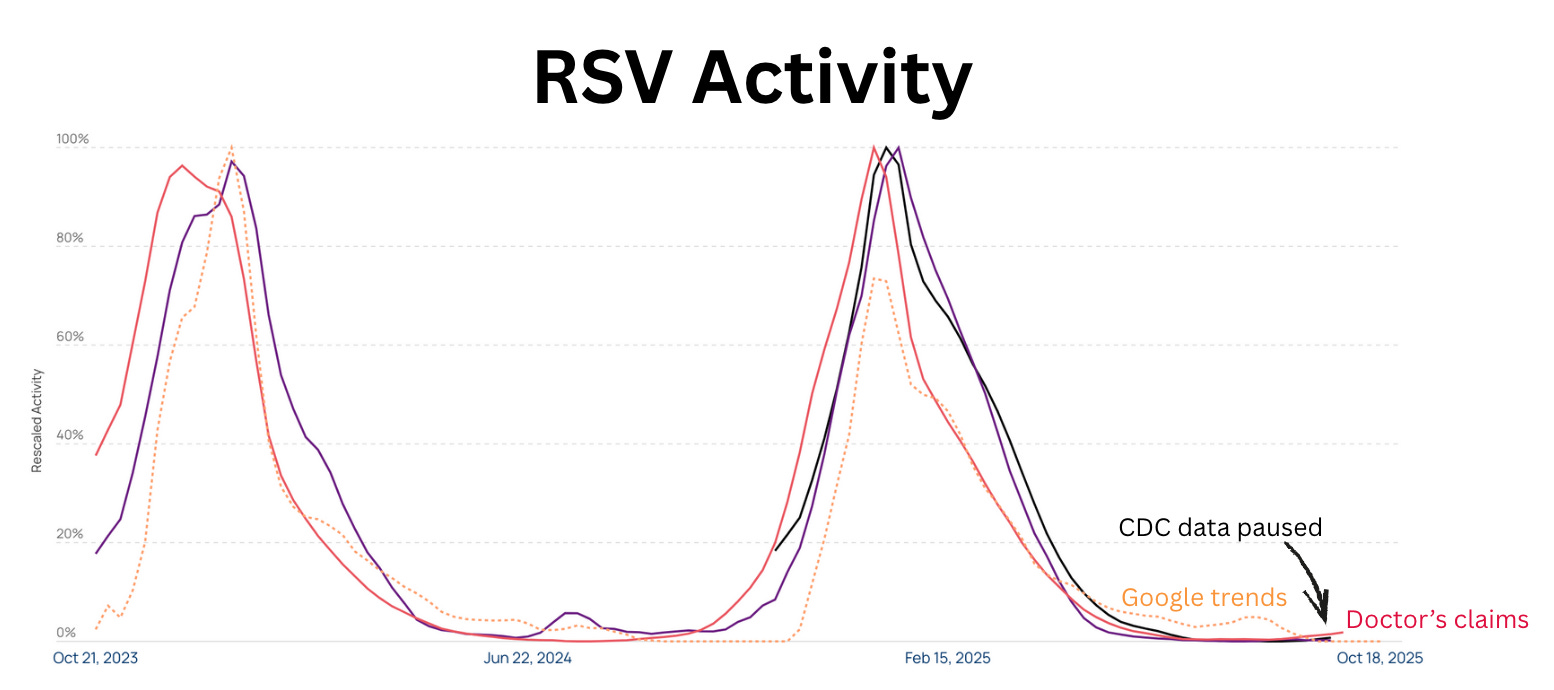
It will take some time for the CDC data systems to ramp up again after being offline for over 40 days. For now, we’ll continue to rely on the alternative sources, such as Dr. Caitlin Rivers’ updates and the PopHive dashboards.
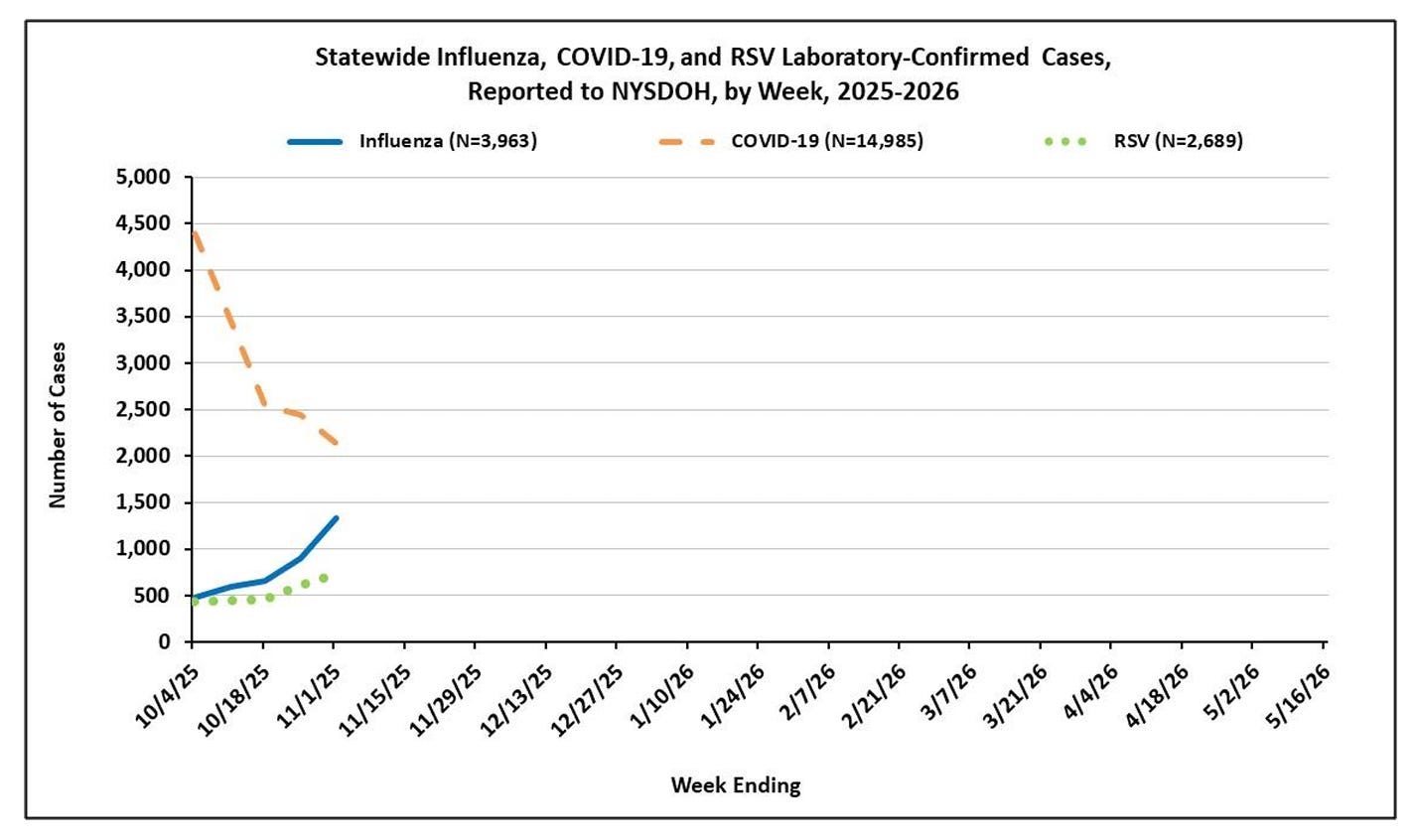
RSV continues to climb slowly but steadily, especially among children under five. National growth is still linear—not yet exponential—but that acceleration could occur at any time.
Theflu remains relatively low but is beginning to increase, particularly among young children. As Dr. Rivers notes, “Hawaii has moved to moderate activity, Arizona has surpassed its seasonal baseline, and New York cases jumped 49% in the past week.”
Source: New York State Department of Health Respiratory Surveillance Report
U.S. childhood flu vaccination rates have dropped from 62% to 49% over the past five years. Last year saw one of the deadliest seasons on record, with 280 pediatric deaths—the highest since tracking began in 2004. About 90% of those children weren’t fully vaccinated. Our deadliest flu season came at a time of historically low vaccination rates, which can’t be a coincidence. We don’t yet know this season’s coverage, but if it falls further, we could be facing another tragic record.
Covid-19 remains in a lull, though we typically see a winter rise starting in mid-to-late November.
I’m really hoping these three viruses don’t peak simultaneously. Hospitals strain under just a bad flu season; I couldn’t imagine the “big three” all at the same time. Historically, their peaks have staggered, but given how little we truly understand about these overlapping patterns, that may have been more a matter of luck than a rule. Time will tell.
What this means for you: This is the best time to get vaccinated. It’s certainly not too late.
Infant formula outbreak and Listeria in pasta
Over the weekend, a troubling cluster of infant botulism cases was linked to ByHeart Whole Nutrition Infant Formula. Even during a government shutdown and an increasingly challenging environment, outbreak teams have been working around the clock to protect our most vulnerable.
What this is: Infant botulism is extremely rare but serious. It occurs when Clostridium botulinum spores—commonly found in soil, dust, and some foods—germinate in a baby’s intestines and release toxins that can paralyze muscles, interfere with breathing, and require intensive care. In a typical year, the U.S. sees 160–180 cases, often linked to environmental exposure or foods like honey. Even a small cluster of cases is a clear red flag.
What we know:Clostridium botulinum spores have been detected in ByHeart infant formula, resulting in the hospitalization of 13 infants across 10 states. The California Department of Public Health (CDPH) played a key role in identifying this cluster. CDPH is the only source in the world for BabyBIG—the lifesaving antitoxin—and manages all clinician calls and treatment distribution. Their team noticed a spike in requests and discovered that the affected infants all consumed the same formula brand, prompting an alert to CDC. Importantly, ByHeart produces just 1% of U.S. infant formula, so this alone is unlikely to cause a national shortage. (Be sure to sign up for YLE CA for a deeper dive this Thursday.)
What we don’t know: Epidemiologists are investigating whether contamination is truly confined to ByHeart or reflects a broader issue in the manufacturing or ingredient sourcing process.
What to do:Stop using ByHeart Whole Nutrition Infant Formula immediately. Retailers should pull it from shelves, including Amazon, Kroger, Walmart, Whole Foods, Target, and Sam’s Club.
There is also the ongoing Listeria outbreak associated with frozen pasta dishes, including some sold at Trader Joe’s and other grocery chains. We’ve covered this before, but according to the agency’s ongoing investigation, two more brands of food are linked to the outbreak. There’s a long list of recalled products you can find here. Throw out immediately.
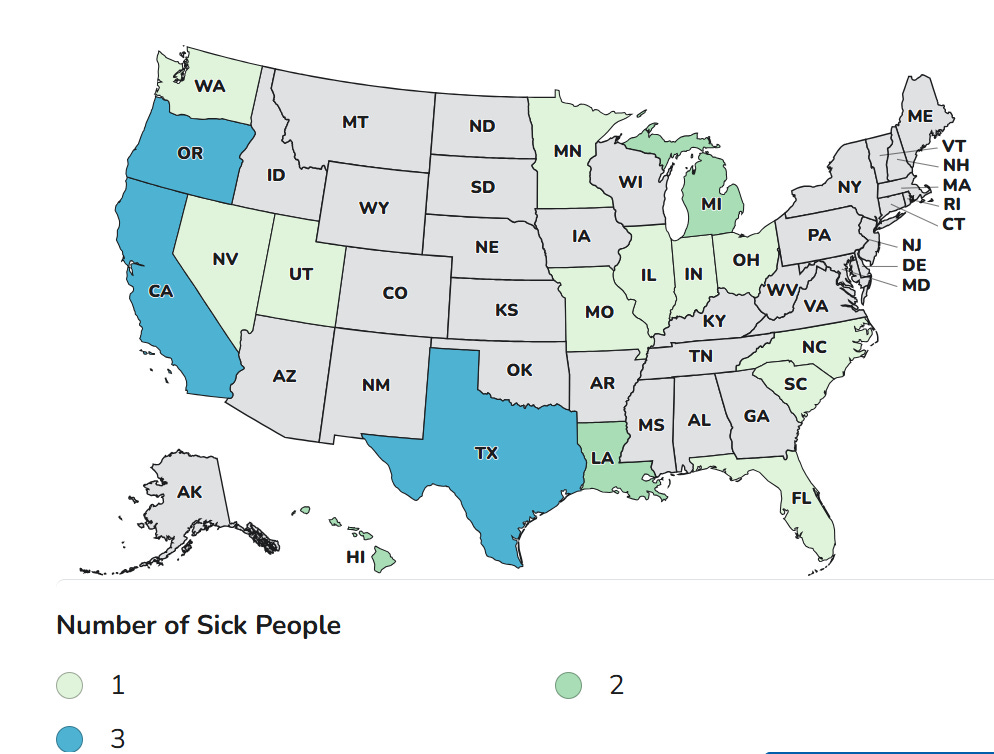
In total, there have been 27 illnesses reported, 25 hospitalizations, and six deaths in 18 states since late September.
Number of cases associated with the pasta Listeria outbreak. Source: CDC
HRT ‘black box’ warning may be gone soon
Word is that the FDA will remove the black box warning from hormone replacement therapy (HRT) this week. (It may now be pushed back with the government reopening.) If this announcement reflects the HRT review conducted at HHS last month, it will likely be messy and riddled with inaccuracies. However, if you look at the science without the drama, removing the black label is not unreasonable.
The black box warning—the strictest warning label, meant for drugs with potentially life-threatening risks—was enacted after a 2002 Women’s Health Initiative study found increased risks of stroke and breast cancer. Since then, research has revealed crucial nuance: risks depend on timing, dose, and delivery. Starting HRT earlier, using low-dose or localized estrogen, and tailoring therapy to each woman can be both effective and safe.
What this story is really about: Menopause is universal, yet too often misunderstood. While the science continues to evolve, the major problem is that clinical practice and training have lagged far behind. Women deserve evidence-based care, informed clinicians, and the freedom to make choices rooted in both science and compassion. We are still far from what is needed for women.
POLL
(snip-poll won’t embed here; go to the Substack page. The question is if readers would like to see a deep dive into HRT. If you wish to vote, click “read on Substack”, above.)
New blood pressure guidelines
Major new blood pressure guidelines dropped for the first time in years.
At the center of the update is an enhanced assessment tool called the PREVENT calculator, developed by the American Heart Association. It’s designed to estimate a person’s 10-year risk of cardiovascular disease using factors like blood pressure, cholesterol, smoking, and diabetes. The model was built using data from 6.5 million U.S. adults aged 30 to 79, making it one of the most representative tools available.
Here’s what stands out:
A new threshold for medication. The key number to watch is 7.5%. If your 10-year risk of heart disease is at or above that level, physicians are now encouraged to consider medication even if your blood pressure hovers around 130/80 mmHg. If your risk is below that, lifestyle changes, like healthy eating, exercising, and better stress management, remain the first step.
A focus on home monitoring.The guidelines also emphasize checking blood pressure at home. Growing evidence shows that home readings may actually be more accurate predictors of long-term risk than in-office measurements. So spending $45 on an arm monitor if you have hypertension might be a great (even lifesaving!) idea.
What this means for you: This makes heart health more personalized than ever. You can calculate your own 10-year risk using the PREVENT calculator (although you will need some pretty specific numbers from your last blood panel). Regardless, aim for blood pressure readings below 130/80, and use these new tools to guide smarter—and earlier—prevention.
Good news!
Here are some of the great things worth highlighting:
The American Academy of Pediatrics (AAP) is standing up for science. The organization filed an updated lawsuit last week against HHS Secretary Robert F. Kennedy, Jr., asking a court to disband a panel (ACIP) appointed by RFK Jr. and to overturn recent decisions made by that panel. Then, to proceed under court supervision. The legal move is a direct push to restore expert-led vaccine policymaking.
The Vaccine Integrity Project (VIP) is stepping up on Hep B. With the next ACIP meeting coming up in early December, where the agenda will likely include the Hepatitis B vaccine for infants, the childhood vaccination schedule, and HPV—VIP, an independent group of scientists formed in response to waning trust in RFK Jr.’s ACIP, is conducting an evidence review ahead of what could be a contentious meeting. Their work helps ensure the science remains front and center.
Vaping among youth has seen a decline; but we still have a long way to go. A new study has found that the number of U.S. teens vaping has decreased overall. That’s progress. But among those who still do it, vaping is becoming more frequent and harder to quit—signs that use is shifting from experimentation toward dependence for some. If you have a teen who vapes, check out the EX Program, which is a free, anonymous text-messaging program designed specifically for young people who vape. There’s also SmokefreeTXT for Teens.
Question grab bag: You ask, we answer!
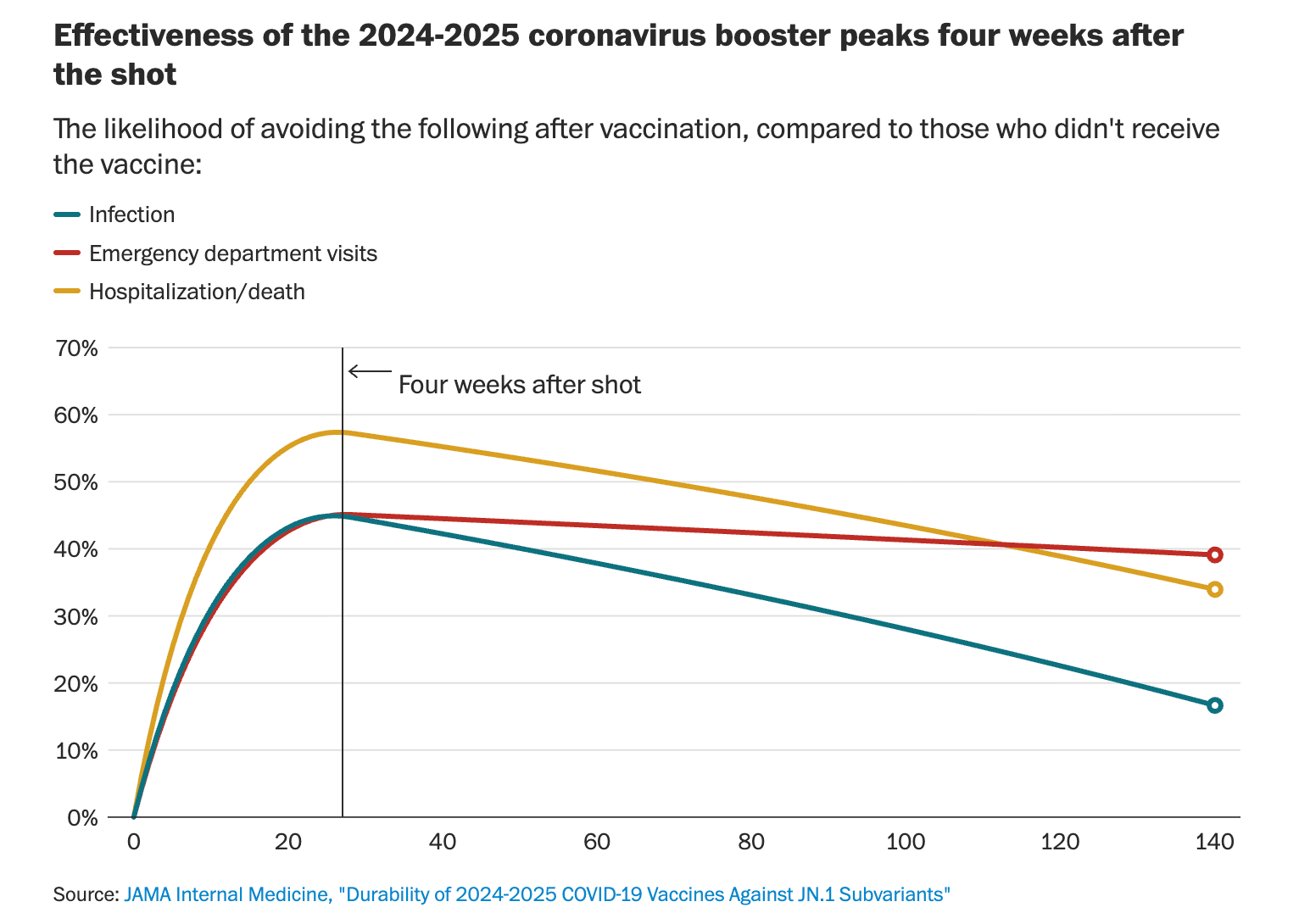
How long does the Covid-19 vaccine last? I got mine in September, do I need to get another?
A study published last week confirmed what we’ve consistently seen: protection against Covid-19 wanes over time. A study of more than 1.8 million Americans from the previous season showed protection against infection and severe disease declined after 4-5 months. The findings underscore the benefit of getting a Covid-19 vaccine every six months, especially for adults over 65, who accounted for nearly 80% of hospitalizations in the study.
In case you missed it
Help shape our AI + Health conversation. Thanks to everyone who responded to our survey last week! We’re running the AI and health survey to hear your thoughts on using tools like ChatGPT, Claude, Copilot, and PerplexityAI to get health information. If you missed it, take the survey here.
New York YLE’s Marisa discussed the state reaching a historic low in youth tobacco use.
California YLE Matt discussed the impact of ICE raids on access to healthcare.
Top Democratic officials put out a new guide, entitled “Deciding to Win,” that encourages Democrats to be a little more like Republicans on “identity and cultural issues.”
Left: David Axelrod // Public domain, Middle: James Carville // JD Lasica // Wikimedia Commons, Right: David Plouffe // Noam Galai // Wikimedia Commons
Erin In The Morning is a reader-supported publication. To receive new posts and support my work, consider becoming a subscriber.
Subscribe
This week, the self-styled centrist group WelcomePAC released a document entitled “Deciding to Win”—advised on by some of the Democratic Party’s most prominent strategists, including David Axelrod, James Carville, and David Plouffe—urging Democrats to act a little more like Republicans on so-called “identity and cultural issues.” The 58-page memo reads like a compendium of the consultant class’s worst instincts, encouraging candidates to become little more than poll-tested avatars and walking focus groups, trading conviction for triangulation. While the document rarely defines which “cultural issues” it means, the few times it does make it clear: queer and transgender people stand to lose the most if this vision of the Democratic Party takes hold.
The document begins with five key pillars for the party. Some of them make a lot of sense, such as “messaging on an economic program centered on lowering costs, growing the economy, creating jobs, and expanding the social safety net,” critiquing “the outsized political and economic influence of” the “ultra-wealthy,” and support for a $15/h minimum wage. Others, though, encourage the party to abandon platforms that have been central to its identity and mission to protect the most vulnerable in society, calling for the party to “Moderate our positions where our agenda is unpopular, including on issues like immigration, public safety, energy production, and some identity and cultural issues.”
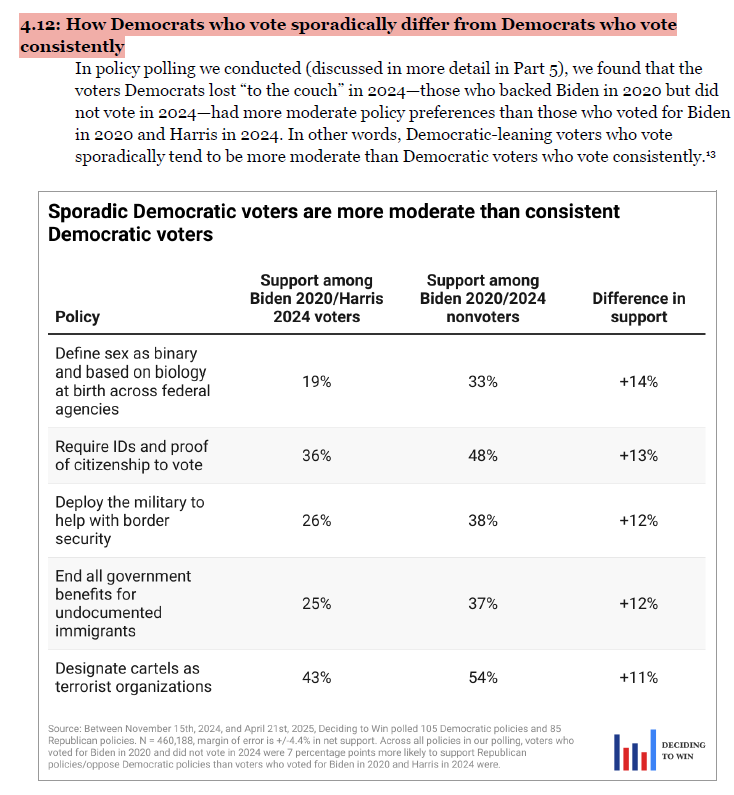
While the document rarely defines what “identity and cultural issues” means, the examples make its targets clear. Support for the Equality Act—legislation that would codify gender identity and sexual orientation as protected classes under federal law—is cited as proof the party has “moved left.” Another section lists “protecting the rights of LGBTQ+ Americans” as a priority voters supposedly don’t want Democrats to emphasize. Elsewhere, a discussion of how to mobilize voters “sitting on the couch” reveals that the most popular policy among them is “defining sex as binary and based on biology at birth across federal agencies.” Later in the document, it explicitly calls out transgender sports participation as an issue that the party should “moderate” on.
Screenshot of Deciding to Win Chart of “moderate” policies
Imagine a world where Democrats actually heeded this advice. The “define sex as binary” policy—already championed in Republican-led states and now embedded in everything the Trump administration does—has had devastating consequences for transgender Americans. It has stripped trans people of the ability to update their passports, creating serious barriers to travel; defunded organizations that affirm gender diversity; and fueled crackdowns on college campuses that allow trans students to use restrooms matching their gender identity. It’s a policy of bureaucratic erasure, one that threatens to undo decades of hard-won progress—yet it’s presented, almost casually, as a “moderate” position Democrats might adopt to win votes.
It’s a vision of politics that would turn Democrats into little more than Republican Lite—a “big tent” party spacious enough for those who despise us but not for those who most need protection. In that world, Democrats would lose not just the meaning of leadership but the very soul of why the party exists. And it’s a fantasy built on delusion: no amount of fine-tuned messaging or poll-tested calibration will ever transform the party into the perpetual winner these consultants imagine.
We don’t have to imagine what happens when Democrats follow this playbook — we’ve already seen it. In New Hampshire, Democrats capitulated on multiple anti-trans bills, including bans on youth sports participation and gender-affirming surgery, only to suffer one of the party’s worst defeats of the 2024 election cycle, losing 20 seats. By contrast, Democrats in Montana fought hard against similar measures and mounted some of the most visible resistance to anti-LGBTQ+ legislation in the country, picking up ten seats in the state House—one of the party’s strongest showings nationwide, in a state Trump carried easily. In Kentucky, Governor Andy Beshear vetoed anti-trans bills, including a sports ban, and still won reelection in a Trump +31 state. And in New York, a ballot measure enshrining gender identity protections outperformed Kamala Harris’s statewide margin by a wide margin.
Despite the evidence, a faction within the Democratic Party still treats queer and trans people as expendable—convinced that by trimming the edges of equality and tolerating “a little” discrimination, they can win back power. It’s a ruinous illusion. This kind of triangulation doesn’t blunt Republican attacks; it validates them. Every state that once embraced sports bans or “compromise” restrictions has since escalated to banning medical care, censoring books, and policing bathrooms. Capitulation has never advanced LGBTQ+ rights—not in policy, not in public opinion, not once. Democrats aren’t losing because they’ve been too loud or too firm in defending equality; they’re losing because the far right invests in its own moral narrative while Democrats second-guess theirs. The only way forward is to stand unapologetically on principle—as Andy Beshear did in Kentucky, citing it as the very reason for his success—not to chase the approval of consultants who mistake cowardice for strategy and appeasement for leadership.
Erin In The Morning is a reader-supported publication. To receive new posts and support my work, consider becoming a subscriber.
Happy Monday from Atlanta! I just tried to convince thousands at a public health conference that it’s time to reimagine systems—not just defend the status quo. I’m happy to report that tomatoes weren’t thrown my way. This is my fourth state in five days, and the highlight is actually seeing the seasons change and meeting a lot of you in person. I couldn’t be more excited to see my girls (and survive another round of the KPop Demon Hunters soundtrack).
Top: Plenary stage with Mike Osterholm; From the bottom left: Met YLE reader Krisandra Allen at the conference. Fall leaves in Idaho. My daughter welcoming me home at the airport.
This week’s Dose runs the gamut: from what’s really going on with lead in protein powders (and whether you should be worried), to a refreshing burst of leadership as 15 governors join forces to strengthen public health collaboration, to falsehoods swirling around mammograms. We’ll wrap with an infectious disease weather report and a quick note for dog owners on an FDA recall.
Let’s go!
Consumer Reports found lead in protein powders. How bad is it?
Last week, Consumer Reports released an analysis revealing elevated lead levels in several popular protein powders and shakes. Google searches for “lead in protein powder” spiked 300%, and influencers lit up social media. Depending on which news source you read, it was either a five-alarm fire or no big deal.
So what’s actually going on? Lead is everywhere—soil, food, water, and air. Thankfully, overall exposure has dropped dramatically since the 1970s, and modern lab tests can now detect vanishingly small amounts (down to parts per billion). But detection does not necessarily equal danger.
How bad is bad?That’s where things get tricky because not everyone agrees:
California limit: 0.5 mcg/day. This number comes from a very conservative calculation: regulators took the “no observable effect” level for reproductive harm for inhaled lead exposure in workplaces and divided it by 1,000. Many experts argue that this threshold is unrealistic. It’s also not linked to adverse health outcomes.
FDA’s limit: 2.2 mcg/day for kids, 8.8 mcg/day during pregnancy, and 12.5 mcg/day for other adults based on blood lead levels, toxicology data, and a built-in 10x safety factor.
European Union limit: Allows up to 3 mg/kg (3 ppm) in food supplements—roughly 90 mcg per 30-gram scoop of protein powder. In this case, the FDA is far more cautious than Europe (and that’s not usually how things go).
Back to the report: of the 23 protein supplements they tested, two-thirds exceeded “Level of Concern.” One brand (Naked Nutrition Vegan Mass Gainer) hit nearly 16 times the limit. But because Consumer Reports used California’s exceptionally strict benchmark, those numbers sound scarier than they really are.
The average American already gets 5.3 mcg of lead daily from food and the environment. That’s another reason California’s cutoff doesn’t make much sense. Still, some products identified in the report could push intake close to the pregnancy (8.8 mcg) or adult (12.5 mcg) daily thresholds.
What this means for you: Don’t worry too much. While the FDA continues to reduce lead exposure through programs like Closer to Zero and the Total Diet Study (that is, if the funding continues), there are several things we can do in our own homes, especially for parents of kids and during pregnancy.
Check to see if your protein supplement (or any supplement, really) has third-party testing for heavy metals (like USP or Informed Sport).
Advocate for more pre-market regulatory oversight in the supplement industry (which has very little, if any at all) by writing to your local representative.
Eat a diet that includes a variety of nutrient-dense foods, which helps limit exposure to specific food sources and ensures we get an array of protective nutrients.
Prioritize getting your protein from whole food sources.
Big thanks to YLE’s Megan Maisano—Registered Dietitian Nutritionist— for writing this section.
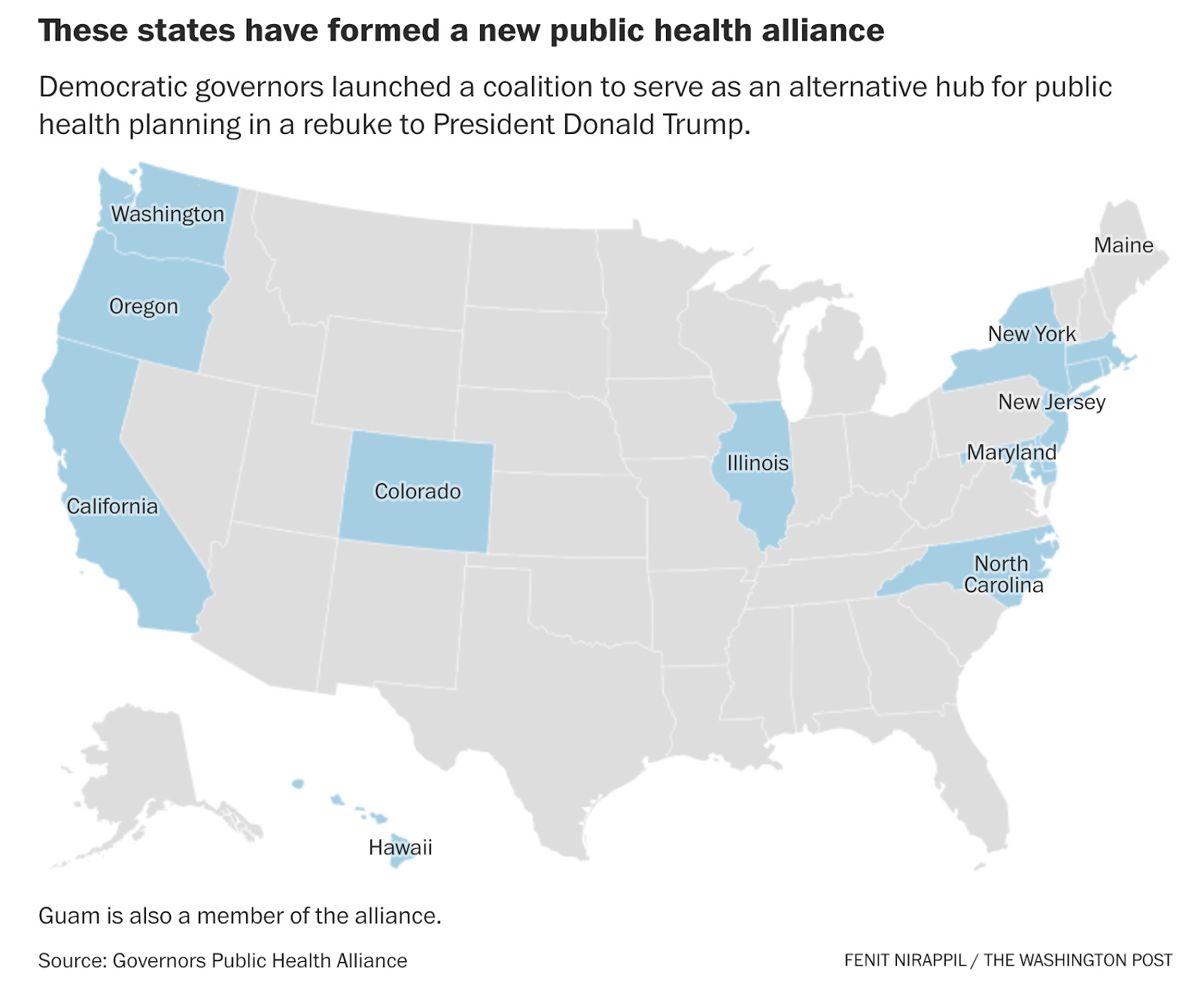
Fourteen states and Guam join forces to launch Governors’ Public Health Alliance
Governors from 14 states and Guam announced the creation of the bipartisan Governors’ Public Health Alliance, which is a new effort to strengthen coordination and collaboration across state lines.
Why do we need this? In the U.S., authority over health rests with the states, not the federal government. Health (encompassing both health care and public health) is not only the highest budget item for a state but also the primary reason for state bankruptcy. In other words, governors hold enormous power over your health.
Today, though, federal support is shifting fast, funding is drying up, and states are being forced to get creative. States must decide whether to maintain their public health departments (due to funding cuts), how to continue purchasing vaccines (if the federal government stops recommending them), whether to negotiate drug prices (like insulin), and more. We saw a similar challenge during the pandemic with bulk purchasing of PPE.
In general, the more coordinating, collaborating, and innovative thinking, the better.
However, I’m growing increasingly concerned about the partisan gaps in public health. Although some Republicans are on the advisory board and the initiative was framed as bipartisan, no Republican-led states have joined. This worries me for my friends in red states, like Texas, but it also has implications for everyone, as diseases don’t care about borders.
What this means for you: If your state is included, you can rest assured your governor is talking to others, which is a helpful step toward innovative solutions. You could argue it was needed before this moment, too. Public health has been siloed for far too long.
Mammograms save lives. They’ve been wrongly targeted.
Happy Breast Cancer Awareness month! Unfortunately, this month has driven some influencers to post false claims about the harms of mammograms. So let’s clear this up.
Breast cancer is the second leading cause of cancer death in women in the U.S., and accounts for 1 in 3 new cancers among women each year. (It affects men too, just at lower rates.) There is strong scientific consensus in support of routine mammograms to prevent breast cancer and detect it early:
Regular mammograms starting at age 40 are recommended for everyone, but may have even greater benefit for Black women, who are 40% more likely to die from breast cancer than white women and more likely to have aggressive cancers, younger.
There’s some critical nuance here:
With each mammogram, breast tissue is exposed to a small amount of ionizing radiation. But! We’re exposed to this type of radiation every day in our natural environment. At high doses, radiation exposure can change DNA and cause harm, but the amount of radiation exposure during a mammogram is about the same as flying from California to New York.
Organizations disagree on whether mammograms every year or every other year are optimal. Screening recommendations are based on evaluating science to maximize benefit (lives saved) while reducing patient worry, unnecessary costs, and diagnosing and treating cancers and pre-cancers that ultimately wouldn’t cause health problems—also called “overdiagnosis.” This is a balancing act.
Mammograms are just one tool for detecting cancer, and women with dense breasts or high risk for cancer (e.g., family history, known genetic predispositions, or other key risk factors) may benefit from additional screening, such as through an MRI.
For more, see YLE’s deep dive on breast cancer screening recommendations.
Infectious disease “weather report”
In the U.S., flu and RSV are still quiet. CDC data is still on pause because of the government shutdown, so we’re continuing to reference PopHive data. RSV activity is still low but growing in southern states, like Louisiana and Texas.
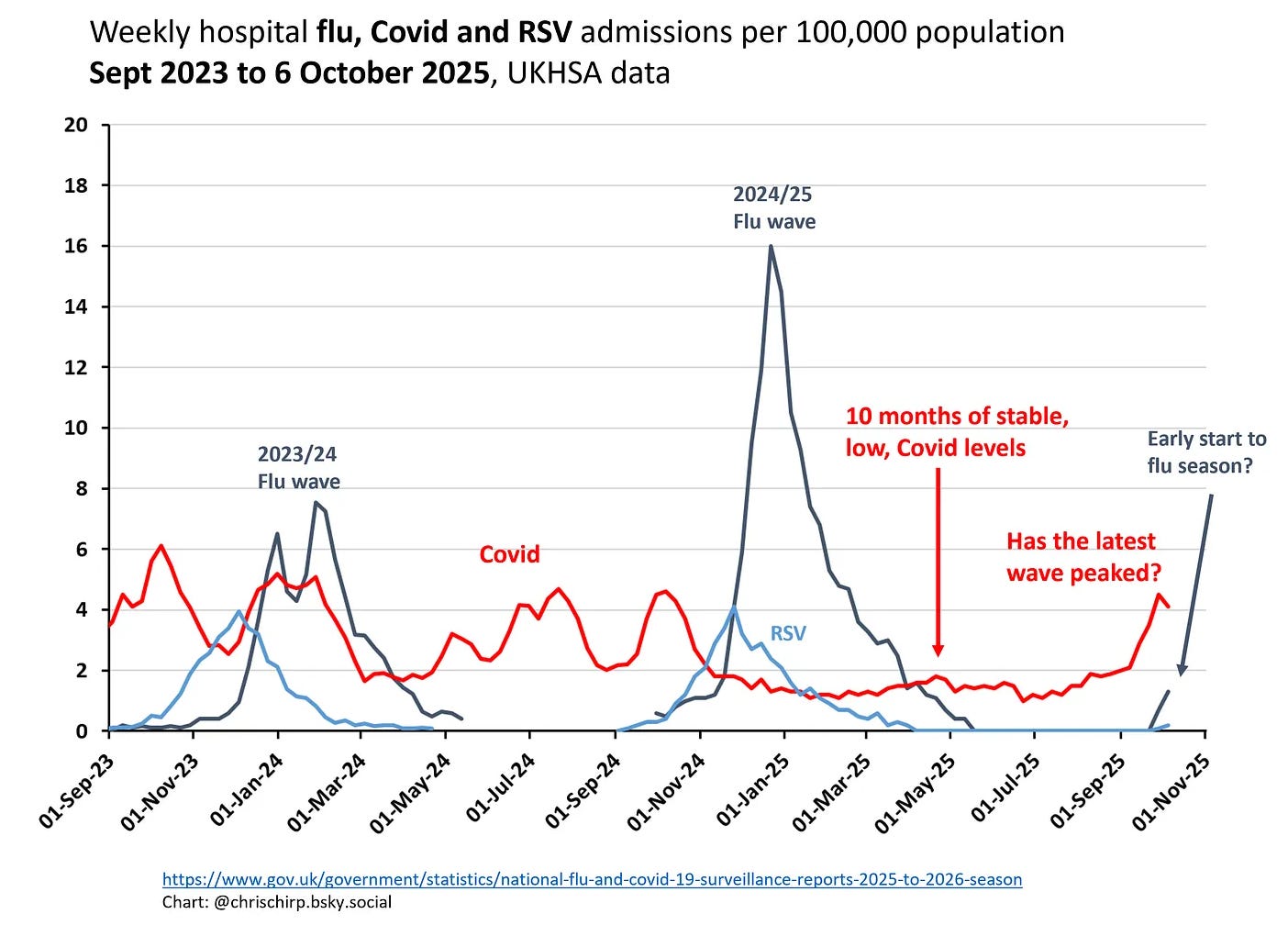
However, Covid-19 is having a moment in the U.K., with hospitalizations increasing exponentially after a 10-month lull. This isn’t driven by a dramatic variant, but rather by a lack of immunity building up over time. Flu might also be increasing, which suggests it’s coming soon (as expected) for the U.S.
The FDA recalled Raw Bistro frozen beef dog food for possible Salmonella contamination. The recalled products were sold directly to consumers and to select distributors between Sept. 1 and Sept. 17 in California, Colorado, Illinois, and Minnesota.
Salmonella can make dogs sick, just like humans. Contaminated food can cause illness days later in dogs. And dog owners can get sick from handling contaminated food or dog bowls.
What this means for you: Check the lot numbers on your dog’s food, and toss it if they are included in the FDA recall notice. Sanitize bowls if they held contaminated food, wash your hands, and watch for warning signs in your dog: lethargy, vomiting, diarrhea, and loss of appetite. If you notice these signs, take your pet to the vet.
That’s it for this week! Share your fall leave pics in the comments below so that I can continue to live vicariously through you.
Love, YLE
Your Local Epidemiologist (YLE) is founded and operated by Dr. Katelyn Jetelina, MPH PhD—an epidemiologist, wife, and mom of two little girls. YLE is a public health newsletter that reaches over 400,000 people in more than 132 countries, with one goal: to translate the ever-evolving public health science so that people are well-equipped to make evidence-based decisions. This newsletter is free to everyone, thanks to the generous support of fellow YLE community members. To support the effort, subscribe or upgrade below:



Left: David Axelrod // Public domain, Middle: James Carville // JD Lasica // Wikimedia Commons, Right: David Plouffe // Noam Galai // Wikimedia Commons


 Scottie's Playtime