I still do not see the emergency need here as none is really stated. What is the security issue? I think the thing is tRump’s admin wants to erase anything that as any other administration’s branding on it. The object is to make DC tRump’s city bearing only his branding and everything named after him. He sees other tyrant authoritarian dictator has a city named after them, he wants DC to be his, the White House to be a palace like other royalty has so he must have, and his rule to be unquestioned. Hugs.
The Trump administration is extending its wrecking ball to yet more historic buildings in Washington as the president’s pet projects — including his golden ballroom and triumphal arch — press forward.
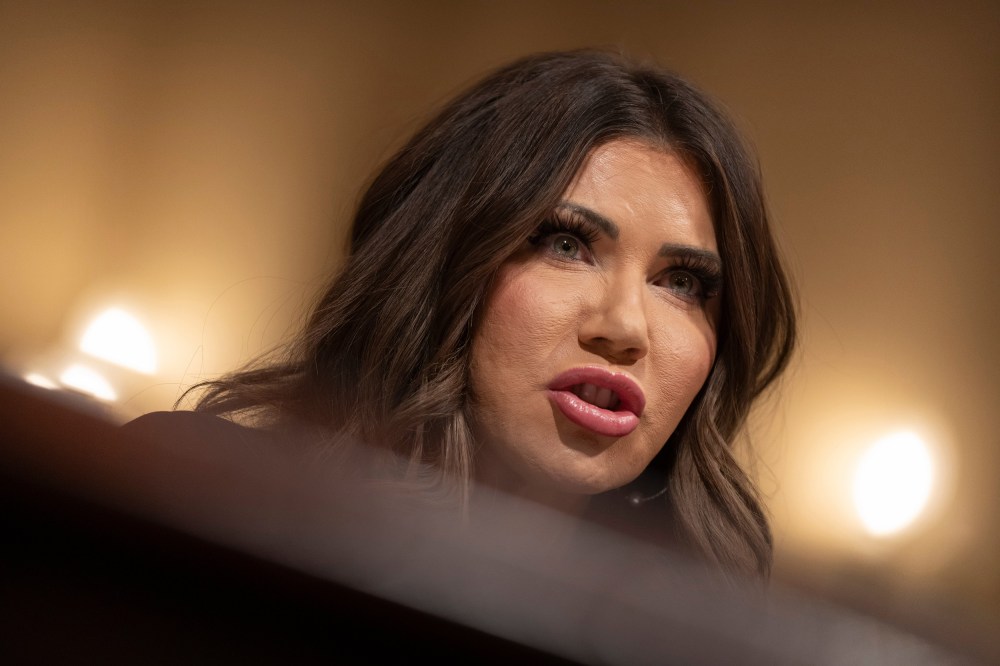
Homeland Security Secretary Kristi Noem appears before the House Committee on Homeland Security on Capitol Hill on Dec. 11, 2025.Mark Schiefelbein / AP Photo
The Trump administration is looking to tear down more historic buildings in Washington as the president, nearly a year into his final term, looks for ways to leave his mark on the District of Columbia.
This includes the destruction of the East Wing of the White House to make way for the president’s grand ballroom, which he now says will cost some $400 million, as well as a massive so-called arc de Trump.
But a memo uncovered by The Washington Post on Tuesday shows the administration using a new justification (that is, other than Trump’s vanity) to explain its latest effort to raze a part of D.C.’s history: a so-called emergency.
The Post reports Department of Homeland Security Secretary Kristi Noem, whose agency has engaged in some rather lavish spending on her behalf this year, issued a memo earlier this month “seeking to fast-track the demolition of more than a dozen historic buildings at St. Elizabeths in Southeast Washington,” which officials have been converting into a sprawling headquarters for DHS over more than a decade in accordance with historic preservation of treasured landmarks.
Per The Post:
‘Demolition is the only permanent measure that resolves the emergency conditions,’ Noem wrote in the memo. A risk assessment report undertaken by her agency ‘supports immediate corrective action,’ she wrote. The assessment report, which Noem included with her memo, concludes the vacant buildings ‘may be accessed by unauthorized individuals seeking to cause harm to personnel.’ The structures ‘provide a tactical advantage for carrying out small arms or active shooter scenarios,’ the report states.
MS NOW has not independently confirmed the memo. A spokesperson for the General Services Administration, which is overseeing development of the St. Elizabeths campus, confirmed to The Post that the agency had been alerted by the DHS about “a present security risk to life and property” at the campus “that may require us to demolish buildings.”
The report notes the push is being opposed by multiple preservationist groups, including the National Trust for Historic Preservation, which has also sought to thwart Trump’s ballroom project.
It’s yet to be seen whether there’s any true risk in need of being resolved by Trump’s demolition of yet more historic buildings. But if past is prologue, there’s certainly reason to doubt the administration’s “emergency” claims here: namely, the president’s obvious desire to remake the nation’s capital and his administration’s tendency to use claims of “emergencies” to impose a slew of radical policies.
Again we see the institutionalized casual racism in the US. This was the basis of the CRT higher education classes were about. All the media latched on to and went into great detail over a white woman’s shooting by ICE but only report vaguely and sporadically on the shooting of the black / brown people shot by ICE. But when you read the report below think on how racist ICE gang thugs are, the fact that they have broken other laws and assaulted other people with impunity as they are defended by the power of the US government. One last thing to think on. The ICE thug was clearly angry and he had his gun out, ready, and pointed in front of him allowing him to shoot the man without raising his gun. The reported statements from the government never mention him drawing his gun nor raising it, just that he fired his weapon defensively. If he felt threatened why openly approach the man with the long gun? Why no call for back up? Depending on the time was the ICE thug wakened up by the noise of gun fire? Hugs
Friends and family of the 43-year-old man who was fatally shot by a Department of Homeland Security agent in Northridge on New Year’s Eve gathered on Sunday to demand accountability and hold a candlelight vigil for their lost loved one.
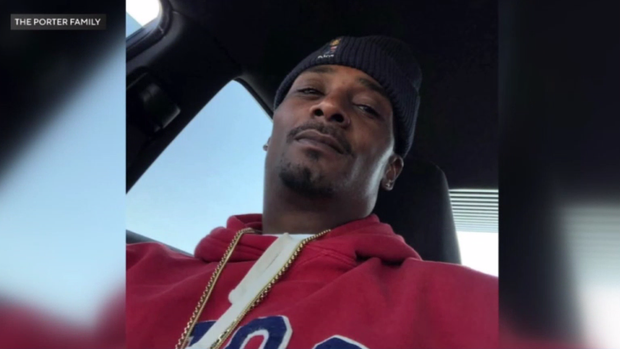
They identified the victim as Keith Porter, who they say was a well-known and well-liked person in the community.
“If I could say anything to the ICE agent, it’s that you’re a murderer,” said Jasané Tyler, Porter’s cousin. “You stole my cousin from me. You stole their father from them. You stole Francine’s son from her.”
Porter’s loved ones are demanding justice after the father of two died on New Year’s Eve. He was shot by an off-duty U.S. Immigration and Customs agent at the apartments where they both lived.
Keith Porter, the 43-year-old man fatally shot by a DHS agent in Northridge on New Year’s Eve. Porter Family
His family contends that he was shooting a gun in the air to mark the new year. A statement from DHS on the incident contends that it was an “active shooter situation.”
“On December 31st, an off-duty ICE Officer bravely responded to an active shooter situation at his apartment complex,” the statement said. “In order to protect his life and that of others, he was forced to defensively use his weapon and exchanged gunfire with the shooter.”
Another statement from DHS Assistant Secretary Tricia McLaughlin provided further details. She said that the agent was “in his apartment, when he heard what he suspected were multiple gunshots. The suspected gunfire grew progressively louder, indicating to the officer that whoever was firing a gun was approaching his apartment. The officer took his ICE-authorized firearm and left his apartment to investigate. He moved to the ground level and went outside, where he believed the suspected gunfire was coming from.”
McLaughlin’s statement says that the officer rounded the corner of the building, where he encountered Porter, who they said was allegedly armed with a long rifle.
“The ICE officer identified himself as law enforcement. In response, the individual pointed his weapon at the ICE officer. The officer ordered the subject to put the weapon down, McLaughlin said. “When the subject refused to comply, the officer fired defensively with his service weapon at the subject to disarm him. The subject fired at least three rounds at the officer.”
Porter’s friends and family don’t buy it, especially with members of law enforcement in their own family.
“Every one of them says this is not standard, this is not protocol,” Tyler said.
Black Lives Matter leaders, who hosted the Sunday night vigil, are outraged by what happened.
“Were this anyone else, there would’ve been an arrest,” said Dr. Melina Abdullah, with BLM. “You don’t get to just murder people because you don’t like what they’re doing or how they’re celebrating.”
Los Angeles Police Department officers tell CBS LA that their investigation into the shooting is still ongoing. They also told the LA Times on Sunday that they haven’t yet spoken with the ICE agent due to protocol on how deadly force investigations are conducted when they involve federal law enforcement officers.
As the flu and covid are on the rise again vaccines are on the decline due to the tRump admin claiming that the best science we have is wrong based on feelings and in the case of the people like JFK Jr it is greed. People don’t realize he makes his money suing drug manufacturers that produce vaccines. Every time he thinks he has some wacked out idea he sues and nothing they can show him will matter to him, all he wants is money and to stop vaccines for other people, as his families kids are protected. Think on it, he is vaccinated, their family has the money to get the vaccines without medical insurance, all he is doing is making it harder and more costly for your kids to get them because you need the medical insurance to help pay for it. Hugs
Under Robert F. Kennedy Jr.’s guidance, the CDC no longer recommends routine vaccination to protect against meningococcal disease.
Jan. 11, 2026, 7:00 AM EST
By Kaitlin Sullivan
Deaths from a rare and dangerous bacterial infection could rise if fewer teens are vaccinated, doctors warn.
After the Centers for Disease Control and Prevention recommended that all adolescents get vaccinated against meningococcal disease in 2005, cases of the potentially deadly illness plummeted in the United States by 90%.
However, cases have sharply risen since 2021, likely due to a combination of mutating bacteria and declining rates of vaccination overall, especially among teens getting a booster dose for bacterial meningitis, doctors suggest.
Dr. Luis Ostrosky, an infectious disease doctor at UT Health in Houston, is concerned that as cases of bacterial meningitis climb in the United States, the CDC’s recent overhaul of the childhood vaccine schedule could lead to more deaths.
Under Health Secretary Robert F. Kennedy Jr.’s guidance, the CDC is no longer recommending a meningitis vaccine for all adolescents. The vaccine and booster protect against the most common types of the infection in the U.S., serogroups A, C, Y, W.
“We see quite a few cases of meningitis per year,” Ostrosky said.
Under the new guidance, the vaccines will be recommended for “high-risk groups,” although parents can still ask doctors to vaccinate their children through a process called “shared clinical decision making.”
Teenagers and college-age adults, who often spend a lot of time in groups or communal living spaces such as dorms, and people with HIV are considered at highest risk for the infection, caused by a group of bacteria called Neisseria meningitidis.
Vaccination is important not because the disease is common — around 3,000 people are diagnosed with bacterial meningitis in the U.S. each year — but because the infection is both extremely serious and fast-moving.
Bacterial meningitis can progress quickly, causing the brain to swell and limbs to develop gangrene and sepsis, and can kill within 24 hours.
Symptoms such as headache, stiff neck, vomiting and fever come on suddenly, and may be mistaken for other minor illnesses. It can be treated with antibiotics, but even with rapid diagnosis, about 15% of patients die.
Fast-acting and life-threatening
Why some people are susceptible isn’t well understood. The infection develops when usually harmless bacteria travel through the respiratory tract and infiltrate the membranes surrounding the brain and spinal cord, causing severe inflammation. These bacteria, which commonly live in the back of the throat, can spread from person to person through close contact.
It can lead to a life-threatening infection in someone whose immune system is compromised — sometimes by a simple cold or flu virus — or who doesn’t have immunity to those bacteria. Viruses and fungi can also cause meningitis, but bacterial meningitis is the most serious.
Among patients who survive, as many as 20% have lifelong disability or complications, including amputated limbs, hearing impairment and neurological problems.
“You can die from a brain hernia, or from sepsis,” Messacar said. “And if you survive a brain hernia, you will most likely have severe complications.”
In 2024, the CDC issued an alert about a rise in cases of a type of invasive meningococcal disease. More than 500 cases were reported, the highest since 2013. Most of the infections were due to a specific strain of the Y serogroup of bacteria, which is included in the previously recommended vaccine. The cases were more common in adults ages 30 to 60, in Black people and in people with HIV.
“It’s even more important now that we get meningococcal vaccines out to people given that we are seeing a spike in this Y strain,” Messacar said.
The Food and Drug Administration has approved three types of meningitis vaccines. In 2005, the CDC began recommending that 11- and 12-year-olds get vaccinated against the most common meningococcal serotypes, A, C, Y and W. Because of waning immunity, the CDC in 2011 added a booster recommendation for 16-year-olds to protect them through young adulthood. A vaccine for meningitis B and a combined shot are available for children or babies who are considered at high risk.
In a statement Monday, Kennedy said that the CDC’s new childhood vaccine schedule was “aligning the U.S. childhood vaccine schedule with international consensus.”
Dr. Peter Chin-Hong, an infectious disease doctor at the UCSF School of Medicine in San Francisco, said the new approach to meningitis vaccination in the U.S., which is based on Denmark’s, is flawed.
“You can’t just look at another country’s vaccine approach and photocopy it. You really have to look at what is happening in your own country,” Chin-Hong said. Given the safety of meningitis vaccines, “it makes sense to vaccinate.”
Alicia Stillman, who serves on a World Health Organization task force for eliminating meningitis, worries that by moving the vaccine into shared decision making, the CDC is creating hurdles for parents who want to protect their children.
Stillman’s daughter, Emily, died from meningitis B in 2013. Emily had been vaccinated against meningitis A, C, W and Y, but the FDA didn’t approve a vaccine for meningitis B until 2014.
Emily Stillman, pictured with her mother, Alicia, was 19 when she died from meningitis B. Courtesy Alicia Stillman
Because many types of bacteria can cause bacterial meningitis, different vaccines are needed. The meningitis B vaccine hasn’t been recommended for all children but is available for people at high risk through the shared decision making process.
“I have watched medical professionals not bring [meningitis B vaccination] up,” said Stillman, who is the co-executive director of the American Society for Meningitis Prevention. “I have watched parents who are maybe a little less educated and not know how to ask about it, or they go to a public clinic instead of a private clinic where they have less time with a provider.”
She believes that could happen more broadly with the changed guidance.
What the research says
A CDC statement said the changes to the recommendation reflect the need for more data on certain vaccines, “including placebo-controlled randomized trials and long-term observational studies to better characterize vaccine benefits, risks, and outcomes.”
While there haven’t been placebo-controlled trials for meningitis vaccines — which would test how well a vaccine works either by deliberately infecting people with bacteria or by seeing how well they fare if they are infected in the real world — there have been many randomized clinical trials and other studies that use decades of data collected from both vaccinated and unvaccinated individuals in the real world.
Chin-Hong said placebo-controlled trials aren’t realistic or ethical for every drug, especially for life-threatening and rare diseases.
“A well-designed observational study, especially using decades of experience, can be just as informative as a randomized controlled trial,” Chin-Hong said.
A 2020 CDC report analyzed 20 clinical trials on meningococcal disease vaccines, including data from the Vaccine Adverse Event Reporting System (VAERS) and the Vaccine Safety Datalink (VS). The most common reported side effects were “mild to moderate,” and included swelling, fever and headache.
In 2005, Katie Thompson, now 39, was infected with an antibiotic-resistant strain of bacterial meningitis when she was a college freshman, the same month the FDA approved the first MenACWY vaccine.
“I don’t know how to describe it besides it’s pure hell,” she said.
After five weeks in the hospital and nearly dying, she went home, but not without lifelong complications. Thompson, who lives outside of Charleston, South Carolina, still struggles with migraines and vestibular disorders that cause vertigo and nausea. The infection was hard on her organs and she uses a bladder stimulator that helps regulate both her bladder and nerves in the base of her spine.
“It’s just not a disease that you want to take a risk on,” she said. “It’s not one that you want to gamble with your child’s life.”
Two vaccines that remain universally recommended by the CDC — the Haemophilus influenzae type b, or Hib, vaccine and the pneumococcal vaccine — protect against some causes of bacterial meningitis. However, these vaccines don’t protect against meningitis A, C, W, Y or B.
Kaitlin Sullivan
Kaitlin Sullivan is a contributor for NBCNews.com who has worked with NBC News Investigations. She reports on health, science and the environment and is a graduate of the Craig Newmark Graduate School of Journalism at City University of New York.
Belle talks about the right wing propaganda being generated to discredit the woman shot by ICE in Minnesota, Renee Good. It was not even a good fake hit piece as Belle describes it. I posted a few weeks ago about Russian and other enemy off the US countries posting stuff that is not true so that once it is circulated it discredits the real news in peoples minds. Ron fell for that himself.
Ron watches YouTube clips in the morning with his coffee. Yesterday he was listening to what he thought was a financial newsgroup called Buffet Unfiltered. That site reported that Deutsche Bank had called in tRump’s loans and seized tRump Towers. I questioned it because no other news source reported anything and I felt with news that important they would have. Today they reported how underwater on loans and to creditors tRump was, again that is believable but not the way Ron was telling me was being reported. So I again warned him about misleading propaganda. He asked me who to check the stuff out. I showed him how to both search out the group, which on their YouTube about page said they were fictional dramatizations, then I showed him how to search new groups like ground news for the story reported. Now he is upset these groups do this. But it was a good lesson for both of us. I post a lot of what I think is real news. However I have made mistakes and posted stuff not true or quite accurate. Thankfully the people who come here are smart and have pointed these out to me and I can correct or take the posts down. Thank you for helping keep this site as honest and correct as it is important to me. Hugs
This is an important story of growth and rejection of your core identity. The fact that those closest to you can not accept you and that which makes up who you are. I have not changed the text of the story in any way as I want the voice of the author and his agony of his childhood to shine clearly. This is the way the right wing Christian Nationalist bigots want every family member to be and all children raised. Remember this was only the 1990s. In the 30 years since great progress was made in acceptance, tolerance and education of / about LGBTQ+ kids and how to raise them in loving acceptance of how they feel inside themselves. The Christian hate groups that make their living trying to return the country to a much more regressive hateful time rolling back all rights gained by minorities. And in a very short time they have had a huge effect on how LGBTQ+ people especially LGBTQ+ kids are treated. They stated their goal of driving these kids back into hiding terrified of being outed for fear of being beaten, harassed, and ostracized. That is what they want. Several Christian lawmakers who are trying to make being an out LGBTQ+ kid illegal along with showing any media that represents the LGBTQ+ community have said that when they were kids in school they used to gang up and beat the shit out of LGBTQ+ kids. I know in the 1970s I was not out but targeted as a “faggot” and constantly harassed and attacked. How any adult would want to return to such a time, to having any kid or adult be treated that way is horrendous. Especially from those trying hard to force the country to follow their idea of a Christian lifestyle. Hugs
At 30, I’m finally living as myself. But the man whose acceptance I wanted most still can’t say the word gay.
Jan 10, 2026
Content warning: This story includes mentions of homophobia, childhood trauma and suicidal ideation.
By CorBen Williams
The seventh time I came out to my father wasn’t dramatic. It didn’t happen at a kitchen table or in a parking lot or after he’d found one of my journals. It happened casually, slipped into a conversation like it was nothing:
“As a gay man—” I began.
“You’re not gay,” he interrupted.
“Dad,” I replied. “We’ve done this too many times before.”
Even now, at 30 years old, married to the man I love, fully myself in ways I once thought impossible, my dad still can’t say who I am out loud. It hangs there, suspended between us, as though acknowledging my homosexuality would unravel something he’s built his entire life around.
I’m not sure what exactly. Control? Image? Masculinity? Maybe he simply doesn’t have the language.
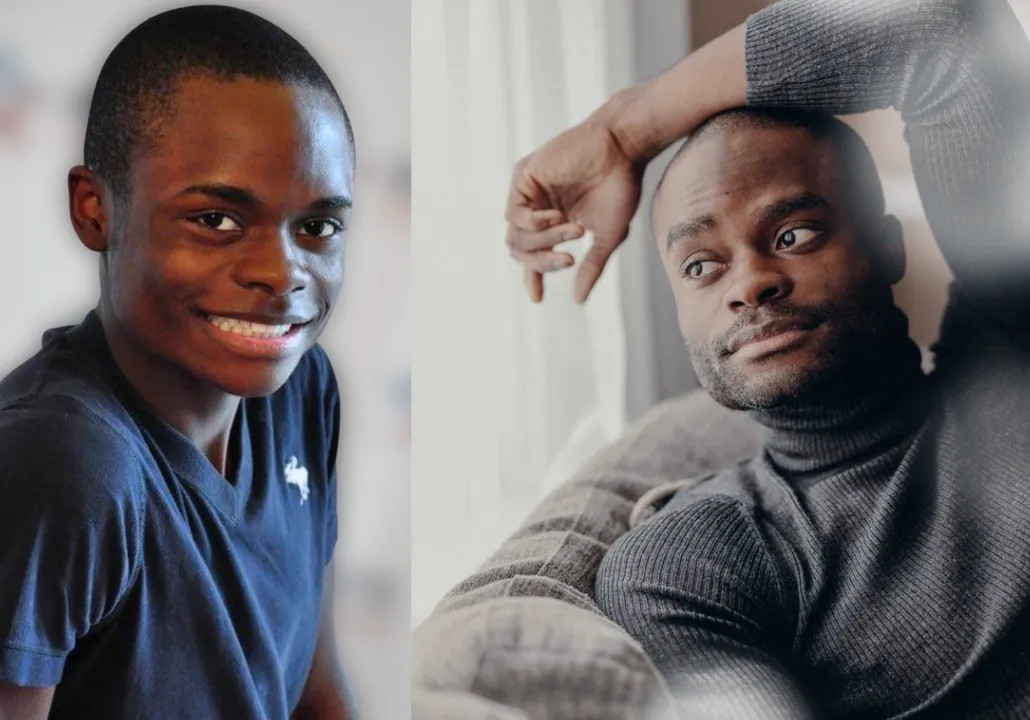
Photo courtesy of CorBen Williams.
I grew up in North Pole, Alaska, in a red-sided house at the end of a gravel turnaround. It was the kind of home where the winter light never quite reached the living room and silence carried through the walls like a second language.
North Pole felt like its own universe. A 2,500 person military town where there’s snow on the ground for up to 187 days a year and the Christmas lights never come down. About 70% of the town is white and roughly 30% of the voters are registered Republican, with almost half listed as “undeclared,” which in Alaska is usually just Republican without saying it out loud.
Most families were tied to the church or the base, so you learned fast what was considered normal and what was not. People knew your parents and your business.
Growing up Black and queer made me stand out without trying and forced me to learn early how to tuck parts of myself away.
My parents had both served in the military, and even though my mother had the warmth and softness to move past it, my father emulated parental rejection. Dad demanded respect and expected excellence in the way a man shaped by the military does: loud and without room for negotiation.
You could feel his energy before you heard his footsteps because there was always a tension that entered the room with him. He yelled more than he spoke, and as a kid I was told to listen to what he was saying, not how he was saying it, even when he was screaming in my face.
My father didn’t know what to do with a son who felt things deeply, and before I ever came out to him—the first of seven times—he had already shown me exactly which parts of myself were unsafe to reveal.
But that didn’t stop me from trying. The first time I came out, I was in first grade, sitting in the parking lot of a McDonald’s on Geist Road, right beside my future high school.
“Dad, I think I’m bisexual,” I said.
I knew my ass was gay. But I also knew enough about my father to try to ease him into it. He asked if I knew what that meant, and even though I did, I told him “no.”
“It means you like sucking penis,” he spat harshly.
I was six.
People think kids don’t understand things, but children clock everything. That moment didn’t confuse me about who I was. It clarified who he was. It showed me that there were parts of me he couldn’t handle and wouldn’t protect. I didn’t leave that day understanding my sexuality better. I left understanding the risk of telling the truth.
The second time, I was forced out when my father found my journal. I was 10 years old, and in those pages, I’d written unpolished thoughts about men, about how I felt around them, questions I didn’t yet know how to ask anyone.
He burst into my bedroom and tore the journal up in front of me, little pieces of paper flying around me as I sat in my bed. I tried not to cry.
“As long as you’re a kid in my house, you don’t get privacy,” I remember him barking. It showed me that I need to be wary about how much I trust people and what information I give them.
This rejection led me to the darkest part of my childhood.
“I am tired of living,” I remember muttering to my sixth grade teacher.
I was exhausted by my dad, exhausted from hiding, exhausted from feeling wrong in my own skin.
I should have stopped writing after that, but writing was how I survived. When you don’t have anyone to talk to, you talk to the page.
By 13, I had another journal. This one had drawings of a classmate and fantasies about kissing him. When my dad found it, he brought it up on the car ride home from school, saying “the correct way” to feel about other boys was “brotherly love” and nothing else.
But the third journal set off the biggest explosion.
It was filled with details, drawings and fantasies about my first hookup with a boy. The way I wrote about them, at 15, was more adult. The kind of writing he didn’t want to believe his son was capable of.
“I fucking told you about this shit,” he shouted, with the journal gripped tightly in his hand. “This isn’t appropriate. This isn’t what we do.”
My mom was sitting next to me, shocked, both of us caught off guard by how quickly he had gone from discovery to explosion. I almost cried, but I swallowed it down. My mom guided him into the other room to calm him down.
He didn’t speak to me for seven days. He couldn’t look at me. Each day felt like another nail in the coffin.
Photo courtesy of CorBen Williams.
I kept coming out to my dad anyway. At 17. At 22. At 24. Nothing changed.
Part of me used to think that I was an embarrassment to my family. I felt for so long that I needed to apologize for being the mistake. But in my late teens, I started to see it differently. I realized I just wanted his acceptance and his love in a way that I was never gonna get.
Because of this, I don’t think I ever really got to be a child. Even in first grade, when other kids were talking about Barbies and Legos, I felt like I was always bracing for impact, performing a version of boyhood that never fit. My childhood was spent preparing for adulthood and a career. People would always say to me, “You seem so much older. You seem so mature.”
I left North Pole for good and moved to New York City when I turned 19. I became a performer, a traveler, someone who learned to build softness and resilience, where my childhood had taught me to live in fight-or-flight mode. And then, almost when I wasn’t expecting it, I met Travis.
He was older. Wisconsin-born. A wildlife biologist. Patient in a way I didn’t even realize I needed. My mother said he softened me, brought grey into my black-and-white worldview. With him, I don’t brace for criticism. I don’t edit myself. I don’t shrink. I don’t hide my journals.
We’ve been together five years now, married for three. He’s met everyone in my life, except for my dad.
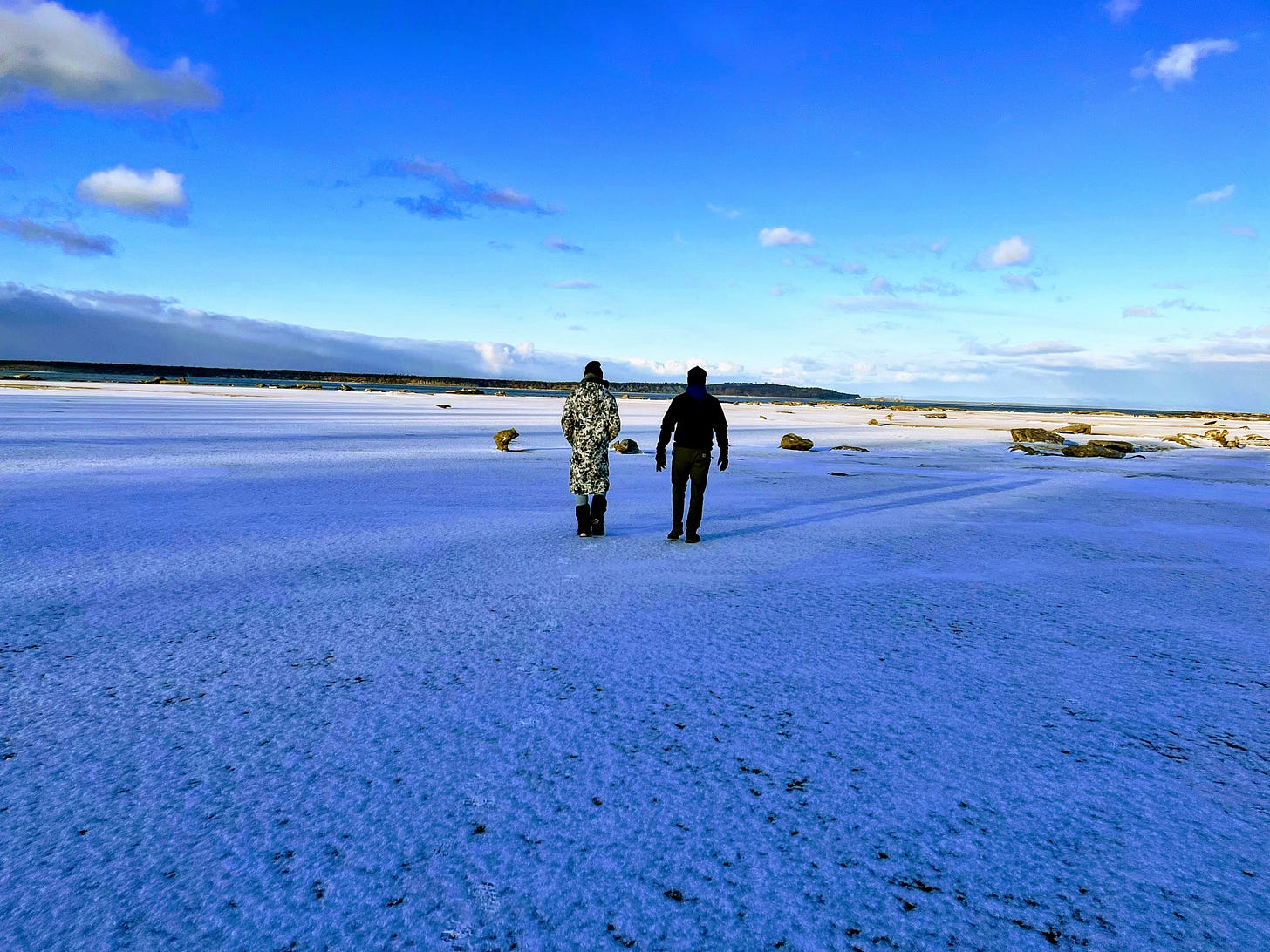
Photo courtesy of CorBen Williams.
Now, when I think about my upbringing in North Pole, I think about the path through the woods that led to my house, hoping someone on the other side would understand me. I think about how many times I tried to hand my father my truth, and how many times he handed it back to me with rage.
Even now, with the life I’ve built and the love I’ve chosen, acceptance is still complicated. I wish I could say that learning to love myself erased the sting of not being understood, but the truth is I still wrestle with where I fit—inside my family, inside Black spaces, inside queer spaces, inside the places that were never built with someone like me.
I’ve learned to be confident, to be gracious, to be the person who makes others feel seen, maybe because I know exactly what it feels like not to be. But some days, even as a grown man, I feel an instinct to shrink.
I’m learning that acceptance is a practice, one I have to return to again and again. I don’t have it all figured out. But I’m trying. And maybe that’s the real truth at the end of all this: I haven’t just been coming out to my father all these years—I’ve been slowly, steadily learning how to come home to myself.
Uncloseted Media and GAY TIMES reached out to CorBen’s father for comment, but he did not respond.
Sam Donndelinger assisted with the writing and reporting in this story.
If objective, nonpartisan, rigorous, LGBTQ-focused journalism is important to you, please consider making a tax-deductible donation through our fiscal sponsor, Resource Impact, by clicking this button:
The lawless tRump and criminal gang Gestapo thugs in ICE do not want to be held accountable. They are demanding they have the right to lie and you must believe it. They think they would be allowed to get away with everything and anything to harm and terrorize people if no can see what they do. So they try to convince you it is a crime to record them. It is not a crime. But remember how racist cops tried to do the same thing after the George Floyd murder? We must not let them take our rights away from us and we must fight against the tyrannical dictatorship of a lawless government ruling a powerless public. Hugs
The Trump Administration Says It’s Illegal To Record Videos of ICE. Here’s What the Law Says.
The Trump administration believes you don’t have the right to record Immigration and Customs Enforcement (ICE) officers in public. This stance is both factually wrong and an attempt to chill free speech by conflating it with violence.
At a July 2025 press conference in Tampa, Florida, Department of Homeland Security (DHS) Secretary Kristi Noem said, “Violence is anything that threatens them and their safety, so it is doxing them, it’s videotaping them where they’re at when they’re out on operations, encouraging other people to come and to throw things, rocks, bottles.”
In September 2025, DHS Assistant Secretary for Public Affairs Tricia McLaughlin called “videotaping ICE law enforcement and posting photos and videos of them online” a form of doxing. She added, “We will prosecute those who illegally harass ICE agents to the fullest extent of the law.”
These aren’t idle threats. The Trump administration strong-armed Apple into removing an app from its mobile store that tracked ICE activity and threatened criminal investigations into its creators.
The most aggressive application of this policy has come in Chicago under “Operation Midway Blitz,” where ICE officers have relentlessly targeted protesters, reporters, and clergy engaged in protected First Amendment activity.
In October, a group of journalists and protesters filed a lawsuit alleging “a pattern of extreme brutality in a concerted and ongoing effort to silence the press and civilians.”
In court filings, the plaintiffs stated that federal officials’ own testimony illustrated their point. For example, when ICE field director Russell Hott was asked if he agreed “that it’s unconstitutional to arrest people for being opposed to Midway Blitz,” he answered “No.”
“Similarly, [U.S. Customs and Border Protection Commissioner Greg] Bovino testified that he has instructed his officers to arrest protesters who make hyperbolic comments in the heat of political demonstrations, even though such statements—which do not constitute true threats—are protected speech,” the motion argued. (Hott and Bovino’s depositions were filed under seal, and those comments were later redacted in a corrected filing by the lawsuit plaintiffs, but not before others took screenshots of them.)
Based on voluminous evidence that feds in Chicago ignored her previous orders to curb their use of force, U.S. District Court Judge Sara Ellis issued a preliminary injunction against DHS in early November 2025, saying the government’s conduct “shocked the conscience.”
Ellis found much of the officials’ testimony not credible. Bovino, for instance, testified that he never used force against a protester he was filmed tackling, and in another instance, Ellis said, he lied about being hit with a rock before firing tear gas at demonstrators. Nor did evidence support the government’s claims that federal officers issued warnings before firing less-than-lethal projectiles at those protesters.
“Describing rapid response networks and neighborhood moms as professional agitators shows just how out of touch these agents are, and how extreme their views are,” said Ellis.
The Trump administration responded by calling Ellis an “activist judge,” but it is squarely wrong when it comes to recording and protesting the police. Cato Institute senior fellow Walter Olson points out that, “While the Supreme Court itself hasn’t yet faced the issue squarely, the sevenfederalcircuitsthathavedoneso…all agree that the First Amendment protects the right to record police performing their duties in public.”
Likewise, federal circuits have upheld the right to use vulgar language to oppose police without fear of retaliation, and to warn others of nearby police checkpoints or speed traps.
As Olson writes, the administration’s “attempt to alter reality by establishing new legal facts on the ground” ultimately serves as a green light for informal repression. “If the agents come to believe that they have blanket immunity [for] whatever they do, or that citizens have no right to record them, they are more likely to take aggressive informal action, such as grabbing phones or taking news reporters into custody on charges of obstruction (perhaps later quietly dropped).”
It’s not hard to find examples of this rotten agency culture in practice. In late October 2025, ICE officers broke out the window of a U.S. citizen’s car and detained her for seven hours after she followed and photographed their unmarked vehicles. DHS accused her of reckless driving, attempting to block in officers with her car, and resisting arrest—all claims that she and her lawyer deny. Prosecutors did not charge the woman with a crime.
Recording government agents is one of the few tools citizens have to hold state power accountable. Any attempt to redefine observation as “violence” is not only unconstitutional—it’s authoritarian gaslighting. When a government fears cameras more than crimes, it isn’t protecting the rule of law. It’s protecting itself.





 Scottie's Playtime