
| November 14, 1910 Eugene Ely performed the first airplane takeoff from a ship. His Curtiss pusher flew from the deck of the U.S.S. Birmingham in Hampton Roads, Virginia.By January he would execute the first (takeoff and) landing on a warship, the U.S.S. Pennsylvania. Captain Washington I. Chambers of the Navy Department had been interested in the military uses for the seven-year-old invention. Naval flight training started shortly thereafter.  More of the whole story. |
| November 14, 1954 “Ten Million Americans Mobilized for Justice” began a campaign to collect 10 million signatures on a petition urging the Senate not to censure Senator Joseph McCarthy (R-Wisconsin). The motion of censure against Senator McCarthy was for obstructing a Senate committee and for acting inexcusably and reprehensibly toward a U.S. soldier appearing before his own committee. McCarthy had used his Senate Permanent Investigations Subcommittee to publicly denounce thousands as subversive, especially within the federal government, many without any justification. The political views of most were painted as treasonable and conspiratorial, rather than differing political views. The petition effort fell about nine million signatures short. More on Joe McCarthy |
| November 14, 2000 Florida Secretary of State Katherine Harris, simultaneously co-chair of George W. Bush’s Florida presidential campaign organization and the public official responsible for the conduct of the election itself, certified Governor Bush’s fragile 300-vote lead over Vice President Al Gore in the 2000 presidential election.  Katherine Harris Florida Judge Terry Lewis gave Harris the authority to accept or reject a follow-up manual recount from some counties where the count was open to question. Harris rejected the manual recounts. |
Category: History
It’s A Day Of Observance In Poland, Too-
This blogger is a newer subscriber to Scottie’s, and comments here some. Here is a short bit with info on Poland’s November 11th Independence Day observance and history.
My Chromebook translates these posts for me; I think most computers do that. Just let me know if I should do the copy-paste thing here with this.
1st Gay Rights Organization Founded This Date In Peace & Justice History
(I don’t know what this formatting is about. This is the 3d try, so here it is as it is.)
| November 10, 1924 |
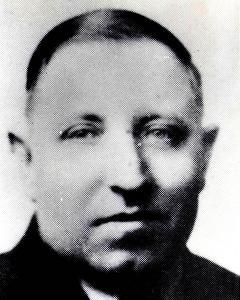
| The Society for Human Rights, the first gay rights organization in the U.S., was founded in Chicago by Henry Gerber, a German immigrant. He had been inspired by Germany’s Scientific Humanitarian Committee, formed to oppose the oppression of men and women considered “sexual intermediates.” |  |
| Henry Gerber–founder of the Society for Human Rights |
https://www.peacebuttons.info/E-News/peacehistorynovember.htm#november10
From the link “More on Henry Gerber”:
HENRY GERBER
INDIVIDUAL | Inducted 1992 [Posthumous]
The founder of Chicago’s Society for Human Rights in 1924, the first gay rights organization in the United States, Henry Gerber was born in Bavaria as Joseph Henry Dittmar on June 29, 1892, and arrived at Ellis Island in October, 1913. With members of his family, he moved to Chicago because of its large German population. After working briefly at Montgomery Ward, he was interned as an alien during World War I. He wrote that although this was not right, he did receive three meals a day. From 1920 to 1923 he served with the U.S. Army of Occupation of Germany and during this time, he came into contact with the German homosexual emancipation movement. He subscribed to German homophile magazines and was in contact with Magnus Hirschfeld’s Scientific-Humanitarian Community in Berlin. In 1924, Gerber returned to Chicago and was hired by the post office. Gerber’s return to Chicago was amidst a backdrop of urbanization and an emerging gay subculture.
Following what Gerber had seen in Germany, he felt the need to establish an organization to protect the rights of gays and lesbians. With several friends, Gerber formed an organization which was later incorporated as The Society for Human Rights, a nonprofit corporation in the State of Illinois. The organization published a newsletter, Friendship and Freedom, which was distributed to its small membership.
In July, 1925, the society came to an abrupt end. The wife of one of the co-founders reported her husband, a reputed bisexual, to her social worker who contacted the police. Following a police raid, Gerber and several others were arrested and prosecuted for their deviancy. After three costly trials the case against Gerber was dismissed. Gerber lost his entire life savings defending himself and was fired from his job at the post office for conduct unbecoming a postal worker.
After his ordeal, Gerber moved to New York City where he reenlisted in the U.S. Army and served for 17 years. During the 1930s he managed a personal correspondence club and wrote articles in gay publications under a pseudonym. The correspondence club became a national communications network for gay men. In the 1940s, Gerber exchanged a number of letters with Manuel Boyfrank of California. Boyfrank was enthusiastic about organizing to combat homosexual oppression. Gerber offered his assistance, but refused to risk his job again. He continued his assistance through personal correspondence and numerous articles.
On December 31, 1972, Gerber died at the U.S. Soldiers’ and Airmen’s Home in Washington, D.C., at the age of 80. He lived to see the Stonewall Rebellion and the start of a new era of activist gay and lesbian liberation organizations.
© Chicago LGBT Hall of Fame. All rights reserved.
(Updated with link & my apologies) Protest Art, & Stagecoach Mary, From “The Saturday Evening Post”
Considering History: Protest Art and Art as Protest in American History
Art has been integral to the foundational American story of protest.

This series by American studies professor Ben Railton explores the connections between America’s past and present.
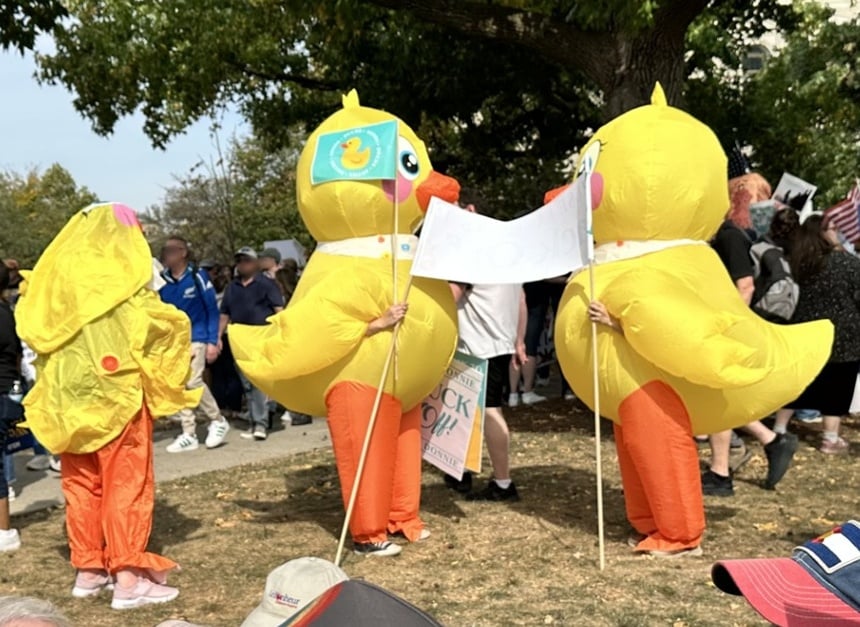
It’s hard to describe our current moment as a golden age for much of anything in America, but we are indeed amidst a renaissance of protest art. Portland’s inflatable resistance frogs have morphed into a consistent presence of life-size artistic costumes at protests, including at the massive #NoKings rallies on October 18th.
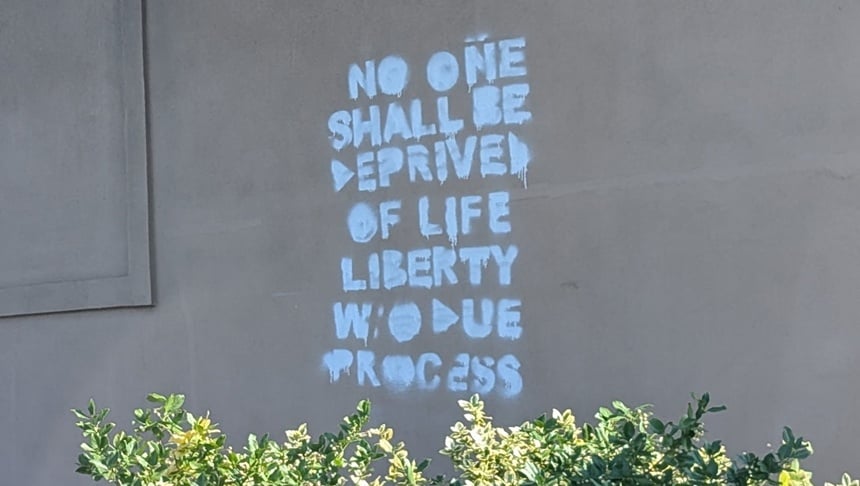
And public and street art has likewise become a consistent space for expressions of protest and resistance, as illustrated by this graffiti quotation from the 14th Amendment found on the wall of an abandoned Dunkin Donuts near my university in Fitchburg, Massachusetts.
Those examples comprise two distinct but interconnected categories: protest art — artworks present at or directly representing collective actions; and art as protest — artworks that themselves comprise an expression and form of resistance. Both types are part of a long, rich history, as art has been integral to the foundational American story of protest. Here I’ll highlight just a few examples of each category from across our history. (snip-MORE-click through on the title)
=====
Missing in History: Stagecoach Mary Broke Barriers (and a Few Noses)
America’s first Black female mail carrier defied bias, bandits, and bad weather to deliver the mail on time in Montana.

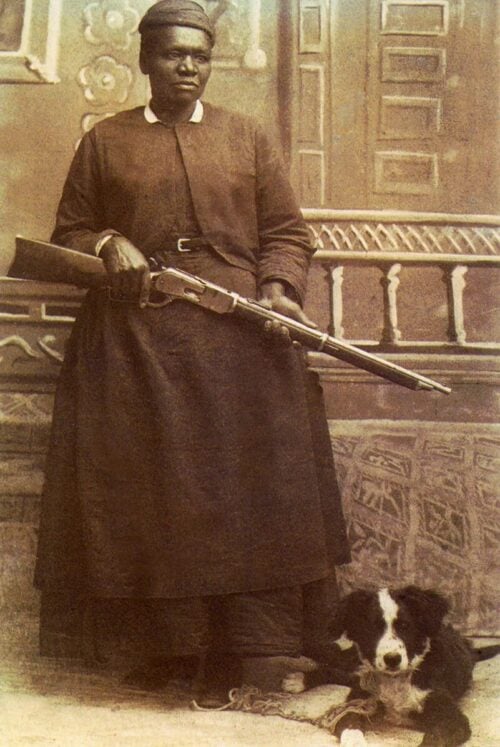
Mary Fields ca. 1895 (Wikimedia Commons)
“I like to be rough. I like to be rowdy. I also like to be loving….I like to baby sit.”
—Mary Fields
Mary Fields was as beloved as she was feared. Few people dared challenge the six-foot-tall, 200-pound former slave who carried a gun, drank, and had a hot temper. Despite her formidable image, Fields loved children, helped others, and carried the mail through the blizzards of northern Montana.
Born into slavery around 1832 in Hickman County, Tennessee and freed after the Civil War, Fields later found work as a chambermaid on the Mississippi steamboat Robert E. Lee. There she met Judge Edmund Dunne, who hired her as a servant in his household. After his wife’s death, Dunne sent Fields and his five children to live with his sister, Sara, or Mary Amadeus, Mother Superior of the Ursuline convent in Toledo, Ohio around 1874. There the former slave and the nun became fast friends. According to the Toledo Blade, legend has it that when Fields arrived in Toledo, Mother Amadeus asked if she needed anything, to which her friend replied, “Yes, a good cigar and a drink.”
The following year, Mother Amadeus was sent to Montana Territory to establish a school for indigenous girls at St. Peter’s Mission, west of the town of Cascade. When Fields learned that Mother Amadeus was stricken with pneumonia, she moved to Montana and nursed the nun back to health. After that, the 52-year-old Fields volunteered at the convent, hauling stones to build the school, fetching supplies from nearb y towns, washing the convent’s laundry, tending to its many chickens, managing the kitchen, and maintaining the mission’s garden and grounds. (While she lived at the convent, Fields refused to be paid for her work, preferring to come and go as she pleased.) (snip-MORE-click through on the title)
The Majority Report clips on Zohran Mamdani and stuff related to his win.
Zohran’s Blueprint For Beating The Establishment
Is THIS The End Of Cuomo?
Morning Joe FED UP With Greenblatt’s BS
Trump In Full Meltdown After GOP’s Election Disaster
Hasan Confronts Media Weirdo Following Him Around Zohran’s Party
U.S. Labor Organizes, & Acts, On This Date In Peace & Justice History
| November 8, 1892 Thirty thousand black and white, factory and dock workers staged a general strike in New Orleans, demanding union recognition, closed shops (where all co-workers join the union), and hour and wage gains. They were joined by non-industrial laborers, such as musicians, clothing workers, clerks, utility workers, streetcar drivers, and printers. |
| November 8, 1935 United Mine Workers president John L. Lewis and other labor leaders formed the Congress of Industrial Organizations (CIO). They had split with the existing labor union umbrella organization, the American Federation of Labor (AFL), which was not interested in organizing unskilled workers, such as those in the steel, rubber, textile and auto industries.  John L. Lewis CIO history |
https://www.peacebuttons.info/E-News/peacehistorynovember.htm#november8
Eating On A Strict Budget
17 Great Depression recipes people still cook today during hard times
These recipes are resourceful and delicious.
The Great Depression, which lasted from 1929-1939, caused economic turmoil worldwide. Families struggled to feed themselves, and went to extreme lengths to stretch food and utilize all available ingredients.
Known as the Greatest Generation (those born between 1901 and 1927), their resourcefulness resulted in a number of creative (and delicious) recipes that remain relevant today. Home chefs and bakers shared their Great Depression recipes on Reddit that have been passed down and are still enjoyed today to help others get inventive and save money.
From soups and stews to cakes, these are 17 Great Depression recipes to try.
Soups, Stews and More
Beef and Noodles
“My grandmas go to: Bag of egg noodles 1 can of creamed corn 1 can Campbells chicken noodle soup 1 lb ground beef. Salt and pepper to taste. Brown ground beef, add all other ingredients, add enough water or light chicken stock to cover noodles if needed. Bring to boil, and reduce to a simmer for about 15 minutes, take off the heat and let it rest 10 minutes before serving with buttered white bread. I still make this to this day. My kids loved it too. Basically homemade Hamburger Helper.” – -__Doc__-
Hoover Stew (but we could call it Trump Stew, these days)
Ingredients
1 box noodles
A can of tomatoes
1 package of hot dogs, or 1 can of sausage or meat
A can of corn, peas or beans
2-4 cups water
Instructions
“Mix all ingredients together in a pot until boiling. Then simmer for 15-20 minutes until the noodles are tender. If you have aromatics, onion and garlic would be a great addition. If not, the recipe is great as is.” – Josuaross54
Zaprezna soup
“Depression soup… make a roux, add salt pepper and caraway seeds. Add water to make a thick soup texture. Use an egg or two mixed with flour and salt pepper and mix together to make dumplings.. drop into the soup to cook.. This was called zaprezna soup or depression soup. We ate it often in the 60’s after my dad abandoned us. Money was short but this soup was good.” – User Unknown
(snip-MORE on the page; SOS is next!)
The Great March To Transvaal, Apartheid Condemned by U.N., Draft Cards Ignited, & Iran-Contra Denied On This Date In Peace & Justice History
| November 6, 1913 Mohandas K. Gandhi led 2500 ethnic Indian miners, women and others from South Africa’s Natal province across its border with Transvaal in the Great March. This was a violation of the pass laws restricting the movement of all non-whites in the country. Originally granted the rights of British subjects, Indians’ rights were steadily eroded beginning in the 1890s with the denial of the right to own property. Shortly before the March, a court in Capetown had invalidated all Muslim and Hindu marriages. Gandhi and many others were arrested and jailed after refusing to pay a fine.  The Great March to Transvaal  Mohandas Gandhi, 1915 Read about the early resistance in South Africa |
| November 6, 1962 The 17th session of the U.N. General Assembly passed Resolution 1761 condemning apartheid in South Africa and called on all member states to terminate diplomatic, economic and military relations with the country. The policies of the country embodied in apartheid, the strict racially separatist regime, were declared a threat to international peace and security.  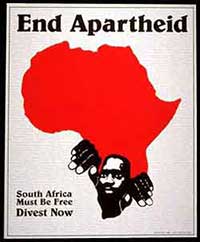 Apartheid was the racially separatist regime under which black and, to a somewhat lesser extent, so-called colored South Africans, were without political, civil or economic rights. All political power and wealth were held by the white population, approximately 15% of the country. “Apartheid” is the Afrikaans word for “apartness.” (Afrikaans is the language of the Boers, or [white] Afrikaners.) U.N pressure over the years on South Africa |
| November 6, 1965 2,500 people gathered in New York City’s Union Square to witness the burning of draft cards, a violation of recently passed federal law, as an expression of resistance to the Vietnam War. Dorothy Day, founder of the Catholic Worker movement, and pacifist leader A.J. Muste spoke, identifying with the “crime” about to be committed.  Gordon Christianson, chairman of the Committee for Nonviolent Action and a World War II combat veteran, used his lighter to burn the cards. A counter-demonstrator shot a fire extinguisher at those ready to burn their cards, but they still ignited. And the counter-demonstrators shouted, “Burn yourselves, not your draft cards!” At trial, those who were arrested conceded the prosecution’s case, submitting footage of the action shot by a supporter. They made a defense under the First Amendment to the Constitution, arguing that the burning of draft cards in such a context was an act of symbolic speech. The trial judge found them guilty and sentenced them to six months in federal prison. |
| November 6, 1986 Although an American plane with supplies for the Nicaraguan contra insurgents had been shot down the previous month, and a Lebanese newspaper reported that the U.S. government had arranged for the sale of weapons to Iran, President Ronald Ronald Reagan denied involvement (“. . . a story that came out of the Middle East, and that to us has no foundation . . . .”) in what came to be known as the Iran-Contra scandal. Both the ongoing aid to the contras and the weapons sales to Iran were violations of U.S. law.  |
https://www.peacebuttons.info/E-News/peacehistorynovember.htm#november6
Open Windows
(I remember these.)
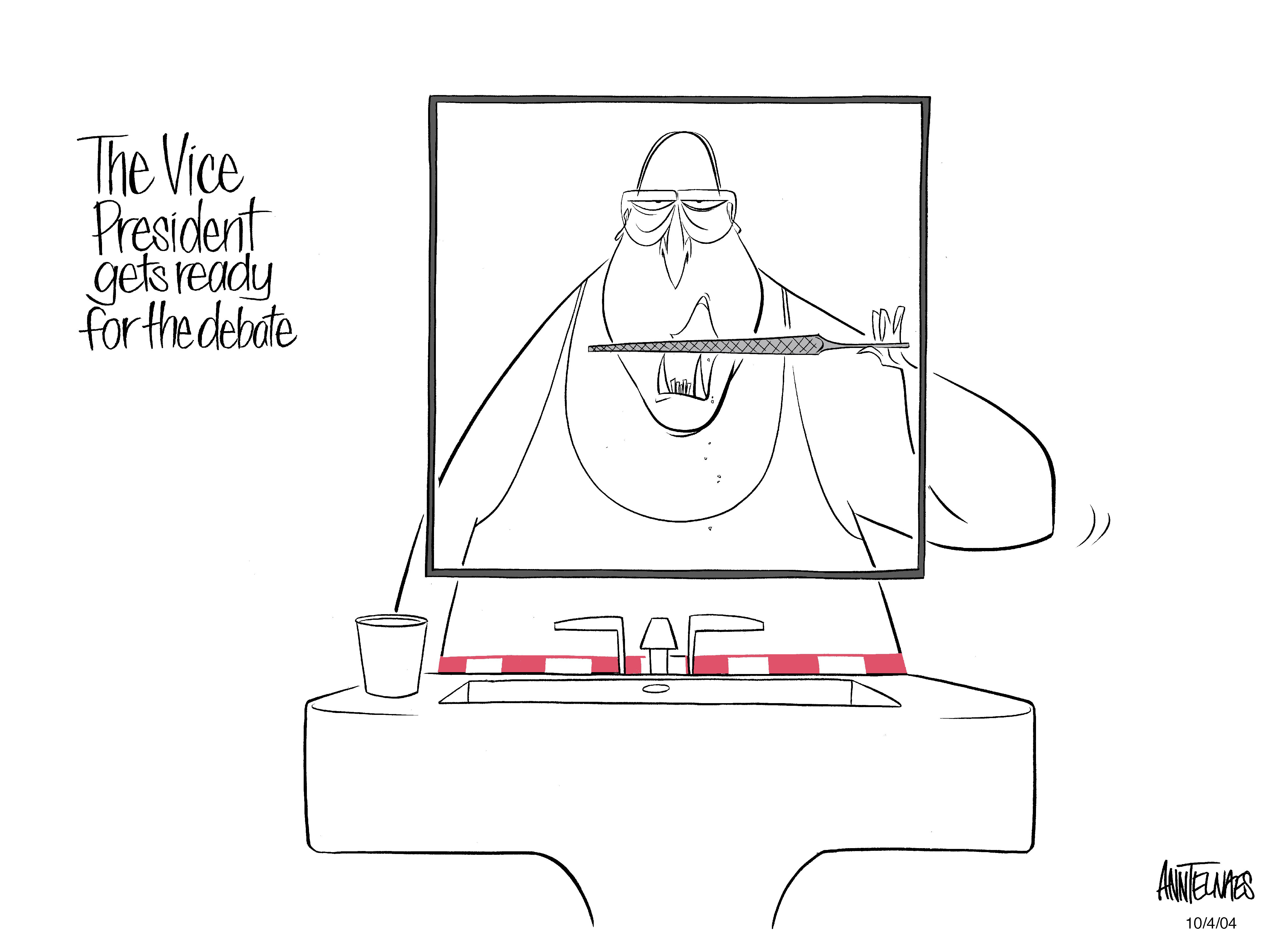
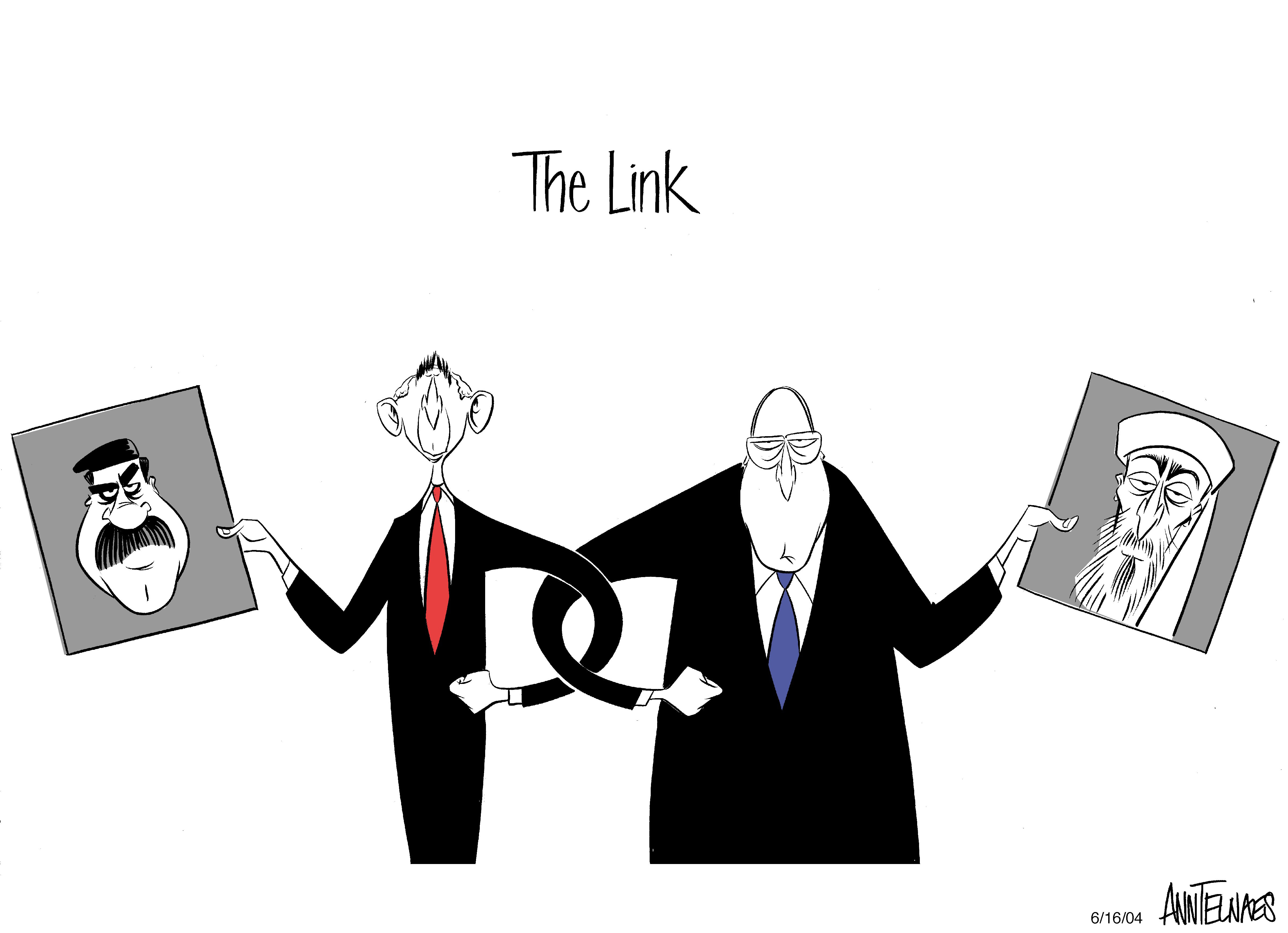
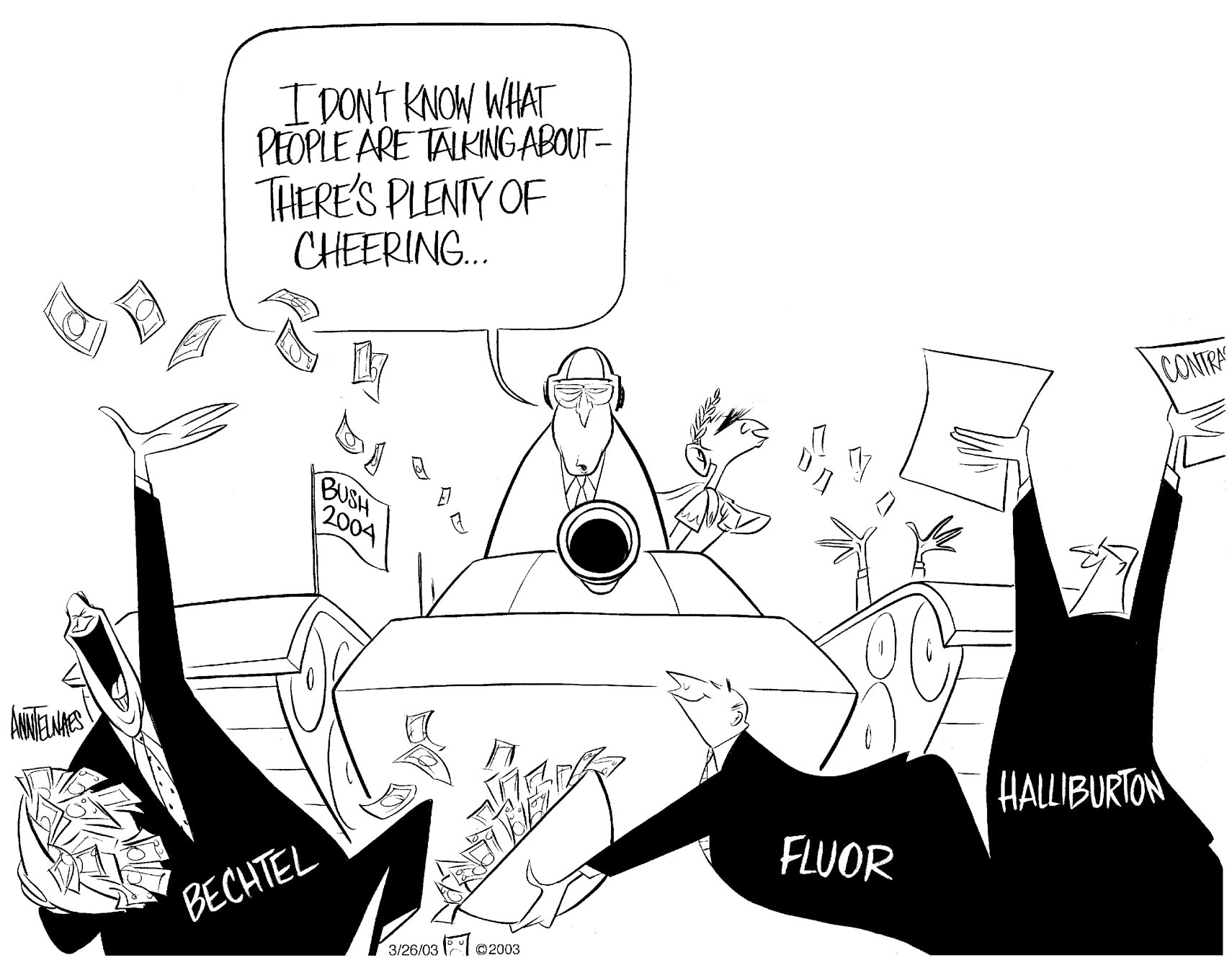
Dick Cheney by Ann Telnaes
The original Darth Vader dies Read on Substack
I’ve been in the editorial cartooning profession for over 30 years so I covered both George W Bush administrations. I can safely say I drew more cartoons of his vice president than I did of GW.

(Yes, I titled my book “DICK”)
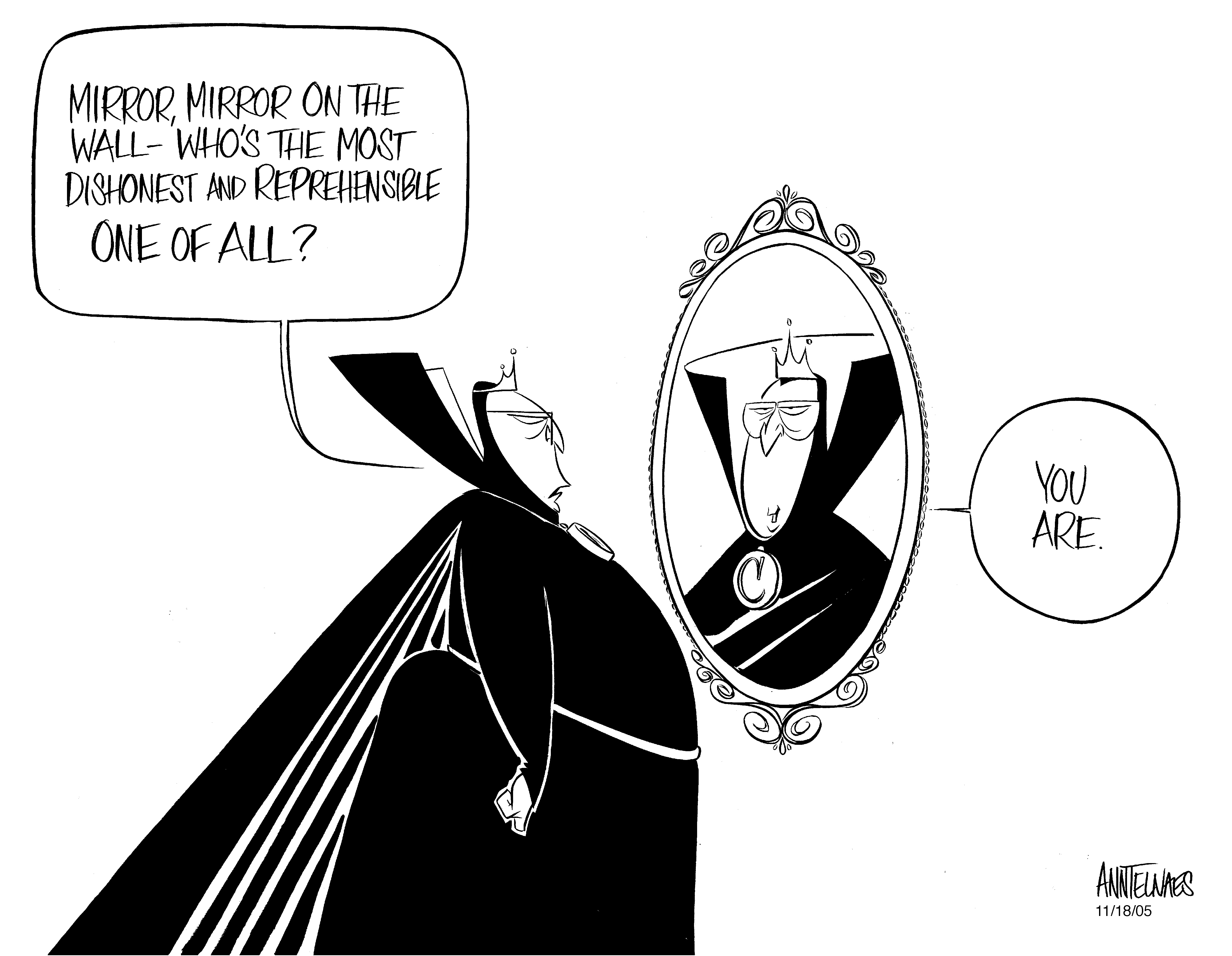

Once I heard Dick Cheney say these words, I felt I had his caricature down.


A Little Women’s History
Kickass Women in History: Tze-gu-juni, AKA Huera
by Carrie S

Tze-gu-juni, also known as Huera, was a woman whom Geronimo called “The Bravest of Apache Women.” She was a woman of intensely powerful inner strength who survived captivity, a trek across the desert, and mountain lion attack to serve her tribe as a shaman.
Tze-gu-juni was born around 1847. As a child, she survived a lightning strike that killed her mother and sister. She seems to have lived an otherwise peaceful life until October 14, 1880, the day of the Battle of Tres Castillos, the battle that killed Chiricahua Chief Vittorio and ended Vittorio’s War, a war Vittorio waged against U.S. and Mexican Army soldiers in New Mexico, Texas, and Mexico. Tze-gu-juni was captured along with approximately seventy other women and children and taken to Mexico City, where she was enslaved and given the name ‘Huera’.
During her captivity, Tze-gu-juni became fluent in Spanish and secured a role as a translator at an Apache reservation in Arizona. She and about five others planned an escape and fled into the desert. They had one knife and one blanket and would have to walk for approximately 1300 miles to reach safety. They foraged for food and water in the desert.
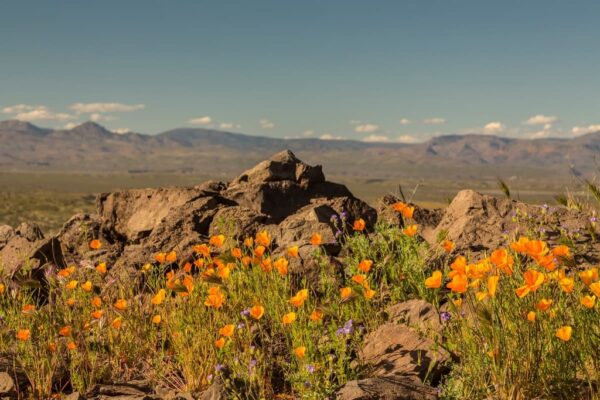
The land near San Carlos Reservation
Along the way, Tze-gu-juni was attacked by a mountain lion. She tightened the blanket around her neck which saved her, and fought off the mountain lion. She was badly wounded but managed to reach San Carlos Reservation, where Geronimo and Tze-gu-juni’s future husband, Mangas, were living. Her hands and face were scarred for the rest of her life and she had limited use of her hands thereafter. (snip-MORE; go read it!)
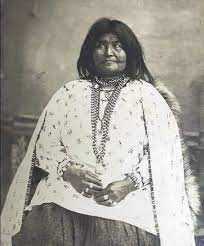
Tze-gu-juni, Image from History.net, provenance unknown


