
Category: News / Information
Snips And Bits
(Just under an hour, so more than a snip or a bit, but it’s not only necessary, it’s fascinating. Or else I’m just that big a geek.)
How Angela Davis Predicted The Modern Face Of Fascism in 1971
Fifty years prior to rumors of fascism circling President Trump, activist and philosopher Angela Davis made a spooky prediction about dictatorship in the U.S.
President Donald Trump’s administration continues to stand on shaky ground amid bombshell resignations and rumors of a dictatorship brewing. But in the midst of these unprecedented times, one Black political activist’s warning could offer a shocking reality for Americans… even if the message came 55 years earlier.
Trump’s return to the White House was met with fierce criticism from leaders like former Vice President Kamala Harris and his own former chief of staff, John Kelly, who explicitly declared that Trump fits “into the general definition of fascist.” But while terms like “fascist” and “dictator” have found a comfortable place in American politics today, activists like Angela Davis were among the loudest opponents of fascism nearly six decades ago.
By the 1970s, the Cold War against the Soviet Union revamped fears of a possible fascist regime in the States– notably from many Black Panthers. While awaiting trial for murder, Davis spoke with filmmaker Peter Davis about the likelihood that America would be ruled by a dictator.
“We are closer to fascism than we’ve ever been before,” Davis said from a California prison in 1971. But while the political activist stopped short of declaring fascism had officially made its mark in the U.S. then, her scary prediction has arguably taken a new light in 2026. (SNIP-click the title to read the rest; it’s not at all long)
Interesting How Things Work Out…
Despite state bans and restrictions, the number of abortions in the U.S. holds steady
March 24, 202612:01 AM ET Heard on Morning Edition
Since the reversal of Roe v. Wade in 2022, anti-abortion rights advocates have continuously pursued laws and court cases to make access to abortion more difficult.
A report published Tuesday finds those efforts haven’t worked in one basic way: The number of abortions in the country hasn’t budged.
“There were an estimated 1,126,000 abortions provided by clinicians in the U.S. in 2025 — that’s pretty much unchanged from 2024,” says Isaac Maddow-Zimet, data scientist at the Guttmacher Institute, a nonprofit research organization that supports abortion access.
A key way that abortions are now happening despite all of the state restrictions is through telemedicine. In 2023, the Food and Drug Administration under President Biden allowed mifepristone — one of the medications used for abortion — to be prescribed without an in-person appointment.
At the same time, states that support abortion access have passed shield laws, which protect health care providers from legal risks when they prescribe to patients in states with bans.
What that meant last year is that more people in states with restrictions had abortions through telemedicine, and fewer people traveled across state lines for abortion, according to the Guttmacher report.
“It makes sense that we’d see a decline in travel because people accessing abortion care through telehealth in general then no longer need to travel for care,” Maddow-Zimet says.
Medication by mail
When Viv found out she was pregnant last January, she was three days past Georgia’s ban on abortion after six weeks of pregnancy.
Viv is 27 years old and lives in Atlanta. NPR agreed not to use her last name because she fears repercussions for talking about her experience. She went online and looked through posts on Reddit, trying to figure out what to do.
“I found out that I could get an abortion pill shipped to my house,” she says. “I didn’t want to travel. I didn’t want to take time off of work. I am pretty knowledgeable about women’s health, and I know that the abortion pill is a safe and effective way to have an abortion.”
She ended up reaching out to a group called The MAP in Massachusetts, and she says the process was very easy.
“You basically go on their website, you answer questions, and then you pay whatever fee you can afford, which I thought was really, really cool,” she says.
About a week later, she received the two medications in the mail: mifepristone and misoprostol. She says the instructions that came with the medication were very thorough.
“People contact you after to make sure everything’s good,” she says. “They even have people contact you like a month after to make sure that you’re not pregnant anymore.”
Viv says she’s grateful she was able to have an abortion without having to leave Atlanta. She also notes that Georgia has one of the highest maternal mortality rates in the country.
“If a woman doesn’t want to be pregnant, she should be able to have that right, and I think that should be the end of the story,” she says.
Frustration for ban supporters
Abortion-rights opponents view all of this as a huge problem. There are several legal challenges and a recent congressional bill that all aim to force the FDA to stop allowing mifepristone to be mailed to patients. (Misoprostol is a medication that has been on the market longer and is also used to prevent ulcers; it is harder to restrict.)
One of the court challenges was brought by Louisiana Attorney General Liz Murrill, who told a U.S. Senate committee in January that the FDA rules must be changed.
“Until then, Louisiana’s efforts to protect mothers and their unborn children and to hold out-of-state abortion pill traffickers accountable for the harm they inflict will be all but futile,” she said.
According to Guttmacher’s latest report, there were about 2,500 abortions in Louisiana in 2023, and last year there were more than 9,000. Overall, 91,000 patients in states with bans received telehealth abortions in 2025.
A federal judge is expected to rule in Louisiana v. FDA soon.
This Is Pertinent To Our Interests
Google Has a Secret Reference Desk. Here’s How to Use It.
40 Google features to find exactly what you need, the alternative search engines that do things Google won’t, and the reference desk framework underneath all of it.
Most of us search Google the same way we always have: type a few words, scroll, click something that looks close enough, and hope. For a while, that worked. Google handed us a list of links and let us take it from there.
What’s happening now is something different. A 2024 study by SparkToro found that nearly 60% of Google searches end without anyone clicking through to a website, and the trend has accelerated since. By February 2026, Ahrefs found that queries triggering AI Overviews now see a 58% reduction in clicks. Google has been systematically inserting itself between you and the original source, answering questions with AI-generated summaries before you ever reach the page those answers came from. The results you do see are filtered through an algorithm that weighs your search history, your location, and the billions of dollars advertisers have spent to appear for particular queries. Two people searching identical phrases on the same day can get meaningfully different results without either of them knowing it. And because Google controls roughly 90% of the world’s search traffic, most people have no frame of reference for what a less mediated search experience would even look like.
The search bar replaced the reference desk without replacing the skills behind it: knowing how to ask a question precisely, understanding how information is organized and who funds it, knowing the difference between a primary source and a summary of one. The assumption was that the technology made all of that unnecessary, which suited Google; a user who can’t navigate information independently is a user who keeps coming back to be guided.
The search bar you already have is more capable than that arrangement requires you to know. With the right syntax, it becomes a precision instrument: narrow by domain, by date, by file type, by exact phrase. We can pull up archived pages, surface open file directories, and even find what people said in forums instead of what brands want us to find. None of it requires a new tool or a paid account. The capability has been there the whole time.
When You’re Not Getting What You Asked For
Google is constantly interpreting you. It swaps in synonyms, personalizes results based on your history, and decides what you probably meant rather than returning what you typed. Most of the time that interpretation is invisible. These tools are how you override it.
site:
limits your search to a single website. Try: site:nytimes.com climate to search only the Times, or site:gov vaccine to pull results exclusively from government domains. It works as a better version of a website’s own search function (most built-in site search is mediocre at best), as a trust filter when you only want results from a specific domain type, and as a research shortcut when you already know which publication or institution you want to pull from. You can also run it in reverse: electric vehicles -site:tesla.com returns coverage that isn’t from Tesla’s own pages.
Number ranges
let you set hard boundaries on any numerical search. Put two periods between two numbers with no spaces: laptop $500..$800 returns results mentioning prices in that range. The same syntax works for years (civil rights legislation 1964..1968) or any other measurement. It eliminates a significant amount of irrelevant results when you’re comparison shopping or trying to find coverage from a specific period.
Verbatim mode
is the most powerful feature most people have never used. After any search, click Tools (just below the search bar), then the “All Results” dropdown, then select “Verbatim.”
Google stops paraphrasing you entirely and returns results for exactly what you typed, stripped of personalization and synonym-swapping. It’s one of the most useful things Google has buried several clicks deep, and the fact that it takes three clicks to reach says something about how much Google wants you to find it.
Quotation marks
work the same way at the phrase level. Try: “the medium is the message”. Wrapping a phrase in quotation marks forces Google to find pages where those exact words appear in that exact order. Unquoted words are treated as suggestions; quoted phrases are treated as requirements. Use this to verify whether a quote is real and trace it to its actual source, to find a specific statistic rather than everything that implies it, or to track down a title you half-remember. It’s also the mechanism behind one of the most useful social search techniques covered below.
The minus sign
removes a word from your results entirely. Put it directly before the word with no space: jaguar -car returns the animal, mercury -planet returns the element or the musician depending on your other terms. Precise, effective, and useful any time a word you’re searching carries more than one meaning.
AROUND(#)
is an undocumented proximity operator that tells Google how many words apart your two search terms can be. Try: climate AROUND(3) policy. The intent is that only pages where those terms appear in genuine proximity show up, rather than a page that mentions “climate” in the introduction and “policy” ten paragraphs later. Google has never officially documented this operator and its behavior is inconsistent, but when it works, it operates closer to how academic databases have functioned for decades. Worth testing, but not something to rely on the way you would a documented operator.
When You Need the Real Source, Not Just a Summary
The difference between finding a blog post about a study and finding the study itself isn’t trivial, and the gap between them is larger than most people expect.
filetype:
returns only a specific kind of file. filetype:pdf remote work productivity returns only PDFs. Swap pdf for ppt to find slide decks, or doc for Word documents. Most research reports, government documents, academic papers, and white papers exist as PDFs and don’t rank highly in regular search results because they weren’t built for traffic. Filetype search gets you past that.
intitle: “index of”
surfaces something most people don’t know exists: open file directories on the internet. Try: intitle: “index of” /pdf “media literacy”
These are servers running with directory listing enabled, a default setting in Apache that displays all files in a directory when no index page exists. Most administrators never turned it off. The result is publicly accessible file systems, packed with documents, datasets, and files that don’t appear in regular search results.
before: and after:
set a date boundary on your results. mental health social media research after:2023 filters out everything published before that year. Use before: to find what was known or written at a particular point in time, useful for confirming a source predates an event or for tracing how a conversation has shifted over time. Combine them with site: for a targeted archive search: site:theatlantic.com AI after:2023 pulls everything The Atlantic has published on the subject in the past two years. This kind of search used to require a library database subscription.
intitle: and inurl:
let you filter by the structure of a page rather than just its content. intitle:”media literacy” returns only pages where that phrase appears in the actual title, not just mentioned once in passing. inurl:gov intitle:”AI policy” finds government pages where AI policy is the stated subject. Combined, they’re considerably more precise than keyword searching alone.
When You Want Real Human Opinions, Not Sponsored Content
SEO has made the first page of Google results increasingly dominated by content written to rank rather than to inform. These techniques route around it.
“can anyone recommend”
exploits a quirk in how people write when they’re asking for help without a commercial motive. Try: “can anyone recommend” noise-canceling headphones under $100. Because the phrase is in quotation marks, Google surfaces only pages where those exact words appear, which means forum threads, community posts, and real conversations where people asked the same question you’re asking. Instead of a sponsored listicle, you get someone’s firsthand experience choosing between two specific products. Swap in “does anyone know a good” or “what’s the best” for variations on the same trick.
@ before a word
surfaces social tags and handles in your results. Try: @reddit home espresso machine. Google officially describes this as a tool for finding social tags, so pairing it with a platform name like @reddit or @twitter alongside your topic pulls community discussions toward the top of your results. It doesn’t filter exclusively to those platforms, but it shifts the result set in that direction. Combine it with the quotation mark technique when you want to narrow things further.
The omitted results link
is easy to miss. When Google adds a note at the bottom of a results page saying some results were hidden because they’re too similar to others, there’s a small link to include them anyway. The results Google omits tend to be less trafficked and less search-optimized, which frequently means they’re more substantive and written for readers rather than algorithms. When doing real research rather than a quick lookup, that’s exactly where to look.
When You Need to Go Deeper
The asterisk *
works as a wildcard for any missing word or phrase. Try: “the * of artificial intelligence”. The asterisk stands in for whatever word you can’t remember or want to explore. It’s invaluable for chasing down half-remembered titles and quotes, and it surfaces the full range of ways a phrase gets used across different contexts, which is useful for research that starts from a concept rather than a specific source.
Stacking operators
is where precision compounds. filetype:pdf “information literacy” site:edu before:2015 finds older academic PDFs on the topic from university domains. site:cdc.gov after:2022 -press release pulls recent CDC content with press releases filtered out. The combinations are where the real power lives, and once you’ve internalized a few operators separately, combining them becomes instinctive.
When You Just Need a Fast Answer
Many of Google’s most useful features are things you’d only find by accident, because nothing in the interface tells you they exist. These all work by typing directly into the search bar.
Paste a flight number
like UA 2157 and Google returns the live gate, departure and arrival times, current delay status, and a real-time position tracker without opening an app or an airline website. This works for any major commercial flight. If you’re picking someone up, it’s considerably faster than anything the airline itself offers.
Paste any package tracking number
and Google recognizes the format automatically, whether it’s UPS, FedEx, or USPS, and shows live delivery status directly on the results page. If you’ve been opening carrier websites every time you get a shipping confirmation, you didn’t need to be.
Type run speed test
and Google measures your download and upload speed directly in the browser, without sending you to a third-party site like Speedtest.net. When you’re troubleshooting a slow connection and don’t want to open another tab, it’s the fastest option.
Type [thing] vs. [thing]
like oat milk vs almond milk, Notion vs Obsidian, ibuprofen vs acetaminophen, and Google pulls a side-by-side comparison panel with key differences. It works for supplements, software, ingredients, and medications. It’s not always exhaustive, but it’s faster than opening five tabs to piece together the same information.
A few more that show up less in guides but earn their place:
- define: [word] returns the full dictionary definition plus etymology
- how to pronounce [word] gives you an audio button and phonetic spelling
- [food] calories brings up nutritional information without leaving the search bar
- sunrise [city] or sunset [city] gives you exact times
- time in [city] shows current local time anywhere in the world
- [amount] [currency] to [currency] pulls a live exchange rate
- stock [ticker] shows a live price chart with trading volume
- tip for $[amount] opens a tip calculator you can adjust by percentage and split by number of people
- translate [phrase] to [language] opens a full translation widget with audio pronunciation
- what is my IP returns your IP address immediately
- random number between [X] and [Y] generates one instantly
- color picker opens an interactive color wheel with hex and RGB codes in the results page itself
- timer 25 minutes starts a countdown without leaving Google
- metronome opens a working, adjustable metronome
- bubble level uses your phone’s gyroscope as an actual level
- breathing exercise guides you through a timed breath pattern
- what sound does a [animal] make plays the actual audio
- flip a coin and roll a die both work exactly as described
- Any math equation typed into the search bar is solved immediately
Google also has a full arcade buried in the results page. Searching solitaire, tic-tac-toe, snake, or pac-man opens a playable game directly, no app or third-party site required. Most people have scrolled past these results for years without realizing they were interactive. And two Easter eggs that have been there since at least 2011 and still work: do a barrel roll spins the entire results page 360 degrees, and askew tilts it just enough that people think something is wrong with their screen.
One more that matters for anyone who makes content: after any image search, click Tools > Usage Rights and filter to show only images licensed for reuse. The feature is two clicks deep, most people who need it regularly don’t know it exists, and using an unlicensed image because you didn’t check is a more common mistake than it should be.
What Not to Do
These are the habits that undermine searches most often, and most of them are so ingrained they feel like standard practice.
Don’t treat the AI Overview as the answer.
The AI-generated summary at the top of many Google results is the feature most likely to be wrong and most likely to present that wrongness with complete confidence. Since Google launched AI Overviews in May 2024, documented errors have included advising users to add glue to pizza, recommending that people eat one small rock per day, producing a response claiming Barack Obama was the United States’ first Muslim president (drawn from an academic book title that Google’s system misread as a factual claim), and, in May 2025, insisting across multiple queries that the current year was 2024. These aren’t edge cases. They reflect a structural problem with how the feature works: it synthesizes answers from sources you can’t always see, using a system that can misread context, miss sarcasm, and draw incorrect conclusions from factually correct sources. If the AI Overview touches anything consequential, check the sources beneath it.
Don’t click the first result without checking whether it’s an ad.
Google labels paid results, but the labels have grown smaller and less visually distinct over time. The first two or three results on many searches are sponsored placements, meaning companies paid to appear there rather than earning their position organically. A business with a large advertising budget can outrank a more authoritative source on nearly any commercial query. Check for the small “Sponsored” label before assuming what’s at the top is what’s most credible.
Don’t assume your results are the same as anyone else’s.
Google personalizes results based on your search history, location, device, and account data. Two people searching the same phrase can get meaningfully different pages in meaningfully different orders without either of them knowing it. When research matters, Verbatim mode or a private/incognito window removes some of that personalization layer.
Don’t use quotation marks on everything.
Quotation marks are precise when you need an exact phrase, but applying them to every search narrows your results so sharply that you’ll miss pages that would have been directly useful. If you’re not searching for a specific verbatim phrase, leave the quotes off.
Don’t add a space after an operator.
Purely mechanical, but it kills the function entirely. site:cdc.gov works; site: cdc.gov does not. The operator and the term have to run together with no space between them.
Don’t just Google it when the stakes are real.
Most people use Google the same way for everything, whether they’re looking for a restaurant or trying to understand a diagnosis, a medication interaction, a contract clause, or a financial decision. That habit works fine for low-stakes questions, but for anything with real consequences, Google’s results, and especially its AI Overviews, are a place to find sources, not a destination. A Guardian investigation in January 2026 found multiple AI-generated health summaries that medical professionals flagged as dangerous, including dietary advice for pancreatic cancer patients that Anna Jewell, director of support, research and influencing at Pancreatic Cancer UK, said could “jeopardize a person’s chances of being well enough to have treatment.” Google is often the fastest way to figure out where to look. Treating it as the place to stop is where the trouble starts.
Beyond Google: You Have Options
Knowing when to use a different tool is part of knowing any tool well. Treating one resource as the default regardless of the question is a habit, and like most habits, it runs below the level of conscious choice.
Google is where most people search, and learning to use it well is worth doing. But Alphabet, Google’s parent company, reported $350 billion in total revenue in 2024, with advertising accounting for more than three-quarters of that, according to the company’s own annual filing. The results Google shows you are shaped by that business model in ways that aren’t always visible. Its algorithm promotes pages built to rank, which isn’t the same as pages built to inform. Its AI summaries synthesize answers from sources you often can’t see, which makes it harder to evaluate whether the underlying information is reliable. And because it personalizes results based on your history, two people searching the same phrase on the same day can land in meaningfully different places. Understanding that context changes what you should reasonably expect from a Google search, and knowing what else is available changes what you do when Google isn’t the right tool for the question.
If the problem is structural — that Google’s incentives and your interests don’t always point in the same direction — then having alternatives isn’t about distrust. It’s about knowing which tool fits the question. These eight work differently, in ways that are worth understanding before you need them.
- Kagi is a paid search engine with no advertising and no sponsored results. Plans start at $5 a month for 300 searches or $10 a month for unlimited. You’re paying directly for the service rather than trading your attention for access, which changes the underlying incentives entirely. Its results tend toward fewer SEO-optimized pages and more original sources, a difference most noticeable when the quality of information matters more than the speed of finding it.
- DuckDuckGo is free, doesn’t track your searches, and supports all the operators covered above. It also has a feature called !bangs: type !w before any search to go straight to Wikipedia, or !scholar for Google Scholar. It turns the search bar into a shortcut launcher for wherever you want to land, without a company logging where that is.
- Brave Search is free and privacy-focused, and unlike most alternatives, it runs its own independent search index rather than licensing results from Google or Bing. Most privacy-focused search engines are Bing with a different coat of paint; Brave is the meaningful exception.
- Startpage is free and returns Google’s actual results without Google’s tracking. It works as a private intermediary, submitting your query to Google anonymously and returning results without storing your IP address, search history, or any identifying data. If you’ve tried the other alternatives and find the results weaker than you want, Startpage resolves that without sending your data to Google directly. One thing worth knowing going in: Startpage is owned by System1, a U.S. advertising company, which it discloses openly and says does not affect its no-tracking policy.
- Perplexity is AI-powered and built for research questions. It gives you a synthesized answer with sources cited directly alongside it, so you can see exactly where the information came from and evaluate it yourself. For questions where you want a starting point with visible sourcing rather than a list of links to sort through, it’s often faster and more transparent than a traditional search.
- Bing is Microsoft’s search engine and the second largest in the world by traffic, which makes it the most overlooked real alternative to Google. It’s ad-supported and tracks your searches, so it doesn’t solve the privacy problem — but it runs an entirely different index, which means different results, and that alone is worth knowing. For image search and video it’s often stronger than Google. It’s also the engine powering Microsoft’s Copilot, which gives you AI-generated answers with sourcing in the same way Perplexity does. If a Google search isn’t surfacing what you need, running the same query on Bing takes ten seconds and frequently produces something Google buried or missed entirely.
- Ecosia is ad-supported and runs on Bing’s index, so the results are comparable to Bing rather than Google. What’s different is what happens to the money: Ecosia is a certified B Corp that directs the majority of its advertising revenue toward reforestation projects and publishes monthly financial reports so you can verify it. It won’t give you stronger results than the alternatives above, but for someone whose searches are already going to generate ad revenue for someone, Ecosia redirects that toward something. It’s a light switch, not a lifestyle change — but it’s a real one.
- Library databases are the option most people forget they already have. A public library card — free in most cities — gives you access to databases like ProQuest, EBSCOhost, and JSTOR that the open web simply cannot replicate. These index academic journals, historical newspapers, court documents, company filings, and primary sources that were never designed for Google to crawl and never will be. If you’ve been hitting paywalls on research that matters, this is how you get past them without paying. Check your library’s website for remote access instructions; most let you log in from home with your card number.
The Skill Nobody Told You You’d Need
There used to be a professional layer between most people and raw information. Librarians, researchers, editors, fact-checkers: people whose entire job was to understand how information was organized, who produced it, what motivated them, and where the gaps were in any given source. You didn’t need to think much about any of that, because someone else already had.
That layer has largely dissolved. Search engines replaced the card catalog, algorithms replaced the reference interview, and AI summaries are now stepping in where a librarian’s judgment about source quality used to sit. What’s been left in place of all that professional mediation is a search bar and the assumption that you’ll figure it out.
The tools above don’t fix that problem, but they change your position within it. Every technique here is a version of the same underlying move: being specific about what you need and deliberate about where to look for it. Most people were never taught to approach search that way, because the assumption has always been that it’s simple enough not to need teaching. But the same move works everywhere information is organized: library catalogs, academic databases, legal repositories, government archives.
Search syntax is just the entry point. What’s underneath it is a way of thinking about how knowledge is structured and who controls access to it — and that transfers to every tool you’ll use after this one.
Florida Voters Did It!
Democrats flip seat in Florida state house in district that includes Trump’s Mar-a-Lago
Emily Gregory defeats Republican Jon Maples in district that is home to US president’s Palm Beach estate
Democrats managed to flip a seat in the Florida state house in the district that is home to Donald Trump’s Mar-a-Lago.
Emily Gregory, a Democrat, defeated Republican Jon Maples, who had an endorsement from the US president, in the special election in Florida’s 87th state house district. The Associated Press called the race on Tuesday evening, with Gregory, a public health expert and small business owner, leading by more than 2 percentage points.
The Republican who previously held the seat had won by 19 percentage points in 2024.
Trump voted in the race via mail-in ballot, despite criticizing the practice as “mail-in cheating” during an event in Tennessee this week. The president has long attacked voting by mail, describing it as a scam and arguing it creates fraud in elections. He still opted to vote by mail in the race although he was recently in Palm Beach, where early in-person voting was under way until Sunday.
The president had urged voters to back Maples, a financial adviser who describes himself as an “America-First patriot”. Maples had faced scrutiny in recent weeks over allegations that he did not live in the district in which he was running, claims that he denied.
Democrats have said that Gregory’s win shows voters frustrated over rising costs are moving away from Trump and the Republican party.
“Mar-a-Lago just flipped red to blue, which should have Republicans sweating the midterms,” Heather Williams, the president of the Democratic Legislative Campaign Committee, said on social media. “A Trump +11 district in his own backyard shouldn’t be in play for Democrats, but tonight proves Republicans are vulnerable everywhere.”
State Democrats have flipped 29 districts since Trump’s election, Williams said.
314 Action, a political committee that works to get Democratic scientists elected to office, had endorsed Gregory and praised her win, writing in a statement that “a Stem wave is coming”.
“Emily won because Floridians trust her to make decisions based on evidence not ideology,” said Shaughnessy Naughton, the group’s president. “She’s bringing science back to the state house and heading to the [state] capitol on a mission to lower costs, restore healthcare and bring down the temperature in Tallahassee.”
One Of These Had Been Open For 47 Years!
ETTD, especially his economy. This is a story I’ve been wanting to post, but this and that come up, and it keeps getting buried in my Inbox. I actually got to it today, so I’m going ahead and posting it before it gets to be another month old.
U.S. Gay Bars Are Closing Their Doors at a Heartbreaking Pace
From coast to coast, they play a crucial role in the LGBTQ+ community, and they’re disappearing.
When it comes to the queer bar in the wild, so many threats exist, and it’s only gotten worse in the past few years. Higher upfront costs combined with lower foot traffic have caused a nationwide problem for the service and food industries, which is exacerbated in queer spaces, which deal with smaller demographics than the average bar or restaurant. And of course, there’s the fact that many people, especially younger people, just don’t go out or have a third space anymore.
It’s hard to say whether anything can economy-proof the gay bar. In the past year alone, the U.S. has seen closures of long-running queer spaces, such as the Bay Area’s Ginger’s, which was open for 47 years, or Rochester, New York’s, Avenue Pub, which just inched past five decades of serving queers. New businesses aren’t exactly faring better, with bars such as Michigan’s General Wood Shop and Brooklyn’s Club Lambda having opened and closed within the span of just a couple years.
In some cases, a bar’s public frankness about its financial difficulties can prompt a community response that allows it to stay open. In the last few years, many struggling spaces have turned to sites such as GoFundMe to make ends meet, keep creditors at bay and continue to sling food, drink and community to its underserved patrons. (Efforts on the fundraising platform saved East Nashville’s Lipstick Lounge and Washington, D.C.’s As You Are.) And, of course, there are organizations such as the Lesbian Bar Project looking to not only document queer history, but keep these spaces vibrant. But just as important to fight for new and existing queer spaces is commemorating those that were lost, for a myriad of reasons, in the past year.
Club Lambda (Brooklyn)
After opening Lambda Lounge in Harlem, married couple Charles Hughes and Richard Solomon expanded their brand, and the creation of safe spaces for queer people of color, to Brooklyn with the opening of Club Lambda in Williamsburg in 2022.
“We saw that a lot of urban communities didn’t have a location that they could go to every night of the week,” Hughes told amNY in 2022. “Brooklyn didn’t have this, so we are opening Club Lambda.”
The club announced that it would close at the end of February in an Instagram post.
(snip-embedded Insta post on the page; I can’t grab it. Click the title above to go to the story page)
“The past 5 years have been nothing more than exciting as we have hosted some of the most iconic and memorable events New York has seen!” Club Lambda wrote in the post. “Servicing celebrities, socialites and many from all walks of life within the community has imprinted many memories for us to hold on to for years to come!!”
Upon announcement of its closure, many in the LGBTQ+ community, especially Black LGBTQ+ people, mourned the loss of a space owned by Black people that catered to a Black queer crowd.
Denver Sweet (Denver, Colorado)
After six years of operating in Downtown Denver, Denver Sweet closed its doors in July 2025, citing increased labor costs and less foot traffic in the bar, per the Denver Post. “This was an incredibly difficult decision to make, but we believe the time has come,” owners Randy Minten and Ken Maglasang said in a statement to the Post. “Creating and running Denver Sweet has been a dream come true for us — and saying goodbye is heartbreaking.”
(snip-Insta post)
Sweet celebrated its farewell with a bottomless mimosa lumberjack brunch featuring pancakes and unlimited mimosas, as well as performances from two local drag kings, per its final Instagram post. Not only did it feature an upstairs patio, it was, per the Post, one of the only bars in Denver that catered to the bear community.
Ginger’s (San Francisco)
Ginger’s closed permanently after a brief resurrection in 2024. The bar, which had previously closed, reopened for Pride 2024, per Eater San Francisco, but following financial hardship had to close permanently in late 2025, despite being the last LGBTQ+ bar in the city’s Financial District, per the San Francisco Chronicle.
Prior to its final closing, Ginger’s had operated in the Bay Area for 47 years. As with other closures, the owners cited dwindling bar traffic for the closure.
(snip-Insta post)
“The traffic to Ginger’s has not been consistently strong,” Future Bars Group, which operated Ginger’s, owner Brian Sheehy told SFGATE. “Without enough customer support, our staff don’t earn enough tips, and Ginger’s operates at a loss. We have struggled to get people into Ginger’s, despite the valiant efforts of our entire team and the great shows being put on by the performers.” Per SFGATE, Ginger’s first opened in 1978 by owner Don Rogers, who named the bar after actress Ginger Rogers due to their shared surname.
Eagle Houston (Houston)
When Eagle Houston closed this past summer, it took the Texas city’s residents by surprise. It had just hosted a spat of LGBTQ+ pride events in June before news of its close started to spread in local Facebook groups for the bear community, per the Houston Chronicle. What followed was mostly silence: neither the bar’s owner nor its social media pages responded to several requests for comment from the Chronicle. However, at the time of its closing, a notice to vacate had been posted on its front door, which had also been plastered with a sign noting various violations and boarded up with a solid wooden plank. The bar first opened in 1984.
Barracuda (New York City)
Open since 1995, Barracuda was known in New York City as a drag hotspot. (And if you were going to see a diva at Madison Square Garden, you’d walk a few blocks down to an afterparty most likely happening within.) Over three decades, the bar has seen the likes of Sherry Vine, Jackie Beat, Hedda Lettuce and others grace its stage.
“Thirty years is a very long time,” owner Bob Pontarelli said in a statement to Eater upon its closing. Pontarelli cited the opening of a condo project next door, and the accompanying construction, as the reason for the bar’s closure. “The damage from the construction has significantly affected the interior and overall operation of the bar.” The ongoing drilling meant there was “no way to anticipate the additional damage and risks that could arise in the future. It is impossible to conduct business as usual,” Pontarelli wrote.
This Is It! (Milwaukee)
When This Is It! closed its doors in 2025, it wasn’t just the shuttering of a Milwaukee queer staple. It was the closing of the oldest gay bar in the state of Wisconsin: This Is It! Had started operating in 1968. The bar announced its closure on its Facebook page on March 9, citing the COVID crisis as bringing a financial hardship from which the bar couldn’t recover, as well as an 8-month closure of the bar’s street and sidewalk in 2024.
“It’s with much sadness, but with so much love, we bid all of you farewell,” the bar wrote. “Take care of each other, and please continue to support local and queer-owned businesses.” Drag superstar Trixie Mattel even became a co-owner of the bar in 2021; at the time, she said that she bought it because she didn’t want to see it suffer the same fate as so many other queer havens post-COVID.
Under the announcement of the closing, many patrons were confused as to why the bar closed so suddenly, without a chance to either fundraise to keep the bar open or send it off with a farewell event.
Macri Park (Brooklyn)
New Yorkers were shocked to find out about the surprise closing of Brooklyn-based Macri Park in January without much notice. In an Instagram post in January, the bar had announced that it had already closed, giving bargoers nary a chance to celebrate or mourn the space.
(snip-Insta post)
Macri Park did not begin as a gay bar, first starting at a dive bar before ownership passed to the same person who owned nearby Metropolitan, per Greenpointers, in 2015. From then on, Macri became a gay bar with a new aesthetic. When the bar shared news of its closing on social, many local drag icons flew to its comment section to mourn.
“The doors may close,” wrote drag queen Bible Girl, “but i’m still in the walls.”
The Ruby Fruit (Los Angeles)
The Ruby Fruit, a lesbian wine bar located in Los Angeles’s Silver Lake neighborhood, announced in January 2025 that it would close its doors; though the bar had been struggling financially for some time, business paused and then dropped precipitously during and after the LA wildfires, per Eater. “When we’re talking about being vulnerable, the line is so thin between being able to carry on and not,” owner Mara Herbkersman told the outlet. “It became really clear after two days of being open that if we were to go on one more day, we would run the risk of not being able to pay our employees, a nonnegotiable for us.”
News of the bar’s closure sent shockwaves throughout the Los Angeles sapphic community as well as the queer internet. It also spawned considerable drama. After crowd-sourcing funds to stay open, the bar finally closed, per the Washington Blade, leaving some to wonder where the community aid it had asked for had gone. After its abrupt closing, former employees spoke candidly with the Blade about lingering and long-running financial affairs that predated the fires and alleged mistreatment at the bar. There was also some alleged clash over whether the bar was a “lesbian bar” versus a “sapphically-inclined” bar that was ultimately for everyone, per one employee who spoke to Eater.
Also, several trans and POC patrons reported feeling unwelcome in the space. “I don’t think they purposefully didn’t include them,” Sienna Deadrich, a former line cook at The Ruby Fruit told Eater. “But from the perspective of someone who is POC and trans, it was very clear that they didn’t include them.”
Avenue Pub (Rochester, NY)
Citing concerns both economic and safety-related, Avenue Pub in Rochester, New York, shut its doors after five decades in business. “You know, just the economic times right now. Monroe Avenue and the violence on the weekends,” owner Peter Mohr told WHEC. “It’s just, it’s making a very unsafe place for my consumers.”
(snip-Insta post)
Mohr elaborated in an Instagram post issued on its final day open. “If I had more resources to keep it going, I absolutely would,” Mohr wrote. “But the reality is that I’ve invested my life savings into these businesses — and I may never see that return.”
General Wood Shop (Grand Rapids, Michigan)
General Wood Shop got its name from the furniture store that used to occupy its space in the 1940s. When it opened in 2023, the bar was hoping to bring an LGBTQ+ space to Grand Rapids, Michigan. By the time it closed, it had succeeded.
(snip-Insta post)
“When we opened in July 2023, our dream was to create a place where everyone could feel welcome, safe, and celebrated,” the bar wrote on its social media post announcing its closure. “Together, we built more than a bar; we built a community we will always be proud of.” The bar did not give a reason for its closure on Instagram, nor did it offer one to local news affiliate WoodTV.
City Side Lounge and Kurt’s Place (Tampa)
In an extremely rare occurrence, two separate bars in the same space closed their doors within the same year. After City Side Lounge closed in March, Kurt’s Place opened up in the former venue in August, then finally announced its permanent closure in November, per Watermark Out News.
When City Side announced that it would close in February, local talent bemoaned the loss of the space, which was especially known as a haven for Tampa’s Latinx community. One DJ, DJ Manne, even posted that the bar’s Latin Night would continue in another venue.
Prior to its closure, the Facebook page associated with Kurt’s Place posted a notice from the building’s landlord stating that Kurt’s owed more than $30,000 in rent and past due fees.
Get the best of what’s queer. Sign up for Them’s weekly newsletter here.
Josh Day, Next Day
Peace & Justice History On Elton John’s Birthday
I made a big production on Elton’s birthday last year, and it sort of fell flat. So just know that March 25th is Elton’s birthday, and he’s still standing. Click the links and enjoy. And now some Peace & Justice History.
| March 25, 1807 Great Britain abolished international trade in slaves. Emancipation of slaves in the country, however, did not occur until 1834, and persisted as unpaid apprenticeship for the technically emancipated for years after that. The story of abolition in England |
| March 25, 1872 Toronto printers went on strike for a 9-hour workday and a 54-hour workweek—the first major strike in Canada. When the editor of the Globe newspaper had thirteen of them arrested, 10,000 turned out to support them. Later that year unions were made legal in Canada. |
| March 25, 1894 In the midst of a depression that had begun the previous year, a millionaire businessman from Massillon, Ohio, Jacob Coxey, organized a march of an “industrial army” from Ohio to Washington, D.C. Congress had done little in response to the economic crisis and Coxey advocated a range of solutions, many considered radical at the time, such as building roads and other public works (known as infrastructure today).  Coxey’s Army passing through Mayland on their way to Washington. Coxey is seated behind the horses looking at the camera. “Coxey’s Army” gathered on the Capitol lawn but they were driven off and Coxey was arrested for trespassing when he tried to deliver his address to the crowd in violation of their first amendment rights “peacably to assemble, and to petition the Government for redress of grievances.” |
| March 25, 1911 The Triangle Shirt Waist Company, occupying the top floors of a ten-story building on New York’s lower east side, was consumed by fire.  147 people, mostly immigrant women and young girls working in sweatshop conditions, lost their lives. Approximately 50 died as they leapt from windows to the street; the others were burned or trampled to death, desperately trying to escape via stairway exits illegally locked to prevent “ the interruption of work.”Company owners were charged with seven counts of manslaughter—but were found not guilty.The incident was a turning point in labor law, especially concerning health and safety. For three days prior, the company, along with other warehouse owners, had grouped together to fight the Fire Commissioner’s order that fire sprinklers be installed.   Protests in the wake of the Triangle Shirtwaist fire, button from the struggle Comprehensive collection of materials on the tragedy from Cornell University’s labor school |
| March 25, 1915 The Sisterhood of International Peace was founded in Melbourne, Australia, by Eleanor May Moore and Dr. Charles Strong. |
| March 25, 1965 Their numbers having swelled to 25,000, the Selma-to-Montgomery marchers arrived at the Alabama state capitol.Organized by the Southern Christian Leadership Conference (SCLC) and the Student Nonviolent Coordinating Committee (SNCC), the march was to bring attention to the denial of voting rights to black Americans in the state and elsewhere in the south. Twice the people had been turned back, denied the right to leave Selma peacefully.  Martin Luther King Jr. and wife Coretta lead march into Montgomery, Alabama. Dr. King spoke to the crowd: “Yes, we are on the move and no wave of racism can stop us. (Yes, sir) We are on the move now. The burning of our churches will not deter us. (Yes, sir) The bombing of our homes will not dissuade us. (Yes, sir) We are on the move now. (Yes, sir) The beating and killing of our clergymen and young people will not divert us. We are on the move now.” The Federal Voting Rights Act was passed within two months. The Selma to Montgomery National Historic Trail |
March 25, 1965 Viola Liuzzo Viola Gregg Liuzzo, a housewife and mother from Detroit, driving marchers back to Selma from Montgomery, was shot and killed by Ku Klux Klansmen from a passing car. She had driven down to Alabama to join the march after seeing on television the Bloody Sunday attacks at Selma’s Edmund Pettus Bridge earlier in the month. It was later learned that riding with the Klansmen was an FBI informant, Gary Rowe. More about Viola Liuzzo Viola Gregg Liuzzo |
| March 25, 1967 Reverend Martin Luther King, Jr. led an anti-war march for the first time in Chicago, opposing the Vietnam War by saying: “Our arrogance can be our doom. It can bring the curtains down on our national drama . . . Ultimately, a great nation is a compassionate nation The bombs in Vietnam explode at home—they destroy the dream and possibility for a decent America . . . .”  Reverend King addresses rally at the end of the Chicago march photo: Jo Freeman |
| March 25, 1969 The newly wed John Lennon and Yoko Ono-Lennon began their seven-day “bed-in for peace” against the Vietnam War in the presidential suite of the the Amsterdam Hilton in The Netherlands. Their doors were open to the media from 10am to 10pm. They invited all to think about and talk about creating peace. “Yoko and I are quite willing to be the world’s clowns, if by so doing it will do some good”.  The Wedding and “Ballad of John and Yoko” |
| March 25, 1972 30,000 participated in the Children’s March for Survival in Washington, D.C., sponsored by the National Welfare Rights Organization. They were supporting the Family Assistance Program, then pending in Congress (but never passed), which guaranteed a minimum income level for all families. |
| March 25, 1990 A new community, Segundo Montes, was started by campesinos in El Salvador who had lived for nine years as exiles in Honduras following the El Mozote Massacre, when 1000 civilians were killed by the U.S.-trained Salvadoran military. The town was named after a priest who had helped them in the Colomoncagua refugee camp on the border, and who was murdered along with four other Jesuit priests by the Salvadoran military. |
From My DPA Email, Info On Anti-Execution Hunger Striking in Iran
No bombs, no warships, no solid food on Tuesdays before executions on Wednesdays. Even while being bombed and threatened with warships.
113th Week of the “No to Execution Tuesdays” Campaign in 56 Prisons Across Iran

Political prisoners in 56 different prisons across the country continued their hunger strike in the 113th week of the “No to Execution Tuesdays” campaign. Members of this campaign, while condemning the widespread and arbitrary executions, particularly the execution of several protesters on the eve of Nowruz, called these actions an attempt by the regime to instill fear and terror in society. The striking prisoners, warning about the dire conditions of the prisons and the risk of execution for recent detainees in the shadow of communication blackouts, called upon the international community and human rights organizations to increase pressure on the Iranian regime to halt these sentences and secure the release of political prisoners.
Please find the full text of the statement by the “No to Execution Tuesdays” campaign below:
Continuation of the “No to Execution Tuesdays” Campaign in its 113th Week in 56 Different Prisons
The “No to Execution Tuesdays” campaign congratulates the general public of Iran, and especially the families of those who lost their lives in the Dey [January] 1404 uprising and all the executed individuals of the past year who were massacred by the despotic and repressive “Velayat-e Faqih” regime, on the occasion of Eid al-Fitr and Nowruz 1405. We express our utmost thanks and appreciation to all individuals, teachers’ trade syndicates, retirees, workers, and families of those sentenced to death, as well as independent media and all those who served as the voice for death row inmates, and we hope that the year 1405 will be the year of Iran’s freedom—an Iran without torture and executions.
The execution regime has hanged over 2,650 of our compatriots in various parts of the country over the past year. Cruelly, on the eve of Nowruz, it executed three brave youths named Mehdi Ghasemi, Saeed Davoudi, and Saleh Mohammadi, who had been arrested during the Dey [January] protests, in Qom, and hanged another prisoner named Kourosh Keyvani on charges of espionage in Karaj Central Prison.

We, the members of the “No to Execution Tuesdays” campaign, while condemning the arbitrary and brutal executions carried out with the aim of creating fear and terror in society, call upon the United Nations, various countries, and human rights organizations to exert pressure on the Iranian regime so that the minimum rights of prisoners are respected. This is particularly crucial for those prisoners who have been arrested in recent months and are enduring torture in the midst of media silence and internet blackouts, facing the risk of death sentences; we also demand the release of political prisoners. Especially under the conditions of bombardments, the lives of prisoners are exposed to a double threat, and many prisoners are suffering from a lack of food and medical care. In the past week, dozens of prisoners in Chabahar Prison were killed and wounded by prison guards due to their protests against the lack of food supplies.
It should be noted that over the past two weeks, the statement of this campaign (Weeks 111 and 112) was not published due to communication blackouts.
The “No to Execution Tuesdays” campaign in its 113th week is on hunger strike in the following 56 prisons:
Evin Prison (Women’s and Men’s Wards), Ghezel Hesar Prison (Units 2, 3, and 4), Karaj Central Prison, Karaj Fardis Prison, Greater Tehran Prison, Qarchak Prison, Khorin Prison of Varamin, Choubindar Prison of Qazvin, Ahar Prison, Arak Prison, Langarud Prison of Qom, Khorramabad Prison, Borujerd Prison, Yasuj Prison, Asadabad Prison of Isfahan, Dastgerd Prison of Isfahan, Sheiban Prison of Ahvaz, Sepidar Prison of Ahvaz (Women’s and Men’s Wards), Nezam Prison of Shiraz, Adelabad Prison of Shiraz (Women’s and Men’s Wards), Firuzabad Prison of Fars, Dehdasht Prison, Zahedan Prison (Women’s and Men’s Wards), Borazjan Prison, Ramhormoz Prison, Behbahan Prison, Bam Prison, Yazd Prison (Women’s and Men’s Wards), Kahnuj Prison, Tabas Prison, Birjand Central Prison, Mashhad Prison, Gorgan Prison, Sabzevar Prison, Gonbad-e Kavus Prison, Qaemshahr Prison, Rasht Prison (Men’s and Women’s Wards), Rudsar Prison, Haviq Prison of Talesh, Azbaram Prison of Lahijan, Dizelabad Prison of Kermanshah, Ardabil Prison, Tabriz Prison, Urmia Prison, Salmas Prison, Khoy Prison, Naqadeh Prison, Miandoab Prison, Mahabad Prison, Bukan Prison, Saqqez Prison, Baneh Prison, Marivan Prison, Sanandaj Prison, Kamyaran Prison, and Ilam Prison.
Week 113
Tuesday, 4 Farvardin 1404
#No_to_Execution_Tuesdays_Campaign
Tuesday Mix
(Remember Clay Jones writes a blog entry under his comics on Substack, and they’re Gold. Just click through right there on the title.)
Mewling About Mueller
Prez POS strikes again


https://www.gocomics.com/heathcliff/2026/03/23
It’s our friend Bee!

Josh Johnson11 hours agoProbably my most requested topic ever. Do your thing for the algo so everyone knows new set will be live premiering Tuesday at 9pm eastern Friends ❤️
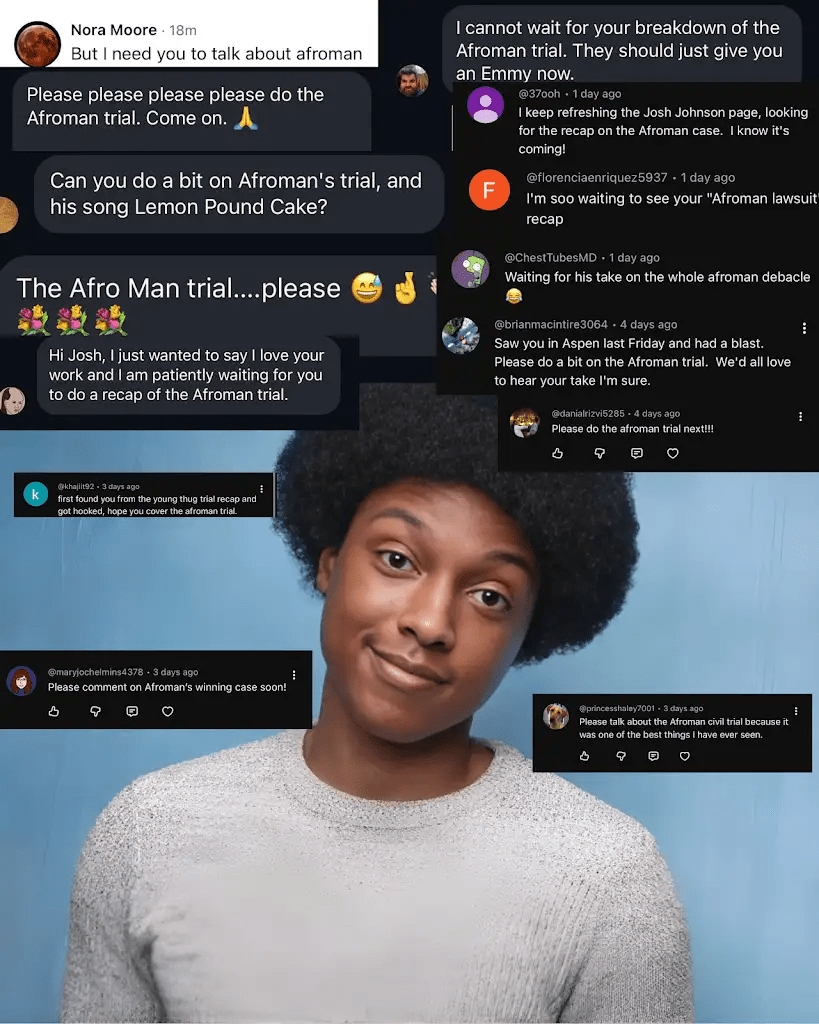
(Don’t forget!)
Josh Johnson 7 hours agoH i Friends, good news! I am hosting @TheDailyShow this week Tuesday – Thursday. Do your thing for the algo so more people see it. Guests this week are Sterling K. Brown, Mero, and Eiza González. March 24-26 on Comedy Central and Paramount

 Scottie's Playtime