Local Mutual Aid Tips

How to build emergency response systems for the long haul

The international accompaniment movement teaches us that to sustain an emergency response to state violence, we must build durable, collective and supportive structures now.

Zia Kandler and Moira Birss February 24, 2026

Targeted state violence and rising fascism are being met with creative organizing by people in Minneapolis and across the country, from mass marches to neighborhood mutual aid to ICE watch foot patrols. These are all beautiful manifestations of resistance that have kept many people safe and demonstrated widespread repudiation of the Trump administration’s policies. 

Yet as state-sanctioned violence becomes more coordinated, normalized and national in scope, we must continue adapting our response systems to shifting needs. Emergency response structures set up in moments of crisis can often lead to isolated, reactive decision making with responsibility falling on a few shoulders, creating the conditions for burnout, security failures, movement fragmentation and individual and organizational missteps or even collapse. 

Here we can draw on some hard-earned lessons from our predecessors in the decades-long international accompaniment movement, who witness, stand with and provide security support for human rights defenders, communities and activists under attack by authoritarian regimes in Latin America.In response to sometimes devastating losses, accompaniment organizations developed a set of skills and strategies over many years for collaborative, sustainable decision making to respond to security incidents while under conditions of constant threat. We ourselves learned these skills in our many years of working with accompaniment organizations in Guatemala, Honduras and Colombia from 2008 to 2022.

We share here principles and practices from this legacy, which we hope organizations and networks, whether formal or informal, can use to develop emergency response structures that are sustainable, don’t overly burden a few individuals with the difficult decision making, actively build collective capacity and shared analysis, and support skill-building for more people in our movements.

What we present here are suggestions, and we invite you to adapt them to particular organizations and situations. They may take a bit more planning and preparation than may seem available in moments of urgency. But if we want to sustain our movements for what, unfortunately, is likely to be a long struggle, we must begin now to put durable, collective and supportive structures into practice.

1. No one person decides alone

Decision making in emergency security situations is emotionally and mentally taxing. Stress can narrow our literal and metaphorical fields of vision. And because the weight of a decision can be incredibly heavy to bear — especially if things go wrong — no one ever made a decision alone in the accompaniment organizations of which we were a part. We had clearly established protocols for which people, based on their roles in the organization, would come together for specific emergency response decisions.

For example, we established regional subcommittees based on where a security incident occurred. Each subcommittee was composed of a security lead, a representative from the advocacy team and on-the-ground volunteers, who worked together to assess, analyze and respond to emergency situations. 

Applying this principle in a U.S. context, organizers of a publicly advertised protest could set a team of folks who gather at an office or a home to monitor social media and news reports for security incidents or threats, and be ready to make decisions about emergency response.

2. Prepare decision-making structures and roles beforehand

Emergency response or crisis moments are when people are most activated and are also the most likely to lead to organizational, interpersonal or movement conflict. This shouldn’t come as a surprise. After all, we are being subjected to situations of prolonged violence directed at ourselves and people we care for. We want to show up in the best way possible, yet often also feel frustration, impotence or rage. 

In our accompaniment organizations, we mitigated stress and conflict (to the extent possible) by having clear processes and roles for decision making. 

First, we frontloaded as many decisions as possible before an emergency, allowing us to focus on the situation at hand rather than spend time debating who would do what and delaying important support for the impacted individuals. Knowing who is going to be involved in emergency response reduces the need for conversation and shortens the response time.

The Peace Brigade International accompanies the Front of People in Defense of Land and Water in Amilcingo, Mexico. (Facebook/Peace Brigades International)

We have seen this play out in high-risk moments in our accompaniment work. For example, when we responded to nationwide protests that extended over months and saw daily murders of protesters by military and police forces, we set up a rotating decision-making group. Because roles and communication channels had already been agreed upon, colleagues didn’t have to debate who should verify information, call other allied organizations or set up our emergency response protocol. They could simply act.

Second, we made decisions in consensus. While clear decision-making structures are essential, that doesn’t necessarily mean they have to be hierarchical. We’ve found in our accompaniment work that decisions are easier to implement when everyone has a hand in shaping them. A consensus-based decision-making structure keeps any one person from carrying the whole mental load (see “No one person decides alone”) and lets us actually use the full brainpower in the room. We all come with different lived experiences, risk tolerances and ways of thinking, which means we’re bound to catch things others won’t and, luckily, vice versa.  

This works best when folks talk it out together and create a clear timeline to decide. In the example above, if the group got stuck, they would start with a quick break to rest and regroup, and if that fails, go to a smaller predesignated subgroup — and, if even that doesn’t work, have a clear fallback decision-maker. Something else we’ve learned: Consensus tends to work better when we trust each other and each other’s criteria, so it helps to make the effort to get to know each other, grab a coffee or go for a walk before the emergencies happen.

3. Some participants in decision making should be offsite 

It might seem logical that those directly involved in the emergency response should be onsite, able to see the situation firsthand and respond immediately. In fact, we learned in our accompaniment work that involving folks offsite as advisors or even decision makers can provide essential perspective, bring in crucial information and further spread the decision-making burden. 

In one protest scenario, while tensions escalated on the ground, an off-site team a few blocks away tracked both police staging and local news sources and relayed that information back to organizers. This wider view allowed on-the-ground leadership to make informed choices without relying only on what was immediately visible.

4. Rotate the decision makers

Holding a decision-making role in an emergency situation is not easy; it means putting your body on high alert, navigating complex situations and grappling with violence directed at our communities. This, unsurprisingly, takes a toll on us over an extended period of time (more on this below). 

Previous Coverage

Lessons in courage, care and collective action from the international accompaniment movement

Even if we believe we can hold this indefinitely, the reality is that, without moments to regulate our nervous systems, our bodies normalize the constant alertness, making it harder to activate when necessary and to properly analyze what is truly an emergency. We want our emergency decision makers to be well-rested, regulated and connected — for their wellbeing and ours, too. 

That’s why we recommend that the decision makers in an emergency situation shift on an agreed-upon rotation. Depending on organizational structure, the best rotation might be every protest or event, or it might be a time period, like a week. This not only gives us a chance to skill up more folks in emergency response (always a benefit for our movements!), but it also gives us decision makers a chance to rest and recharge.

In the protest scenario previously mentioned, once things settled for the day, the people who had been making decisions rotated out. Some went home to sleep; others took quiet time away from phones and updates. A few days later, once they were rested enough to look at what they’d learned and what might need to change next time, they checked back in for the follow-up stage.

5. Institute Urgency Guides

Prolonged emergency situations make it harder over time to accurately recognize urgency. When everything feels critical, true emergencies can become blurred. Clear guidelines help mediate this by providing structure and clarity for decision making under sustained stress. In our accompaniment work, we used the following guidelines to categorize our responses: 

On alert (prior to emergency): The situation seems to be escalating. We have seen a few signs indicating the risk level may be increasing (increased presence of armed actors, state or non-state, counter-protesters gathering, surveillance signs, suspected infiltration, etc.). Start to notify the security team (on and offsite) and start to implement increased security measures.

Immediate response (minutes to hours after): The emergency situation is active; the threat has not yet passed and there is potential for the situation to escalate or repeat. The physical and emotional well-being of impacted individuals is prioritized immediately. 

Rapid (24 to 48 hours after): The specific situation has passed, but there is potential of it repeating in the near future. This could be because we will go to the same location in the next few days, or the event we are hosting will continue, or the aggressor is still nearby or indicating potential harm to our communities. 

Follow-up (a few days to weeks after): The situation has passed. Here we focus on analysis and whether we need to adapt our organizational and movement strategy. This is also a great time to broaden the analysis by including allies in answering questions like: What was the aggressor’s desired impact? Have we seen this strategy used before? What are the increased security measures we may need to implement based on this situation? 

We have used this for years in accompaniment spaces, allowing us to clearly mark stages in our response and who had to be involved. For example, when activists we were supporting suffered an assassination attempt, the attention moved from split-second decisions (immediate response) to checking in with impacted participants, ensuring medical attention, locating others who could be targeted next and finding safe houses, to adjusting security plans for the next day and watching for signs the situation might flare up again (rapid response). Later still, the group circled back to look at what had happened and what it meant going forward (follow up).

6. Establish ways to take care of yourself and your team before and after taking on decision-making roles.

When stepping into an emergency response decision-making role, it is essential to shore up your emotional resources before an emergency and repair your heart and mind afterward. This will look different for everyone, but all organizations and networks should dedicate time and space for everyone involved in emergency response to do this. You might employ the same tools for shoring up and for repairing: They could include a nice walk with your dog, tea with a close friend, reading a good book or taking a bath. 

Whatever you need to rest and recharge, identify those activities and build them into your plans. We know this is hard, and to be clear, this level of care has not always been consistently present within accompaniment organizations; its absence often contributes to rapid turnover and diminished response capacity. Naming this matters. After more than a decade of collective work in emergency accompaniment, we have seen clearly that constant crisis response is not sustainable if people’s nervous systems are never given real opportunities to rest and regulate.

This is why we believe it is so important to speak directly about intentional, collective care practices not as an ideal, but as a necessary condition for the longevity and effectiveness of accompaniment and emergency response itself. 

We don’t need to reinvent the wheel

These tools aren’t a panacea for the real risks presented by escalating state violence. They won’t stop all arrests, injuries, raids, deportations or assassinations. They won’t undo the harm already done or bring back the people we’ve lost. But the more we incorporate skillful emergency response tools into our repertoire, the more we can stay connected to one another under pressure, reduce preventable harm, and keep showing up again and again without burning out, fragmenting or turning on each other. 

None of this work is new. We are drawing from the accumulated knowledge of mentors, organizers, human rights defenders, journalists, accompaniers, medics, lawyers and movement elders who have spent decades responding to fascist and authoritarian governments across regions and generations. From underground networks resisting military dictatorships, to civil rights organizers facing state-sanctioned terror, Indigenous land defenders, abolitionists, anti-colonial movements and transnational solidarity networks, people have long been building collective security, emergency response and care structures under conditions that mirror in many ways what we are facing now.

Luckily, this means we don’t have to reinvent the wheel. We just need to know how to look to the past, to other contexts and to each other for guidance and support. The more intentional we are, the better we’ll be able to keep up the struggle so that, one day soon, we will not just have survived fascism but defeated it.
A Couple Of Pertinent Snippets From Erin In The Morning:

American Psychological Association Reaffirms Support For Trans Youth Care, Pushes Back Against NYT

A recent article from Jesse Singal in the New York Times seemed to indicate the organization might be quietly retreating from supporting trans youth care.

Erin Reed Feb 25, 2026

Yesterday, anti-transgender activist and columnist Jesse Singal published a piece claiming there were “cracks in the wall” around gender-affirming care (which you can find fully fact-checked here). To make that case, he relied heavily on a statement from the American Society of Plastic Surgeons that bypassed the organization’s normal scientific review process and was advanced under pressure from leadership aligned with the Trump administration, including a president who is a major Republican donor. Singal also invoked the American Psychological Association, suggesting the organization was retreating from its 2024 position supporting transgender care and rejecting claims that gender identity is “caused” by external factors. But a representative for the APA tells Erin In The Morning that the organization stands firmly by its 2024 guidelines supporting transgender youth care and provided documentation indicating Singal mischaracterized its position.

“No, APA’s position has not changed,” says a representative speaking for the APA, attaching a link to their 2024 policy statement which provided broad support for gender-affirming care. “APA continues to support unobstructed access to evidence-based care for transgender and gender-diverse individuals of all ages.”

The 2024 policy statement is to date one of the most significant supportive stances of any medical organization for gender-affirming care. It states that gender-affirming medical care is medically necessary, opposes bans on gender-affirming care, declares that being transgender is not caused by autism or post-traumatic stress, establishes the organization’s support for combatting disinformation on transgender healthcare, and finds that rejection of a trans youth’s gender identity can increase their risk of suicide and harm their psychological wellbeing. The policy was passed overwhelmingly, 153-9, with each voter representing a large subset of the organization’s 157,000 members. Now, the organization says that it is not accurate to claim that there is any regression on support for transgender youth care from the organization.

The organization also disputes Singal’s portrayal of a 2025 letter written by Katherine McGuire to the Federal Trade Commission. In his piece, Singal claims the APA “cautioned that gender dysphoria diagnoses could be the result of ‘trauma-related presentations’ rather than a trans identity,” and noted that “co-occurring mental health or neurodevelopmental conditions (e.g., depression, anxiety, autism spectrum disorder) … may complicate or be mistaken for gender dysphoria,” framing this as evidence that the organization is retreating from its 2024 policy supporting transgender youth care. That interpretation is incorrect, according to an APA representative, who says the letter does not contradict the organization’s 2024 position and does not represent a regression in its support for evidence-based transgender care. (snip-MORE)

And again with the big-money outsiders meddling in state lawmaking:

Billionaire-Funded Anti-Trans Bathroom/Sports Ban Ballot Initiative Moves Forward In Maine

The ballot initiative is bankrolled by billionaire anti-trans donor, Richard Uihlein, and represents a new line of attack against transgender people in blue states.

Erin Reed Feb 23, 2026

Anti-trans organization “Protect Girls Sports in Maine” has announced that it has collected enough signatures to get a combination transgender sports ban and school bathroom ban onto the November 2026 ballot, making Maine the second state this year to announce a ballot initiative targeting transgender people in a blue state after a similar effort in Washington. This comes after Maine Gov. Janet Mills fiercely rejected Trump administration attempts to strongarm the state into enacting such restrictions on its own, under threat of losing school lunch money and more. Now, voters may directly determine the fate of transgender youth in schools across the state after a massive signature drive bankrolled by billionaire Republican megadonor Richard Uihlein, the latest in an attempt by ultra-wealthy conservative donors to export anti-trans discrimination across the United States through direct ballot measures.

“Not only will our initiative become the only citizen-led issue to appear on the 2026 Maine ballot, but we will likely be the first state where voters can protect female sports at the ballot box this November. We will pave the way for the rest of this nation,” said Leyland Streiff, the lead petitioner, about the ballot initiative turn-in. Notably, he remained cagey about bathrooms, which the ballot initiative will also heavily impact, in a possibly strategic angle to hide that the bill is much more expansive than he gives credit for.

The initiative would, according to the summary page, define a person’s sex for school purposes as “a person’s biological status as male or female recorded at birth on the person’s original birth certificate.” It would “require schools to maintain separate restrooms, locker rooms, shower rooms, and other private spaces for each sex,” going beyond sports. It would also create a “private right of action” for a student who “suffers direct injury because of a violation of a provision of the initiated bill,” allowing students to sue if they encounter transgender students in bathrooms at schools or in sports. Lastly, it specifically carves out transgender students in bathrooms and sports from the Maine Human Rights Act.

Maine LGBTQ+ organizations fiercely condemned the bill. David Farmer, speaking on behalf of an opponent coalition of LGBTQ+ organizations across the state, called the referendum a “one-size fits all approach to sports participation and bathrooms that will increase bullying and harassment and cost local schools millions of dollars for construction and litigation.” He also called out the billionaire backing of the bill, stating, “This is a cynical attempt by one of the richest people in the world to manipulate voters in hopes of influencing the U.S. Senate race, the race for governor and the races for Congress.” (snip-MORE)

OK, So. On The One Hand,

I really don’t care to dignify or even acknowledge that last night’s spectacle was an actual State Of The Union address, but it was what we get. I thought I’d simply ignore all of it and all surrounding it, but of course I read this article in The Guardian because old civic duties habits die hard (this one’s not dead yet!), and I thought I’d bring it here because it’s not sharp or negative. It’s simply what happened. (And what, no doubt, we all expected, though I’m certain some expected far less from the Democrats in attendance.)

Why the longest-ever State of the Union address was the most inconsequential

Amid Trump’s lies and xenophobic rants, people struggling to pay bills and make ends meet are unlikely to be moved

He wanted to give the king’s speech. Donald Trump entered the US House chamber on Tuesday like a medieval monarch, with Republicans lined up eager to touch his royal robes (or, in two cases, grab a selfie with him). But within moments, the illusion was shattered.

As the US president strolled by, soaking up adulation, Democratic representative Al Green of Texas held aloft a handwritten sign: “Black people aren’t apes!” – a reference to Trump recently sharing a racist video depiction of Barack and Michelle Obama.

When the first State of the Union address of Trump’s second term got under way, Republicans moved in on Green menacingly and tried to tear the sign away. But he persisted until being escorted out for the second year in a row. As he departed, there were more acrimonious exchanges with Republicans, a few of whom tried to start a chant of “USA! USA!”

(snip-embedded 3 minute video, on the page: “Donald Trump’s two-hour State of the Union address in 3 minutes – video”)

It was the first but not the last time that a person of color would take a stand during the wannabe autocrat’s record 107-minute speech while others remained silent or raucously egged him on. It was a night where Trump again sought to poison US politics and divide Americans along various fault lines, none more inflammatory than race.

The great salesman, sporting his familiar red tie and orange hue, began with a predictable pitch: “Our nation is back – bigger, better, richer and stronger than ever before.” In his telling, inflation, mortgage rates and gas prices are falling, while the stock market, oil production and foreign direct investment are booming along with construction and factory jobs.

Luckily for Trump’s speechwriter, the US men’s hockey team won Olympic gold two days earlier. The reality TV president hailed them in the press gallery, prompting applause and roars from both Democrats and Republicans. But while Republicans chanted “USA! USA!” with gusto, barely any Democrats did.

“We’re winning so much that we really don’t know what to do about it,” Trump declared. While he didn’t mention his gilded ballroom, it was still a Pollyannish version of America that will not be recognized by people struggling to pay bills and make ends meet. Trump is not the man to offer: “I feel your pain.”

Republicans ritually stood and clapped and cheered all the same. Democrats, who last year waved protest signs that looked like Marty Supreme’s table tennis paddle, this time remained bolted to their seats and grunted, rolled their eyes, dropped their jaws, shook their heads, waved their hands or got bored and studied their phones.

Trump moved on to his beloved tariffs, calling the supreme court decision to kill his pet project “very unfortunate” and “disappointing” as four black-robed justices wore inscrutable expressions on the front row. Compared with last week’s White House tantrum, when he threw all toys and decorum out of the pram, this was Trump showing self-restraint worthy of a child refusing a second ice cream.

It didn’t last. As Trump riffed on crime, election integrity and transgender issues, he turned his fire on Democrats: “These people are crazy, I’m telling ya, they’re crazy. Boy, oh, boy, we’re lucky we have a country with people like this. Democrats are destroying our country, but we’ve stopped it just in the nick of time.”

He soon reminded everyone that, since the day he came down the golden escalator a decade ago and ranted about immigrants, race has always been at the heart of the Trumpist project. He gazed out at a chamber where Democrats – including the late Jesse Jackson’s son, Jonathan Jackson – somewhat resembled America in their diversity while Republicans presented a sea of white faces with only a handful of exceptions.

Trump announced a “war on fraud” led by vice-president JD Vance, citing a social services scam in Minnesota that he mendaciously and absurdly estimated to have cost $19bn. Ilhan Omar, a Somali-born representative from Minnesota, and Rashida Tlaib, a Palestinian American from Michigan, shouted: “That’s a lie!” and “You’re a liar!”

The president was just warming up. He went on a xenophobic rant: “The Somali pirates who ransacked Minnesota remind us that there are large parts of the world where bribery, corruption and lawlessness are the norm, not the exception. Importing these cultures through unrestricted immigration and open borders brings those problems right here, to the USA.”

Omar shook her head, perhaps more in sorrow than in anger.

Trump challenged Democrats: “If you agree with this statement, then stand up and show your support: the first duty of the American government is to protect American citizens, not illegal aliens.” Democrats remained seated. Trump retorted: “You should be ashamed of yourself, not standing up.”

It was rich from the man who sent a goon squad into Minneapolis that resulted in the needless deaths of two US citizens, Renee Good and Alex Pretti, who went unmentioned by the president (as did survivors of abuse by Jeffrey Epstein).

Omar, raising a hand to the side of her mouth to project her voice, yelled with piercing moral clarity: “You have killed Americans! You have killed Americans! You have killed Americans! You have killed Americans!”

Helpfully, Omar and Tlaib had set up a real-time factchecking service for the chamber. Trump boasted that he ended eight wars. Tlaib shouted: “It’s a lie! What are you talking about?”

Trump said: “No one cares more about protecting America’s youth – .” Tlaib interjected: “Then release the Epstein files!”

Trump vowed to halt insider trading by members of Congress. Mark Takano of California yelled: “How about you first!” Tlaib called out: “You’re the most corrupt president!”

The more Trump talked, the less he said. He had gone into the address with an approval rating of 39% positive and 60% negative, according to a Washington Post-ABC News-Ipsos poll, lower than any past president delivering his first State of the Union address. Over an hour and 47 minutes, he offered little to change that equation. The longest State of the Union speech in history was also one of the most inconsequential.

It was small wonder that Omar, Tlaib and several other Democrats walked out before the end. As for Green, his seat remained empty too save for a handwritten cardboard sign that simply and defiantly said: “Al Green.”

Josh Day Next Day

I almost posted this last night for those who might have wanted a funny alternative to the SOTU, but here’s hoping you all found what you wanted to watch. Randy posted, and I wanted that to stay on top, because he’s been busy and tired and not able to get around to posting. Of course, this is Josh Johnson: no matter the subject, guard your device from whatever beverage you may be taking in as you relax and listen and laugh!

From Joyce Vance:

The Week Ahead

February 22, 2026 Joyce Vance

The primary focus this week is probably going to be on the State of the Union address. Will any of the Justices show up in the wake of Trump’s Friday afternoon press conference, where he excoriated the ones who ruled against him in the tariffs case and called them an embarrassment to their families? Will Trump continue to talk about his ability to destroy other countries? We will see what Tuesday brings.

But he heads into SOTU with a new Washington Post-ABC poll showing that his approval rating is at 39%—the last time it dipped below 60% was in the wake of January 6. Forty-seven percent of Americans strongly disapprove of the job the president is doing.

Late last week, there was reporting on a tremendously important story, one that should be topping every news cycle, but doesn’t seem to be. On this administration’s watch, a DHS agent shot and killed an American citizen living in Texas during a traffic stop last March. According to the report, released as part of a FOIA request, 23-year-old Ruben Ray Martinez is now the earliest known shooting by federal agents associated with the Trump administration’s mass deportation policy. We’re only finding out about it now.

Once upon a time, we would have taken the government’s version of an officer-involved shooting at face value. Here, according to the New York Times, the government’s report claims that, “Mr. Martinez initially did not follow officers’ instructions but eventually slowed to a stop after receiving verbal commands. Agents surrounded the vehicle and told him to get out of the car before Mr. Martinez accelerated and hit a federal agent, who landed on the roof of the car according to the documents. Another agent then fired multiple times through the driver’s side window. Mr. Martinez was transported to a hospital in Brownsville and later died.” NBC filed essentially the same report, but noted that the agent landed on the hood of the car when the driver accelerated after “Agents then surrounded the vehicle.”

Maybe the government’s story is true. Maybe it’s not. It doesn’t make a lot of sense—we’re to believe Martinez came to a stop and then, while surrounded by agents, managed to accelerate with enough force that he hit one of them, who ended up on either the hood or the roof of his vehicle. Were there bystanders nearby? The agent fired into a vehicle, an apparent violation of DHS policy. And was the agent still on the hood or roof when the other agent fired? Did they put him in danger? I’m having trouble envisioning it. The documents apparently reflect that the agent was treated for a knee injury at a local hospital and released.

One problem when the government consistently lies is that it’s hard to know when (if) it might be telling the truth. And the fact that this report was concealed for so long doesn’t do anything to calm suspicion. There was reporting of his death at the time it happened, but federal and state officials failed to disclose that ICE agents were involved.

The report that was released under FOIA does not disclose the reason Martinez was stopped by officers working on an immigration detail. He was a brown-skinned American citizen. We have a phrase that describes this in Alabama—driving while brown—and to state the obvious, it is not a legitimate reason for police, including federal agents, to make a traffic stop.

Martinez’s mom, Rachel Reyes, described her son as a hard-working young man who had no history of confronting law enforcement officials. She said he worked at an Amazon warehouse in San Antonio and was out celebrating his birthday when he was killed. “He was a good kid. He doesn’t have a criminal history. He never got in trouble. He was never violent.” She also said she was told by Texas Rangers that there was video that contradicted DHS’ version of events, but did not provide any details.

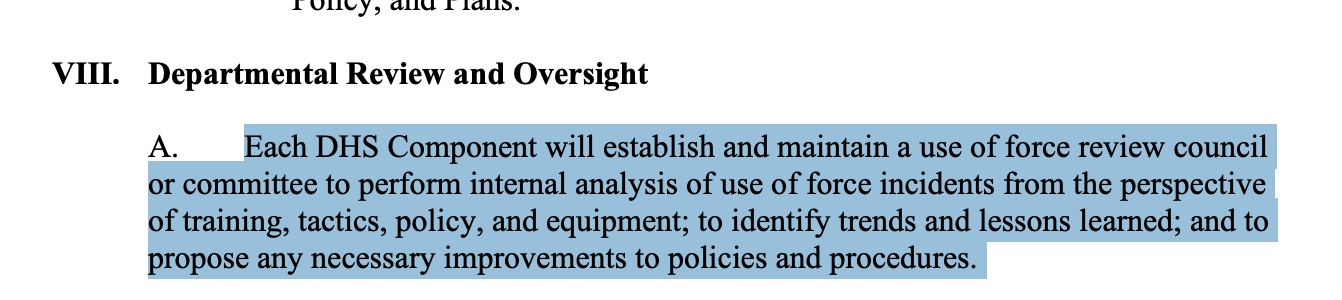
Under existing policy, every DHS component, including ICE, is required to have a “use of force review council or committee” to analyze incidents. The use of deadly force “must be reasonable in light of the facts and circumstances confronting the LEO [law enforcement officer] at the time force is applied.” It can only be used if agents reasonably believe there is an imminent threat of death or serious injury to an agent or someone else. It’s not clear whether a review was taken here and if so, what the results were.

There has been no outrage from Martinez’s senators, John Cornyn and Ted Cruz. It is essential that there be a full accounting for Martinez’s death. The facts matter.

There are also ongoing reports of deaths at immigration detention facilities, even as the government is reportedly ramping up to literally warehouse human beings, including children, in actual warehouses, being snapped up with your taxpayer dollars. The Texas Tribune, a local paper that still does independent journalism, has a report calling out horrific conditions in Texas prisons, including the death of Geraldo Lunas Campos, which we’ve previously discussed. The official report says he tried to hang himself. The medical examiner ruled it a homicide, and a witness allegedly backs that up. There have been six deaths in six weeks at ICE-run facilities in Texas.

Although the Supreme Court released its decision in the tariffs case last week (6-3, IEEPA, the statute that doesn’t use the word “tariff” doesn’t authorize the president to issue them), we haven’t heard that last word on the issue yet. Trump is serious about tariffs. During the campaign, he called “tariff” the most beautiful word in the English language. He withdrew his support for incumbent Colorado Congressman Jeff Hurd, calling him a “RINO,” because he opposes tariffs. And Trump has said that he will issue new ones.

He has the authority to do that. Although Congress has the power to impose tariffs, it can and has loaned some of it to the president. What Congress intends to do that, it knows the right way—it uses the word “tariffs” in the statute and places limitations on their use, like a time limit or a limit on how high the percentage of the tax can be. It also provides conditions under which the tariffs the specific law allows for can be imposed by a president.

That was the whole reason Trump used IEEPA: Because it didn’t give him any tariff powers, it necessarily didn’t impose any limits on what he could do. It would be as if you told your teenager they could go to a movie so long as they were home by 10 p.m. and it didn’t cost more than $10. You also have a rule that it’s a good idea for family members to be happy. Using the happiness rule, the kid then goes to a movie that doesn’t get out until 11 p.m. and costs $15. It’s an imperfect analogy, but you get the point of what Trump did and why.

Now he’s stuck in a world where he can only use the specific tariff authority Congress has granted him. So here’s what he had to say, in a Truth Social post:

“Based on a thorough, detailed, and complete review of the ridiculous, poorly written, and extraordinarily anti-American decision on Tariffs issued yesterday, after MANY months of contemplation, by the United States Supreme Court, please let this statement serve to represent that I, as President of the United States of America, will be, effective immediately, raising the 10% Worldwide Tariff on Countries, many of which have been “ripping” the U.S. off for decades, without retribution (until I came along!), to the fully allowed, and legally tested, 15% level. During the next short number of months, the Trump Administration will determine and issue the new and legally permissible Tariffs, which will continue our extraordinarily successful process of Making America Great Again – GREATER THAN EVER BEFORE!!! Thank you for your attention to this matter. President DONALD J. TRUMP”

Trump seems to be contemplating tariffs under Section 122 of the Trade Act of 1974. That provision is designed to address short-term emergencies, not to implement trade policy, and it has never been used. He also seems to be contemplating other authorities for his new tariffs, and who knows what, if anything, he’ll actually end up doing—he repeatedly announced, repealed, waffled, and wavered on tariffs at the start of this term. One thing that is for sure is that if he actually enacts them, he’ll have a fight on his hands in court

He’s already lost conservative commentator Andy McCarthy, who says tariffs under Section 122 would be illegal. Neal Katyal, who argued the IEEPA case successfully tweeted “Seems hard for the President to rely on the 15 percent statute (sec 122) when his DOJ in our case told the Court the opposite: “Nor does [122] have any obvious application here, where the concerns the President identified in declaring an emergency arise from trade deficits, which are conceptually distinct from balance-of-payments deficits.” If he wants sweeping tariffs, he should do the American thing and go to Congress. If his tariffs are such a good idea, he should have no problem persuading Congress. That’s what our Constitution requires.”

Neal Katyal@neal_katyal

Seems hard for the President to rely on the 15 percent statute (sec 122) when his DOJ in our case told the Court the opposite: “Nor does [122] have any obvious application here, where the concerns the President identified in declaring an emergency arise from trade deficits, which

10:48 AM · Feb 21, 2026 · 565K Views


270 Replies · 1.72K Reposts · 5.63K Likes

While we are not done with tariffs, we can expect more Supreme Court decisions this week, on the 24th and 25th.

We were supposed to see Volume 2 of Jack Smith’s special counsel report, the one about classified documents, on Tuesday. That deadline was set after the Eleventh Circuit chastised Judge Cannon for dragging her feet in the matter. But when she finally got around to setting the date, she noted that Trump could appeal, which he, of course, did. Delay. Delay. Delay. He filed a motion in his personal capacity in January, asking Cannon to permanently block the report’s release (he argued Smith’s appointment was illegal, so we should pretend it never happened). DOJ chimed in to support the boss. Trump’s former co-defendants, Walt Nauta and Carlos De Oliveira, filed a request of their own, seeking a ruling that all copies of the report be destroyed.

Earlier this month, journalists who had previously intervened in the matter to force the release of the report went to the Eleventh Circuit. That court has expedited the matter, which means Trump and his supporters have briefs due next month. His delay game is still holding up, but unless the Supreme Court weighs in on his side again in a criminal matter, there’s a limited shelf life on this one.

Other events to watch for this week:

  • On Tuesday, Secretaries of State who have decided to participate will meet with the FBI on unspecified issues. We discussed that meeting here.
  • On Friday, a federal judge in Fulton County, Georgia, will hold a hearing on the county’s request to have items returned, including ballots and voter rolls, that were seized by the federal government during a search warrant executed on January 28.
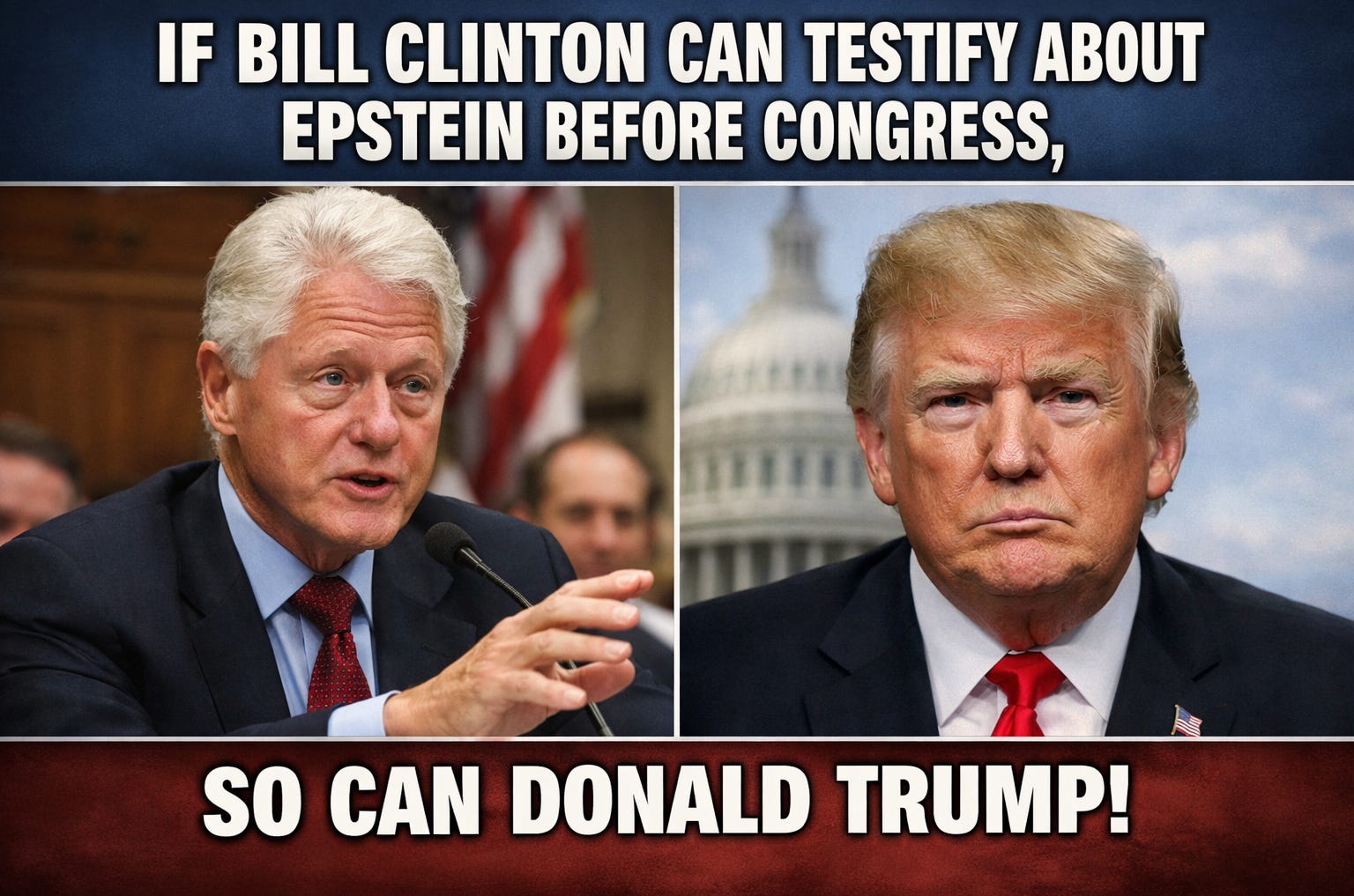
  • Thursday, Hillary Clinton testifies in front of the House Oversight Committee looking into Jeffrey Epstein. Friday, Bill Clinton testifies. Both have previously provided sworn statements. Their testimony will be behind closed doors. I’m in favor of taking testimony from everyone who appears to have had a close enough relationship with Epstein to participate in or observe his crimes. The Clintons have both denied any involvement. Please consider grabbing this meme and posting it (I made it, so it’s fair game) and calling your Republican representatives to highlight the hypocrisy they’re engaging in.

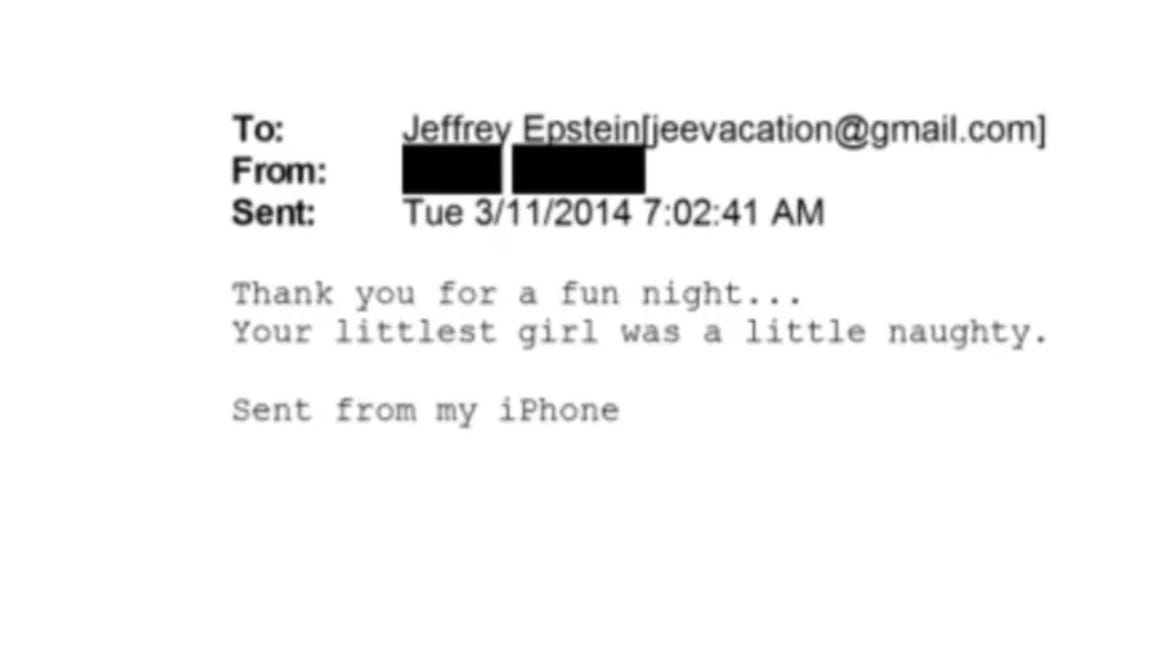
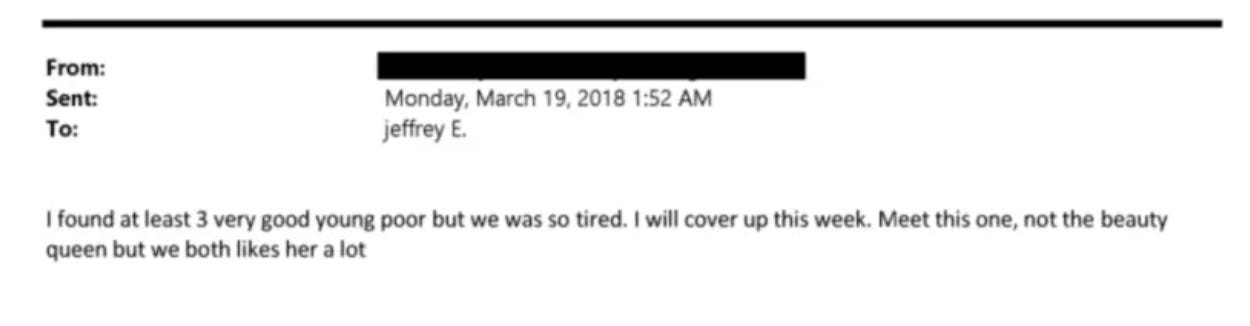
While Republicans are focused on the Clintons, we still don’t know who the redacted name in this email, which was flagged in a CNN report, belongs to:

We don’t know the name behind the redaction of the person who sent Epstein this email in 2018

The survivors deserve to have all of this made public. A number of them plan to attend the State of the Union as guests of members of Congress.

What else will we see this week? Maybe in the wake of his receipt of the Nobel Peace Prize from the actual winner, we’ll see athletes come to the White House to deliver their gold medals to Trump? My bingo card says he’ll float the idea during State of the Union ( I’m only partially joking).

We’re in this together,

Joyce

ICE gang thugs caught lying to the courts

ICE going after people with legal permission to be in the US but have not gotten a green card yet

MS NOW EXCLUSIVE: First grade girl recounts searching for father after ICE detained him

Quickie Comedy

It’s Josh Johnson, Craig Robinson, and Michelle Obama!