Useful Material, Here

Of course, we’re all looking to save what we can, every day. This can be applied to small households larger than single resident. Give it a look! I remember doing some of this in the 80s, and I still do all I can. A penny’s a penny! Also, if you click through to read, here on the headline, | you can see funny graphics to go with many of the suggestions.

People who live alone share their 45 best money-saving hacks

“I fill empty glass jars with water and store them in my fridge. It costs more to cool an empty fridge than a full one.”

Emily Shiffer

Whether you’re single or choose to live alone, it can be expensive. Finding ways to save money living alone can take some creative thinking, but there are easy ways to put some extra cash back in your wallet.

In an online forum, member Just_Throw_Away_67 posed the question to fellow people who live alone: “What random cost-saving measures have you found that work well for those living alone?”

And single people and people living solo happily shared their money-saving hacks. These are 45 of the best ways to save money if you live alone.

“I’ll start, to save money on energy I fill empty glass jars with water and store them in my fridge. It costs more to cool an empty fridge than a full one, and since I don’t eat very much my fridge is often nearly empty. Not sure how much this has saved me, but now I have water if I ever were to need it!” Just_Throw_Away_67 (Note from A.: This holds true for the freezer, too. Keep some containers of water up/out there. They help use less energy, and frankly, the ice is useful during power outages.)

“Blackout curtains because I live in the South so it’s always hot. I also have privacy film that blocks some UV rays when I do want some light. Using a floor fan in my room (where I spend the majority of my time) with the door closed to keep it cooler. Close the air vents in my guest room since it’s primarily unused to cut down on AC costs. Cook large batches of food at one time so I’m not constantly using my stove/oven.” eternally_feral

“It’s a pain to heat the whole oven for a little food. I recommend an air fryer over a toaster oven though. They’re a bit faster (and you can still make toast).” MissDisplaced

“I keep my heating and cooling low. I can wear extra layers or less to get to a comfortable temp.” Reasonable-Cold2161

“I read a tip to not bother doing a full ‘grocery shop’ trip if it doesn’t work for you/doesn’t make sense for you. Rather, if you find you’re throwing food away you couldn’t eat in time, try to do the method of going to the store of getting, say, just what you need for tonight and tomorrow’s meals, or whatever.” citynomad1

“Grocery delivery. I end up spending 50% less compared to shopping in the store.” Everydaylookwithin

“This is why I do curbside pickup. I order through the app, see what deals and coupons they have, stick to my list and don’t end up impulse buying. An added bonus is I can pick up on my way home from work and not spend time waiting in the checkout line.” zoebadwolf

“It took a little bit of up front investment, but I dumped my gigantic and ancient energy-hungry fridge a long time ago for a brand new one that is much smaller and also has a variable speed compressor for extra efficiency. The energy savings from that move alone probably paid for the fridge several times over by now.” BrewCityChaserV2

“I have a countertop dishwasher that I intentionally use only during off-peak hours. Luckily, this rental has a new refrigerator, and I run my air purifier on its 2 hour timer during those off hours (cat hair lol). Oh- I bought a Tushy bidet on sale- it pays for itself in the first year!” sk8rcruz

“I always bring my own lunch to work. I also cut up fresh veggies, put them in ziploc bags, freeze them, and then steam them later in the microwave. You can also just put a whole bag of spinach in the freezer and then steam it in the microwave. Clean with a plastic spray bottle of vinegar and dish soap. Sprinkle baking soda on carpets and rugs before vacuuming.” Unhappy-Jaguar-9362

“I have milk jugs with water in them in the fridge and freezer. I also buy in bulk. Usually the more you buy the cheaper per unit it is. I have a year supply of everything (joking) not quite but almost. I keep my air conditioner at a warmer temperature and use a fan to cool me all the way. I close blinds and curtains during the day. This cuts down on the heat in the room. Unfortunately it is dark in my apartment during the day , but this can make a difference of up to 10 degrees. This saves on cooling costs. Instead of buying single servings of food. I make a family size amount and put the leftovers in round dinner containers all ready to go for the next meal. These can also be frozen if you don’t want the same thing a couple days in a row and put in the microwave for 6 or 7 minutes.” Delightful_Helper

“I buy the family size packs of meats, divide and freeze. I also still cook big meals like when my kids were teenagers and divide them into portions and freeze. Its simply too hard to cook for one person. I make a weekly menu of the dishes I want to cook and then place my order for the grocery delivery. It does save money and since I cook a lot of casseroles, big pots of soups and stews, etc., and freeze in portions. I use my air fryer to warm the frozen dishes instead of the oven. It has almost become my hobby to have a variety of different meals through out the week without having to cook every day. Life is good 😊.” No_Guava_90

(snip-MORE, plus funny graphics)

A Nice Little Video

I just ran across this in my SBTB email. It belongs here. Doesn’t look like it embedded (it didn’t on SBTB, either,) so click through on “View this post…” and make sure the sound is on. A very worthy click.

View this post on Instagram

A post shared by Jacob Witzling (@jacobwitzling)

Mr. Abrego’s Account of Torture at CECOT in El Salvador

https://www.muellershewrote.com/p/mr-abregos-account-of-torture-at

Mr. Abrego has filed an amended complaint asking the court to declare the government’s actions unlawful and to order his release. He describes his torture in El Salvador in the complaint.

An update on my eye sight

I want to thank everyone that encouraged me to go forward with what is to me a scary operation.  I love everyone that wrote / called me to tell me their stories.  I had my second appointment with the eye doctor.  Even with the prism that took some of the fussy out of the letters I was seeing the best they could do for me was 20/70.  I have no idea of what that means but she asked if I was driving and I replied yes which seemed to upset the doctor.   The office is wonderful and very LGBTQ+ affirmative and they included and joked with us totally comfortably.  I had to laugh when the doctor asked the eye person to get his husband and she went out and told Ron he had been summoned.  

It seems she feels I need to have the surgery to see.  She is unsure if they will do both eyes but feels they will.  She explained what she felt would be our costs, and what would happen to my eyesight if we did not go forward.  Ron told them about how high the magnification is on my monitors and how he has to try to step back to read everything smoothly.  He told them it was unacceptable my sight would get any worse and I would lose the ability to do what I love, be on the computer with all of you.  

So they set up an appointment with the eye surgeon.  I was shocked at how fast it was happening.  I figured I would have a couple of months, but the appointment is for next Monday.  Ok I know everyone has told me how great their experience was but … I admit to being scared.  My eyes are so important to me and how I live my life.  I could give many organs but if I lose my sight my life as I love it is over.  

The eye doctor is a wonderful older lady who was concerned about the costs for us and Ron told her we would manage that it was important enough.  She cautioned us not to be dragged into expensive things I man not need as most people getting the normal corrective lens were more than satisfied and had good vision.  She warned that the market was in convincing us to pay for “Upgraded corrective lenses” that I may not need or could be avoided with a cheap pair of reader glasses.  

I have to admit she was far different from the big business eye place Ron and I went to several years ago.  I was not yet 62 so they told me as soon as I was I needed to see them to have the cataracts removed.  Ron was already over that age for Medicare to pay for it and they pushed him hard to have the surgery.  His eyesight was far better and less cloudy than mine.  They just wanted the money from Medicare.  Plus after my exam they took me to their glasses section.  After picking out what I thought was a pair of reasonably priced frames they totaled up my new glasses … at $1,400.00

I looked at Ron, we had never paid that for any glasses.   I told them I needed to think on it and never went back.  The only issue I have is do I pay extra for the “corrective lenses”?   If anyone could leave me a message on their experience either way, I would be so grateful.  Ron was such a cheerleader for me after we left the eye doctor’s office saying how he felt this would be so good for me and make what I love doing on the computer so easy.  I wish I felt as confidant as he does.  Hugs

Resource & Information for Grief Processing

Several of us have/have had older pets. Maybe this can come in handy. From the MUTTS blog.

On Pet Loss and the Rainbow Bridge: A Conversation With Animal Chaplain Patricia Denys About Grief and Healing

Losing a pet is a unique kind of heartbreak, one that can feel both profound and invisible. To help bring comfort, we spoke with Patricia Denys, MFA, a compassionate voice in the world of pet grief and healing.

Patricia is an artist, animal activist, creative director of Animal Culture magazine, educator, yogi, vegan, and an interfaith, interspecies animal chaplain ordained by the Compassion Consortium. She’s also a great friend of MUTTS.

In this conversation, Patricia shares her perspective as an animal chaplain on navigating loss, offering support, and finding gentle ways to honor the journey. Whether your pet recently crossed the Rainbow Bridge or you’re reflecting on a loss from long ago, we hope this conversation brings you some clarity,  comfort, and connection.

Understanding the Role of an Animal Chaplain

Can you explain what an animal chaplain does?

An animal chaplain helps animals live their fullest lives and helps them transition when it is time. They offer help to animal parents, animal care workers, and animal people in general, navigate stress, grief, and compassion fatigue. Animal chaplains also encourage stronger human-animal (interspecies) bonds, individually and communally. Animal chaplains offer help with end-of-life care, decisions and rituals (interfaith), and bereavement support. An animal chaplain is also there for celebrations and victories for all animals and our planet! 

How did you become an animal chaplain, and what drew you to this work?

Our magazine, Animal Culture, interviewed Reverend Sarah Bowen, co-founder of Compassion Consortium and Executive Director of their Animal Chaplaincy Training Program. The program is interfaith, interspiritual, and interspecies, which was important to me. Sarah was a wonderful interviewee, and I became quite interested in the program after connecting with her. It seemed intriguing and intelligent, and an organic next step on my path of a lifetime working with animals. It was quite a commitment of study and well worth it. My fellow students were amazing, compassionate people. It was a very positive experience.

What kinds of support do you offer to people who are grieving the loss of a pet?

The first thing is listening, while being a calming presence for different needs from different people. Using gentle questioning to see what arises for someone. Reminding people that laughter is good and healthy, and part of healing. And, working on realizing that one does not stop loving someone after the transition. 

Hospice and Palliative Care for Companion Animals, edited by Amir Shanan, Jessica Pierce, and Tamara Shearer, is an excellent book. In one of the essays, the writer calls mourning, “…a transition from loving in presence to loving in absence.” We work on that as animal chaplains.

Why Saying ‘Goodbye’ to a Pet Is So Painful

Why do we often feel that losing a pet is just as painful — if not more so — than losing a human loved one?

Those of us who have experienced the pain of the loss of a companion animal, or any animal, know this pain all too well. Humans have intense bonds with an animal they love or one that is a part of their lives somehow. Animals’ lives are shorter than humans’. The shock of that short life being over can be very hard to process.  

Companion animals also demonstrate stability and routine. A big void is created when these things come to an end. Animals are sentient. They are aware. We see that time and time again. We want to be with them and protect them; they are our family. 

How can we respond to people who say, “It was just an animal” or who don’t understand pet grief?

It is very disappointing to hear, “It was just an animal,” from anyone, especially someone you respect or that is close to you. It is the last thing anyone wants to hear since it is so insensitive to one’s feelings and to the memory of the one who has passed. What someone grieving needs is validation that their feelings of loss for such a profound bond with an animal, are understandable and real. You may choose to say that or not.

What are some healthy ways to process and express grief after losing a pet?

Definitely seek support from friends, family, your veterinarian, and/or an animal chaplain. Animal grief is in our mainstream now. There is no shame in asking for help, ever. One needs to talk about the loss. It’s real. 

Consider taking a workshop on animal loss or creating a shrine, memorial, art piece, or photo book. Volunteering is also a great, healthy way to heal.

Do you have any advice for someone who feels stuck in their grief or like they should have “moved on” by now?

“Moving on” is a very individual thing. There is no time limit on processing through one’s grief. Accepting the loss and adjusting one’s life accordingly takes time. You need to take your time. If you feel that you are experiencing symptoms of prolonged grief, a therapist can be of help. 

Helpful Ways to Honor a Pet’s Memory

How can rituals or memorials help with healing? Do you have any suggestions for meaningful ways to honor a pet’s memory?

Oh, there are so many wonderful things you can do! Humans have always embraced rituals. It is a way to connect to something. A ritual may be something within your religious practices, your own spirituality that you find comforting, or the daily ritual of taking a walk with your dog. That is a ritual for both of you!

A memorial can be a powerful took for healing. It is a coping tool. It is a way to process. Creating an altar on a table for the one you have lost that includes photographs, something that was meaningful for that animal such as a toy, or adding flowers can be a positive expression of your feelings of loss. Re-wilding a small garden that encourages other animals to visit, or creating a small shrine you can carry with you are other ideas. Keeping a journal of your thoughts or sketches can also have a profound effect on healing. The simple act of writing to your loved one — what they meant to you, how much they are missed, what you enjoyed most about them, for example, is often a comfort.

As an artist and a teacher of art, I know creating art can be cathartic and healing, I conduct art workshops on loss and celebration of animals and the planet. They are for non-artists especially. It has been an incredible experience to see what people can create as a way to work out their feelings, and usually, how anxious they are to share with each other. It is a bonding experience about the power of love.

(snip-a bit MORE; click through on the title above)

Enjoy Some Eye Candy + Snark, 7/1 Fun

This one is especially hilarious-go see it! 🤣 🤣 🤣

Peace & Justice History for 6/29

June 29, 1925
The South African parliament passed a bill excluding black, coloured (mixed race) and Indian people from all skilled or semi-skilled jobs.
June 29, 1963
A mass “walk-on” (trespass) was organized at a chemical and biological warfare facility in Porton Down, England. These weaponized agents had been researched and produced there since 1916; it’s now known as the Defence Science and Technology Laboratory.

Protesters demand an end to germ warfare in 1963 at Porton Down (Getty)
Unconscionable activities at Porton Down (From 2004)

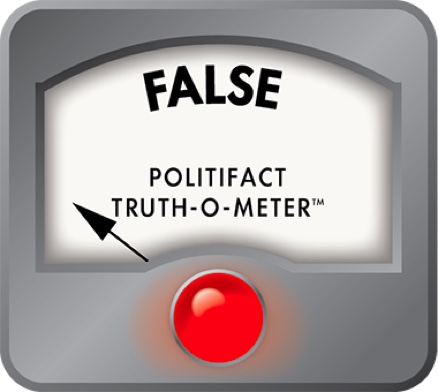
“Reagan took the deficit from $70 billion to $175 billion. Bush 41 took it to $300 billion. Clinton got it to zero. Bush 43 took it from zero to $1.2 trillion. Obama halved it to $600 billion. Trump’s got it back to a trillion.”

https://www.politifact.com/factchecks/2019/jul/29/tweets/republican-presidents-democrats-contribute-deficit/

Here’s how the deficit performed under Republican and Democratic presidents, from Reagan to Trump

This article was updated Aug. 2 to include a graph with the annual federal deficit in constant dollars.

A viral post portrays Democrats, not Republicans, as the party of fiscal responsibility, with numbers about the deficit under recent presidents to make the case.

Alex Cole, a political news editor at the website Newsitics, published the tweet July 23. Within a few hours, several Facebook users posted screenshots of the tweet, which claims that Republican presidents have been more responsible for contributing to the deficit over the past four decades.

Those posts racked up several hundred likes and shares. We also found a screenshot on Reddit, where it has been upvoted more than 53,000 times.

“Morons: ‘Democrats cause deficits,’” the original tweet reads.

Screenshots of the tweet on Facebook were flagged as part of the company’s efforts to combat false news and misinformation on its News Feed. (Read more about our partnership with Facebook.)

At PolitiFact, we’ve reported extensively on how Republicans and Democrats often try to pin the federal deficit on each other — muddying the facts in the process. So we wanted to see if this Facebook post is true.

We reached out to Newsitics, the media outlet that Cole founded and works for, to see what evidence he used to compose the tweet and didn’t hear back. Our review shows the numbers basically check out, but they don’t tell the full story.

What even is the deficit?

Some people confuse the federal deficit with the debt — but they’re two separate concepts.

The Department of the Treasury explains it like this: The deficit is the difference between the money that the government makes and the money it spends. If the government spends more than it collects in revenues, then it’s running a deficit.

The federal debt is the running total of the accumulated deficits.

Following the money

Now let’s take a closer look at each president’s impact on the federal deficit.

To check the numbers in Cole’s tweet, we went to the Federal Reserve Bank of St. Louis, which has an interactive database for these kinds of figures. Here’s what we found for each claim:

“(President Ronald) Reagan took the deficit from 70 billion to 175 billion.” This is more or less accurate. The federal deficit went from about $78.9 billion at the beginning of Reagan’s presidency to $152.6 billion at the end of it. At points between 1983 and 1986, the deficit was actually more than $175 billion.

“(George H.W.) Bush 41 took it to 300 billion.” Close, but not exactly. The number was around $255 billion at the end of Bush’s term. The deficit spiked at around $290.3 billion the year before he left office.

“(Bill) Clinton got it to zero.” This is true. During his presidency, Clinton managed to zero out the deficit and end his term with a $128.2 billion surplus.

“(George W.) Bush 43 took it from 0 to 1.2 trillion.” This is in the ballpark. Ignoring the fact that he actually started his presidency with a surplus, Bush left office in 2009 with a federal deficit of roughly $1.41 trillion.

“(Barack) Obama halved it to 600 billion.” This is essentially accurate. Obama left the presidency with a deficit of approximately $584.6 billion, which is more than halving $1.41 trillion. The deficit was even lower in 2015 at around $441.9 billion.

We had to look for more recent data to back up Cole’s allegation that “Trump’s got it back to a trillion.”

Featured Fact-check

A Treasury Department statement from June put the federal deficit at about $747.1 billion so far this fiscal year. But the agency also reported that Washington is on track to post a $1.1 trillion deficit by the end of September, which backs up Cole’s claim.

After we published this story, some readers asked us to look at the annual deficit in terms of constant dollars, which adjust for inflation. Data since 1940 show that the deficit was highest in 2009, 2010 and 2011 — the height of the Great Recession and the aftermath of the 2009 stimulus package.

Presidential power

How much power do presidents have to change the deficit anyway?

The president does affect the budget by negotiating and signing appropriations bills. But there’s a lot more to it.

First, the country’s economic situation has a big impact on the federal deficit. The Great Recession affected the deficit near the end of George W. Bush’s administration and the beginning of Obama’s, said Stephen Ellis, executive vice president of the nonprofit Taxpayers for Common Sense. There was more spending on safety net programs like food stamps and Medicaid and less income from taxes.

Second, new presidents take office in January and, for the most part, inherit the budget from the previous administration for the remainder of the fiscal year — not to mention legislation passed in years prior. “Even the ‘dream budget’ that the president proposes is tied by all sorts of historical obligations and economic conditions,” Tara Sinclair, an associate professor of economics and international affairs at George Washington University, told PolitiFact.

None of that is to say that the president doesn’t have any effect on the deficit, Ellis said. He used Reagan’s tax cuts and Obama’s stimulus package as examples of how the president can affect deficit spending.

The combination of spending hikes and tax cuts amplifies deficits. Trump oversaw both. While the rise in spending was bi-partisan, the tax cuts were a Republican effort that Trump championed. In the time since Trump signed his landmark Tax Cuts and Jobs Act in December 2017, the deficit has increased by more than $100 billion. A Congressional Budget Office report from April 2018 found that the law could add almost $1.9 trillion to the deficit over 10 years.

But Cole’s tweet still lacks some nuance.

Our ruling

A viral tweet made several claims about how the deficit has grown under Republican presidents and shrunk under Democrats.

On the whole, the numbers presented for each president are basically accurate. However, it’s worth clarifying that presidents alone are not responsible for the rise and fall of the federal deficit.

The tweet is accurate but needs additional information. We rate it Mostly True.

Struggling to get by on programs on the chopping block

I could have written large parts of this myself.   It is scary to be in our position and at the mercy of those who have so much money they will never understand our needs or it seems even care.  Most of congress are multimillionaires.  They see their jobs not to look out for people like me, but to gain ever more wealth and power for themselves.  Which leads to the billionaire bailout bill the republicans are pushing to pass right now.  Hugs


Opinion: Struggling to get by on programs on the chopping block

The author asserts cuts to programs such as Social Security Disability Insurance will make it difficult for her to afford basic necessities The program provides month payments to people who have a disability that stops or limits their ability to work. (Dreamstime/TNS)

The author asserts cuts to programs such as Social Security Disability Insurance will make it difficult for her to afford basic necessities The program provides month payments to people who have a disability that stops or limits their ability to work. (Dreamstime/TNS)

Being a care provider in a nursing home is backbreaking work. It includes heavy lifting and spending all day on your feet, helping patients eat, dress and use the bathroom while keeping track of dozens of patients who all have different needs, medicines and preferences. It’s never easy, but during my career I held myself to the standard of providing the care I would want someone to give to one of my family members.

I was a certified nursing assistant and medication aid in nursing homes before retiring due to health problems. I loved my job. It provided me with more than a paycheck; it gave my life meaning. It felt good to be someone people could depend on, especially in times of need. I loved being the first face my patients would see in the morning and the last at night. It was physically and emotionally draining at times, but always worth it. I’ve learned that anything in life worth having is a struggle to obtain. I miss working every day.

Now, my main source of income is Social Security Disability Insurance. Without it, I wouldn’t be able to cover my rent or help take care of my daughters, grandchildren or father. My monthly disability check, which I put toward rent, laundry, bills and other necessities, goes fast. The only way I am able to cover the rest of my expenses each month is through programs such as the Supplemental Nutrition Assistance Program and the Low Income Energy Assistance Program and Medicaid.

I’m prediabetic, so I have to be mindful about what I eat. SNAP is the only way I am able to afford healthy food. Lately, the price of everything in the grocery store has gone up. I shop carefully, but some weeks I have to forego buying meat to save money. My SNAP benefits have gone down significantly in recent months, which has already made it harder for me to afford the food I need. Across Pennsylvania, over 2 million people receive SNAP benefits. That’s thousands of families in our state, just like me, who depend on this program to put food in the mouths of their children.

I’ve received Medicaid on and off for over 20 years. It has helped me pay for important surgeries including a vision surgery, cystoscopy and a hysterectomy. Medicaid helps me cover copays and deductibles and access mental health services. Losing Medicaid would mean sacrificing health care and having to pay my medical costs out of my own pocket, which I cannot afford.

Every winter, LIHEAP benefits help me keep my home warm. It keeps my heating bill manageable so that I don’t have to use the stove to generate heat. Without LIHEAP, I would need to make tough decisions about which bills to pay, whether that’s rent, electricity or gas. It would be a situation of robbing Peter to pay Paul. My monthly budget is extremely fragile and the possibility of losing LIHEAP, which provides me about $200 each winter, is enough to put my whole financial situation at risk. When I hear that politicians in Washington want to make billions of dollars worth of cuts to SNAP, Medicaid, LIHEAP and other programs, it makes me incredibly anxious. Without these programs, I wouldn’t be able to stock my fridge, go to the doctor or heat my home.

I spent decades caring for patients in need and did it with pride. No one ever expects to be disabled and suddenly have to stop working. You never know what could happen and never think it could happen to you until it does. I didn’t think I would ever need back the tax dollars I put into the system. But God had a different plan for me. These programs are so important for me and millions of Americans.

But the programs are also part of what makes America a great and a caring nation. They ensure that any American — our neighbor, our family member, or a co-worker — who gets sick can live with dignity in the richest nation on earth. It seems like Republicans in Congress have no interest in supporting everyday people. They just want to make the rich richer.

By voting in favor of cuts to Medicaid and SNAP, my Congressional representative, Rep. Ryan Mackenzie, voted to turn his back on constituents like me. With these cuts, people will suffer and end up on the streets. People like me, who are already doing everything we can to make it work, will struggle even more.

I am calling on Sens. Fetterman and McCormick to chart a different path and put an end to these proposed cuts. Lives are on the line. It’s time for our leaders to show that they care and that they are willing to stand up against billionaires. On behalf of the millions of Pennsylvanians who rely on these SNAP, Medicaid and LIHEAP, I urge you to protect these programs and our ability to provide for our families.

This is a contributed opinion column. Pamela Berman is a Bethlehem resident and former certified nursing assistant. The views expressed in this piece are those of its individual author, and should not be interpreted as reflecting the views of this publication. Do you have a perspective to share? Learn more about how we handle guest opinion submissions at themorningcall.com/opinions.

From Roger

I got a lot from reading and re-reading this. I tried to comment there, but WordPress sigh. Anyway, as a show of respect, here is this. Very good info and commentary