Republican voting corruption as Texas supreme court rules that those votes after the original 7 pm deadline not be counted after Paxton one of the republican candidates asked them to intervene

from Peace & Justice History, and the Jeannette Rankin Peace Center.
| March 4, 1917 |
| Montana elected Republican Jeannette Rankin as the first woman to sit in the U.S. House of Representatives three years before American women nationwide could legally vote. |
 | A persistent advocate for women’s rights, particularly suffrage, Rankin voted in Congress against American entry into both world wars, and late in life led marches against the Vietnam war. | 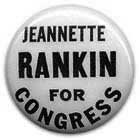 |
| Rep. Jeannette Rankin with her colleagues in the 61st Congress. | ||
Jeannette Rankin was the first woman ever elected to the U.S. Congress, and a native of Missoula, Montana. She was elected in 1916, before women nationwide had the right to vote. In 1917 she joined a handful of representatives who voted against entry into World War I asserting, despite harsh criticism and certain damage to her career, that, “the first time the first woman had a chance to say no against war she should say it.” In 1941 she bravely stood alone in Congress in voting against entry into World War II, but she did not stand alone in society in her opposition to institutional violence and war. Her stand against war as a viable resolution to international conflicts provoked questions on the basic assumptions about peace, war, and conflict, which we continue to grapple with today. Rankin’s staunch opposition to war made her a spokesperson for veteran’s rights, as well, since she recognized them as pawns in the games of politicians. It was she who first introduced the GI Bill to Congress, which guaranteed post-discharge education and other benefits to those who served in the military. Her long career was also distinguished by her deep commitment to the country’s women, poor, and its children. She put forth an alternate vision for this country as one which championed peace and justice. She worked tirelessly in opposition to war and oppression by attending rallies, and by giving speeches in person and on television into her 90s.
The Jeannette Rankin Peace Center is proud to carry the name of this pioneer Montanan whose life’s work exemplified a steadfast devotion to peace, justice, and democratic equality. Jeannette Rankin was, in many ways, the first lady of U.S. politics. Her legacy lives on today through those who carry on her work and honor her memory. University of Montana’s Archives and Special Collections houses a collection of oral history interviews that were conducted by Dawn Walsh for the Jeannette Rankin Peace Center. The interviewees were former and current members of the Missoula Women for Peace and detail their interest and activities related to peace activism. These interviews are available in both audio and text format through University of Montana Scholar Works. (snip-MORE)
Not that the planes won’t go elsewhere, but it’s good to see other countries stand up for right instead of so very wrong.
By Reuters
MADRID, March 2 (Reuters) – Fifteen U.S. aircraft have left the Rota and Moron military bases in southern Spain since the U.S. and Israel launched weekend attacks on Iran, maps by flight tracking website FlightRadar24 showed on Monday.
Foreign Minister Jose Manuel Albares said Spain would not allow its military bases, which are jointly operated by the U.S. and Spain but under Spanish sovereignty, to be used for attacks on Iran, which Spain has condemned.
and go on about our day being peaceful, in order to bring about peace. (I have a dental appt. to finish what was begun a couple of weeks ago at that dental appt. I feel all pure-white-dovey inside.)
I really enjoy Digby and her takes on political stuff. She says that tRump is losing everyone but the maga base. Hugs
I know there has been a lot of bad press about Crockett but when you look into them it is drummed up fake news stuff. Maybe because as this video hints at because she is a black woman running for office in Texas. I agree with him about her and I have watched her at hearing. I would love her to win. Learn facts over the noise so we can move to a progressive future. Hugs
As I said if they pass this I an a ton of other married people cannot vote. There is no time to get a passport, and there is no provision in either law for a maded marriage license acceptance so you can vote. Well unlike the federal bill this one allows a driver’s license as proof, and as I have one of those I might still get to vote. But if they strip it out to mirror the federal bill I lose the right to vote again. It is republicans showing how desperate they are to win when they are so unpopular that they need to rig and steal the elections. However there was voter fraud in Florida in the 2024 election, all citizens republicans who voted more than once for tRump, stole mail in ballots to vote for tRump, or ass one mail man did he threw away mail in voting from known democratic areas. Hugs
The Florida vote comes two weeks after the U.S. House of Representatives passed the SAVE America Act, a landmark bill that would require Americans to provide proof of citizenship to register to vote and photo ID to cast their vote. If adopted, the bill would likely prevent millions of Americans from voting.
“What this legislation actually does is to prevent eligible U.S. citizens from voting,” Kanter Cohen said, “and that’s really the key issue.”
a current Florida driver’s license
In lockstep with the Trump administration, Florida Republicans say they are pushing the legislation to crack down on voting by noncitizens – despite the fact that election audits have repeatedly shown that illegal noncitizen voting is extremely rare. But the party continues to ignore those findings, using the myth of noncitizen voting as a tool to pass restrictive legislation aimed at creating more barriers to voting.
In other states, similar proof of citizenship laws have prevented tens of thousands of citizens from voting. But in Florida, with 13 million voters on the rolls, the scale could turn out to be even greater.
With SAVE America Act stalled, Florida House passes its own version
Florida State Capitol building
The Florida House of Representatives voted 83-31 Wednesday to move forward with a sweeping voter suppression bill that could disenfranchise tens of thousands of Floridians, at least, by creating new requirements for citizenship checks.
The alarming legislation represents the state-level component of a national Republican effort to make voting more difficult for American citizens.
Under the Florida House bill, residents wouldn’t be able to register to vote unless the state Department of Highway Safety and Motor Vehicles database can verify their citizenship, or until the applicant provides proof of citizenship. The bill would also require the state to verify the citizenship status of all existing registered voters whose legal status has not already been verified.
State Rep. RaShon Young (D) said the legislation would have serious consequences for Floridians.
“This is fearmongering and disenfranchisement and voter suppression dressed up as security,” he said. “This is modern day gatekeeping and bureaucratic obstruction, administrative overreach and poll tax by paperwork.”
The Florida vote comes two weeks after the U.S. House of Representatives passed the SAVE America Act, a landmark bill that would require Americans to provide proof of citizenship to register to vote and photo ID to cast their vote. If adopted, the bill would likely prevent millions of Americans from voting.
But the SAVE America Act is expected to face an uphill battle in the Senate, leading some state legislatures to attempt to pass their own versions.
Florida could be the latest to join other GOP-controlled states that have enacted similar state-level proof of citizenship laws like Arizona, New Hampshire, Louisiana, Wyoming, Indiana and Ohio. More states are currently considering similar legislation, including Utah, South Dakota and Missouri.
But the bills haven’t been successful everywhere. Texas failed to pass a proof of citizenship bill last year.
The Florida legislation closely mirrors the federal measure, according to Michelle Kanter Cohen, policy director and senior counsel for the national voting rights group Fair Elections Center.
“This would do a lot of the same things, in terms of preventing American citizens from voting who don’t have access to documentary proof of citizenship documents,” Kanter Cohen said.
The Florida House version of the bill would only go into effect in January 2027. But under a similar bill set for consideration in the Florida Senate, the new rules would take effect this July, before the November midterm elections. A House committee already gave preliminary approval to the bill earlier this month.
“What this legislation actually does is to prevent eligible U.S. citizens from voting,” Kanter Cohen said, “and that’s really the key issue.”
The timing of the proposal – as Congress considers a similar federal measure – is no coincidence. The Florida bill could be an effort to align state policies with the proposed federal restrictions to provide consistent rules for running elections, she said.
Under the bill approved by the House, Floridians whose citizenship status cannot be verified by the state would need to provide evidence of U.S. citizenship, including: a current U.S. passport, a U.S. birth certificate, a consular report of birth abroad, a current Florida driver’s license or Florida identification card that indicates U.S. citizenship, a naturalization certificate, a current photo identification issued by the federal or state government that indicates U.S. citizenship, or a federal court order granting U.S. citizenship.
In lockstep with the Trump administration, Florida Republicans say they are pushing the legislation to crack down on voting by noncitizens – despite the fact that election audits have repeatedly shown that illegal noncitizen voting is extremely rare. But the party continues to ignore those findings, using the myth of noncitizen voting as a tool to pass restrictive legislation aimed at creating more barriers to voting.
“The last thing someone who is on a path to citizenship would want to do is to jeopardize their naturalization by voting illegally,” Kanter Cohen said. “And so people don’t do that. That’s not something that’s happening because it has such dire consequences.”
Florida already has systems in place for investigating and prosecuting the small number of noncitizens who register to vote in the state. Last year, Florida found 198 “likely noncitizens who illegally registered and/or voted in Florida” out of the more than 13 million people on its voter rolls, according to a report from the state’s Office of Election Crimes and Security. The office referred 170 of them to law enforcement.
The Florida measure could disenfranchise tens of thousands of voters — including Republicans — to combat these miniscule amounts of possible illegal voting.
Married women of all political affiliations who have changed their last names could be among the most impacted by the legislation. If the voter’s legal name is different from the name on their citizenship document – such as their birth certificate – then the voter would need to provide official documentation providing proof of a legal name change.
The bill also would eliminate some identification documents voters can use to verify their identity at the polls. Floridians would no longer be able to use a debit or credit card, student identification, or retirement center, neighborhood association or public assistance identification.
In other states, similar proof of citizenship laws have prevented tens of thousands of citizens from voting. But in Florida, with 13 million voters on the rolls, the scale could turn out to be even greater.

