I have had this ready to post for several days. But due to how hard it is to watch and the way the settlers openly abuse the Palestinians with the Israeli government’s blatant permission I was not sure if the viewers wanted to see it. But we have to show how things are going and Israel is doing a genocide by trying to kill and drive the Palestinians from the West Bank and has decided to take all of Gaza now. The Palestinians that survive after the killing of so many of them and the milisous shooting of children for target practice, the killing of medical personnel, and the starving of the people along with now Israel cutting off all sources of water will be forcibly removed / deported. Any that refuse to leave will be killed. One of the Israeli ministers posted AI videos of Palestinians in a concentration camp that implied they were abused. This is what the entire program was for: to retake all of Gaza and the West Bank for Israel like they did all other Palestinian land so there could never be a two state solution and no Palestinians left in what Israel illegally calls their country. They are illegally taking over parts of Lebanon. Their goal has always been the greater Israeli. And the only reason they are getting away with these atrocities and horrors is because the US is protecting them from the retailation of those that Israel abuses and attacks. Biden was too blinded by the past and his age to force Israelis to stop and wouldn’t even cut off the largest 2,000 pound bombs dropped on tent cities. tRump’s military protected Israel rather than US military bases resulting in the deaths and injuries of US military personnel. Plus a large part of the US Congress is deeply in the pocket of the Israeli lobby called AIPAC. The corporate democrats are so beholden to the large sums of money that they are helping AIPAC try to destroy the campaigns of progressive and DSA democrats even if it means not gaining control of the Congress. Corporate Israel supporting Democrats would rather stay a minority party if it means keeping the huge sums of money given to Israel with no strings flowing. Hugs
Imagine, just imagine, if any other president – Reagan, Bush, Clinton, Obama, Biden – had posted something like this about themselves. They would be a laughing stock. There’d be no other story in the media. Their own party members would be slamming them.
Woodrow Wilson up top? Coolidge towards the bottom? And no Reagan? Can someone unplug the President, shake him, and plug him back in? https://t.co/Q50UdVZr4J
Pirro’s special grand jury isn’t, as some suspected, being used to investigate Trump’s most high-profile perceived political enemies. WaPo reports it’s being used to look into DC schools… http://www.washingtonpost.com/national-sec…
Wyoming Republican Gov. Mark Gordon expresses concern over how election observers from the U.S. Justice Department observed the state’s primaries, saying it was “aggressive” and “irregular.”
With pivotal elections less than 70 days away, I’m grateful a federal judge again blocked President Trump’s efforts to weaponize the Postal Service and limit mail-in ballots. (1/2)apnews.com/article/trum…
A federal judge once again spurns Donald Trump’s effort to erase his hush money conviction, rejecting the president’s bid to move the state court case to federal court and have it dismissed on presidential immunity grounds. ny1.com/nyc/all-boro…
Trump Updates Defamation Suit Against The New York TimesThe president has argued that the news organization sought to undermine his 2024 presidential campaign by disparaging his reputation as a businessman. The Times has moved to dismiss the lawsuit.
Trump is speaking to complete silence at the NASA center. Not a single person is applauding or reacting to anything he says during his brazenly partisan speech.
All they needed to do was go after gangs. They've wasted billions of dollars and destroyed countless lives for MAGA Media Entertainment.ICE plans to buy robot ‘dogs’ for some immigration enforcement operations http://www.nbcnews.com/politics/imm…
A former Justice Department lawyer says the Trump investigations squeezed Ivy League universities for millions before they were even concluded. A top Democrat is demanding answers.
The entrance to Brown University in Providence, Rhode Island, on April 22, 2025.Kyle Mazza / Anadolu via Getty Images
The Trump administration’s findings that three Ivy League schools violated civil rights law by tolerating antisemitism were predetermined by political priorities that blew past the evidence and cast aside standard investigative procedures, according to a whistleblower account provided to Congress.
The disclosure, by Haley Van Erem, a veteran Justice Department civil rights attorney, involves investigations into whether Harvard, Brown and Columbia universities broke the law by allowing antisemitism to flourish on their campuses.
The whistleblower account comes just days after a federal judge dismissed a Justice Department lawsuit against Harvard that was based on the investigation, which was conducted by the Department of Health and Human Services and lawyers detailed from the DOJ.
Both Brown and Columbia reached settlements, with Columbia agreeing to pay $200 million over three years and Brown agreeing to spend $50 million on Rhode Island workforce development, with no admission of wrongdoing.
Harvard fought and won.
U.S. District Judge Richard Stearns ruled in that case that the Trump administration’s allegations relied on incidents that occurred more than a full academic year before it filed its lawsuit — incidents he said were “too isolated and episodic to support a plausible inference” that Harvard was violating Title VI of the Civil Rights Act.
Van Erem’s whistleblower account, reviewed by MS NOW, says the findings “overrode knowing deviation from investigative procedures, statutory noncompliance, and potential constitutional violations.”
“Hundreds of millions of dollars were suspended from these universities prior to the completion of Title VI investigations and the investigative team’s conclusions were frequently disregarded,” the complaint says.
In a letter to Harmeet Dhillon, head of the DOJ’s Civil Rights Division, the ranking Democrat on the House Judiciary Committee said the whistleblower findings exposed a “large scale fraud.”
“Antisemitism at American universities and medical schools is real,” Rep. Jamie Raskin wrote.
“But your ‘investigation’ into antisemitism was fake, a pre-baked frame-up operation thoroughly political in nature. Before an actual investigation took place and regardless of what you actually found, the whole project was designed to harass professors and administrators at major universities, to curtail their freedom of speech and academic freedom, and to strip targeted institutions of hundreds of millions of dollars in grants that they had already been awarded on the merits of their applications.”
A Department of Justice spokesperson told MS NOW, “While at the DOJ, Ms. Haley Van Erem did not work on university investigations. And for all matters, the Department stands behind the integrity of these investigations.”
The whistleblower complaint says the investigation was launched based on a single article in the New York Post that described antisemitic activities at medical school graduations.
“The article described protests that included protected expression such as students shouting ‘Free Palestine’ and students wearing Palestinian flags or keffiyehs,” the complaint says, adding: “It was not unheard of for news reporting coupled with additional evidence to lead the DOJ to initiate further scrutiny of potential statutory violations, but opening an investigation based on a single article was highly unusual.”
The complaint said that after being informed that there was no evidence to support a finding of a Title VI violation based on antisemitism at Brown, a senior Trump administration official at HHS, Daniel Shieh, agreed that there was “not a Title VI violation,” but told Van Erem and other DOJ team members at the meeting that “there’s no way we’re going to get a letter of no violation cleared.”
He pushed instead to obtain a settlement from Brown, and that ultimately happened.
The whistleblower complaint also accused Trump officials of telling investigators to interview Middle East studies professors, particularly focusing on Muslims, noting that one such interview of a Muslim professor was not to “get information,” but instead to see “what he will say.”
Raskin called that “a craven willingness to racially and ethnically profile faculty members while ostensibly investigating racial and ethnic discrimination.”
HHS did not immediately respond to MS NOW’s request for comment.
According to her complaint, Van Erem left the Justice Department in May 2025, “unwilling to be made vulnerable to further participation in politically motivated investigations unsupported by facts and contrary to law.”
Her complaint asks for an investigation by the HHS inspector general, the DOJ inspector general and the Office of Special Counsel.
“The full extent of your misconduct remains unclear,” Raskin wrote to Dhillon. “At the very least, you have shown gross negligence in supervising the activities of your office. It is also a distinct possibility that you deliberately orchestrated a scheme to attack universities and their faculties and administrators while defrauding the American people and the courts.”
Normally I color the paragraphs. I won’t do that for this post as I want the author’s words to stand on their own as the author intends them. The information is important. We have seen the rise of hate again after decades of forcing racism under the rocks it should have stayed under. But powerful people with money are doing everything possible to forment hate and bigotry to promote themselves as superior. We must fight against the idea and return to moving forward with equality and fairness in the world and the US. Hugs
As economic pressures gut local newsrooms across the country, white nationalist figures see an untapped opening: stepping into media deserts where there are few journalists left to sound the alarm.
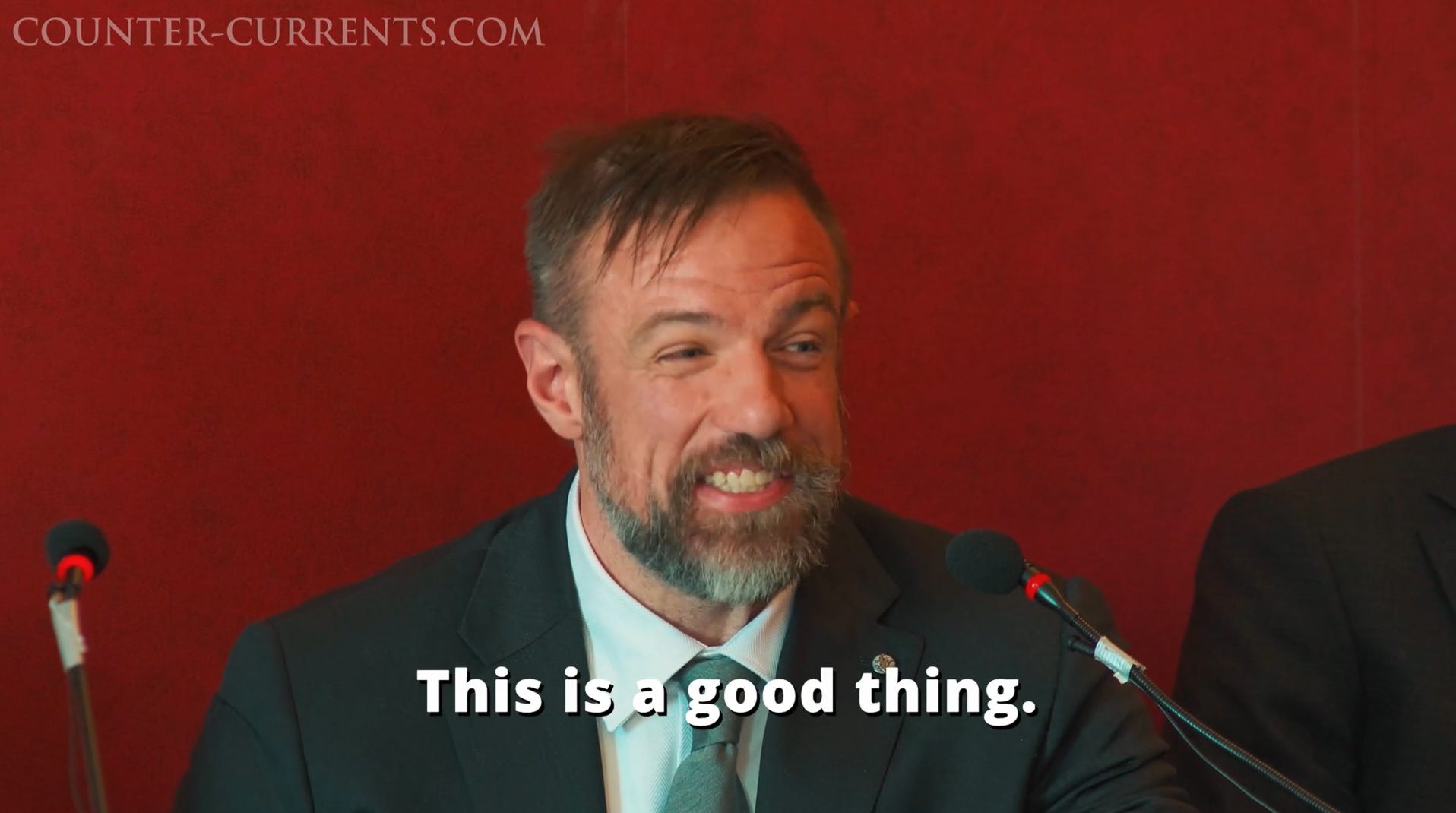
“Local media has been dying all over America, which means that there’s essentially no real way to hold local governments accountable—and they can do whatever they want,” Kevin DeAnna told an invitation-only gathering of approximately 50 white nationalists in Rome.
Breaking into a broad smile, he excitedly added: “You should be fantasizing about this. This is a good thing.”
“And these are White people that are not voting. These are White people who are angry and who are radical and have no one talking to them.”
According to the most recent report from the Northwestern University’s Medill School, the “steady, unrelenting decline of local newspapers … is leading to an ever-rising number of news deserts, now 213 counties.”
That collapse of local press coverage in rural America creates a dangerous vacuum—one that allows extremist networks to operate without accountability.
Filling that void is precisely why I launched ConfrontTheHate.com.
‘Pitch to a Billionaire’
DeAnna’s remarks were part of a “Pitch to a Billionaire” panel during the Rome retreat that focused on how white nationalists could solicit funding from the world’s wealthiest people.
“DeAnna’s work under the pseudonym ‘Gregory Hood’ drew upon foundational white nationalist and neo-Nazi texts that have inspired numerous acts of domestic terrorism,” SPLC senior researcher Hannah Gais wrote.
For the panel discussion, DeAnna proposed that “the single most effective way to build political power with the least investment would be to start a political action committee and get-out-the-vote effort for White rural voters.”
Rural areas have an outsized political influence in America, he asserted, and “it requires very little money and very little turnout to win a lot of these elections.”
Embracing the widely discredited “constitutional sheriffs” notion that county sheriffs have enormous power to nullify federal and state laws, DeAnna pushed for a focus on electing sheriffs who would take the law into their own hands.
He argued:
“I think you could take over a whole county with ten people. It would not take much…. Ten people who have some idea how to campaign, and we’re talking unlocking tens of millions of dollars, jobs for twenty, thirty, forty, fifty people, real state authority, real law enforcement power, setting up a fortress that leftists can’t even go into without losing everything.”
Other billionaire pitches
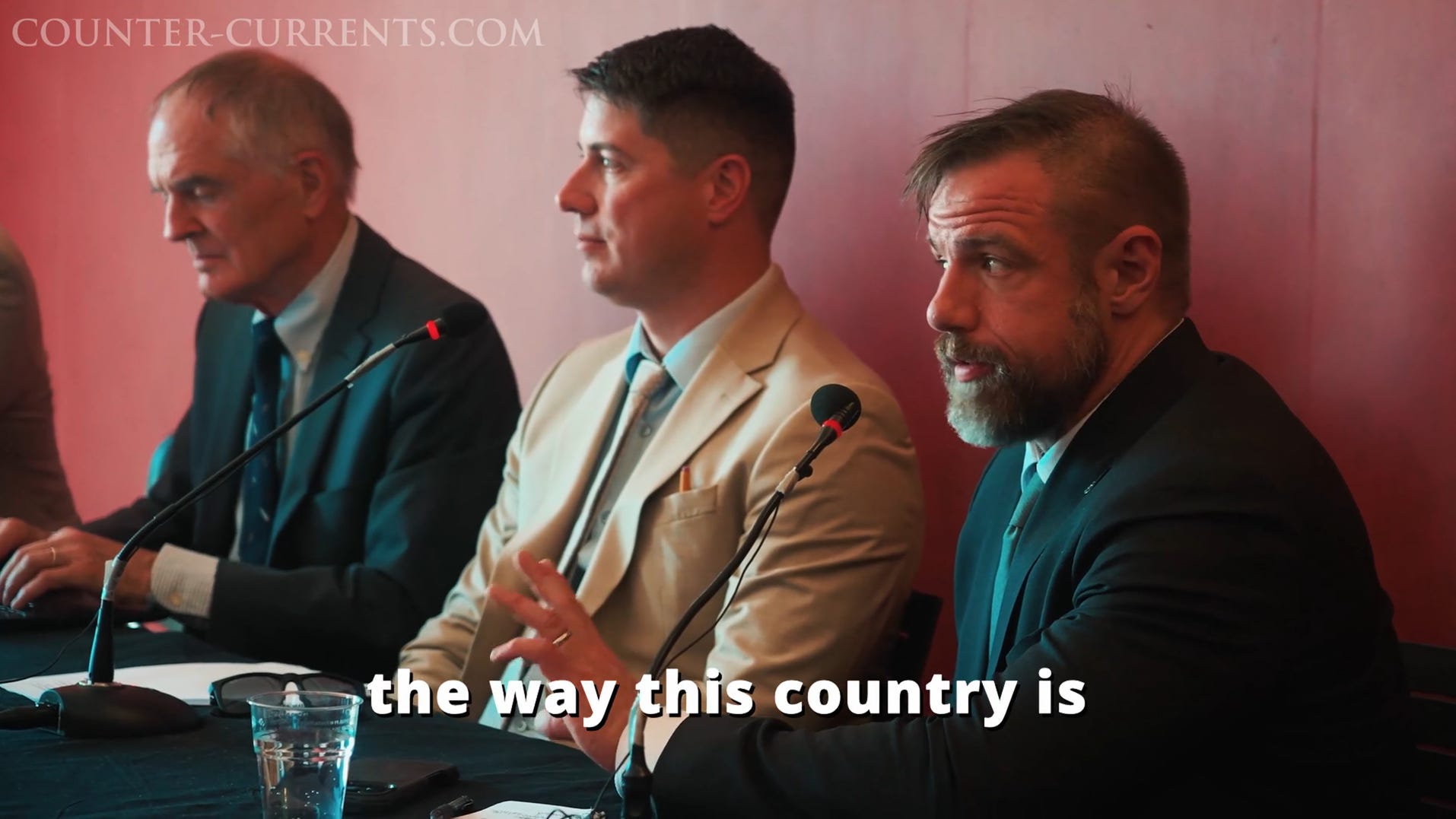
Jared Taylor, David Zsutty, Kevin DeAnna (Photo: Screenshot, Counter Currents)
Among those joining DeAnna for the discussion was Jared Taylor, who publishes the American Renaissance website and hosts an annual gathering of white nationalists, neo-Nazis, and other extremists at a Tennessee state park.
“If you are the defendant, whether it be in a civil or criminal case, you have already lost—the only question is how much,” Zsutty said.
“Even if you recover attorney fees, which are usually quite substantial, you will never recover the lost time, stress, and effort.”
Counter Currents editor Greg Johnson has described the annual gathering as “private, invitation-only retreats for our writers, donors, and friends” to “foster real-world fellowships and collaborations.”
This year’s retreat took place inside the Rome headquarters of CasaPound, a prominent Italian neo-fascist group that Johnson himself characterized as a “militant organization.”
It is not clear who funds these gatherings.
Have you noticed a decline in local news coverage in your own community? Let me know in the comments below.
Action steps you can take:
Share this post on social media to help this independent project grow.
Become a paid subscriber to support independent watchdog journalism.
Subscribe to my YouTube page, and watch, like, and share the videos.
Send me your ideas!
Confront the Hate. Find the Hope.
If you believe this content is desperately needed today in America, please consider becoming a free or paid subscriber. Paid subscribers help cover the expenses of this independent project. As part of a growing community, they can comment on my posts.
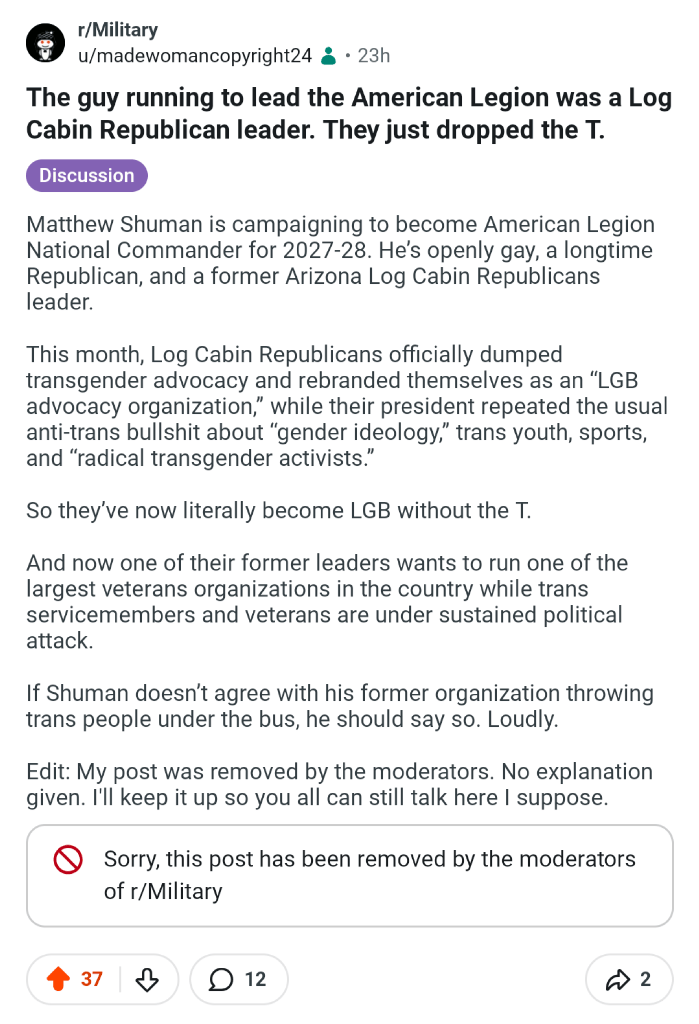
New Jersey Gov. Mikie Sherrill (D) on Thursday signed a robust defense of transgender rights and women’s bodily autonomy, shielding individuals from out-of-state investigations over medical care associated with gender identity and abortion.
“If Greg Abbott or Ron DeSantis tries to investigate someone who came to New Jersey to access care, we will protect anyone seeking care that is legal here in New Jersey from investigations in other states,” Sherrill said at a signing ceremony reported by the New Jersey Monitor.
The jab at the Republican governors of Texas and Florida comes after both have sought the medical records of residents or organizations seeking or providing abortions and gender-affirming care in their own states and others in pursuit of prosecuting them.
The expansive bill passed the New Jersey Assembly and Senate in June in party-line votes. It takes effect immediately.
Addressing both abortion and gender-affirming care in the same bill is the rare instance where Democrats have used transgender rights to their political advantage, building a broader indictment against the Trump administration and its enablers.
“This isn’t just about abortion. Republicans in Washington are trying to control people’s lives. That’s why the White House has relentlessly attacked our transgender community as well,” Sherrill said. “They’ve pulled tactics straight out of the Red Scare playbook to restrict transgender people’s healthcare.”
As well as protecting patients from out-of-state investigations, the law creates a new criminal charge for individuals in New Jersey who block access or intentionally intimidate those seeking gender-affirming or reproductive healthcare at facilities that provide it.
Patients and providers may also sue those who do so for damages, attorney fees, and other relief, a tactic employed by red state legislatures targeting transgender people using restrooms that align with their gender identity.
New Jersey is “a beacon of hope for everyone who understands democracy,” said state Sen. Teresa Ruiz (D), a chief sponsor of the bill and the Senate’s majority leader. “You can’t tell us what we can read on a library shelf but want to be up in our uterus in an exam room,” she said.
The bill’s signing comes as the Trump administration scored a win this week in its effort to subpoena the records of a Washington State-based telehealth clinic that provides gender-affirming care. The Ninth Circuit Court of Appeals upheld a Department of Justice administrative subpoena seeking the personal and confidential health records of trans youth who have used the service.
Simone Kraus, a transgender woman from Sussex County, called the new law in New Jersey “a profound milestone.”
“As a trans woman who has walked this path, who knows the deeply personal and necessary journey of receiving gender-confirmation surgery, this hits home in a way policies and legal briefs rarely can capture,” she said. “New Jersey is making it clear today that what happens in a doctor’s office is strictly between the patients and the doctors. Politicians do not have a say.”
Subscribe to the LGBTQ Nation newsletter and be the first to know about the latest headlines shaping LGBTQ+ communities worldwide.









 Jared Taylor, David Zsutty, Kevin DeAnna (Photo: Screenshot, Counter Currents)

