
Category: Written Media / Books
A Couple of Fun Bits
I understand about the pastry boxes; they are pretty stupid. Lewis Black expresses someone’s feelings as Lewis Black does.
Have a fun dog video!
Oh, yeah! Another email buried but that I wanted to post here last week. My accomplished niece is a writer, and this is her webpage for her fiction books, Swaimwrites.com . She’s got one about to be released called “Reven,” which is, as her site says, “A steampunk retelling of Peter Pan about the lengths we’ll go to escape the past.” I’m excited to read it, not only because I’m her auntie, but because it looks like it’ll be perfect for these times!📖📚
Banned Books
It’s a blog entry by Jenny Lawson, about one of her books. I haven’t been able to open her WP blog for a few weeks, now; I get the page that says it’s an unsafe connection. I either don’t know how, or can’t get a whole post in the WP Reader, but I did get this whole post in email, so I’ll copy & paste it here. Jenny is funny, but this is not good news about Texas and literacy.
 The Bloggess The BloggessRead on blog or Reader Today they banned my book. It was not the first. It won’t be the last. Here’s what I want you to know .  By thebloggess on March 25, 2026 By thebloggess on March 25, 2026 |
| This is not what I wanted to write. I wanted to write about how I’m about to go on book tour for my new book in a few days. Instead I am writing about the fact that I was just informed that my first book Let’s Pretend This Never Happened was banned from the high school library of a nearby town I love and visit often. Honestly, I’m not that upset about my book being banned. I’ve had so many letters from young people who felt they’d been helped by my books but it does have some profanity and so I can understand the reasoning even if I disagree with it. What I am upset about is the stories about how New Braunfels ISD has pulled more that 1,500 books from their school library shelves after the Texas’ Republican-backed book banning law (senate bill 13) passed. The bill ordered all public school libraries to review books for “profane” and “indecent” content and I guess Let’s Pretend This Never Happened was deemed too dangerous for high schoolers. Weirdly, my book was not on the original list of the 1,500 books triggered for review on March 13 but a week ago it was added to the New Braunfels ISD website as being removed for being “non-compliant”. (I’ve been called worse.) I guess 1,500 books weren’t enough. But then, it’s never enough for book banners.This is going to happen more and more. It used to be a rarer thing…almost a badge of courage to have a book banned. Now? It’s everywhere…this war against books and ideas and people. Reading is how you fall in love with people different from you, and how you develop compassion for them…because if you love them, you want to protect them. But there are some people who don’t want you to love others. They need you to fear them. Books save lives. They have saved mine. Books are safety nets for so many of us, and right now those nets are being cut.The list of banned books is incredible in length and includes so many that I adore. Equally upsetting is the fact that so many classics that shaped me have been pulled from the shelves and placed into restricted sections where they can only be accessed by students enrolled in Advanced Placement Literature, because God forbid a normal high school student would want to read the works of dangerous writers like *checks the list* Jane Austen and Emily Brontë (whose name they misspelled). Sometimes it feels like we’re living in A Brave New World (restricted) and that the book burning of Fahrenheit 451 (restricted) is closer than ever, with no Sense and Sensibility (restricted) about what this will cost. It feels like we’re going through The Crucible (restricted) and are caught in a Catch-22 (restricted) where we can’t convince people how terrible it is to ban books because they either don’t know the power of books or they absolutely know it and fear it. It’s An Absolutely Remarkable Thing (banned) how book banners go out on some kind of A Discovery of Witches (banned) and fight against Acceptance (banned) and of diversity, while we are losing All The Beauty in the World (banned). America is a Beautiful Country (banned) in so many ways, but we will lose so much of that beauty if we don’t make Changes (banned) to cherish and embrace and grow what makes us Educated (banned) and compassionate. The diversity of voices is necessary…it is a reflection of who we are and who we want to be. A plethora of ideas and voices and experiences…This Is What America Looks Like (banned). We can’t just pretend that Everything’s Fine (banned) and that this is just an overreaction of Anxious People (banned). Do you think this is what the founding fathers like Alexander Hamilton (banned) envisioned? I’m going to stop here because I’m sure you can see that this dumb paragraph is WAY TOO EASY TO WRITE because there are so many books they have issues with and you probably get the picture already but y’all….Jane Eyre? The Color Purple? The Odyssey? Crime and Punishment?? THIS IS WHAT WE’RE SAVING TEENAGERS FROM? So what can you do? You can buy books that are being targeted, especially those written by the LGBTQ+ authors or authors of color because they are being targeted the most. Supporting those authors tells publishing to keep producing those books because they are needed. Publishers will lose money if libraries become afraid to purchase books and so we need to make sure that they know the audience is there and greedy for diverse voices. Get a library card and start checking out those books and more, to prove to the government that libraries need funding and that people care about reading. Read to your children. Read in front of your children. Talk online about the books that you love so that your passion ignites others. If you’re a parent you can get involved with your school to make sure this doesn’t happen in your school and you can protest it if it happens. You can vote out the people who seem to be obsessed with freedom, but mainly when it’s their freedom to take away yours and your children’s. You can run against school board members who are book banners and show up at the meetings. You can keep updated by following organizations like PEN AMERICA, or the Texas Freedom to Read Project or Authors Against Book Bans. *deep breath* This is probably filled with typos and is not really the sort of thing that I should be writing the day before I leave to start my book tour but it’s important. When books and thoughts and people are suppressed, we all lose. Keep fighting the good fight, friends. It’s worth it. Comment |
Tracking Anti-Trans Bills | Erin Reed | TMR
Some Unrushed Lunchtime Reading-
What Was Lost: A Queer Accounting of the NY Times Book Review, 2013-2022
Thirteen Essential Books by Trans and Queer Writers,
Reviewed by Trans and Queer Writers
“Goodbye, Pamela Paul,” was the headline of Andrea Long Chu’s now-iconic, recently ASME-nominated New York Magazine farewell to the former NY Times Book Review editor, when Paul left the paper two years ago. For a little background, Paul was named editor of the NYTBR in 2013 and took over books coverage for the entire paper in 2016, effectively becoming the most powerful editor in literary criticism. In 2022 she moved to the paper’s opinion pages to publish her own ideas about the world, many of which became political lightning rods in a publishing community that had for years been beholden to her editorial decisions.
Particularly infamous was one explicitly anti-trans essay from July, 2022, which was widely criticized at the time. It also had many people wondering how Paul’s politics might have come into play in her decisions as the most important books editor in the world.
So at some point I began dreaming up an idea: to commission a whole package of reviews of books by trans and queer authors, folks whose projects weren’t covered by the NYT under Paul’s reign. I asked Maris Kreizman to collaborate and to my delight, she agreed. What followed became an exercise in thinking through what is lost—and perhaps can never be regained—when transphobes and their enablers rise to prominence as our most powerful cultural gatekeepers.
*
So, to the nuts and bolts of this project. First of all, the volume of seemingly great books published by queer and trans authors between 2013 and 2022, and not covered by the NYT, was intimidating. It took Maris and me a while to work through the many great pitches we received and arrive at our final lucky number of 13. (Funnily enough, in actually trying to commission these reviews, I felt surprising sympathy for book review editors like Paul who are no doubt constantly buried in new titles to consider.)
Our effort here offers reviews of a mere sliver of all those titles we might have covered, many of which would be worthy of inclusion if we had limitless time and resources. I’m immensely grateful to all who submitted ideas, especially to all the fellow authors who wrote to tell us about their books (some were even writers I’d call heroes). My to-be-read pile is now, as ever, impossibly tall.
On a personal note, this entire project has made me feel much less alone. I feel more connected to other trans and/or queer writers, who are doing this work despite the shitty odds we face, despite our society’s continued denial of our full humanity, despite the efforts to ban our words and to decimate our entire lives, despite the media and publishing industry’s failure to actually reckon with—let alone correct for—any of this.
What follows is hardly meant to be comprehensive. I hope it inspires others to write their own reviews of whatever books they’d wish might be covered. I’d love teachers to assign this as a group project to writing classes, as I’ve heard of at least one doing already. I hope this project won’t be perceived as anything except the start of a conversation—one I feel everyone with stakes in this must join us in having.
–Sandy Ernest Allen
(Snip: please go to the page-that’s a link, right here, too–to see the books and the reviews.
An Apt Subject For Any Blog
Plus, AI is a subject of current event interest. (Lookin’ at autocorrect programs…) Meanwhile, I got a great deal of nerdy pleasure reading this, and I hope all who read, do as well!
Typos Have Plagued Us for Centuries. Just Ask the Publishers Who Printed the Seventh Commandment as ‘Thou Shalt Commit Adultery’ in 1631
A new exhibition at Yale Library explores the history of typos across five centuries. Visitors will see corrections that were listed inside copies of works by James Joyce, Upton Sinclair and Nicolaus Copernicus
Sonja Anderson – Daily Correspondent
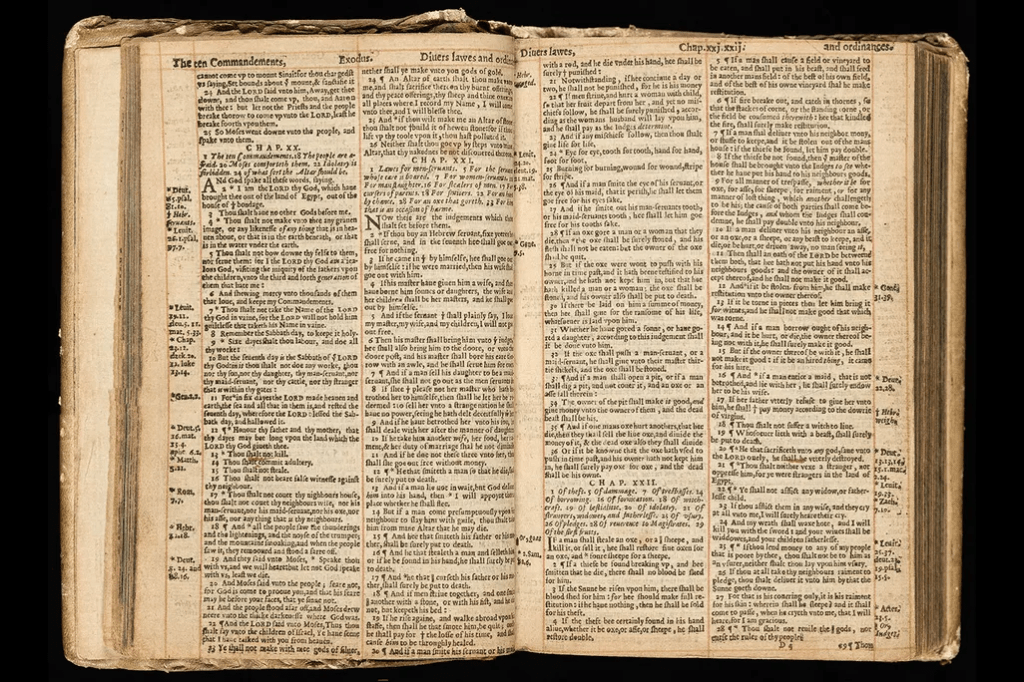
A 1631 copy of the Bible that includes the text “Thou shalt commit adultery.” Beinecke Rare Book and Manuscript Library
James Joyce wrote the manuscript of Ulysses with a steel pen over seven years. By his typists’ accounts, the Irish author’s penmanship was atrocious, and his revisions were overwhelming. When the book was published in 1922, it was full of mistakes. In a letter to his wife, he wrote, “The edition you have is full of printer’s errors.”
The following year, Joyce’s editors compiled a massive list of the book’s errors to be fixed in new editions. Joyce rejected some of the corrections, saying, “These are not misprints but beauties of my style hitherto undreamt of.” Even so, some future printings of the book came with a seven-page errata sheet listing more than 200 mistakes.
Errors like those in Ulysses are the subject of a new exhibition at Yale. “‘Beauties of My Style’: Errata and the Printed Mistake,” which opens at the university’s Sterling Memorial Library on March 30, examines the history of typos across five centuries.
“What we found was that errata sheets were not only spaces for corrections but also sites of humor, legal maneuvering and reinterpretation,” Rachel Churner, a visual studies scholar at the New School and the exhibition’s co-curator, tells Artnet’s Min Chen. “With this exhibition, we wanted to share ways in which even small corrections can reshape meaning and authority.”
According to a statement from the library, “errors committed” lists first appeared in the 15th century. Authors slipped these lists—containing typos, additions and apologies—into the backs of books after publication. The exhibition examines errata lists alongside their companion texts, examining themes of “censorship, misrepresentation, intervention and instability,” per the statement.
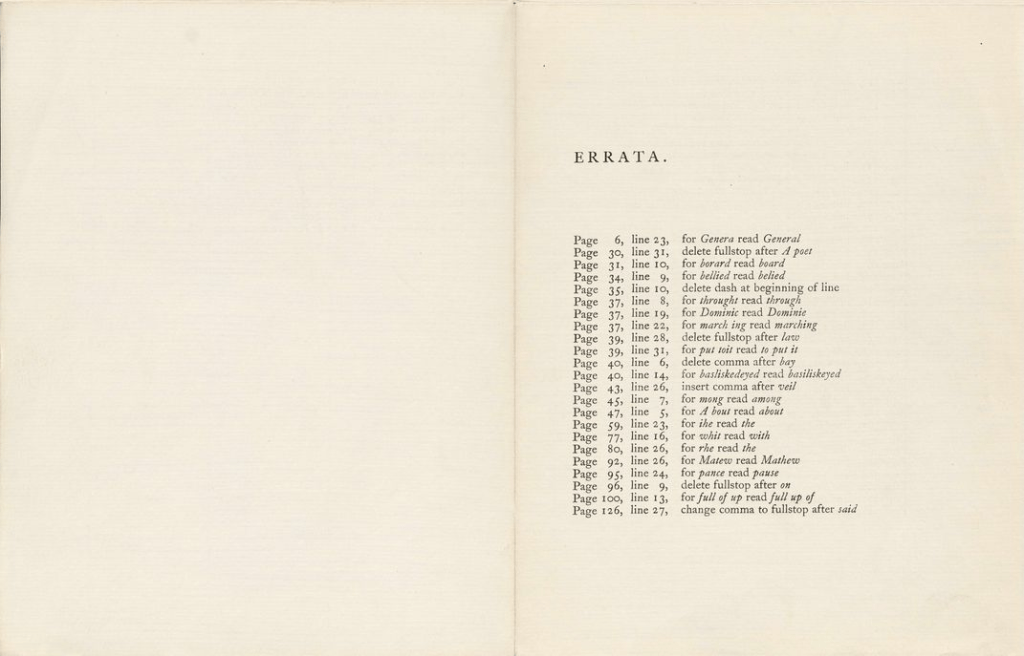
An errata slip from an early printing of James Joyce’s Ulysses Beinecke Rare Book and Manuscript Library
The exhibition spotlights around 30 artifacts from the collection of Yale’s Beinecke Rare Book and Manuscript Library. Items on display include “inaccurate maps, book corrections and religious texts with very grave typographic blunders,” reports Artnet.
In addition to the errata slip from Ulysses, visitors can see several other 20th-century examples, including a self-published copy of Upton Sinclair’s 100 Percent: The Story of a Patriot, in which he “mistakenly identified a founding member of the Communist Party of America as a government agent,” per Fine Books & Collections. Also on view is a fold-out errata from Allen Ginsberg’s 1968 Airplane Dreams. According to the statement, he included the error sheet as a “legal strategy for political resistance.”
Churner and her co-curator Geoff Kaplan, a graphic designer at the Yale School of Art, co-founded the publishing company No Place Press. As they researched errata at the Beinecke, they found “unexpected poetry,” Churner tells Artnet.
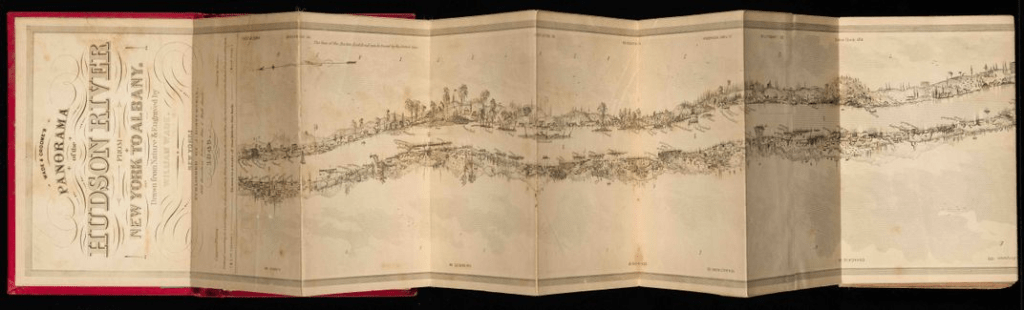
Wade & Croome’s Panorama of the Hudson River From New York to Albany, published in 1846, listed Fishkill Village’s population as 11,000 instead of 800. Beinecke Rare Book and Manuscript Library
The exhibition features an infamous 1631 edition of the Bible, which lists “Thou shalt commit adultery” as the Seventh Commandment. (The omission of the word “not” earned this edition the nickname “the Wicked Bible.”) By the time the mistake was discovered, 1,000 copies had been printed. The British king Charles I reprimanded the publishers, fined them £300 and stripped them of their printing license. In the centuries that followed, rumors circulated speculating that a rival printer had introduced the error. But as Chris Jones, a medieval studies scholar at the University of Canterbury in New Zealand, told the Guardian’s Eva Corlett in 2022, the more likely explanation is that the printers hadn’t wanted to spend money on copy editors.
Nearly all the Wicked Bibles were destroyed, and only about 20 known copies survive. In the copy on view at the Beinecke, someone fixed the error by hand, adding “not” to “Thou shalt commit adultery.”
In some cases, corrections have been used to influence public perception. During the Reformation in the 16th century, books were released describing “mistranslations” of Protestant and Catholic Bibles, “mobilizing the errata well beyond a list of typographic corrections,” Churner tells Artnet.
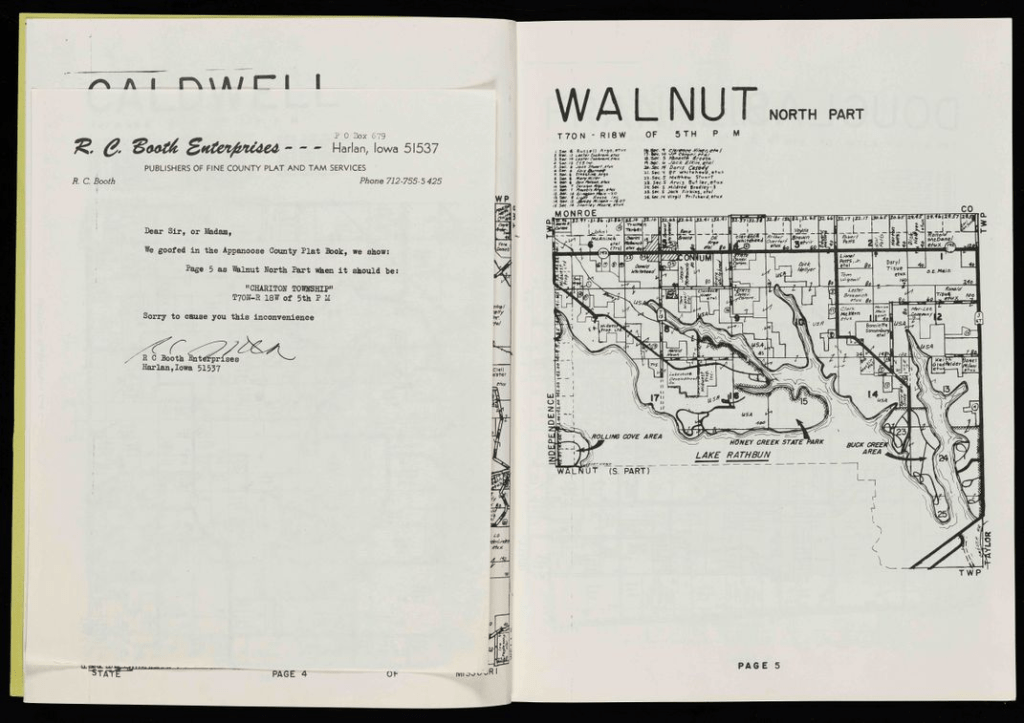
Plat Maps of Appanoose County, Iowa, 1986 Beinecke Rare Book and Manuscript Library
Visitors will also see two copies of On the Revolutions of the Heavenly Spheres (1543) by astronomer Nicolaus Copernicus. They include an anonymous preface that “corrects” the author’s view of heliocentrism—the idea that the Earth revolves around the sun—as a “hypothesis.”
Many other errors, however, are simple mistakes. For example, the exhibition features a 1986 book of Iowa maps with a note correcting a mislabeled township. “Dear Sir, or Madam,” it reads, “We goofed in the Appanoose County Plat Book.”
“‘Beauties of My Style’: Errata and the Printed Mistake” will be on view at Yale University’s Sterling Memorial Library in New Haven, Connecticut, from March 30 to November 29, 2026.
A Little MidAfternoon Sumpin’-
Clown Show
Ronald McDonald, Jr.
The madman whose first name is Donald
Wants to dress up like Ronald McDonald
But he’s too fat to fit
An obese monstrous twit
For this we can blame Mitch McConnell.
McConnell, he should have impeached
And the fat fetid douche would be beached
But Mitch, he’s so bad
A coward, a cad
And the rest of us now have been leeched!
A Princeton Boycott:
Op-Ed: Princeton Kicked a Trans Runner Off the Track. Now Athletes Are Organizing A Boycott
The alleged targeting of transgender runners at non-professional events marks an alarming escalation.
Editors Note: The following article is an Op-Ed submitted by Max Freedman. Max Freedman is a journalist covering LGBTQ+ topics, primarily but not entirely politics and music, from Philadelphia, PA.
When transgender runner Sadie Schreiner was allegedly removed from the heat sheet at Princeton University’s May 3, 2025 Larry Ellis Invitational track meet simply for being transgender, she sued the university and accused it of discrimination—and she’s not the only transgender runner taking action. Winter Parts, a well-known transgender running advocate, is organizing a boycott of Princeton’s two spring 2026 track meets, the Sam Howell Invitational on April 4 and the Larry Ellis Invitational on May 1.
“I want to see [the Larry Ellis Invitational organizers] face visible consequences for excluding someone from their meet,” Parts said. “My hope is that a lot of [athletes boycott]. I think it would send a strong financial and visual message to the Princeton officials if they’re going through the effort of trying to put on this meet, and nobody wants to show up because everyone’s upset with how they treated Sadie.” Notably, Parts doesn’t personally know Schreiner—who ran as “unattached” at the 2025 Larry Ellis Invitational, meaning unaffiliated with a running club or university track and field team but eligible to participate based on prior official race times—but was moved to take action nonetheless.
Although excluding transgender runners is, unacceptably and despicably, par for the course these days at professional running events—current NCAA and USA Track & Field policies ban transgender women from competing with other women—the two Princeton track meets aren’t professional events, making their alleged transgender exclusion an alarming escalation. Just as potentially concerning is that, whereas both track meets have previously been open to unattached runners and runners from clubs, Parts said that a coach from a prominent running club told them that, for the 2026 meets, only runners on university track and field teams are eligible to participate. It is unclear if or how this newly restricted eligibility is related to Schreiner’s pending litigation against Princeton athletic director John Mack and Princeton director of track operations Kimberly Keenan-Kirkpatrick. Mack, Keenan-Kirkpatrick, and a representative for the third defendant in Schreiner’s lawsuit, Leone Timing & Results Services, did not respond to multiple requests for comment, and Schreiner was unable to comment due to her litigation.
Parts has emailed the track and field coaching staff at just under three dozen prominent colleges and universities, including Rutgers University, Temple University, and Columbia University, to demand that they and their runners boycott the 2026 meets. They have also contacted Mack and Keenan-Kirkpatrick to inform them of the boycotts, and some of their friends have joined their boycotting efforts and contacted their alma maters to encourage non-participation.
Avery Prizzi, a non-binary runner who has encouraged eligible runners not to attend the events, said that it feels like an escalation of transphobic rhetoric that a mere track meet, rather than a professional race, has excluded transgender runners. “[The events are] an experience [where] there’s no qualification, there’s no prizes, no first-place trophy,” Prizzi said. “People go to run fast and get a time for themselves. It’s all post-collegiate stuff. There’s no incentive besides running fast. To know that [the event organizers are] just gonna be garbage toward what, effectively, is just a place for people to go and better themselves or race a clock seems completely pointless or outside the mission I figured they were touting.”
Non-binary runner Will Vedder said that “the whole issue that’s been raised on a national level around trans inclusion or exclusion in sports is this, pun intended, trumped-up issue.” Vedder is a 2025-2026 board member of Philadelphia Runner Track Club (PRTC), and although PRTC members are ineligible to participate and the organization does not endorse boycotts, Vedder has told people about the boycotts to nevertheless support transgender runners, saying that excluding transgender people from sports is “based on misinformation. As we know, trans women don’t have any advantage over cis women when it comes to competitiveness in sports. Studies have shown that again and again. The fact that people are acting against what science says and excluding people who just want to run and compete, it’s infuriating.”
A 2023 Frontiers in Sports and Active Living study acknowledges a lack of evidence that transgender athletes are superior in performance and concludes, “Individuals should not have to make a choice between being their authentic selves or being athletes.” Only one transgender person, Quinn—a non-binary Canadian soccer player who uses a mononym in place of a traditional first and last name—has won a gold medal at the Olympics. Additionally, some transgender women runners, including Schreiner herself, have noticed that their performance permanently decreases after starting hormone replacement therapy (HRT). As made clear by the lack of scientific evidence about transgender runners’ supposed athletic advantages, transgender participation in not just running but all sports harms absolutely nobody. It’s the exclusion of transgender athletes that causes harm, and the consequences of this maltreatment reach far beyond the field.
“In the context of the things going on with trans people,” Parts said, “small actions like kicking a trans person out of a track meet build up to the general public thinking lowly of trans people, thinking it’s okay for laws to be passed affecting our lives, demonizing us, trying to eventually result in us being jailed or killed. Trying to push back against that will, hopefully, help increase acceptance of trans people in the public eye.” And with that, the chances of anti-transgender laws being passed — or even proposed — could decrease. A boycott might feel small, but it could help reverse the tides in a big way, and if you know runners on college and university track and field teams, you too can demand that they not participate in the 2026 Sam Howell and Larry Ellis Invitationals.
You just grew up intolerant.


For The Weekend On A Friday Night
Ballad of the Wandering Charms: Weekend Edition
A Softening of the Day
Richard Hogan, MD, PhD(2), DBA
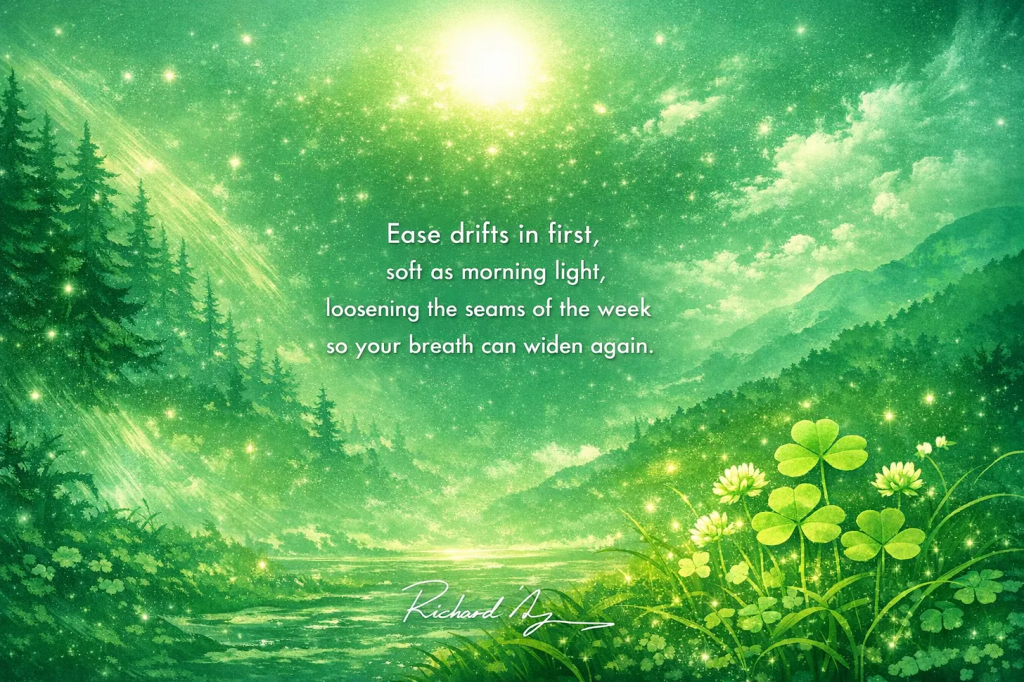
O come now, friend, and rest your bones,
the week’s been fierce and long;
but Ease comes stepping down the lane
to hum you its soft song.

A Lantern glows along the path,
a stubborn, golden spark;
the kind our grandfolks swore was left
to guide us through the dark.

Stillness drapes its woolen shawl
around your weary frame;
it whispers like an old seanchaí
who’s long forgotten blame.

The Hearth is warm for wanderers,
its welcome deep and wide;
it keeps a chair for every soul
the world has weathered tired.

Then Solace pours a quiet cup
the colour of the dawn;
it doesn’t ask what burdens ache—
it simply sits till they’re gone.

Your Breath returns like gentle rain
across an Irish hill;
it fills the fields inside your chest
and bids your heart be still.

And Grace—ah sure, it comes uncalled,
the way good blessings do;
it settles on your shoulders light
as morning’s silver dew.

An Ember glows beneath it all,
a spark that won’t give in;
the same that warmed our ancestors
through storm and winter’s din.

So walk with Gentle in your step,
let kindness be your guide;
for those who move with softened hands
find strength they need not hide.

And Here you stand, upon the earth,
your troubles set to rest;
the world leans in a little close
and wishes you its best.
Should you wish, please feel free to subscribe (no Paywalls): (Link up top as the title)
Thank you.
 Scottie's Playtime