I’m from Louisiana, mostly. But I always tell people I’m from the part of the state that’s not fun, which means I’m not from New Orleans because that’s the impression most people get when I say I’m from Louisiana. Yes, I am a Saints fan. Who dat?
It breaks my heart to see New Orleans suffer. While I haven’t been there in over two decades, it’s a city I love. While every city is different and has its own character, New Orleans is special. I read somewhere a long time ago that the four most distinctive cities in this nation are Boston, Austin, San Francisco, and New Orleans. I don’t know if I believe that because I’d throw New York City and Chicago into that mix.
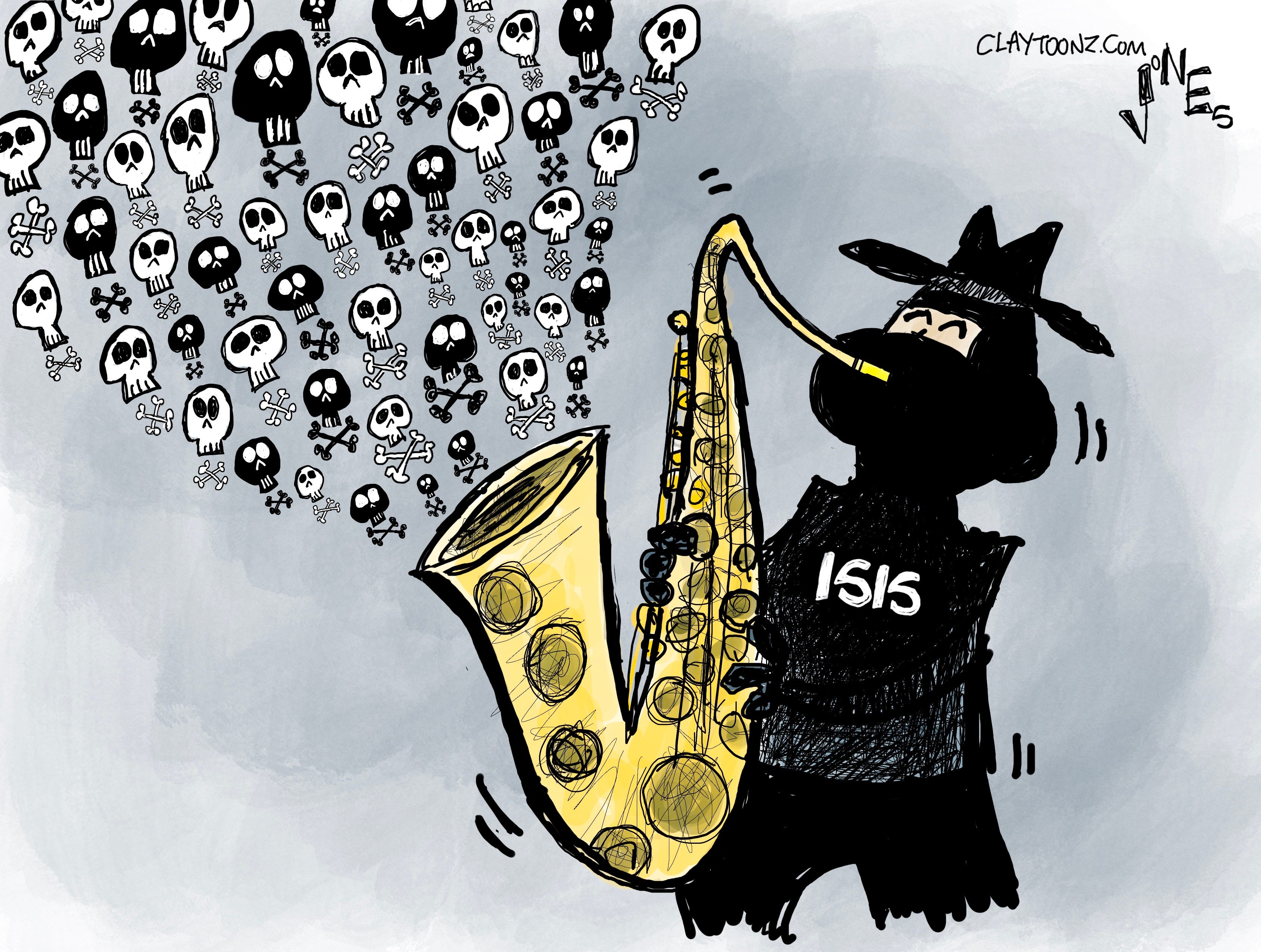
But like New York City, New Orleans knows how to rebound after a disaster. While 9/11 was hard, it didn’t destroy NYC. Katrina nearly destroyed New Orleans and the city was down for the count, but it’s back. And I assure you that an ISIS-inspired terrorist from Texas isn’t going to take the city out either.
And now I want an oyster po’boy.
What New Orleans nor the nation needs right now is Donald Trump.
Trump has blamed this attack on President Biden, open “border’s,” and immigrants. He also trashed law enforcement. But the thing is, this attack wasn’t perpetuated by an immigrant but by a U.S.-born citizen who’s in the military.
Donald Trump probably followed a false news report by Fox News, which they quickly corrected, but Trump doubled down on his lies.
But Trump isn’t just any American citizen. He’s the president-elect. He is receiving an intelligence briefing daily which means he knows he’s lying.
The election is over, so what the hell is Trump campaigning for? He’s scaring America so it’ll go along with his hate agenda, especially when he starts rounding up immigrants along with his enemies.
Creative note: I thought I had my idea for this in my head yesterday. But I went north to Northern Virginia last night and when I started work this morning in a different location, I decided I didn’t like my original idea. But then this hit me.
During the “Best Books of the Year” season, I’ve been going through and picking out which queer books get featured on the biggest lists. My plan was to mash all this information together into a Frankensteined spreadsheet and then share with you the queer books included on the most “best of” lists. Luckily, I was saved a step, because LitHub already made an Ultimate Best Books of 2024 List that includes best-of lists from 39 outlets. I just went through that and pulled out the queer books.
I am limited to the books I recognize, so please let me know if I missed any! As far as I could tell, though, here are the nine queer books mentioned on the most Best Books of 2024 lists, from horror graphic novels to literary fiction to historical sports romance to poetry, biography, fantasy, and more.
If you’ve been paying attention to the best of lists at all, I bet you can guess which titles are tied at #1. Regardless, this makes for a great reading list if you want to catch up on the best queer books that came out in 2024 that you may have missed!
We finally have the sequel to this celebrated graphic novel, and it was worth the wait. Intricately etched with full, exciting pages and a bold story, it picks up where the last left off: Karen, a young monster, is investigating her neighbor’s murder in the Uptown apartment where she’s grown up. But the secrets she’s discovered aren’t the ones she was looking for, and in this book, she’ll have to fight hard to avoid coming apart at the seams. This bold coming-of-age tale about queerness, difference, family, and the city of Chicago is impactful, emotional, and bold, and I was both overjoyed and very sad to see the story of Karen Reyes come to its conclusion. —Leah Rachel von Essen
This award-winning book follows siblings Greta and Valdin as they contend with an eccentric, multiracial family, queerness, and just trying to figure it all out. Valdin is doing superficially well after having been dumped by his boyfriend a year ago—his colleagues are only occasionally weird about his Maaori heritage, and he has intermittent sad sex with a friend—when work sends him from New Zealand to Argentina, where his ex is. Meanwhile, Greta has her own bubbling sadness. She’s experiencing unrequited pining, and her family is in a state made even more perplexing by her brother’s sudden, secretive move to South America. —Erica Ezeifedi
In this M/M historical baseball romance, Mark is a reporter in the 1960s who’s stuck interviewing the obnoxious New York shortstop for his whole first season. Eddie is having a tough enough time on the team, so he’s also reluctant, but neither of them is exactly given a choice. Mark is still mourning the death of his partner, the one no one knew about. He’s vowed never to have a secret relationship again—but now Mark and Eddie are falling for each other…
If you’re looking for a dry, birth-to-death, “here’s an accounting of the events of this person’s life” biography, this book is not for you. If you’re looking for a biographical poem, a multilayered close read of Audre Lorde’s poetry, a book that centers her relationships, an exploration of the ongoing legacy of her liberation work, an ode to complexity and nuance—then you’re going to want to run to this astounding, prismatic work of nonfiction. —Laura Sackton
Danez Smith is a must-read poet who has been recommendedincountlessBookRiotlists. This is their newest, and I’ll let the publisher’s description summarize it: “Bluff is a kind of manifesto about artistic resilience, even when time and will can seem fleeting, when the places we most love—those given and made—are burning. In this soaring collection, Smith turns to honesty, hope, rage, and imagination to envision futures that seem possible.”
Like a lot of fantasy lovers, I’ve read my fair share of King Arthur-related novels. So many of them take themselves very seriously, portraying these majestic and austere knights as the fierce protectors of the land. But Grossman’s version of Camelot is different. It’s funny, delightfully ridiculous in so many ways. Like his take on magical schools in the magicians, The Bright Sword pokes fun at stories of Arthurian legend as much as it also celebrates it. But we, the readers, are in on the joke, understanding that this story is in conversation with the many previous tales of King Arthur and his knights.
If you’re looking for a humorous yet simultaneously heartfelt, funny, and queer-inclusive story from the world of Camelot, The Bright Sword may be the pick for you. —Kendra Winchester
Alan Hollinghurst is the Booker Prize-winning author of The Line of Beauty, The Swimming-Pool Library, and many other acclaimed novels. Our Evenings is about Dave, a mixed-race queer child who receives a scholarship to a prestigious boarding school and experiences the opportunities and cruelties of this turn of fate. We follow him from the 1960s through his coming of age, including first love affairs, a career on stage, and a late-in-life marriage.
It’s always nice when one of the biggest literary fiction titles of the year is queer. This is a bestseller that comes highly recommended by authors like Tommy Orange, Lauren Groff, John Green, Clint Smith, and more. It follows Cyrus, a twentysomething queer poet who has been numbing his pain with drugs and alcohol. His mother was killed when her plane was shot down over Tehran in a senseless act of violence by the U.S. military. His father recently died of a heart attack. As he becomes sober, Cyrus goes looking for meaning, and he finds it by researching martyrs. When he hears about an artist dying of cancer in an exhibition at a museum, he is determined to meet her.
In The New York Times Notable list, they categorize this literary fiction title with a bisexual main character as “Sexy Perimenopause Fiction” and recommend it for fans of Big Swiss by Jen Beagin. The top 10 list describes it as “the talk of every group text — at least every group text composed of women over 40” and “the first great perimenopause novel.”
ATLANTA (Dec. 29, 2024) — Jimmy Carter, 39th president of the United States and winner of the 2002 Nobel Peace Prize, died peacefully Sunday, Dec. 29, at his home in Plains, Georgia, surrounded by his family. He was 100, the longest-lived president in U.S. history.
President Carter is survived by his children — Jack, Chip, Jeff, and Amy; 11 grandchildren; and 14 great-grandchildren. He was preceded in death by his beloved wife, Rosalynn, and one grandchild.
“My father was a hero, not only to me but to everyone who believes in peace, human rights, and unselfish love,” said Chip Carter, the former president’s son. “My brothers, sister, and I shared him with the rest of the world through these common beliefs. The world is our family because of the way he brought people together, and we thank you for honoring his memory by continuing to live these shared beliefs.”
There will be public observances in Atlanta and Washington, D.C., followed by a private interment in Plains, Georgia. The final arrangements for President Carter’s state funeral, including all public events and motorcade routes, are still pending. The schedule will be released by the Joint Task Force-National Capital Region at
Members of the public are encouraged to visit the official tribute website to the life of President Carter at www.jimmycartertribute.org. This site includes the official online condolence book as well as print and visual biographical materials commemorating his life.
The Carter family has asked that in lieu of flowers, donations be made to The Carter Center, 453 John Lewis Freedom Parkway N.E., Atlanta, GA 30307.
This video is a great resource as he details his own sources that show the in 1776 only 17% of the population was religious. It also shows how the religious people keep pushing for something that never was due to being taught that lie as a child. Hell they say my pastor / preacher told me it was a Christian nation, my parents did, my friends knew it was … so it must be. But no it is a created fiction on the scale of Star Wars, Star Trek, and the Lord of the Ring trilogy. Great short video to watch. Hugs
Were Americans more religious in 1776? Here’s what we know about religious affiliation in 1776 America.
Is America a Christian nation? Was America founded on Judeo-Christian values? The United States had a religious affiliation rate of about 17% in 1776, according to The Churching of America 1776-2005 by Roger Finke and Rodney Stark.
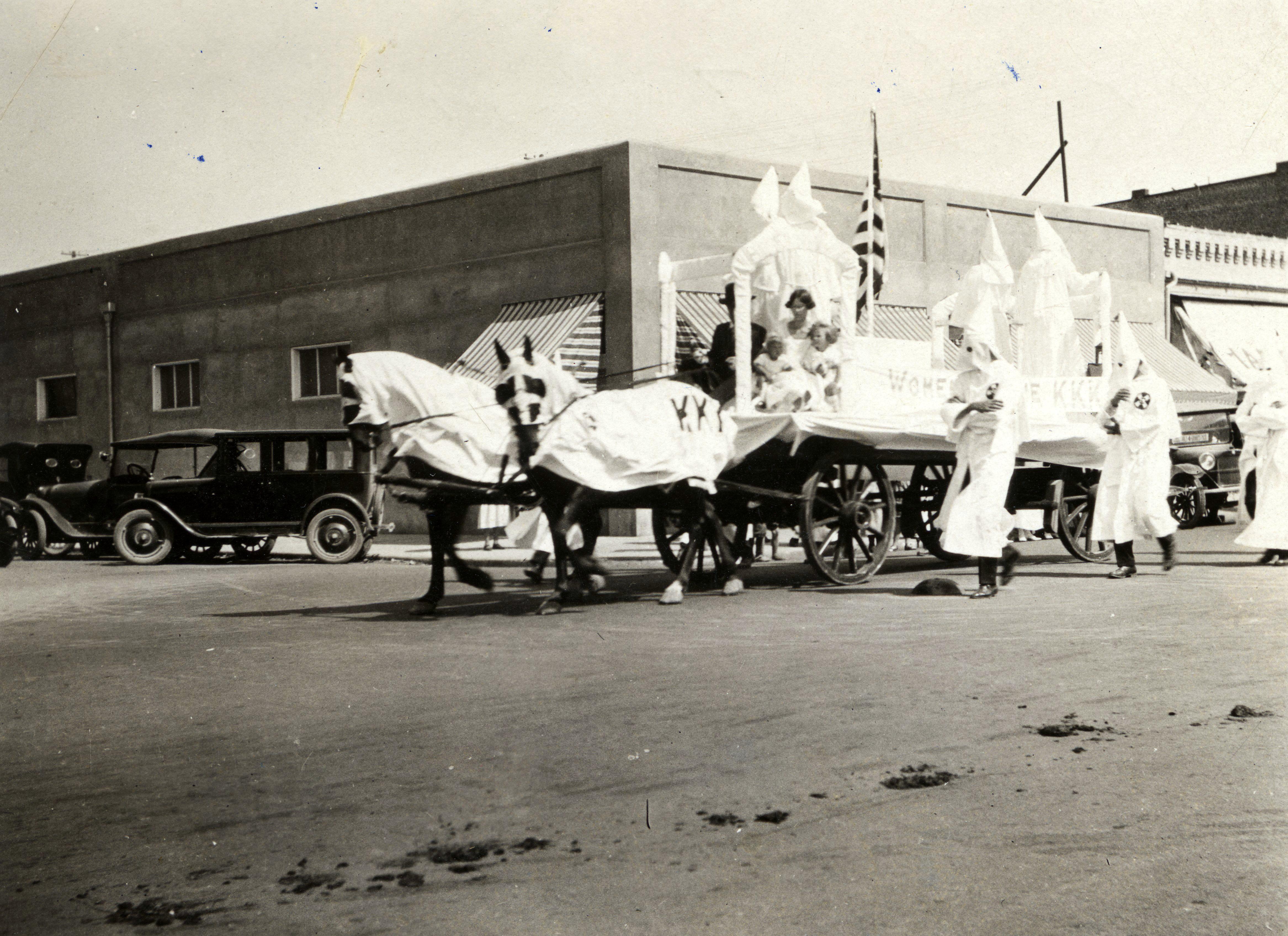
A group of KKK members parades down the streets of Grants Pass, Ore., in the 1920s. The KKK had a strong presence across the state in the early 1900s, with Oregon Klan leaders claiming 35,000 active members in 1923.
Lloyd Smith Collection
These conversations are happening here in Oregon, too, a state that — no matter which way you cut it — has deep roots in racism.
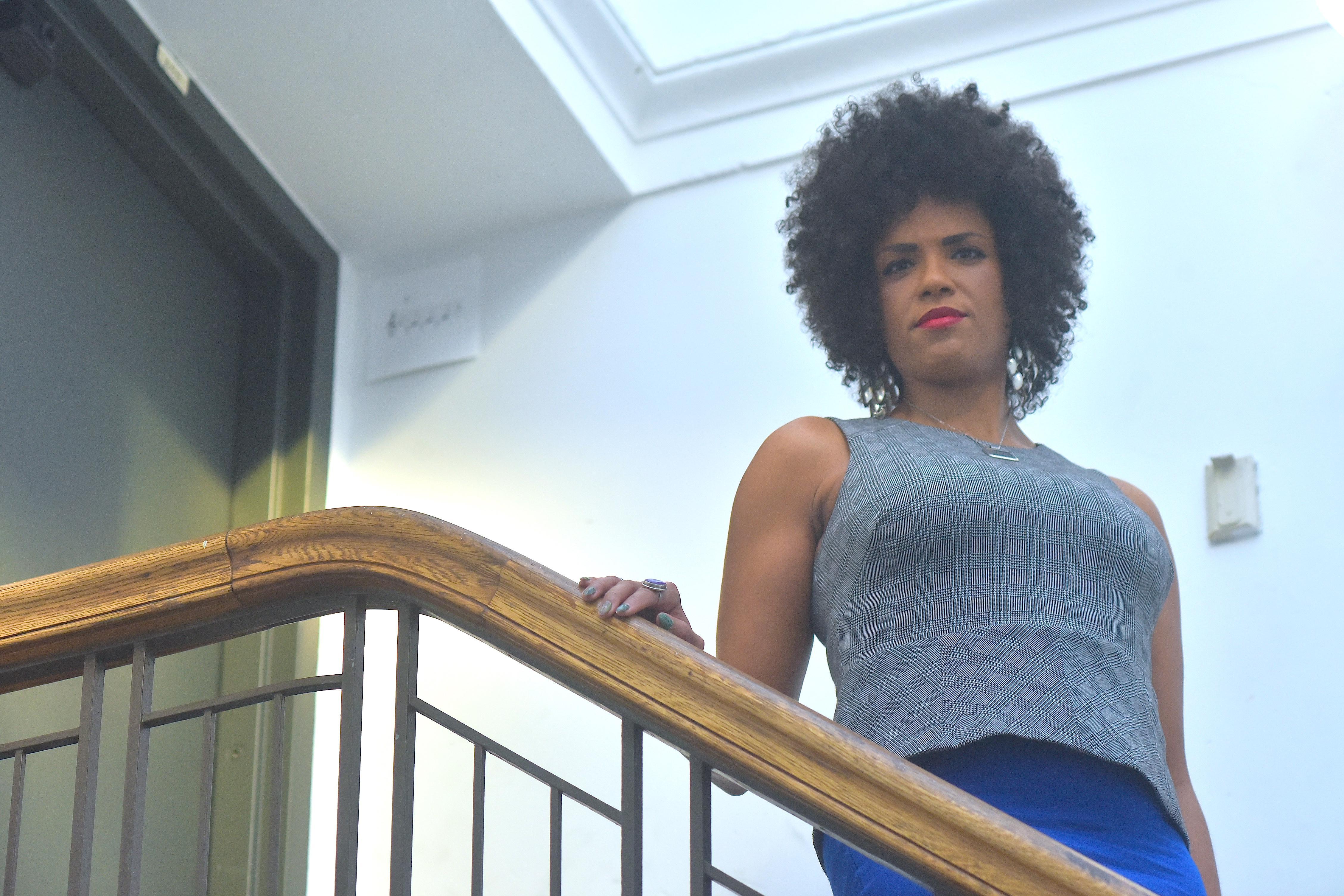
Walidah Imarishais a writer, educator, public scholar and spoken word artist.
Pete Shaw
“[These] laws point to the fact that Oregon was founded as a racist white utopia,” said Walidah Imarisha, a Black studies educator and writer based in Oregon. “The idea was that white folks would come here and build the perfect white society.”
In 1844, when Oregon was still a territory, it passed its first Black exclusionary law. It banned slavery, but it also prohibited Black people from living in the territory for more than three years. If a Black person broke this law, the consequence was 39 lashes, every six months, until they left.
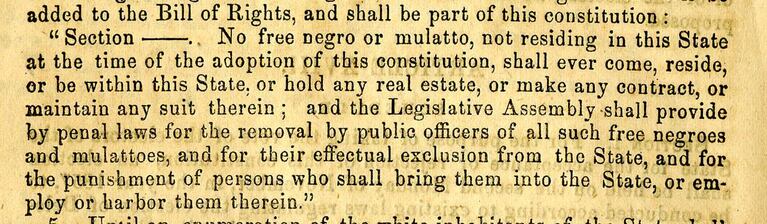
The final exclusion measure made it into the Oregon Constitution as a clause when the territory became a state 10 years later in 1859. This clause went further than the territory’s second law by also prohibiting Black people from owning property and making contracts.
“It speaks very clearly to the ways that this place was founded to center whiteness, not only at the exclusion of folks of color but at the brutalization of folks of color,” said Imarisha.
These laws were rarely enforced but they did the job they were created to do: establish Oregon as a majority white state. And it’s why Portland, the state’s most populous city, is still known as the whitest big city in the United States.
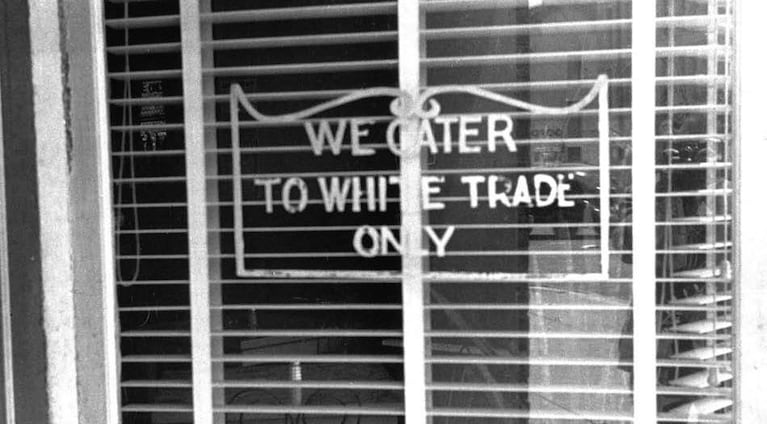
Sign in the window of a Portland restaurant circa 1943
Photo Courtesy of Oregon Historical Society, CN 0034
In 1859, Oregon was the only state admitted to the Union with an Exclusion Clause in its constitution.
Oregon State Archives
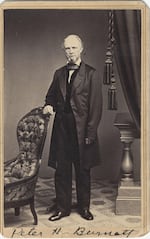
Peter Burnett was the author of the first exclusion law banning blacks in Oregon Territory.
Shew, W. M., photographer. Photo Courtesy of Oregon Historical Society, Orhi 13424
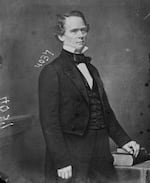
Oregon’s First Territorial Governor, Joseph Lane, supported slavery. In 1860, he was a candidate for vice president against Abraham Lincoln
Photo Courtesy of Library of Congress
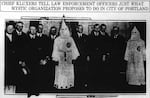
The Portland Telegram published this images of the KKK meeting with Portland leaders in 1921. Included are the city Chief of Police, Captain of Police, the District Attorney and a sheriff
Photo Courtesy of Oregon Historical Society, ba021814
“This is an ideology that is not only alive, it’s serving as the foundation for the institutions of Oregon,” said Imarisha. “Oregon is a useful case study for the rest of the nation because the only thing unique about Oregon is [it] was bold enough to write it down. The same policies, practices and ideologies that shaped Oregon, shaped the nation as a whole.”
“This movement, which is led by Black youth, is incredibly inspiring,” said Imarisha. “I just really want to say thank you to the leadership who have created this movement.”
Ultimately, Imarisha believes this movement and the conversations we’re all experiencing now can bring about profound societal changes for Black people and other people of color.
“If you believe in freedom, if you believe in justice, if you believe in liberation — now is the time to act,” said Imarisha.
Hear the full conversation with Walidah Imarisha in the audio player above.


 Scottie's Playtime