(BTW – the image we’ve all seen of the exterior of the new addition is an unofficial AI rendering. I believe last week we said it was real. The REAL one is at the top of this newsletter. We apologize for the error.)
We are now long past lamenting that this stuff is not normal. The yahoos who have been installed in government have no interest in making our lives better – but they’re super good at coming up with crap to make them worse.
“Nothing is normal,” Karoli agrees. “but some things are so out of the realm of – like, for example…today’s executive order by Trump ordering a new census to be based on 2024 data with no non-citizens in the census. All of which is entirely illegal, unconstitutional.”
“Why is it that newspapers cannot say it’s unconstitutional? I mean, the Washington Post came close to saying that but they couldn’t actually say it,” she says. (NOTE: NPR does a good job here. Which is a good reminder to give to your local NPR station, if you can.)
When Karoli pointed out on social media that this latest EO was unconstitutional, someone came back at her with “Who’s going to stop him?”
That is exactly the kind of thinking that makes the authoritarian takeover complete. We still have the possibility of returning this nation to a functioning democracy – as long as we resist the temptation to become fatalistic about MAGA’s burrowing infestation of our government.
Just look at what has happened since the regime ordered Texas to engage in a highly irregular mid-cycle redistrict session to give the Republicans five more seats. The only reason this is happening is because the regime expects to lose the House in 2026, so they are doing everything they can think of to rig the election in their favor.
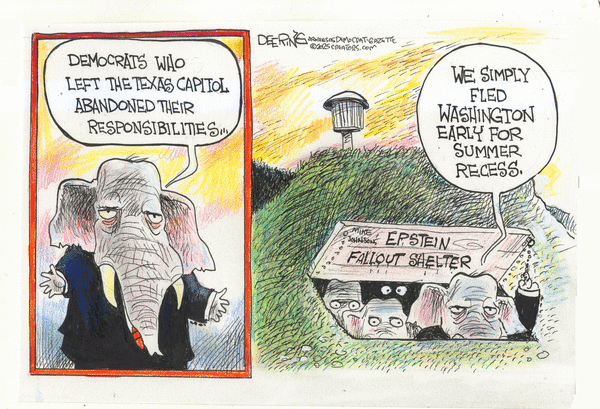
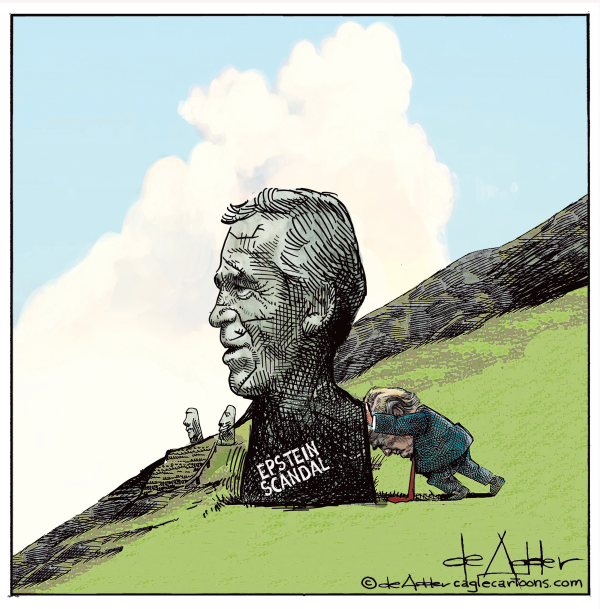
And we are fighting back. Those Democratic Texas legislators who fled the state to deprive Governor Abbott of a quorum are heroes in the fight for democracy. The Democratic governors who are assisting them and arranging for retaliatory re-districting are champions of democracy. And the House Democrats on the Oversight Committee who figured out they could force Chairman James Comer into subpoenaing the Epstein Files are golden.
And do you know what happens when we don’t meekly accept MAGA’s crazy maneuvers as done deals? They back down. Just look at the highest profile cases of people who have been kidnapped by ICE. Community outrage and publicity have helped get some of these folks released. But – as Aliza points out – the key to winning that battle is engaging the community.
“It is way past time for white people to do this job and this heavy lifting. It has to come from us. It HAS to. We have been reliant and allowing the people who we’ve oppressed and allowed to be oppressed save us every single time. And it is our turn… we have to have the difficult conversations with our families, with our neighbors, with our friends, with our fellow white people. We need to call these people, you know – we have to call them on their biases, and their flawed thinking. It has to happen. They can’t sit in comfort while all this shit’s happening around us,” she says.
Here’s a few of the resources I looked at while trying to understand if there actually is anyone to stop Trump from building his monstrosity of a ballroom:
Architectural Digest has this handy dandy timeline of all the many renovations that have been undertaken at the White House over the years.
One of the biggest changes to the White House occurred during the Truman Administration, which added the East Wing to the building in order to cover up an underground security bunker that was added during the war. Wikipedia’s got a deep dive into that one.
Finally: Karoli (who is a much better researcher than I) found a New York Times article (gift link) with the answer to the question we originally posed: It turns out that there IS a standing Committee for the Preservation of the White House – and it’s made up of the director of the National Park Service, representatives from the White House, the Smithsonian Institution, the Commission of Fine Arts, the National Gallery of Art and more appointees of the president.
As it turns out:
Mr. Trump has not nominated a park service director, a position that requires Senate confirmation, or announced the appointments of individuals to serve on the committee. The terms of 13 individuals that former President Joseph R. Biden Jr. appointed to the committee in 2023 expired when Mr. Trump began his second term, according to a government database. Jessica Bowron, the comptroller of the National Park Service, is currently serving as its acting director.
So the answer to that question is – No, there appears to be no one who will stop him from this one. (snip-MORE on the page, including the podcast)
Kennedy Center Honors could see some changes under Trump
The Kennedy Center has slightly delayed naming its list of annual lifetime achievement honorees until closer to the event in December, and the award itself, known for its rainbow-hued ribbon, may be redesigned in favor of a simpler version, sources familiar with the decisions told CBS News.
The announcement of the Kennedy Center Honors recipients, usually made annually in August, will happen in the next several weeks, one of the sources said.
Although some of the arts center’s staff and those who closely follow the event have worried the televised gala would be completely revamped and renamed in favor of a patriotic-sounding moniker, the Kennedy Center Honors name will remain untouched, sources said.
The rainbow theme won’t disappear entirely, but the ribbon for the lifetime achievement medallion will likely to be redesigned — possibly with a black or gold ribbon.
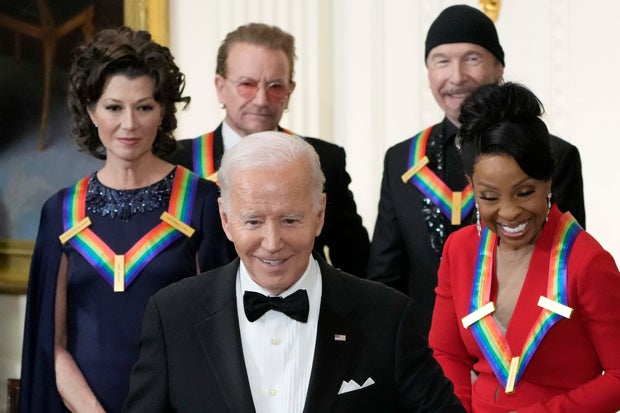
President Biden with 2022 Kennedy Center Honorees Amy Grant, Bono and The Edge of U2, and Gladys Knight during a reception at the White House on Dec. 4, 2022.Manuel Balce Ceneta / AP
The Honors weekend will be revamped, with a more streamlined schedule instead of multiple gatherings at the State Department, the White House and elsewhere, sources said. The events were expensive and time-consuming, and honorees sometimes skipped portions of the non-televised events.
After criticizing the Kennedy Center‘s artistic fare and its finances, President Trump earlier this year named himself as its chairman, longtime aide and supporter Richard Grenell as its president and several White House officials and Trump allies as board members. That triggered a number of artists to cancel performances and some staff members resigned.
The Kennedy Center Honors ceremony is directed and produced by CBS and airs on the network.
The size of the Kennedy Center’s development team has been severely downsized, several sources close to the matter said. That team has shrunk from more than 60 to less than 20, and some departments have been slashed altogether.
Giving by Democratic donors has collapsed, although aggressive fundraising has continued and has outpaced past years with more corporate sponsors, several sources said.
Grenell told CBS News: “I don’t want to lose a single Democratic donor. We’re working hard to keep them and expand the donor base. The arts should not be political.”
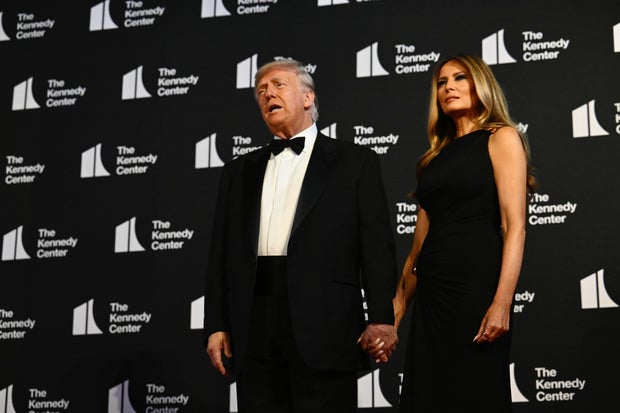
President Trump and first lady Melania Trump at The Kennedy Center for the opening night performance of “Les Misérables” on June 11, 2025.Craig Hudson/For The Washington Post via Getty Images
During his first term, after several award recipients criticized him, Mr. Trump skipped the Honors shows, breaking a tradition of presidential attendance at the cultural venue.
President Biden attended during all four years of his term, including last year’s ceremony that recognized singer Bonnie Raitt, filmmaker Francis Ford Coppola, surviving members of the band the Grateful Dead, trumpet player Arturo Sandoval, and Harlem’s Apollo Theater.
Two of the sources said Grenell has been an effective organizer but is only occasionally at the Kennedy Center. One was critical of Grenell’s salary. Grenell started off taking zero salary and is now paid $175,000, sources said, which is less than the previous president, Deborah Rutter, whose salary topped $1 million, public tax records show.
Roma Daravi, a spokeswoman for the Kennedy Center, declined to comment on Grenell’s salary or changes to the award design.
She said they’re not making changes to ceremony itself. “If anything,” she said, “it’s going to be more exciting.”
Again I keep saying this, it is a fundamentalist Christian attempt to remove all media featuring or talking about the LGBTQ+. They do not want LGBTQ+ children seeing themselves in media, in library books, but more important they do not want straight cis kids to read or see kids who are different who are accepted. They want kids to grow up thinking those LGBTQ+ kids are bad and need to be ostracized or harassed / threatened to be cis straight. They want to return to the society / schools of the 1950s. These people can not accept that other people and other cultures exist that are different from the way they feel or live. They want what Russia and Hungary did, outlaw being gay in public. Hugs
The Florida Department of Education has identified more than 50 books it says are no longer permitted in public schools across the state, citing inappropriate and pornographic content.
But some parents and advocacy groups are questioning whether the state should have the final say over what books are allowed in schools — including in Broward County.
A parent who spoke with Local 10’s Roy Ramos on Thursday with believes families should have input, and that local reviews should take place before books are removed.
“You will remove these 55 books,” said Stephana Ferrell, a parent and director of the Florida Freedom to Read Project, responding to the state’s recent directive.
The Department of Education’s list bans 55 titles from public school libraries statewide. Ferrell said the move overrides local input.
“Every district basically got that message that those 55 books violate the law according to the state. It doesn’t matter if local community standards say no, these books are okay for certain grades and we believe them to fit our community standards,” she said.
Local 10 obtained a copy of the banned list. Some of the titles were described by the state as pornographic and unsuitable for children.
Among them: Choke, This Book Is Gay, Forever, and Breathless.
Portions of these books contain graphic content, including descriptions of male genitalia, sexual acts and intercourse — some of which were too explicit to air on television.
“They are saying we can remove these books based on experts alone and it doesn’t matter what the literary value is,” Ferrell said. “They are making the argument that our school library are government speech and they can decide what is appropriate or not.”
Under current Florida law, parents may challenge books in their school district. Those challenges are then reviewed by a committee to determine whether the content is inappropriate.
Ferrell argues the state is bypassing that process entirely.
“I believe that you have to review these books in their entirety to determine whether or not the intent of the work is to sexually excite the reader,” she added. “There is no opportunity for local parents to get involved. “None of it matters. The state has decided for us.”
Broward County schools were given until Tuesday to comply with the directive and remove the books.
The list currently includes 55 titles, but critics believe more will be added.
Local 10 has reached out to Broward County Public Schools for comment on the state’s order.
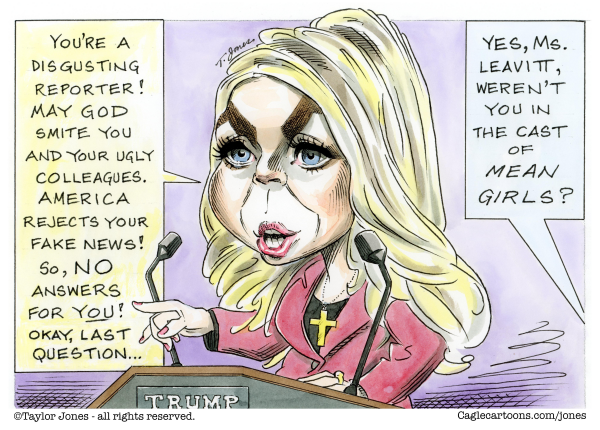
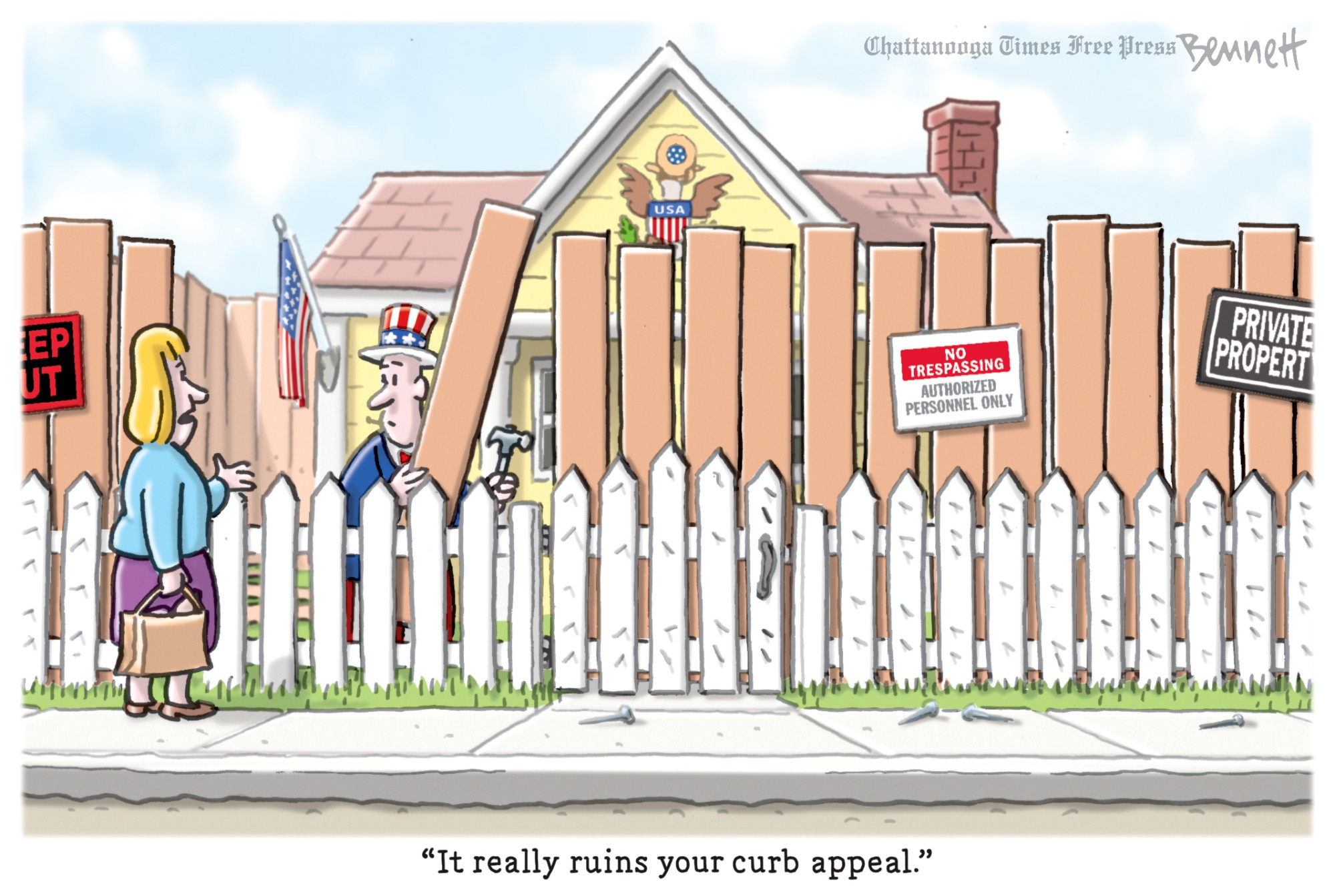
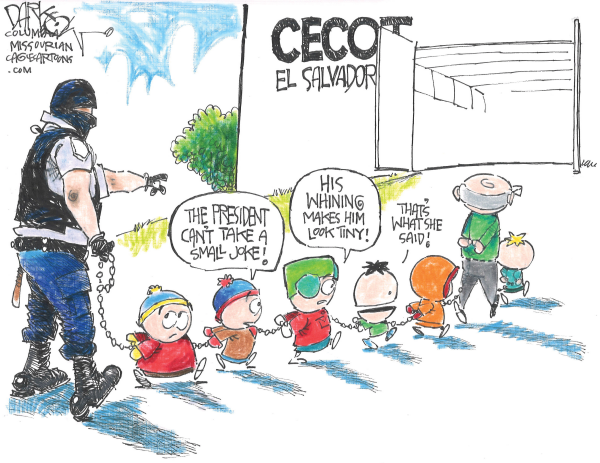
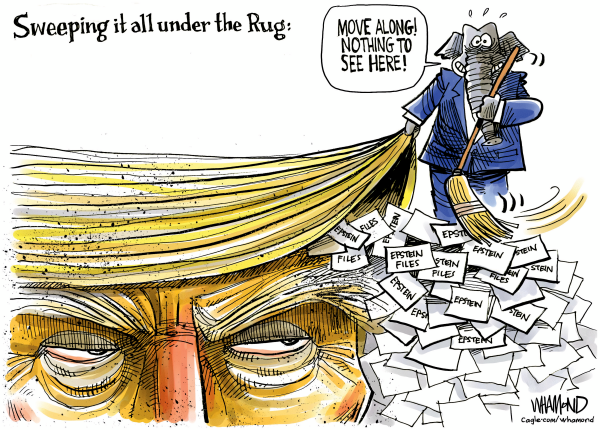
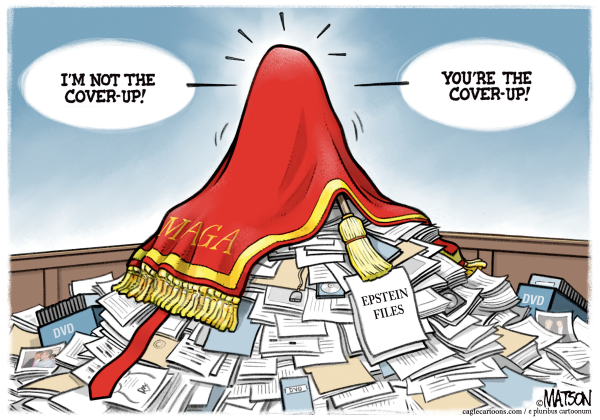
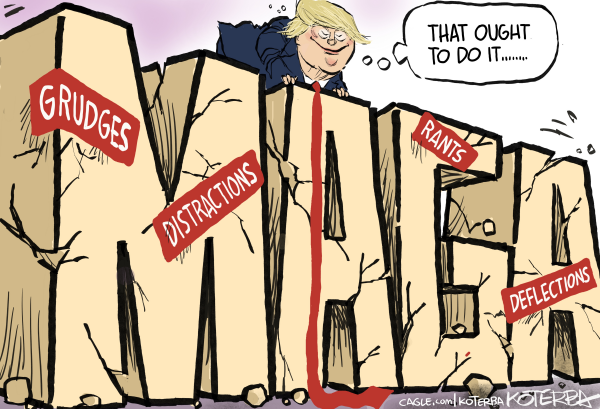
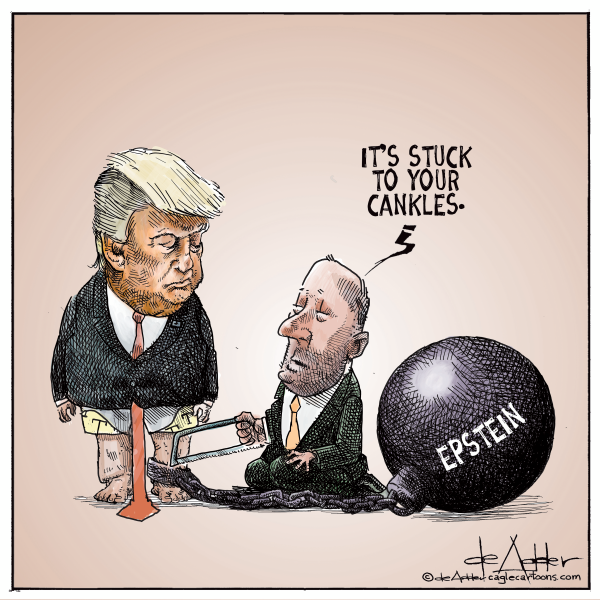
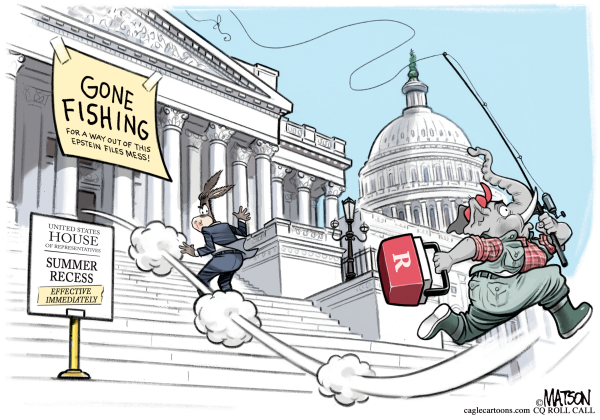
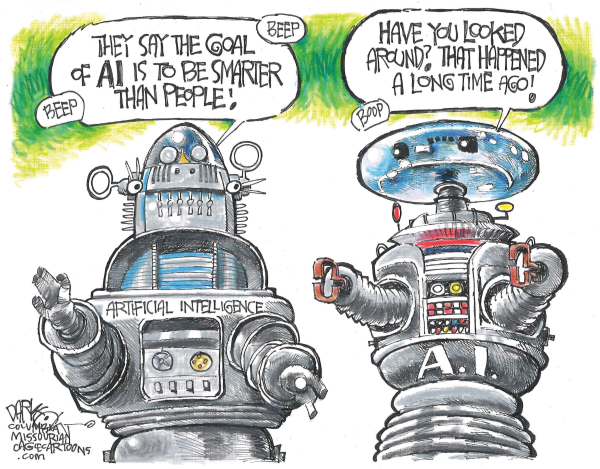
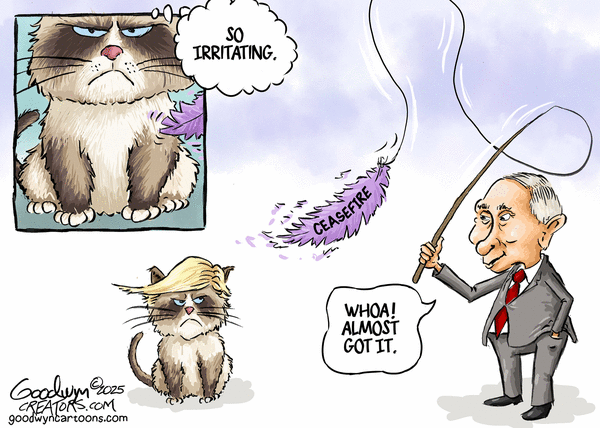
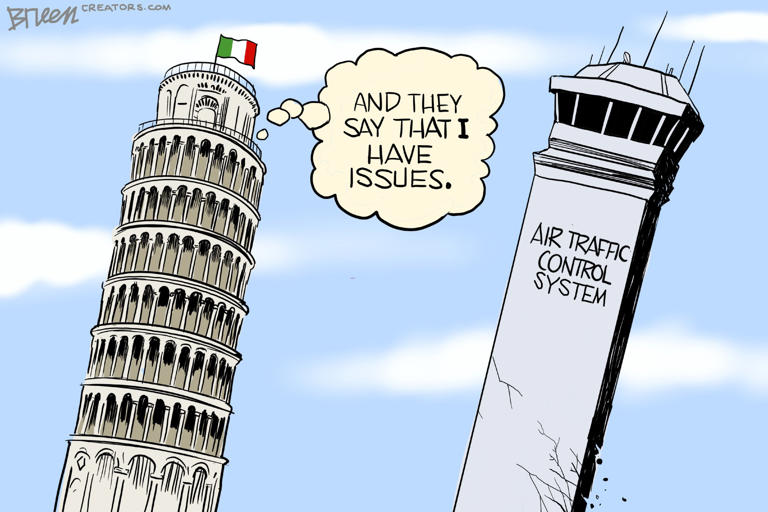
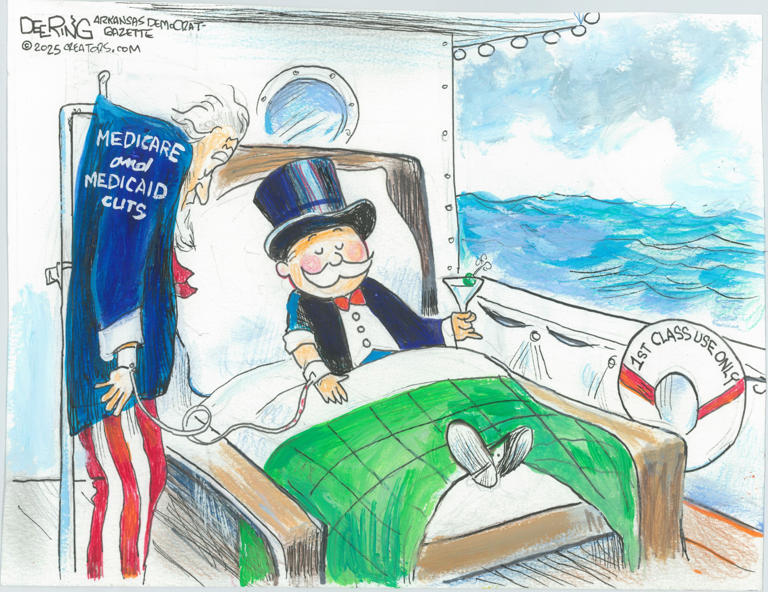
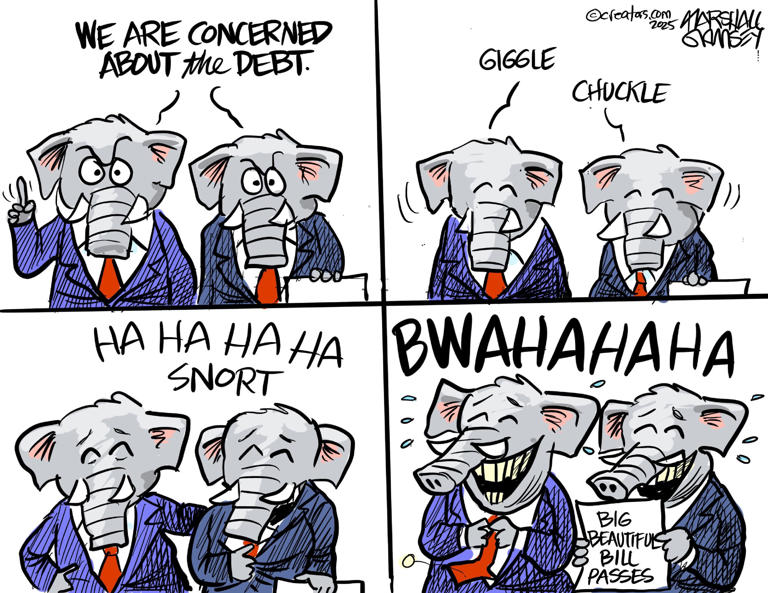
about the day, or my mood, or maybe even the moon phase (full at around 2:30 tomorrow morning,) but I LOL’d at this top one. I’m including a few others for a little more fun.
(For me, it’s my watch. I even bought a simpler one so I wouldn’t obsess, but I’ve found a way to obsess, anyway. sigh 😄 🏃 It just now buzzed me, so I gotta go do my 10 at 10!)
Today’s Zoom talk is with Ed Wexler, who draws for Cagle Cartoons. Join us as we talk about cartoons, art supplies, caricatures, SoCal weather, and Duck Tales.
(The Zoom chat is on the page, linked at “Read On Substack” above. It’s an hour & 15 min.–A.)
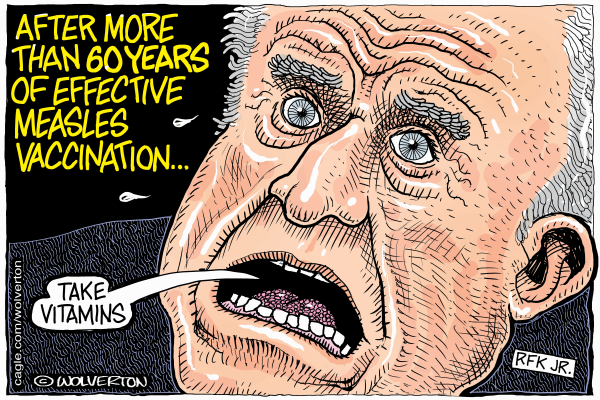
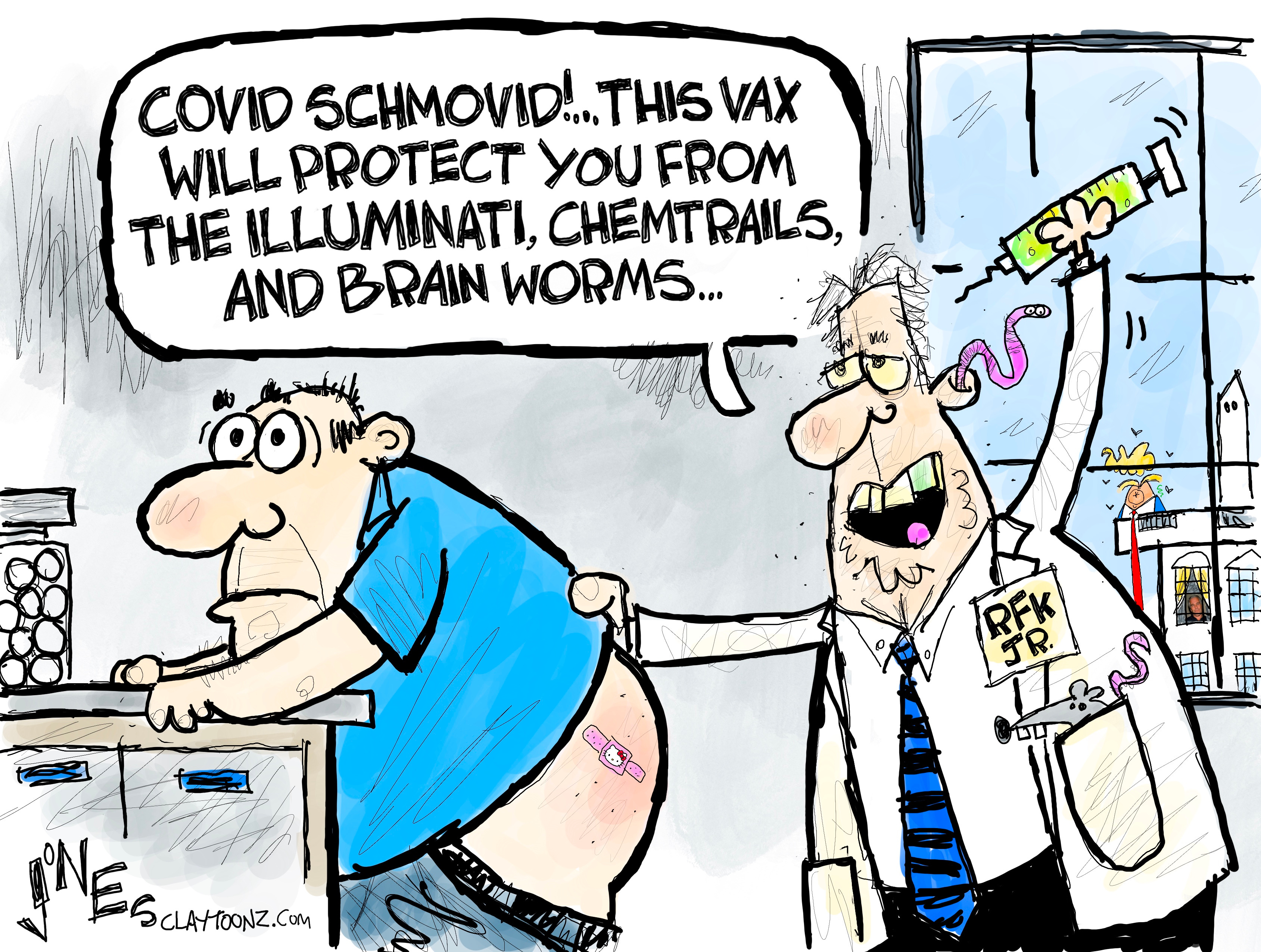
On Tuesday, it was announced that the Trump Regime, which is a petri dish of conspiracy theories, is canceling almost $500 million in contracts to develop mRNA vaccines to protect the nation against future viral threats.
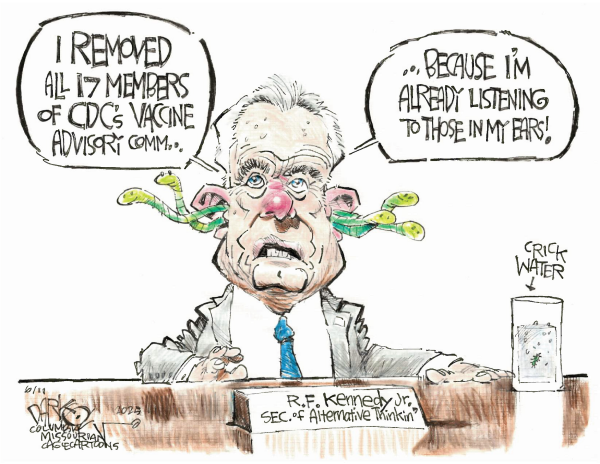
The federal Biomedical Advanced Research and Development Authority (BARDA, which is also the noise Pete Hegseth makes when throwing up in a back alley dumpster), which oversees the nation’s defenses against biological attacks, is terminating 22 contracts with university researchers and private companies to develop new uses for the mRNA technology, because the Health and Human Services Secretary, Robert F. Kennedy Jr., is not a doctor or medical expert, but a conspiracy-theorist whack job.
Lunatics who believe vaccines cause autism and come with tracking chips so the Deep State Illuminati baby-eating reptillians can keep track of you are ecstatic. Actual scientists, doctors, and public health experts, not so much.
Showing evidence that the brain worm may have eaten more than we first believed, RFK Jr. said, “Let me be absolutely clear: HHS supports safe, effective vaccines for every American who wants them. That’s why we’re moving beyond the limitations of mRNA vaccines for respiratory viruses and investing in better solutions.”
This is like when Trump tried to get rid of Obamacare with “something better.”
The first COVID vaccine was developed during the first Trump regime, but that administration never had a plan to roll it out to the public. They were planning to hide it all behind a toilet at MAGA-Lardo. Thankfully, Joe Biden won the 2020 election and made the vaccines effective. Now, the same regime that took credit for the vaccine is trying to destroy it.
Michael Osterholm, who runs the Center for Infectious Disease Research and Policy at the University of Minnesota, said, “This may be the most dangerous public health judgment that I’ve seen in my 50 years in this business. It is baseless, and we will pay a tremendous price in terms of illnesses and deaths. I’m extremely worried about it.” He’s worried.
Every single MAGAt who yelled “Go get another booster, soy boy” during a losing argument responded with, “Yee-hay, yee-haw, yee-haw.”
Mary Holland, the president and CEO of The Children’s Health Defense, said, “While we believe the mRNA vaccines should be taken off the market, the announcement is a positive move towards protecting public health.” By the way, the Children’s Health Defense was founded by RFK Jr, but I’m sure the people running that organization are totally credible (insert rolling eyes here).
I had a feeling it was bad to make the nation’s top health official a guy who believes in chemtrials and likes to tool around town in a car with a whale’s head strapped to it. (snip-MORE, and it’s good/not good. Clay’s commentary is what’s good; the news is not.)
August 8, 1974 President Richard M. Nixon resigned from office, the first U.S. president ever to do so. The House Judiciary Committee had, with bipartisan support (the Democrats and one-third of the Republican members), voted for three articles of impeachment: obstruction of justice, abuse of power, and contempt of Congress.A week later, one of the White House tapes was finally made public, showing the President’s direct involvement in the Watergate scandal cover-up: “…call the FBI and say that we wish, for the country, don’t go any further into this case, period…” – Nixon to Chief of Staff Haldeman, June 23, 1972 (six days after the Watergate break-in) He officially left office August 9, and was fully pardoned one month later by his successor, President Gerald Ford. Asked years later about some of his administration’s questionable activities, Nixon said, “Well, when the president does that, it isn’t illegal.” The headlines in Washington that day
August 8, 1999 A 53-mile peace walk commemorating the bombing of Hiroshima and Nagasaki ended near Clam Lake, Wisconsin, at the site of the U.S. Navy’s Project Elf (extremely low frequency) submarine communications transmitter. Twelve of the demonstrators were arrested for trespassing, adding to the nearly 500 previously arrested for sit-ins, Citizen Inspections, blockades and disarmament actions at the transmitter site in Ashland County.
A group of Little Corellas (Cacatua sanguinea), a species of white cockatoo native to Australia and southern New Guinea, perch on a suburban TV antenna. Credit: Lea Scaddan / Moment / Getty Images Plus.
A new study shows cockatoos in captivity dance more often than expected, with the birds pulling out moves like the “body roll” and the “moving jump”.
The researchers observed cockatoos showing off a total of 30 distinct dance moves. Some stylish birds showed off unique moves not seen in any other bird.
“The work suggests that playing music to parrots may provide a useful approach to enrich their lives in captivity, with positive effects on their welfare,” says lead researcher Natasha Lubke from Charles Sturt University, Australia.
Lubke and colleagues analysed 45 videos of cockatoos dancing that had been posted to social media.
Across the videos, the researchers established 30 distinct dance moves like the “headbang” or the “sidestep”. Of these dance moves, 17 had not been previously described scientifically.
The “downward movement” was the most common motion, appearing in 50% of the birds’ repertoire. Routines involving just wings, like “flapping” and “wings back”, were the least common.
Each cockatoo species had a unique top 10 most common dance moves, and the researchers observed that closely related species did not display similar dances.
Illustration of the 10 most common recorded dance movements. Ethogram descriptors based on Keehn et al. [3] and illustrations by Zenna Lugosi. Credit: Lubke et al., 2025, PLOS One, CC-BY 4.0.
The researchers then followed up their initial video analysis by investigating the behaviour of 6 cockatoos at Wagga Wagga Zoo in Australia.
The cockatoos were then played either music, an audio podcast or no audio at all. All cockatoos performed dance moves whether there was music playing or not.
“I showed that dancing behaviour is more common in cockatoos than previously thought and was seen in 10 of the 21 cockatoo species,” says Lubke.
“My analysis also indicated that dancing is far more complex and varied than previously thought, recording 30 different movements seen in multiple birds and a further 17 movements that were seen in only one bird.”
Some of the dance moves observed were similar to those displayed by wild parrots when they are in the process of courtship. This suggests captive cockatoos may have redirected their courting dance toward their owners.
More research is needed to understand whether the cockatoos actually enjoy dancing in order to improve the welfare of captive cockatoos.
“The similarities with human dancing make it hard to argue against well-developed cognitive and emotional processes in parrots, and playing music to parrots may improve their welfare,” says Rafael Freire, a professor in animal behaviour and welfare at Charles Sturt University.
“Further research would be beneficial to determine if music can trigger dance in captive birds and serve as a form of environmental enrichment.”
All 30 of the cockatoos’ groovy dance moves are listed in the research paper published in PLOS One.