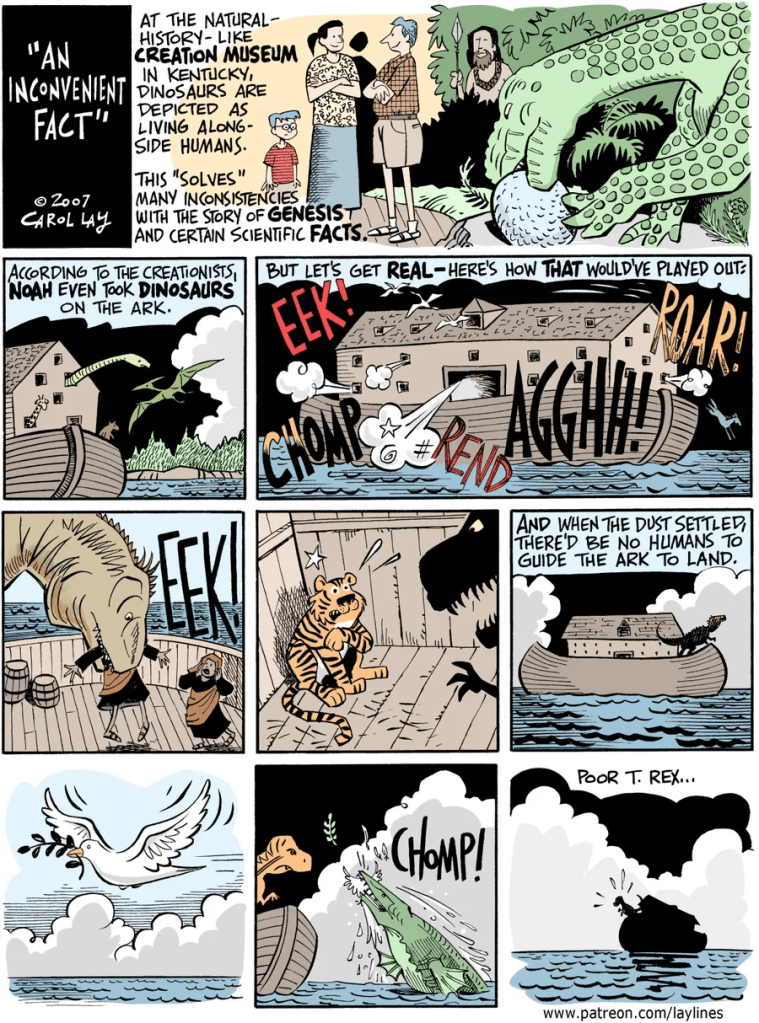
Oops, again; I didn’t get comics read yesterday, and remembered today that I didn’t post “Lay Lines.” Here it is.
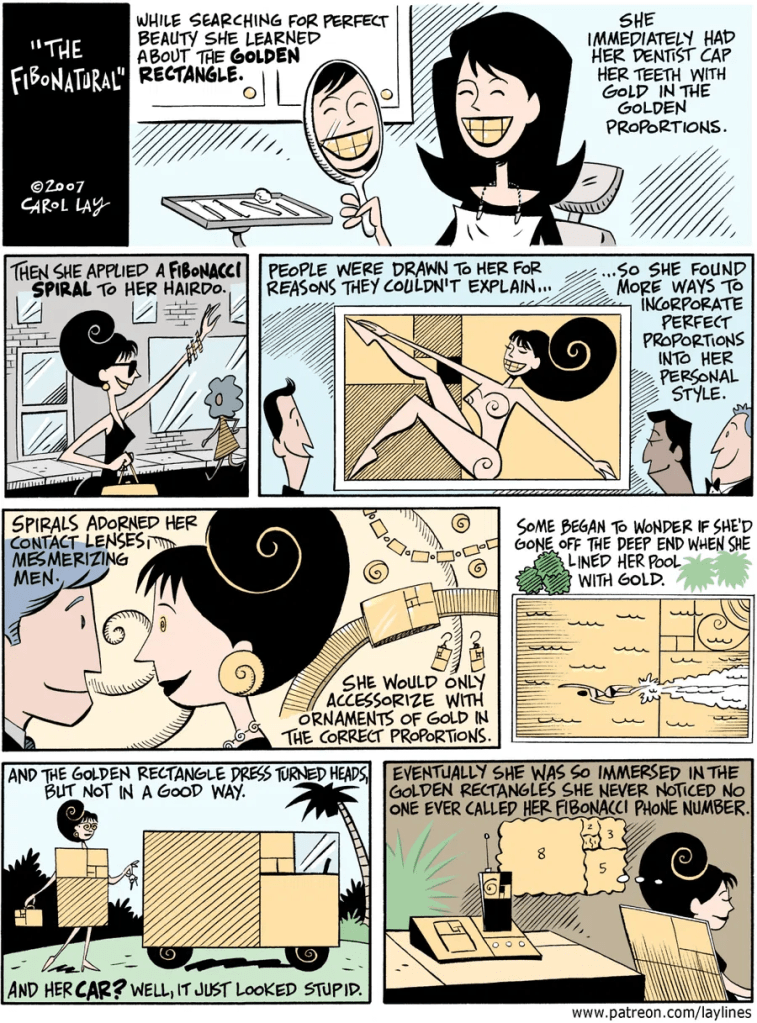

Oops, again; I didn’t get comics read yesterday, and remembered today that I didn’t post “Lay Lines.” Here it is.
Dear friend,
This week I’ve been struggling a little with the fact that I can’t do all of the things that I want to. My book comes out next week (you’re in it!) and I feel so excited and lucky but also terrified and filled with dread. I worry people won’t like it…that no one will show up to the book tour…that I’m failing my publisher because I can’t do some of the things that most authors would jump at because I just don’t have the energy or mental strength to say yes to everything without making myself sick. I even felt a little bad about drawing this week when I probably should be doing author stuff.
But then I reminded myself that I need this quiet drawing time (is it considered “quiet” when I’m doing it while binging Dexter? I say yes.) to keep myself sane and to replenish my energy and to remind myself that I am more than just my work, and that it’s okay to not work yourself to exhaustion even if it’s for something you love.
I suspect we all struggle with this. Perhaps as parents or partners or in our career…the urge to try to be more than our bodies and minds allow, but not being able to because you are…human. It’s so easy to put ourselves last when it’s for something else that you care about.
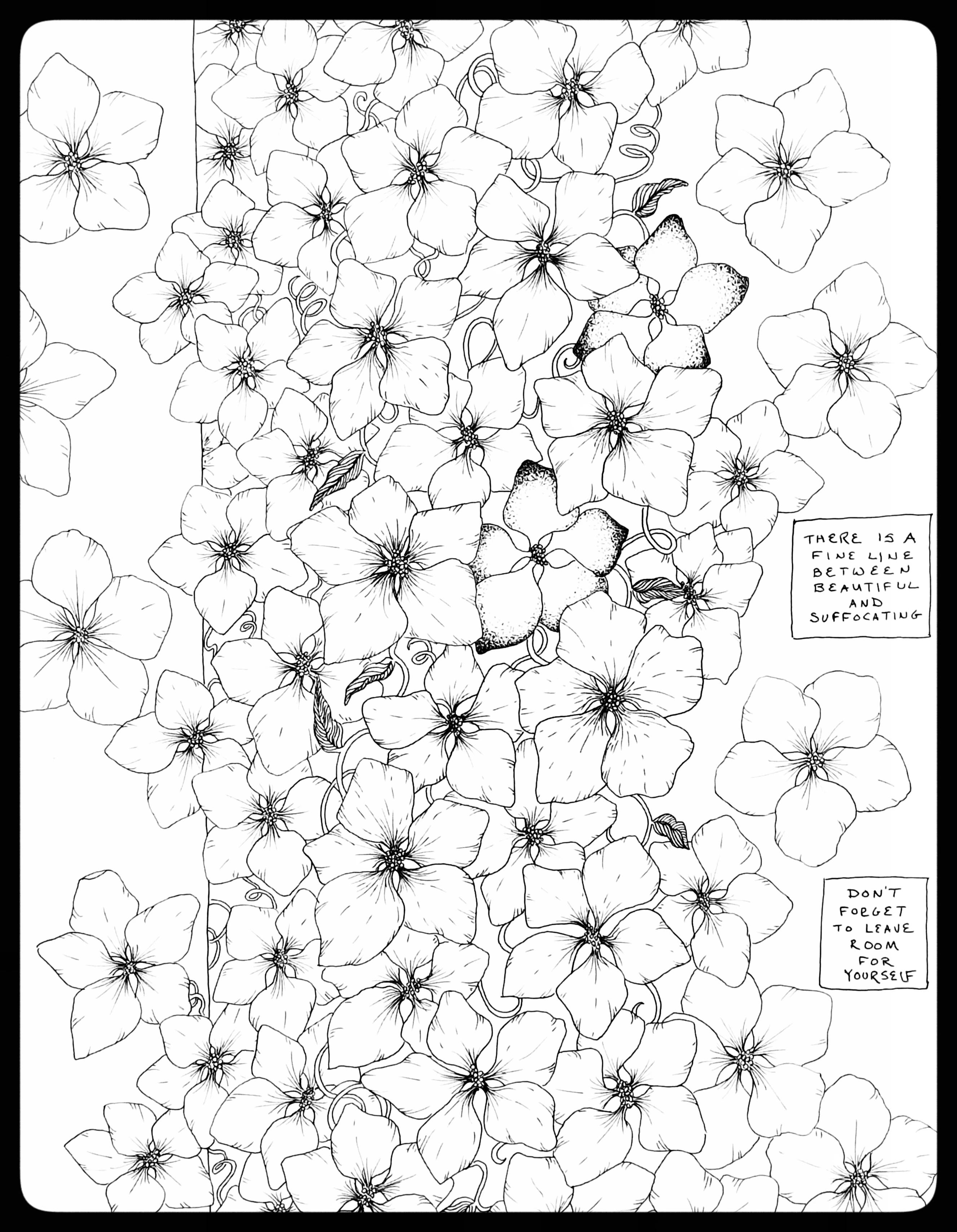
“There is a fine line between beautiful and suffocating. Don’t forget to leave room for yourself.”
So this is a reminder from me to you to make time for yourself if you can. To rest. To create. To refill your cup. There is so much beauty in what we do for others, for our work and for our passions…but there is also a necessary beauty in what we do for ourselves…a beauty we often forget.
Sending love (and quiet moments of calm repose even when watching serial killer shows)
~me
This morning I was in New York filming the Today Show where I managed to talk about explosive diarrhea, fears of my foot falling off, apologized for using my hands too much, sat on them, promptly pulled my hands back out bc I can’t talk without them and then made all the anchors put pencils in their mouths…all within about 4 minutes. By this afternoon I was in Amish country in Pennsylvania where I met some very nice “fancy Amish” people (this is a real thing) and did not pet a horse even though I really wanted to. Tomorrow afternoon I’ll be in Lancaster for my first tour stop and signing even though technically my book doesn’t officially come out until Tuesday. Then it’s back to NYC, and then a stop in New Hampshire for another reading and signing and then I get to go home for a week to rest for the next round. I’m feeling tired, happy, lucky, scared, excited, embarrassed…all of the things. Oh, and did I mention my first book got banned from a Texas high school after a senate bill deemed it obscene and profane? It’s been a busy week. I would link to everything but I can’t figure out how to do this with my phone
I should have written all this before I left but i was overwhelmed with packing all the wrong things and so instead I’m writing this tonight, on the eve of my first new book event in over half a decade, to distract myself from the fear and from the incredibly loud but very happy drunken wedding taking place two rooms down from mine. It feels like you’re here, in a weird way. I know that’s strange, but it’s comforting.
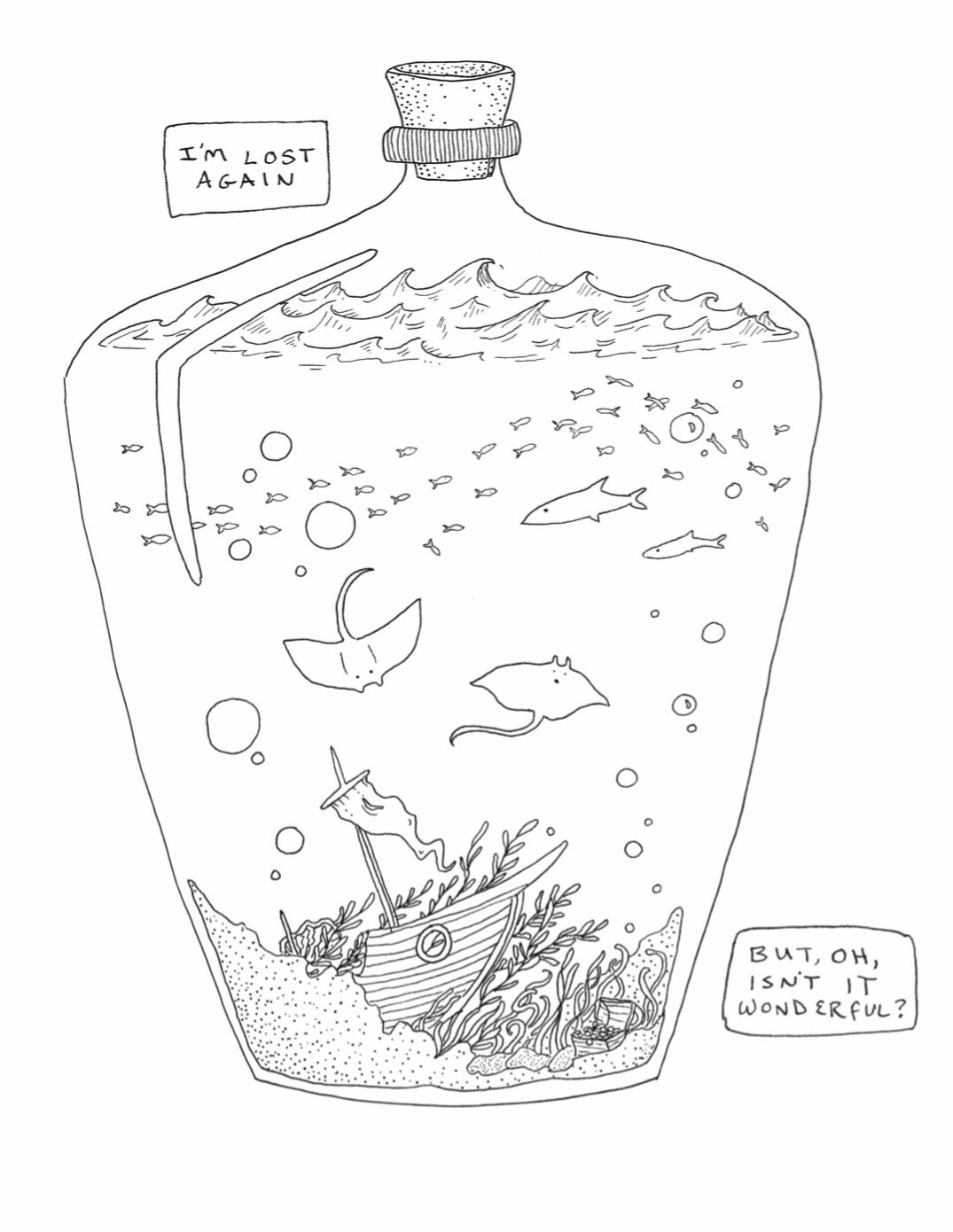
I’ve drawn in planes and cars and green rooms to keep my hands and mind busy but it’s a jerky mess so instead I’m sharing a drawing from my new book, because it seems fitting while I’m traveling so much in spite of the fact that I never know where I am. It’s an adventure, after all, if I look at it with the right kind of eyes.
I super crazy love you,
Jenny
MPS posted Lucy Darling in the Midday Palate Cleanser yesterday; absolutely fantastic, and you should click “Midday Palate Cleanser” right up there to see it. In the comments, MDavis mentioned that Lucy Darling had performed on “Penn & Teller: Fool Us,” and was brilliant there, as well. This morning, why, what would be in my phone stream, but Lucy Darling performing on “Penn & Teller: Fool Us”, and here it is!
I save the best for first. So, you all should know that Josh Johnson is hosting The Daily Show Tuesday night, along with Wed. and Thurs. nights. Thank you for your attention to this vital matter!
Next, and almost as good: maybe this has been seen, but here it is, for your enjoyment.
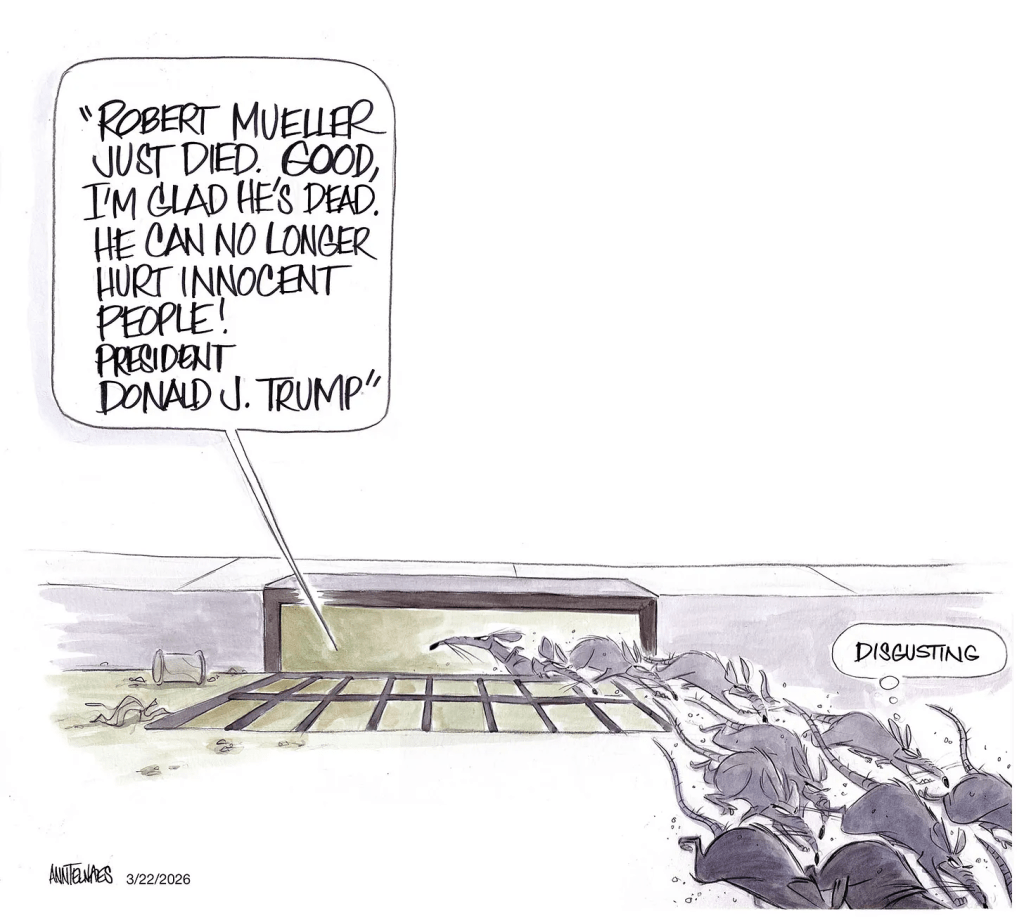
The French general did the right thing
“Fuckez-you!” he did happily sing
“Vous est a dicque
Et vous makez me sicque!
Mange a bite of my low-hanging thingue!”
“The only thing we really have to work at in this life is how to manifest love.”
George Harrison
“Goodbye, Pamela Paul,” was the headline of Andrea Long Chu’s now-iconic, recently ASME-nominated New York Magazine farewell to the former NY Times Book Review editor, when Paul left the paper two years ago. For a little background, Paul was named editor of the NYTBR in 2013 and took over books coverage for the entire paper in 2016, effectively becoming the most powerful editor in literary criticism. In 2022 she moved to the paper’s opinion pages to publish her own ideas about the world, many of which became political lightning rods in a publishing community that had for years been beholden to her editorial decisions.
Particularly infamous was one explicitly anti-trans essay from July, 2022, which was widely criticized at the time. It also had many people wondering how Paul’s politics might have come into play in her decisions as the most important books editor in the world.
So at some point I began dreaming up an idea: to commission a whole package of reviews of books by trans and queer authors, folks whose projects weren’t covered by the NYT under Paul’s reign. I asked Maris Kreizman to collaborate and to my delight, she agreed. What followed became an exercise in thinking through what is lost—and perhaps can never be regained—when transphobes and their enablers rise to prominence as our most powerful cultural gatekeepers.
*
So, to the nuts and bolts of this project. First of all, the volume of seemingly great books published by queer and trans authors between 2013 and 2022, and not covered by the NYT, was intimidating. It took Maris and me a while to work through the many great pitches we received and arrive at our final lucky number of 13. (Funnily enough, in actually trying to commission these reviews, I felt surprising sympathy for book review editors like Paul who are no doubt constantly buried in new titles to consider.)
Our effort here offers reviews of a mere sliver of all those titles we might have covered, many of which would be worthy of inclusion if we had limitless time and resources. I’m immensely grateful to all who submitted ideas, especially to all the fellow authors who wrote to tell us about their books (some were even writers I’d call heroes). My to-be-read pile is now, as ever, impossibly tall.
On a personal note, this entire project has made me feel much less alone. I feel more connected to other trans and/or queer writers, who are doing this work despite the shitty odds we face, despite our society’s continued denial of our full humanity, despite the efforts to ban our words and to decimate our entire lives, despite the media and publishing industry’s failure to actually reckon with—let alone correct for—any of this.
What follows is hardly meant to be comprehensive. I hope it inspires others to write their own reviews of whatever books they’d wish might be covered. I’d love teachers to assign this as a group project to writing classes, as I’ve heard of at least one doing already. I hope this project won’t be perceived as anything except the start of a conversation—one I feel everyone with stakes in this must join us in having.
–Sandy Ernest Allen
(Snip: please go to the page-that’s a link, right here, too–to see the books and the reviews.
Plus, AI is a subject of current event interest. (Lookin’ at autocorrect programs…) Meanwhile, I got a great deal of nerdy pleasure reading this, and I hope all who read, do as well!
Sonja Anderson – Daily Correspondent
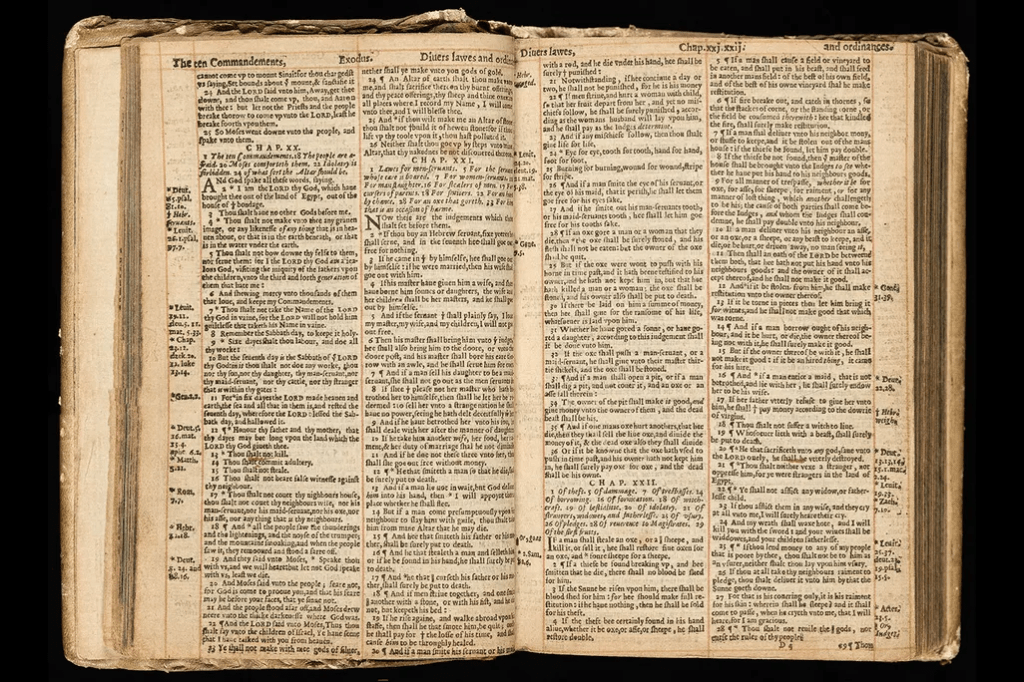
A 1631 copy of the Bible that includes the text “Thou shalt commit adultery.” Beinecke Rare Book and Manuscript Library
James Joyce wrote the manuscript of Ulysses with a steel pen over seven years. By his typists’ accounts, the Irish author’s penmanship was atrocious, and his revisions were overwhelming. When the book was published in 1922, it was full of mistakes. In a letter to his wife, he wrote, “The edition you have is full of printer’s errors.”
The following year, Joyce’s editors compiled a massive list of the book’s errors to be fixed in new editions. Joyce rejected some of the corrections, saying, “These are not misprints but beauties of my style hitherto undreamt of.” Even so, some future printings of the book came with a seven-page errata sheet listing more than 200 mistakes.
Errors like those in Ulysses are the subject of a new exhibition at Yale. “‘Beauties of My Style’: Errata and the Printed Mistake,” which opens at the university’s Sterling Memorial Library on March 30, examines the history of typos across five centuries.
“What we found was that errata sheets were not only spaces for corrections but also sites of humor, legal maneuvering and reinterpretation,” Rachel Churner, a visual studies scholar at the New School and the exhibition’s co-curator, tells Artnet’s Min Chen. “With this exhibition, we wanted to share ways in which even small corrections can reshape meaning and authority.”
According to a statement from the library, “errors committed” lists first appeared in the 15th century. Authors slipped these lists—containing typos, additions and apologies—into the backs of books after publication. The exhibition examines errata lists alongside their companion texts, examining themes of “censorship, misrepresentation, intervention and instability,” per the statement.
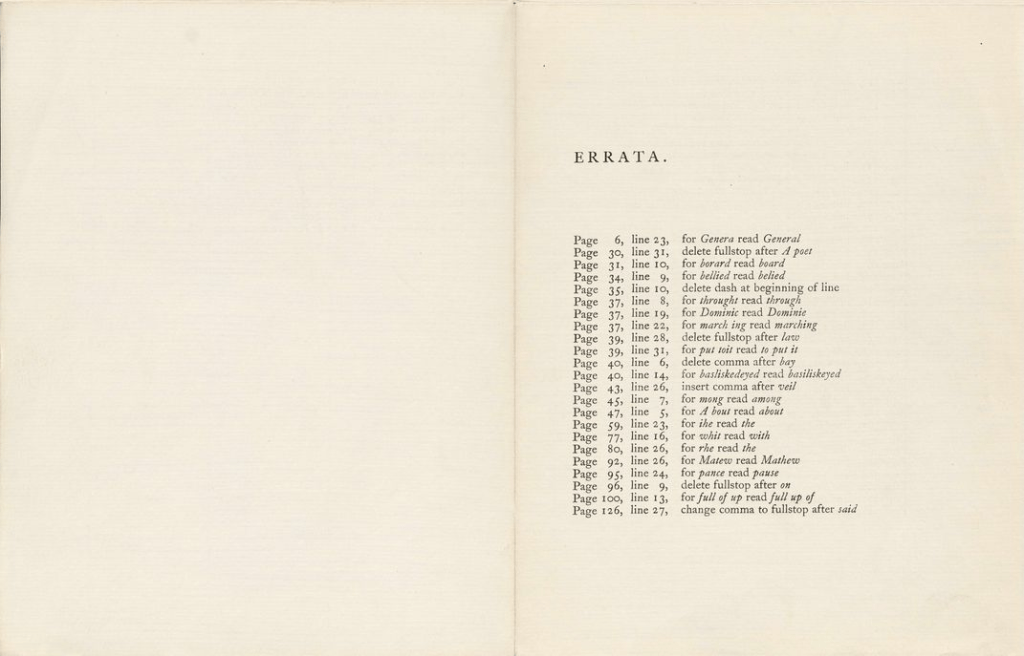
An errata slip from an early printing of James Joyce’s Ulysses Beinecke Rare Book and Manuscript Library
The exhibition spotlights around 30 artifacts from the collection of Yale’s Beinecke Rare Book and Manuscript Library. Items on display include “inaccurate maps, book corrections and religious texts with very grave typographic blunders,” reports Artnet.
In addition to the errata slip from Ulysses, visitors can see several other 20th-century examples, including a self-published copy of Upton Sinclair’s 100 Percent: The Story of a Patriot, in which he “mistakenly identified a founding member of the Communist Party of America as a government agent,” per Fine Books & Collections. Also on view is a fold-out errata from Allen Ginsberg’s 1968 Airplane Dreams. According to the statement, he included the error sheet as a “legal strategy for political resistance.”
Churner and her co-curator Geoff Kaplan, a graphic designer at the Yale School of Art, co-founded the publishing company No Place Press. As they researched errata at the Beinecke, they found “unexpected poetry,” Churner tells Artnet.
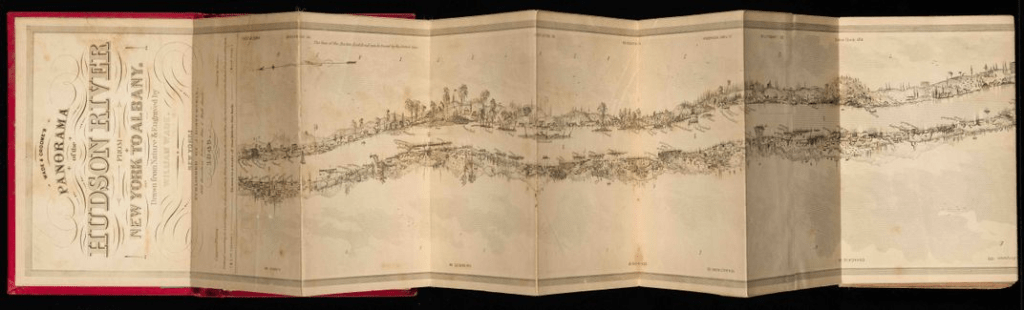
Wade & Croome’s Panorama of the Hudson River From New York to Albany, published in 1846, listed Fishkill Village’s population as 11,000 instead of 800. Beinecke Rare Book and Manuscript Library
The exhibition features an infamous 1631 edition of the Bible, which lists “Thou shalt commit adultery” as the Seventh Commandment. (The omission of the word “not” earned this edition the nickname “the Wicked Bible.”) By the time the mistake was discovered, 1,000 copies had been printed. The British king Charles I reprimanded the publishers, fined them £300 and stripped them of their printing license. In the centuries that followed, rumors circulated speculating that a rival printer had introduced the error. But as Chris Jones, a medieval studies scholar at the University of Canterbury in New Zealand, told the Guardian’s Eva Corlett in 2022, the more likely explanation is that the printers hadn’t wanted to spend money on copy editors.
Nearly all the Wicked Bibles were destroyed, and only about 20 known copies survive. In the copy on view at the Beinecke, someone fixed the error by hand, adding “not” to “Thou shalt commit adultery.”
In some cases, corrections have been used to influence public perception. During the Reformation in the 16th century, books were released describing “mistranslations” of Protestant and Catholic Bibles, “mobilizing the errata well beyond a list of typographic corrections,” Churner tells Artnet.
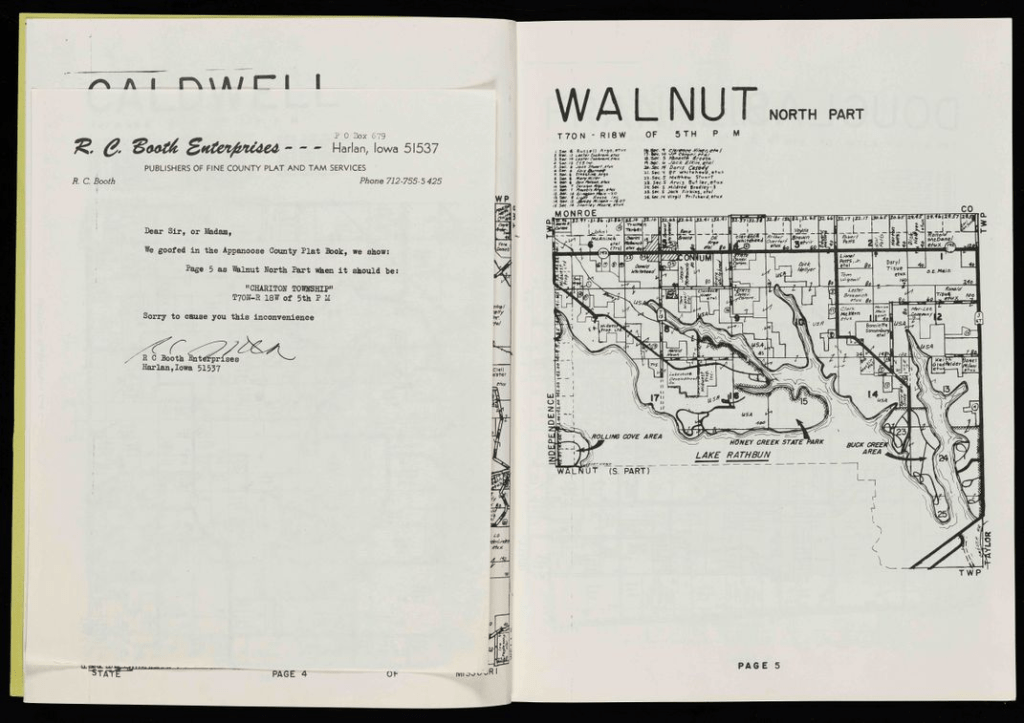
Plat Maps of Appanoose County, Iowa, 1986 Beinecke Rare Book and Manuscript Library
Visitors will also see two copies of On the Revolutions of the Heavenly Spheres (1543) by astronomer Nicolaus Copernicus. They include an anonymous preface that “corrects” the author’s view of heliocentrism—the idea that the Earth revolves around the sun—as a “hypothesis.”
Many other errors, however, are simple mistakes. For example, the exhibition features a 1986 book of Iowa maps with a note correcting a mislabeled township. “Dear Sir, or Madam,” it reads, “We goofed in the Appanoose County Plat Book.”
“‘Beauties of My Style’: Errata and the Printed Mistake” will be on view at Yale University’s Sterling Memorial Library in New Haven, Connecticut, from March 30 to November 29, 2026.
The madman whose first name is Donald
Wants to dress up like Ronald McDonald
But he’s too fat to fit
An obese monstrous twit
For this we can blame Mitch McConnell.
McConnell, he should have impeached
And the fat fetid douche would be beached
But Mitch, he’s so bad
A coward, a cad
And the rest of us now have been leeched!
I haven’t made a Women’s History Month post in a while; it’s difficult to feel celebratory in the face of what both very bad men and women are doing in our names in the US these days. However, to make up for being remiss in re-recording history, please accept this post about Rose O’Neill. I first learned of her when my grandparents moved to Springfield, MO in 1970, and took us to her small museum at the small, then-non-commercial Shepherd Of The Hills area. (It was great back then!) I knew of Kewpies (I don’t care for the cutesiness, but they are art nonetheless,) but had no idea a woman created them, nor that she did so much art right in the area where we were then living. I began to be a fan, but sort of let it go as I got older. Below will be a PBS documentary that is excellent, and inspired me to make this post for March 21st. There is also some other info. Enjoy, and remember, we all have history, and it doesn’t go away just because someone makes it more difficult to find (yes, that is encouraging myself as well as readers who’ve made it this far!)
Here is a link with a snippet, about the museum now in Walnut Shade, MO. I bet all the things I remember will be there. Maybe I’ll make it over there and try again. It looks far less commercialized than Shepherd of the Hills last time I was there.
Rose O’Neill’s Bonniebrook
Bonniebrook is a historic home and museum located in Walnut Shade, Missouri, just a short drive from Branson. Our museum is dedicated to preserving the life and legacy of artist, writer, and activist Rose O’Neill, best known for her creation of the Kewpie dolls.
Bonniebrook Museum features Rose’s original drawings, paintings, and sculptures, artifacts from the O’Neill home, a large collection of Kewpies and other characters, the O’Neill family cemetery, and much more!
As one of the only art museums and historical homes in the Branson area, Bonniebrook is a must-see destination for those looking for things to do in Branson, Missouri and the surrounding areas. Come visit this well-preserved piece of history!
Mission Statement:
Bonniebrook Historical Society (BHS) was founded in 1975. Its purpose is to collect, preserve, and make available for educational and historical purposes artifacts, documents, personal items, and any work or items directly relating to the history and life of Rose O’Neill. In addition, BHS accumulates research, materials that document, authenticate, explain, and provide detailed information about the character, personality, and accomplishments of the talented and generous Rose O’Neill.
And here is the documentary I watched yesterday and mentioned above. It’s very worthy of views!