
Tag: Bigotry
Why People Partied So Much in The 1980s, & More, in Peace & Justice History for 8/11
| August 11, 1894 Federal troops forced some 1,200 jobless workers across the Potomac River and out of Washington, D.C.  Jack London Led by an unemployed activist, “General” Charles “Hobo” Kelly, the jobless group’s “soldiers” included young journalist Jack London, known for writing about social issues, and miner/cowboy William ”Big Bill” Haywood who later organized western miners and the Industrial Workers of the World (IWW).  “Big Bill” Haywood Read about “Big Bill” |
| August 11, 1958 A drugstore chain in Wichita, Kansas, agreed to serve all its customers after weeks of sit-ins at Dockum’s lunch counter by local African-Americans who wanted an end to segregation. On this day, as several black Wichitans were sitting at the counter even though the store refused to serve them, a white man around 40 walked in and looked at them for several minutes. Then he looked at the store manager and said, simply, “Serve them. I’m losing too much money.” He was the owner, Robert Dockum. That day the lawyer for the local NAACP branch called the company and was told by the a vice president ”he had instructed all of his managers, clerks, etc., to serve all people without regard to race, creed or color,” statewide. This was the first success of the sit-in movement which soon spread to Oklahoma City and other towns in Kansas, but is often thought to have started in Greensboro, North Carolina, in 1960. |
August 11, 1984 Prior to his weekly radio address, unaware that the microphone was open and he was broadcasting, President Ronald Reagan joked, “My fellow Americans, I’m pleased to tell you today that I’ve signed legislation that will outlaw Russia forever. We begin bombing in five minutes.” Many Americans and others throughout the world were concerned about the President’s apparently flippant attitude towards nuclear war at a time of increasing tension between the two major nuclear powers. Among other things, the U.S. had begun a major strategic arms buildup, adding many thousands of additional nuclear warheads along with a broad range of new delivery systems: long-range bombers including 100 B-1B stealth bombers and MX (10-warhead) ICBMs, considered first-strike weapons; intermediate-range missiles to be deployed in Europe; 3000 cruise missiles; and Trident nuclear submarines with sea-launched cruise missiles. Additionally, Reagan had proposed building the space-based Strategic Defense Initiative of anti-ballistic missiles, a destabilizing influence on the nuclear balance. The Nuclear Arms Control Legacy of Ronald Reagan |
https://www.peacebuttons.info/E-News/peacehistoryaugust.htm#august11
We decide if homosexuality is a sin
7 clips from The Majority Report. They cover everything from ICE staging photo ops to tRump’s lies being corrected on TV, to vote blue no …. not for Zohran Mamdani and then the genocide in Gaza
‘This Book is Gay’ among 55 titles banned in Florida, including in Broward County
Again I keep saying this, it is a fundamentalist Christian attempt to remove all media featuring or talking about the LGBTQ+. They do not want LGBTQ+ children seeing themselves in media, in library books, but more important they do not want straight cis kids to read or see kids who are different who are accepted. They want kids to grow up thinking those LGBTQ+ kids are bad and need to be ostracized or harassed / threatened to be cis straight. They want to return to the society / schools of the 1950s. These people can not accept that other people and other cultures exist that are different from the way they feel or live. They want what Russia and Hungary did, outlaw being gay in public. Hugs
The Florida Department of Education has identified more than 50 books it says are no longer permitted in public schools across the state, citing inappropriate and pornographic content.
But some parents and advocacy groups are questioning whether the state should have the final say over what books are allowed in schools — including in Broward County.
A parent who spoke with Local 10’s Roy Ramos on Thursday with believes families should have input, and that local reviews should take place before books are removed.
“You will remove these 55 books,” said Stephana Ferrell, a parent and director of the Florida Freedom to Read Project, responding to the state’s recent directive.
The Department of Education’s list bans 55 titles from public school libraries statewide. Ferrell said the move overrides local input.
“Every district basically got that message that those 55 books violate the law according to the state. It doesn’t matter if local community standards say no, these books are okay for certain grades and we believe them to fit our community standards,” she said.
Local 10 obtained a copy of the banned list. Some of the titles were described by the state as pornographic and unsuitable for children.
Among them: Choke, This Book Is Gay, Forever, and Breathless.
Portions of these books contain graphic content, including descriptions of male genitalia, sexual acts and intercourse — some of which were too explicit to air on television.
“They are saying we can remove these books based on experts alone and it doesn’t matter what the literary value is,” Ferrell said. “They are making the argument that our school library are government speech and they can decide what is appropriate or not.”
Under current Florida law, parents may challenge books in their school district. Those challenges are then reviewed by a committee to determine whether the content is inappropriate.
Ferrell argues the state is bypassing that process entirely.
“I believe that you have to review these books in their entirety to determine whether or not the intent of the work is to sexually excite the reader,” she added. “There is no opportunity for local parents to get involved. “None of it matters. The state has decided for us.”
Broward County schools were given until Tuesday to comply with the directive and remove the books.
The list currently includes 55 titles, but critics believe more will be added.
Local 10 has reached out to Broward County Public Schools for comment on the state’s order.
Four clips from The Majority Report. One on Gaza war crimes committed by Israel, one on ICE, one on tRump’s attacks on schools, and one on the jobs numbers.
An Important Read About Black-Owned Businesses In These Days
Ami Colé is closing. The brand’s story has implications for the Black beauty industry.
Aug 04, 2025
This story was originally reported by Marissa Martinez of The 19th. Meet Marissa and read more of their reporting on gender, politics and policy.
Next month, beauty brand Ami Colé will shutter, marking an unfortunate reality for many Black-owned businesses — what happens when financial interest dries up?
Founder Diarrha N’Diaye-Mbaye’s July announcement, which she detailed for The Cut, shocked many across the beauty space.
In the piece, N’Diaye-Mbaye outlined the journey of starting her business, from growing up in her mother’s Harlem braiding salon to pitching Ami Colé — known for their innovation in lip oils and shade-inclusive makeup — to over 150 investors in 2019. After a surge in support for Black entrepreneurship following the murder of George Floyd in Minneapolis in 2020, N’Diaye-Mbaye said she received more interest in the brand, becoming one of 30 Black women to raise $1 million for her start-up within months.
But four years after her official launch, N’Diaye-Mbaye said growth at Sephora couldn’t compete with corporate brands, and scaling up production to meet potential demand came at a steep cost when online influence fluctuated.
“Instead of focusing on the healthy, sustainable future of the company and meeting the needs of our loyal fan base,” N’Diaye-Mbaye wrote, “I rode a temperamental wave of appraising investors — some of whom seemed to have an attitude toward equity and ‘betting big on inclusivity’ that changed its tune a lot, to my ears, from what it sounded like in 2020.”
This sentiment isn’t unique among Black entrepreneurs. Five years after venture capital firms, investors and consumers alike followed a wave of support for Black-owned businesses, interest in diverse brands has waned significantly. Through TikTok and other social media platforms, access to an audience has never been greater, but the capital needed to sustain brands at a high profile has dropped off.
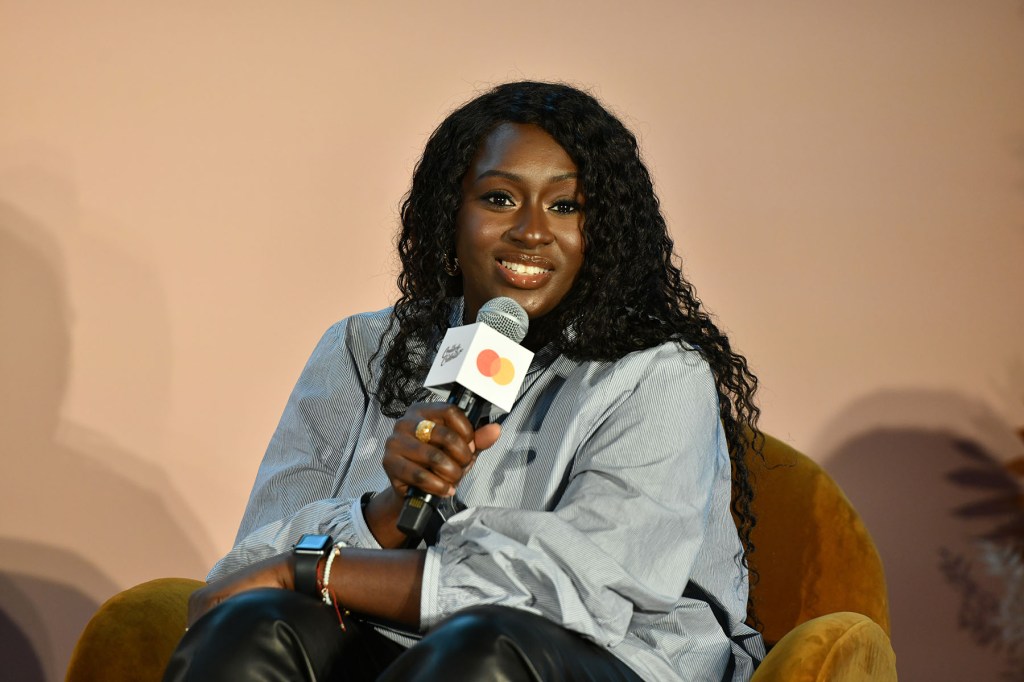
Nationally, there has been a societal swing — in tandem with pressure from President Donald Trump’s administration — against intentional incorporation of diversity, equity and inclusion (DEI) in creators’ paths, with waning urgency to support these businesses en masse. And the amount of money flowing to Black-founded companies has hit a multiyear low, according to the business publication Crunchbase News. Only $730 million — 0.4 percent of all funding — went to startups with a Black founder or co-founder last year, down more than two-thirds from 2021. The startups that did receive funding were mostly in the tech or health spaces.
Esthetician and beauty influencer Tiara Willis said she has noticed that cultural shift in support over the last five years. Brands rushed to onboard diverse creators in the summer of 2020. Now, the long-term partnerships, increased shade ranges and targeted marketing seem to have wavered. N’Diaye-Mbaye’s struggle to meet demand as influencers promoted her products is something that would have been covered by investors who were in it for the long haul, Willis said.
She pointed to celebrity founders like Hailey Bieber, whose Rhode makeup and skin care brand began with millions of dollars to swing big while starting her business. Rhode was acquired by e.l.f Beauty for $1 billion in May.
“They rarely ever start by themselves, like the rest of us do — they already have someone on their team,” Willis told The 19th. “Trying to build your own brand while trying to compete with companies who are able to launch products every two seconds, and are able to fill retail space and have less obstacles than brands like Ami Colé — it’s not entirely surprising she wasn’t able to keep up.”
Black creators voiced concern immediately following N’Diaye-Mbaye’s announcement, calling her brand’s shuttering “disheartening” and indicative of larger trends in the Black beauty space. Being able to trust that a brand like Ami Colé would have inclusive shade ranges and products by virtue of their leadership made shopping simpler, some said on social media.
Sephora store shelves reflect a mad dash to support Ami Colé and restock on favorites before the brand officially closes in September. Sales associates told The 19th that the lip oils had sold out online and in store immediately following the announcement, though the demand for other products has slowed since.
But consumers should not feel the pressure to support Black-owned businesses when the larger issue is who has access to capital and investors, some creators pointed out. The issue isn’t the lack of customers, Javon Ford, a cosmetic chemist and entrepreneur, said in a recent TikTok video.
“That is not a sustainable business model. The issue is money. It’s capital. Operating in a retailer like Sephora is expensive,” Ford said. “That’s how cutthroat retail is when you scale to a certain extent, and this is also why exit strategies are important, because it’s really hard to keep up with legacy brands.”
Willis echoed the unstable environment in which Black influencers like herself find themselves: “It creates financial insecurity, where I get the most support of brands based on what’s going on in the news, versus getting support because of my work and my talent and the things I provide to the table.”
 Scottie's Playtime