I decided I wanted grilled cheese sandwiches. So at four PM I started supper. And yes I made far too many as I can only eat one or one and half. But here are the steps I go through to make good cheesy thick grilled cheese and ham sandwiches.
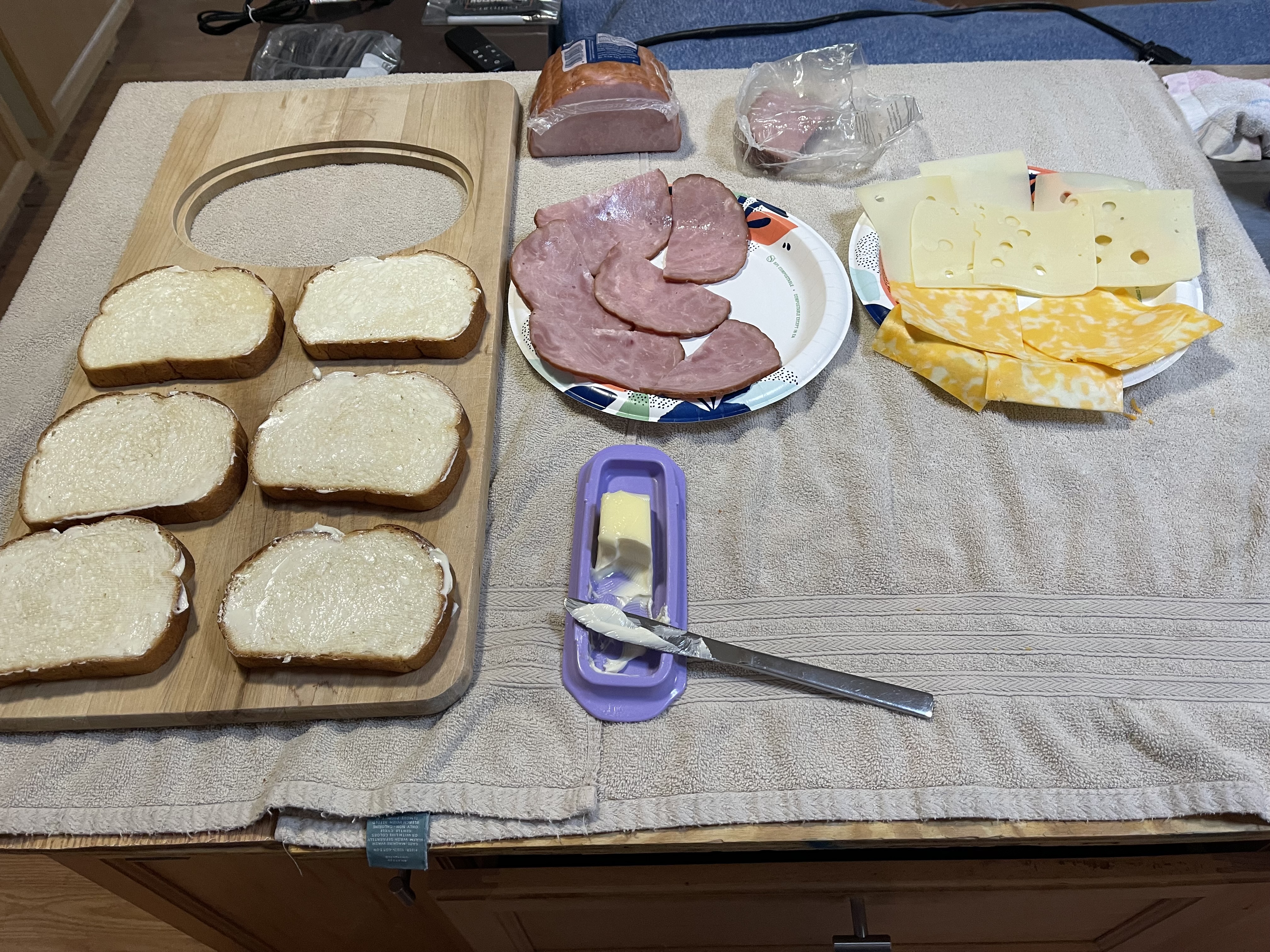
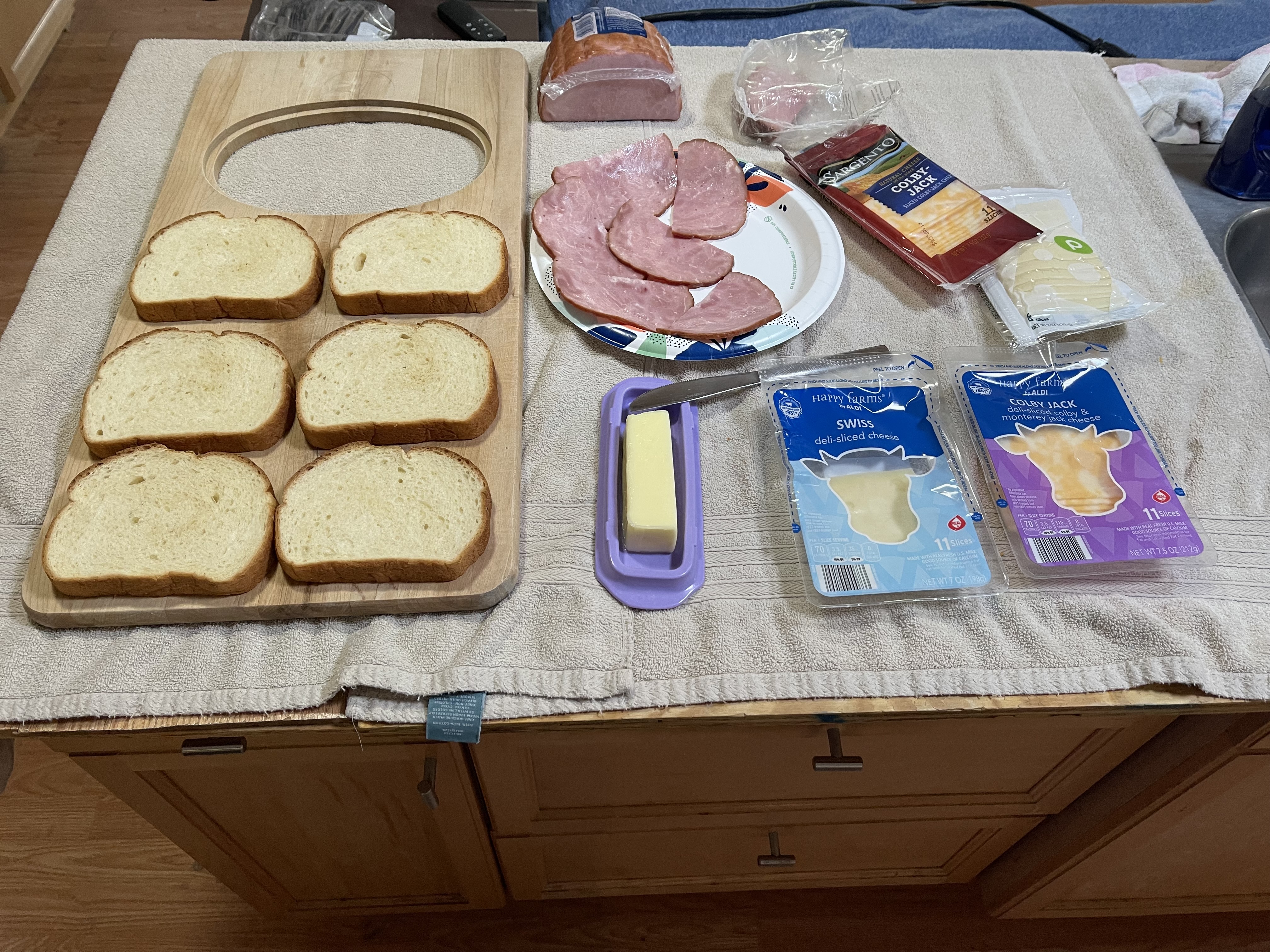
I start with getting all the ingrediance out and ready.
If you notice I have already buttered the bread. I is important to use real butter and not a substitute as the substitutes burn before the bread is toasted, the cheese melted, and the ham hot. Now to build the sandwiches.
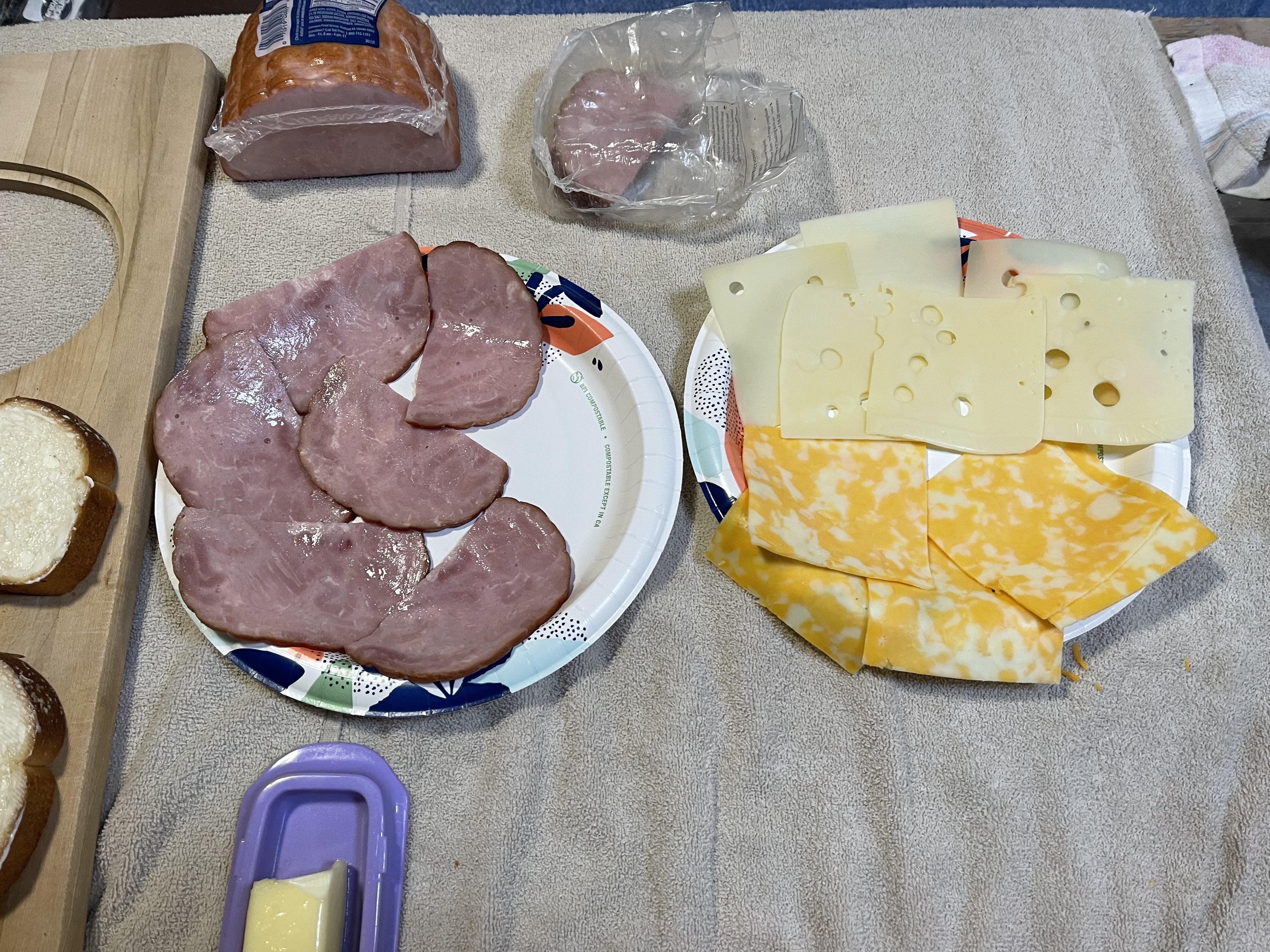
First the cheese on the bread.
I used two different cheeses on on each side of the bread. Swiss and the other side colby Jack. Then two slices of ham.
Then the rest of the cheese.
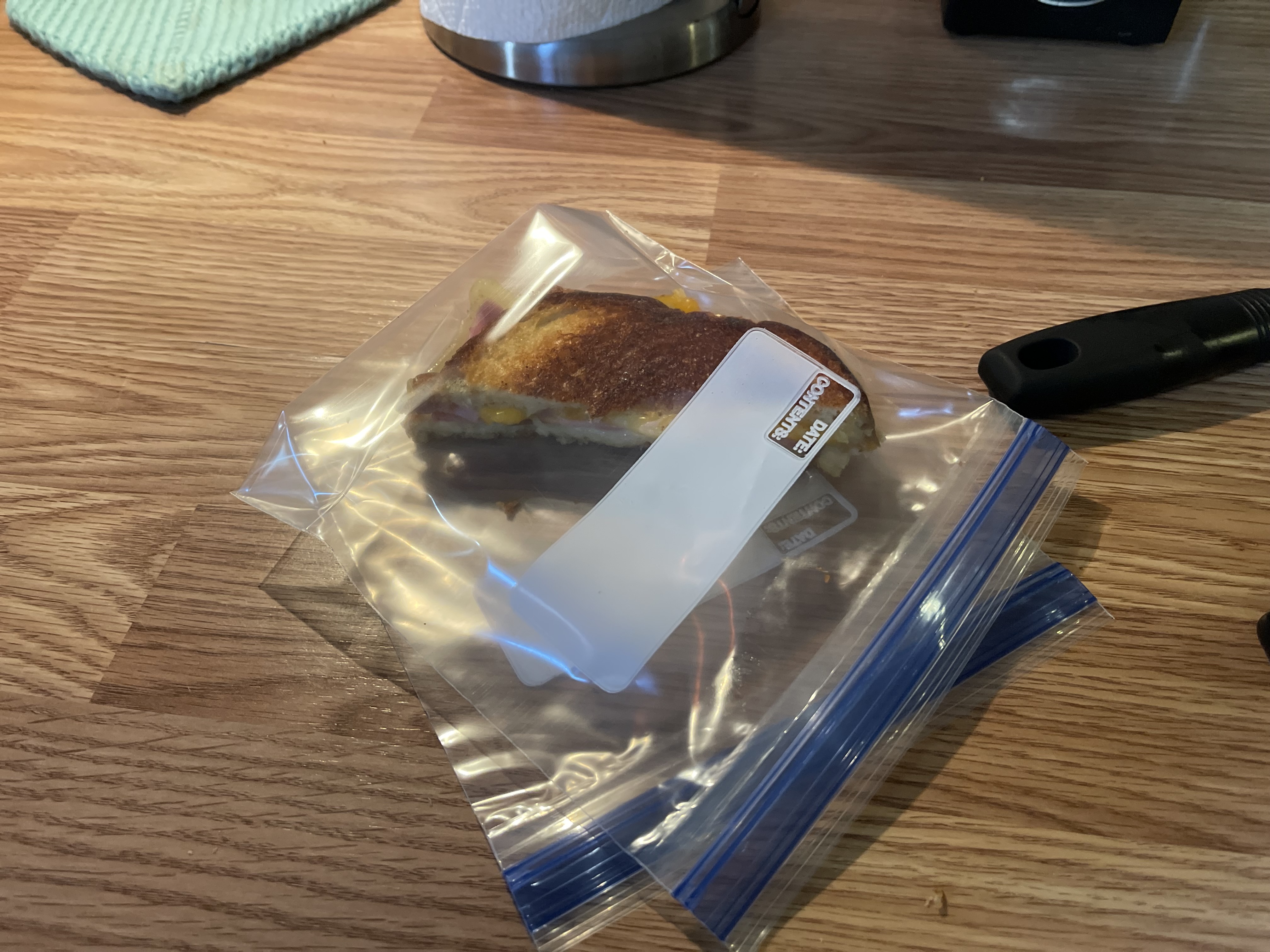
Then grill to perfection.
But again I made too many. I ate 1 and a half sandwiches. I wish Ron was here he would eat the rest. Hugs
The conditions are on purpose to make people so miserable they give up their rights to asylum or any cases they have going. The ICE people / US government are already violating the rights of the people they kidnap off the streets. These are as bad as any concentration camp and the US government denies it all. When Democrats take power / authority back we need to investigate and punish all involved. The government flat out lies and gaslights the public as if they think nothing will ever be found out. Hugs
I strongly disagree with the jury finding here. She was shoved and jostled by ICE personnel in an attempt to have a reason to throw the congress woman out. Please notice the congress woman is black. Why go after her and not the other members of congress who were there? Why jostle and bump her and not the others? Clearly it is bigotry. There is a video at the link below that won’t embed here. Hugs
Democracy Now! speaks with Congressmember LaMonica McIver of New Jersey, who is facing up to 17 years in prison stemming from an incident last May when she and two other Democratic congressmembers sought to inspect Delaney Hall, a private prison run by the GEO Group under contract with ICE. The federal government claims McIver assaulted an immigration officer. “I’m not going to let them bully me out of doing my job. I’m just not,” says McIver, who describes conditions at the prison as dismal. “There was an entire riot at the same detention center because detainees were not getting food.”
TRANSCRIPT
This is a rush transcript. Copy may not be in its final form.
AMY GOODMAN: This is Democracy Now!, democracynow.org. I’m Amy Goodman.
We go now from New Jersey’s most famous musician to New Jersey Democratic Congresswoman LaMonica McIver. She’s facing up to 17 years in prison, stemming from an incident last May when she and two other Democratic congressmembers went to inspect Delaney Hall, the private immigration prison run by GEO Corporation under contract with ICE. The federal government claims McIver assaulted an immigration officer as federal agents were arresting Newark Mayor Ras Baraka, who had accompanied the congressional delegation to Delaney Hall. Congressmember McIver has vehemently denied the charges. This is a brief clip of the scene outside the ICE jail that day.
AMY GOODMAN:Ten days later, then-acting U.S. Attorney for New Jersey Alina Habba dropped the charges against Newark Mayor Ras Baraka, but at the same time, she announced three felony charges against Congressmember McIver, including assaulting, resisting, impeding and interfering with federal officers. Not since 1799 have such charges been brought against a House member. Alina Habba is the former personal attorney for Donald Trump. In December, she resigned after a panel of federal judges ruled she’s serving in her position unlawfully.
Members of Congress have the oversight authority to visit DHS facilities without prior notice, but the Trump administration has repeatedly attempted to restrict or thwart that access.
We go now to Newark, where we’re joined by the Democratic Congresswoman LaMonica McIver.
Welcome to Democracy Now!It’s great to have you with us. We have spoken with Mayor Ras Baraka several times. This is our first time talking to you. Explain the state of the case against you. I mean, the judges already ruled that the U.S. attorney, Alina Habba, the former private attorney of President Trump, was serving illegally. But you still have these charges against you that she brought?
REP. LAMONICA McIVER: Yes. Well, first of all, thank you so much for having me, Amy. It’s great to be on with you.
Yes, you’re absolutely correct. These charges are still pushing forward. I’m still fighting it. I’m in the second stretch of that fight, as we filed an appeal to the 3rd Circuit Court to basically have these charges dismissed based off legislative immunity. As you so clearly laid out, you know, I was there to do my job, to conduct oversight, along with two of my other colleagues, when ICE and DHS created that whole fiasco that happened out there. And so, we’re looking forward to taking the case, you know, to getting these charges thrown out, and looking forward to being in front of a judge at the 3rd Circuit in a couple of months. And so, we’re just waiting on that process right now.
AMY GOODMAN: So, but explain what you were doing. It relates certainly today, as some judges have ruled that the Trump administration can delay congressmembers or legislators from inspecting these facilities. In May, talk exactly about what happened, about why you were at Delaney Hall, what it is, for a global audience, you and two other congressmembers, and then what happened to Ras Baraka and what happened to you.
REP. LAMONICA McIVER: So, of course. So, we went there for an oversight visit, which is something that Congress, you know, statutorily have the right to do. We can show up to any ICE facility and have an inspection, unannounced, announced. That’s, you know, in statute for us to do that. And so, me, two of my colleagues from New Jersey — which we have done in the past before. We’ve showed up to ICE, a ICE facility in New Jersey, other than Delaney Hall, and conducted an oversight visit. And just that day, we were going to Delaney Hall. We had gotten a lot of calls about Delaney Hall. We had no idea that this facility had opened up. The mayor of the city had said that this place was not cooperating with city guidelines. And so, we’re like, “Hey, we need to go here and check this place out.”
Mayor Baraka did not accompany us to the facility for the oversight visit. It was literally just members of Congress. Mayor Baraka showed up later, because he was coming there for the press conference that we were having after our tour. But he was not there to come with us on the visit. I mean, he had been showing up there at this facility every day prior to us coming, because, once again, this facility has, basically, you know, just refused to adhere to city guidelines as it relates to inspections and fire code inspections. They claim they are a federal facility, but they’re not. It’s a private prison that has a contract with the federal government. They’re not a federal facility.
And so, we showed up there to have our oversight visit, and we were met with an army of ICE agents, of folks from DHS. I mean, we had — I had never experienced anything like that, nor had we when we went to another facility to inspect that facility. And so, they created a whole fiasco, you know, unlawfully arrested the mayor for trespassing, after they let him into the gate. I mean, it was just a whole complete nightmare there that day, with them basically trying to restrict us from having oversight of this facility. Just days later, I mean, they put out this whole new protocol from DHS that said congressmembers had to give seven days’ notice for them to show up to have oversight, just constantly trying to stop Congress from having oversight and holding the administration accountable. And we continue to see this from last May and now continuing on each and every day with the different scenarios from this administration.
And so, I continue to show up to do oversight, continue to hold this agency, but also these facilities, accountable. I’ve been back to Delaney Hall since then. I had a detainee who died there. A 42-year-old Haitian immigrant who was completely healthy before going to this facility died within 24 hours of being at this facility. And so, I went back there to have an inspection. A couple of weeks after we went last May, there was an entire riot at this same detention center, because detainees were not getting food. They were starving. And detainees were upset about that, and they had a whole riot. And they had about four detainees who escaped through a makeshift wall there.
So, that just goes to show you why oversight is so important and why we have to continue to apply pressure and do our jobs as members of Congress and, you know, go to these facilities. You know, the government has said, hey, I went there, we were there to protest, we were there to do all of these things. But we didn’t go there for anything. I didn’t go there for a protest. We went there for one reason, and that one reason was to go there to protect the people who were there, to find out what was going on, to make sure that things were going — running OK inside this facility, which we have the right to, and that is our job to do so. And so, you know, we’re going — I’m not going to stop doing what I’m supposed to be doing and what the people of the 10th Congressional District here in New Jersey have elected me to do. And that is to protect them and hold this administration accountable.
AMY GOODMAN:You were there with New Jersey Congressmembers Rob Menendez and Bonnie Watson Coleman. Now what is your legal situation? So often in these cases of political persecution, the process is the punishment. The New Yorkernotes, in December —
REP. LAMONICA McIVER: Correct.
AMY GOODMAN: — you had already racked up close to a million dollars in legal fees. What do you think this message sends to congressmembers, legislators all over the country: If they stand up for their constituents, as they say — as you say you were doing, you’ll be personally bankrupted?
REP. LAMONICA McIVER:Yeah, I mean, you’re absolutely right. The process is the punishment. This is what they’re doing. They’re doing this with your taxpayer dollars, prosecuting a member of Congress for doing their job. It doesn’t cost them anything, because they’re using taxpayer dollars to do so. But I think what it does is it inserts fear in other leaders to step up and hold the administration accountable. It’s intimidation. It’s bullying. And they’re just using me as a tool and a prop to do so. And that’s why I continue to stress how urgent, like, my case is, not because it’s about me, but it’s about the broader picture of how they are trying to stop congressmembers from doing their job, I mean, and it’s awful. But at the same time, that’s why I continue to push forward, continue to work for the people of the 10th Congressional District and protect them from this administration, specifically ICE, because I’m not going to let them bully me out of doing my job. I’m just not. They’re not going to bully me from stopping my work, and they’re not going to take away my joy while I do it.
AMY GOODMAN: Congressmember McIver, as we are broadcasting, the White House so-called border czar, Tom Homan, just finished speaking. He held a news conference around 7 a.m. Minnesota time. He said ICE and CBP are working to, quote, “draw down” the number of federal agents in Minneapolis. This is some of what he said.
TOM HOMAN: State and local law enforcement — again, I appreciate they all acknowledged that we do have federal immigration laws in this country that have been passed by Congress, and that ICE is in fact a legitimate law enforcement agency charged with enforcing those laws. We’re not making this up, folks. ICE is enforcing laws enacted by Congress. They’re in federal statute.
That said, I’m not here because the federal government has carried its mission out perfectly. First thing I said to senior staff when I walked in here is what I told you earlier. I didn’t come here looking for photo ops or headlines. I come here looking for solutions. I do not want to hear that everything that’s been done here has been perfect. Nothing’s ever perfect. Anything can be improved on. And what we’ve been working on is making this operation safer, more efficient, by the book. The mission is going to improve because of the changes we’re making.
AMY GOODMAN: So, that is the so-called border czar, who seems to have been sent to Minneapolis to replace Greg Bovino, the head of CBP. I’m used to saying CPB, the Corporation for Public Broadcasting, but President Trump ended that. So it’s all about CBP now, Customs and Border Patrol. And he’s been sent off to California. But there is Tom Homan, the man who was being investigated by the FBI, until a few weeks ago, for taking a Cava bag filled with $50,000 of cash from two undercover FBI agents. That investigation has been squelched, though some of your fellow congressmembers are calling for the video of him accepting that cash, people like Congressmember Raskin. But I’d like to ask — end by asking you about whether you think the government is going to be partially shut down this weekend, and to respond to — you were really the precursor to Minneapolis, but to respond to what the Senate is threatening to do, as they say they want to separate DHS funding from the rest of the budget, and if the Republicans don’t agree to, they won’t vote for the bill.
REP. LAMONICA McIVER: Yeah, well, I truly believe we’re heading to a shutdown, because at the end of the day, look, who can — who can even approve or give this agency, this rogue agency, that we’ve seen murder two people in broad daylight in the last couple of weeks — how can we give them more money? Like, why would the Senate give them more money to operate? Obviously, there are some big issues within this department, that is not operating, you know, effectively, and so they should not be given more money to cause more problems and more hurt and to terrorize American citizens. And so, I do truly believe we’re going to go to a shutdown. It’s shameful that Republicans in charge in the Senate won’t separate out the DHS funding and deal with the rest of the funding, but they want to continue to, you know, be scared of Donald Trump, and they’re, you know, keeping this package deal together, instead of separating it out, knowing that they have issues. So, I truly believe we’re definitely going to be heading to a shutdown.
AMY GOODMAN: Democratic Congressmember LaMonica McIver, speaking to us from Newark, New Jersey. Thank you so much for joining us.
Coming up, we look at how ICE is using facial recognition technology to track immigrants and protesters — or, as the government calls them, agitators — in Minnesota and across the country. But first, more Bruce Springsteen.
[break]
AMY GOODMAN: “Streets of Minneapolis,” just released by Bruce Springsteen, who definitely doesn’t need facial recognition technology to recognize him or his voice.
Amy Goodman is the host and executive producer of Democracy Now!, a national, daily, independent, award-winning news program airing on more than 1,100 public television and radio stations worldwide. Time Magazine named Democracy Now! its “Pick of the Podcasts,” along with NBC’s “Meet the Press.”
18-month-old Amalia, who, according to a lawsuit filed, suffered a life-threatening respiratory illness while in U.S. Immigration and Customs Enforcement (ICE) custody, reacts, in this handout picture obtained on February 7, 2026. Elora Mukherjee/Handout via REUTERS
] Kheilin Valero Marcano and Stiven Arrieta Prieto, parents of 18-month-old Amalia, who, according to a lawsuit filed, suffered a life-threatening respiratory illness while in U.S. Immigration and Customs Enforcement (ICE) custody, pose for a photo, in this handout picture obtained on February 7, 2026. Elora Mukherjee/Handout via REUTERS
Summary
Child had severe respiratory illness, lawsuit says
DHS says child received proper medical care and medications
Trump faces criticism for immigration detention practices
NEW YORK, Feb 7 (Reuters) – An 18-month-old girl detained for weeks by U.S. immigration authorities was returned to custody and denied medication after being hospitalized with a life-threatening respiratory illness, according to a lawsuit filed in Texas federal court.
The child, identified in the lawsuit as “Amalia,” was released by immigration authorities in President Donald Trump‘s administration after her parents sued on Friday. The parents, who also had been detained, were released as well. The suit had sought the release of all three of them.
In a statement provided on Monday following the publication of this story on Saturday, U.S. Department of Homeland Security spokeswoman Tricia McLaughlin said claims that Amalia did not receive proper medical treatment or medications were false.
The family was detained during a check-in with immigration authorities on December 11 and held at a facility in Dilley, Texas, according to the lawsuit. Amalia was hospitalized from January 18 to 28, and returned to the Dilley facility in the midst of a measles outbreak, the lawsuit said.
“Baby Amalia should never have been detained. She nearly died at Dilley,” said Elora Mukherjee, an attorney for the family.
Mukherjee said hundreds of children and families detained at Dilley lack sufficient drinking water, healthy food, educational opportunities or proper medical care, and should be released.
McLaughlin said in the statement on Monday that the child immediately received medical care after becoming ill, was admitted to a hospital for treatment and returned to the Dilley facility after being cleared for release by a pediatric doctor. Amalia was housed in the medical unit upon her return and received proper treatment and prescribed medicines, the statement said.
“It is a longstanding practice to provide comprehensive medical care from the moment an alien enters ICE custody. This includes medical, dental, and mental health intake screening within 12 hours of arriving at each detention facility, a full health assessment within 14 days of entering ICE custody or arrival at a facility, and access to medical appointments and 24-hour emergency care,” McLaughlin said.
Trump’s administration has been accused of heavy-handed and inhumane tactics as well as violating court orders while carrying out his mass deportation program.
A federal judge in Michigan criticized the administration in a January 31 ruling ordering the release of a five-year-old boy – seen in a viral photo wearing a blue bunny hat outside his house as federal agents stood nearby – who was detained by immigration agents in Minnesota. The administration is now seeking to deport the boy.
Amalia’s parents, originally from Venezuela, have lived in the United States since 2024 with their daughter, who is a Mexican citizen, according to the lawsuit. The lawsuit says all three intend to file asylum applications in the United States.
Amalia developed a fever on January 1 that reached as high as 104 degrees Fahrenheit (40 degrees Celsius), started vomiting frequently and struggled to breathe, according to the lawsuit.
She was taken to the hospital on January 18 with extremely low oxygen saturation levels and diagnosed with COVID-19, respiratory syncytial virus, viral bronchitis and pneumonia, according to the lawsuit. She was placed on supplemental oxygen.
Amalia was given a nebulizer and a respiratory medication upon her discharge from the hospital, but these were taken away by detention center staff upon her return, according to the lawsuit. The girl has lost 10% of her body weight and was given nutritional drinks to help her regain it, but these were also confiscated by authorities, according to the lawsuit.
Reporting by Jack Queen in New York; Editing by Sergio Non, Will Dunham and Daniel Wallis
The video below has people recounting the gang thug brutality of ICE attacking and shooting people doing nothing wrong. ICE thugs were totally out of control and had no respect for civil rights or the lives of the people they attacked. The ICE thugs seemed to be jacked up in rage by some substance and enjoyed causing pain and being cruel. Hugs
The video below details how the ICE gang thugs were bragging about shooting innocent people. The thugs did not care how brutal they were with the woman but instead seemed to relish being allowed to be so brutal. Hugs
The video below details the conditions at the ICE concentration camp, including that a 2 month old baby is being held there. Hugs
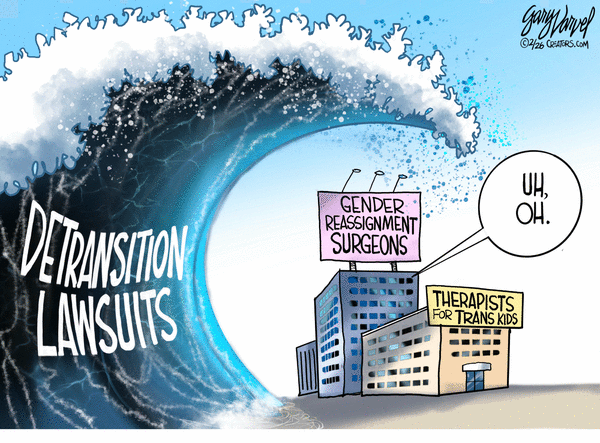
I would like everyone to see the above cartoon and understand it. As a teen and young adult I got asked about my sexual orientation constantly. “Are you gay?” “Are you a faggot?” “Do you suck dick”, “Do you take it up the ass”. Those questions did not stop being asked when I became an adult. They just became more invasive as people felt more emboldened to ask how this or feels? Or how do you do this or that? As an adult when those questions came from people who were people I knew or were friends, I answered them as honestly as possible because I felt they were honest but sometimes they were not. But as a teen those questions tore everything inside me apart and due to the times and hate against gay people I felt compelled to lie, which made me hate my self / situation even more. I understand straight people are curious, and in truth there is a lot of misinformation out there being preached by church leaders and others about LGBTQ+ people. However, some of the questions I got were so personal and about stuff that was so personal I often wondered what the reactions would be if I asked those questions of straight friends / people. How do you do it, what possitions do you use? Do you do special preparations? Does it hurt a lot, and the one that drives me crazy, “have you tried it with a woman or females as you know you might like it”. OK so have you tried it with a same sex partner? That drives me crazy because when I ask for the reverse back they look stunned and ask why they should answer such personal questions. Sadly, I have so many females tell me if I would only have sex with them I would not be gay anymore. Hugs
I am a bit fragile so when I looked up the Spanish meaning of the above word and read it meant bunny I started to cry and it went into sobs. How I wished I had some warm safe place and someone who loved me at his age to welcome me home. That poor child will have PTSD all his life. Sorry it has been a long day for me. Hugs










18-month-old Amalia, who, according to a lawsuit filed, suffered a life-threatening respiratory illness while in U.S. Immigration and Customs Enforcement (ICE) custody, reacts, in this handout picture obtained on February 7, 2026. Elora Mukherjee/Handout via REUTERS
] Kheilin Valero Marcano and Stiven Arrieta Prieto, parents of 18-month-old Amalia, who, according to a lawsuit filed, suffered a life-threatening respiratory illness while in U.S. Immigration and Customs Enforcement (ICE) custody, pose for a photo, in this handout picture obtained on February 7, 2026. Elora Mukherjee/Handout via REUTERS








 Scottie's Playtime