At the South Louisiana Ice Processing Center in Basile, detainees say they were forced into hard labor – and sexually assaulted and stalked by an assistant warden
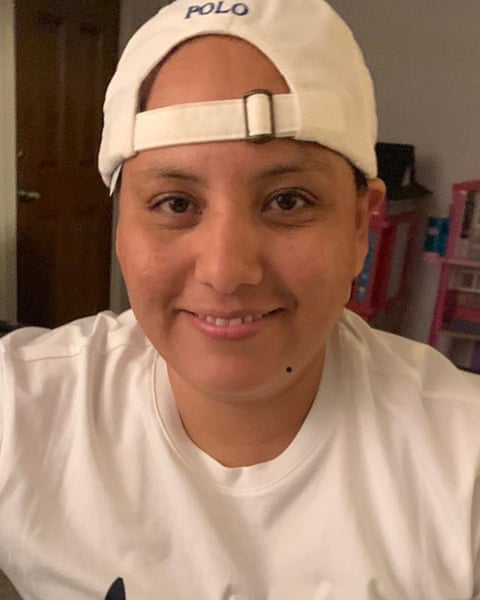
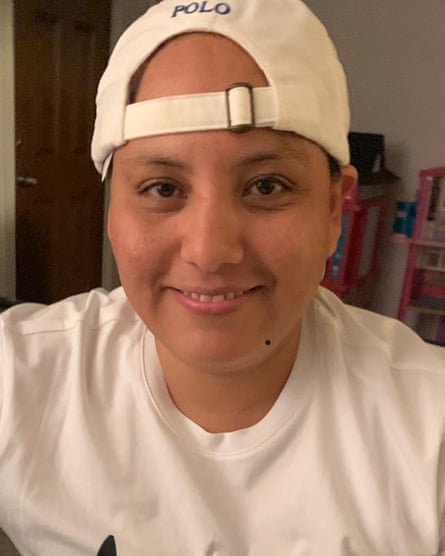
‘It is for my daughter and my family that I have endured everything that I have in this detention facility for the past 28 months.’ Illustration: Rita Liu/The Guardian
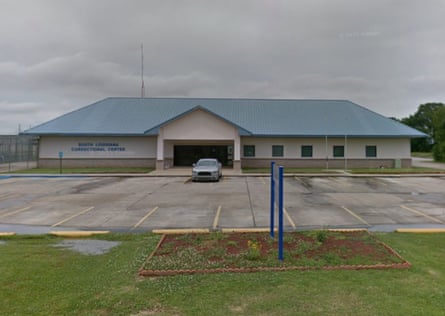
A Google Maps screenshot of the South Louisiana Ice Processing Center (SLIPC) in Basile, Louisiana.
Photograph: Google Maps
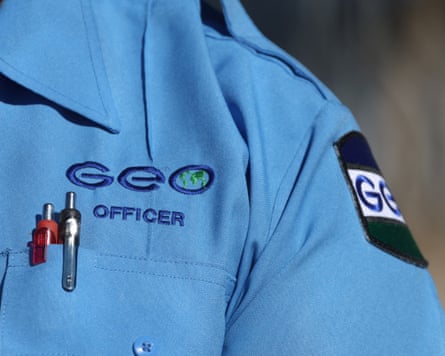
A spokesperson for Geo categorically denied the allegations detailed in the complaints.
Photograph: Patrick T Fallon/AFP/Getty Images
Queer and trans immigrants at a detention facility in south Louisiana have alleged that they faced sexual harassment and abuse, medical neglect and coerced labor by staff at the facility, and that they were repeatedly ignored or faced retaliation for speaking out.
In multiple legal complaints, immigrants detained at the South Louisiana Ice Processing Center (SLIPC) in Basile, Louisiana, said they were recruited into an unsanctioned work program that forced them to perform hard manual labor for as little as $1 per day. Detainees also alleged that queer people were targeted by an assistant warden who stalked, harassed and sexually assaulted them.
Three current and former detainees who spoke to the Guardian said that, between 2023 and 2025, they endured months of abuse from an assistant warden named Manuel Reyes and his associates. In their complaints to the Department of Homeland Security (DHS) and Immigration and Customs Enforcement (Ice), the detainees also said that they faced retaliation for reporting the abuse to authorities, alleging that Reyes and other staff beat them and denied them medical treatment.
“I was treated worse than an animal,” said Mario Garcia-Valenzuela, one of the detainees. “We don’t deserve to be treated like this.”
Garcia-Valenzuela, a trans man detained at SLIPC, has alleged that, as part of the unsanctioned work program, Reyes forced him to move heavy cabinets and cinder blocks, and to clean using industrial-strength chemicals without gloves or protective gear. When Garcia-Valenzuela complained of injuries from the work program, he said, Reyes and his associates forcefully stripped him naked and mocked him.
Kenia Campos-Flores, who is trans and non-binary, told the Guardian that they suffered from persistent migraines and chest pain after exposure to cleaning chemicals they were made to use during unofficial, overnight work shifts. Campos-Flores also alleged in a complaint they were persistently sexually harassed by Reyes, who entered their dorm and stole possessions including their boxers.
Another trans detainee, Monica Renteria-Gonzalez, complained that a stripper chemical he was told to use to clean the facility floors seeped through his fabric shoes and burned the skin of his feet. On more than one occasion, while Renteria-Gonzalez was bent over cleaning, he said, Reyes came up from behind and inappropriately touched him. The assistant warden also told Renteria-Gonzalez he was watching the detainee through security cameras, including while he was showering.
A fourth detainee, identified by the pseudonym Jane Doe, is a cisgender, queer woman who said that Reyes forced her to perform oral sex on him on a “near daily basis” between February and May 2024, threatening to kill her if she refused, according to her complaint.
Doe, who was deported to the Dominican Republic in January this year, has chosen not to share her name or speak publicly because she fears that Reyes will make good on his threat to find and harm her, her lawyer said.
Taken together, the detainees’ stories present a troubling pattern of mistreatment and abuse inside SLIPC, their attorneys said. Though the alleged abuse took place across two presidential administrations, advocates worry that conditions inside detention facilities could further deteriorate amid the Trump administration’s present push to arrest and detain a record number of immigrants. Trans and queer immigrants in detention are especially vulnerable, advocates said, given that the administration is also moving to roll back key civil rights protections for LGBTQ+ people in federal custody.
The detainees’ allegations are detailed in four separate administrative complaints filed under the Federal Tort Claims Act, which allows individuals to sue the government for injuries caused by federal employees. The government has six months to adjudicate the complaints, or the claimants could move forward with a federal lawsuit. They were submitted in September by Robert F Kennedy Human Rights, the American Civil Liberties Union (ACLU) of Louisiana and the National Immigration Project. Those groups have also submitted a civil rights complaint to the DHS oversight bodies, including the office for civil rights and civil liberties (CRCL), on behalf of the detainees.
“This was a sadistic late-night work program,” said Sarah Decker, a senior staff attorney with RFK Human Rights. “It was designed to target vulnerable trans men or masculine-presenting LGBTQ people, who [Reyes] coerced into participating.”
When detainees tried to report their abuse, Decker said, Ice officials repeatedly disregarded them. Officials dismissed multiple reports of abuse in accordance with the federal Prison Rape Elimination Act (Prea), Decker said, as well as complaints to the Ice office of inspector general (OIG), the department charged with oversight of Ice.
“These people screamed for help. They filed grievances. They filed complaints under the Prison Rape Elimination Act, they filed verbal complaints through the office of the inspector general. They did everything to get help,” Decker said. “And they were systematically ignored, and complaints were buried.”
The Guardian attempted to locate Reyes though multiple means, including public records and social media searches and were unable to contact him. Reyes is not facing criminal charges for the alleged sexual abuse at the facility.
He is no longer employed at SLIPC, Decker said – he left the facility in July 2024. But, Renteria-Gonzalez and Garcia-Valenzuela, who remain detained at SLIPC, told the Guardian other staff at the facility have continued to retaliate against them, placing them in solitary confinement and denying them full access to medical care.
The DHS and Ice did not respond to the Guardian’s queries about the detainees’ allegations, nor did the agencies address whether any of the detainees’ Prea complaints were investigated.
‘It’s devastating and heartbreaking, everything that they do to us in here’
Located about 90 miles (145km) from the Gulf coast in the rural town of Basile, Louisiana, SLIPC was once a correctional facility. But in 2019, it opened as an Ice detention facility, operated by Geo Group, one of the largest private prison and surveillance firms in the US.
Over the past several years, the detention center, which houses mostly women as well as a few trans people, has attracted a string of allegations of civil and human rights violations, medical neglect and poor hygiene. In 2022, an internal inspection by the office of the immigration detention ombudsman – an independent office within the Department of Homeland Security – found that the facility had insufficient medical staffing, and had been inconsistent in addressing the medical and mental health needs of detainees. A 2025 report by the Yale Law School also found that detainees were “left hungry, cold, and in an atmosphere detainees describe as abusive”.
A Google Maps screenshot of the South Louisiana Ice Processing Center (SLIPC) in Basile, Louisiana. Photograph: Google Maps
“It’s devastating and heartbreaking, everything that they do to us in here,” said Renteria-Gonzalez, who first arrived at the facility in May 2023. “We struggle on a daily basis.”
He said his decision to remain in detention while his immigration case is under review – rather than accept deportation – has been painful.
Renteria-Gonzalez came to the US when he was 12 and has been in the country for 31 years. His eight-year-old daughter is a US citizen. “It is for my daughter and my family that I have endured everything that I have in this detention facility for the past 28 months,” he said. “It’s so that I can make it back home to her.”
Renteria-Gonzalez said Reyes first recruited him to participate in the late-night work program in September 2023, according to his complaint. Reyes would often come into his dorm late at night – at around 2 or 3am – to wake him up for his night shift.
“It’s like he lived [at the detention center] 24/7,” Renteria-Gonzalez told the Guardian.
Each recruit worked alone, during different times or in different parts of the detention facility – meaning they were often alone with Reyes, the detainees allege. During these times, Renteria-Gonzalez said, he would watch them work and probe them with invasive and inappropriate questions. “It made me feel uncomfortable,” he said. “He used to sit on his phone and asked us for personal information to look us up on Facebook and stuff.”
Sometimes, he said, Reyes entered detainees’ dorms late at night for no particular reason, and would take their used underwear and personal hygiene products. On other occasions, Renteria-Gonzalez alleged in the complaint, Reyes would stalk him as he went to and from the showers and ask invasive questions: “And after, he would say: ‘Tell me what were you doing in the shower?’”
Twice, Renteria-Gonzalez said, Reyes came up behind him and touched him inappropriately. Another SLIPC officer, according to Renteria-Gonzalez, began to sexually harass him as well, sending him explicit notes and showing him pornographic images of herself.
“I just felt overwhelmed,” he said. “I thought enough was enough.”
Eventually, he realized he wasn’t alone.
After being detained at SLIPC in February 2024, Garcia-Valenzuela said he also found himself trapped in Reyes’s unofficial work program.
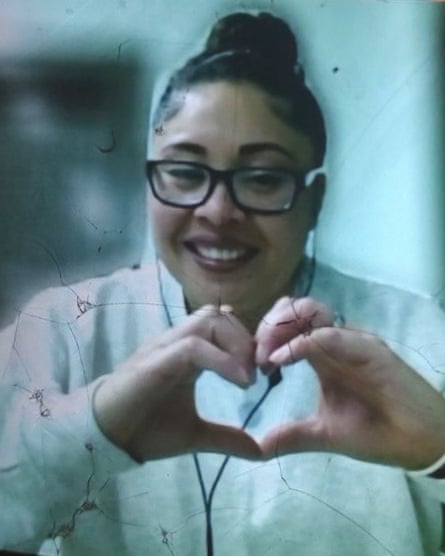
Mario Garcia-Valenzuela. Photograph: Mario Garcia-Valenzuela
Garcia-Valenzuela had fled to the US in 2014 from Mexico, where he was tortured by members of a drug cartel. “I have no choice, that’s why I’m fighting,” he said. “Because I know that as soon as they deport me, I’m going to be handed over to the cartels and I’m going to be tortured and killed – ripped into pieces.”
But in SLIPC he faced a new kind of horror. He alleged that on more than one occasion he was told to move heavy metal filing cabinets back and forth across a room. When he struggled to lift the furniture, Reyes would taunt him, he said, saying: “If you think you are a man, I’m going to treat you like a man.”
In the spring of 2024, Garcia-Valenzuela reported sexual harassment on the basis of his gender, in accordance with Prea. He said he felt targeted due to his gender identity and wanted the fact he is transgender removed from his file, as a measure of protection. But an Ice officer responded that “even if we take off your transgender marker, there is no hiding that you are transgender”, noting Garcia-Valenzuela’s physical appearance, he said. To Garcia-Valenzuela’s knowledge, no follow-up investigation into Reyes was conducted.
Renteria-Gonzalez’s complaints were dismissed as well, Renteria-Gonzalez said.
A spokesperson for Geo categorically denied the allegations detailed in the complaints.
“GEO strongly disagrees with these baseless allegations, which are part of a long-standing, politically motivated, and radical campaign to abolish ICE and end federal immigration detention by attacking the federal government’s immigration facility contractors,” said Christopher V Ferreira, a Geo group spokesperson.
Ferreira added that “GEO has comprehensive policies in place for the reporting and investigation of all incidents that occur at the Center, including instances of assault and/or sexual assault. These policies are governed by standards and requirements established by the US Department of Homeland Security.”
Geo did not respond to questions about Reyes’s employment status at SLIPC.
Harsh retaliation
The detainees who filed complaints against Reyes and other SLIPC staff said that they faced harsh retaliation for doing so.
When Jane Doe filed a Prea complaint with Ice using a paper form and through the phone hotline, detailing that Reyes had sexually assaulted her, she received no response, according to her legal complaint.
But afterwards, Reyes redoubled his efforts to stalk her, the complaint alleges – and forced her to perform oral sex on him, saying he had her cornered in the facility’s “camera blind spots” where no one would see them.
When she attempted to resist, Reyes told her he had found her mother’s home address in the Dominican Republic, Doe alleges in the complaint, and told her that if she were deported, he would follow her to her family’s residence where “you won’t have any protection”.
A spokesperson for Geo categorically denied the allegations detailed in the complaints. Photograph: Patrick T Fallon/AFP/Getty Images
Jane Doe said Reyes and other staff also blocked her from accessing medical treatment for her epilepsy, even as her seizures became more severe and frequent during her time in detention, the complaint states. He repeatedly cornered Doe as she was en route to the medical center to receive treatment, and told her he would watch her on cameras while she was receiving medical evaluation. On one occasion, he told Doe he was “masturbating to her because he saw her body in medical condition when she was in an observation cell”, the complaint alleges.
“We feel so vulnerable, impotent,” Renteria-Gonzalez said.
After he reported that Reyes had sexually assaulted him, Renteria-Gonzalez said, Reyes burst into his housing unit and yelled, “You should have never put my name on it!”, in reference to the complaint to Ice. Renteria-Gonzalez said he was then placed in solitary confinement for two weeks.
After Renteria-Gonzalez reported harassment from another officer, his complaint was dismissed as “unsubstantiated” and the officer came back and told him: “They can’t do nothing to me,” according to the complaint.
Meanwhile, Garcia-Valenzuela said he was repeatedly sent to solitary confinement, he believes in retaliation for speaking out. He said staff at the detention center falsely reported that he had attempted self-harm, and needed to be placed under suicide watch, even though he had not in fact tried to hurt himself.
At one point, while Garcia-Valenzuela was in the medical isolation unit, officers delivered him a meal that consisted of a few potatoes and a few grains of cereal. There was no spoon provided, he said, and there was a note that instructed him to eat it “like a dog”.
Shortly after that incident, he said, a doctor at the facility suddenly – without explanation – stopped providing him access to medication for hand pain that had been exacerbated by his working in Reyes’s night-shift program.
He has avoided making further complaints. He tries not to speak to or make eye contact with staff, and avoids leaving his dorm. He limits trips to the restroom, he said. And rather than go to the cafeteria to warm up his food and eat, he takes his meals cold, and dines in bed. “I have to stay in the back-most corner of my bed, and eat there,” he said.
“I don’t ever feel at ease.”
Trans people in federal custody under threat
The allegations of abuse at SLIPC come at a time when the health and safety of trans people in federal custody is especially under threat, advocates say.
On the first day of his presidency, Donald Trump unveiled a flurry of executive actions targeting trans rights, rolling back anti-discrimination protections and mandating that people in immigration detention be placed in facilities based on their sex assigned at birth.
On 16 January – the last day of Joe Biden’s administration – Ice reported that 47 trans people were in Ice detention facilities around the country and that 69 had been arrested since the start of the fiscal year. As soon as Trump took office, the agency began omitting data on the number of transgender people in immigration detention from its reports.
“The government is essentially refusing to acknowledge the existence of trans people, let alone their humanity,” Decker of RFK Human Rights said.
Although a federal judge has blocked enforcement of Trump’s ban on transgender healthcare in federal prisons, Decker told the Guardian that inside detention centers, guards and staff have been emboldened to deny healthcare to trans clients, or retaliate against them for requesting care.
“I worry that the situation will only get worse from here for trans people,” she added.
The administration also closed the civil rights division of the DHS, as well as the ombudsman office overseeing immigration detention, arguing that the staff in these congressionally mandated divisions were “internal adversaries that slow down operations”.
The divisions included employees tasked with regularly visiting detention centers, investigating complaints and preparing reports for Congress. Detainees facing discrimination, neglect and abuse now have even fewer options for recourse, Decker said.
LGBTQ+ Americans consider move to Canada to escape Trump: ‘I’m afraid of living here’
Read more
It’s a scary, difficult moment to speak out, said Campos-Flores, a 37-year-old single parent of two children who came to the US from El Salvador when they were 11 years old.
During the seven months that Campos-Flores was detained at SLIPC, they would call their parents every day, just to reassure them that they were still alive. Periodically, they would beg their family and their lawyer to find ways to get them out. “I asked them to try to book me into another facility,” they said. “It was too much – just too much.”
In November 2024, they were deported – and immediately they felt a sense of relief to be freed from Reyes, they said. But they couldn’t stay away from their children, who are US citizens – so they crossed back into the US and were again apprehended.
They are currently detained at a different correctional facility in Louisiana, serving a criminal sentence for illegal re-entry. But after finishing their sentence, it is likely they will be transferred back to SLIPC before deportation – and face the same officers who harassed them, or ignored their complaints.
“But I have my 12-year-old son. He is also gay, he likes boys, and I don’t want him to experience anything like what I have experienced,” they said. They want to fight for his rights, too, they said.
What a smarmy arrogant little prick this kid is. First he is wrong on the founders, but that he is so cock sure of himself he can’t imagine being wrong. Christ is king, only he is king, and how can you represent Ohio if you are not Christian. He is clueless that a religious test for office is strictly prohibited by the constitution. But even after being correct the kid repeats his wrong version forcefully. Hugs
October 12, 1492 Natives of islands off the Atlantic shore of North America came upon Italian explorer Christopher Columbus, who was searching for a water route to India for Spanish Queen Isabella.
October 12, 1945 Pfc. Desmond Doss became the first conscientious objector ever to be awarded the Congressional Medal of Honor. Doss, a Seventh Day Adventist, enlisted in 1942 but refused to carry a rifle or train on Saturdays. On the island of Okinawa, under heavy Japanese fire, he saved the lives of 75 sick and wounded soldiers by lowering them, one by one, down a 400-foot cliff. The guest house at Walter Reed Army Medical Center is Doss Memorial Hall in his honor. Read more (includes movie trailer)
October 12, 1958 A Reform Jewish Temple in Atlanta (the city’s oldest) was firebombed with fifty sticks of dynamite in retaliation for Jewish support of local black civil rights activists. The Temple’s Rabbi, Jacob Rothschild, was outspoken in his support of civil rights and integration, and was a friend of Reverend Martin Luther King, Jr. before he became well known nationally. From Georgia PBS
October 12, 1967 British zoologist Desmond Morris stunned the world with his book, “The Naked Ape,” a frank study of human behavior from a zoologist’s perspective. Morris had earlier studied the artistic abilities of apes and was appointed Curator of Mammals at the London Zoo. Read more
October 12, 1967 “A Call to Resist Illegitimate Authority” appeared in The Nation and the New York Review of Books. 20,000 signed it, including academics, clergymen, writers. It urged “that every free man has a legal right and a moral duty to exert every effort to end this war [Vietnam], to avoid collusion with it, and to encourage others to do the same.” This document became the main basis for the federal government’s criminal prosecution (for encouraging draft evasion) of five of the signers: Dr. Benjamin Spock, Marcus Raskin, Mitchell Goodman, Michael Ferber, and the Reverend William Sloane Coffin. Read the Call
October 12, 1970 Lt. William Calley was court-martialled for the massacre of 102 civilians in the Vietnamese village of My Lai; far more actually died during the incident. The full sad story Lt. Calley
October 12, 1977 “Regents of the University of California v. Bakke” was argued in front of the U.S. Supreme Court. The question: Did the University of California violate the Fourteenth Amendment’s equal protection clause, and the Civil Rights Act of 1964, by practicing an affirmative action policy that resulted in the repeated rejection of Bakke’s application for admission to its medical school? Read more
120 years ago, 11-year-old Frank Epperson left his drink on the front porch on a chilly night. That accident became one of the most successful frozen dessert brands in the nation.
Whether their favorite is ice cream, popsicles, or gelato, most people would agree that frozen treats are delicious.
While the origins of frozen desserts are unclear, they likely trace their roots back to the Ancient Persians, who used ice houses to produce and store faloodeh and sorbets. First-century Roman cookbooks included recipes of sweet desserts sprinkled with snow. Marco Polo is (probably falsely) credited for introducing frozen desserts to Italy after his travels in China, and Thomas Jefferson popularized ice cream in the United States — his handwritten vanilla ice cream recipe from the 1780s was one of the earliest in the nation.
But one story in frozen dessert history stands out, and it is not about a United States president or a Silk Road explorer: It’s about an 11-year-old boy.
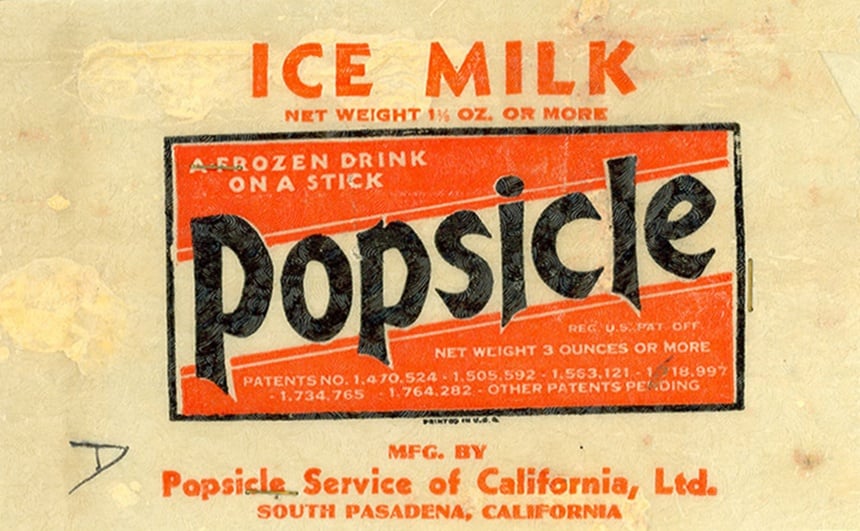
On a winter day in 1905, young Frank Epperson made a beverage mixing soda powder with water to stay hydrated. One night, he accidentally left his cup on the porch overnight with a stirring stick inside, according to popsicle.com. Temperatures dropped during the night, and the next morning, Epperson found his cup where he had left it, no longer liquid, but now an icy snack. He ran the cup under hot water, pulled it out using the wooden stick, and tasted the new frozen dessert. He named it the Epsicle — a combination of “Epperson” and “icicle” — but unlike the process of its invention, the product didn’t turn into a national success overnight.
Epperson continued making Epsicles for his friends, and later, his children — who began calling the treat “Pop’s Sicle” or “Popsicle,” the name the brand keeps to this day — for many years. He also sold popsicles around his neighborhood until 1923, when he decided to expand his market to Neptune Beach — known as the “West Coast Coney Island” — where it became a beloved treat, selling as many as 8,000 in one day.
Following this popularity, Epperson applied for a patent on June 11, 1924, describing the Popsicle as a “frozen confection of attractive appearance, which can be conveniently consumed without contamination by contact with the hand and without the need for a plate, spoon, fork or other implement.”
Epperson’s request was approved two months later, and he immediately sold all of the rights to the invention that had defined much of his life to the Joe Lowe Co., which later started a subsidiary called the Popsicle Industries. Epperson later regretted the loss, saying: “I was flat and had to liquidate all my assets. I haven’t been the same since,” according to NPR. The frozen dessert brand, however, continued on without him.
A few years later, the Great Depression began to weigh heavily on the American public. As the stock market crashed and employment declined, struggling families had to cut out the ten-cent popsicles from their purchases. In response, the Popsicle Corporation devised the first two-stick popsicles so that two children could enjoy a snack for the price of one. According to a 1931 advertisement, “People who could not afford dimes, quarters and halves for ice cream gladly bought Popsicles at a nickel each for children, family and friends.” The two-stick popsicle became a huge success, doubling the company’s sales in a year. The Popsicle Corporation later declared itself “Depression Proof.”
But not everything was as sweet as the dessert itself for the Popsicle brand. The Popsicle Corporation also had rivalries with the company Good Humor — a brand known for their chocolate-coated bars and the first ice cream trucks. The dispute resulted in a series of court cases over patent violations. The initial conflict ended with a compromise: The Popsicle Corporation would sell iced treats with no milk, and Good Humor would sell products containing milk. However, with the drop of dairy prices in 1932, Popsicle ignored the agreement and decided to tap into the ice cream market — coming out with a “Milk Popsicle” that included 4.48 percent butter fat.
Good Humor filed a lawsuit immediately. Both sides fought to define “sherbet.” Good Humor strictly defined it as “flavored water ice,” but Popsicle rebutted, claiming that most state regulators did not categorize the Milk Popsicle as ice cream, but with terms such as “imitation ice cream,” “frozen custard,” “milk sherbet,” or “ice milk.” The judge ruled for Good Humor, and both companies signed their new court-approved agreement on April 7, 1933. Ironically, over the next six decades, Unilever — one of the largest global consumer goods companies — bought the rights to both Good Humor and Popsicle, ending the Cold War between the two companies.
If you remember buying a cold treat from a neighborhood ice cream truck on a hot summer day, eating a Firecracker during a Fourth of July party, or splitting a two-stick pop with a friend, you’re one of millions that probably has nostalgic memories of Popsicles. It continues to be one of the most popular frozen dessert brands, and for that, we have an 11-year-old Frank Epperson to thank.
The Great Chicago Fire by Heather Cox Richardson Read on Substack
Today is the anniversary of several deadly wildfires that took place in 1871. While it was not the deadliest— that label went to the Peshtigo Fire in Wisconsin— the Great Chicago Fire tends to be the one people remember, not least because observers turned it into anti-immigrant propaganda even before the flames had died out.
A short history of the facts behind the popular memory of the Great Chicago Fire.
(This is not tonight’s letter, by the way. It’s just cool history, and I don’t get to do enough of that lately.)
I’m so glad the newsletter is back! I’d missed it in my Inbox. Although, we can see all of it anytime we want to, at The Year In Peace & Justice History. That’s where I got them for a few months before I took a break on them. I figure it’s a sign I should pick it back up, that I’m getting newsletters again.
October 6, 1683 Thirteen Mennonite families from the German town of Krefeld arrived in Philadelphia on the ship Concord. Having endured religious warfare in Europe, the Mennonites were pacifists, similar to the Society of Friends (often known as Quakers) who opposed all forms of violence. The first Germans in North America, they established Germantown which still exists as part of Philadelphia. Modern Mennonite peace activism: (The page is from Quaker History.) More about the Mennonites in America
October 6, 1955 Poet Allen Ginsberg read his poem “Howl” for the first time at Six Gallery in San Francisco. The poem was an immediate success that rocked the Beat literary world and set the tone for confessional poetry of the 1960s and later. “Howl and Other Poems” was printed in England, but its second edition was seized by customs officials as it entered the U.S. City Lights, a San Francisco bookstore, published the book itself to avoid customs problems, and storeowner (and poet) Lawrence Ferlinghetti was arrested and tried for obscenity, but defended by the American Civil Liberties Union (ACLU). Working on Howl in San Francisco, circa June, 1956 Following testimony from nine literary experts on the merits of the book, Ferlinghetti was found not guilty. Lawrence Ferlinghetti outside City Lights More about City Lights Read Howl Read more about Allen Ginsberg
October 6, 1976 An airliner, Cubana Airlines Flight 455, exploded in midair, killing 73 mostly young passengers including the entire Cuban youth fencing team. The plot was engineered by Orlando Bosch and Luis Posada Carriles, a Cuban former CIA agent, who was based in Venezuela at the time. The Posada Carriles file from the National Security Archive (It’s still there!)
October 6, 1978 346 protestors were arrested at the site of the proposed Black Fox Nuclear Power Plant in Inola, Oklahoma. In 1973 Public Service of Oklahoma announced plans to build the Black Fox plant about 15 miles from Tulsa. It was also near Carrie Barefoot Dickerson’s family farm. She became concerned, as a nurse and a citizen, about the potential health hazards. Carrie Barefoot Dickerson Through her group, Citizens’ Action for Safe Energy (CASE), and the consistent opposition of informed and persistent allies, the project was canceled in 1982. There are no nuclear plants in the state of Oklahoma, and no nuclear plant has been built in the U.S. since then. Carrie Dickerson Foundation
October 6, 1979 Seabrook Nuclear Power Plant protest – late 1970s Over 1400 were arrested at Seabrook, New Hampshire, the construction site of two new nuclear power plants. The occupation was organized by the Clamshell Alliance. Clamshell history

‘It is for my daughter and my family that I have endured everything that I have in this detention facility for the past 28 months.’ Illustration: Rita Liu/The Guardian
A Google Maps screenshot of the South Louisiana Ice Processing Center (SLIPC) in Basile, Louisiana.
Photograph: Google MapsA spokesperson for Geo categorically denied the allegations detailed in the complaints.
Photograph: Patrick T Fallon/AFP/Getty Images






 Scottie's Playtime