
Tag: LGBTQ+
If You Hate Gay or Trans People, You’re Suspect | Christopher Titus (Doomed To Repeat)
Mmm. Pie.
81-Year-Old Wins “Best Technique” at a San Francisco Lesbian Pie-Eating Contest
Babs wrote that her victory was “proving once and for all that experience matters.”

Proving that there is no age limit to good tongue skills, an 81-year-old woman who competed in a San Francisco lesbian pie-eating contest won Best Technique, per viral social media videos about the event.
Babs Daitch, who joined a crush of pie-eating lesbians in the contest on November 23, posted about her entering the contest, and subsequent title-winning performance, on her social media channels. Though she could not claim the overall victory — a woman named Jenn won, per the Bay Area Reporter — she did win “Best Technique,” per her own social media accounts. She wrote that her victory was “proving once and for all that experience matters.”
One video, posted on Friday, featured Daitch being cheered on by the crowd. Her response: sticking her tongue out in between her middle and index fingers. The clip has garnered over 40,000 views since it hit the internet. (snip-MORE on the page)
Police are more likely to mistreat LGBTQ+ people, a disturbing new study finds
 Faefyx Collington (They/Them)November 18, 2025, 1:00 pm EST
Shutterstock
LGBTQ+ people are significantly more likely to stopped, harassed, and even falsely accused by the police than non-LGBTQ+ people, according to a new study released by the Williams Institute. As a result, LGBTQ+ people are less likely to contact the police when they need support, the study notes.
“Participants in these studies have described being stopped for no reason, encountering hostile treatment when police discovered they were transgender, and having officers assume they were engaging in sex work or other illegal activities,” the report explains, detailing some of its qualitative research. “Participants in several studies shared that they have concerns related to their LGBTQ identity about contacting the police or that they avoid police in order to avoid negative interactions.”
The Williams Institute study analyzed 25 years of research on interactions between the LGBTQ+ community and police. The data came from surveys, incident reports, government investigations, qualitative research, court cases, and anecdotal reports.
The findings might not be astonishing to those familiar with LGBTQ+ history, most notably the police raids that led to the Stonewall Riots. While decades have passed since crimes explicitly targeted LGBTQ+ social behaviors, the report suggests that changes only run so deep and notes that it was only 2003 when the Supreme Court ruled sodomy laws as unconstitutional.
The Williams Institute study analyzed 25 years of research on interactions between the LGBTQ+ community and police. The data came from surveys, incident reports, government investigations, qualitative research, court cases, and anecdotal reports.
The findings might not be astonishing to those familiar with LGBTQ+ history, most notably the police raids that led to the Stonewall Riots. While decades have passed since crimes explicitly targeted LGBTQ+ social behaviors, the report suggests that changes only run so deep and notes that it was only 2003 when the Supreme Court ruled sodomy laws as unconstitutional.
Just as the censorious Hays Code from the 1930s to ’60s still defines aspects of modern media, past criminalization of LGBTQ+ identities has created an environment where discrimination and harassment are common.
“The history of criminalization and related tensions between law enforcement and LGBTQ communities have legacies that extend to the present day,” the report acknowledges. The authors also note the new waves of anti-trans laws, pointing to the fact that “Recent years have seen a rise in anti-LGBTQ legislation, with many of these new laws imposing criminal penalties.”
The analysis of survey data revealed that as well as being more likely to be stopped, searched, arrested, and held in custody, LGBTQ+ people were also more likely to report verbal, physical, and sexual harassment and assault at the hands of law enforcement.
The study’s lead author, Joshua Arrayales, a law fellow at the Williams Institute, released a statement noting that all of this meant that LGBTQ+ people were less likely to report crimes, and that affects future data.
“Reporting crimes is essential for accurate crime statistics, proper allocation of crime prevention resources, and support services that address the unique needs of LGBTQ survivors,” Arrayales said.
As previous data already suggested that LGBTQ+ people are more likely to be crime victims, this research supports the idea that many crimes against queer people go unreported.
While LGBTQ+ people are more likely to be stopped by police, face harassment, and avoid contacting law enforcement as a result, the statistical differences grow for specific groups. People who are part of other marginalized groups reported higher incidence rates; one study showed that 46% of trans people said they’d avoid contacting the police if they were the victim of a crime.
The study also found that these interactions often had a lasting impact. A “growing body of research” suggests that there are “associations between police violence and harassment and binge drinking, stress, depression, and other negative health outcomes.”
The Williams Institute study also provides action items for improving the current situation: “(1) legal and policy reform, (2) enhanced accountability and representation within law enforcement agencies, (3) community engagement and support, and (4) continuous data collection and evaluation of these initiatives.”
Subscribe to the LGBTQ Nation newsletter and be the first to know about the latest headlines shaping LGBTQ+ communities worldwide.
What do you say when “honoring your parents” is used against LGTBQ+ kids?
I know this morning I promised a video. I did get two steroid shots at full strength one in each shoulder. Over the next few days I should feel much more energetic. I also have an appointment for a month to do spine shots. But as of today I am far too tired to do a video. All I can do is stay up for another hour trying to gather cartoons and memes for tomorrow’s post. I hope to be able to post Angie’s post and get to some comments. I talked to my doctor, they again want to up the pain meds but that will be worse for me I think. Thanks. Hugs
Passports, & Transvestigations; Weekend Reading in “Them” Magazine
The Right Is Now Transvestigating Charlie Kirk and His Wife, Erika
Transphobia truly impacts us all. By Samantha Riedel
Definite beverage alert, though it may be choking rather than laughing.
We all knew it was inevitable: the MAGA conspiracy set is knee-deep in transvestigating Charlie Kirk and his widow, Erika Kirk.
For the blissfully offline (oh, how we envy you), “transvestigation” is a transphobic conspiracy theory advanced over the past eight years, adherents to which believe countless celebrities, politicians, and other public figures are secretly transgender. The conspiracy usually involves armchair phrenology, as believers overlay diagrams of skeletons and skulls over photographs to highlight alleged “discrepancies,” and pseudoscientific analyses of body language and posture. It’s abject nonsense that conveniently ties in with QAnon, “Pizzagate,” and other right-wing conspiracies — and nobody, not even far-right figureheads themselves, are safe from suspicion.
Transvestigators on social media started training their eyes on Erika Kirk roughly two months ago in mid-September, shortly after her husband, Turning Point USA cofounder Charlie Kirk, was shot and killed in Utah. (snip)
Comments on the post were somewhat divided, though many took Starbucs’ side. “Of course almost all models, especially agent models and Victoria secret models are mostly [trans women],” one wrote. Another simply called her a “filthy Luciferian.” Others cited a video Erika Kirk filmed over a decade ago, in which she described herself in childhood as a tomboy, as evidence that she was actually assigned male at birth. Some even took the opportunity to posthumously transvestigate Charlie Kirk as well; “that’s why Charlie Kirk seemed so feminine and emasculated because she was a transgender handler. That’s why he was so pretty,” one person wrote. (emphasis mine-A.) (snip-MORE-it’s not long)
==========
How Trump’s Anti-Trans Passport Ban Impacts You
Here’s what you need to know about Trump’s trans passport ban. By Quispe López
On November 6, the Supreme Court granted the State Department temporary permission to enforce the Trump administration’s passport ban, giving it authority to bar transgender, nonbinary, and intersex people from obtaining passports with gender markers that reflect their identity.
The decision reversed two previous injunctions ordered by lower courts, filed by the American Civil Liberties Union (ACLU) as a class action lawsuit against the State Department, Orr v. Trump, which temporarily prevented the Trump administration from enforcing its trans passport ban. The ban stems from an anti-trans executive order in which the Trump administration attempted to codify the legal definition of gender as biological sex determined “at conception.”
While the lawsuit was pending, the injunctions temporarily allowed trans, nonbinary, and intersex people to obtain passports, new or renewed, with the gender marker corresponding to their identity. Following the Supreme Court’s decision, which allows the State Department to enact the executive order while Orr v. Trump is debated, people who apply for a new or renewed passport will only be able to receive one with their sex assigned at birth. According to the ACLU, there is no guidance on what intersex people who might not have any documents with an F or M marker from around the time they were born should expect for their passports. (snip-MORE-also, not long)
Detransition is key to politicians’ anti-trans agenda. But what is it really like?
Nov 12, 2025 Orion Rummler
This story was originally reported by Orion Rummler of The 19th. Meet Orion and read more of his reporting on gender, politics and policy.
For some people, gender shifts over time, often through changes in one’s sense of self. A transgender man may realize they are nonbinary and stop hormone replacement therapy. A trans woman may face so much discrimination that she represses her identity. And some trans people medically reverse their transition to live as their sex assigned at birth.
These experiences are all part of a process known as detransitioning. Although detransitioning does not have a consistent social or academic definition, it generally applies to someone who has sought a gender transition and then stopped, shifted or reversed aspects of it. Their experiences offer a deeper look at how discrimination and gender norms impact our lives, how gender-affirming care can be improved, and how identity is perhaps more fluid than previously thought.
As experts work to understand detransitioners, their vulnerabilities and their highly individualized needs, their identities are being co-opted as part of a national campaign against transgender rights. Health care access and research are being blocked by politicians for both trans people and detransitioners — while anti-trans rhetoric puts everyone at risk.
The Federal Trade Commission and the Justice Department are investigating gender-affirming care as medical fraud, and they are rooting this effort in detransitioners’ stories that fit the narrative the Trump administration wants to advance. The White House wants the National Institutes of Health to study “regret” and “detransition,” even as it cuts any federal funding for researchthat mentions the word “trans.” The U.S. Department of Education hosted a “Detrans Awareness Day” event last March. Meanwhile, its functions have been severely undermined by layoffs and budget cuts.
The White House and agencies like the Justice Department claim that gender-affirming care is mutilating children, overlooking that young trans people live happily after transition and the studies showing that adolescents who regret transition are in the minority. Government officials describe trans people and detransitioners as victims of a medical conspiracy to boost profits and force gender ideology on families. Now, they are seeking evidence to prove those claims by subpoenaing hospitals for patients’ private data, including doctors’ notes, patient addresses and Social Security numbers.
Gender-affirming care has been broadly endorsed by the medical community for its effectiveness in treating gender dysphoria, a persistent distress felt when one’s body is out of sync with their identity. The 2022 U.S. Trans Survey, which polled over 92,000 trans and nonbinary people 16 and older, found that social and medical transition were profound sources of life satisfaction. Experts and advocates agree that more research and more understanding are needed to improve trans medical care. But under Trump, they also expect transgender and intersex health to keep getting worse, not better.
The 19th spoke with two detransitioners who feel harmed and usedby the Trump administration, which has positioned itself as a protector of those who detransition. Adriana lives in New York City, where she feels safe to express herself among so many LGBTQ+ people, but has struggled to access adequate health care. Ara lives in North Carolina, a state that has several laws restricting trans rights and health care access — and where support from a mental health program and her partner has helped her navigate the challenges of detransitioning. As politicians stoke fear about gender non-conformity, their experiences offer a deeper understanding of what it means to live authentically in a politically volatile time.
Still, more young people have been exploring their identities, expanding the boundaries of gender and adding to the cultural and social norms surrounding it. Detransitioners’ experiences are part of that social evolution. Their stories of regret and pain exist alongside stories of joy and empowerment — and these are all part of a journey of self-discovery that may have turned out to be more complicated than they initially thought. The question is, will elected officials support them on this journey or cause more harm?
‘Taking away trans health care is taking away people’s lives’
As providers of trans health care have become political targets, Ara Kareis’ own routine treatments have been disrupted.
‘I just feel like such a power source’
The joy that Adriana Del Orden feels in her body could have only come through exploring her gender. She’s tired of being told that she ruined her life.
The politics of detransition
Political rhetoric doesn’t capture the complexity of detransitioning — or what taking away health care means.
1st Gay Rights Organization Founded This Date In Peace & Justice History
(I don’t know what this formatting is about. This is the 3d try, so here it is as it is.)
| November 10, 1924 |
| The Society for Human Rights, the first gay rights organization in the U.S., was founded in Chicago by Henry Gerber, a German immigrant. He had been inspired by Germany’s Scientific Humanitarian Committee, formed to oppose the oppression of men and women considered “sexual intermediates.” |  |
| Henry Gerber–founder of the Society for Human Rights |
https://www.peacebuttons.info/E-News/peacehistorynovember.htm#november10
From the link “More on Henry Gerber”:
HENRY GERBER
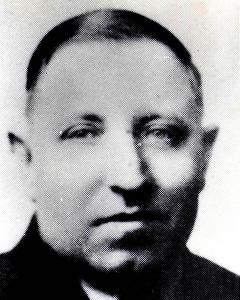
INDIVIDUAL | Inducted 1992 [Posthumous]
The founder of Chicago’s Society for Human Rights in 1924, the first gay rights organization in the United States, Henry Gerber was born in Bavaria as Joseph Henry Dittmar on June 29, 1892, and arrived at Ellis Island in October, 1913. With members of his family, he moved to Chicago because of its large German population. After working briefly at Montgomery Ward, he was interned as an alien during World War I. He wrote that although this was not right, he did receive three meals a day. From 1920 to 1923 he served with the U.S. Army of Occupation of Germany and during this time, he came into contact with the German homosexual emancipation movement. He subscribed to German homophile magazines and was in contact with Magnus Hirschfeld’s Scientific-Humanitarian Community in Berlin. In 1924, Gerber returned to Chicago and was hired by the post office. Gerber’s return to Chicago was amidst a backdrop of urbanization and an emerging gay subculture.
Following what Gerber had seen in Germany, he felt the need to establish an organization to protect the rights of gays and lesbians. With several friends, Gerber formed an organization which was later incorporated as The Society for Human Rights, a nonprofit corporation in the State of Illinois. The organization published a newsletter, Friendship and Freedom, which was distributed to its small membership.
In July, 1925, the society came to an abrupt end. The wife of one of the co-founders reported her husband, a reputed bisexual, to her social worker who contacted the police. Following a police raid, Gerber and several others were arrested and prosecuted for their deviancy. After three costly trials the case against Gerber was dismissed. Gerber lost his entire life savings defending himself and was fired from his job at the post office for conduct unbecoming a postal worker.
After his ordeal, Gerber moved to New York City where he reenlisted in the U.S. Army and served for 17 years. During the 1930s he managed a personal correspondence club and wrote articles in gay publications under a pseudonym. The correspondence club became a national communications network for gay men. In the 1940s, Gerber exchanged a number of letters with Manuel Boyfrank of California. Boyfrank was enthusiastic about organizing to combat homosexual oppression. Gerber offered his assistance, but refused to risk his job again. He continued his assistance through personal correspondence and numerous articles.
On December 31, 1972, Gerber died at the U.S. Soldiers’ and Airmen’s Home in Washington, D.C., at the age of 80. He lived to see the Stonewall Rebellion and the start of a new era of activist gay and lesbian liberation organizations.
© Chicago LGBT Hall of Fame. All rights reserved.
A Couple Of Pieces From “Them”
A Man Got His Jaw Broken Defending a Trans Woman. The Community Paid for His Surgery
Jarod Adkison had been left with a concussion by three men.
By Abby Monteil
After the story of a cisgender man who was severely beaten over the summer while defending a trans woman went viral, strangers have helped him cover his reconstruction surgery.
33-year-old Jarod Adkison told Austin American-Statesman that he began chatting with three women while visiting Barton Springs Pool near Austin, Texas on July 26. While they were sitting by the pool, Adkison noticed three men who appeared drunk coming up and making fun of one of the women, who is trans.
“It all stemmed from the men seeing the trans lady and making a lewd gesture,” he said. (snip-MORE-click on the title to finish)
=====
Our First Lady Cole Escola to Play Gender Nonconforming Role in Netflix’s One Piece
The performer will play the role of Bon Clay.
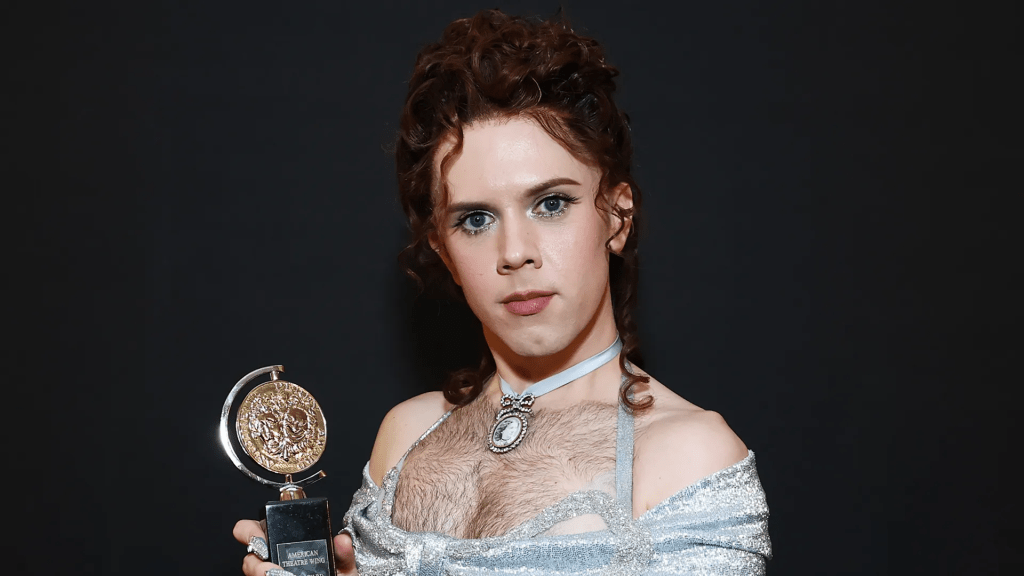
Cole Escola has been cast in the third season of Netflix’s live-action adaptation of One Piece as a fan favorite character.
The news of the actor’s casting was announced on Monday. They will be playing Bon Clay, who is described as “a master of performance and precision who is as dangerous as they are dazzling, a theatrical assassin who turns combat into art.” The character in the original manga is described as an okama, a Japanese umbrella term that can refer to gender nonconforming men, trans women, and crossdressers. So basically, Escola is perfect for the role. (snip-MORE-click through on the title)
Welcoming people and being willing to answer over the top weird questions.
Right from the start of my leaving the military I vowed to be an out proud gay man. This was in 1986. It has lead to a lot of embarrassing conversations. People have asked me such personal questions on same sex actions and how gay feelings might differ from straight feelings. At first I found it weird and offensive, but as I got older I realized I brought a lot of straight cis people to be allies simply by being willing to answer sensitive or stupid questions. I remember one weekend a straight co-worker with two young children showed up at my house. Thankfully he had left his children at home with a sitter as he had lost his wife. After talking for a few minutes he got around to discussing gay sex and why I liked it. I struggled to understand his questions and to explain it to him. He then surprised me. He said show me. I was like what? He said let’s have sex. I thought oh shit a straight guy who just wants to fuck a gay guy and put that notch on his sex card. I was wrong. He started taking off his clothing and said to me, you say it feels good, it is like me with a woman, so it should be the same. He wanted to do oral sex and then anal, but wanted me to do anal with him being the bottom first. I was desperately trying to explain to him that the first time can be bad or painful and it is not just about sex. It is a need, and emotional feeling. He was like we are friends, I like you, you like me so it should be OK.
Let’s just say after that night he was still straight but he understood how two men had sex. I was surprised when after giving him oral he insisted on doing the same to me. But later I remembered my years in the military and how many straight young guys begged me to go with them on passes and have sex. It was never one sided. I have realized a lot of bigotry can be undone, can be reversed by simply sharing time with those that are the “other”. Everyone needs someone to hold, to touch, to feel a connection with. Hugs
 Scottie's Playtime