Explanation: Ever wonder what it would look like to crack open the Sun? The Egg Nebula, a dying Sun-like star, can unscramble this question. Pictured is a combination of several visible and infrared images of the nebula (also known as RAFGL 2688 or CRL 2688) taken with the Hubble Space Telescope. The star has shed its outer layers, and a bright, hot core (or “yolk”) now illuminates the milky “egg white” shells of gas and dust surrounding the center. The central lobes and rings are structures of gas and dust recently ejected into space, with the dust being dense enough to block our view of the stellar core. Light beams emanate from that blocked core, escaping through holes carved in the older ejected material by newer, faster jets expelled from the star’s poles. Astronomers are still trying to figure out what causes the disks, lobes, and jets during this short (only a few thousand years!) phase of the star’s evolution, making this an egg-cellent image to study!
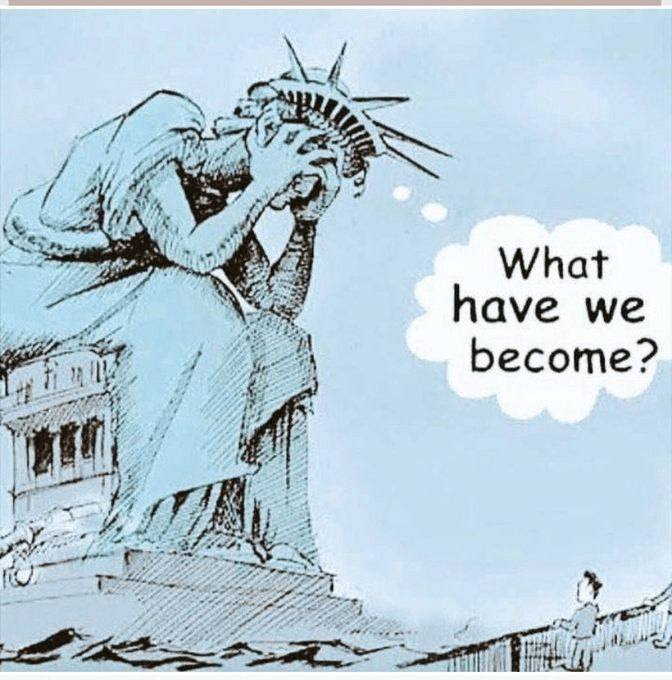
Hello Everyone. Scottie recently asked me why I’ve not posted in a while. How do I tell this man who has been fighting the good fight for so many years that I’m just so damned tired? I’m so tired of being lied to, of being called names because I don’t believe the lies, of being caught between morality and caring for people caught in the trumpian trap. I’ve written this post over and over, and each time it seems so damned obvious that I run into the exhausted question of “what’s the damned point”? How can people be so blind, so hateful, so abusive and willing to be robbed by this unrepentent conman thief, this criminal in cheap suit, this shit-stain on the satin sheets? I actually looked into asking an AI why politics in the trump era is so damned exhausting. This is what it said:
Politics, particularly in the Trump era, are exhausting due to constant, high-stakes news coverage, extreme polarization, and the erosion of traditional political norms. This creates a 24/7 cycle of outrage, fear-based media consumption, and personal fatigue, with 65% of Americans reporting feeling “worn out” by the political environment. NPR +4
Key reasons for this exhaustion include:
Constant Crisis and High Drama: The political climate is defined by perpetual drama, making it difficult to find calm or “normal” moments, leading to a state of constant, low-level stress.
Breaking Norms: The Trump administration frequently violated long-held political, social, and legal norms, which created a sense of instability and constant, shocking developments.
Extreme Polarization and Tribalism: Politics has become an “us vs. them” mentality, where individuals may view opposing views as existential threats rather than just policy disagreements.
Information Overload: Social media algorithms and a 24-hour news cycle create a constant stream of political content, making it difficult to escape or disengage.
Personalized Politics: Political opinions have become closely linked to personal identity, making political debates feel deeply personal and emotionally charged.
Financial Stress: Economic concerns, such as rising costs for necessities, are often part of the political narrative, adding to the feeling of personal strain. The Conversation +6
I rambled for paragraphs, deleted, rambled for paragraphs again. The simple thing, the direct thing is likely best here. Dammit, I’m tired of just how bad it all is and not having a way to repair it. My only choice is to pull in, withdraw, ignore it all.
Ok, I’ve got chicken frying. Sorry to be such a downer, but I guess I’ve run out of impotent rage. Hugs.
Well, that was several more! At least they’re calorie-free. I hope all have a great afternoon! I’m getting the plumbing job done a day early, today instead of tomorrow. That is good; no water torture overnight!
Welcome back to Cover Snark! These covers were all sent in by the community!
From Jane Buehler: At first glance (small thumbnail) I thought he was shooting out a laser beam from his chest!
Sarah: That’s an interesting place for a stigmata.
Amanda: Why is he so grainy, like his skin is the texture of a basketball.
Sarah: Wait. WAIT. Whatever this cheetah-print thing is, it is both above and below his pec. What IS that?! Why is it partially encircling his pec? Why is it shooting out pink silly string? WHAT IS THIS.
And this is only the first cover. God help me with this set.
From Jen: My cousin introduced me to you guys a while back. We have a regular cousin chat about your Cover Snark because it cracks us up.
Recently I was at a gift shop and saw this gem. I immediately shared it to the cousin chat and they encouraged me to submit it!
Thanks for giving us all so many laughs.
Sarah: At first glance this looks unremarkable, but the more I looked the tiltier my head got. Why does his chest hair patch match the small patch of hair on his arm? I’m presuming the Yankee’s logo is backwards on purpose but also ????
And her boobs are going in very different directions – unless she’s got one of those bathing suit tops that only holds in one tit and the other is free to roam. I Hate suits like that. Also she’s reading a book called HOWL and that’s very funny.
There are a lot of stylistic choices that I really like, and also some details that I do not get.
Claudia: I have one question — why he doesn’t seem to have eyes?
Sarah: I was wondering that, too! It looks like they got blurred or something? Why does she have features while he does not?
Amanda: Why are we not talking about the fact that he’s a satyr?!
Sarah: A satyr in that shirt!
From Marianne: This popped up in my edelweiss+ pre-approved and I had to embiggen because what was I even looking at? Who wears light beige jeans with their chaps???
Sarah: WHAT is WITH the cowboy-hat-hides-the-faces trend? Do people not like drawing faces? Or is kissing difficult (I imagine it is) to draw?
And WHY would anyone wear light jeans with chaps. I get that it’s a Look, but also it’s a Laundry.
Amanda: It reminds me of when you’re in middle school and you draw people with their hands in their pockets or behind their back so you can avoid it.
Sarah: “Where’s your teal and white cow print cowboy hat?”
“Why?”
“I need it for reasons.”
From Deborah: Is he giving himself a simultaneous breast and pelvic exam under the watchful eyes of Dr Giant Tree Wolf?
Sarah: That’s a very intimidating way to do a breast exam.
Amanda: It also looks like he’s checking his crotch. Perhaps he’s just making sure everything is where it should be.
Sarah: So many cover models do that. Should we be worried? (snip)
Alysa Liu exits the ice after making history. (Screengrab: the Olympics)
God, Team USA is amazing.
“They hate to see two woke bitches winning,” said US figure skater Amber Glenn, who got death threats from America’s least important humans when she dared speak her mind about the vile regime running the United States right now.
The word I want you to keep in mind for this entire post is winning, because winning is the word that differentiates Olympians from the vile MAGA pieces of shit who have spent over a week now BITCHING and MOANING and CRYING and COMPLAINING and BELLYACHING and WHINING and WHINING and WHINING, all because a number of our finest athletes have met their Olympic moments by saying Hey, you know what? I’m proud to be here, but it’s not that easy right now to embrace everything this flag currently represents.
They’re already winners because they’re there, every one of them.
And every MAGA American is an absolute fucking loser.
Not long after I started The Moral High Ground, the Paris Olympics happened. During those games the MAGA freakout was over the absolutely wonderful opening ceremonies, which totally murdered white American conservative Christian culture by … we forget how, but we’re pretty sure they still bear the scars of that sexy-ass French opening ceremony with the heavy metal and the gender fludity and the joie de vivre. This month, these whining fucking losers have gotten their culture destroyed by Bad Bunny’s flagrant Spanish-speaking behavior at the Super Bowl, and of course by all these Olympians out here, accomplishing things and some of them not even tonguing Donald Trump’s asshole like a good little obedient Nazis!
MAGA goes into these situations already mad, if you haven’t noticed. They go into every situation already mad, because despite all the years they’ve spent bitching about cancel culture and snowflake liberals needing their safe spaces, the reality is that MAGA Americans are the softest, most pathetic clumps of human detritus ever to waste our fucking time making us listen to their grievances.
Shut Up And Sing/Dance/Skate/Ski!
It is the damnedest thing.
There is this pathological tendency among MAGA Americans to be simultaneously the least valuable players of the entire human race, yet still manage to believe everybody who does things they can’t do is on this earth solely to entertain them. That there’s some unspoken tradeoff wherein God gave all these other people musical brilliance or athletic prowess or [name skill or talent here], therefore they shouldn’t be allowed to have opinions, unless of course those opinions conform with the dominant beliefs of the … least valuable players of the entire human race.
Which they seldom do.
Because winners don’t tend to look at the world the same way losers do.
They’re not eaten up by the same fears, the xenophobia, the hatred, the resentment. They’re not susceptible to politicians who tell them to blame all their problems on people who look different from them, or who are less fortunate.
They’re too busy putting in the work, and then winning. Or putting in the work and coming in second or fourth or really fucking it up, but developing the discipline and the heart to dust themselves off, perhaps heal, and then try again. (My God, bless Lindsey Vonn’s heart.)
I said it during the last Olympics, but it bears repeating that even when MAGA culture wars manage to get close to a place of excellence, it’s remarkable how far from the actual winner’s podium they happen.
(Why is Riley Gaines one of MAGA’s athletic heroes? Because she’s a fucking loser. Maybe if she had been a stronger swimmer she could have taken a better path in life.)
(snip; Substack Note embed that didn’t)
But enough about Riley Gaines, let’s talk more about Olympians!
These Team USA athletes have shown us these past two weeks how they are heroes in their disciplines, but also a number of them by truly representing the best of the USA, speaking calmly, humbly, compassionately, bravely about what it feels like to be competing under the American flag right now, as the nation that’s often been considered the hope of the world is struggling and buckling under a white supremacist, fascist, neo-Nazi regime that seeks to destroy it.
US freestyle skier Hunter Hess said wearing the American flag doesn’t necessarily mean supporting everything that’s happening in the US right now, and that “it brings up mixed emotions.” He continued: “There’s obviously a lot going on that I’m not the biggest fan of, and I think a lot of people aren’t,” and “I just think, if it aligns with my moral values I think I’m representing it.”
Another skier, Chris Lillis: “I feel heartbroken about what’s happening in the United States. I think that as a country we need to focus on respecting everybody’s rights and making sure that we are treating our citizens as well as anybody with love and respect.”
Amber Glenn: “It’s been a hard time for the [LGBTQ] community overall in this administration. It isn’t the first time that we’ve had to come together as a community and try and fight for our human rights.…I hope I can use my platform and my voice throughout these Games to try and encourage people to stay strong in these hard times.”
“First of all, I’d like to say I’m proud to be here to represent Team USA, and to represent our country,” Ruohonen began his statement. “But we’d be remiss if we didn’t mention what’s going on in Minnesota, and what a tough time it’s been for everybody. This stuff is happening right around where we live.
“I am a lawyer as you know, and we have a Constitution, and it allows us freedom of the press, freedom of speech, protects us from unreasonable searches and seizures, and makes it that we have to have probable cause to be pulled over. What’s happening in Minnesota is wrong — there’s no shades of grey. It’s clear.”
You’re either with the Nazis or you’re against them. Period.
For speaking out, these Olympians, some of the real champions of this country, have been bullied, abused, received death threats. Amber Glenn has gotten it some of the worst, because MAGA trash always beats up women the hardest. She had to step off social media because of a “scary amount of hate/threats,” but even as the hate messages were rolling in — you know, while she was busy doing something worthwhile with her life — she said, “I know that a lot of people say you’re just an athlete, like, stick to your job, shut up about politics, but politics affect us all. It is something I will not just be quiet about.”
And then “They hate to see woke bitches winning,” she said on TikTok, posing with Alysa Liu and their team gold figure skating medals.
But my God, how the histrionics have flowed forth from MAGA!
The New York Post can’t fucking stop whining. Wrote their editorial board, “If you don’t want to represent your country, stay home from the Olympics. That’s the message that ungrateful athletes need to hear, after they tore into America in front of the international press.”
Ungrateful athletes. Ungrateful to whom, please, bitchass MAGA losers?
In another article, they outsourced the whining to MAGA nobodies and zeroes on the internet:
“This privileged athlete’s comments clearly show that he puts himself far above his country in this competition,” one user on X wrote. “His comments are an insult to Team USA and the spirit of the Olympics.”
“When you wear the Stars and Stripes, you represent ALL of us — not just the parts you like,” another commenter wrote.
“’Mixed emotions?’ Then stay home and let someone who loves this country shine.”
Another fumed that Hess’ “whole purpose in being there is to REPRESENT the USA,” adding that if he has mixed feelings, “there are other skiers that would love to be there.”
But other skiers didn’t make the cut, and guess who else didn’t? Literally every MAGA trash American punching out mad tweets with their diabetes fingers.
Of course, MAGA’s professional whiners, its elected politicians and pundits, have been doing everything they can to goose the culture war outrage for their little piggies.
“YOU chose to wear our flag. YOU chose to represent our country. YOU chose to compete at the @Olympics,” [Rep. Byron] Donalds (R-Fla.) wrote on X. “If that’s too hard for you, then GO HOME. Some things are bigger than politics. You just don’t get it.”
GOP Senator Rick Scott wants athletes caught expressing wrongthink to be “stripped of their USA Olympic uniform.” JD Vance said some shit but we couldn’t hear it over all the people booing him everywhere he went in Milan.
“Shut up and go play in the snow,” said GOP Rep. Tim Burchett, perhaps easily the stupidest member of Congress, at least on the House side. (Can’t definitively call him the stupidest in the whole building, not while Tommy Tuberville and Ron Johnson are still in the Senate.) He was mad about Hunter Hess’s remarks.
And of course, Stupid Hitler, 2016 election popular vote loser, 2020 total election loser, and 2024 couldn’t-even-get-50-percenter, called Hess a “total loser,” lied and said Hess said he “doesn’t represent his Country in the current Winter Olympics,” and whined that he “shouldn’t have tried out for the team.”
Madame Miserable Megyn Kelly referred to Amber Glenn as “another turncoat to root against” on Twitter.
Raymond Arroyo, the little circus-cast-member-looking MAGA milquetoast who goes on Laura Ingraham to say Black guys love Trump because of how they love sneakers and mugshots, told Laura it’s “borderline treason” what Hess said. (He was also really upset that British skier Gus Kenworthy peed in the snow and spelled out “FUCK ICE.”)
Jesse Kelly: “I’m openly rooting against every one of these people. I hope they fall and embarrass themselves and come in dead last. Man, sports sucks now.” So very upset and angry.
Transportation Secretary Sean Duffy’s daughter Evita Duffy-Alonso: “I don’t know why we don’t start vetting these Olympians before they actually start to represent us overseas for their patriotism.”
Sure, Jan.
There is just no shortage of sad, whining, butthurt comments from these brokedicks, messages of hate from America’s Nothings to America’s Somethings, MAGA Cletuses and Karens whose grandchildren don’t call them on Christmas, but who yet sincerely believe they’ve got something valuable to say to our very finest Olympians. My God.
Here are two more, then I will stop giving these creeps airtime:
“I’d rather us lose with patriots, than win with traitors.”
“Hey kid, you’re not doing this Country a ‘favor’ by repping us. In fact, by doing what you’ve done… you’re NOT representing us. Take the uniform off. We don’t need ya.”
We don’t need them … for what? Do these people think they’re in some kind of relationship with America’s Olympians? Bless their hearts.
Notice, please, how these human fistulas all seem to think Olympians are there to serve them, to entertain them. All these mouthbreathers, incels and shut-ins, whining on Twitter and on Fox News that these winners refuse to represent them personally.
As if these nutsacks and walking participation trophies pounding out their messages with Cheeto dust on their scaly hands are somehow characters in our Olympians’ stories? LOL.
Here’s a cold hard truth:
They don’t represent you, MAGA, not really. Because they’re winners, and you’re fucking losers.
They’re winners, and you’re stupid, inbred cows, the absolute worst this country has to offer, the most rancid shit that ever lab-leaked out of the back entrance of God’s imagination factory while His little elves were out on a smoke break.
Sure, they technically compete under the same flag these dorks are always humping with their erections whenever that Lee Greenwood song comes on, but that’s about the extent of the connection.
Because they’re winners, and MAGA are fucking losers.
Lord, the New York Post was even forced to admit that in one of its pathetic articles, that Hess has been all over winners’ podiums at the World Cup and the X Games. That Lillis won gold in 2022 in Beijing. That Glenn is the reigning and three-time US figure skating champion.
Whining that these winners should be pulled from the team? Pffffffft. What, so some kind of 176th-place MAGA athletes can take their places? They think these woke Olympians are taking jobs MAGA would get otherwise?
Whine whine whine whine whine whine whine. That’s all we ever hear from these people.
And to make a picky point here, but no, pedophile-loving MAGA piss troughs, these athletes don’t hate their country. They hate what these MAGA fascists are doing to their country, as they’re trying to seize permanent power and turn the United States into a shithole that only reflects MAGA’s darkest and most perverted shortcomings, and yanks us all away from the light we’re striving for. They hate MAGA’s vile, inferior vision for a United States that’s nothing but a humping blanket all their most pathetic fucking fears, weakness, grievances and hatred, and a vehicle for retribution against all those who don’t have to live that way because they aren’t total fucking losers like MAGA.
So yeah, I guess Olympians really aren’t competing for the MAGA version of America that’s drenched in the piss-stench of failure. Reckon most of ‘em are too nice to say that, though.
One final thing: As Parker Molloy notes, what these Olympians have said is actually pretty tame, comparatively, and you can really see how far the fascism has encroached comparing this year’s statements to past years under Trump. An example is 2017 Lindsey Vonn, who said “absolutely not” to the prospect of visiting Trump’s White House. What about just before these Olympics? “I’m not going to answer that question because, I’m just not going to answer it,” she said. “I want to keep my passport.” Unfortunately not a crazy thing to say.
I am of course sure MAGA is thrilled at how these Olympics have gone for Vonn.
That said, I do think it’s swinging back the other direction. I think six months ago, nine months ago, these athletes might not even have said the things they’ve said. But then ICE started cold-blooded murdering Americans in the streets and building concentration camps and the Epstein Files just kept leaking out and the fascists are trying to ban James Talarico from saying words on Stephen Colbert, and, and, and.
People are fucking pissed. And I think decent Americans have gotten their groove back, and are much more full of the sense these days that we are going to win.
Speaking of winning:
And Then Last Night!
If you saw the women’s free skate on Thursday, you already know. If you didn’t, LA LA LA LA LA SPOILERS.
After one painfully unfortunate mistake in Amber Glenn’s short program — which waddling MAGA spectators also celebrated — she was pretty much out of medal contention in 13th place, but came back to have the free skate of her absolute life, and climbed all the way to fifth in the final standings.
And then it was Alysa Liu’s turn. She was third after the short program, but she just … did something incredible. She skated to “MacArthur Park,” and she just floated and bounced across that ice like she didn’t have a care in the world. She was flawless. You knew you were seeing something special, the way the commentators just shut. up.
“THAT’S WHAT I’M TALKIN’ ABOUT!” Liu shouted as she came off the ice. [It has been pointed out in the comments that she actually said “That’s what I’m FUCKIN’ talking about!” and that it was censored in subsequent broadcasts. This makes Liu even cooler. – Ed.] She won the US’s first women’s individual figure skating medal since 2006, the first American gold since Sarah Hughes in 2002.
Two winners.
Oh yeah, and again, the American skaters won the team gold. Which includes Amber Glenn.
U.S. news, too; scroll past what you’ve seen. I like to know what’s happening outside the U.S. as well as here; I loved to read newspapers when they were big and full of news from everywhere. I don’t make time to read this often enough.
-Congressional negotiations on a spending bill to reopen the Department of Homeland Security (DHS) have stalled, as Democratic and Republican leaders remain divided on changes to immigration enforcement practices.
DHS, which houses the Immigration and Customs Enforcement (ICE) agency, entered a partial shutdown on Saturday after Congress failed to pass a funding bill amid the standoff.
Earlier this month, President Donald Trump and Senate Democratic Leader Chuck Schumer agreed to a compromise bill to fund all government agencies except for DHS through September as they negotiated changes to immigration enforcement tactics.
Ahead of the funding lapse, congressional Democrats called the White House’s counterproposals insufficient.
-Americans’ approval of Trump’s immigration policies has fallen to a new low, according to a Reuters/Ipsos poll.
-Stephen Colbert said that CBS forced him to not air an interview with Texas Democratic Senate candidate James Talarico on his late-night show, saying that executives were fearful that the appearance could draw ire from the Federal Communications Commission.
The interview was posted to The Late Show’s YouTube page. View it here:
Earlier this month, the FCC opened an investigation into ABC’s The View after an appearance by Talarico.
The latest move came just as early voting began in Texas, where Talarico, a State Representative, is facing off against Congresswoman Jasmine Crockett in the Democratic primary.
The election will be held on March 3.
-Arizona Senator Mark Kelly said he will “seriously consider” a bid for the 2028 Democratic presidential nomination.
-In a Presidents’ Day message, former President George W. Bush paid tribute to George Washington, saying he “ensured America wouldn’t become a monarchy, or worse.”
-On this day in 1931, Pulitzer Prize-winning author Toni Morrison was born in Lorain, Ohio.
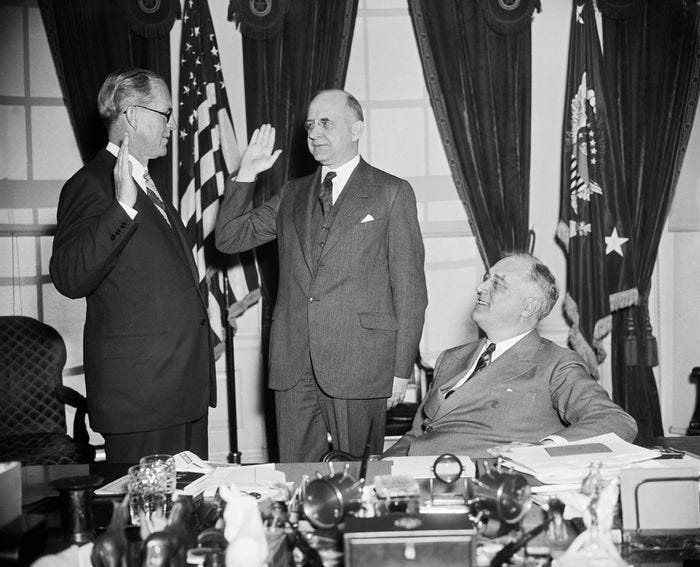
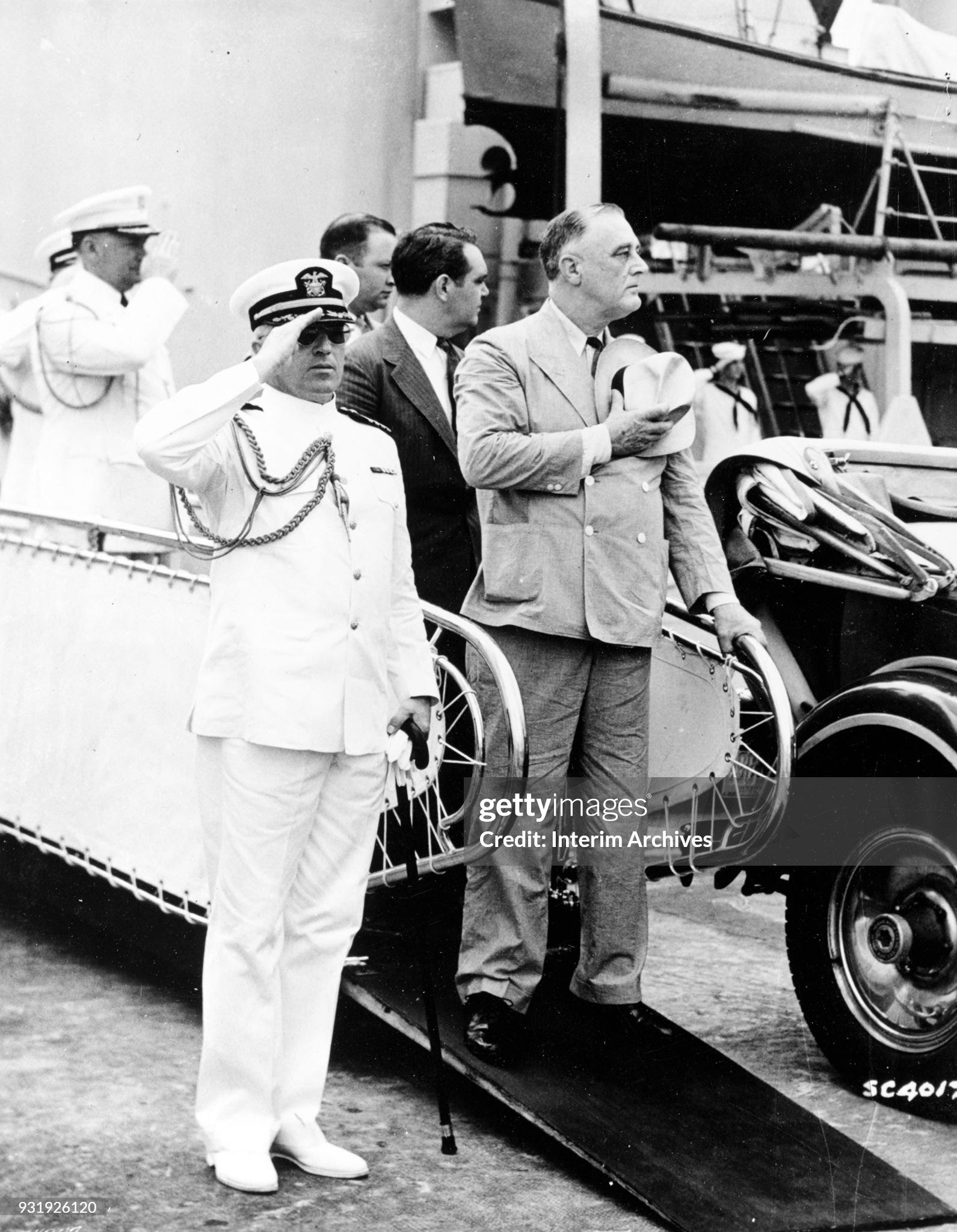
In 1938, Joseph Kennedy Sr., the father of future President John F. Kennedy, was sworn in as U.S. Ambassador to the Court of St. James’s in the Oval Office as President Franklin Roosevelt looked on.
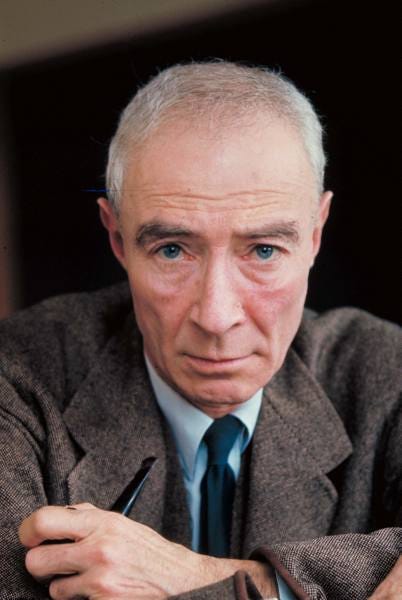
In 1967, J. Robert Oppenheimer, the “father of the atomic bomb,” died at the age of 62.
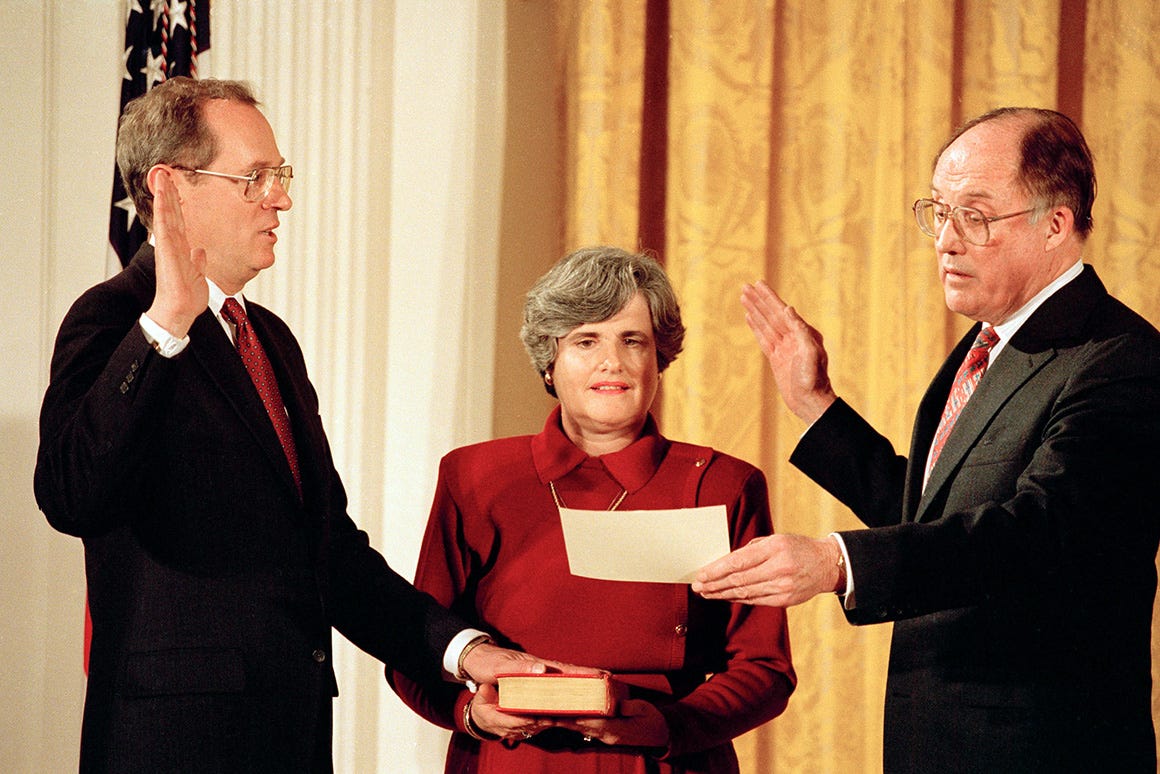
In 1988, Anthony Kennedy was seated as an Associate Justice on the Supreme Court.
Nominated by President Ronald Reagan, Kennedy would go on to serve as the Court’s crucial swing vote on issues of abortion, affirmative action, and gay marriage.
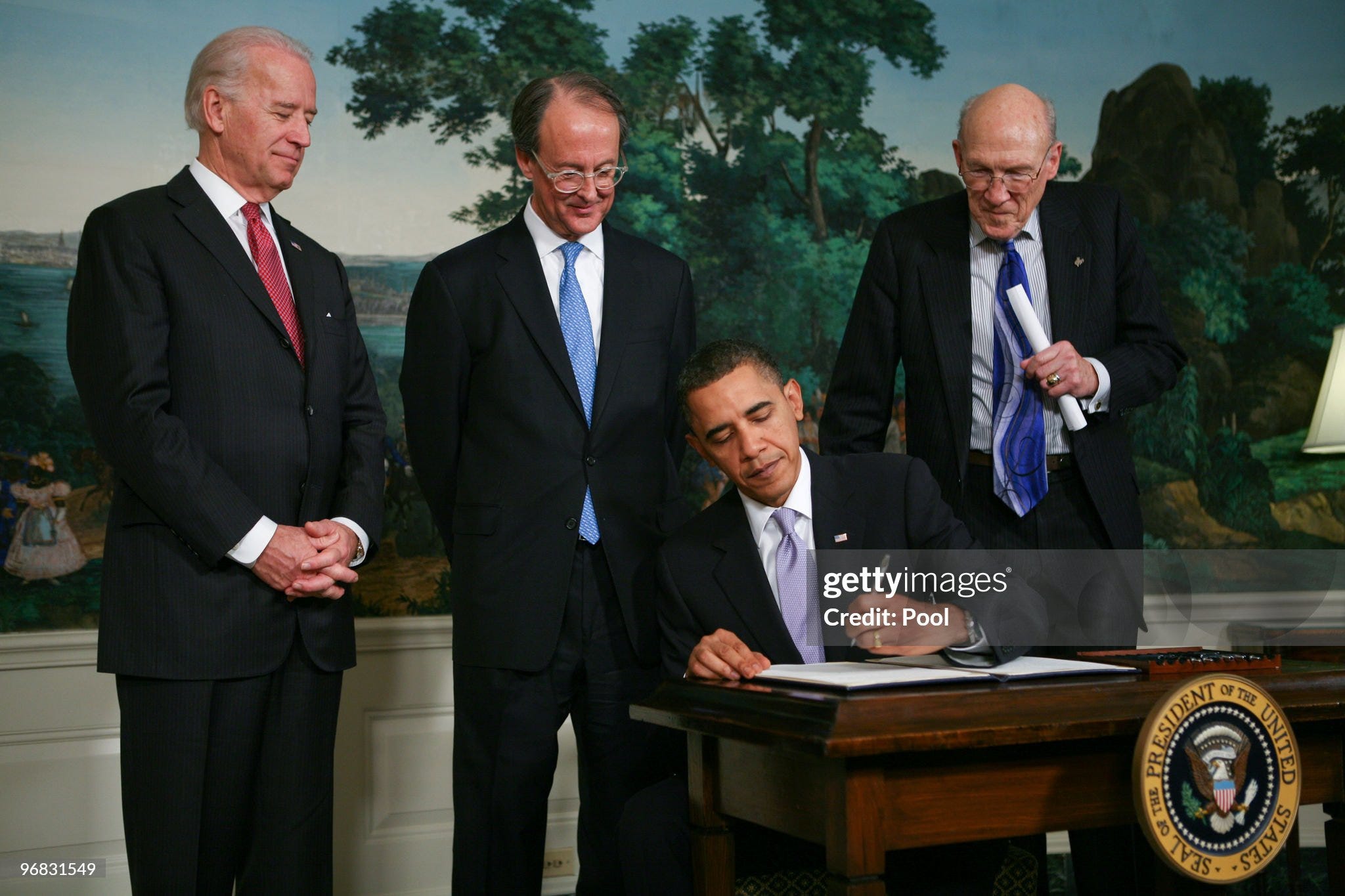
In 2010, President Barack Obama signed an executive order establishing the Fiscal Responsibility Commission, tasking Republican Alan Simpson and Democrat Erskine Bowles with identifying strategies to improve the country’s long-term fiscal outlook.
The body, known as the Simpson-Bowles Commission, issued a report titled “The Moment of Truth,” later that year, calling for a combination of spending cuts, tax and entitlement reforms, and other measures to reduce the deficit.
-Turkish President Recep Tayyip Erdoğan scorned Israel’s recent recognition of Somaliland, the breakaway region of Somalia, saying the move did not benefit the Horn of Africa region.
Israel officially recognized the Republic of Somaliland as an independent and sovereign state in December, becoming the first member of the United Nations to do so.
In response, Somalia called the move an “existential threat,” with President Hassan Sheikh Mohamud saying that his country would “fight in its capacity” to prevent an Israeli military presence in the region.
Somaliland declared independence in 1991 following a five-year civil war.
-Nigeria’s defense ministry said yesterday that 100 more U.S. military personnel had arrived in the country as part of a mission to counter Islamist militant groups in the West African country.
President Trump ordered strikes on Islamic State targets in the country on Christmas Day and has accused the government of failing to protect Christians in its northwestern region, a claim it rejects.
-The new U.S. Ambassador to South Africa, conservative activist and writer Leo Brent Bozell III, arrived in the country yesterday amid strained bilateral ties.
-Unemployment in South Africa declined to 31.4% in the fourth quarter, a five-year low.
The jobless rate in the country has remained above 20% since the mid-1990s and remains one of the highest in the world.
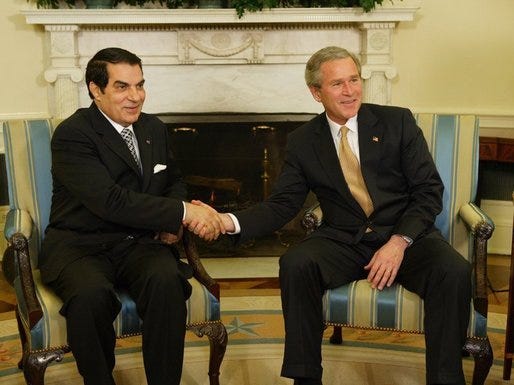
-On this day in 2004, President Bush hosted Tunisian President Zine El Abidine Ben Ali in the Oval Office as Washington sought the North African country’s cooperation in its war against terrorist organizations.
According to press reports, Bush also urged Ben Ali to adopt democratic reforms.
Ben Ali ruled Tunisia with an iron fist from 1987 until 2011 when he was ousted by a pro-democracy movement that would sweep the region, which would become known as the Arab Spring.
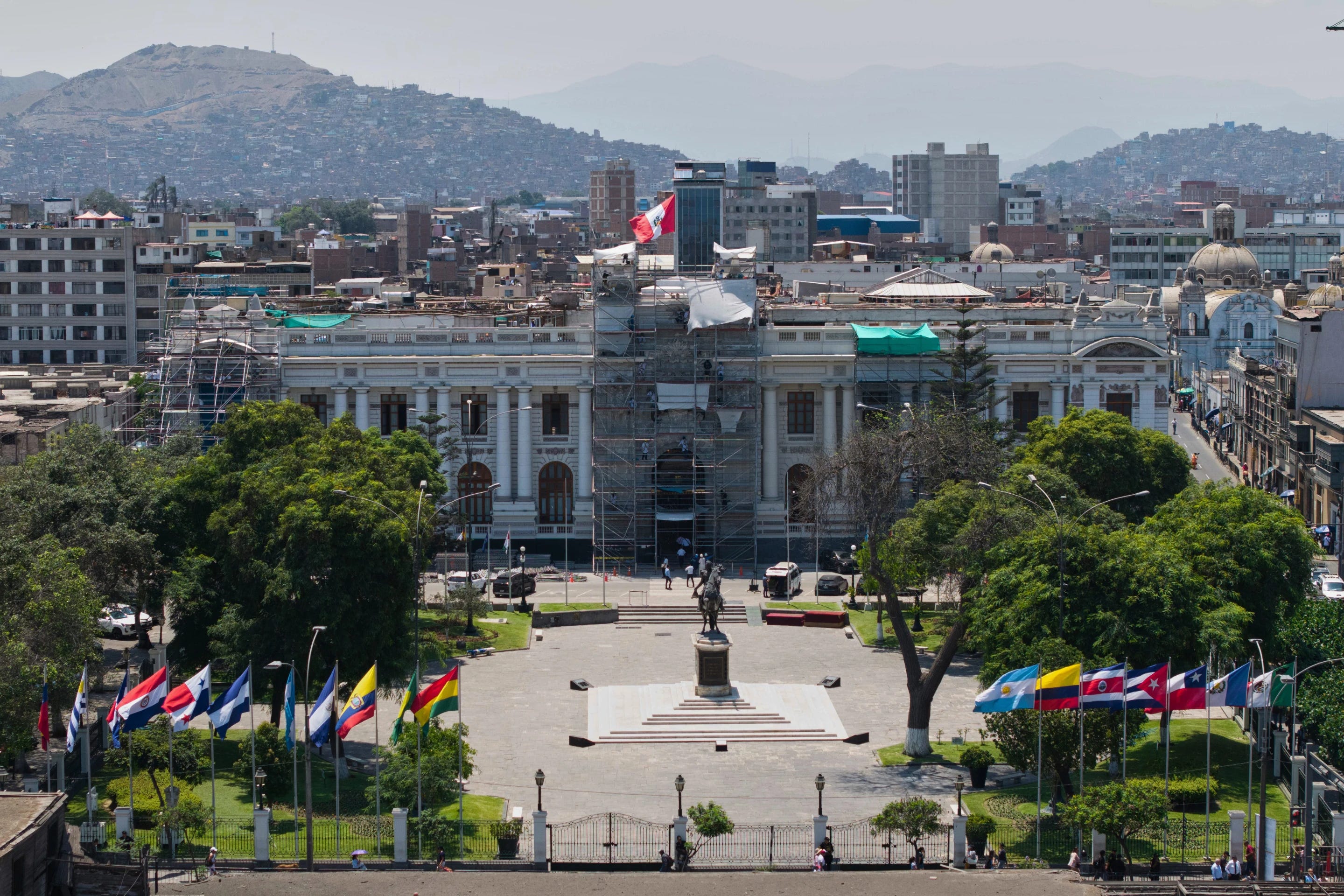
-Peru’s Congress voted to remove interim President Jośe Jorí from office yesterday over undisclosed meetings he held with Chinese business executives.
Peru’s Congress in Lima on February 16, 2026.
Jorí had just assumed office in October. His removal comes just ahead of a presidential election in April and as the public expresses outrage over rising crime in the Andean nation.
The country has had seven presidents since 2016.
-Guatemala lifted a state of emergency one month after the killing of 10 police officers by suspected gang members.
-The Colombian government said yesterday it would resume peace talks with the country’s largest illegal armed group.
-Prison deaths have continued to rise in Ecuador despite President Daniel Noboa’s strategy to rein them in, according to Reuters.
-Qatar’s prime minister arrived in Venezuela yesterday.
The Gulf nation has often acted as an intermediary between the United States and the government in Caracas.
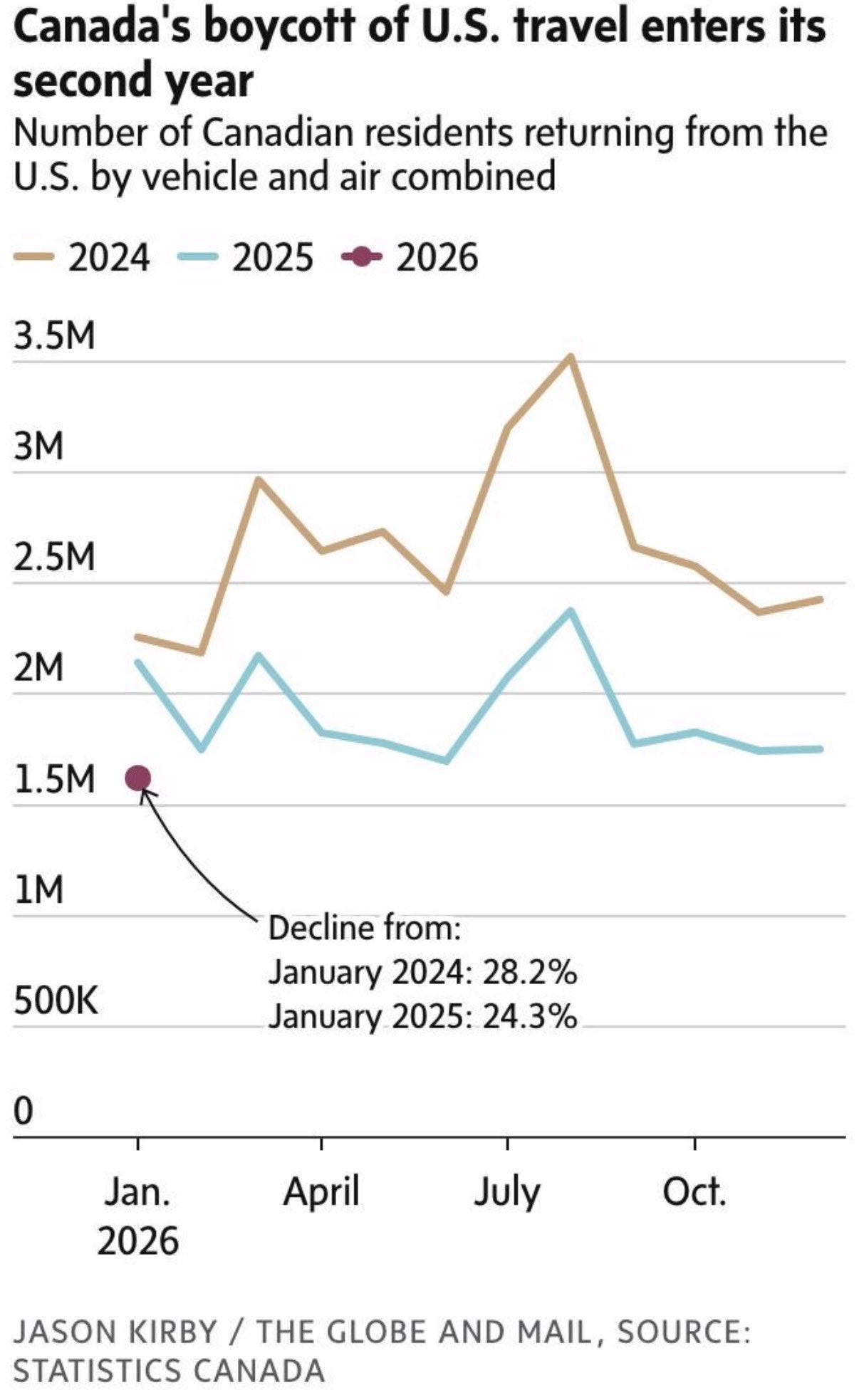
-Canadians have cut their travel to the United States for a second consecutive year, according to new data.
-Annual inflation in Canada slowed to 2.3% in January, according to government data released yesterday. The decline was fueled by a steep drop in gasoline prices, offsetting a rise in food and clothing costs.
-On this day in 1940, President Roosevelt visited the Panama Canal Zone as part of an inspection tour.
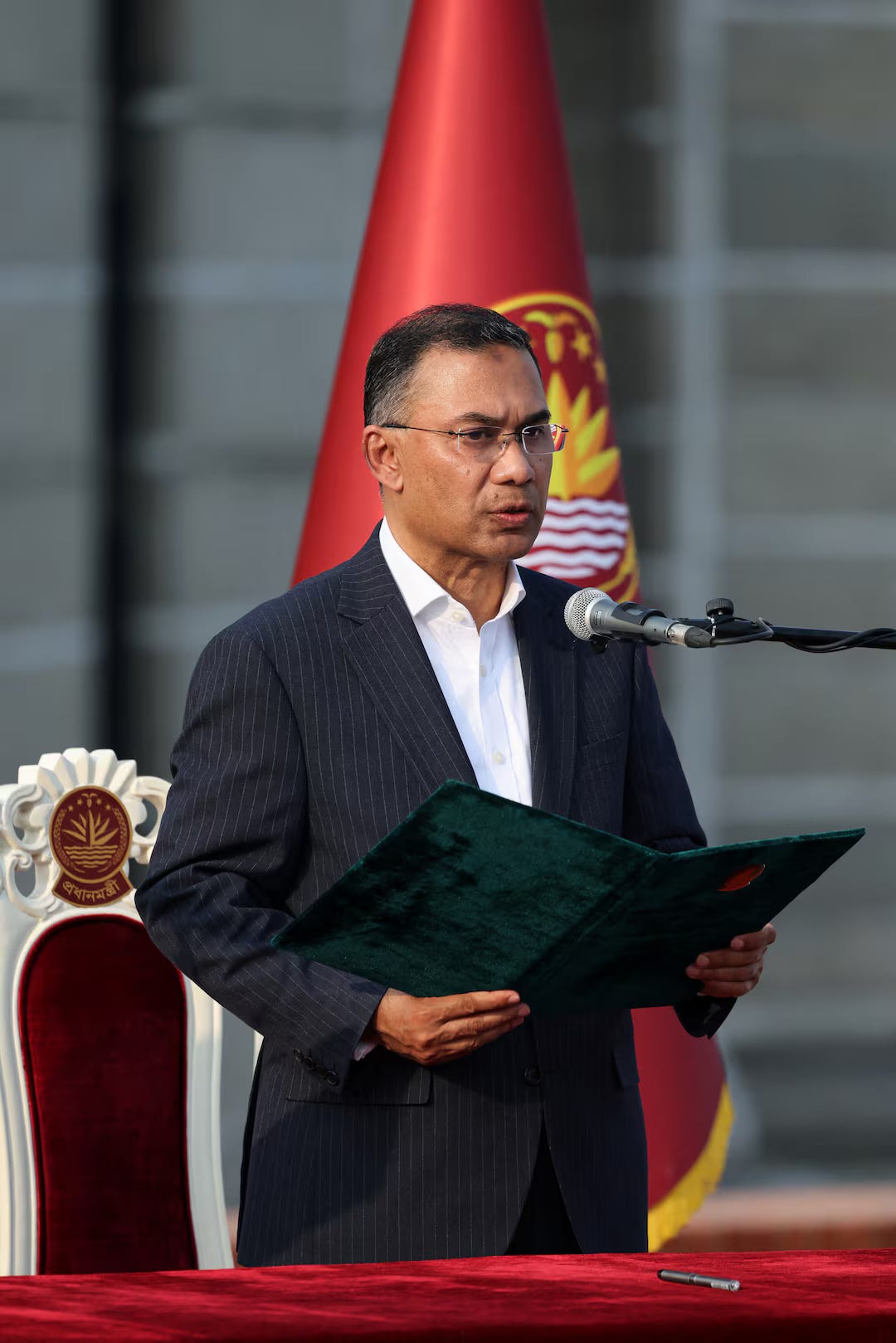
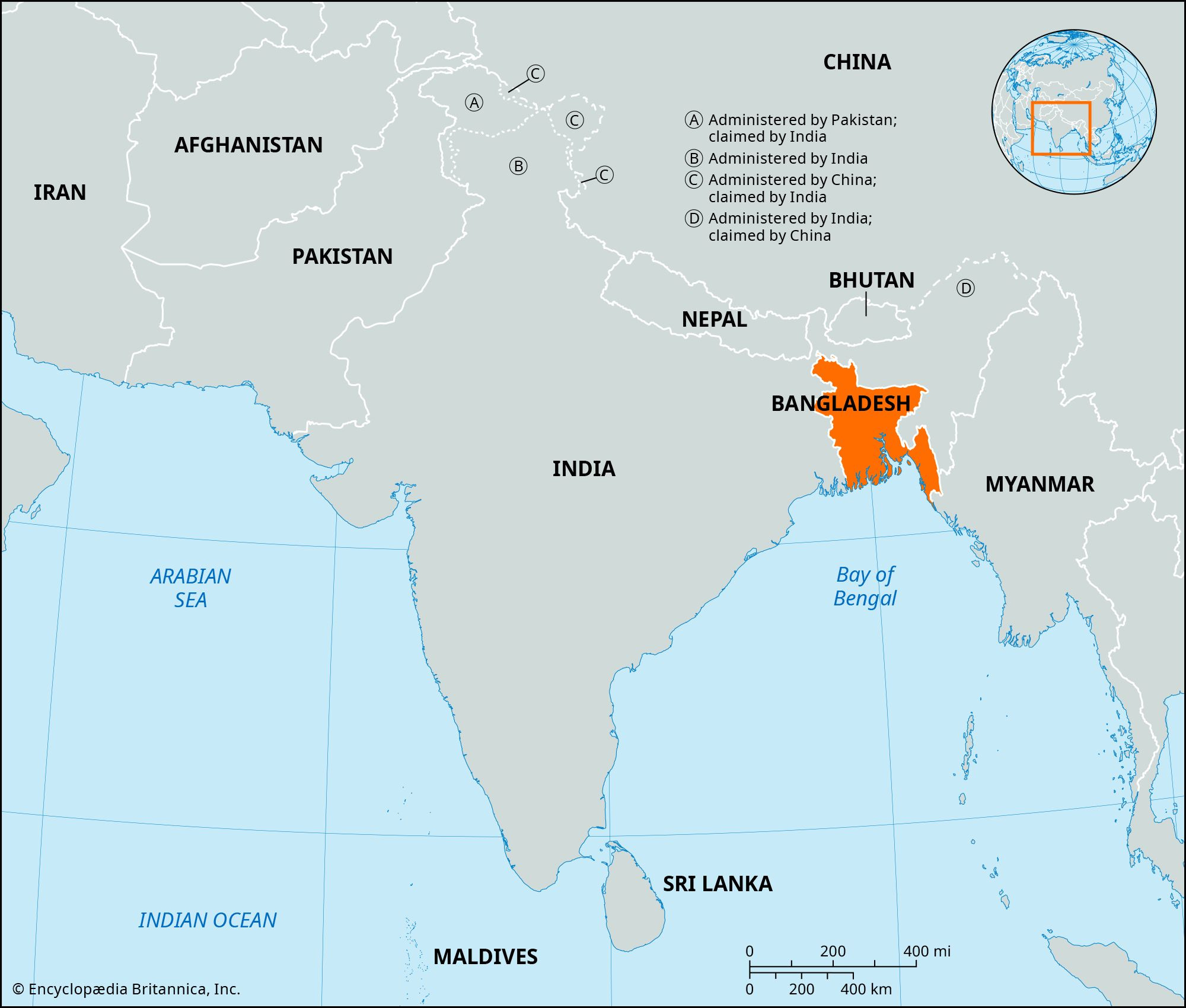
-Bangladesh Nationalist Party (BNP) leader Tarique Rahman was sworn in as prime minister yesterday, capping two years of political instability in the South Asian nation.
The BNP secured a landslide election victory in last week’s parliamentary vote—the first since the ouster of authoritarian Prime Minister Sheikh Hasina in 2024.
Hasina resigned her post following massive student-led protests against a job quota system. After a harsh crackdown by her government, protesters marched on her official residence, forcing her to flee to India.
For decades, the BNP acted as the primary opposition to Hasina’s ruling Awami League, facing persistent targeting by the government.
The country was led by a transitional government headed by Nobel Peace Prize laureate Muhammad Yunus since Hasina’s ouster.
With a population of 285 million, Bangladesh is the eighth-most populous country in the world.
-Japan’s lower house of parliament, known as the Diet, will meet today to formally elect Japanese Prime Minister Sanae Takaichi.
Earlier this month, Takaichi’s ruling Liberal Democratic Party secured a landslide election victory following a snap parliamentary vote.
-President Trump said yesterday that Japan plans to invest $36 billion for industrial projects in Georgia, Ohio, and Texas.
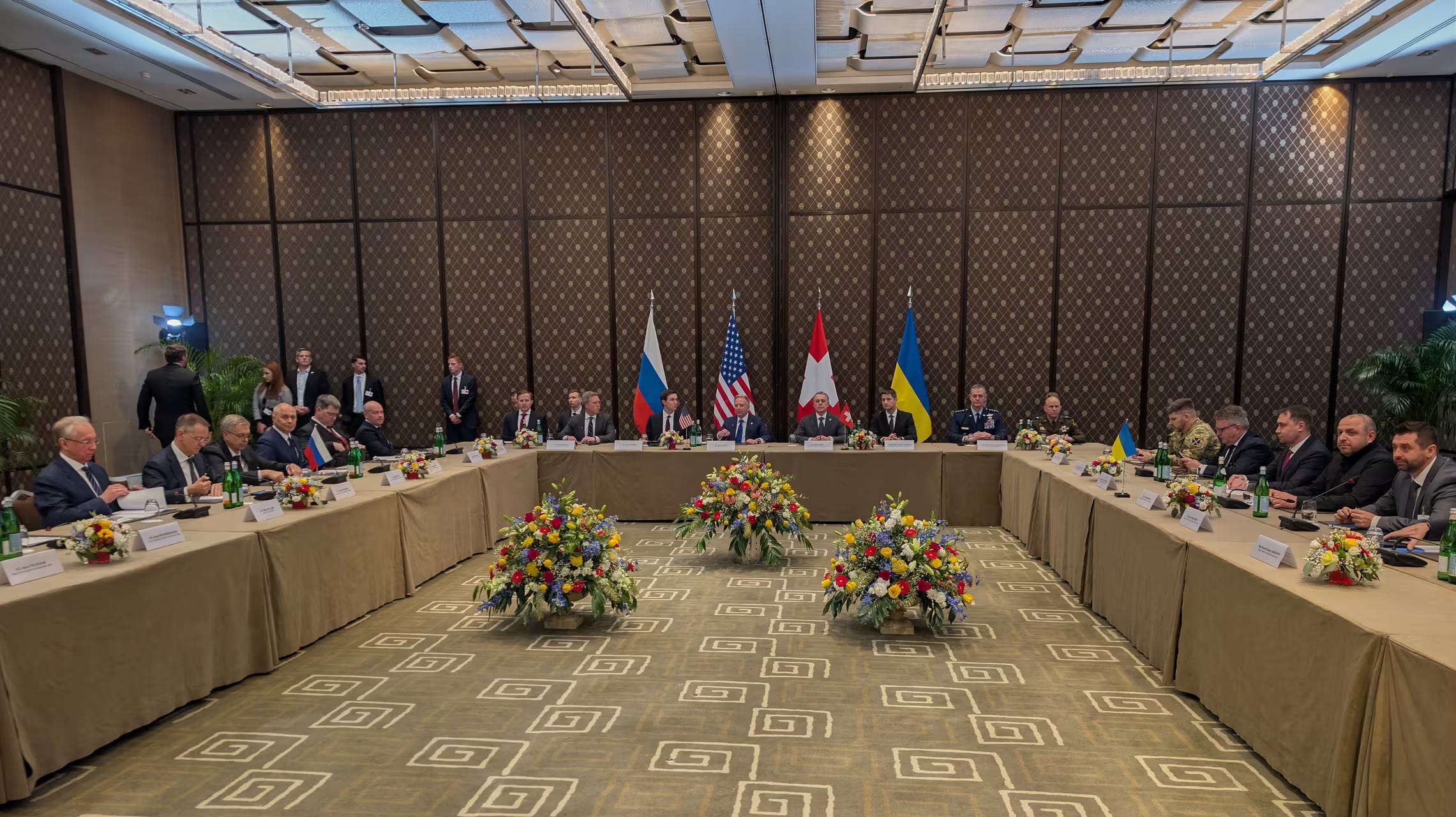
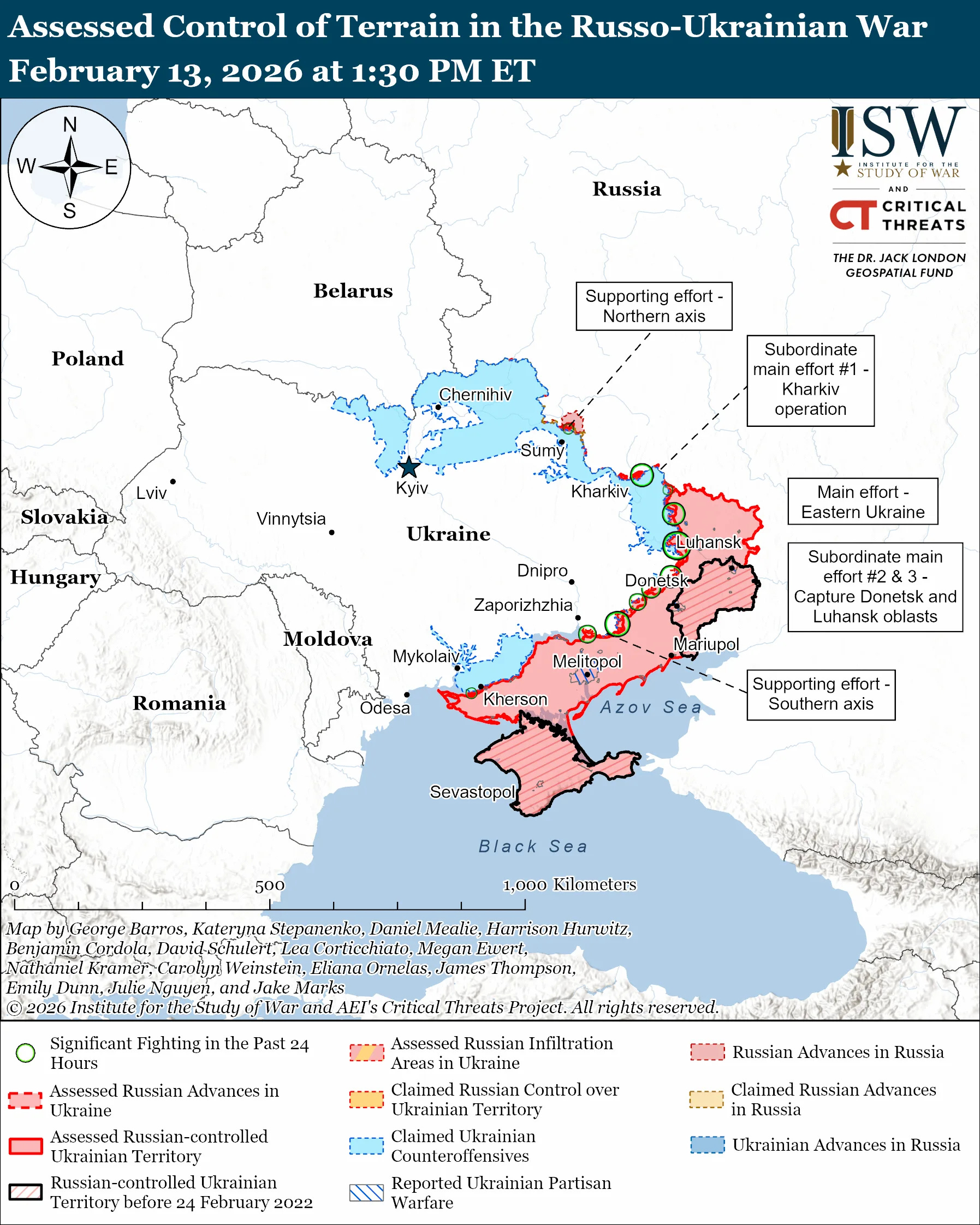
-Negotiators from Ukraine and Russia will meet today for a second round of U.S.-mediated talks as President Trump pushes Kyiv to agree to a settlement to end the nearly four-year-long war.
Just ahead of the talks in Geneva, Switzerland, Russia launched strikes across Ukraine, damaging the power network in the southern port city of Odesa.
Ukrainian President Volodymyr Zelenskyy said the persistent overnight attacks have left tens of thousands of residents without heat and water amid freezing temperatures.
Next week, the war will enter its fifth year. On February 24, 2022, Russia launched a full-scale military invasion of the country, seeking to quickly capture the capital, but was met by resistance from Ukrainian forces.
Since then, Russia has captured roughly 20% of Ukraine’s internationally recognized territory, with fighting stalling along the frontlines in recent months.
Meanwhile, an estimated 100,000 to 140,000 Ukrainian soldiers have been killed, compared with 275,000 to 325,000 Russian troops.
-Russia sentenced a U.S. citizen to four years in prison.
-According to a new poll, one in five Europeans say dictatorship is preferable to democratic rule.
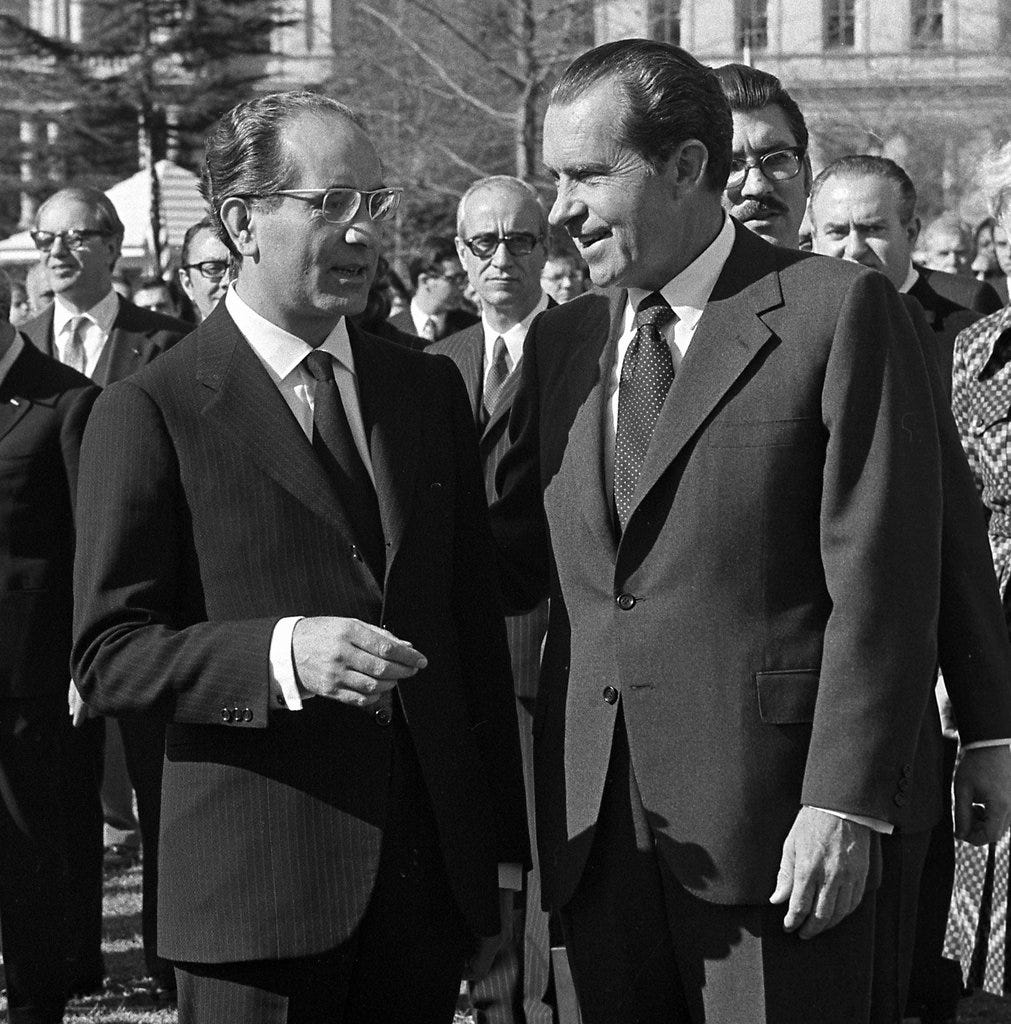
-On this day in 1971, President Richard Nixon hosted Italian Prime Minister Emilio Colombo at the White House.
Colombo, who served as premier from 1970 to 1972, was the last surviving member of the Constituent Assembly that drafted the 1948 Italian Constitution and abolished the country’s monarchy.
Today, he is regarded as a “founding father” of what would become the European Union.
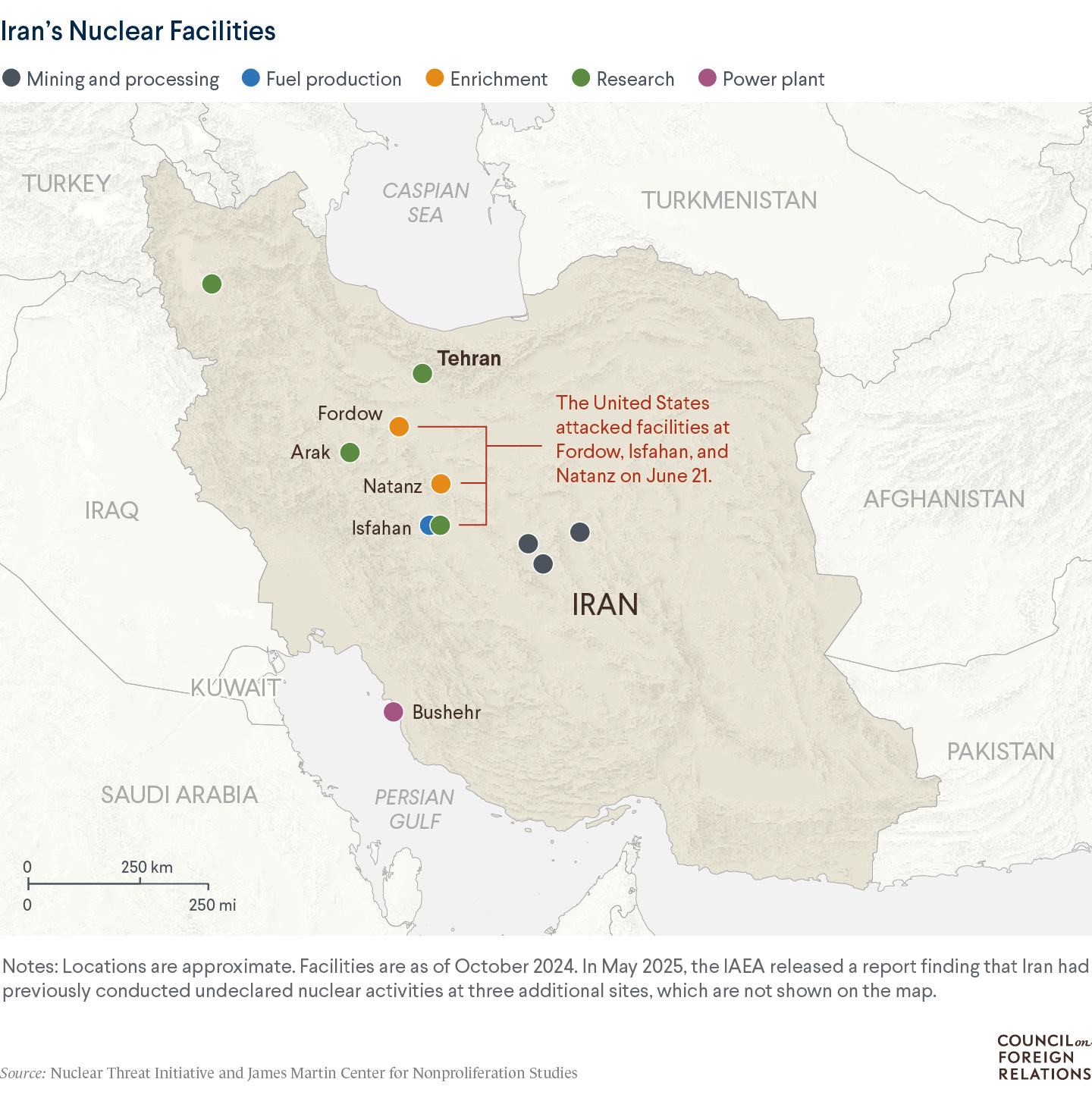
-The United States and Iran held a second round of talks in Geneva, Switzerland, yesterday, with Iranian Foreign Minister Abbas Araqchi saying the two sides agreed to “guiding principles.”
The talks come as President Trump seeks to get Iran to agree to limit its nuclear program, threatening military action if it does not.
In June, Trump ordered strikes on three Iranian nuclear facilities in a bid to disable its nuclear program. Tehran insists the program is for peaceful purposes, which Washington and European capitals reject.
In his first term, Trump withdrew Washington from the pact struck by his predecessor, Barack Obama, that placed curbs on Tehran’s then-nascent nuclear program. The Biden administration sought to bring Iran back into compliance with the terms of the deal, formally known as the Joint Comprehensive Plan of Action (JCPOA), but was unsuccessful.
According to the International Atomic Energy Agency (IAEA), Iran possesses a substantial stockpile of enriched uranium, the fissile material needed to build a nuclear bomb. The watchdog reports that Iran has over 400 kg of 60% enriched uranium, which is just a short step from 90% weapons-grade.
-Israel’s cabinet has approved a plan that would mandate land registration in the West Bank, a move Palestinians regard as “de facto annexation.”
-Hezbollah rejected a plan by the government for the terrorist group to disarm.
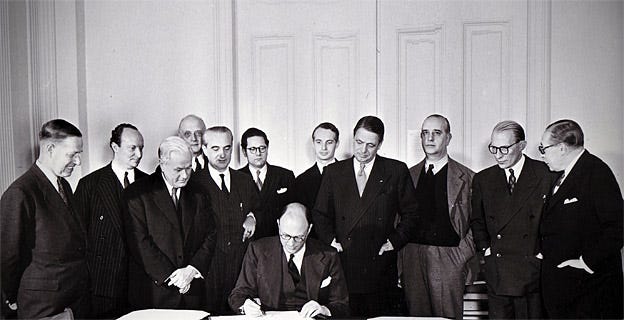
-On this day in 1952, Turkey joined the North Atlantic Treaty Organization (NATO) as the western military alliance’s 12th member state alongside Greece.
Today, the Middle Eastern country contributes the second-largest army in the bloc.
Last week I recorded the audiobook for How To Be Okay When Nothing Is Okay and then I collapsed in a limp pile of exhaustion, which is embarrassing because why is “just talking” for two days so hard? Regardless, I spent several nights that I would have normally been drawing while watching 90-Day-Fiance (don’t judge me) instead just hiding under the covers and recovering from being human in public for too long. And that’s why this week’s doodle is unfinished:
But the good news is that because it’s unfinished you can print it out and color it or draw on it and then you can share your version in the comments if you want. EVERYONE WINS.
Here’s a fun tip: I sometimes use the recolor app to upload my drawings and color them:
(PS. I’m not getting paid to plug them. It’s just a free app I stumbled on.)
So anyway…this is just to remind you that it’s okay to not hit every deadline (or any deadline) because you are so much more than your output. And so am I.
Thank goodness.
Hugs,
me
PS. As tax for not having a finished drawing, please accept this picture of a very sleepy Dorothy Barker intentionally laying on my art so that I will pet her instead of drawing.
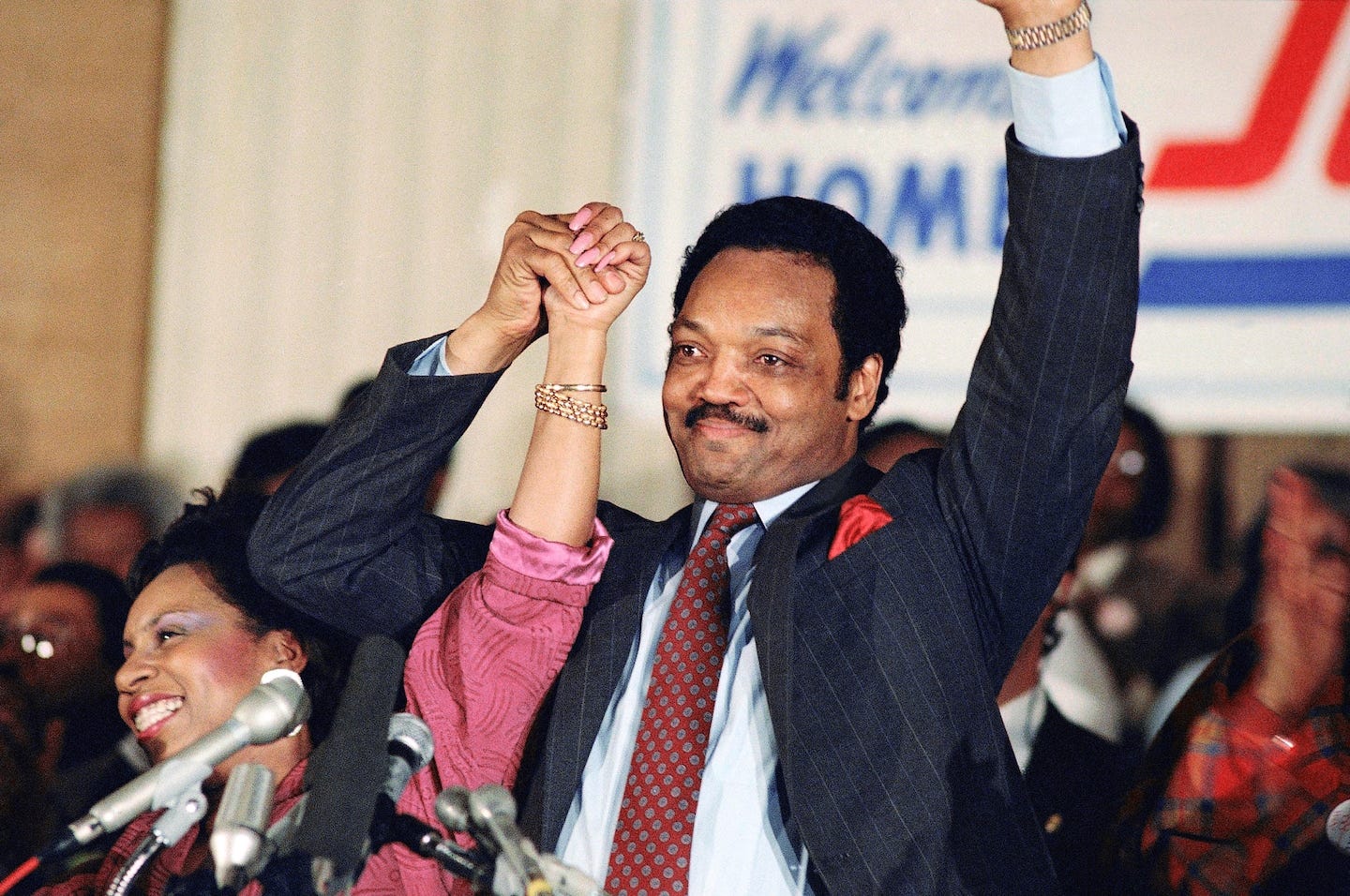
The iconic civil rights leader, who has died at 84, made anti-war and pro-diplomacy politics central to his presidential bids and his lifelong activism.
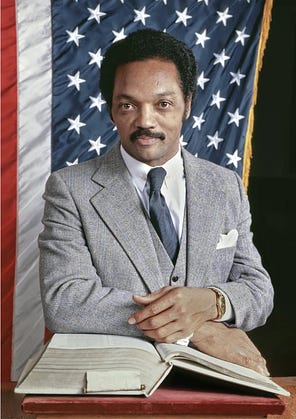
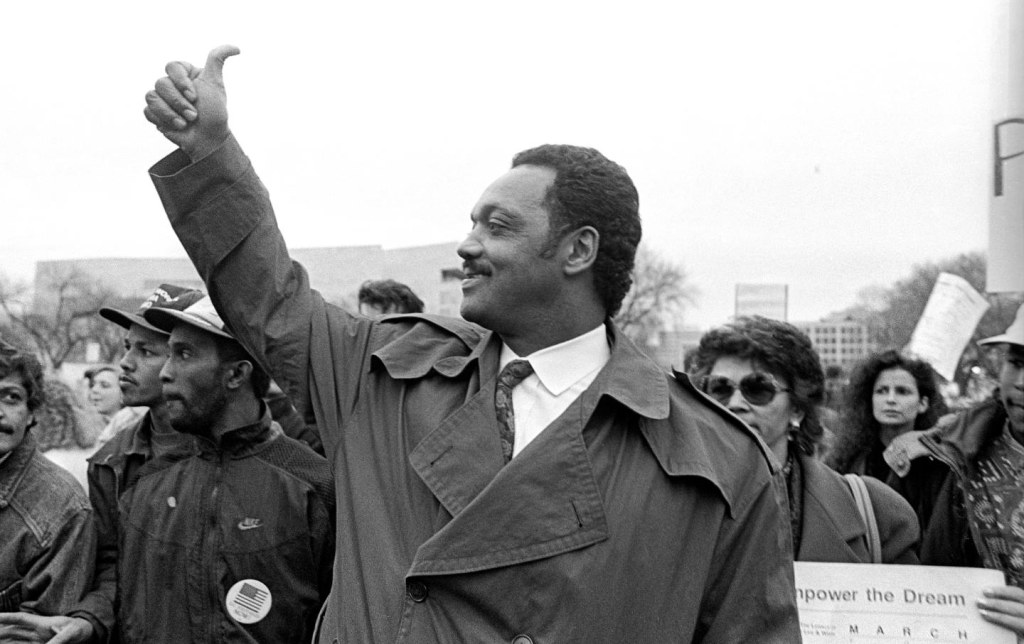
Jesse Jackson at a rally against the Gulf War in Washington, DC, on January 18, 1991. (Ricky Flores / Getty Images)
he Rev. Jesse Jackson Jr., the iconic champion of racial, economic, and social justice whose work as a young aide to the Rev. Martin Luther King Jr. began a public life that would eventually see him mount a pair of transformative presidential bids, died Tuesday morning at age 84.
Jackson’s legacy is so rich, and extends across so many generations and struggles, that it cannot be contained in one reflection. He was, as the Rev. Al Sharpton said Tuesday, “a movement unto himself.”
Over seven decades in the public arena, Jackson emerged as one of the most multifaceted figures in American history: a legendary civil rights leader, a knowing and caring defender of the disenfranchised, a vital advocate for voting rights and voter mobilization, a savvy media critic who recognized the importance of challenging narratives that promoted discrimination and division, an essential ally of labor unions, a reformer of the Democratic Party, a friend to struggling family farmers and urban workers alike, and a counselor to presidents and prime ministers. He was, as well, a man of deep faith, who expressed that faith in his ardent advocacy for peace.
That dedication to peace was central to both his 1984 and 1988 presidential bids, a fact that is too frequently neglected in cursory reflections on those seismic Rainbow Coalition campaigns.
Political historians recognize Minnesota Senator Eugene McCarthy and New York Senator Robert F. Kennedy as the great anti–Vietnam War candidates of the 1968 presidential campaign. George McGovern, the Democratic presidential nominee in 1972, is often recalled as the most ardent foe of a US military intervention to be nominated by a major American political party since Democrats ran William Jennings Bryan in 1900. Former Vermont governor Howard Dean and former Ohio representative Dennis Kucinich are remembered for seeking the Democratic presidential nod in 2004 as sharp critics of the Iraq War. Barack Obama’s prescient opposition to the Bush-Cheney administration’s war of choice, which he voiced as early as 2002, did much to advance his successful bid for the presidency in 2008. And Vermont Senator Bernie Sanders, whose 2020 presidential bid Jackson supported, reframed foreign policy debates by explicitly rejecting the elite consensus about the US role in the Middle East and so many other parts of the world.
Jackson’s two 1980s campaigns deserve a key place in this proud history—both because they were uniquely dynamic and because they had a profound and lasting impact on progressive thinking about foreign policy. That’s one of the many reasons, when veterans of the Jackson campaigns got together, we often reflected on this too-frequently-neglected aspect of his political legacy. His was a powerful and transformative message that resonates to this day.
groundbreaking advocacy on behalf of economic, social, and racial justice at home, but Jackson also outlined what was then a fresh foreign policy vision, rooted in what has come to be known as progressive internationalism. He advanced a comprehensive—and morally coherent—argument for shifting American foreign policy away from military interventionism, nuclear brinksmanship, and Cold War posturing and toward diplomacy, cooperation, and dramatically reduced Pentagon spending.
Jackson understood precisely what was at stake, and he declared in a voice so resonant that it inspired a new generation of activists, “Peace is worth the risk!”
And he was taking a risk. It is important to recall how—as Ronald Reagan was ramping up the Cold War around the world and pouring US resources into heated conflicts in El Salvador and on the border of Nicaragua—Jackson boldly broke not just with the Republican president but also with many Democrats to make opposition to war a focal point of his bid.
After it was revealed that the Central Intelligence Agency had mined three harbors in Central America, as part of an effort to destabilize the country’s left-wing government, Jackson declared in April 1984 that “the undeclared war against the people of Nicaragua…must be stopped.” In addition to criticizing the Reagan administration and the CIA, Jackson took issue with Walter Mondale and Gary Hart, the front-runners for the Democratic nomination that year, for failing to clearly deliver a message that the US must “stop our funding of terror in Nicaragua and El Salvador now and to withdraw all our troops from Central America.”
“It is not enough for Walter Mondale to call mining the harbors a clumsy and ill-conceived act,” argued Jackson. “It is not enough to imply that the main problem was not informing Congress adequately. Our foreign policy in Central America is wrong. We are standing on the wrong side of history. We are engaged in killing people, and starving people who are trying to work out their own destiny.”
Jackson’s 1984 Rainbow Coalition campaign shocked pundits by winning primaries and caucuses in key states, and by collecting roughly 20 percent of the Democratic primary vote. Jackson also made a historic trip to Central America and the Caribbean, where he met with regional leaders—including Cuban President Fidel Castro—and warned, “The signs of war are rising. We see the military buildup throughout the region. We see the United States taking sides instead of helping to reconcile the conflict. We cannot allow another Vietnam.”
The bitter legacy of the Vietnam War, which Jackson had opposed as a young aide to Dr. King, weighed heavily on his mind during the 1984 campaign. At the Democratic National Convention in San Francisco, Jackson delivered a renowned, electrifying speech, in which he recalled,
Twenty years ago, our young people were dying in a war for which they could not even vote. Twenty years later, young America has the power to stop a war in Central America and the responsibility to vote in great numbers. Young America must be politically active in 1984. The choice is war or peace.
Jackson’s focus in 1984 and in 1988 extended beyond concerns about the “dirty wars” in Central America. He campaigned as an outspoken advocate for nuclear disarmament, embracing the “nuclear freeze” movement to halt the testing, production, and deployment of nuclear weapons by the United States and the Soviet Union. He called for a rethinking of US military and economic alliances in order to advance democracy and human rights, argued for an end to US aid to the violent apartheid regime in South Africa, and proposed a new approach to Middle East relations that respected the rights of both Israelis and Palestinians.
As a 42-year-old first-time candidate in the fall of 1983, Jackson met with Arab Americans, urged the US to use diplomacy so that the Middle East would no longer be a ”flashpoint for both hot and cold war,” and said that any path to peace had to include a ”homeland and a state for Palestine.”
”It is a tragedy to see the lack of talk and dialogue in the Middle East, but it is even worse not to see it here,” said Jackson. ”The first step for peace in the Middle East is for black Americans, Arab-Americans and Jewish-Americans to start talking here.”
A young James Zogby, then the director of the Arab-American Antidiscrimination Committee, cheered Jackson’s inclusion of Palestinian rights in his campaign platform. ”He challenged us on 50 issues and not just one,” said Zogby, who would go on to place Jackson’s name in nomination at the 1984 Democratic National Convention. ”He respected us as Arab-Americans and didn’t pander to us. This is the first time ever that a presidential candidate has come before an Arab-American audience, and we don’t feel disenfranchised anymore.”
At the end of 1983, Jackson traveled to the Middle East and visited the Jaramana refugee camp in Syria, where on New Year’s Day in 1984, he told a group of Palestinian children, “Keep your dreams high. Don’t let anyone break your spirit. You’ll be free one day.” It was on that same journey that he secured the release of US Navy airman Lt. Robert Goodman, whose plane had been shot down over Lebanon and who had been captured and held by Syrian forces.
Jackson remained actively engaged with Middle East peace issues through the rest of his life. Among the memorials posted on Tuesday was one from former British Labour Party leader Jeremy Corbyn, who wrote, “It was an honor to march alongside him against the Iraq War in 2003. May his legacy inspire us to strive for a world of dignity and peace for all.” More than two decades later, one of an ailing Jackson’s last great initiatives was an emergency conference—held at the headquarters of the Rainbow-Push Coalition in Chicago in early 2024—to demand a ceasefire in Gaza.
Jackson’s faith in diplomacy and negotiation was part of a broader commitment to creating the circumstances for peace to thrive. Just like his mentor King, the Nobel Peace Prize recipient who linked his nonviolent civil rights activism in the US to the global anti-war movement—and who took his own huge risk for peace by standing against the Vietnam War—Jackson recognized the political courage that was required to advance that commitment.
As a presidential candidate, he showed that courage by talking about cutting as much as 25 percent from the Pentagon budget. In response to critics who claimed his ideas were too radical, Jackson told New Hampshire primary voters in February of 1984, “We are so strong militarily that we can afford to take measures such as these in the pursuit of peace.… We must fight for peace and give peace a chance.”
At the close of his 1988 campaign, in which he was endorsed by The Nation and won more than a dozen statewide primary and caucus contests, securing 6.9 million votes, Jackson pulled all the threads together in an epic address to that year’s Democratic National Convention in Atlanta. He spoke movingly of tackling poverty and inequality within the United States, but he was just as compelling in his discussion of foreign policy, which included a stirring call for disarmament that is as relevant today as it was 35 years ago.
The nuclear war build-up is irrational. Strong leadership cannot desire to look tough and let that stand in the way of the pursuit of peace. Leadership must reverse the arms race. At least we should pledge no first use. Why? Because first use begets first retaliation. And that’s mutual annihilation. That’s not a rational way out.
No use at all. Let’s think it out and not fight it out because it’s an unwinnable fight. Why hold a card that you can never drop? Let’s give peace a chance.


 NPR +4
 The Conversation +6

















 Scottie's Playtime