
Tag: Racism
The Supreme Court may have set a trap for conservative Christians that could backfire
This is the fundamentalist Christian nationalist religious majority trying hard to find a reason that violating any religion not christianity was OK. They do not deny that the man’s religious beliefs were violated and ignored even after the courts had ruled to protect them. That shows a bias against the non-Christian religions. The SCOTUS has no qualms lying and using false misleading inform to create ruling in favor of the Christian religion and those that want to push / force it on to everyone else in the country. Hugs
https://www.alternet.org/supreme-court-backfire/
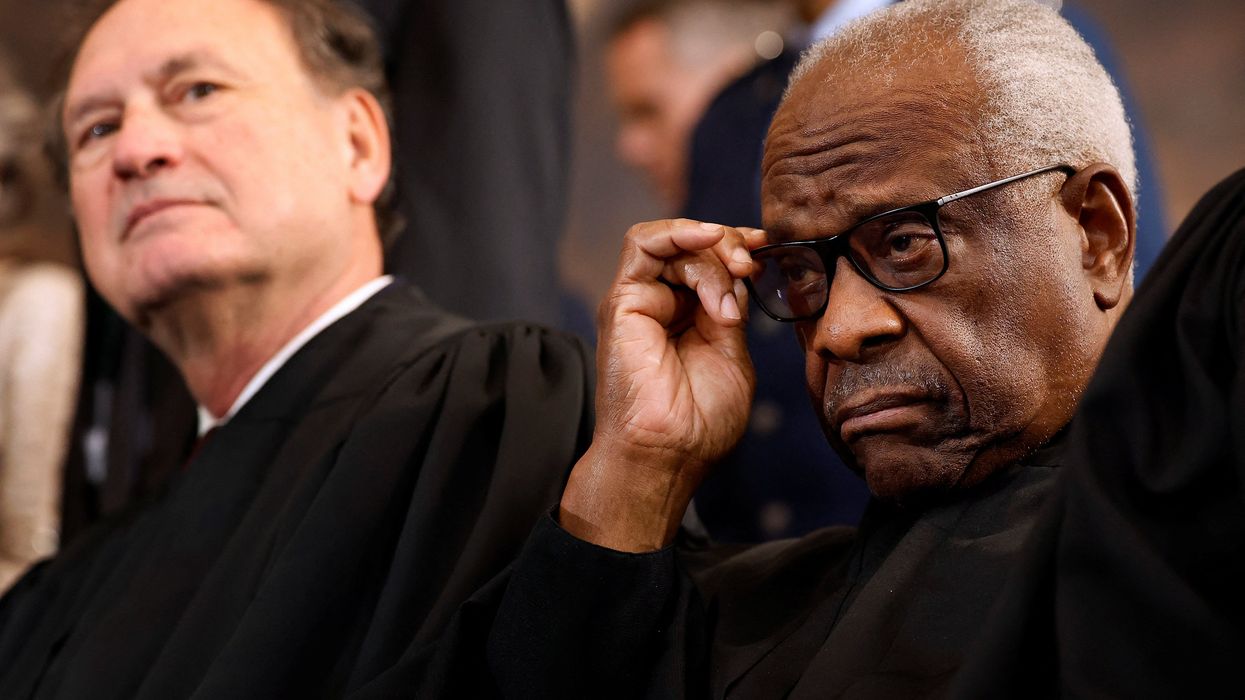
For more than two decades, the Supreme Court has issued a long series of wins for plaintiffs seeking to protect their religious practices. On June 23, 2026, though, the majority delivered an uncommon defeat in this contentious area.
Landor v. Louisiana Department of Public Education and Safety, a 6-3 judgment, rejected the claim of Damon Landor, a Rastafarian whose hair was forcibly shaved in prison. Landor had worn long dreadlocks for almost 20 years as an expression of his beliefs – part of a biblical practice known as the “Nazarite vow.” Like lower court judges, the Supreme Court did not dispute that officials violated Landor’s rights. However, the high court’s majority ruled that he could not sue individual officials at the prison.
The case stands out for at least three other reasons.
First, Landor v. Louisiana underscores the complexity and far-reaching nature of religious freedom laws in the United States and the increasingly diverse faith traditions to which they apply. Christians now represent 62% of the American population, down from 78% in 2007, while 29% have no religious affiliation and 7% belong to other faith traditions.
Second, Landor’s case gained support from many groups typically at odds over how to protect religious freedoms – groups disappointed with this week’s decision.
Finally, the case highlights the religious rights of the nearly 2 million people in U.S. prisons, jails and detention and correctional facilities – and the challenge of holding their public employees accountable when those rights are violated.
Religious vow
Landor was incarcerated in Louisiana in 2020 for possessing methamphetamine, cocaine, amphetamine and marijuana.
At first, officials respected his religious practice. Just three years earlier, a federal appeals court affirmed that Rastafarian inmates must be allowed to keep their dreadlocks under a federal law passed in 2000: the Religious Land Use and Institutionalized Persons Act.
Toward the end of his sentence, Landor was transferred to a different correctional facility in the state. There – with three weeks left for Landor to serve – the warden ignored the judicial order, directing guards to shackle Landor and forcibly shave his head.
After finishing his sentence, Landor filed suit for money damages under the Religious Land Use and Institutionalized Persons Act. The act forbids the government and its officials from imposing “substantial burden(s)” on incarcerated people’s First Amendment right to the free exercise of religion. It also protects religious groups from discrimination through zoning restrictions.
Journey through the courts
In 2022, a federal trial court in Louisiana condemned Landor’s treatment but rejected his claim, concluding that money damages were not an appropriate remedy under the act.
The following year, the 5th U.S. Circuit Court of Appeals “emphatically condemn(ed) the treatment that Landor endured.” However, the panel unanimously affirmed the lower court’s decision, based on its earlier ruling that plaintiffs cannot sue government officials in their individual capacities for monetary damages – only the institution.
Landor’s attorneys then sought an “en banc” hearing. In this uncommon procedure, parties seek further review by all of the judges in a federal circuit. The court denied this request, as a majority of judges in the circuit wrote that this was a question for the Supreme Court.
The Supreme Court agreed to hear an appeal after a variety of organizations, including the federal government, submitted amicus curiae, or “friend of the court,” briefs in favor of Landor. These included Americans United for Separation of Church and State, for example, which typically supports plaintiffs wishing to keep religion out of public life. They also included the Becket Fund, which usually represents people seeking to increase faith’s role in public life, and the Trump administration.
At issue was not whether Landor’s rights had been violated but whether he could sue an individual official, namely the warden, for monetary damages. During oral arguments on Nov. 10, 2025, the Supreme Court seemed skeptical.
Legal dilemma
That skepticism was reflected in the court’s ultimate ruling. It was essentially a procedural ruling about the Religious Land Use and Institutionalized Persons Act rather than a judgment on the merits of Landor’s religious freedom claim.
Justice Neil Gorsuch wrote the majority opinion, joined by Chief Justice John Roberts and Justices Clarence Thomas, Samuel Alito, Brett Kavanaugh and Amy Coney Barrett. Justice Ketanji Brown Jackson’s dissent was joined by Justices Sonia Sotomayor and Elena Kagan.
The majority’s argument that Landor could not sue centered on the spending clause of the U.S. Constitution – the source of Congress’ authority to create the Religious Land Use and Institutionalized Persons Act. The spending clause allows the legislature to spend money to provide for the “general Welfare of the United States.” If a state or institution uses federal funds, their officials agree to certain conditions; if they violate those conditions, Congress can remove funding.
But the spending clause does not give Congress authority to hold individual employees accountable, Gorsuch argued in his 18-page opinion. Prison officials had not “voluntarily and knowingly consented to answer private suits” under the act, and so they could not be held directly liable for monetary damages. Otherwise, Congress would have “effectively unbridled police power.”
Jackson’s 29-page dissent disagreed with the majority’s interpretation of the spending clause. The ruling, she contended, “jettisons ‘a long line of this Court’s precedents’” under which “Congress has been able to use its spending power to reach beyond direct recipients of federal funds.” As such, she worried that the court’s order imposed a “novel consent requirement.”
Jackson also lamented the decision’s potential consequences for inmates. Although the goal of the Religious Land Use and Institutionalized Persons Act was to protect prisoners’ faith practices, she worried that people “like Landor who suffer violations of their religious freedom in state prisons – no matter how blatant – will often be left remediless.”
Bigger picture
At a glance, the Landor case appears to be a procedural disagreement rather than one over religious freedom.
However, I argue Landor v. Louisiana must be viewed as a setback for religious liberty, raising a serious question about whether minority faiths have as much protection under the First Amendment as larger religions. The decision is also something of a surprise to me, because the Supreme Court has recently upheld free exercise rights in multiple high-profile cases, almost all of which involve Christianity – such as a football coach’s ability to pray on the field after public school games.
Portions of this article originally appeared in a previous article published on Nov. 6, 2025.
Charles J. Russo, Joseph Panzer Chair in Education and Research Professor of Law, University of Dayton
This article is republished from The Conversation under a Creative Commons license. Read the original article.

The Real History Behind Anti-Trans Laws
Wow. There is a lot of historic information in this video. The author / presenter has quick cuts to other personality characters she plays to highlight the absurdity of some positions held by the hierarchy. She delvesdeeply into the idea of what is proper femininity, who steps outside it, and who thinks they are responsible for judging or enforcing it. She delves into how many fights against change and equality are about fears by men of emasculation. The lowering of men’s status. When she elaborates on suffrage, all the fears seem to be that allowing women to vote would give women the right to be men and force men to be women. Seem familure? She goes into detail on how each repressive opressive responce to equal rights comes down to the same phrases such as save the children, save the family, or the claims that society it self will end. The clips she intersperses go by far too quickly so I had to stop the video to read them but she does describe what is on them. The begining was choppy and it took me a bit to get her style of presentation but once I did I found it very informative fillwed with facts, history, and fun to watch. Hugs
The transgender bathroom ‘debate’ isn’t new (but it is stupid). I’m looking at you TERF’s…
Looking back through history, gender politics is consistently entangled with race, class, misogyny, and disability. Minority groups existing outside the ‘norm’ are attacked as ‘radicals’ or menaces to society…
But what prevails each time we face oppression AND causes real change in our society?
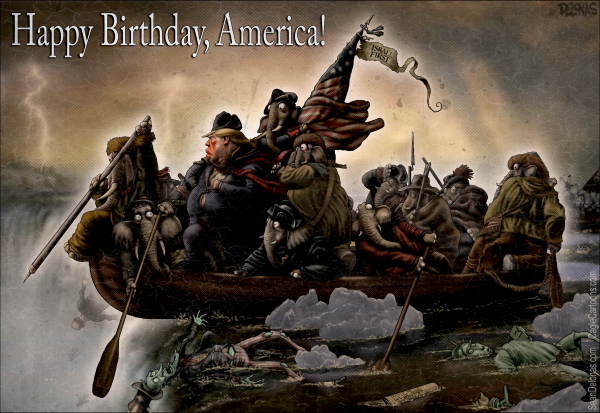
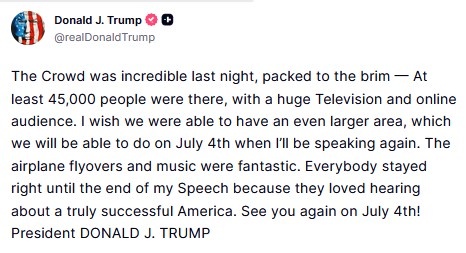
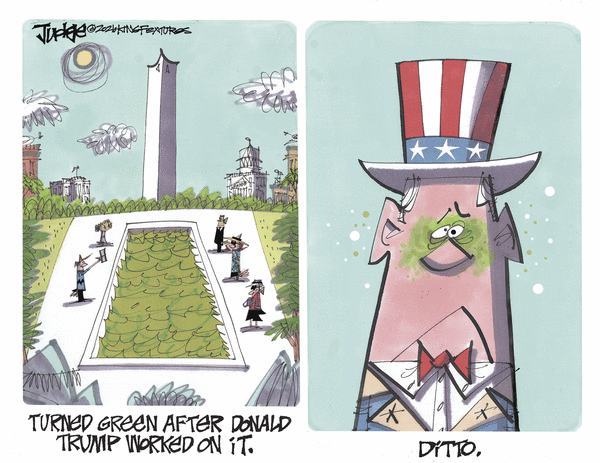
Political cartoons / memes / and news I want to share. 6-29-2026







Trump was actually 17-18 in this photo. His parents sent him to a military boarding school for behavioral issues & bullying. Now he uses the photo to pretend he was in the military.
Trump was in his 20s when the DOJ began investigating him for discriminating against Black renters


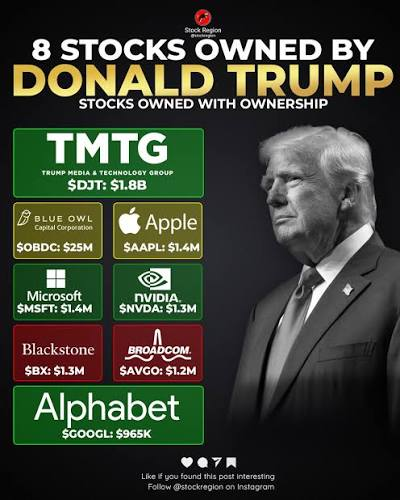
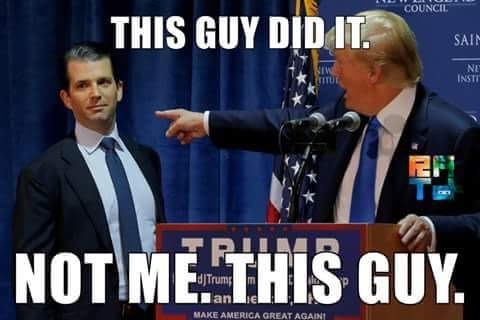

Bloomberg: Lutnick Forced Delay In Opening New Canada-US Bridge To Seek Bigger Cut Of Toll Revenue

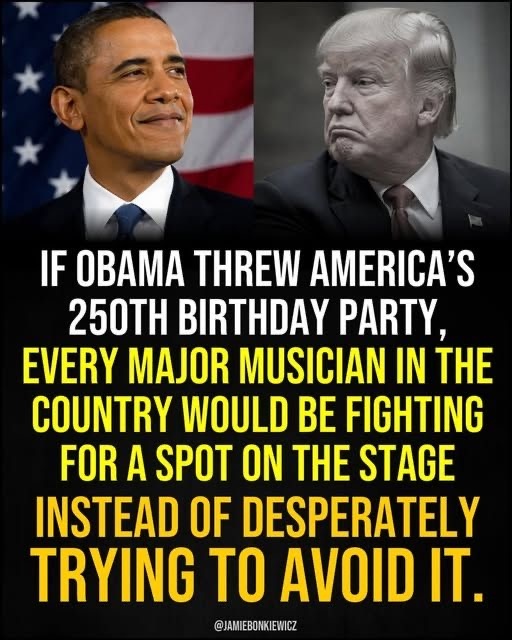
















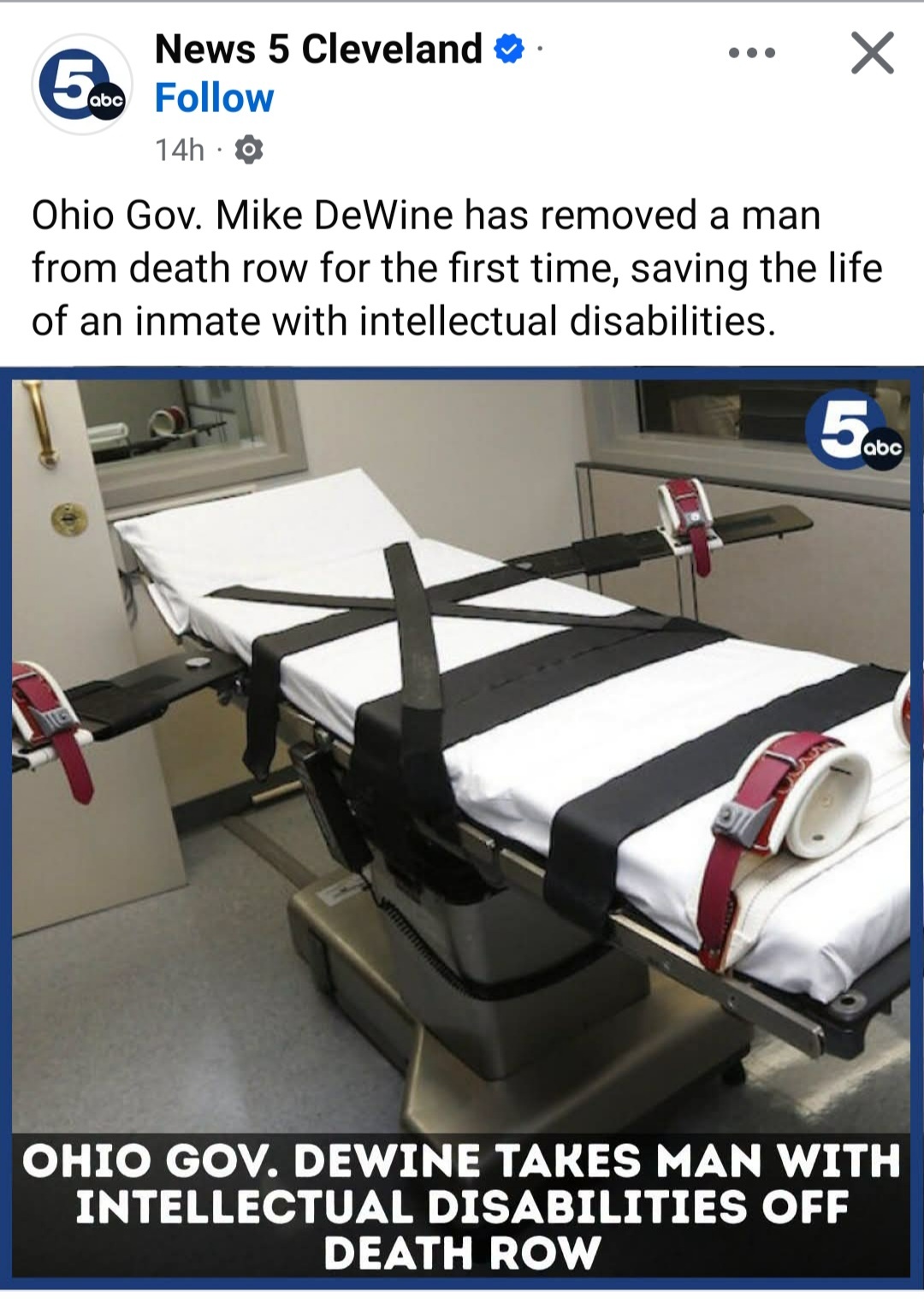


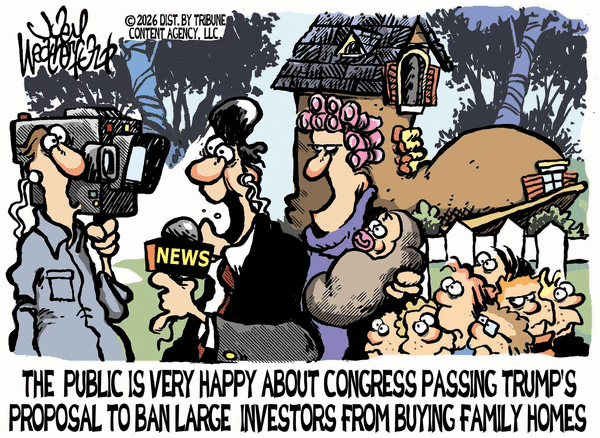

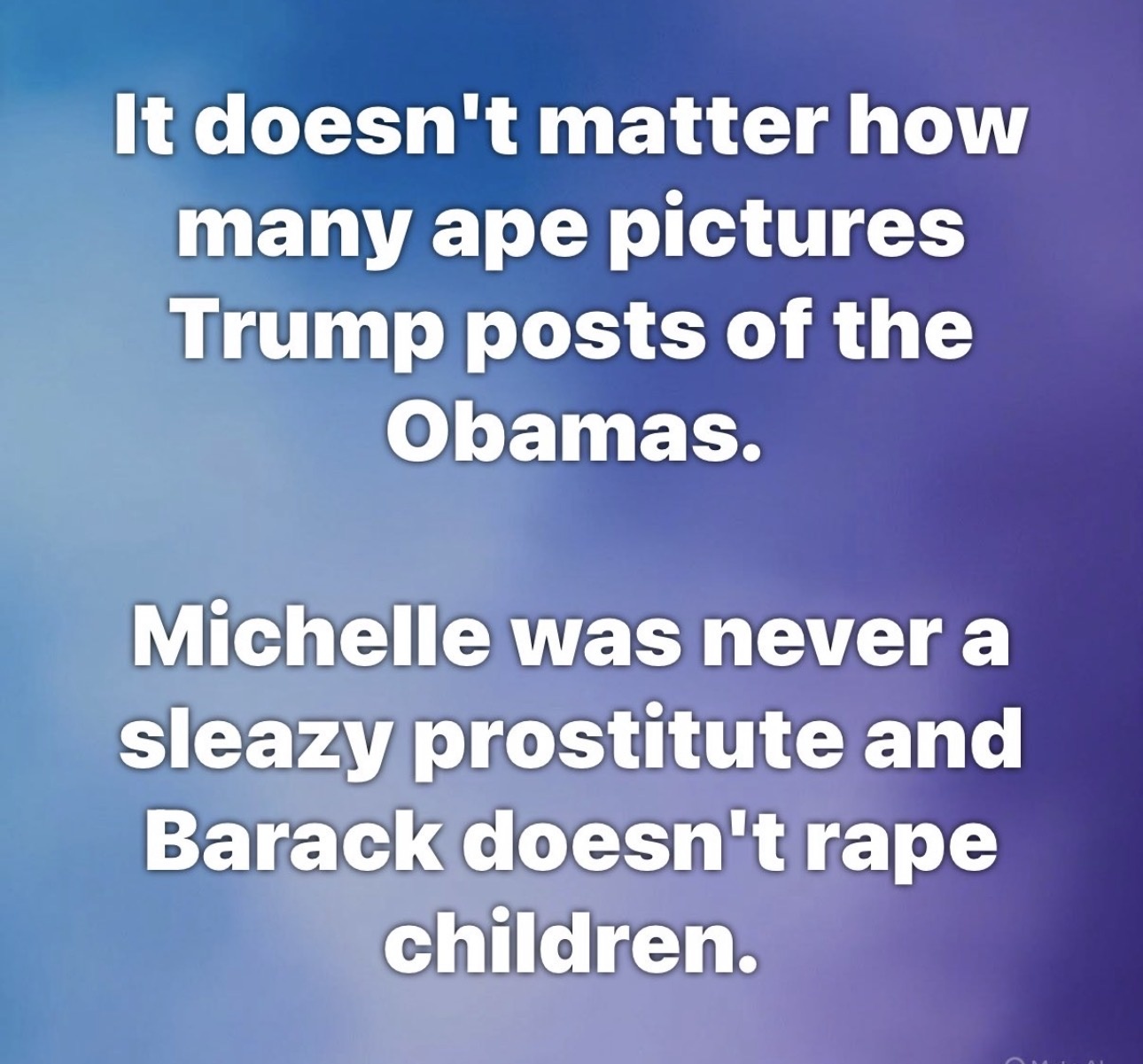
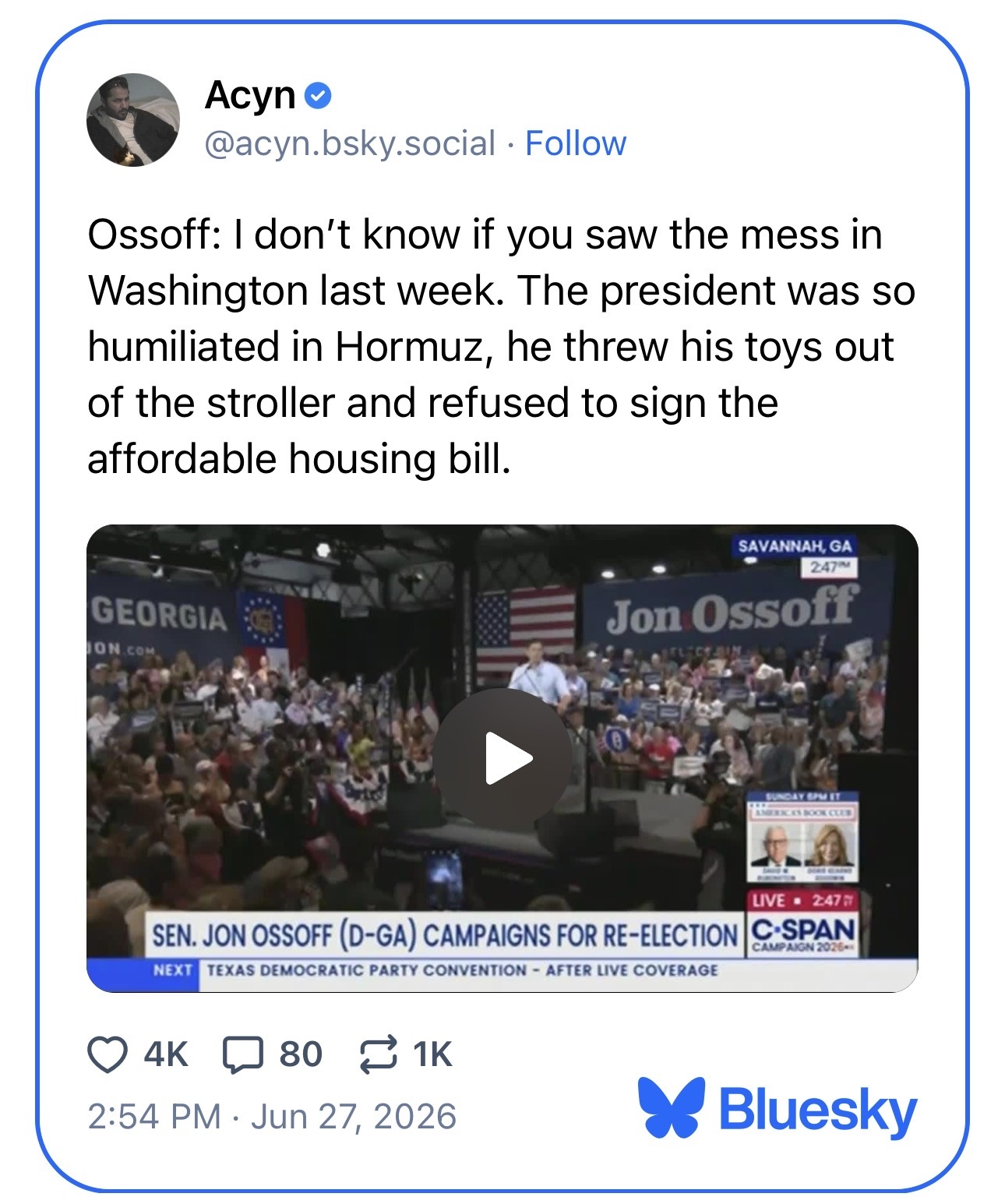
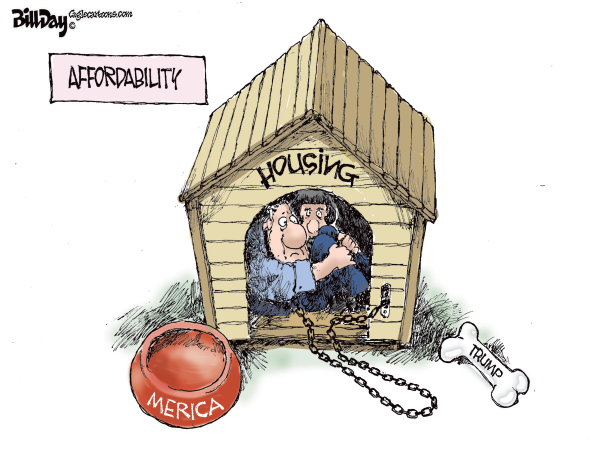
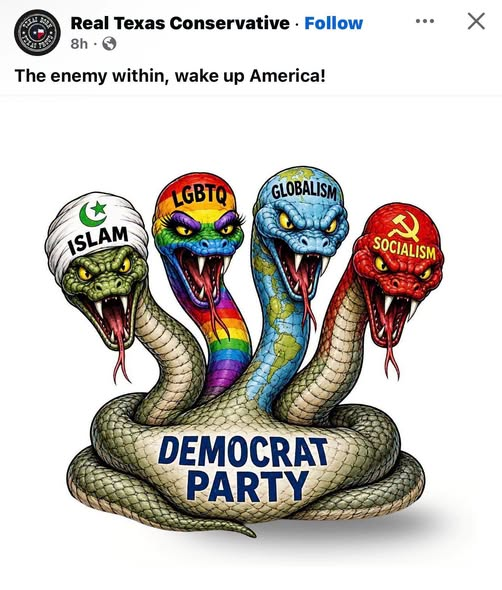
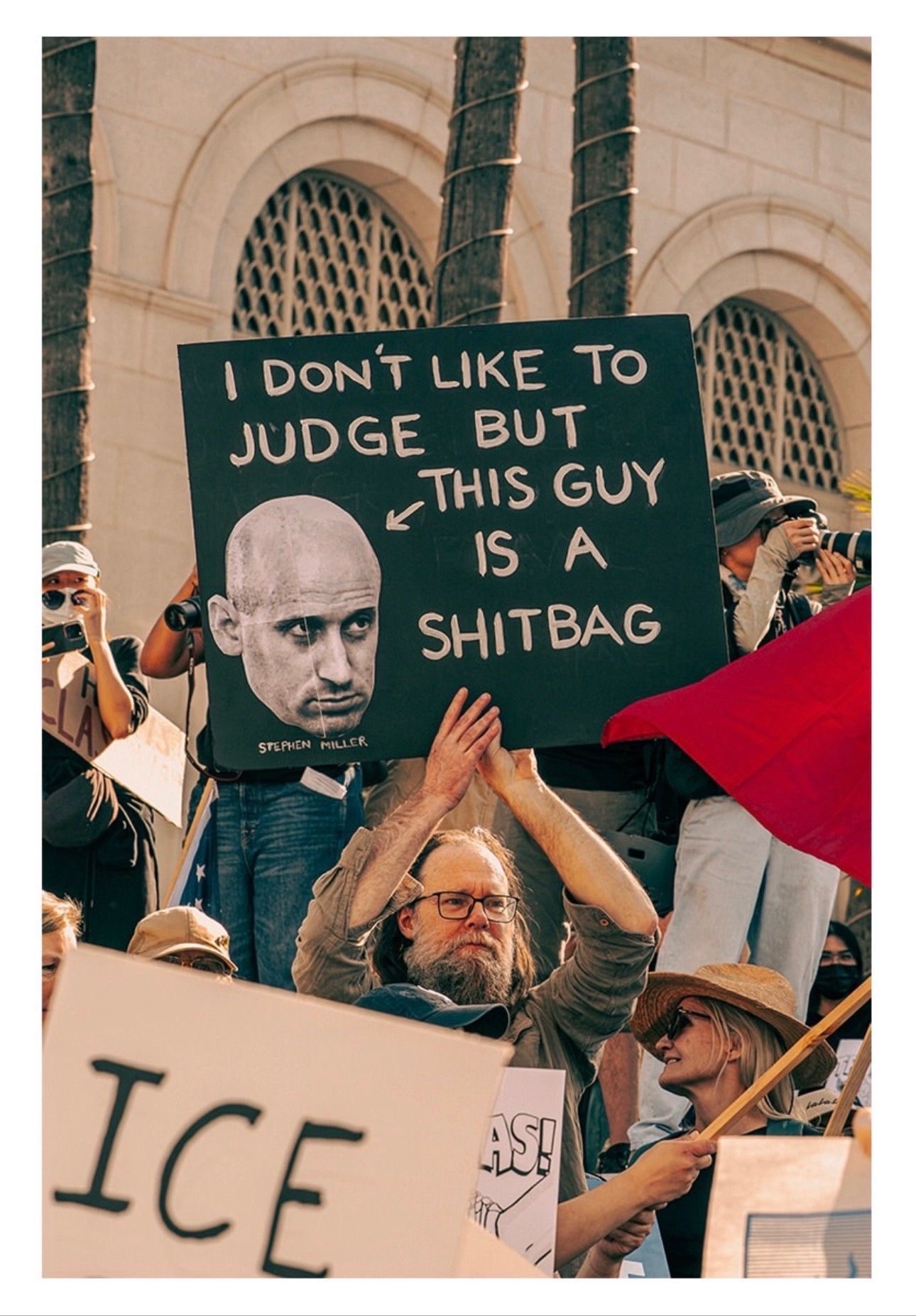
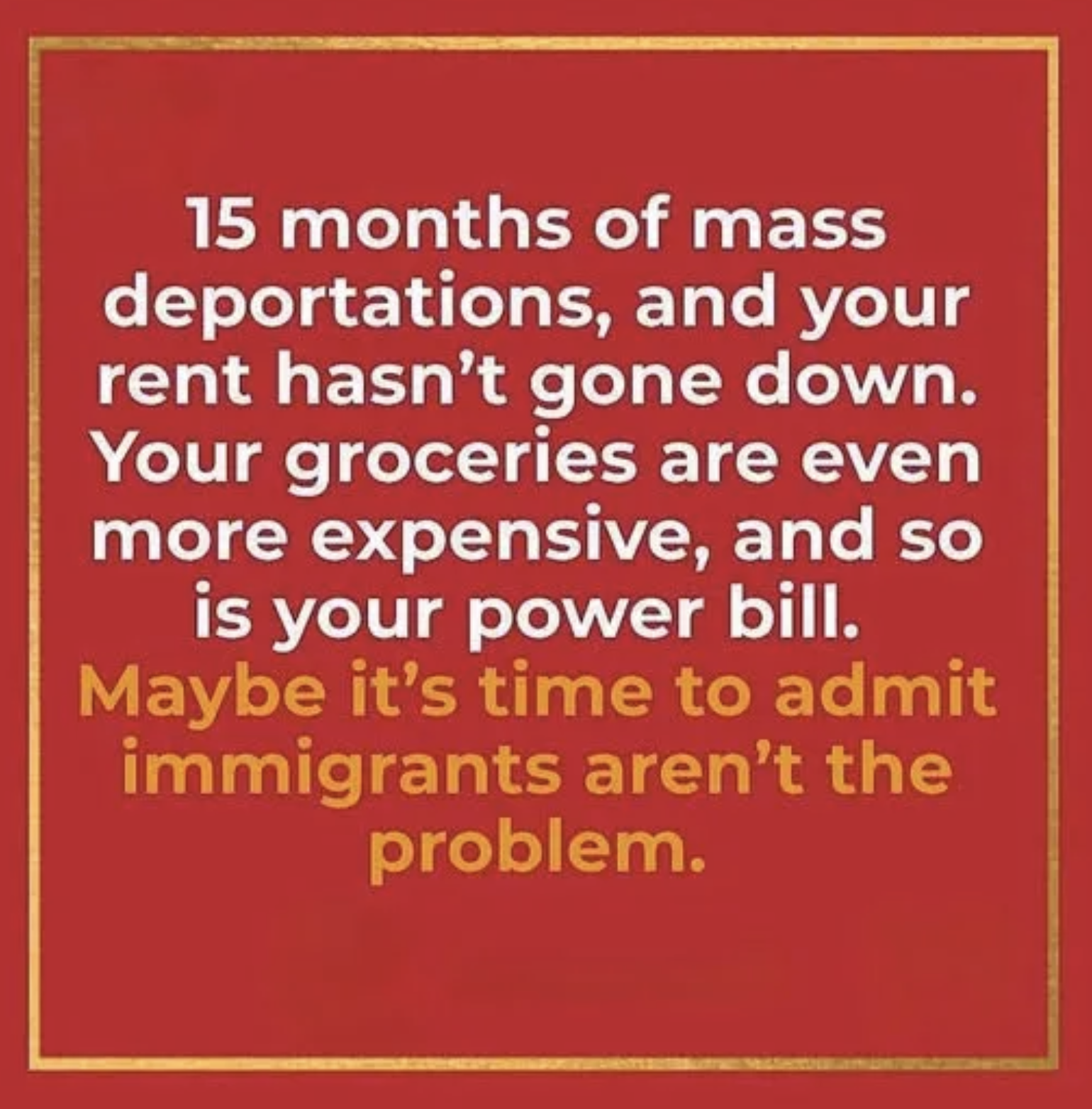
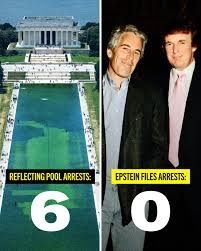
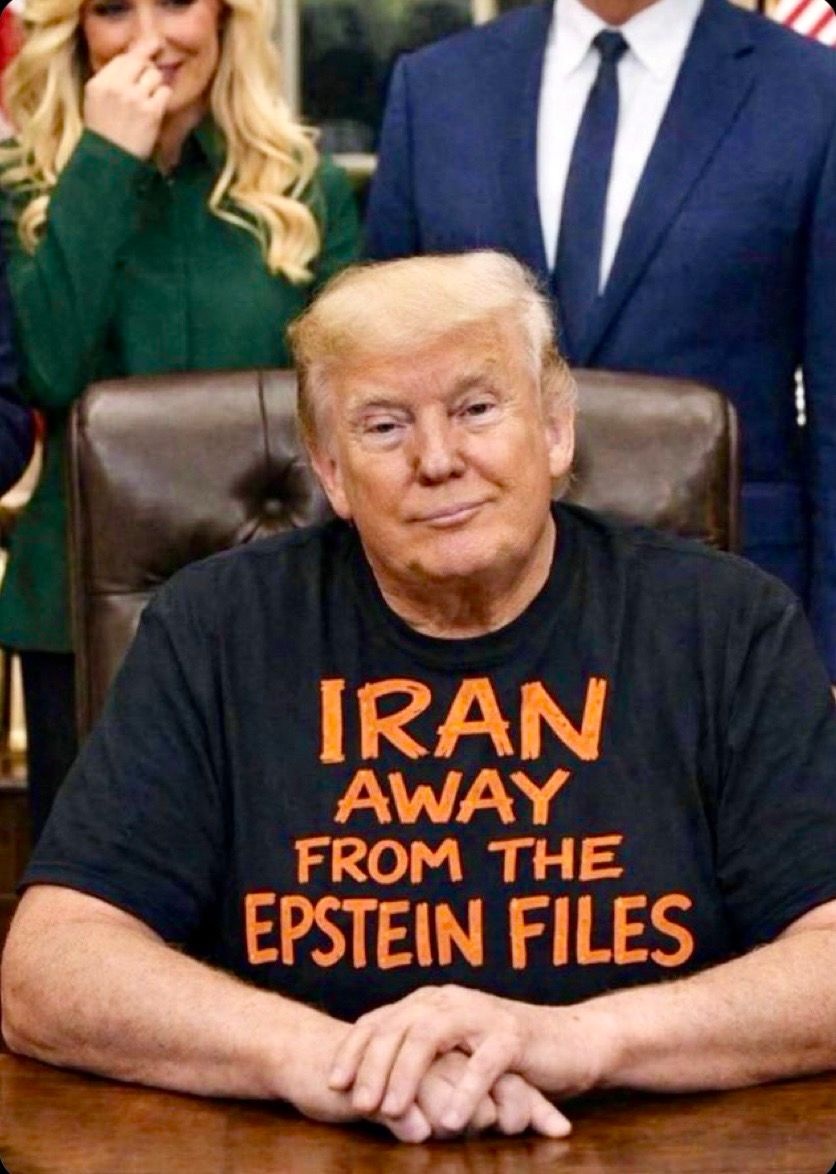
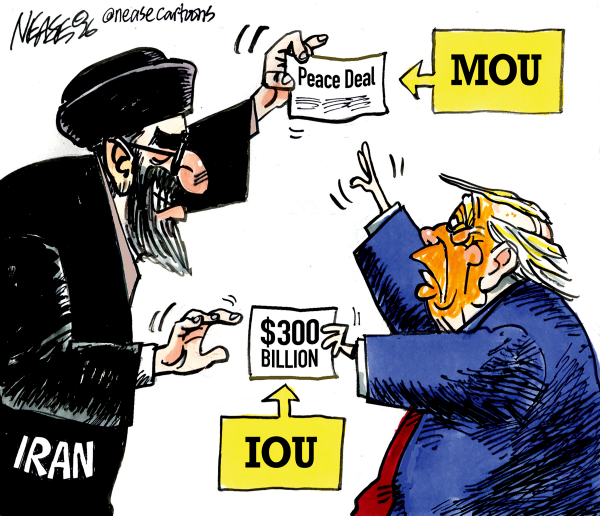
The below is sickening. All slurs, bigotry attacks, and lies but not on discussion of policies. It is all culture wars misinformation to gin up outrage built on lies and misinformation. Hugs
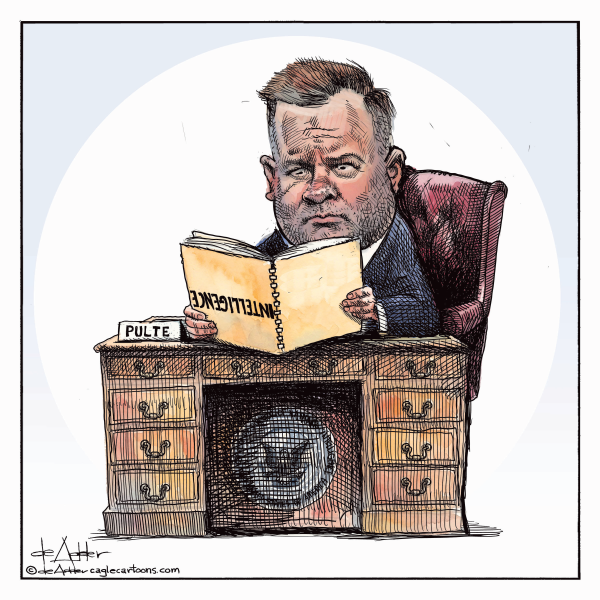




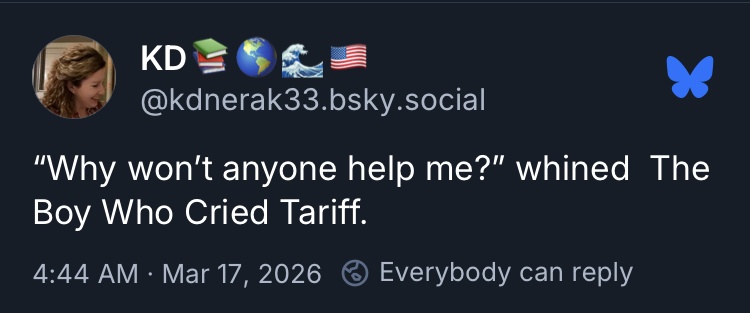














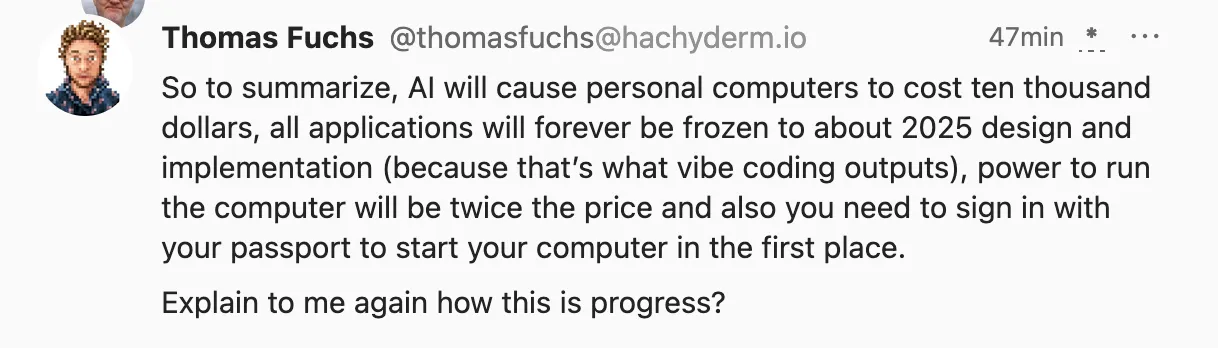

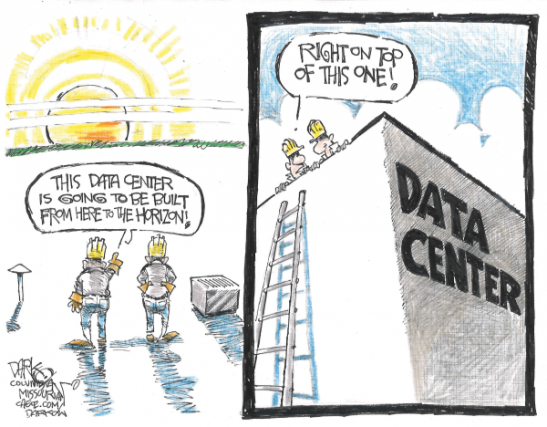
Political cartoons / memes / and news I want to share. 6-28-2026




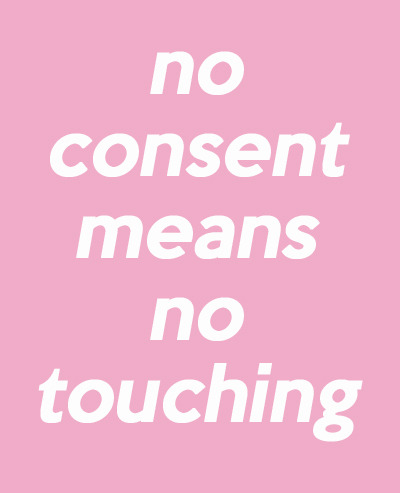






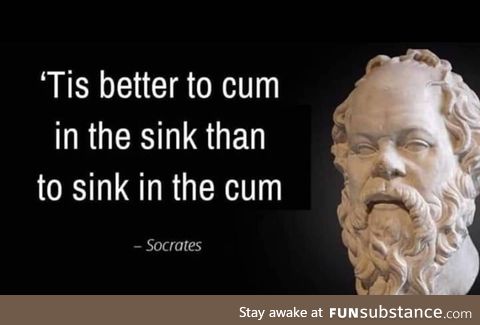







Political cartoons / memes / and news I want to share. 6-27-2026





















axios.com
House Democrats look to bypass Mike Johnson on outlawing Trump weaponization fund
“I urge all my colleagues opposed to this radical assault on the rule of law,” Rep. Jamie Raskin said.

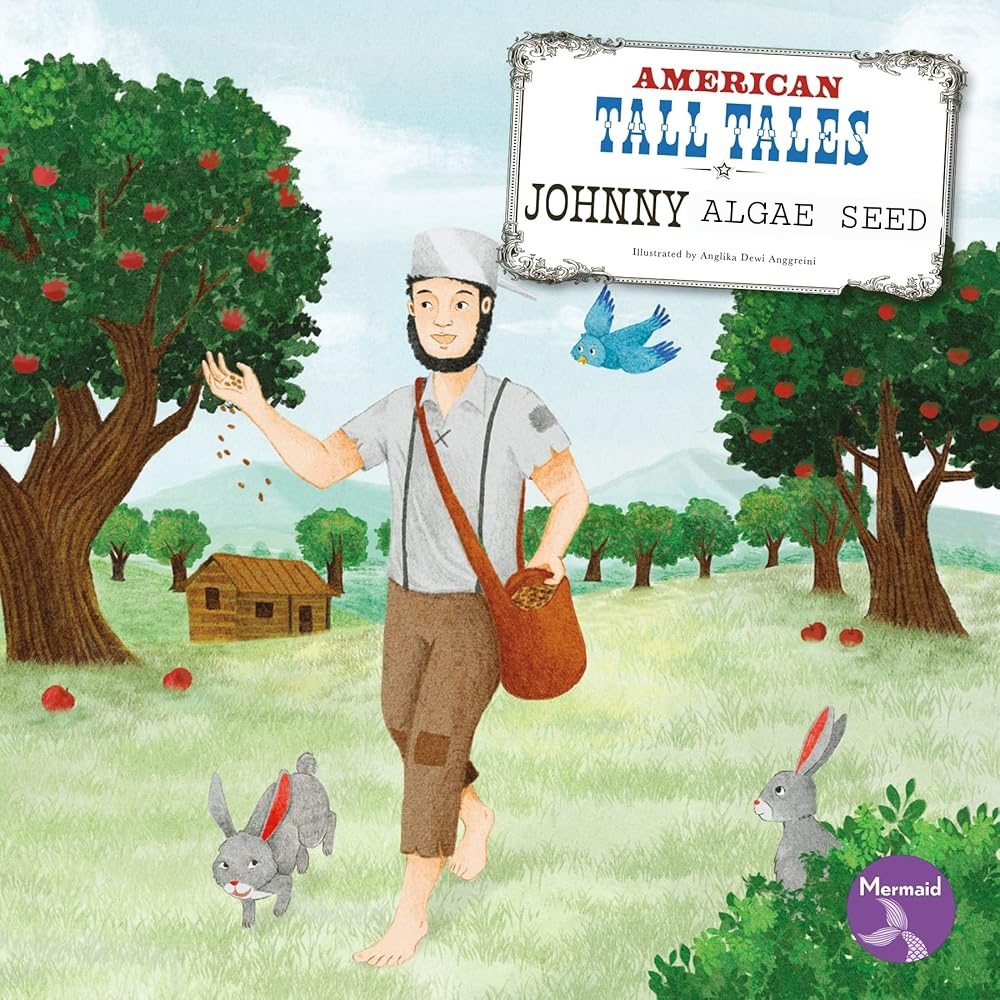
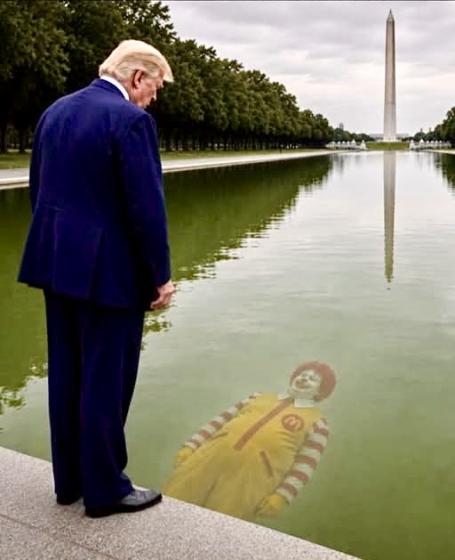


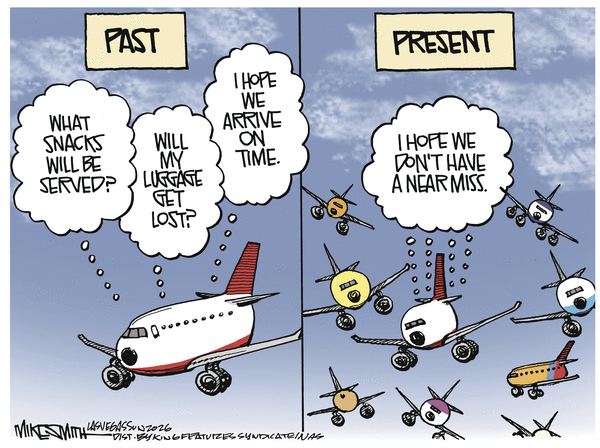




Yet he still got paid for missing four months of his job. Would you have? Clearly this is why congress is out of touch with the people. They are mostly wealthy and get paid $174,000 with perks to work less than half a year. Yet it is the poor and lower incomes that need regulations on what they can buy with assistance money. Hugs








Hegseth is a operative for destroying the military. You do not fire all the competent leaders unless you want to weaken the preparedness.
Same with vaccines. There are outbreaks. Hegseth put troops in harms way.
Our enemies could not do more damage than what Hegseth has unleashed.


Texas poised to approve more Bible stories, history revamp — but changes for high schoolers delayed
Has the state of Texas become a christian theocracy now? It seems every year they change the school curriculum to make it more white and more Christian. Itis clear that the Christian billionaire preacher who basically bought the state legislature and calls the shots has long wanted the state to be a White Christian Male paradise. These new changes basically make the state schools the same as the Jewish Orthodox schools in NY, where the students learn only the Torah but can hardly count to 20 and speak / write very little English. They are getting tax money to educate kids but they don’t. The kids graduate and can’t get jobs and are on state assistance. The new Texas standards emphasize white contributions and minimize any contributions from other races. They push religious stories over facts. This is just the forced religious indoctrination of children regardless of the religious beliefs of the parents. Notice there is no opt out on these religious texts, books, stories but parents much be told and can opt their child out of any lesson that mentions the LGBTQ+ or reading material containing information about it. If you are worried about the white washing race removing Christifying of public schools and the rewriting of history to change what really happened to make white people look better please give this article a read. below are a few quotes from the article. Hugs
The statewide reading list would require, among other literary works, that schools teach Bible material to children as young as 6 years old up to young adults preparing to receive their diplomas. That includes Christian stories about Adam and Eve, the eight Beatitudes and the Parable of the Prodigal Son.
On the contrary, Republicans eliminated a standard specifying that students should consider “the perspectives of groups whose voices are less represented in traditional historical accounts.” They added another requirement that introduces the biblical story of Moses alongside the Underground Railroad and Harriet Tubman — who was nicknamed “Moses” because, similar to the biblical prophet, she helped people escape slavery.
“Let me be very clear: Islam is not a religion,” state Sen. Bob Hall, R-Edgewood, testified before the education board Monday. “It is a totalitarian theocracy, not unlike totalitarian systems of communism, Nazism and globalism.”
Meanwhile, students, educators and progressive activists spoke out in opposition to the lack of racial, ethnic and gender inclusion in the debated books and lessons, as well as the state’s Christian focus over other religions.
Texas poised to approve more Bible stories, history revamp — but changes for high schoolers delayed
The State Board of Education will hold a final vote Friday on incorporating more Christian stories into classrooms and deemphasizing race and cultural diversity in history lessons.Certified elementary school librarian Sarah Pepin speaks at a State Board of Education meeting in Austin on June 22, 2026. Manoo Sirivelu/The Texas Tribune
Texas elementary and middle school students will likely see redesigned social studies and reading lessons that minimize racial, geographic and cultural diversity while emphasizing the Bible — but changes for high schoolers have suddenly hit a pause.
The Republican-led State Board of Education decided Thursday evening to allow final votes on a rewrite of Texas’ K-8 social studies lessons and a mandatory reading list for all public schools that includes Christian stories. Those votes are expected Friday.
However, the board delayed proposed changes to high school U.S. history, world history, geography and government.
For months, educators, Democrats and public education advocates criticized Texas’ social studies revamp as rushed. Conservative advocates and Republican board members insisted on pushing the process forward. But board chair Aaron Kinsey expressed doubts Thursday about having enough time to cut down the number of lessons packed into each course.
“This is a conundrum we’ve created of our own doing,” Democratic member Marisa B. Pérez-Díaz said. “And I’m very frustrated by it.”
Kinsey rejected an assertion from Pérez-Díaz that he rushed the process and said he was willing to continue working. But he also said board members made mistakes when they pushed through changes during late hours. For example, they eliminated a requirement that students learn about the American Revolution in high school U.S. history before reinserting it Thursday.
The elected board is on track to update what public school students must learn in reading and social studies. This week’s meetings ran as late as 2 a.m., as board members meticulously parsed through changes to lessons in each grade.
Along with Bible stories in reading, the social studies proposal features a dramatic transformation in how Texas schools have long administered lessons on history, geography, economics and government. It eliminates the current sixth-grade world cultures course, deemphasizes world history outside of European tradition and dedicates more focus to Texas and the United States.
Democrats suggested changes they hoped would make lessons more accurate and inclusive of historically underserved groups — most notably people of color — even if they ultimately did not favor the overall plan.
Republicans blamed cherry-picking over what students should learn for the delay.
“We wasted many hours late into the morning,” Republican member Brandon Hall said. “We have worn out and exhausted our staff on trifling amendments coming from people who had no intention of ever working with us or ever actually approving something they wanted to pass.”
Conservative leaders and activists champion the new lessons, which they view as “the final battle” in a push to rid Texas schools of instruction they say paints America in a negative light and trains students to hate the country.
Sociology classes, for example, currently require students to understand “the impact of race and ethnicity on society” and “analyze the varying treatment patterns of minority groups.” But that standard was eliminated in the newly proposed social studies plan.
If approved by the education board Friday, the K-8 social studies changes and the reading lists will take effect during the 2030-31 school year. The board will also decide whether to phase in the social studies changes or introduce them all at once.
Members could take up the high school courses at its next scheduled meeting in September, or the chair could schedule a special meeting before.
Reframing history
Educators criticized how the social studies proposal prioritizes memorization over critical thinking and simplification over accuracy. Historians called attention to factual errors, saying the new standards would set children up for failure post-graduation.
One lesson, for example, had described the forced relocation and imprisonment of Japanese families during World War II as one of the “contributions” to America’s military effort. Another proposal noted that high school students should know the significance of leaders in the Civil Rights Movement, specifying Thurgood Marshall, Barbara Jordan and Hector P. Garcia — but not Martin Luther King Jr.
The standards initially approved this week reflect slightly different suggestions, instead describing Japanese incarceration as one of the “changes” during the war and adding King to the list of Civil Rights leaders.
But Democratic board members said the minor tweaks will not fix what they see as a whitewashed social studies plan and a politically influenced approval process.
A panel of nine advisers guided the social studies overhaul, almost all of whom hold no Texas K-12 classroom experience and several of whom are either conservative activists or closely affiliated with them. Educators have described it as a major reversal of previous years when teachers led the way, while Democrats have said they do not feel fairly included in decision-making.
“Our voices are being left off constantly,” Democratic board member Tiffany Clark said.
Republicans clarified that advisers only provide recommendations. Elected members maintain final say in the social studies overhaul, they noted. The GOP members argued that it is Democrats’ own responsibility to ensure they are included in the rewrite.
“I, as well as several of my colleagues, have been in direct contact with our content advisers,” Republican member Audrey Young said. “I have been communicating through my content adviser this entire time.”
But some of the appointed experts also expressed frustrations. Yolanda Chávez Leyva, a historian at the University of Texas at El Paso helping guide the board, said she “didn’t feel that every adviser’s input was treated equally.”
Kate Rogers, a social studies adviser who previously led the Alamo Trust before publicly clashing with Lt. Gov. Dan Patrick, said the group remained professional but its recommendations did not represent all participants.
For instance, the advisory panel proposed changing a lesson that originally called on students to “identify domestic challenges for the United States following World War I related to racial violence and intolerance, including the resurgence of the Ku Klux Klan and the Tulsa Race Massacre.”
They instead suggested that students learn about the Klan’s “intolerance” of Catholics, Jews and immigrants but did not specify Black Americans. They also changed the “Tulsa Race Massacre” to the “Tulsa Race Riots.” During the 1921 massacre in Oklahoma, a white mob killed Black residents, destroyed their homes and looted their businesses after a Black teenager was falsely accused of trying to assault a white girl in an elevator.
The appointed group also removed standards that defined racial segregation as “keeping people apart based on the color of their skin” and specified that Africans endured slavery in the U.S. because of their race.
“I want to make it clear to the board members that we did not discuss every item on this document,” Rogers said. “Some of the changes were not reviewed by all of the content advisers.”
Board members adopted many changes proposed by the advisory group but reinserted several others, including how Nat Turner’s Rebellion “heightened sectional tensions and deepened disagreements over slavery” and how the expansion of slavery was the central cause of the Civil War. They also clarified that the Klan sought to intimidate and “limit the rights of African Americans in Texas during Reconstruction.”
Some members initiated changes that would expose students to more positive aspects of Black history, including Republican Keven Ellis’ suggestion that schools teach about Bessie Coleman, a Texan who became the first African American and Native American woman to obtain an international pilot’s license.
On the contrary, Republicans eliminated a standard specifying that students should consider “the perspectives of groups whose voices are less represented in traditional historical accounts.” They added another requirement that introduces the biblical story of Moses alongside the Underground Railroad and Harriet Tubman — who was nicknamed “Moses” because, similar to the biblical prophet, she helped people escape slavery.
Prior to debating high school social studies, a handful of Republicans on the elected board unsuccessfully attempted to block amendments from members who did not meet an earlier deadline to submit proposed changes.
If successful, the move effectively would have stopped Democrats from proposing on-the-spot tweaks, which was notable because the rule had not been enforced when the board discussed elementary and middle school lessons.
Reading lessons with Christian stories
Some of the nearly 500 speakers at this week’s meetings exchanged heated words about Christianity’s role in the development of the country, and at least one person with a Confederate flag was deemed out of order by the board chair and escorted from the room for verbally interrupting the meeting.
The statewide reading list would require, among other literary works, that schools teach Bible material to children as young as 6 years old up to young adults preparing to receive their diplomas. That includes Christian stories about Adam and Eve, the eight Beatitudes and the Parable of the Prodigal Son.
Republican leaders across the state often depict Islam as a violent religion they view as incompatible with their conservative Christian American values. During the board’s April meetings, the board eliminated a social studies standard that would have required students to learn about Muslim contributions to algebra and astronomy.
“Let me be very clear: Islam is not a religion,” state Sen. Bob Hall, R-Edgewood, testified before the education board Monday. “It is a totalitarian theocracy, not unlike totalitarian systems of communism, Nazism and globalism.”
Asked if he had ever visited a Muslim-majority country, the senatorHall responded no.
Elizabeth Jensen, who identified herself as a Texas school board trustee but did not specify the district, told the education panel that she believes “slavery was and still is fundamental to Sharia,” referring to the set of moral codes and principles that Muslims follow. Sharia does not have a uniform meaning, as Muslims interpret and act upon it differently.
Muslims have spent months denouncing such Islamophobia at State Board of Education meetings, calling it misinformation and harmful to the hundreds of thousands of Texans who practice the faith.
Meanwhile, students, educators and progressive activists spoke out in opposition to the lack of racial, ethnic and gender inclusion in the debated books and lessons, as well as the state’s Christian focus over other religions.
“These proposed standards actually defy the Constitution and highlight only one group of Americans as the founders who built this country to the exclusion of others — both in the past and in the present,” Ruth Nasrullah, a Muslim speaker, told the board members.
English teachers stressed during the meeting that many of the books on the proposed reading list do not align with what Texas requires them to teach, despite taking up most of roughly 36 weeks of instructional time in an academic year.
Before initial approval of the reading list, the board members — led by Republican Tom Maynard — debated whether they should prohibit teachers from assigning non-state-mandated books without the educators first posting them online for parental review. However, some expressed concerns about micromanaging teachers.
They also considered whether to grant charter schools flexibility in which grades they introduce the required readings, an attempt to appease charter leaders who said they wanted to assign more rigorous books to children in lower grades. But some members said doing so might create the opposite effect, allowing lower-performing campuses to lessen rigor for students in higher grades.
Neither of those passed, but board members have another opportunity to resurface suggestions before the final vote Friday.
Jaden Edison is the public education reporter for The Texas Tribune, where he previously worked as a reporting fellow in summer 2022. Before returning to the Tribune full time, he served as the justice…

Political cartoons / memes / and news I want to share. 6-26-2026


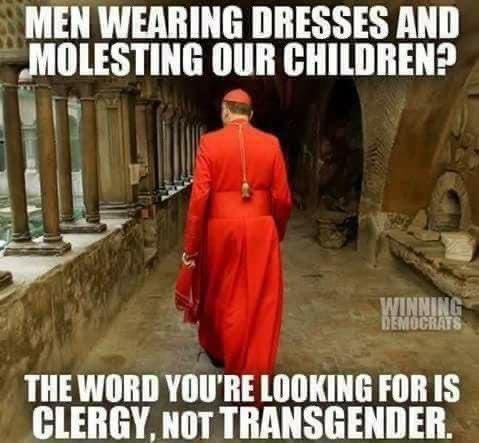


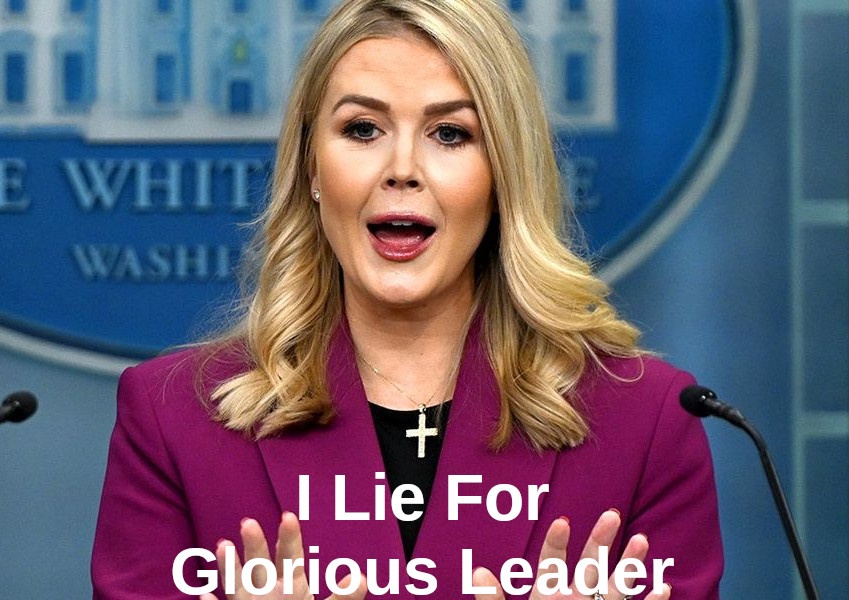




Charge Jared Kushner with violating the Logan Act (1 Stat. 613, 18 U.S.C. § 953). He’s a corrupt PoS criminal just like his wretched father.

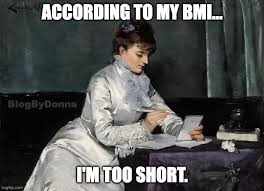

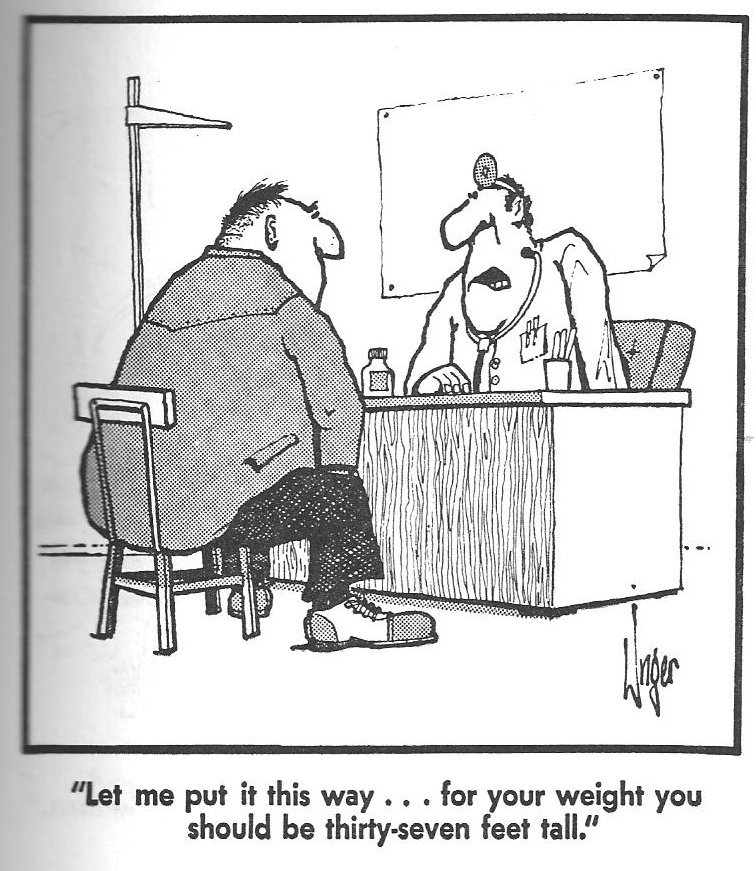
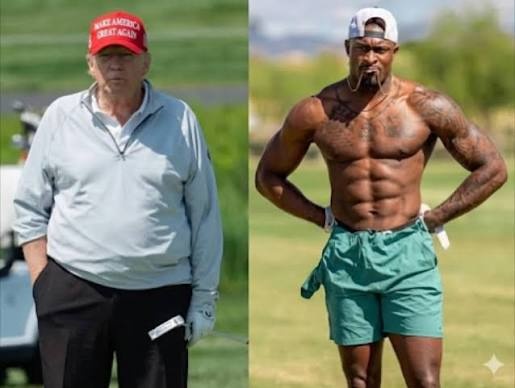
Why on earth does a 6’3” 239 lb man need a weight loss drug. I mean, look at these two specimens!



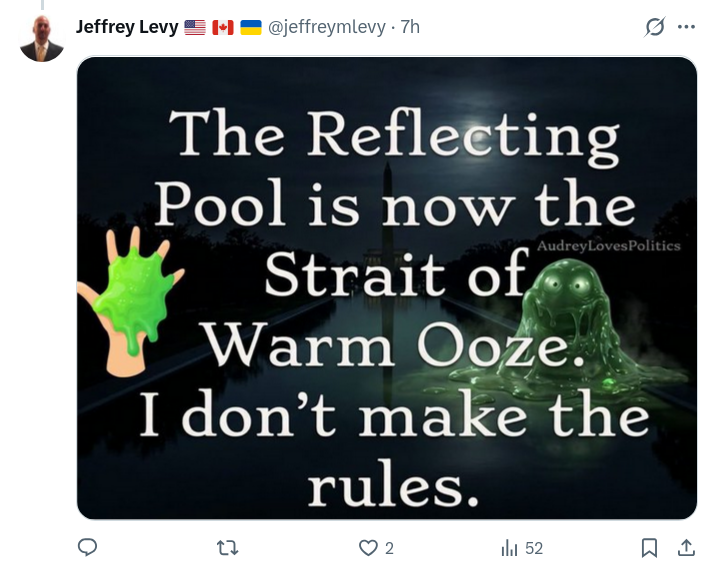
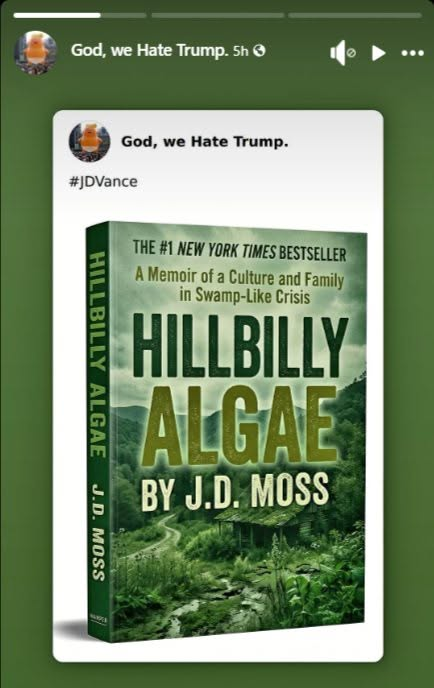




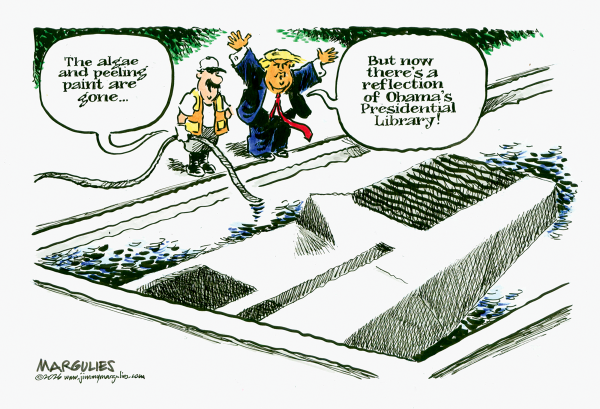


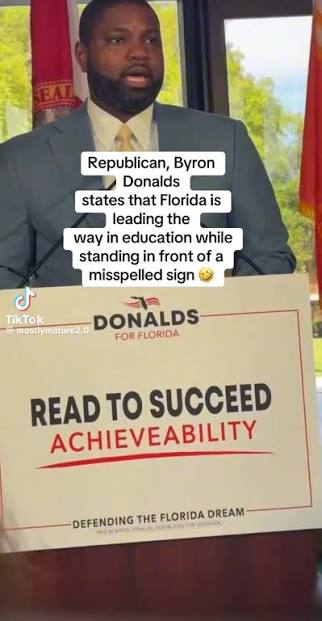
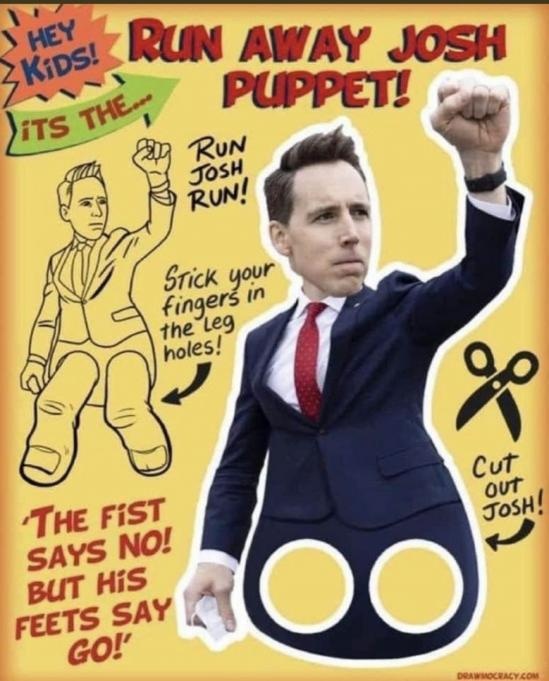


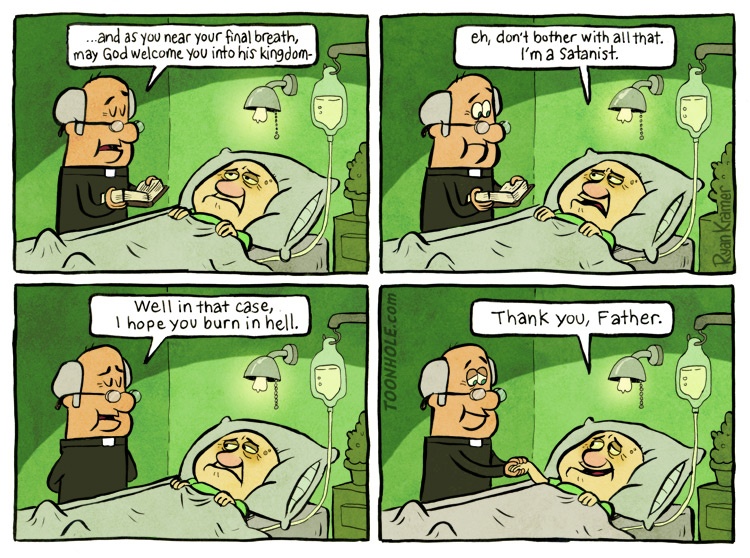
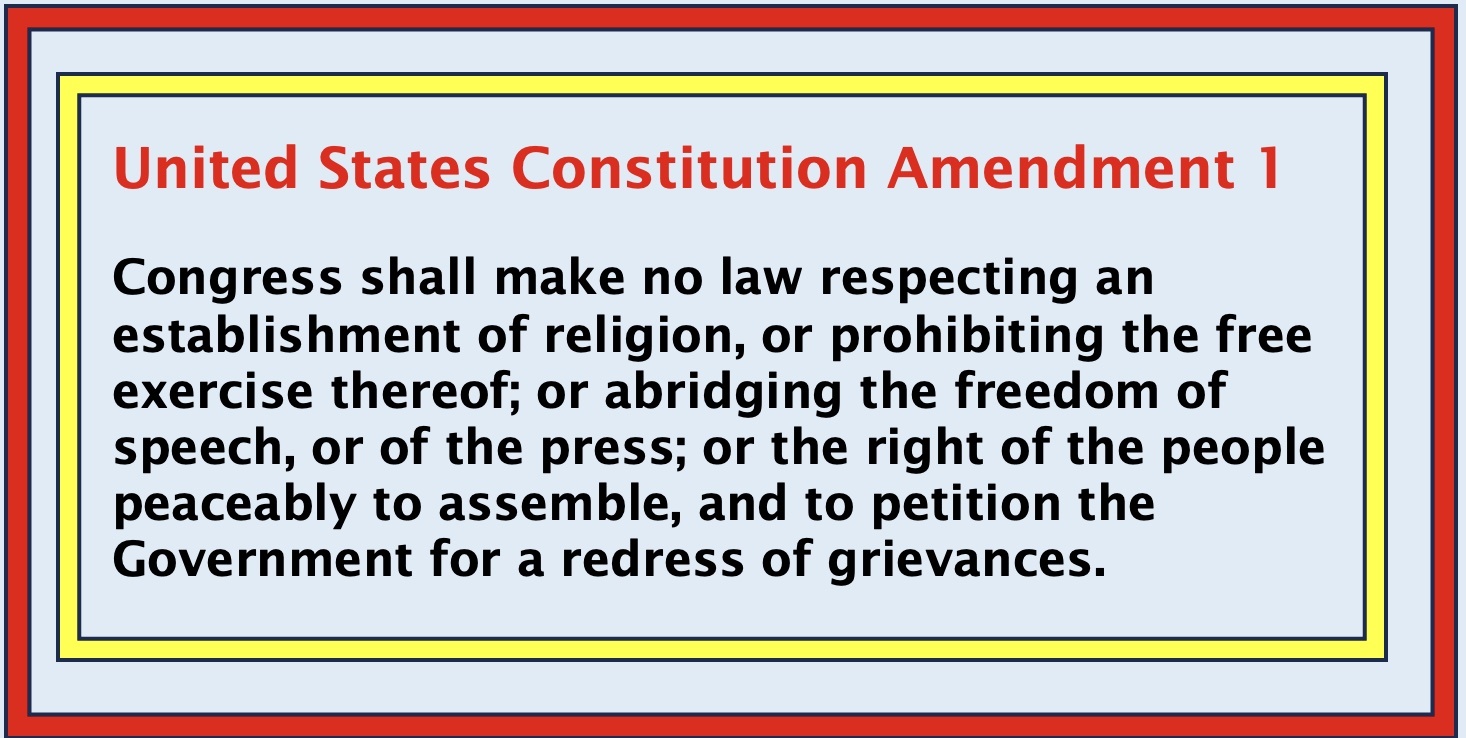
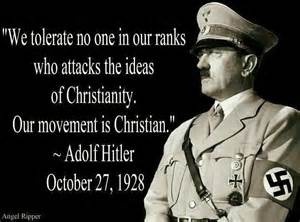
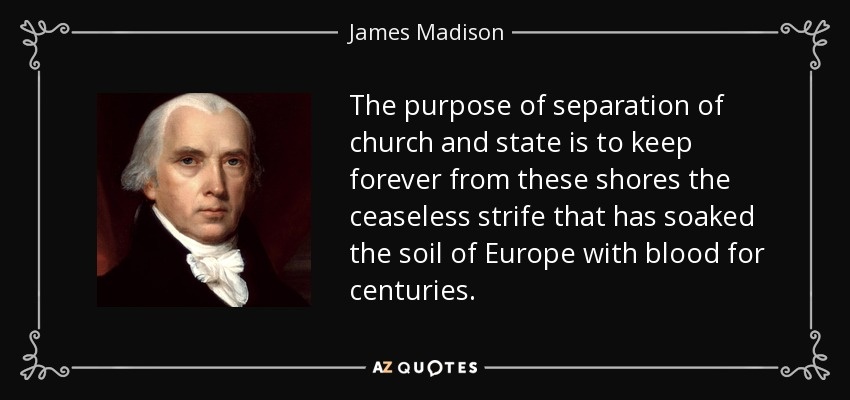
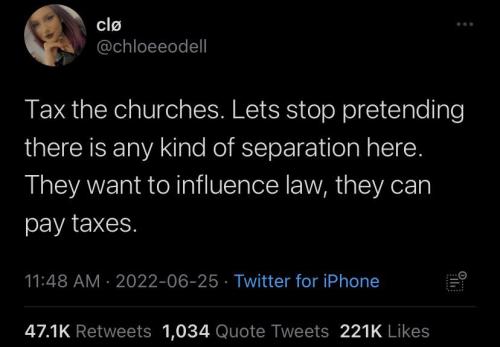
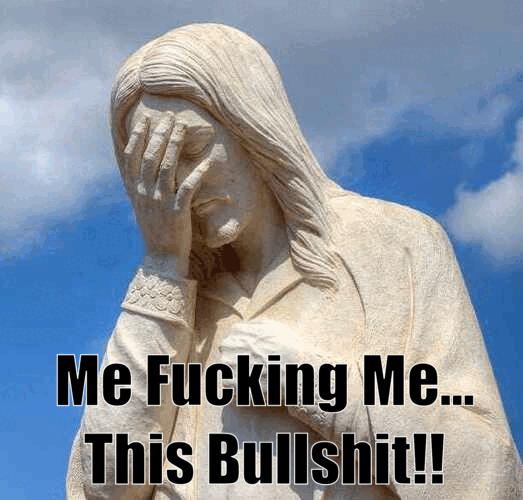
Religious rights for Christian nationalists only!









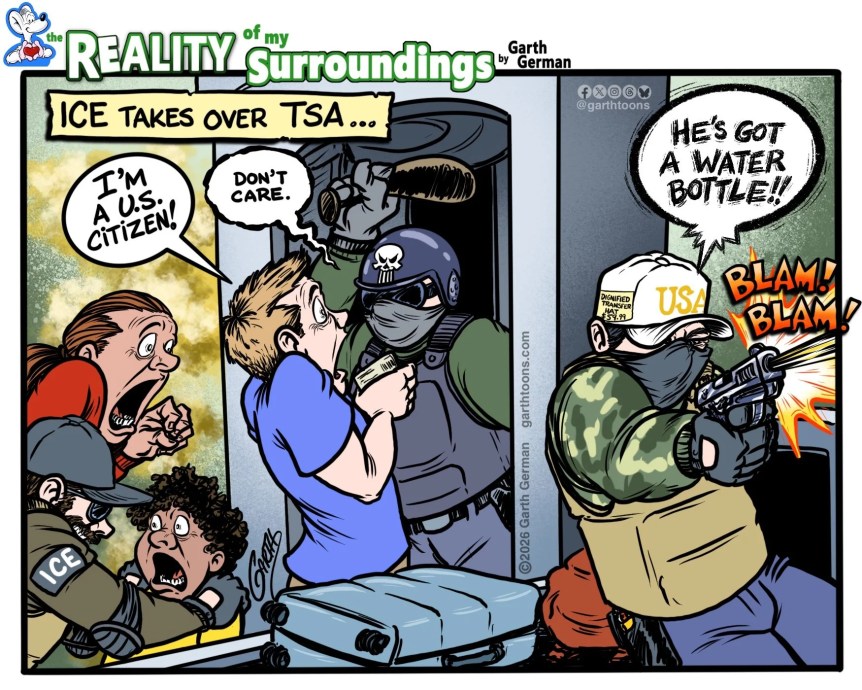

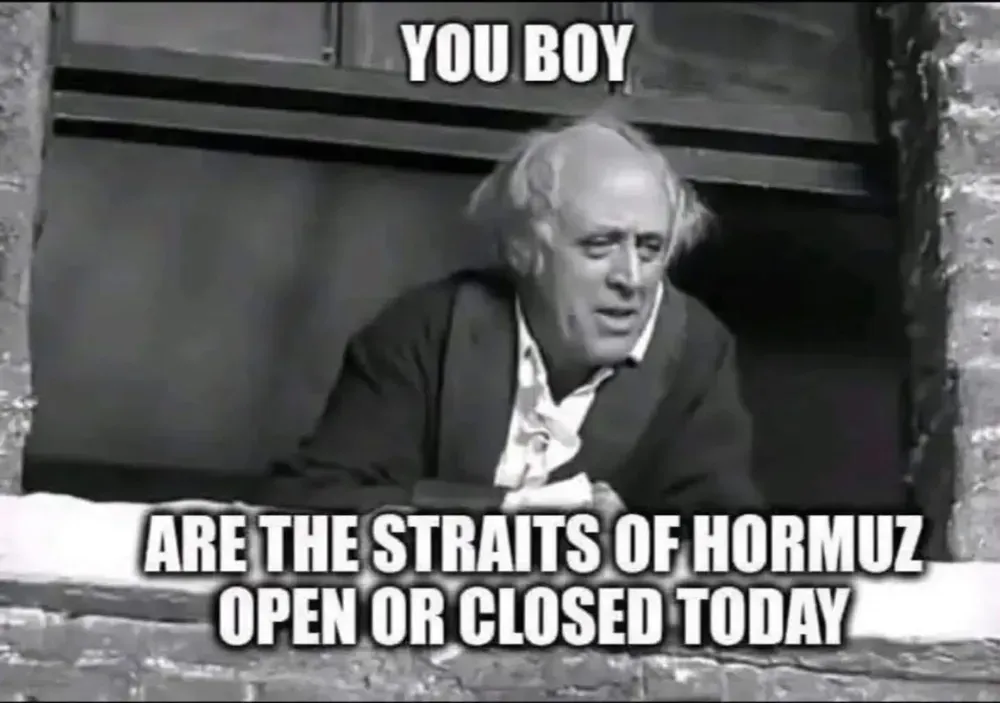
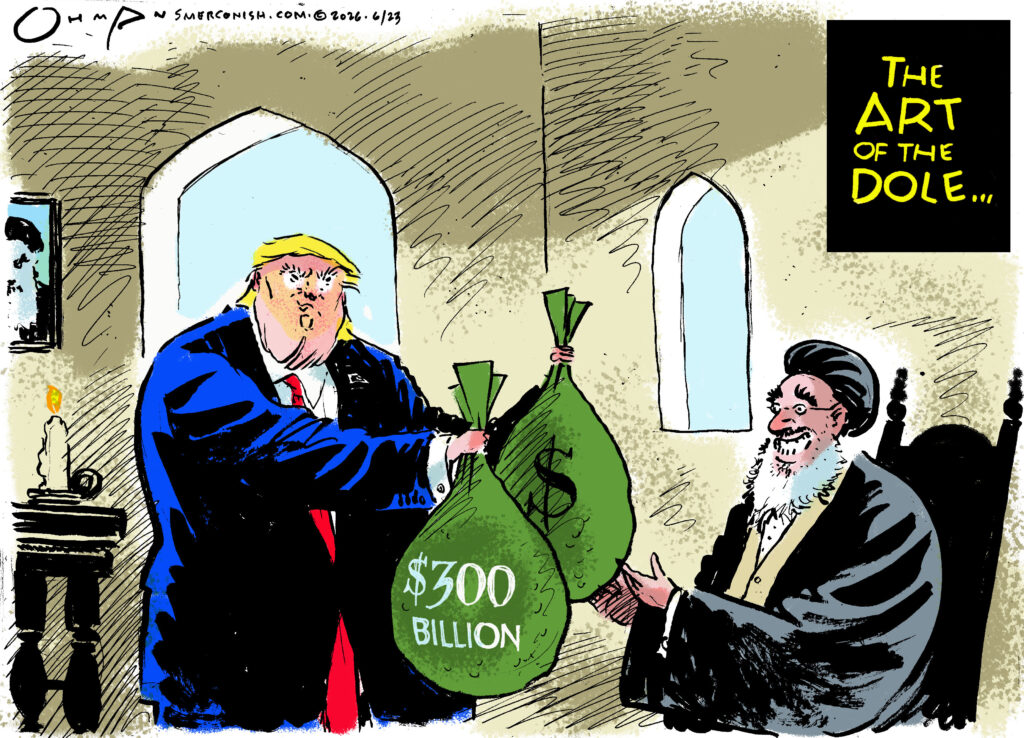




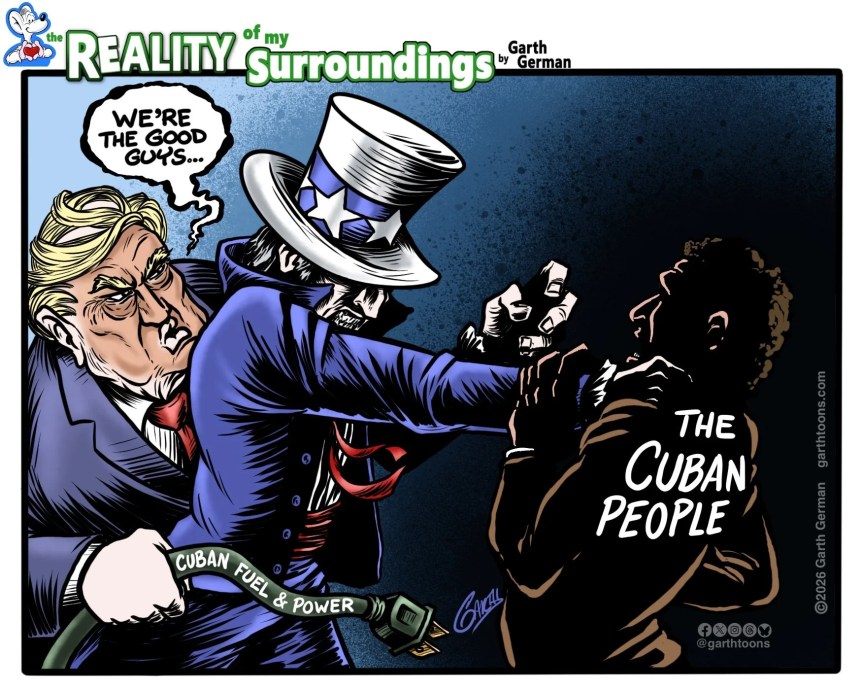






NYT: Welcome Materials For South African “Refugees” Will Include Racist And Pro-Trump US History Claims
June 24, 2026
The New York Times reports:
In the coming weeks, the United States plans to provide a welcome gift to white South Africans entering the United States as refugees. They will get an Android tablet, an American flag and copies of the Constitution and Declaration of Independence. They will also receive a packet of literature that provides a sanitized, Trump-approved view of American and South African history, one that criticizes racial equity and civil rights laws and promotes claims of discrimination against white people.
The welcome bags include a report commissioned by Mr. Trump during his first term that downplays the role of slavery in the country’s founding, and a children’s book accusing South Africa’s government of “favoring the Black population.” The gifts would be the latest step by the Trump administration to welcome the white minority in South Africa, even as the president maintains a ban on refugees fleeing from war and persecution everywhere else in the world.
Read the full article.

Maggie Haberman & Jonathan Swan – On “Regime Change” & Inside The Trump Presidency | The Daily Show
New York Times reporters and authors of the new book “Regime Change: Inside the Imperial Presidency of Donald Trump,” Maggie Haberman and Jonathan Swan, sit down with Jon Stewart to discuss the surprising revelations they uncovered about the Trump administration, like the president being absent from the room when his own team discussed the Epstein files, as well as the motivation behind controversial moves like the tariff policy rollout and the Iran war. They also speak to how Trump controls the terms when reporters reach him on his cell phone and compare his first term to his second, which they describe as a story of hubris, built on gut feelings and belief from his cabinet that he is someone of destiny – because who else can survive four indictments and two assassination attempts to win the presidency a second time?
 Scottie's Playtime