By Lori Robertson and Robert Farley
Summary
ANALYSIS —Since he entered politics, President Donald Trump has been a regular on our end-of-year list of the most egregious and noteworthy falsehoods and distortions. With Trump back in the White House in 2025, it’s no surprise that he dominates this year’s whoppers.
Trump is known for rhetoric that uses inaccurate and exaggerated claims, which he repeats again and again. In his second term, several such claims were used to justify a whirlwind of policy changes and announcements. Using a method economists said wasn’t legitimate, he calculated “reciprocal tariffs” for goods imported from other countries. In firing the head of the Bureau of Labor Statistics, he claimed without evidence that low job growth figures were “phony” or “rigged.” In supporting a freeze on foreign aid, Trump said $50 million was being used to buy condoms for Hamas in Gaza, a claim refuted by the contractor identified by the State Department.
In a falsehood-filled press conference, Trump, along with Health and Human Services Secretary Robert F. Kennedy Jr., touted an unproven link between autism and taking Tylenol during pregnancy. Kennedy, long known for spreading inaccurate information about vaccines, also features prominently in this year’s compilation. In his efforts to change the nation’s vaccine and public health recommendations, he pushed unproven therapeutics for treating measles and made false claims about the COVID-19 vaccines.
There are other politicians on our full list below, which is in no particular order.
Analysis
Tylenol and autism. Trump said a late September press conference would reveal “one of the biggest [medical] announcements … in the history of our country,” but instead the headline news was an unproven link between autism and the use of Tylenol, or acetaminophen, during pregnancy. Trump repeatedly told pregnant women, “don’t take Tylenol,” and offered the unsound medical advice to “tough it out.”
The administration didn’t point to any new original research on the topic, which has been studied. Some studies have shown an association between using acetaminophen during pregnancy and an increased likelihood of having a child with autism, but no causal link has been established. Recent research indicates there likely isn’t a link. As for Trump’s medical advice, untreated pain or fever during pregnancy can be harmful to both mother and child, and medical groups have long recommended pru45reeeeeeeeeeeeeeeeeeeeeeeeeeeeeeeeeeeeeeeeeeeeeeeeeeeeeeeeeeeeeeeeeeeeeeeeeeeedent use of the drug — taking acetaminophen when needed in consultation with a doctor.
HHS Secretary Kennedy later falsely claimed that two circumcision-related studies provided evidence that acetaminophen causes autism when given to children. That’s not what the studies found. In November, the Centers for Disease Control and Prevention changed a webpage to say that its previous statement that “vaccines do not cause autism” is “not an evidence-based claim,” echoing Kennedy’s prior misrepresentations of science.
Inflation has not “stopped.” As cost-of-living issues continue to be a top concern for voters, Trump has repeatedly claimed that inflation is “stopped,” “dead” or at a lower rate than it actually is, falsely saying the country saw “the worst inflation” in history (or “probably” did so) under former President Joe Biden. That’s not the case. This month, in a speech about the economy in Pennsylvania, Trump wrongly said he “inherited the worst inflation in the history of our country.”
The annualized inflation rate was 3 percent when Trump took office in January, and it was 3 percent again for the 12 months ending in September, the latest data available from the Bureau of Labor Statistics. Inflation did rise considerably in the first half of Biden’s term, but it then cooled substantially. From July to December 2024, the annual increase in the Consumer Price Index was below 3 percent.
The CPI went up 2.7 percent for the 12 months ending in November, BLS said today, noting that data collection for the month began Nov. 14 due to the government shutdown.
The worst inflation increase year-to-year occurred after World War I, a 23.7 percentrise from June 1919 to June 1920. There have been numerous other times with inflation higher than the peak point under Biden.
As we head into the midterms, we’d caution voters that politicians often blame their opponents for rising prices, but the causes of inflation are usually more complicated than that. For instance, Labor Day claims from the Democratic Congressional Campaign Committee blamed House Republicans for “driving up the price of burgers.” But drought conditions in recent years, among other factors, drove up the cost of ground beef.
Russia, not Ukraine, started the war. After U.S. and Russian officials met in Saudi Arabia in February to discuss an end to Russia’s war in Ukraine, Trump falsely reprimanded Ukraine, saying, “You should have never started it.” He said Ukraine “could have made a deal.” As we wrote, the war started on Feb. 24, 2022, when Russia launched a full-scale invasion, two days after Russia recognized two separatist territories in eastern Ukraine as independent states and sent Russian troops into Ukraine’s Donbas region. While Russian President Vladimir Putin gave “a long list of grievances” to justify the attack, Jeffrey Mankoff, a senior associate with the Europe, Russia, and Eurasia Program at the Center for Strategic and International Studies, wrote in an April 2022 report that the “fundamental issue” was “the legitimacy of Ukrainian identity and statehood.”
Throughout the year, Trump also repeatedly and wrongly claimed that the U.S. has provided more money in aid to Ukraine than Europe has. The opposite is true.
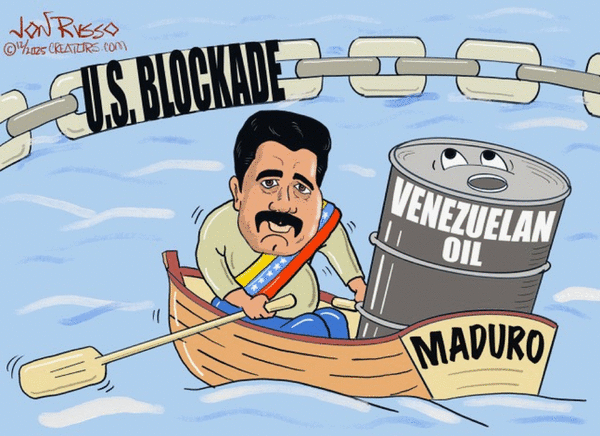
“Twisted and manipulated” report that wasn’t. When the Washington Post reported via anonymous sources that a government intelligence assessment concluded the Venezuelan government was not directing the migration of members of the Tren de Aragua gang to the U.S., Tulsi Gabbard, the director of national intelligence, dismissed the report. She said those “behind this illegal leak of classified intelligence” had “twisted and manipulated [the information] to convey the exact opposite finding.” But when a redacted copy of the intelligence memo was publicly released the following month, it corroborated the Washington Post’s account. According to the intelligence memo, Venezuelan President Nicolás Maduro’s “regime probably does not have a policy of cooperating with TDA and is not directing TDA movement to and operations in the United States.”
A few months later, Gabbard wrongly claimed to have uncovered “overwhelming evidence” that former President Barack Obama and others in his administration manipulated intelligence to “lay the groundwork for what was essentially a years-long coup against President Trump.”
RFK Jr.’s dubious measles therapeutics. In March, during a measles outbreak in Texas, Kennedy claimed there were “very good results” from treating patients with a certain steroid and antibiotic, as well as cod liver oil, saying “those therapeutics have really been ignored” by the CDC “for a long, long time.” Neither the steroid nor antibiotic is a specific treatment for measles, experts said, and cod liver oil, which contains vitamin A, also isn’t recommended.
Vitamin A itself is recommended around the world for measles, as a couple high-dose bursts of the vitamin have been shown to reduce measles mortality in lower-income countries where deficiencies exist. But the benefit is unclear in the U.S. and countries without such deficiencies. Cod liver oil would need to be consumed in a potentially dangerous amount to get the vitamin A dosage used for measles.
In other comments, Kennedy downplayed the outbreak, which ultimately killed two children, and made unsupported and misleading claims about the measles vaccine, which is safe and effective in preventing the highly contagious disease.
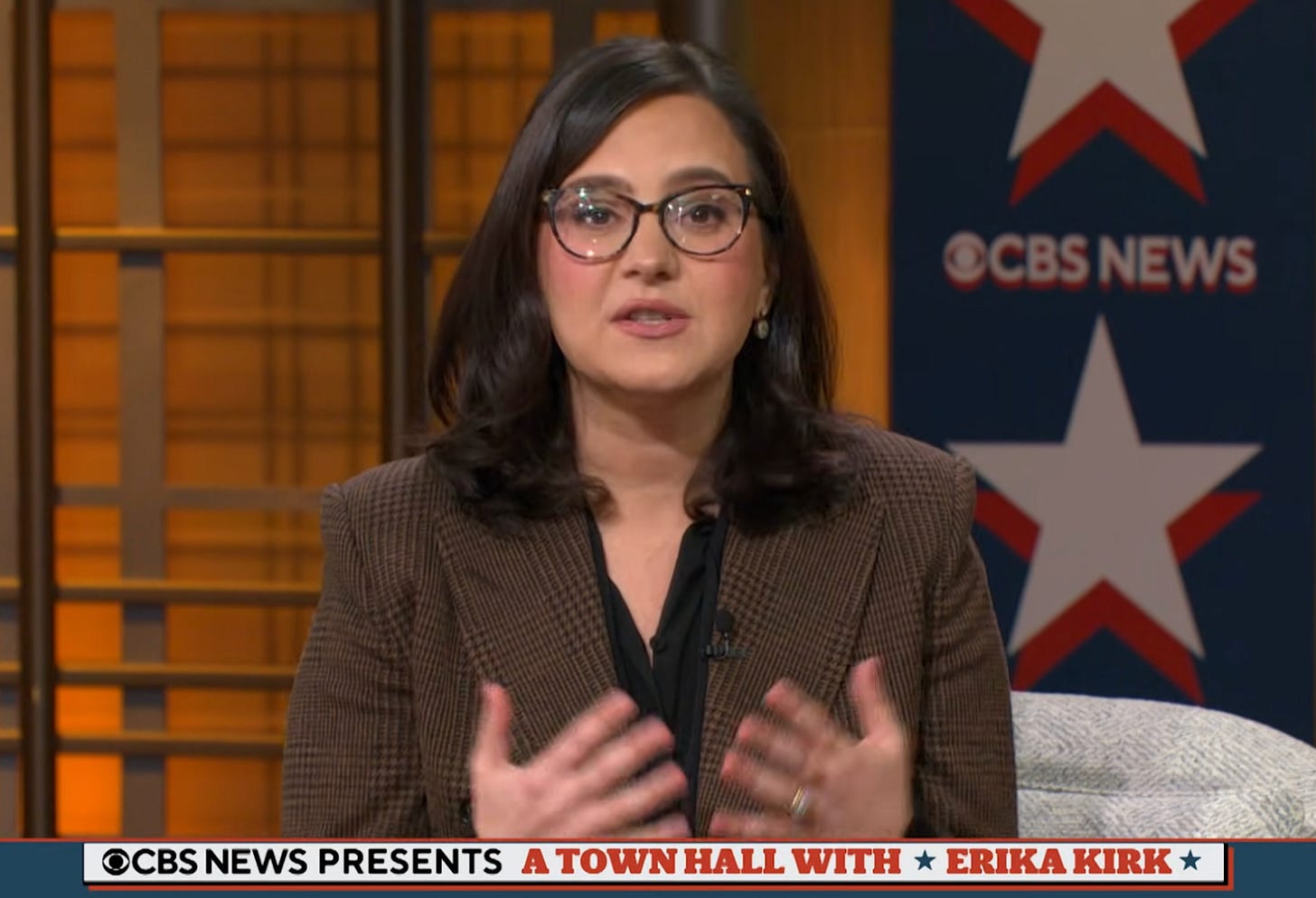
No evidence of “phony” Bureau of Labor Statistics numbers. After a BLS report showed less-than-stellar job growth, Trump lashed out at the BLS commissioner, saying “her numbers were wrong,” “phony” and “rigged,” and firing her. There’s no evidence anyone manipulated the data. William Beach, the BLS commissioner during Trump’s first term, wrote on X that the firing of Commissioner Erika McEntarfer, a Biden appointee who had worked in the federal government for more than 20 years, was “totally groundless” and “sets a dangerous precedent and undermines the statistical mission of the Bureau.”
Trump also wrongly claimed that “days before the election,” McEntarfer “came out with these beautiful numbers trying to get somebody else elected” and then reduced the employment estimates “right after the election.” That’s not what happened. On Nov. 1, 2024, just before the election, the BLS report showed growth of just 12,000 jobs in October and downward revisions for the prior two months.
Signalgate: Not “total exoneration.” Defense Secretary Pete Hegseth claimed that he received “total exoneration” in an investigative report by the Defense Department’s Office of Inspector General regarding a Signal group chat about a military attack in Yemen. But the report contradicted that assessment, concluding that Hegseth’s messages “created a risk to operational security that could have resulted in failed U.S. mission objectives and potential harm to U.S. pilots.” The report also faulted Hegseth for using a personal cell phone to relay sensitive DoD information and for not retaining the Signal conversations as official records, as required by federal law and Pentagon policy.
Trump’s chart on “reciprocal” tariffs. In a Rose Garden announcement in April of sweeping new “reciprocal tariffs,” Trump held aloft a chart that claimed to give a breakdown of the tariffs other countries charge the U.S. and the corresponding tariff that the U.S. would as a result impose against those countries. But it turned out the values assigned to other countries were not, in fact, the tariff rates other countries were placing on imports of U.S. goods, but rather a calculation of what the administration deemed would be necessary to balance trade with various countries. Economists told us that was not a legitimate way to calculate reciprocal tariffs for countries.
The misleading “reciprocal tariffs” chart, which informed the tariff rates he then set, was just one of the president’s false and misleading talking points on tariffs. Among them, Trump repeatedly, and wrongly, claimed that the tariffs he imposed would be paid by other countries and not, at least partly, by American consumers in the form of higher prices.
mRNA vaccine misinformation. Kennedy, and HHS, made a series of false statements about mRNA vaccines, the technology behind the Pfizer/BioNTech and Moderna COVID-19 vaccines. In announcing the termination of half a billion dollars of funding for mRNA vaccine projects, Kennedy said: “We reviewed the science, listened to the experts, and acted,” claiming that “the data show these vaccines fail to protect effectively against upper respiratory infections like COVID and flu.”
The science — peer-reviewed scientific literature — and many experts refute that. Studies repeatedly demonstrated the vaccines’ effectiveness and safety, with some estimates of millions of lives saved during the pandemic, and the technology has shown encouraging results against the flu. HHS later released a 181-page list of papers that claimed to show vaccine harms, a document that wasn’t peer-reviewed and was written by people who have spread unsupported claims about COVID-19 vaccination and treatment.
Kennedy also claimed the COVID-19 vaccines posed a “profound risk” to children, even though serious side effects are rare. In ending funding to Moderna for developing mRNA vaccines against influenza viruses, HHS spokespeople wrongly said the mRNA technology is “under-tested.”
DOGE distortions, $50 million not for condoms for Gaza. Before taking office, Trump said entrepreneur Elon Musk would head his new Department of Government Efficiency. Musk had initially promised to cut “at least $2 trillion” in wasteful government spending. Foreign aid was one of the first targets, with Trump setting the tone for questionable information that would plague the program by claiming, “We identified and stopped $50 million being sent to Gaza to buy condoms for Hamas.” The contractor identified by the State Department said it provides hospital services in Gaza and has not used U.S. funds “to procure or distribute condoms.”
In his address to Congress in March, Trump made the inflated claim that DOGE had “found hundreds of billions of dollars of fraud.” However, the DOGE website at the time stated that the department had only generated $105 billion in savings and only purported to provide evidence to support $19.8 billion of that total. (The website currently claims DOGE created $214 billion in savings, providing information on about $61 billion. It’s unclear how much, if any, of that is related to fraud.)
Trump also claimed DOGE had identified millions of dead individuals who were incorrectly labeled as alive in the Social Security database, and misleadingly claimed that “money is being paid to many of them.” Social Security Administration internal audits showed that the number of dead recipients still being sent benefits is likely in the thousands, not the millions.
Crime claims behind National Guard deployments. In making claims about high crime or lawlessness in cities as justification for the deployment of National Guard troops, Trump at times exaggerated or got the facts wrong. In early October, he claimed that Portland, Oregon, “is burning to the ground” or has “fires all over the place.” But Portland Fire & Rescue reported few calls about potential fires near a federal building, the site of protests against Immigration and Customs Enforcement, and Portland Police told us the protests “are nowhere near city-wide.”
Trump’s statements about the need for National Guard troops in Portland and Chicago focused on overall crime. “These are unsafe places,” he said. But in court filings and other correspondence, the administration said troops were needed to protect ICE officials and federal property.
In Washington, D.C., where the president is the commander in chief of the National Guard, Trump wrongly said that “murders in 2023 reached the highest rate probably ever.” Murders had been declining since 2023, when the rate was less than half the rate in 1991. After a federal takeover of the city’s law enforcement, Trump falsely said an 11-day period with no murders was the “first time that’s taken place in years.” There was a 16-day period earlier this year.








































_(cropped).jpg)
.jpg)

#/media/File:2025.06.07_World_Pride,_Washington,_DC_USA_158135_05745_(54582538995).jpg)

.jpg)
.jpg)