So many old friends in Wichita deplore the conservatism, and yes, there are more voters voting Republican than Dem (though their Dem party is healthy.) Yet, Wichita loves everyone, and I love that! If you’re lucky the little video player on the page will work, and you can watch the broadcast. https://www.ksn.com/video/ict-big-gay-market-hosts-event-for-3rd-year/9749633
June 9, 1872 Julia Ward Howe, an abolitionist and the composer of “Battle Hymn of the Republic,” tried to establish the Mothers’ Peace Day Observance on the second Sunday in June. In 1872 the first such celebration was held and the meetings continued for several years. Her idea was widely accepted, but she was never able to get the day recognized as an official holiday. Mothers’ Peace Day was the predecessor of the Mothers’ Day holiday in the United States now celebrated on the third Sunday of May. Julia Ward Howe ca.1898 Her proclamation read in part: “As men have often forsaken the plough and the anvil at the summons of war, Let women now leave all that may be left of home For a great and earnest day of counsel. Let them meet first, as women, to bewail and commemorate the dead. Let them solemnly take counsel with each other as to the means Whereby the great human family can live in peace….”
June 9, 1954 Special Counsel for the U.S. Army Joseph N. Welch confronted Senator Joseph P. McCarthy (R-Wisconsin) during hearings into alleged communist infiltration of the Army Signal Corps.McCarthy had attacked a member of Welch’s law firm, Frederick G. Fischer, among many others, as a communist. This was alleged due to Fischer’s prior membership in the National Lawyers Guild. The Guild was the nation’s first racially integrated bar association. Army counsel Joseph N. Welch (l) confronts Senator Joseph McCarthy (r) Welch was outraged by the attempt to destroy the reputation and career of someone of whose integrity he had no doubt: “Until this moment, senator, I think I never gauged your cruelty or recklessness . . . . Have you no sense of decency, sir? At long last, have you left no sense of decency?” The entire hearings and this encounter were seen live on television, the first congressional committee hearings ever to be broadcast. McCarthy’s ability to make such accusations was soon greatly diminished. Watch the confrontation National Lawyers Guild, since 1937 and today
June 9, 1984 150,000 marched in London, England, for nuclear disarmament, protesting the presence of U.S. cruise missiles on British soil.
June 9, 1993 Police banned a vigil by Women in Black (Zene u Crnom) in Belgrade, Serbia. Who are the Women in Black? Women in Black demonstrations combine art & politics
The National Guard plays a crucial role in the United States, both in its capacity as a reserve component of the armed forces and as a versatile asset that state governors can call on in times of civil unrest, natural disaster, or even the coronavirus pandemic. Section 502(f) of Title 32 of the U.S. Code is a long-standing authority that facilitates a range of important domestic National Guard missions. In the summer of 2020, however, the Trump administration made unprecedented use of this law to bring unfederalized, out-of-state Guard troops into Washington, D.C., to respond to protests following the murder of George Floyd. In doing so, the administration put forward an unbounded interpretation of § 502(f) that risks subverting the broader statutory scheme Congress has created to govern domestic deployment of the military. In addition, if a future president were to rely on this interpretation of the law to ask governors to send unfederalized Guard personnel into a nonconsenting state—as opposed to a non-state jurisdiction like D.C.—that deployment would violate the Constitution.
Section 502 is the primary statute that authorizes the National Guard to operate in “Title 32 status,” one of the three different duty statuses in which members of the Guard may serve at any given moment. In “State Active Duty status,” Guard personnel carry out a state-defined mission, under state command and control, and with state funding and benefits. By contrast, in “Title 10 status,” the Guard has been “called into federal service,” or “federalized,” by the president. When federalized, Guard forces carry out federal missions under federal command and control, and with federal funding and benefits. Title 32 status occupies a middle ground between State Active Duty and Title 10 status, featuring both federal and state involvement. In this hybrid status, the Guard remains under state command and control but can perform federal missions, is paid with federal funds, and receives federal benefits. Crucially, because Guard personnel in Title 32 status are under state control, they have not been federalized and are not subject to the Posse Comitatus Act. That means they are not barred from participating in civilian law enforcement activities.
Although Title 32 status was originally conceived to allow the federal government to foot the bill for the extensive training requirements that Congress requires each state and territory’s National Guard to fulfill, the purposes for which it may be used have expanded over time. Today, § 502(f) allows the Guard to carry out a wide range of nontraining, operational missions in Title 32 status. But the authority that the law provides has its limits.
The 2020 National Guard Deployment in Washington, D.C.
In early June 2020, thousands of National Guard troops from 11 states were deployed to Washington, D.C., as part of the Trump administration’s response to largely peaceful protests following the police killing of George Floyd in Minneapolis, Minnesota. At the time, there was a great deal of confusion and controversy over the legal authority under which these soldiers had been brought to D.C.
In a letter to D.C. Mayor Muriel Bowser, who had publicly objected to the deployment, then-U.S. Attorney General William Barr offered the following explanation: “At the direction of the President, the Secretary of Defense … requested assistance from out-of-state National Guard personnel, pursuant to 32 U.S.C. § 502(f), which authorizes States to send forces to assist the ‘[s]upport of operations or missions undertaken by the member’s unit at the request of the President or Secretary of Defense.’” According to Barr, these troops had been given broad responsibilities, including authority to participate in certain law enforcement activities:
“Consistent with the President’s direction, the Secretary of Defense assigned to out-of-state National Guard personnel the mission of protecting federal functions, persons, and property within the District of Columbia. That mission includes the protection of federal properties from destruction or defacement (including through crowd control, temporary detention, cursory search, measures to ensure the safety of persons on the property, and establishment of security perimeters, consistent with the peaceful exercise of First Amendment rights); protection of federal officials, employees, and law enforcement personnel from harm or threat of bodily injury; and protection of federal functions, such as federal employees’ access to their workplaces, the free and safe movement of federal personnel throughout the city, and the continued operation of the U.S. mails.”
The deployment and Barr’s subsequent justification raise two crucial questions about the scope of § 502(f). The first is whether § 502(f) authorizes the use of National Guard personnel to perform any mission the president could conceivably request. The Guard’s June 2020 operation in D.C. was unprecedented; § 502(f) had never before been used for a federally requested deployment in response to civil unrest. Historically, when presidents have desired to deploy the military for this purpose, they have invoked the Insurrection Act and deployed either active-duty federal troops or federalized National Guard. The District of Columbia’s unusual status within the United States’s federal system presents a second question: whether the deployment of unfederalized, out-of-state Guard troops into a nonconsenting jurisdiction would be lawful if that jurisdiction were a state. The answer to both of these questions is no.
Section 502(f): a Broad Authority, but Not an Unlimited One
Section 502 of Title 32 of the United States Code addresses “required drills and field exercises”—that is, the particulars of how often and in what manner National Guard units are required to train each year. Its first provision, § 502(a), establishes the normal training requirements for the Guard, commonly summarized as “one weekend a month and two weeks a year.” Section 502(f) sits at the end of the statute and has two prongs. The first, § 502(f)(1), allows Guard personnel to be ordered to perform “training or other duty” above and beyond the standard training regimen described by subsection (a). The second, § 502(f)(2)(A), provides that this “training or other duty” may include “[s]upport of operations or missions undertaken by the member’s unit at the request of the President or Secretary of Defense.”
The word “request” in § 502(f)(2)(A) is significant. The president or the secretary of defense may ask a governor to deploy National Guard troops, but the governor is under no obligation to acquiesce. This reading is supported by 32 U.S.C. § 328, which makes clear that a governor is the party empowered to order National Guard troops to duty under either prong of § 502(f). A governor’s right to refuse was evident in the summer of 2020—the Trump administration asked a total of 15 governors to deploy their Guard personnel into Washington, but four declined to do so. This point is discussed further below.
As for the question of what kinds of missions § 502(f) is intended to authorize, the statute itself offers little guidance. The words “other duty” in § 502(f)(1) plainly permit the National Guard to carry out non-training-related missions. The critical question is how broadly “other duty” should be interpreted. Barr and the Trump administration appear to have assumed that “other duty” means any duty—that under § 502(f)(2)(A), National Guard troops provided by a willing governor may be used to perform any mission the president could request. As Barr explained, the out-of-state Guard forces in D.C. had been assigned a wide range of duties, including law enforcement activities such as “crowd control, temporary detention, [and] cursory search.”
Such a broad reading, however, is inconsistent with the statute’s legislative history, its place in the statutory scheme, and judicially established rules of statutory interpretation. In effect, it allows an end run around the procedures and guard rails that Congress has created to govern domestic deployment of the military. Section 502 was originally enacted as part of the codification of Title 32 in 1956, but subsection (f) and the “other duty” language within it were not added until 1964. On paper, the addition of subsection (f) opened the door for National Guard personnel to perform operational missions under Title 32. However, the legislative history of its adoption suggests that it was intended principally to provide funding and authorization for training-related duties beyond the specific exercises cited in the law. The provision was not used for operational missions until 1989, when Congress added specific statutory authority for one kind of § 502(f) “other duty” in particular: drug interdiction missions under 32 U.S.C. § 112.
Another type of operational mission was added in 2004, when, amid the broadening war on terror, Congress added an entirely new chapter to Title 32—Chapter 9—that authorized National Guard personnel operating under state control to be federally funded under § 502(f) while engaging in certain “homeland defense activities.” But state governors struggled to obtain Department of Defense approval for these missions because of the requirement that missions under Chapter 9 respond to a “threat … against the United States” as a whole. In 2005, Hurricane Katrina devastated the Gulf Coast and exposed disastrous shortcomings in the federal government’s ability to respond to natural disasters. The next year, Congress responded to both of these problems by further expanding the potential nontraining uses of § 502(f), this time by amending the provision itself rather than adding any new sections to Title 32.
The newly added subsection (f)(2)(A), which authorizes National Guard support of federal operations or missions “at the request of the President or Secretary of Defense,” was undoubtedly meant to simplify and ease the process by which National Guard forces could perform domestic operational missions under Title 32. However, although the legislative history for the 2006 amendment does not clearly identify the exact bounds of what Congress intended to authorize, it does suggest that Congress was concerned primarily with facilitating homeland defense activities already authorized elsewhere in Title 32 as well as the National Guard’s traditional role in responding to natural disasters like Katrina.
Indeed, the Report of the House Armed Services Committee on the 2006 amendment hardly mentions the new authority it would create for governors to use their Guard forces to support missions requested by the president or secretary of defense, and instead focuses on discussing how other parts of the same amendment would allow “reserve component personnel performing active guard and reserve duty, as well as military technicians (dual status), to … train active duty members of the armed forces” and the limitations on this new authority. In short, it is highly unlikely that Congress intended to revolutionize the landscape of domestic deployment in the United States by giving the president an easy alternative to the Insurrection Act.
A narrower interpretation of Section 502(f) is also consistent with established principles of statutory interpretation. The Supreme Court explained in Whitman v. American Trucking that “Congress … does not alter the fundamental details of a regulatory scheme in vague terms or ancillary provisions—it does not, one might say, hide elephants in mouseholes.” Similarly, when the Court held in FDA v. Brown & Williamson that the Food and Drug Administration’s authority does not include power to regulate tobacco products as drugs, it said that “Congress could not have intended to delegate a decision of such economic and political significance to an agency in so cryptic a fashion.” In short, the Court generally assumes that Congress will speak to major issues directly.
There is no doubt that Congress meant for the 2006 amendments to § 502(f) to widen the scope of the activities it authorizes. Even so, it seems extraordinarily unlikely that Congress would have buried within a section of the U.S. Code that is primarily concerned with National Guard training requirements an open-ended authorization for American military forces to participate in domestic law enforcement activities at the behest of the president, notwithstanding the Posse Comitatus Act and without reliance on the Insurrection Act. Indeed, that would be the very definition of “hiding an elephant in a mousehole.”
State Sovereignty and Deployment of Unfederalized National Guard Personnel Into a Nonconsenting State
If the District of Columbia were a state, then the deployment of out-of-state National Guard troops into the District over its chief executive’s objections in June 2020 would have violated the Constitution. U.S. states are sovereign entities, although their sovereignty is limited and made subordinate to the federal government under the Constitution. Like foreign sovereigns, their sovereignty is territorially defined. As the Supreme Court explained on multiple occasions in the early republic, “the jurisdiction of a state is coextensive with its territory, coextensive with its legislative power.”
It is a function of the states’ co-equal and territorially limited sovereignty that one state’s courts cannot reach into another and adjudicate the affairs of people living there, unless those individuals have sufficient “minimum contacts” with the forum state. For the same reason, it cannot be the case that a state, solely under its own authority, may deploy its National Guard forces into another state without that state’s permission. Simply put, U.S. states may not invade one another.
The deployment of one state’s National Guard into another state in State Active Duty status without the receiving state’s consent would therefore be unlawful. Were this not the rule—if one state could freely reach into another and exercise governmental power there—then any kind of conflict between the states would have the potential to lead to a physical confrontation between their law enforcement agencies and National Guard forces, with potentially disastrous consequences.
The crucial remaining question is whether placing Guard forces in Title 32 status obviates this sovereignty barrier, making deployment into a nonconsenting state permissible. It does not.
The principal difference between State Active Duty status and Title 32 status is that the latter allows National Guard forces to operate at federal expense and to perform certain federal missions, all while remaining under state command and control. State command and control has legal as well as practical consequences. To start, it means that Guard personnel in Title 32 status have not been federalized. The federal courts have made clear that whether Guard personnel have been federalized depends solely on whether they are under state or federal command and control.
Further consequences of state control are apparent within Title 32 itself. As noted above, § 502(f)(2)(A) makes clear that governors are free to reject a president’s request for National Guard assistance. Likewise, 32 U.S.C. § 328 provides that for any § 502(f) deployment, the governor—not the president—issues the orders to mobilize and deploy. Barr’s letter to Bowser likewise acknowledges that § 502(f) “authorizes States to send forces” to support missions requested by the president.
All of these factors point to the same conclusion: Although a deployment under § 502(f)(2)(A) is federally requested, defined, and funded, state authority is being exercised as a legal matter.
This conclusion is consistent with what the Supreme Court has said about what it means for members of the National Guard to be “federalized.” In Perpich v. Department of Defense, the Court explained that when Guard troops are federalized, they temporarily become part of the active-duty federal military. When not federalized, however, they remain state officers. The Perpich Court made clear that, when on active duty, a member of the Guard must be either a part of the federal military or a state officer—they can never be both at the same time. Since Guard personnel in Title 32 status have not been federalized, they are not part of the federal military and must instead be state officers operating under state authority.
For the purposes of the co-equal and territorially limited sovereignty of the states, then, there is no difference between State Active Duty status and Title 32 status. In both cases, National Guard personnel are state officers exercising state authority. That means they cannot operate in another state without its consent, no matter who requested their presence or who is paying them.
Conclusion
Congress should amend § 502(f) to narrow and clarify its scope. In the meantime, though, the law is not a blank check allowing the president to use military forces anywhere in the country and for any purpose so long as they can find one willing governor. Congress no doubt intended the creation of § 502(f)(2)(A) to make domestic deployment of the National Guard easier rather than harder, but it is highly unlikely that lawmakers meant to blow a gaping hole in the complex web of laws that govern the military’s domestic activities. Rather, § 502(f)(2)(A) was likely intended to facilitate missions that were already authorized by other statutes as well as traditional Guard functions like disaster relief.
Moreover, regardless of Congress’s intent, deployments of the National Guard in Title 32 status must in all cases respect the co-equal and territorially limited sovereignty of the states. As a constitutional matter, the deployment of unfederalized Guard personnel into a nonconsenting state is never permissible. If the president wishes to unilaterally deploy military forces into a nonconsenting state, then they must do so through the statutory mechanism that Congress has provided for this purpose since 1792: the Insurrection Act.
In all cases and regardless of the statutory device used, domestic deployment of the military should be treated as an option of last resort. There is a tradition in American law and political thought, with roots that can be traced to medieval England, that opposes any kind of military interference in civilian affairs outside of emergencies. This tradition recognizes the fundamental danger of turning an army inward to face its own country’s citizens. As the Eighth Circuit explained in Bissonette v. Haig:
“The use of military forces to seize civilians can expose civilian government to the threat of military rule and the suspension of constitutional liberties. On a lesser scale, military enforcement of the civil law leaves the protection of vital Fourth and Fifth Amendment rights in the hands of persons who are not trained to uphold these rights. It may also chill the exercise of fundamental rights, such as the rights to speak freely and to vote, and create the atmosphere of fear and hostility which exists in territories occupied by enemy forces.”
Domestic deployment presents risks for the military itself, too. While sometimes necessary, all domestic military operations distract and draw resources away from the military’s core national security responsibilities. Domestic law enforcement operations, in particular, are also broadly unpopular among military personnel, who did not enlist in the armed services to police their fellow citizens—a fact that is all the more significant as the military continues to struggle through a recruitment and retention crisis.
The National Guard is not immune to these risks. While the Guard certainly continues to fulfill its traditional role of providing local support in times of crisis, over the past three decades it has also been integrated into the broader United States armed forces. Today’s National Guard is a professional army and an essential piece of the Department of Defense’s “Total Force.” To be sure, Guard personnel are more likely to be trained in law enforcement than their active-duty counterparts, but many Guard units are frontline combat units trained and equipped to fight overseas, with comparatively little experience or training in responding to civil unrest.
Accordingly, when considering whether to use any part of the military domestically, leaders should not merely ask whether a deployment would be constitutional and authorized by statute. They should also ask whether it would be an appropriate use of limited military resources and whether it is consistent with the foundational American belief that domestic civilian affairs should be managed by domestic civilian authorities whenever possible.
The President can call National Guard soldiers up for active duty but once they do that they CANNOT be used for domestic police functions. If the President seeks use the National Guard for police enforcement, the Governors have to agree to allow it and the guard must remain under their control
ICE are a clear and present danger to every person in the United States. They're a fascist gestapo operating without any accountability. Abolishing ICE is the compromise.
With DEI initiatives firmly in the crosshairs of the Trump administration, many large corporations that were once so quick to celebrate June as Pride month have quietly ditched their public support for LGBTQI+ rights even faster.
It used to be common for companies to emblazon their social media accounts with rainbow-themed versions of their logo, but in 2025, the same big businesses that were so vocal about supporting Pride initiatives have fallen silent.
The controversial post that sparked a social media backlash.
That’s certainly true for big international airlines in the United States, which were falling over themselves to show their support for Pride until very recently (critics might argue they were just chasing the so-called ‘Pink Dollar’).
In 2025, the social media accounts of American Airlines, Delta, and United make no mention or reference to Pride, even if these airlines do still support LGBTQ+ initiatives (Alaska and United are still sponsors of San Francisco’s Pride parade even as other big name corporations drop their support).
German flag carrier Lufthansa doesn’t seem too concerned that supporting LGBTQ+ rights is no longer fashionable… at least not in Trump’s America.
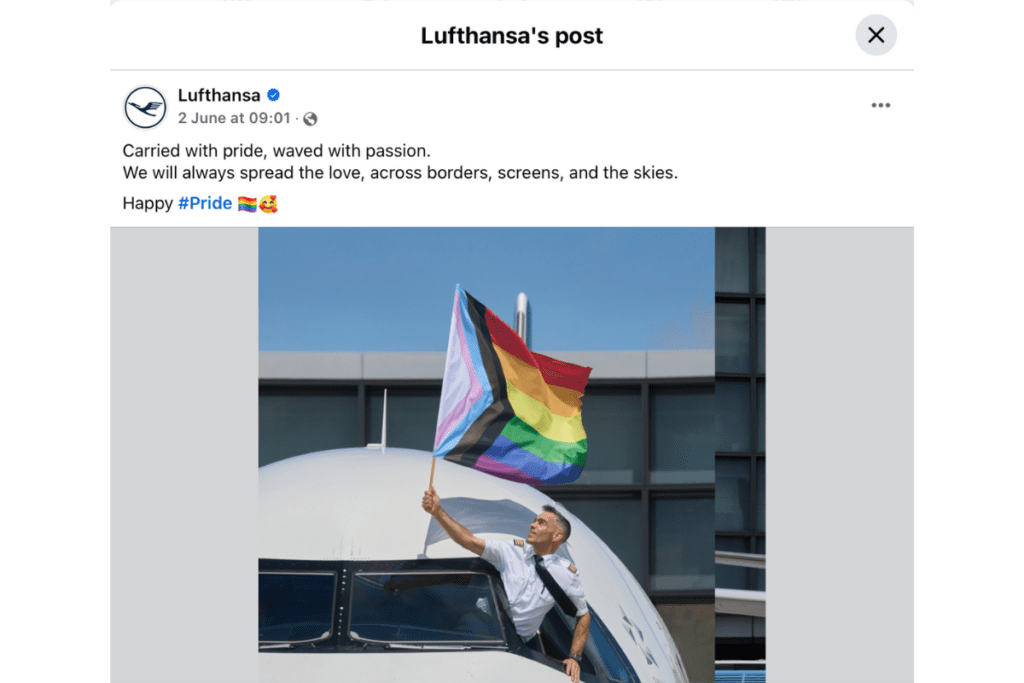
On June 2, the airline posted a photo of a pilot waving a Pride rainbow flag out the window of a cockpit, captioned with the words: “Carried with pride, waved with passion. We will always spread the love, across borders, screens, and the skies.”
Lufthansa has been quick to respond to critics.
It seemed like a pretty inoffensive and inspiring message that didn’t directly reference LGBTQ+ rights, but it didn’t take long for Lufthansa’s Facebook page to be deluged with homophobic comments.
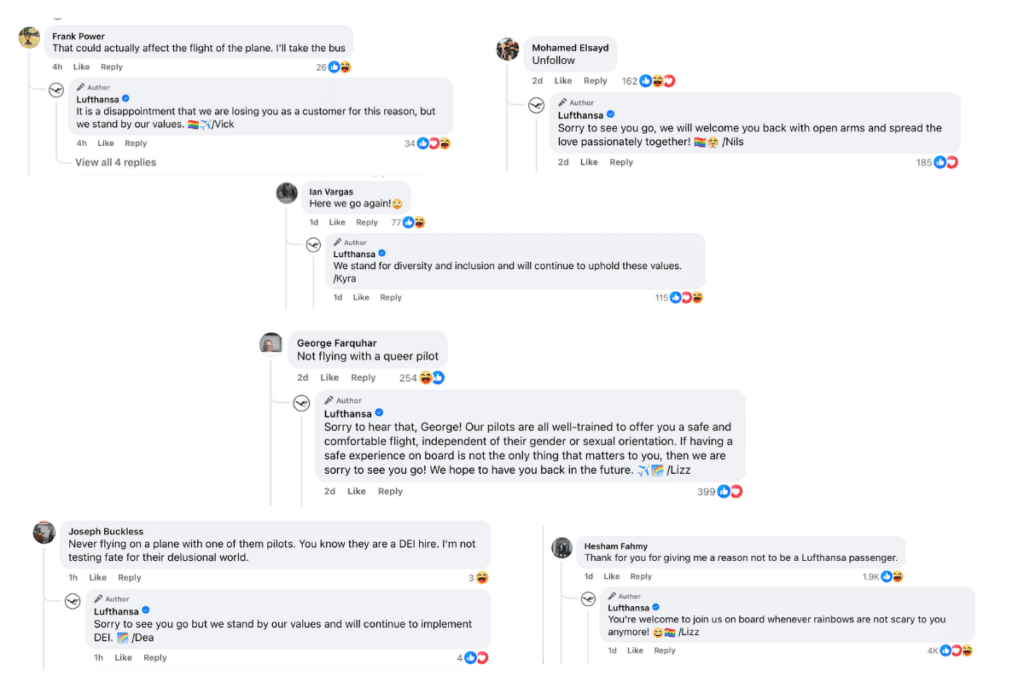
But it looks like Lufthansa knew exactly what it was getting itself into, and its social media team quickly fired back at critics with sassy replies that shut down the hateful comments without censoring them or turning off the comment feature altogether.
“Thank you for you for giving me a reason not to be a Lufthansa passenger,” one person wrote underneath the post. Lufthansa clapped back with: “You’re welcome to join us on board whenever rainbows are not scary to you anymore!”
While one person inferred that inclusivity was a safety issue, saying: “That could actually affect the flight of the plane. I’ll take the bus.”
Lufthansa was not having any of it, though, relying: “It is a disappointment that we are losing you as a customer for this reason, but we stand by our values.”
Another referenced DEI, saying: “Never flying on a plane with one of them pilots. You know they are a DEI hire. I’m not testing fate for their delusional world.”
Again, Lufthansa stood firm: “Sorry to see you go but we stand by our values and will continue to implement DEI.”
Many responses to the post have, however, been positive, and some fans have pointed out that the response has proved exactly why, even in 2025, Pride is still needed.
June has traditionally been recognized as Pride Month to mark the Stonewall riots that occurred in late June 1969. Since then, several US presidents have issued proclamations, declaring June as the month of Pride, but White House press secretary Karoline Leavitt said earlier this week that President Trump has no plans to issue a similar proclamation this year.
Trump was, however, the first Republican President to acknowledge LGBT Pride Month back in 2019 when he Tweeted a message in support of the commemoration.
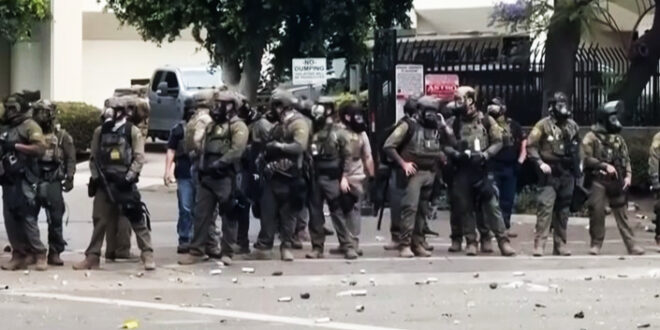
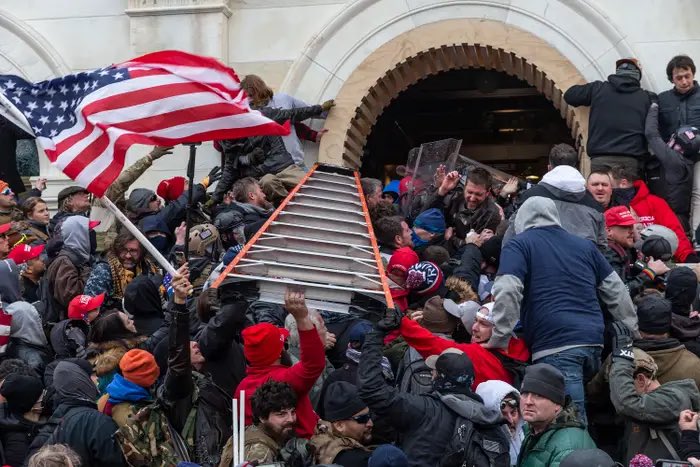
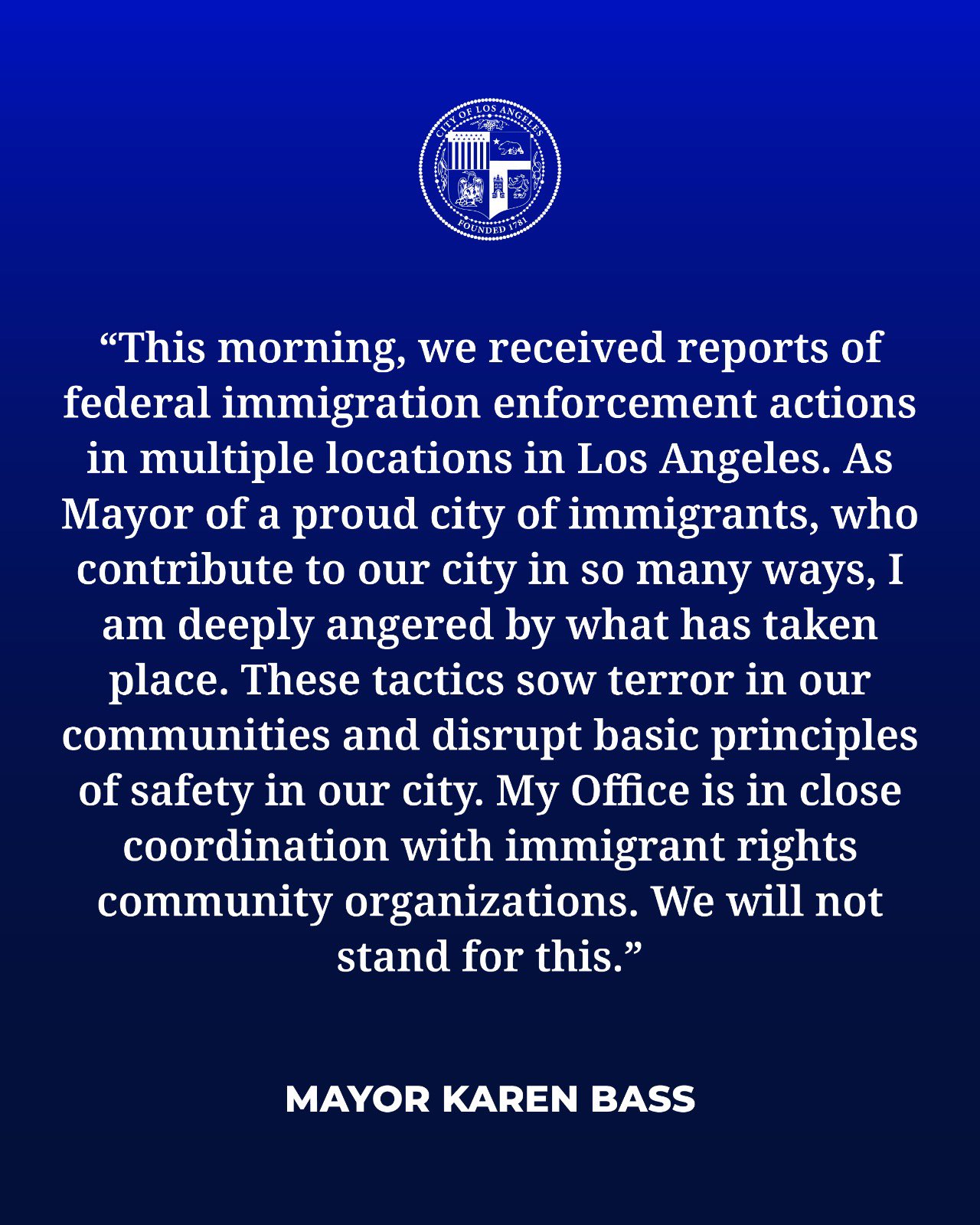
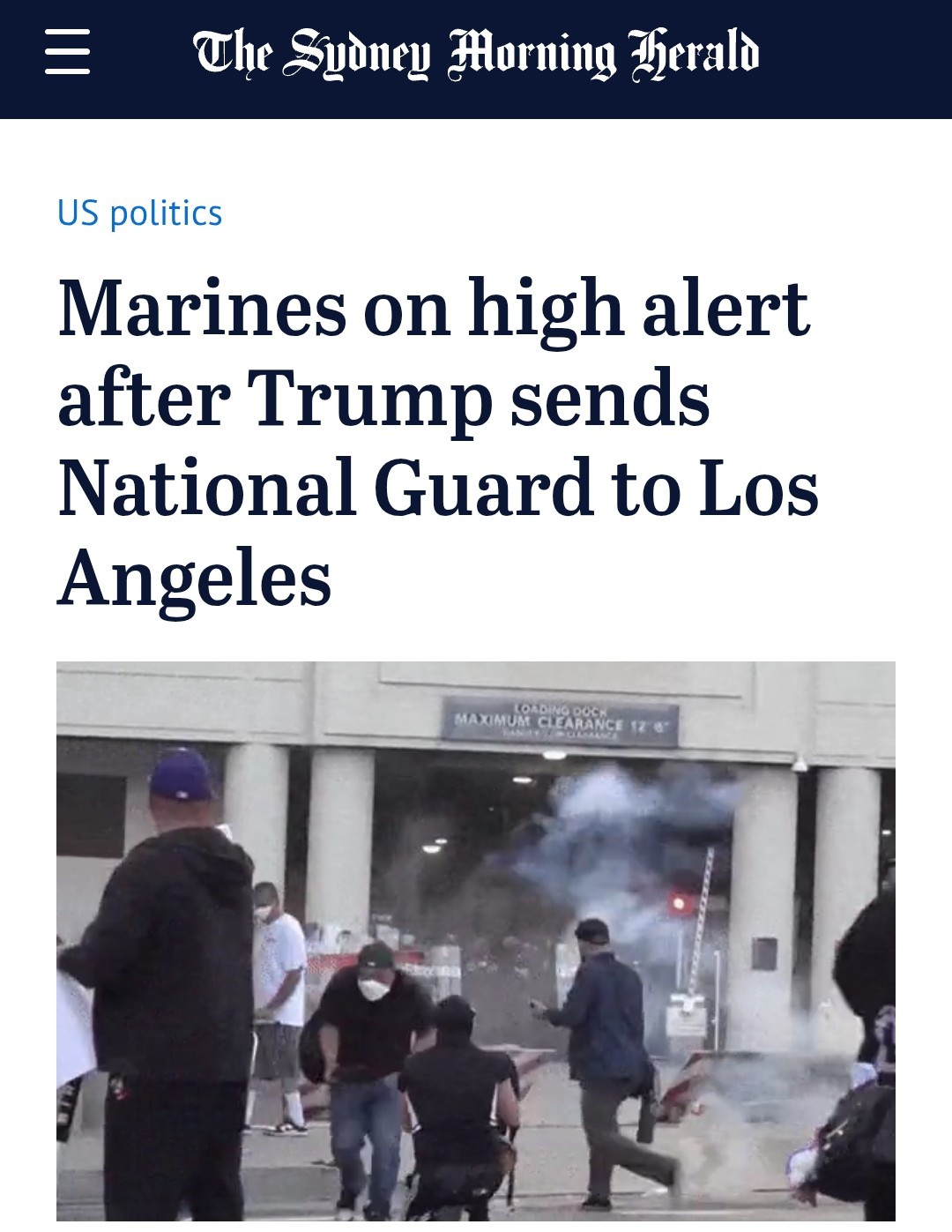
A third day of protests against immigration raids was expected to take place in the Los Angeles area on Sunday, hours after President Trump took the extraordinary action of ordering at least 2,000 National Guard members to assist immigration agents clashing with demonstrators.
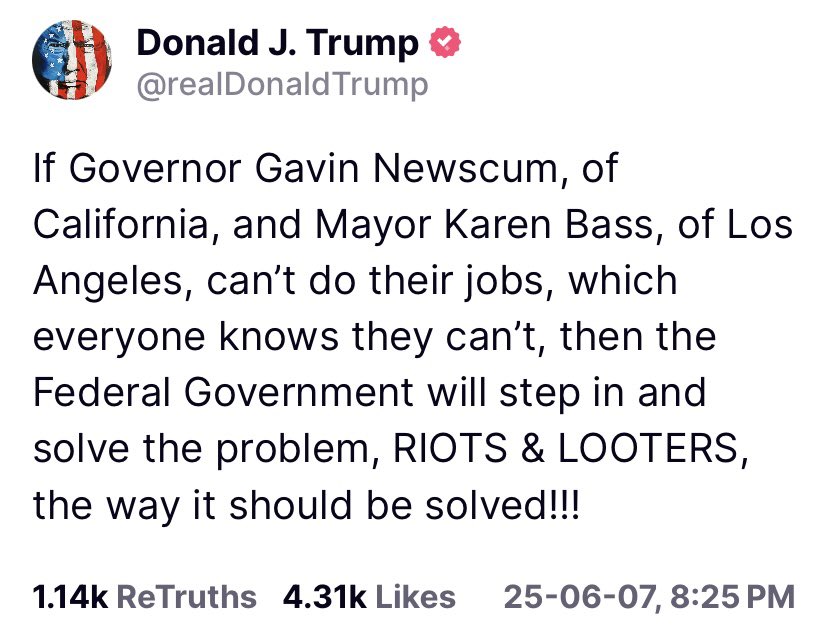
The announcement by Mr. Trump — who said that any protest or act of violence that impeded officials would be considered a “form of rebellion” — was an escalation that put Los Angeles squarely at the center of tensions over his administration’s immigration crackdown and made rare use of federal powers to bypass the authority of California’s governor, Gavin Newsom.
Mr. Trump issued the order on Saturday as law enforcement officers faced off with hundreds of protesters for a second consecutive day in the Los Angeles area, in some cases using rubber bullets and flash-bang grenades. Mr. Newsom described Mr. Trump’s order as “purposefully inflammatory,” saying that the federal government was mobilizing the National Guard “not because there is a shortage of law enforcement, but because they want a spectacle.”
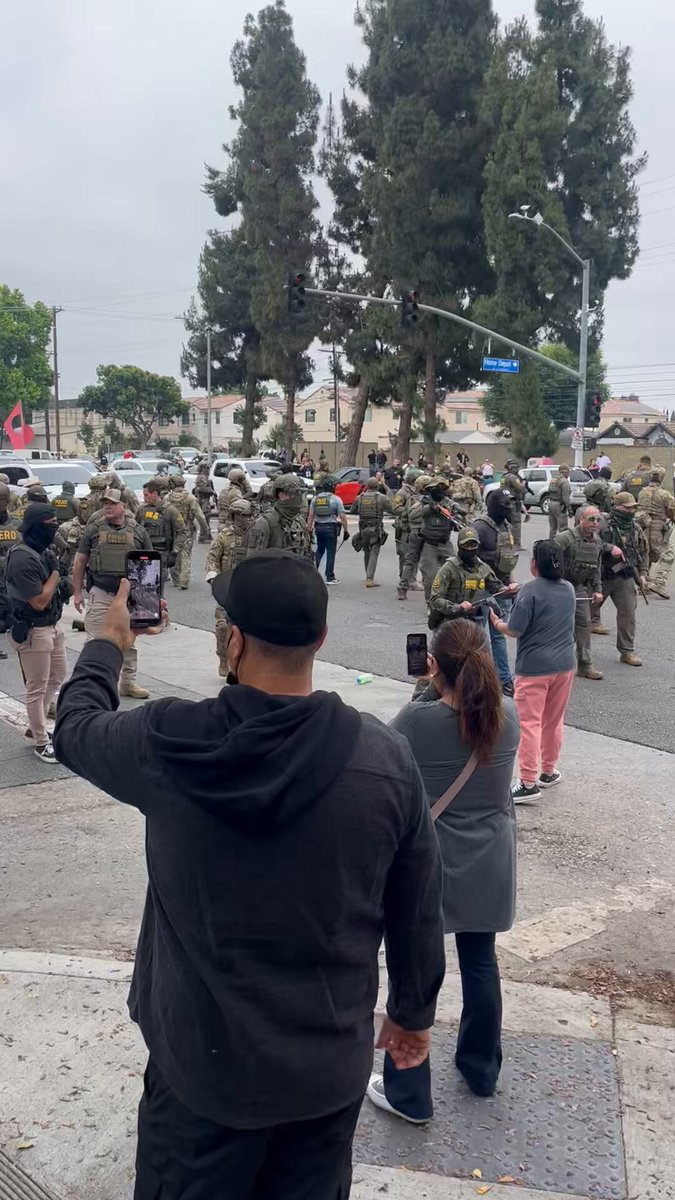
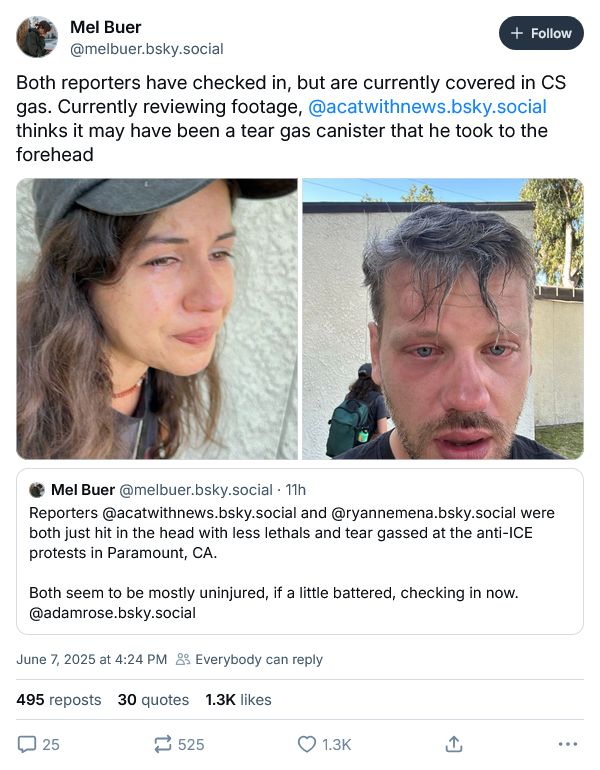
Confrontations broke out on Saturday near a Home Depot in the heavily Latino city of Paramount, south of Los Angeles, where federal agents were staging at a Department of Homeland Security office nearby.
Agents unleashed tear gas, flash-bang explosives and pepper balls, and protesters hurled rocks and cement at Border Patrol vehicles. Smoke wafted from small piles of burning refuse in the streets.
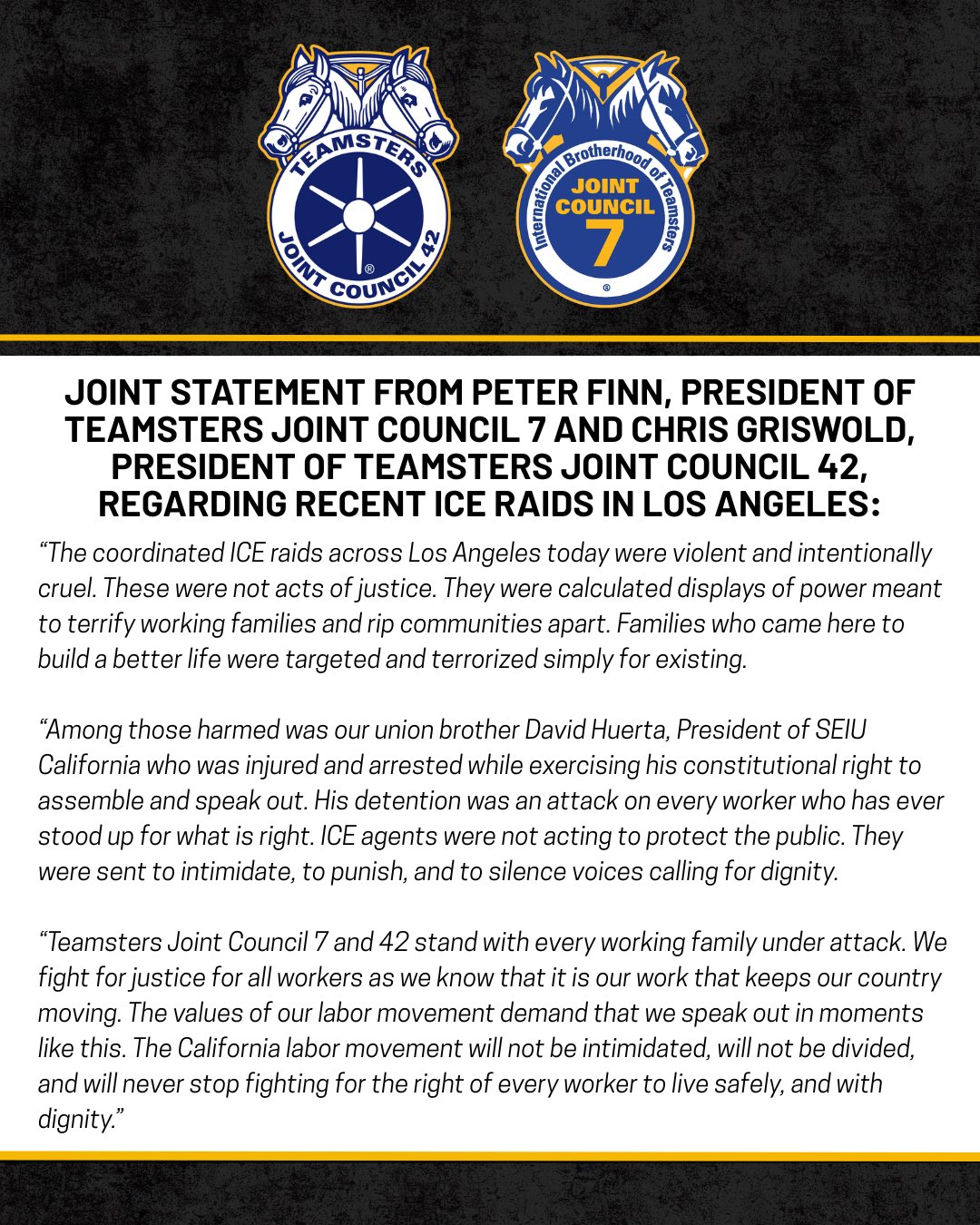
Tensions were high after a series of sweeps by immigration authorities the previous day, including in LA’s fashion district and at a Home Depot, as the weeklong tally of immigrant arrests in the city climbed past 100. A prominent union leader was arrested while protesting and accused of impeding law enforcement.
The National Guard has not yet been deployed to the sites of any protests in Los Angeles County, according to its sheriff’s department. “We were told that the National Guard had been deployed, however they are not on the scene or the ground yet,” Deputy Sheriff Tracy Koerner said around 1:45 a.m. local time. Earlier Sunday, Mayor Karen Bass said the National Guard had not been deployed in the city limits.
The Los Angeles Police Department said at midnight that it detained “multiple” people who breached an area near the city’s Metropolitan Detention Center where the agency had declared an “unlawful assembly.” “Those detained will be arrested and booked for failing to disperse,” the force said on social media. Earlier, police said a section of Alameda Street was closed to all vehicle and pedestrian traffic.
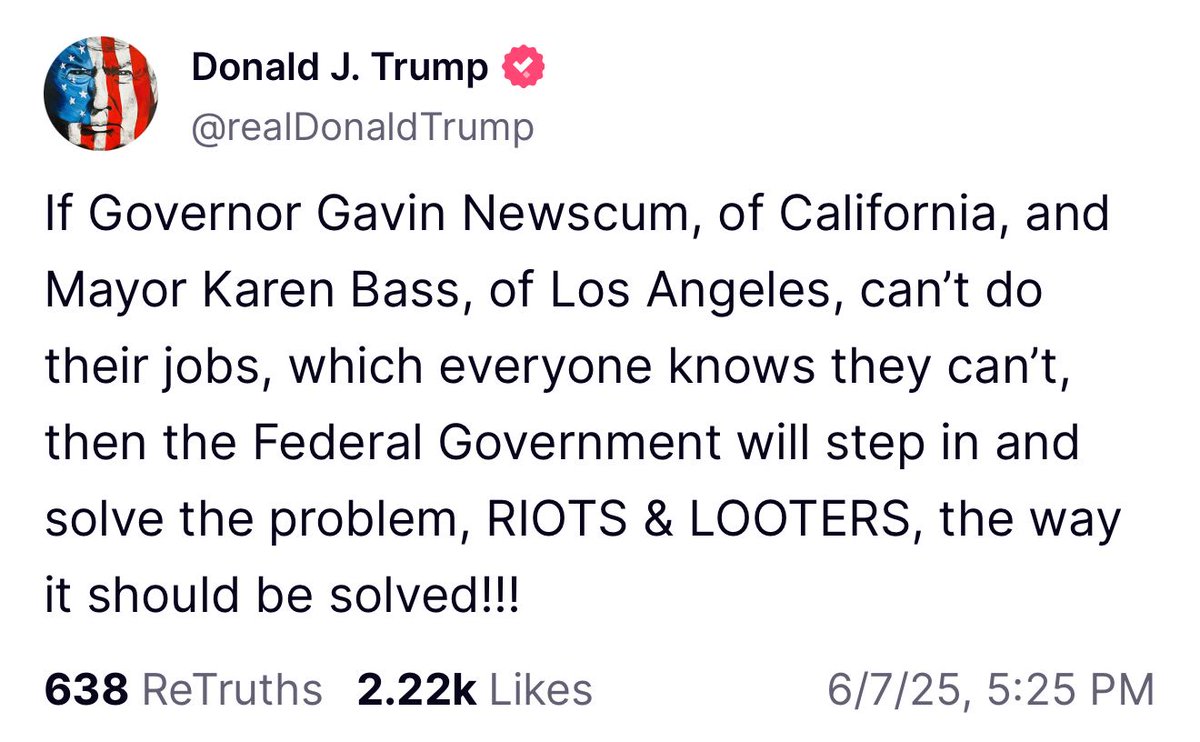
The cult is celebrating on X, with some calling for the use of “live rounds” on protesters. Trump’s post below came at 2:41am, presumably upon his return from a UFC match where he was seated with Mike Tyson.
Post
See new posts
Conversation
emptywheel (check)
@emptywheel
SEIU CA President David Huerta was assaulted and arrested for peaceful protest. The injuries the assault caused required hospital care.
Quote
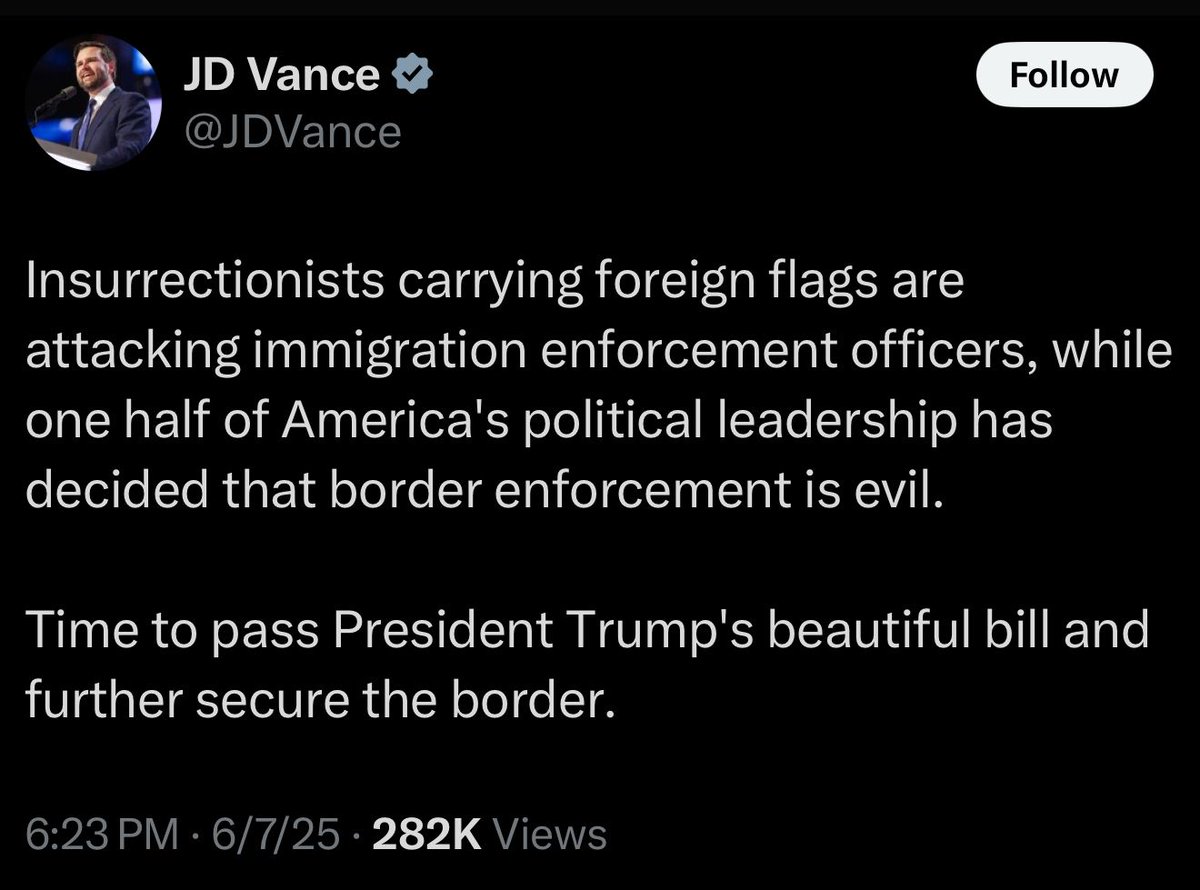
JD Vance
@JDVance
·
Replying to @JDVance
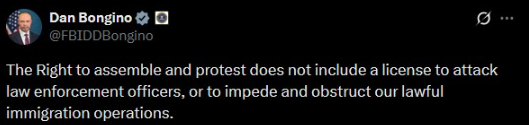
For the far left rioters, some helpful advice; peaceful protest is good. Rioting and obstructing justice is not.
Deploying troops to communities already under pressure is not leadership—it’s provocation. The Trump Administration is weaponizing fear to divide and destabilize. We will not be silent. We stand with those targeted and terrorized. We fight for justice. Always.
Quote
Gavin Newsom
@GavinNewsom
·
The federal government is taking over the California National Guard and deploying 2,000 soldiers in Los Angeles — not because there is a shortage of law enforcement, but because they want a spectacle. Don’t give them one.
Brian Allen
@allenanalysis
Subscribe
In case you were wondering what sparked the LA standoff between protesters and federal agents, this is it. Immigrants showed up for routine ICE check-ins and were detained on the spot. Hauled into the basement. Held overnight like fugitives. No warning. No due process. Just snatched. “Land of the free,” right?
Republicans against Trump
@RpsAgainstTrump
Subscribe
During his first term, Trump asked Defense Secretary Mark Esper to shoot protesters. Esper refused. Now he has Pete Hegseth. God help us all
JD Vance now wants to use the chaos ICE is causing in Los Angeles as pretext to pressure politicians to pass the Republican budget bill that will saddle Americans with trillions of dollars of debt, skyrocket the deficit, take away people’s healthcare, and give massive tax breaks to the wealthy.
Jo
@JoJoFromJerz
Subscribe
Weird how he didn’t call up the National Guard on January 6th.
Post
See new posts
Conversation
Crooks and Liars
@crooksandliars
Trump sends in his brown shirts to cause disruption so he can use the insurrection act or whatever fucked rational he comes up with to send in the the National G. Mussolini gives a thumbs up in his grave.
Quote
MeidasTouch
@MeidasTouch
·
Trump lit the match, poured the gasoline, and now wants to use the blaze he is creating as pretext to burn it all down.
A powder keg is about to explode: With masks to hide their identity, this is what a Nazi takeover of the streets of Los Angeles looks like. Trump’s cosplaying ICE Gestapo is carrying out a lawless assault against one of the most diverse cities in America.
I was told ICE was going to arrest gangsters and mobsters. But all I see is fat white guys in cosplay doin jobsite raids, school raids, and arresting mothers with kids who are applying for citizenship.
Ask yourself why ICE is conducting raids in cities like LA and Chicago, where they face strong opposition, while massive agribusinesses in places like Kristi Noem’s South Dakota remain untouched.
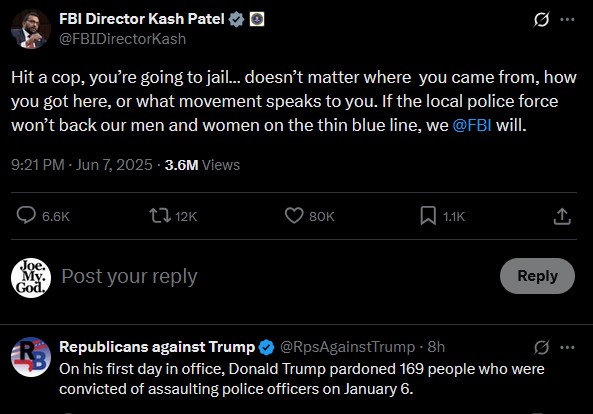
Your boss pardoned cop beaters at the January 6th riot
CBP
@CBP
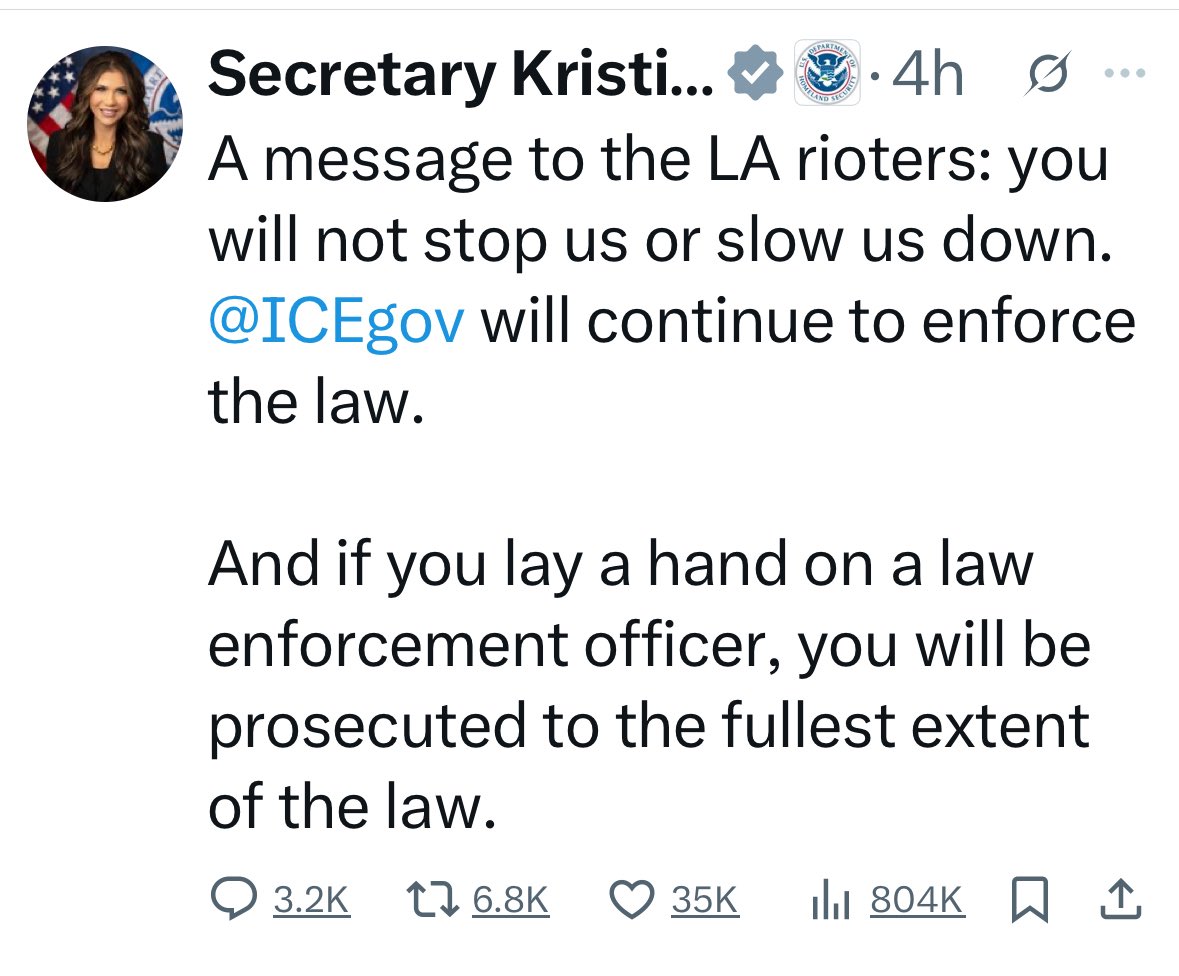
Let this be clear: Anyone who assaults or impedes a federal law enforcement officer or agent in the performance of their duties will be arrested and swiftly prosecuted to the fullest extent of the law. Attack a cop, and life long consequences will follow!
This guy is living out his camo fantasy right now like it’s a game. Disgusting.
Acyn
@Acyn
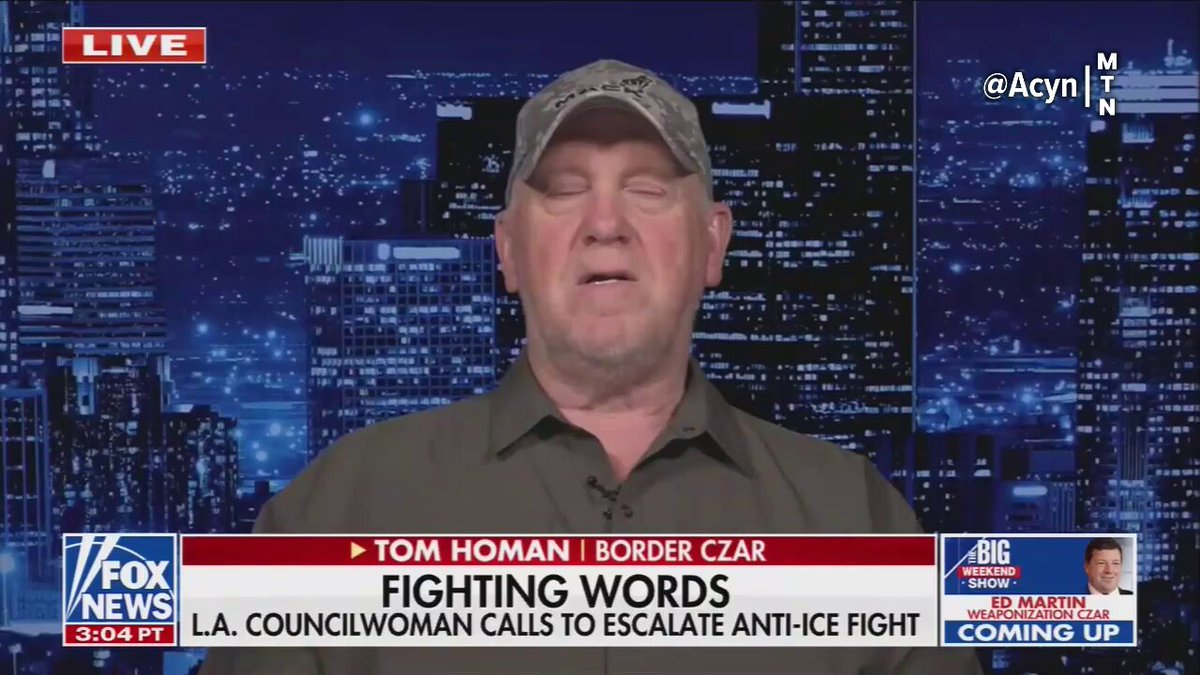
Tom Homan: We are making Los Angeles safer. Mayor Bass should be thanking us. She says they are going to mobilize—guess what? We are already mobilizing. We are going to bring the National Guard in tonight
President Obama deported 3 million people and managed to do so without using stormtroopers and the National Guard. Like everything else, Obama was better at that too.
Trump is sending in highly visible and armored ICE agents to LA and other big cities. He’s deliberately creating conflict so he can federalize the National Guard to go in and start hurting American citizens. That’s the end game.
The person most responsible for the chaos and violence in southern California right now is @StephenM – who screamed at and fired ICE officials for not making 3,000 arrests per day Now he’s put ICE agents, police officers, protesters, immigrants, and innocent bystanders at riskShow more
It’s even worse than just “capturing them at court dates”…they are dropping charges against the people for the sole purpose of arresting and deporting them as they are leaving the courthouse, It’s underhanded bullshit.
TACO will declare a national emergency and then suspend Habeas Corpus and initiate mass arrests. The captured true American Patriots protesting the Dear TACO will be sent to concentration camps. Who will stop him? More court orders.
Legal or not, it’s going to take an escalation by the Mayor or Governor, telling their officers to arrest and detain ICE members for trespassing and kidnapping, to attempt to end this. Governor could just tell the National Guard to disobey. It’s going to take open defiance by those with the power to smack down these fascists who think they have all the power.
June 8, 1956 Air Force Tech Sergeant Richard B. Fitzgibbon, of North Weymouth, Massachusetts is listed by the U.S. Department of Defense as being the first U.S. military casualty of the Vietnam War. His name is listed on The Wall (the Vietnam Veterans Memorial in Washington, DC) with that of his son, Marine Corps Lance Colonel Richard B. Fitzgibbon III, who died September 7, 1965.
June 8, 1966 270 walked out of graduation ceremonies at New York University (NYU) to protest the presentation of an honorary degree to Robert McNamara, then the Secretary of Defense and responsible for U.S. forces waging war in Vietnam.
June 8, 1969 Two-thirds of the graduating class of Brown University (Providence, Rhode Island) turned their backs on Secretary of State Henry Kissinger as he gave the commencement address, silently expressing their opposition to U.S. foreign policy and the war in Vietnam.
June 8, 2002 1500 Israeli and other peace activists demonstrated peacefully in front of the Prime Minister’s Jerusalem residence in opposition to 35 years of Israeli occupation of Palestinian territory. “The occupation is hurting us all,” said advertising placed by the organizers, “draining billions of shekels from us, forcing cutbacks in social and educational programs.” Coalition of Women for a Just Peace leading a demonstration against the continued Israeli occupation of Palestine. They also claimed the occupation inculcates the belief that “violence is the only way to solve problems” and “allows militarism to run rampant in our lives.” Buses with banners saying “End the Occupation” and “The Occupation is Hurting Us All” started out from four locations throughout Israel, arriving in Jerusalem together. A choir of Israeli and Palestinian children had been scheduled to close the action but their conductor feared government retribution; the demonstration ended in silence instead of with children’s voices.





































 Scottie's Playtime