Anthropic partnered with the US government to create a filter meant to block Claude from helping someone build a nuke. Experts are divided on whether its a necessary protection—or a protection at all.
At the end of August, the AI company Anthropicannounced that its chatbot Claude wouldn’t help anyone build a nuclear weapon. According to Anthropic, it had partnered with the Department of Energy (DOE) and the National Nuclear Security Administration (NNSA) to make sure Claude wouldn’t spill nuclear secrets.
The manufacture of nuclear weapons is both a precise science and a solved problem. A lot of the information about America’s most advanced nuclear weapons is Top Secret, but the original nuclear science is 80 years old. North Korea proved that a dedicated country with an interest in acquiring the bomb can do it, and it didn’t need a chatbot’s help.
How, exactly, did the US government work with an AI company to make sure a chatbot wasn’t spilling sensitive nuclear secrets? And also: Was there ever a danger of a chatbot helping someone build a nuke in the first place?
The answer to the first question is that it used Amazon. The answer to the second question is complicated.
Amazon Web Services (AWS) offers Top Secret cloud services to government clients where they can store sensitive and classified information. The DOE already had several of these servers when it started to work with Anthropic. (snip-MORE on the page. It’s good-read it!)
Apparently, Donald Trump felt threatened by a successful, peaceful protest and by seeing millions of us out in the streets protesting against him. Saturday night, he posted a childish, petulant video, portraying himself as the king of sh*t. Then, this morning, he resorted to a temper tantrum, insisting he would use his “absolute power” to invoke the Insurrection Act.
Of course, 50% of presidents have not invoked the Act. Wrong again.
Trump’s renewed focus on the Insurrection Act comes on the heels of a Seventh Circuit decision last week declining to permit Trump to deploy troops to Chicago. “Political opposition is not rebellion,” wrote a panel of the Seventh Circuit Court of Appeals, affirming District Judge April Perry. You can read the court’s order here. The panel consisted of appointees from the administrations of Presidents George H.W. Bush, Barack Obama, and Donald Trump.
That case is not about the Insurrection Act, however. Trump has, so far, stopped short of invoking it, instead using related authority that the administration maintains allows it to federalize National Guard troops, even over a governor’s objection.
The appellate judges in the Chicago case affirmed the portion of Judge Perry’s order that temporarily enjoined the administration from deploying the Guard within Illinois. They held that even affording Trump the substantial deference owed to a president’s decisions, Trump had failed to show he met the predicates for doing so. Under 10 U.S.C. § 12406, the administration had to establish that there was either (1) a rebellion or a danger of one or (2) that the situation on the ground made it impossible for the President to execute the laws of the United States with regular forces.
Among their justifications for that decision: “Despite President Trump’s federalization of Guard troops as necessary to enforce federal immigration law, DHS and ICE have touted the success of Operation Midway Blitz. In an October 3 press release, DHS stated that ICE and CBP have effected more than 1,000 immigration arrests since the start of the Operation. In a September 26 DHS press release, the Department declared that protests had not slowed ICE down, and, in fact, ICE has significantly increased its deportation and arrest numbers year over year.” The government contradicted its own case in its self-congratulatory press releases.
There is a technical legal point here. Because the plaintiffs had asked the court to prevent Trump both from federalizing the Guard and from deploying them, the panel looked at those two separately. To obtain an injunction, one of the elements plaintiffs have to establish is that they will be irreparably injured without it. The court held that “the administration’s likely violation of Illinois’s Tenth Amendment rights by deploying Guard troops in the state over the state’s objection ‘constitutes proof of an irreparable harm’” and enjoined their deployment. But it made a different finding when it came to Trump’s ability to federalize Guard troops, holding that it would not enjoin that action because the injury “appears to be relatively minimal.” This effectively gives the state the relief it sought, while interestingly, putting federalized state National Guard troops on the federal payroll during the shutdown, perhaps a topic for another day.
A key point we’ve been tracking in these cases reemerged in this one: Trump’s inexorable march towards obtaining more power for himself. The administration argued, as it has before, that a president’s decision to federalize National Guard troops under § 12406 cannot be reviewed by a judge. That really would make Trump a king. But the panel dismissed the argument, at least at this stage in the proceedings, rejecting the administration’s attempt to use an older case, Martin v. Mott, which we’ve discussed here and here, as going too far. That case involved an effort by militia men to override a presidential decision during a time of open war, and the panel said that did not suggest that the judicial branch of government could not review decisions by the executive branch. They concluded that nothing in the statute “makes the president the sole judge” of whether the reason for invoking it passes muster.
The Solicitor General filed an emergency appeal to the Supreme Court, which means we’ll spend at least part of the week ahead court watching.
All of that legal wrangling explains why Trump returns to threats to invoke the Insurrection Act whenever courts step in to check his authority. With the National Guard, there are clearly some limits on presidential power. Trump seems to believe none of them come into play when the Insurrection Act is involved. The first parts of the Act became law in 1792. It permits the president to deploy the military on domestic soil and use American soldiers against American citizens, making it the chief exception to the Posse Comitatus Act, which would otherwise prohibit that. There are exceptional circumstances where that sort of extreme action is necessary—the opening moments of the Civil War involved President Lincoln using it for just that purpose. But the law has been described by experts as “dangerously overbroad and ripe for abuse.”
Chief among its problems is language that could easily be interpreted as giving the president sole authority to determine when it should be invoked, without resort to the courts for constitutional review. This is why the Supreme Court’s decision about the reach of Martin v. Mott in Chicago and other cases will be so important. Whether the Court will finally take steps to curtail Trump’s attempt to consolidate all power in his own hands remains to be seen.
For the record, even Twitter AI Grok says that Trump got it wrong when it came to the number of presidents who’ve invoked the Insurrection Act: “15 U.S. presidents have invoked the Insurrection Act since its passage in 1807, including Thomas Jefferson, Abraham Lincoln, Dwight D. Eisenhower, and George H.W. Bush. It has been used about 30 times total for events like the Civil War, civil rights enforcement, and riots. That’s roughly a third of presidents, not half as claimed.” And a far better question is, how many times has it been invoked over the objection of the governor, which is a much smaller number.
The most recent use of the Act happened at the request of California’s governor, when sustained riots broke out following the April 29, 1992, acquittal of four Los Angeles police officers who were captured on videotape brutally beating Rodney King, a Black motorist. PresidentGeorge H.W. Bush deployed the National Guard and U.S. troops to restore order after both the governor and the mayor requested federal assistance to help stop the shootings, arson, looting, and other violence in the city that resulted in the deaths of more than 50 people, thousands of injuries and arrests, and property damage of more than $1 billion. That’s the sort of situation the Act is meant for. Not ones where a president trumps up baseless claims of out-of-control crime and violence to serve his own political purposes.
There is no good faith basis underlying Trump’s asserted justification for bringing in the Guard or potentially invoking the Insurrection Act. But that doesn’t matter if you’ve decided you’re a king.
So, when has the Insurrection Act been used absent a request for the governor and local officials? That happened during the Civil Rights Movement in a few extreme situations where the state was interfering with the enforcement of Supreme Court decisions. And in Alabama, George Wallace’s threatened stand in the schoolhouse door to prevent school integration faded away when President Kennedy sent in federal troops using a measure related to the Insurrection Act.
It’s important to understand that Trump is using a fictitious basis for invoking a statute designed for use in only the most serious of situations. There is no rampant crime that local law enforcement can’t handle as well without federal troops as they could with them, and certainly no rebellion. Trump has no plans to use federal forces to enforce Americans’ civil rights. Instead, it’s the same theme we’ve seen since he took office: An effort to seize more and more power and create a lopside executive branch that can rule over the rest of government—and the American people. (snip)
There is more going on this week, although that feels like enough.
The Courts. As the shutdown continues, the federal courts are preparing to run out of funding on Monday. They will maintain “limited operations necessary to perform the Judiciary’s constitutional functions” for as long as the shutdown continues. Constitutional litigation and criminal cases will continue to move forward, but staff will be furloughed and much of the courts’ civil work will slow down to a snail’s pace.
Abrego Garcia. A hearing on Abrego Garcia’s motions for selective and vindictive prosecution in the Tennessee-based criminal case the Justice Department charged him in after his return from deportation has been scheduled for November 4 and 5. In advance, we are learning some information about the evidence he plans to put on.
Abrego Garcia wants to call at least seven witnesses to testify. The government is apparently preparing to attempt to quash subpoenas for high-level officials at DHS and DOJ, and possibly someone from the White House. Abrego Garcia has also identified a series of emails between the U.S. Attorney’s Office and main Justice that he requests access to, to see if they shed any light on the decision to indict him for old crimes, which required obtaining the cooperation of a more culpable individual by promising to terminate his deportation proceedings. Abrego Garcia complains that he’s received very little information from the government in discovery because the local U.S. Attorney believes what he has requested is protected by a number of government privileges including deliberative process and attorney work product. This case, which has dropped off the radar screen in recent weeks, is about to return in a big way, setting the stage for similar motions in the Trump revenge cases as well.
Comey Motions. This case is still scheduled for trial on January 5, 2026, because the Eastern District of Virginia is the rocket docket. Comey’s first round of motions are due on Monday. The government will have two weeks to respond. It’s unclear which motions we will see, but there will likely be several to dismiss the case entirely, including ones arguing the U.S. Attorney was appointed improperly, rendering the indictment invalid, along with selective and vindictive prosecution motions.
Book tour. Also, this week I’m off on my book tour. Giving Up Is Unforgivable will officially be on sale on Tuesday. If you haven’t already, grab your copy here. If you’re in New York City, Preet Bharara and I will be at the 92nd Street Y, and they’ve moved us to a larger space, so there are more tickets available, if you weren’t able to get them earlier. I’d love to get to see you!
There may be lighter posting than usual this week and next while I’m traveling, but I’ll be here for all the important developments, and I’ll try to share pictures from the road with you too! Please make sure you say hi if you’re able to join me at one of our other tour locations.
October 20, 1947 The House Un-American Activities Committee (HUAC) opened public hearings into alleged Communist influence in Hollywood. To counter what they claimed were reckless attacks by HUAC, a group of motion picture industry luminaries, led by actor Humphrey Bogart and his wife, Lauren Bacall, John Huston, William Wyler, Gene Kelly and others, established the Committee for the First Amendment (CFA). Read more
October 20, 1962 A folk music album, “Peter, Paul and Mary,” hit No. 1 on U.S. record sales charts. The group’s music addressed real issues – war, civil rights, poverty – and became popular across the United States. The trio’s version of “If I Had A Hammer” (originally recorded by The Weavers, which included the song’s composers, Pete Seeger and Lee Hays) was not only a popular single, but was also embraced as an anthem by the civil rights movement. About Peter, Paul and Mary
October 20, 1967 The biggest demonstration to date against American involvement in the Vietnamese War took place in Oakland, California. An estimated 5,000-10,000 people poured onto the streets to demonstrate in a fifth day of massive protests against the conscription of soldiers to serve in the war. [see October 16, 1967] Read more
October 20, 1973 In what was immediately called the “Saturday Night Massacre,” President Richard Nixon’s Press Secretary, Ron Ziegler, announced that Special Watergate Prosecutor Archibald Cox had been dismissed. Cox had been investigating Nixon, his administration and re-election campaign. Nixon had demanded that he rescind his subpoena for White House recordings. Archibald Cox Richard Nixon Earlier in the day, Attorney General Elliot Richardson had resigned, and Deputy Attorney General William Ruckelshaus had been fired, both for refusing to dismiss Cox. Solicitor General Robert Bork, filling the vacuum left by the departure of his two Justice Department superiors, fired Cox at the president’s direction.
Growing up as someone who is different from the majority is difficult no matter the circumstances. For the LGBTQ+ it is horrific when just your very existence is called an abomination and you are equated with the worst being in history. Especially when your parents and your god are pushing the idea that you are a monster who can only be cured if you follow their god, their church doctrines, have their feelings about everything in your life. Hugs.
A guest essay by Sean Robinson – Spencer’s boyfriend.
Subscribe
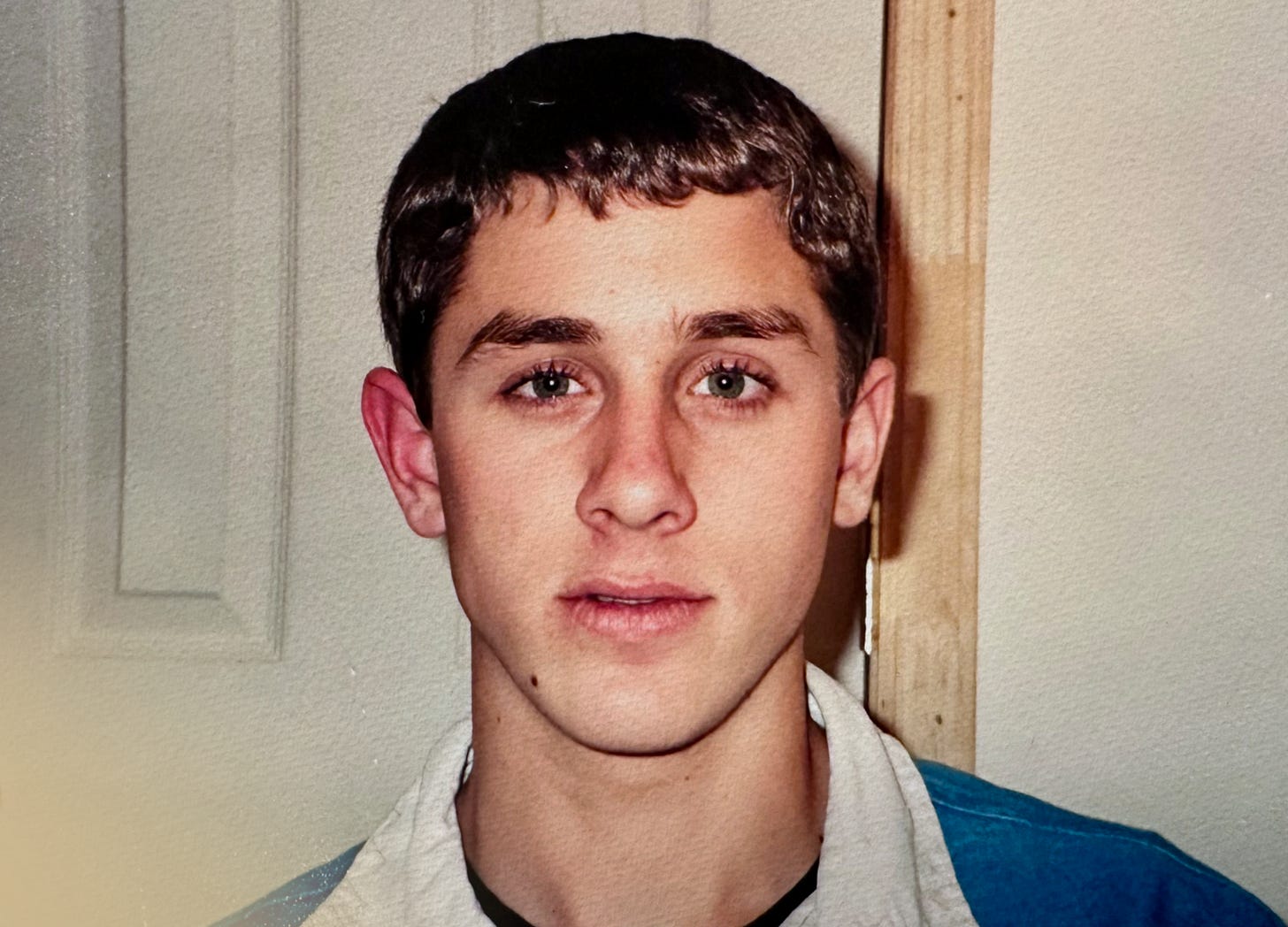
When I was around 10 years old, I remember horsing around in the grass with my oldest brother. I asked him the meaning of homosexuality, a word that I had heard from my parents and from the New Order Amish and Mennonite communities I was surrounded by growing up in upstate New York and rural Virginia.
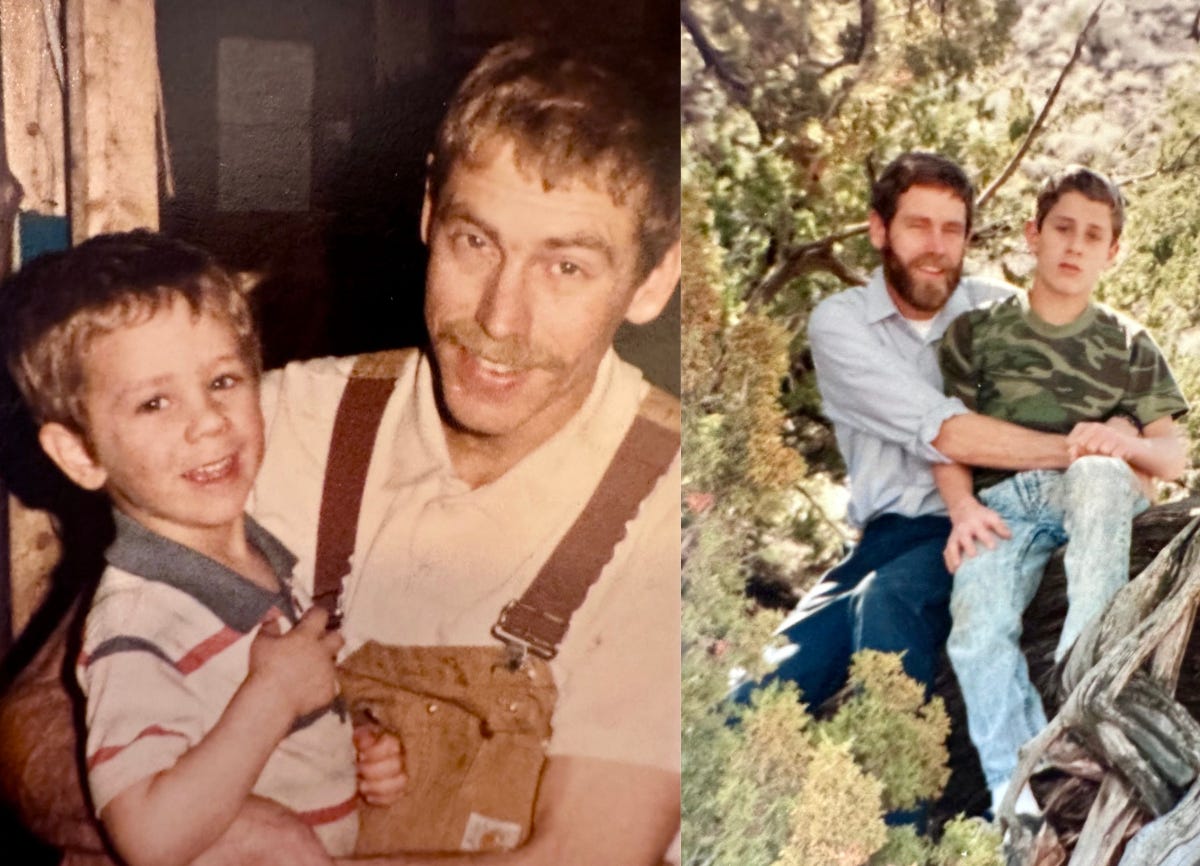
Sean and his dad Upstate New York. Photo courtesy of Sean.
While I wasn’t certain what the word meant, I knew it was bad and I was pretty sure it was me. So when my brother responded to my question by saying that homosexuality is “demonic,” I pushed those thoughts down.
A few years later, my dad told me that once someone becomes a homosexual, they will “want more and more and more” and it will lead to a sexual desire for “children, then animals, then blood.”
Sean and his dad through the years. Photos courtesy of Sean.
Subscribe
Hearing these ideas persistently and consistently made me feel like there was this horrible thing inside of me that I just hated. I had learned that it was akin to being a pedophile, and that’s how I felt about myself.
These feelings created so much shame and fear but most of all a level of embarrassment that was so intense that I vowed to myself I would take my secret to the grave.
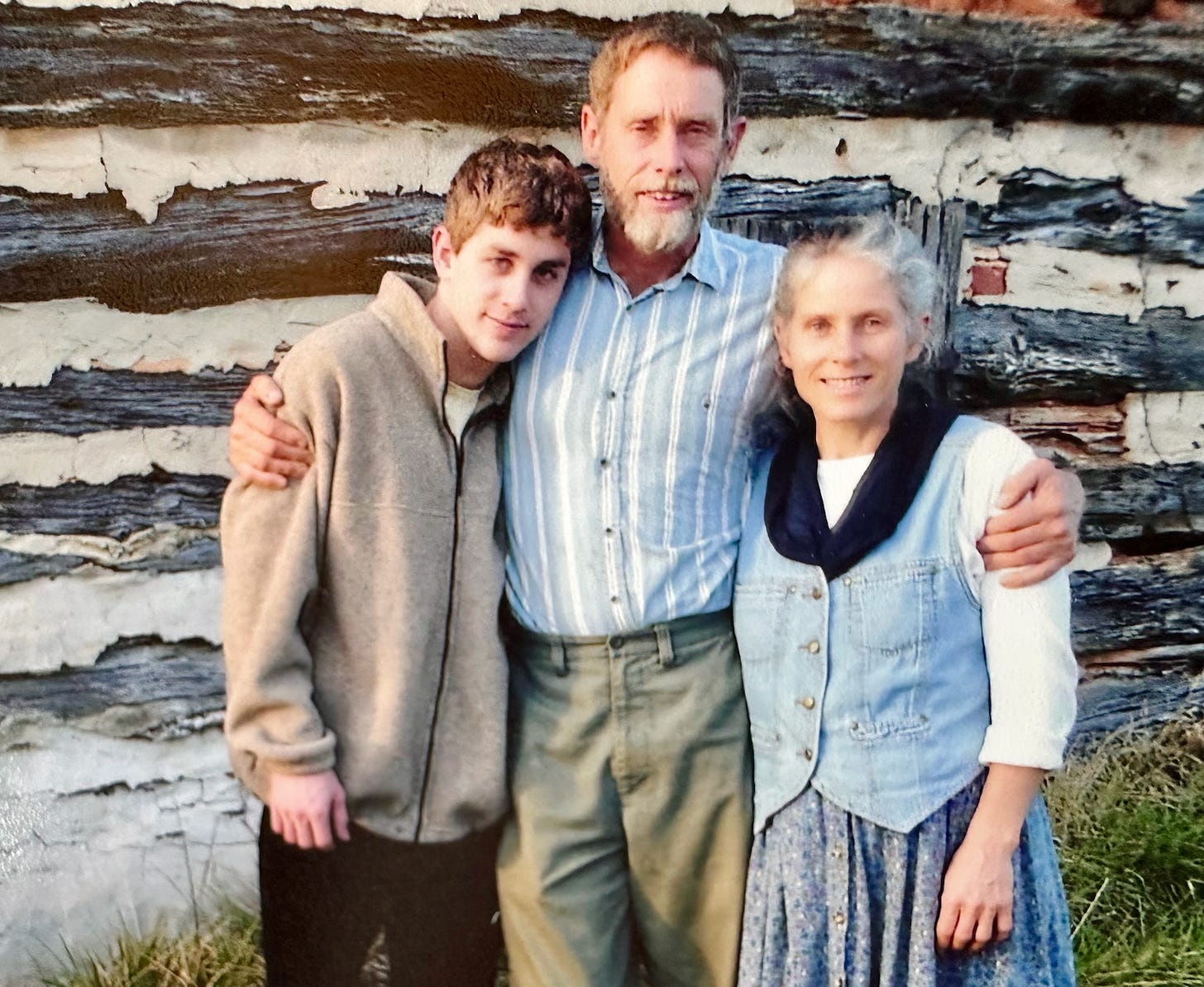
Sean and his parents. Photo courtesy of Sean.
Subscribe
But I didn’t. When I met just one gay person at Danville Community College, I felt a small but significant rumbling of hope. This encounter gave me the courage to leave. So at 17, I told my parents I was moving to New York City to pursue the performing arts.
While I was semi-interested in being on screen, I saw NYC as a symbol of a new life where I could be my authentic self. A few months after I moved, I came out to my mom over the phone, who later told me—through a puddle of tears—that I might as well have died in a car accident.
I had to dig to make a life for myself with few people in my corner. I utilized NYC social programs like SNAP benefits, free health care and low-income housing. These services gave me the bootstraps I needed to pull myself up.
The years of familial and community rejection and efforts to change me through conversion therapy took more than two decades of treatment, medication and supportive friendships to help me find a formula where today—at 40 years old—I can manage my depression, anxiety, tics (that were at one point debilitating), no-contact relationship with my parents and low self-esteem.
I am so grateful to the heroes who helped me through these years: Paul Warner, Jerry Meadors and countless others. You lifted me up, taught me the ropes, allowed me to couch surf and showered me with love.
Sean in his teens. Photo courtesy of Sean.
Fighting the demons of my past, including years of religious trauma and physical abuse disguised as “corporal punishment,” is something I’d wish on nobody. When I read Uncloseted stories that discuss how nearly 40% of LGBTQ kids seriously considered suicide in the last year, my heart breaks because I know that could have been me if my path had veered a degree in a different direction.
Sean with Spencer and his psychiatric service dog Carson. Photo courtesy of Sean.
Flash forward 20 years and I’m sitting next to Spencer, who’s helping shine a spotlight on the very thing I tried to suppress in the darkness of my mind. I am now a video editor at MTV, working on RuPaul’s Drag Race, the groundbreaking television show that has helped so many queer kids across America feel seen and feel safe—something every child deserves.
I’ve always been resilient and tough.
But finally, I feel calm and free.
Response from Sean’s Dad:
In a text message to Uncloseted Media, Sean’s dad, Chris Robinson, wrote that he remembers saying that “when the moral fabric of societies begin to decay it usually starts with the sin of not acknowledging Almighty God, the Giver and Sustainer of life. [If] that condition of man continues then more sin comes [including] adultery, fornication and general unfaithfulness. The next level is men allowing women and children to rule. This would have been the feminist movement of the 60’s. Next comes homosexuality then bestiality and finishing up with child and adult sacrifice and much shedding of blood. This progression is recorded in Genesis and through the Chronicles and Kings in the Bible.”
In response to Sean’s references to corporal punishment, his dad wrote that he remembers being “shocked at [Sean’s] fearless defiance to [his] authority … as being the one responsible for order in the home” and that he would punish him—after multiple verbal warnings for misbehavior—by giving him “4 or 5 good licks with the switch and [would then] give him a hug and prayer and hope he got the message.” His dad added that he and Sean had many good times too and that he “still shed[s] a tear at times in memory of [his] little Seany.”
Response from Sean’s Mom:
In a text message to Uncloseted Media, Sean’s mom, Michelle Robinson, does not remember telling Sean after he came out that he might as well have died in a car accident. “My mind is blank for anything specific,” she wrote.
In response to Sean’s reference to corporal punishment, his mom says that out of the hundred times where corporal punishment was administered correctly through biblical spanking done with love, there were “a handful of times when his father admits he acted more in anger as [an] immediate reaction because of Sean’s behavior and he realizes he should’ve done that differently [and that his dad] always immediately apologized and they always had special time together and they worked through that.”
“We believed in honoring God with our life. We were not perfect but our heart was to please God,” she wrote, adding that Sean was treated with love as a child and through adulthood.
Sean’s brother did not respond to Uncloseted Media’s request for comment.
If objective, nonpartisan, rigorous, LGBTQ-focused journalism is important to you, please consider making a tax-deductible donation through our fiscal sponsor, Resource Impact, by clicking this button:
I have been really struggling lately. I keep saving comments to answer later that days go by I don’t get to. I keep saving them so I can reply. I have not announced it here on the Play Time but I finally made an appointment with a therapist.
When I made the appointment they asked a few questions and then tried to get me to come in the next morning. I said no. I just couldn’t deal with it. On top of the car just needing a new engine for 4 grand due to a faulty temperature sensor we had the van checked. It is 17 years old. It has a lot of small stuff wrong but each fix adds up and the total was two grand.
I am hardly sleeping and during the day the intrusive thoughts can get me struggling and crying. So what should only take me a few hours ends up taking me 6 to 8 hours. It is even more frustrating because my attention deficit disorder has increased to the point I can lose track of what I am doing or get switched over to something else almost without noticing so that I get pulled down rabbit holes until I see it.
Also I find sitting at the computer gets painful so I get up and do things like the dishes. Sadly I drive myself to the point I can’t stand or are near collapse. That happened last night. Ron was doing other things so I had the night before promised to take a small amount of mashed potatoes left over and fry it along with making him scrambled eggs. Then I did dishes at noon and right after I made a red sauce. I was exhausted and not able to stand by the time I got it done. Ron put the red sauce aside and made us the planned supper of chicken, pork, and beef chopped up for fajitas. But I could hardly eat.
Then Ron found me falling asleep at my desk I was so tired. Ron asked me as he helped me to get my nighttime meds and go to bed, Ron asked me if I had managed to get to the comments I had told him I saved. I just sighed. I told him I still have them saved and will get up in the morning and reply to them. I did not do that. I used to jump out of bed fully energized which always amazed Ron. Now I struggle to get up, often laying there for several hours hoping to go back to sleep. In the past I would get up in the middle of the night if I couldn’t sleep, but now I just lay there desperately hoping to sleep without a nightmare.
But this is not what this post is about.
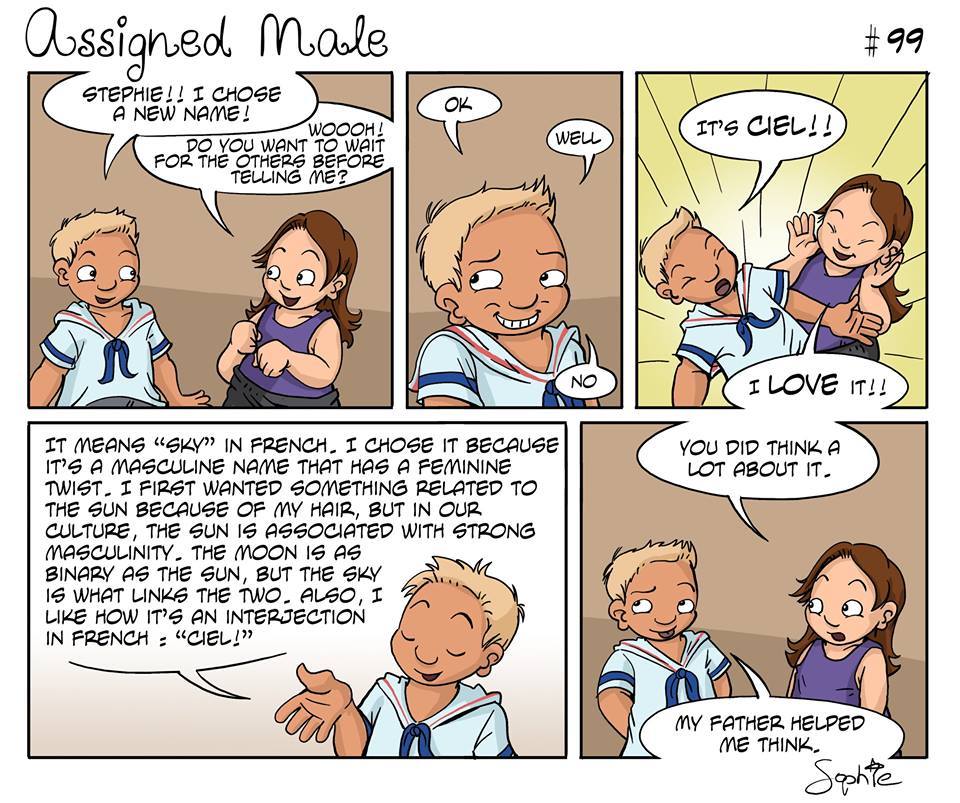
I use a name not used by my abusers. The name they used for me was a slave name. You can see it used for one of the prominent characters in Roots. It was used to make me an it. I was often told how I got my name at age three. My first real memories are a bus ride next to a woman I did not know. I am told when she introduced me to the “family” one of my hell spawn female siblings ask “What do you call IT“ My new adoptive mother gave me the name normally given to slaves in the south as I understand. I never used it personally and hated it all my life.
Ron never used it even though they tried to get him to do so. They would use it to him to refer to me and he would pretend to not know who they were talking about. I guess good for me the name was not the one used on my birth certificate so as I got to move beyond their influence I could use my birth name and then when I got away from all their ability to influence or threaten me I modified my birth name to what I felt most comfortable. See the only time they used the real name was to mock me and so when I got the chance to choose my name for myself I did.
I am Scottie !!!
I love who Scottie is and think he is done very well with the life hand he was dealt. But all this is to explain why the series of cartoons by Sophie Labelle are so important to me. So here is the one by her that jogged me to make this post. I had tried to restrict posts about my abuse. But this was so on point I knew I had to do so. Sadly I had no father or other to help me find it, they hated that I demanded they call me by it. It caused me to hang up on them repeatedly when they would call me by my abused name. They finally did adjust when in their old age they needed me to help them. Hugs
At the South Louisiana Ice Processing Center in Basile, detainees say they were forced into hard labor – and sexually assaulted and stalked by an assistant warden
‘It is for my daughter and my family that I have endured everything that I have in this detention facility for the past 28 months.’ Illustration: Rita Liu/The Guardian
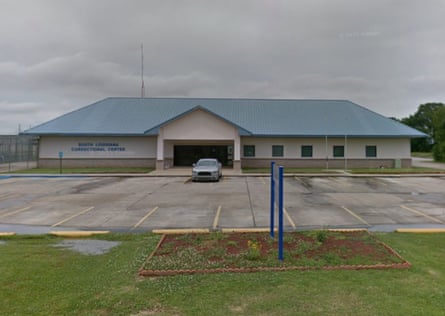
A Google Maps screenshot of the South Louisiana Ice Processing Center (SLIPC) in Basile, Louisiana.
Photograph: Google Maps
A spokesperson for Geo categorically denied the allegations detailed in the complaints.
Photograph: Patrick T Fallon/AFP/Getty Images
Queer and trans immigrants at a detention facility in south Louisiana have alleged that they faced sexual harassment and abuse, medical neglect and coerced labor by staff at the facility, and that they were repeatedly ignored or faced retaliation for speaking out.
In multiple legal complaints, immigrants detained at the South Louisiana Ice Processing Center (SLIPC) in Basile, Louisiana, said they were recruited into an unsanctioned work program that forced them to perform hard manual labor for as little as $1 per day. Detainees also alleged that queer people were targeted by an assistant warden who stalked, harassed and sexually assaulted them.
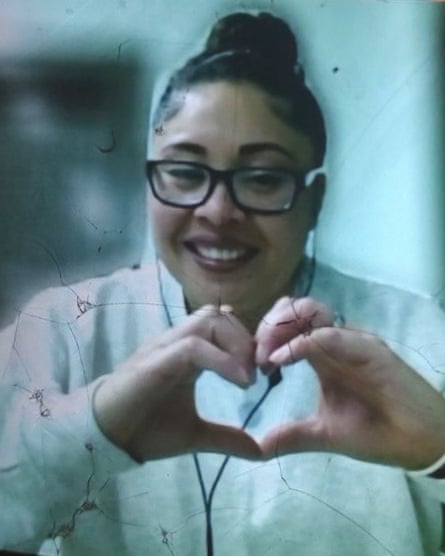
Three current and former detainees who spoke to the Guardian said that, between 2023 and 2025, they endured months of abuse from an assistant warden named Manuel Reyes and his associates. In their complaints to the Department of Homeland Security (DHS) and Immigration and Customs Enforcement (Ice), the detainees also said that they faced retaliation for reporting the abuse to authorities, alleging that Reyes and other staff beat them and denied them medical treatment.
“I was treated worse than an animal,” said Mario Garcia-Valenzuela, one of the detainees. “We don’t deserve to be treated like this.”
Garcia-Valenzuela, a trans man detained at SLIPC, has alleged that, as part of the unsanctioned work program, Reyes forced him to move heavy cabinets and cinder blocks, and to clean using industrial-strength chemicals without gloves or protective gear. When Garcia-Valenzuela complained of injuries from the work program, he said, Reyes and his associates forcefully stripped him naked and mocked him.
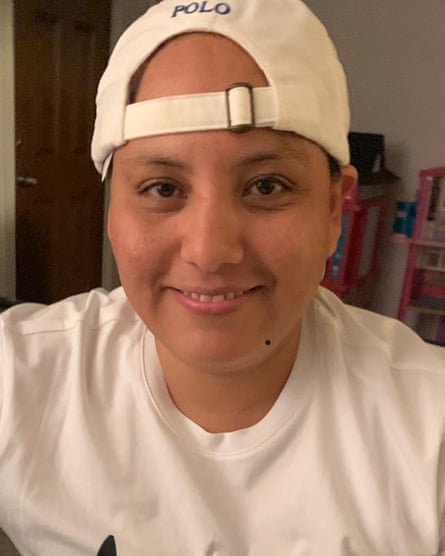
Kenia Campos-Flores, who is trans and non-binary, told the Guardian that they suffered from persistent migraines and chest pain after exposure to cleaning chemicals they were made to use during unofficial, overnight work shifts. Campos-Flores also alleged in a complaint they were persistently sexually harassed by Reyes, who entered their dorm and stole possessions including their boxers.
Another trans detainee, Monica Renteria-Gonzalez, complained that a stripper chemical he was told to use to clean the facility floors seeped through his fabric shoes and burned the skin of his feet. On more than one occasion, while Renteria-Gonzalez was bent over cleaning, he said, Reyes came up from behind and inappropriately touched him. The assistant warden also told Renteria-Gonzalez he was watching the detainee through security cameras, including while he was showering.
A fourth detainee, identified by the pseudonym Jane Doe, is a cisgender, queer woman who said that Reyes forced her to perform oral sex on him on a “near daily basis” between February and May 2024, threatening to kill her if she refused, according to her complaint.
Doe, who was deported to the Dominican Republic in January this year, has chosen not to share her name or speak publicly because she fears that Reyes will make good on his threat to find and harm her, her lawyer said.
Taken together, the detainees’ stories present a troubling pattern of mistreatment and abuse inside SLIPC, their attorneys said. Though the alleged abuse took place across two presidential administrations, advocates worry that conditions inside detention facilities could further deteriorate amid the Trump administration’s present push to arrest and detain a record number of immigrants. Trans and queer immigrants in detention are especially vulnerable, advocates said, given that the administration is also moving to roll back key civil rights protections for LGBTQ+ people in federal custody.
The detainees’ allegations are detailed in four separate administrative complaints filed under the Federal Tort Claims Act, which allows individuals to sue the government for injuries caused by federal employees. The government has six months to adjudicate the complaints, or the claimants could move forward with a federal lawsuit. They were submitted in September by Robert F Kennedy Human Rights, the American Civil Liberties Union (ACLU) of Louisiana and the National Immigration Project. Those groups have also submitted a civil rights complaint to the DHS oversight bodies, including the office for civil rights and civil liberties (CRCL), on behalf of the detainees.
“This was a sadistic late-night work program,” said Sarah Decker, a senior staff attorney with RFK Human Rights. “It was designed to target vulnerable trans men or masculine-presenting LGBTQ people, who [Reyes] coerced into participating.”
When detainees tried to report their abuse, Decker said, Ice officials repeatedly disregarded them. Officials dismissed multiple reports of abuse in accordance with the federal Prison Rape Elimination Act (Prea), Decker said, as well as complaints to the Ice office of inspector general (OIG), the department charged with oversight of Ice.
“These people screamed for help. They filed grievances. They filed complaints under the Prison Rape Elimination Act, they filed verbal complaints through the office of the inspector general. They did everything to get help,” Decker said. “And they were systematically ignored, and complaints were buried.”
The Guardian attempted to locate Reyes though multiple means, including public records and social media searches and were unable to contact him. Reyes is not facing criminal charges for the alleged sexual abuse at the facility.
He is no longer employed at SLIPC, Decker said – he left the facility in July 2024. But, Renteria-Gonzalez and Garcia-Valenzuela, who remain detained at SLIPC, told the Guardian other staff at the facility have continued to retaliate against them, placing them in solitary confinement and denying them full access to medical care.
The DHS and Ice did not respond to the Guardian’s queries about the detainees’ allegations, nor did the agencies address whether any of the detainees’ Prea complaints were investigated.
‘It’s devastating and heartbreaking, everything that they do to us in here’
Located about 90 miles (145km) from the Gulf coast in the rural town of Basile, Louisiana, SLIPC was once a correctional facility. But in 2019, it opened as an Ice detention facility, operated by Geo Group, one of the largest private prison and surveillance firms in the US.
Over the past several years, the detention center, which houses mostly women as well as a few trans people, has attracted a string of allegations of civil and human rights violations, medical neglect and poor hygiene. In 2022, an internal inspection by the office of the immigration detention ombudsman – an independent office within the Department of Homeland Security – found that the facility had insufficient medical staffing, and had been inconsistent in addressing the medical and mental health needs of detainees. A 2025 report by the Yale Law School also found that detainees were “left hungry, cold, and in an atmosphere detainees describe as abusive”.
A Google Maps screenshot of the South Louisiana Ice Processing Center (SLIPC) in Basile, Louisiana. Photograph: Google Maps
“It’s devastating and heartbreaking, everything that they do to us in here,” said Renteria-Gonzalez, who first arrived at the facility in May 2023. “We struggle on a daily basis.”
He said his decision to remain in detention while his immigration case is under review – rather than accept deportation – has been painful.
Renteria-Gonzalez came to the US when he was 12 and has been in the country for 31 years. His eight-year-old daughter is a US citizen. “It is for my daughter and my family that I have endured everything that I have in this detention facility for the past 28 months,” he said. “It’s so that I can make it back home to her.”
Renteria-Gonzalez said Reyes first recruited him to participate in the late-night work program in September 2023, according to his complaint. Reyes would often come into his dorm late at night – at around 2 or 3am – to wake him up for his night shift.
“It’s like he lived [at the detention center] 24/7,” Renteria-Gonzalez told the Guardian.
Each recruit worked alone, during different times or in different parts of the detention facility – meaning they were often alone with Reyes, the detainees allege. During these times, Renteria-Gonzalez said, he would watch them work and probe them with invasive and inappropriate questions. “It made me feel uncomfortable,” he said. “He used to sit on his phone and asked us for personal information to look us up on Facebook and stuff.”
Sometimes, he said, Reyes entered detainees’ dorms late at night for no particular reason, and would take their used underwear and personal hygiene products. On other occasions, Renteria-Gonzalez alleged in the complaint, Reyes would stalk him as he went to and from the showers and ask invasive questions: “And after, he would say: ‘Tell me what were you doing in the shower?’”
Twice, Renteria-Gonzalez said, Reyes came up behind him and touched him inappropriately. Another SLIPC officer, according to Renteria-Gonzalez, began to sexually harass him as well, sending him explicit notes and showing him pornographic images of herself.
“I just felt overwhelmed,” he said. “I thought enough was enough.”
Eventually, he realized he wasn’t alone.
After being detained at SLIPC in February 2024, Garcia-Valenzuela said he also found himself trapped in Reyes’s unofficial work program.
Mario Garcia-Valenzuela. Photograph: Mario Garcia-Valenzuela
Garcia-Valenzuela had fled to the US in 2014 from Mexico, where he was tortured by members of a drug cartel. “I have no choice, that’s why I’m fighting,” he said. “Because I know that as soon as they deport me, I’m going to be handed over to the cartels and I’m going to be tortured and killed – ripped into pieces.”
But in SLIPC he faced a new kind of horror. He alleged that on more than one occasion he was told to move heavy metal filing cabinets back and forth across a room. When he struggled to lift the furniture, Reyes would taunt him, he said, saying: “If you think you are a man, I’m going to treat you like a man.”
In the spring of 2024, Garcia-Valenzuela reported sexual harassment on the basis of his gender, in accordance with Prea. He said he felt targeted due to his gender identity and wanted the fact he is transgender removed from his file, as a measure of protection. But an Ice officer responded that “even if we take off your transgender marker, there is no hiding that you are transgender”, noting Garcia-Valenzuela’s physical appearance, he said. To Garcia-Valenzuela’s knowledge, no follow-up investigation into Reyes was conducted.
Renteria-Gonzalez’s complaints were dismissed as well, Renteria-Gonzalez said.
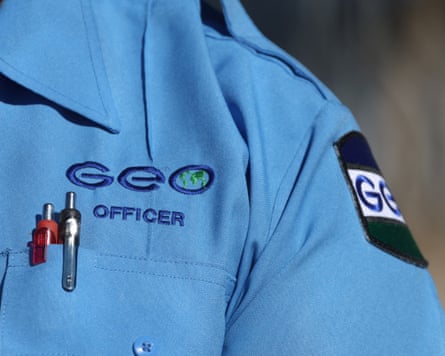
A spokesperson for Geo categorically denied the allegations detailed in the complaints.
“GEO strongly disagrees with these baseless allegations, which are part of a long-standing, politically motivated, and radical campaign to abolish ICE and end federal immigration detention by attacking the federal government’s immigration facility contractors,” said Christopher V Ferreira, a Geo group spokesperson.
Ferreira added that “GEO has comprehensive policies in place for the reporting and investigation of all incidents that occur at the Center, including instances of assault and/or sexual assault. These policies are governed by standards and requirements established by the US Department of Homeland Security.”
Geo did not respond to questions about Reyes’s employment status at SLIPC.
Harsh retaliation
The detainees who filed complaints against Reyes and other SLIPC staff said that they faced harsh retaliation for doing so.
When Jane Doe filed a Prea complaint with Ice using a paper form and through the phone hotline, detailing that Reyes had sexually assaulted her, she received no response, according to her legal complaint.
But afterwards, Reyes redoubled his efforts to stalk her, the complaint alleges – and forced her to perform oral sex on him, saying he had her cornered in the facility’s “camera blind spots” where no one would see them.
When she attempted to resist, Reyes told her he had found her mother’s home address in the Dominican Republic, Doe alleges in the complaint, and told her that if she were deported, he would follow her to her family’s residence where “you won’t have any protection”.
A spokesperson for Geo categorically denied the allegations detailed in the complaints. Photograph: Patrick T Fallon/AFP/Getty Images
Jane Doe said Reyes and other staff also blocked her from accessing medical treatment for her epilepsy, even as her seizures became more severe and frequent during her time in detention, the complaint states. He repeatedly cornered Doe as she was en route to the medical center to receive treatment, and told her he would watch her on cameras while she was receiving medical evaluation. On one occasion, he told Doe he was “masturbating to her because he saw her body in medical condition when she was in an observation cell”, the complaint alleges.
“We feel so vulnerable, impotent,” Renteria-Gonzalez said.
After he reported that Reyes had sexually assaulted him, Renteria-Gonzalez said, Reyes burst into his housing unit and yelled, “You should have never put my name on it!”, in reference to the complaint to Ice. Renteria-Gonzalez said he was then placed in solitary confinement for two weeks.
After Renteria-Gonzalez reported harassment from another officer, his complaint was dismissed as “unsubstantiated” and the officer came back and told him: “They can’t do nothing to me,” according to the complaint.
Meanwhile, Garcia-Valenzuela said he was repeatedly sent to solitary confinement, he believes in retaliation for speaking out. He said staff at the detention center falsely reported that he had attempted self-harm, and needed to be placed under suicide watch, even though he had not in fact tried to hurt himself.
At one point, while Garcia-Valenzuela was in the medical isolation unit, officers delivered him a meal that consisted of a few potatoes and a few grains of cereal. There was no spoon provided, he said, and there was a note that instructed him to eat it “like a dog”.
Shortly after that incident, he said, a doctor at the facility suddenly – without explanation – stopped providing him access to medication for hand pain that had been exacerbated by his working in Reyes’s night-shift program.
He has avoided making further complaints. He tries not to speak to or make eye contact with staff, and avoids leaving his dorm. He limits trips to the restroom, he said. And rather than go to the cafeteria to warm up his food and eat, he takes his meals cold, and dines in bed. “I have to stay in the back-most corner of my bed, and eat there,” he said.
“I don’t ever feel at ease.”
Trans people in federal custody under threat
The allegations of abuse at SLIPC come at a time when the health and safety of trans people in federal custody is especially under threat, advocates say.
On the first day of his presidency, Donald Trump unveiled a flurry of executive actions targeting trans rights, rolling back anti-discrimination protections and mandating that people in immigration detention be placed in facilities based on their sex assigned at birth.
On 16 January – the last day of Joe Biden’s administration – Ice reported that 47 trans people were in Ice detention facilities around the country and that 69 had been arrested since the start of the fiscal year. As soon as Trump took office, the agency began omitting data on the number of transgender people in immigration detention from its reports.
“The government is essentially refusing to acknowledge the existence of trans people, let alone their humanity,” Decker of RFK Human Rights said.
Although a federal judge has blocked enforcement of Trump’s ban on transgender healthcare in federal prisons, Decker told the Guardian that inside detention centers, guards and staff have been emboldened to deny healthcare to trans clients, or retaliate against them for requesting care.
“I worry that the situation will only get worse from here for trans people,” she added.
The administration also closed the civil rights division of the DHS, as well as the ombudsman office overseeing immigration detention, arguing that the staff in these congressionally mandated divisions were “internal adversaries that slow down operations”.
The divisions included employees tasked with regularly visiting detention centers, investigating complaints and preparing reports for Congress. Detainees facing discrimination, neglect and abuse now have even fewer options for recourse, Decker said.
LGBTQ+ Americans consider move to Canada to escape Trump: ‘I’m afraid of living here’
Read more
It’s a scary, difficult moment to speak out, said Campos-Flores, a 37-year-old single parent of two children who came to the US from El Salvador when they were 11 years old.
During the seven months that Campos-Flores was detained at SLIPC, they would call their parents every day, just to reassure them that they were still alive. Periodically, they would beg their family and their lawyer to find ways to get them out. “I asked them to try to book me into another facility,” they said. “It was too much – just too much.”
In November 2024, they were deported – and immediately they felt a sense of relief to be freed from Reyes, they said. But they couldn’t stay away from their children, who are US citizens – so they crossed back into the US and were again apprehended.
They are currently detained at a different correctional facility in Louisiana, serving a criminal sentence for illegal re-entry. But after finishing their sentence, it is likely they will be transferred back to SLIPC before deportation – and face the same officers who harassed them, or ignored their complaints.
“But I have my 12-year-old son. He is also gay, he likes boys, and I don’t want him to experience anything like what I have experienced,” they said. They want to fight for his rights, too, they said.
I am not trans even though I have been asked because of my super strong support of trans people. I have lost friends who wouldn’t accept trans people using a public bathroom with them even though all private functions happen in enclosed little stalls. I do have distant family members who are trans and fully supported by family. More important I can clearly see the same negative vile things said about trans people are the same things pushed against gay people when I was a struggling gay teen being pushed by the same groups on the same ideas of victimhood. They were mostly driven by hyper Christian Nationalist religious groups and those who demanded that traditions along with society never change from when they were young and happy. These same groups and feelings are in play against trans people. They are simply the homosexual aids scare of the 1980s. Just as I as a young gay person needed allies and support so do trans people today. Please give as much vocal and upfront support for trans people you can. It is easier to make progress as a society if we don’t have to undo hateful laws outlawing our very existence. Hugs









‘It is for my daughter and my family that I have endured everything that I have in this detention facility for the past 28 months.’ Illustration: Rita Liu/The Guardian
A Google Maps screenshot of the South Louisiana Ice Processing Center (SLIPC) in Basile, Louisiana.
Photograph: Google MapsA spokesperson for Geo categorically denied the allegations detailed in the complaints.
Photograph: Patrick T Fallon/AFP/Getty Images




 Scottie's Playtime