The Majority report team talk about this kid who mouthed off to ICE guys and gets beaten, kidnaped, beaten again, then dumped over a mile way in a Walmart parking lot. This is not police behavior these are gang thugs terrorizing people. They are no different than any other criminal gang. Hugs
These past months have been difficult. I was so very shocked to see the death of Renee Good, how chaos and hate seem to be the republican drug of choice, and how horrible it is to consider that we have but begun this 4-year trip through hell. Recently somehow this song found its way into my youtube playlist. All I could think as these young voices invaded my troubled thoughts was what are we leaving for them?
America the Beautiful followed, a song we all know if not by memory then certainly we recognize it when we hear it sung before the football game on Friday Night. “O Beautiful, for Spacious Skies, For Amber Waves of Grain…” proudly sung by the proud and mighty citizens, the mothers and fathers, grandfathers with war wounds and grandmothers who know loss and pain yet hope. It is a calm and flowing song, one that somehow has always given me a peaceful heart for in that long ago poem is a promise of home.
President Kennedy, long ago, asked Americans to consider what they could do for their country. I think many think that is defined as joining the military, and that is certainly one great thing a person can do but there are far more. And, I think it is primarily why tRumpf has sought to destroy the legacy of the Kennedy Presidency by paving over the Rose Garden and defacing the Kennedy Center for Performing Arts.
See, I don’t think Kennedy asked us to serve in the military. I think President Kennedy asked us to Love Our Country! Like the song America the Beautiful, he asked us to recognize the beauty of our home, he asked us to treasure it, he asked us to see it not as a resource to be stripped bare but the precious refuge of our grandparents and where our children rest their heads as they dream of their future. I think Kennedy voiced a challenge, a warning and a condemnation that there will come those who seek to strip our precious home like a thief in the night – a conman who lied his way past the door and is filling his pockets.
It is a sadness that so many in this beautiful home we share have determined that they can only hate the others who would hope to enjoy living here. To look upon another’s misery with spite, blaming the wounded for their wounds and glorying in the overflowing pockets of the thieves who seek to steal the silverware is a sickness that I don’t understand. I don’t understand those who say they have love in their heart yet show contempt in their words and actions for others. Especially I can not find understanding for those who claim to love Jesus yet fail in every definition of love that he gives us. Perhaps it is no wonder they are cruel, because surely their hearts are convicted and defensive in their misery as they have given away their love for their country and their Christianity for a red hat.
ICE white supremacist gang thugs getting even more agressive attacking people. They no longer care about skin color. The gang has reverted to gang tactics of intimidation. They think might makes them right. The ones with the guns are in charge is what they have been taught. And the administration is OK with this as it helps their cause to have a frightened public unwilling to stand up to them. They are covering their faces because they understand they are breaking the laws and that if a police officer tried this they would be in prison. They know that Stephen Miller will not always be there to protect them. And tRump can not pardon people found guilty of state crimes. In this clip a woman rushes into another woman’s home. The police dispatch incorrectly tells her she must hand the woman over and she almost does, but then gains courage as ICE thugs draw closer on her property. Her neighbors come out and give her strength and support. Hugs
The government take over of thoughts and what material people can read is happening with the assistance of the tech community. The limiting what people can see or read started with the idea of restricting any media that positively presented the LGBTQ+ community so to protect the children they claimed. See how quickly it has progressed in less than a year to simply the government telling / demanding the right to tell people what they can read or view so that the government is never disfavored or contradicted. Totally as China and Russia work. How do you like living in such a society. Remember the people who had these books on their device had paid for them and Amazon did not return their money, they just reached in and deleted the material they did not want you to read. Once the precedent is set it will be used by any new government who wish to control the population and how they feel about the society they live in. Hugs
A commuter using an Amazon Kindle while riding the subway in New York.Credit…Lucas Jackson/Reuters
In George Orwell’s “1984,” government censors erase all traces of news articles embarrassing to Big Brother by sending them down an incineration chute called the “memory hole.”
On Friday, it was “1984” and another Orwell book, “Animal Farm,” that were dropped down the memory hole by Amazon.com.
In a move that angered customers and generated waves of online pique, Amazon remotely deleted some digital editions of the books from the Kindle devices of readers who had bought them.
An Amazon spokesman, Drew Herdener, said in an e-mail message that the books were added to the Kindle store by a company that did not have rights to them, using a self-service function. “When we were notified of this by the rights holder, we removed the illegal copies from our systems and from customers’ devices, and refunded customers,” he said.
Amazon effectively acknowledged that the deletions were a bad idea. “We are changing our systems so that in the future we will not remove books from customers’ devices in these circumstances,” Mr. Herdener said.
Customers whose books were deleted indicated that MobileReference, a digital publisher, had sold them. An e-mail message to SoundTells, the company that owns MobileReference, was not immediately returned.
Digital books bought for the Kindle are sent to it over a wireless network. Amazon can also use that network to synchronize electronic books between devices and apparently to make them vanish.
An authorized digital edition of “1984” from its American publisher, Houghton Mifflin Harcourt, was still available on the Kindle store Friday night, but there was no such version of “Animal Farm.”
People who bought the rescinded editions of the books reacted with indignation, while acknowledging the literary ironies involved. “Of all the books to recall,” said Charles Slater, an executive with a sheet-music retailer in Philadelphia, who bought the digital edition of “1984” for 99 cents last month. “I never imagined that Amazon actually had the right, the authority or even the ability to delete something that I had already purchased.”
Antoine Bruguier, an engineer in Silicon Valley, said he had noticed that his digital copy of “1984” appeared to be a scan of a paper edition of the book. “If this Kindle breaks, I won’t buy a new one, that’s for sure,” he said.
Amazon appears to have deleted other purchased e-books from Kindles recently. Customers commenting on Web forums reported the disappearance of digital editions of the Harry Potter books and the novels of Ayn Rand over similar issues.
Amazon’s published terms of service agreement for the Kindle does not appear to give the company the right to delete purchases after they have been made. It says Amazon grants customers the right to keep a “permanent copy of the applicable digital content.”
Retailers of physical goods cannot, of course, force their way into a customer’s home to take back a purchase, no matter how bootlegged it turns out to be. Yet Amazon appears to maintain a unique tether to the digital content it sells for the Kindle.
“It illustrates how few rights you have when you buy an e-book from Amazon,” said Bruce Schneier, chief security technology officer for British Telecom and an expert on computer security and commerce. “As a Kindle owner, I’m frustrated. I can’t lend people books and I can’t sell books that I’ve already read, and now it turns out that I can’t even count on still having my books tomorrow.”
Justin Gawronski, a 17-year-old from the Detroit area, was reading “1984” on his Kindle for a summer assignment and lost all his notes and annotations when the file vanished. “They didn’t just take a book back, they stole my work,” he said.
On the Internet, of course, there is no such thing as a memory hole. While the copyright on “1984” will not expire until 2044 in the United States, it has already expired in other countries, including Canada, Australia and Russia. Web sites in those countries offer digital copies of the book free to all comers.
Again we see the institutionalized casual racism in the US. This was the basis of the CRT higher education classes were about. All the media latched on to and went into great detail over a white woman’s shooting by ICE but only report vaguely and sporadically on the shooting of the black / brown people shot by ICE. But when you read the report below think on how racist ICE gang thugs are, the fact that they have broken other laws and assaulted other people with impunity as they are defended by the power of the US government. One last thing to think on. The ICE thug was clearly angry and he had his gun out, ready, and pointed in front of him allowing him to shoot the man without raising his gun. The reported statements from the government never mention him drawing his gun nor raising it, just that he fired his weapon defensively. If he felt threatened why openly approach the man with the long gun? Why no call for back up? Depending on the time was the ICE thug wakened up by the noise of gun fire? Hugs
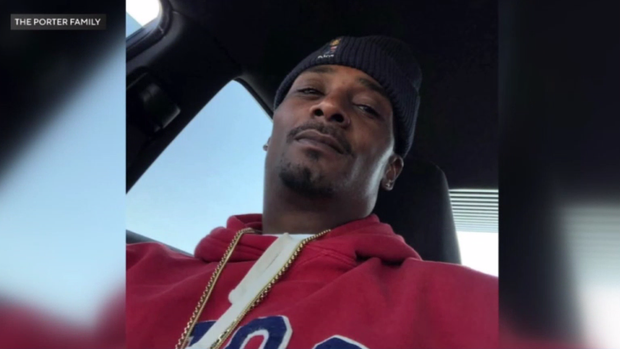
Friends and family of the 43-year-old man who was fatally shot by a Department of Homeland Security agent in Northridge on New Year’s Eve gathered on Sunday to demand accountability and hold a candlelight vigil for their lost loved one.
They identified the victim as Keith Porter, who they say was a well-known and well-liked person in the community.
“If I could say anything to the ICE agent, it’s that you’re a murderer,” said Jasané Tyler, Porter’s cousin. “You stole my cousin from me. You stole their father from them. You stole Francine’s son from her.”
Porter’s loved ones are demanding justice after the father of two died on New Year’s Eve. He was shot by an off-duty U.S. Immigration and Customs agent at the apartments where they both lived.
Keith Porter, the 43-year-old man fatally shot by a DHS agent in Northridge on New Year’s Eve. Porter Family
His family contends that he was shooting a gun in the air to mark the new year. A statement from DHS on the incident contends that it was an “active shooter situation.”
“On December 31st, an off-duty ICE Officer bravely responded to an active shooter situation at his apartment complex,” the statement said. “In order to protect his life and that of others, he was forced to defensively use his weapon and exchanged gunfire with the shooter.”
Another statement from DHS Assistant Secretary Tricia McLaughlin provided further details. She said that the agent was “in his apartment, when he heard what he suspected were multiple gunshots. The suspected gunfire grew progressively louder, indicating to the officer that whoever was firing a gun was approaching his apartment. The officer took his ICE-authorized firearm and left his apartment to investigate. He moved to the ground level and went outside, where he believed the suspected gunfire was coming from.”
McLaughlin’s statement says that the officer rounded the corner of the building, where he encountered Porter, who they said was allegedly armed with a long rifle.
“The ICE officer identified himself as law enforcement. In response, the individual pointed his weapon at the ICE officer. The officer ordered the subject to put the weapon down, McLaughlin said. “When the subject refused to comply, the officer fired defensively with his service weapon at the subject to disarm him. The subject fired at least three rounds at the officer.”
Porter’s friends and family don’t buy it, especially with members of law enforcement in their own family.
“Every one of them says this is not standard, this is not protocol,” Tyler said.
Black Lives Matter leaders, who hosted the Sunday night vigil, are outraged by what happened.
“Were this anyone else, there would’ve been an arrest,” said Dr. Melina Abdullah, with BLM. “You don’t get to just murder people because you don’t like what they’re doing or how they’re celebrating.”
Los Angeles Police Department officers tell CBS LA that their investigation into the shooting is still ongoing. They also told the LA Times on Sunday that they haven’t yet spoken with the ICE agent due to protocol on how deadly force investigations are conducted when they involve federal law enforcement officers.
This is an important story of growth and rejection of your core identity. The fact that those closest to you can not accept you and that which makes up who you are. I have not changed the text of the story in any way as I want the voice of the author and his agony of his childhood to shine clearly. This is the way the right wing Christian Nationalist bigots want every family member to be and all children raised. Remember this was only the 1990s. In the 30 years since great progress was made in acceptance, tolerance and education of / about LGBTQ+ kids and how to raise them in loving acceptance of how they feel inside themselves. The Christian hate groups that make their living trying to return the country to a much more regressive hateful time rolling back all rights gained by minorities. And in a very short time they have had a huge effect on how LGBTQ+ people especially LGBTQ+ kids are treated. They stated their goal of driving these kids back into hiding terrified of being outed for fear of being beaten, harassed, and ostracized. That is what they want. Several Christian lawmakers who are trying to make being an out LGBTQ+ kid illegal along with showing any media that represents the LGBTQ+ community have said that when they were kids in school they used to gang up and beat the shit out of LGBTQ+ kids. I know in the 1970s I was not out but targeted as a “faggot” and constantly harassed and attacked. How any adult would want to return to such a time, to having any kid or adult be treated that way is horrendous. Especially from those trying hard to force the country to follow their idea of a Christian lifestyle. Hugs
At 30, I’m finally living as myself. But the man whose acceptance I wanted most still can’t say the word gay.
Jan 10, 2026
Content warning: This story includes mentions of homophobia, childhood trauma and suicidal ideation.
By CorBen Williams
The seventh time I came out to my father wasn’t dramatic. It didn’t happen at a kitchen table or in a parking lot or after he’d found one of my journals. It happened casually, slipped into a conversation like it was nothing:
“As a gay man—” I began.
“You’re not gay,” he interrupted.
“Dad,” I replied. “We’ve done this too many times before.”
Even now, at 30 years old, married to the man I love, fully myself in ways I once thought impossible, my dad still can’t say who I am out loud. It hangs there, suspended between us, as though acknowledging my homosexuality would unravel something he’s built his entire life around.
I’m not sure what exactly. Control? Image? Masculinity? Maybe he simply doesn’t have the language.
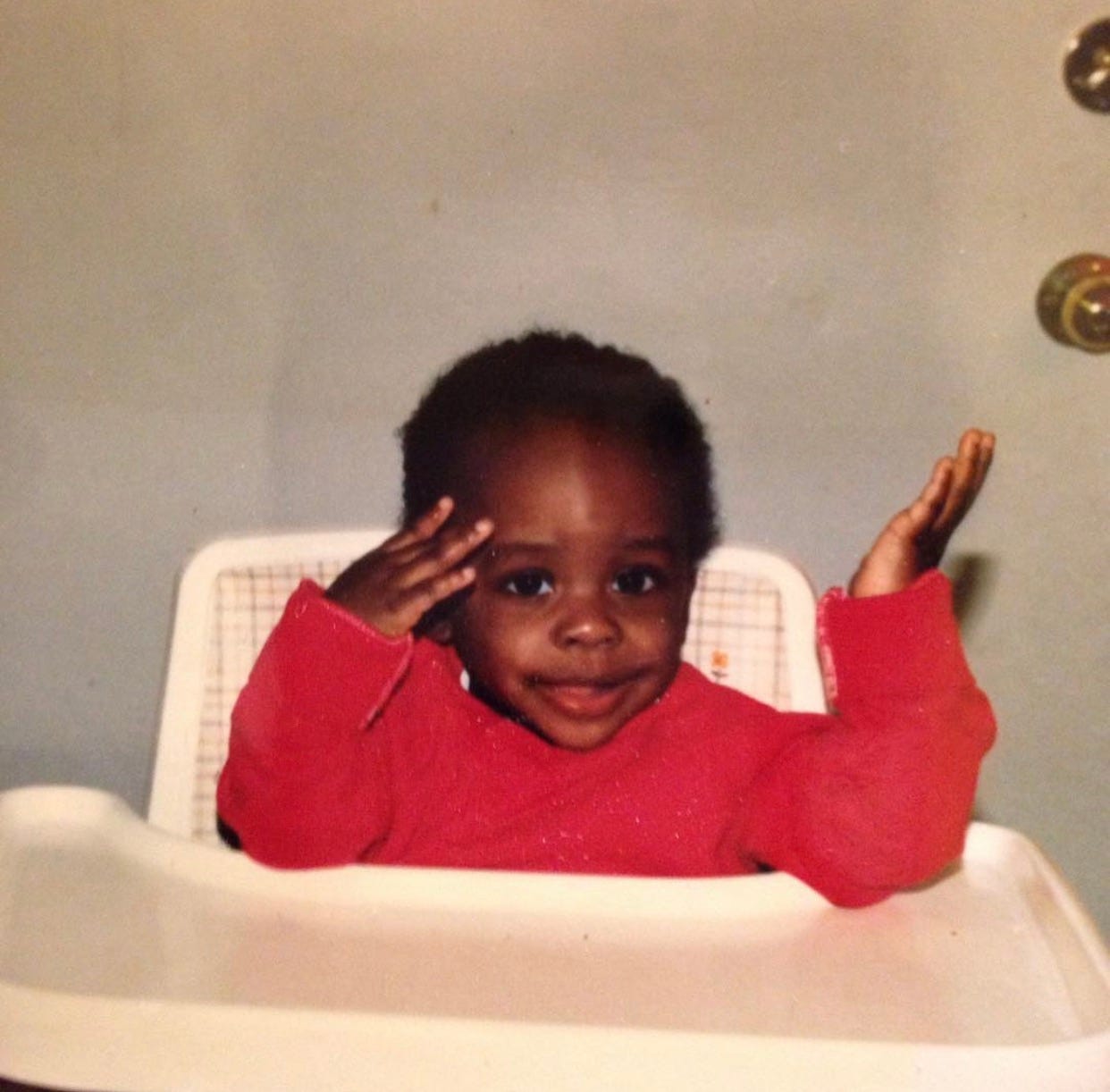
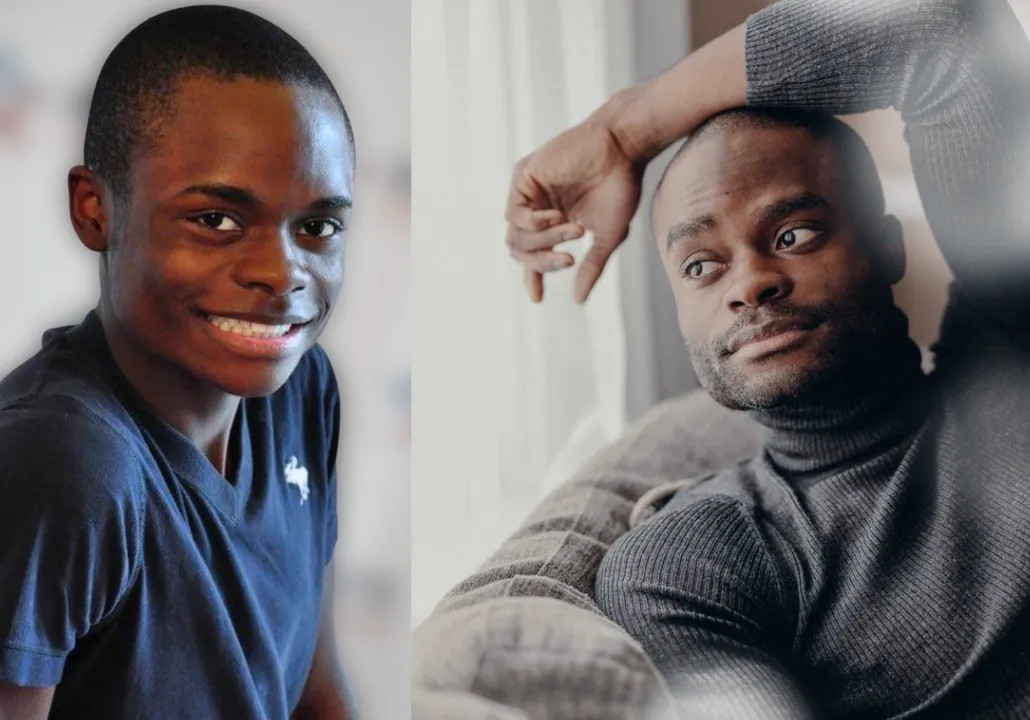
Photo courtesy of CorBen Williams.
I grew up in North Pole, Alaska, in a red-sided house at the end of a gravel turnaround. It was the kind of home where the winter light never quite reached the living room and silence carried through the walls like a second language.
North Pole felt like its own universe. A 2,500 person military town where there’s snow on the ground for up to 187 days a year and the Christmas lights never come down. About 70% of the town is white and roughly 30% of the voters are registered Republican, with almost half listed as “undeclared,” which in Alaska is usually just Republican without saying it out loud.
Most families were tied to the church or the base, so you learned fast what was considered normal and what was not. People knew your parents and your business.
Growing up Black and queer made me stand out without trying and forced me to learn early how to tuck parts of myself away.
My parents had both served in the military, and even though my mother had the warmth and softness to move past it, my father emulated parental rejection. Dad demanded respect and expected excellence in the way a man shaped by the military does: loud and without room for negotiation.
You could feel his energy before you heard his footsteps because there was always a tension that entered the room with him. He yelled more than he spoke, and as a kid I was told to listen to what he was saying, not how he was saying it, even when he was screaming in my face.
My father didn’t know what to do with a son who felt things deeply, and before I ever came out to him—the first of seven times—he had already shown me exactly which parts of myself were unsafe to reveal.
But that didn’t stop me from trying. The first time I came out, I was in first grade, sitting in the parking lot of a McDonald’s on Geist Road, right beside my future high school.
“Dad, I think I’m bisexual,” I said.
I knew my ass was gay. But I also knew enough about my father to try to ease him into it. He asked if I knew what that meant, and even though I did, I told him “no.”
“It means you like sucking penis,” he spat harshly.
I was six.
People think kids don’t understand things, but children clock everything. That moment didn’t confuse me about who I was. It clarified who he was. It showed me that there were parts of me he couldn’t handle and wouldn’t protect. I didn’t leave that day understanding my sexuality better. I left understanding the risk of telling the truth.
The second time, I was forced out when my father found my journal. I was 10 years old, and in those pages, I’d written unpolished thoughts about men, about how I felt around them, questions I didn’t yet know how to ask anyone.
He burst into my bedroom and tore the journal up in front of me, little pieces of paper flying around me as I sat in my bed. I tried not to cry.
“As long as you’re a kid in my house, you don’t get privacy,” I remember him barking. It showed me that I need to be wary about how much I trust people and what information I give them.
This rejection led me to the darkest part of my childhood.
“I am tired of living,” I remember muttering to my sixth grade teacher.
I was exhausted by my dad, exhausted from hiding, exhausted from feeling wrong in my own skin.
I should have stopped writing after that, but writing was how I survived. When you don’t have anyone to talk to, you talk to the page.
By 13, I had another journal. This one had drawings of a classmate and fantasies about kissing him. When my dad found it, he brought it up on the car ride home from school, saying “the correct way” to feel about other boys was “brotherly love” and nothing else.
But the third journal set off the biggest explosion.
It was filled with details, drawings and fantasies about my first hookup with a boy. The way I wrote about them, at 15, was more adult. The kind of writing he didn’t want to believe his son was capable of.
“I fucking told you about this shit,” he shouted, with the journal gripped tightly in his hand. “This isn’t appropriate. This isn’t what we do.”
My mom was sitting next to me, shocked, both of us caught off guard by how quickly he had gone from discovery to explosion. I almost cried, but I swallowed it down. My mom guided him into the other room to calm him down.
He didn’t speak to me for seven days. He couldn’t look at me. Each day felt like another nail in the coffin.
Photo courtesy of CorBen Williams.
I kept coming out to my dad anyway. At 17. At 22. At 24. Nothing changed.
Part of me used to think that I was an embarrassment to my family. I felt for so long that I needed to apologize for being the mistake. But in my late teens, I started to see it differently. I realized I just wanted his acceptance and his love in a way that I was never gonna get.
Because of this, I don’t think I ever really got to be a child. Even in first grade, when other kids were talking about Barbies and Legos, I felt like I was always bracing for impact, performing a version of boyhood that never fit. My childhood was spent preparing for adulthood and a career. People would always say to me, “You seem so much older. You seem so mature.”
I left North Pole for good and moved to New York City when I turned 19. I became a performer, a traveler, someone who learned to build softness and resilience, where my childhood had taught me to live in fight-or-flight mode. And then, almost when I wasn’t expecting it, I met Travis.
He was older. Wisconsin-born. A wildlife biologist. Patient in a way I didn’t even realize I needed. My mother said he softened me, brought grey into my black-and-white worldview. With him, I don’t brace for criticism. I don’t edit myself. I don’t shrink. I don’t hide my journals.
We’ve been together five years now, married for three. He’s met everyone in my life, except for my dad.
Photo courtesy of CorBen Williams.
Now, when I think about my upbringing in North Pole, I think about the path through the woods that led to my house, hoping someone on the other side would understand me. I think about how many times I tried to hand my father my truth, and how many times he handed it back to me with rage.
Even now, with the life I’ve built and the love I’ve chosen, acceptance is still complicated. I wish I could say that learning to love myself erased the sting of not being understood, but the truth is I still wrestle with where I fit—inside my family, inside Black spaces, inside queer spaces, inside the places that were never built with someone like me.
I’ve learned to be confident, to be gracious, to be the person who makes others feel seen, maybe because I know exactly what it feels like not to be. But some days, even as a grown man, I feel an instinct to shrink.
I’m learning that acceptance is a practice, one I have to return to again and again. I don’t have it all figured out. But I’m trying. And maybe that’s the real truth at the end of all this: I haven’t just been coming out to my father all these years—I’ve been slowly, steadily learning how to come home to myself.
Uncloseted Media and GAY TIMES reached out to CorBen’s father for comment, but he did not respond.
Sam Donndelinger assisted with the writing and reporting in this story.
If objective, nonpartisan, rigorous, LGBTQ-focused journalism is important to you, please consider making a tax-deductible donation through our fiscal sponsor, Resource Impact, by clicking this button:




 Scottie's Playtime