Even though the school was started as a LGBTQ+ safe space they had to remove anything affirming the LGBTQ+ people. The goal of the republican right is to erase LGBTQ+ people from the public society. They don’t want us seen, they do not want us talked about. They especially don’t want kids to understand they can be themselves if they are not straight or cis. They want kids to feel they must fit the mold of straight and cis only. If you feel differently you must hide it and live miserably to make the snowflake Christian nationalist right feel comfortable. This will backfire on them. Just as the LGBTQ+ overcame the full force of the right’s bigotry once we can do it again. We have moved far too toward equality to let them push us from society again. The young people will not accept it nor tolerate the regression of freedoms to make a few bigots feel comfortable with the world around them. They also know that intolerant maga driven my the cult of tRump won’t last forever. Hugs
“We have had rainbows in our building because we are affirming to all people, and at some point our mission statement included a segment that said ‘We are affirming to LGBTQ people,’ but we have taken that out.”
Before the vote Wednesday, she said the school painted over rainbow colors and designs and replaced maps with ones that had a “Gulf of America” label. They revised the logo and reviewed textbooks and other documents.
Months after its contract was threatened over a rainbow mural and a map labeling the Gulf of Mexico, an Alabama charter school will stay open.
The state charter commission voted Wednesday to renew Magic City Acceptance Academy’s contract, allowing the school to operate for five more years. The school and its leaders came under fire this spring for allegedly violating aspects of Alabama’s new anti-DEI law, which prohibits so-called “divisive concepts” and other diversity and inclusion programming in public schools and colleges.
“I’ll say the thing that we’re all thinking,” said Karen Musgrove, the school’s CEO, after being pressed by one commissioner to address the “monster in the room.”
“We have had rainbows in our building because we are affirming to all people, and at some point our mission statement included a segment that said ‘We are affirming to LGBTQ people,’ but we have taken that out.”
“We’re affirming to all people. We’re affirming to our Black students. We’re affirming to our Hispanic students. We’re affirming to our LGBTQ students, which are in every school in the state.”
Magic City Acceptance Academy opened in 2021 in an effort to provide a supportive learning environment for LGBTQ students and other at-risk populations. Students and staff say they built a welcoming community in the Birmingham-area school, despite a firestorm of political backlash over the years.
In a plea to commissioners, one parent said “everything changed” for her son after enrolling at MCAA. He stopped skipping class, vaping and fighting, and he’s now excelling in college-level courses.
“Renewing Magic City’s charter means continuing to change lives like my son’s,” she said. “It means giving more kids the chance to discover their potential and their purpose.”
After a brief debate, the commission ultimately renewed the charter – on the condition that it agreed to maintain “strict adherence throughout its shorter term to Alabama laws, specifically including, without limitation, Alabama Code 41190,” the state’s “divisive concepts” law. If it fails to comply, Magic City could be subject to sanctions, said Lane Knight, the commission’s lawyer.
“They’ve got the financial support, they’ve got a good program, they’ve got the leadership,” said commission member Charles Knight. “And again, we all agree that we’re trying to create environments where students are educated, and obviously they’re doing a good job of that.”
Recent changes
According to emails obtained by AL.com, school officials contacted the charter commission in early 2025, just days after 1819 News ran an article claiming the school was violating the law by hosting a “radical LGBTQ+ anti-America author” and promoting diversity, equity and inclusion in its handbook.
Musgrove reached out to the commission’s director, Logan Searcy, for advice on January 24. She sent Searcy changes to the school’s mission statement a week later.
Between February and March, 1819 published a handful of articles about the school. Republican lawmakers threatened its funding and called for a state investigation.
In early February, the commission paid the school another visit.
“The goal here is to report our diligence in monitoring the school to hopefully alleviate concerns at renewal time,” the commission’s financial specialist, Douglas Riley, wrote to Principal Patton Furman on Feb. 4. “I suspect you will see much more attention from the Commission this spring with that goal in mind. Please understand the spirit in which these efforts are intended, we want to identify and fix problems before they grow into something serious.”
He wrote to school leaders again after the visit: “Y’all are making some strong moves and I hope we can put the recent press behind us and have a smooth renewal process later this year.”
That same day, the commission sent the school a letter, noting that it had received “various reports” that the school’s curricula and programming violated the new law.
Searcy visited the school, along with commission member Cynthia McCarty, on Feb. 20, according to emails.
On March 6, Musgrove issued a lengthy response to the commission’s letter, claiming that leaders had already taken steps to make changes to decor and programming, and that they had not received any negative feedback after members’ visits to the school.
Before the vote Wednesday, she said the school painted over rainbow colors and designs and replaced maps with ones that had a “Gulf of America” label. They revised the logo and reviewed textbooks and other documents.
“We don’t see ourselves as being divisive,” she said. “Because we did exactly what was asked of us.”
A new outlook
It is rare for an Alabama charter school to close down after its initial contract is granted. If the commission has any concerns about a school’s viability, they may issue a shortened two- or three-year contract.
The commission originally suggested a three-year contract for Magic City, but voted to approve a standard five-year one after some pushback.
With the greenlight from the commission, school officials plan to start work immediately on a new building, which will feature a large theater, band room and expanded mental health resources.
It plans to eventually serve up to 500 students.
“We are going to make you proud,” Musgrove told the commission. “We’re doing amazing things, and we want you to be a part of that relationship.”
The commission also approved a five-year extension for LEAD Academy in Montgomery and a three-year extension for Breakthrough Academy in Perry County.
—————————————————————————————————————–
Rebecca Griesbach
Rebecca Griesbach is a data reporter at AL.com, covering education and other issues across the state. She joined the newsroom in 2021 as a founding member of the Alabama Education Lab and a Report for America… more
As usual, that is omitted, then people believe it when other people say Dems do nothing. Elected Dems are doing all they can. Sen. Rand Paul is also involved, as Libertarians will be in matters of war.
Amid a wave of U.S. military strikes in the Caribbean and plans for covert operations in Venezuela, Sen. Tim Kaine, D-Va., is leading a bipartisan effort to force a vote to stop President Trump from unilaterally declaring war on the South American nation.
Kaine, a longtime proponent of Congress’ powers to declare war, filed the resolution late Thursday, a move that will force the Senate to take up the legislation after a 10-day waiting period. Sens. Adam Schiff, D-Calif., and Rand Paul, R-Ky., co-sponsored the plan.
Kaine said concerns about war in the Latin American region are growing.
“The pace of the announcements, the authorization of covert activities and the military planning makes me think there’s some chance this could be imminent,” Kaine told reporters.
Sen. Tim Kaine, D-Va., speaks to reporters outside the Senate chamber on Oct. 1. Kaine is hoping to prevent President Trump from unilaterally waging war on Venezuela without approval from Congress.Anna Moneymaker/Getty Images
This week, Trump said the U.S. had conducted another military strike on an alleged drug boat in the Caribbean and announced that he had authorized CIA operations in Venezuela. He also said he was considering land operations in the country.
“We’ve almost totally stopped it by sea. Now we’ll stop it by land,” Trump said from the Oval Office on Wednesday about alleged drug smuggling.
Last week, Kaine and Schiff forced a Senate vote to limit Trump’s war powers in the Caribbean. While that vote failed 48-51, two Republicans, Paul and Sen. Lisa Murkowski of Alaska, joined Democrats in support.
Paul has been a vocal critic of the new military strikes, saying they set a precedent for the U.S. to shoot first without asking questions.
“The American people do not want to be dragged into endless war with Venezuela without public debate or a vote,” Paul said in a statement. “We ought to defend what the Constitution demands: deliberation before war.”
Kaine, Paul and Schiff are hoping more Republican members will vote in favor of the new limits. Several Republicans have voted for other war powers and use of military force resolutions led by Kaine in the past.
“I think it’s probably 10 or so [Republicans] who voted yes on at least one of them,” he said. “So we’ll start to work that.”
It remains unclear whether there are enough Republican votes for the measure to succeed.
Kaine said Congress continues to face a “black hole” of information related to action against Venezuela. Lawmakers say the administration still has not shared evidence to justify the boat strikes, which Kaine and others believe are illegal and unconstitutional.
Since September, Trump has ordered at least five U.S. military strikes on boats that the administration has claimed were smuggling illegal drugs. So far, at least 27 people have been reported killed, but their identities have yet to be shared.
I think I remember an ABC Movie of the Week back in the 70s, about something like this. I’m not rooting for bad acts, and this is a bad act. But what an entertaining story: man, oh, man!
PARIS (AP) — In a minutes-long strike Sunday inside the world’s most-visited museum, thieves rode a basket lift to the Louvre, forced a window into the Galerie d’Apollon — while tourists pressed shoulder-to-shoulder in the corridors — smashed display cases and fled with priceless Napoleonic jewels, officials said.
It was among the highest-profile museum thefts in recent memory and comes as Louvre employees have complained of worker and security understaffing.
One object was later found outside the museum, according to Culture Minister Rachida Dati. French daily Le Parisien reported it was the emerald-studded crown of Napoleon III’s wife Empress Eugénie — gold, diamonds and sculpted eagles — recovered just beyond the walls, broken.
The theft unfolded just 250 meters (270 yards) from the Mona Lisa, in what Dati described as “a four-minute operation.” No one was hurt.
Images from the scene showed confused tourists being steered out of the glass pyramid and adjoining courtyards as officers closed nearby streets along the Seine.
Also visible was a lift braced to the Seine-facing facade near a construction zone — an extraordinary vulnerability at a palace-museum.
A museum already under strain
Around 9:30 a.m., several intruders forced a window, cut panes with a disc cutter and went straight for the vitrines, officials said. Interior Minister Laurent Nuñez said the crew entered from outside using a basket lift.
The choice of target compounded the shock. The vaulted Galerie d’Apollon in the Denon wing, capped by a ceiling painted for Louis XIV, displays a selection of the French Crown Jewels. The thieves are believed to have approached via the riverfront facade, where construction is underway, used a freight elevator to reach the hall, took nine pieces from a 23-item collection linked to Napoleon and the Empress, and made off on motorbikes, according to Le Parisien.
Daylight robberies during public hours are rare. Pulling one off inside the Louvre — with visitors present — ranks among Europe’s most audacious since Dresden’s Green Vault museum in 2019, and the most serious in France in more than a decade.
It also collides with a deeper tension the Louvre has struggled to resolve: swelling crowds and stretched staff. The museum delayed opening during a June staff walkout over overcrowding and chronic understaffing. Unions say mass tourism leaves too few eyes on too many rooms and creates pressure points where construction zones, freight routes and visitor flows meet.
Security around marquee works remains tight — the Mona Lisa is behind bulletproof glass in a bespoke, climate-controlled case.
It’s unclear whether staffing levels played any role in Sunday’s breach.
The Louvre has a long history of thefts and attempted robberies. The most famous came in 1911, when the Mona Lisa vanished from its frame, stolen by Vincenzo Peruggia and recovered two years later in Florence.
Today the former royal palace holds a roll call of civilization: Leonardo’s Mona Lisa; the armless serenity of the Venus de Milo; the Winged Victory of Samothrace, wind-lashed on the Daru staircase; the Code of Hammurabi’s carved laws; Delacroix’s Liberty Leading the People; Géricault’s The Raft of the Medusa. More than 33,000 works — from Mesopotamia, Egypt and the classical world to Europe’s masters — draw a daily tide of up to 30,000 visitors even as investigators now begin to sweep those gilded corridors for clues.
Politics at the door
The heist spilled instantly into politics. Far-right leader Jordan Bardella used it to attack President Emmanuel Macron, weakened at home and facing a fractured parliament.
“The Louvre is a global symbol of our culture,” Bardella wrote on X. “This robbery, which allowed thieves to steal jewels from the French Crown, is an unbearable humiliation for our country. How far will the decay of the state go?”
The criticism lands as Macron touts a decade-long “Louvre New Renaissance” plan — about €700 million to modernize infrastructure, ease crowding and give the Mona Lisa a dedicated gallery by 2031. For workers on the floor, the relief has felt slower than the pressure.
What we know — and don’t
Forensic teams are examining the site of the crime and adjoining access points while a full inventory is taken, authorities said. Officials have described the haul as of “inestimable” historical value.
Recovery may prove difficult. “It’s unlikely these jewels will ever be seen again,” said Tobias Kormind, managing director of 77 Diamonds. “Professional crews often break down and re-cut large, recognizable stones to evade detection, effectively erasing their provenance.”
The Louvre closed for the rest of Sunday as police sealed gates, cleared courtyards and shut nearby streets along the Seine.
Key questions still unanswered are how many people took part in the theft and whether they had inside assistance, authorities said. According to French media, there were four perpetrators: two dressed as construction workers in yellow safety vests on the lift, and two each on a scooter.
Investigators are reviewing CCTV from the Denon wing and the riverfront, inspecting the basket lift used to reach the gallery and interviewing staff who were on site when the museum opened, authorities said.
___
Associated Press writer Jill Lawless in London contributed to this report.
October 18, 1648 I. Marc Carlson The Shoemakers Guild of Boston became the first labor union in the American colonies. Labor organization in colonial times —————————————————– October 18, 1929 The Persons Case, a legal milestone in Canada, was decided. Five women from Alberta, later known as the Famous Five, asked the Supreme Court of Canada to rule on the legal status of women. Some decisions of Magistrate Emily Murphy had been challenged on the basis that she was not a legal person, and she was a candidate for appointment to the Canadian Senate. After the Supreme Court ruled against them, they appealed to the British Privy Council.The Privy Council found for the women on this day (eight years after the case began and eleven years after women received the federal vote), declaring that women were persons under the law. October 18 has since been celebrated as Persons Day in Canada, and October as Women’s History Month.
Sculpture by Barbara Paterson of the Famous Five in Ottawa, first on Parliament Hill to honor women The other women activists in the Famous Five: Henrietta Muir Edwards, Nellie McClung, Louise McKinney, and Irene Parlby. The Persons Case
At the South Louisiana Ice Processing Center in Basile, detainees say they were forced into hard labor – and sexually assaulted and stalked by an assistant warden
‘It is for my daughter and my family that I have endured everything that I have in this detention facility for the past 28 months.’ Illustration: Rita Liu/The Guardian
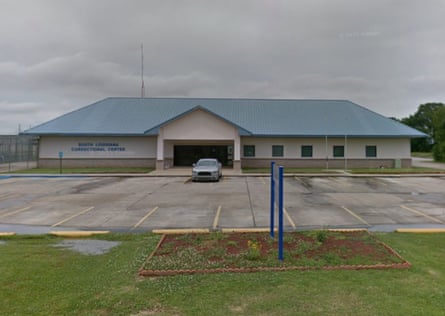
A Google Maps screenshot of the South Louisiana Ice Processing Center (SLIPC) in Basile, Louisiana.
Photograph: Google Maps
A spokesperson for Geo categorically denied the allegations detailed in the complaints.
Photograph: Patrick T Fallon/AFP/Getty Images
Queer and trans immigrants at a detention facility in south Louisiana have alleged that they faced sexual harassment and abuse, medical neglect and coerced labor by staff at the facility, and that they were repeatedly ignored or faced retaliation for speaking out.
In multiple legal complaints, immigrants detained at the South Louisiana Ice Processing Center (SLIPC) in Basile, Louisiana, said they were recruited into an unsanctioned work program that forced them to perform hard manual labor for as little as $1 per day. Detainees also alleged that queer people were targeted by an assistant warden who stalked, harassed and sexually assaulted them.
Three current and former detainees who spoke to the Guardian said that, between 2023 and 2025, they endured months of abuse from an assistant warden named Manuel Reyes and his associates. In their complaints to the Department of Homeland Security (DHS) and Immigration and Customs Enforcement (Ice), the detainees also said that they faced retaliation for reporting the abuse to authorities, alleging that Reyes and other staff beat them and denied them medical treatment.
“I was treated worse than an animal,” said Mario Garcia-Valenzuela, one of the detainees. “We don’t deserve to be treated like this.”
Garcia-Valenzuela, a trans man detained at SLIPC, has alleged that, as part of the unsanctioned work program, Reyes forced him to move heavy cabinets and cinder blocks, and to clean using industrial-strength chemicals without gloves or protective gear. When Garcia-Valenzuela complained of injuries from the work program, he said, Reyes and his associates forcefully stripped him naked and mocked him.
Kenia Campos-Flores, who is trans and non-binary, told the Guardian that they suffered from persistent migraines and chest pain after exposure to cleaning chemicals they were made to use during unofficial, overnight work shifts. Campos-Flores also alleged in a complaint they were persistently sexually harassed by Reyes, who entered their dorm and stole possessions including their boxers.
Another trans detainee, Monica Renteria-Gonzalez, complained that a stripper chemical he was told to use to clean the facility floors seeped through his fabric shoes and burned the skin of his feet. On more than one occasion, while Renteria-Gonzalez was bent over cleaning, he said, Reyes came up from behind and inappropriately touched him. The assistant warden also told Renteria-Gonzalez he was watching the detainee through security cameras, including while he was showering.
A fourth detainee, identified by the pseudonym Jane Doe, is a cisgender, queer woman who said that Reyes forced her to perform oral sex on him on a “near daily basis” between February and May 2024, threatening to kill her if she refused, according to her complaint.
Doe, who was deported to the Dominican Republic in January this year, has chosen not to share her name or speak publicly because she fears that Reyes will make good on his threat to find and harm her, her lawyer said.
Taken together, the detainees’ stories present a troubling pattern of mistreatment and abuse inside SLIPC, their attorneys said. Though the alleged abuse took place across two presidential administrations, advocates worry that conditions inside detention facilities could further deteriorate amid the Trump administration’s present push to arrest and detain a record number of immigrants. Trans and queer immigrants in detention are especially vulnerable, advocates said, given that the administration is also moving to roll back key civil rights protections for LGBTQ+ people in federal custody.
The detainees’ allegations are detailed in four separate administrative complaints filed under the Federal Tort Claims Act, which allows individuals to sue the government for injuries caused by federal employees. The government has six months to adjudicate the complaints, or the claimants could move forward with a federal lawsuit. They were submitted in September by Robert F Kennedy Human Rights, the American Civil Liberties Union (ACLU) of Louisiana and the National Immigration Project. Those groups have also submitted a civil rights complaint to the DHS oversight bodies, including the office for civil rights and civil liberties (CRCL), on behalf of the detainees.
“This was a sadistic late-night work program,” said Sarah Decker, a senior staff attorney with RFK Human Rights. “It was designed to target vulnerable trans men or masculine-presenting LGBTQ people, who [Reyes] coerced into participating.”
When detainees tried to report their abuse, Decker said, Ice officials repeatedly disregarded them. Officials dismissed multiple reports of abuse in accordance with the federal Prison Rape Elimination Act (Prea), Decker said, as well as complaints to the Ice office of inspector general (OIG), the department charged with oversight of Ice.
“These people screamed for help. They filed grievances. They filed complaints under the Prison Rape Elimination Act, they filed verbal complaints through the office of the inspector general. They did everything to get help,” Decker said. “And they were systematically ignored, and complaints were buried.”
The Guardian attempted to locate Reyes though multiple means, including public records and social media searches and were unable to contact him. Reyes is not facing criminal charges for the alleged sexual abuse at the facility.
He is no longer employed at SLIPC, Decker said – he left the facility in July 2024. But, Renteria-Gonzalez and Garcia-Valenzuela, who remain detained at SLIPC, told the Guardian other staff at the facility have continued to retaliate against them, placing them in solitary confinement and denying them full access to medical care.
The DHS and Ice did not respond to the Guardian’s queries about the detainees’ allegations, nor did the agencies address whether any of the detainees’ Prea complaints were investigated.
‘It’s devastating and heartbreaking, everything that they do to us in here’
Located about 90 miles (145km) from the Gulf coast in the rural town of Basile, Louisiana, SLIPC was once a correctional facility. But in 2019, it opened as an Ice detention facility, operated by Geo Group, one of the largest private prison and surveillance firms in the US.
Over the past several years, the detention center, which houses mostly women as well as a few trans people, has attracted a string of allegations of civil and human rights violations, medical neglect and poor hygiene. In 2022, an internal inspection by the office of the immigration detention ombudsman – an independent office within the Department of Homeland Security – found that the facility had insufficient medical staffing, and had been inconsistent in addressing the medical and mental health needs of detainees. A 2025 report by the Yale Law School also found that detainees were “left hungry, cold, and in an atmosphere detainees describe as abusive”.
A Google Maps screenshot of the South Louisiana Ice Processing Center (SLIPC) in Basile, Louisiana. Photograph: Google Maps
“It’s devastating and heartbreaking, everything that they do to us in here,” said Renteria-Gonzalez, who first arrived at the facility in May 2023. “We struggle on a daily basis.”
He said his decision to remain in detention while his immigration case is under review – rather than accept deportation – has been painful.
Renteria-Gonzalez came to the US when he was 12 and has been in the country for 31 years. His eight-year-old daughter is a US citizen. “It is for my daughter and my family that I have endured everything that I have in this detention facility for the past 28 months,” he said. “It’s so that I can make it back home to her.”
Renteria-Gonzalez said Reyes first recruited him to participate in the late-night work program in September 2023, according to his complaint. Reyes would often come into his dorm late at night – at around 2 or 3am – to wake him up for his night shift.
“It’s like he lived [at the detention center] 24/7,” Renteria-Gonzalez told the Guardian.
Each recruit worked alone, during different times or in different parts of the detention facility – meaning they were often alone with Reyes, the detainees allege. During these times, Renteria-Gonzalez said, he would watch them work and probe them with invasive and inappropriate questions. “It made me feel uncomfortable,” he said. “He used to sit on his phone and asked us for personal information to look us up on Facebook and stuff.”
Sometimes, he said, Reyes entered detainees’ dorms late at night for no particular reason, and would take their used underwear and personal hygiene products. On other occasions, Renteria-Gonzalez alleged in the complaint, Reyes would stalk him as he went to and from the showers and ask invasive questions: “And after, he would say: ‘Tell me what were you doing in the shower?’”
Twice, Renteria-Gonzalez said, Reyes came up behind him and touched him inappropriately. Another SLIPC officer, according to Renteria-Gonzalez, began to sexually harass him as well, sending him explicit notes and showing him pornographic images of herself.
“I just felt overwhelmed,” he said. “I thought enough was enough.”
Eventually, he realized he wasn’t alone.
After being detained at SLIPC in February 2024, Garcia-Valenzuela said he also found himself trapped in Reyes’s unofficial work program.
Mario Garcia-Valenzuela. Photograph: Mario Garcia-Valenzuela
Garcia-Valenzuela had fled to the US in 2014 from Mexico, where he was tortured by members of a drug cartel. “I have no choice, that’s why I’m fighting,” he said. “Because I know that as soon as they deport me, I’m going to be handed over to the cartels and I’m going to be tortured and killed – ripped into pieces.”
But in SLIPC he faced a new kind of horror. He alleged that on more than one occasion he was told to move heavy metal filing cabinets back and forth across a room. When he struggled to lift the furniture, Reyes would taunt him, he said, saying: “If you think you are a man, I’m going to treat you like a man.”
In the spring of 2024, Garcia-Valenzuela reported sexual harassment on the basis of his gender, in accordance with Prea. He said he felt targeted due to his gender identity and wanted the fact he is transgender removed from his file, as a measure of protection. But an Ice officer responded that “even if we take off your transgender marker, there is no hiding that you are transgender”, noting Garcia-Valenzuela’s physical appearance, he said. To Garcia-Valenzuela’s knowledge, no follow-up investigation into Reyes was conducted.
Renteria-Gonzalez’s complaints were dismissed as well, Renteria-Gonzalez said.
A spokesperson for Geo categorically denied the allegations detailed in the complaints.
“GEO strongly disagrees with these baseless allegations, which are part of a long-standing, politically motivated, and radical campaign to abolish ICE and end federal immigration detention by attacking the federal government’s immigration facility contractors,” said Christopher V Ferreira, a Geo group spokesperson.
Ferreira added that “GEO has comprehensive policies in place for the reporting and investigation of all incidents that occur at the Center, including instances of assault and/or sexual assault. These policies are governed by standards and requirements established by the US Department of Homeland Security.”
Geo did not respond to questions about Reyes’s employment status at SLIPC.
Harsh retaliation
The detainees who filed complaints against Reyes and other SLIPC staff said that they faced harsh retaliation for doing so.
When Jane Doe filed a Prea complaint with Ice using a paper form and through the phone hotline, detailing that Reyes had sexually assaulted her, she received no response, according to her legal complaint.
But afterwards, Reyes redoubled his efforts to stalk her, the complaint alleges – and forced her to perform oral sex on him, saying he had her cornered in the facility’s “camera blind spots” where no one would see them.
When she attempted to resist, Reyes told her he had found her mother’s home address in the Dominican Republic, Doe alleges in the complaint, and told her that if she were deported, he would follow her to her family’s residence where “you won’t have any protection”.
A spokesperson for Geo categorically denied the allegations detailed in the complaints. Photograph: Patrick T Fallon/AFP/Getty Images
Jane Doe said Reyes and other staff also blocked her from accessing medical treatment for her epilepsy, even as her seizures became more severe and frequent during her time in detention, the complaint states. He repeatedly cornered Doe as she was en route to the medical center to receive treatment, and told her he would watch her on cameras while she was receiving medical evaluation. On one occasion, he told Doe he was “masturbating to her because he saw her body in medical condition when she was in an observation cell”, the complaint alleges.
“We feel so vulnerable, impotent,” Renteria-Gonzalez said.
After he reported that Reyes had sexually assaulted him, Renteria-Gonzalez said, Reyes burst into his housing unit and yelled, “You should have never put my name on it!”, in reference to the complaint to Ice. Renteria-Gonzalez said he was then placed in solitary confinement for two weeks.
After Renteria-Gonzalez reported harassment from another officer, his complaint was dismissed as “unsubstantiated” and the officer came back and told him: “They can’t do nothing to me,” according to the complaint.
Meanwhile, Garcia-Valenzuela said he was repeatedly sent to solitary confinement, he believes in retaliation for speaking out. He said staff at the detention center falsely reported that he had attempted self-harm, and needed to be placed under suicide watch, even though he had not in fact tried to hurt himself.
At one point, while Garcia-Valenzuela was in the medical isolation unit, officers delivered him a meal that consisted of a few potatoes and a few grains of cereal. There was no spoon provided, he said, and there was a note that instructed him to eat it “like a dog”.
Shortly after that incident, he said, a doctor at the facility suddenly – without explanation – stopped providing him access to medication for hand pain that had been exacerbated by his working in Reyes’s night-shift program.
He has avoided making further complaints. He tries not to speak to or make eye contact with staff, and avoids leaving his dorm. He limits trips to the restroom, he said. And rather than go to the cafeteria to warm up his food and eat, he takes his meals cold, and dines in bed. “I have to stay in the back-most corner of my bed, and eat there,” he said.
“I don’t ever feel at ease.”
Trans people in federal custody under threat
The allegations of abuse at SLIPC come at a time when the health and safety of trans people in federal custody is especially under threat, advocates say.
On the first day of his presidency, Donald Trump unveiled a flurry of executive actions targeting trans rights, rolling back anti-discrimination protections and mandating that people in immigration detention be placed in facilities based on their sex assigned at birth.
On 16 January – the last day of Joe Biden’s administration – Ice reported that 47 trans people were in Ice detention facilities around the country and that 69 had been arrested since the start of the fiscal year. As soon as Trump took office, the agency began omitting data on the number of transgender people in immigration detention from its reports.
“The government is essentially refusing to acknowledge the existence of trans people, let alone their humanity,” Decker of RFK Human Rights said.
Although a federal judge has blocked enforcement of Trump’s ban on transgender healthcare in federal prisons, Decker told the Guardian that inside detention centers, guards and staff have been emboldened to deny healthcare to trans clients, or retaliate against them for requesting care.
“I worry that the situation will only get worse from here for trans people,” she added.
The administration also closed the civil rights division of the DHS, as well as the ombudsman office overseeing immigration detention, arguing that the staff in these congressionally mandated divisions were “internal adversaries that slow down operations”.
The divisions included employees tasked with regularly visiting detention centers, investigating complaints and preparing reports for Congress. Detainees facing discrimination, neglect and abuse now have even fewer options for recourse, Decker said.
LGBTQ+ Americans consider move to Canada to escape Trump: ‘I’m afraid of living here’
Read more
It’s a scary, difficult moment to speak out, said Campos-Flores, a 37-year-old single parent of two children who came to the US from El Salvador when they were 11 years old.
During the seven months that Campos-Flores was detained at SLIPC, they would call their parents every day, just to reassure them that they were still alive. Periodically, they would beg their family and their lawyer to find ways to get them out. “I asked them to try to book me into another facility,” they said. “It was too much – just too much.”
In November 2024, they were deported – and immediately they felt a sense of relief to be freed from Reyes, they said. But they couldn’t stay away from their children, who are US citizens – so they crossed back into the US and were again apprehended.
They are currently detained at a different correctional facility in Louisiana, serving a criminal sentence for illegal re-entry. But after finishing their sentence, it is likely they will be transferred back to SLIPC before deportation – and face the same officers who harassed them, or ignored their complaints.
“But I have my 12-year-old son. He is also gay, he likes boys, and I don’t want him to experience anything like what I have experienced,” they said. They want to fight for his rights, too, they said.
Fox host tries to force him into a hole so she can bash him with bigotry. He doesn’t fall for it. Hugs.
tRump / Rubio are desperately trying to drum up a war with Venezuela over their oil. The US handpicked successor to Maduro admitted she would give up the rights to the oil reserves to the western oil companies first thing. Venezuela has more oil than Saudi Arabia. That is why the US crippled the Venezuela economy in an attempt to get hat oil for our own. Maduro wants to use the money for the people, he wants to help the indigenous people, he wants to destroy the class structure that existed when he was growing up. The white people were treated better than the native brown people, he wanted to change that to where everyone is equal. People who are used to privilege react badly when everyone gets the same privilege. Hugs
This next video talks about the “young republicans” who are anywhere from 18 to 40 and these racist bigoted republicans have important positions in state and federal government. These republicans threatened to rape their enemies, and praised Hitler. Hugs
The clip below talks about Chuck Schumer and his actions before the shutdown and after. The democrats have a history of not standing up and taking action. The base of the party is glad the leaders are now taking concrete actions. Hugs
This last one is just for fun. It is a comedian who acts / talks like Cuomo to his face. Hugs
Despite repeatedly promising not to cut Social Security, the Trump Administration is reportedly preparing a proposed rule that could reduce the share of applicants who qualify for Social Security Disability Insurance (SSDI) by up to 20 percent, according to an Urban Institute report that cites writing by a former Trump Administration official and interviews with former staff at the Social Security Administration (SSA). This would be the largest cut in SSDI history.
SSDI is an integral part of Social Security. It provides essential benefits to workers who cannot support themselves through earnings due to severe and long-lasting disabilities that significantly impede their ability to work, and it helps to prevent beneficiaries and their families from experiencing poverty.
The rule would make it much more difficult to qualify for both SSDI and Supplemental Security Income (SSI). Because it would dramatically change the eligibility criteria for older applicants, the losses among people over age 50 would be much deeper.
The rule is likely to be the largest-ever cut to Social Security Disability Insurance. A 20 percent cut in the share of applicants who qualify for SSDI would be larger than any previous change to the program. It would be even larger than the Reagan-era disability cuts, which the Reagan Administration was forced to reverse amid fierce opposition from governors, courts, beneficiaries, and advocates. According to an Urban Institute analysis, even a cut half the size of what the Trump Administration is considering would mean 750,000 fewer people would receive SSDI benefits within ten years. In addition to reducing the share of applicants who receive benefits, some current beneficiaries could see their benefits taken away when their eligibility is reviewed.
The rule would particularly hurt older workers. Like the rest of Social Security, SSDI serves largely older people; nearly 80 percent of disabled workers are aged 50 or older. SSDI benefits provide vital support to people whose careers are cut short by severe medical impairments. The rule is expected to target older applicants already determined to have significant medical impairments by discounting the barriers they face due to their age in continuing to do substantial work — despite the law’s requirement that the Social Security Administration (SSA) consider how age, education, and skills might make working harder, in addition to considering health conditions.
It’s already difficult at any age to qualify for disability benefits, given their stringent rules. Research shows applicants whose impairments are not severe enough to qualify for SSDI fare poorly in their attempts to return to work — especially if they’re older. Rejecting more older applicants will cause more hardship for people who would be eligible for benefits under the existing rules.
The rule will likely cause disproportionate harm to people living in the South and Appalachia. Some states have a higher share of people receiving disability benefits, particularly those with more older workers with fewer years of formal education, and who are more likely to have worked in physical jobs like manufacturing or mining. That is true of many Southern and Appalachian states, as well as Maine and the Rust Belt states of Michigan, Ohio, and Pennsylvania. The proposed rule drafted during the first Trump Administration would reportedly change the way SSA considers education as well as age, and because residents of these states are on average older and less educated, these changes will hit them doubly hard.
In addition to cutting Social Security and SSI, the rule would threaten retirement security, access to health care, and other supports. Workers who become disabled and qualify for SSDI are significantly worse off in retirement: they are poorer, experience more hardship, and have lower savings. Disabled workers will fare even worse in retirement if their eligibility for disability benefits is stripped. They would be forced to spend any retirement savings faster and claim their Social Security retirement benefits at a younger age, permanently reducing their — and possibly their family’s — monthly Social Security retirement benefits by up to 30 percent. For hundreds of thousands of older people, this rule would create long-term financial insecurity as they age.
In addition, applicants who do not qualify for disability benefits may face significant challenges accessing health care. SSDI recipients typically receive Medicare 24 months after they begin to receive benefits; if someone no longer qualifies for these benefits, they won’t be able to get Medicare until they turn 65. And, SSI recipients receive Medicaid, so those who lose SSI benefits may also lose Medicaid (particularly in states that have not adopted the Medicaid expansion). Most rejected applicants under the new standard will have very significant medical impairments, and many will struggle to access health care without those benefits — particularly after the steep Medicaid cuts in the Republican megabill.
Finally, restricting eligibility for disability benefits will make it more difficult for rejected applicants to access other key supports, such as food assistance, which has increasingly strict time limits for most non-elderly individuals without younger children who are not receiving disability benefits. New Medicaid work requirements could also pose significant impediments to people who lose disability benefits.
This rule is the latest in a series of harmful actions by the Trump Administration that threaten access to Social Security. This year, the Administration has forced SSA through a radical downsizing that has disrupted services for the largely older and severely disabled people who rely most on the agency, indiscriminately pushing out 7,000 workers in the largest staff cut in SSA’s history. This realignment has resulted in fewer staff serving Social Security applicants and beneficiaries, and huge cuts to staff supporting the agency’s customer service mission. These cuts have been coupled with inexplicable new restrictions — some of which have already been partially rolled back — for how the public can engage with SSA for assistance, creating additional access barriers.
At the same time, the Administration is working to advance changes that would make it harder for hundreds of thousands of eligible people to receive or continue receiving SSI, creating additional red tape for beneficiaries and more work for depleted and overburdened SSA staff.


 rgriesbach@al.com


‘It is for my daughter and my family that I have endured everything that I have in this detention facility for the past 28 months.’ Illustration: Rita Liu/The Guardian
A Google Maps screenshot of the South Louisiana Ice Processing Center (SLIPC) in Basile, Louisiana.
Photograph: Google MapsA spokesperson for Geo categorically denied the allegations detailed in the complaints.
Photograph: Patrick T Fallon/AFP/Getty Images







 Scottie's Playtime