Useful Info & Resource

Understanding the Legal Framework Governing a Shutdown

September 17, 2025 | By Sam Berger

The government funding deadline is fast approaching. With the Trump Administration’s continued efforts to impound and rescind funding, complicating Congress’s ability to reach an agreement on funding bills for the upcoming year, it is important to keep in mind the legal framework that governs a shutdown, and the limits a shutdown places on the executive branch.

This primer focuses on the activities that can (and cannot) legally continue during a shutdown; it does not address the impacts of a shutdown on government programs or the people who use them.

Critically, while the executive branch has some discretion as to what activities continue during a shutdown — and it is impossible to predict whether the Administration will take unlawful actions under the pretext of a shutdown[1] — a government shutdown does not provide the Administration any additional legal authority to fire federal employees, limit review of its actions by federal courts, or freeze funding once full-year appropriations are provided.

Activities That Can Continue During a Government Shutdown

Under the Antideficiency Act, agencies can neither spend, nor make commitments to spend, money without appropriations from Congress.[2]

Some activities continue during a shutdown because they are separately or already funded. For example, activities funded by multi-year or indefinite funding, such as disaster relief, continue, with payments made as normal. Likewise, if some appropriations bills have been enacted prior to a shutdown, activities funded by those enacted appropriations also continue (a scenario sometimes described as a “partial” government shutdown). The Administration has no legal authority to impound or freeze these funds.

Based on long-standing Department of Justice (DOJ) guidance, there are also a limited set of activities for which the federal government can make commitments to pay — though it still cannot make payments — during a shutdown[3]:

  • Activities expressly provided for in law to continue during a shutdown. Some laws expressly provide that certain activities can continue in the absence of appropriations, such as the Department of Defense’s “feed and forage” authority allowing it to obtain certain types of necessary supplies for military personnel.
  • Activities to protect against imminent threats to life or property. This includes activities related to law enforcement, national security, air traffic control, and federal prisons, among others.
  • Activities that are necessary to prevent significant damage to a funded program. For example, activities necessary to ensure Social Security payments (which themselves are funded under law) are made in a timely way can continue during a shutdown even if those activities themselves do not have funding.
  • Activities necessary to discharge the President’s constitutional duties. This includes, for example, the President’s Commander-in-Chief responsibilities.

Different administrations have interpreted these exceptions to apply more or less narrowly, meaning that the activities that continue during a shutdown have differed to some extent from administration to administration. The first Trump Administration took a more expansive view of the public services that should continue.[4] However, to date, a core set of services — such as defense, law enforcement, transportation safety, Social Security, and Medicare — have continued during every shutdown.

Executive Branch Restrictions During a Government Shutdown

While the executive branch has some latitude in what activities it continues during a government shutdown, there are clear limits on its actions.

If an activity is not funded, no actual payments can be made during a shutdown.

Even for activities that continue during a shutdown because they are subject to one of the exceptions described above, funding to pay for them cannot be provided without appropriations. The federal personnel required to work — including law enforcement, prison guards, and the staff that process Social Security benefits — only receive IOUs that will be paid when appropriations are enacted. Federal contractors required to work or provide services also go unpaid during the shutdown.

Under current law, when the shutdown ends all federal employees receive backpay for the time the government was shut down regardless of whether they were working on an activity that could continue during a shutdown or were forced to stop work until the shutdown ended. However, federal contractors do not receive pay for this time period except for any work they were required to perform during it.

Each branch of government determines which of its activities can legally continue during a shutdown.

Congress and the judiciary make their own independent determinations about what activities continue during a lapse. The executive branch is not involved in those determinations.

In prior shutdowns, the judiciary has had sufficient funding in the absence of new appropriations to continue normal operations for the duration of the shutdown. Courts have said in previous shutdowns that in the event they ran out of funding during a shutdown, they would continue to hear cases and otherwise fulfill their constitutional responsibilities.[5] Thus, litigants who are suing in federal court would be able to bring suits against the Administration during a shutdown.

When DOJ does not have funding during a shutdown, its lawyers may request extensions from courts for filing deadlines and other procedural steps. Individual courts have the discretion to determine whether to provide such extensions, and courts have both granted and denied such requests depending on the circumstances.

A shutdown would not provide the Administration with any additional legal authority to engage in widespread firing of federal employees.

A temporary lapse in funding does not provide grounds for an agency to fire employees. In addition, during a shutdown most agencies will not be able to legally conduct personnel actions unrelated to the shutdown itself because their HR departments will not be funded and these types of actions do not fall under any of the available exceptions.[6]

A shutdown would not impact the Administration’s legal obligations to spend money once full-year appropriations are provided.

While many activities would cease during a shutdown because of a lack of funding, the shutdown would not provide the Administration with any authority to impound or freeze funds once appropriations are provided.

While this primer focuses on the legal framework that governs during a shutdown, the Administration has shown itself willing to take actions that are inconsistent with the law, which presents major challenges for the country at all times, not just during a shutdown.

Topics:  Federal Budget, Budget Process

End Notes

[1] Sam Berger, “Trump is ignoring the law to keep the shutdown from causing him political pain,” The Washington Post, January 15, 2019, https://www.washingtonpost.com/outlook/2019/01/15/trump-is-ignoring-law-keep-shutdown-causing-him-political-pain/.

[2] Government Accountability Office, “Antideficiency Act,” https://www.gao.gov/legal/appropriations-law/resources.

[3] Walter Dellinger, “Government Operations in the Event of a Lapse in Appropriations,” Justice Department Office of Legal Counsel, August 16, 1995, https://www.justice.gov/sites/default/files/olc/opinions/attachments/2014/11/10/1995-08-16-lapse-in-appropriations.htm.

[4] Juliet Linderman, “Selective shutdown? Trump tries to blunt impact, takes heat,” Associated Press, January 13, 2019, https://apnews.com/article/66b50739f4b84063a2ff56dff3156712.

[5] United States Courts, “Judiciary Has Funds to Operate Through Jan. 31,” January 22, 2019, https://www.uscourts.gov/data-news/judiciary-news/2019/01/22/judiciary-has-funds-operate-through-jan-31. 

[6] Office of Personnel Management, “Guidance for Shutdown Furloughs,” January 2024, https://www.opm.gov/policy-data-oversight/pay-leave/furlough-guidance/guidance-for-shutdown-furloughs.pdf.
Racist bigot Stephen Miller is trying to use the death of Charlie Kirk which was done by a republican to attack / destroy the left. It is the way of authoritarians.

This Was In The News September 10th-

I saw a few headlines about it on Monday, and meant to post it but didn’t get it done, then Tuesday was what it was. So, it’s been a week, but here it is: there is universal childcare in New Mexico, and they are heroes for getting that done. -A

New Mexico will be the first state to make child care free

Chabeli Carrazana of The 19th. Meet Chabeli and read more of her reporting on gender, politics and policy.

In an unprecedented move, New Mexico is making child care free. 

Beginning in November, it will be the first state in the nation to provide child care to all residents regardless of income, Gov. Michelle Lujan Grisham announced this week. 

The state has been working to lower child care care costs since 2019, when it created the Early Childhood Education and Care Department and started to expand eligibility for universal child care. This latest change removes income eligibility requirements from the state’s child care assistance program altogether and waives all family copayments. 

The initiative is expected to save families $12,000 per child annually. 

“Child care is essential to family stability, workforce participation and New Mexico’s future prosperity,” Lujan Grisham said in her announcement. “By investing in universal child care, we are giving families financial relief, supporting our economy, and ensuring that every child has the opportunity to grow and thrive.”

The United States allocates some federal funding to states to lower the cost of child care for low-income kids, but eligibility for that funding is very limited and by and large, most families are paying an average of $13,000 on child care annually. It’s much higher in many states. 

In the absence of a federal universal child care system, some states have worked to build their own systems, and New Mexico has been a leader in that effort over the past several years. 

The state’s Early Childhood Education and Care Department got a budget increase of $113 million in the most recent legislative session, taking its total operating budget to nearly $1 billion. Half of that money goes specifically to child care payment support. 

The state also established a fund in 2020 with money earmarked for early childhood education. Thanks to tax collections from the oil and gas industries, the fund has grown from $320 million to $10 billion. Latinas in New Mexico led the charge in 2022 to help pass a constitutional amendment in 2022 that ensured a portion of that fund went specifically to universal child care. Funding for the new initiative will come at least in part from there, and Lujan Grisham will also be requesting an additional $120 million in state funding next year, a spokesperson for the governor said. 

The news also comes with improvements for child care facilities and, potentially, raises for their staff. As part of the rollout, the state will establish a $13 million loan fund to construct and expand facilities, launch a recruitment campaign for home-based providers and incentivize programs to pay staff a minimum of $18 an hour. 

The state hopes the initiative will lead to the creation of 55 new child care centers and 1,120 home-based child care options. 

Still, response to the initiative so far has been mixed. Republican state Rep. Rebecca Dow told the Albuquerque Journal that she believes child care vouchers should be reserved for children most at risk for child abuse and neglect. Since the state’s child care assistance program expanded eligibility over the past five years, fewer low-income families have participated in the program, the Journal reported. 

But Thora Walsh Padilla, the president of the Mescalero Apache Tribe, praised the initiative, saying during a press conference Monday that it addresses various challenges the tribe has struggled with, including raising wages for providers. There are only three child care facilities on the 463,000 acre reservation. 

“It is so timely and it answers so many needs,” she said. “A building? Oh my goodness, we’ll be one of the first to apply.”

MAGA Republicans Turn On Trump Over Epstein Cover-Ups


New Yorkers Are FED UP With Trump’s Secret Police

Trump Slump So Bad Fox Host Turns To Communism


Dem Leadership Can’t Stop Sabotaging Its Chances To Win

16-year-old Florida boy held in Israeli prison

Fun With Chelsea

He Still Did It, & He Still Owes

This is a succinct summary and discussion of the decision and its import.

Affirmed: E. Jean Carroll Case by Joyce Vance
Read on Substack

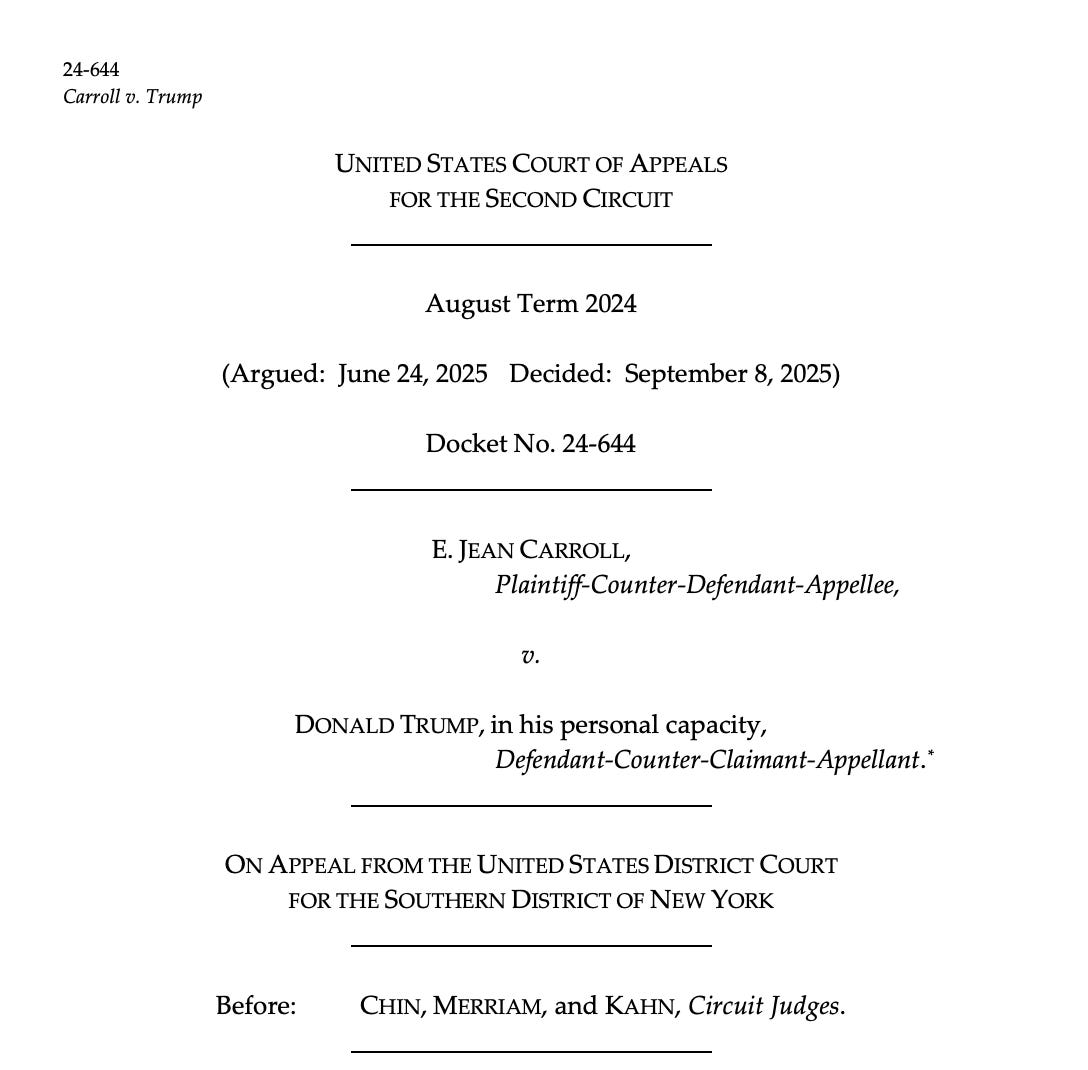
I asked Robbie Kaplan, the lawyer who tried the case, how she felt after learning that the Court of Appeals for the Second Circuit affirmed the $83.3 million verdict a jury awarded E. Jean Carroll in her defamation case against Donald Trump. This is what Kaplan told me: “Both the amazing and brave E. Jean Carroll and I could hardly be happier about today’s decision from the Second Circuit. It has been a long road to get here, and we are not at the end of the road yet, but as the opinion makes clear: ‘The starting point is the now-indisputable fact that a jury found in Carroll II that Trump sexually abused Carroll in 1996, and … that, based on the jury’s findings, Carroll did not lie and that Trump uttered falsehoods in his statements accusing her of lying and acting with improper motivations.’”

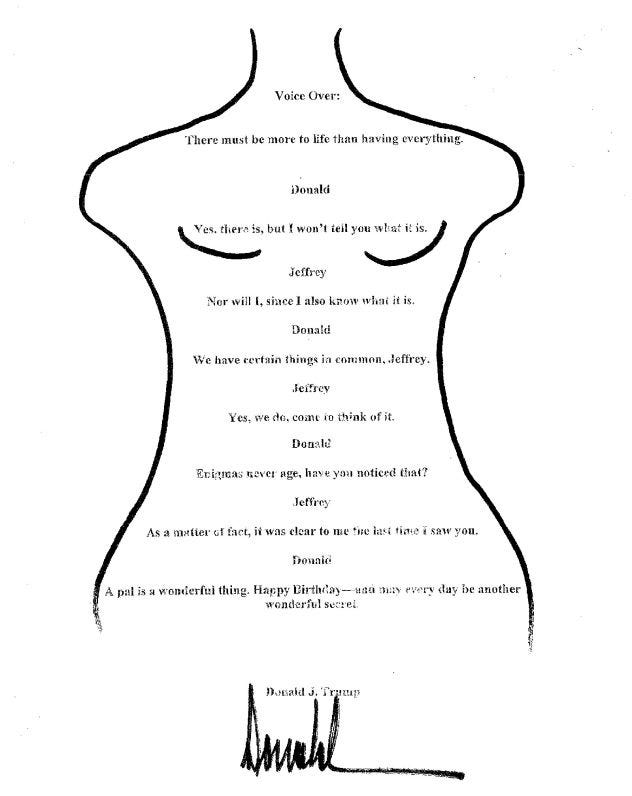
The Second Circuit affirmed the verdict against Trump on the same day that Trump’s birthday missive to Jeffrey Epstein became public. Trump says he didn’t send it, but the signature is extremely similar to verified Trump signatures on notes he wrote to both George Conway and Hillary Clinton. The birthday message is in the distinctive Sharpie marker scrawl Trump is known for. But Trump is insisting it isn’t his, a strange hill to die on since his friendship with Epstein is well documented. A jury believed E. Jean when she said Trump sexually assaulted her. The jury of public opinion may well believe Trump sent this incriminating note to Epstein.

This image shared by Democrats on the House Oversight Committee shows the birthday note to Jeffrey Epstein bearing Donald Trump's name. Trump has repeatedly denied writing the letter.

Trump will undoubtedly try to appeal the case to the Supreme Court. It will be up to the Court to decide whether to hear the case or let the Second Circuit’s opinion stand.

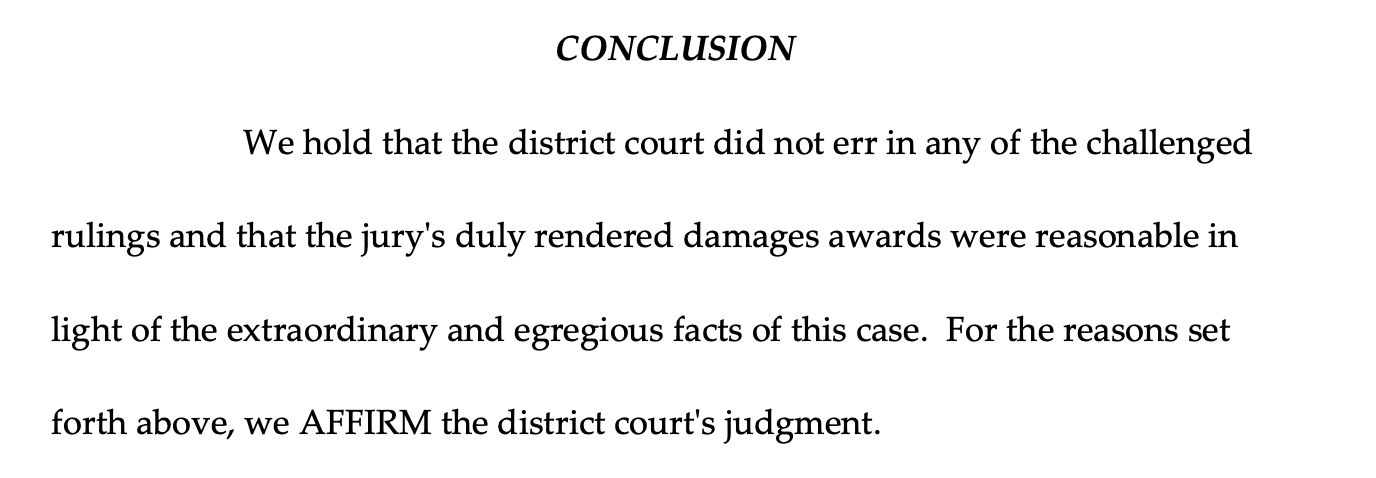
The 70-page opinion starts like this: “A jury found that then-President Trump acted with common law malice when he made defamatory statements about Carroll in June 2019 and awarded compensatory and punitive damages. Trump appeals, arguing that he is entitled to presidential immunity or, in the alternative, a new trial. Trump also contends that the jury’s damages award is excessive and must be remitted.” The court then writes one word, “AFFIRMED,” which means that the jury’s verdict stands. You can read the full opinion here.

Last December, the Second Circuit affirmed the verdict in the case referred to as “Carroll II”—the second defamation case Carroll filed against Trump, which confusingly went to trial first (because Trump bogged down “Carroll I” in appeals). The jury in Carroll II returned a $5 million verdict against Trump.

In this case, Carroll I, Carroll’s lawyer, Robbie Kaplan, argued to the jury that if a $5 million verdict was insufficient to stop Trump’s defamation of Carroll, then they needed to return a larger verdict that they believed would stop his misconduct. That’s what they did. The verdict was for $83.3 million.

Trump asked the Court of Appeals to reverse for two reasons:

  • He argued that the Supreme Court’s decision about presidential immunity in criminal cases in Trump v. United States means the Second Circuit erred when it refused to afford him immunity in this civil case, even though it involves an assault that occurred decades before he became the president. Beyond that, while he defamed Carroll while he was in office the first time, his comments were about an entirely personal matter that had nothing to do with the office he held. The court declined to reverse on this ground. They held Trump had waived the immunity argument by not making it at the proper time before the lower court.
  • Trump also challenged the district court’s grant of partial summary judgment in favor of Carroll and other procedural rulings. The trial court held that a jury had already found that Trump sexually assaulted Carroll in the first trial and that finding was binding in the second case. That decision reflects the well-known principle of collateral estoppel, and the Court ruled there was no reason to disturb it because the identical issue was decided in the prior action and Trump had a full and fair opportunity to litigate the issue during those proceedings.

Trump has frequently been able to twist courts and delays to his advantage. He did that here for a time. But that clock seems to have run out on him. The Supreme Court would have to up end its existing jurisprudence on basic procedural issues to rule for Trump here.

A jury believed E. Jean Carroll. That’s the bottom line. In our system, we leave decisions about disputed facts and what happened to juries. The jury here deliberated and found against Donald Trump. That decision should remain in place. In an era where so much damage is being done to women’s legal standing, it’s essential that we be believed when we have the courage to speak out about sexual assault. Carroll did that. She told friends about the attack at the time in occurred but had been too intimidated by threats she would lose her job and her livelihood if she spoke up to move forward then.

If we can do nothing else for women in an era where abortion rights, more properly understood as the right to receive lifesaving medical care, and other rights have been taken away, we can do this: we can believe them when they summon the courage to come forward and reveal a rape or a sexual assault. Maybe if our nation had done that sooner, we wouldn’t have had a Trump presidency at all.

We’re in this together,

Joyce