Mmm. Pie.

81-Year-Old Wins “Best Technique” at a San Francisco Lesbian Pie-Eating Contest

Babs wrote that her victory was “proving once and for all that experience matters.”

By Mathew Rodriguez

Proving that there is no age limit to good tongue skills, an 81-year-old woman who competed in a San Francisco lesbian pie-eating contest won Best Technique, per viral social media videos about the event.

Babs Daitch, who joined a crush of pie-eating lesbians in the contest on November 23, posted about her entering the contest, and subsequent title-winning performance, on her social media channels. Though she could not claim the overall victory — a woman named Jenn won, per the Bay Area Reporter — she did win “Best Technique,” per her own social media accounts. She wrote that her victory was “proving once and for all that experience matters.”

One video, posted on Friday, featured Daitch being cheered on by the crowd. Her response: sticking her tongue out in between her middle and index fingers. The clip has garnered over 40,000 views since it hit the internet. (snip-MORE on the page)

RIP, “Iconic Swamp King” Claude

I enjoyed reading about Claude now and then; maybe I’m not the only one.

‘Iconic swamp king’: San Francisco’s beloved albino alligator dies aged 30

Claude, the de facto mascot for a local museum, was the subject of a children’s book and regularly received fan mail

Claude, at the California Academy of Sciences in San Francisco, on 24 April 2025. Photograph: Jeff Chiu/AP

Claude, the beloved albino alligator who called the California Academy of Sciences home for the better part of two decades, has died at age 30.

The San Francisco museum announced his death on Tuesday and said that the reptile had in recent weeks received treatment for a “suspected infection”. Claude, with his unusual white scales, had become a sort of mascot for the academy and the city. He was the subject of a children’s book and regularly received fan mail and gifts from around the world, the museum said.

“He brought joy to millions of people at the museum and across the world, his quiet charisma captivating the hearts of fans of all ages,” a statement from the museum read. “Claude showed us the power of ambassador animals to connect people to nature and stoke curiosity to learn more about the world around us.”

In September, the museum celebrated his 30th birthday with a month of festivities in honor of the “iconic swamp king”. (snip-MORE)

More bad things by bad people. Old ones in my open tabs.

Trump Won’t Rule Out Sending Troops Into Venezuela

DHS To Carry Out Migrant Raids In New Orleans

Feds Charge NYPD Sergeant With Impersonating ICE

ICE Employee Arrested In Underage Sex Sting [VIDEO]


Millions Likely To Lose SNAP Under New GOP Rules

Feds Award $1B Loan To Reopen Three Mile Island

The owner of the shuttered Three Mile Island nuclear plant has been awarded a $1 billion federal loan guarantee that will enable it to shift onto taxpayers some of the risk of its plan to restart the Pennsylvania facility and sell the electricity to Microsoft for its data centers. Amid rising energy demands, the taxpayer-backed loan will go toward the unprecedented effort to   reopen a mothballed U.S. nuclear plant that suffered a partial meltdown decades ago.

Hannity: I Don’t Care What Epstein Said About Trump


Nexstar Seeks FCC Payoff For Backing MAGA On Kimmel

WH Intervened To Aid Accused Rapist Andrew Tate

Homocon WH Nominee Exposed For Inflammatory Past


Abbott Effectively Defies Order To Release Musk Emails

How Trump Insiders Brokered Ballroom Donations

Watters: Rubio Is Like Your “Funny Mexican Friend”

DOJ Offers To Defend Rioter Who Tried To Burn Quran

You’ll note that brave patriot Jake Lang wore a Kevlar vest to address the Dearborn City Council

Heavily armed Mexican Navy personnel came to investigate the scene and discovered that the men had landed in Mexico by mistake and intended to plant the signs in South Texas. The situation was resolved without violence, and the Mexican Navy removed the signs

If this were reversed, Mexican contractors would have been shot or had a bomb dropped on them by drone.


Border Patrol Tracked Cars Of “No Kings” Protesters


Trump Berates Reporters, Gets Mystery MRI & Closes Border to (Non-White) Immigrants | The Daily Show

Trump-Hegseth’s War Crimes Scandal Isn’t Going Away

Bill Maher’s Lara Trump Interview Will Melt Your Brain

So Many Things To Observe This Date In Peace & Justice History!

December 1, 1891 
The International Peace Bureau was launched in Rome, Italy, “. . . to coordinate the activities of the various peace societies and promote the concept of peaceful settlement of international disputes.” The organization won the Nobel Peace Prize in 1910 for its work, and is headquartered in Bern, Switzerland.
December 1, 1948 
Following a brief but bloody civil war in 1948, Costa Rican President Jose Figueres helped draft a constitution that abolished the military and guaranteed free election with universal suffrage (all adult citizens can vote).
Money not spent on a military allowed the country to adequately fund health care and education, yielding one of the highest literacy rates on the continent, ninety-six percent. This is judged to be a factor in the nation’s never having fallen prey to corruption, dictatorships, or the bloodshed that has marred the history of much of the region.
Costa Rica stands apart 
December 1, 1955
Rosa Parks, a black seamstress active in the local NAACP, was arrested by police in Montgomery, Alabama, after refusing to give up her seat on the bus to a white man. Mrs. Parks faced a fine for breaking the segregation laws which said blacks had to vacate their seats if there were white passengers left standing. The same bus driver had thrown her off his bus twelve years prior for refusing to enter through the rear door.

Rosa Parks
Mrs. Parks had not been the first to defy the Jim Crow (the system of legalized or de jure segregation) law but her arrest sparked the year-long Montgomery Bus Boycott, organized by a young Baptist minister named Martin Luther King, Jr. The Montgomery bus company couldn’t survive without the revenue from its black passengers who, for the next year, created car pools and other means to avoid using the city busses.

The bus restored in Henry Ford Museum
The boycott was successful and Mrs. Parks became known as the “mother of the civil rights movement.
The story of the bus 
Rosa Parks biography 
Arrest record of Rosa Parks 
December 1, 1959 
Representatives of 12 countries, including the United States and the Soviet Union, signed a treaty in Washington setting aside Antarctica as a scientific preserve, free from military activity. President Eisenhower said the treaty and its guarantees “constitute a significant advance toward the goal of a peaceful world with justice.”
December 1, 1966
 
Comedian Dick Gregory was convicted in Olympia, Washington for his participation in a Nisqually Native American fishing rights protest. 
Interview with Dick Gregory
 
December 1, 1969 
A lottery was held to determine which young men would be drafted into the armed services for the ongoing Vietnam War. A large glass container held 366 blue plastic balls each marked with a birth date. The drawing determined the order of induction for draft-eligible men between 18 and 26 years old, and was broadcast live nationally. The first draft lottery was held in 1942.

Rep. Alexander Pirnie, R-NY, draws the first capsule in the draft lottery held on December 1, 1969. The capsule contained the date, September 14.
December 1, 1997 
A silent march of women in Khartoum, Sudan, protesting conscription, was met by a police attack and the arrest of 37 women.

https://www.peacebuttons.info/E-News/peacehistorydecember.htm#december1

Here Are Things We Can Do

People Helping People

A Lesbian bar in New York City. A sapphic society in the South. Food insecurity is high in queer communities. And this holiday season, LGBTQ+ groups are stepping in.

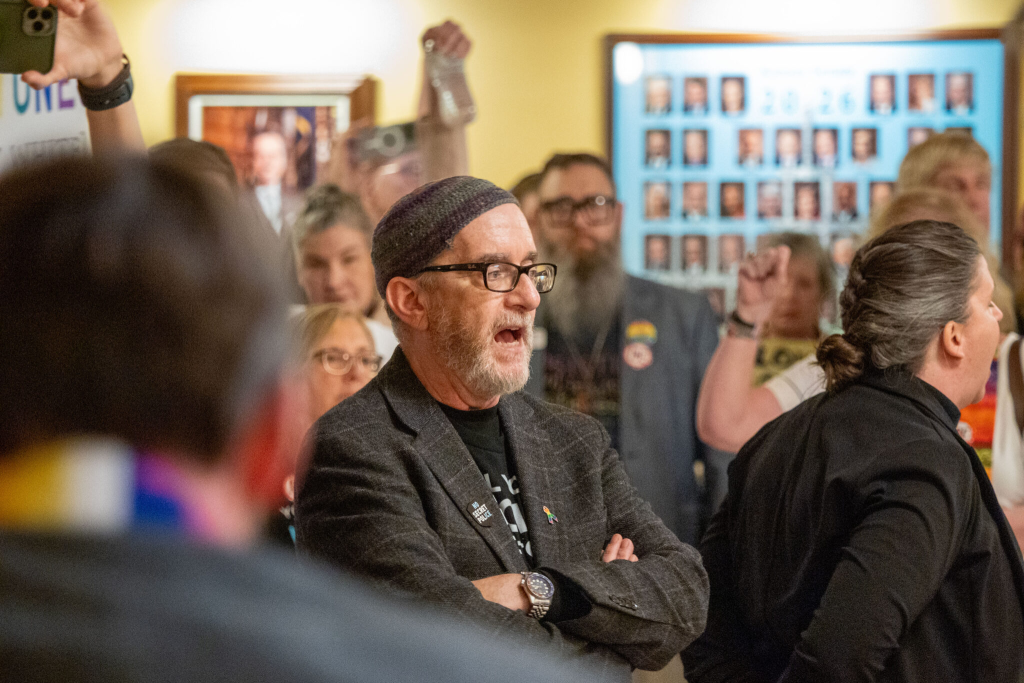
Images from NYC Queers 4 Food Justice’s Nov. 6, 2025 food pantry event at Ginger’s in Brooklyn, New York. Images Courtesy of NYC Queers 4 Food Justice

By Nov. 6, 2025, hunger was in the headlines and on the streets. SNAP benefits had just expired in the government shutdown, and cupboards were running bare for millions of Americans. That night, Ginger’s, Brooklyn’s oldest lesbian bar, hosted an event organized by NYC Queers 4 Food Justice to distribute food, Covid-19 tests, Narcan, tampons, and more.

With Ginger’s usual Thursday karaoke night as backdrop, some 70 bar-goers perused the venue’s back room. 

Some came out with Lululemon-donated tote bags filled with cans of soup, loaves of bread, jars of peanut butter, packs of period pads sponsored by sexual wellness company LOLA, and bushels of apples, potatoes, or greens from a local Hudson Valley farm.

Paper proof of hunger was not required. Ginger’s bouncer did not check SNAP benefits or EBT cards at the door; as usual, scanning IDs to make sure attendees were at least 21. 

The government has since reopened, but the government-driven food insecurity and economic upheaval remains for many—especially with food-centric gatherings like Thanksgiving, Kwanzaa, Hanukkah, and Christmas ahead. This holiday season, LGBTQ+ groups—like NYC Queers 4 Food Justice in New York, Peach City Sapphics in Atlanta, the Brave Space Alliance in Chicago, and the Okra Project, which operates nationwide—are supplying their communities with much-needed essentials. 

An ‘inspiring’ turnout

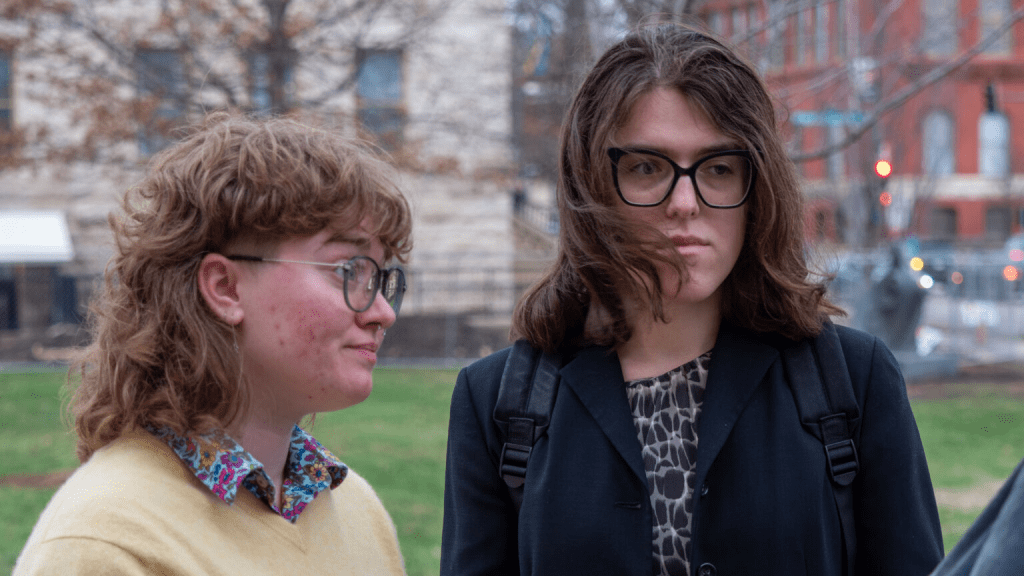
NYC Queers 4 Food Justice was started by two community-minded New Yorkers, Kadie Radics, 29, and London Dejarnette, 24, in October 2025. In anticipation of federal SNAP cuts, Radics—the director of supportive housing at the mental health nonprofit Fountain House—sought help from queer groups to get a food distribution event off the ground, including the lesbian social club Butch Monthly

Dejarnette, a program coordinator at a nonprofit working to end student food insecurity, answered Radics’ call-out. They’d never met, but within a month, they’d planned and scheduled the first NYC Queers 4 Food Justice event: Nov. 6 at Ginger’s. 

“When I walked into that space on Thursday, every single butch or masc in there was ready to work and just wanted to know what they could do,” recalled Dejarnette. 

“The turnout that we had, and also the turnout of first-time food pantry-goers, I think, was really telling,” they added. Dejarnette found it “really inspiring to see that these people, who have been needing food assistance for a really long time [but] have not felt comfortable” getting help from a trusted source. 

NYC Queers 4 Food Justice’s inaugural event at Ginger’s fed dozens of people and raised more than $5,000 in donations, Radics said. On Nov. 19, the group raised more than $1,000 at Cubbyhole, a lesbian bar in Manhattan’s West Village neighborhood. 

“We want our food to be reaching people who need it most, because the people that need it most are the ones that have been left in the dust by the federal government,” Dejarnette said. “What we ultimately want to do is utilize this organizing power that queer people have had for generations.”

On hunger’s ‘edge’

The need for food is on the rise everywhere in the U.S. 

A years-long affordability crisis has grown acute. The longest federal shutdown in U.S. history worsened chronic food insecurity

Approximately 42 million Americans depend on monthly SNAP benefits, and the average recipient receives $187 a month, or about $6 a dayHalting those electronic payments created a ripple effect that hurt childhood nutrition and student learning, distressed family budgets, and sapped grocery stores of shoppers.

SNAP “was supposed to just be a supplemental resource, but because we are so deep in a food emergency, it has become a lifeline for so many Americans,” said Dejarnette, who has run food pantry and redistribution programs since college.

The government reopened on Nov. 13, but some SNAP recipients may have to reapply to the program to have their benefits reinstated, further delaying food access. 

Queer communities may be feeling that pressure more acutely. Research suggests queer adults are more likely than others to experience food insecurity. Nationwide, 1 in 4 queer adults between 18 and 44 years old rely on SNAP benefits to access food. 

Socioeconomic gaps are highest in the Midwest, where 35 percent of queer people make less than $24,000 per year, according to the University of California, Los Angeles’ Williams Institute which studies sexual orientation and gender identity law and policy. For non-LGBT people in the region, it’s 24 percent. The income gap between LGBT and non-LGBT residents of Rocky Mountain states is similar. 

Queer people in the South, which is home to the largest LGBTQ+ population of any U.S. region, face higher rates of discrimination, poverty, and homelessness. In Georgia, for example, 26 percent of LGBT people are food insecure compared to 17 percent of people who don’t identify as queer.

In Atlanta, a group called Peach City Sapphics is trying to spotlight the particular food needs of queer people in some of Georgia’s biggest cities who are struggling to pay their bills, find housing and transportation. 

“Queer people get pushed to the edge fastest because the safety net is already thin,” Peach City Sapphics organizer Ciara Peebles said in a written statement to Rewire News Group

Many members of the southern LGBTQ+ community don’t have “supportive families,” she explained, so “when benefits get pulled back, the consequences are immediate.”

Peach City Sapphics—which hosts not only mutual aid events but also community book swaps, reality TV watch parties, and crafting nights—saw the government shutdown hit its community in Atlanta and Athens hard.

“Food pantries were already stretched, but now the demand is constant. People are showing up earlier, lines are longer, and we’re seeing folks who’ve never had to ask for help before,” Peebles wrote. “Going into the holidays without those benefits has made things a lot harder—people are literally choosing between groceries, bills, and gas. There’s just no cushion anymore.”

Households across the country are making these kinds of difficult decisions. And queer organizations in cities across the country are stepping in to help.

In Chicago, the Brave Space Alliance is partnering with a network of local organizations as part of a Community Resource Day, offering free clothing, baby essentials, social services, and more. And nationwide, the Okra Project has launched a number of mutual aid funds to help Black trans folks meet their basic needs.

‘It felt safe’

Many people who need help may feel uncomfortable asking for or receiving aid, including those in the queer community, according to NYC Queers 4 Food Justice. 

That’s why having queer-run food programs with few restrictions—like not asking for ID or requiring online signup in advance—is so important, said Dejarnette, who said they grew up on food benefit programs, including SNAP.

“I had been aware that there were food pantries and options like that, but I didn’t think they were for me,” said Pierce Bartman, 24, who juggles multiple jobs, from social media and photography to restaurant work. 

“I think part of that is ego. Part of that is worrying that someone else needs it more than me.”

But when Bartman went to Ginger’s in early November, seeing so many familiar faces put them at ease. 

“My friends were the ones handing me the rice, and my friends were the ones organizing the event, and it was at my favorite bar,” Bartman said. “It felt safe.”

Bartman left with enough food to last the rest of the month. 

“We will always take care of one another,” Radics said, of the LGBTQ+ community. “There’s just something about that inherent oppression as a queer person, where we just have this shared understanding of love and consideration.”

Holidays Behind the Mask

Good Morning All. I’m writing from the other side of another holiday spent mostly alone. On the one hand, I like it this way. On the other, it gets lonely and I have to admit that as much as I hated “family holidays” growing up, I miss something that I can’t quite define. Is it that feeling that I’m supposed to be with ‘loved ones’ during the holidays? Is it that I am forced to recognize that just isn’t really an option? Is it that there is so much hype of the holiday that I must be missing something fundamental?

Today I watched a Casey LaDelle video and he pointed out the parking lots filled with trucks, drivers abandoned to the loneliness of a holiday alone. I watched a video last night about the elderly who have raised and lost their family and now subsist on memories of holidays gone by. And I watched a video about those with mental illness, physical illness or those who have made decisions to live their life differently than their family would accept who survive another Hallmark Video alone. For some, the holidays are a joy, but for others it is only another reminder that they are alone.

So, Please find it in your heart and thoughts to be kind to those you meet, especially during these holidays. You who shop and decorate and bake for families are decidedly stressed out, and so are those who are running the cash registers, the elderly man wandering the grocery stores with nothing much in his cart but very much in your way, and those who work their 40-hours and mosey home in your way on the highways to a cold house and a bologna sandwich. For some, the holidays are anything but Merry, and that paper mask they wear is for you.