So I’m Reading This,

and wondering about the little internet anomalies that happened here after I sent a very nice letter to Sec. Noem about a young woman being detained for protesting, who’s starving to illness because halal food is not provided in her detention facility. You all know me; of course I made it very polite and non-confrontational. I had a few concerns for a bit, then let it go, slept, did yesterday only wondering a bit now and then, but nothing happened. Then this morning, I see this article. sigh I really hate posting this because I’m always encouraging people to write and direct our government, and this is certainly dis-encouraging. And discouraging. But necessary for people to know.

He Sent One Email. Then Federal Agents Came To His Door.

Trump’s Department of Homeland Security is weaponizing a little-known legal tool to crack down on free speech — and Big Tech is complying.

n October, a Philadelphia man sent an email to the Department of Homeland Security criticizing a government policy. Hours later, federal agents and local police were banging on his door to interrogate him without a warrant. It feels like something out of a movie, but it’s real.

Today on Lever Time, David Sirota sits down with ACLU attorney Steve Loney, who’s now representing the man involved, to ask some big questions: How are federal agencies obtaining your private data without a warrant? How are tech giants like Google enabling them? And what should you do if the feds come knocking on your door?

LISTEN: https://megaphone.link/TPG5560517715

Or read the transcript (as I’m doing.) Part of it below, then the rest on the page.

TRANSCRIPT

Following is an automated, unedited transcription of this episode. The text may contain grammatical or spelling errors, especially for proper nouns, or attribute text to the wrong speaker. If you plan to quote any part of this transcript, please first confirm that it is correct by listening to the audio.

[00:00:00] David Sirota: From The Lever’s reader, supported newsroom, it’s Lever Time. I’m David Sirota. The idea of civil liberties can seem abstract. Civil liberties are your basic right to speak out, criticize the government and feel free from state sponsored censorship or intimidation. And it’s easy to take civil liberties for granted as if they just exist.

That is, until they become less abstract and more concrete when the government goes full authoritarian against you. In recent months, we’ve seen the Trump administration deploying immigration enforcement agents to violently invade US cities. Killing people is an obvious violation of their civil liberties, to say the least.

But there’s a quieter assault on civil liberties also happening right now. One that can start with you just sending an innocuous email expressing opposition to a government policy, and then end up with federal agents banging on your door and big tech companies threatening to turn all of your digital data over to federal police.

Now, this may sound like science fiction or something happening in a far away country, but today on Lever Time, you’re gonna hear how it’s happening right here in America at a potentially massive scale, and I have some very big questions for the lawyer right in the middle of this battle.

How can a federal agency subpoena your personal data without a judicial warrant? Why are giant tech companies that once sold themselves as protecting customer’s privacy from government intrusion? Why are they now apparently working with the Trump administration to destroy that privacy? And what can you do if you find one of these subpoena threats in your own email inbox? Coming up, my discussion with ACLU attorney, Steve Loney, who tells the harrowing tale of one man being threatened by the government for sending an email opposing ICE’s policy and what they discovered when pushing back against the Trump administration and Big Tech.

Why don’t we start with, um, just who you are, uh, what you do, and anything you think the audience should know. Uh, for purposes of this conversation.

[00:02:22] Steve Loney: My name is Steve Loney. I’m the senior supervising attorney at the A CLU of Pennsylvania. Um, the senior attorney in the Alus Philadelphia office. I am a civil rights attorney, um, one of the last of the generalists.

So if, uh, people’s civil rights are being violated in Pennsylvania, then um, I may be on the case. I have a pretty significant First Amendment docket, which is how I got involved in cases involving people. Having their data subpoenaed by the federal government, and a couple of the most significant or high profile cases have come out of Pennsylvania and activists, uh, in suburban Philadelphia.

[00:02:58] David Sirota: So the story that we’re talking about today starts with a Washington Post article, and I want you to tell me about this article published in late October. Of 2025 detailing how the Trump administration decided to deport a man, a father of two to Afghanistan, where he expected the Taliban to kill him.

Just set the scene here with this article coming out.

[00:03:26] Steve Loney: It started with a man who ended up being our client sitting in the suburbs of Philadelphia reading. This post article in October about the government sort of stripping status for an asylum seeker, somebody who was trying to stay in the United States legally.

Um, so to the extent that all of this debate around immigration is about, you know, trying to find a path to be here illegally, this individual apparently was seeking a path to be here illegally. He had a live asylum application. His asylum claim was based on his legitimate fear that if he returned. To Afghanistan after having helped the United States while he was there.

Then he would suffer retribution, maybe even be killed by the Taliban. So the post published an article about his case where the government was essentially revoking his status and attempting to deport him imminently. And the men ended up being our client. John, and I’ll avoid using his last name because part of the First Amendment issue here is DHS piercing the bail of anonymity for people who are trying to express their abuse anonymously.

John is a naturalized citizen in Pennsylvania who is very politically interested, very upset about what’s happening. Right now, especially as it pertains to immigration. As somebody who was born in another country and worked to become a United States citizen, he read this article and was appalled by the position the government was taking.

In that article, a government lawyer, a United States lawyer from the DOJ was identified as the lawyer identified by name. It’s this is a public servant doing the business of the government in public. So this is not a doxing situation, however people might try to use that term. This is somebody who publicly signed the papers in the Afghanistan refugees case and was identified by the Post.

Our client did a quick Google search, found the government lawyer’s email address listed publicly. Again, I think he found it on his state bar’s website, so he decided to send an email to the government lawyer. It was a very innocuous, non-threatening, just plea for. The government to do the right thing and not let this individual from Afghanistan go home to face torture and death.

[00:05:38] David Sirota: So at this point in, in this story, the Washington Post publishes a story that’s, uh, a pretty tragic story of the Trump administration deporting a guy potentially sending him back to a country where he could get killed. Somebody else reads this story. Sees the, uh, public official quoted emails, the public official, a plea for a different, a different decision.

[00:06:04] Steve Loney: I believe his words were a plea for decency. Apply human decency. That was this. This was the guy’s crime, was to ask a government official to be decent,

[00:06:12] David Sirota: and that gets to this next part, which is a crime, right? That apparently in doing this, the response was to treat the. Guy who sent the email almost as a criminal, what happened next?

[00:06:28] Steve Loney: What happened next was that the government investigated him or started to investigate him as a criminal. Within hours of hitting send on the email, he used his Gmail account to send this email to the government official, and within hours he received a notice on his Gmail account sort of form. Notice from Google saying that we’re waiting to notify you that your data has been requested by a government agency and you have seven days to seek a court order stopping this or else we’re gonna comply and hand over your data to the government.

[00:06:56] David Sirota: This is hours later.

[00:06:57] Steve Loney: Hours

[00:06:57] David Sirota: later, like not, not a few days later, not caught in the spam filter. It’s like sends the email, maybe goes out, does some errands, comes back, checks his email, and he gets this email in his Gmail precisely saying. The government is like knocking down our door. Google’s door demanding your data,

[00:07:13] Steve Loney: right?

And Google’s not gonna step up and try to resist this. Google’s not gonna look into whether this is a legitimate government inquiry. Google is putting the onus on this individual who all he did was send a two line email to navigate federal courts and figure out what motion to file on his own dime. To stop this train or else Google’s gonna comply with the subpoena.

[00:07:34] David Sirota: This subpoena, to be clear, is known as an administrative subpoena. So just for people who hear this term, it’s not like the government went to a judge, got a judge to sign off on a warrant, like in a couple of hours, and then sent something to Google. This is something. Different. And I think it’s important for people to understand what an administrative subpoena is as distinct from a, a judicial warrant,

[00:08:00] Steve Loney: right?

And, and a judicial warrant is what you would normally expect to be sought by a prosecutorial entity trying to prosecute or investigate a crime. So, as I said before, they treated him like a criminal, but they didn’t follow the procedures and the guardrails that are in place to protect our rights. In the event that.

A prosecutor wants a warrant to search your stuff. So what they’re doing instead is trying to shoehorn these kinds of requests into administrative subpoenas. So administrative subpoenas are authorized to some extent by statute. So DHS has statutory authority to investigate, essentially, I’m gonna oversimplify, but essentially violations of immigration law or interference with immigration functions.

So if DHS is legitimately. Investigating a violation of the immigration laws. It can issue its own subpoena. It doesn’t have to go to to a judge because it’s not, that is not a criminal process. That or it’s not yet a criminal process, right? So the agency can do agency things through an administrative subpoena, but there are still guardrails and, and a bygone, quaint era of Trump won.

We might’ve expected the tech companies who are under no obligation. This is, this is a big distinction between a criminal search warrant signed by a judge and an administrative subpoena. The recipient of the administrative subpoena, the tech company can actually say no. They can say thanks. No thanks.

And in that past era when tech companies seemed to be more interested in kind of marketing how good of a job they were doing at protecting their users’, privacy would kind of tout that we will push back on these subpoenas. And they did. And there were some cases like this, that back and forth, the administrative subpoena goes to Google or any tech company, they look at it, they realize it’s not a judicially signed warrant.

They say, no thanks. Then the onus is on the government to go to court and they know how to file things in federal court. The onus is on the government to go to court and justify why their investigation is tied to that statutory authority. Right. And it’s so then it’s not on the end user. But things have shifted now in a couple of different ways.

One is we’ve learned that. DHS is overusing these administrative subpoenas.

[00:10:16] David Sirota: How much, like what are we talking about overusing?

(snip-more)

‘Not sustainable.’ Companies prepare price hikes while Trump claims victory over affordability

Lower wages and higher prices.  Here in the US profit is king and the poor are disposable.  Hug

MS Now clips about ICE

ICE nearly kills another child by mistreatment and ignoring their worsening health and healthcare needs.  This is so familiar if you remember history.  Lack of food, no healthcare, no humanity.  Hugs


Children cry, thinking their parents will be taken if ICE follows them home.  All because they are brown skinned.  Is this the USA?  Hugs


Irish ICE Detainee Describes Concentration Camp Conditions

This man had a valid work permit and was married to a US citizen.  Listen to the horrific conditions he describes being kept in. Hugs

In keeping with my promise to the blog community and to Ron I started supper early

I decided I wanted grilled cheese sandwiches.  So at four PM I started supper.  And yes I made far too many as I can only eat one or one and half.  But here are the steps I go through to make good cheesy thick grilled cheese and ham sandwiches.  

I start with getting all the ingrediance out and ready. 


If you notice I have already buttered the bread.  I is important to use real butter and not a substitute as the substitutes burn before the bread is toasted, the cheese melted, and the ham hot.   Now to build the sandwiches.   

First the cheese on the bread.


I used two different cheeses on on each side of the bread.  Swiss and the other side colby Jack.  Then two slices of ham.  


Then the rest of the cheese. 


Then grill to perfection.  


But again I made too many.  I ate 1 and a half sandwiches.   I wish Ron was here he would eat the rest.  Hugs


From W. Kamau Bell In Minneapolis:

Listen, read, or both; click through to hear it.

ICE Created a Restaurant That is 100% Free (And They Aren’t Allowed to Eat There)

Episode 4 of I SPENT THREE DAYS IN MINNEAPOLIS!

W. Kamau Bell

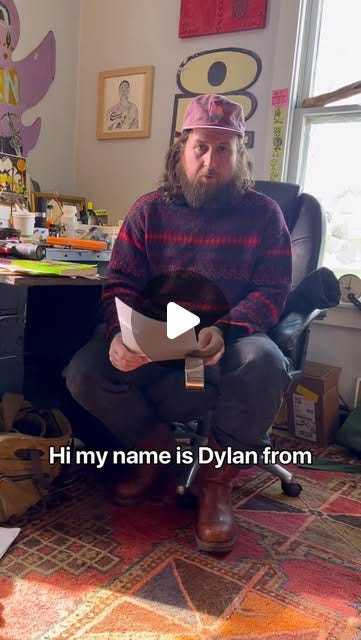
In the days after federal agents killed ICU nurse Alex Pretti (only days after other federal agents killed Renee Good), I saw a video of a haggard Minneapolis restaurant owner saying that he was going to give food away until the federal government’s occupation of Minnesota ends. His restaurant, Modern Times Cafe, was going to be 100% free… for everyone. It wasn’t just going to be free for people who proved they needed free food or for folks who asked for free food. It was going to be FREE. FOR. EVERYONE. Dylan Alverson, owner of the now-renamed Post Modern Times Cafe, was mad as hell, and he was not going to charge for pancakes anymore!

(Full Instagram bit on the page; above is a photo)

Actor and singer Mandy Patinkin’s son Gideon had shared Dylan’s video with me. Gideon runs Mandy’s verified Instagram account. The Patinkins’ IG page is filled with hopeful political messages, righteous leftist anger, and—most importantly—ways to help. At some point our Internet paths crossed, and we have tagged each other in posts ever since. Seeing Dylan’s video was yet another battery in my back that gave me the juice to go to Minneapolis. I saw the video on Monday, January 26, and by that Thursday, January 29 I was on a Zoom with the McKnight Foundation to figure out how we could work together to get me to the Twin Cities. Once we decided that I would go, I quickly put a visit to Post Modern Times on the agenda. I didn’t go there for McKnight. I went there for me. I really wanted to meet Dylan. He reminded me of people I met in Berkeley, back in the day. True believers who are more than excited to go against the grain. Luckily, Dylan was down to talk. As we discuss in the episode, he is not one for attention. He just wants to help his neighbors. I also found out that since he shared that initial video, he has decided that having a free restaurant feels so good that he wants to keep Post Modern Times Cafe free, even after Trump’s government leaves (which they finally announced they are going to do).

(Snip)

Dylan plans to turn his restaurant into a nonprofit organization. This just shows, yet again, that the effect this occupation has had on Minnesota is permanent. It doesn’t matter if the feds leave today, they have:

  • killed two people,
  • shot at least one more,
  • made schoolchildren afraid to go to school,
  • made some people (especially Latino restaurant workers) afraid to go to work,
  • hurt local business across Minnesota, because consumers are afraid to shop (or are too broke shop because they aren’t working), and
  • generally traumatized the state.

None of that gets erased, fixed, or healed just because the goons get gone. I truly hope that more people are able to sue the federal government like the teachers union, Education Minnesota, did. The only thing that has stopped the people of the Twin Cities and beyond from folding completely is that there are many, many, MANY people like Dylan Alverson who are committed to community. Like Dylan, they are committed above and beyond their own self-interest… or even their own commonsense.

While Dylan’s free restaurant may seem like a gimmick or a naive idea, Dylan sees it as part of a larger way to fight back against our authoritarian government. Dylan put it best in our interview:

“The world is watching, and they should. This could be the start of a revolution. We don’t know. But to me, it feels like it. And I’m willing to go as far as I need to if I can make that happen.”

Post Modern Times will only be able to keep up its anti-capitalistic “gamble” (gamble is Dylan’s word for what they are doing) if they also have community support. If you can, donate or spread the word about Post Modern Times Cafe’s bold plan.

(snip-MORE, including a podcast with Mandy Patinkin & Katherine Grody, helping MN teachers, and yet more!)

It is only 6:15 and I worn out

OK, people may be getting tired of doing these posts and I am sorry for that.  I got up at 4 am and that was after being awakened by Tupac smacking my hand repeatedly.  Ron reminded me when I cry out or growl in my sleep Tupac gets upset.  I have felt tired all day.  I forced myself to eat a brunch of three thick bacon strips cooked extra crispy, two sausages, three toasts, and four fried eggs. But that was all I ate all day.  I have no hunger.  Plus it is early and I have cued up so much to post.  But I am struggling to stay awake and function to do it. Taking the advice of so many here I am going to go to bed a bit early.  I hope being as tired as I am, I can sleep.  But as many of you keep telling me the news will wait and I am not the only news source.  Tupac has already gone to bed and I need to join him.  Hugs

And In Lighter Presentation-

=====

More Rightwing Work Outside Their Own States

Seriously; if you read through these stories, both are part of the work of rightwing organizations operating in every state to get their missions accomplished. No state is safe from this sort of thing; people really need to keep their eyes on ALL of their legislators. Some of these groups even write ordinances and lobby county/municipal/local governing bodies.

Forty individuals, organizations object to Kansas Senate bill adding barriers to food and health aid

GOP legislators discount estimated $17 million annual cost of reform legislation

By: Tim Carpenter

TOPEKA — Melissa Sabin spoke officially on behalf of Little Lobbyists Kansas and personally in the name of her son, Logan, against a Kansas Senate bill aggressively expanding the state’s process of verifying eligibility for Medicaid, SNAP and other public assistance programs.

She was among dozens of organizations or individuals supplying opposition testimony Wednesday on Senate Bill 363. It would impose new state application and reporting requirements, some exceeding federal mandates, for programs serving children, elderly people, poor people, pregnant women and people with disabilities.

On Tuesday, the Senate Committee on Government Efficiency, or COGE, heard from the lone proponent of the bill — a conservative Florida organization that has sought for more than a decade to slash participation in Kansas public assistance programs.

“I oppose this bill because it creates an expensive, inefficient and legally questionable administrative structure that will predictably result in eligible Kansans — especially children — losing access to health care and food assistance,” Sabin said. “SB 363 does not improve program integrity or efficiency. It instead builds layers of red tape that state agencies are not equipped to manage or that federal law does not permit.”

Sabin, state outreach manager of Little Lobbyists, said the bill was inaccurately touted by its advocates as a means of improving accountability in terms of serving 325,000 Kansans taking part in Medicaid and 188,000 enrolled in the Supplemental Nutrition Assistance Program.

Sabin said requiring determinations of eligibility to be repeated monthly or quarterly would lead to additional paperwork errors, missed notices or administrative delays rather than documentation of alleged fraud or abuse.

She said a proposal for recipients of Medicaid to have eligibility reassessed every three months, rather than at 12-month intervals, could violate federal regulations. In terms of her son, she said the bill would compel the state to reconsider four times each year whether Logan, born with a genetic disorder characterized by intellectual disabilities, was eligible despite lack of change in his medical diagnosis.

“His condition does not fluctuate with paperwork cycles,” his mother said. “His need for skilled care does not disappear because the form is refiled or a verification is resubmitted.”

Sabin’s message of opposition was shared by representatives of Kansas Action for Children, Alliance for a Healthy Kansas, United Methodist Health Ministry Fund, LeadingAge Kansas, El Centro, United Way of Harvey and Marion Counties, Flint Hills Breadbasket, Kansas Appleseed Center for Law and Justice, InterHab, Reach Healthcare Foundation, Kansas Interfaith Action, Kansas Children’s Service League, United Community Services of Johnson County, the Disability Rights Center of Kansas and others.

The Senate bill

Under the Senate bill, the Kansas Department of Health and Environment and the Kansas Department for Children and Families would be required to establish data-matching systems to automatically share personal information on Kansans with other state agencies. KDHE would have to submit data to the federal government on a monthly basis to determine if Kansans were enrolled in Medicaid in other states.

The bill would direct the Kansas Department of Labor to affirm employment status of beneficiaries, while the Kansas Department of Revenue would reveal details on household income. The Kansas Department of Corrections would track prison inmates who might be ineligible for benefits. The Kansas Lottery would be on alert for anyone winning more than $3,000 because the income bump could compromise eligibility for aid.

As written, the Senate bill would block state agencies from unilaterally requesting approval of exemptions to federal regulations. Instead, the Legislature would have to first endorse the request. The legislation also would block Kansas agencies from accepting as true an applicant’s statements on household size, age or residency — a provision that would require extensive document searches by state employees.

Sen. Cindy Holscher, an Overland Park Democrat running for governor, said she appreciated a recommendation from an opponent of the bill to convene a special committee of the Legislature to develop a better understanding of how Kansans dealt with the process of obtaining SNAP or Medicaid assistance.

Holscher said the House and Senate should do more than accept testimony from the only organization supporting the bill: FGA Action, which operates as an arm of the conservative Florida think tank Foundation for Government Accountability.

FGA was a proponent of the 2015 Kansas law restricting enrollment in SNAP and Temporary Assistance for Needy Families. Research subsequently showed the state law undercut low-income families in Kansas, made it more difficult to prevent child abuse and contributed to a record surge in the number of Kansas children in foster care.

“We have 40 opponents to this bill who are subject matter experts based in Kansas,” Holscher said. “One proponent with an organization based out of Florida.”

The fiscal note attached to the Senate’s bill indicated state agencies would need to hire about 300 new employees to handle the revised eligibility processes. The Kansas Department of Administration estimated the cost of complying with the law would be $17 million to $18 million annually.

Sen. Doug Shane, R-Louisburg, and Sen. Mike Thompson, R-Shawnee, challenged the fiscal note.

“Quite frankly the fiscal note is, I guess we could say, hogwash,” Shane said. “There are just some pure fallacies.”

Opponents’ perspective

Heather Braum, senior policy adviser for Kansas Action for Children, said the additional layers of government red tape contemplated in the Senate bill would disproportionately harm children. She said the reform was introduced at a time when nearly 20% of Kansas children didn’t know where their next meal would come from and about 50,000 children lacked health insurance.

“Bottom line,” Braum said, “this bill will result in families losing Medicaid and SNAP. Families will be unable to afford their child’s medical care and kids will have less food to eat in their homes.”

Braum urged the Legislature to work toward streamlining the process of applying for aid. She said House and Senate members need a good understanding of how parents, children, pregnant women, people with disabilities and the elderly navigated the Medicaid and SNAP application processes.

Erica Andrade, president and CEO of El Centro, said the state’s plan to spend more on eligibility checks would result in loss of benefits by people qualified to receive aid.

“From El Centro’s perspective,” she said, “the most troubling aspect of SB 363 is that it prioritizes bureaucracy over people.”

The Rev. Jessica Williams, a Merriam Baptist minister with the Kairos Center for Religions, Rights and Social Justice, testified on behalf of Kansas Interfaith Action. She said Interfaith Action opposed federal SNAP and Medicaid reform signed in 2025 by President Donald Trump  and likewise objected to SB 363.

She said the legislation weaponized the bureaucracy to dismantle the Medicaid and SNAP safety nets. She said paperwork traps embedded in the bill were “certainly counter to God’s law.”

“In my faith tradition we regularly pray the only prayer that Jesus taught, which says, ‘Give us this day our daily bread,’ ” Williams said. “This prayer is not an abstract nicety, but a concrete demand for survival and an indictment of unjust systems which withhold food from families.”

=====

Kansas local government leaders question ‘millions’ in costs, lack of detail in bathroom bill

By: Morgan Chilson

TOPEKA — Local government leaders want more details about how to enforce a “bathroom bill” passed by the Legislature that some city officials say could cost taxpayers “millions of dollars.”  

Senate Bill 244, which is awaiting Gov. Laura Kelly’s signature, forces people to use facilities matching their biological sex at birth in government buildings. 

Kelly has a 10-day deadline once receiving a bill to veto it. That deadline is Friday for SB 244, a spokesperson said. Kelly is expected to veto the bill, which passed both chambers with veto-proof majorities.

The bill says local governing bodies should take reasonable steps to ensure people use restrooms, locker rooms and other private spaces tied to their biological sex at birth, said Jay Hall, deputy director and general counsel for the Kansas Association of Counties.

The phrase that concerns Hall is “every reasonable step.”

“That’s really where our questions start,” he said. “What’s the expectation of local governments, and how are they supposed to handle the enforcement? That’s not something that we know at this point.”

Spencer Duncan, Topeka mayor and government affairs director for the League of Kansas Municipalities, said his organization is exploring what the bill means for its members. Initial determinations of changing signage and other steps could cost millions of dollars, some city leaders told him. 

Duncan expressed frustration with the process that eliminated opportunity for public input when  SB 244 was passed out of committee. The bill, originally House Bill 2426, addressed gender markers on driver’s licenses and birth certificates, which would stop the state’s practice of allowing transgender individuals to change their sex on those documents and would roll back markers that were previously changed. 

Republicans on the House Judiciary Committee added the bathroom portion of the bill and then amended SB 244 by overwriting it with HB 2426, a process called “gut and go.” That allowed the Senate, which had already approved the unrelated version of SB 244, to concur with changes rather than hold hearings on the bill.

The only public hearing was in the House Judiciary Committee regarding gender markers — which received opposition from more than 200 people. During floor debate in the House, Democratic legislators spent more than five hours trying to add amendments that were repeatedly defeated. The bill passed along party lines, with one Republican, Emporia Rep. Mark Schreiber, voting against it. 

The process meant no fiscal note was put on the bill for the bathroom portion, which concerned Democrats during the House debate and also worried Duncan and Hall.

(snip-a bit more)

ICE Worker Leaks Concentration Camp Ghoulish Conditions

The conditions are on purpose to make people so miserable they give up their rights to asylum or any cases they have going.  The ICE people / US government are already violating the rights of the people they kidnap off the streets.  These are as bad as any concentration camp and the US government denies it all.  When Democrats take power / authority back we need to investigate and punish all involved.  The government flat out lies and gaslights the public as if they think nothing will ever be found out. Hugs