A poor person calls in to explain how they have nothing and no way to live with all these cuts to social services. Horrific. The Democrats must promise to fix this and return the safety to the safety nets. Hugs
I have been promising this post since monday. But I have always been too tired or in too much pain to write it or post it. I am going to start this tonight but it is late for me and I may go to bed before finishing so it may take several days.
The fact is before I even went to my pain doctor to tell me the result I knew things were bad. In the morning I can only sit in my chair for at most two hours before I have to get up and do something that helps relieve the pain. Mostly that is going to bed. I don’t sleep just lay their reading news or telling my self stories I create hoping to fall asleep. Randy sent me a headband with speakers but that just interferes with my own thoughts and keeps me awake. It was a good try and I bought one for Ron and he loved it. I will give this one to him. I go to bed and lie there only to get up and sit for a couple of hours to have the pain again overtake me. Once the pain gets that bad it is 10 to 15 minutes at most before I have to leave the desk and simply walk around or do something because the pain gets so bad so fast.
Also Tupac is on the desk being as close to me as he can. He is not lying on the towel I leave down for him but as close to the keyboard as possible even at time placeing his paws on the on the keybord hitting random keys. He wants to be as close to me as possible since Ron has been away so long. He feels he lost another human. I will be exciteed t0 see him react when Ron gets home on monday night.
So before the doctor told me the damage I knew something was badly wrong. So remember that even before I talked to the doctor I knew something had gone drasticly wrong. Sadly the MRI showed that.
Yup figured that would happen the pain levels are too high so I am going to bed. It is 8 PM my time.
It is now Saturday and I am trying hard to get this post done and out. But today my pain levels are very high and it is difficult to focus but I will do my best.
One of the things that the doctor told me was that my spine is no longer aligned; the disks are not lined up with each other but shifted to different degrees. Remember this was only the lower spine now they are going to MRI the upper spine. Second my spine has curved wrong. Then we got to the serious stuff. Degenerative discs, bulging discs, and discs so damaged that the nerves are outside the spinal channel. The arthritis is so advanced it is deep / spread in each vertebra. She tried to explain all the medical terms. At one point she excused herself to go speak to the surgeon I see for spine shots. When she came back it was with bad news. He no longer thinks epidurals will help me in my lower spine and I need nuero surgeon to do back surgery. Crap I cannot afford that. I am losing my sight, Ron has to have eye surgery right away, and the van needs 2 grand in repairs. That doesn’t even include my eye surgery and the repairs on our home.
While I did not understand everything she said I so desperately wished Ron had been there as he often explained these things to me later, and I have forgotten some of it, the situation is I need an MRI of the upper spine as well, she has refered me to her prefered spianl nueraal surgenon. Then I will need spinal surgery as the state and federal government won’t let them increase my pain medication because I can’t take the fentanyl patches with my skin allergies. I am being squeezed into a surgery I cannot afford or seeking illegal drugs for relief to be able to function.
I remember when I started in this clinic in 2009. They looked at my MRI of my spine and gave me 75 gm of morphine twice a day. I asked it to be reduced to half that amount and it was and I could live normally. But after the opioid “crisis” the states started to inject non-medical legislators into the medical field to show they were tough on abuse and misuse of drugs. It got ever more crazy until my life went from normal and even being able to work for a few years to not even getting enough pain relief to sit in my desk chair and blog for an hour. Now the federal government is demanding it be restricted even further, as RFK Jr. taking steroids can work out in jeans. On the restrictions I can’t get enough relief to blog for any extended time of the day. I spend half of my awake time in bed instead of at my desk. I struggle to stand to do dishes. I just told Ron that I cannot clean the floors before he gets home as I tried and it left me in tears. Even with our lightweight, easy to use cleaning devices. The damage to my spine and the lack of medical relief have gotten that bad. This makes no sense to me. Why deny me the pain blocking medications that allow me to fuction semi normally. It simply makes no sense to me. Why put me in this state what is the goal?
Do you see my point? Why put me and people like me through this? Do they want us to use illegal means for relief, or do they want us to suffer to death and go away? Do they care about us at all as they make these rules? There is more things my pain doctor told me about my spine I did not list yet, things like protrusions, spikes hooking nerves, some thing she kept say stenoisis, and nerves being pinched between vertebrae. At one point she mentioned I have advance degerneritive disc, I so wish Ron was there as I understood so little of it, then came the but you need a neurosurgeon and back surgery to help you because the state and federal government won’t let us give you enough medical relief to have any life. I hate this regressive holier than thou republican elected officials that swallow all the illegal drugs they can get from their providers while denying us poor people relief for bigoted racist reasons and their personal gains.
I am sure I left things out. I had to take after talking to Ron a saved 30 miligarm instant relief morphine because I was going out of my mind. I try desperately to save extras so when the pain is so off the chart I can get relief. But with the new restrictions, how do I do that? Why do the people in power who have access to pill mills and who have no pain and want to just make a name for themselves while doing the very thing they legislate against try to hard to make the live so people like me so hard? And I am poor and scared. Hugs
A recent article from Jesse Singal in the New York Times seemed to indicate the organization might be quietly retreating from supporting trans youth care.
Erin In The Morning is a reader-supported publication. To receive new posts and support my work, consider becoming a subscriber.
Yesterday, anti-transgender activist and columnist Jesse Singal published a piece claiming there were “cracks in the wall” around gender-affirming care (which you can find fully fact-checked here). To make that case, he relied heavily on a statement from the American Society of Plastic Surgeons that bypassed the organization’s normal scientific review process and was advanced under pressure from leadership aligned with the Trump administration, including a president who is a major Republican donor. Singal also invoked the American Psychological Association, suggesting the organization was retreating from its 2024 position supporting transgender care and rejecting claims that gender identity is “caused” by external factors. But a representative for the APA tells Erin In The Morning that the organization stands firmly by its 2024 guidelines supporting transgender youth care and provided documentation indicating Singal mischaracterized its position.
“No, APA’s position has not changed,” says a representative speaking for the APA, attaching a link to their 2024 policy statement which provided broad support for gender-affirming care. “APA continues to support unobstructed access to evidence-based care for transgender and gender-diverse individuals of all ages.”
The 2024 policy statement is to date one of the most significant supportive stances of any medical organization for gender-affirming care. It states that gender-affirming medical care is medically necessary, opposes bans on gender-affirming care, declares that being transgender is not caused by autism or post-traumatic stress, establishes the organization’s support for combatting disinformation on transgender healthcare, and finds that rejection of a trans youth’s gender identity can increase their risk of suicide and harm their psychological wellbeing. The policy was passed overwhelmingly, 153-9, with each voter representing a large subset of the organization’s 157,000 members. Now, the organization says that it is not accurate to claim that there is any regression on support for transgender youth care from the organization.
The organization also disputes Singal’s portrayal of a 2025 letter written by Katherine McGuire to the Federal Trade Commission. In his piece, Singal claims the APA “cautioned that gender dysphoria diagnoses could be the result of ‘trauma-related presentations’ rather than a trans identity,” and noted that “co-occurring mental health or neurodevelopmental conditions (e.g., depression, anxiety, autism spectrum disorder) … may complicate or be mistaken for gender dysphoria,” framing this as evidence that the organization is retreating from its 2024 policy supporting transgender youth care. That interpretation is incorrect, according to an APA representative, who says the letter does not contradict the organization’s 2024 position and does not represent a regression in its support for evidence-based transgender care.
The FTC letter sent by APA Services was not saying that transgender identity can be caused by autism or depression. Rather, it was describing what any competent psychologist does with any patient: assess the whole person, including whether conditions like depression or anxiety are present. The letter does not say that depression or anxiety or autism cause gender dysphoria; it says that psychologists are careful about not mistaking these conditions for gender dysphoria. Notably, the letter was written in direct response to the Trump administration’s FTC, which had accused gender-affirming care providers of deceiving consumers, and McGuire was explaining that psychologists conduct thorough, individualized assessments—not that the organization’s position on care or “causes” of being transgender had changed. Had McGuire not indicated that psychologists were making these determinations, the FTC would likely then accuse the organization of not investigating its crank theories on gender dysphoria.
You can view the letter here:
American Psychological Assocation Response To Ftc Rfi Gender Affirming Care 9 26 2025 Signature (1)
“The 2024 policy statement and the 2025 FTC letter are consistent. The 2024 statement reflects the organization’s policy position on access to care. The 2025 FTC letter describes what competent psychologists do in individual clinical practice: they do not make generalized claims to families but instead provide individualized, evidence-based assessment. Both documents reflect APA’s consistent commitment to evidence-based psychological care,” says the representative.
The American Psychological Association’s reaffirmation of its support for transgender youth health care is significant. The organization is among several reportedly under FTC investigation as part of a broader effort to pressure medical bodies to retreat from transgender youth care. It is also facing a coordinated pressure campaign from anti-trans activists like Jesse Singal and outlets such as The New York Times, both of which have repeatedly sought to cast doubt on established standards of care. That context makes Singal’s portrayal especially consequential. Readers were left with the impression that the APA was backtracking. According to the organization itself, that is false. What Singal presented as evidence of “cracks in the wall” was yet another attempt to manufacture doubt around the professional consensus supporting transgender youth care.
Erin In The Morning is a reader-supported publication. To receive new posts and support my work, consider becoming a subscriber.
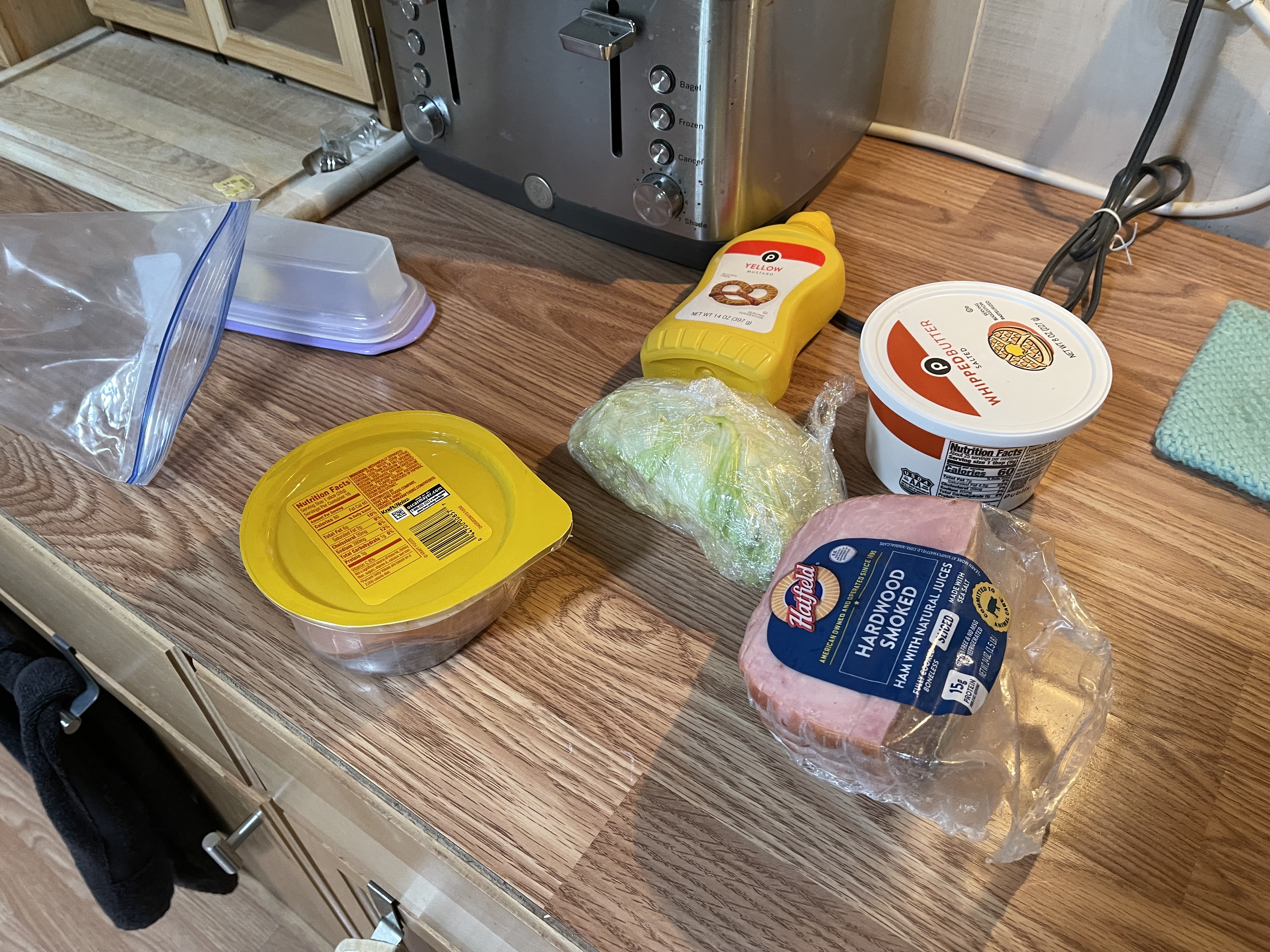
Here are the ingrediance I like in my sandwich tonight.
I start with heating the meats as I dislike cold foods. I then put the bread slices for two sandwiches on the plate and apply mustard to them.
Then the bread slices for the bottom which I put mustard on.
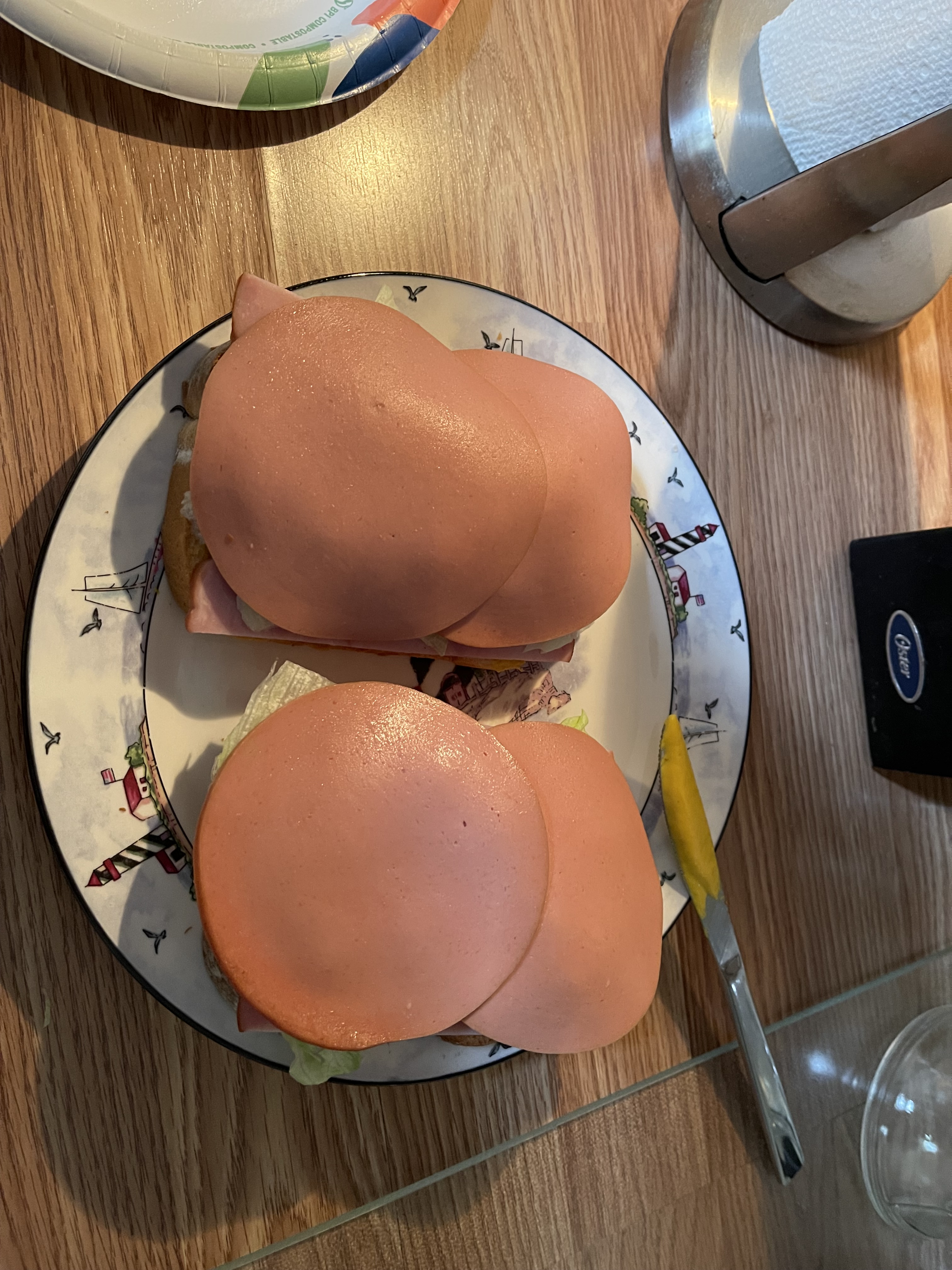
Then I add the first layer of meats.
Then the lettuce, which gives it a crunch.
Then the other meats.
Then more mustard on the top of the last meats.
Then the last of the bread and the cutting of the sandwiches. I like my slice on an angle.
And that is my supper tonight. I doubt I will eat again. But at least I ate. Now I am exhausted but want to stay up. It is not yet 4 pm here but I was up at 2 am because of Tupac and then I couldn’t get back to sleep finally fell asleep at 5:30 but woke at 6 after a nightmare and knew I wouldn’t be going to sleep again that morning. Hugs
Doesn’t make it better news, just local. I want to add:
This came about because there is a Republican supermajority in Kansas’s legislature. And that came about because the Republicans, who were in trouble in KS because of things they tried to pull (think Missouri/abortion, etc.) that voters don’t want, were worried that they could lose their majority in the Houses. They told Republican voters that if they didn’t keep a solid majority, there would never be a Republican elected ever again because Dems would redistrict Republicans to that place in Egypt. (But they weren’t that funny about it.) So, Republican voters, yet again, voted Republican even though they had strong misgivings, gave us a supermajority, and now the SOB legislators are doing what they, and only what they, want to do. And here we are on the trans issue, and it’s not the only issue they’re going to force.
I strongly, so strongly advise everyone reading to please please please pay attention to the down ticket elections, who is running, and what they’ve done and what they’re saying they’ll do. You have to elect people who understand they work for you, not vice versa. And now, on with the story.
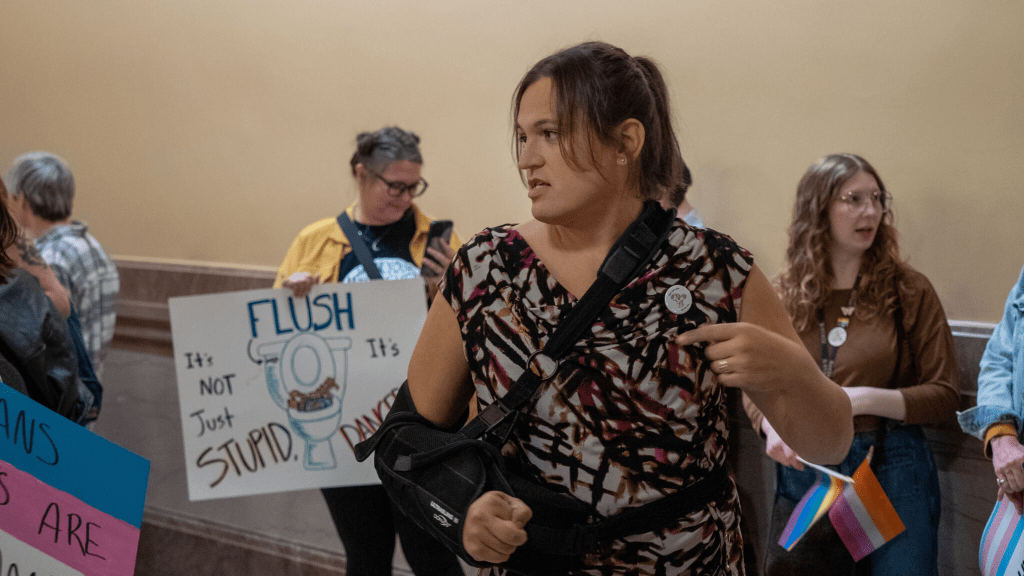
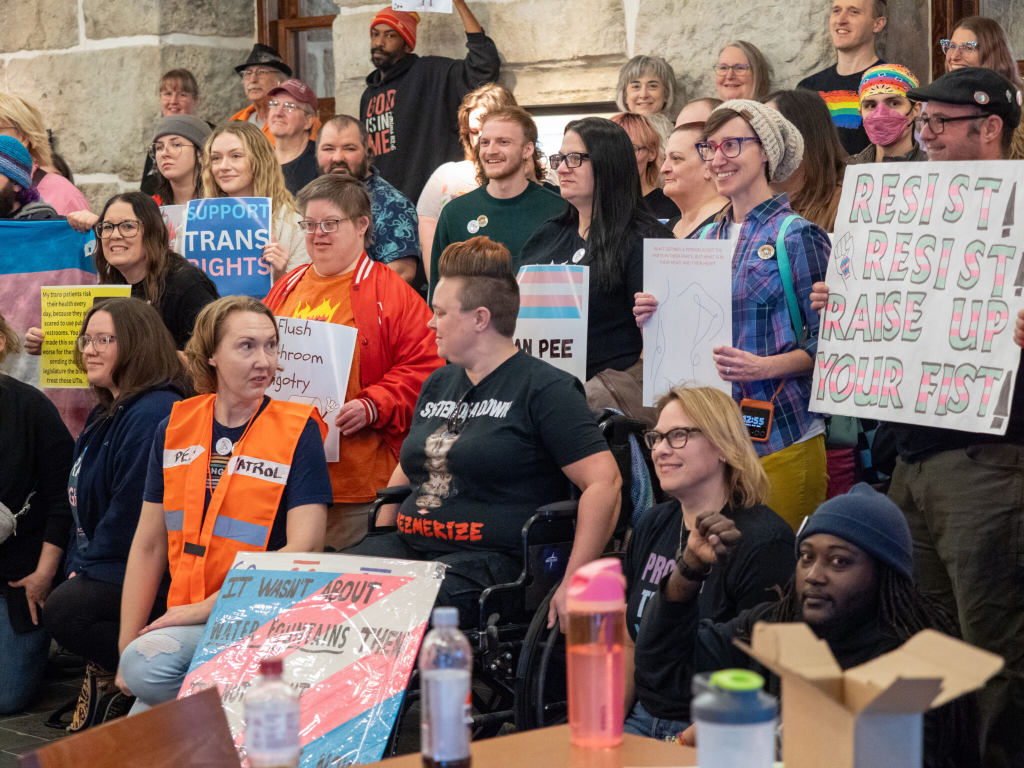
Jaelynn Abegg, a trans rights activist from Wichita, leads a group of around 50 people who used bathrooms Feb. 6, 2026, throughout the Statehouse to demonstrate what she called the absurdity of a state bathroom ban. The same law that includes the bathroom ban also invalidates driver’s licenses for transgender people. (Photo by Sherman Smith/Kansas Reflector)
TOPEKA — Transgender rights activist Jaelynn Abegg was furious Thursday morning when she received a letter from the state informing her that her driver’s license had been invalidated because of a new state law.
Abegg, a Wichita resident, said she would only get a new driver’s license if she needs one before fleeing the state, which she plans to do as soon as she can afford it. In the meantime, she figures her U.S. passport will be “ID enough.”
“When things like this happen, I honestly get a little bit of a demon of rebellion in me, and I’m not sure exactly how I’m going to manifest that, if at all right now, but I can tell you that I’m very angry,” Abegg said. “I’m heartbroken. “This is my home state. I’ve lived here all but two years of my life, and yet, every year since I’ve been living as a woman and having come out as transgender, this state has done nothing but break my heart. If this state was a romantic partner, I would definitely call this an abusive relationship at this point.”
The Kansas Department of Revenue this week sent a letter to Kansans affected by a new law, which took effect Thursday, that requires the gender marker on a driver’s license to match a person’s sex at birth.
The letter informs trans Kansans that because the Legislature didn’t include a grace period for updating credentials, they are “invalid immediately, and you may be subject to additional penalties if you are operating a vehicle without a valid credential.” A spokesman for the agency told Kansas Reflector the law invalidated about 1,700 licenses.
The letter directed trans Kansans to surrender their driver’s license to the state before they can receive a new one, which will cost them $8.
“We apologize for the inconvenience this causes you,” the unsigned letter said.
Republicans in the Legislature placed transgender Kansans in their crosshairs at the start of this year’s session. The House Judiciary Committee scheduled a hearing with less than 24 hours notice on the second day of the session for a bill that would invalidate their driver’s licenses. The bill was a response to a Kansas Court of Appeals ruling last year that determined there was no harm in letting people change their gender markers, which Kansans have done since at least 2002 with no complaints.
A week after the rushed hearing, in a flurry of procedural maneuvers, the committee took action on the bill without warning. Republicans added language that would make it illegal for someone to use a public building bathroom, or similar space, like a locker room, that conflicts with their sex at birth. They then inserted the contents of the House bill into an unrelated Senate bill that passed the year before. That allowed the House and Senate to pass Senate Bill 244 the next day without ever holding a public hearing on the bathroom provision.
Democratic Gov. Laura Kelly vetoed the bill on Feb. 13. The House and Senate subsequently overrode her veto with all but one Republican, Rep. Mark Schreiber of Emporia, voting in favor of the bill.
Abegg, who organized a Feb. 6 “pee-in” protest, in which trans people and their allies filled a bathroom at the Statehouse, said lawmakers were “blatantly subverting the democratic process … because they know they’re going to get blowback.”
“This is a hallmark of a Legislature and of a government that has a deep, deep sickness in it, and it really saddens me that we’re living to see days like this, where there’s that sort of situation going on, and there’s not a greater public outcry about it,” Abegg said. “This should be a concern to everyone who values democracy and who values Kansas as a free state.”
Trans Liberty, a political action committee that fights for trans rights, issued its first-ever statewide evacuation order Thursday, when it urged transgender Kansans to flee.
Samantha Boucher, founder of Trans Liberty PAC, said in a statement there is “something deeply wrong with a government that erases its own citizens’ legal identities.”
Abegg said the warning to leave is “absolutely the right approach.”
“I don’t think that legislators in Kansas are done harassing trans people,” Abegg said. “I think that transgender health care for adults is coming next. It would not shock me within the next two to five years to see them come after name changes for transgender people. The cruelty has always been the point, and the objective has always been the complete erasure of transgender people from public life.”
Trans people and their supporters rally Feb. 6, 2026, at the Statehouse in opposition to Senate Bill 244. (Photo by Sherman Smith/Kansas Reflector)
Jessie Lawson, a trans woman from Wichita, initially planned to go to the DMV and refuse to pay for a new license, then decided against it.
“I can work from home and, for the moment, minimize the risk of getting pulled over,” Lawson said.
She said her first thought when she read the letter from the state was to wonder “how conservatives can live with so much fear and hate in their hearts.”
“Even at my most angry, I’ve never wanted to see an entire demographic of people wiped off the planet the way they do. It’s unreal,” she said. “The second thought is how I’m going to survive now that bigotry has been officially sanctioned by the state of Kansas.”
Lawson said she has wrestled with whether she should leave the state where she has lived her entire life.
“I have a great job and own my own home,” Lawson said. “All of my friends are here. Leaving would be very difficult for me. At the same time, this place is becoming increasingly hard for me to exist safely as bigotry takes more and more control of the state government.”
She added: “Please publish whatever you get from us. There needs to be a record that we existed and strove for peace and joy as long as we could.”
Rep. Brooklynne Mosley, D-Lawrence, posted on her Facebook page that she would be available Friday to drive people to the DMV to replace their birth certificates. She said she was willing to personally pay for up to five individuals’ fees if they have financial constraints.
The new law also affects birth certificates.
Jill Bronaugh, spokeswoman for the Kansas Department of Health and Environment, said individuals will be responsible for contacting the Office of Vital Statistics to replace their invalidated birth certificates, and a $20 fee will apply.
The agency identified 1,849 birth certificates on which the sex has been changed, which can be attributed to correcting data entry errors or recognizing gender changes, she said.
“Each amended birth certificate will be reviewed manually by staff to determine if the birth certificate must be invalidated and amended,” Bronaugh said. “This process is expected to take several months to complete.”
Transgender Kansans are being informed on the eve of a new state law going into effect that their driver’s licenses will be considered invalid as of Thursday.
“Please note that the Legislature did not include a grace period for updating credentials. That means that once the law is officially enacted, your current credentials will be invalid immediately, and you may be subject to additional penalties if you are operating a vehicle without a valid credential,” read letters mailed by the Kansas Department of Revenue’s vehicles division.
“Pursuant to the new law, if the gender/sex indication on the face of your current credential does not match your sex assigned at birth, you are directed to surrender your current credential to the Kansas Division of Vehicles,” reads the letter, which The Star reviewed multiple copies of.
Donald Trump’s ICE is doing exactly what he wants. And now they are holding a political prisoner for nearly a year in an ICE detention camp simply because 33-year-old Leqaa Kordia dared to champion views the Trump regime opposes. This should concern all Americans especially given the recent warning from concentration camp expert Andrea Pitzer—who explained on my SiriusXM show that history tells the Trump regime building massive ICE detention camps will ultimately be used to imprison political prisoners.
That should not be a surprise to anyone who follows the history of fascist and other right wing regimes. Trump is following the fascist playbook, complete with his own secret police that has terrorized and even killed Americans who defy him. The most glaring example being the murder of Renee Good and Alex Pretti—who were then smeared by Trump officials as “domestic terrorists.”
Shockingly, we just learned that Trump’s ICE shot and killed another US citizen, 23 year old Ruben Ray Martinez, almost a year ago in March of 2025. However, Trump’s secret police covered up their involvement until recent media reports broke the story open. The details surrounding the murder of Martinez–who worked at Amazon–are simply unbelievable with ICE claiming that for some unknown reason this young man with no criminal record suddenly used his car to attack ICE officers.
Beyond that ICE has terrorized American citizens who dared film them—which they are legally entitled to—assaulted protesters and engaged in conduct consistent with an occupying army, not federal agents.
But it’s not ICE acting as a rogue agency—Trump wants them to do this. Trump—like Putin– wants to silence dissent as we’ve seen with his regime targeting all who oppose him from comedians like Jimmy Kimmel to seeking to criminally charge and imprison six Democratic members of Congress for warning members of the military to not follow illegal orders. A grand jury blocked that–at least for now.
That is why the case Leqaa Kordia demands far more attention given it’s a sneak preview of what we can expect from Trump for not just immigrants–but also U.S. citizens. Leqaa is a 33-year-old Palestinian woman with family in Gaza and the United States. Her mother is a US citizen living in Paterson, New Jersey—which is where Leqaa was staying and working as a waitress until she taken by ICE.
Leqaa Kordia
Kordia—who came to the US in 2016 on a student visa and was in the process of seeking permanent residence status via her mother –has no criminal record. The diminutive woman poses no threat to anyone. But to the Trump regime she is dangerous because she participated in peaceful protests advocating for Palestinian humanity. In the case, of Leqaa this issue is very personal in that she has lost nearly 200 relatives in Gaza.
But Leqaa’s case is not about Palestine—nor it is about Israel. Rather, it’s about freedom of speech—and the Trump’s regime targeting those who dare defy them.
How this case began was that in March of 2025, ICE informed Leqaa they wanted to speak to her. In response, she voluntarily appeared at the ICE office in Newark, New Jersey–where she was quickly arrested, thrown into an unmarked van and sent 1,500 miles away to the Prairieland Detention Facility in Texas far from her lawyer and family.
Since then, she has been detained in horrific conditions. As Leqaa detailed in a recent op-ed, the ICE facility she has been held in for nearly a year “is filthy, overcrowded and inhumane.” She slept in a plastic shell “surrounded by cockroaches and only a thin blanket.” And the food quality is so atrocious, it has caused her to vomit resulting in significant weight loss.
Worse, just a few weeks ago she experienced the first seizure of her life, collapsing to the floor. From there, ICE transported her to a hospital where her wrists and legs shackled to her bed for the three days. As she put it, “The entire time I was chained…I felt like an animal.” And simply to be cruel, ICE refused to tell her lawyers or family where she was or her medical condition.
None of this should be happening. As her lawyer Amal Thabateh explained to me, two different immigration judges ruled that Leqaa should be released on bond. But the Trump regime instead invoked a little used procedure to keep her in detention open ended.
To do that, serial liar DHS Secretary Kristi Noem smeared Leqaa as being a “terrorist” sympathizer for expressing concern for Palestinians in Gaza. They even claimed that releasing Leqaa—who again has no criminal record and was living with her US citizen mother in New Jersey–was somehow a threat to our nation. Of course, this is the same Noem who smeared with lies Renee Good and Alex Pretti as “terrorists” to justify their murders so we know she will say anything to defend the Trump regime’s crimes against humanity.
The idea Leqaa is a political prisoner is not just my view. Amnesty International lists her on their website demanding that the US government “release detained protester.” Her case is in the same section on the Amnesty website where they are calling for the release of dissidents in Russia, Belarus and other authoritarian regimes. This is where our nation is now viewed by human rights organizations.
Deeply alarming is that these ICE dentition centers are increasingly become death camps. At least 32 people died in ICE custody in 2025—the highest number in two decades. And in the past six weeks, six people have died in ICE custody including one man killed by ICE agents as they were restraining him. Will anyone be held accountable for this man’s death? That is like asking will anyone be held accountable for the death of Russian dissident Alexei Navalny killed in a Russian prison two years ago. We know that no one will be prosecuted because Russia is an authoritarian nation. As disturbing as it sounds, so is the United States under Trump.
But for those who refuse to submit to Trump and want to stand up for freedom of speech, I hope you will sign the Amnesty International petition calling for the US government to release Leqaa. Other ways to help this young woman include calling on your members of Congress to demand her release. You can also consider making a donation to her online fundraising page to help her and her family. Finally, you can follow Leqaa’s campaign for freedom on Instagram and amplify the updates.
As Andrea Pitzer repeatedly warned in our conversation on concentration camps, it does not end with people like Leqaa. It begins with people like Leqaa being held with in a camp for as long as the regime wants to keep her–in horrific conditions–simply because they want to silence her political views. They then continue until they reach people like us. But as the famous poem goes, by then it’s too late because when “they came for me…there was no one left to speak out.”
——
Below is my recent interview about Leqaa’s wrongful detention with her lawyer Amal Thabateh, who is with Creating Law Enforcement Accountability & Responsibility (CLEAR) Project and Laila El-Haddad, an award-winning Palestinian author, social activist, policy analyst and journalist.
The Dean’s Report by Dean Obeidallah is a reader-supported publication. To receive new posts and support my work, consider becoming a free or paid subscriber.














 Scottie's Playtime