Photo: Acting NASA Administrator Janet Petro, who also serves as Kennedy Space Center director, a post she assumed in 2021. Trump elevated Petro to lead NASA after he ousted former Sen. Bill Nelson for believing in climate change.
Newly-released data shows that Oklahoma ranks 46th in per-pupil spending, but Walters, who is eyeing a run for governor, has called for cuts to his state’s “wasteful” education spending, including $250,000 to provide school districts with emergency inhalers.
In his KFOR interview, Walters did boast about getting new teachers a signing bonus, but as was widely reported the time, $290,000 of that money had to be clawed back because it had gone to teachers who did not qualify. Some of those teachers had already spent the money.
New: CBP seized a shipment of t-shirts from @cola.baby featuring a swarm of bees attacking a cop. The company also sells "ELIMINATE ICE" t-shirt and previously was threatened by LAPD for "FUCK THE LAPD" shirts and hats. Shirts to be "destroyed under CBP supervision"www.404media.co/cbp-seizes-s…
Rep. Beth Lear first appeared here in January 2024 when she defended her anti-trans bathroom bill by citing the “millstones” bible verse which calls for drowning anyone who hurts children.
She later blamed “depraved monster” Alfred Kinsey, liberals, and the ACLU for transgender people even existing.
Rep. Josh Williams first appeared here in July 2024 for his bill that would criminalize drag shows in the presence of children. Williams reintroduced his bill last week.
Kent, a twice-failed House candidate and self-professed fan of the Proud Boys, last appeared here when he declared that he would be keeping a $8600 campaign donation from a Capitol rioter then-facing felony assault charges. We first heard from Kent in 2022 when he gave an interview to a white nationalist Nazi podcaster.
New from Julian Barnes, Maggie Haberman and me:Trump Appointee Pressed Analyst to Redo Intelligence on Venezuelan GangThe move followed a disclosure that intelligence agencies disagree with a key factual claim Trump made to invoke a wartime deportation law.www.nytimes.com/2025/05/16/u…
Breaking news: The US has been stripped of its top-notch triple-a credit rating by Moody’s on concerns about rising levels of government debt http://www.ft.com/content/e456…
“And they’re like, ‘Yeah, yeah. Look, we’re doing it.’ But all the sodomites are still there and we’re not going to talk about that. And I need a guy there, I need a minister there who’s gonna say, ‘Oh, but we are. Obergefell is next, we’re coming for that,’ so that you calibrate the Christians in DC by the word of God and not by whatever the present administration can tolerate.
“We’re gonna come for feminism. We’re going to go after sodomy. Those are the sins in that town. Those are sins that are acceptable among both parties in that town. And we want to plant that flag and say the Bible has something to say about this.” – Christian nationalist pastor Joe Rigney.
Food rations that could supply 3.5 million people for a month are mouldering in warehouses around the world because of U.S. aid cuts and risk becoming unusable, according to five people familiar with the situation. The food stocks have been stuck inside four U.S. government warehouses since the Trump administration’s decision in January to cut global aid programmes.
Those who give to America250, a committee created to support what Trump envisions as a large national celebration next year for America’s 250th birthday, will be given special access to three events, according to a pitch shared with donors. Those include a military parade Trump is planning on his birthday, a “military readiness” event he is leading at Fort Bragg military base with thousands of troops and an Independence Day celebration in Washington, the people said.
He continued, “I mean, you look at these rallies, it’s like a bunch of women that no guy wants to sleep with and a bunch of dudes that want to sleep with each other.”
You’ll note that Watters did not ask Kid Rock about sending his undocumented kitchen staff home to evade arrest by ICE.
Blanche last appeared here when he sanctioned the American Bar Association because its lawyers have failed to show suitable obedience to Glorious Leader.
May 17, 1919 The Women’s International League for Peace and Freedom (WILPF) was formally established in Zurich, Switzerland.
May 17, 1954 In a major civil rights victory, the U.S. Supreme Court handed down a unanimous decision in Brown v. Board of Education, ruling “separate but equal” public education to be unconstitutional under the 14th Amendment, which guarantees equal treatment under the law. The historic decision, bringing an end to federal tolerance of racial segregation, specifically dealt with Linda Brown, a young African American girl denied admission to her local elementary school in Topeka, Kansas, because of the color of her skin. Read more and more Above: Nettie Hunt and her daughter Nickie on the steps of the U.S. Supreme Court, 1954. George E. C. Hayes, Thurgood Marshall and James M. Nabrit (left to right), the successful legal team, celebrate the Brown decision. . . three years later . . .
May 17, 1957 Martin Luther King, Jr. led 30,00 on a Prayer Pilgrimage to Washington, D.C. to mark the third anniversary of Brown vs. Board of Education decision in which the Supreme Court declared racial segregation in education unconstitutional.
May 17, 1968 A group of anti-war activists who came to be known as the “Catonsville Nine,” including Philip and Daniel Berrigan, broke into the Catonsville, Maryland, draft board center and burned over 600 draft files. The Catonsville Nine in a picture taken in the police station minutes after the action. From left to right (standing) George Mische, Philip Berrigan, Daniel Berrigan, Tom Lewis. From left to right (seated) David Darst, Mary Moylan, John Hogan, Marjorie Melville, Tom Melville. photo Jean Walsh Read more about the Catonsville Nine
May 17, 1970 100 protesters staged a silent “die-in” at Fifth Avenue and Pine Street in downtown Seattle to protest shipment through their city of Army nerve gas being transported from Okinawa, Japan, to the Umatilla Army Depot in eastern Oregon. Outrage and Rebellion
May 17, 1973 In Washington, D.C., the Senate Select Committee on Presidential Campaign Activities, headed by Senator Sam Ervin of North Carolina, began televised hearings on the escalating Watergate affair. One week later, Harvard Law Professor Archibald Cox was sworn in as Watergate special prosecutor. Flashback: On June 17, 1972, five men were arrested for breaking into the Democratic National Committee headquarters in the Watergate complex in Washington, D.C. with the intent to set up wiretaps. One of the suspects, James W. McCord, Jr., was revealed to be the salaried security coordinator for President Richard Nixon’s reelection committee.
May 17, 2004 Marcia Kadish, 56, and Tanya McCloskey, 52, of Malden, Massachusetts, were married at Cambridge City Hall in Massachusetts, becoming the first legally married same-sex partners in the United States. Over the course of the day, 77 other such couples tied the knot across the state, and hundreds more applied for marriage licenses. The day was characterized by much celebration and only a few of the expected protests materialized. Read more
On Thursday, Judge Matthew Kacsmaryk — a far-right federal judge in the Northern District of Texas with a record of aligning with the GOP’s most extreme legal positions — issued a ruling declaring that Title VII no longer protects LGBTQ+ people from workplace discrimination. The decision directly contradicts the Supreme Court’s landmark 2020 ruling inBostock v. Clayton County, which held that discrimination based on sexual orientation or gender identity is, by definition, sex discrimination. Kacsmaryk’s ruling marks one of the most alarming judicial rollbacks of LGBTQ+ rights in recent memory — and sets up a direct legal challenge to one of the foundational civil rights protections for queer and trans people in the United States.
The case was brought against the EEOC by the state of Texas alongside the Heritage Foundation, a central force behindProject 2025 — an aggressive right-wing policy blueprint that explicitly calls for rolling back LGBTQ+ protections in federal law. In siding with the plaintiffs, Judge Kacsmaryk pointed to the Texas Department of Agriculture’s current employee policy, which requires “employees to comply with this dress code in a manner consistent with their biological gender,” specifying that “men may wear pants” and “women may wear dresses, skirts, or pants.” The ruling also upheld the department’s policy banning transgender employees from using restrooms that align with their gender identity.
The judge reached a verdict that Title VII only protects “firing someone simply for being homosexual or transgender,” but that it does not protect transgender or gay people from “harassment”:
Judge Kacsmaryk ruling that gay and trans people can be harassed without repercussion under Title VII.
“In sum, Title VII does not bar workplace employment policies that protect the inherent differences between men and women,” Kacsmaryk writes in his ruling.
Judge Kacsmaryk further argued that disparate treatment of transgender employees does not constitute unequal treatment, reasoning that “a male employee must use male facilities like other males” — a statement that erases transgender identity altogether. He extended that logic to dress codes and pronouns, claiming that requiring employees to adhere to clothing standards and pronoun use based on their assigned sex at birth is not discriminatory because it applies “equally” to everyone. The argument mirrors the discredited legal reasoning once used to uphold bans on same-sex marriage — that such laws didn’t discriminate against gay people because they, like straight people, were allowed to marry someone of the opposite sex. It’s a circular logic designed to mask exclusion as neutrality. It also flies in the face of the fact that Texas allows people assigned female at birth to wear gender “pants, skirts, and dresses” but denies that same right to people assigned male at birth.
Kacsmaryk, a former lawyer for an anti-LGBTQ hate group, was exposed in 2023 for failing to disclose millions in stock holdings.
Kacsmaryk was previously exposed for failing to disclose viciously anti-LGBTQ interviews and acting to hide his authorship of an anti-abortion article ahead of his Senate confirmation hearing.
Republican and Christian groups regularly filed their lawsuits in his district because they know they’ll get a friendly ear.
I think there’s a blurb about this on Peace History, but I could be misrecalling. Anyway, here is far more of the story. Language alert, from the beginning.
Queer History 111: Before the Stonewall Riots, There Was Compton’s Cafeteria by Wendy🏳️⚧️🏳️🌈🌈 Read on Substack
You’ve heard about Stonewall—everyone has. It’s become the sanitized, rainbow-washed origin story of the LGBTQ+ rights movement that gets trotted out every Pride month by corporations selling overpriced merchandise. But three years before Stonewall rocked New York City, a group of fierce-as-fuck transgender women and drag queens in San Francisco’s gritty Tenderloin district had already thrown the first punch in the fight for queer liberation. The Compton’s Cafeteria Riot of 1966 wasn’t just a footnote in history—it was a goddamn declaration of war against police brutality and societal oppression that’s been deliberately erased from our collective memory.
Let me tell you something straight up: these women weren’t politely asking for their rights with carefully worded petitions. They were fighting for their very existence in a society that treated them like garbage. And when pushed to their absolute limit one hot August night, they didn’t just push back—they burned the whole system down. Literally throwing coffee in cops’ faces, smashing windows, and lighting a police car on fire. This wasn’t a “disturbance” or an “incident”—it was a motherfucking riot, and it’s time we remember it for what it was.
The Tenderloin: Where Society Dumped Its “Undesirables”
San Francisco’s Tenderloin district in the 1960s wasn’t the gentrified hipster paradise it’s becoming today. It was a last-resort neighborhood—the only place that would accept the people society had discarded. Transgender women, particularly trans women of color, found themselves with precious few options for survival. Denied employment, housing, and basic human dignity, many turned to sex work simply to eat and keep a roof over their heads.
“We couldn’t get jobs, couldn’t get housing, couldn’t even walk down the street without being arrested,” recalled Amanda St. Jaymes, a trans woman who lived in the Tenderloin during this era. “The cops would book us as ‘female impersonators’ and throw us in the men’s jail. Do you have any fucking idea what happened to us in there?”
The brutal reality was that transgender women faced constant police harassment under California’s “masquerade laws,” which made it illegal to dress in clothing of the “opposite sex.” Cops could and did arrest trans women for the crime of simply existing in public. These weren’t occasional incidents—this was systematic persecution backed by the full force of the law.
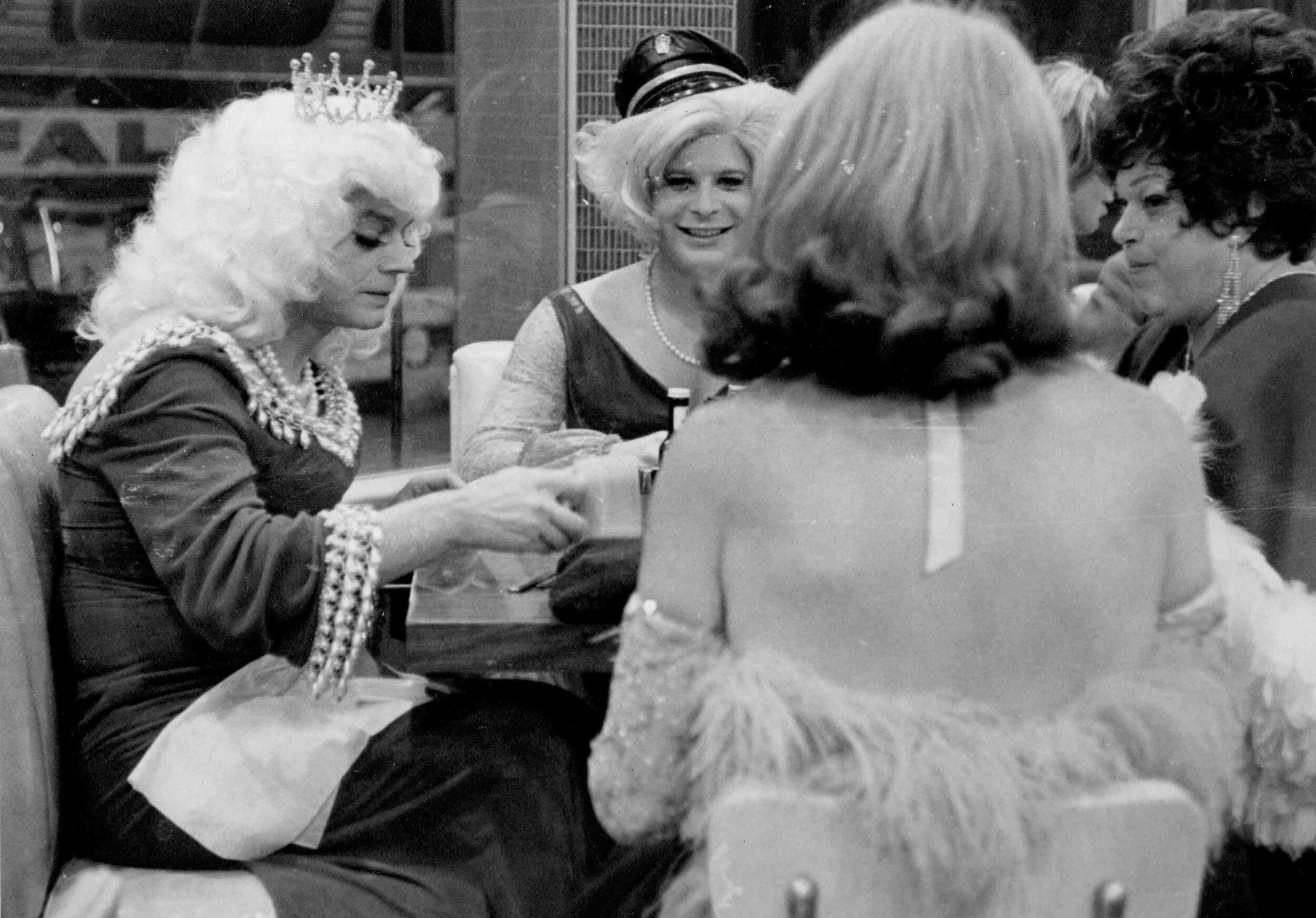
Gene Compton’s Cafeteria, a 24-hour diner at the corner of Taylor and Turk, was one of the few places trans women could gather safely—or so they thought. Open all night, it became an unofficial community center for transgender women, drag queens, gay hustlers, and other marginalized folks who had nowhere else to go. But the management often called the police when too many “queens” gathered, leading to regular harassment and arrests.
“The Night I Got Tired of Being Bullied”
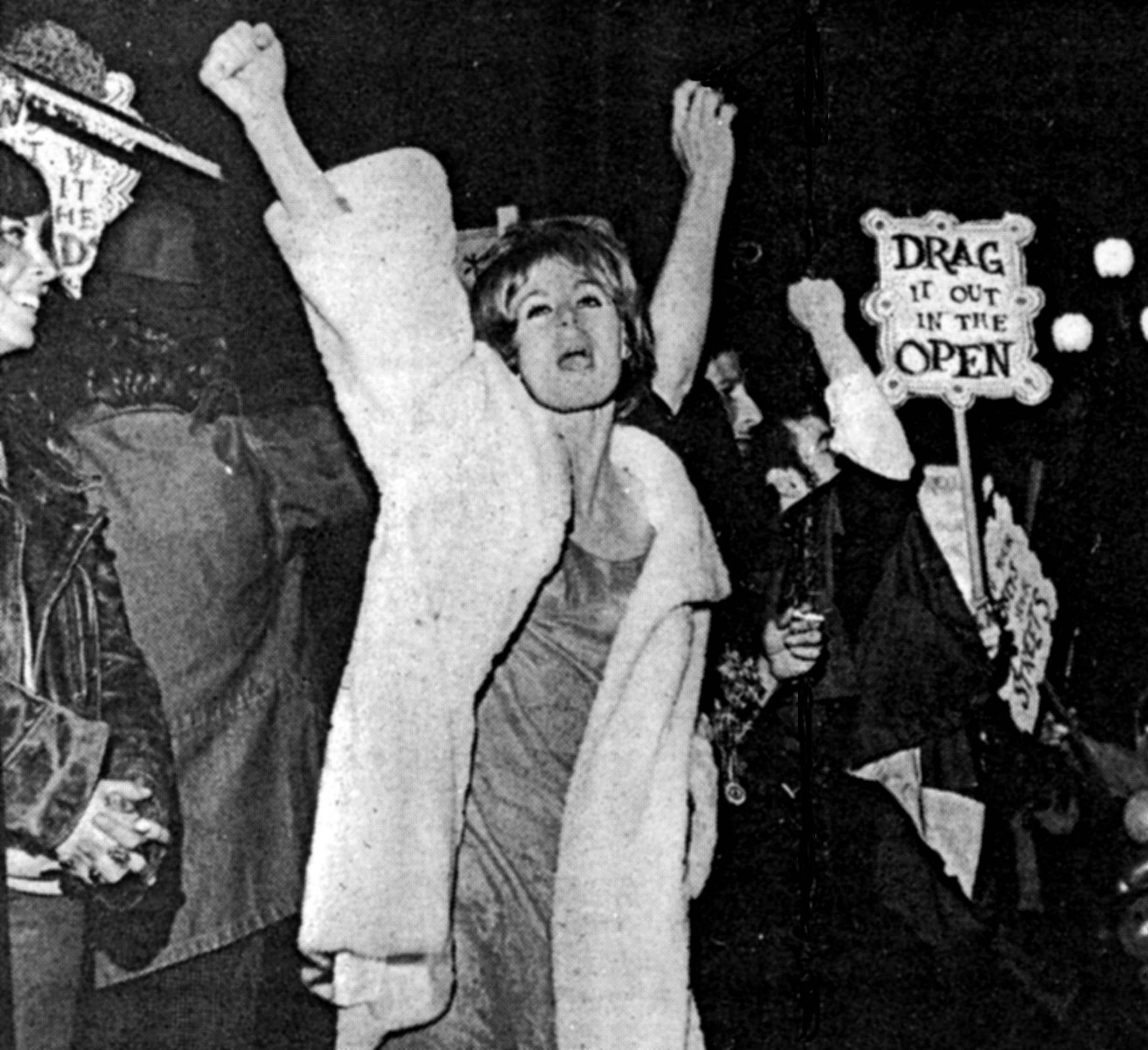
On a hot night in August 1966 (the exact date has been lost to history), the simmering tension finally boiled over. When police attempted to arrest a transgender woman at Compton’s for the “crime” of being there, she threw her coffee in the officer’s face. What followed was an explosion of rage that had been building for decades.
“It wasn’t planned,” said Felicia Elizondo, a transgender activist who frequented Compton’s. “It was just the night I got tired of being bullied. We all got tired at the same fucking moment.”
The cafeteria erupted. Cups, saucers, and trays became projectiles. The plate glass windows of the restaurant were smashed. A newsstand was set on fire. The women fought back with everything they had—high heels, heavy purses, and righteous fury. When a police car pulled up outside, it was immediately surrounded, its windows broken and, according to some accounts, set ablaze.
“Those queens fought like hell,” remembered one witness. “You’d think a bunch of ‘girls’ couldn’t do much damage, but honey, when you’ve been beaten and raped by cops, when you’ve been refused medical care, when your own family has thrown you out like trash—you fight like someone with nothing left to lose.”
The riot spilled into the streets and continued through the night. Unlike at Stonewall, there were no photographers present, no reporters to document what happened. The next day, more transgender women and supporters returned to picket the cafeteria, which had banned transgender customers in response to the riot. This marked one of the first known instances of organized transgender direct action in U.S. history.
The Cover-Up and Erasure
Here’s where the story gets even more fucked up: this watershed moment was almost completely erased from history. No major newspapers covered it. Police records of the incident mysteriously disappeared. For decades, Compton’s Cafeteria Riot existed only in the memories of those who were there, many of whom didn’t survive the AIDS crisis of the 1980s and ’90s.
“They didn’t want people to know we fought back,” explained historian Susan Stryker, whose groundbreaking documentary “Screaming Queens” finally brought the riot to public attention in 2005. “Transgender resistance didn’t fit the narrative they wanted to tell about passive victims who needed saving.”
The erasure was so complete that even many LGBTQ+ historians were unaware of the riot until nearly 40 years after it occurred. When Stryker discovered a brief reference to the “uprising of drag queens” in the archives of gay liberation periodicals, she had to piece together what happened through painstaking interviews with survivors and witnesses.
Why was this history buried? Simple: it centered transgender women—particularly trans women of color—as the vanguard of the LGBTQ+ liberation movement. It challenged the comfortable narrative that the movement began with Stonewall and was led primarily by white gay men. The Compton’s story was inconvenient for those who wanted to sanitize queer history for mainstream consumption.
The Aftermath: Real Fucking Change
What makes the Compton’s Cafeteria Riot even more remarkable is that it actually led to concrete changes in San Francisco. In the aftermath, a network of transgender support services emerged. The city established the Tenderloin Health Clinic, which provided hormones and healthcare to transgender people—the first of its kind in the nation. The police department even initiated the first-ever training on interacting with transgender people.
Sergeant Elliott Blackstone, the SFPD’s first liaison to the “homophile community,” became an unlikely ally. After the riot, he worked with transgender activists to stop police harassment and helped establish programs to support transgender residents. “I just treated them like human beings,” Blackstone later said, “which nobody else was doing.”
The riot also galvanized the formation of organizations like Vanguard, one of the first gay youth organizations in the U.S., and the National Transsexual Counseling Unit, the first peer-run support organization for transgender people. These laid the groundwork for the transgender rights movement that continues today.
“We built something from nothing,” said Tamara Ching, a Tenderloin activist who lived through this era. “We created community when the whole damn world wanted us dead or invisible.”
The Women Who Led the Charge
The heroes of Compton’s didn’t get streets named after them or Hollywood biopics made about their lives. Many died in obscurity, their contributions uncelebrated. Women like Alexis Miranda, who later became an influential transgender activist; Tamara Ching, who fought for the rights of transgender sex workers; and Amanda St. Jaymes, who established support services for transgender women in the Tenderloin.
“Some of the fiercest women I ever knew didn’t live to see their impact,” recalls Felicia Elizondo, one of the few surviving veterans of the Tenderloin scene. “They died from violence, from AIDS, from the sheer exhaustion of fighting every day just to exist.”
Unlike Stonewall, where key figures like Marsha P. Johnson and Sylvia Rivera eventually received some recognition (though still not enough), many of the women who fought at Compton’s remain nameless in historical records. Their revolutionary act was nearly lost to history, remembered only by those who were there.
The anonymity of many Compton’s participants speaks to the precarious nature of transgender life in the 1960s—and still today. Many lived under assumed names, without identification documents, invisible to official records. They existed in the margins, which made their uprising all the more remarkable and all the more easily erased.
Why This Matters Now More Than Ever
If you think this is just ancient history, wake the fuck up. In 2023, we’re seeing the most aggressive legislative assault on transgender rights in modern history. Over 500 anti-trans bills have been introduced in state legislatures in recent years. Access to healthcare is being restricted. Transgender people are being banned from public spaces. Sound familiar?
“It’s the same playbook,” says Miss Major Griffin-Gracy, a transgender elder who has been fighting for rights since the 1960s. “Criminalize our existence, push us out of public spaces, make it impossible to live authentically. They’ve just dressed it up in fancier language.”
The courage of the women at Compton’s Cafeteria provides a powerful template for resistance in the face of overwhelming oppression. They didn’t wait for permission to fight back. They didn’t seek respectability. They recognized that when a system is designed to destroy you, sometimes you have to break the whole damn thing and start over.
“We’ve been here before,” warns historian Jules Gill-Peterson. “And the lesson from Compton’s isn’t to write polite letters to politicians. It’s that direct action gets the goods. It’s that sometimes you have to throw the first punch—or the first coffee cup.”
The Legacy: From Shadows to Celebration
Today, the corner of Taylor and Turk in the Tenderloin bears a plaque commemorating the riot. In 2017, the city of San Francisco renamed a section of Turk Street as “Compton’s Transgender Cultural District”—the first legally recognized transgender district in the world. It’s a belated recognition of the community that has called this area home for over half a century and the uprising that marked its coming of age.
But the real legacy of Compton’s isn’t in plaques or street names—it’s in the radical tradition of transgender resistance it established. From Compton’s to Stonewall to the modern movements against police brutality, the thread of transgender leadership in liberation struggles remains unbroken, even when unacknowledged.
“Those girls didn’t have Twitter or TikTok or any way to document what they did,” reflects contemporary transgender activist Raquel Willis. “But they changed the world anyway. Imagine what we can do now with all the tools and visibility we have.”
The next time you celebrate Pride, remember that it wasn’t born from corporate sponsorships and rainbow capitalism. It was born from a coffee cup thrown in a cop’s face by a transgender woman who had decided she wasn’t going to take any more shit. It was born from the broken windows of a cafeteria in the Tenderloin and the fiery determination of women who fought back when the world told them they shouldn’t even exist.
That’s the legacy of Compton’s Cafeteria Riot—not just a historical footnote, but a battle cry that still echoes today: We have always been here. We have always fought back. And we’re not going anywhere.
References
Stryker, S. (2008). Transgender History: The Roots of Today’s Revolution.
Stryker, S., & Silverman, V. (Directors). (2005). Screaming Queens: The Riot at Compton’s Cafeteria [Documentary].
Transgender Law Center. (2017). Compton’s Transgender Cultural District Report.
Dzodan, F. (2021). Before Stonewall: The Trans Women Who Sparked a Revolution.
Armstrong, E. A., & Crage, S. M. (2006). Movements and Memory: The Making of the Stonewall Myth.
Williams, C. (2014). Transgender History in the United States: A Special Unabridged Version of a Book Chapter.
Elizondo, F. (2015, August 26). Personal interview by Nicole Pasulka for Vice: “Ladies in the Streets: Before Stonewall, Transgender Uprising Changed Lives.”
Philadelphia is turning up the volume during Pride Weekend, starting with its iconic Pride flag, which is back and bigger than ever.
The massive flag — now stretching to 600 feet — will debut on Friday, May 30 during ride Around the City, a powerful display of LGBTQ+ visibility and unity.
You can catch the flag traveling to iconic locations across the city starting at the Art Museum and ending in the Gayborhood.
The flag will then lead the 2025 Philadelphia Pride March on Sunday, June 1, 2025. This popular march will form at 6th and Walnut at 10:30 a.m. and end in the Gayborhood as well.
All LGBTQ communities and allies are welcome to join the march, with no registration required.
When the march reaches the Gayborhood, organizers said the festival will begin, running from noon to 7 p.m., on Walnut to Pine streets, and Quince to Juniper streets, with other select roads closed around the festival footprint.
This year’s festival will feature more than 200 small businesses and organizations, performers, entertainers, artists, vendors, local bars, food trucks, community organizations, stages and much more.
Philadelphia Pride March and Festival is open to all to attend with no admission, and all food and drink are pay-as-you-go.
Also don’t forget to check out Pride Promenade, a night of music, performances, and community connections at the Philadelphia Museum of Art, on Saturday, May 31.
This post is about a case that could be easily overlooked with so much Trump news spewing through the fire hose these days. But Florida’s continued aggression in the culture wars has the potential to affect all of us. So, as here, when a brave plaintiff takes its case to court and wins, it’s news we all need to know about.
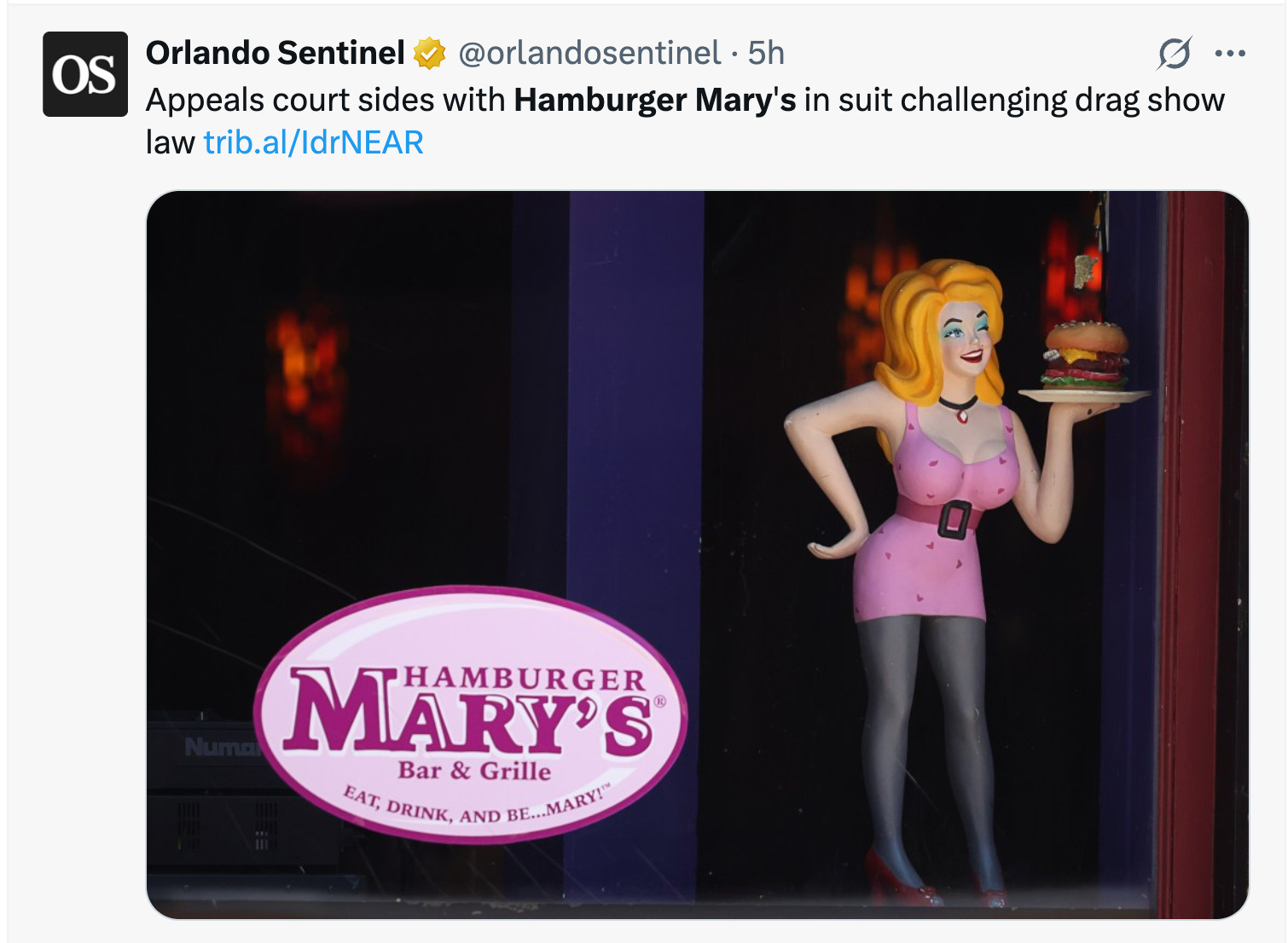
On Tuesday, the Eleventh Circuit Court of Appeals decided HM Florida-ORL, LLC v. Sec. of Florida DBPR, a case involving Hamburger Mary’s, a restaurant and bar in Orlando that regularly hosted drag performances, including family-friendly shows. When the Florida legislature passed SB 1438 in 2023, Hamburger Mary’s canceled its family-friendly drag shows and prohibited minors from attending any of its other shows out of fear of losing its business and/or liquor license. As a result, Hamburger Mary’s lost 20% of its bookings.
The new law gave state agencies the power to target LGBTQ+ friendly businesses in two major ways:
It gave the Department of Business and Professional Regulation discretionary authority to fine, revoke liquor licenses, and even shut down establishments.
It made it a crime to admit young people to any performance, exhibit, play, or show that the state deems inappropriate, even if the child’s parents think it is appropriate for their family.
The bill was an effort by conservative politicians, led by Florida Governor Ron DeSantis, to impose their beliefs on the entire state. It was a major salvo in the culture wars. Their too-clever-by-half mechanism was to punish private businesses that included or supported the LGBTQ+ community in order to exclude that community from being a public presence in Florida. The law’s language was so vague that businesses had no realistic way of knowing what it prohibited, meaning they had to take the extreme steps Hamburger Mary’s took to pull back their offerings in order to avoid the risk they’d be put out of business.
So, Hamburger Mary’s filed a lawsuit against Florida, its governor, and Secretary of the Florida Department of Business and Professional Regulation (FDBPR) Melanie Griffin, seeking a preliminary injunction that would keep the state from enforcing its law while the litigation proceeded. The district court granted the preliminary injunction and the Secretary appealed to the Eleventh Circuit.
The issue in the case involves the First Amendment, as you’ve probably figured out by now. Although the technical legal issue was whether the district court had been correct to grant the injunction, the substantive issue is whether Florida’s Senate Bill 1438 (“The Protection of Children Act”), which prohibits children from attending “adult live performances,” is unconstitutional under the First Amendment, because it is both vaguene and overly broad.
The Eleventh Circuit ruled in Hamburger Mary’s favor, keeping the injunction against enforcement of SB 1438 in place, because the panel believed the law was likely unconstitutional—both too vague for people to understand what they could and couldn’t do to remain in compliance with it and overbroad in its supposed efforts to protect children without regard to their parents’ views.
It’s significant that this decision comes out of the conservative Eleventh Circuit, although admittedly, the composition of this panel, which included both an Obama and a Biden appointee, is unusual. Florida could seek en banc review from the full court, in hopes of getting a more favorable hearing. The decision was 2-1. The third judge on the panel, Senior Judge Gerald Bard Tjoflat, was appointed by President Gerald Ford. His objection to the majority’s decision primarily involved a belief that the injunction came too early, and the courts should have demurred until they saw how the state enforced the law in practice.
Among the most interesting points made in the opinion:
The Court found the penalties for violations under SB 1438 “grievous.” The penalties for violations include a $5,000 fine for a first offense or a misdemeanor prison sentence of up to a year.
On protecting First Amendment rights, they noted that “The government cannot shroud rules in foggy language and then blame would-be speakers for their fears of what may lurk in the fog.” Laws like this use vagueness as a means to get private individuals and businesses to obey in advance, staying as far back as possible from the line of conduct the law prohibits in order to avoid the consequences of violating it. In this way, the state restricts far more First Amendment-protected conduct than they are legally entitled to. The panel wasn’t having any of it. It noted the importance of securing “breathing room for free expression” in a case like this.
We’ve seen injunction cases before, so we know that Hamburger Mary’s had to demonstrate it was likely to succeed on the merits of its claim in order to get the injunction. The court underscored the point above when it found that they met this burden, discussing the“chilling effect” laws like this have, and the way they discourage people from speaking their minds, even if their speech doesn’t fall squarely within what the law prohibits. They noted that “[T]he Act’s vagueness…means it is likely to stifle a substantial amount of protected speech,” explaing that at oral argument, the state had been unable to explain, for instance, how to decide what kind of performances would be acceptable for kids of different ages, which the law requires venues to do to avoid penalties. They concluded, “If the Secretary’s attorney can’t articulate the difference, it’s hard to imagine how we could expect performance proprietors to know what the Act means.”
At least for now, the First Amendment is still alive and kicking in Florida. The majority in this case held that the state was trying to “empower those who would limit speech” but that “the First Amendment empowers speakers instead.” “Requiring clarity in speech regulations,” the court wrote, “shields us from the whims of government censors.” This case is important for Floridians and for the LGBTQ+ community. Beyond that, in a time when our rights are under attack, it’s important for all of us.









 Zolnierek / iStock / Getty Images Plus
 Scottie's Playtime