
This was an entirely illegal strike on people in distress who were no longer considered combatants in any way. This is a war crime ordered by Drunken Christian White Nationalist low ranking when got out of the military now head of the Department Of Defense. Hugs
Category: Military
The Myths Of Israel-Palestine Negotiations | Robert Malley | TMR
Let’s talk about DC, reactions, and responses….
A Couple From Clay Jones,
with health updates. 2 toons with snippets.
Legal Orders by Clay Jones
Donald Trump is issuing illegal orders to the military Read on Substack

Article 92 of the Uniform Code of Military Justice (UCMJ) addresses the failure to obey orders, stating that service members must obey lawful orders. An order is considered unlawful if it requires a service member to commit a crime, violates the Constitution, or is otherwise illegal. Service members have a duty to refuse an order that is clearly illegal, as disobeying such an order can protect them from criminal liability.
Basically, this means that people in the military do not have to follow illegal orders, no matter who issues them, whether it’s from a sergeant or the president of the United States. Donald Trump and Republicans don’t like that soldiers were reminded of this.
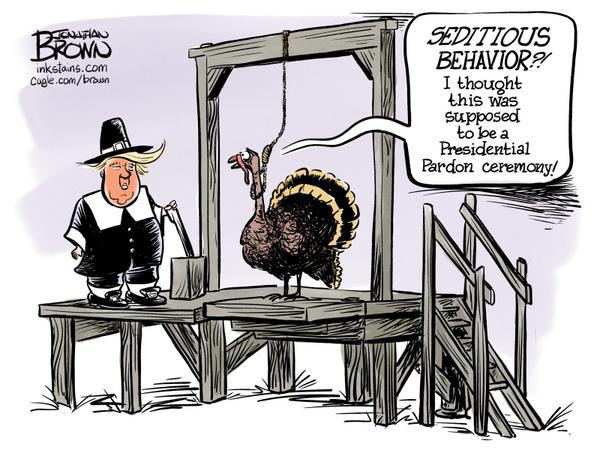
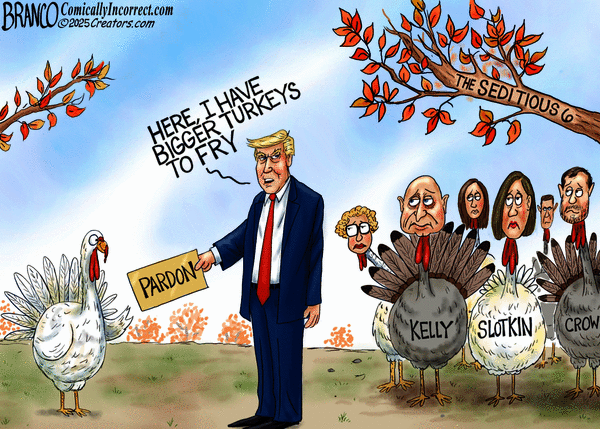
Six democratic lawmakers posted a video to X last week where they said that “threats to our Constitution” are coming “from right here at home,” and repeatedly urged the military and intelligence community to “refuse illegal orders.” Trump and Republicans are calling this reminder “seditious” and that posting it was “treason.”
One could argue that Donald Trump and Republicans believe that exercising free speech is seditious and treasonous. (snip-MORE on the page)
Club Fed Gobbler by Clay Jones
How to get a pardon from Donald Trump Read on Substack
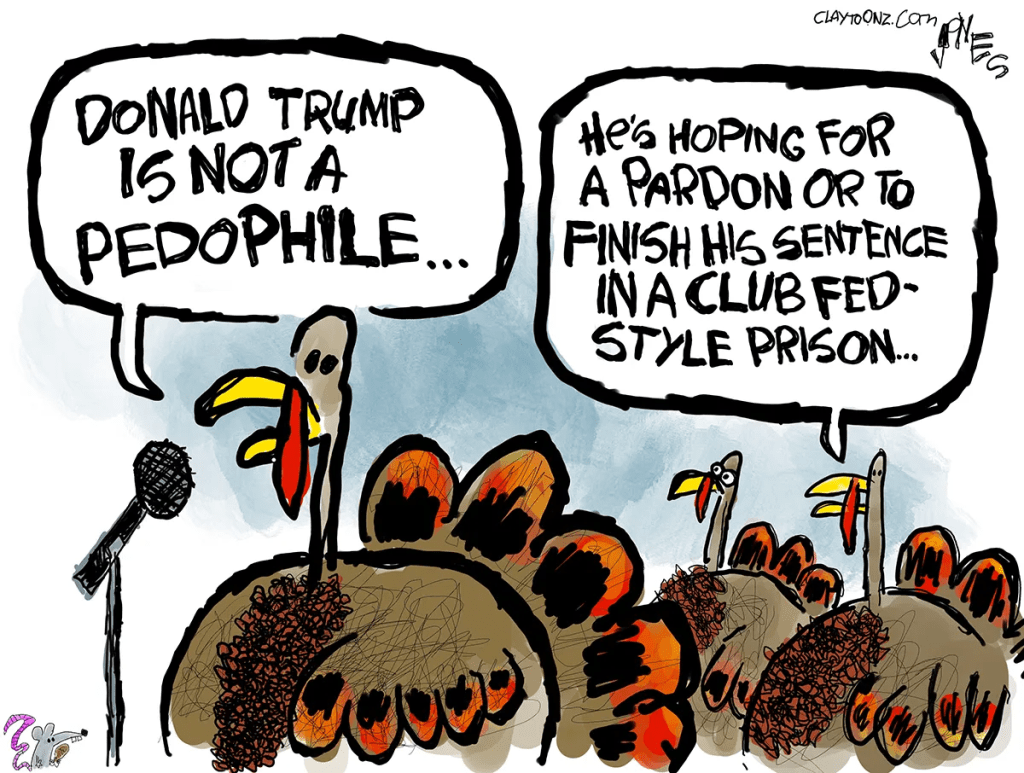
Yeah, I know. Two days in a row with a new cartoon. And, I had a session this morning with my occupational therapist.
I wanted to know if it was OK that I was drawing cartoons, and that it wouldn’t necessarily hurt my shoulder more than it should be hurting. But my therapist told me that drawing was therapy. She even complimented me on my grip on my Apple Pencil.
I figured the hardest part in drawing this cartoon would be the lettering. And I was right. As usual, most of this was drawn with my right hand, and it was colored with my left hand. This is just something I wanted to get out before Thanksgiving.
As you know, I’m not a big fan of conspiracy theories, but I do make predictions based on past events. (snip-MORE on the page)
TERRORISTS IN THE WHITE HOUSE! | Armageddon Update
Political cartoons / memes / and news I want to share. 11-26-2025


“So we’re agreed—until this is over, we don’t ask each other how we’re doing anymore?”


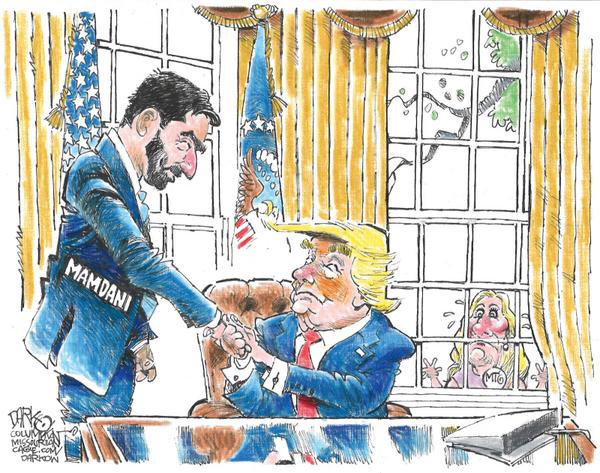




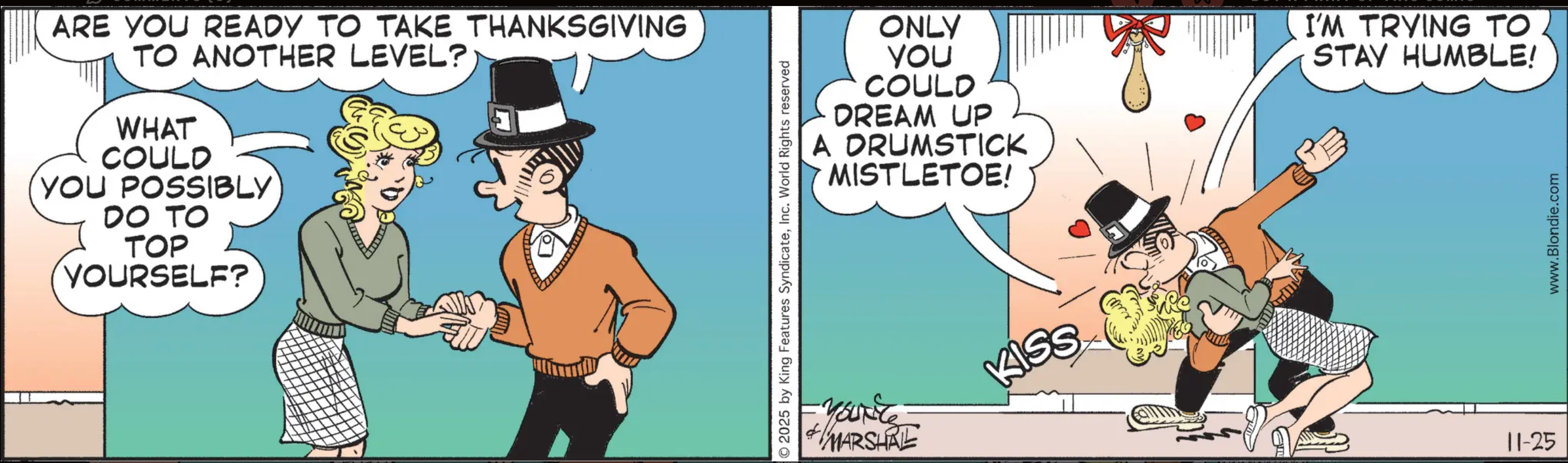


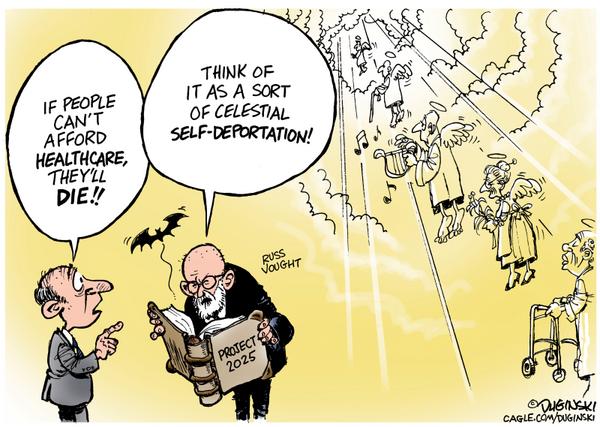




MAGA getting their daily drivel from the “lonely guy with goatee in his truck with black sunglasses” avatar.
No wonder they all mention the same things.









A Fine Bit Of Art
Trump’s Putin Autopen by Ann Telnaes
It saves time for his ballroom, arch, and golf course renovations Read on Substack

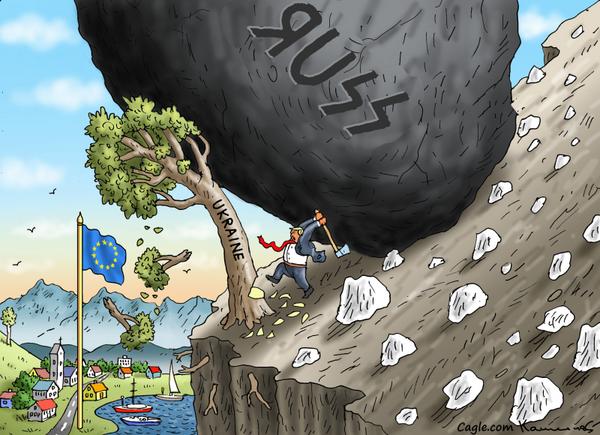
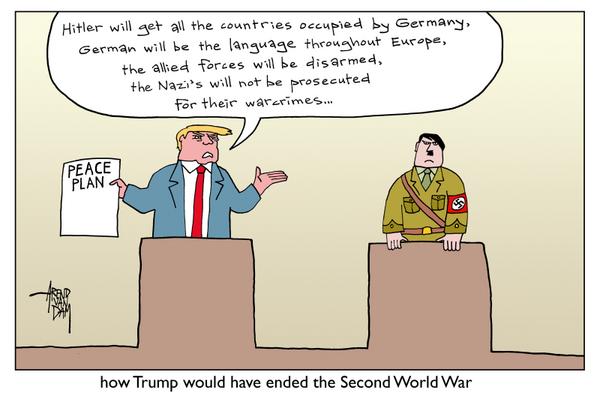
Who really wrote that initial 28-point deal?
11/21 Is A Newsy Day In Peace & Justice History
| November 21, 1945 200,000 members of the United Auto Workers went on strike against General Motors, the first major strike following World War II. The UAW’s demand for a 30% wage increase was based on the increase in the cost of living during the war (28% according to the Department of Labor), the wartime freeze on wages, and the cut in the average workweek with the disappearance of overtime pay in manufacturing.   But the UAW also considered profits and prices a subject for negotiation, a position rejected by GM. The union did not merely say that labor was entitled to enough wages to live on. It also said that labor was entitled to share in the wealth produced by industry. “… Unless we get a more realistic distribution of America’s wealth, we won’t get enough to keep this machine going.”–Walter Reuther, UAW President More about the strike |
| November 21, 1973 President Richard Nixon’s attorney, J. Fred Buzhardt, revealed the existence of an 18 1/2-minute gap in one of the subpoenaed White House tape recordings of Watergate conversations made by President Richard Nixon in the days after the Watergate break-in.The erasure was blamed on an accident by Nixon’s private secretary, Rose Mary Woods, but scientific analysis determined the erasures to be deliberate. White House Chief of Staff Alexander Haig later attributed the gap to “sinister forces.” 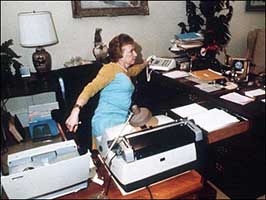 Rose Mary Woods, demonstrating how she might have created the Watergate tape gap More about Rose Mary Woods |
| November 21, 1974 Both Houses of Congress voted to override President Gerald Ford’s veto of updates to the Freedom of Information Act. Originally passed in 1966, it required federal agencies to release information upon request to citizens and journalists.The amendments put an end to governmental resistance to compliance, including excessive fees, bureaucratic delays, and the need to sometimes resort to expensive litigation to force the government to share copies of documents. Ford advisors Chief of Staff Donald Rumsfeld, his deputy Dick Cheney, and government lawyer Antonin Scalia advised him to veto it.  Chief of Staff Donald Rumsfeld, President Gerald Ford, and Deputy Chief of Staff Richard Cheney April 28, 1975 What was the dispute? (Verified the story is there.) |
| November 21, 1975 The Senate Select Committee to Study Governmental Operations with Respect to Intelligence Activities, led by Senator Frank Church (D-Idaho), issued a report charging U.S. government officials were behind assassination plots against two foreign leaders – Fidel Castro (Cuba) and Patrice Lumumba (Congo), and were heavily involved in at least three other plots: Rafael Trujillo (Dominican Republic), Ngo Dinh Diem (Vietnam), Rene Schneider (Chile). 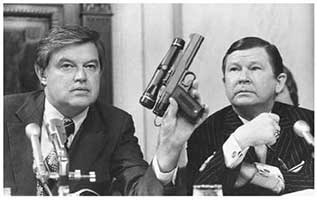 Senator Frank Church, left, chairman of the Senate Select Intelligence Committee, displays a poison dart gun as co-chairman Senator John Tower (R-TX) watches. The committee, a precursor to the Senate Intelligence Committee, was established to look into misuse of and abuse by intelligence agencies, particularly the CIA and FBI, some of which had been revealed by the Watergate investigations.   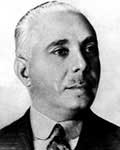   Fidel Castro / Patrice Lumumba / Rafael Trujillo / Ngo Dinh Diem / Rene Schneider Read more |
| November 21, 1981 More than 350,000 demonstrated in Amsterdam against U.S. nuclear-armed cruise missiles on European soil. |
| November 21, 1985 A full-scale summit conference, the first of five between the President Ronald Reagan of the U.S. and General Secretary Mikhail Gorbachev of the Soviet Union concluded. There was optimism over beginning a more productive and cooperative relationship between the two countries, each of which had thousands of nuclear warheads targeted at the other.The U.S. had proposed building a space-based anti-ballistic missile system, commonly known as “Star Wars,” which the Soviets had strongly opposed as an escalation of the nuclear arms race.In an unofficial meeting the previous evening, President Reagan had noted that he and Gorbachev were meeting for the first time at this level and had little practice. Nevertheless, having read the history of previous summit meetings, he had concluded that those earlier leaders had not accomplished very much. Therefore, he suggested that he and Gorbachev say, “To hell with the past, we’ll do it our way and get something done.” Gorbachev concurred.  Reagan and Gorbachev at their first summit |
| November 21, 1986 National Security Council member Oliver North and his secretary, Fawn Hall, began shredding documents that would have exposed their participation in a range of illegal activities regarding the sale of arms to Iran in an attempt to free hostages, and the diversion of the proceeds to an insurgent Nicaraguan group known as the contras.  Fawn Hall  Oliver North More on Fawn Hall |
| November 21, 1995 China officially charged well-known human rights activist and political dissident Wei Jingsheng with trying to “overthrow the government.” Wei had not been seen for a year and a half after disappearing into police custody after meeting with a U.S. assistant secretary of state for human rights and humanitarian affairs.“If the people allow the power holders, in the peoples’ name, to violate and ignore the rights of some of the people then, at the same time, they are giving the power holders the power to violate the rights of all the people.” “ Most people wait until others are standing to make their move, very few are willing to stand up first or to stand alone. That’s why my friends call me a fool! But I don’t have any regrets.” – Wei Jingsheng  Wei Jingsheng He had been imprisoned previously for his involvement with the Democracy Wall movement, including years in solitary confinement. He had also spoken out on behalf of the Tibetans. |
https://www.peacebuttons.info/E-News/peacehistorynovember.htm#november21
More Music: I Read This Yesterday, & Thought You Might Like It, Too
On the world’s coldest stage, a military musician plays with a plastic horn and double gloves
By CHARLOTTE GRAHAM-MCLAY Updated 4:06 AM CST, November 20, 2025
WELLINGTON, New Zealand (AP) — On the frozen edge of the world, staying in practice as a professional musician takes ingenuity, grit and a plastic instrument for schoolchildren that’s guaranteed not to freeze to your fingers or face.
Natalie Paine is a French horn player in New Zealand’s navy who since October has been among 21 military members stationed in Antarctica. There, her melodies drift across the frozen Ross Sea from perhaps the most remote practice room on Earth.
“It’s beautiful and very inspiring,” Paine told the Associated Press. “I’ll sit there by the window and I will do my routine and play music in my time off, which is not very often.”
An unlikely journey to the ice
The story of how she arrived in Antarctica is an unlikely one. Paine grew up in the hot, dry climate of Adelaide, Australia, where she dreamed of visiting the frozen continent as a scientist.
She studied music at university instead, putting Antarctica out of her mind. Years later however, as a musician in New Zealand’s navy, Paine learned members of the country’s military were stationed in Antarctica to support the work of scientists.
When she asked, her instructor said any military member could win one of the coveted assignments.
“My eyes lit up and I was like, what? Even a musician?” Paine said. “He’s like, heck yeah, why not?”
The most remote practice room on Earth
Her dream was revived but enacting it wasn’t simple. It took four years of unsuccessful applications before Paine landed a posting as a communications operator.
It’s a consuming job, worked in six-day stretches that leave little time for music. Paine monitors radio, phone, email and other communications traffic at New Zealand’s mission at Scott Base, sometimes speaking to people on the ice who haven’t heard other voices for weeks.
In whatever window she can find, Paine squeezes in scales and mouth exercises, going to great lengths not to disturb others on round-the-clock shifts. That means slipping out of the main base to a hut built in 1957 under the leadership of explorer Sir Edmund Hillary as New Zealand established its presence in Antarctica.
While she plays by the window, watching seals on the ice, Paine finds new musical motifs bubbling up.
“There’s so much beauty and it’s not tame either, it’s this wild, untamed beauty of the land around you and the animals as well,” she said. “It’s just so overwhelming, spiritually, emotionally, physically sometimes as well.”
A hostile climate prompts ingenuity
Her practical dilemmas included finding an instrument suitable for Antarctica — something hardy, lighter than a brass French horn and less likely to freeze to her hands. The winner, called a jHorn, isn’t elegant.
“It was designed to be a beginner brass instrument for children,” said Paine. “So it was like, super compact, super light plastic, very durable, nowhere near as much maintenance required.”
New Zealand’s navy doesn’t have records of another military musician being posted to Antarctica so Paine, who will be there until March, could be the first. Her presence has delighted Scott Base and she has provided live music for ceremonies, such as the changing of the flag, instead of the usual tunes from a speaker.
“I had to have ski gloves on with double layers and hand warmers on the inside to be able to hold the trumpet and still my fingers were freezing,” she said. Paine is, however, likely one of the few musicians to perform a solo Antarctic concert in minus 21 degrees Celsius (minus 6 Fahrenheit).
She said the collective effort between nations to work together on the frozen content had a familiar theme. It reminded her of music.
“Music is the universal language and it’s something that reminds us that we’re all connected,” she said. “It brings that connection back to home, back to land and back to the people you’re with as well.”
A bunch of bad things
Heather Scott [photo] last appeared here in January 2025 when the Idaho House advanced her resolution which would have launched a formal state lawsuit against Obergefell.
She appeared here in February 2024 for her bill to ban the composting of human remains because people might dig up the bodies and eat them. (Yes, really.)
Scott first appeared here in 2020 when she called Idaho’s Republican governor “Little Hitler” over COVID lockdowns, which she compared to concentration camps.
She appeared here in 2022 when she held a talk on “the war of perversion against our children” by the LGBTQ community and invited a militia group to the stage.
Scott first made national news in 2017 when she defended white nationalism in a Facebook post.
Later that year she was stripped of her committee posts when she said that women only get Idaho leadership posts if they “spread their legs.”
Photos show Scott, an Oath Keepers supporter, brandishing the Confederate battle flag at her campaign events.
A few weeks ago, Rolex hosted Trump in their luxury suite at the US Open in Queens.

 Scottie's Playtime