Professor of immigration and citizenship law at the University of Virginia, Amanda Frost joins the show to discuss her book You Are Not American: Citizen Stripping from Dred Scott to the Dreamers. Live-streamed on September 22, 2025.
🇨🇦 Richard Hogan PhD (Mathematics) · MD (Neuroscience) · PhD (Ethics) · DBA (HRD) Architect of IGD & IBT | Rewriting the language of gender justice Essays, theory, and verse from the post-binary frontier
Keynote Address: Unscripted—Introducing Intergender Dynamics and and Reframing Gender-Type Prejudice
Good morning.
It is an honor to stand before you today—not to echo what has already been said, but to challenge what we’ve long accepted. To offer not just a critique, but a new vocabulary. A new lens. A new way forward. I hope you are ‘not toned deaf’.
For decades, we have used the term misogyny to name and confront systemic prejudice against women. It has served us well in many ways. But today, I ask you—academics, legal scholars, educators, and clinicians—to consider this: What if the language we use to fight injustice is now limiting our ability to understand it?
We are living in a post-binary world. Gender is no longer a fixed category—it is a spectrum, a performance, a negotiation. And yet, our frameworks remain tethered to binary logic. Misogyny is one such tether. It is gender-specific. Directionally fixed. It presumes a hierarchy that no longer reflects the lived realities of our students, our patients, our communities.
So today, I introduce a new term: Intergender Dynamics , or IGD .
IGD refers to the patterned, reciprocal, and often asymmetrical interactions between individuals and groups across the gender spectrum. It is not just about identity—it is about relationship . It is about how we perform, police, and punish gender roles in our daily lives. It is about the emotional labor we assign, the authority we grant, the empathy we withhold.
And this is not just a sociological insight—it is a medical one.
Recent research in gender-affirming care has shown that transgender and gender-diverse individuals face significant barriers in accessing health services, often due to systemic bias and relational discomfort within clinical settings. Studies have also revealed that patients with dynamic or evolving gender identities experience distress not only from institutional exclusion, but from interpersonal dynamics—how they are spoken to, validated, or dismissed by providers.
In pediatric and adolescent medicine, clinicians are now trained to recognize how gender-role expectations affect mental health, emotional development, and access to care. The World Professional Association for Transgender Health and The Endocrine Society have emphasized the importance of relational sensitivity—not just diagnostic accuracy—in improving outcomes.
What does this tell us?
It tells us that IGD is not just a theoretical tool—it is a clinical imperative . If we want to reduce disparities, improve mental health, and foster trust in care, we must understand how gender prejudice operates not only in policy, but in conversation. In tone. In silence.
To complement IGD, I also propose Intergender Bias Theory (IBT) —a framework for analyzing the structural architecture of gender-type prejudice. IBT examines how laws, curricula, and institutional norms enforce rigid roles and marginalize deviation. Together, IGD and IBT offer a dual lens: one that captures both the macro-level scaffolding of bias and the micro-level choreography of interaction.
Let me be clear: retiring the term misogyny is not an act of denial. It is an act of evolution. It is a recognition that our language must grow with our understanding. That our frameworks must reflect the complexity of the world we now inhabit.
So I call on you:
Academics , to revise your syllabi, your research, your theories.
Legal scholars , to expand your statutes, your protections, your definitions.
Educators , to teach emotional literacy, role deconstruction, and relational justice.
Clinicians , to recognize IGD in patient care and to train for relational sensitivity.
Let us move from naming contempt to understanding connection. Let us shift from binary blame to systemic insight. Let us unscript ourselves—and write a new language of liberation.
This is not the end of a conversation. It is the beginning of a movement.
Thank you.
(snip-To read in Latin, French, Spanish, or Arab, click through to the Substack)
Charlie Kirk, the far-right commentator and ally of Donald Trump, was killed on Wednesday doing what he was known for throughout his career – making incendiary and often racist and sexist comments to large audiences.
If it was current and controversial in US politics, chances are that Kirk was talking about it. On his podcasts, and on the podcasts of friends and adversaries, and especially on college campuses, where he would go to debate students, Kirk spent much of his adult life defending and articulating a worldview aligned with Trump and the Maga movement. Accountable to no one but his audience, he did not shy away in his rhetoric from bigotry, intolerance, exclusion and stereotyping.
Here’s Kirk, in his own words. Many of his comments were documented by Media Matters for America, a progressive non-profit that tracks conservative media.
On race
If I see a Black pilot, I’m going to be like, boy, I hope he’s qualified.
– The Charlie Kirk Show, 23 January 2024
If you’re a WNBA, pot-smoking, Black lesbian, do you get treated better than a United States marine?
If I’m dealing with somebody in customer service who’s a moronic Black woman, I wonder is she there because of her excellence, or is she there because of affirmative action?
If we would have said that Joy Reid and Michelle Obama and Sheila Jackson Lee and Ketanji Brown Jackson were affirmative action picks, we would have been called racists. Now they’re coming out and they’re saying it for us … You do not have the brain processing power to otherwise be taken really seriously. You had to go steal a white person’s slot to go be taken somewhat seriously.
We record all of it so that we put [it] on the internet so people can see these ideas collide. When people stop talking, that’s when you get violence. That’s when civil war happens, because you start to think the other side is so evil, and they lose their humanity.
– Kirk discussing his work in an undated clip that circulated on X after his killing.
Prove me wrong.
– Kirk’s challenge to students to publicly debate him during the tour of colleges he was on when he was assassinated.
On gender, feminism and reproductive rights
Reject feminism. Submit to your husband, Taylor. You’re not in charge.
– Discussing news of Taylor Swift and Travis Kelce’s engagement on The Charlie Kirk Show, 26 August 2025
The answer is yes, the baby would be delivered.
– Responding to a question about whether he would support his 10-year-old daughter aborting a pregnancy conceived because of rape on the debate show Surrounded, published on 8 September 2024
We need to have a Nuremberg-style trial for every gender-affirming clinic doctor. We need it immediately.
I think it’s worth it to have a cost of, unfortunately, some gun deaths every single year so that we can have the second amendment to protect our other God-given rights. That is a prudent deal. It is rational.
– Event organized by TPUSA Faith, the religious arm of Kirk’s conservative group Turning Point USA, on 5 April 2023
On immigration
America was at its peak when we halted immigration for 40 years and we dropped our foreign-born percentage to its lowest level ever. We should be unafraid to do that.
The great replacement strategy, which is well under way every single day in our southern border, is a strategy to replace white rural America with something different.
We’ve been warning about the rise of Islam on the show, to great amount of backlash. We don’t care, that’s what we do here. And we said that Islam is not compatible with western civilization.
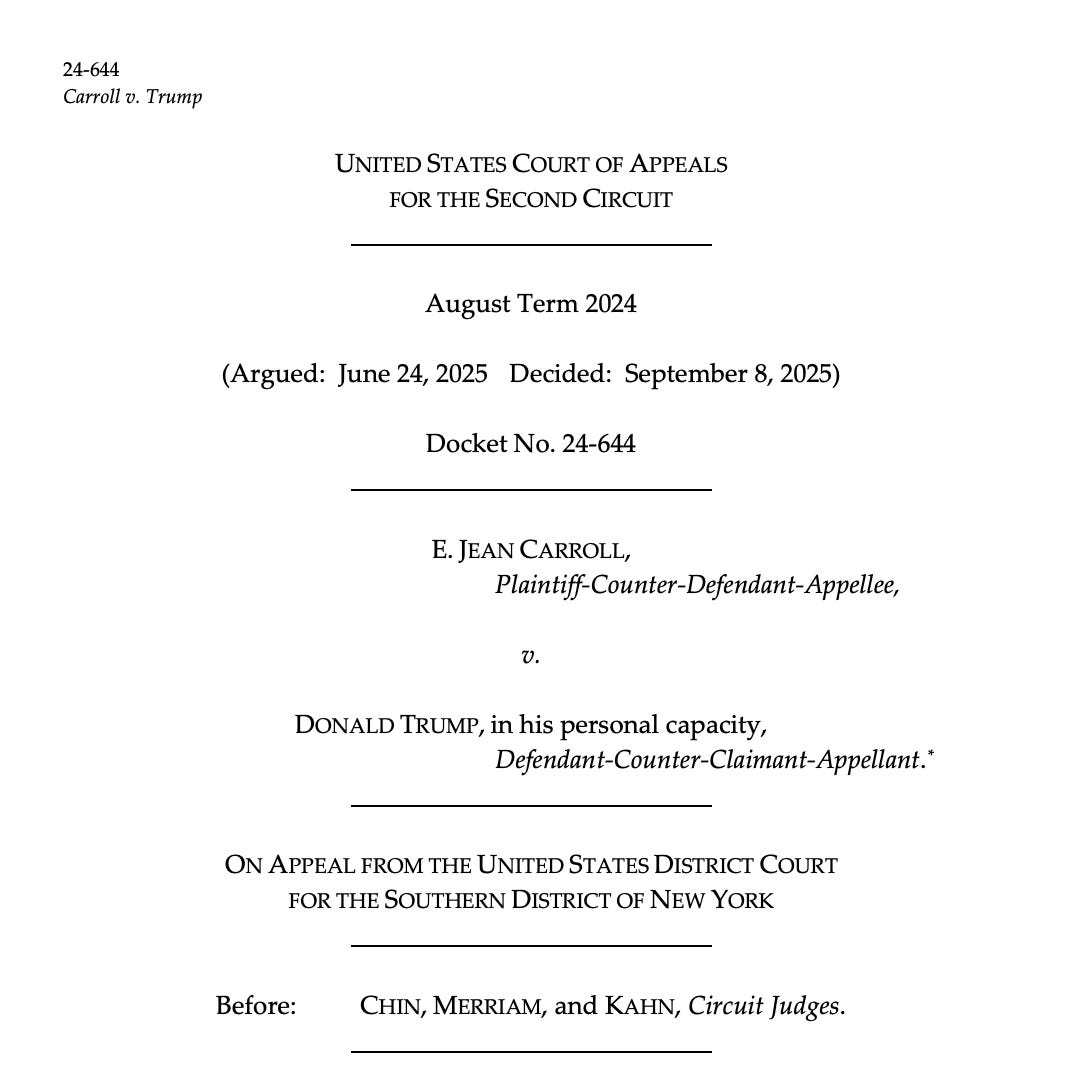
I asked Robbie Kaplan, the lawyer who tried the case, how she felt after learning that the Court of Appeals for the Second Circuit affirmed the $83.3 million verdict a jury awarded E. Jean Carroll in her defamation case against Donald Trump. This is what Kaplan told me: “Both the amazing and brave E. Jean Carroll and I could hardly be happier about today’s decision from the Second Circuit. It has been a long road to get here, and we are not at the end of the road yet, but as the opinion makes clear: ‘The starting point is the now-indisputable fact that a jury found in Carroll II that Trump sexually abused Carroll in 1996, and … that, based on the jury’s findings, Carroll did not lie and that Trump uttered falsehoods in his statements accusing her of lying and acting with improper motivations.’”
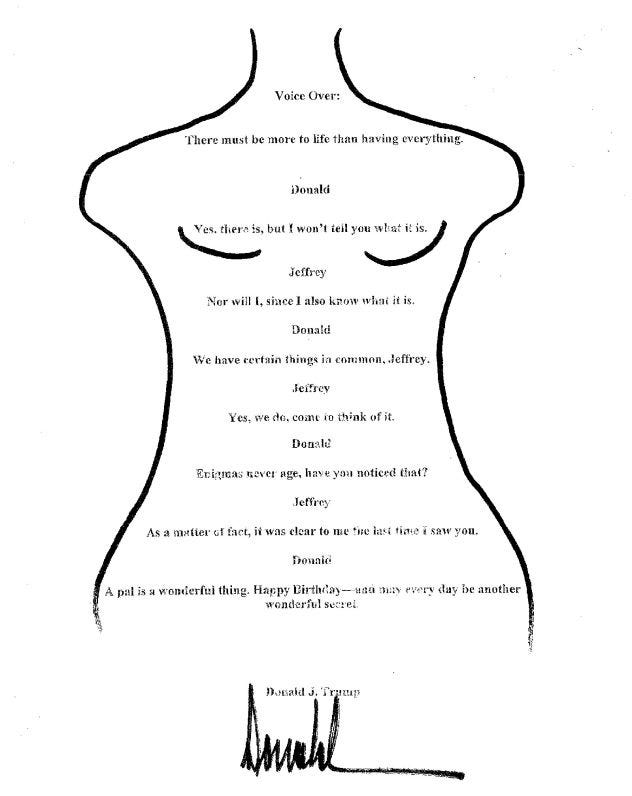
The Second Circuit affirmed the verdict against Trump on the same day that Trump’s birthday missive to Jeffrey Epstein became public. Trump says he didn’t send it, but the signature is extremely similar to verified Trump signatures on notes he wrote to both George Conway and Hillary Clinton. The birthday message is in the distinctive Sharpie marker scrawl Trump is known for. But Trump is insisting it isn’t his, a strange hill to die on since his friendship with Epstein is well documented. A jury believed E. Jean when she said Trump sexually assaulted her. The jury of public opinion may well believe Trump sent this incriminating note to Epstein.
Trump will undoubtedly try to appeal the case to the Supreme Court. It will be up to the Court to decide whether to hear the case or let the Second Circuit’s opinion stand.
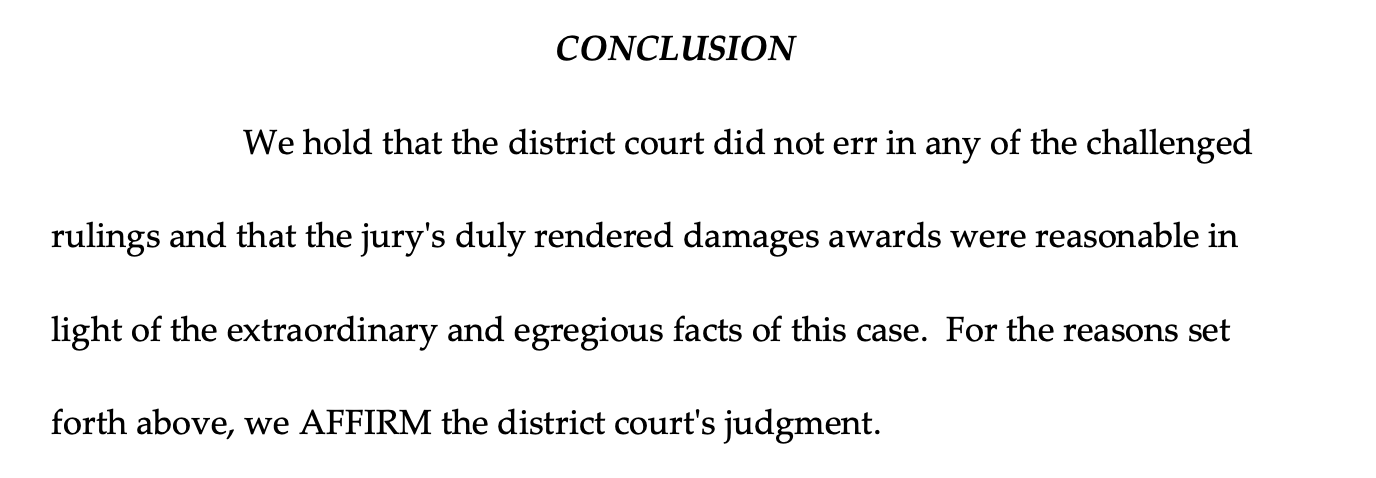
The 70-page opinion starts like this: “A jury found that then-President Trump acted with common law malice when he made defamatory statements about Carroll in June 2019 and awarded compensatory and punitive damages. Trump appeals, arguing that he is entitled to presidential immunity or, in the alternative, a new trial. Trump also contends that the jury’s damages award is excessive and must be remitted.” The court then writes one word, “AFFIRMED,” which means that the jury’s verdict stands. You can read the full opinion here.
Last December, the Second Circuit affirmed the verdict in the case referred to as “Carroll II”—the second defamation case Carroll filed against Trump, which confusingly went to trial first (because Trump bogged down “Carroll I” in appeals). The jury in Carroll II returned a $5 million verdict against Trump.
In this case, Carroll I, Carroll’s lawyer, Robbie Kaplan, argued to the jury that if a $5 million verdict was insufficient to stop Trump’s defamation of Carroll, then they needed to return a larger verdict that they believed would stop his misconduct. That’s what they did. The verdict was for $83.3 million.
Trump asked the Court of Appeals to reverse for two reasons:
He argued that the Supreme Court’s decision about presidential immunity in criminal cases in Trump v. United States means the Second Circuit erred when it refused to afford him immunity in this civil case, even though it involves an assault that occurred decades before he became the president. Beyond that, while he defamed Carroll while he was in office the first time, his comments were about an entirely personal matter that had nothing to do with the office he held. The court declined to reverse on this ground. They held Trump had waived the immunity argument by not making it at the proper time before the lower court.
Trump also challenged the district court’s grant of partial summary judgment in favor of Carroll and other procedural rulings. The trial court held that a jury had already found that Trump sexually assaulted Carroll in the first trial and that finding was binding in the second case. That decision reflects the well-known principle of collateral estoppel, and the Court ruled there was no reason to disturb it because the identical issue was decided in the prior action and Trump had a full and fair opportunity to litigate the issue during those proceedings.
Trump has frequently been able to twist courts and delays to his advantage. He did that here for a time. But that clock seems to have run out on him. The Supreme Court would have to up end its existing jurisprudence on basic procedural issues to rule for Trump here.
A jury believed E. Jean Carroll. That’s the bottom line. In our system, we leave decisions about disputed facts and what happened to juries. The jury here deliberated and found against Donald Trump. That decision should remain in place. In an era where so much damage is being done to women’s legal standing, it’s essential that we be believed when we have the courage to speak out about sexual assault. Carroll did that. She told friends about the attack at the time in occurred but had been too intimidated by threats she would lose her job and her livelihood if she spoke up to move forward then.
If we can do nothing else for women in an era where abortion rights, more properly understood as the right to receive lifesaving medical care, and other rights have been taken away, we can do this: we can believe them when they summon the courage to come forward and reveal a rape or a sexual assault. Maybe if our nation had done that sooner, we wouldn’t have had a Trump presidency at all.
These bans have been successful in part because of a toxic and ruthless ecosystem of far-right influencers, like Riley Gaines, who have formed entire careers around attacking trans athletes by prioritizing hate and misinformation.
“So much of what we see … just seems like it’s wrapped up in really hateful and negative messages that aren’t good for anyone,” says Mary Fry, a professor of sport and exercise psychology at the University of Kansas. “We’re creating issues where maybe we don’t need to.”
The anti-trans attacks in sports are also affecting cis women. Ayala, a competitive cyclist, remembers one race where she and her trans friend both made the podium. When photos of the event were posted on Facebook, people accused her of being trans, and she was added to a “list of males who have competed in female sports” maintained by Save Women’s Sports.
Earlier this year, 16-year-old AB Hernandez became the target of nationwide hate and harassment when the president of a local school board publicly doxxed the track and field athlete and outed her as transgender. Right-wing activists misgendered her and called her mom “evil;” swarms of adults showed up to heckle her at games; Charlie Kirk pushed state governor Gavin Newsom to condemn her; and President Donald Trump threatened to withhold federal funding from California over her participation.
While transgender athletes are very rare, this type of harassment towards them is playing out across the country and internationally. A trans girl was harassed at a soccer game in Bow, New Hampshire, by adult protestors wearing XX/XY armbands, representing an anti-trans sports clothing brand. And in British Columbia, a 9-year-old cis girl was accosted by a grown man who accused her of being trans and demanded that she prove her sex to him.
While research into the relative athletic capabilities of trans and cis women is ongoing, far-right groups, including the Alliance Defending Freedom and the Leadership Institute, have been putting hate before science to turn the public against trans athletes since at least 2014. And it’s working.
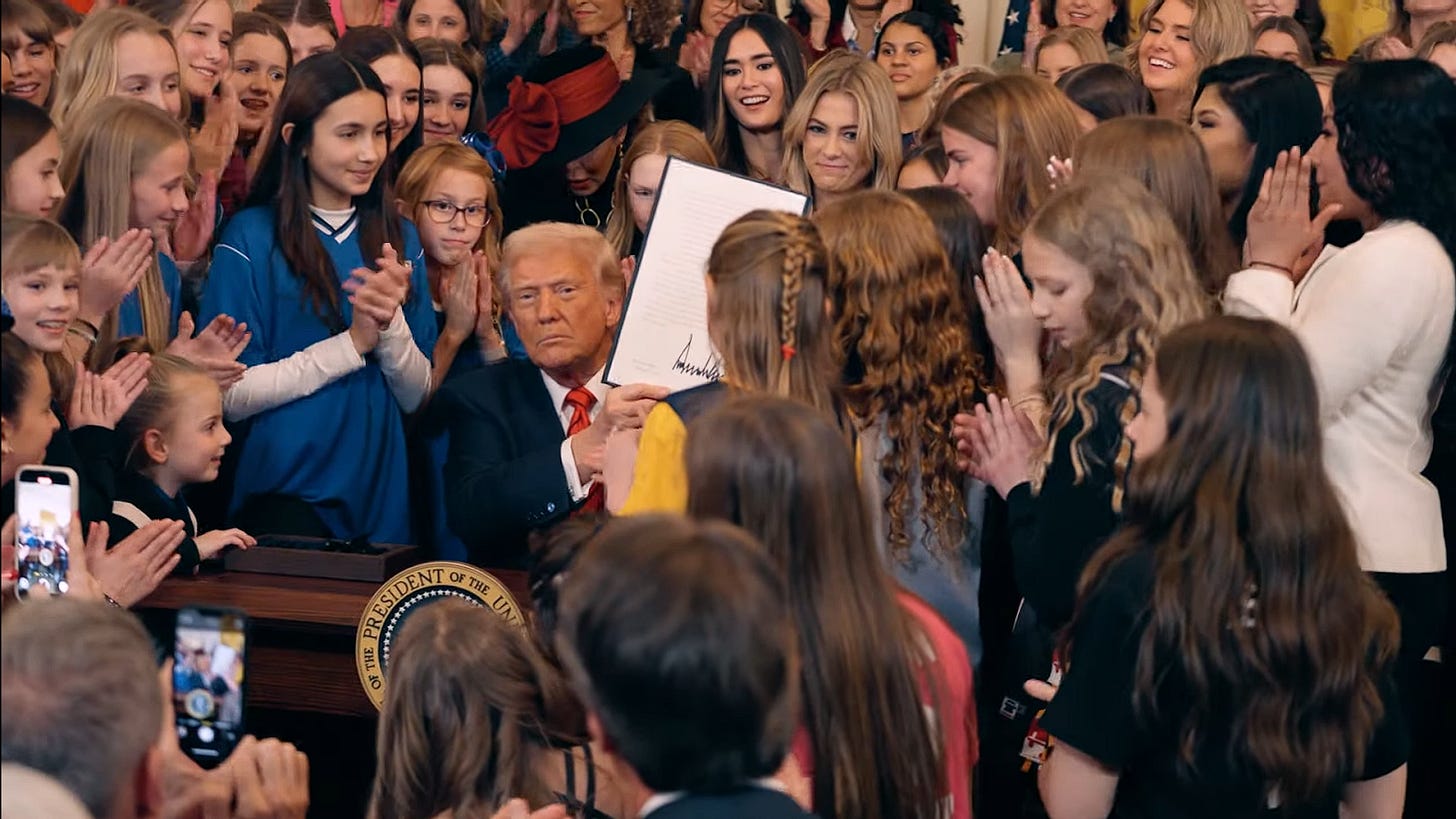
Laws, rules or regulations currently ban trans athletes from competing in sports consistent with their gender identity in 29 states, with 21 beginning the ban in kindergarten. The majority-conservative Supreme Court announced this month that it’ll be taking on the question of the constitutionality of the bans. Meanwhile, the federal government is pressuringstates without bans to change their policies in compliance with a Trump executive order that attempts to institute a nationwide ban.
Trump signs an executive order calling for bans on trans women and girls from women’s sports. Photo by: The White House.
These bans have been successful in part because of a toxic and ruthless ecosystem of far-right influencers, like Riley Gaines, who have formed entire careers around attacking trans athletes by prioritizing hate and misinformation.
“So much of what we see … just seems like it’s wrapped up in really hateful and negative messages that aren’t good for anyone,” says Mary Fry, a professor of sport and exercise psychology at the University of Kansas. “We’re creating issues where maybe we don’t need to.”
Harassment and Mental Health
Grace McKenzie has been deeply affected by these hate campaigns. A lifelong athlete, McKenzie has stayed healthy by playing multiple sports where she’s met “amazing people.” Shortly after she transitioned in 2018, she was thrilled when she was invited to join a women’s rugby team at the afterparty of a Lesbians Who Tech conference.
Grace McKenzie. Photo courtesy of McKenzie.
“Rugby became my home, it was my first queer community, it was the space where I really discovered my own womanhood,” McKenzie told Uncloseted Media. “I could be the sometimes-masculine, soft-feminine person who play[s] rugby and loves sports.”
But that started to change in 2019, when McKenzie and others on her team started to hear rumors that World Rugby was considering a ban on trans athletes. Fearing the loss of her community, she started a petition that racked up 25,000 signatures—but it wasn’t enough, and the ban took effect in 2020.
As anti-trans rhetoric in sports has ramped up, McKenzie says she’s had soul-crushing breakdowns that have left her “sobbing uncontrollably and unconsolably.”
“It would be these waves of such intense despair and rage—it was like going through grief for five years,” she says. “I have to wake up every single day and read about another state or another group of people who say that they don’t want me to exist.”
While McKenzie says she’s found the strength to keep playing where she can, sports psychologist Erin Ayala has seen clients leave sports altogether due to the hate toward trans athletes.
“It can be really difficult when they feel like they’re doing everything right … and they still don’t belong,” says Ayala, the founder of the Minnesota-based Skadi Sport Psychology, a therapy clinic for competitive athletes. “Depression can be really high. They don’t have the strength to keep fighting to show up. And then that can further damage their mental health because they’re not getting the exercise and that sense of social support and community.”
That was the story of Andraya Yearwood, who made national headlines in high school when she and another trans girl placed first and second in Connecticut’s high school track competitions. The vitriol directed at her was intense: Parents circulated petitions to have her banned; crowds cheered for her disqualification; the anti-LGBTQ hate group Alliance Defending Freedom launched a lawsuit against the state for letting her play; and she faced a torrent of transphobic and racist harassment.
“It’s a very shitty experience,” Yearwood, now 23, told Uncloseted Media.
Fearing more harassment, she quit running in college.
“I understood that collegiate athletics is on a much larger and much more visible scale. … I just didn’t want to go through all that again for the next four years,” she says. “Track obviously meant a lot to me, and to have to let that go was difficult.”
It’s understandable that Yearwood and other trans athletes struggle when they have to ditch their favorite sport. A litany of research demonstrates that playing sports fosters camaraderie and teamwork and improves mental and physical health. Since trans people disproportionately struggle from poor mental health, social isolation and suicidality, these benefits can be especially crucial.
“In some of these cases, kids have been participating with a peer group for years, and then rules were made and all of a sudden they’re pulled away,” says Fry. “It’s a hard world to be a trans individual in, so it’d be easy to feel lonely and separated.”
Caught in the Crossfire
The anti-trans attacks in sports are also affecting cis women. Ayala, a competitive cyclist, remembers one race where she and her trans friend both made the podium. When photos of the event were posted on Facebook, people accused her of being trans, and she was added to a “list of males who have competed in female sports” maintained by Save Women’s Sports.
Ayala isn’t alone. Numerous cis female athletes have been “transvestigated,” or accused of being trans, including Serena Williams and Brittney Griner. During the 2024 Paris Olympics, Donald Trump and Elon Musk publicly accused Algerian boxer Imane Khelif of being trans after her gold medal win, as part of a wave of online hate against her. She would later file a cyberbullying complaint against Musk’s X.
While women of all races have been targeted, Black women have faced harsher scrutiny due to stereotypes that portray them as more masculine.
Yearwood remembers posts that would fixate on her muscle definition and compare her to LeBron James.
“I think that is attributed to the overall hyper-masculinization and de-feminization of Black women, and I know that’s a lot more prevalent for Black trans women,” she says. “It made it easier to come for us in the way that they did.”
Subscribe
A Big Distraction
Joanna Harper, a post-doctoral scholar at Oregon Health & Science University and one of the world’s leading researchers on the subject, says that the jury is still out on whether the differences in athletic performance between trans and cis women are significant enough to warrant policy changes.
“People want simple solutions, they want things to be black and white, they want good guys and bad guys,” Harper says, adding that the loudest voices against trans women’s participation do not actually care about what the science says.
“This idea that trans women are bigger than cis women, therefore it can’t be fair, is a very simple idea, and so it is definitely one that people who want to create trans people as villains have pushed.”
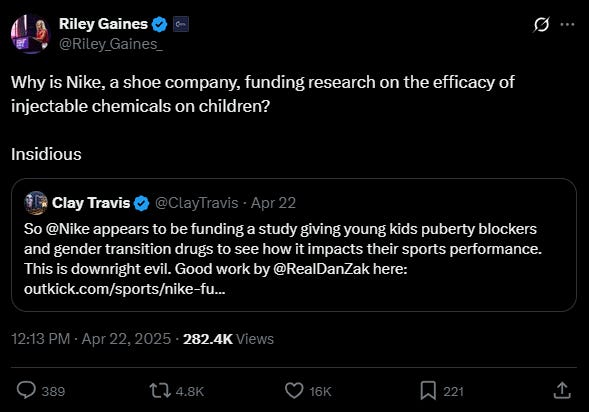
Even Harper herself has been the victim of the far-right’s anti-trans attacks. Earlier this year, she was featured in a New York Times article where she discussed a study she was working on with funding from Nike into the effects of hormone replacement therapy (HRT) on adolescents’ athletic performance.
Riley Gaines and OutKick founder Clay Travis attack Harper’s study on X.
“That Nike chose to fund a study on trans athletes doesn’t actually say that they’re supporting trans athletes. They’re merely supporting research looking into the capabilities of trans athletes,” Harper says. “You don’t know what the research will show until you get the data … but the haters don’t want any data coming out that doesn’t support what they want to say.”
Harper says this anti-trans fervor and HRT bans are making it more difficult to conduct studies in the first place.
And while the far-right argues that they are “protecting women’s sports” in their war on trans athletes, multiple athletes and experts told Uncloseted Media that this distracts from bigger issues in women’s sports, including sexualharassment by coaches and a lack of funding.
“If the real goal was to help women’s sports, they would try to increase funding [and] support for athletes,” says Harper, noting that women’s sports receive half as much money as men’s sports at the Division I collegiate level. “But that’s not what they’re doing, and it becomes pretty evident the real motivation behind these people.”
Since Trump’s reelection, Grace McKenzie has somewhat resigned herself to the likelihood of attacks on trans people getting worse. Despite this, she finds hope in building community with other trans athletes, such as the New York City-based trans basketball league Basketdolls.
“If that’s the legacy that [the anti-trans movement] wants to leave behind, good for them,” McKenzie says. “Our legacy is going to be one about hope, and collective solidarity, and mutual aid, and I would much rather be on that side of the fence.”
Meanwhile, Fry remains hopeful that conflicts can be resolved and that trans people may be able to find a place in sports over time.
“If we could all have more positive conversations and not create such a hateful environment around this issue, it would just benefit everyone.”
If objective, nonpartisan, rigorous, LGBTQ-focused journalism is important to you, please consider making a tax-deductible donation through our fiscal sponsor, Resource Impact, by clicking this button:
100% Christian hate. No one loves more than bigot Christians can hate. This would be a non-story except Kegseth is the head of the military with the authority to remove any group from the military he doesn’t like. Think about the idea that woman shouldn’t vote according to his preacher yet females in the military at every level have authority over men … so if they can’t be trusted to vote …? But Kegseth thinks the US military needs to be an all white male thuggish killing machines like the Russian military who are getting their asses kicked by the inclusive Ukrainian military. The Christian bigotry prevents people like him from seeing the truth. The idea of heavily muscled men facing each other on a field of battle is far in the past. Military tech is way more far advanced. It needs twink kids in the basement playing on gaming machines, it needs females who can out think every man around. Kegseth’s idea of manliness and the military makes me suspect him of having a man fetish, an Arnold Schwarzenegger fetish. It idealizes something that is not true and doesn’t exist. This man grew up on far too many he man cartoons and movies. Hugs.
“We have to overturn Obergefell. Many people will say, ‘That ship’s sailed, man. Gay people are married. We can’t go back.’ Gay marriage does not exist in the world. It can’t, any more than a square triangle can exist. God created marriage. I had premarital counseling today, I opened up the bible to Genesis I and showed them where God created marriage. He made them male and female. He set it.
“You want us to persist in having lies at the fundamental level of our nation? What’s that going to do to our country, other than have it crumble and have judgment be upon it? You have to remember that there’s a God in heaven who has thoughts on these matters.
“Of course, it has to go because it’s non-reality. We have to become sane again as a nation. And because we’ve gotten ourself so deep into this sin, there’s no clean way to do it.” – Pete Hegseth’s pastor Brooks Potteiger, who last appeared here when he called for God to burn down a “demonic” network’s headquarters for featuring a gay couple on a reality show.
Pottigier’s church is part of Pastor Doug Wilson’s Christian nationalist network, which advocates for a full-Gilead theocracy in which women cannot vote and homosexuality is criminalized. Last week Hegseth retweeted a video in which Wilson called for all of those things.
Brooks Potteiger, who is Pete Hegseth's pastor, says that Obergefell must be overturned because "gay marriage does not exist in the world. It can't, any more than a square triangle can exist." pic.twitter.com/KA38SwN5sq
That is pretty much religion all over the world. And they mostly all believe they are the only true religion. Buddhism seems the most benign of all of them.
If Obergefell is overturned, same sex marriage will not go away but we will go back to the bad old days where there will be a patchwork of states where SSM will be valid.
I do wonder for example if someone was married in Oklahoma will their marriage be voided and would need to remarry in SSM state or will they be grandfathered in.