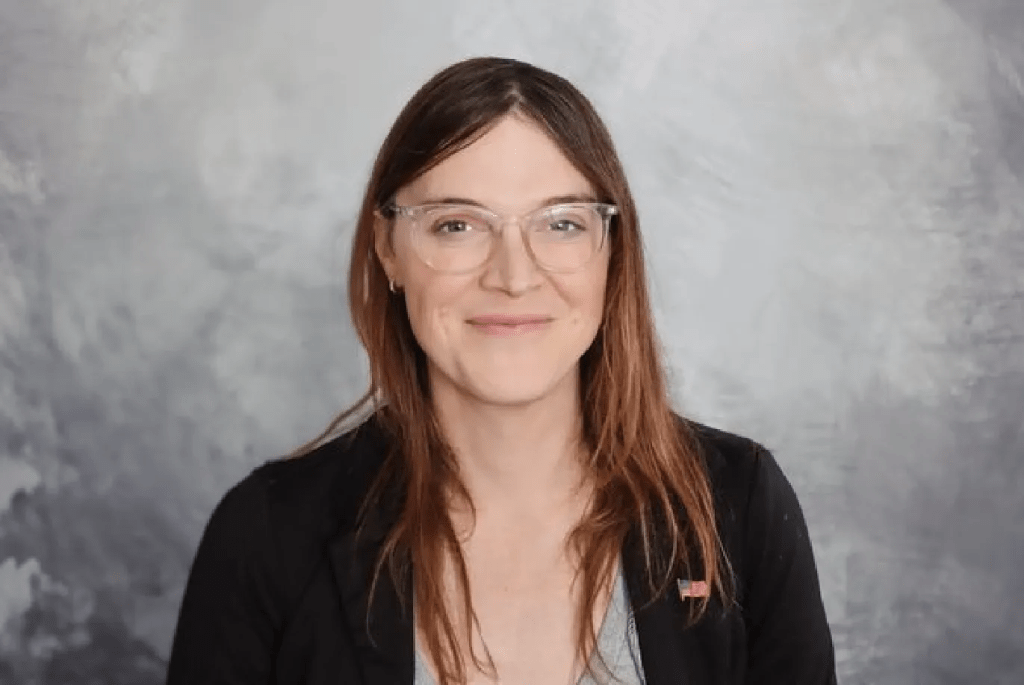
“While my opponent obsesses over my gender and uses cowardly tricks to try to avoid facing me, I will continue to fight for practical solutions to problems that actually impact our communities.”
Michigan Democrats are firing back after one of their own—a candidate in a state representative race—filed a complaint with the Wayne County Division of Elections, aiming to boot his primary opponent, Joanna Whaley, from the ballot. This is because Whaley is transgender and went through a legal name change process.
It seems that another contender for Michigan’s 2nd State House District seat, Frank Liberati falsely believed Whaley’s name change hadn’t gone through. So, last week, he accused her of running under a false name in violation of election procedures, official documents show, which were provided to Erin in the Morning by Whaley.
They also showed that Liberati went even further in his anti-trans rhetoric. The complaint invoked Whaley’s deadname (a given name a trans person no longer uses) at every turn, consistently misgendered her, or called Whaley “she/he.”
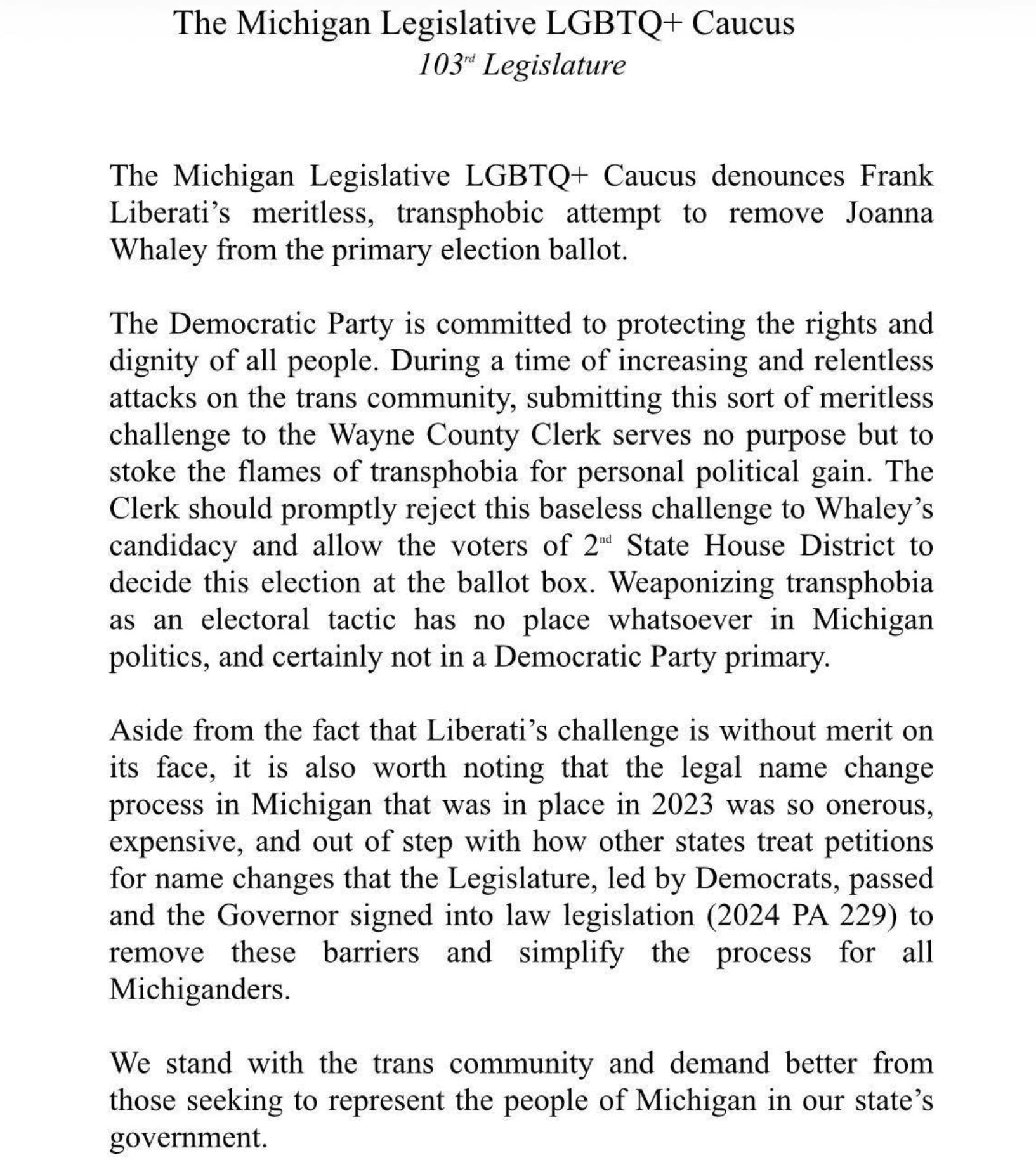
The Michigan Legislative LGBTQ+ Caucus denounced Liberati’s “transphobic tactics.”
“During a time of increasing and relentless attacks on the trans community, submitting this sort of meritless challenge to the Wayne County Clerk serves no purpose but to stoke the flames of transphobia for personal political gain,” a statement from the Caucus reads.
Democratic lawmakers further called on officials to throw out the complaint. “The Clerk should promptly reject this baseless challenge to Whaley’s candidacy and allow the voters of 2nd State House District to decide this election at the ballot box. Weaponizing transphobia as an electoral tactic has no place whatsoever in Michigan politics, and certainly not in a Democratic Party primary,” the statement said.
Whaley told Erin in the Morning that she expected to encounter transphobia when running for office, but she was shocked when she learned it was from a fellow Democrat.
At the same time, she also said she has been flooded with support from voters, Party members, and leaders who were outraged by Liberati’s maneuver.
“I spoke with the chair of the Michigan Democratic Party, and we are united across the state that this is not how Democrats act,” Whaley said. “This is not what we represent.”
Whaley said Liberati’s complaint was based on outdated court filings. When Whaley first came out, excessive state fees ended up delaying aspects of her legal transition. Since then, the state legislature has passed laws to make name changes less burdensome. Whaley filed again, got her name successfully updated, and has been going by Joanna ever since.
“When a candidate cannot run on their own merits, they resort to lies and distractions,” Whaley said in a public response when news of the challenge first broke. “Our campaign remains focused on the issues that matter to the residents of this district: lowering water and utility bills, expanding healthcare access, fixing our infrastructure, and protecting our freedoms.”
“While my opponent obsesses over my gender and uses cowardly tricks to try to avoid facing me, I will continue to fight for practical solutions to problems that actually impact our communities,” she continued.
This isn’t the first time that issues with name changes and state identification laws have been weaponized against trans voters and/or candidates. Gendered party seat positions, which were initially created to advance the representation of women in office, have since become a barrier for people of marginalized genders who want to run for a position.
Meanwhile, stringent voter ID policies are poised to hinder trans and gender nonconforming people’s ability to vote if their current documentation or gender expression doesn’t match their name and gender assigned at birth. (The name change issue extends beyond trans people; married women who take their husband’s last name have also reported barriers to voting.)
In addition to her candidacy, Whaley is a parent, a hospital chaplain, and a proud Democrat. She told Erin in the Morning she was in part inspired to run for office by Liberati’s brother: Sitting member Tullio Liberati, who crossed party lines last year to vote in favor of a bill that discriminated against transgender women and girls in sports.
Transphobia, it seems, runs in the family. Frank personally signed off on the complaint submitted to officials, notary and all.
Liberati did not immediately respond to a request for comment. Prior to this race, he had served for six years as a state representative in Michigan’s 13th District.
Whaley said she expects the complaint to be resolved and that she hopes to bring the conversation around her candidacy back to the issues that impact everyday voters.
“[Resorting to] this move in the first place shows that we are the campaign to beat,” Whaley said. These are tactics to “knock me out of the race, because [Liberati] can’t win on the issues.”
“I don’t see any path aside from the full removal of feminism. So long as we have democracy coupled with universal suffrage, you’ll constantly be going against the grain. You’ll constantly have half of the population voting for temperance, tolerance, suicidal empathy. I don’t think you’re going to get people to vote away democracy. It has to be taken. I think that men, virtuous, ambitious, masculine men have to climb the ladder of power and forcefully take away from the people that which is their detriment.” – Christian nationalist hate Pastor Joel Webbon, who appeared here last year when he called for Trump’s military to seize churches that fly Pride flags or have female clergy. In 2024, Webbon appeared here when he called for the death penalty for homosexuality.
Enjoy your rights while you have them, because Joel Webbon says the America First Christian nationalist movement is "going to take over the GOP" by 2032: "It's not if, it's simply when." https://t.co/nXHRp2C2yGpic.twitter.com/paQkcqMzYx
On the last post I made about this I was going to write a long intro. However when I read the comments every point I would have made is made in the comments in far fewer words than I would have done. So if you wish to see opinions on what the government is doing to follow Russia and wipe the LGBTQ+ from society in the name of protecting children / straight people / cis people / and religious privilege to discriminate then please read the comments. Hugs
The Trump administration is investigating three dozen Illinois school districts to assess if their curriculums include “gender ideology” — and parental opt-outs — and whether trans students can participate in competitive sports.
The districts are the latest in a string of public schools, colleges and universities across the country named as subjects of similar federal investigations since President Donald Trump began his second term last year.
The ACLU of Illinois said the Trump administration is wrongly interpreting both federal and state law.
This summary was written by the reporters and editors who worked on this story.
Three dozen Illinois school districts are the latest in a string of public schools, colleges and universities across the country named as subjects of federal investigations into whether the institutions teach about sexual orientation and “gender ideology,” and whether parents can opt out of such curriculum.
The inquiry, announced by the U.S. Department of Justice on Thursday, will also “assess” whether the 35 school districts around the state, plus Chicago’s largest charter school network, allow transgender students to use single-sex bathrooms or participate in competitive sports.
The DOJ’s notice did not say what prompted the investigation or why the districts — which range from rural schools with extremely small enrollment to one of the largest districts in Illinois — and the agency did not respond to a request for clarification. More than half of the school districts are in the Chicago area, though the list does not include any of the large suburban school districts that have attracted attention in recent years for litigation over trans students’ access to bathrooms and locker rooms.
But Thursday’s announcement did point to a June 2025 U.S. Supreme Court decision that requires school districts to allow opt-outs for LGBTQ-related lessons in the classroom, plus a more recent March ruling blocking a California policy that allowed schools to keep a student’s gender transition private from their parents.
“This Department of Justice is determined to put an end to local school authorities keeping parents in the dark about how sexuality and gender ideology are being pushed in classrooms,” Assistant Attorney General Harmeet Dhillon said in the news release.
Dhillon, who advised Trump’s 2020 reelection campaign and rose to prominence as the face of several unsuccessful lawsuits against California’s COVID-19 pandemic restrictions, is the administration’s key lawyer on civil rights issues. As assistant attorney general for civil rights, Dhillon oversees the “Title IX Special Investigations Team” — a joint effort between the DOJ and U.S. Department of Education that was launched last year.
“Supreme Court precedent leaves no doubt: Parents have the fundamental right and primary authority to direct the care, upbringing, and education of their children,” Dhillon said. “This includes exempting their children from ideological instruction that contradicts their values or decisions about their children’s health and best interests.”
In a statement, Gov. JB Pritzker dismissed the inquiry as the Trump administration continuing to “punish states the president does not like,” calling it a “sham investigation.”
“The Civil Rights Division used to investigate actual discrimination concerns to ensure all individuals are treated equally under the law, but they’re now focused on belittling the rights and humanity of LGBTQ+ communities,” he said.
In 2019, Pritzker signed legislation requiring Illinois public schools’ history curriculum “include a study of the roles and contributions of lesbian, gay, bisexual, and transgender people in the history of this country and this state,” but Thursday’s news release made no mention of the law.
String of investigations
The DOJ’s announcement is similar to more than a dozen from the Trump administration since the president began his second term last January, most citing Title IX, the sweeping 1972 federal law that prohibits sex discrimination in education.
One of his first official acts back in power was signing an executive order dubbed “Keeping Men out of Women’s Sports,” which threatened to “rescind all funds from educational programs that deprive women and girls of fair athletic opportunities.”
That included school lunch funds from the U.S. Department of Agriculture, as the state of Maine found out in early 2025 after a public spat between the president and Gov. Janet Mills at the White House over the executive order. After the Department of Education launched an investigation into the state’s education agency and subsequently froze the funding, a judge ordered the USDA to unfreeze the funds, and the agency settled the suit.
Inquiries announced last year in states like New York, Oregon and Washington are ongoing, though the administration has claimed it found evidence of violation of Title IX in Kansas and Colorado school districts. The administration has also launched, and in some cases wrapped up, similar assessments of public universities and community colleges.
ACLU of Illinois cites wrong interpretation
Ed Yohnka with the ACLU of Illinois said the Trump administration is wrongly interpreting both federal and state law, which he said are both “clear that students have an ability to play on sports teams and to use private areas consistent with their gender identity.”
Yohnka also said it was ironic that the Trump administration, brought to power by Republicans who generally oppose government overreach, was trying to limit local control of school districts.
“None of these schools need some ideological culture warrior in Washington, D.C., telling Watseka what their curriculum should be,” he said. “The notion that Justice Department is going to launch investigations and divert money for education because the president signed a piece of paper is just a misuse of our tax dollars.”
Yohnka said he wasn’t aware of any pattern among the three dozen districts the DOJ is investigating, but one school official from rural northwest Illinois has an “emerging operational theory.” In a social media post Friday, Oregon Community Unit School District 220 Superintendent PJ Caposey said he didn’t have “definitive answers” from the DOJ as to why his district was included, he posited it may have something to do with the districts’ participation in a federal School Violence Prevention Program grant.
“To be absolutely clear, this does not confirm that grant participation is the reason for inclusion, nor can we state that as fact,” he wrote. “It is simply one possible connection being explored as we work to better understand the broader picture.”
Capitol News Illinois is a nonprofit, nonpartisan news service that distributes state government coverage to hundreds of news outlets statewide. It is funded primarily by the Illinois Press Foundation and the Robert R. McCormick Foundation.
There is frank recital of the grooming and threats that happened to these women, in case you might need to skip reading this one. If you or someone you know needs help, please call the Human Trafficking Hotline at 888-373-7888, or text INFO to 233733. See the website at https://humantraffickinghotline.org/en
Saturday will mark one year since the death of Virginia Giuffre, one of the first women to surrender her anonymity, detail her experiences and publicly call for criminal charges against convicted child sex offender Jeffrey Epstein. For other Epstein survivors such as Liz Stein and Jess Michaels, Giuffre’s public reckoning made it possible to finally name what had happened to them.
“I saw myself in Virginia, in [Epstein survivor] Maria Farmer, in all of them,” said Danielle Bensky, who was pulled into Epstein’s orbit when she was 17. “And I thought: if they can be victimized, anyone can be. I was not alone. I finally understood that we were not going to be silent any more.
More than a dozen Epstein survivors will gather in Washington DC this weekend for a memorial vigil in Giuffre’s honor. But they will also be marking something larger: the emergence of a survivors’ movement Giuffre helped make possible – and that is only gaining momentum.
Epstein survivors have held press conferences and met with congressional lawmakers; in November, the Epstein Files Transparency Act passed, and the release of more than 3.5m pages of documents followed. However, in the more than two months since the justice department released its latest batch of files – more than 2m documents have yet to be released – prosecutors have not brought any new charges, despite federal lawmakers on both sides of the aisle continuing to demand accountability.
As for Ghislaine Maxwell – the only person convicted in connection with Epstein’s network – she was sentenced to 20 years in prison in 2022 and has exhausted her appeals. Rather than facing harsher scrutiny, however, Maxwell was controversially transferred from a low-security prison in Florida to a minimum-security federal camp in Texas in August.
While the lack of action has left survivors with little faith that the full scope of Epstein’s network will ever face justice, they don’t intend to back down.
Stein, Bensky, Lisa Phillips and Michaels discuss, in their own words, what made them come forward, the power of survivors banding together and where they want the movement to go.
‘If I could go back, I would tell someone’
Liz Stein, human trafficking specialist and survivor advocate
When I met Epstein and Maxwell, I was a senior in college. I had aspirations of going to law school. People had a lot of expectations for what my life would look like. But my life turned out the exact opposite. For decades, I buried what happened to me. I thought these were friends I had met in New York – that is how they made the relationship feel. So the narrative in my mind was that I had these unspeakable, horrific experiences with people I thought cared about me. I never wanted to think about it. I never wanted to talk about it. I just lived with it.I wasn’t ready for his face to appear on television the day he was arrested. And what followed confused me further, because the coverage focused on the girls in Florida – and I had these preconceived notions about what trafficking was and who it happened to. I wasn’t underage. I never went to the island. So I thought: that’s different, that’s separate. But I educated myself. I immersed myself in the national anti-trafficking movement, consuming every webinar and publication I could find. And when I did that, I thought: this is exactly what happened to me. And I was just enraged and saddened to know it wasn’t just me – that it was potentially hundreds of other young women.When I delivered my victim impact statement after Maxwell’s sentencing [for sex trafficking], I nearly shouted. I talked about my emotional health, my physical health, how this derailed my life. I wanted to project my voice so that no one in that courtroom could ignore what I was saying. And it was important to me to look at her directly while I spoke. I didn’t want her to see me cry. I didn’t want to give her that satisfaction.That moment changed something. I couldn’t imagine having this visibility and not fighting for justice. If I could go back, I would tell someone. And if they didn’t listen, I would tell someone else, and I would just keep telling until someone listened.What I want people to understand is that speaking out publicly is not a requirement. For those who aren’t ready, know that there are women standing in their truth on your behalf. And for those who are afraid, if you tell someone and they don’t listen, tell someone else. Just keep telling until someone listens. Even if it falls on deaf ears, you will still be proud of yourself for being willing to stand in your uncomfortable truth.
‘What changed everything was meeting other survivors’
Danielle Bensky, choreographer, performer and survivor advocate
It’s really as bad as it was before VAWA ever existed; of course it’s not been renewed for several years now thanks to transphobic Republican legislators. I apologize for both articles being here in full; that is how the source-The 19th-formats their sharing. It’s nice most of the time, but now here’s a long post.
In abusive relationships, the end can be the most dangerous part
Two tragedies, in Virginia and Louisiana, highlight the peril that some women and children face during divorce or separation.
This story was originally reported by Barbara Rodriguez, Mariel Padilla and Jasmine Mithani of The 19th. Meet Barbara, Mariel and Jasmine and read more of their reporting on gender, politics and policy.
Two deadly high-profile domestic violence cases this month highlight how the most dangerous part of a relationship can be when it is ending — particularly for women and families, and especially if guns are involved.
And on Sunday, a gunman in Shreveport, Louisiana, killed eight children and injured two women in what authorities described as the deadliest mass shooting in the United States in more than two years. Authorities say the gunman killed seven of his children and shot his wife. He also injured a woman who is the mother to three of his slain children. The gunman, who had been scheduled to appear in court as part of separation proceedings, had recently told his stepfather that he was suicidal.
Partners who express suicidal ideation can create heightened dangers for women and families, said Jacquelyn Campbell, a professor at Johns Hopkins University School of Nursing who has studied domestic violence and homicide for decades.
“That desperation, especially combined with access to guns, can be a recipe for tragedy,” she said.
A family attends a candlelight vigil on April 19, 2026 in Shreveport, Louisiana after authorities said a gunman killed eight children and injured two women during a shooting spree that spanned at least three locations. (Brandon Bell/Getty Images)
Every month on average, more than 70 women are shot and killed by an intimate partner, according to Everytown for Gun Safety, the largest gun violence prevention organization in the United States. Everytown gathered a focus group of 43 survivors of this type of violence last year, and 50 percent of participants said separation or divorce was a circumstance leading up to attempted intimate partner homicide-suicide.
The available data emphasizes the vulnerability of that time, said Sonali Rajan, senior director of research at Everytown for Gun Safety.
“At the point when a woman is choosing to try and leave a violent and abusive partner, husband — especially when there are children involved — it means that the violence has escalated for some time,” she said.
Between 2014 and 2020, the organization tracked intimate partner homicide-suicides and found 5,450 women were killed. In 85 percent of these incidents, a firearm was the primary weapon. When there is a firearm involved, the abuser — which is a man in 99 percent of cases — is five times more likely to kill the victim, according to the research.
“It’s heartbreaking,” Rajan said. “These are just such devastating instances of violence. Something that, to me, is a really important through line is the presence of a firearm. So I think that’s really important to note and underscore — having a firearm present in the moment of escalation can and often is deadly.”
Intimate partner violence disproportionately impacts women of color and their families: Black, American Indian and Alaska Native women are victims of intimate partner firearm homicide at the highest rates, according to Everytown. Black women, for instance, are 3.5 times more likely to be fatally shot by an intimate partner compared to White women.
Authorities say former Lt. Gov. Justin Fairfax fatally shot his wife, Dr. Cerina Fairfax, while the two were in the midst of a divorce. (Dr. Fairfax & Associates Family Dentistry)
In Louisiana, the killings occurred during a shooting spree that spanned at least three locations, according to the police. Authorities identified the gunman as 31-year-old Shamar Elkins, the father of seven of the eight dead children, whose ages range from 3 to 11. Elkins also wounded his wife, Shaneiqua Pugh, and Christina Snow, before dying in a shootout with police officers.
Rajan said children are especially impacted by intimate partner violence, particularly when firearms are involved. Nearly 1 in 10 incidents of intimate partner homicide-suicide also involve the murder of the family’s children, according to Everytown. And for children under 13 who are victims of gun homicide, nearly one-third of those instances are connected directly to intimate partner or family violence.
“The ripple effects of firearms in the hands of an abuser extend far beyond the intimate relationship itself,” she said.
Doreen Dodgen-Magee, a volunteer with Moms Demand Action and a survivor who lost her sister-in-law and three nieces to intimate partner violence, said children are often involved in domestic violence situations — and that impact has ripple effects through generations and across communities. Her sister-in-law had filed for divorce before being killed.
“I think about the way in which my nieces died and their last experiences, and the way in which their classmates who live down the street — some of them witnessed this as it happened on the front lawn,” said Dodgen-Magee, who also spent years caring for her mother-in-law after she witnessed the deaths and suffered from post-traumatic stress disorder. “How the brain of a child tries to make sense of that, it’s unimaginable.”
Campbell said she also worries about the long-term mental health of children impacted by the recent gun violence, including a child who survived the Louisiana shooting by jumping off a roof.
An outside view of former Virginia Lt. Gov. Justin Fairfax’s home in Annandale, Virginia, on April 16, 2026. (Celal Gunes/Anadolu/Getty Images)
In Virginia, two teenage children were home when Justin Fairfax killed Cerina Fairfax and himself. Justin Fairfax served as lieutenant governor from 2018 to 2022 and faced sexual assault allegations in 2019. He denied wrongdoing, but family said the 47-year-old’s mental health unraveled after that. Court records show his wife filed for divorce in 2025 — though they still lived in the same home — after nearly 20 years of marriage. The former couple’s teenage son called 911 to report the shooting.
Those shootings follow the April 1 death of Nancy Metayer, the vice mayor of Coral Springs, Florida. Metayer was widely seen as a rising star in Florida Democratic politics. An activist and environmental scientist, the 38-year-old was the first Black and Haitian American woman member of the Coral Springs City Commission, elected in 2020 and reelected in 2024 before being appointed to serve a second term as vice mayor, according to the city website. According to police, Metayer was found fatally shot in her home, and her husband is charged with premeditated murder. The incident was described as “domestic in nature.” U.S. Rep. Jared Moskowitz said in the aftermath of her fatal shooting that he was “in shock” and that Metayer was about to announce a bid for Congress.
March for Our Lives, a youth-led organization that advocates for stricter gun control legislation and founded by students after the 2018 mass shooting at Marjory Stoneman Douglas High School in Florida, said these recent incidents “underscore a truth this country refuses to face head-on; Black Americans are carrying an outsized and relentless burden in the gun violence crisis.”
“From children like those killed in Shreveport, to Black women facing lethal domestic violence, to families living with daily exposure to shootings that never make national news, the toll is staggering and systemic,” the organization said. “This is what a public health crisis looks like when it is allowed to persist in Black communities.”
Ujima, the national center on violence against women in the Black community, said “the frequency of these tragedies demands attention.”
“Grief alone is not enough,” Ujima said in a statement. “We must remain focused on prevention, early intervention and ensuring families have access to the support they need before harm escalates.”
The high-profile incidents show the necessity of a robust response to intimate partner violence, which impacts more than 1 in 3 women and 1 in 6 men across their lifetimes. But government efforts are chronically underfunded and now understaffed: The Centers for Disease Control and Prevention’s Division of Violence Prevention housed units dedicated to stopping firearms deaths, suicide and domestic violence before they happen — but the division was decimated last year.
Nancy Metayer, the vice mayor of Coral Springs, Florida, was found fatally shot in her home on April 1, and her husband has been charged with premeditated murder, police said. (Nancy Metayer Campaign)
There have been significant disruptions in the federal government’s response to domestic violence as a public safety issue as well. The Department of Justice is the largest funder of domestic violence services across the country, with $713 million appropriated to the Office on Violence Against Women last year. This money goes toward a variety of services assisting survivors of gender-based violence. But as of this month, $200 million in taxpayer funds is gathering dust instead of helping survivors. Money from this year, $720 million, doesn’t look to be coming any time soon either.
Everytown advocates for a four-part domestic violence approach, which includes background checks on gun sales, prohibiting people convicted of misdemeanor domestic abuse from possessing firearms, requiring prohibited people to turn in their guns and barring gun purchases if a background check takes longer than three business days. Rajan said states with laws that keep guns out of the hands of abusers see lower rates of homicide and suicide among intimate partners.
“The moment that the survivor seeks legal assistance — often another time of heightened risk — it makes it even more crucial that laws to remove firearms from homes with domestic violence are effectively implemented,” she said.
Campbell noted the importance of laws that allow for the temporary removal of a firearm from an individual if they pose a risk to themselves or others. Extreme risk protective orders (ERPO), known as red flag laws, have been enacted in 22 states and the District of Columbia. Louisiana is not one of them.
But there is a 2020 ERPO law in Virginia that is supposed to prevent individuals who pose a substantial danger from possessing or purchasing firearms — which Campbell said shows how families still fall through the cracks. She said stakeholders, from family members to police departments to divorce lawyers, can play a role.
“Lots of people go through divorces just fine, but families where things are really fraught, where somebody’s desperate — they need to be able to recognize that possibility,” she said.
For those who are currently in dangerous domestic violence situations, Campbell recommended seeking help by calling the National Domestic Violence Hotline at 800-799-7233 or by texting BEGIN to 88788.
She also recommended the myPlan app, a free tool designed by Johns Hopkins University, to help survivors of relationship abuse create personalized safety plans in a discreet way. The app is also a helpful resource for those unsure if they’re in a safe relationship.
Rajan added that if you or someone you know is in suicidal crisis or emotional distress to call or text 988 or visit 988lifeline.org/chat to speak with a counselor. The 988 Suicide & Crisis Lifeline, previously known as the National Suicide Prevention Lifeline, provides 24/7 free and confidential support.
After her family members were killed, Dodgen-Magee said, she found journal entries where her sister-in-law had written that she feared for her life and where she wanted her kids to go if she was murdered by her husband. Still, Dodgen-Magee said that when her sister-in-law told people in her community, including church pastors, that she was afraid, she was dismissed as overreacting and told to stay in the relationship.
On a societal level, Dodgen-Magee said there needs to be a shift: “Believe women when they tell you that they are in danger.”
Domestic violence organizations turn away thousands each day. Julia was one of them.
An already underfunded system is under even more stress, as cases have gotten more complex and the Trump administration has sown confusion.
Content warning: This story references incidents of domestic violence.
On January 18, 2025, Julia Gilbert kicked her fiancé out of their shared apartment.
“When the apartment door shut, I remember knowing it was right,” she said.
Gilbert, 32, said she had planned to end the relationship for some time. Worried her ex was lying to her, she had been recording their arguments at her therapist’s suggestion. A week after he left, she filed a petition for a harassment restraining order (HRO), which requires the respondent to limit communication and in-person contact. In Minnesota, where she lives, residents can fill out a petition online without an attorney.
In her January 26 statement justifying the HRO, she alleged physical, financial, sexual and psychological abuse. Her ex had unprotected sex with her without her permission, Gilbert said. After experiencing intense pain and heavy bleeding, she went to the doctor. Medical records viewed by The 19th with her consent say the bleeding could have been a miscarriage.
She wrote in her HRO petition that after she texted him to say she did not want him to come to the apartment alone, he replied, “I can always come when I want.” She said her relief at the end of the relationship quickly turned into panic about the situation.
“I am scared for my physical and emotional safety and have been unable to relax for days and now am even more frightened in light of this text message from him,” she wrote.
Gilbert’s ex did not respond to multiple requests for comment. This article is based on public court documents, emails, phone logs and extensive interviews with Gilbert.
The HRO was granted in January. Gilbert’s ex contested the restraining order four days after being served, triggering a court hearing in front of a judge. Gilbert had to get a lawyer in two months or face him in court alone.
It felt like a daunting task: Gilbert had moved to Hennepin County, home to Minneapolis, several years ago, away from southern Minnesota where most of her friends and family still lived. She didn’t have a strong support network beyond her two cats, Kato and Scully. She had been relying on buy now, pay later plans and support from her parents, who didn’t really have money to spare, to afford groceries and rent.
Gilbert’s petition said she wanted to file a police report but was scared to go to the station herself because of personal connections her ex had within the department. Some Hennepin County domestic violence organizations said on their websites they could escort survivors to the police station, but Gilbert said that when she inquired, she was told those services weren’t offered anymore.
She was disappointed she couldn’t make a police report, but Gilbert was still confident the judge would side with her; she had photographs of bruises and a recording of her ex admitting to unprotected sex without her consent, according to an evidence list submitted as part of the hearing. Also known as stealthing, it’s recognized as a form of sexual violence in some states, but there are no laws against it in Minnesota.
This chaos strained a system that is already under-resourced. Part of why Gilbert was shocked that it was so hard to get help was because she had gone through this all before, with radically different results.
Julia Gilbert says she was looking for housing and employment while also seeking legal representation for her HRO hearing as she dealt with the aftermath of ending a years-long relationship. She wants to be able to keep her cat Kato. (Caroline Yang for The 19th)
Years ago, Gilbert obtained an HRO against a different ex. After the couple broke up, she said, she found her tires slashed and called the police. At the time, she lived in Mankato, a town of 46,000 located 80 miles south of the Twin Cities. She said an officer listened to her whole story and introduced her to that county’s local domestic violence services agency. (The organization did not respond to multiple requests for comment.) There, advocates helped her file the petition, connected her with an attorney, helped her secure a restraining order and supported her through a draining legal battle. In her victim impact statement, she said what she went through not only during the relationship but the legal process afterward caused lasting post-traumatic stress disorder (PTSD).
But by 2025, circumstances had changed, and not just because of the Trump administration. The pandemic saw a surge in domestic violence reports, especially during lockdown, putting stress on an underfunded system.
The scale of intimate partner violence before the pandemic was already staggering. At least 47 percent of women and 44 percent of men have experienced domestic violence at some point in their lifetime, according to data from the Centers for Disease Control and Prevention from 2017, the most recent available. Women are more likely to experience sexual violence and severe physical violence. Queer people, like Gilbert, are more likely than straight people to experience relationship abuse.
The full impact of the pandemic on domestic violence rates is still being researched, but several studies have shown increases of 21 to 35 percent.
The pandemic multiplied stressors on organizations that long depended on in-person work, and lockdown forced the suspension of some services. Demands for housing rose astronomically while shelters shuttered to reduce spread of the virus. Funding shortages meant that even when the world opened up again, offerings temporarily put on hold weren’t able to return.
Many organizations were buoyed by temporary funds from the American Rescue Plan Act of 2021, but those expired in 2025. Demand didn’t disappear the way that money did. Economic stress has long been correlated with increased rates of domestic violence, and the affordability crisis brought on by the pandemic didn’t cease once the country reopened.
Survivors’ needs have increased since the pandemic, said Nikki Engel, the co-executive director of Violence Free Minnesota, the domestic violence coalition that helps coordinate strategy for 90 service providers throughout the state. Some of those programs have only one or two staff members.
“The numbers of people they’re serving every year may have stayed flat, or even gone down a little bit, but they’re spending more time with each victim, and each victim has more holistic and complicated needs,” Engel said. Advocates who would have been able to help six or seven victims file for orders of protection each day now have the capacity to assist only two or three with intricate housing, food and legal needs.
This tracks with what Gilbert described over months of interviews. Immediately after ending the relationship last year, she said, she went from needing help with her rent to help with a new lease to help with groceries when her EBT card stopped working. She was looking for work compatible with her disability and searching for cheaper housing to no avail. It felt impossible to address all of her issues at once. She was juggling everything while seeking legal representation for her HRO hearing, on top of dealing with the aftermath of ending a years-long relationship.
“When my food and housing and those base level things aren’t being met, I can’t even begin to work on healing the trauma to move forward,” Gilbert said.
A stack of belongings left by her ex takes up significant space in Julia Gilbert’s home. (Caroline Yang for The 19th)
Legal services for domestic violence cases, which can span family, civil and criminal courts, are highly specialized and sparse. Not only that, but the demand for them has increased since the onset of the pandemic. Engel said programs have reported a “huge increase in post-separation abuse,” which can involve abusers dragging survivors through the legal system, wasting survivors’ time and racking up fees.
Gilbert’s call log, viewed by The 19th, shows how much effort she put into trying to secure representation in the weeks between the HRO filing and the hearing. She used a free state hotline to try to locate a lawyer but said she kept hitting voicemails and dead ends. The few firms she managed to reach said they weren’t interested in an HRO case. She called the hotlines for help but was referred to the same organizations she had already tried.
Advocates at domestic violence services organizations aren’t lawyers and typically assist survivors with self-service filing for orders of protection or restraining orders. Only a couple of programs in the state can afford to have attorneys on staff to work with victims, Engel said. Abusers are more likely to be financially advantaged and able to afford their own legal support, another power imbalance.
Gilbert needed an attorney who could show up next to her in court, like she had the last time she fought for an HRO.
After she called over 30 law firms, per her phone records, a family friend referred her to a practice. Her parents helped her pay for representation. But, she said, she felt unprepared going into the remote hearing.
It was a disaster for Gilbert: The transcript shows her ex’s lawyer aggressively cross-examining her, casting doubt on her account of physical abuse and bringing up her mental health issues. Gilbert feels her lawyer didn’t adequately intervene during hostile questioning. At one point, the transcript shows the judge scolded Gilbert’s counsel for checking her phone during the hearing.
In an order for dismissal, the judge ruled that Gilbert and her ex had a “mutual lack of boundaries” and said testimony did not meet the criteria for an HRO. The restraining order was overturned, and Gilbert’s ex was free to contact her again.
“It was humiliating, I had been getting back on my feet and trying to do things to put my life back together after all of this, and then following that court date, it was like I just fell apart again,” Gilbert said. She said she still has nightmares about the hearing.
Legal assistance is a bottleneck at many organizations. Artika Roller, the executive director at Cornerstone Minnesota, one of the largest domestic violence service providers in the Twin Cities metro area, said a pro bono attorney volunteers once a month to help with complex cases. The demand is overwhelming, so her group frequently ends up referring to outside legal services that don’t necessarily have expertise in domestic violence cases.
After the HRO was overturned, Gilbert found a lawyer to help her with a possible appeal. But she felt dismissed by the attorney; he minimized her assault and didn’t understand why she didn’t want her ex to come back into the apartment to pick up his belongings. Discouraged, Gilbert did not file an appeal.
“At a certain point how do you keep the hope alive?” Gilbert said, reflecting on the labyrinthine process of seeking help for survivors. “How do you keep the flame alive when you keep getting directed in circles?”
Gilbert had been calling the various domestic violence and sexual assault hotlines periodically since before the breakup. In May, a couple of weeks after the hearing, she said, she dialed the number for the National Domestic Violence Hotline once again. She was sympathetic to the strain on advocates. Gilbert says she knew they cared about her and wanted to help. But she was also frustrated and had started to see news articles about funding cuts impacting domestic violence organizations. She began to wonder if these changes had trickled down to her. She decided to record the next call, hoping to get some answers. When Gilbert told the advocate how hard it had been to get help, the advocate on the other side of the phone offered some surprising information.
“Unfortunately, not just the funding is being affected for a lot of organizations that handle domestic violence,” the advocate said on the recording, which Gilbert shared with The 19th. “Unfortunately, executive orders have also made it difficult, or stopped funding, or made it to where organizations have to stop doing things or addressing certain things in order to continue the funding.”
“It is a very difficult time right now,” the advocate continued. “So I’m sorry that you have to experience that.”
Katie Ray-Jones, the CEO of The National Domestic Violence Hotline, confirmed in a statement to The 19th that many local organizations were forced to lay off staff and temporarily shut down last year.
She also underscored the massive demand for the organization’s services. “We receive nearly 3,000 calls and messages per day from survivors in need — and no survivor in need should be left alone. And yet, the reality is that the national response to domestic violence overall has historically been overburdened and under-resourced.”
Ray-Jones shared that The Hotline was able to assist with 708,000 calls for help in 2025 — but received 1.3 million requests. Federal funding for the nonprofit has stayed stagnant since 2024, and The Hotline needs at least an additional $20 million to meet the scale of demand, she said.
She did not address the executive orders directly. (The Hotline remains operational, as do many domestic violence services across the nation. Confidential, anonymous help is available 24/7 through 1-800-799-7233 or online.)
Julia Gilbert tried to secure representation in the two months between filing a harassment restraining order against her ex and the hearing but says she kept hitting voicemails and dead ends. (Caroline Yang for The 19th)
The Violence Against Women Act, last renewed in 2022, allows Congress to put $1.1 billion each year toward programs addressing domestic violence, sexual assault and stalking. But since its original passage in 1994, VAWA program funding has rarely approached authorized levels — for fiscal 2025, appropriations totaled $713 million.
The other main source of funding comes through the Victims of Crime Act, which allocates non-taxpayer money gathered from fines instituted on federal cases. But these funds have dwindled since 2018, as prosecutors declined to pursue as many cases against white-collar crime that would top off the money pot. A 2021 bill funneled some money to the associated fund, but it wasn’t enough. Attempts since then to close the funding gap have largely stalled in Congress.
Less money means less staff for roles that are already typically low-paying and require specialized training. Many in the advocacy field have personal experience with domestic violence and are dedicated to the cause, but it is intense work prone to burnout.
It also means fewer dollars to support survivors. Each year, the National Network to End Domestic Violence tracks how many victims are served by domestic violence advocates over a single 24-hour period. In 2025, the count was 84,146. And on the same day, 13,018 people weren’t able to be helped due to a lack of staffing, funding or other resources.
Violence Free Minnesota pointed out that the share of survivors who weren’t able to receive help nearly tripled from 2024 to 2025, to 29 percent.
“We don’t know what’s going to happen on a day to day, week to week basis with our funding,” Roller said, due to the uncertainty from the Trump administration. Combined with changes in annual funding, that means hard conversations about which programs need to be cut back.
“There is no other funding source that provides the amount of funding that we get from the government,” she said. Cornerstone has some individual and philanthropic donors, but Roller said donations dropped in 2025 amid economic uncertainty.
Minnesota does offer significant funding to domestic violence services to supplement federal funds, but the amount was stagnant for nearly a decade. Asks for more money from legislators have been denied, Roller said.
Violence Free Minnesota has seen providers hemorrhage advocates to jobs at places like Walmart and McDonald’s because they can pay more, said Katie Kramer, the organization’s other co-executive director.
And the services that are meant to protect women aren’t being funded, contrary to the Trump administration’s professed priorities, with potentially deadly consequences.
“The ultimate thing is that we were never funded at capacity, and this is going to impact peoples’ lives,” Roller said. “Organizations like ours are providing life-saving services, and we will lose people because of the inability to provide support.”
Under a proposed 2027 budget, the Minnesota Office of Justice Programs would cut victim services funding by about 20 percent, or $12 million. The shortfall is being blamed on the perpetual gaps in annual grants from the federal Victims of Crime Act funds.
Roller has been pouring her energy this year into advocating for Minnesota House File 1082, which would use state money to make up for the missing $12 million in federal dollars. Violence Free Minnesota has also testified in support of the bill.
The one-year anniversary of the breakup hit Gilbert hard this past January.
“I feel like I am in the exact same place a year later, and that wouldn’t be the case if I had just gotten the help that I needed to begin with,” she said.
She constantly grapples with her PTSD and has struggled to stay grounded. The nonstop media coverage of documents related to sex offender Jeffery Epstein — the revelations of who was involved, the lack of accountability, the constant discussions of sexual assault — sent her spiraling.
“They just don’t give a shit about survivors,” she said, referring to the Trump administration. Her physical and mental health deteriorated, and, in February, she was hospitalized for several days.
The past year has altered her worldview. Gilbert has become much more cynical; she was never a fan of the Trump administration, but now she’s lost faith in institutions more broadly.
Her health worsened again in March and she temporarily moved in with her parents. Now she is back in her apartment, but she may not be able to stay there much longer.
When she made the decision to break up with her fiancé, Gilbert had no idea she would be in danger of losing her housing or that she’d no longer be able to afford three meals a day. But she says she would make the choice to leave again, even knowing all the hardship that would come after.
“Even though this year has been probably the hardest year in my entire life, and it’s a struggle every day, I would not take it back for a second. The decision to leave him was the best decision I ever made.”
She finally feels like she’s getting the space to heal. She wants to become a mother one day and is mourning her suspected miscarriage even as she’s grateful she isn’t tied to her ex with a child. She’s also looking for a therapist who specializes in trauma. Gilbert thinks if she can calm her nervous system down, she can secure steady work and maybe finally find cheaper housing.
She has been looking for more affordable apartments, but Minnesota is in a housing crisis. Time is running out. All of the options that would let her stay in her apartment don’t work: She doesn’t want to keep her ex on the lease, her income isn’t enough to qualify for an annual lease on her own and the month-to-month price is unaffordable.
She contacted tenants rights groups for help, but she said they couldn’t do anything; VAWA only provides protections for survivors who need to break their leases, not for those trying to stay. Gilbert doesn’t understand why there aren’t protections that would let her stay. She has resorted to crowdfunding to meet her basic needs.
stuff here on Playtime, day to day; lots of material from which to listen, choose, skim, read in full, watch. Today is Sunday. I frequently take the day to get my emails cleared and read the stuff I haven’t gotten to through the week. Sunday is the day a new Lit Hub email comes, and today I indulged myself by opening it before many other things, including last week’s Lit Hub. I did that because I admire Mae West; also I tend to use the F-word a lot inside my home and inside my head. Today’s Lit Hub covers each of these subjects along with its usual variety. If you likeand/or use the F-word, and/or are interested in the etymology of the F-word, you should read the Lit Hub story you can see by clicking this sentence. And now, here is the bit of info of interest about Mae West. We may all be aware that she was so much more than the caricature we tend to receive; she was an ally of LGBTQ+, a playwright, and more. This short bit has some links to her work. Enjoy!
Monstrosity Plucked From Garbage Can: On Mae West’s early career as a controversial playwright.
Mae West is an icon: literally, a representative symbol. In the popular imagination, Mae West stands in for a certain type of seduction—blonde, campy, one-liner-heavy. But though West is best known for her distinctive performances, she was also a controversial playwright; before West established the acting persona that would stick in the public’s minds for a century, she was offending critics and facing jail time for shows that she called “comedy-dramas of life,” illuminating elements of life yet to be popularized onstage.
West’s plays The Dragand The Pleasure Manbrought a type of communal gay camp onstage that at turns scandalized and excited a largely straight audience. And back in 1926, before Diamond Lil, her play-turned-movie about a good-natured prostitute, launched West to bona fide stardom, she wrote and performed another play—SEX—which would lay the groundwork for the plot of Diamond Lil but polarized audiences in a way Diamond Lil never did.
In SEX, West starred as a prostitute named Margy Lamont. The plot is winding, complicated, and not the point; viewer response was created by the first two acts, where the audience saw Margy working in a brothel and then in a nightclub. Critics were universally horrified by SEX. TheNew Yorker described the script as “street sweepings”; the New York Herald Tribune said that “never in a long experience of theatre-going have we met with a set of characters so depraved”; the slightly more provocative New York Daily Mirror titled their review “SEX an Offensive Play, Monstrosity Plucked From Garbage Can, Destined to Sewer.”
It wasn’t that there had never been sex or representations of sex workers on Broadway before; but critics found SEX reminiscent of burlesque (stigmatized at the time), as well as uncomfortably realistic in its treatment of sex work and class. As Marybeth Hamilton puts it in “SEX, The Drag, and 1920s Broadway,” “Margy was . . . an ill-paid sex-worker who traded her body on the streets. West made that fact unmistakable. As West embodied her, Margy was palpably from the lower orders . . . Margy is bitterly conscious of herself as a member of the oppressed class, and the grimness and harshness of her manner are reflected in the world she inhabits.” Imagine Mae West’s characteristic delivery without the irony: that was Margy Lamont. Understandably (though not correctly), people were scandalized.
As usually happens when people freak out about a piece of art, ticket sales went up. Then, on February 9, 1927, SEX was raided by the acting mayor, and West spent $14,000 to bail herself and her fellow actors out of jail. As she refused to shut down the show, West was sentenced to ten days in jail for “corrupting the morals of youth.” She was released two days early for good behavior, and the jail time essentially operated as a publicity stunt, launching her in the media as a “bad girl” of theater.
West capitalized on the publicity of SEX and took it as an opportunity to retool her persona, creating Diamond Lil. West plays a sex worker in Diamond Lil as well, but this time, it was funny. Lil was constantly making jokes, and West played her with a veil of irony, so an audience could interpret all of the raunchiness as satire. Plus, the specter of class was never mentioned, making it easier to swallow for middle-class audiences. West called Lil “a little spicy, but not too raw”; this was the beginning of the West performances we know today. I’m grateful for West’s fame, and her later work; but I’m glad we know what was lost in translation.
(Personally, at this stage of my life, I’m thinking of tattooing DNR on my forehead and chest. There is no need to rescusitate me now. But, over the years, I’ve watched little to no progress on women’s cardiac treatment; they’re treated as if they’re hysterical, and also by using research on men’s cardiac. Frequently, women’s heart attacks don’t present the way men’s do. Even though women bother to learn about this so they know when to get help, they aren’t able to be treated properly because of lack of knowledge, and, as reported below, disbelieving the women. Anyway, here is this.)
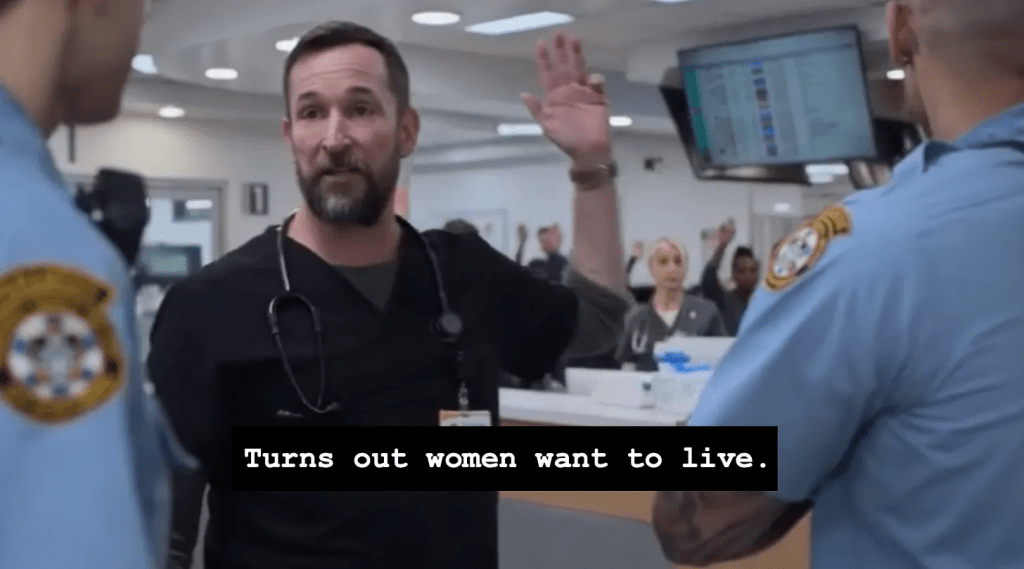
If you’ve been watching The Pitt Season 2, you may have caught one of the most medically important scenes on television this year. (Alert: small spoiler from last week’s episode coming!)
A woman arrives at the ER by ambulance, clutching her chest, complaining of pain. Her EKG comes back looking normal. Doctors are puzzled. Then her heart stops.
Dr. Robby, played by Noah Wyle, figures out what happened: the paramedics placed her EKG leads too low on her chest, and far too low to get an accurate reading, missing her heart attack. Later, he confronts the paramedics directly. They felt uncomfortable moving her breasts to place the leads correctly. He turns to his staff and asks: “Shall we put it to a vote? Ladies in the room—show of hands—death with modesty, or life with brief nudity?”
The vote from the women is clear: they want to live.
It’s a fictional scene (and in real life, public chastisement is certainly not the way to correct medical staff), but it highlights a very real problem we see every day.
Women are less likely to receive bystander CPR.
If someone collapsed at a restaurant, would you start CPR? It turns out that for many people, the answer depends on the sex of the person who collapsed: women are less likely than men to receive CPR from a bystander (a nonmedical professional who is nearby) in public, and they are less likely to receive defibrillation (shocks that can restart the heart).
A Duke University study of more than 309,000 cardiac arrests found that women who had a cardiac arrest in public were 14% less likely to receive bystander CPR than men. This is true around the world, too.
And women are less likely to survive. Chest compressions and shocks in those first few minutes are critical, and bystander CPR can double to triple the chance of survival.
Why are women less likely to receive CPR? The same reasons The Pitt depicted.
Researchers have asked the public why they think this happens, and the answers are striking:
Concerns about touching a woman’s chest to provide compressions.
Concerns about accusations of sexual assault.
Fear of causing injury to women, in part due to perceptions they are more frail.
Gender stereotypes that women are emotional or overreactive to symptoms.
Misperceptions that women are unlikely to experience true cardiac arrest.
While these fears may be common, actual cases of lawsuits against bystanders performing CPR are not—and Good Samaritan laws protect individuals genuinely trying to help in medical emergencies.
A 2020 review of CPR lawsuits in the U.S. found the vast majority of lawsuits were related to withholding CPR (not providing it). Lawsuits alleging harm from CPR were extremely rare (only 3 out of 170 cases), and all took place in medical facilities (not bystander CPR). The review found zero cases where a layperson was found liable for harm by providing CPR.
When should CPR be provided?
If someone is unresponsive and not breathing (or only gasping), start CPR. The basics are simple, and anyone can do it. Here’s a quick refresher:
Call 911 immediately (or have someone else call while you start CPR).
Push hard and fast in the center of the chest: press 2 inches deep to the beat of “Stayin’ Alive” (or any other song with a beat of 100-120 per minute). Let the chest return to its normal position between each compression.
Don’t stop until emergency services arrive. CPR is a WORKOUT. If you get tired (which is normal), try to switch out with someone.
Use an automated external defibrillator (AED) as soon as one is available. Follow the voice prompts, it walks you through where to place the pads and when a shock is needed.
Common questions and misconceptions about CPR
(Note: this is for the general public, if you are health care provider, different guidance will apply.)
Do I need to check a pulse?Nope! It turns out most people are pretty bad at this. Instead, if someone is not responsive and not breathing (or only gasping), assume their heart has stopped and start compressions.
Do I need to provide rescue breaths (mouth-to-mouth)?If it’s a teen or adult, for most cases the answer is no.Chest compressions alone (“hands only CPR”) can be just as effective. While rescue breaths are important in cases of drowning, suspected overdose, and for children, in most other situations chest compressions alone is enough!
Do I need to remove clothing to start chest compressions? Nope! The priority is starting compressions as soon as possible. If you find something they are wearing is getting in the way, then don’t hesitate to remove it, but otherwise you can do compressions on top of clothing.
Do I need to remove clothing to use the defibrillator (AED)?Yes—the pads for a defibrillator should be placed directly on the skin. Place them where the stickers show they should go, and reposition or remove any clothing that is in the way. (This may include a bra!) Metal in bras is not an issue for shocks—you can leave it on as long as it’s not in the way of the pads.
What if we’re in public and other people might feel awkward from exposure of a woman’s chest? Do it anyway.Remember, the alternative is letting the woman die. Other people’s potential opinions or discomfort should not be weighed as more important than a woman’s life.
What if they appear frail and I might injure them? Start compressions anyway. You can’t get more injured than dead—which is what a cardiac arrest is. Broken ribs are common in CPR (for both male and female patients), but people can heal from those. They can’t heal from a heart that stops beating and isn’t restarted.
If I haven’t taken a CPR course, should I still provide CPR? Yes! Any chest compressions—even imperfect ones—are far better than no compressions. If you’d like to take a course, find one at redcross.org or heart.org.
Bottom line
Women are less likely to receive CPR, less likely to be defibrillated, and less likely to survive cardiac arrest. The first few minutes after a cardiac arrest are the most critical, and CPR from someone like you significantly improves chance of survival. If someone isn’t responding and isn’t breathing, start chest compressions. Even if it’s a woman.
Love, KP
Thank you to Dr. Sarah Perman, emergency physician and cardiac arrest researcher, for reviewing this post!
Kristen Panthagani, MD, PhD, is completing a combined emergency medicine residency and research fellowship focusing on health literacy and communication. In her free time, she is a contributing writer for Your Local Epidemiologist and creator of the newsletters You Can Know Things and The Public Health Roundup. Views expressed belong to KP, not her employer.
Your Local Epidemiologist (YLE) is founded and operated by Dr. Katelyn Jetelina, MPH PhD—an epidemiologist, wife, and mom of two little girls. YLE reaches over 450,000 people in over 132 countries with one goal: “Translate” the ever-evolving public health science so that people will be well-equipped to make evidence-based decisions. This newsletter is free to everyone, thanks to the generous support of fellow YLE community members. (snip)