His wife joins him during this dance.
Joy
His wife joins him during this dance.

His wife joins him during this dance.
I like at the end where he calls maga a weak pity party and mocks them for their fake outrage and hurt feelings when others do what they themselves celebrate doing. The fact that tRump and right wing media claim that no one understood any of the words because they were in spanish is clearly false. This is what droveStephen Miller totally racist and insane in his teen years in school that people were talking in a language he couldn’t understand. He made no effort to learn it instead screamed at others to accommodate him by speaking english he so he could understand.
I often tell of the time I was in Germany. I tried hard to learn German but I just couldn’t for some reason. But I did try. I would be out with friends and they would go into a shop and try to order only to come out angry the Germans wouldn’t speak english to them. I would go into the same shops and in broken slaughtered German with lots of pointing try to order and the Germans there would switch to english for me. I asked a German friend why that was. He laughed and explained that it was because the other guys had an attitude that Germans had to speak english to them in Germany. It was disrespectful to the country and to the people. My friend told me that when I attempted to talk to German people I attempted to use their language even though I did it really badly and they found that respectful. They liked it that I tried. I don’t see why it is so bad to speak spanish. Heck I wish I could. I admire people who can speak different languages. But tRump and the maga want a white ethnostate that is just everything they like and nothing else. Hugs
Friday and Saturday. Enjoy while taking a break from the big game, or just enjoy whenever!
===
http://youtube.com/post/UgkxYHx582PD9x35cjaAklWR1b99_pZOTHRm?si=eq76y1PWoI8ySXkx
WeRateDogs 1 day ago Javier, our CEO, wanted to check in with everybody. He hopes you’re doing alright. If not, you’re welcome to take a few deep breaths with him and think of something you’re looking forward to. Javi is looking forward to the Bad Bunny halftime show ❤️

http://youtube.com/post/UgkxIK9nsJmpxmiip5xhUxcnR-XGOkU2NcCX?si=atK_jV3EhVi8dcPO
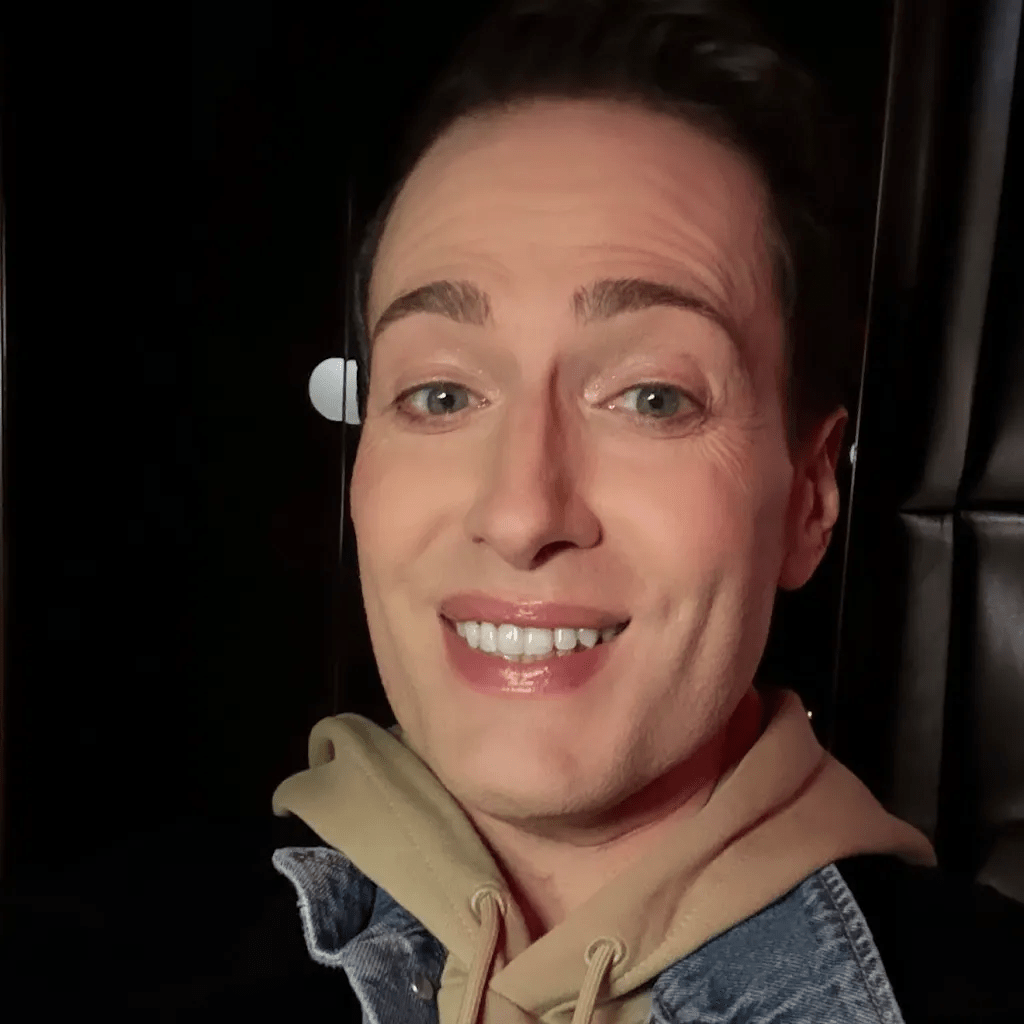
Randy Rainbow6 days ago Punxsutawney Phil saw his shadow, predicting new videos coming this month… 💌🎶💖
http://youtube.com/post/UgkxmbD6u_T-UhBr1nwyqHjmqIWfPeVpavN2?si=Mymur9qFx0pA_6W6

http://youtube.com/post/UgkxpQ37vRwpotd2SoNyrV2HG4KLmx9EEQ0-?si=q8RF6NfuiNw0t99K
===
Dance Party!
And a simple quote:
“Dogs smell time. The past is underfoot; the odors of yesterday have come to rest on the ground.”
Alexandra Horowitz
From The Root. This ended up being a really long post, especially for me. But as I posted the music, each is so good I couldn’t stop or omit, as you’ll see while you scroll through to look.
This February, we’re listening to these soul, R&B and hip-hop hits by some of our favorite Black artists.
By Angela Johnson, Phenix S Halley
There’s no better time for music with a message than Black History Month! Black artists have channeled their pain, frustration and hope into their music for decades. And whether they’re telling us to say it loud, fight the power or f**** the police, their songs make powerful statements, inspiring us to stand up for what we believe in and look forward to better days ahead.
As we celebrate Black History Month, we’ve rounded up some of the songs we’ve got on repeat.
James Brown’s 1968 hit “Say it Loud (I’m Black and I’m Proud)“ was recorded four months after Dr. Martin Luther King Jr.’s assassination and quickly became an anthem of the Black Power Movement. People still love the positive message of Black pride and dope beat today, which is probably why it’s been sampled over 250 times.
After dropping hits like “I Heard it Through the Grapevine” and “Ain’t Nothing Like the Real Thing” in the late 1960s, Marvin Gaye took his sound in a completely new direction with his 1971 album “What’s Going On.” The song “Inner City Blues” painted a vivid picture of life in America’s inner cities at the time and is still relevant today.
Before Public Enemy told us to “Fight the Power,” there was Grandmaster Flash and the Furious Five’s “The Message.” While most hip-hop hits at the time talked about partying, this 1982 track kept it real about life in the streets.
A song written for Spike Lee’s “Do the Right Thing” soundtrack, Public Enemy’s “Fight the Power,” called for people to stand up to racial inequality and injustice. It was a huge success, climbing to number one on Billboard’s Hot Rap Singles and 20 on the Hot R&B chart. Rolling Stone named it number two on its 500 Greatest Songs of All Time.
“You will not be able to stay home, brother. You will not be able to plug in, turn on and cop out,” Gil Scott-Heron warns us in “The Revolution Will Not Be Televised.” The 1971 poem is a call to action for Black people, telling them that rather than waiting for corporations and the media to save us from injustice, we’ll have to save ourselves.
India.Arie’s 2006 single “I Am Not My Hair” is a love letter to Black hair in all its forms. She tells her audience not to allow themselves to be defined by Eurocentric standards of beauty but to feel comfortable in the skin they’re in.
“I am not my hair,
I am not this skin,
I am a soul that lives within,” she sings.
Common and John Legend joined forces on 2015’s “Glory,” a song for the soundtrack of the movie “Selma.” The song, with lyrics that are hopeful of better days, won the pair a GRAMMY and an Academy Award for their performance.
Without a doubt, McFadden & Whitehead’s “Ain’t No Stopping Us Now” is a classic disco song that makes you want to dance. But the 1979 hit is also putting the rest of the world on notice that “We’re on the move.”
In “Don’t Touch My Hair” Solange Knowles is putting folks on notice that Black hair is a source of our strength. It is our crown, and it is not to be touched.

Compton rappers N.W.A. call out racial disparities in policing in their 1988 hit, “F* the Police.” Although the song is over 25 years old, unfortunately, the message still resonates. After the 2020 murder of George Floyd at the hands of a police officer, streams of the song grew 14 times according to data from last.fm.
“Hang on to the world as it spins around. Just don’t let the spin get you down, Donny Hathaway sings in “Someday We’ll All Be Free.” The song, while beautiful, did not land a spot on the charts. But it is beloved by many and has been covered by artists, including Aretha Franklin, Bobby Womack and Take 6.
Run-D.M.C.’s “Proud to Be Black” is a track from their 1986 “Raising Hell” album and a dope declaration of self-love.
It’s hard not to be moved when you hear Sam Cooke’s “A Change is Gonna Come.” He was inspired to write the 1964 song that looks forward to a world without discrimination and hate after being denied access to a white-only hotel in Louisiana and hearing Bob Dylan’s protest song “Blowing in the Wind.”
In “Walking,” gospel duo Mary Mary reminds us that even when times are hard, when you are walking with God, you’re never alone.
KRS One lets us know what we’re being taught in school leaves out a whole lot of important Black history in the 1989 hip-hop hit “You Must Learn.”
Legendary female rapper Queen Latifah spoke out against disrespect and called on everyone to give Black women the appreciation they deserve in her 1993 hit, “U.N.I.T.Y.”
Not many people can make Beethoven sound hot. But Nas flipped “Für Elise” into a positive affirmation record, letting kids know they can do anything they set their minds to on his 2002 hit song “I Can.”
While James Brown and Nina Simone songs were part of the soundtrack of the Civil Rights Movement, Kendrick Lamar’s “Alright” was one of the songs that defined the Black Lives Matter Movement.
Written by the legendary Curtis Mayfield, the Impressions “People Get Ready” is as much gospel as it is soul. The song offers hope in the afterlife for people living with injustice and discrimination.
Chelsea with some pointers:
And for no particular reason but that I ran across it; I guess it’s a Corgi thing:
And a protest video:
Do you have a secret you can’t tell anyone. As a 12 year old I had to please my drunk adopting mother because she promised to tell me about my real father if I did. She did not. I had secrets I could not tell anyone.
As anyone can imagine I spent most of my time either out of the house and away from danger or when I got one at 7 or 8 years old in my room listening for the sounds of footsteps and angry voice coming closer to me. Hugs
This last one I played so often to drive my demon thoughts out and to ask the question in my mind there was no answer to. When I cried why … well I know why, small town politics, fear of my adopting father, not wealthy but a man of great strength and fighting skill. No one wanted to cross him. Maybe some day I will find the answer. Or at least peace. Hugs
Sorry for this post. I was really doing well today. But the last hour everything crashed in on me. In Star Trek The next Generation Data the unfeeling android has an off switch hidden but for those that know where it is he can simply be turned off. Right now I want to turn off. Where is my hidden switch that will keeps these damn intrusive thoughts and memories turned off. Anyway I was going to make baked ziti for supper but I picked up three pounds of ground chuck and will use a pound to make sloppy joes instead. Hugs
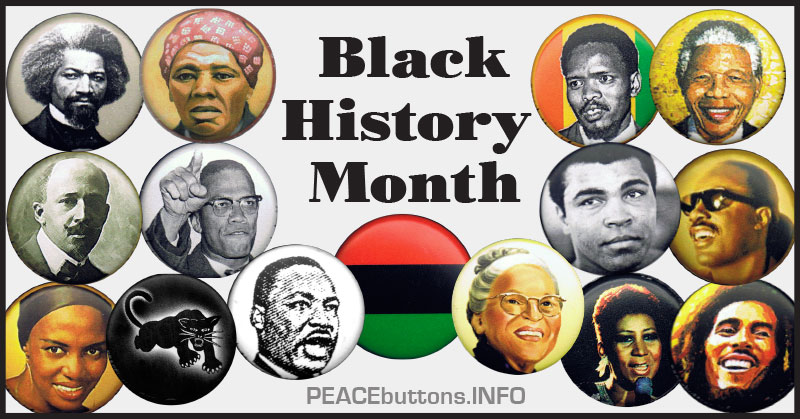
So far, it’s not illegal for us to acknowledge that February is Black History Month, so here we are, doing just that. Ha! There is even some Black History for this very date in Peace and Justice History:
February 1, 1960 Greensboro first day: Ezell A. Blair, Jr. (now Jibreel Khazan), Franklin E. McCain, Joseph A. McNeil, and David L. Richmond leave the Woolworth store after the first sit-in on February 1, 1960. Four black college students sat down at the Woolworth’s lunch counter in Greensboro, North Carolina, and were refused service because of their race. To protest the segregation of the eating facilities, they remained and sat-in at the lunch counter until the store closed. Four students returned the next day, and the same thing happened. Similar protests subsequently took place all over the South and in some northern communities. By September 1961, more than 70,000 students, both white and black, had participated, with many arrested, during sit-ins.  On the second day of the Greensboro sit-in, Joseph A. McNeil and Franklin E. McCain are joined by William Smith and Clarence Henderson at the Woolworth lunch counter in Greensboro, North Carolina. “Segregation makes me feel that I’m unwanted,” Joseph McNeil, one of the four, said later in an interview, “I don’t want my children exposed to it.“ Listen to Franklin McCain’s account of what happened |
| February 1, 1961 On the first anniversary of the Greensboro sit-in, there were demonstrations all across the south, including a Nashville movie theater desegregation campaign (which sparked similar tactics in 10 other cities). Nine students were arrested at a lunch counter in Rock Hill, South Carolina, and chose to take 30 days hard labor on a road gang. The next week, four other students repeated the sit-in, also chose jail. |
In light of current events, I thought it’d be good to review how Black History Month came to be. Below is a bit on its beginnings.
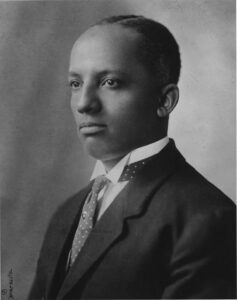
Black History Month was first observed as Negro History Week in February 1926, but the inspiration for the commemoration began over a decade earlier through a steady stream of electrifying events, discoveries, and other celebrations of Black excellence. In 1915, American historian Dr. Carter G. Woodson attended the national celebration of the fiftieth anniversary of emancipation in Washington D.C. This event was widely attended and proved to be profoundly inspiring for Dr. Woodson who, later that year, joined forces with A. L. Jackson, William B. Hartgrove, George Cleveland Hall, and James E. Stamps to establish the Association for the Study of Negro Life and History, known today as the Association for the Study of African American Life and History (ASALH 2024). ASALH had the ambitious goal of educating the public about the achievements, inventions, and progress made by Black Americans, and though the Association’s intellectual efforts were remarkable – they began to publish The Journal of Negro History in 1916 and founded Negro History and Literature Week in 1924 – Dr. Woodson had a wider vision of his mission. Wishing to continue to discover and celebrate the history of the Black past, Dr. Woodson announced the celebration of Negro History Week through a press release.
Accounts of the contributions of Black Americans were notably absent from history books, credited to white men, or omitted altogether. Progressive communities and schools were ripe for the rich history that Negro History Week offered. Matching the popularity of the week, Woodson and the Association established an annual theme for the celebration to guide and inspire educators. Weary of those simply wishing to capitalize on a popular event, “Woodson warned teachers not to invite speakers who had less knowledge than the students themselves” (ASALH 2024). Additionally, ASALH expanded their offerings to provide study materials: pictures, lessons for teachers, plays for historical performances, and posters of important dates and people. This cemented the celebration of Black history in schools and communities, and Negro History Week grew in popularity throughout the following decades, with mayors across the United States endorsing it as a holiday.
Negro History Week grew into Black History Month in 1970 under the leadership of Black educators and students at Kent State University and would become a federally recognized event six years later. President Gerald Ford recognized Black History Month in 1976 during the celebration of the United States Bicentennial. He urged Americans to “seize the opportunity to honor the too-often neglected accomplishments of Black Americans in every area of endeavor throughout our history” (Franklin 2022). Today, nearly one hundred years after that initial celebration, it is prudent to reflect on the designed purpose of Black History Month and discover that after all this time, these lessons are still relevant, inspiring, and necessary. As Dr. Woodson said, “Real education means to inspire people to live more abundantly, to learn to begin with life as they find it and make it better” (Woodson 1933).
Pictured: Dr. Carter G. Woodson, The “father of Black history”
Photo Credit: Addison Norton Scurlock, Public domain, via Wikimedia Commons
Bibliography
ASALH. 2024. The Founders of Black History Month: The Origins of Black History Month. December 18. Accessed January 16, 2025. asalh.org/about-us/origins-of-black-history-month/.
ASALH. 2024. Carter G. Woodson Timeline: ASALH – the Founders of Black History Month. December 19. Accessed January 16, 2025. asalh.org/carter-g-woodson-timeline/.
Franklin, Jonathan. 2022. Here’s the Story behind Black History Month – and Why It’s Celebrated in February. February 1. Accessed January 16, 2025. www.npr.org/2022/02/01/1075623826/why-is-february-black-history-month.
Woodson, Carter G. 1933. The Mis-Education of the Negro. Trenton: Africa World Press.
==========
All right! So, we see that Black History Week then Month has been around for at least 20 years longer than our current POTUS, who seems to be ignoring the month’s existence. But, there’s no reason any of the rest of we the people have to! Including all history makes the US so much richer in knowledge. Most local historical and cultural organizations are going to have commemorations this month. What fun it will be, and how community-unifying for each of us to find an activity near us, and join in!
Hello Everyone, and Hello to you, Scottie!
A bit ago, Scottie – you put out a post titled “I have struggled all day”. In that post, you included two songs, and for those who have been on this blog for a while we do recognize Terry Jacks.
Music is a huge part of my life. I sing like a water buffalo with laryngitis, but I love music. It works to lift me up when I’m down, it reminds me of special people and special times in my life, it brings me peace, and sometimes it allows me to be angry. Music can sing to a person’t soul, lighten one’s load. It allows me to cry when I need to cry, to hope when hope seems gone. It reminds me that I’m not alone.
So, I have three songs here. Two are just a bit tongue-in-cheek, but the last is very special to me. I sent you this song, Scottie, a long time ago. It is my favorite cover of that song.
My challenge and my ask to everyone is to please add in the comments the songs that you love, that feed your heart and soul. Songs that make you smile, make you cry, make you dance or sing in a crowded grocery store because you just can’t not sing or dance when you hear it. Because like the last song says so clearly: we are all in this together, whether we want to be or not. 🙂
I love you, my brother!
Randy
Careful. That one gets in your ear and you can’t get it out.
That one for my big brother, who I do my best to irritate – as all brothers should.
And finally, this one, to remind to remind my very wonderful brother and all of us that no matter how much we may feel alone, we are not. We are loved – first we need to remember that we have to love ourselves no matter how we are feeling (easier said, I know). But, we also have to remember that there are people who rely on us, who hope in us, who see our mangled spirit and troubled mind as a life-line in cold dark seas and really think we are something grand even when we don’t.
So, Again Everyone… please let me know the songs that are special to you, and perhaps even why they are special. Music is the magic. Randy
 Scottie's Playtime