
Category: Police / Law Enforcement / ICE
Republicans Can’t Help Themselves Going Into The Midterms | Heather ‘Digby’ Parton | TMR
Share this:
A couple The Majority Report clips about the ICE NY City shooting
Notice in both videos that the ICE / DHS agents were not wearing IVE / police vests or clothing, they were dressed as workmen with masks. The target was not doing anything wrong or speeding simply driving through this area full of kids when he passed the ICE people at least one opened fire with an illegally modified AR-15 rifle. All the ICE people had rifles maybe the same kind. Not the kind of weapon used normally by police. They refused to identify themselves to people in authority nor would they show ID. They were threatening the bystanders with their rifles. The were entering buildings illegally and pretending to be police and when questioned by people in authority, they left without identifying themselves and wet to try to get in other buildings. They were deliberatly trying to destroy evidence including take or erase any video that was captured by home cameras. There is more in each video. These ICE masked thugs are an illegal ational police force out of control who do not follow any rules or laws responsible to no authority but the White House meaning Stephen Miller spacifically. They are acting like the personal Gestopo / SS / Brownshirts of the tRump white house. Hugs
Share this:
News I want to share. 10-9-2026
Share this:
News I want to share. 10-7-2026
Share this:
Some interesting The Majority Report clips.
Share this:
News I want to share. 10-3-2026
“Put simply, Patel responded to The Atlantic’s questions about the FBI’s election investigations by referring to a graphic that appeared on an unrelated news story on another media company’s website” https://t.co/W1I6huX9SF
— Jonathan Lemire (@JonLemire) October 2, 2026
Erick Erickson: "I do think they're going to lose Ohio … the polling in Ohio for the GOP is pretty bleak. You have the white nationalists who don't want to support Vivek Ramaswamy for governor. You have the Max Miller situation that is actually dragging down the ticket." pic.twitter.com/JeFSVNsgUY
— Aaron Rupar (@atrupar) October 1, 2026
DOJ sues Maryland over state, county federal agent mask bans https://www.upi.com/Top_News/US/2026/10/02/DOJ-sues-Maryland-mask-ban/3451790927145/
— Natalie Davis (@nataliedavis.journa.host.ap.brid.gy) 2026-10-02T08:52:24.000Z
Share this:
News I want to share. 10-2-2026
BREAKING: Defense Secretary Pete Hegseth is set to announce a 20 percent cut to slots slated for admirals and generals at the Pentagon as part of his push to overhaul the outlook of the department, a Pentagon official confirmed to The Hill.
— The Hill (@thehill.com) 2026-09-29T15:15:21.424Z
U.S. forces are set to depart from bases in Iraq following two decades of American involvement that resulted in the deaths of hundreds of thousands of Iraqi civilians and thousands of U.S. troops, and now leaves Iran at the center of the region’s future.
— The Washington Post (@washingtonpost.com) 2026-09-30T09:00:08.619663248Z
🚨 BOOM! SecWar Pete Hegseth just dropped this line: "No fatties, no trannies, no beardos, no weirdos, no wimps, no radicals — just warriors!"
— Eric Daugherty (@EricLDaugh) September 30, 2026
"Just tough, ready, committed troops. The War Department is colorblind, gender-neutral, and merit-based. Or, as the President likes to… pic.twitter.com/1Ko5nHTwmZ
Hegseth: "Today, at my direction, I'm establishing the Office of Religious Affairs. It will report straight to the top — a direct line to the secretary … as Psalm 33:12 extolls us, blessed is the nation in which God is the Lord" pic.twitter.com/YutqQAsqB3
— Aaron Rupar (@atrupar) September 30, 2026
Hegseth: "Enter a new core of cadets. To meet this critical need we are partnering with a new crop of premier higher ed institutions, including LSU, Liberty University, Tuskegee University, Mississippi State University, and Hillsdale College." pic.twitter.com/SsPiFlYqyI
— Aaron Rupar (@atrupar) September 30, 2026
Hegseth: "We need students of western civilization and the pillars of our republic. Leaders who understand the faith of Jerusalem, the philosophy of anthems — Athens. The power of Rome, and the freedom of Philadelphia circa 1776." pic.twitter.com/wA3kEsLDnF
— Aaron Rupar (@atrupar) September 30, 2026
Hegseth: "Project Meridian will be co-led by three of our nation's best minds: Elon Musk, Palmer Luckey, and Newt Gingrich" pic.twitter.com/T0j9BcoOkM
— Aaron Rupar (@atrupar) September 30, 2026
Hegseth: "A free press is of course important, but partisan activism that intentionally smears the troops and the historic mission that they are undertaking is fundamentally anti-American. It's sick. It's a national betrayal. It's treason." pic.twitter.com/2WrXZEhs9C
— Aaron Rupar (@atrupar) September 30, 2026
Trump is sending 10,000 more troops to the Middle East and has told aides he expects to resume bombing Iran by late November.
— Matt Novak (@paleofuture.bsky.social) 2026-10-01T18:01:23.694Z
How the Pentagon Is Escalating Trump’s Drug War in Latin America – By Shelby Holliday, Vera Bergengruen and Lara Seligman (The Wall Street Journal).- Gen. Francis Donovan shared exclusive new details on the use of high-tech drones in the jungle, says U.S.-assisted land strikes are an option
— Juan Calderon (@juancalmer.bsky.social) 2026-09-30T15:54:42.818Z
📺 Trump’s White House Agrees His ‘Midterm Ads’ Are Illegal. They’re Doing It Anyway#Trump
— TrumpWatch (@trumpwatch.skyfleet.blue) 2026-09-30T11:56:03.380Z
Jamie Raskin calls out the shitty ads as a crime (this was cited by CNN and other stories). This is the kind of Xitter post that I beg of @raskin.house.gov or other MoCs to cross-post over here — not least bc more people over here are likely to magnify it.
— emptywheel (@emptywheel.bsky.social) 2026-09-29T10:58:11.965Z
Tho I actually like this post better.IMO, one smart response to these ads is to taunt GOP MoCs that Trump is still sitting on mountains of $$ and instead using taxpayer dollars to remind voters what a corrupt asshole he is.
— emptywheel (@emptywheel.bsky.social) 2026-09-29T10:59:38.595Z
“Knowingly and willfully spending or obligating federal funds in violation of congressional appropriations limits can constitute a criminal violation of the Antideficiency Act" 31 U.S.C. § 1350. Does accepting those funds knowing expose MS NOW and CNN to possible criminal liability? #holdfast
— The Steady State (@thesteadystate.org) 2026-10-01T18:27:46.041Z
RFK Jr. says AI can offer patients “a second opinion that is much better informed than any doctor in the country” and has the power to “free us from medical tyranny.”He spoke at an industry-backed MAHA Summit, whose sponsors included AI companies.www.nytimes.com/2026/09/29/h…
— Sheryl Gay Stolberg (@sherylnyt.bsky.social) 2026-09-30T00:10:51.011Z
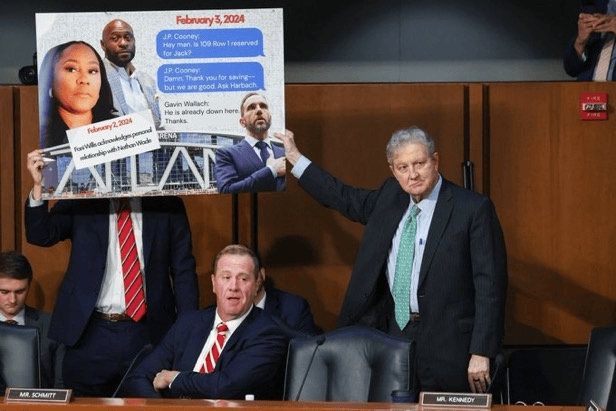
🤡 Schmitt beclowns himself 🤡Schmitt concocted an elaborate conspiracy theory that Smith traveled to Atl for a Hawks game and to collude with Fani Willis, & flashed his "evidence" before accusing Smith of perjury. There's just one problem — his facts were totally wrong.Here's the whole sequence:
— Aaron Rupar (@atrupar.com) 2026-09-29T15:07:47.311Z
A phenomenal moment in the Senate.
— Sahil Kapur (@sahilkapur) September 29, 2026
Eric Schmitt, R-Mo., claims he has evidence Jack Smith went to a HAWKS game in Atlanta.
Smith denies it.
Schmitt declares he has busted Jack Smith for perjury.
Smith, vexed, says he went to HAWKEYES game in Maryland.
Watch the whole thing: pic.twitter.com/J07o5Uwfxi


this gaffe should follow Eric Schmitt around for the rest of his political life
— Aaron Rupar (@atrupar) September 29, 2026
(Jack Smith was actually in Maryland at a HAWKEYES game, not in Atlanta colluding with Fani Willis as Schmitt alleged)
(Win McNamee/Getty) pic.twitter.com/f2ZYMdq1X9
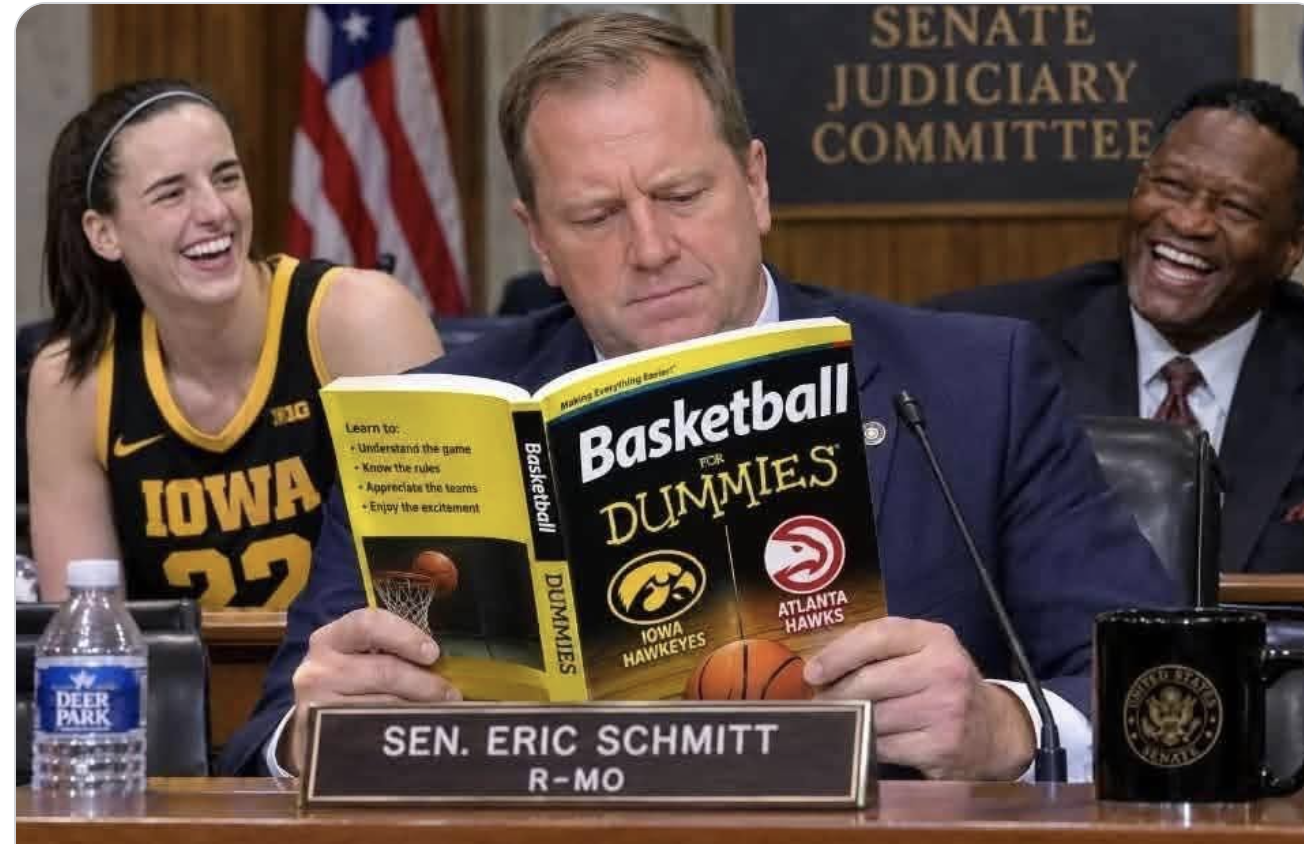
This is priceless.
— Christopher Webb (@cwebbonline) September 30, 2026
Check out how local news is reporting on Sen Eric Schmidt’s clown-show grilling of Jack Smith.
They found Jack Smith at the game…
“Top corner, section 109, row 1. In fact, that seat doesn’t even exist in Atlanta.” pic.twitter.com/CDyPrKkNgQ
The internet is erupting in mockery after Eric Schmitt’s spectacular Jack Smith faceplant.
— MeidasTouch (@MeidasTouch) September 29, 2026
Now people are openly speculating: Did his team plant the glowing 2028 story AND coordinate with MAGA influencers in advance, expecting a victory lap that blew up in their faces?…
The exact moment I knew Republican attacks on Jack Smith were a colossal mistake: pic.twitter.com/6GrqRSwpJw
— Senator Adam Schiff (@SenAdamSchiff) September 30, 2026
Posted and…deleted. Atta boy @seanhannity. You’re such a tool. pic.twitter.com/nzyNH9fbFd
— Joe Walsh (@WalshFreedom) September 29, 2026
In a bid to frame Jack Smith as a liar, Sen. Schmitt (R-Missouri) accused the former special counsel of perjuring himself after he denied attending an Atlanta Hawks game on Feb. 3, 2024.
— The Washington Post (@washingtonpost) September 29, 2026
Smith had attended an University of Iowa Hawkeyes game that day. https://t.co/FYfGt4TOo7 pic.twitter.com/Q3KGi2UFar
Jack Smith: “it’s inconceivable to me how you can pardon people who beat police officers… and then vilify the officers”
— Scott MacFarlane (@MacFarlaneNews) September 29, 2026
It appears @bennyjohnson has now deleted his X post where he clearly pre-composed a post about Sen. Schmitt getting Jack Smith to perjure himself. Genuinely crazy how many big accts on this website appear to be coordinating with Republican politicians behind the scenes.
— Isaac Saul (@Ike_Saul) September 29, 2026
Oh man the influencer instruction emails went out BEFORE the testimony 😂☠️ pic.twitter.com/oPR9pS0gIn
— Emily Zanotti 🦝 (@emzanotti) September 29, 2026
Here's footage of Jack Smith at the Iowa vs. Maryland game on February 3rd, 2024 btw pic.twitter.com/yItxkEbbTz
— MeidasTouch (@MeidasTouch) September 29, 2026
Truly bizarre and weird to keep this going when it was called out as incorrect in real time. https://t.co/3NZC4lx2ww
— Andrew Kaczynski (@KFILE) September 29, 2026
Even the leader of Britain knows… https://t.co/EJzfjmo0Yq
— Janice Hough (@leftcoastbabe) September 29, 2026
Schmitt: Who knew jack Smith was a Caitlin Clark fan? We had information he was at a basketball game. There was only one NBA game that night which is why I asked him if he was in Atlanta. He answered the question. That's what these hearings are for. You ask questions, you get… pic.twitter.com/FKwdbvierp
— Acyn (@Acyn) September 30, 2026
Shameless is Trump’s superpower. Schmitt is like one of those knock-off cosplaying Batman guys Heath Ledger’s Joker slaps around. pic.twitter.com/O6eHdSMO6b
— Jonah Goldberg (@JonahDispatch) September 30, 2026
Hey Senator @Eric_Schmitt — I love Caitlin Clark but never saw her or Jack Smith at an Atlanta Hawks game.
— Fani T. Willis (@FaniforDA) September 30, 2026
NEW: Eric Schmitt says he did not mix up the Atlanta Hawks and Iowa Hawkeyes.
— Front Office Sports (@FOS) September 30, 2026
"There was no confusion between Hawkeyes and Hawk," the Republican senator told FOS after his questioning of Jack Smith went viral as he believed he was about to catch Smith perjuring himself.
Every single MAGA legislator in that hearing today predicted Jack Smith would plead the 5th. Not only did Jack Smith not plead the 5th, he answered every question, and he wiped the floor with that sleazy motherfucker Ted Cruz
— Liam Nissan™ (@theliamnissan) September 29, 2026
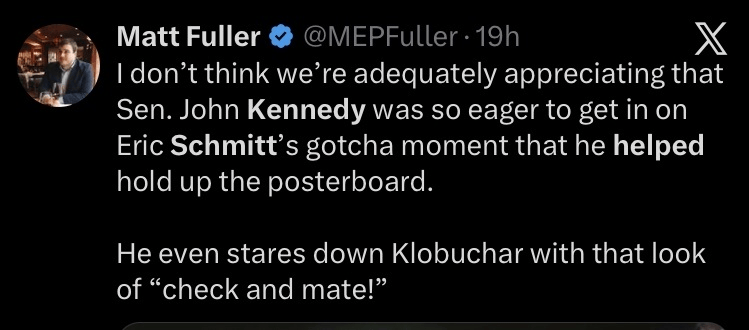
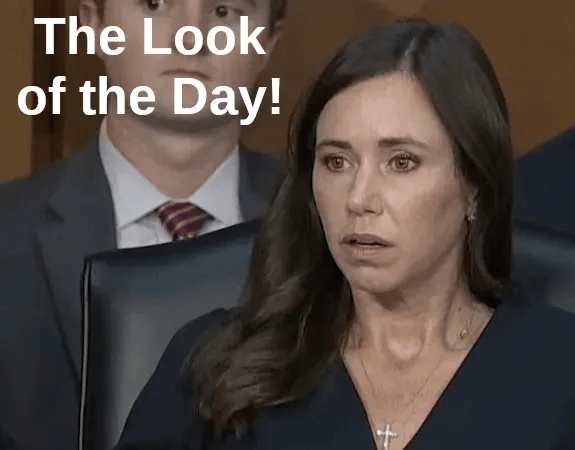
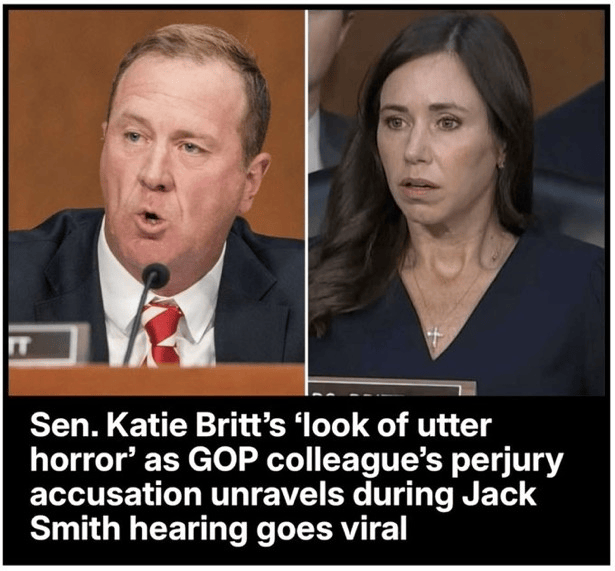
Sen. Katie Britt — a former congressional staffer herself — knew she was watching a mythical staff fuck up.
— Matt Fuller (@MEPFuller) September 29, 2026
The type of fuck up that interns will hear about as a cautionary tale on their first day of work on June 1, 2047. https://t.co/Ke7B9CQXJ6
Before calling someone a “dirtbag,” the Senator should have had his facts straight. An apology is in order.
— Senator Amy Klobuchar (@SenAmyKlobuchar) September 29, 2026
Glad one of us knew the difference between the Atlanta Hawks and the Iowa Hawkeyes! pic.twitter.com/2WrNH78HKk
Eric Schmitt is on The Charlie Kirk Show (yes it's still called that) — and believe it or not, hosts are pretending he owned Jack Smith with his embarrassingly botched gotcha
— Aaron Rupar (@atrupar) September 29, 2026
"You caught him in this NBA game too in Atlanta"
"Yeah," Schmitt replies
There's no mention at any… pic.twitter.com/PLJ1Ohxwh3
Ethan Harper, the aide holding up the poster falsely accusing Jack Smith of colluding with Fani Willis, graduated from Harvard Law School https://t.co/qERx9snxCg https://t.co/S5q9HNIj7V pic.twitter.com/4YzmaeChb6
— Bad Fox Graphics (@BadFoxGraphics) September 30, 2026
If anyone wants to know how the outrage machine gets fired up:
— Jim Lokay (@Lokay) September 29, 2026
1. Schmitt plans to drop “bombshell”
2. Someone plants story that Schmitt is a Vance VP contender
3. Right-wing Twittersphere gets Schmitt talking points
4. Schmitt steps in it
5. Scheduled tweets go out anyway https://t.co/JGwTDzrP37
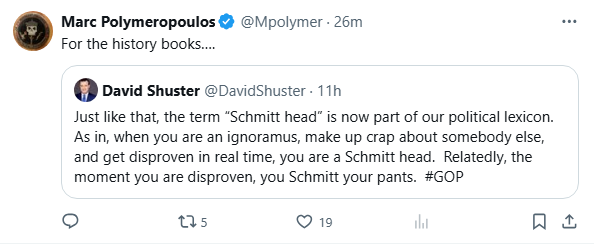
Rep. Jim Baird (R-Indiana), who expensed more for lodging and meals than any other House member in each of the past two years, including $39,789 in 2025, did not respond to multiple attempts to speak with him. Neither did Rep. Abraham Hamadeh (R-Arizona), a first-term member who was the second-biggest spender last year with $39,131.
House members’ expenses surge in program that doesn’t require receipts
— Freedom Writers Collaborative (@fwcollaborative.bsky.social) 2026-09-30T09:27:06Z
Hope Florida led people with disabilities to dead ends as state misused $10M https://t.co/DAJTiQbfVL
— Miami Herald (@MiamiHerald) September 28, 2026
To manage the Hope Florida initiative, DCF moved workers away from administering Medicaid and food assistance. The staff left behind are less trained and poorly paid, and the DCF department is now failing by nearly every federal measure. #DefendDemocracy https://t.co/jp9bkCH9Zh
— Florida Center for Government Accountability (@FLCTRGA) September 28, 2026
Now @AshleyMoodyFL. Why would I want to abolish the police when I want you arrested and in jail for stealing $10 million from sick kids? BFFR
— State Rep. Angie Nixon (@AngieNixon) September 28, 2026
Ken Paxton is a corrupt con man who has used his office to enrich himself and live a lavish lifestyle with his various mistresses at taxpayer expense. pic.twitter.com/DYYqzJcFsD
— Ron Filipkowski (@RonFilipkowski) October 1, 2026
South Korea Disputes Trump’s Account of a Big Alaska Investment http://www.washingtonsun.com/foreign-poli…
— Mike Walker (@newnarrative.bsky.social) 2026-10-01T18:16:50.073Z
TRUMP: I won Alaska by a lot. Do you know how many points?DAN SULLIVAN: 15, sirTRUMP: How about 22?
— Aaron Rupar (@atrupar.com) 2026-09-30T20:39:55.857Z
Trump: Dan Sullivan is a fraud, that Dan Sullivan is a disgraceful fraud. Vote for Dan S. Sullivan. S like super intelligence
— Headquarters (@headquartersnews.bsky.social) 2026-09-30T20:45:30.632Z
Judge bars U.S. Attorney Jeanine Pirro from charging ex-Olympian in Reflecting Pool case after Trump’s comments http://www.nbcnews.com/politics/jus… via @nbcnews
— 21 WFMJ (@21wfmj.bsky.social) 2026-10-01T15:23:20.765Z
Red States Just Asked the Supreme Court to Kill Abortion Shield Laws.
— Radio Free America (@handle.invalid) 2026-10-01T16:48:55.508Z
Trump says Secret Service wants him to ‘take down’ Oval Office
— Freedom Writers Collaborative (@fwcollaborative.bsky.social) 2026-10-01T16:47:58Z
DOJ is reviewing whether the special prosecutor’s office that investigated the Watergate break-in committed misconduct, according to people familiar with the matter, more than half a century after that scandal led to Nixon’s resignation. W @PhilipWegmann
— Sadie Gurman (@sgurman) October 1, 2026
https://t.co/1AuZ47w9wB
Decades After Watergate, Justice Department Reviews Whether Nixon Got a Raw DealRevisionist historian went to DOJ headquarters to present his case that former president, his associates weren’t treated fairlyFREE WSJ GIFT ARTICLE 🎁 http://www.wsj.com/us-news/law/…
— Lauren Ashley Davis (@laurenmeidasa.bsky.social) 2026-10-01T18:12:25.358Z
Next up, rethinking the conviction of Al Capone. After all, if he had his taxes treated the way Trump's have been, he'd still be a free man today. Admittedly he would be 127 years. But no criminal will go unavenged by Trump, Blanche & Co. http://www.wsj.com/us-news/law/…
— David Rothkopf (@djrothkopf.bsky.social) 2026-10-01T18:31:02.072Z
White House continues with campaign to convince people that in an age of AI-led job destruction, it is honorable and lucrative to join the ranks of Plumbers.www.wsj.com/us-news/law/…
— Karthik Sankaran (@rajakorman.bsky.social) 2026-10-01T19:17:54.183Z
Judge Dismisses Riley Gaines' Title IX Lawsuit Against NCAA
— NEWSMAX (@newsmax.com) 2026-09-30T00:43:11Z
Judges told The New York Times they presided over bloated dockets and were subjected to a flood of death threats during ICE’s January operations.https://www.washingtonsun.com/immigration/federal-judges-minnesota-against-trumps-doj
— The Washington Sun (@washingtonsun.com) 2026-09-17T22:30:02.138476456Z
Virginia pastors, we invite you to add your name and stand with us for the sanctity of life and marriage. Virginia must vote no on the abortion and marriage amendments. Please read this letter and share it widely. https://t.co/nfx1vfyuFf
— Ben Purves (@benpurves) September 27, 2026
Virginia, please read this letter before you vote. Pastors of VA, we invite you to add your name to this letter.https://t.co/i5BLJLvgKH
— Ben Purves (@benpurves) September 29, 2026
Phillip Jauregui and other religious-right leaders want to move the Supreme Court further to the right by insisting that future nominees pass their "biblical worldview" test.https://t.co/STcqskzHk9
— Right Wing Watch (@RightWingWatch) September 29, 2026
Last night Trump filed his DC Circuit appeal seeking to rename the Kennedy Center. "[W]ithout appropriate recognition [for Trump], the Kennedy Center will" continue its "race toward physical & financial ruin. The stakes are existential."https://t.co/b9BH0hRq0r pic.twitter.com/GSk0NLWI8S
— Roger Parloff (@rparloff) September 29, 2026
The ICC has condemned new US sanctions targeting its president and a senior trial lawyer, calling them “a flagrant attack” on the court's independence. The move expands a growing list of ICC officials barred from the US financial system.https://t.co/jRBfV39zBQ
— UN News (@UN_News_Centre) August 20, 2026
(NYT) With the extra money granted by the GOP in Congress, the ICE agency is trying to add 5,000 more ICE agents by the end of the year. This is to make up for their horrible vetting of many ICE agents who were not trained well and did poorly.www.nytimes.com/2026/09/29/u…
— Blue Dot in Red State (@bluedotin.bsky.social) 2026-09-29T16:44:12.462Z
The statement is a remarkable break from Trump admin
— Rachel Shin (@rachel_shin_) September 30, 2026
“in this situation, with all that’s going on and all the stuff, we probably got to step back from it and say, 'Maybe we're doing something wrong here or there,' and then adjust to that.”
read: https://t.co/rFkeGAT2u2
Trump Accounts will auto-enroll children, potentially adding 60 million accounts: Treasury
— CNBC (@cnbc.com) 2026-09-29T17:43:44.961Z
Trump on DataCenters: I'm very good at real estate. Some of those buildings are absolutely beautiful. They're big and they're, you know, big, strong, powerful buildings, but they're beautiful and they add greatly to a community pic.twitter.com/87JXU5FPeS
— Acyn (@Acyn) September 29, 2026
As MS Now has reported, FBI officials say the bureau has been placing people on the Most Wanted list whose capture is believed to be imminent. In other words, these officials tell us—they are gaming the system. One fugitive was captured in Mexico an hour and 13 minutes after… https://t.co/M1WWaLE0b1
— Ken Dilanian (@KDilanianMSNOW) September 29, 2026
47-51: Senate blocked Maryland Democratic Senator Van Hollen's resolution to require the State Dept. to report to Congress on violence in the West Bank and Israel's human rights practices. Paul was the only Republican to vote Yes & Fetterman the only Democrat to vote No. Cassidy… pic.twitter.com/Kas1ABL8nC
— Craig Caplan (@CraigCaplan) September 30, 2026
Cue Rachel Dratch and the womp-womp Debbie Downer music:G.O.P. Nominee in Texas Privately Said Trump’s Convention Hurt Him http://www.nytimes.com/2026/09/30/u…
— Tom Schaller (@schaller67.bsky.social) 2026-09-30T11:01:47.509Z
This is not good for paxton. trashing trump in a fundraiser. also trying to shift blame for his bad numbers. will be interesting to see if this gives SLF/Texas PAC the impetus to give up on their massive, $125M spend there. https://t.co/dt1Zwx9DfA
— Jake Sherman (@JakeSherman) September 30, 2026
British PM Andy Burnham has made clear that an attempt to rejoin the EU could be among the options his government considers as it eyes a fundamental shift in the country’s relationship with the bloc.
— POLITICO Europe (@politico.eu) 2026-09-30T07:08:58.323Z
Trump formally accepts defeat in $5 million E. Jean Carroll sexual abuse lawsuit
— New York Daily News (@nydailynews.com) 2026-09-29T22:19:10.837Z
"Support Builds on the Right for Prosecuting Women Who Get Abortions. ‘What is the accountability for these women?’” Of course this where the GOP is heading. The GOP is about religious fascism. Oppressing women is a big part of that. Gift link below http://www.nytimes.com/2026/06/24/u…
— Dean Obeidallah (@deanobeidallah.bsky.social) 2026-06-25T11:18:59.427Z
ANOTHER two years of gutting health care, rubberstamping Trump's war of choice, and letting prices skyrocket? https://t.co/bs3Px5Bq8f
— Congressman Dwight Evans (@RepDwightEvans) September 29, 2026
Surely the American people will be inspired with this answer! https://t.co/jPTopvquRg
— Jessica Tarlov (@JessicaTarlov) September 29, 2026
Share this:
Clips from The Majority Report
Share this:
Joe My God news stories I want to share. 9-30-2026
JUST IN: A federal judge (Trump-appointed Stephanie Gallagher) has held the Trump administration in contempt for deporting a man to El Salvador in violation of three court orders. She's ordering the government to return him. https://t.co/4AMi7SdUzc pic.twitter.com/S0bsoBeEy4
— Kyle Cheney (@kyledcheney) September 25, 2026
Americans are violating the privacy rights of the government’s surveillance devices. https://t.co/2z0rIuhnYo
— Justin Amash (@justinamash) September 25, 2026
Flock wants to shut down the Flock Surveillance Map, a detailed map of its surveillance devices. The database not only shows the scope of Flock's reach, but also its vulnerability to data leaks. Read Nikita Mazurov's article at: theintercept.com/2026/09/24/h…
— S.T.O.P.—Surveillance Technology Oversight Project (@stopspyingny.bsky.social) 2026-09-25T20:35:41.740Z
Trump allies could use midterms ‘counting window’ to disrupt results, experts warn
— The Guardian (@theguardian.com) 2026-09-27T10:19:57.237Z
As I told @baylisswagner of the @nytimes here, this could be an impeachable offense. @POTUS has no right to use taxpayer money for campaign ads.
— Richard W. Painter (@RWPUSA) September 27, 2026
Congress has expressly prohibited government sponsored political propaganda, which is dangerous for democracy.https://t.co/EIlOeAwJWI
New: The Trump administration has spent more than $1M in public funds so far to boost the president on the airwaves.
— Bayliss Wagner (@baylisswagner) September 27, 2026
Experts including a Bush WH ethics lawyer said it likely violates federal laws against propaganda & political activity by gov’t staff. https://t.co/rOOvNncDND
It’s important we now have documentation that the Republican Party has corrupted itself to this degree. Republicans now support the Centralized State stealing taxpayers’ money to run ads for their political party. https://t.co/PQvnjcEENc
— Joe Scarborough (@ScarboroughNow) September 27, 2026
What’s crazy is it’s not that hard to for a White House to steer donors to an outside group who can run fluffer ads like this. But no, Trump and this administration wants to take the maximally corrupt route just to show you they can get away with it. https://t.co/VV3rrLNYpo
— Sarah Longwell (@SarahLongwell25) September 27, 2026
“Paid for by the U.S. Government”
— Justin Amash (@justinamash) September 27, 2026
A taxpayer-funded propaganda TV spot.
This is the most shameless administration of our lifetime. https://t.co/qr2hsIfga3
“Cast out the communists” —
— Jake Tapper 🦅 (@jaketapper) September 27, 2026
…except when we’re rolling out the red carpet for them even as they provide surveillance info for the Iranians to target our servicemembers? https://t.co/85BoiDRftJ
This ad is both incredibly illegal and politically asinine.
— Dan Pfeiffer (@danpfeiffer) September 27, 2026
Kudos to everyone involved. https://t.co/Fjq1DYkLQQ
70% of people in ICE detention have no criminal conviction. https://t.co/qctiKwR0y1
— Homeland Dems (@HomelandDems) September 27, 2026
SCOOP: ICE officers across the country were told this weekend to stop arresting non-criminals, agency sources tell @realDailyWire
— Jennie Taer (@JennieSTaer) September 27, 2026
Now, ICE may only arrest illegal immigrants with criminal convictions or charges for the time being, said the sources.
The change also ends…
My latest report on Hope Florida focuses on the Florida Chamber of Commerce president for his critical role in the “scheme” to divert millions in taxpayer dollars meant to help poor children. @CBSMiami
— Jim DeFede (@DeFede) September 27, 2026
https://t.co/fyrWUG5mBI
http://www.cnn.com/2026/09/28/p… Nothing to see here. Just your typical Republican candidate. @petehoekstra
— Louis Shalako (@louisshalako.bsky.social) 2026-09-28T10:01:21.251Z
‘We Speak English Here!’ CA Governor Candidate Steve Hilton Outlines His Plan For English-Only Schools
— Mediaite (@mediaite.com) 2026-09-28T00:24:49Z
🚨 STEVE HILTON BLASTS CALIFORNIA'S ONE-PARTY RULE FOR DESTROYING THE STATE@SteveHiltonx: "One party rule, 16 years, the highest costs for the worst results, and people are demanding change…I think that we can beat them if we get that energy going.” pic.twitter.com/11RV8IwwmZ
— The Big Weekend Show (@BigWeekendShow) September 28, 2026
Trump administration finalizes repeal of Biden-era Title IX rule
— Politico (@politico.com) 2026-09-28T14:27:53Z

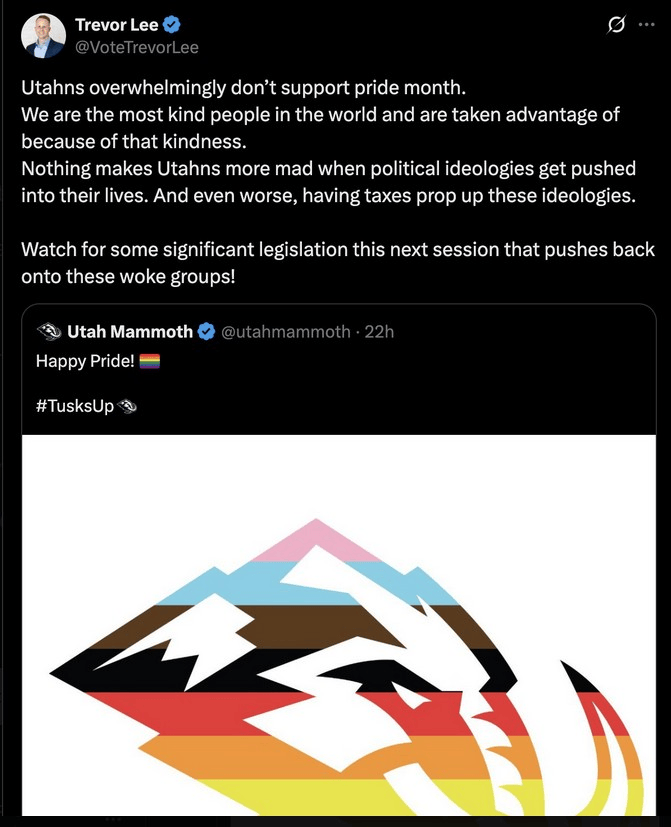
A Moms for Liberty activist and loyal Trump supporter is facing up to eight years in prison after she was found guilty on nine counts of election fraud last week. https://t.co/CVEJA7inTz
— The New Republic (@newrepublic) September 28, 2026
Republican voter election fraud in California! District Attorney Dan Dow announced today that a San Luis Obispo County jury has convicted Gaea Edde Powell (DOB 12/02/1962) on all nine counts charged
— Laguna Beach Democratic Club (@lagunabeachdems.bsky.social) 2026-09-28T17:16:47.757Z

President Donald Trump asked the Supreme Court on Monday for help ending most gender-affirming healthcare for transgender people in federal prisons. @kelseyreichmann.bsky.social http://www.courthousenews.com/trump-taps-s…
— Courthouse News (@courthousenews.bsky.social) 2026-09-28T16:46:43.527Z
Republicans are finally coming to learn that Hegseth is incompetent. They should have known from the start. http://www.semafor.com/article/09/2…
— A Long Walk Home (@lwhome.bsky.social) 2026-09-28T11:15:54.569Z

After first denying that the attacks occurred, the Hegseth Pentagon now acknowledges that Marines were injured during them. http://www.nbcnews.com/politics/nat…
— Scott Horton (@robertscotthorton.bsky.social) 2026-09-28T02:03:24.189Z
“I know it’s not the president,” she said. “My people want to know why. I don’t have an answer.” And that’s the problem right there. apnews.com/article/spea…
— Sailing Steve (@sailingsteve.bsky.social) 2026-09-28T12:24:37.839Z
The Trump administration floated an idea that would have virtually shut down mail voting: requiring all ballots to be delivered exclusively through certified mail, ProPublica has learned. by @jenafifield.bsky.social @peterelkind.bsky.social
— Charles Ornstein (@charlesornstein.bsky.social) 2026-09-28T15:51:47.182Z



The NFL has asked the Department of Homeland Security to remove a video of Hall of Fame safety Brian Dawkins that the agency posted on social media in support of immigration enforcement. https://t.co/YAPYLjb0fW
— The Washington Post (@washingtonpost) September 28, 2026
#HelloBlessedPeople🙏🏽
— Brian Dawkins (@BrianDawkins) September 28, 2026
I have respectfully not given permission to anyone other than those I currently do business with to use my NIL. Be Blessed! 🙏🏽
#Breath pic.twitter.com/lXOMwZGLJ3
Our time has come. https://t.co/Ygzy6Qfni3 pic.twitter.com/xNFNRkAaTq
— Homeland Security (@DHSgov) September 27, 2026
This is the official government account of DHS's top lawyer.
— Aaron Reichlin-Melnick (@ReichlinMelnick) September 28, 2026
Your government is being run by edgelords and memesters chasing internet points, not competent professionals working to protect and preserve the United States. Demand better. https://t.co/iHncT9mGbS
The Mafia presidency
— Cheryl Rofer (@cherylrofer.bsky.social) 2026-09-28T13:55:21.098Z

