Judge’s repeal of Trump ban on gender-affirming care for children ‘a meaningful win for patients’, experts say
A federal judge overturned the Trump administration’s ban on gender-affirming care for children on Saturday, decrying Robert F Kennedy Jr’s “wanton disregard” for the law that “causes very real harm to very real people”.
It’s another loss for Kennedy’s agenda as secretary for the US Department of Health and Human Services (HHS) under the second Trump administration – an agenda that has focused on restricting healthcare, including vaccines, abortion and gender-affirming care.
A different legal decision recently halted the agency’s attempt to raze vaccine recommendations, and new research and regulatory decisions have undermined controversial announcements by Trump and Kennedy on autism.
“Unserious leaders are unsafe,” Mustafa T Kasubhai, a US district judge in Oregon wrote in the opening to his final judgment on the gender-affirming care case, a 49-page decision that excoriated the administration for disregarding the law and overreach in its regulations. The judge also barred the administration from implementing similar policies under any other names to restrict care nationally by withholding funding.
Shannon Minter, legal director of the National Center for LGBTQ Rights, called the ruling “incredibly powerful” and “far-reaching”.
“It enjoins them from doing anything to interfere with the authority of states to regulate medical practice,” Minter said.
For healthcare providers and families who have been in limbo for months, “this is a huge, huge step forward”, said Jan Oosting, an associate professor of nursing at City University of New York (Cuny).
Khadijah Silver, director of gender justice and health equity at Lawyers for Good Government, who uses they and them pronouns, said they were “so overwhelmingly ecstatic” and “couldn’t actually process” that the ruling “was real life”.
In December, Kennedy announced that any health system providing pediatric gender-affirming care would be suspended from receiving Medicaid and Medicare funding. Medicaid and Medicare would also be banned from paying for any gender-affirming care, he said.
As nearly all major hospitals and health systems rely on Medicaid and Medicare, the proposed rule amounted to a ban on gender-affirming care for children, setting a precedent for the government limiting healthcare for any patients.
At the same time, Kennedy issued a declaration invoking a regulation to allow the HHS to exclude healthcare providers from Medicaid and Medicare when the providers no longer “meet professionally recognized standards of healthcare”. Unusually, the new rule was enforced immediately, without going through the usual rule-making process, including public comment.
Gender-affirming care often includes puberty blockers and hormones, but can also involve psychosocial support and, very rarely and after extensive medical consultation, surgery. It is widely agreed to be essential to the health of gender-expansive individuals. The Kennedy declaration claimed pediatric gender-affirming care for minors was “neither safe nor effective” and therefore fell below these standards.
Declarations like these are meant to be used for emergencies when the HHS needs to communicate the steps it’s taking to protect public health, Silver said, who added: “They have never once been abused in such a fashion to go against standards of medical care that are widely accepted … let alone to override the state’s primary authority in the regulation of medicine.”
Minter said: “This was an attempt by the federal government to impose a national ban and usurp the authority of states to regulate medical practice within their borders.”
Within eight days, the HHS general counsel, Mike Stuart, began referring health systems to the HHS office of inspector general for violating the new policy. The decision included several screenshots of posts from Stuart celebrating referrals of health systems for violating the rule.
At least 40 health systems have said the threat of losing federal funding is why they stopped providing care in recent weeks. Oregon and 21 other states sued the administration. In response, the US government argued that the Kennedy declaration was merely an individual’s personal opinion.
When the judge overturned the declaration, he called this argument “a bald-faced lie” and an attempt to “bully or gaslight” the court. The judge said the Kennedy declaration was “clearly unlawful” because it violated administrative law and the Medicare statute that forbids federal officials from exercising “any supervision or control over the practice of medicine or the manner in which medical services are provided”.
Following the judge’s preliminary injunction against the new rule in March, Children’s Minnesota began offering gender-affirming care again.
When another health system, Children’s Hospital Colorado, ceased care, patients and families sued the hospital. The case is currently before the Colorado supreme court, where judges have expressed concerns that forcing the hospital to resume care could bring federal backlash, endangering even more children. Silver noted that reversing the federal ban now could change the outcome of that case.
“This should be a huge relief and a tremendous source of protection” for families and children whose care was delayed or disrupted, Minter said. When health systems announced they would comply in advance with the directive and stop providing gender-affirming care, often effective immediately, it was “shocking and appalling behavior”, he said, but this decision “should remove that fear” and allow the care to resume.
Oosting noted that the “biggest source of fear, which was the threat of losing Medicare and Medicaid funding, is removed now, so I think that there will be reassessment by each individual hospital of what programs are going to be put back into play, what programs will have to be modified”. That’s especially true in states like New York that have laws against discrimination in healthcare, she said.
The proposed rule preventing Medicaid and Medicare from paying for gender-affirming care is also blocked by this decision, Minter said. The rule did not come before the judge because it hasn’t been finalized, but Minter reads the ruling as “effectively prohibiting those rules from being enforced as well”.
Challenges still exist for children who need gender-affirming care but may not be able to access it.
“Although this removes a major federal barrier, it doesn’t erase those state-level restrictions,” Oosting said. Some states have introduced bans on the care. In Ohio, the state’s supreme court will rule on whether a ban is constitutional in coming months.
Some families in states with bans or gaps in healthcare are once again able to access care by moving or traveling out of state – a “burdensome”, disruptive and expensive process, but an “important” one, Minter said.
Overturning the ban was a “meaningful win for patients and providers and, honestly, for healthcare integrity in the US”, Oosting said. It lessens fear and uncertainty around seeking and providing care, and it shows that “major changes in healthcare policy have to follow the law,” Oosting said – which has repercussions for other politicized changes to health regulations, like limitations on abortion. It was “a powerful tool to stop the federal government from that type of attempted overreach” in healthcare, Minter said.
The decision reinforces the fact that “the federal government can’t use Medicare and Medicaid restriction as a blunt-force instrument to control care and access to people’s bodies,” Oosting said. It’s significant not just for making gender-affirming care available again but also because it sets “the rules of the road – how far the federal government can go in terms of influencing what’s happening in a patient exam room”, she said.
It’s really as bad as it was before VAWA ever existed; of course it’s not been renewed for several years now thanks to transphobic Republican legislators. I apologize for both articles being here in full; that is how the source-The 19th-formats their sharing. It’s nice most of the time, but now here’s a long post.
In abusive relationships, the end can be the most dangerous part
Two tragedies, in Virginia and Louisiana, highlight the peril that some women and children face during divorce or separation.
This story was originally reported by Barbara Rodriguez, Mariel Padilla and Jasmine Mithani of The 19th. Meet Barbara, Mariel and Jasmine and read more of their reporting on gender, politics and policy.
Two deadly high-profile domestic violence cases this month highlight how the most dangerous part of a relationship can be when it is ending — particularly for women and families, and especially if guns are involved.
And on Sunday, a gunman in Shreveport, Louisiana, killed eight children and injured two women in what authorities described as the deadliest mass shooting in the United States in more than two years. Authorities say the gunman killed seven of his children and shot his wife. He also injured a woman who is the mother to three of his slain children. The gunman, who had been scheduled to appear in court as part of separation proceedings, had recently told his stepfather that he was suicidal.
Partners who express suicidal ideation can create heightened dangers for women and families, said Jacquelyn Campbell, a professor at Johns Hopkins University School of Nursing who has studied domestic violence and homicide for decades.
“That desperation, especially combined with access to guns, can be a recipe for tragedy,” she said.
A family attends a candlelight vigil on April 19, 2026 in Shreveport, Louisiana after authorities said a gunman killed eight children and injured two women during a shooting spree that spanned at least three locations. (Brandon Bell/Getty Images)
Every month on average, more than 70 women are shot and killed by an intimate partner, according to Everytown for Gun Safety, the largest gun violence prevention organization in the United States. Everytown gathered a focus group of 43 survivors of this type of violence last year, and 50 percent of participants said separation or divorce was a circumstance leading up to attempted intimate partner homicide-suicide.
The available data emphasizes the vulnerability of that time, said Sonali Rajan, senior director of research at Everytown for Gun Safety.
“At the point when a woman is choosing to try and leave a violent and abusive partner, husband — especially when there are children involved — it means that the violence has escalated for some time,” she said.
Between 2014 and 2020, the organization tracked intimate partner homicide-suicides and found 5,450 women were killed. In 85 percent of these incidents, a firearm was the primary weapon. When there is a firearm involved, the abuser — which is a man in 99 percent of cases — is five times more likely to kill the victim, according to the research.
“It’s heartbreaking,” Rajan said. “These are just such devastating instances of violence. Something that, to me, is a really important through line is the presence of a firearm. So I think that’s really important to note and underscore — having a firearm present in the moment of escalation can and often is deadly.”
Intimate partner violence disproportionately impacts women of color and their families: Black, American Indian and Alaska Native women are victims of intimate partner firearm homicide at the highest rates, according to Everytown. Black women, for instance, are 3.5 times more likely to be fatally shot by an intimate partner compared to White women.
Authorities say former Lt. Gov. Justin Fairfax fatally shot his wife, Dr. Cerina Fairfax, while the two were in the midst of a divorce. (Dr. Fairfax & Associates Family Dentistry)
In Louisiana, the killings occurred during a shooting spree that spanned at least three locations, according to the police. Authorities identified the gunman as 31-year-old Shamar Elkins, the father of seven of the eight dead children, whose ages range from 3 to 11. Elkins also wounded his wife, Shaneiqua Pugh, and Christina Snow, before dying in a shootout with police officers.
Rajan said children are especially impacted by intimate partner violence, particularly when firearms are involved. Nearly 1 in 10 incidents of intimate partner homicide-suicide also involve the murder of the family’s children, according to Everytown. And for children under 13 who are victims of gun homicide, nearly one-third of those instances are connected directly to intimate partner or family violence.
“The ripple effects of firearms in the hands of an abuser extend far beyond the intimate relationship itself,” she said.
Doreen Dodgen-Magee, a volunteer with Moms Demand Action and a survivor who lost her sister-in-law and three nieces to intimate partner violence, said children are often involved in domestic violence situations — and that impact has ripple effects through generations and across communities. Her sister-in-law had filed for divorce before being killed.
“I think about the way in which my nieces died and their last experiences, and the way in which their classmates who live down the street — some of them witnessed this as it happened on the front lawn,” said Dodgen-Magee, who also spent years caring for her mother-in-law after she witnessed the deaths and suffered from post-traumatic stress disorder. “How the brain of a child tries to make sense of that, it’s unimaginable.”
Campbell said she also worries about the long-term mental health of children impacted by the recent gun violence, including a child who survived the Louisiana shooting by jumping off a roof.
An outside view of former Virginia Lt. Gov. Justin Fairfax’s home in Annandale, Virginia, on April 16, 2026. (Celal Gunes/Anadolu/Getty Images)
In Virginia, two teenage children were home when Justin Fairfax killed Cerina Fairfax and himself. Justin Fairfax served as lieutenant governor from 2018 to 2022 and faced sexual assault allegations in 2019. He denied wrongdoing, but family said the 47-year-old’s mental health unraveled after that. Court records show his wife filed for divorce in 2025 — though they still lived in the same home — after nearly 20 years of marriage. The former couple’s teenage son called 911 to report the shooting.
Those shootings follow the April 1 death of Nancy Metayer, the vice mayor of Coral Springs, Florida. Metayer was widely seen as a rising star in Florida Democratic politics. An activist and environmental scientist, the 38-year-old was the first Black and Haitian American woman member of the Coral Springs City Commission, elected in 2020 and reelected in 2024 before being appointed to serve a second term as vice mayor, according to the city website. According to police, Metayer was found fatally shot in her home, and her husband is charged with premeditated murder. The incident was described as “domestic in nature.” U.S. Rep. Jared Moskowitz said in the aftermath of her fatal shooting that he was “in shock” and that Metayer was about to announce a bid for Congress.
March for Our Lives, a youth-led organization that advocates for stricter gun control legislation and founded by students after the 2018 mass shooting at Marjory Stoneman Douglas High School in Florida, said these recent incidents “underscore a truth this country refuses to face head-on; Black Americans are carrying an outsized and relentless burden in the gun violence crisis.”
“From children like those killed in Shreveport, to Black women facing lethal domestic violence, to families living with daily exposure to shootings that never make national news, the toll is staggering and systemic,” the organization said. “This is what a public health crisis looks like when it is allowed to persist in Black communities.”
Ujima, the national center on violence against women in the Black community, said “the frequency of these tragedies demands attention.”
“Grief alone is not enough,” Ujima said in a statement. “We must remain focused on prevention, early intervention and ensuring families have access to the support they need before harm escalates.”
The high-profile incidents show the necessity of a robust response to intimate partner violence, which impacts more than 1 in 3 women and 1 in 6 men across their lifetimes. But government efforts are chronically underfunded and now understaffed: The Centers for Disease Control and Prevention’s Division of Violence Prevention housed units dedicated to stopping firearms deaths, suicide and domestic violence before they happen — but the division was decimated last year.
Nancy Metayer, the vice mayor of Coral Springs, Florida, was found fatally shot in her home on April 1, and her husband has been charged with premeditated murder, police said. (Nancy Metayer Campaign)
There have been significant disruptions in the federal government’s response to domestic violence as a public safety issue as well. The Department of Justice is the largest funder of domestic violence services across the country, with $713 million appropriated to the Office on Violence Against Women last year. This money goes toward a variety of services assisting survivors of gender-based violence. But as of this month, $200 million in taxpayer funds is gathering dust instead of helping survivors. Money from this year, $720 million, doesn’t look to be coming any time soon either.
Everytown advocates for a four-part domestic violence approach, which includes background checks on gun sales, prohibiting people convicted of misdemeanor domestic abuse from possessing firearms, requiring prohibited people to turn in their guns and barring gun purchases if a background check takes longer than three business days. Rajan said states with laws that keep guns out of the hands of abusers see lower rates of homicide and suicide among intimate partners.
“The moment that the survivor seeks legal assistance — often another time of heightened risk — it makes it even more crucial that laws to remove firearms from homes with domestic violence are effectively implemented,” she said.
Campbell noted the importance of laws that allow for the temporary removal of a firearm from an individual if they pose a risk to themselves or others. Extreme risk protective orders (ERPO), known as red flag laws, have been enacted in 22 states and the District of Columbia. Louisiana is not one of them.
But there is a 2020 ERPO law in Virginia that is supposed to prevent individuals who pose a substantial danger from possessing or purchasing firearms — which Campbell said shows how families still fall through the cracks. She said stakeholders, from family members to police departments to divorce lawyers, can play a role.
“Lots of people go through divorces just fine, but families where things are really fraught, where somebody’s desperate — they need to be able to recognize that possibility,” she said.
For those who are currently in dangerous domestic violence situations, Campbell recommended seeking help by calling the National Domestic Violence Hotline at 800-799-7233 or by texting BEGIN to 88788.
She also recommended the myPlan app, a free tool designed by Johns Hopkins University, to help survivors of relationship abuse create personalized safety plans in a discreet way. The app is also a helpful resource for those unsure if they’re in a safe relationship.
Rajan added that if you or someone you know is in suicidal crisis or emotional distress to call or text 988 or visit 988lifeline.org/chat to speak with a counselor. The 988 Suicide & Crisis Lifeline, previously known as the National Suicide Prevention Lifeline, provides 24/7 free and confidential support.
After her family members were killed, Dodgen-Magee said, she found journal entries where her sister-in-law had written that she feared for her life and where she wanted her kids to go if she was murdered by her husband. Still, Dodgen-Magee said that when her sister-in-law told people in her community, including church pastors, that she was afraid, she was dismissed as overreacting and told to stay in the relationship.
On a societal level, Dodgen-Magee said there needs to be a shift: “Believe women when they tell you that they are in danger.”
Domestic violence organizations turn away thousands each day. Julia was one of them.
An already underfunded system is under even more stress, as cases have gotten more complex and the Trump administration has sown confusion.
Content warning: This story references incidents of domestic violence.
On January 18, 2025, Julia Gilbert kicked her fiancé out of their shared apartment.
“When the apartment door shut, I remember knowing it was right,” she said.
Gilbert, 32, said she had planned to end the relationship for some time. Worried her ex was lying to her, she had been recording their arguments at her therapist’s suggestion. A week after he left, she filed a petition for a harassment restraining order (HRO), which requires the respondent to limit communication and in-person contact. In Minnesota, where she lives, residents can fill out a petition online without an attorney.
In her January 26 statement justifying the HRO, she alleged physical, financial, sexual and psychological abuse. Her ex had unprotected sex with her without her permission, Gilbert said. After experiencing intense pain and heavy bleeding, she went to the doctor. Medical records viewed by The 19th with her consent say the bleeding could have been a miscarriage.
She wrote in her HRO petition that after she texted him to say she did not want him to come to the apartment alone, he replied, “I can always come when I want.” She said her relief at the end of the relationship quickly turned into panic about the situation.
“I am scared for my physical and emotional safety and have been unable to relax for days and now am even more frightened in light of this text message from him,” she wrote.
Gilbert’s ex did not respond to multiple requests for comment. This article is based on public court documents, emails, phone logs and extensive interviews with Gilbert.
The HRO was granted in January. Gilbert’s ex contested the restraining order four days after being served, triggering a court hearing in front of a judge. Gilbert had to get a lawyer in two months or face him in court alone.
It felt like a daunting task: Gilbert had moved to Hennepin County, home to Minneapolis, several years ago, away from southern Minnesota where most of her friends and family still lived. She didn’t have a strong support network beyond her two cats, Kato and Scully. She had been relying on buy now, pay later plans and support from her parents, who didn’t really have money to spare, to afford groceries and rent.
Gilbert’s petition said she wanted to file a police report but was scared to go to the station herself because of personal connections her ex had within the department. Some Hennepin County domestic violence organizations said on their websites they could escort survivors to the police station, but Gilbert said that when she inquired, she was told those services weren’t offered anymore.
She was disappointed she couldn’t make a police report, but Gilbert was still confident the judge would side with her; she had photographs of bruises and a recording of her ex admitting to unprotected sex without her consent, according to an evidence list submitted as part of the hearing. Also known as stealthing, it’s recognized as a form of sexual violence in some states, but there are no laws against it in Minnesota.
This chaos strained a system that is already under-resourced. Part of why Gilbert was shocked that it was so hard to get help was because she had gone through this all before, with radically different results.
Julia Gilbert says she was looking for housing and employment while also seeking legal representation for her HRO hearing as she dealt with the aftermath of ending a years-long relationship. She wants to be able to keep her cat Kato. (Caroline Yang for The 19th)
Years ago, Gilbert obtained an HRO against a different ex. After the couple broke up, she said, she found her tires slashed and called the police. At the time, she lived in Mankato, a town of 46,000 located 80 miles south of the Twin Cities. She said an officer listened to her whole story and introduced her to that county’s local domestic violence services agency. (The organization did not respond to multiple requests for comment.) There, advocates helped her file the petition, connected her with an attorney, helped her secure a restraining order and supported her through a draining legal battle. In her victim impact statement, she said what she went through not only during the relationship but the legal process afterward caused lasting post-traumatic stress disorder (PTSD).
But by 2025, circumstances had changed, and not just because of the Trump administration. The pandemic saw a surge in domestic violence reports, especially during lockdown, putting stress on an underfunded system.
The scale of intimate partner violence before the pandemic was already staggering. At least 47 percent of women and 44 percent of men have experienced domestic violence at some point in their lifetime, according to data from the Centers for Disease Control and Prevention from 2017, the most recent available. Women are more likely to experience sexual violence and severe physical violence. Queer people, like Gilbert, are more likely than straight people to experience relationship abuse.
The full impact of the pandemic on domestic violence rates is still being researched, but several studies have shown increases of 21 to 35 percent.
The pandemic multiplied stressors on organizations that long depended on in-person work, and lockdown forced the suspension of some services. Demands for housing rose astronomically while shelters shuttered to reduce spread of the virus. Funding shortages meant that even when the world opened up again, offerings temporarily put on hold weren’t able to return.
Many organizations were buoyed by temporary funds from the American Rescue Plan Act of 2021, but those expired in 2025. Demand didn’t disappear the way that money did. Economic stress has long been correlated with increased rates of domestic violence, and the affordability crisis brought on by the pandemic didn’t cease once the country reopened.
Survivors’ needs have increased since the pandemic, said Nikki Engel, the co-executive director of Violence Free Minnesota, the domestic violence coalition that helps coordinate strategy for 90 service providers throughout the state. Some of those programs have only one or two staff members.
“The numbers of people they’re serving every year may have stayed flat, or even gone down a little bit, but they’re spending more time with each victim, and each victim has more holistic and complicated needs,” Engel said. Advocates who would have been able to help six or seven victims file for orders of protection each day now have the capacity to assist only two or three with intricate housing, food and legal needs.
This tracks with what Gilbert described over months of interviews. Immediately after ending the relationship last year, she said, she went from needing help with her rent to help with a new lease to help with groceries when her EBT card stopped working. She was looking for work compatible with her disability and searching for cheaper housing to no avail. It felt impossible to address all of her issues at once. She was juggling everything while seeking legal representation for her HRO hearing, on top of dealing with the aftermath of ending a years-long relationship.
“When my food and housing and those base level things aren’t being met, I can’t even begin to work on healing the trauma to move forward,” Gilbert said.
A stack of belongings left by her ex takes up significant space in Julia Gilbert’s home. (Caroline Yang for The 19th)
Legal services for domestic violence cases, which can span family, civil and criminal courts, are highly specialized and sparse. Not only that, but the demand for them has increased since the onset of the pandemic. Engel said programs have reported a “huge increase in post-separation abuse,” which can involve abusers dragging survivors through the legal system, wasting survivors’ time and racking up fees.
Gilbert’s call log, viewed by The 19th, shows how much effort she put into trying to secure representation in the weeks between the HRO filing and the hearing. She used a free state hotline to try to locate a lawyer but said she kept hitting voicemails and dead ends. The few firms she managed to reach said they weren’t interested in an HRO case. She called the hotlines for help but was referred to the same organizations she had already tried.
Advocates at domestic violence services organizations aren’t lawyers and typically assist survivors with self-service filing for orders of protection or restraining orders. Only a couple of programs in the state can afford to have attorneys on staff to work with victims, Engel said. Abusers are more likely to be financially advantaged and able to afford their own legal support, another power imbalance.
Gilbert needed an attorney who could show up next to her in court, like she had the last time she fought for an HRO.
After she called over 30 law firms, per her phone records, a family friend referred her to a practice. Her parents helped her pay for representation. But, she said, she felt unprepared going into the remote hearing.
It was a disaster for Gilbert: The transcript shows her ex’s lawyer aggressively cross-examining her, casting doubt on her account of physical abuse and bringing up her mental health issues. Gilbert feels her lawyer didn’t adequately intervene during hostile questioning. At one point, the transcript shows the judge scolded Gilbert’s counsel for checking her phone during the hearing.
In an order for dismissal, the judge ruled that Gilbert and her ex had a “mutual lack of boundaries” and said testimony did not meet the criteria for an HRO. The restraining order was overturned, and Gilbert’s ex was free to contact her again.
“It was humiliating, I had been getting back on my feet and trying to do things to put my life back together after all of this, and then following that court date, it was like I just fell apart again,” Gilbert said. She said she still has nightmares about the hearing.
Legal assistance is a bottleneck at many organizations. Artika Roller, the executive director at Cornerstone Minnesota, one of the largest domestic violence service providers in the Twin Cities metro area, said a pro bono attorney volunteers once a month to help with complex cases. The demand is overwhelming, so her group frequently ends up referring to outside legal services that don’t necessarily have expertise in domestic violence cases.
After the HRO was overturned, Gilbert found a lawyer to help her with a possible appeal. But she felt dismissed by the attorney; he minimized her assault and didn’t understand why she didn’t want her ex to come back into the apartment to pick up his belongings. Discouraged, Gilbert did not file an appeal.
“At a certain point how do you keep the hope alive?” Gilbert said, reflecting on the labyrinthine process of seeking help for survivors. “How do you keep the flame alive when you keep getting directed in circles?”
Gilbert had been calling the various domestic violence and sexual assault hotlines periodically since before the breakup. In May, a couple of weeks after the hearing, she said, she dialed the number for the National Domestic Violence Hotline once again. She was sympathetic to the strain on advocates. Gilbert says she knew they cared about her and wanted to help. But she was also frustrated and had started to see news articles about funding cuts impacting domestic violence organizations. She began to wonder if these changes had trickled down to her. She decided to record the next call, hoping to get some answers. When Gilbert told the advocate how hard it had been to get help, the advocate on the other side of the phone offered some surprising information.
“Unfortunately, not just the funding is being affected for a lot of organizations that handle domestic violence,” the advocate said on the recording, which Gilbert shared with The 19th. “Unfortunately, executive orders have also made it difficult, or stopped funding, or made it to where organizations have to stop doing things or addressing certain things in order to continue the funding.”
“It is a very difficult time right now,” the advocate continued. “So I’m sorry that you have to experience that.”
Katie Ray-Jones, the CEO of The National Domestic Violence Hotline, confirmed in a statement to The 19th that many local organizations were forced to lay off staff and temporarily shut down last year.
She also underscored the massive demand for the organization’s services. “We receive nearly 3,000 calls and messages per day from survivors in need — and no survivor in need should be left alone. And yet, the reality is that the national response to domestic violence overall has historically been overburdened and under-resourced.”
Ray-Jones shared that The Hotline was able to assist with 708,000 calls for help in 2025 — but received 1.3 million requests. Federal funding for the nonprofit has stayed stagnant since 2024, and The Hotline needs at least an additional $20 million to meet the scale of demand, she said.
She did not address the executive orders directly. (The Hotline remains operational, as do many domestic violence services across the nation. Confidential, anonymous help is available 24/7 through 1-800-799-7233 or online.)
Julia Gilbert tried to secure representation in the two months between filing a harassment restraining order against her ex and the hearing but says she kept hitting voicemails and dead ends. (Caroline Yang for The 19th)
The Violence Against Women Act, last renewed in 2022, allows Congress to put $1.1 billion each year toward programs addressing domestic violence, sexual assault and stalking. But since its original passage in 1994, VAWA program funding has rarely approached authorized levels — for fiscal 2025, appropriations totaled $713 million.
The other main source of funding comes through the Victims of Crime Act, which allocates non-taxpayer money gathered from fines instituted on federal cases. But these funds have dwindled since 2018, as prosecutors declined to pursue as many cases against white-collar crime that would top off the money pot. A 2021 bill funneled some money to the associated fund, but it wasn’t enough. Attempts since then to close the funding gap have largely stalled in Congress.
Less money means less staff for roles that are already typically low-paying and require specialized training. Many in the advocacy field have personal experience with domestic violence and are dedicated to the cause, but it is intense work prone to burnout.
It also means fewer dollars to support survivors. Each year, the National Network to End Domestic Violence tracks how many victims are served by domestic violence advocates over a single 24-hour period. In 2025, the count was 84,146. And on the same day, 13,018 people weren’t able to be helped due to a lack of staffing, funding or other resources.
Violence Free Minnesota pointed out that the share of survivors who weren’t able to receive help nearly tripled from 2024 to 2025, to 29 percent.
“We don’t know what’s going to happen on a day to day, week to week basis with our funding,” Roller said, due to the uncertainty from the Trump administration. Combined with changes in annual funding, that means hard conversations about which programs need to be cut back.
“There is no other funding source that provides the amount of funding that we get from the government,” she said. Cornerstone has some individual and philanthropic donors, but Roller said donations dropped in 2025 amid economic uncertainty.
Minnesota does offer significant funding to domestic violence services to supplement federal funds, but the amount was stagnant for nearly a decade. Asks for more money from legislators have been denied, Roller said.
Violence Free Minnesota has seen providers hemorrhage advocates to jobs at places like Walmart and McDonald’s because they can pay more, said Katie Kramer, the organization’s other co-executive director.
And the services that are meant to protect women aren’t being funded, contrary to the Trump administration’s professed priorities, with potentially deadly consequences.
“The ultimate thing is that we were never funded at capacity, and this is going to impact peoples’ lives,” Roller said. “Organizations like ours are providing life-saving services, and we will lose people because of the inability to provide support.”
Under a proposed 2027 budget, the Minnesota Office of Justice Programs would cut victim services funding by about 20 percent, or $12 million. The shortfall is being blamed on the perpetual gaps in annual grants from the federal Victims of Crime Act funds.
Roller has been pouring her energy this year into advocating for Minnesota House File 1082, which would use state money to make up for the missing $12 million in federal dollars. Violence Free Minnesota has also testified in support of the bill.
The one-year anniversary of the breakup hit Gilbert hard this past January.
“I feel like I am in the exact same place a year later, and that wouldn’t be the case if I had just gotten the help that I needed to begin with,” she said.
She constantly grapples with her PTSD and has struggled to stay grounded. The nonstop media coverage of documents related to sex offender Jeffery Epstein — the revelations of who was involved, the lack of accountability, the constant discussions of sexual assault — sent her spiraling.
“They just don’t give a shit about survivors,” she said, referring to the Trump administration. Her physical and mental health deteriorated, and, in February, she was hospitalized for several days.
The past year has altered her worldview. Gilbert has become much more cynical; she was never a fan of the Trump administration, but now she’s lost faith in institutions more broadly.
Her health worsened again in March and she temporarily moved in with her parents. Now she is back in her apartment, but she may not be able to stay there much longer.
When she made the decision to break up with her fiancé, Gilbert had no idea she would be in danger of losing her housing or that she’d no longer be able to afford three meals a day. But she says she would make the choice to leave again, even knowing all the hardship that would come after.
“Even though this year has been probably the hardest year in my entire life, and it’s a struggle every day, I would not take it back for a second. The decision to leave him was the best decision I ever made.”
She finally feels like she’s getting the space to heal. She wants to become a mother one day and is mourning her suspected miscarriage even as she’s grateful she isn’t tied to her ex with a child. She’s also looking for a therapist who specializes in trauma. Gilbert thinks if she can calm her nervous system down, she can secure steady work and maybe finally find cheaper housing.
She has been looking for more affordable apartments, but Minnesota is in a housing crisis. Time is running out. All of the options that would let her stay in her apartment don’t work: She doesn’t want to keep her ex on the lease, her income isn’t enough to qualify for an annual lease on her own and the month-to-month price is unaffordable.
She contacted tenants rights groups for help, but she said they couldn’t do anything; VAWA only provides protections for survivors who need to break their leases, not for those trying to stay. Gilbert doesn’t understand why there aren’t protections that would let her stay. She has resorted to crowdfunding to meet her basic needs.
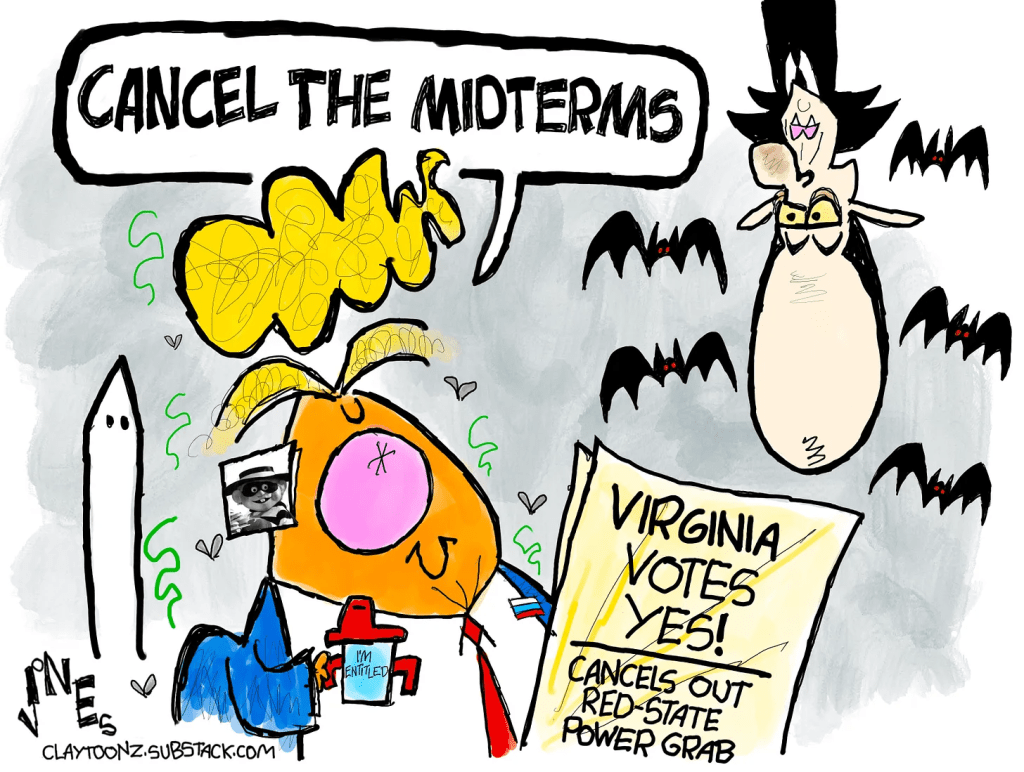
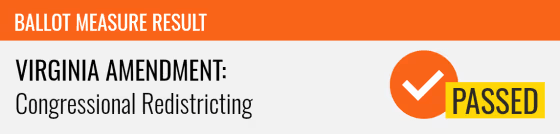
When Texas redistricted last year to give Republicans more congressional seats as Donald Trump demanded, Fox News’ Laura Ingraham called it a “total win for Texas.” After Virginia voters approved a referendum to give Democrats more congressional seats, in response to the shenanigans in Texas, Laura called it a “total travesty.”
After last night’s win for Democrats, Donald Trump took to Truth Social to post, “A RIGGED ELECTION TOOK PLACE LAST NIGHT IN THE GREAT COMMONWEALTH OF VIRGINIA!” Just as he failed to do in claiming the 2020 election was stolen, Trump did not offer any evidence. (snip-MORE, and it’s hot!)
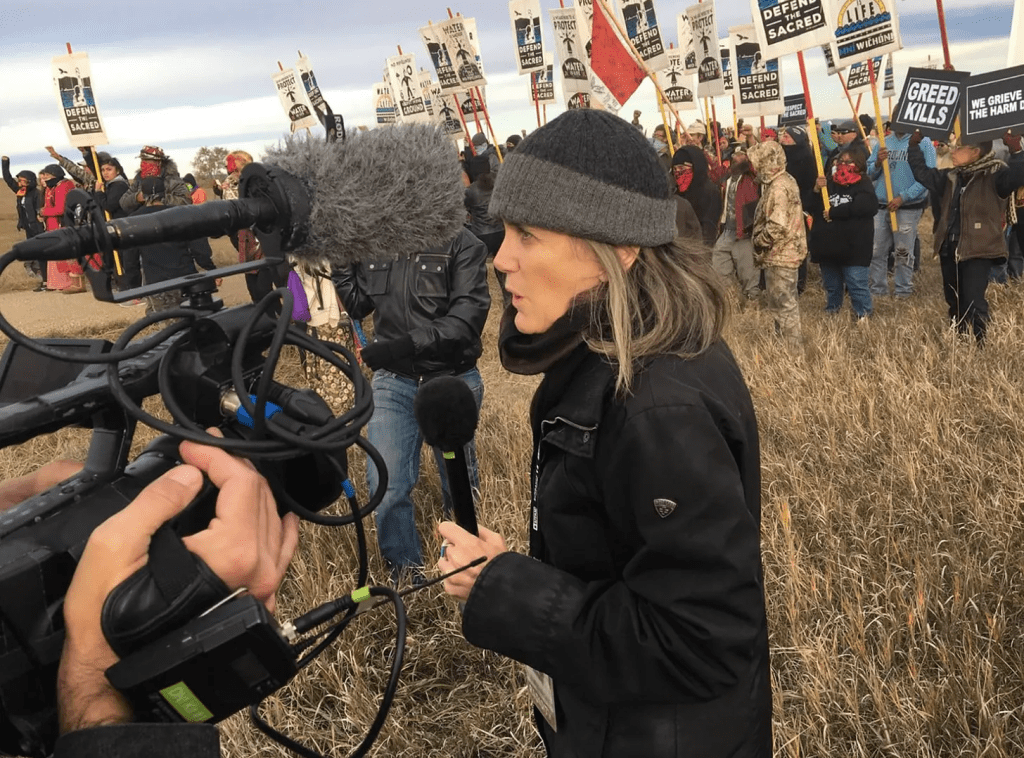
If you’re in the Seattle area this Thursday, there’s a must-see screening of “Steal This Story, Please” at the SIFF Cinema Uptown. Like most people, I’m familiar with the intrepid “Democracy Now!” journalist Amy Goodman, but after seeing this documentary my admiration and respect has only grown.
After the 7pm screening on Thursday, April 23rd I’ll be participating in a group Q&A with Amy and producer Carl Deal. For my Substack readers here’s a discount code to use when buying tickets: TELNAES
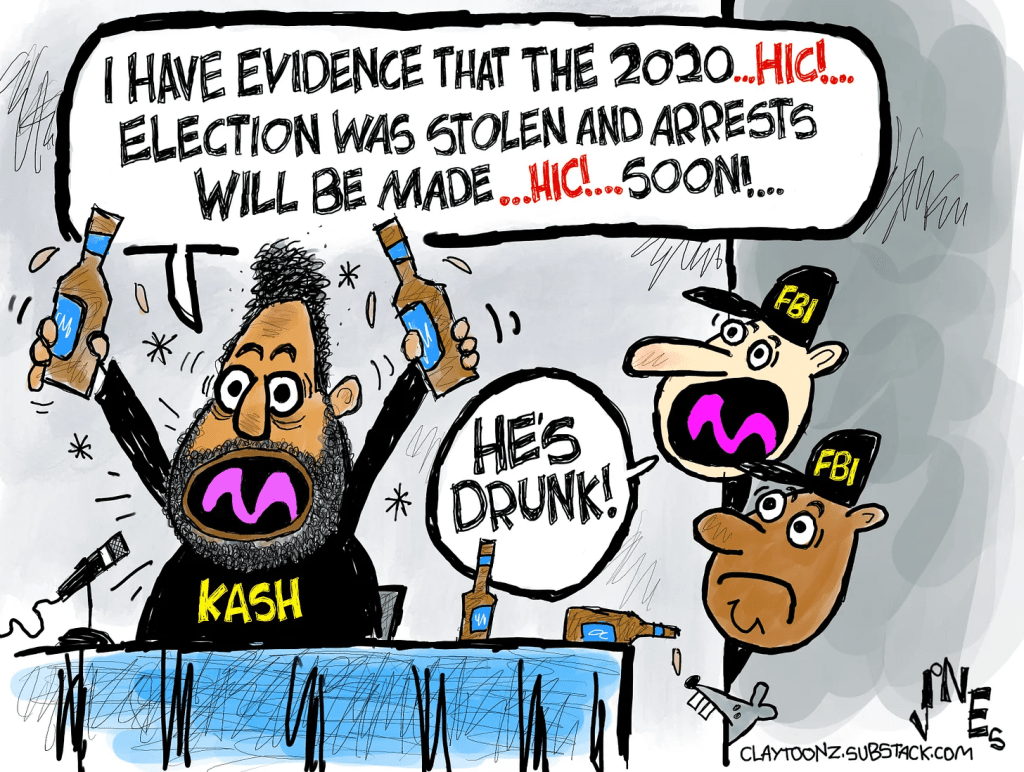
I knew that I would be one of the last cartoonists to do a cartoon about Kash Patel and The Atlantic article because I devoted yesterday to drawing on Virginia’s referendum on redistricting. But I don’t feel bad about being one of the last cartoonists to draw on this issue because, with the exception of one, and just one, every cartoon I have seen on this issue has only made the point that Kash drinks a lot. I knew that if I made any other point that wasn’t saying Kash Patel has a drinking problem, then my cartoon would stand out.
There’s nothing wrong with those cartoons that only point out Patel’s drinking problem. If I had written a cartoon that I believed was hilarious, and it was just a drunk Patel joke, I would’ve gone with it. I’m not riding a high horse here. (snip-MORE)
The FCC is seeking comment on whether the TV Parental Guidelines rating system needs to be changed to penalize shows for transgender or nonbinary content.
Today, FCC Chairman Brendan Carr announced that the FCC would be seeking comment on whether the TV Parental Guidelines rating system needs to be changed to address shows with transgender or nonbinary characters. The public notice, which Carr posted on twitter this morning, seeks to weaponize the TV ratings system to restrict shows that include such characters—asking whether programs that contain “the discussion or promotion of gender identity themes” should “be rated differently or contain relevant descriptions.” Though the FCC’s direct authority over the TV ratings system is limited—the system is voluntary and industry-run, and streaming platforms like Netflix and Disney+ can maintain their own standards—the FCC retains enormous coercive power over broadcast networks and their parent companies, many of which also operate streaming platforms. The move comes after a series of attacks on network television weaponizing the FCC for political purposes, including Carr’s threats to revoke broadcast licenses over news coverage of the Iran war and his targeting of ABC over late-night host Jimmy Kimmel. It appears to be an attempt to extend “Don’t Say Gay”-style policies—which have restricted discussion of LGBTQ+ people in classrooms across red states—to national television ratings.
“Years ago, Congress passed a law that empowers parents to decide the types of TV programs that are appropriate for their kids by standing up a TV show ratings system. But recently, parents have raised concerns with the industry’s approach—including with ratings creep. Specifically, they argue that New York & Hollywood programmers are promoting controversial issues in kids programming without providing any transparency or disclosures to parents. This undermines the whole point of the law and the ratings system parents rely on. The FCC is now seeking comment on whether the industry’s approach provides parents with the types of information and disclosures relevant to them today,” Carr wrote on twitter. However, the actual document posted alongside his statement tells a more specific story—it primarily centers on gender identity. (snip-MORE on the page)
Last April, at the James Beard Foundation’s Chef Action Summit, food industry leaders gathered to discuss the political and economic landscape with one concern hanging grimly in the air: undocumented and immigrant workers were increasingly afraid to come into work after ICE raids ramped up at the outset of Trump’s second term.
But it just so happened the summit took place in Asheville, North Carolina, where activists had already asked, “What would it take to make this the safest state for immigrants in the south?” as Andrew Willis Garcés, senior strategist with the immigrant justice organization Siembra NC, puts it.
One answer: 4th Amendment Workplaces, a framework developed by Siembra NC and launched at the summit to help restaurants and other businesses train up on legally vetted protocols to defend employees against ICE. The idea quickly took hold — there are now over 1,000 4th Amendment Workplaces across North Carolina, with 4th Amendment Workplace resolutions passed in three cities and similar efforts underway across 12 states.
It’s emerged as perhaps the most powerful workforce training to help businesses prepare for ICE raids, but it is not the only one. Across the country, training, resources and hotlines have been developed for workplaces, alongside an effort to harness the wider labor movement as a force against ICE.
Though the ICE raids that make the news often take place on the street, workplaces are in fact a frequent target. “We’ve seen ICE this year go into workplaces more than a lot of other kinds of places where people are gathered,” Willis Garcés explains. “With workplaces, there’s usually an open door you can walk through.”
According to the American Immigration Council, ICE publicly reported at least 40 worksite enforcement actions resulting in over 1,100 arrests within the first seven months of the current Trump administration. Businesses employing noncitizen workers — restaurants, car washes, automotive shops, bakeries, nail salons — are typically targeted. ICE has also scaled up large raids at workplaces like meatpacking and manufacturing plants.
These raids often represent legal violations, which 4th Amendment Workplaces raise awareness around. The Fourth Amendment to the U.S. Constitution guarantees “the right of the people to be secure in their persons, houses, papers and effects, against unreasonable searches and seizures” without a warrant based on probable cause — that is, reason to believe that a crime may have been committed.
In North Carolina, volunteers canvas businesses across the state to share what it means to be a 4th Amendment Workplace: identify invalid ICE warrants, secure private employee areas, document unconstitutional actions and defend all workers, no matter their immigration status. Resources include a workplace guide, organizing toolkit, posters signaling opposition to unconstitutional search and seizures, employee handouts and tips for designating private employee areas.
Workplaces can request dedicated training, in which organizers help business owners and employees develop workplace-specific protocol, and lead them through roleplaying scenarios. “We help you think through … what would you do right after the fact? What would you do to preserve footage, how do you support families left behind, what’s the immediate triage that needs to happen [after a raid]?” explains Willis Garcés.
Scuppernong Books of Greensboro was an early adopter, participating in training, promoting itself as a 4th Amendment Workplace, hiring a lawyer, regularly keeping staff informed of ICE response protocol, even publishing a book on how to resist ICE. Co-owner Steve Mitchell says it is “absolutely essential” for business owners to step up on behalf of employees, especially if the owners are white and legally protected residents: “It’s important for people like us to say that this isn’t right, and we’re going to stand on this side of the issue.”
Even though there hasn’t been a heavy ICE presence in Greensboro, the bookstore’s work with Siembra NC “gives us some sense of confidence,” Mitchell says. “Whether that’s misplaced or not, it at least helps us know what our rights are in that situation.” He adds that using Siembra’s model has made the business feel connected to a broader network of activists.
Willis Garcés describes that model as “plug and play,” easily adaptable outside the state and across a variety of workplaces. Siembra NC recruited small businesses first, with the goal of expansion into higher-targer workplaces like factories and farms.
Today, some North Carolina farmers display giant vinyl banners about their constitutional rights, a riff on Siembra NC’s signage. In Oregon, organizers dubbed themselves “Baddies for the Fourth.” In Minneapolis, the 4th Amendment Workplace was a central demand in a public-pressure campaign around Target.
There have been other efforts to develop localized training. In New York, Nonviolent Peaceforce trains mostly within the city’s Asian American community, which it has worked with since the pandemic. Last year, ICE raids erupted across the city’s Chinatown.
Nonviolent Peaceforce’s in-person training happens with trusted community partners and focuses on de-escalation and self-regulation tactics, alongside scenario and role-playing. “We came to develop scenarios really at the request of community members who felt that they really needed to know what it was like to be in the moment,” says Roz Lee, head of the organization’s U.S. efforts. She says simple tactics to slow things down — like introducing yourself, asking ICE agents their name, asking for a warrant and taking time to inspect it — can shift a potentially intense and traumatic interaction.
Other groups have tied the urgency around ICE to larger labor organizing efforts. Emergency Workplace Organizing Committee (EWOC) emerged to help non-unionized labor organize in response to COVID-19. More recently, EWOC developed resources for resisting ICE, which are tied to broader workplace organizing tactics like facilitating conversation among employees, building a committee and planning collective action together.
“These steps are very universal, whether you work in an office, in a kitchen, at a nonprofit,” says Wes Holing, an EWOC organizer. “If you’re talking about bread-and-butter issues, or you’re talking about a workplace that’s safe from ICE, you’re still ultimately fighting for a place that respects you as a person.”
This January, EWOC partnered with Twin Cities Democratic Socialists of America to hold a No-Work Workshop to train workers on their rights and protections to participate in the Anti-ICE General Strike. It was part of a much larger mobilization among Minneapolis residents and businesses responding to Operation Metro Surge.
The city mobilized far beyond one-off trainings; instead, an entire ecosystem emerged. “The sheer volume, the sheer magnitude of mobilization … it felt like every single person I knew was extremely active,” says Mike Urbanski, who helps lead legal observer training with Monarca. Monarca is a project under the immigrant justice organization Unidos MN, which canvassed businesses in Twin Cities’ immigrant communities. They’d then direct people to Monarca’s ICE hotline as well as its two-hour, in-person training, which focuses on “upstander” legal observation tactics.
Monarca’s trainings were also shared through social media, word of mouth and within community spaces and houses of worship. “We could post a training with 1,000 people in Minneapolis and fill it within four or five days,” Urbanski says, “And most of those people would come, and another 100 people would just show up.”
The Workers Solidarity Circle also canvassed and shared resources among Twin Cities businesses, channeling that energy into the Minneapolis Worker’s Assembly this February, which brought together over 300 unionized and non-unionized workers across sectors. “It was about building working class power and coordinated strike action, to really push people into action and not wait on managers, bosses or labor officials to save us,” says organizer Aminah Sheikh.
Now that Operation Metrosurge has wound down, organizers have turned their attention to this upcoming May Day: organizing strike committees, holding strike trainings, conducting labor education and committing unions and community organizations to strike on May 1st. Sheikh says there is a growing realization that workers must build political power far beyond their workplace.
“Listen, in order for us to really stop — abolish — ICE, like people are saying, from the grassroots,” she says, “then we need to do economic disruption.”
This video explains what everyone on the real left already knew instead of forgetting the trans / woke culture wars and moving right, the center left keeps demanding which is simply code speak for leaning right. While all the same democratic strategists since the Bill Clinton days demand candidates move to the right to “triangulate” to capture republican voters these polls show what we already knew. The culture wars are losing for the republicans. After republicans spent nearly 3 million dollars in ads against trans people the polls showed almost no one felt those adverts influenced their vote. Even as red states rail against higher education, acceptance, and tolerance of people who are different it is losing them votes. Some thing the Christian nationalists who are in the height of their influence now in political circles don’t understand is that people who grew up with LGBTQ+ classmates, friends, and even dated some do not find them the evil that these hate religions preach they are.
*** Personal note. I explained to Ali in an email that I am not functioning. For what ever reason wheither it be anemia or something worse I am desperately tired from the time I manage to get up. I often get up only to a few hours later go back to bed for four or more hours. I have started taking vitamin B-12 and a woman’s one-a-day vitamin. That with more red meat which was recommended to me in the past every time I go into anemia. How ever I get up, I have coffee and stuff with Ron then I need to go back to bed for normally 4 hours, get up and do dishes while watching The Majority Report. How ever some days like yesterday I did not even get that far, going to back to bed by 2 pm only to have Ron wake me and beg me to eat.
I have done better today only going back to bed for 3 hours later in the morning. I wanted to go to bed two hours ago, but Ron was all upset he couldn’t sleep due to the neighbors having new skirting put around their home outside our bedroom. So I got him in his recliner and moved his CPAP out to his chair. Still he was not tracking. Good news as I was falling asleep at my desk he woke up and is fixing supper. At this point I am so tired I don’t really care whether I eat or not.
I tried to reply to comments, but I couldn’t. I even started to move old saved open tabs out by making a new cartoon / memes post but I simply couldn’t do it. Right now the best I can do to function is make doctors appointments and watch videos that don’t take too much thought to understand. That means most political videos are outside my ability. I am sorry but right now I am functioning at the level of a confused grandpa. Sorry. I hope to get better soon. Ron says if I don’t clear up by next week we will demand the primary care see me and deal with it. I’m not sure if I want that as my last visit he was insisting I think about getting a colonoscopy. Anyway. This is a good video and one I watched several hours ago when I was much sharper than I feel now. *** Hugs
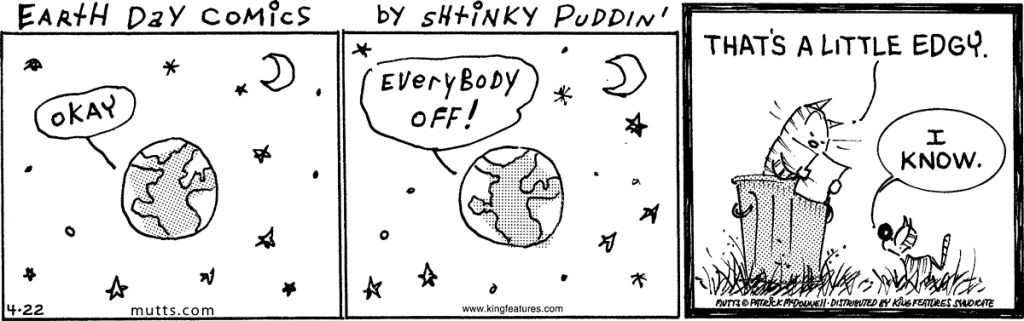
Oh! There are so many things that need to be done, so many of them about which we can do little but still all we can; however, today, I think it’s important that each of us gets outside as best we’re able. I think we should take a minute or two to simply appreciate our Earth, and take joy in its beauty and wonder as best we can; reconnect to it. I hope everyone who reads here is able to get at least a bit of time outside today (don’t get struck by lightning, or anything else unsafe!), and can just be with our planet and its inhabitants. There is peace to be found, which will build strength to continue. But, mostly, everything isn’t all about our battles. Hearing birdsong, watching squirrels frolic, and seeing butterflies flutter, is good for us.
Virginia voters will decide whether to approve the adoption of a new, Democratic-drawn congressional map for the remainder of the decade — part of the partisan battle over redistricting happening in several states ahead of the 2026 midterm election. The proposed map would give Democrats a chance at winning 10 of Virginia’s 11 congressional districts, a dramatic shift from the current 6-5 split in the Virginia House delegation.