

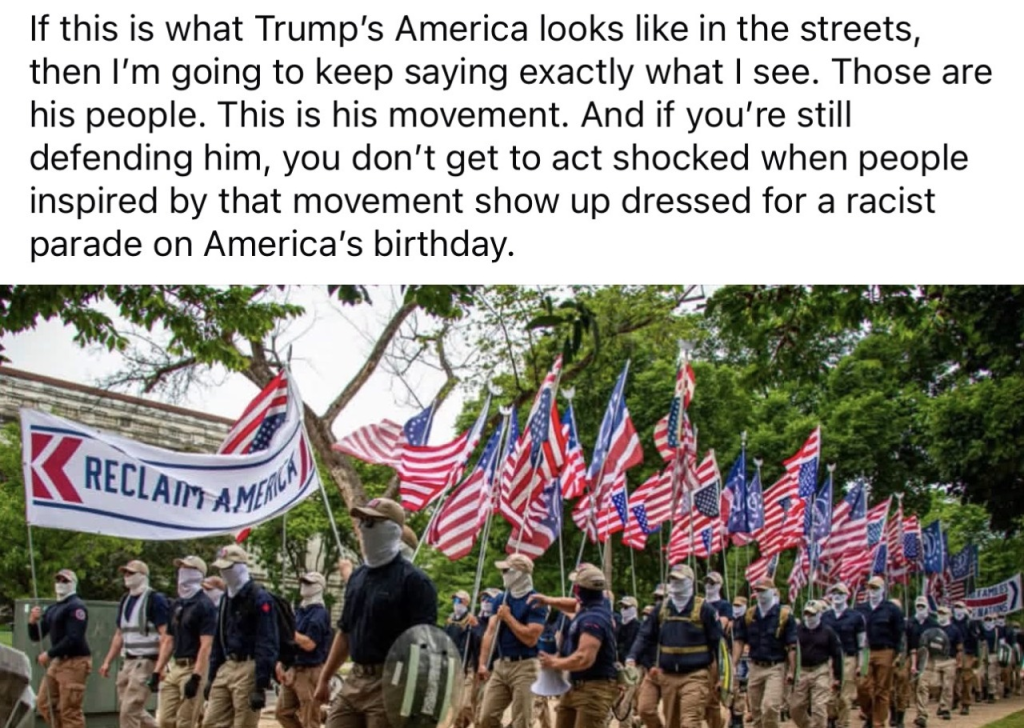
https://newrepublic.com/article/214482/trump-dhs-secret-police-spying-anti-ice-americans
Court papers reveal that the Department of Homeland Security’s covert surveillance of anti-ICE groups is much darker than it first appeared. Welcome to Donald Trump’s America.
Samuel Corum/Getty ImagesIt’s time to familiarize yourselves with the names “Operation Puppet Master” and “Operation Keyhole.” If those nefarious phrases evoke to you the U.S. government’s domestic spying on leftist groups in the 1960s and 1970s, it’s for good reason. The terms are coinages of today’s Department of Homeland Security, and they’re associated with a massive covert surveillance effort that DHS unleashed earlier this year to track anti-Immigration and Customs Enforcement protests in Minneapolis, where Donald Trump’s violent paramilitary invasion triggered months of intense civil conflict.
We just learned about the broad outlines of this domestic surveillance from newly released court papers related to the ongoing prosecution of a handful of protesters. As The New York Times reported, the papers show that DHS began surveilling left-leaning groups—including a union, a climate change group, and others—after ICE killed Alex Pretti in January. This has entailed seeking financial records and infiltrating protest meetings that are protected by the First Amendment.
But you can get a far more vivid picture of these undercover surveillance operations—and how brazenly they were conducted against American citizens—if you read deep into the court papers. The documents—which are attached as exhibits to a motion filed by lawyers for one of the protesters facing prosecution and are available on Pacer—include investigative reports that were transmitted by the undercover agents themselves about meetings they infiltrated.
It’s jarring, revealing stuff. The reports show that covert agents surreptitiously attended well over a dozen protest meetings organized by groups like the Sunrise Movement and various small socialist organizations. In some cases the agents secretly recorded the gatherings.
What’s more, in at least one case, an undercover agent may have tried to influence the conduct of meeting organizers. One report from an agent describes a meeting in late January of the Sunrise Movement at a Minneapolis public library. While spying on the proceedings, the agent seems to have learned that the organization’s intention was nonviolent: As the agent notes in his own investigative report, “it was made clear” at the meeting that the organization is “focused on peaceful protests.”
Yet after this discovery, the agent then approached a meeting organizer and made a surprising proposition. The agent told the organizer “he works in construction” and is willing to build things to assist “with more direct action protests,” the report reads, adding that the agent stressed “that going to jail did not bother him.”
That sounds like the agent may have signaled a willingness to engage in something illegal, to bait the group into moving in that direction, argues Kevin Riach, the lawyer for one of the protesters who is being prosecuted, Isaac Sant.
“This is an effort to entice someone who’s shown no inclination to commit a crime into committing one,” Riach told me. “What this tells us is that there wasn’t actual criminal activity to be investigated. They had to invent it. That’s not how this is supposed to work—not in this country, anyway.”
In other cases, undercover agents infiltrated these meetings only to find that the protesters turned out to be awfully innocuous. One agent covertly attended a meeting in February and found that it “was more of a panel discussion,” where there was “no discussion, or call for, violence toward law enforcement.”
Similarly, another agent’s report described infiltrating a meeting in Ann Arbor, Michigan, of organizers who said they sympathized with the Minneapolis anti-ICE resistance. (The papers show that DHS’s surveillance reached into other states beyond Minnesota.) This agent reported initiating a conversation with a married churchgoing couple, and the woman told the agent she’d traveled to Uganda to assist “in the construction of a hospital.”
In short, we’re not exactly talking about the Weather Underground bombers here.
Indeed, as Substacker Brian Kaylor notes, a number of these undercover operations were even conducted in churches where protesters had organized. Several of the pastors were kept entirely in the dark about law enforcement’s infiltration of their houses of worship.
The absurdity of all this is overwhelming. In some cases, the Keystone Kops vibe is strong: One agent attended a May meeting in Minneapolis, only to report that his “concealed body-worn audio recorder erroneously fell to the floor of the gymnasium.” The agent left without the device and had to return later to retrieve it.
Interestingly, the investigative reports also offer a glimpse of culture clashes between protesters and the agents who spied on them. One agent attended a Minneapolis meeting in February and reported, perhaps with distaste, on a female protester “with they/them pronouns” and “bright green short hair” and a “nose ring.”
As writer John Ganz has noted, Trump’s secret police force is made up of the MAGA “demimonde” and the “Trumpenproletarian mob.” And indeed, Trump’s political project has long been all about turning loose “his” people—law enforcement, biker gangs, coal miners, Ultimate Fighting enthusiasts—against the leftist enemy that inhabits blue America. The centrality of violence to all this is not disguised in the least. ICE recruitment targets MAGA-adjacent UFC fanbases and people who show an interest in paramilitary tactical equipment or military recruitment. ICE messaging openly glorifies military-style operations in urban areas—that is, in blue America’s diverse, cosmopolitan strongholds. Trump talks about Minneapolis as akin to an enemy country populated with undesirables who must be purged by MAGA patriots.
Now we’re learning that this war on blue America also includes extensive undercover surveillance. Many of these agents appear to have been drawn largely from Homeland Security Investigations, the arm of ICE that’s supposed to be focused on serious, complex, transnational crimes. They’ve now been reduced to standing around in parking lots writing down protesters’ license plate numbers and using sleazy deception tactics to spy on fellow Americans whose only crime is sympathy with immigrants.
Violence is precisely what spawned this undercover spying operation, but the real culprit was the violence of the government, not of the protesters. As Lisa Needham writes at Public Notice, we shouldn’t lose sight of how quickly ICE’s invasion of Minneapolis devolved into lethal state violence against Americans. It was just after ICE’s arrival in the city that an agent gunned down Renee Good in her car, with Pretti’s killing by federal agents following around two weeks later.
The outpouring of public protest in the face of this invasion apparently helped prompt DHS to launch its massive undercover surveillance operation directed at Americans, on the theory that the protests were being organized by larger, more sinister forces. The government dubbed this “Operation Puppet Master.”
But it’s unclear what all this surreptitious spying is even turning up. The Times notes that none of the groups targeted by it have been charged. And while the surveillance supposedly helped produce that aforementioned indictment of a handful of protesters, in reality the spying has swept far, far beyond those targets. The main result has been a discovery process that has now exposed the depth and breadth of the government’s massive spying operation for all to see.
There’s one other big unknown here. The document declaring the opening of Operation Puppet Master contains another vague reference: It says this effort has also been sanctioned under something called “Operation Keyhole.” Yet it’s unclear what this even is. As Kevin Riach, the lawyer, told me: “This suggests there’s some broader surveillance operation underway that we have yet to learn about.”
When I asked DHS what the phrase “Operation Keyhole” describes, the agency declined to comment.
Trump’s mass deportations have become akin to a Forever War. The expansion of ICE has poured tens of billions of dollars into the growth of Trump’s very own paramilitary army. This has included the stockpiling of enormous amounts of heavy military-style tactical equipment and weaponry, furnished by private contractors who resemble war profiteers.
And so, just as we saw under George W. Bush’s Forever Wars, we’re witnessing the growth of a massive public-private bureaucracy that’s metastasizing in unnerving new directions. It now appears to entail extensive domestic surveillance operations as well. We’ve only just begun to scratch the surface of it all. As always seems to happen with Forever Wars, we may never even learn all that much about many of the darkest atrocities perpetrated in its name.
The president’s deportation agenda has failed in the courts. Now he’s trying to cheat the system
Senior WriterPublished
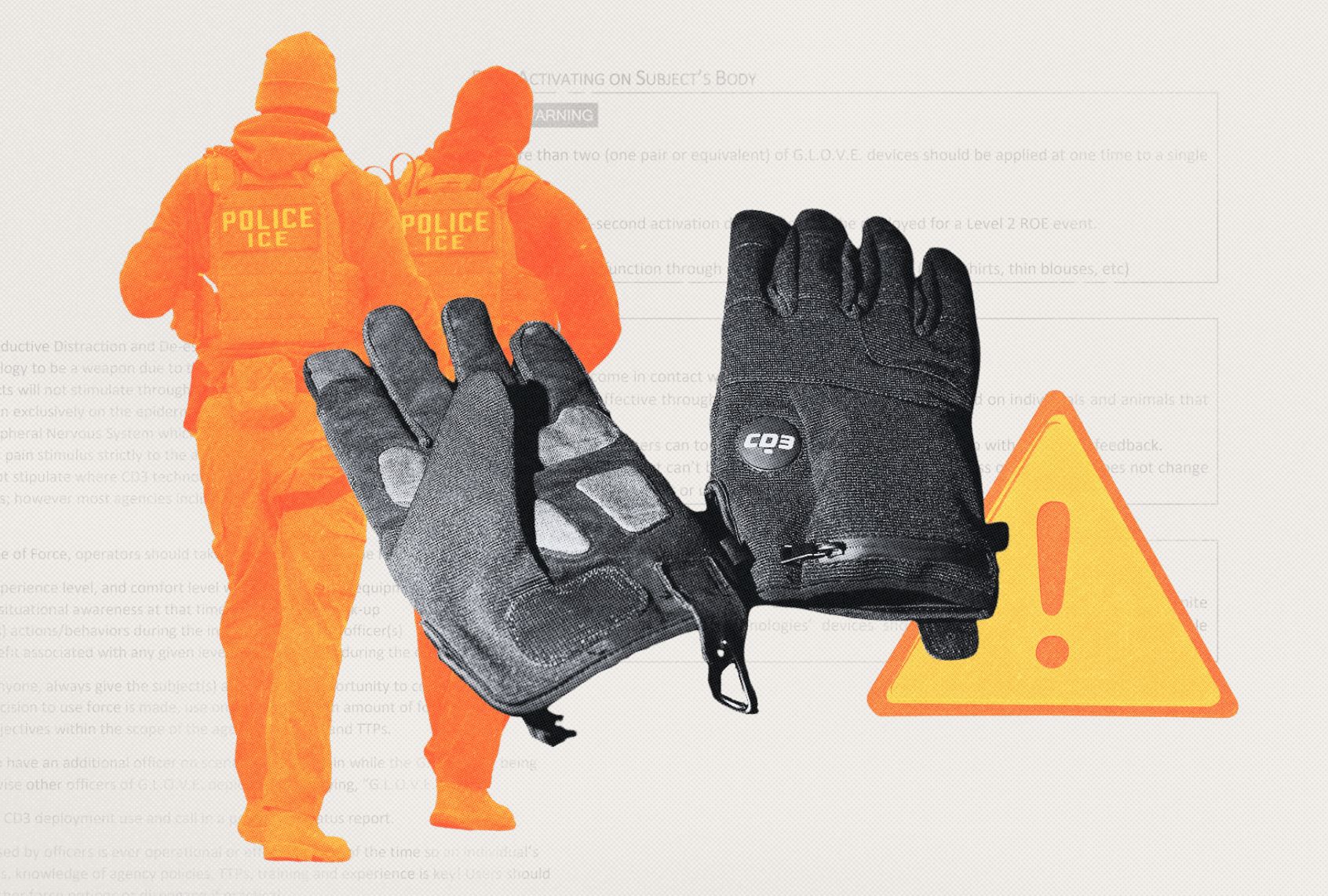
(Illustration by Salon / Getty Images / John Moore / Nikos Frazier / Omaha World-Herald / Compliant Technologies Manual)Since Markwayne Mullin took over the Department of Homeland Security in March, Immigration and Custom Enforcement has dialed back on the trolling. Gone are the videos and memes, posted regularly under the leadership of Mullin’s predecessor Kristi Noem, that mocked detainees for crying and celebrated ICE agents for being recklessly violent. There have been no more showy “invasions” of cities like Minneapolis or Los Angeles, as Mullin has aimed to draw less attention to ICE’s incompetent and legally dubious methods. His strategy has largely worked in getting the unpopular agency’s name out of the headlines.But that doesn’t mean ICE has given up on fulfilling Donald Trump and Stephen Miller’s cruel fantasies. The xenophobic Miller agenda is still being treated as the vanguard in White House efforts to will an authoritarian police state into being, circumventing both law and tradition to attack due process and inflict fear on the nation’s immigrant population. In early August, DHS posted a notice that they plan to buy $20 million worth of electrified shock gloves that are euphemistically described as “conductive distraction and de-escalation devices.” The gloves are truly Orwellian, cheered on by police because they inflict pain but leave “no burn marks or scars,” making it easier for law enforcement to hide the abuse and cruelty they inflict. Amnesty International opposes the use of these devices, arguing they are “readily misused for torture.”
Trump, of course, has fantasized aloud about unleashing state violence on Americans, regardless of the laws against it. The gloves provide an avenue to hurt both immigrants and protesters, while avoiding due process and legal accountability.
The gloves’ torturous potential seems the biggest part of their appeal to the administration. Mullin has previously defended the killing of nonviolent anti-ICE protesters, while Miller regularly paints progressive protesters and immigrants as apocalyptic threats that need be countered with violence. Trump, of course, has fantasized aloud about unleashing state violence on Americans, regardless of the laws against it. The gloves provide an avenue to hurt both immigrants and protesters, while avoiding due process and legal accountability.
As the courts keeps getting in the way of Trump’s desire to persecute people he doesn’t like, the pressure to find a way to cheat the laws guarding human rights is only intensifying. Liz Dye, legal analyst and host of the “Law and Chaos” podcast, told me that “U.S. Attorneys are being pressured to bring politically motivated cases based on shoddy or even fabricated evidence, with the predictable result that the cases implode on impact with the court system, sometimes spectacularly.”
The most recent high-profile example is the attempt by U.S. Attorney for the District of Columbia Jeanine Pirro to prosecute David Hearn, a former Olympian who was accused of vandalizing the Reflecting Pool at the Lincoln Memorial. As it turned out, Hearn was being used as a scapegoat to hide Trump’s embarrassment over ruining the pool by hiring poorly qualified cronies to renovate it. Pirro eventually had to admit that the case was without merit and dropped it, even though doing so meant a well publicized dressing-down from Trump at the White House.
The failed attempt to prosecute Hearn was just the latest in a series of high-profile prosecutions of people Trump hates for criticizing him or attempting to hold him accountable, including against former FBI director James Comey and New York Attorney General Letitia James.
In a recent column for the New York Times, Jamelle Bouie observed that “The principal aim of President Trump’s second term is revenge.” Worse, most everyone Trump fixates on is innocent of wrongdoing. Their only “transgression” has been upholding the law, criticizing the president or, in many cases, simply being of a race or class of people he doesn’t like. But Trump, Bouie argued memorably, also wants revenge on the American people “for rejecting him in 2020 and dealing a grievous blow to his ego.”
As Dye explained, Trump’s efforts to use the Justice Department to exact revenge have only backfired. It has “hemorrhaged staff” because honest attorneys have rejected pressure to “drop meritorious prosecutions” so they can “bring garbage political cases” instead. The department’s reputation is in tatters. Zahid Quraishi, a federal judge in New Jersey, said it best. When throwing a federal prosecutor out of his courtroom earlier this year, Quraishi said, “Generations of Assistant U.S. Attorneys had built the goodwill of that office for your generation to destroy it within a year.”
The new ICE gloves are part of this systemic destruction, representing the pathetic means the Trump administration will use, all so they can inflict maximum punishment before the judicial system lets their targets go. The immigration system is far easier to manipulate for authoritarian purposes than the federal justice system. Undocumented residents don’t enjoy the same legal rights as citizens, and deporting someone is a much lower lift, legally speaking, than prosecuting someone for a crime they didn’t commit. And yet, as POLITICO reported this week, the administration is losing most of its deportation cases in court. Of the 20,500 tracked by the media outlet, the White House lost at least 17,600, or 85% of the time.
Unable to win in court, Trump and his officials are looking to turn the process itself into the punishment. Immigrants are held in detention camps for months, often under torturous conditions, while waiting for their cases heard. ICE raids are frequent and often violent, sometimes targeting people who have legal paperwork to be in U.S. The result is that immigrants are being kept in a constant state of psychological terror, especially with the knowledge that having legal status — or even citizenship — may not provide sufficient protection. These electric gloves are just the latest part of what amounts to a torture campaign being waged by the administration — a way for ICE to hurt and punish immigrants and their defenders under the guise of “crowd control” or “de-escalation.”
While the situation is dire, it’s also a sign that Trump is weak. This is evident in the special grand jury Pirro recently convened in Washington following rumors that her job was at stake due to her inability to successfully prosecute a series of fall guys the presidents wants to blame for his own failures. But it’s doubtful she will be able to improve on her losing record. Since Trump can’t imprison people at the scale he wants, he has to settle for harassing them instead. That’s not the behavior of the all-powerful leader he was trying to be a year ago. They are the actions of a spoiled brat trying, and failing, to cover up the stench of losing.
By Amanda Marcotte
Amanda Marcotte is a senior politics writer at Salon and the author of “Troll Nation: How The Right Became Trump-Worshipping Monsters Set On Rat-F*cking Liberals, America, and Truth Itself.” Follow her on Bluesky @AmandaMarcotte and sign up for her biweekly politics newsletter, Standing Room Only.

Last night I had the opportunity to watch the new movie remake of He-Man, and I really enjoyed the tongue-in-cheek writing. Like many of you, I grew up on Saturday Morning cartoons. I had an itemized schedule of Mystery Machine’s and Purple Gorilla’s in dune buggies, a Waskilly Wabbit and a hunter with a stutter all listed out starting early in the morning and ending at 11:00 when I was finally kicked outside to act out all those story lines. And, among them was this cartoon “He-Man”! I was a bit old for it when it came out, and from an adult standpoint it was one of the most ridiculously named storylines ever created, but dang I loved the idea of having a hero come to the rescue.

Perhaps there is just comfort knowing who the good guys are and easily identifying the bad guys to settle a heart and mind. The bad guys were always portrayed monstrously by their actions, their words, their appearance. The heroes were strong, pure, caring, and always helped people by opposing evil. The bad guys always wanted people hurt, dominated, exploited. Scooby-Doo always came out the hero and the bad guys always lost. Saturday morning Ethics were easy to understand.
Then, I grew older and I realized that the morality of reality seemed extraordinarily flexible. I was told that the weak were weak because they chose to be weak, the poor were poor because they chose to be poor. The sick were sick…. you get the point. Somehow the absolute ethics of my Saturday morning education didn’t reflect in my life or experience outside that television, no matter how much I longed for it.
In time we are asked to change our heroes. Superman is crushed by cryptonite, Hulk is ruined by his temper, and as much as I want to believe that there is something greater than this world, God still somehow has babies born with defects, children who live in pain, parents who lose their will to go on in this world. But we yearn for that hero who made everything ok in the end that we loved on Saturday morning television.

We yearn so much that we forget that those stories were just stories for children. The people we lift up to solve all our problems are just skin and bone humans, and if they tell us they are our answer to all that hurts, well…

I’ve struggled to understand how relatively smart people could fall for a leadership that has visited the depredations upon the world that this one seems to enjoy. I’ve thought them idiots, racist pigs, deplorable trash and fools, especially as the truth of this man’s toxic morality comes more and more to light. He’s raped, stolen, and killed to cover his crimes and yet he is loved by a troubling number of people. It’s not logical, it’s not rational.
But outside the horrible scum that have latched onto his leprously-stained skirts in this bid for power at any cost administration follow a horde of broken and hurt people who somehow thought this con-artist cared about anyone but himself. They are the children who sat before the television on Saturday mornings and believed somehow that the blond-haired hero with the great propaganda was here to save them. They drank the cool-aid, bought the shirts – and the hats, they believed the hype because they believed the hurt. They are not going to release that hope easily once given and because of that any atrocity is forgiven.
I fearfully believe this Land of Liberty is lost for an inability to understand right or wrong. The utopian hopeful are mocked by a populace that have come to love their chains as they fight to defend those who would make them chattel because they fear that the people hoping to release those bonds have ulterior motives. I share their fear, in part, because I know that they who thirst for power will shed their skin to walk amongst the hopeful seeking a new path. Morality is cheap for those who mock ethics, and people broken and drowning will destroy anything for hope of salvation.
-Randy