some really cool fiction. We all need a brain cleanser, and this is short and sweet.The bit underneath the End emojis is in German, though your device may translate, which will be a duplicate. I included the German in case someone will enjoy that one, too.
“There is this rumour he had trouble with drugs back in the ’80s.”
“Is that when he started building this… this well… I know it’s what they called a house on earth”
“Yes, I remember when he pulled the whole planet out of the other dimension. I think he had planned to build the house on the planet but of course, that’s not possible. You can’t build from one dimension to another. ”
“But it’s in this dimension!!!!”
“No, it’s not. See that’s the problem with quantum physics. Nothing is how it seems.”
“Ah. So he got frustrated and into drugs?”
“Probably.”
“He managed somehow though…”
“As we can see but he has a planet stuck on his entrance door.”
“Stupid!”
“Yes, really stupid” 🏠🤣🏠🤣🏠🤣🏠🤣🏠🤣
„Hat er es endlich geschafft?“
„Ich glaube schon, schau mal, wie er da herumhüpft!“
„Wie ein Kaninchen auf Speed!“
„Es gibt dieses Gerücht, dass er in den 80ern Probleme mit Drogen hatte.“
„Ist das die Zeit, als er angefangen hat, dieses … dieses … nun ja … ich weiß, man nennt so etwas auf der Erde ein Haus.“
„Ja, ich erinnere mich, als er den ganzen Planeten aus der anderen Dimension geholt hat. Ich glaube, er hatte vor, das Haus auf dem Planeten zu bauen, aber das ist natürlich nicht möglich. Man kann nicht von einer Dimension in eine andere bauen.“
„Aber es ist doch in dieser Dimension!!!!“
„Nein, tut es nicht. Siehst du, das ist das Problem mit der Quantenphysik. Nichts ist so, wie es scheint.“
„Ah. Also war er frustriert und hat mit Drogen angefangen?“
„Wahrscheinlich.“
„Er hat es aber irgendwie geschafft …“
„Wie wir sehen können, aber er hat einen Planeten an seiner Eingangstür hängen.“
I am leaving for the second part of my book tour in 10 hours and I have not done laundry, packed, or (if I’m being honest) unpacked from the first leg of book tour. In spite of the fact that the first stops were so lovely and fun and filled with fellow weirdos who completely understood my anxiety, I am once again convinced that everyone will hate me and no one will show up and probably I will be eaten by sea lions. So right now I am writing this to you and reminding myself that everything will be okay.
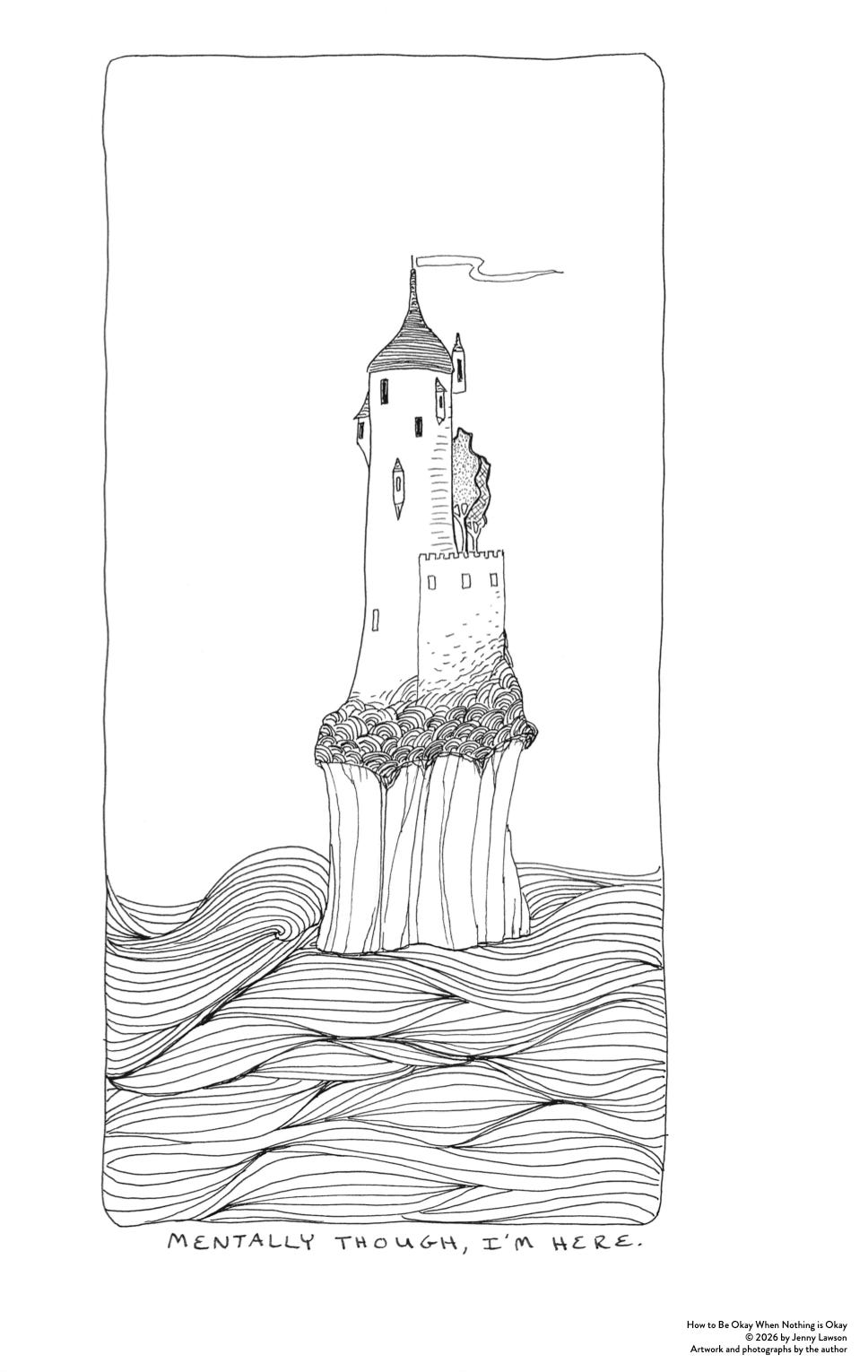
I did lots of little drawings this week but Hunter S. Thomcat is laying on my sketch pad and I don’t want to move him so instead I’m sharing a drawing from the book because I drew it when I was having a high anxiety week and it feels fitting to come back to it now. Just a reminder that even when things feels scary, you can always make a little oasis in your mind. My spell check tried to change that to “you can always make a little oatmeal in your mind” and I’m feeling very relieved that I caught that because that’s even weirder than my normal letters to you.
Erin In The Morning is a reader-supported publication. To receive new posts and support my work, consider becoming a subscriber.
In the latest episode of their podcast A Touch More, all-star athletes Megan Rapinoe and Sue Bird denounced the International Olympic Committee’s new rule requiring sex testing for athletes competing in the women’s category.
The anti-trans policy will subject athletes competing in the women’s division—and only women’s, not men’s—to invasive sex testing to determine whether they have an SRY gene. Why this is where the International Olympic Committee chose to draw the gender line is arguably arbitrary.
No major medical organization endorses this litmus test as a reliable marker of athletic skill or “biological sex.” Even the scientist who discovered the SRY gene has slammed this practice in sports, saying “science does not support” this “overly simplistic” approach. Rather, it’s an arbitrary line in the sand used to cram unscientific ideas about gender and sex into manmade, binary boundaries.
Nonetheless, if a woman tests positive for the gene, she could be forced to compete in the “male” category. This has had dire consequences the last few times it was deployed against women’s athletes. From 1992 to 1999, cisgender women were forced into testing and found out, on the world stage, that they had intersex conditions they never knew about. The spectacle led to ostracization, disqualification, and at least one suicide before such testing was abolished.
“What we’re doing is subjecting everybody, all women and all people who are identifying as women, to this really invasive testing that only to me just says like, oh, so we’re just trying to whittle it down to a certain type of woman,” Rapinoe said.
Rapinoe is one of the most high-profile athletes in the country, a soccer player with three Olympic competitions under her belt and a decorated career in the U.S. Women’s National Team (USWNT). Bird, meanwhile, is among the most successful athletes in history—the retired WNBA legend spent her 20-season professional career as a point guard for the Seattle Storm, and is a record-breaking Olympian in her own right. The athletic power couple has been engaged since 2020. Together, they’ve long been outspoken advocates for the LGBTQ community.
Rapinoe connected the anti-trans vitriol in sports to the right wing’s broader attacks on queer and trans people, calling the push for sex testing “hateful.”
“They sort of like, lost the battle on gay marriage,” Rapinoe said. “So, it’s just like, we’re going to have this whole campaign for all these years to just hate trans people, which is such a small percentage of the population.”
Countless women, cisgender and transgender alike, have faced harassment and persecution because of the anti-trans athlete witch hunt.
“It’s just a total acquiescence to the Trump Administration,” Rapinoe said. “It’s just horrible, and I’m just sickened by it.”
The IOC rule is part of a broader pattern. In the United States, sports bans have served as a Trojan Horse for more sweeping anti-trans policies. The DOJ’s recent lawsuit over “women’s sports,” for example, also demands that transgender students be banned from bathrooms and locker rooms.
“Can we please stop obsessing over trans people and, I don’t know, maybe focus our time, energy, and resources into real problems women’s sports face?” Bird chimed in. She rejected the idea that sex testing, as the IOC claims, “protects women,” instead calling it a “fear-mongering” political ploy meant to generate support from conservative voters.
“That’s all this is,” Bird said. “If you crack this door open, it gets blown open. You’re now policing women’s bodies across the board.”
Erin In The Morning is a reader-supported publication. To receive new posts and support my work, consider becoming a subscriber.
The idea behind these laws seems to be if they can hide that LGBTQ+ people / kids exist they can prevent the acceptance and tolerance of LGBTQ+ kids / people. In the minds of the haters who write these bills hopefully that will force people who are not straight or cis to stay hidden from society. They are desperate to return to the 1950s when LGBTQ+ people had to stay hidden or risk losing everything they had, their job, housing, and friends. They are pathetic in their need for everyone to be the same as they are, feel the same as they do, and to live as they do. Why I did not know or understand. The irrational hate for LGBTQ+ kids is really weird. That they would rather have kids hurt, harmed, assaulted, ostracized, and possibly driven to suicide rather than give them acceptance or simply tolerance. I don’t undestand what their gain is in this? Hugs
The appeals court vacated two separate injunctions against the law, but advocates promise to keep fighting.
John Russell (He/Him)April 7, 2026, 1:00 pm EDT· Updated on April 8, 2026
Shutterstock
The U.S. Court of Appeals for the Eighth Circuit has ruled that Iowa can enforce a 2023 law restricting classroom instruction on LGBTQ+ topics and access to certain books while legal challenges against the law proceed.
On Monday, the three-judge panel overturned injunctions previously issued by lower courts in two separate lawsuits challenging aspects of the Senate File 496, according to the Associated Press and The Des Moines Register.
Passed by the Iowa state legislature and signed by Republican Gov. Kim Reynolds in 2023, the law prohibits “any program, curriculum, test, survey, questionnaire, promotion, or instruction relating to gender identity or sexual orientation” in kindergarten through sixth grade. It also bans materials featuring “descriptions or visual depictions of a sex act” from school libraries and classrooms — a provision which critics say is intended to ban books featuring LGBTQ+ characters and themes.
The law went into effect on July 1, 2023. The following November, the ACLU of Iowa and Lambda Legal sued the state on behalf of LGBTQ+ advocacy organization Iowa Safe Schools and seven students and their families, challenging SF 496’s classroom instruction ban.
Last May, a federal judge issued a split decision, upholding the law’s ban on discussion of gender identity and sexual orientation in K–6 classrooms, but blocking its ban on school “promotions” and “programs” that acknowledge the existence of LGBTQ+ people. U.S. District Judge Stephen Locher also blocked a provision of the law banning schools from providing “accommodation that is intended to affirm the student’s gender identity” without notifying their parents, writing that S.F. 496 was impermissibly vague about what constitutes an “accommodation.”
Writing for the Eighth Circuit on Monday, Judge Ralph Erickson held that the state’s interpretation of the law as requiring school “programs” and “promotions” to only encompass curricular activities does not violate the U.S. Constitution. However, the court did not address whether it is constitutionally permissible for the state to ban specific groups and extracurricular programs, such as Gender & Sexuality Alliance groups, because the Iowa Safe Schools lawsuit did not challenge specific applications of the law, according to the Register.
The court also disagreed with Judge Locher’s ruling that the law’s language around “accommodations” was too vague, restoring S.F. 496’s ban on schools accommodating students’ gender identities without outing them to their parents.
In a separate November 2023 lawsuit, the Iowa State Education Association was joined by publisher Penguin Random House and several prominent authors of banned books in a challenge to S.F. 496’s book-banning provision. Last March, Judge Locher sided with the plaintiffs, issuing a preliminary injunction preventing schools from removing books it considers “obscene” from classrooms and libraries.
Again, writing for the Eighth Circuit in a separate decision Monday, Judge Erickson disagreed w ith Locher’s ruling that school library books are not part a school’s curriculum. Erickson wrote that a school’s library catalogue constitutes government speech and can be restricted by state law, according to the Register.
The decisions on both cases send them back to the district court. But as the Register notes, the Eighth Circuit indicated in both rulings that the plaintiffs could not show a “likelihood of success on the merits” in their challenges to S.F. 496.
At the same time, in a joint press release the ACLU of Iowa and Lambda Legal noted that the rulings narrow “where and how the law may be applied.”
“The prohibition regarding sexual orientation and so-called gender theory applies only to specific, mandatory instruction on these topics during class time. The law, as currently interpreted, does not require schools to prohibit student expression of LGBTQ+ identity nor does it limit the sponsorship or promotion of GSAs,” ACLU of Iowa Senior Staff Attorney Thomas Story said.
“The court’s interpretation of the provision on banning books is that it applies only to those that specifically describe or depict one of those sex acts defined in Iowa’s criminal law. And with the forced outing provision, a report would be made to parents or guardians only if a student specifically requests a school accommodation for the stated purpose of affirming a gender identity different from their registration forms,” Story added.
In a statement responding to the court’s decision, Iowa State Education Association president Joshua Brown told the Register that the case was “about much more than legal technicalities.”
“It is about protecting the freedom of speech and the right to share ideas — values guaranteed by the First Amendment,” Brown said. “Our schools should be safe spaces where students are free to learn, teachers can use their professional expertise without fear, and families can trust that education is based on open inquiry rather than government censorship.”
A spokesperson for Penguin Random House indicated in a statement to the Register that the company intends to keep fighting against S.F. 496. Similarly, Lambda Legal Senior Attorney Nathan Maxwell called the ruling “a setback,” but noted that “it is not the end of this fight.”
“Iowa’s SF 496 is a cruel and unconstitutional law that silences LGBTQ+ children, erases their existence from classrooms, and forces educators to expose vulnerable students to potential harm at home,” Maxwell said in a statement. “We will continue to use every legal tool available to protect these young people. They deserve nothing less.”
Subscribe to the LGBTQ Nation newsletter and be the first to know about the latest headlines shaping LGBTQ+ communities worldwide.
NASA’s Earth Observatory brings you the Earth, every day: sharing images, stories, and discoveries about the environment, Earth systems, and climate that emerge from NASA research, including its satellite missions, in-the-field research, and models.
The crew of Artemis II set a record for the farthest-traveled humans from Earth, and they still could not get away from Donald Trump. The mission had a 45-minute blackout from communication with Earth while flying over the dark side of the moon, and Donald Trump was waiting for them when they came out of it.
The astronauts had a very uncomfortable and awkward 12-minute Earth-to-space call, facilitated by NASA administrator and Trump acolyte, Jared Isaacman. During the call, Trump told the astronauts how they would be honored if he got their autographs. They were also honored by Trump blowing smoke up their asses and telling them that he had saved NASA from extinction when, in reality, he tried to cut their budget by 24% when he returned to office for his second term. Not just that, (snip-MORE)
And now, this brilliant story from a friend of the blog:
Please be advised that this post contains the names of deceased persons. In lieu of images of the deceased, which are offensive to Aboriginal persons, this post contains images of art by contemporary Aboriginal artists.
TW: genocide, slavery, exile, sexual violence, imprisonment, forced labor
For this month’s Kickass Women in History, we go to Tasmania, an island state of Australia, home of the Palawa people. The Palwala people called their home Lutruwita, and early British colonizers referred to it as Van Diemen’s Land. From 1803 to 1853, Van Dieman’s Land was Australia’s primary penal colony. Later on, the island’s name was changed to Tasmania to avoid the stigma of its penal colony history.
Tarenorerer was a Tommeginne woman born around 1800. Between 1800 and 1850, more than 70,000 people were exiled from England and forcibly deported to Van Diemen’s land and subjected to forced labor. This was an incredibly violent time in Tasmania. The convicts were disproportionately male and sexual violence against women was pervasive, while the convicts in general struggled to survive a harsh environment and harsh treatment from their overseers.
Two Women, by Alison Munti Riley
While life was difficult for the convicts, it was worse for the Aboriginal people who were murdered on sight. The convicts and their overseers carried out systemic genocide against Aboriginal Tasmanians during a conflict known as ‘The Black Wars.’ While most of the genocide focused on mass murder, George Augustus Robinson developed the “Friendly Mission,” a plan to forcibly deport Aboriginal Tasmanians to Flinders Island.
When Tarenorerer was in her teens, she was captured and taken from her family by another clan and sold to White sealers on the Bass Strait Islands. During her captivity, she learned to speak English and to use guns.
Tarenorerer escaped in 1828 and became the leader of the Plairhekehillerplue clan of Emu Bay. She led them in a guerilla war against the colonizers. (snip-a bit MORE)
For this month’s kickass woman, we turn our attention to Japan and the legendary life of Queen Himiko, the first recorded ruler of ancient Japan – not only the first female ruler, but the first ruler, period. I’m going to do a little summarizing here, but I’m also going to be very link-heavy. So much legend surrounds Queen Himiko that I am waaay over my head in terms of describing her life, but I do want to give you some links to explore so that you can learn about this fascinating woman.
Once upon a time, before Japan was a country, in the Yayoi (300BC-300AD) and Kofun (250-538AD) periods, there were all these island city-states. Rulers were also religious figures, and female shamans were highly regarded.
The written records of this period come from Chinese historians, who referred to this region as “The Land of Wa”, home of the “Eastern Barbarians.” We also have writings from Korean historians. As summed up in the article “Queen Himiko: Badass Women in Japanese History” by Chelsea Bernard:
During the second half of the 2nd century (ca. 147-190 AD), the lack of a capable leader plunged the Land of Wa into political turmoil and violent upheaval. Finally, in 190 AD the unmarried shamaness was chosen by the people to rule. Installed in a palace with armed guards and watch towers, she was served by “1,000” female attendants while her “brother” acted as a medium of communication, transmitting her instructions and pronouncements to the outside world. After ascending to the throne, she went on to restore order and maintain peace like a boss for the next 50 or 60 years.
Queen Himiko pulled about 100 kingdoms and confederacies and clans together. She sent diplomatic missions to China, which formally recognized her rule. This video explains her role as a verifiable person in written record and archeology. It’s pretty dry but also very detailed.
I don’t know why, but I am a total sucker for books about Arctic and Antarctic exploration. Bring me your frostbite, your scurvy, your long marches, and, above all, bring me my warmest pajamas and a hot cup of tea and we have what I consider to be the perfect ingredients for a cosy night in.
The Heroic Age of Antarctic Exploration (1897ish – 1922ish) and the many efforts to locate the Northwest Passage in the Arctic are simply crammed with stoic imperialist White men who suffer terribly for what, frankly, does not strike me as terribly good reasons. Perhaps my ability to read of their sufferings with ghoulish fascination stems from the fact that none of these guys needed to be either North or South in the first place. To borrow and bend a common phrase: you live by the poorly sealed canned goods, you die by the poorly sealed canned goods*.
Arnarulunnguaq on the Fifth Thule Expedition
Of course, in the case of the Arctic, people were already living there long before any White explorers staggered upon the scene. Yu’pik and Inuit peoples were instrumental in exploratory expeditions in the Arctic and, less directly, the Antarctic. I’ve already written about Ada Blackjack, an Inupiaq woman who survived on Wrangel Island alone for eight months after the other members of her party died.
Other Indigenous women often supported expeditions, especially Arctic ones, by sewing, skinning and preserving fur and leather and cooking. Taqulittuq (also known as Tookoolito and as Hannah), an Inupiaq woman, accompanied Charles Francis Hall on many expeditions including one in which she and some crew members were marooned for months and survived because of the skills of Taqulittuq and her husband. Many other Indigenous women accompanied and supported expeditions and were never formally recognized for their valor.
Arnarulunnguaq, the first woman to travel from Greenland to the Pacific, was born in Greenland in 1896. She related that when she was six or seven, her father, a hunter, died and the family became so desperate for food that they prepared to sacrifice Arnarulunnguaq so the the rest of the family could live, having one less mouth to feed. However, at the very last minute, her brother started crying and her mother decided not to kill Arnarulunnguaq after all. Arnarulunnguaq was (of course) powerfully changed by this experience. According to the explorer Knud Ramussen:
She says herself that the gratitude that she came to feel many years later, and the life she had almost received as a gift, has made her placid towards people.
Arnarulunnguaq married a hunter named Iggiannguaq (allegedly she had a previous marriage that failed because she was “too lazy,” a trait which truly does not match the historical records of her life!). The two planned to accompany Knud Rasmussen on his Fifth Thule Expedition (1921 – 1924). This trip involved travelling from Greenland to Siberia via dogsled. Iggiannguaq died before the trip commenced, and Arnarulunnguaq asked to be allowed to continue with the trip. Her cousin, Qaavigarsuaq Miteq, filled the role of hunter.
tRump couldn’thelp himself but he had to attack Obama making claims of how bad Obama’s library is. Then Sam describes tRump’s grift / scam on his library, using tax free dollars to build a hotel that he will make money from. Then Sam talks about the citizenship birthright case. Hugs
New month, new collection of queer romances, and this month we’re going heavy on historicals! Treat yourself to love throughout the ages with these sweet new reads.
A sizzling sapphic enemies-to-lovers romance between two rival tennis superstars, taking place during the US Open!
Nothing fades faster than a former prodigy—and Inés Costa is dangerously close to disappearing.
Once queen of the court, Inés is limping through qualifiers. And after losing her biggest sponsor to Chloe Murphy, the sport’s fiery new favorite, she and her bank account are running on fumes.
Chloe, known as much for her talent as her temper, is a top seed for the upcoming US Open. But thanks to broken rackets, code violations, and the inability to play well with others, her “favorite” status is slipping away.
However, when they are forced to share the same side of the court, and the world surprisingly doesn’t implode, Chloe makes an she’ll fund Inés’s journey to the US Open, but only if Inés agrees to be her hitting partner and teach her to keep a level head.
It’s strictly business, but somewhere between practice drills and tour stops, the line between rival and something more begins to blur.
As the summer burns toward Flushing Meadows, their sizzling tension catches fire. With a trophy in sight and emotions running high, will their romance double fault at set point?
The Game, Set and Match series gets its first f/f in this third book, bringing a heated rivalry to the tennis court. This one’s chock full of favorite tropes and is decidedly steamy, the perfect pick to tide you over until nonfictional players hit the US Open in a few months. (snip-MORE, plus ordering info, on the page)
The library director who was fired for refusing to relocate LGBTQ children’s books has garnered substantial community support, with people donating over $84,000 to help her as she navigates the loss of her job. A GoFundMe launched by a community member says that the fundraiser for Luanne James is going “directly toward supporting her family’s basic living expenses during this time.”
James was the director of the Rutherford County Library until the board voted to fire her last week. The termination came after she refused to move 132 children’s books to another section of the library because the LGBTQ themes were deemed inappropriate for children. James said that she “had no choice” but to refuse the board’s request to move the books. She said that she believes librarians are being politicized and that “is not what we signed up for.”
I think the article is self explaintary and clear. The hate directed against the LGBTQ+ seems irrational and immoral. Why is it immoral if it is being done by religious groups? Because they have no qualms about lying, giving false and misleading information, and forcing their church doctrines on others who don’t agree with those doctrines. Below are just a few quotes from the article. The last one from florida would make pointing out the truth about how a person is acting or speaking illegal, but doing the racist bigoted stuff would stay legal. Hugs
Anti-trans bathroom bans made a comeback, with four passed in Alabama, Idaho, Ohio and South Carolina.
Policy changes enacted barriers to gender markers and name changes for IDs/personal documents in Arkansas and Florida.
Florida introduced a bill that limited free speech, making public accusations, whether true or false, of a person being homophobic, transphobic, racist or sexist equivalent to defamation and punishable by fine. The bill did not pass.
A central theme of anti-LGBTQ+ organizing and ideology is the opposition to LGBTQ+ rights or support of homophobia, heterosexism and/or cisnormativity, often expressed through demonizing rhetoric and grounded in harmful pseudoscience that portrays LGBTQ+ people as threats to children, society and often public health.
Top Takeaways
In 2024, the number of anti-LGBTQ+ groups increased by about 13% from the previous year. Anti-LGBTQ+ groups maintained a trend in heavy mobilization across multiple strategies with increasing political and financial support from the hard right.
Anti-trans narratives were instrumental to the 2024 election at all levels of government, especially at the local level where anti-LGBTQ+ and anti-inclusive education activism continue to heavily overlap. The politicization of gender-affirming health care and LGBTQ+-inclusive school curricula contributed to what has been characterized as the “most Anti-LGBTQ election in decades.” Republicans spent almost $215 Million on TV ads to smear trans people, surpassing ads on rival issues such as economy, immigration and housing. Another wave of anti-LGBTQ+ legislation broke records at state and federal levels, but such bills were not as nearly as successful as last year.
Anti-LGBTQ+ groups are heavily invested in the courts and pushing policy change by judicial decision. Hard right and anti-LGBTQ+ extremists on social media continue their campaign to “make pride toxic” by targeting inclusive business and marketing practices while anti-LGBTQ+ legal groups take up administrative law and lobbying strategies to eliminate diversity, equity, and inclusion practices in the public and private sectors under the guise of “viewpoint diversity” and “religious freedom” advocacy.
Key Moments
Throughout the state legislative sessions, anti-LGBTQ+ movement organizations continued their facilitation of a decades long effort to foment anti-trans moral panic in public discourse. Legislative assaults broke records for the fifth consecutive year, albeit with fewer successes.
Several factors slowed the trend, including coordinated community responses and reporting, such as the SPLC’s Project CAPTAIN, on the networks that perpetuate anti-LGBTQ+ talking points and legislation. Legislation trends of concern include:
A Florida bill promoted insurance coverage conversion therapy for detransition. The bill passed the House, but died in the Senate.
Anti-trans bathroom bans made a comeback, with four passed in Alabama, Idaho, Ohio and South Carolina.
Policy changes enacted barriers to gender markers and name changes for IDs/personal documents in Arkansas and Florida.
Florida introduced a bill that limited free speech, making public accusations, whether true or false, of a person being homophobic, transphobic, racist or sexist equivalent to defamation and punishable by fine. The bill did not pass.
In February 2024, anti-trans influencers spun a disinformation campaign to exploit the tragic shooting at Lakewood Church in Houston by alleging the shooter was trans. Hard-right social media influencers, equipped with talking points that help fuel gun purchases, used this and other mass shootings in 2024 to perpetuate anti-immigrant and anti-trans conspiracy theories. Despite claiming anti-trans activism helps “protect children,” the SPLC reported that in the wake of mass shootings, anti-trans extremists divert attention from meaningful reforms to prevent gun violence, which is the leading cause of death for children in the United States.
In response to online campaigns by hard-right social media personalities, many major brands scaled back Pride merchandise in 2024. Armed Conflict Location and Event Data (ACLED) reported anti-LGBTQ+ protests at Pride events decreased in 2024; however, GLAAD documented 110 anti-LGBTQ+ incidents during June 2024. In addition, the SPLC monitored at least 74 bomb threats targeting LGBTQ people and events between January 1 and June 30, 2024.
The Colorado Republican Party posted “Burn all the #pride flags this June” and shared a video clip titled “God Hate F__s.” There was no shortage of vandalism: In Poulsbo, Washington, 14 Pride banners were slashed, and over 200 pride flags were stolen from the town center in Carlisle, Massachusetts. Throughout June, SPLC tracked dozens of protests, bomb threats and harassment campaigns directed at civil society groups like Pride committees and LGBTQ+-inclusive religious congregations. Hate groups including MassResistance, Gays Against Groomers, Protect Texas Kids, White Lives Matter, and Aryan Freedom Network were active at Pride events in June 2024.
In July and August 2024, anti-trans influencers manufactured controversy over the gender identity of Olympic athletes Imane Khelif and Lin Yu-ting. This anti-trans controversy exclusively targeted Taiwanese and Algerian athletes, scrutinizing the legitimacy of their womanhood. The crux of arguments made by the anti-trans actors re-animated misogynoir stereotypes to exclude women of color from being considered women based on white Eurocentric beauty standards of femininity. The series of events suggests eugenics and racism underlie transphobia and exhibited how anti-trans hysteria disproportionately impacts women of color on an international scale.
In September 2024, the anti-LGBTQ+ hate group Family Research Council held its annual Pray Vote Stand conference. FRC hosted a variety of anti-immigrant commentary ranging from Katy Faust, president of the anti-LGBTQ+ hate group Them Before Us, urging attendees to “breed out” immigrants and trans people. At the conference, Oklahoma superintendent of public instruction Ryan Walters alleged illegal immigrants were bringing fentanyl into schools; and the summit featured population control myths espoused by both anti-abortion and anti-vax panelists. FRC devoted multiple plenary sessions to anti-trans, anti-abortion and anti-immigrant coded topics.
The election of the first trans member of congress, Sarah McBride, was immediately met with a trans bathroom ban on all restrooms on the House side of the Capitol complex. The resolution was introduced by Nancy Mace and supported by House Speaker and former Alliance Defending Freedom attorney Mike Johnson. Mace posted anti-trans slurs on X following a bathroom sit-in at the Capitol in protest of the bathroom ban. The protesters were arrested and taken to the Capitol Police station; Mace then posted a video showing her outside the stations saying, “Some tr——s got arrested protesting my ban.” She then began reading them their Miranda rights along with demeaning commentary about the protesters.
States will continue to be labs for experimenting with anti-LGBTQ+ public policy. The legislative early filing period in Texas shows 32 anti-trans bills already filed for the 2025 legislative session. This year will show a continued pressure on erasing trans people from public life. With Donald Trump’s re-election, federal civil rights enforcement litigation will likely swing against LGBTQ+ inclusion.
Authors of Project 2025 are being tapped as cabinet picks for the second Trump administration. Project 2025 is an authoritarian and theocratic road map, and anti-trans scapegoating makes up key policy recommendations.
Background
Anti-LGBTQ+ groups in the United States oppose LGBTQ+ rights but also generally support heterosexism, an ideology that assumes heterosexuality is the only “normal” sexuality, and/or cisnormativity, an ideology that assumes one’s gender identity always matches the sex one was assigned at birth. Anti-LGBTQ+ groups primarily consist of Christian Right groups but also include such organizations as the National Association for Research and Therapy of Homosexuality (NARTH) that purport to be scientific. Anti-LGBTQ+ groups in America have employed a variety of strategies in their efforts to oppose LGBTQ+ rights or support heterosexism and/or cisnormativity, including engaging in the crudest type of name-calling.
Anti-LGBTQ+ groups on the SPLC hate list often link being LGBTQ+ inherently to criminal behavior; claim that the marriage equality and LGBTQ+ people in general are dangers to children and families; contend that being LGBTQ+ itself is dangerous and support the criminalization of LGBTQ+ people and transgender identity. These groups also believe in a false conspiracy that LGBTQ+ people seek to destroy Christianity and the whole of society. More recently, hard-line anti-LGBTQ+ groups have promoted their discriminatory laws and policies that limit the rights of LGBTQ people under the guise of religion, blurring the lines between the separation of church and state and discarding anti-discrimination civil rights policies. These same groups have promoted legislative models to push anti-trans legislation into law under a conservative religious assumption that gender can only be understood as either “male” or “female.”
Many leaders and spokespeople of SPLC-designated anti-LGBTQ+ groups have used degrading and derogatory language to describe LGBTQ+ people. Others disseminate disparaging information about LGBTQ+ people that are simply untrue – an approach no different from how white supremacists and nativist extremists propagate lies about African American people and immigrants to make these communities seem like a danger to society. Viewing LGBTQ+ people as unbiblical or simply opposing marriage equality does not qualify an organization to be listed as an anti-LGBTQ+ hate group.
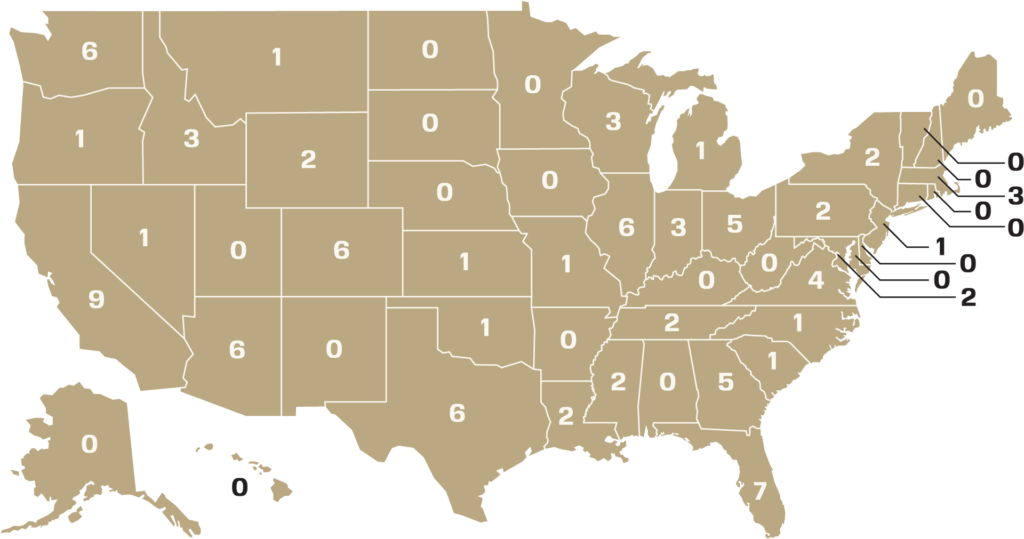
2024 Anti-LGBTQ+ Hate Groups
* – Asterisk denotes headquarters.
Abiding Word Baptist Church, Revival Baptist Church
Orange Park, Florida
Advocates Protecting Children
Arlington, Virginia
Alliance Defending Freedom
Scottsdale, Arizona
American College of Pediatricians
Gainesville, Florida
American Family Association
Indianapolis, Indiana
Tupelo, Mississippi *
Franklin, Pennsylvania
American Vision
Powder Springs, Georgia
Americans for Truth About Homosexuality
Columbus, Ohio
ATLAH Media Network
New York, New York
California Family Council
Fresno, California
The Campus Ministry USA
Terre Haute, Indiana
Center for Christian Virtue
Columbus, Ohio
Center for Family and Human Rights (C-FAM)
New York, New York*
Washington, D.C.
Chalcedon Foundation
Vallecito, California
Child and Parental Rights Campaign
Johns Creek, Georgia
Church Militant/St. Michael’s Media
Ferndale, Michigan
Concerned Christian Citizens
Temple, Texas
D. James Kennedy Ministries
Fort Lauderdale, Florida
Do No Harm
Glen Allen, Virginia
Faith2Action
North Royalton, Ohio
Faithful Word Baptist Church
Tempe, Arizona
Straight Paths Baptist Church
Tucson, Arizona
Family Action Council of Tennessee
Franklin, Tennessee
The Family Foundation of Virginia
Richmond, Virginia
Family Policy Alliance
Colorado Springs, Colorado
Family Research Council
Washington, D.C.
Family Research Institute
Colorado Springs, Colorado
Family Watch International
Gilbert, Arizona
First Works Baptist Church
Anaheim, California
Florida Family Voice
Orlando, Florida
Focus on the Family
Colorado Springs, Colorado
Frontline Policy Council
Atlanta, Georgia
Gays Against Groomers
Fountain Hills, Arizona
California
Georgia
Kansas City, Missouri
Monroe, North Carolina
Vancouver, Washington
Milwaukee, Wisconsin*
Generations
Elizabeth, Colorado
Genspect
Chicago, Illinois
Heterosexuals Organized for a Moral Environment (H.O.M.E.)
Downers Grove, Illinois
Illinois Family Institute
Tinley Park, Illinois
Liberty Baptist Church
Rock Falls, Illinois
Liberty Counsel
Orlando, Florida
Louisiana Family Forum
Baton Rouge, Louisiana
MassResistance
Torrance, California
Pocatello, Idaho
Idaho
Waltham, Massachusetts*
New Jersey
Fort Worth, Texas
Houston, Texas
Kenosha, Wisconsin
Gilette, Wyoming
Lander, Wyoming
Massachusetts Family Institute
Wakefield, Massachusetts
Mission: America
Columbus, Ohio
Montana Family Foundation
Laurel, Montana
Pacific Justice Institute
Sacramento, California
Santa Ana, California
Miami, Florida
Mississippi
Reno, Nevada
Salem, Oregon
Seattle, Washington
Partners for Ethical Care
Chicago, Illinois
Pass the Salt Ministries
Hebron, Ohio
Pennsylvania Family Institute
Harrisburg, Pennsylvania
Pilgrims Covenant Church
Monroe, Wisconsin
The Pray In Jesus Name Project
Colorado Springs, Colorado
Probe Ministries
Plano, Texas
Public Advocate of the United States
Merrifield, Virginia
Revival Baptist Church
Clermont, Florida
Ruth Institute
Lake Charles, Louisiana
Save California
Sacramento, California
Scott Lively Ministries
Springfield, Massachusetts
Society for Evidence-Based Gender Medicine
Twin Falls, Idaho
Stedfast Baptist Church
Oklahoma City, Oklahoma
Cedar Hills, Texas *
Strong Hold Baptist Church
Norcross, Georgia
Sure Foundation Baptist Church
Indianapolis, Indiana
Vancouver, Washington*
Seattle, Washington
Spokane Valley, Washington
Them Before Us
Seattle, Washington
Tom Brown Ministries
El Paso, Texas
True Light Pentecost Church
Spartanburg, South Carolina
United Families International
Gilbert, Arizona
Verity Baptist Church
Sacramento, California
Warriors for Christ
Mount Juliet, Tennessee
Westboro Baptist Church
Topeka, Kansas
World Congress of Families/International Organization for the Family
Rockford, Illinois



 Shutterstock