So What’s Everyone Reading These Days?

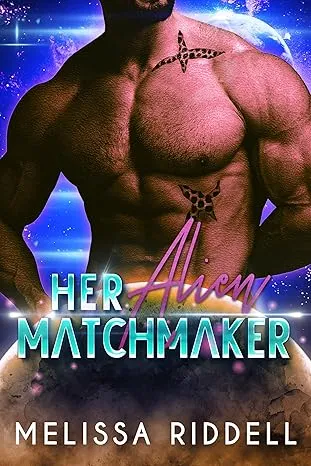
When not finding dependable news, and all the other things that make up your days? I just finished Judy Blume’s “Smart Women,” and am now reading a Courtney Milan M/M romance set during the US’s very early days; the protagonists are a white British absconder, and a freed Black US soldier, and they’re making their way to Rhode Island to the Black soldier’s family who they hope will be safe at home. I’m not very far into it, but they’ve self-acknowledged that they’re having feelings for each other, and had tacitly acknowledged they know, to each other. Tonight over supper, I will read on. It’s got a lot of humor, from the British guy.

OK, so I ran across this list from The Root, and thought a snippet could be of interest here I’m also leaving in the related-or-not links because those stories are also of interest. Enjoy!

January 2026 Books By Black Authors You Need To Read

From a Kenan Thompson picture book to a memoir from the CEO of The Honey Pot, the first month of 2026 is full of great Black books for lovers of every genre.

By Angela Johnson Published January 10, 2026

new year is here, and if one of your resolutions is to cut down on your screen time, you’re in luck…because with a new year comes great new books by Black authors for every kind of reader, so make room on your bookshelf!

Suggested Reading

Why the Tragic Shooting of Keith Porter Jr. by ICE Is Not the Same as Renee Good in Minneapolis

New Footage Shows Ice Agent’s View During Fatal Minneapolis Shooting, From George Floyd to Renee Good: Minneapolis Faces New Trauma After Shooting, Zohran Mamdani and Brandon Johnson React to Deadly ICE Shooting, Why ICE Agent Killing a White Woman Could Actually Make a Difference, Jasmine Crockett Calls Out Republicans in Emotional Response to Renee Good, Tim Walz Warns Minnesota Residents of Martial Law and Everything We Know About the Dec. 7 Tragedy

January 2026 Books By Black Authors You Need To Read

Samuel L. Jackson, John David and Malcolm Washington on ‘The Piano Lesson,’ Family and Legacy

SNL star Kenan Thompson’s hilarious picture book, The Honey Pot CEO Beatrice Dixon’s story of her road to success and Dr. LaNail R. Plummer’s guide to counseling Black women are just a few of the books by Black authors we can’t wait to read this month.

“Unfunny Bunny” by Kenan Thompson with Bryan Tucker (Jan. 13)

SNL star Kenan Thompson can add children’s book author to his already amazing resume. “Unfunny Bunny” is a picture book that centers around Bunny, who wants to be the funniest kid in his class, but worries when his jokes don’t land with his classmates.

“With Love, From Harlem” by ReShonda Tate (Jan. 27)

Amazon.com

Set in Harlem in 1943, ReShonda Tate’s novel, “With Love, From Harlem,” is inspired by the life of jazz performer Hazel Scott and her relationship with pastor-politician Adam Clayton Powell Jr. and how they balance their relationship with their personal ambitions.

You’ll love the references to Harlem legends, like Billie Holiday, Langston Hughes and James Baldwin.

“The Soul Instinct” by Beatrice Dixon (Jan. 27)

Amazon.com

“The Soul Instinct” is an inspiring memoir from The Honey Pot CEO Beatrice Dixon. In the book, she writes about a dream of her grandmother that led her on a journey to create a successful line of feminine care products now available in more than 30,000 stores across the United States, and how she had to learn to trust herself along the way.

“Sweet, Sweet Memory” by Jaqueline Woodson (Jan. 20)

Amazon.com

“Sweet, Sweet Memory” is a beautiful children’s book by Jaqueline Woodson about a young girl who learns about the power of community and our connection to our ancestors after the death of her beloved grandfather.

“Behind These Four Walls” by Yasmin Angoe (Jan. 1)

Amazon.com

“Behind These Four Walls” is a thrilling new novel from Yasmin Angoe. At the center of the story is Isla Thorne, who met her best friend, Eden Galloway, while the two were growing up in a group home. The two planned to run away to Los Angeles when they turned 16, but Eden never made it. Now, ten years later, Isla is determined to solve the mystery of her friend’s disappearance.

“The Book of Alice: Poems” by Diamond Forde (Jan. 20)

Amazon.com

Winner of the 2025 James Laughlin Award from The Academy of American Poets, “The Book of Alice” is a collection of poetry inspired by the life of Diamond Forde’s grandmother Alice, who found her way to New York City during the Great Migration. Using stories from the King James Bible, Forde draws parallels to the Black experience.

“Black Founder: The Hidden Power of Being an Outsider” by Stacy Spikes (Jan. 24)

Amazon.com

In “Black Founder,” MoviePass co-founder Stacy Spikes writes about his journey to becoming a successful tech entrepreneur and how he found power in his position as an outsider to fuel his success and disrupt the status quo.

“Fire Sword and Sea” by Vanessa Riley (Jan. 13)

Amazon.com

“Fire Sword and Sea.” is a page-turner based on the story of real-life female pirate Jacquotte Delahay, Set in 1675, Delahay is the mixed-race daughter of a wealthy tavern owner on Tortuga who hides her identity for the chance to explore life at sea.

“A High Price For Freedom” by Clyde W. Ford (Jan. 13)

Amazon.com

“A High Price For Freedom” is a new book by historian Clyde W. Ford. In the book, Ford explores some of the most fascinating moments in Black history and sheds new light on the stories we thought we knew.

“Just Right” by Torrey Maldonado (Jan. 20)

Amazon.com

“Just Right” is the first picture book by well-known middle grade author Torrey Maldonado. The story, which deals with the special relationship between a little boy and his uncle, emphasizes the power of positive adult role models.

“Getting to Reparations: How Building a Different America Requires a Reckoning with Our Past” by Dorothy A. Brown (Jan. 20)

Amazon.com

“Getting to Reparations” is a new book by Dorothy A. Brown, which explores the idea of reparations for Black Americans through the lens of other communities that have been compensated by the government for past wrongs throughout history.

“The Essential Guide for Counseling Black Women” by Dr. LaNail R. Plummer (Jan. 27)

Amazon.com

In “The Essential Guide for Counseling Black Women,” mental health expert Dr. LaNail R. Plummer shares a guide on how mental health professionals can best support Black women on their healing journey.

“The Ex Dilemma” by Elle Wright (Jan. 27)

Amazon.com

“The Ex Dilemma” is a fun romantic novel that tells the story of nepo baby Wesley Batchelor, whose dating life is put on blast by a mysterious social media influencer. Things get even more complicated when a private investigator, who just so happens to be Wesley’s ex, is hired to find out who is working against him. (snip)

“ICE OUT FOR GOOD” WEEKEND OF ACTION–JANUARY 10th AND 11th!

How the Right-Wing Outrage Machine Prompted the Conflagration in Minnesota

I would like to thank https://personnelente.wordpress.com/2026/01/08/causing-problems-on-purpose/ for the link to the story.  I am listening to congressional republicans drown on about the US being the apex predator so our country has the right to do what ever we wish to on the world stage.  Our country has the right to take what we want because Nazi Stephen Miller who seems to be running the country because that might makes right and the US has the military might.  Every time I listen to Miller punch his words out like a poor imitation of Hitler and his entire mocking of anyone in the media or that disagrees with his stance I get a sick horrible feeling in my core being.  He is unhinged and the most powerful person next to tRump.   Hugs


https://talkingpointsmemo.com/news/how-the-right-wing-outrage-machine-prompted-the-conflagration-in-minnesota

Protesters clash with law enforcement outside an Immigration and Customs Enforcement (ICE) facility on January 8, 2026. (Photo by Mostafa Bassim/Anadolu via Getty Images)

More than 2,000 U.S. Immigration and Customs Enforcement agents are on the ground in Minnesota in what President Donald Trump’s administration officials have called the “largest immigration operation ever.” Deployed just days ago by Trump, one agent has already shot and killed a person and federal law enforcement has deployed tear gas and pepper spray against protesters.

The massive operation and subsequent violence in Minneapolis comes against the backdrop of Trump’s announcement Tuesday that he’s freezing $10 billion in federal funds approved by Congress for child welfare programs, including Temporary Assistance for Needy Families, foster care, and childcare subsidies in Minnesota and four other blue states. 

This sharp escalation in action has its roots in a yearslong law enforcement investigation into widespread fraud and misuse of federal funds in Minnesota that in late 2025 was seized upon by the right-wing misinformation machine and, this week, reached a screeching fever pitch. Minnesota Governor Tim Walz announced Monday he would not be running for reelection, in part so he could devote his time to addressing the crisis. 

The journey from legitimate local and federal investigations into fraud to the so-called largest ICE operation in history, the pausing of federal funds to blue states and the end of Walz’s gubernatorial tenure is a long and tangled one. As has become common in the Trump era, a serious situation was dispersed throughout the unserious realm of right-wing media and content creation, catching the attention of the president and yielding very real consequences. 

Here’s the backstory you need to understand these events.

How the Scandals Started

Amid the right-wing uproar, there are elements of truth: Minnesota has grappled with Medicaid fraud for more than a decade, which has been the focus of federal and state investigations and local news reporting. The schemes were further fueled by the COVID-19 pandemic, during which an influx of federal funding for social programs came with relaxed vetting standards in an effort to allow speedy access for vulnerable populations. 

Republican furor over widespread fraud has also flared up periodically over the years. But it reached new heights in recent months after a wave of new claims — ranging from the well-founded to the baseless to the entirely histrionic — caught the attention of the president. 

Some of the first claims of fraud arose in 2015, and focused on day care centers that local authorities accused of overbilling state welfare agencies. This gave rise to an early instance of right-wing outrage, when a local Fox affiliate in 2018 speculated that hundreds of millions of dollars were being stolen from the program and sent to terrorists in Africa. State officials found that claim to be baseless. 

In 2021, feds began investigating fraud claims connected to a child nutrition program. By early 2022, the FBI seized property from a nonprofit called “Feeding Our Future.” The revelation of the investigation prompted bipartisan outrage toward the fraudsters; Rep. Ilhan Omar (D-MN), for example, questioned the U.S. Department of Agriculture about the misuse of funds, asking about the investigation and steps that could be taken to prevent “fraudulent misuse of federal funding meant to feed hungry children” in the future. 

In September 2022, the Department of Justice announced federal criminal charges against a network of people connected to Feeding Our Future, alleging they defrauded the government of $250 million in federal child nutrition funding, using the funds instead for mansions, cars and other lavish personal expenses. Former Attorney General Merrick Garland said the indictments represented “the largest pandemic relief fraud scheme” to date. At the time, 47 people were indicted, many, but not all of whom, were members of the Minnesota Somali community. State Republicans began pointing a finger at the governor.

The scandal continued to unfold. Even the ensuing criminal proceedings were rife with corruption, with one juror dismissed after fraud defendants tried to bribe the juror with a literal bag of cash. The Feeding Our Future scheme has proven vast and deep. Between 2023 and 2025, more indictments came down connected to the case, with the 78th person indicted this past November. It has become the poster child for Minnesota’s tangled fraud network that has so far extended to autism services, Medicaid fraud, addiction services and housing..

The state has also investigated the network. In August 2023, Minnesota Attorney General Keith Ellison charged 18 people with defrauding Medicaid of $9.5 million with fake home health care businesses. Ellison in December 2023 announced charges in what his office called the largest Medicaid fraud case it had investigated. Three people were charged in an $11 million prosecution. A June 2024 state audit found the Minnesota Department of Education had received dozens of complaints about the nonprofit and failed to oversee the distribution of the $250 million at the heart of the case.

The Politics of the Scandals

State Republicans continued to use the fraud investigations and indictments as evidence of Walz’s unfit leadership. When Walz became Kamala Harris’s vice presidential candidate in August 2024, the governor became a punching bag for Republicans in the state running for local and national office. On the Hill, House Republicans subpoenaed Walz for information about his actions and responsibilities related to the Feeding Our Future scheme.

ST. PAUL, MINNESOTA – JANUARY 5: Minnesota Gov. Tim Walz speaks during a press conference at the State Capitol building on January 5, 2026 in St. Paul, Minnesota. Walz announced today that he is abandoning his re-election campaign for governor, blaming scrutiny from President Donald Trump for his decision. (Photo by Stephen Maturen/Getty Images)

In September 2025, eight people were charged in a multi-million dollar housing fraud scheme for a state program that used Medicaid funds for certain housing services. Then-Acting U.S. Attorney for the District of Minnesota Joseph Thompson called the indictments “the first wave of charges in a massive fraud” program. The abused housing program was dissolved in late October.

In addition to the political advantages of blaming the Democratic governor, some conservatives exploited the fact that most of the people implicated in each of the fraud investigations were members of Minnesota’s Somali community. That became paramount when Trump and prominent members of the MAGA-sphere got involved. 

Trump Grabs the Story

On Nov. 19, City Journal, a publication produced by the conservative New York think tank The Manhattan Institute published a post co-authored by Chris Rufo, the notorious anti-woke crusader who is also a fellow at the think tank. The report alleged Minnesota fraudsters were wiring their spoils to a Somalia-based terrorism organization called Al-Shabaab, citing “federal counterterrorism sources.” Two days later, news website and television station The National News Desk — owned by the conservative Sinclair Broadcast group — covered the City Journal report. Those posts may have been what caught the president’s eye. Two hours after The National News Desk report was published, Trump posted about the Minnesota fraud investigations on Truth Social. “Minnesota, under Governor Waltz, is a hub of fraudulent money laundering activity,” Trump wrote, misspelling the governor’s name. In the same post, he said he was removing a special immigration status that covers about 700 Somalian people in the U.S., and introduced the idea that “Somali gangs are terrorizing” Minnesotans.

The Truth Social posts marked the beginning of a far-right frenzy that has seen the president and extremist influencers feed off of one another, spinning narratives and pushing policies pulsating with outrage, xenophobia and Islamophobia. On Nov. 29, the New York Times echoed Republican talking points blaming the Somali community for federal funds theft, saying that the “fraud took root in pockets of Minnesota’s Somali diaspora as scores of individuals made small fortunes.” On Dec. 1, the White House issued a one-pager about the Minnesota situation, repeatedly highlighting the ethnicity of most of the people who had been federally charged and blaming Walz.

Trump on Dec. 2 deployed a first round of ICE agents — about 100 — to Minneapolis and St. Paul to target the Somali community, an official told the New York Times. All the while, legitimate federal investigations continued to play out.

Prosecutor Thompson is now the First Assistant U.S. Attorney for the District of Minnesota. Appointed by Trump, Thompson has served as a longtime prosecutor. On Dec. 18, he charged five new people in the housing program Medicaid fraud scheme. Thompson said more than $9 billion in federal funds may have been stolen from Minnesota.

“The magnitude cannot be overstated,” Thompson said. “What we see in Minnesota is not a handful of bad actors committing crimes. It’s staggering, industrial-scale fraud.”

Following this announcement, the total number of people indicted in Minnesota fraud schemes reached 92. Eighty-two of those were of Somali descent, according to the U.S. Attorney’s Office for Minnesota, PBS reported. While a significant share of the scammers are Somali, the number is less than 0.1% of the entire Somali population in Minnesota, where the majority are U.S. citizens, and just about 0.03% of the Somali population nationwide, according to U.S. Census Bureau data cited by PBS.

Six days later, a 23-year-old content creator dropped a 43-minute YouTube video that had the effect of planting dynamite in a minefield. In a vague Dec. 26 video, former prankster turned anti-immigrant influencer Nick Shirley visited Minnesota day care and health care centers, demanded people who appeared to work at the centers show him children, and accused the businesses of fraud. Shirley in the video is flanked by two masked men, whom he identifies as his security, and is following a man called David who purports to have papers showing evidence of fraud. The Intercept identified David as 65-year-old David Hoch, an eccentric, far-right political operative in the state.

That late December YouTube video was also lauded by Elon Musk, reposted by the Department of Government Efficiency and led Vice President JD Vance to declare Shirley deserving of a Pulitzer Prize. Trump then unleashed a torrent of retribution against Minnesota, Somalians, and Democratic states in general. 

It doesn’t matter that claims made in Shirley’s video remain unfounded, and that it documents nothing untoward.

It also doesn’t seem to matter that the initial, 2018 report linking fraud in Minnesota to a Somalia-based terrorist group was debunked by the state, or that the only named source for the article told the Minnesota Star Tribune he was misquoted. (City Journal told the Star Tribune it stands by its reporting.)

Trump has since early December used the fact that the majority of the defendants in each of these fraud cases were members of the Minnesota Somali community as ammunition, opening a dark new chapter in his signature anti-immigration crackdown.


Layla A. Jones is a reporter for TPM in Washington, D.C., with experience covering government and economic policy, race, culture, and history. She has written for the Philadelphia Inquirer, Billy Penn, WHYY, NPR, and the Philadelphia Tribune, and participated in the Knight-Bagehot Fellowship at Columbia University. She attended Temple University for undergrad.

The Social Psychology Behind the Trans Terrorism Panic

Randy in a post asked the question I think many ask here.  Why do I champion the trans community so forcefully?  Nan asked me a few years ago if I was feeling like I was trans, and no I am a cis gay male and happy in it.  Although if not for my past I would have liked to be free to explore a more feminine side of myself.  Ron and I do have trans people in our family but I have never met them.  The truth is in the page why I do this.  I want to give a voice to those that have no voice and right now the most targeted unfairly groups are trans people / kids and brown skinned people ICE is going after.   Why do I put so much effort in to giving them a voice?  Because as an abused little boy people in my town knew I was being abuse but no one gave me a voice, no one spoke up for me.  Hugs.  


How Americans are manipulated by online misinformation and political rhetoric.

Mar-a-Lago Spa Would Send Teen Workers on House Calls to Jeffrey Epstein’s Mansion: Report

Full disclosure.  Ron was working for tRump at Mar-a-largo as his nighttime butler and nighttime house supervisor.  He knew all about this and told me of it.   Sadly he couldn’t do anything about it other than give the doctor and staff comfort and support. 


https://people.com/mar-a-lago-spa-would-send-teen-workers-to-jeffrey-epstein-s-house-report-11877952

A new report from the ‘Wall Street Journal’ reveals new ties between Epstein and President Donald Trump

Again tRump lies this time about the profit / good about our illegal attack on Venezuela

Israeli Influencer Uses Starving Gaza Children to Make Funny Video

Hi all.  I hate to keep posting such negative awful stuff in the new year but what I always wanted to do with this blog is to give a voice to those that don’t have one.  It is hard to read all these news articles but please remember while we sit comfortably in our homes there are others struggling to simply survive.  The more we learn about these people the more we might be able to help.  This shows how many of the Israeli population are complicit and simply don’t care about the suffering of the Palestinians.   This is why I say it is not just the Israeli government but the countries media leading the population into compliance and hate for the Palestinian people.   Remember they stormed the offices of the justice department of a judge trying to hold IDF soldiers to account for violently raping a Palestinian man causing life threatening injuries.   Those IDF soldiers when on TV later to brag about what they did.    Thanks for all who read / watch and add your voice to the conversation.   Best wishes and hugs.  Scottie


https://qudsnen.co/post?id=67012&slug=israeli-influencer-uses-starving-gaza-children-to-make-funny-video

January 6, 2026

Israeli Influencer Uses Starving Gaza Children to Make Funny Video

Israeli Influencer Uses Starving Gaza Children to Make Funny Video


Occupied Palestine (QNN)- An Israeli social media creator mocked Palestinian suffering by using footage of starving children lining up for a hot meal in Gaza during Israel’s blockade on aid in a funny video.

Morya Apple captioned the video: “Me on a normal day when I reach three in the afternoon without putting anything in my mouth” versus “Me on a fast day at 10 in the morning”.  


Videos of Israeli content creators making fun of Palestinians suffering without water, food and electricity have gone viral over the past two years during the Israeli genocidal war on Gaza.

Last year, an Israeli Tiktok trend showed Israeli settlers prank-calling family members, pretending to seek donations for Palestinian children, to mock their suffering in Gaza.

Invictus Poem

Recently in a comment Roger sent me a poem.   I am not much on poetry but this one is short and powerful and it expresses what I am feeling inside most days.  Thank you very much Roger for believing in me and your support.   Hugs


INVICTUS

Out of the night that covers me
Black as the pit from pole to pole,
I thank whatever gods may be
For my unconquerable soul.

In the fell clutch of circumstance,
I have not winced nor cried aloud.
Under the bludgeonings of chance
My head is bloody, but unbowed.

Beyond this place of wrath and tears
Looms but the Horror of the shade,
And yet the menace of the years
Finds, and shall find, me unafraid.

It matters not how strait the gate,
How charged with punishments the scroll,
I am the master of my fate
I am the captain of my soul.

https://en.wikipedia.org/wiki/Invictus

Mamdani Hits The Ground Running

THE HISTORY OF RELIGIOUS CONFLICT IN THE UNITED STATES: REVOLUTION TO SEPTEMBER 11TH

Roger sent this to me and I thought it was so grand and important that I want to share it before I shut down my blogging computer.    Hugs

https://web.stanford.edu/class/e297a/The%20History%20of%20Religious%20Conflict.htm

 Throughout its history, the United States has characteristically remained a country of two things: a country of immigrants, and a country of unmatched religious diversity.  And yet when compared with the rest of the world – where these two very factors alone have so often engendered horrible religious wars and decades of enduring conflict – the history of religious conflict in the United States seems almost nonexistent.

That is not to say the United States has been immune to its share of conflict explicitly rooted in religion.  This paper explores the various manifestations of religious conflict throughout the history of the United States, from the Revolutionary War to the attacks of September 11th and their fallout.  A distinction is drawn between religious intolerance, which is not the focus of this paper, and outright religious persecution or violence.  Similarly, the paper reflects efforts made to de-conflate religious conflict from ethnic and racial conflict, which has been much more prominent throughout the history of the United States.  In examining the history of religious violence, intolerance, discrimination, and persecution in the United States, we arrive at some possible explanations for why the United States has seen such minimal religious conflict despite being so religiously diverse.

The Revolution

It has been said that the United States is a nation founded on religious conflict.  The colonies were settled by those escaping religious persecution in Europe.  There is even some evidence that religion played a major role in the American Revolution and that revolutionaries believed it was willed by God for the Americans to wage war against the British.[1]

As the Church of England was striving to establish one, uniform religion across the kingdom, colonial America was divided, each of the colonies being dominated by their own brand of Christianity.  Due to the distance from England and the room in the colonies, many religions were able to establish themselves in America, colony by colony.  For example, Anglicans, who conformed to the Church of England, populated Virginia. Massachusetts was home to the Puritans.  Pennsylvania was full of Quakers.  Baptists ruled in Rhode Island.  And Roman Catholics found a haven in Maryland, where they could establish themselves amid the other colonists’ protestant majority.  Each of these colonies maintained a distinct religious character and favored one religious denomination’s power.

The American colonists saw the revolution not only as a war for political independence, but to protect the religious diversity of the thirteen colonies.  Put in other terms, it was a war for religious independence and freedom.  To sever ties with Mother England would be to ensure that the various Christian denominations could co-exist on the American continent.  The conflict was, in part, a conflict that pitted the various American religious denominations against the Church of England, who wanted to impose a uniform, Anglican religion on the colonies.

Early Religious Persecution

The period after the Revolutionary War saw a lot of infighting between the various states and Christian denominations.  Virginia, which was home to the largest portion of Anglicans loyal to the Church of England, was the scene of notorious acts of religious persecution against Baptists and Presbyterians.  Anglicans physically assaulted Baptists, bearing theological and social animosity.  In 1771, a local Virginia sheriff yanked a Baptist preacher from the stage at his parish and beat him to the ground outside, where he also delivered twenty lashes with a horsewhip.  Similarly, in 1778, Baptist ministers David Barrow and Edward Mintz were conducting services at the Mill Swamp Baptist Church in Portsmouth, Virginia.[2]  As soon as the hymn was given out, a gang of men rushed the stage and grabbed the two ministers, took them to the nearby Nansemond River swamp, and dunked and held their heads in the mud until they nearly drowned to death.

The period during and soon after the Revolutionary War also saw abundant political manifestations of religious conflict.  At the time, some states abolished churches, while supporting others, issued preaching licenses, and collected tax money to fund and establish state churches.  Each state constitution differed in its policy on religious establishment, or state-supported religion.  It would not be until well after the adoption of the Constitution of 1789 and the First Amendment religion clauses that the disestablishment for which the United States is so recognized became the de facto practice.

1800s

The early part of the 19th Century was relatively quiet in terms of religious conflict in America.  The religious conflict that stands out in this period involves tensions between Catholics and Protestants, culminating in violence directed at Irish Catholic immigrants.  The surge in immigration from Europe during the 19th Century coincided with and influx of Catholics and the rise of activist Protestantism in the U.S.  As strong Protestant values permeated the country, immigrants who were Catholic also became viewed as outsiders and undemocratic.  These views are separate from, but on top of, the harsh anti-Irish sentiment that also spread during the period.

In the 1830s and 1840s, anti-Catholic violence broke out in the Northeast and elsewhere.  In 1835, one incident was ignited by a speaking tour by Lyman Beecher, who published Plea for the West, a book about a Catholic plot to take over the U.S. and impose Catholic rule.  After Beecher’s speaking tour passed through Charlestown, Massachusetts, a mob set fire to the Ursuline convent and school.[3]  In Philadelphia in 1844, pitched gun battles broke out between “native” Americans and mostly Irish Catholics.  Martial law had to be declared in order to end the violence.[4]

The Mormon War, the Utah War

Around the same time as anti-Catholic violence broke out in the Northeast, another religious group was being chased out of the same area.  The Mormons, who emerged after the 1830 discovery of The Book of Mormon, were a religious community chased out of New York, out of Ohio, out of Missouri, and out of Illinois, to Utah, where they finally settled.

In Illinois in 1839, the Mormons settled Nauvoo and built a thriving Mormon town there, complete with a large Mormon temple.  In the short period of three years, the Mormons prospered, announced the doctrine of polygamy, and founder Joseph Smith announced his candidacy for president of the United States.  Locals were intimidated and envious.  Smith and his brother Hyrum were arrested on morals charges and held in jail.  On June 27, 1844, an anti-Mormon mob attacked Nauvoo and burned it to the ground.[5]  They also invaded the jail cells where Smith and his brother were being held, and executed them.

Shortly after the sacking of Nauvoo, Brigham Young announced his leadership of the Mormons and led them to Utah, where they flourished.  In 1857, fears of a religious state of Mormons grew and the president ordered federal troops to enforce the installation of federal judges and a new non-Mormon governor.  At some point in the interim, this is still a subject of debate, the infamous Mountain Meadow Massacre happened – in which local Mormons slaughtered a group of 120 California-bound pioneers who were openly hostile toward their religion and making threats to return from California to attack them.[6]

The massacre only fueled anti-Mormon sentiment.  Tensions escalated. The Mormon army, also known as the Nauvoo Legion, was called out to respond to the imminent arrival of 2,000 U.S. Army troops.  Salt Lake City was evacuated on standing orders to burn the city should an invasion occur.  No violence was to break out, as attention was diverted to the Civil War.

As the federal government focused its energies on fighting the Civil War, legal sanctions and political oppression of the Mormons continued that virtually dissolved the church by 1887.  It wasn’t until the 1890s, when the Mormons ended the practice of polygamy, that Utah finally achieved statehood in 1896.[7]

The Jewish Experience

At the end of the 1890s, the U.S. began seeing the first wave of anti-Semitism, just as the federal government began restricting immigration from Europe.  While concentrations of Jews have lived in America since colonial times, they were largely tolerated and discriminated against in localized incidents.  By the 1920s, immigration quotas had taken effect and limits on the basis of national origin.  These quotas were not repealed during the Holocaust, even as Jewish refugees were fleeing Hitler’s Europe.

Between 1933 and 1939, the period of the Great Depression, anti-Semitic fervor reached heights never before seen or later seen in entire the history of the Jewish experience in America.  In urban areas such as New York and Boston, Jews were violently attacked.[8]  Most anti-Jewish sentiment was manifested in social and political discrimination.  Assaults, propaganda and intimidation were mostly carried out by special societies, such as the Silver Shirts or the Ku Klux Klan.

Overall, the experience of Jews in America has been encouragingly free from the violent persecution seen elsewhere in the world.  Indeed, racial and social intolerance persisted since the colonial days until the 1950s, as Jews were not allowed membership in country clubs, excluded from colleges, banned from practicing medicine, and from holding political office in many states.  However, religious conflict rooted in anti-Semitism has been largely non-violent.

Hate Crimes as Religious Conflict

The incidents of violence against individual Jews that characterized the anti-Semitism of the Great Depression would have fallen under the category of religious hate crimes if the FBI, then known as the Bureau of Investigation, were collecting those statistics at the time.  Despite the diversity of the United States, in all aspects such as race, national origin, religion and sexual orientation, the federal government (by way of the FBI) did not start keeping tabs on hate crimes until 1992.  Religiously speaking, anti-Semitic hate crimes have always dominated the national hate crime statistics gathered by the FBI for the past ten years.  However, the current numbers paint a changing landscape.

According to the ACLU, the U.S. is home to more than 1,500 religions and 360,000 religious centers.[9]  Christianity has long dominated the country’s religious make-up, followed by Judaism.  According to the latest statistics released by the Harvard University Religious Pluralism Project, Islam has surpassed Judaism and is the country’s Number Two religion.[10]

Following the terrorist attacks of September 11th, the FBI found that anti-Muslim sentiments spiked and verifiable, religiously motivated hate crimes against Muslims in the U.S. increased 1,600 percent in 2001 from the prior year.[11]

In fact, the FBI, which has tracked hate crimes since 1992, reports that Anti-Muslim hate crimes had previously been the second-least reported.  But in 2001, they became the second-highest reported, second only to anti-Jewish hate crimes.  It should be noted that these statistics are separate from crimes motivated against race, national origin or ethnicity – these are crimes against person and property in which religion was a motivating negative factor.

Conclusion

The U.S. has been fortunate in that it has not witnessed religious war and conflict of the scale seen in the Middle East and Europe.  Although the number of different religions in the U.S. has steadily grown over the decades, this diversity has not let to conflict.  Some propositions for why this may be:

The United States as a country of immigrants

This factor defuses historical and religious claims to territory, which are not as strong as they are in places such as the West Bank and Ireland.  It also may explain a greater likelihood for a system of conflict to eventually resolve itself in favor of tolerance rather than further conflict, as each new group of immigrants to America has generally shared a story of persecution.

Constitutional protections and religious disestablishment

The American tradition of the separation of church and state cannot be overlooked in mediating and possibly preventing religious conflict to erupt.  In many other parts of the world, religion is still highly influential and, in some cases, sponsored by the state.  However, in a country with such religious diversity, religious disestablishment has proved necessary so that the government could not take sides in a religious conflict.

Diversity creates tolerance

The argument also exists that the immense diversity in and of itself has promoted tolerance among religions.  Religious pluralism inspires attitudes that homogeneity is a natural part of the religious environment and that there is room for each religion to exist in America.

As the United States enters the 21st Century, these important factors will prove to be influential in the face of catastrophic events, and economic, social and political changes that challenge the level of religious tolerance the nation has maintained for over two centuries.

[1] Religion and the American Revolution. “Religion and the Founding of the American Republic.” Ed. James H. Huston.  1998.  http://lcweb.loc.gov/exhibits/religion/rel03.html

[2] Ibid.

[3] Encyclopedia of American Religious History, Revised Edition, Vol. II.  “Religious violence.” Edward L. Queen II. Page 601. 2001.

[4] Ibid.

[5] Queen, 602.

[6] Emily Eakin. “Reopening a Mormon Murder Mystery.” The New York Times, section B, page 9, Oct. 12, 2002.

[7] Queen, 605.

[8] “Antisemitism in the Depression Era (1933-1939),” Leonard Dinnerstein. Religion in American History, A reader.  Page 413. 1998.

[9] “Religious Liberty.” American Civil Liberties Union.  http://www.aclu.org/ReligiousLiberty/ReligiousLibertyMain.cfm

[10] “Geographic Distribution of Religious Centers in the U.S” Committee on the Study of Religion. Harvard University, Jan. 2002. http://www.plurarlism.org/resources/statistics/distribution.php

[11] “Foreword.” Department of Justice, Federal Bureau of Investigation. http://www.fbi.gov/ucr/01hate.pdf