Treaties, Illegal Weapons Sales, & More In Peace & Justice History for 10/10:

October 10, 1699
The Spanish issued a royal decree which stated that every African-American who came to St. Augustine, Florida, and adopted Catholicism would be free and protected from the English.
October 10, 1963
The Limited Test Ban Treaty—banning nuclear tests in the oceans, in the atmosphere, and in outer space—went into effect. The nuclear powers of the time—the United States, Great Britain, and the Soviet Union—had signed the treaty earlier in the year.
In 1957, Nobel Prize-winner (Chemistry) Linus Pauling drafted the Scientists’ Bomb-Test Appeal with two colleagues, Barry Commoner and Ted Condon, eventually gaining the support of 11,000 scientists from 49 countries for an end to the testing of nuclear weapons. These included Bertrand Russell, Albert Einstein, and Albert Schweitzer.


Linus Pauling
Pauling then took the resolution to Dag Hammarskjöld, then Secretary-General of the United Nations, and sent copies to both President John F. Kennedy and Soviet Premier Nikita Kruschev. The final treaty had many similarities to Pauling’s draft. It went into effect the same day as the announcement of Pauling’s second Nobel Prize, this time for Peace.
October 10, 1967
The Outer Space Treaty (Treaty on Principles Governing the Activities of States in the Exploration and Use of Outer Space, Including the Moon and Other Celestial Bodies) demilitarizing outer space went into force.It sought to avoid “a new form of colonial competition” as in the Antarctic Treaty, and the possible damage that self-seeking exploitation might cause. Discussions on banning weapons of mass destruction in orbit had begun among the major powers ten years earlier.

1949 painting by Frank Tinsley of the infamous “Military Space Platform” proposed by then Secretary of Defense James Forrestal in the December 1948 military budget.
The text of the treaty 
Read more 
October 10, 1986
Elliott Abrams, then assistant secretary of state for inter-American affairs, testified before the Senate Foreign Relations Committee (in closed executive session) that he did not know that Marine Lt. Col. Oliver North, a White House employee in the Reagan administration, was directing illegal arms sales to Iran and diverting the proceeds to assist the Nicaraguan contras.
Abrams pled guilty in 1991 to withholding information on the Iran-contra affair during that congressional testimony, but was pardoned by President George H.W. Bush.
  
   
Elliott Abrams

Presidents George W. Bush & George H.W. Bush

Oliver North 
Read more about the pardons  
October 10, 1987
Thirty thousand Germans demonstrated against construction of a large-scale nuclear reprocessing installation at Wackersdorf in mostly rural northern Bavaria.
October 10, 2002 
The House voted 296-133 to pass the “Joint Resolution to Authorize the Use of United States Armed Forces Against Iraq,” giving President George W. Bush broad authority to use military force against Iraqi leader Saddam Hussein, with or without U.N. support. 

https://www.peacebuttons.info/E-News/peacehistoryoctober.htm#october10

Reblogging This, Because Likely We Can All Use A Pointer About Mindful Breathing, Especially Before Sleep

I can do box breathing, but it takes more effort to do properly than I want to expend if I want to settle to sleep. This idea is the very thing, though! A person can do it any time; I did it for the little bit of time it takes to read MM’s post, and lowered my heart rate 3 BPM. It’s great!

Reblogged Wednesday Weirdness-Fun!

Heather Cox Richardson (From Yesterday)

The Great Chicago Fire by Heather Cox Richardson Read on Substack

Today is the anniversary of several deadly wildfires that took place in 1871. While it was not the deadliest— that label went to the Peshtigo Fire in Wisconsin— the Great Chicago Fire tends to be the one people remember, not least because observers turned it into anti-immigrant propaganda even before the flames had died out.

A short history of the facts behind the popular memory of the Great Chicago Fire.

(This is not tonight’s letter, by the way. It’s just cool history, and I don’t get to do enough of that lately.)

Representation In Literature

The Big Idea: Courtney Floyd

Posted on October 8, 2025    Posted by Athena Scalzi   

Though neurodivergent people tend to love the world of academia and absorbing information, the systems and structure of higher education is often antithetical to the needs of differently abled people, both mentally and physically. Author Courtney Floyd expands on this in the Big Idea for her newest novel, Higher Magic, as she recounts her experience with earning her PhD and seeing how the world of education wasn’t designed with inclusivity and accessibility in mind.

COURTNEY FLOYD:

When I first sat down to write the first draft of Higher Magic, I was two years out of my PhD program and still trying to balance the sum of my time there. My sense of the possible had shifted profoundly as I studied literature, learned to research, traveled to conferences and archives, and honed my analytical and interpretive skills. My life had changed for the better. But I was still discovering the many ways my program had taught me to ignore my body and push through exhaustion and anxiety, no matter the cost. 

In higher education, you’re supposed to act as though you’re nothing but a floating brain. Oh, nobody ever says that outright. Especially not when you’re a first generation student who slid sideways into the academy and, to everyone’s bewilderment, stuck around. But the expectation is there. Lurking.

I learned to see it sidelong, in the way I was expected to write without using the first person and also in the lack of understanding some professors showed when I couldn’t attend office hours or study groups because I was juggling several jobs to pay my tuition. It reared its head in my mentor’s office, when she snapped impatiently at me because I got jury duty, and couldn’t defer it. It showed up with the brain fog and intense hand cramps after two-hour midterms in which I had to handwrite entire essays. 

I came to see it even more clearly as an instructor, in the way boilerplate attendance policies penalized students who were late because of health issues or irregular bus schedules. It haunted me, one term, when one of my students––a veteran who’d recently undergone major surgery––apologized for every single essay he turned in, not because it was late but because he was worried his medication had made him incoherent. 

By the end of my time in grad school, I saw the floating brain edict at work every day. In the exam prep or the job search eating up my own and my peers’ lives, turning us into bleary-eyed shadows. In the exhausted way my officemate staggered back from her two week maternity leave, which we’d gone on strike only a year earlier to get. In the student in my cohort who weighed the cost on her mental health and withdrew from the program.

Mind over matter is a brutal either/or. 

Either you’re smart enough to figure it out, or you’ll drop out. Either you’ll burn your candle at both ends, or you’ll snuff yourself out trying.

In her book Teaching to Transgress, Black feminist scholar and educator, bell hooks, writes that in classrooms and other institutionalized spaces, “the person who is the most powerful has the privilege of denying their body,” of becoming the invisible default. The cog at the center of the complicated machine. But, as we’ve seen in the past couple of years, when our bodies become too inconvenient–too vocal or visible or vexing–the people in power (in and beyond the ivory tower) can decide to deny our bodies, too. Or make them disappear.

In SFF, we love a good literalized metaphor. When I first had the idea for Higher Magic, graduate students weren’t being literally disappeared for protesting, but students were being quietly pushed out of the academy for needing access and inclusion. For needing systems built to support white, male, nondisabled scholars to change, just a little, so that others could participate.

Fresh out of PhD school in 2019, I knew I wanted to write about that kind of disappearing. Because bell hooks didn’t just pinpoint a problem, she shared a solution, too: “Once we start talking in the classroom about the body, and about how we live in our bodies, we’re automatically changing the way power orchestrate[s] itself.” 

Enter Dorothe Bartleby, a first-generation, neurodivergent grad student who is trying her best to be a floating brain at the start of Higher Magic. She quickly learns it’s not sustainable, and spends the rest of the book slowly figuring out how to be a body and a brain at the same time. While tracking down her disappearing students. And getting ready for her last attempt at passing her qualifying exam. (snip-go finish the rest on the page!)

Political cartoons / memes / and news I want to share. 10-9-2025


incorporation Donald Duck by Donald Trump


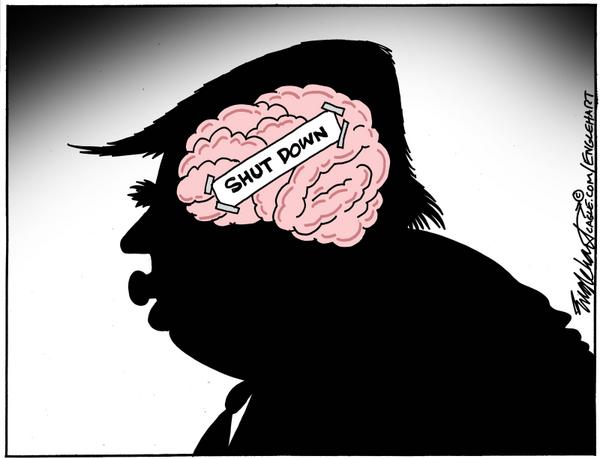
Trump's Brain Shut Down

Steve Breen for 9/9/2025


Image from Liberals Are Cool

Image from Liberals Are Cool


Secretary Hegseth Dresses Down Generals


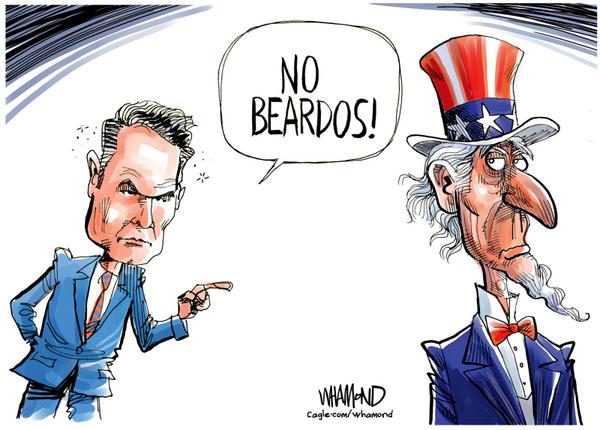
Pete Hegseth's appearance standards


The Enemy Within


Refugees from Gaza


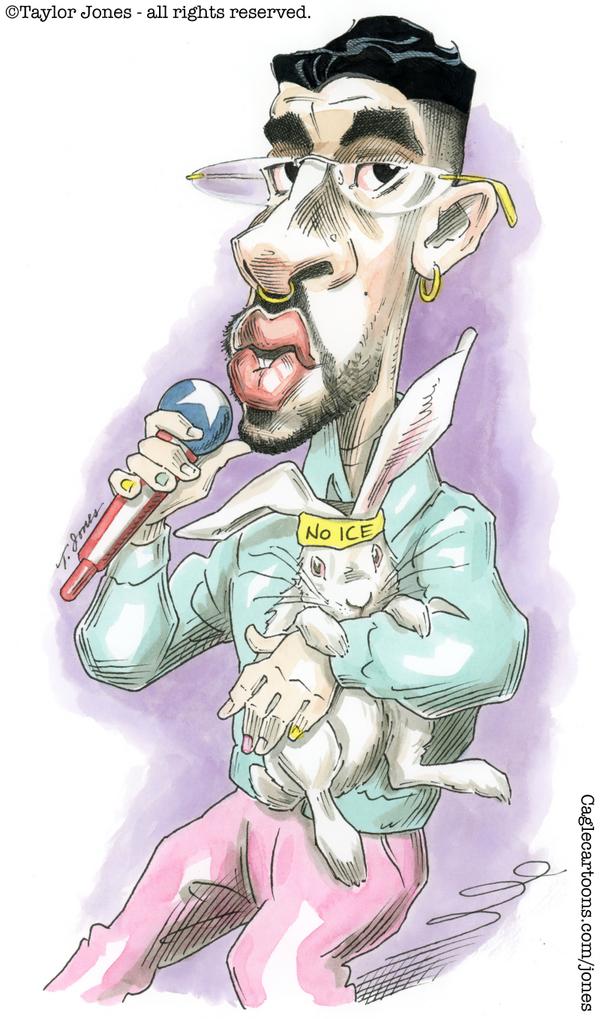
Bad Bunny - version 1


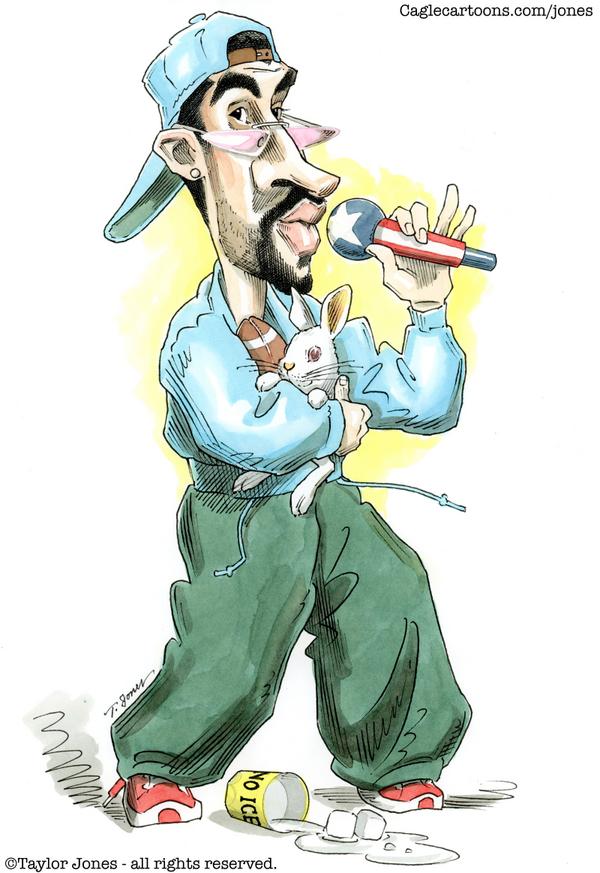
Bad Bunny - version 2


Trump Distractions


Trump's plan for Gaza

Here come the clowns


Titled: Come Clean Epstein

Making our supper for Ron and I

Best Wishes and Hugs,
Scottie

Fox News ‘Antifa Whistleblower’ Looks Familiar…

Fox is the tRump party media channel dedicated to ginning up as much outrage and social anxiety as possible to misinform and lie to the public.  The goal is to keep the wealthy in charge and gaining ever more of the country’s money.  Hugs

Clips about ICE from The Majority Report

Trump’s Thugs Attempt Suffocation Of Frog Suit ICE Protester

ICE’s Deranged Assault Must End

Trump DOJ Won’t Deny ICE Czar Kept $50K Cash Bribe During Senate Grilling