Recently in a comment Roger sent me a poem. I am not much on poetry but this one is short and powerful and it expresses what I am feeling inside most days. Thank you very much Roger for believing in me and your support. Hugs
INVICTUS
Out of the night that covers me Black as the pit from pole to pole, I thank whatever gods may be For my unconquerable soul.
In the fell clutch of circumstance, I have not winced nor cried aloud. Under the bludgeonings of chance My head is bloody, but unbowed.
Beyond this place of wrath and tears Looms but the Horror of the shade, And yet the menace of the years Finds, and shall find, me unafraid.
It matters not how strait the gate, How charged with punishments the scroll, I am the master of my fate I am the captain of my soul.
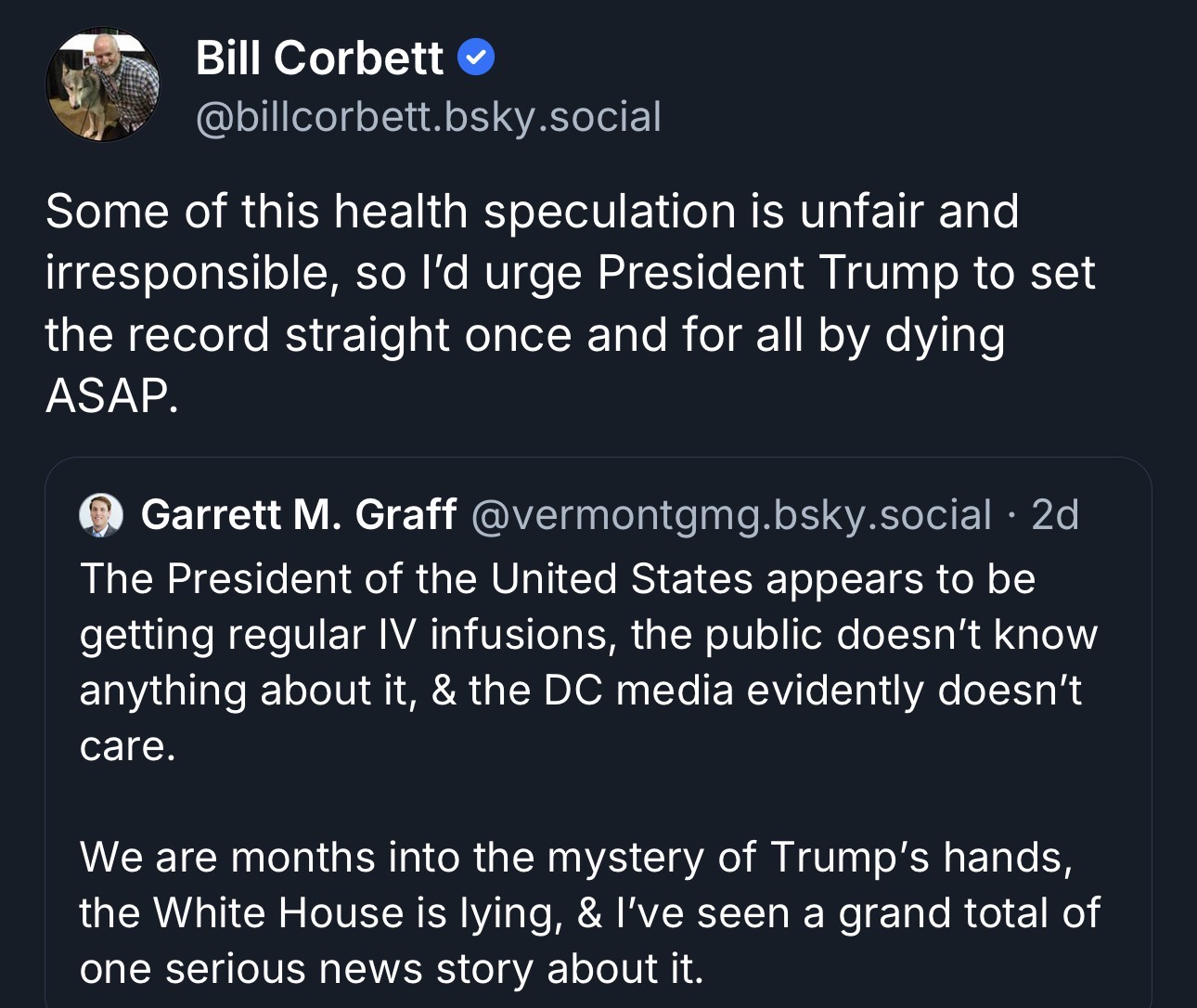
Everyone in tRump’s admin can see him failing and each one is pushing hard to get their personal desire / goal / profit done before he gets so bad the public can see he is not really making the decisions. This is one of these. Plus tRump is driven to put his name on every thing, every building, every aspect of government because he is terrified that people will realize how failing / stupid / bad / and scared he is of being forgotten because he never really accomplished anything naming worthy. But we have to remember that each member of his cabinet and inner circle have their own goals and things they want to do under tRump’s name. They realize they are fast running out of time. Hugs
The Trump administration is extending its wrecking ball to yet more historic buildings in Washington as the president’s pet projects — including his golden ballroom and triumphal arch — press forward.
Homeland Security Secretary Kristi Noem appears before the House Committee on Homeland Security on Capitol Hill on Dec. 11, 2025.Mark Schiefelbein / AP Photo
The Trump administration is looking to tear down more historic buildings in Washington as the president, nearly a year into his final term, looks for ways to leave his mark on the District of Columbia.
This includes the destruction of the East Wing of the White House to make way for the president’s grand ballroom, which he now says will cost some $400 million, as well as a massive so-called arc de Trump.
But a memo uncovered by The Washington Post on Tuesday shows the administration using a new justification (that is, other than Trump’s vanity) to explain its latest effort to raze a part of D.C.’s history: a so-called emergency.
The Post reports Department of Homeland Security Secretary Kristi Noem, whose agency has engaged in some rather lavish spending on her behalf this year, issued a memo earlier this month “seeking to fast-track the demolition of more than a dozen historic buildings at St. Elizabeths in Southeast Washington,” which officials have been converting into a sprawling headquarters for DHS over more than a decade in accordance with historic preservation of treasured landmarks.
Per The Post:
‘Demolition is the only permanent measure that resolves the emergency conditions,’ Noem wrote in the memo. A risk assessment report undertaken by her agency ‘supports immediate corrective action,’ she wrote. The assessment report, which Noem included with her memo, concludes the vacant buildings ‘may be accessed by unauthorized individuals seeking to cause harm to personnel.’ The structures ‘provide a tactical advantage for carrying out small arms or active shooter scenarios,’ the report states.
MS NOW has not independently confirmed the memo. A spokesperson for the General Services Administration, which is overseeing development of the St. Elizabeths campus, confirmed to The Post that the agency had been alerted by the DHS about “a present security risk to life and property” at the campus “that may require us to demolish buildings.”
The report notes the push is being opposed by multiple preservationist groups, including the National Trust for Historic Preservation, which has also sought to thwart Trump’s ballroom project.
It’s yet to be seen whether there’s any true risk in need of being resolved by Trump’s demolition of yet more historic buildings. But if past is prologue, there’s certainly reason to doubt the administration’s “emergency” claims here: namely, the president’s obvious desire to remake the nation’s capital and his administration’s tendency to use claims of “emergencies” to impose a slew of radical policies.
2025 has been filled with relentless and unprecedented attacks against the LGBTQ community in the U.S. President Donald Trump’s anti-LGBTQ policies have spilled over to countries abroad, including heading north to some conservative Canadian provinces like Alberta.
Despite this, there have been moments of hope. Here is Uncloseted Media’s 2025 LGBTQ year in review.
Jan. 1
Liechtenstein’s Marriage Act, passed in 2024, officially takes effect, opening marriage to same-sex couples and aligning the microstate with 21 other European nations that already recognize same-sex marriage.
Meta introduces new rules to their platforms. They remove their third-party fact-checking program and roll back hate speech restrictions, which allows anti-LGBTQ rhetoric to flourish. A report by Uncloseted Media identifies users who spew trans and homophobic language. One user wrote, “Look at this disgusting piece of fag shit here !” Another told someone to go to “the insane asylum where you belong, tranny freak.” Both of these comments are still up on the platform.
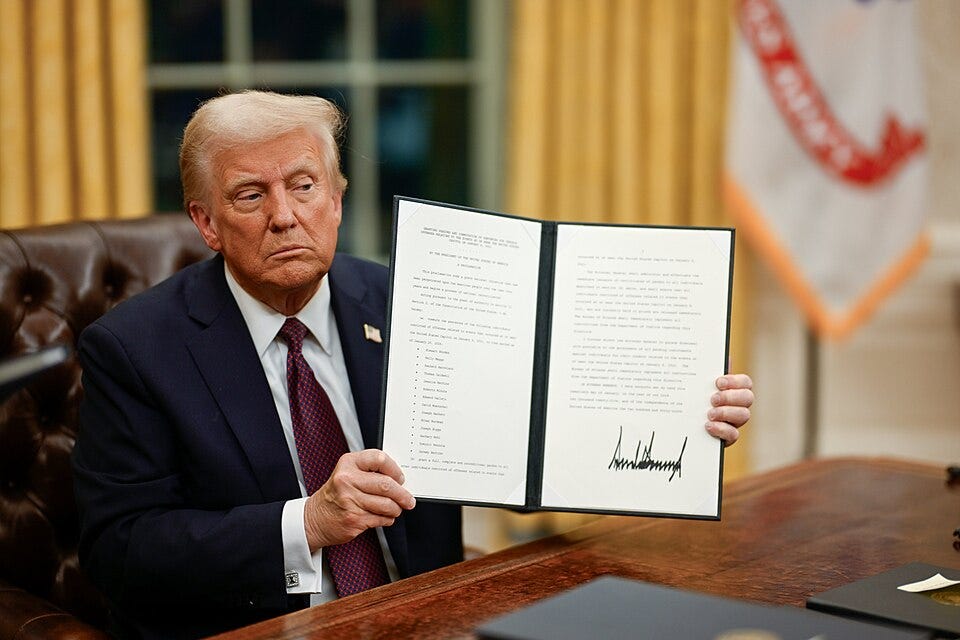
On the first day of his second term, President Trump signs an executive order titled “Defending Women from Gender Ideology Extremism and Restoring Biological Truth to the Federal Government.” The order forces federal agencies to treat sex as a fixed male and female binary “assigned at conception,” calls for “gender” to be scrubbed from federal guidance, halts federal funding for gender-affirming care and mandates trans women in prison to be sent to male facilities. Trump also issues a stop-work order for PEPFAR, the biggest HIV/AIDS relief program in the world. This kicks off a broader pattern of cuts to HIV prevention and research.
Over the next three months, Trump continues his attacks on the LGBTQ community by signing another executive order that bans trans women and girls from competing on sports teams that match their gender identity. He also directs agencies to curb gender-affirming care for anyone under 19 and to strip funding from schools that allow social transition, inclusive bathrooms or the use of affirming names and pronouns.
Jan. 23
Same-sex marriage becomes the law of the land in Thailand, making it the first country in Southeast Asia to recognize marriage equality and equal adoption rights for gay couples.
Jan. 27
The Idaho House passes a resolution urging the U.S. Supreme Court (SCOTUS) to revisit and overturn Obergefell v. Hodges, signaling a renewed appetite to attack marriage equality at the federal level.
Feb. 6
Australia amends its federal Criminal Code to add sexual orientation, gender identity and intersex status as protected characteristics in hate-crime law. This creates stronger penalties for perpetrators of anti-LGBTQ hate crimes across the country.
Feb. 13
Sam Nordquist, a trans man from Minnesota, is found dead in Upstate New York after a woman he met online kidnapped and tortured him for weeks in a hotel room. Seven people connected to his death have been charged with murder. Sam’s friend, Jax Seeger, spoke to Uncloseted following the tragedy:
“From my understanding, they came out and said it wasn’t a hate crime … and part of their reasoning was because one or two of the suspects self-identified within the [LGBTQ] community. … Like, you can’t say that just because they identified as LGBTQ, they’re incapable of committing a hate crime. Sammy wasn’t just physically abused. He was psychologically abused and they didn’t go into what that consisted of, but I think that’s something to keep in mind. As well as just the level of abuse you know? Trans people deserve the same respect and the same love as everyone else.”
The week after our interview with Seeger, prosecutors upgrade the charges against Nordquist’s accused killers to first-degree murder.
Feb. 14
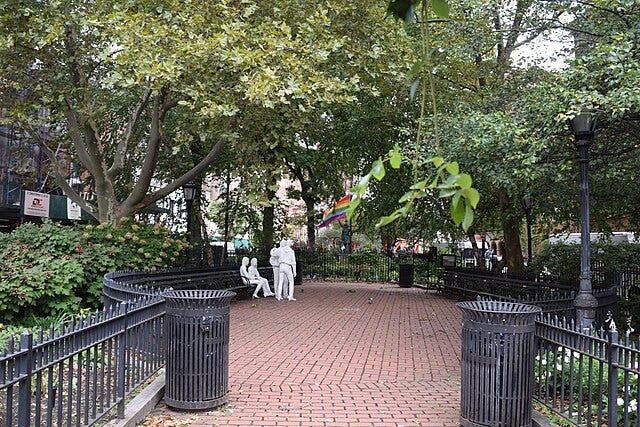
The Stonewall National Monument. Photo by TheCatalyst31.
The National Park Service (NPS) erases mentions of transgender people from the Stonewall memorial, furthering conservative efforts to push “LGB” without the “T.” A few months later, NPS would go on to remove mentions of bisexuals as well.
Feb. 25
Mexico City Pride 2025. Photo by Wotancito.
Mexico City’s Congress approves a resolution to reform the Law for the Recognition and Attention of LGBTTTI+ Persons. This move effectively recognizes nonbinary people.
Feb. 28
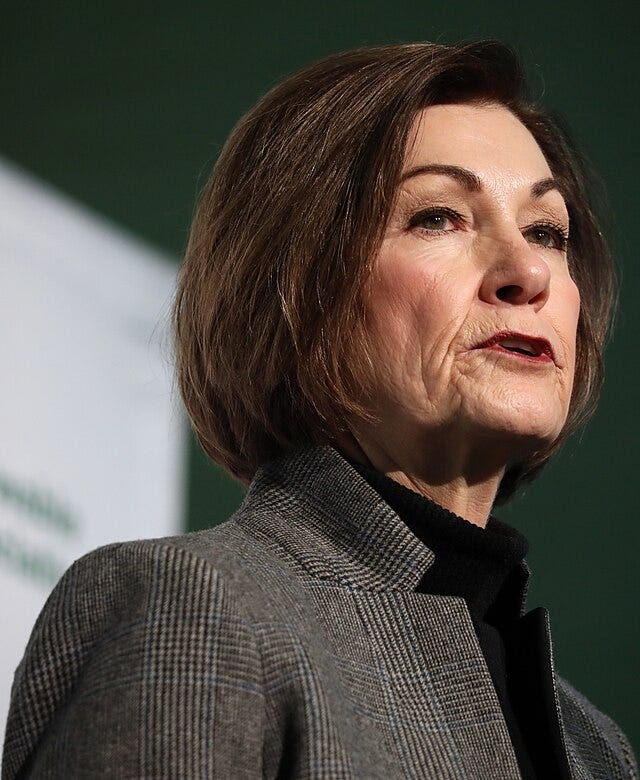
Kim Reynolds in 2024. Photo by Gage Skidmore.
Iowa Gov. Kim Reynolds signs SF 418 into law. This move officially removes “gender identity” from the Iowa Civil Rights Act’s list of protected classes in housing, employment and public accommodations. Iowa becomes the first state to remove civil rights from a previously protected group.
March 27
Gov. Spencer Cox announces that Utah will become the first state to ban LGBTQ pride flags in government buildings and public schools, effective May 7. While the move is framed as a “neutrality” measure, it is widely seen as part of a broader effort to erase public displays of queer identity. In protest, the Utah Pride Center unveils what it calls “the world’s largest transgender flag” in front of Utah’s State Capitol building in Salt Lake City.
April 4
A conversion therapy ban in New South Wales (NSW), Australia, goes into effect. This makes it illegal for therapists and religious leaders to practice conversion therapy on gay and trans people. In a media release, the NSW attorney general writes:
“This follows ongoing work by the NSW Government to progress reforms that ensure all members of our community feel valued, respected and equal.”
“This report not only rejects health care best practices for transgender people — it goes a step further by recommending conversion therapy, though under a new, rebranded name, ‘exploratory therapy’. Despite the report’s claims, this is, in fact, the same harmful practice of conversion therapy, just using friendlier language.”
May 6
Trump’s transgender military ban goes into effect. The change requires active trans service members to self-separate from the military or risk losing some of their Veterans Affairs benefits. Alaina Kupec, a retired transgender U.S. Navy lieutenant, says the decision punishes people who are qualified and want to serve the country:
“[This is] a really dark day for our country where basically we’re allowed to discriminate against a class of people.”
May 19
A Russian court fines Apple roughly $130,000 for four offenses, including the violation of Russia’s expanded “LGBT propaganda” law. The Russian law labels the “international LGBT movement” as extremist and treats queer visibility as a threat to state security. Anything that promotes “non-traditional sexual relations” violates the law.
May 30
Puerto Rico’s Supreme Court rules that residents can request an “X” gender marker on their birth certificates. This move explicitly recognizes nonbinary people and strengthens case law around self-determined gender in the U.S. territory.
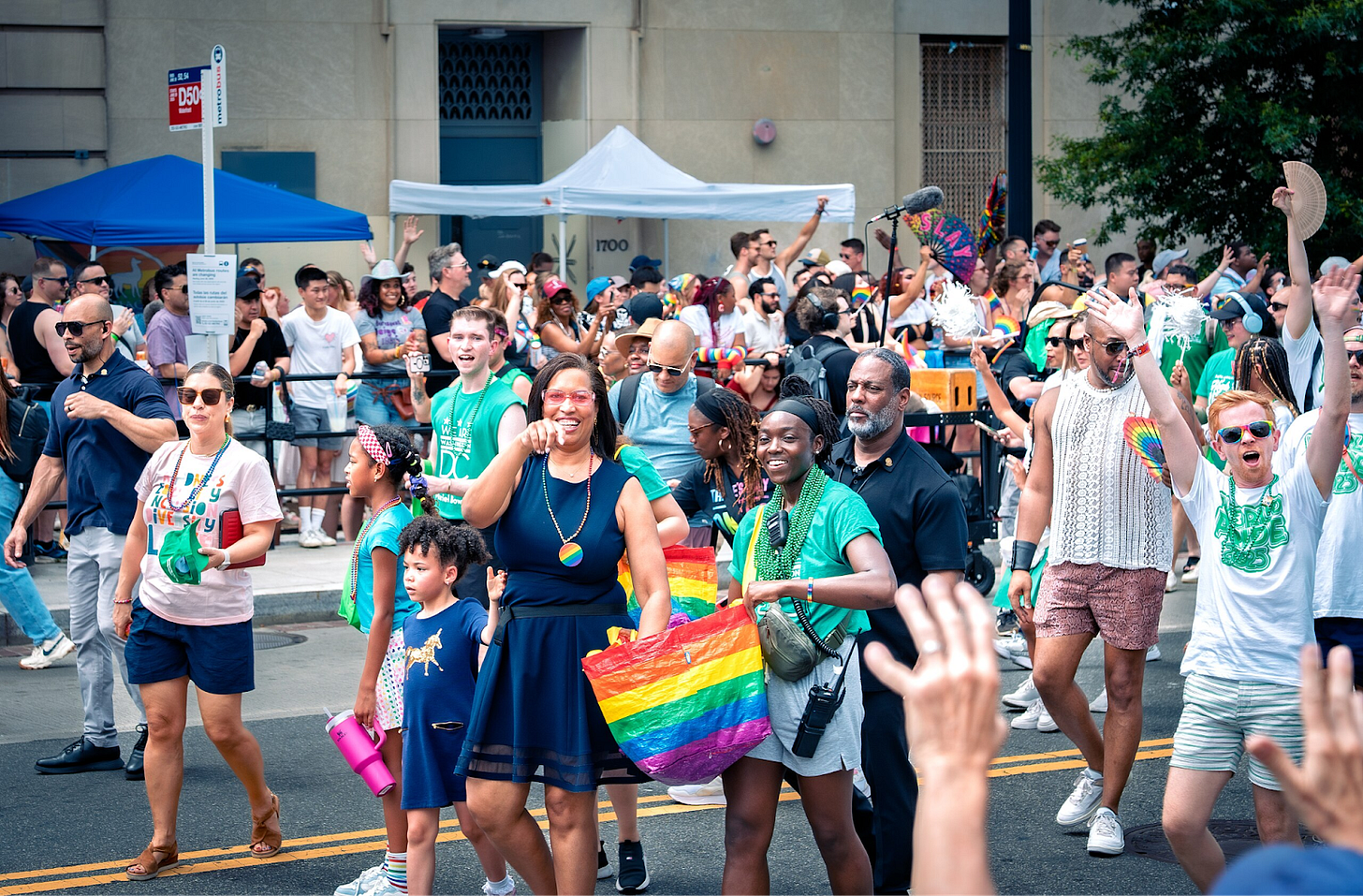
Amid relentless attacks from the federal government, WorldPride takes place in Washington D.C. Ahead of the event, the African Human Rights Coalition calls for a boycott because of Trump’s swath of anti-LGBTQ policies. While roughly 1.2 million people attend, The Washington Post reports that the turnout is less than half of what organizers expected.
June 18
In a 6–3 decision, SCOTUS upholds Tennessee’s law banning gender-affirming care for minors, including puberty blockers and hormones. The ruling signals that similar bans in other Republican-controlled states are likely to stand, sharply narrowing access to medically recommended care for trans youth nationwide. Ten days after the ruling, five trans youth speak to Uncloseted Media, with Dylan Brandt, 20, saying:
“Lawmakers don’t need to be involved in my doctor visits. They have no right. They have no knowledge. … They’ve got a lane and they should stay in it.”
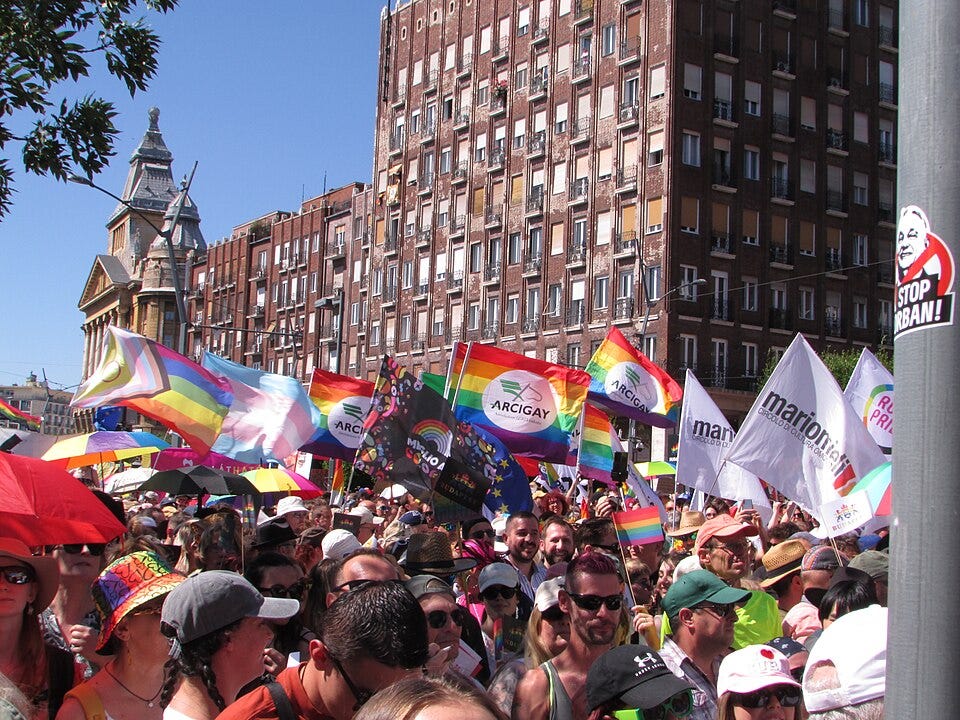
In defiance of a government ban on Pride events, roughly 100,000 people march the streets of Budapest, Hungary, to celebrate. The march was seen as both a showing of support for LGBTQ rights and a protest against Prime Minister Viktor Orbán’s conservative government.
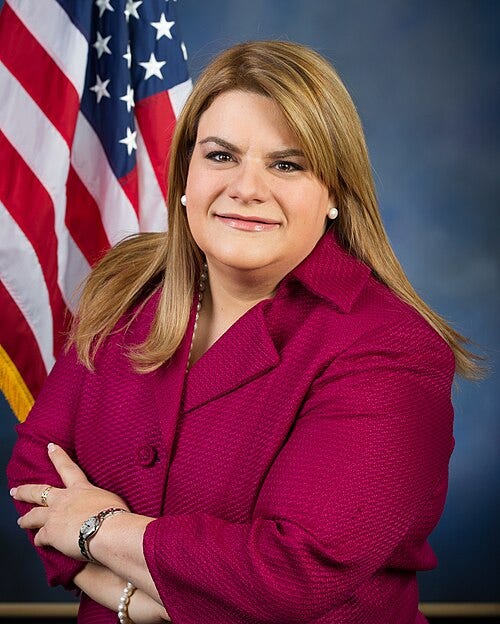
Puerto Rico’s governor, Jenniffer González-Colón, signs one of the harshest anti-trans health care laws in the northern hemisphere. The law bans gender-affirming care for anyone under 21 and threatens to cut off public funding for hospitals that don’t comply. It also threatens doctors with up to 15 years in prison and loss of licensure for violations. Puerto Rico’s LGBTQ+ Federation and GLAAD release a joint statement condemning the bill:
“Banning this care and stripping the rights of parents to make the best medical decisions for their families would create unbearable burdens for the most marginalized in Puerto Rico. Lawmakers must vote to protect access to health care that saves lives, and allow families to make private health care decisions that help loved ones be themselves, be safe, and to thrive.”
July 17
The Trump administration shuts down the LGBTQ suicide hotline, a life-saving resource that had received over 1.3 million calls, chats and texts since it launched in 2022. Genna Brown, a 16-year-old queer kid in North Carolina, who had used the hotline, spoke with Uncloseted Media about the impact it had on her mental health:
“I was an extremely self-loathing, suicidal kid who was under the impression that God hated me and I was gonna burn in hell for eternity. … Connecting with someone who gets it was really helpful. … Because at home, I was so isolated and I didn’t really interact with other queer people.”
July 18
Cuba’s National Assembly passes a law allowing trans people to change their legal gender without any requirement for genital surgery. In a post on X, Minister of Justice Oscar Silvera Martínez writes that the new law “will allow the country to have a modern civil registry” provided by “the issuance of digital documents with full validity and efficiency.”
July 29
In a move hailed by human rights groups, the Caribbean nation of St. Lucia strikes down colonial-era laws criminalizing “buggery,” effectively decriminalizing consensual same-sex intimacy between adults.
Aug. 20
In the middle of the night, Florida’s Department of Transportation paints over a rainbow crosswalk made to honor the victims of the Pulse nightclub terrorist attack that left 49 people dead. Advocates respond in protest by installing rainbow-colored bike racks.
Sept. 1
Burkina Faso’s Transitional Legislative Assembly passes a law explicitly criminalizing homosexuality. The law imposes a two- to five-year prison sentence and fines on people convicted of same-sex activity, deepening the criminalization of queer people in West Africa.
Sept. 10
The assassination of Charlie Kirk at Utah Valley University (UVU) kicks off a wave of anti-trans vitriol, including calls to criminalize the community and designate them as terrorists. In September, Uncloseted Media interviewed five current and former LGBTQ students at UVU. Simone Goodheart, a trans woman who had recently attended the school, spoke about how students were suggesting she was the murderer and how they were harassing her on campus:
“I would say a few of them were asking me to share my school schedule, which thankfully I’m not a student right now. But like damn, if that was the case? A few of them just make awful comments about my appearance, who I am as a person. Basically they just wanted to make sense [of it], but also they wanted to get their outrage out. Because yeah, somebody they cared for died. They are going through the grieving process and like there is outrage and frustration but they were misdirected and misconnected and just utilized by awful algorithms that try to boost the most amount of outrage possible in order to encourage engagement.”
Sept. 26
Slovakia’s parliament passes a constitutional amendment that formally recognizes only two genders, restricts legal gender transition and prohibits adoption by same-sex couples nationwide.
Oct. 6
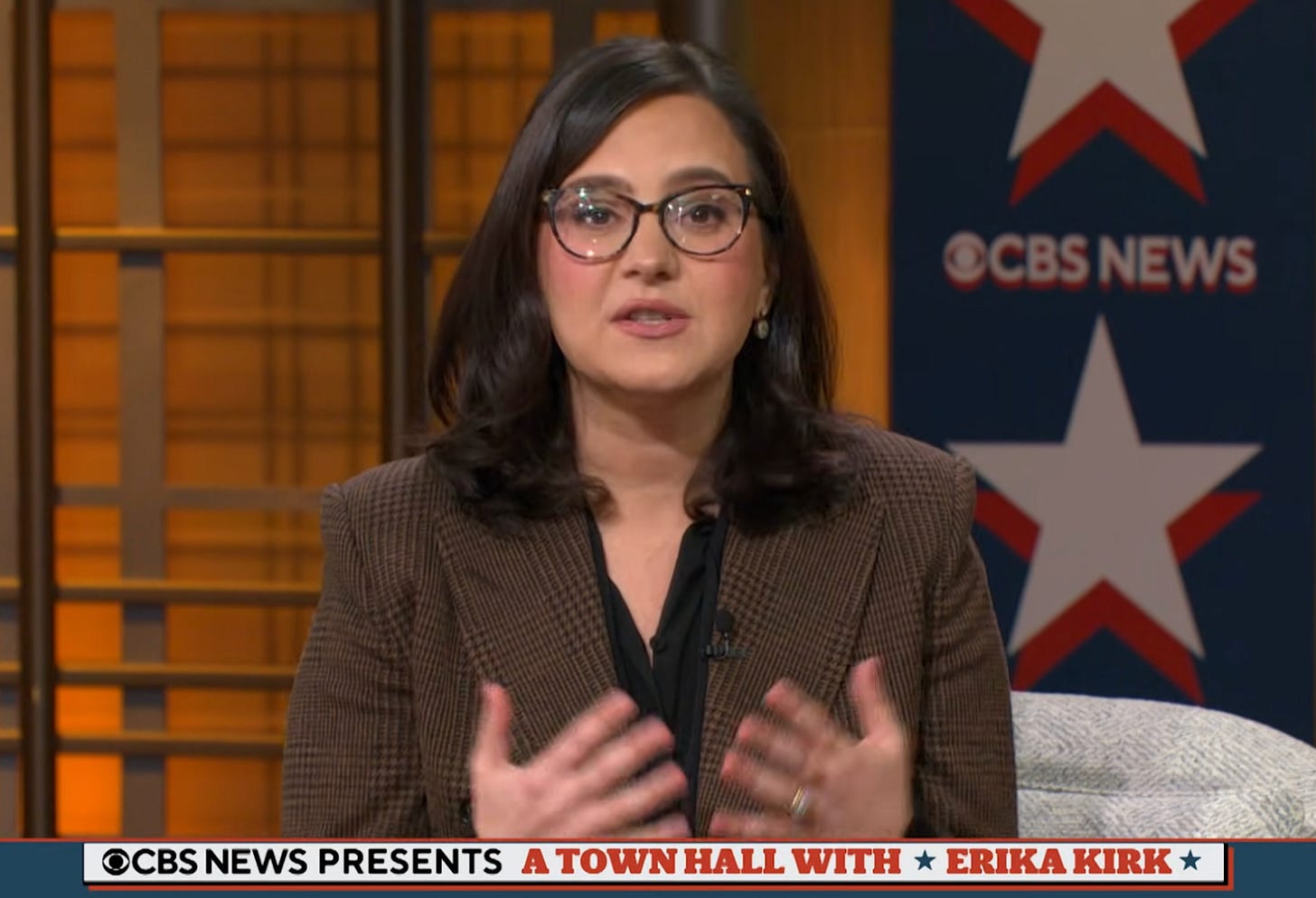
Bari Weiss hosting a CBS News Town Hall with Erika Kirk. Screenshot/CBS News.
Bari Weiss is appointed editor-in-chief of CBS News, making her the first openly gay person to lead the network. Weiss often angles herself as an independent thinker and is known for criticizing the mainstream media. She has no experience in broadcast news and has surrounded herself in controversy, accusing former colleagues at The New York Times of bullying her. She has also railed against Diversity, Equity and Inclusion (DEI) initiatives, writing articles with headlines such as “Bari Weiss: End DEI.”
“It is time to end DEI for good. No more standing by as people are encouraged to segregate themselves. No more forced declarations that you will prioritize identity over excellence. No more compelled speech. No more going along with little lies for the sake of being polite.”
Oct. 7
SCOTUS appears poised to rule against a Colorado law that bans the discredited practice of conversion therapy on minors. The justices repeatedly question the state over whether the law hinders free speech.
The high-stakes case could roll back the rights of LGBTQ youth across the country. Colorado is one of more than 20 states that have banned conversion practices, and a ruling in favor of removing the ban could make those laws in other states vulnerable to similar challenges.
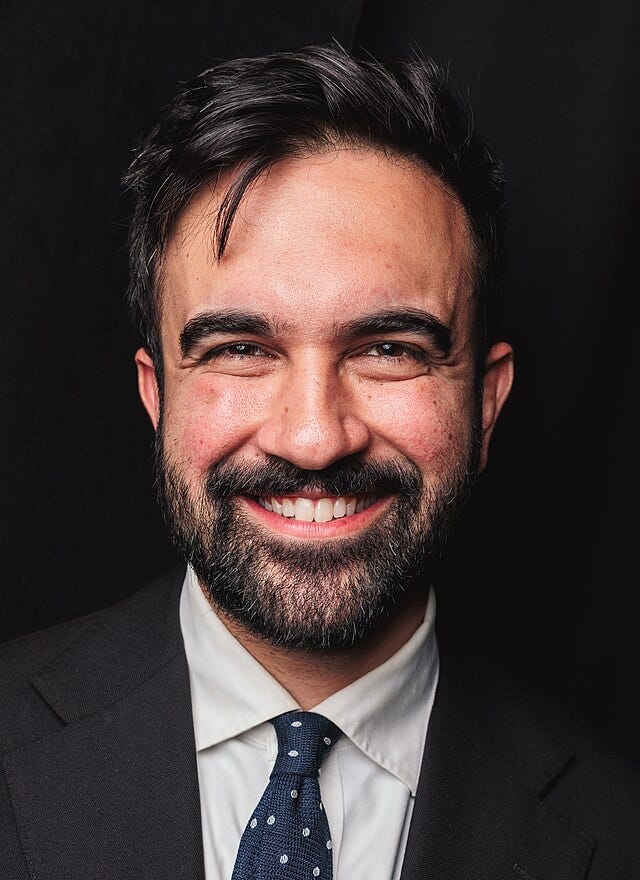
Zohran Mamdani, one of the most outspokenly pro-trans politicians in the country, is elected mayor of New York City. Meanwhile, anti-LGBTQ Republicans are defeated in Virginia’s and New Jersey’s gubernatorial elections. On the night of his win, Mamdani reaffirms his support for those who elected him:
“In this moment of political darkness, New York will be the light. Here, we believe in standing up for those we love, whether you are an immigrant, a member of the trans community, one of the many black women that Donald Trump has fired from a federal job, a single mom still waiting for the cost of groceries to go down, or anyone else with their back against the wall. Your struggle is ours, too.”
In a massive win for gay rights, SCOTUS rejects Kim Davis’ appeal and won’t revisit the landmark decision that legalized same-sex marriage nationwide in 2015. This signifies a major defeat for the new push to overturn the ruling, which was spearheaded by Davis and her lawyers from Liberty Counsel.
Nov. 17
Across Alberta, Canada, anti-trans legislation takes effect. A trans sports ban for students also forces sports organizations and schools to collect sensitive personal information that risks outing trans and gender diverse youth. Alberta Premier Danielle Smith announces plans to circumvent legal opposition to the province’s ban on gender-affirming care for minors by invoking the notwithstanding clause, a constitutional provision that will stop such challenges for five years. The measure was also used in Alberta in 2000 to advance legislation opposing gay marriage.
Nov. 19
New Zealand’s health minister, Simeon Brown, announces a halt to new prescriptions of puberty blockers for minors with gender dysphoria. Brown says the ban will remain until a British clinical trial is completed. Existing patients can continue treatment.
Nov. 25
The European Union’s (EU) top court rules that member states must recognize same-sex marriages contracted in any EU country for purposes such as residence and free movement, binding more conservative governments such as Poland, Bulgaria, Romania and Slovakia to acknowledge queer couples’ marital status even if they refuse to perform such marriages at home.
Dec. 2
ADF International, the global arm of U.S. anti-LGBTQ legal group Alliance Defending Freedom, publicly backs a South Australian woman threatening legal action over a Headspace Berri mental-health presentation that mentioned LGBTQ issues, incest and bestiality in a classroom context. Elenie Poulos, an expert on the intersection of religious and political discourses, describes their impact as “huge,” saying:
“They have a very longstanding and aggressive approach to the rights of LGBTIQ people. They fight it in the courts in the US, they fight it politically, locally and in communities, and their aggressive anti-gay stance is extremely harmful.”
Dec. 18
Robert F. Kennedy Jr. and Dr. Oz announcerestrictive measures designed to block minors’ access to gender-affirming care. The plan proposes federal Medicare and Medicaid cuts to all hospitals that provide this care to minors. “The multitude of efforts we are seeing from federal legislators to strip transgender and nonbinary youth of the health care they need is deeply troubling,” says Rodrigo Heng-Lehtinen of The Trevor Project.
Dec. 21
CBS News shelves a planned 60 Minutes segment on men deported to CECOT, an infamous prison in El Salvador. Internal sources indicate that the move to cancel the story came from the network’s editor-in-chief Bari Weiss, who reportedly raised concerns about the Trump administration’s lack of response to the reporter’s outreach.
If objective, nonpartisan, rigorous, LGBTQ-focused journalism is important to you, please consider making a tax-deductible donation through our fiscal sponsor, Resource Impact, by clicking this button:
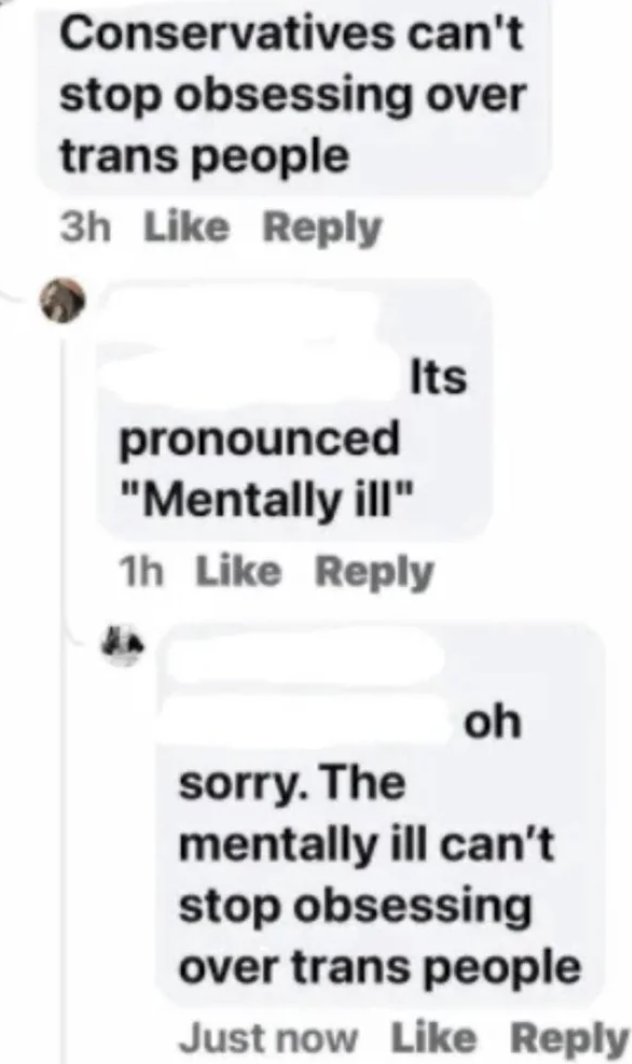
This is just hate and bigotry. It is a group of people who hate trans people for some unknown reason and have made their life / career the harassment of trans minors who play sports. I can not see how this harms this reporter and his group in any way. To make your life about harming others is a real petty way to exist. Many conservatives use their religion to justify such hate but the Jesus of the bible never said a word against the entire LGBTQ+ community. So their hate is internally driven and they must be such miserable people. So Sad. The drive to regress the world’s most progressive countries back to an uneducated straight cis white male controlled society is really causing a lot of damage to people and freedom to express your life as you wish. It seems driven by two groups, the older people who are uncomfortable with the progression of society and younger religious people driven by wealthy religious hate groups. Hugs
Since Sept. 5, right-wing sports publication OutKick has published 19 articles about a 12th grade girls’ volleyball player at Skyline High School in Ann Arbor, Michigan. The player caught the attention of reporter Dan Zaksheske after he obtained public documents that appear to show her requesting a legal name change from a traditionally masculine first name to a traditionally feminine one.
Over the next three months, Zaksheske would write 18 of the 19 articles OutKick would publish about this student. He and other OutKick reporters attended multiple high school girls’ volleyball games where they recorded and reported on Skyline High’s volleyball season. At the heart of each article was a focus on the girl, who Zaksheske refers to as a “trans-identifying biological male.”
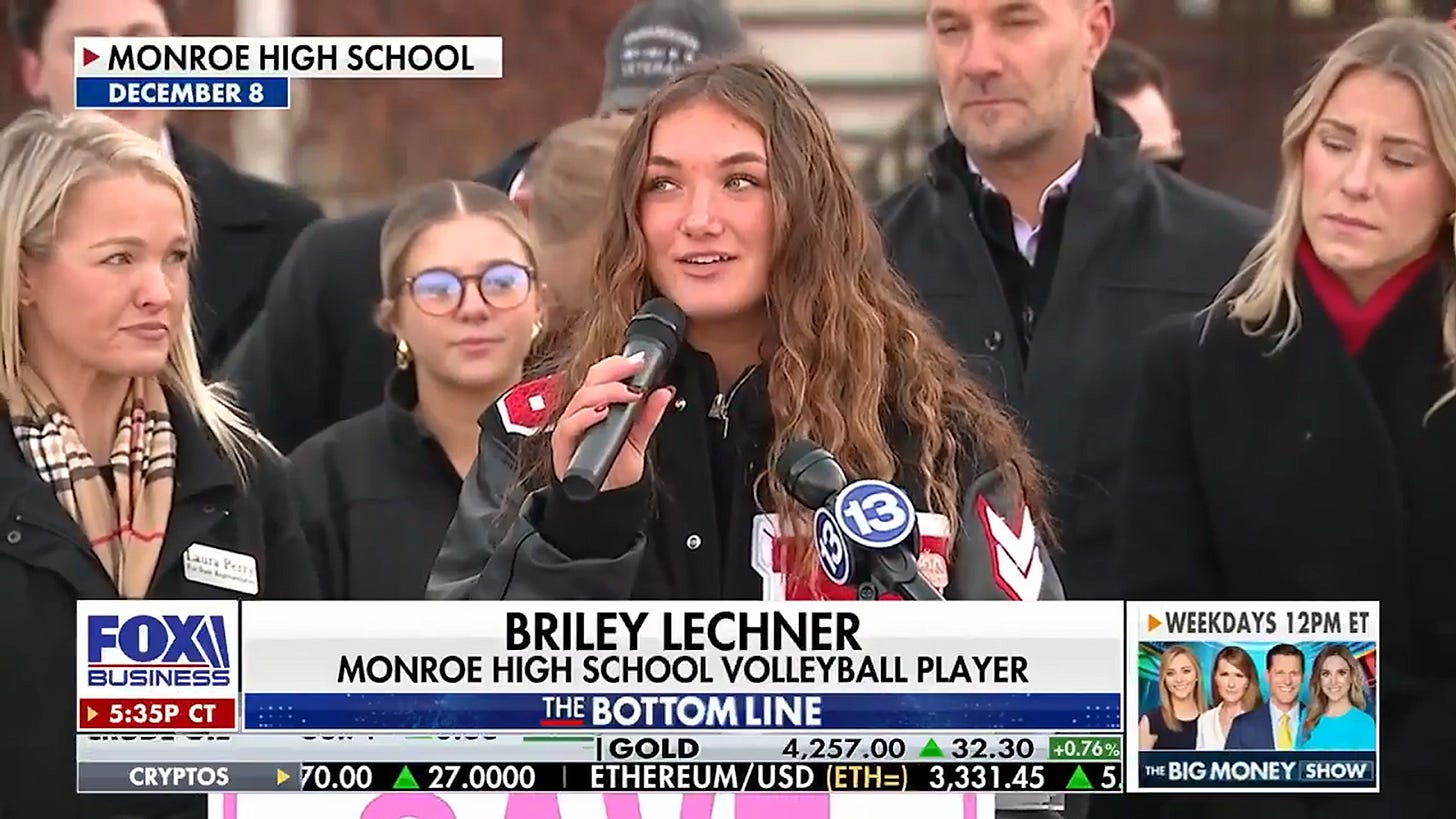
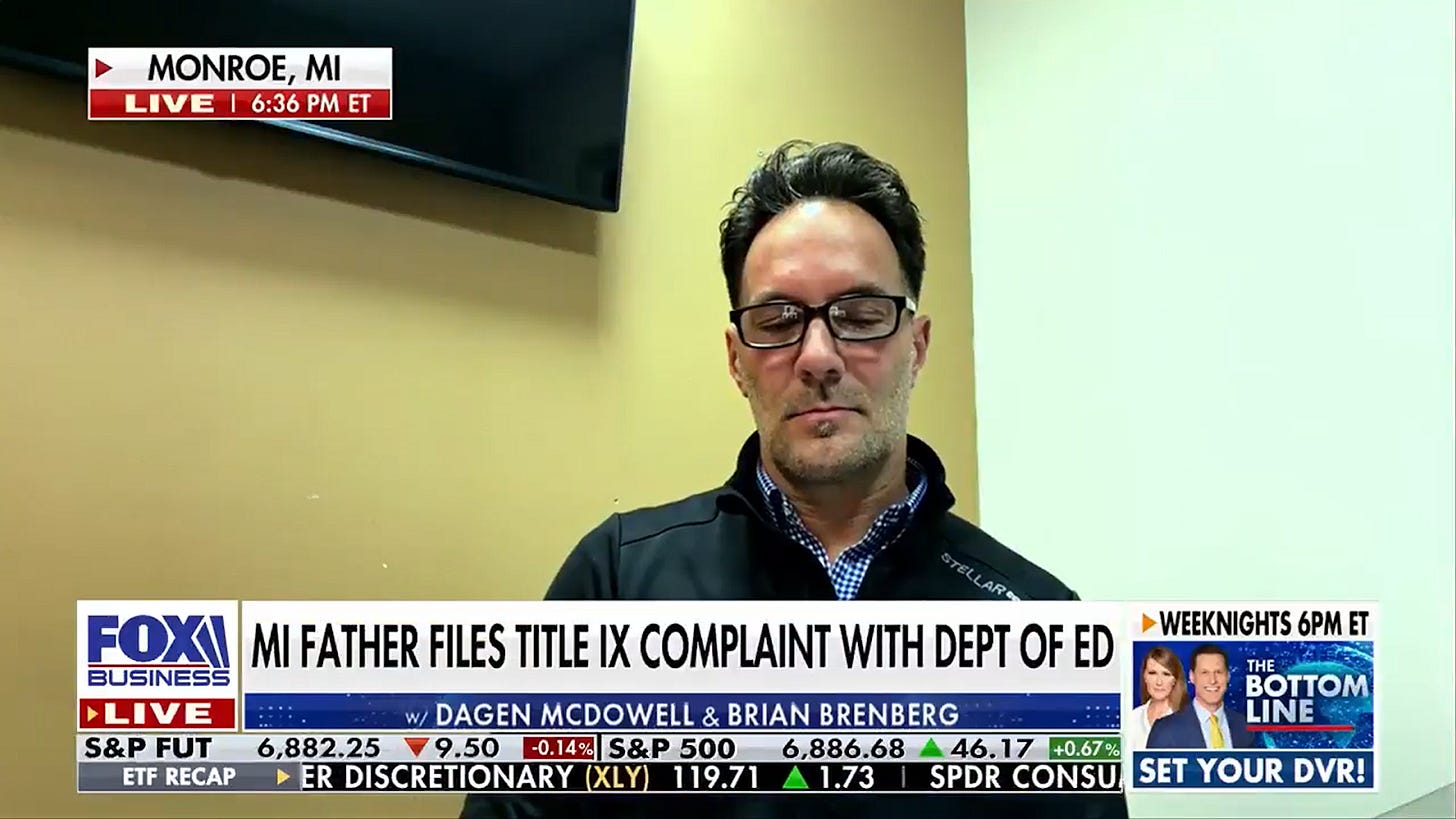
Zaksheske’s reporting stoked a controversy that drew the attention of multiple right-wing publications, politicians and influencers. This coverage led Sean Lechner, whose cisgender daughter played against Skyline and allegedly shared a locker room with their team, to file a Title IX complaint.
Lechner’s daughter at a press conference about the complaint. Screenshot via Fox Business.
While the Michigan High School Athletic Association (MHSAA) does require trans athletes to get a waiver approved to compete in official state tournaments, the Democrat-majority state Senate outright rejected the idea of a trans athlete sports ban earlier this year. In addition, LGBTQ Michiganders have strong anti-discrimination protections under the state’s Elliott-Larsen Civil Rights Act.
In the complaint, Lechner calls for a ban on “biological males from competing in female sports” and for a “full investigation into actions and communications of Ann Arbor Public Schools/Monroe High/Chet Hesson,” citing a Trump executive order that declares that trans-inclusive policies are in violation of Title IX.
Shortly after the complaint was filed, Uncloseted Media published an interview clip with Hesson, the athletic director of Monroe Public Schools, in which he simply said his “heart goes out” to the player for being under such scrutiny. Less than 24 hours later, he was put on administrative leave.
As this story spreads like wildfire, experts in journalistic ethics are raising concerns about Zaksheske’s reporting.
“OutKick’s inflammatory reporting on a Michigan high school volleyball player who may or may not be trans disregards several core principles of the Society of Professional Journalists’ [SPJ] Code of Ethics,” Dan Axelrod, chairman of the SPJ’s ethics committee, told Uncloseted Media. SPJ’s Code of Ethics, originally drafted in 1973, has been embraced and used by thousands of journalists from numerous newsrooms and schools.
“The Code cautions reporters to ‘show compassion for those who may be affected by news coverage,’ and to ‘use heightened sensitivity when dealing with juveniles,’ while ‘weigh[ing] the consequences of publishing or broadcasting personal information,’” Axelrod says. “[OutKick] has essentially ignored all those ethical principles, given [Zaksheske’s] relentless coverage of the player, which has led the public to easily infer who she is, and its negative framing of her story.”
The player, whose mother did not respond to an interview request, does not appear to have publicly come out as trans prior to the publication of Zaksheske’s first article.
Chad Painter, associate professor and chair of the communications department at the University of Dayton, says this “brings up a whole host of issues.” While Zaksheske wrote that he did not name the girl “because the student athlete is under 18,” Painter says that doesn’t do enough to conceal her identity.
In his reporting, Zaksheske references the existence of publicly accessible name change documents, the girl’s county of residence and the name of a local volleyball club she’d been a part of. “Someone who is reasonably well-versed in being able to Google someone can figure this out pretty easily,” Painter, who has co-authored multiple media ethics textbooks, told Uncloseted Media.
“There’s longstanding norms in newsrooms that we don’t out people, that that is a very personal decision that an individual gets to make, and unless there is a massively compelling reason to do that, it’s not our role,” he says. “The idea that he is in the clear because he didn’t specifically write this person’s name in a story, it wouldn’t hold up to journalistic scrutiny.”
And Zaksheske’s reporting appears to have outed the girl. The same day that he published his first article on the matter, an X account whose mission is “to call out these male athletes and expose the damage that they have each caused to women and girls in sports” published the girl’s full name and deadname along with multiple photos and videos of her. (Uncloseted Media has chosen not to link to these posts directly in the interest of her privacy.)
In addition to the 18 articles Zaksheske wrote, he also tweeted about the situation at least 41 times and attendedatleastfourhigh school girls’ volleyball games. While watching, he recorded videos of the girls playing and then posted them to X and OutKick’s website.
“Having 19 stories about one athlete … to me, that seems like this coverage is out of line with how we’d normally talk about, especially high school sports, which, frankly, no one outside of this little area in Michigan are going to really care about,” says Painter.
“Outside of the culture war stuff, I don’t see where this is a story.”
When Zaksheske was confronted by multiple people at the school about attending and recording one of the games, he published another article accusing them of harassment. “I was shadowed by the school principal and harassed and stalked by Skyline supporters,” he wrote.
Painter notes that while Zaksheske was within his rights as a journalist and citizen to be attending and recording such events, he understands why the school would approach him with skepticism.
“I have a feeling that if I just started showing up randomly to high school volleyball games and taking photos and videos, there would probably be questions,” Painter says. “Because, again, we are talking about minors.”
“The reporter has a right to pursue news … and that right especially exists at a public school,” says Axelrod. “However, one has to wonder at what point is the coverage just pandering to curiosity as opposed to serving a valid societal purpose in informing and facilitating larger discussions about real and valid questions regarding the participation of trans athletes in sports.”
Misinformation and Animus
Zaksheske has pushed back against similar criticism on X, accusing those who question the ethics of his reporting of being “in favor of sterilizing, mutilating and castrating children” and characterizing his reporting as “exposing their heinous acts.”
“I don’t see that as an ethical problem because it doesn’t even enter into the world of ethics,” Painter says of Zaksheske’s rhetoric. “It is wrong factually and it doesn’t really have a place in what we do in terms of the journalism field.”
Misleading rhetoric about trans health care is common throughout OutKick’s reporting. Zaksheske has written several articles about gender-affirming care, where he has claimed that puberty blockers “take healthy children and sterilize them for life.”
Puberty blockers have been FDA-approved for treating precocious puberty in cisgender children since 1993. Multiplestudies have found no evidence of them causing permanent infertility, and gynecologists and endocrinologists have said that they do not cause sterilization.
Much of Zaksheske’s coverage of trans people has been negative. Of adult trans women, he wrote that “that person might see himself as a woman, but we are under no obligation to ‘affirm’ that.” He also wrote that doctors who provide gender-affirming care “have to answer to their consciences.”
OutKick also generally misgenders trans women and girls, referring to them as “males,” “biological males” or “trans-identifying males,” additionally using masculine pronouns to refer to them.
Painter notes that this goes against the “Associated Press Stylebook,” which he says “any newsroom worth its salt is going to follow.”
“The journalist and the news outlet squander their credibility covering these types of societal questions when they use language … that fails to recognize and respect the underlying humanity of an entire group of people,” he says.
In an email, Brian Karpas, OutKick’s director of media relations, told Uncloseted Media that the publication “stands by the thorough and responsible reporting of Dan Zaksheske and will continue to protect women from competing against biological males.”
Beyond Michigan
OutKick’s extensive reporting of the Michigan volleyball player is reflective of the publication’s increasingly conservative bent since it launched in 2011. In 2021, it was acquired by Fox Corporation. Since then, it has partnered with Fox News and has become home to numerous right-wing personalities known for anti-trans rhetoric. These include founder Clay Travis, who has said World Aquatics is “encouraging …super young kids to be transitioned”; Tomi Lahren, who said that liberals “don’t know what a woman is”; and Riley Gaines, who referred to an eighth-grade trans girl as a “mediocre man.”
This story in Michigan is not the first time OutKick and Zaksheske have hyperfocused on one trans girl. They were one of the first national publications to report on California-based track and field athlete AB Hernandez, who later became the center of a feud between the Trump administration and Gov. Gavin Newsom. Since March, OutKick has published at least 24 articles about Hernandez, 10 of which were written by Zaksheske. They sent reporters to at least twogames to photograph Hernandez and other teenage players. Additionally, OutKick published 15 articles and attended at least four games covering the story of a trans softball player in Minnesota, whose presence on the team became a key point of a lawsuit by the Southern Poverty Law Center-designated anti-LGBTQ hate group, Alliance Defending Freedom.
This massive amount of coverage is common for U.S. conservative media: A report published this year from Media Matters for America found that Fox News ran over 400 weekday segments mentioning trans athletes from Feb. 5 to June 6.
All of this has had an impact. While the Title IX investigation is still pending, Hesson, who was named in the complaint, told Uncloseted Media that he had been targeted with harassment and vitriol online.
Uncloseted Media on Instagram: “Last Friday, Uncloseted Media p…
In the comments of the Instagram post, Hesson was attacked by numerous users: squaredbeach9 wrote, “Stop normalizing these freaks. You don’t give a bulimic chick a bucket and some gum.”
And others chimed in, saying:
“Guaranteed he has child pron on an electronic device.”
“Fuck off, poor tranny hates attention, give me a fn break.”
“So a male playing in women’s sports. And this cuck is defending it.”
All of this has come even though Hesson is not directly affiliated with Skyline High School, which is part of a different district. As such, he was not involved in the decision to allow the girl to play, and he was also not privy to whether she had a waiver.
In addition, numerous right-wing lawmakers and candidates have endorsed Lechner’s complaint. Republican state Rep. James DeSana posted a statement to Facebook “calling for Chet Hesson to be removed immediately.”
“The public cannot have good discourse, debate, or dialogue without good information,” Painter says. “Supplying that information is the fundamental duty of the news media. When journalists are distracted by inconsequential stories, then we’re not spending the time to cover interesting and important news that our readers really need.”
Both Painter and Axelrod took note of the small number of known trans athletes in the U.S. Last year, the NCAA’s president told a Senate panel that fewer than 10 of the 510,000 college athletes affiliated with the organization were transgender.
“This controversy is part of a much larger national narrative about transgender athletes and the LGBTQ+ community as a whole,” Painter says. “The entire national conversation is based on virtually nothing, so this particular set of stories are based on an inconsequential premise.”
Going Forward
If the Department of Education does find that Title IX was violated, the school district could risk losing federal funding if it continues to allow trans athletes to compete.
Zaksheske has been pressuring the MHSAA to confirm whether a waiver was approved for the volleyball player to compete, citing a statement from early September in which the association said it had not yet approved any waivers for the semester. On Dec. 9, MHSAA confirmed that one waiver was granted in the fall season, though no details were given in the interest of the student’s privacy.
While research into the relative athletic capabilities of trans and cis women is ongoing, numerous experts and athletes say that politicized vitriol, misleading information and outsized media attention about trans athletes makes girls’ sports less safe for all athletes.
“There are real, valid, and necessary societal discussions to be had about trans athletes participating against competitors who don’t match their birth gender, and ethical journalism can have a place in informing those discussions,” Axelrod says. “At the end of the day, this woman is still a human, and a child at that, not a canvas for OutKick to paint a distorted picture of one individual who’s a tiny part of a much bigger societal dialogue about trans athletes.”
If objective, nonpartisan, rigorous, LGBTQ-focused journalism is important to you, please consider making a tax-deductible donation through our fiscal sponsor, Resource Impact, by clicking this button:
Leonardo Garcia Venegas was detained by immigration agents while filming a raid on his worksite, despite having a REAL ID on him and telling the officers he was a citizen.
Reporting Highlights
Americans Detained: The government doesn’t track how many citizens are held by immigration agents. We found more than 170 cases this year where citizens were detained at raids and protests.
Held Incommunicado: More than 20 citizens have reported being held for over a day without being able to call their loved ones or a lawyer. In some cases their families couldn’t find them.
Cases Wilted: Agents have arrested about 130 Americans, including a dozen elected officials, for allegedly interfering with or assaulting officers, yet those cases were often dropped.
These highlights were written by the reporters and editors who worked on this story.
When the Supreme Court recently allowed immigration agents in the Los Angeles area to take race into consideration during sweeps, Justice Brett Kavanaugh said that citizens shouldn’t be concerned.
“If the officers learn that the individual they stopped is a U.S. citizen or otherwise lawfully in the United States,” Kavanaugh wrote, “they promptly let the individual go.”
About two dozen Americans have said they were held for more than a day without being able to phone lawyers or loved ones.
Videos of U.S. citizens being mistreated by immigration agents have filled social media feeds, but there is little clarity on the overall picture. The government does not track how often immigration agents hold Americans.
So ProPublica created its own count.
We compiled and reviewed every case we could find of agents holding citizens against their will, whether during immigration raids or protests. While the tally is almost certainly incomplete, we found more than 170 such incidents during the first nine months of President Donald Trump’s second administration.
Among the citizens detained are nearly 20 children, including two with cancer. That includes four who were held for weeks with their undocumented mother and without access to the family’s attorney until a congresswoman intervened.
Immigration agents do have authority to detain Americans in limited circumstances. Agents can hold people whom they reasonably suspect are in the country illegally. We found more than 50 Americans who were held after agents questioned their citizenship. They were almost all Latino.
Immigration agents also can arrest citizens who allegedly interfered with or assaulted officers. We compiled cases of about 130 Americans, including a dozen elected officials, accused of assaulting or impeding officers.
These cases have often wilted under scrutiny. In nearly 50 instances that we have identified so far, charges have never been filed or the cases were dismissed. Our count found a handful of citizens have pleaded guilty, mostly to misdemeanors.
Among the detentions in which allegations have not stuck, masked agents pointed a gun at, pepper sprayed and punched a young man who had filmed them searching for his relative. In another, agents knocked over and then tackled a 79-year-old car wash owner, pressing their knees into his neck and back. His lawyer said he was held for 12 hours and wasn’t given medical attention despite having broken ribs in the incident and having recently had heart surgery. In a third case, agents grabbed and handcuffed a woman on her way to work who was caught up in a chaotic raid on street vendors. In a complaint filed against the government, she described being held for more than two days, without being allowed to contact the outside world for much of that time. (The Supreme Court has ruled that two days is generally the longest federal officials can hold Americans without charges.)
George Retes, an American combat veteran, at the site of his arrest by immigration agents on California’s Central Coast. Retes was detained for three days without access to a lawyer and missed his daughter’s third birthday.
In response to questions from ProPublica, the Department of Homeland Security said agents do not racially profile or target Americans. “We don’t arrest US citizens for immigration enforcement,” wrote spokesperson Tricia McLaughlin.
A top immigration official recently acknowledged agents do consider someone’s looks. “How do they look compared to, say, you?” Border Patrol chief Gregory Bovino said to a white reporter in Chicago.
The White House told ProPublica that anyone who assaults federal immigration agents would be prosecuted. “Interfering with law enforcement and assaulting law enforcement is a crime and anyone, regardless of immigration status, will be held accountable,” said the Deputy Press Secretary Abigail Jackson. “Officers act heroically to enforce the law, arrest criminal illegal aliens, and protect American communities with the utmost professionalism.”
A spokesperson for Kavanaugh did not return an emailed request for comment.
An immigration raid on 79-year-old Rafie Ollah Shouhed’s car wash left him with broken ribs.Courtesy of Rafie Ollah Shouhed. Compiled by ProPublica.
Tallying the number of Americans detained by immigration agents is inherently messy and incomplete. The government has long ignored recommendations for it to track such cases, even as the U.S. has a history of detaining and even deporting citizens, including during the Obama administration and Trump’s first term.
We compiled cases by sifting through both English- and Spanish-language social media, lawsuits, court records and local media reports. We did not include arrests of protesters by local police or the National Guard. Nor did we count cases in which arrests were made at a later date after a judicial process. That included cases of some people charged with serious crimes, like throwing rocks or tossing a flare to start a fire.
Experts say that Americans appear to be getting picked up more now as a result of the government doing something that it hasn’t for decades: large-scale immigration sweeps across the country, often in communities that do not want them.
In earlier administrations, deportation agents used intelligence to target specific individuals, said Scott Shuchart, a top immigration official in the Biden, Obama and first Trump administrations. “The new idea is to use those resources unintelligently” — with officers targeting communities or workplaces where undocumented immigrants may be.
When federal officers roll through communities in the way the Supreme Court permitted, the constitutional rights of both citizens and noncitizens are inevitably violated, argued David Bier, the director of immigration studies at the libertarian Cato Institute. He recently analyzed how sweeps in Los Angeles have led to racial profiling. “If the government can grab someone because he’s a certain demographic group that’s correlated with some offense category, then they can do that in any context.”
Cody Wofsy, an attorney at the American Civil Liberties Union, put it even more starkly. “Any one of us could be next.”
The video Garcia Venegas made of an immigration raid on a construction site shows him walking away from the officer while trying to film and then stating that he’s a citizen before being detained.Courtesy of Garcia Venega
When Kavanaugh issued his opinion that immigration agents can consider race and other factors, the Supreme Court’s three liberal justices strongly dissented. They warned that citizens risked being “grabbed, thrown to the ground, and handcuffed simply because of their looks, their accents, and the fact they make a living by doing manual labor.”
Leonardo Garcia Venegas appears to have been just such a case. He was working at a construction site in coastal Alabama when he saw masked immigration agents from Homeland Security Investigations hop a fence and run by a “No trespassing” sign. Garcia Venegas recalled that they moved toward the Latino workers, ignoring the white and Black workers.
Garcia Venegas began filming after his undocumented brother asked agents for a warrant. In response, the footage shows, agents yanked his brother to the ground, shoving his face into wet concrete. Garcia Venegas kept filming until officers grabbed him too and knocked his phone to the ground.
Other co-workers filmed what happened next, as immigration agents twisted the 25-year-old’s arms. They repeatedly tried to take him to the ground while he yelled, “I’m a citizen!”
Officers pulled out his REAL ID, which Alabama only issues to those legally in the U.S. But the agents dismissed it as fake. Officers held Garcia Venegas handcuffed for more than an hour. His brother was later deported.
Leonardo Garcia Venegas told agents he was a citizen both times he was detained. His REAL ID was dismissed as a fake.
Garcia Venegas was so shaken that he took two weeks off of work. Soon after he returned, he was working alone inside a nearly built house listening to music on his headphones when he sensed someone watching him. A masked immigration agent was standing in the bedroom doorway.
This time, agents didn’t tackle him. But they again dismissed his REAL ID. And then they held him to check his citizenship. Garcia Venegas says agents also held two other workers who had legal status.
DHS did not respond to ProPublica’s questions about Garcia Venegas’ detentions, or to a federal lawsuit he filed last month. The agency has previously defended the agents’ conduct, saying he “physically got in between agents and the subject” during the first incident. The footage does not show that, and Garcia Venegas was never charged with obstruction or any other crime.
Garcia Venegas’ lawyers at the nonprofit Institute for Justice hope others may join his suit. After all, the reverberations of the immigration sweeps are being felt widely. Garcia Venegas said he knows of 15 more raids on nearby construction sites, and the industry along his portion of the Gulf Coast is struggling for lack of workers.
Kavanaugh’s assurances hold little weight for Garcia Venegas. He’s a U.S. citizen of Mexican descent, who speaks little English and works in construction. Even with his REAL ID and Social Security card in his wallet, Garcia Venegas worries that immigration agents will keep harassing him.
“If they decide they want to detain you,” he said. “You’re not going to get out of it.”
Men building a home in rural Baldwin County, Alabama. Garcia Venegas was detained by immigration agents twice while working on homes in the area.
George Retes was among the citizens arrested despite immigration agents appearing to know his legal status. He also disappeared into the system for days without being able to contact anyone on the outside.
The only clue Retes’ family had at first was a brief call he managed to make on his Apple Watch with his hands handcuffed behind his back. He quickly told his wife that “ICE” had arrested him during a massive raid and protest on the marijuana farm where he worked as a security guard.
Still, Retes’ family couldn’t find him. They called every law enforcement agency they could think of. No one gave them any answers.
Eventually, they spotted a TikTok video showing Retes driving to work and slowly trying to back up as he’s caught between agents and protestors. Through the tear gas and dust, his family recognized Retes’ car and the veteran decal on his window. The full video shows a man — Retes — splayed on the ground surrounded by agents.
George Retes’ family noticed his car in a compiled video posted to TikTok. This clip from that longer video shows his white vehicle surrounded by tear gas. Immigration agents later pinned him on the ground.nota.sra/TikTok
Retes’ family went to the farm, where local TV reporters were interviewing families who couldn’t find their loved ones.
“They broke his window, they pepper sprayed him, they grabbed him, threw him on the floor,” his sister told a reporter between sobs. “We don’t know what to do. We’re just asking to let my brother go. He didn’t do anything wrong. He’s a veteran, disabled citizen. It says it on his car.”
Retes was held for three days without being given an opportunity to make a call. His family only learned where he had been after his release. His leg had been cut from the broken glass, Retes told ProPublica, and lingering pepper spray burned his hands. He tried to soothe them by filling sandwich bags with water.
Retes recalled that agents knew he was a citizen. “They didn’t care.” He said one DHS official laughed at him, saying he shouldn’t have come to work that day. “They still sent me away to jail.” He added that cases like his show Kavanaugh was “wrong completely.”
DHS did not answer our questions about Retes. It did respond on X after Retes wrote an op-ed last month in the San Francisco Chronicle. An agency post asserted he was arrested for assault after he “became violent and refused to comply with law enforcement.” Yet Retes had been released without any charges. Indeed, he says he was never told why he was arrested.
Retes said that agents knew he was a citizen. “They didn’t care.”
The Department of Justice has encouraged agents to arrest anyone interfering with immigration operations, twiceordering law enforcement to prioritize cases of those suspected of obstructing, interfering with or assaulting immigration officials.
But the government’s claims in those cases have often not been borne out.
Daniel Montenegro was filming a raid at a Van Nuys, California, Home Depot with other day-laborer advocates this summer when, he told ProPublica, he was tackled by several officers who injured his back.
Bovino, the Border Patrol chief who oversaw the LA raids and has since taken similar operations to cities like Sacramento and Chicago, tweeted out the names and photos of Montenegro and three others, accusing them of using homemade tire spikes to disable vehicles.
“I had no idea where that story came from,” Montenegro told ProPublica. “I didn’t find out until we were released. People were like, ‘We saw you on Twitter and the news and you guys are terrorists, you were planning to slash tires.’ I never saw those spike tire-popper things.”
Officials have not charged Montenegro or the others with any crimes. (Bovino did not respond to a request for comment, while DHS defended him in a statement to ProPublica: “Chief Bovino’s success in getting the worst of the worst out of the country speaks for itself.”)
The government’s cases are sometimes so muddied that it’s unclear why agents actually arrested a citizen.
Andrea Velez was charged with assaulting an officer after she was accidentally dropped off for work during a raid on street vendors in downtown Los Angeles. She said in a federal complaint that officers repeatedly assumed she did not speak English. Federal officers later requested access to her phone in an attempt to prove she was colluding with another citizen arrested that day, who was charged with assault. She was one of the Americans held for more than two days.
DHS did not respond to our questions about Velez, but it has previously accused her of assaulting an officer. A federal judge has dismissed the charges.
Other citizens also said officers accused them of crimes and suddenly questioned their citizenship — including a man arrested after filming Border Patrol agents break a truck window, and a pregnant woman who tried to stop officers from taking her boyfriend.
“The often-inadequate guardrails that we have for state and local government — even those guardrails are nonexistent when you’re talking about federal overreach,” said Joanna Schwartz, a professor at UCLA School of Law.
More than 50 members of Congress have also written to the administration, demanding details about Americans who’ve been detained. One is Sen. Alex Padilla, a California Democrat. After trying to question Noem about detained citizens, federal agents grabbed Padilla, pulled him to the ground and handcuffed him. The department later defended the agents, saying they “acted appropriately.”



































:max_bytes(150000):strip_icc():format(webp)/groundhog-day-climate-change-56a755483df78cf77294b63c.jpg)
:max_bytes(150000):strip_icc():format(webp)/republicans-climate-titanic-566336c33df78ce161a01579.jpg)
:max_bytes(150000):strip_icc():format(webp)/fugelsang-climate-wrestling-56a755693df78cf77294b818.jpg)
:max_bytes(150000):strip_icc():format(webp)/obama-climate-women-56614e785f9b583386c2f727.jpg)







_(cropped).jpg)
.jpg)

#/media/File:2025.06.07_World_Pride,_Washington,_DC_USA_158135_05745_(54582538995).jpg)

.jpg)
.jpg)
