*** Personal note*** I ran out of steam early yesterday. I only went back to bed for an hour in the morning, but by 3:30 pm, between the pain and being so tired I went to bed before 4 pm. I got up about 5:30 am. Hugs
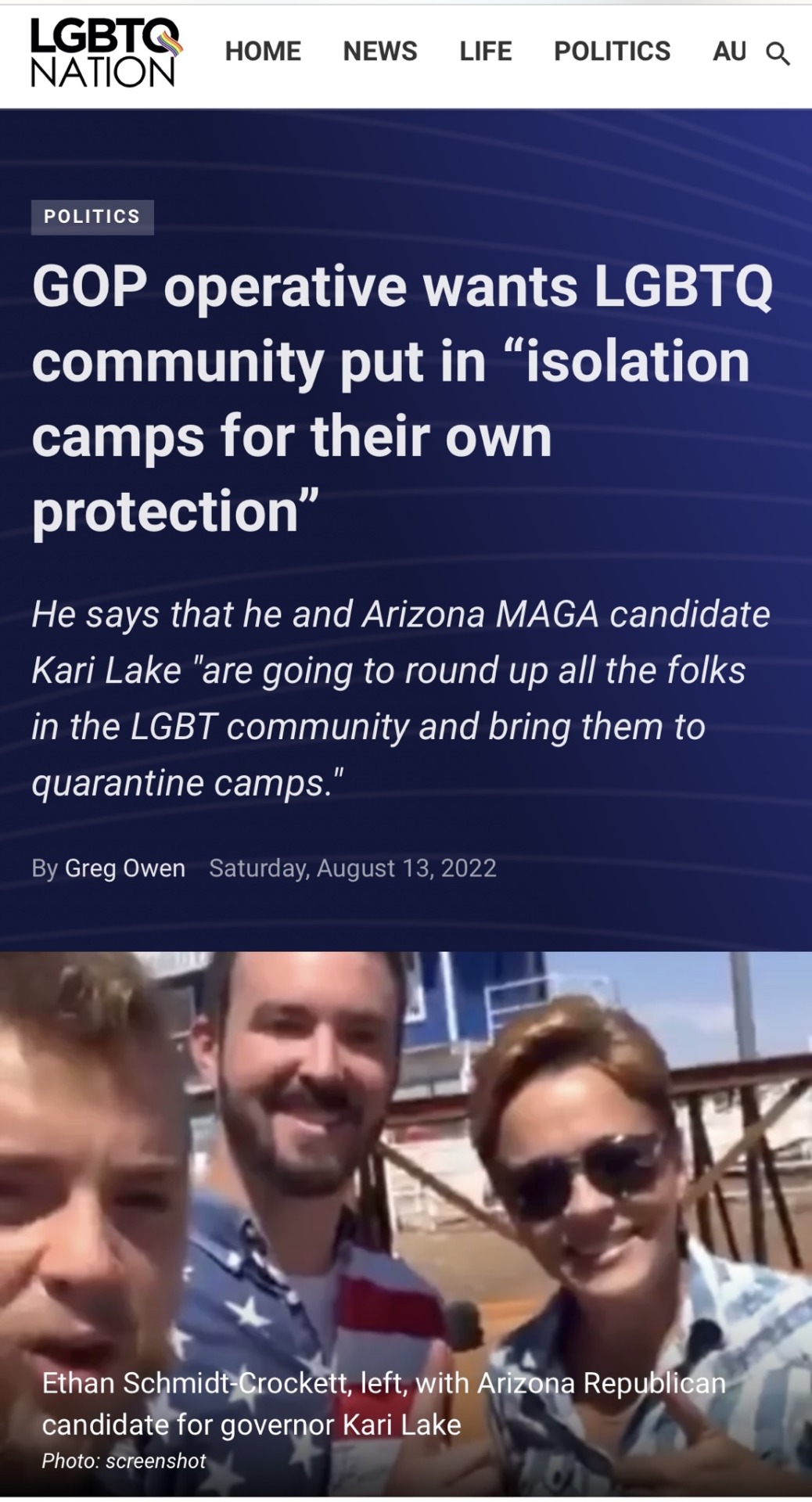
Russia began the campaign against LGBTQ+ people by first targeting trans people as a threat to children. Then once the people got used to that line they claimed that any mention of non-cis non-straight way of living was sexualizing kids and so a threat to them. Mentioning or showing a gay person was equated with showing a kid hardcore porn. Fully nude bodies. It worked in their society. That is the play book the right wing haters / Christian nationalists have used against trans people here. How soon until they try to go the entire way to force the entire country / society to be straight and cis and that Christianity be the national religion enforced by white men who force those around them to follow their personal church doctrines. But what these nut jobs really want and understand is removing all mention and signs of being not cis or straight won’t stop LGBTQ+ people from existing. Gay, lesbian, bisexual, questioning / queer / nonbinary, and all others not straight or cis are born to straight cis parents. What these outstanding moral Christians like Congress person Randy Fine from Florida want is that non-straight and non-cis kids be harassed and assaulted like when he was in school making them afraid to come out or be themselves publicly. In other words these haters want the facade of a straight cis country such as when one of the presidents of Iran said they did not have any gay people in his country ignoring a well know community that was there. They want anyone not like them to be afraid to live their lives in case they are discovered. They think that will please their god. The god who they believe created all people also created the LGBTQ+ ones as well. They think that the all knowing god will not know people are faking it due to fear and that they will be rewarded for causing that fear in the LGBTQ+ community. Very Christian of them. Hugs
The designation could mean anybody associated with the group risks years behind bars for supporting an extremist organization — akin to terrorism charges under the nation’s criminal code.
A gay rights activist wearing a headpiece walks ahead of a squad of gay rights activists, during a traditional May Day rally in St.Petersburg, Russia, Thursday, May 1, 2014. The poster reads : ‘Love is stronger than war!’ (AP Photo, File)
A Russian court on Monday labelled the country’s top LGBTQ rights group as “extremist,” effectively outlawing the organization and paving the way to prosecute its supporters.
Russia has for years targeted LGBTQ organizations but has become even more hostile since launching its full-scale assault of Ukraine in 2022, massively accelerating the country’s hardline conservative turn.
On Monday, a court in St. Petersburg ruled in favor of a case brought by the Russian justice ministry to brand the Russian LGBT Network — a top LGBTQ rights nonprofit — “extremist.”
“The public movement has been designated as an extremist organization, and its activities are banned in Russia,” the court’s press service said on Telegram.
The hearing was held behind closed doors.
The designation could mean anybody associated with the group risks years behind bars for supporting an extremist organization — akin to terrorism charges under Russia’s criminal code.
Amnesty International in February slammed the justice ministry’s move to seek the label.
“This move reflects a deliberate strategy by the Kremlin to legitimize and weaponize homophobia in its assault on dissent and equality,” said Marie Struthers, Amnesty International’s Eastern Europe and Central Asia director.
Russian President Vladimir Putin has for years denounced anything that goes against what he calls “traditional family values” as un-Russian and influenced by the West.
In 2023, Russia’s Supreme Court banned what it called the “international social LGBT movement” as an “extremist organisation”.
As part of the crackdown, Russia has in recent years targeted LGBTQ clubs and bars, raiding them and arresting owners.
Courts have also issued fines and short-term jail sentences to people displaying LGBTQ “symbols,” such as clothes, jewelry or posters featuring the rainbow flag.
This is a thing for me: I’m one of those who says, “Watch the primary candidates. Pay attention, and make a decision based on who resonates with what I want. Do this without tearing apart the other primary candidates (in my party.)” Without tearing apart candidates who could end up winning the primary, because face it: in my state, and even here on Scottie’s Playtime, most people are not as liberal as I am. So, in the primary, I vote for who I want. In the general, so far, it’s always gonna be a Dem, and Dems have a hard enough time running against always well-funded Republicans, and who, in my state, are also the majority, passing laws to make it more difficult to elect anyone who isn’t a rightwingnutjob Republican. This is the thing I dislike about some “media” who count themselves as liberal: they make a choice based on a single issue (and, frankly, the gender of the candidates often figures in, like it or not; many like a “bro”) then proceed to eviscerate the primary oppo. This suppresses the actual vote because people take the message that everyone’s basically the same, so no point voting in the primary, or at all.
Here in Kansas, we’ve got an experienced woman running for Governor. She’s been in the legislature for a while, knows who she’d be working with, and is familiar with government law and procedure. So far, there really isn’t anything to undercut her, from what I know. She’s not as liberal as I am, but is left-moderate enough to allow me to communicate with her what I believe she should do in her work, and to actually consider it on some level. Then, we’ve got a young man running. Nothing wrong with him that I can see, either, except he’s not got as much experience in state governance. This will put him at a disadvantage working with our legislature, which might/maybe/could turn less red but likely will remain Republican majority. I haven’t decided who I prefer as yet. I know of her, not so much yet of him. I like what they each say, as far as we know from this report.
So, she did point out that he has accepted donations from CoreCivic and from their lawyers. He’s also said more than once that he will continue to oppose CoreCivic moving back into KS and opening an I.C.E. detention center. Personally, I believe a person can take some campaign contributions without becoming the donators’s best friend in government. It happens more frequently than people realize. In this system we have with no public campaign finance, the campaigns need money, and will have to take legal donations. Brava/o to anyone who truly has never done that; I know it can be done, but it’s a special district who will get out and support their candidate, with the price of running a campaign these days.
So I am not holding campaign contributions against anyone as yet. Actions speak louder than words. So far, there is nothing in either candidate’s actions that make me distrust either one. I also am not unhappy with the way this forum went as far aswe know; where while the candidates pointed out differences between them, there was not out-&-out “crushing” or “destroying” or “ripping” of each other. Here’s (below) a news story about KS’s Dem. Gubernatorial campaign. What I’m most disappointed about is the number of lines given to reviewing the campaign contributions, rather than each of their answers to the other questions listed in the story below. There could have been plenty of space for that if they’d merely reported the campaign contribution issue along with the rest, rather than dwelling on it. But, even the KS Reflector is not a friend of Democrats; it’s the same sort of coverage we always getthough better than known mainstream.
In the midst of the coarse political rhetoric that seems worse every passing year (and does not originate with actual Democrats!), I hope we can remember: in the primary, choose the one most close to your perfection, which means supporting them: discussing things in their favor, giving positive reasons for your support, and not eviscerating the other candidates. This works in all U.S. primary elections everywhere.After that, support the one who wins. Otherwise, we get a fkin’ Republican.
SHAWNEE — Kansas Sen. Cindy Holscher positioned herself at a Sunday night Democratic forum as the anti-establishment candidate for governor with a history of winning in legislative districts formerly held by Republicans.
Her top opponent in seeking the party’s nomination, Kansas Sen. Ethan Corson, argued he is the only one who could win in the November general election.
The candidates staked out nearly identical policy positions during the 50-minute forum at the Aztec Shawnee Theater. The questions were submitted in advance by Kansas Young Democrats.
Both support raising the state’s minimum wage, making it easier to vote, and access to reproductive health care.
And they both identified the Republican supermajorities in the state House and Senate as their real opponent.
Holscher, from Overland Park, said Republicans were unable to lower property taxes during this year’s legislative session, despite their ability to pass anything they want.
“So they keep going back to the culture war issues,” she said. “And this past session, instead of solving actual issues of affordability and putting more money in your pockets, what did we get? We got this bathroom bill. We got two Charlie Kirk bills. None of those are going to put money in your pockets.”
Corson, from Fairway, touted his endorsements from Gov. Laura Kelly, former Gov. Kathleen Sebelius, and Planned Parenthood Great Plains Votes.
“Leading candidates in the Republican Party want to take Kansas backwards on reproductive freedom, public education and so many other issues,” Corson said. “We cannot let that happen. That is why this campaign has earned the support of trusted leaders who understand both the stakes and what it takes to win a statewide election in Kansas.”

Holscher’s response: “I’m running on my record, not the coattails of the establishment.”
About 150 people showed up to hear the two Johnson County Democrats make their case for the August primary vote. A dozen or more people wore bright blue Holscher T-shirts, and at least a couple donned black Corson T-Shirts. An engaged crowd, and available alcohol, ensured a spirited reaction to comments.
They applauded Corson when he said the city of Leavenworth was wrong to approve a conditional use permit for CoreCivic to reopen its private prison as an immigration detention center.
“I believe that private prisons have no place in our carceral system,” Corson said. “I will never support a private prison being built in Kansas. I will never support an ICE detention facility being built in Kansas.”
But the loudest applause came when Holscher attacked Corson for having taken the maximum campaign donation from CoreCivic during his 2024 Senate campaign, and $5,000 from the law firm representing CoreCivic for his gubernatorial campaign.
“You can’t say you’re against private prisons or ICE detention facilities when your campaigns and personal life are intertwined with that very business,” Holscher said. “I have consistently stood with the community opposing ICE overreach. I have never taken CoreCivic money and never will.”

A spokesman for Holscher later clarified that Corson received donations of $4,000 from Anna Kimbrell on Nov. 19, 2025, and $1,000 from Ed Wilson on Oct. 27, 2025. The two are partners for Kansas City, Missouri, law firm Husch Blackwell, which represented CoreCivic in the company’s lawsuit against Leavenworth.
The start of the forum was delayed 45 minutes because the two candidates discovered the party had given them different sets of rules. Party chair Jeanna Repass declined to say what the discrepancy was, but she insisted it was “minor.”
Before the candidates took the stage amid the rumble of storms outside, there was a moment of silence for the attempted violence Saturday night at the White House Correspondents’ Dinner.
“Just remember,” Repass said, “we don’t solve our differences with violence. We do it by voting.”
Questions touched on affordability, water crisis, young voters and Medicaid expansion.
Corson said the state should invest in building 100,000 houses per year, including 5,000 in rural areas, and work to make higher education accessible to any young person who wants it.
“I’m going to be in my mid-40s, and my wife and I, every single month, are still paying our student loans,” Corson said. “So I understand what it means for higher education to be unaffordable, to feel inaccessible, and to feel like it’s crowding out all these other things that you want to do in your life, whether it’s buying your first home, starting a family.”
Holscher said she wants to hold landlords accountable for high rent and to put a cap on fees. She warned about the threat that water-thirsty data centers pose to farmers. And she pointed out that, as a member of the House in 2017, she helped pass a Medicaid expansion bill — although it was vetoed by then-Gov. Sam Brownback. She also said she worked with the bipartisan caucus that eventually overturned the Brownback tax experiment.
It was her birthday, and her supporters served cake in the lobby.
“If you want someone fighting for the people, you want someone building a broad coalition of nurses, of teachers, people in your neighborhood, farmers, veterans, union members — that’s who I have on my side, not the establishment,” Holscher said.
Personal note. I am doing better. I am eating two meals a day most days. Not much for supper but something most nights. I am still fatigued / tired but I am not spending so many hours in bed. I am still going to bed early and staying in bed 12 to 14 hours. I go to in the morning and in the afternoon but that is partly due to the intense pain in my right butt and leg along with my back not just being too tired to stay up. I will try to get enough caught up enough to do a video. Ron has caught on and is paying a lot of attention to me. He is worried. He is doing everything he can around the house including doing the dishes when I am in bed so I find them done the next morning. But as I tell him this will take time. I did not get so ill overnight; I won’t get back to full strength quickly either. Hugs
I don’t know if all republicans are racist bigots but they certainly do tolerate them in their midst. Pride month, pride flags, and black history month, MLK, and other non-white persons of note are too political, divisive, and too morally offensive to be displayed or talked about. No month to celebrate the oppressed minorities yet one to celebrate the oppressors? No pride flags on government buildings or school classrooms but confederate battle flags are OK to be displayed everywhere. Some how the people calling for the end of DEI as racist along with those saying the pride symbols and history months are divisive and too political, think displays of people wanting to own / deny rights to a group based on skin color are not divisive or political. Hugs
Two Confederate flag bearers walk across the lawn of the Mississippi State Capitol in Jackson, Miss., on Monday, July 6, 2015. A group of about 50 people participated in the rally sponsored by the Magnolia State Heritage Campaign as they opposed efforts to remove Mississippi’s 1894 Confederate-themed state flag. Five years later, in 2020, Gov. Tate Reeves would sign a bill retiring the old state flag, even as he continued declaring Confederate Heritage Month annually. AP Photo/Rogelio V. Solis
Nearly six years after signing the bill that removed the Confederate symbol from Mississippi’s state flag, Gov. Tate Reeves declared April 2026 as Confederate Heritage Month, continuing a tradition that began 33 years ago.
Though the governor does not publish the Confederate Heritage Month proclamations on any official government websites, the Mississippi Division of the Sons of Confederate Veterans posted a copy of the latest proclamation on its Facebook page. The proclamation shows that the governor signed it on April 17.
Tap or click the preview image to read Mississippi Gov. Tate Reeves’ April 17, 2026, Confederate Heritage Month proclamation. Courtesy Mississippi Division Sons of Confederate Veterans
As in past years, Reeves’ proclamation does not mention the central role of slavery and white supremacy in the Confederacy’s birth, instead speaking only vaguely about how April “is the month when, in 1861, the American Civil War began between the Confederate and Union armies, reportedly the deadliest war ever fought on American soil.”
“WHEREAS, as we honor all who lost their lives in this war, it is important for all Americans to reflect upon our nation’s past, to gain insight from our mistakes and successes, and to come to a full understanding that the lessons learned yesterday and today will carry us through tomorrow if we carefully and earnestly strive to understand and appreciate our heritage and our opportunities which lie before us,” says the governor’s proclamation. “NOW, THEREFORE, I, Tate Reeves, as Governor of the State of Mississippi, do hereby proclaim the month of April 2026 as CONFEDERATE HERITAGE MONTH in the State of Mississippi.”
Kevin M. Levin, a Boston-based historian whose work has focused heavily on the Civil War-era, wrote on his Substack, Civil War Memory, on April 18 that Reeves issued the document “with the quiet, almost regularity of a bureaucratic obligation.”
“There is no mention of what the Confederacy stood for, no celebration of Southern martial valor, no invocation of states’ rights, and—most conspicuously—no mention of slavery, even though it was the explicit cause Mississippi named when it seceded from the Union in 1861,” Levin wrote. “What the proclamation most resembles is a permission slip signed reluctantly, just legible enough to satisfy the requester and vague enough to require no defense.”
Slavery Defined the Confederacy
The Sons of Confederate Veterans is a neo-Confederate organization that espouses “Lost Cause” ideology, which promotes a revisionist version of the Civil War that whitewashes the Confederacy’s white supremacist history and downplays the role of slavery in the Civil War. SCV owns and operates Beauvoir, the museum and historic home of Confederate President Jefferson Davis, located in Biloxi, Mississippi; the organization annually receives $100,000 from the State of Mississippi for development and maintenance.
The Mississippi Division of the Sons of Confederate Veterans issued this Confederate History and Heritage Month proclamation on April 1, 2026. Courtesy Mississippi Division of Sons of Confederate Veterans
The Mississippi Division of the Sons of Confederate Veterans issued its own 2026 “Confederate History and Heritage Month” proclamation on April 1, saying that “states of the South, including Mississippi, did legally declare their independence from the United States in 1861, and … these states did form a Confederation to protect and defend themselves from an invading army.”
What the SCV proclamation left out was the defining issue that led Mississippi and other Southern states to secede from the Union—the “cause” the Confederacy fought for.
“Our position is thoroughly identified with the institution of slavery—the greatest material interest of the world,” Mississippi’s 1861 Declaration of Secession declared. “Its labor supplies the product which constitutes by far the largest and most important portions of commerce of the earth.”
The 2026 SCV proclamation, signed by Mississippi Division Commander Forrest S. Daws, says that the people of the Confederacy spent “four long years fighting and sacrificing for their independence” as part of “their commitment to defend the rights secured under the United States Constitution.”
But the historical record shows that that, too, is a revisionist view of history.
Confederate Vice President Alexander Hamilton Stephens said in a speech on March 21, 1861, that slavery “was the immediate cause of the late rupture” that led to the American Civil War and that the Confederate Constitution enshrined the idea that the enslavement of Africans to white men was “natural and normal.” Photo Public Domain / Wikimedia Commons Credit: NARA
In his 1861 Cornerstone Speech announcing the Confederate Constitution, Confederate Vice President Alexander Hamilton Stephens said that it made “great improvements upon the old constitution.”
“The new constitution has put at rest, forever, all the agitating questions relating to our peculiar institution African slavery as it exists amongst us the proper status of the negro in our form of civilization. This was the immediate cause of the late rupture and present revolution,” Stephens said. “(Thomas) Jefferson in his forecast, had anticipated this, as the ‘rock upon which the old Union would split.’ He was right. What was conjecture with him, is now a realized fact. But whether he fully comprehended the great truth upon which that rock stood and stands, may be doubted.
“The prevailing ideas entertained by him and most of the leading statesmen at the time of the formation of the old constitution, were that the enslavement of the African was in violation of the laws of nature; that it was wrong in principle, socially, morally, and politically. It was an evil they knew not well how to deal with, but the general opinion of the men of that day was that, somehow or other in the order of Providence, the institution would be evanescent and pass away.”
“This idea, though not incorporated in the constitution, was the prevailing idea at that time. … Those ideas, however, were fundamentally wrong,” Stephens continued. “They rested upon the assumption of the equality of races. This was an error. It was a sandy foundation, and the government built upon it fell when the ‘storm came and the wind blew.’ Our new government is founded upon exactly the opposite idea; its foundations are laid, its cornerstone rests, upon the great truth that the negro is not equal to the white man; that slavery subordination to the superior race is his natural and normal condition. This, our new government, is the first, in the history of the world, based upon this great physical, philosophical, and moral truth.”
The bust of Mississippi State University’s first president, Confederate Lt. Gen. Stephen D. Lee, has long been an iconic center of the Mississippi State campus from its perch on the Drill Field in front of the building bearing Lee’s name. He led efforts long after the Civil War to successfully rewrite history about the Confederacy and its documented motives out of school textbooks and classrooms, furthering the Lost Cause. Photo by Donna Ladd
In the decades after the Civil War ended, Confederate veterans, such as Mississippi State University’s inaugural president, Stephen D. Lee, and groups like SCV and the United Daughters of the Confederacy began the work of remaking history in a way that shone a more favorable light on the South—muddying the waters over the cause of the war and falsely describing it as a “war of northern aggression.”
White-supremacist leaders in Mississippi renewed efforts to enshrine Confederate heritage in the 1950s and 1960s in reaction to the rise of the Civil Rights Movement.
Young white Mississippians wave Confederate flags at civil rights marchers near Highway 7 on the outskirts of Greenwood, Miss., on June 17, 1966, weeks after James Meredith, who integrated the University of Mississippi, was shot while leading the group of marchers. AP Photo
Despite his campaign pledge to supporters of the old Confederate-themed flag not to use his power to change the flag, Gov. Reeves signed the bill retiring it, calling it “a law to turn a page in Mississippi today.”
“It is fashionable in some quarters to say our ancestors were all evil. I reject that notion. I also reject the elitist worldview that these United States are anything but the greatest nation in the history of mankind. I reject the mobs tearing down statues of our history—north and south, Union and Confederate, founding fathers and veterans,” the governor said in 2020, criticizing Black Lives Matter protesters from across the country even as he signed the bill with several Mississippi civil rights icons behind him. “I reject the chaos and lawlessness, and I am proud it has not happened in our state.”
‘An Ideology Reduced to a Form Letter’
The Mississippi Division of the Sons of Confederate Veterans’ 2026 Confederate Heritage proclamation notes that “in 1993 Mississippi Governor Kirk Fordice, understanding the importance of remembering and preserving all history, did declare the first Confederate History Month.”
Mississippi Gov. Kirk Fordice issued the first Confederate Heritage Month proclamation in 1993. During his time as governor, he courted support from white supremacist groups, including the Council of Conservative Citizens. He is seen here on Aug. 22, 1996, with (from left) Donald Wildmon of the Tupelo-based American Family Association; then-Mississippi House Rep. Phil Bryant; and Mississippi Family Council’s Forest Thigpen. Photo/Rogelio V. Solis, File Credit: AP
Since then, one Democratic governor and three Republican governors have followed Fordice’s lead.
Starting in 2016, Donna Ladd, then the editor of the Jackson Free Press and now the executive editor of the Mississippi Free Press, first reported on then-Mississippi Gov. Phil Bryant’s Confederate Heritage Month proclamations. Despite issuing Confederate Heritage Month proclamations annually for his first seven years in office between 2011 and 2018, former Gov. Phil Bryant did not issue one in 2019, his last year in office; he opted instead for a “Month of Unity” proclamation on behalf of a Christian religious organization.
The Mississippi Free Press has since reported on each of Reeves’ annual proclamations, including in 2020, 2021, 2022, 2023, 2024 and 2025.
Reeves’ ties to the Sons of Confederate Veterans stretch back long before his time as governor. In 2013, he spoke to the SCV’s national gathering in Vicksburg, Mississippi, in front of a massive Confederate battle flag and in a room decorated with smaller Confederate flags and cotton plants. After then-Lt. Gov. Reeves congratulated the organization for “keeping history for our youth,” speakers defended the Confederate “cause” and compared “Yankees” to German “Nazis” in World War II.
Then-Lt. Gov. Tate Reeves appeared at this July 2013 Sons of Confederate Veterans event in Vicksburg with a massive Confederate flag behind him. Photo via R.E. Lee Camp 239 SCV Facebook group
Long before entering politics, Reeves was part of a Millsaps College fraternity known for lionizing Confederate General Robert E. Lee and for Confederate-themed parties where members wore blackface. When it became an issue in his 2019 campaign for governor, though, he said he never participated in blackface during his time in the fraternity.
Reeves’ Democratic opponent at the time, then-Attorney General Jim Hood, was also in a fraternity at the University of Mississippi, where members wore blackface; he similarly denied ever participating.
Reeves defended issuing the proclamations in 2021.
“For the last 30 years, five Mississippi governors—Republicans and Democrats alike—have signed a proclamation recognizing the statutory state holiday and identifying April as Confederate Heritage Month,” the governor’s office said in a statement to WAPT at the time. “Gov. Reeves also signed the proclamation because he believes we can all learn from our history.”
The governor’s annual proclamation routinely notes that state law designates the last Monday in April as Confederate Memorial Day. However, state law does not require governors to issue Confederate Heritage Month proclamations.
Mississippi Gov. Tate Reeves, seen here speaking at a press conference in Ridgeland, Miss., on Thursday, April 9, 2026, has signed Confederate Heritage Month proclamations each year as governor from 2020 to 2026. MFP Photo by Rogelio V. Solis
The language in Reeves’ Confederate Heritage Month proclamations uses much of the same language as the one that former Democratic Gov. Ronnie Musgrove, who served from 2000 to 2004, issued in April 2000.
In 2023, Musgrove told the Mississippi Free Press that Confederate Heritage Month is “something that should not continue in today’s world.”
“I cannot say why the practice started, but it was one that should never have been started,” the former governor said. “It was one that I should not have signed, and it should have ended a long time ago.”
Former Republican Gov. Haley Barbour also signed Confederate Heritage Month proclamations every year between 2004 and 2016.
In his Substack post, Kevin M. Levin wrote that the earlier proclamations that began with Fordice “were issued with more ideological confidence” and as “instruments of the Lost Cause.” Now, instead, the historian wrote, they appear on Sons of Confederate Veterans Facebook groups—a sign of the Lost Cause’s “crumbling infrastructure” and that it is now “an ideology reduced to a form letter.”
“A celebration conducted in secret, or at least in silence, is not really a celebration. It is a favor done for a diminishing constituency that the issuer would prefer the broader public not notice,” he wrote.
Members of the Mississippi Poor People’s Campaign burn a Confederate battle flag at the Governor’s Mansion in Jackson, Miss., Monday, June 18, 2018. AP Photo/Rogelio V. Solis
Levin called it “the political logic of a cause in retreat.”
“The Lost Cause did not die in a single moment, not with the removal of Confederate statues after Charleston in 2015, not with Mississippi’s replacement of its Confederate-emblem state flag in 2020, and not with any particular court ruling or protest march. It has died the slower death of a story that fewer and fewer people believe, or are willing to say publicly that they believe,” the Boston historian continued. “What remains is a three-paragraph proclamation, quietly signed, quietly announced in a Facebook group, saying as little as possible about a cause its issuer is no longer willing to name.”