There is a video at the site linked. How ever as you read through this remember that this is the group that wrote project 2025 and the main author of that Christian nationalist screed is Russell Vought who has a powerful position in the tRump administration. This is entirely about pushing a fundamentalist Christian lifestyle and worldview on the US public with heavy emphasis on quiverful which ishave as many children as possible for Christian families most of whom in that movement lived impoverished on one income. The idea is more kids butts in church pews now leads to more adult butts in those pews increasing tithes and money in the collection plates. Church attendance has decreased steadily and this is designed to increase it again. Plus it removes rights for women and LGBTQ+ families. The parents get the money only if women / the mothers marry young, forgo an advanced education, stay out of the work place, and have child after child after child like a breeding stock farm animal. It is only for the “right or correct types of families” and harms those who are not the “right” kinds of families. Plus it is totally racist with the poor people being cut out of the funds. The fact is minorities make on average far less than white families due to inherent racism and CRT, which is a real thing. Hugs
Last week, I wrote about the Heritage Foundation’s Saving America by Saving the American Family: A Plan for the Next 250 Years. The plan is, essentially, to make women drop out of school, marry young, have tons of babies, rely financially on their husbands, be unable to divorce, and wind up in the poor house if they don’t follow these rules. But I wanted to zero in specifically on the policy section of the piece, which comes at the very end and which I haven’t seen get the coverage it deserves. Because what the Heritage Foundation is proposing is a massive cash transfer from poor single mothers to better-off married couples. This really is the plan: Take from the poor to give to the “right” kind of families. Make poor mothers work, and pay better-off ones to stay home. Further impoverish single mothers to force them to marry.
The Heritage Foundation wants to eventually end cash welfare as we know it (“Credits designed specifically to benefit poor single mothers may be well intended, but they have proven to incentivize single motherhood in poor communities,” Heritage laments). They don’t propose totally doing away with welfare benefits here, I suspect because they realize that would be a nonstarter. But they do propose taking resources that currently mostly benefit poorer families and redirecting them to wealthier ones, so long as those wealthier families have married parents. The Heritage proposal would only give its proposed benefits to married couples (policies should “privilege marriage as directly and explicitly as possible,” Heritage writes, emphasis theirs). It would only give benefits to married couples in which one partner works and makes above a certain income. And it would incentivize women dropping out of the workforce… unless they’re poor or single.
Here are the specifics.
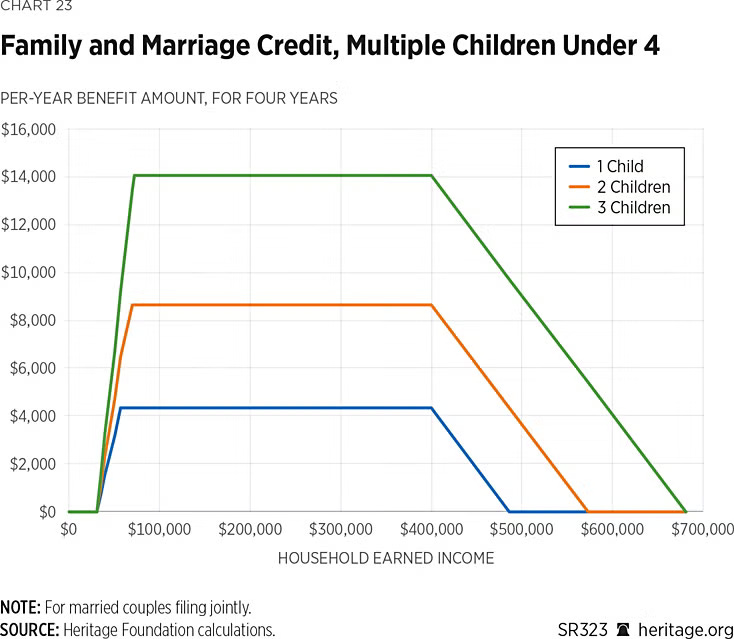
Child tax credits only for married couples who are the child’s biological parents, who are working, and who make at least $30,500. The Heritage proposal would get rid of the Earned Income Tax Credit, because that credit gives more money to struggling single parents than better-off married ones, as well as the Child Tax Credit, and replace them with what they call a Family and Marriage (FAM) tax credit of $4,418 per child per year for four years. But this credit would phase in for families once they’re earning $30,500 per year — in other words, poor families wouldn’t qualify. It would only go to married parents — single parents wouldn’t qualify. It would only go to biological parents — step parents wouldn’t qualify. A person could be working full-time, but even if they’re earning above minimum wage, they may not qualify for this tax credit.
Bonuses for larger families — but only for married couples, only for biological parents, and not for the poor. Additionally, Heritage proposes a 25% per-child bonus to their FAM tax credit for third children and beyond. But, again, poor families are out of luck, as only couples with at least one working spouse qualify, and that spouse has to make at least $30,500.
More money for higher earners, none for the lowest. The FAM credit phases in at $30,500, and goes up from there relative to income. That’s right: This is government family support that gives more money to families that already have more money. And it gives the most money to families that are the most stable: Those with two married parents who make more than six figures. The credit doesn’t begin to scale down until a family makes $110,000, and even then, the wind-down is small (beginning at just 5%). Why set up a program that gives people more money as they make more money? Because “the FAM credit’s phase-in would incentivize work.” All of this means that a married couple with three children making $400,000 a year would get $14,000 additional dollars from the US taxpayer — while a single mom making $20,000 a year would get nada.
No help after a child’s fourth birthday. As it stands, parents can claim the Child Tax Credit until a child’s 17th birthday. The Heritage plan cuts parents off when their kid turns four. They claim that these early years are when parents need the most help. But children don’t stop needing food and a roof over their heads once they’re kindergarten age. The Heritage Foundation is clear that the purpose of this plan isn’t to support children, but to incentivize parents to have more of them: “The FAM credit is designed specifically for families with newborns or young children. Lawmakers interested in family policy may be inclined simply to expand the CTC. However, this approach would be inefficient as a family formation incentive. Only a small fraction of the benefit would go toward new parents, while most of it would go to families that are already formed.” They continue: “many other family benefits, such as the CTC, are backloaded to later in life when many parents are on more solid financial footing and may be past their prime child-bearing years.” Emphasis mine, because this is truly stunning: The Heritage Foundation only wants to give parents tax credits for their (expensive) children if those parents (mothers) are in their “prime child-bearing years” and might make more babies. Eggs too old? No child tax credits for you.
Pay women to stay home. The Heritage Foundation could have proposed a generous paid leave program, which would allow parents of newborns to stay home and care for them in that crucial first year. But their aim is not to make sure that young children receive the best possible care. Their aim seems to be to get women out of the workforce. And so they’ve instead offered a $2,000 per-child credit for one parent (almost always the mother) to stay home and care full-time for her child — but again, this only applies to married couples where one spouse (almost always the husband) is working and makes more than $30,500 per year. You’re a single mom who wants to stay home with your child? Tough luck, get to work. You’re a low-income married parent who wants to stay home with your child? Tough luck, get to work. If the concern really were for children — if the view really was that young children are best off being cared for at home by a parent — then this policy would apply to all parents of young children. But that’s not the concern. The concern is that women aren’t living their lives in the way Heritage deems acceptable.
Fund this whole scheme by getting rid of Head Start. Head Start is an incredible program that has had vast positive impacts, increasing high school and college graduation rates, adult incomes, health outcomes, and overall wellbeing. Studies have found it even decreases child abuse and neglect. This proposal would effectively end it, and use the money saved to give tax breaks to wealthy married couples with children.
Pay people to marry young. The final Heritage policy is a $2,500 deposit into a savings account for every new baby born in the US — but the only way to get the full benefit of that money as an adult is to marry well before the age of 30. That is, when an American is born, the government will deposit $2,500 into a savings account for them, which they cannot touch until they either marry or turn 30. At either marriage or age 30, they can start to withdraw from the account, but only over three years — so about a third of the original value per year. They get the full withdrawal amount each year (roughly one-third of the total account value) if, in each year, they are married but not yet 30. If they’re over 30, whether they’re married or not, they pay a tax penalty. In other words, to get the full benefit, you have to marry by 27 — below the average age of first marriage for women (28.6) and men (30.2) alike. Again, the point is not to incentivize marriage; it’s to incentivize women especially marrying as young as possible, despite early marriage being tied to higher divorce rates.
xx Jill
Subscribe to Throughline by Jill Filipovic
Hundreds of paid subscribers
Connecting the dots. Politics, culture, women’s rights, foreign affairs, law, and more.
Again all this is about is a Christian nationalist desire to mimic Russia and remove all LGBTQ+ representation from the public view in the name of “protecting children from porn” as if just being or media representing LGBTQ+ people is pornographic and sexual. These people feel anything not straight and cis is sexualizing and abusing children simply because they do not want the LGBTQ+ people to exist. Hugs
Side note. Ron got home last night 3-2-2026 about 6 pm. I made him a supper of a salad and two hamburgers with the fixings. He was so happy. I was happy. We went to bed and snuggled which made Tupac who has snuggled me every night a bit unhappy but he pressed in from the other side. All day Ron and I have been together, unloading the car, doing laundry, Ron started on the floors in the kitchen, and we are making a pork tenderloin, potatoes, brown gravy, carrots, and greenbeans for supper. It is so good to have my husband home. I understood why he had been gone for the better part of three months but it sure is grand to have him home. I feel better, anxieties lower, and happy feeling up. Also for those worried I was not eating which I was not, I ate like a pig at a trough tonight, having a first heaping plate of everything and then going back for a second heaping plate. The end of the second one was a bit challenging to finish but I did. I offered to pick up the last bits of left overs but ron said he would do it. I think he noticed I was trying to hide that I was swaying and wobbleing when I walked due to my pain levels. Hugs
Discussion of gender is not sexualization. Making books available to students that represent the diversity of their experiences and showcase the numerous ways to be a person in the world is not sexualizing them. Such an interpretation says far more about the adults and the perspectives they’re applying to books than it does about the books or their intended audiences.
Following this week’s State of the Union Address, House Republicans worked quickly to advance legislation to ban books from public schools nationwide. House Resolution 7661 (H.R. 7661), also known as the “Stop the Sexualization of Children Act” would modify the Elementary and Secondary Education Act of 1965 by prohibiting use of funds under the act “to develop, implement, facilitate, host, or promote any program or activity for, or to provide or promote literature or other materials to, children under the age of 18 that includes sexually oriented material, and for other purposes.”
The bill was introduced by House Representative Mary Miller (Republican, Illinois). 17 additional Representatives cosigned it.
H.R. 7661 is an anti-trans bill, and tucked within its provisions are those that ban books for those under 18 that “include sexually oriented material.” This is the same vague language used in numerous states across the U.S. to ban books from public schools and public libraries. This bill includes “lewd” and “lascivious” dancing as prohibited topics or themes. No such books for young readers exist, but facts don’t matter to a regime seeking total and complete control.
The bill goes on to further define “sexually oriented material” as anything broaching the topics of “gender dysphoria or transgenderism.” The latter is an intentionally harmful word used as a cudgel to harm trans people. Such a broad definition also ensures that this kind of bill could be applicable in any situation where it would benefit the banners. It isn’t a stretch to see a bill like this used to outright ban all books by or about LGBTQ+ people under the guise of it being “sexually oriented.”
Though this legislation would apply to institutions using funds from the Elementary and Secondary Education Act of 1965, there’s little question that it would expand to include all public libraries, not just those in public schools. We’ve already seen this very thing play out across the country.
These local-level policies, alongside state-level policies like Iowa’s Senate File 496 and Idaho’s House Bill 710–both still working their way through numerous lawsuits–provided the roadmap for the proposal of federal-level book ban legislation. It was only a matter of time, and the ongoing onslaught of anti-trans legislation and rhetoric that has grown exponentially under the Trump-Vance regime made this the prime moment.
Discussion of gender is not sexualization. Making books available to students that represent the diversity of their experiences and showcase the numerous ways to be a person in the world is not sexualizing them. Such an interpretation says far more about the adults and the perspectives they’re applying to books than it does about the books or their intended audiences.
You can read the full text of H.R. 7661 here, including its list of cosponsors. Right now, your best way to have your voice heard about this hateful and discriminatory bill is to call your House representatives and urge them to veto this bill at every opportunity. There are years’ worth of resources from which you can pull about where and how all of these bills are calculated and targeted, and you can pull from the numerous ongoing lawsuits challenging similar bills and policies at the local and state level. Let your lawmakers know that you’re watching them and their voting records, especially if they’re among the roster of those proposing the legislation.
These bills aren’t about removing books; books are just one of the tools. These bills are about the complete and total erasure and removal of queer people from American life.
Don't be fooled by this bill's name– this is a book banning bill that will exclude LGBTQ books from all public schools NATIONWIDE.Call your congresspeople and tell them to VOTE NO on this nakedly bigoted book banning bullshit. http://www.congress.gov/bill/119th-c…
The conflation of porn and LGBTQ (but specifically trans) issues is purposeful. It's part of the Project 2025 plan to criminalize LGBTQ+ ppl.It starts with books. It moves to bathrooms. Then it moves to govt IDs. We're in it already.You don't need to be an expert to see where this goes next.
Nazi Republican Mary Miller who has quoted Hitler in the past now wants to ban strippers in public schools…and she's all in with banning any book that dares mention LGBTQ+ issues…www.lgbtqnation.com/2026/02/gop-…
Another great one from the Reverend. This time he talks about how these bills mandating commandments be placed every where in schools are about creating obedient people, not thinking people, not religious people. People who follow what they are told to do and believe. Hugs
2025 has been filled with relentless and unprecedented attacks against the LGBTQ community in the U.S. President Donald Trump’s anti-LGBTQ policies have spilled over to countries abroad, including heading north to some conservative Canadian provinces like Alberta.
Despite this, there have been moments of hope. Here is Uncloseted Media’s 2025 LGBTQ year in review.
Jan. 1
Liechtenstein’s Marriage Act, passed in 2024, officially takes effect, opening marriage to same-sex couples and aligning the microstate with 21 other European nations that already recognize same-sex marriage.
Meta introduces new rules to their platforms. They remove their third-party fact-checking program and roll back hate speech restrictions, which allows anti-LGBTQ rhetoric to flourish. A report by Uncloseted Media identifies users who spew trans and homophobic language. One user wrote, “Look at this disgusting piece of fag shit here !” Another told someone to go to “the insane asylum where you belong, tranny freak.” Both of these comments are still up on the platform.
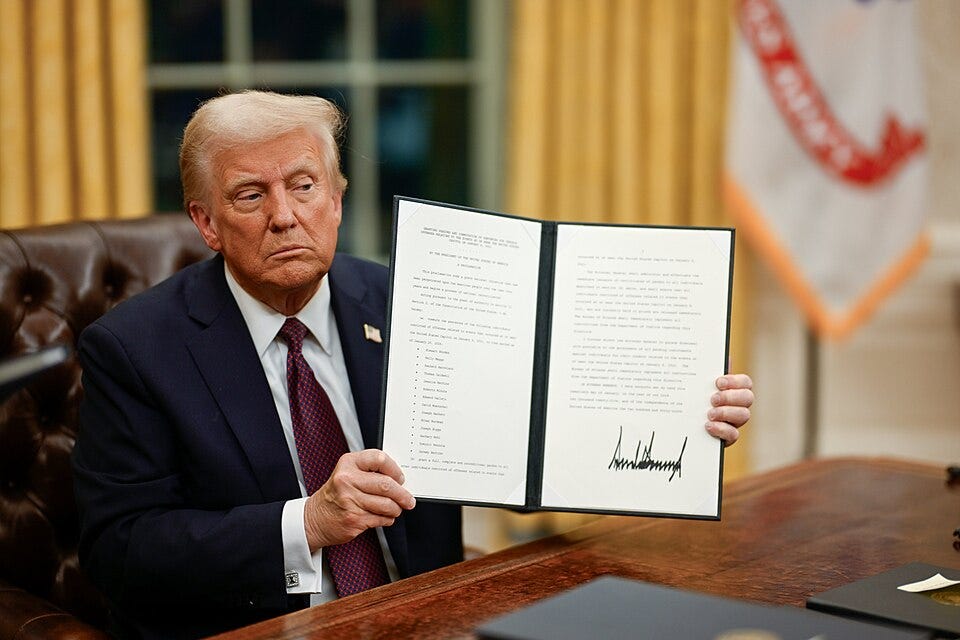
On the first day of his second term, President Trump signs an executive order titled “Defending Women from Gender Ideology Extremism and Restoring Biological Truth to the Federal Government.” The order forces federal agencies to treat sex as a fixed male and female binary “assigned at conception,” calls for “gender” to be scrubbed from federal guidance, halts federal funding for gender-affirming care and mandates trans women in prison to be sent to male facilities. Trump also issues a stop-work order for PEPFAR, the biggest HIV/AIDS relief program in the world. This kicks off a broader pattern of cuts to HIV prevention and research.
Over the next three months, Trump continues his attacks on the LGBTQ community by signing another executive order that bans trans women and girls from competing on sports teams that match their gender identity. He also directs agencies to curb gender-affirming care for anyone under 19 and to strip funding from schools that allow social transition, inclusive bathrooms or the use of affirming names and pronouns.
Jan. 23
Same-sex marriage becomes the law of the land in Thailand, making it the first country in Southeast Asia to recognize marriage equality and equal adoption rights for gay couples.
Jan. 27
The Idaho House passes a resolution urging the U.S. Supreme Court (SCOTUS) to revisit and overturn Obergefell v. Hodges, signaling a renewed appetite to attack marriage equality at the federal level.
Feb. 6
Australia amends its federal Criminal Code to add sexual orientation, gender identity and intersex status as protected characteristics in hate-crime law. This creates stronger penalties for perpetrators of anti-LGBTQ hate crimes across the country.
Feb. 13
Sam Nordquist, a trans man from Minnesota, is found dead in Upstate New York after a woman he met online kidnapped and tortured him for weeks in a hotel room. Seven people connected to his death have been charged with murder. Sam’s friend, Jax Seeger, spoke to Uncloseted following the tragedy:
“From my understanding, they came out and said it wasn’t a hate crime … and part of their reasoning was because one or two of the suspects self-identified within the [LGBTQ] community. … Like, you can’t say that just because they identified as LGBTQ, they’re incapable of committing a hate crime. Sammy wasn’t just physically abused. He was psychologically abused and they didn’t go into what that consisted of, but I think that’s something to keep in mind. As well as just the level of abuse you know? Trans people deserve the same respect and the same love as everyone else.”
The week after our interview with Seeger, prosecutors upgrade the charges against Nordquist’s accused killers to first-degree murder.
Feb. 14
The Stonewall National Monument. Photo by TheCatalyst31.
The National Park Service (NPS) erases mentions of transgender people from the Stonewall memorial, furthering conservative efforts to push “LGB” without the “T.” A few months later, NPS would go on to remove mentions of bisexuals as well.
Feb. 25
Mexico City Pride 2025. Photo by Wotancito.
Mexico City’s Congress approves a resolution to reform the Law for the Recognition and Attention of LGBTTTI+ Persons. This move effectively recognizes nonbinary people.
Feb. 28
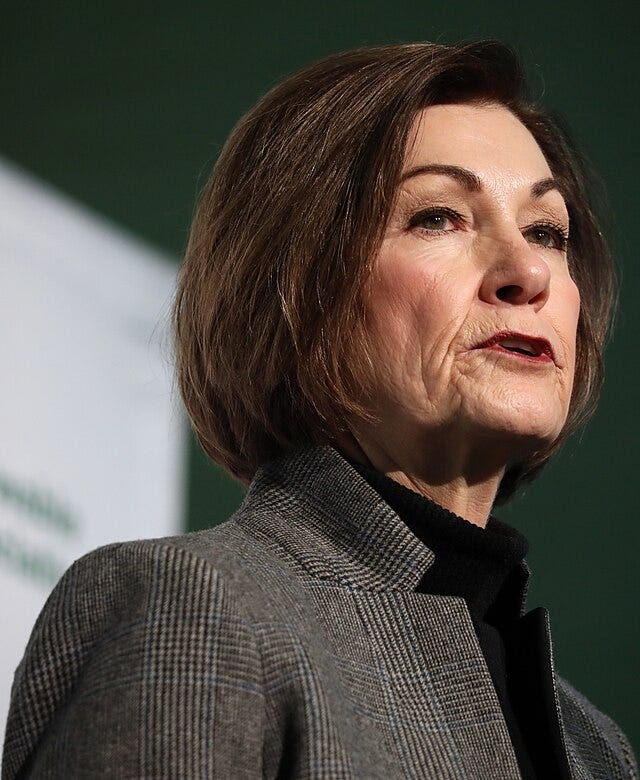
Kim Reynolds in 2024. Photo by Gage Skidmore.
Iowa Gov. Kim Reynolds signs SF 418 into law. This move officially removes “gender identity” from the Iowa Civil Rights Act’s list of protected classes in housing, employment and public accommodations. Iowa becomes the first state to remove civil rights from a previously protected group.
March 27
Gov. Spencer Cox announces that Utah will become the first state to ban LGBTQ pride flags in government buildings and public schools, effective May 7. While the move is framed as a “neutrality” measure, it is widely seen as part of a broader effort to erase public displays of queer identity. In protest, the Utah Pride Center unveils what it calls “the world’s largest transgender flag” in front of Utah’s State Capitol building in Salt Lake City.
April 4
A conversion therapy ban in New South Wales (NSW), Australia, goes into effect. This makes it illegal for therapists and religious leaders to practice conversion therapy on gay and trans people. In a media release, the NSW attorney general writes:
“This follows ongoing work by the NSW Government to progress reforms that ensure all members of our community feel valued, respected and equal.”
“This report not only rejects health care best practices for transgender people — it goes a step further by recommending conversion therapy, though under a new, rebranded name, ‘exploratory therapy’. Despite the report’s claims, this is, in fact, the same harmful practice of conversion therapy, just using friendlier language.”
May 6
Trump’s transgender military ban goes into effect. The change requires active trans service members to self-separate from the military or risk losing some of their Veterans Affairs benefits. Alaina Kupec, a retired transgender U.S. Navy lieutenant, says the decision punishes people who are qualified and want to serve the country:
“[This is] a really dark day for our country where basically we’re allowed to discriminate against a class of people.”
May 19
A Russian court fines Apple roughly $130,000 for four offenses, including the violation of Russia’s expanded “LGBT propaganda” law. The Russian law labels the “international LGBT movement” as extremist and treats queer visibility as a threat to state security. Anything that promotes “non-traditional sexual relations” violates the law.
May 30
Puerto Rico’s Supreme Court rules that residents can request an “X” gender marker on their birth certificates. This move explicitly recognizes nonbinary people and strengthens case law around self-determined gender in the U.S. territory.
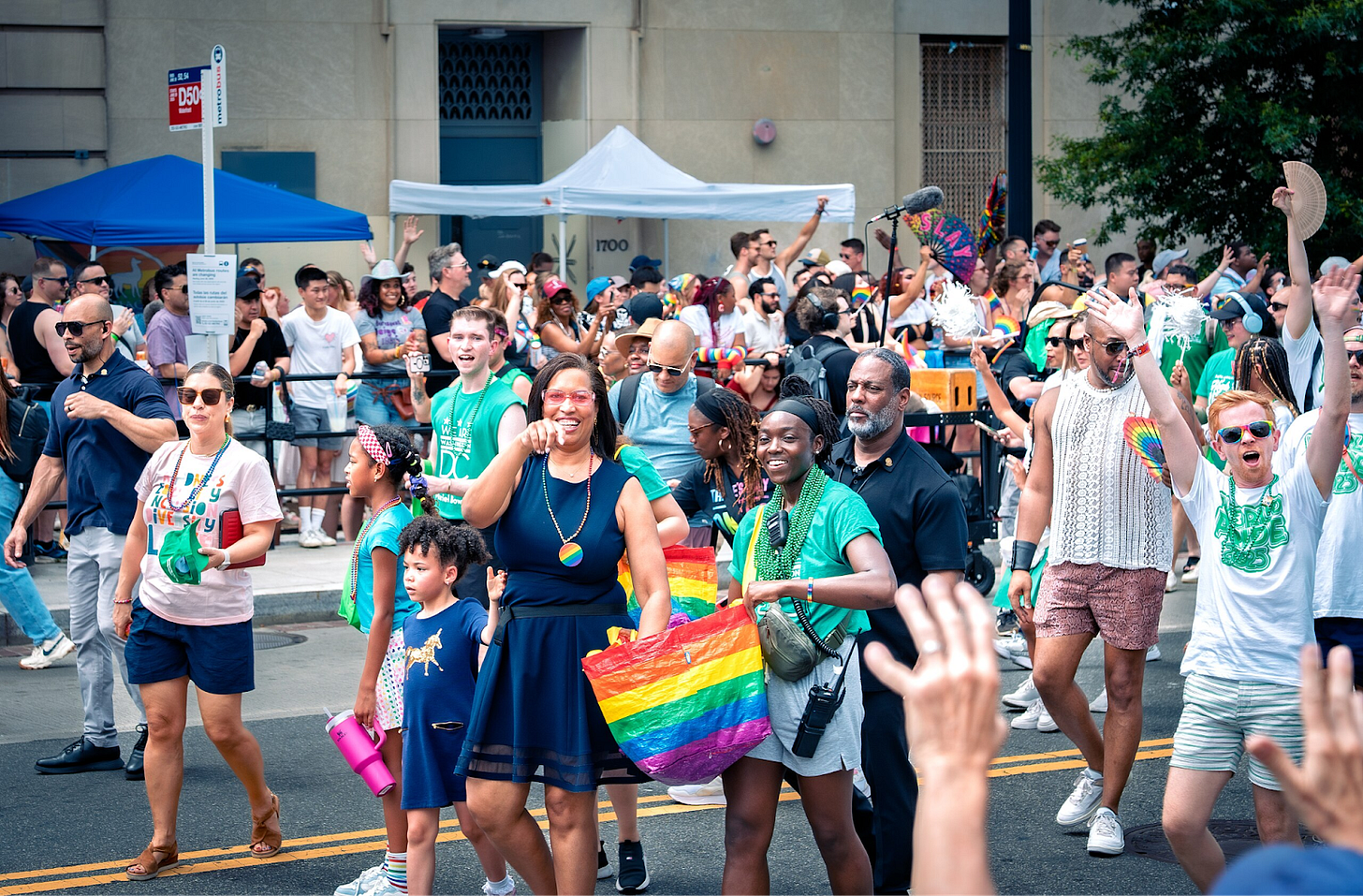
Amid relentless attacks from the federal government, WorldPride takes place in Washington D.C. Ahead of the event, the African Human Rights Coalition calls for a boycott because of Trump’s swath of anti-LGBTQ policies. While roughly 1.2 million people attend, The Washington Post reports that the turnout is less than half of what organizers expected.
June 18
In a 6–3 decision, SCOTUS upholds Tennessee’s law banning gender-affirming care for minors, including puberty blockers and hormones. The ruling signals that similar bans in other Republican-controlled states are likely to stand, sharply narrowing access to medically recommended care for trans youth nationwide. Ten days after the ruling, five trans youth speak to Uncloseted Media, with Dylan Brandt, 20, saying:
“Lawmakers don’t need to be involved in my doctor visits. They have no right. They have no knowledge. … They’ve got a lane and they should stay in it.”
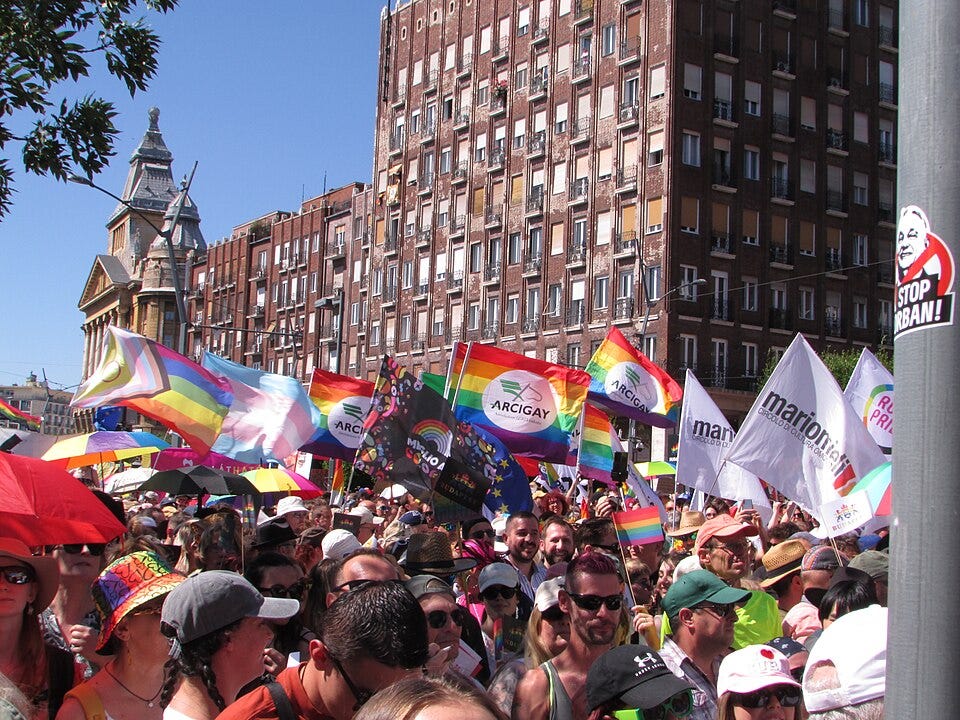
In defiance of a government ban on Pride events, roughly 100,000 people march the streets of Budapest, Hungary, to celebrate. The march was seen as both a showing of support for LGBTQ rights and a protest against Prime Minister Viktor Orbán’s conservative government.
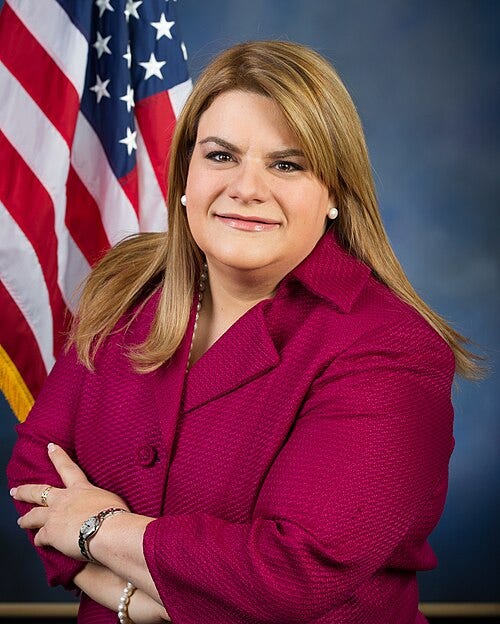
Puerto Rico’s governor, Jenniffer González-Colón, signs one of the harshest anti-trans health care laws in the northern hemisphere. The law bans gender-affirming care for anyone under 21 and threatens to cut off public funding for hospitals that don’t comply. It also threatens doctors with up to 15 years in prison and loss of licensure for violations. Puerto Rico’s LGBTQ+ Federation and GLAAD release a joint statement condemning the bill:
“Banning this care and stripping the rights of parents to make the best medical decisions for their families would create unbearable burdens for the most marginalized in Puerto Rico. Lawmakers must vote to protect access to health care that saves lives, and allow families to make private health care decisions that help loved ones be themselves, be safe, and to thrive.”
July 17
The Trump administration shuts down the LGBTQ suicide hotline, a life-saving resource that had received over 1.3 million calls, chats and texts since it launched in 2022. Genna Brown, a 16-year-old queer kid in North Carolina, who had used the hotline, spoke with Uncloseted Media about the impact it had on her mental health:
“I was an extremely self-loathing, suicidal kid who was under the impression that God hated me and I was gonna burn in hell for eternity. … Connecting with someone who gets it was really helpful. … Because at home, I was so isolated and I didn’t really interact with other queer people.”
July 18
Cuba’s National Assembly passes a law allowing trans people to change their legal gender without any requirement for genital surgery. In a post on X, Minister of Justice Oscar Silvera Martínez writes that the new law “will allow the country to have a modern civil registry” provided by “the issuance of digital documents with full validity and efficiency.”
July 29
In a move hailed by human rights groups, the Caribbean nation of St. Lucia strikes down colonial-era laws criminalizing “buggery,” effectively decriminalizing consensual same-sex intimacy between adults.
Aug. 20
In the middle of the night, Florida’s Department of Transportation paints over a rainbow crosswalk made to honor the victims of the Pulse nightclub terrorist attack that left 49 people dead. Advocates respond in protest by installing rainbow-colored bike racks.
Sept. 1
Burkina Faso’s Transitional Legislative Assembly passes a law explicitly criminalizing homosexuality. The law imposes a two- to five-year prison sentence and fines on people convicted of same-sex activity, deepening the criminalization of queer people in West Africa.
Sept. 10
The assassination of Charlie Kirk at Utah Valley University (UVU) kicks off a wave of anti-trans vitriol, including calls to criminalize the community and designate them as terrorists. In September, Uncloseted Media interviewed five current and former LGBTQ students at UVU. Simone Goodheart, a trans woman who had recently attended the school, spoke about how students were suggesting she was the murderer and how they were harassing her on campus:
“I would say a few of them were asking me to share my school schedule, which thankfully I’m not a student right now. But like damn, if that was the case? A few of them just make awful comments about my appearance, who I am as a person. Basically they just wanted to make sense [of it], but also they wanted to get their outrage out. Because yeah, somebody they cared for died. They are going through the grieving process and like there is outrage and frustration but they were misdirected and misconnected and just utilized by awful algorithms that try to boost the most amount of outrage possible in order to encourage engagement.”
Sept. 26
Slovakia’s parliament passes a constitutional amendment that formally recognizes only two genders, restricts legal gender transition and prohibits adoption by same-sex couples nationwide.
Oct. 6
Bari Weiss hosting a CBS News Town Hall with Erika Kirk. Screenshot/CBS News.
Bari Weiss is appointed editor-in-chief of CBS News, making her the first openly gay person to lead the network. Weiss often angles herself as an independent thinker and is known for criticizing the mainstream media. She has no experience in broadcast news and has surrounded herself in controversy, accusing former colleagues at The New York Times of bullying her. She has also railed against Diversity, Equity and Inclusion (DEI) initiatives, writing articles with headlines such as “Bari Weiss: End DEI.”
“It is time to end DEI for good. No more standing by as people are encouraged to segregate themselves. No more forced declarations that you will prioritize identity over excellence. No more compelled speech. No more going along with little lies for the sake of being polite.”
Oct. 7
SCOTUS appears poised to rule against a Colorado law that bans the discredited practice of conversion therapy on minors. The justices repeatedly question the state over whether the law hinders free speech.
The high-stakes case could roll back the rights of LGBTQ youth across the country. Colorado is one of more than 20 states that have banned conversion practices, and a ruling in favor of removing the ban could make those laws in other states vulnerable to similar challenges.
Zohran Mamdani, one of the most outspokenly pro-trans politicians in the country, is elected mayor of New York City. Meanwhile, anti-LGBTQ Republicans are defeated in Virginia’s and New Jersey’s gubernatorial elections. On the night of his win, Mamdani reaffirms his support for those who elected him:
“In this moment of political darkness, New York will be the light. Here, we believe in standing up for those we love, whether you are an immigrant, a member of the trans community, one of the many black women that Donald Trump has fired from a federal job, a single mom still waiting for the cost of groceries to go down, or anyone else with their back against the wall. Your struggle is ours, too.”
In a massive win for gay rights, SCOTUS rejects Kim Davis’ appeal and won’t revisit the landmark decision that legalized same-sex marriage nationwide in 2015. This signifies a major defeat for the new push to overturn the ruling, which was spearheaded by Davis and her lawyers from Liberty Counsel.
Nov. 17
Across Alberta, Canada, anti-trans legislation takes effect. A trans sports ban for students also forces sports organizations and schools to collect sensitive personal information that risks outing trans and gender diverse youth. Alberta Premier Danielle Smith announces plans to circumvent legal opposition to the province’s ban on gender-affirming care for minors by invoking the notwithstanding clause, a constitutional provision that will stop such challenges for five years. The measure was also used in Alberta in 2000 to advance legislation opposing gay marriage.
Nov. 19
New Zealand’s health minister, Simeon Brown, announces a halt to new prescriptions of puberty blockers for minors with gender dysphoria. Brown says the ban will remain until a British clinical trial is completed. Existing patients can continue treatment.
Nov. 25
The European Union’s (EU) top court rules that member states must recognize same-sex marriages contracted in any EU country for purposes such as residence and free movement, binding more conservative governments such as Poland, Bulgaria, Romania and Slovakia to acknowledge queer couples’ marital status even if they refuse to perform such marriages at home.
Dec. 2
ADF International, the global arm of U.S. anti-LGBTQ legal group Alliance Defending Freedom, publicly backs a South Australian woman threatening legal action over a Headspace Berri mental-health presentation that mentioned LGBTQ issues, incest and bestiality in a classroom context. Elenie Poulos, an expert on the intersection of religious and political discourses, describes their impact as “huge,” saying:
“They have a very longstanding and aggressive approach to the rights of LGBTIQ people. They fight it in the courts in the US, they fight it politically, locally and in communities, and their aggressive anti-gay stance is extremely harmful.”
Dec. 18
Robert F. Kennedy Jr. and Dr. Oz announcerestrictive measures designed to block minors’ access to gender-affirming care. The plan proposes federal Medicare and Medicaid cuts to all hospitals that provide this care to minors. “The multitude of efforts we are seeing from federal legislators to strip transgender and nonbinary youth of the health care they need is deeply troubling,” says Rodrigo Heng-Lehtinen of The Trevor Project.
Dec. 21
CBS News shelves a planned 60 Minutes segment on men deported to CECOT, an infamous prison in El Salvador. Internal sources indicate that the move to cancel the story came from the network’s editor-in-chief Bari Weiss, who reportedly raised concerns about the Trump administration’s lack of response to the reporter’s outreach.
If objective, nonpartisan, rigorous, LGBTQ-focused journalism is important to you, please consider making a tax-deductible donation through our fiscal sponsor, Resource Impact, by clicking this button:
Robin Abcarian, Los Angeles Times on Published in Op Eds
I had a difficult time reading the gut-wrenching accounts from the parents of gay children who are part of the Supreme Court case about conversion therapy bans and freedom of speech.
All claim their family relationships were seriously damaged by the widely discredited practice, and that their children were permanently scarred or even driven to suicide.
The case, Chiles vs. Salazar, arose from a 2019 Colorado law that outlaws conversion therapy, whose practitioners say they can change a minor’s sexual orientation or gender identity to align with heterosexual and cisgender norms. The therapy is considered harmful and ineffective by mainstream medical and mental health organizations.
At least two dozen other states have similar laws on the books, all of them good-faith attempts to prevent the lasting harm that can result when a young person is told not just that they can change who they are, but that they should change because God wants them to. The laws were inspired by the horrific experiences of gay and transgender youths whose families and churches tried to change them.
The case was brought by Kayley Chiles, a licensed counselor and practicing Christian who believes, according to her attorneys, that “people flourish when they live consistently with God’s design, including their biological sex.”
Colorado, incidentally, has never charged Chiles or anyone else in connection with the 2019 law.
Chiles is represented by the Alliance Defending Freedom, a conservative Christian law firm known for its challenges to gay and transgender rights, including one brought to the Supreme Court in 2023 by Christian web designer Lorie Smith, who did not want to be forced to create a site for a gay wedding, even though no gay couple had ever approached her to do so. The Court’s conservative majority ruled in Smith’s favor. All three liberals dissented.
As for conversion therapy, counselors often encourage clients to blame their LGBTQ+ identities on trauma, abuse or their dysfunctional families. (If it can be changed, it can’t possibly be innate, right?)
In oral arguments, it appeared the conservative justices were inclined to accept Chiles’ claim that Colorado’s ban on conversion therapy amounts to viewpoint discrimination, a violation of the 1st Amendment’s free speech guarantees. The liberal minority was more skeptical.
But proponents of the bans say there is a big difference between speech and conduct. They argue that a therapist’s attempt to change a minor’s sexual orientation or gender identity amounts to conduct, and can rightfully be regulated by states, which, after all, lawfully impose conditions on all sorts of licensed professionals. (The bans, by the way, do not apply to ministers or unlicensed practitioners, and are generally not applicable to adults.)
Each competing brief whipsawed my emotions. The 1st Amendment is sacred in so many ways, and yet states have a critical interest in protecting the health and welfare of children. How to find a balance?
After reading the brief submitted by a group of 1st Amendment scholars, I was convinced the Colorado law should be ruled unconstitutional. As they wrote of Chiles, she doesn’t hook her clients to electrodes or give them hormones, as some practitioners of conversion therapy have done in the past. “The only thing she does is talk, and listen.”
Then I turned to the parents’ briefs.
Linda Robertson, an evangelical Christian mother of four, wrote that she was terrified when her 12-year-old son Ryan confided to her in 2001 that he was gay. “Crippling fear consumed me — it stole both my appetite and my sleep. My beautiful boy was in danger and I had to do everything possible to save him.”
Robertson’s search led her to “therapists, authors and entire organizations dedicated to helping kids like Ryan resist temptation and instead become who God intended them to be.”
Ryan was angry at first, then realized, his mother wrote, that “he didn’t want to end up in hell, or be disapproved of by his parents and his church family.” Their quest to make Ryan straight led them to “fervent prayer, scripture memorization, adjustments in our parenting strategies, conversion therapy based books, audio and video recordings and live conferences with titles like, ‘You Don’t Have to be Gay’ and ‘How to Prevent Homosexuality.’ ”
They also attended a conference put on by Exodus International, the “ex-gay” group that folded in 2013 after its former founder repudiated the group’s mission and proclaimed that gay people are loved by God.
After six years, Ryan was in despair. “He still didn’t feel attracted to girls; all he felt was completely alone, abandoned and needed the pain to stop,” his mother wrote. Worse, he felt that God would never accept him or love him. Ryan died at age 20 of a drug overdose after multiple suicide attempts.
As anyone with an ounce of common sense or compassion knows, such “therapy” is a recipe for shame, anguish and failure.
Yes, there are kids who question their sexuality, their gender identity or both, and they deserve to discuss their internal conflicts with competent mental health professionals. I can easily imagine a scenario where a teenager tells a therapist they think they’re gay or trans but don’t want to be.
The job of a therapist is to guide them through their confusion to self-acceptance, not tell them what the Bible says they should be.
If recent rulings are any guide, the Supreme Court is likely to overturn the Colorado conversion therapy ban.
This would mean, in essence, that a therapist has the right to inflict harm on a struggling child in the name of free speech.






 Scottie's Playtime
_(cropped).jpg)
.jpg)

#/media/File:2025.06.07_World_Pride,_Washington,_DC_USA_158135_05745_(54582538995).jpg)

.jpg)
.jpg)