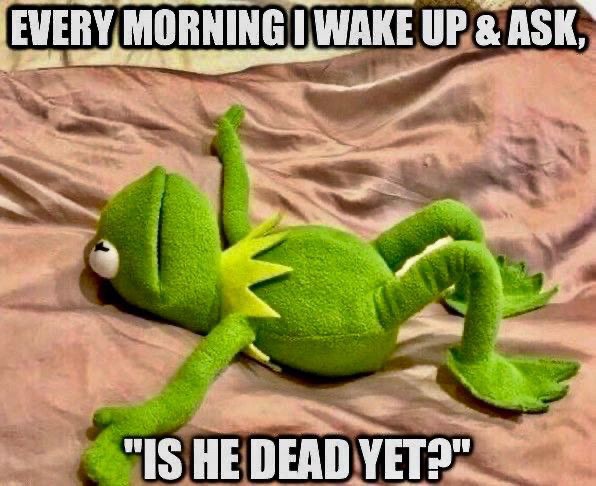
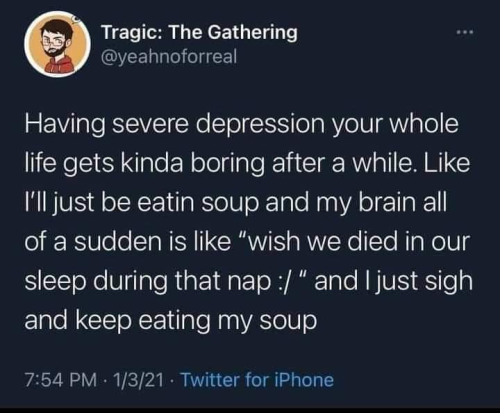
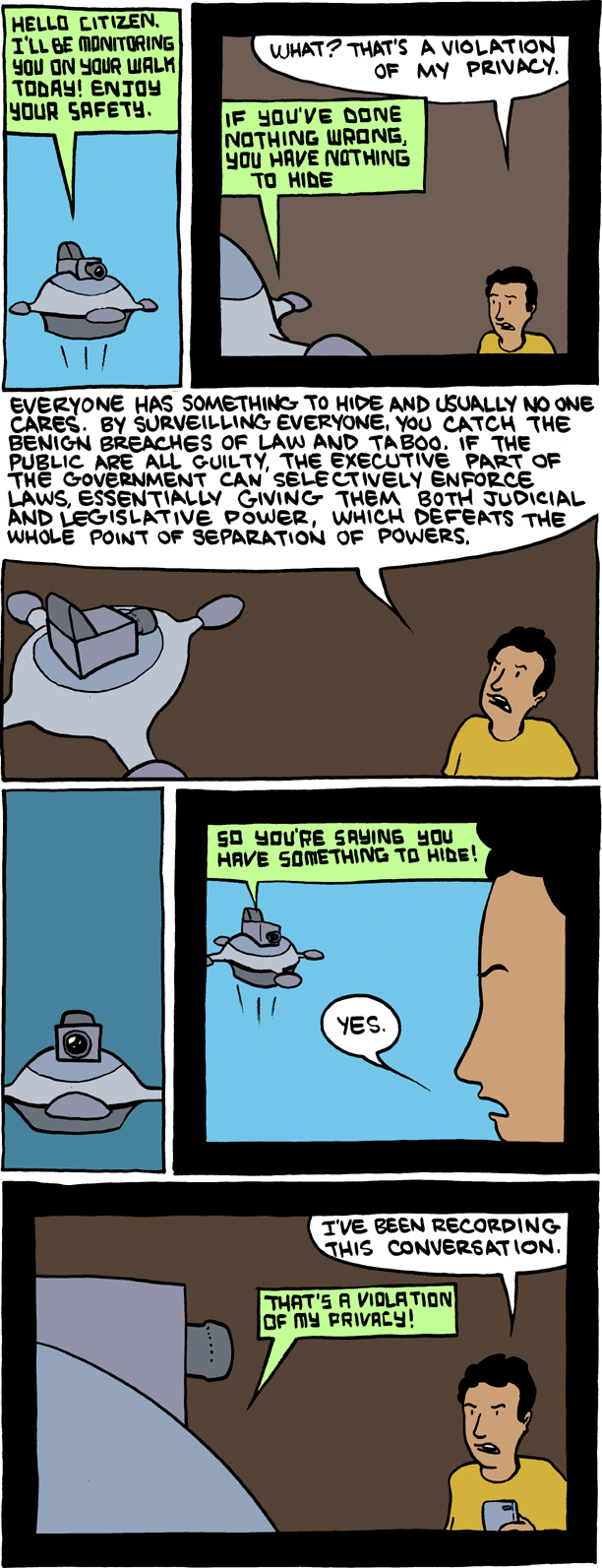
I am posting the meme below because it explains the intrusive thoughts issue I have struggled with for so long and for a while got really overwhelming. But I am NOT suicidal. Again please don’t worry about that, I am not self harming and I am not suicidal. I am just struggling. Links for any that need help below given with love. Hugs
988 Suicide & Crisis Lifeline, TrevorLifeline 1-866-488-7386 the Trevor Project’s crisis counselors are just a text, chat, or phone call away. Completely confidential and free LGBTQ hotline.
I have never understood the rights hate of LGBTQ+ people just for being different. I used to think it was they couldn’t understand it because they did feel that way. If they did not feel that way then it must be wrong or not exist. The very same things they say about trans people they said about gay people when I was a school kid. I remember that people were pushing to ban gay guys, and it was always gay guys just like it is always trans women, from teaching because they would molest the kids. Now it is we can’t let trans people use the bathroom that corresponds to their gender identity because of some fear they will molest the little girls. Always to protect the kids but if that was the goal then may I mention religious leaders? I think also the fear some religious right wingers have is that they find trans women attractive and that terrifies them. They want to force kids to go through the wrong puberty so it is harder for them to fit in with the stereotypes people have of what is masculine or feminine. For some they think they are doing the bidding of their deity but I don’t remember reading Jesus saying anything about trans people. But he did preach love and tolerance a lot. Maybe the pain and cruelty is the point after all. Hugs
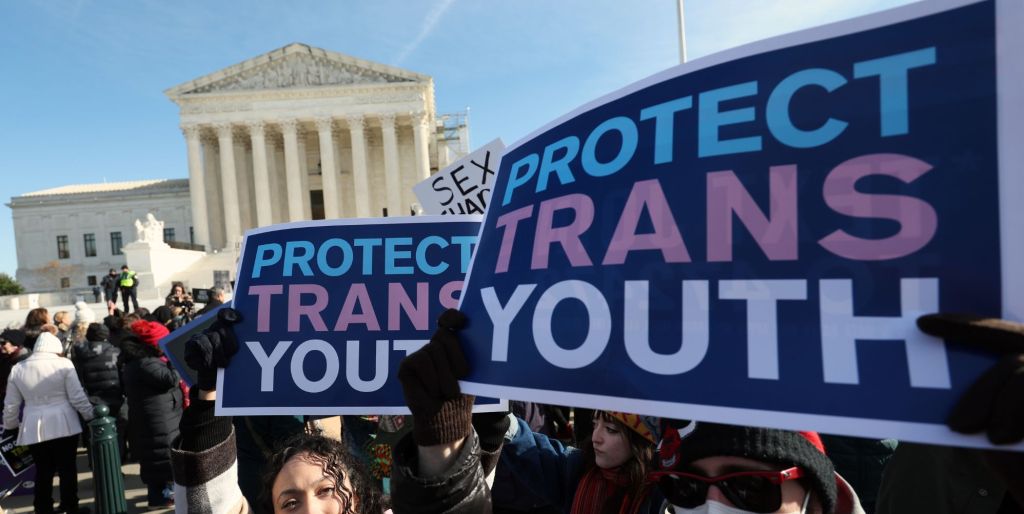
Trans youth almost always feel less suicidal while undergoing treatment. (Getty
Trans youth almost always feel less suicidal while undergoing treatment. (Getty)
Yet another study proving that trans youth almost always feel less suicidal on gender-affirming care has been thrown on the pile of evidence that puberty blockers are safe and effective.
Research set to be published in the Journal of Paediatric’s February volume has once again proved that trans adolescents show “meaningful reductions” in depression and anxiety after beginning clinically-endorsed hormone therapy.
Co-written by paediatricians in Nevada, Texas, and Missouri, the study examined the wellbeing of 432 patients before and after undergoing treatment.
The participants, aged 12 to 20, were surveyed on their mental health before and at least 364 days after beginning appropriate medical treatment such as puberty blockers and hormone replacement therapy (HRT).
Trans youth regularly come under attack by politicians. (Getty)
Using the Ask Suicide-Screening Questions (ASQ) toolkit – an internationally acknowledged assessment of suicidality in young people and adults – researchers found significant improvements in the mental health of patients across the board.
Suicidality among participants decreased significantly over time, according to the study’s results, with rates continuing to decrease as time went on.
The reductions, clinicians noted, were consistent regardless of gender identity, treatment duration, and, interestingly, the age at the start of therapy.
This not only once again proves that gender-affirming care is remarkably effective in improving the wellbeing of trans patients, but that its effectiveness in reducing suicidal tendencies does not diminish as patients get older.
Clinicians recommended following-up the study with a “larger sample and longer follow-up” to sufficiently prove the consistency of gender-affirming care’s mental health treatments.
Politicians continue to ban puberty blockers despite evidence
Numerous studies across the globe have proven that gender-affirming care is almost always a good thing for trans people, especially trans young people.
One study from October 2024 found that 97 per cent of trans under-18s were “highly satisfied” with the results of gender-affirming treatment, while another from March in the same year found that, out of 548 patients who accessed trans healthcare, just two regretted it.
Regret rates for gender-affirming treatment are very low according to a paper from May 2024, which found that patients are more likely to regret knee surgery, breast augmentation, and even having children than those starting gender-affirming care.
Despite the mountain of evidence proving that gender-affirming care can be, and almost always is, life-saving, anti-trans politicians and political pundits regularly claim trans young people shouldn’t be allowed to access clinically-approved medical treatment.
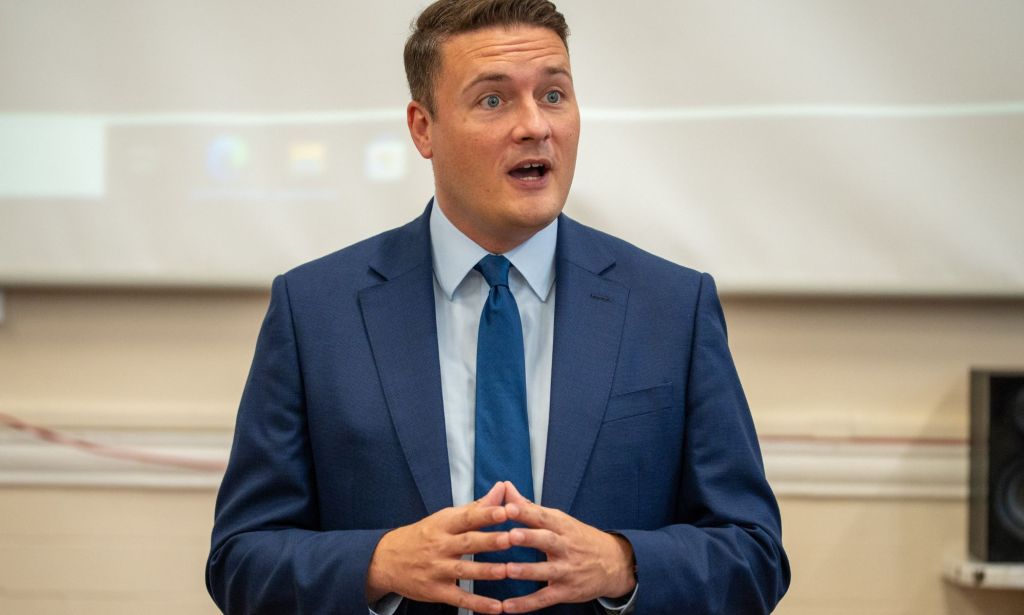
Wes Streeting has routinely come under fire for his policies on trans people. (Getty)
At least 27 states in the US ban gender-affirming care in some capacity, preventing over 40 per cent of America’s trans youth population from accessing care. Puberty blockers are also banned for trans youth in the UK, despite being freely available for cisgender youth.
The Trevor Project, an LGBTQ+ suicide prevention organisation, warned these bans have “detrimental impacts” on the mental health of trans young people, who are already disproportionately likely to feel suicidal.
Research conducted by Dr Natacha Kennedy in the University of London found that Wes Streeting’s ban on puberty blockers for trans young people is “significantly, extensively, and relentlessly harming trans children and young people”.
She spoke to the parents of trans young people who were once “happy, well-adjusted, and little different from most cis children”, but who have now resorted to self-harm because of an inability to access care.
Suicide is preventable. Readers who are affected by the issues raised in this story are encouraged to contact the Samaritans on 116 123 (www.samaritans.org), or Mind on 0300 123 3393 (www.mind.org.uk). Readers in the US are encouraged to contact the National Suicide Prevention Line on 1-800-273-8255.
Texas A&M University, earlier this month, banned a philosophy professor from teaching about Plato’s Symposium because it’s too gay (well, in their words, for discussing “gender ideology”), and, while obviously philosophy classes should be allowed to teach about Plato and state lawmakers and administrators shouldn’t be interfering in curricula… they are right that the specific texts that they banned are pretty gay.
If the legislators’ and administrators’ goal is to make LGBTQ+ people feel more isolated and alone as a way of getting them to conform and pretend to be cisgender and heterosexual, this won’t be enough to accomplish that goal — however, it’s a necessary step towards that goal.
I grew up in the ’90s in a conservative part of central Indiana, and I went to college on the other side of the country, determined to get away from everyone I knew and to live my life as I wanted. One of the classes I had to take in my first semester at college as an 18-year-old freshman was a survey of Western civilization-type class that included Symposium as one of its readings.
I still remember the professor warning us in the class prior to reading Symposium that the text was about “love” and that, for Plato, that very much included love between two men. This was 2001, pre-September 11, just a couple of years after Ellen DeGeneres came out, and at a time when homosexuality was illegal in many states, so, yes, we got a “trigger warning,” and the potential trigger was a discussion of homosexuality.
It’s hard to say what impact that book had on me. Pretty much the only mentions of homosexuality in grade school that I remember from Indiana were the slurs kids would throw around every other sentence, the jokes and insults that were never any deeper than calling someone gay, the Christians randomly arguing (against no one!) that homosexuality was sinful, the casual discussions of violence against gay people (I grew up in the days when fantasizing putting all gay men on an island and dropping a bombshell on them was just a normal thing for people to talk about, like the weather)… and here I was — a freshly minted adult among other adults — talking about Plato, the famous philosopher who (pretty much every adult my whole life had said) was an important historical figure. And Plato was gay. Maybe not “gay” in the modern sense, but he was writing books about loving men, and that was close enough for me.
[This] is why MAGA wants to end liberalism itself. To them, people are workers, soldiers, baby-producing machines, not human…. It’s a cold and sad way of looking at the world.
One of the passages that Texas A&M University had an issue with was Aristophanes’ speech about the origin of love. The short version is that, in the distant past, humans rolled around like balls with four arms and four legs and two faces. Some people were all male, some all female, and some a mix. They were powerful and a threat to the gods, so Zeus cut them all in half. Now they (we) spend our lives looking for our other half and holding on when we find them.
While the point of the story isn’t an explanation of why some people are gay and others are straight, it’s baked in, and modern readers are going to notice that Aristophanes is saying that same-sex love has the same origin as opposite-sex love. They’re all just normal variants of human sexuality, and it’s not something that anyone else in the book even comments on. That is, same-sex love is just another legitimate expression of love that comes from the same place, at least for Aristophanes. Others in the book have different opinions about male same-sex love, but none are disapproving.
I wasn’t the only one to take that message from that story. I have heard it mentioned by other queer people throughout my adult life. It featured prominently in the late-90s musical (and later film) Hedwig and the Angry Inch. It’s a part of the queer lexicon.
“The ‘gender ideology’ of this tale comes to us from the fourth century BC,” writes Guardian columnist Osita Nwanevu. “And philosophers in the many centuries since have examined it not only for what it tells us about the Greeks in Plato’s day but for what it might tell us, as far removed as we might be from ancient Athens, about sex, love, and longing. It is a tale about universal aspects of the human experience philosophers have examined in the service of understanding what it means to be a human being.”
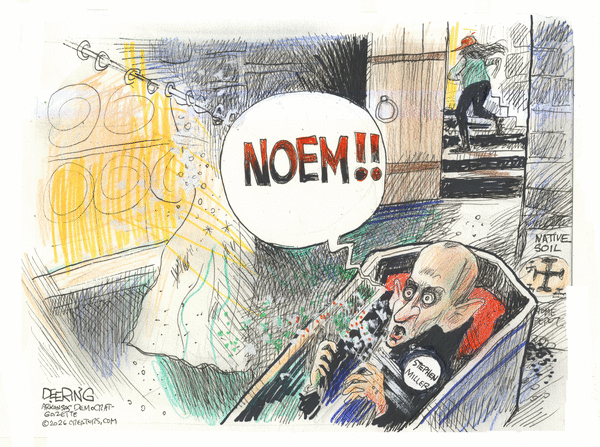
Nwanevu’s larger point is that the underlying ideology of the presidential administration — as shown in Stephen Miller’s claim that the world is “governed by strength” and Vice President J.D. Vance’s statement that America is nothing more than a “homeland” for “people with a shared history and a common future” — is really selling people short. What it means to be human is much more than mere strength and domination, and America is supposed to be an idea and an ideal, not just a piece of land where we live.
LGBTQ+ rights flourished in the post-war world, as did other human rights protections; ending the constant spats over pieces of land inspired people to understand that there’s a lot more to being human…
That is, America is supposed to be about all people’s inherent value and right to “Life, Liberty and the pursuit of Happiness,” not Miller’s “iron laws of the world” — those of “might makes right” — that Nwanevu rightly calls “the laws of animals.”
This is fundamental to how the global neo-fascist movement sees the world: For them, everything is about domination and resource-hoarding. All other considerations are secondary.
It can be seen in the attacks on LGBTQ+ rights that are often justified by pointing to a decline in the birthrate, or in the attacks on humanities and social sciences at universities, degrees that many claim (often incorrectly) don’t pay well. This can be seen in the complaints that schools shouldn’t teach kids to be more tolerant of diverse people — a necessary skill in a multicultural world where we all get along — and should instead teach them the bare minimum of reading, writing, and arithmetic (and, since it’s the 21st century, how to code). It can be felt in the right-wing mockery of art and arts funding when they never have complaints about spending money on military equipment that will never (and should never) see combat.
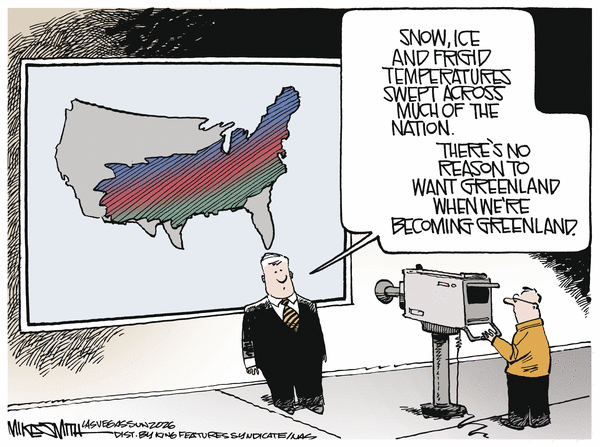
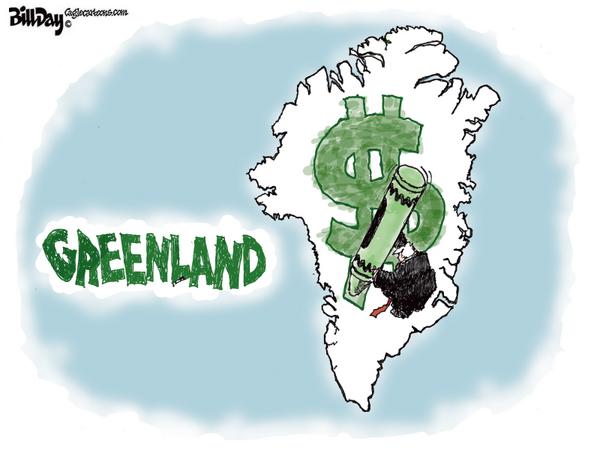
And it’s in this horrifying Greenland business, which is what Miller was talking about when he was discussing “the iron laws of the world.”
| Shutterstock
On the one hand, invading Greenland would end NATO, end all sorts of ties between the U.S. and Europe, and end the peaceful world created in the latter half of the 20th century that led to prosperity in the West and an end to the wars for territorial expansion that defined Europe for millennia.
On the other hand, Greenland looks kinda big on Mercator-projection maps, and adding a big splotch to the part of the world labeled “United States” would make the president feel like he actually accomplished something of value in his life.
It shouldn’t be surprising that LGBTQ+ rights flourished in the post-war world, as did other human rights protections; ending the constant spats over pieces of land inspired people to understand that there’s a lot more to being human, to be concerned with their own and other people’s happiness, and to try to live up to the ideals laid out in previous centuries.
Which is why MAGA wants to end liberalism itself. To them, people are workers, soldiers, baby-producing machines, not human. Our worth is measured in terms of how much stuff we can produce, how much we can contribute to our nation’s domination over other nations. Individuals’ fulfillment and happiness are secondary. It’s a cold and sad way of looking at the world.
So Plato, of all people, is taking a beating in Texas. Learning about philosophy opened my mind when I was young and taught me to ask questions about what life could offer. (The part of Symposium about how homosexuality results in intellectual reproduction instead of biological reproduction like heterosexuality wasn’t even on the syllabus at Texas A&M, but I still haven’t forgotten about it.)
In the war on human-ness itself, LGBTQ+ identities will always be one of the first victims. That’s why they don’t want us learning about ourselves.
Subscribe to the LGBTQ Nation newsletter and be the first to know about the latest headlines shaping LGBTQ+ communities worldwide.
That is because of the constant refrain they are hearing from the right. If they hear hate all day they start to hate. That is why anti-bullying campaigns were so important in schools. They taught kids young that it was OK to be different and not everyone is straight or cis. Hugs
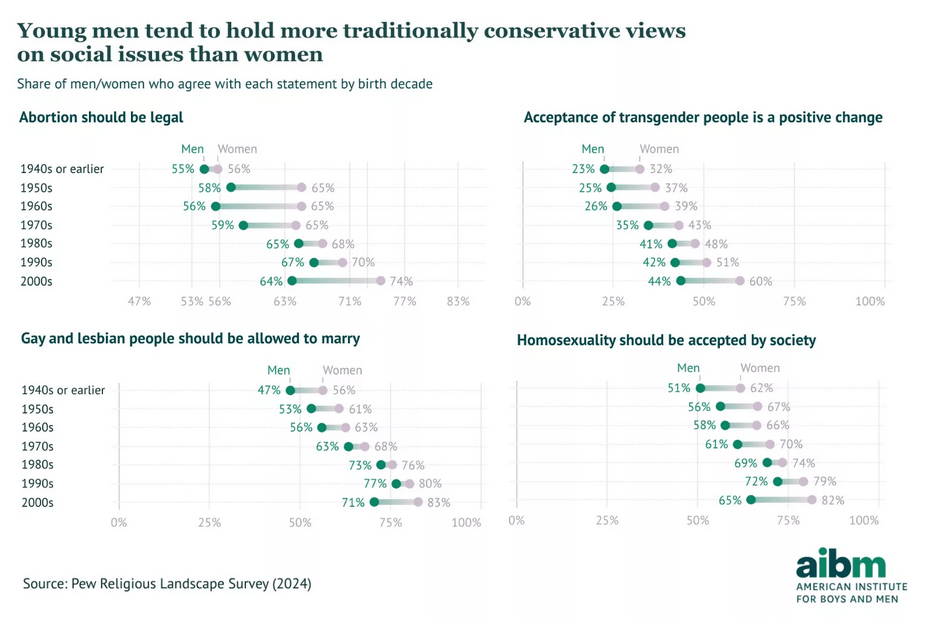
Young men are more likely to hold homophobic views, study suggests.
Men born in the 2000s are far more likely to hold conservative views on LGBTQ+ rights compared to previous generations and women of the same age, a study has suggested.
Polling from the Pew Research Center found that men aged 24 and under are far more likely to oppose same-sex marriage and even homosexuality generally than those born between the 1980s and 1990s.
Men are also far less likely to support LGBTQ+ rights than women of the same age. In fact, women are consistently more likely to be LGBTQ+ allies than men across all age ranges.
The 2024 study, highlighted in a report from the American Institute for Boys and Men (AIBM) in December, found that 71 per cent of men born in the 2000s believe same-sex marriage should be legal. Comparatively, 77 per cent of men born in the 1990s and 73 per cent born in the 1980s support same-sex marriage.
Research from the Pew Religious Landscape Survey. (AIBM)
Sixty-five per cent of 2000s men believe homosexuality should be accepted in society, over seven per cent less than those born in the 1990s and three per cent less than 1980s men.
Women aged 24 and under, meanwhile, are far more likely to support LGBTQ+ rights, with 83 per cent supporting same-sex marriage and 82 per cent supporting homosexuality generally.
AIBM noted the gender gap for those born in the 2000s was the widest in nearly every subject compared to every other decade.
Trans rights were by far the most contentious subject among young people. 60 per cent of 2000s women said they believe trans people should be accepted by society, while just 44 per cent of 2000s men answered similarly – a gender gap of 16 per cent.
Support for same-sex marriage saw a 2000’s gender-gap of 12 per cent, support for homosexuality had a gap of 17 per cent, and abortion rights a gap of 10 per cent.
Washington University professor of practice, Ryan Burge, argued the survey results prove that young men are increasingly influenced by “social-issue messaging”, particularly from right-wing religious groups.
“As academics often say – we need more time and more data,” he wrote. “I suspect the next five years of survey results will significantly clarify the trajectories of young men and women when it comes to religion.
“As their lives stabilise, they settle into careers, and some begin to marry and start families, we will get a much clearer sense of whether religion is actually taking hold. If a shift is coming, these next few years will be decisive.”
Research published in 2024 suggested that Gen Z are more likely to identify as LGBTQ+ than Republican compared to other generations.
The Axios poll found that just 21 per cent of those aged between 12 and 27 describe themselves as Republican, while more than a quarter described themselves as LGBTQ+. It also found that young people are far more likely to be religious than other generations.
Look up Scott and healthcare. He was CEO of a HMO health denying company that defrauded Medicare / Medicaid for the greatest dollar amount ever defrauded from the programs. He is a very wealthy man because while his company paid a fine he was able to retire with a huge pay out golden parachute. He has no clue what the average person lives like and hates the lower incomes. When he was governor he did everything he could to transfer state wealth to the upper incomes / his business cronies while making the lives of the working people / lower incomes harder while removing social safety nets. Hugs
OK now be nice … who says I don’t have a life or people I talk to daily outside of the blog … I do have to care for Ron’s cat! 😂😋😝😜🤣😎😍 Hugs
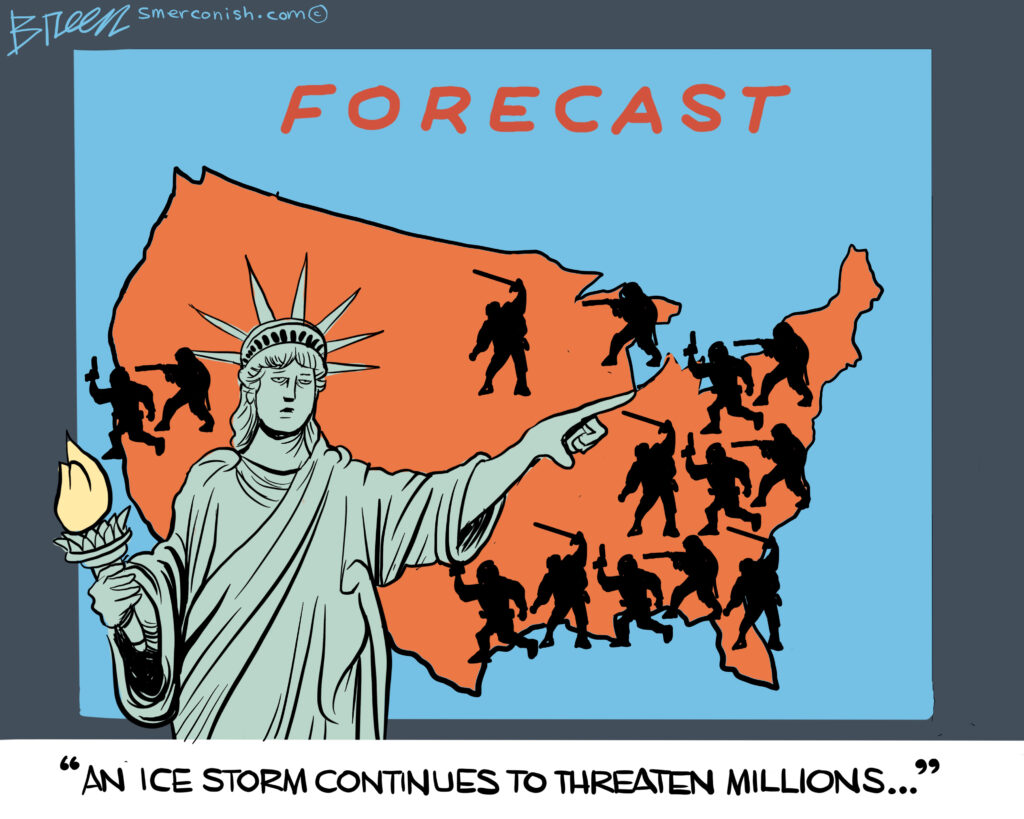
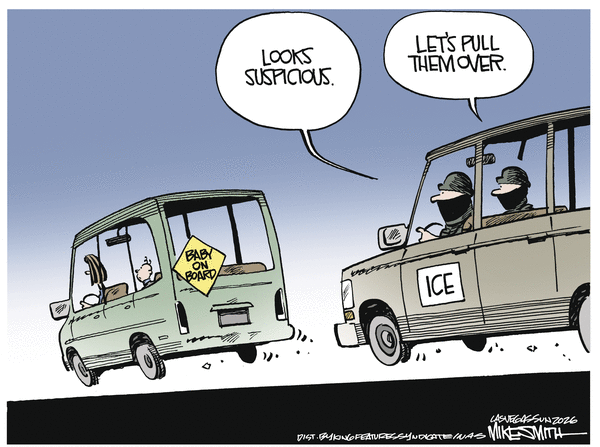
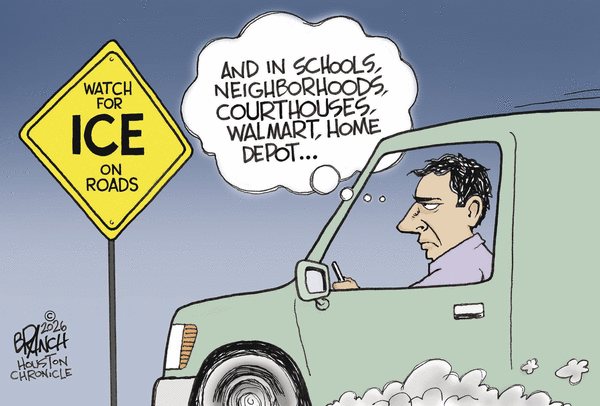
As a white old man with a beard and a military veteran I dream of what I would say to an ICE thug that would demand I prove my where I was born. Sadly they simply wouldn’t ask me! I am too white! The fact is this is entirely a racist push to remove nonwhite people. But one thing I can do is put my whiteness in front of the brown / black people to defend them by legally demanding ICE be held accountable. I am not in an area where that is happening as I am in a red state in a mostly white area. But if you have the opportunity to use your white privilege please do. Yes I know Fox anger stations claim that doesn’t exist but then why are criminal ICE thugs not asking white people for their papers? Hugs from Scottie.
Under Bari Weiss leadership CBS twice reported that the murderer of Renee Good Jonathan Ross had internal bleeding based only on what the tRump admin told her to report for them. Despite other at the network disputing it and asking her not to report an unconfirmed fact. She got her job after a hard right white supremacist billionaire bought the network and put her there to support the tRump crime administration. Hugs
I think many of these ICE thugs would do this regardless because their dream is a white US ethnostate with their corrupt demented cult leader in charge even after his bloated body dies. Hugs
Just like maga a small very vocal group of people are demanding the entire country roll back all progress made since the 1950s by minorities. Any new discovery by science no matter the field because it clashes with their holy book which they misread to form their warped view of reality. They do not care to let other others live their lives as they get to live theirs in peace and freedom. No they demand that everyone follow and live by their church doctrines because that way their god will favor them, come back sooner to give them rewards while killing the rest of us. Think of it, these people are OK with creating a situation where the majority die horribly to please his god as long as they get rewarded. Seems selfish to me not Christian. Also another important point is the constant repeating of the Christian surge of republican voters despite it being a lie is to shore up the idea that there was voter fraud that stole the midterms from the republicans. Think of it tRump people used a normal occurrence of vote totals shift as mail in votes are counted as evidence of fraud leading to the Jan 6th insurrection. Below I will post a quote from the article that will be used by republicans to show the democrats stole the midterms. Hugs.
Even as GOP leaders who can read a poll know that the upcoming elections are not looking good for their party, this fantasy of a Christianizing America is leading the everyday MAGA faithful to believe otherwise. A September poll from September shows that 89% of Republicans think their party will win the midterm elections, which is up seven points from April. In fact, the party is forecast to lose seats as its support continues to erode under Trump’s chaotic mismanagement.
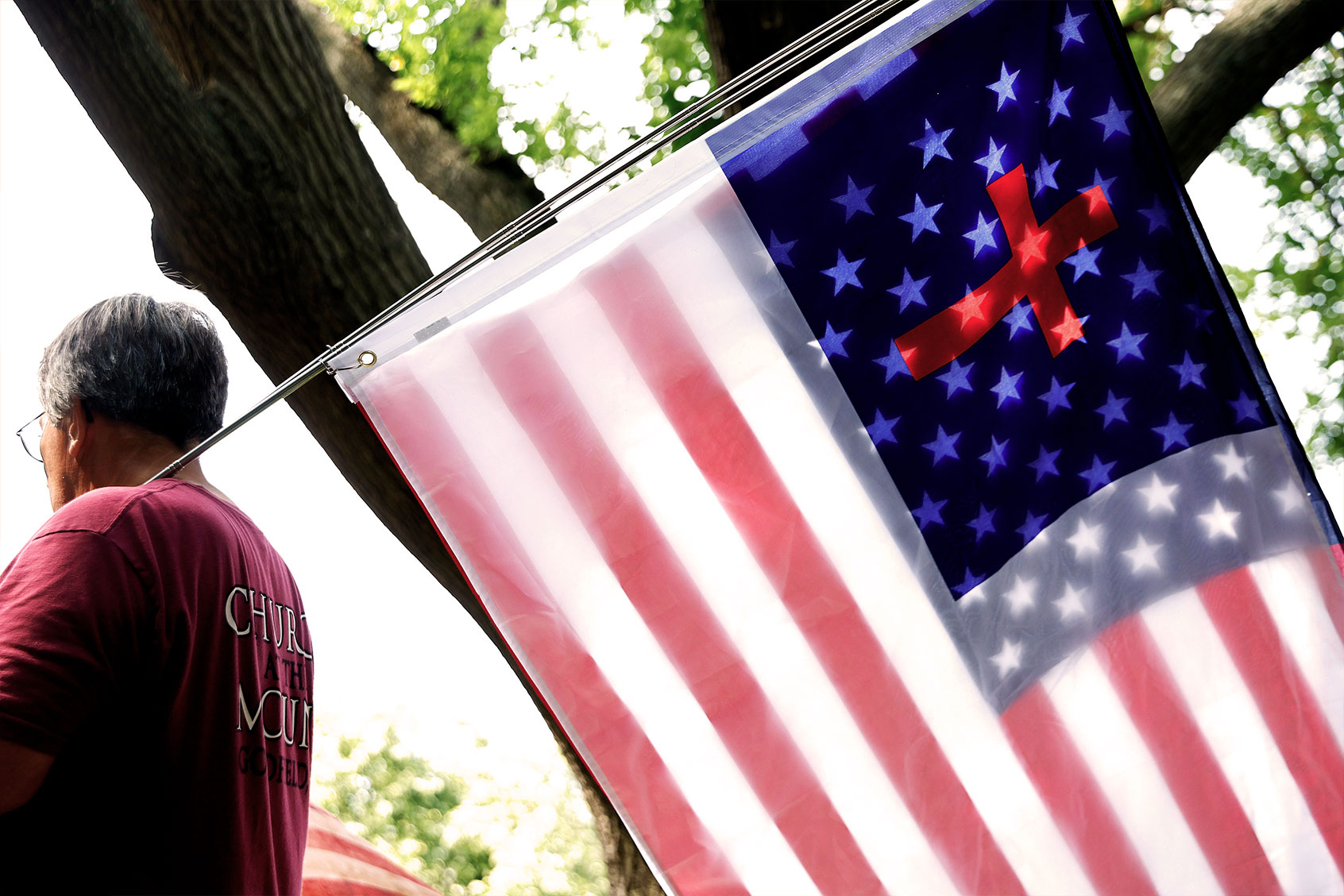
A United States and Christian flag are sandwiched together (Chip Somodevilla/Getty Images)
Turning Point USA ended 2025 with AmericaFest, a blowout conference for the MAGA powerhouse organization started in 2012 by the now-deceased Charlie Kirk. As described by Teresa Wiltz at POLITICO, “the vibe felt less like a political panel than an evangelical revival.” Watching the speeches from this fireworks-laden shindig, Wiltz’s observation felt like an understatement. Many speeches from the event’s main stage were simply sermons extolling a fundamentalist, evangelical Christianity as the one true faith.
“We’re here for one name, and that’s Jesus,” declared Bryce Crawford, a 22-year-old who makes videos of himself accosting strangers, including mentally ill homeless people, under the guise of “winning souls” for Christ. He went on declare that “we’re in the last days” and that every person who doesn’t believe in his version of the gospels will soon “be cast into hell.”
“We’re all on our knees, shoulder to shoulder, under the blood of Christ,” proclaimed the British comedian Russell Brand, who is facing seven charges of sexual assault, including three rape charges, in the United Kingdom. He included Ben Shapiro, by name, in his list of believers, even though Shapiro is Jewish. He then proceeded to insist that Christianity is the key to resolving the conflict between Israel and Gaza, which have primarily Jewish and Muslim populations.
Even rapper Nicki Minaj, newly out as MAGA, understood the primary assignment was talking up Christianity, claiming that she has had “the kind of faith that you think a person is crazy” since she was a little girl.
AmericaFest, as its name implies, is supposed to be a political event, not a church service. By including speakers like Shapiro and Ohio gubernatorial candidate Vivek Ramaswamy, who is Hindu, TPUSA’s organizers were even nodding to the idea that the GOP is supposed to believe in religious freedom and diversity. Or, as Vice President JD Vance put it, “We’re all part of the same American family.” Yet he quickly undercut that message by proclaiming that “By the grace of God, we will always be a Christian nation.” While Vance may claim that you don’t have to be a Christian to be an American, implicit in his words is the idea that only Christians are truly Americans, and everyone else is, at best, second class.
The blunt reality is that AmericaFest wasn’t just overtly religious — it was steeped in Christian nationalism. They equated being an American with being a Christian. But being a Republican, as Crawford suggested in his speech, is synonymous with being an evangelical Christian whose main duty is to convert non-believers. The political message of the event was inseparable from a religious one: that the purpose of the GOP and the MAGA movement is to usher in a religious revival and turn a decadent, secular country into one devoted to a narrow, right-wing version of Christianity.
For decades now, the Christian right has been the most powerful and influential force in the GOP, and yet even by their standards, this marked a dramatic shift toward the theocratic impulse. From a purely rational perspective, this is bad politics. Only 23% of Americans identify as evangelicals. Trump was able to win in 2024 only by convincing large numbers of people outside of evangelical Christianity that he has a secular worldview. This was aided by the fact that he quite clearly doesn’t believe all the Christian language, both coded and overt, his aides coax him to say.
The hype at AmericaFest suggests they are pinning their hopes on this imaginary religious awakening to deliver big wins to the Republicans in November’s elections.
But none of that seems to register with MAGA leadership right now. They’ve convinced themselves — or at least are trying to persuade their donors and followers — that the U.S. is undergoing a massive religious revival. Right-wing media has been pushing the view that huge numbers of Americans, especially young Americans, are converting to fundamentalist Christianity. The hype at AmericaFest suggests they are pinning their hopes on this imaginary religious awakening to deliver big wins to the Republicans in November’s elections.
As my colleague Russell Payne and I reported on in November for Salon’s “Standing Room Only,” Fox News in particular has been running a number of stories claiming a “Charlie Kirk effect” — that the MAGA influencer’s killing in September led to a tidal wave of Americans, especially young Americans, discovering or returning to Christianity.
Since then, there’s been a constant drumbeat of similar claims from right-wing media. “Gen Z embracing faith as more young people return to religion,” Fox News declared again on Dec. 21. NewsNation ran a new year segment that reported a “religious revival” was taking place among the young. This follows many similar segments from both channels dating back months, all swearing to their largely elderly audience that the Zoomers are flooding church services, despite what they may be seeing at their own local congregation. Conservative ministers keep insisting on social media that waves of young people are converting, even as no such numbers show up in surveys with more rigorous research methods.
Much of AmericaFest was also devoted to propping up the narrative that young adults are giving up sex and secularism for Christian nationalism in record numbers. Anti-trans activist Riley Gaines, 25, spoke about how Christianity calls on women to “Get married, have babies, have as many as you can and as early in your married life as you can.” Pastor Keenan Clark, 30, preached, “If you have not submitted to the lordship of Jesus Christ, though you were a conservative, you will find yourself in the bowels of a devil’s hell.” Angela Halili, 29, and Arielle Reitsma, 36, hosts of the “Girls Gone Bible” podcast, preached about saving sex for marriage because “sexual immorality is the only sin that you commit against your own body.”
The presence of Halili and Reitsma is a big clue that this Christian hype may be rooted in something other than an outpouring of faith. As I reported last year, there’s overwhelming evidence that the two podcast hosts were working as poker girls — women who make money at underground poker games by offering flirting and often much more to male players — while launching a Christian channel devoted to preaching the virtues of chastity to young women. Whatever they personally believe, their entire endeavor is rooted in dishonesty, a sin the Bible tends to have more to say about than sexual “immorality.”
There is no evidence-based reason to believe there’s a religious revival among the young that is about to create massive election windfalls for Republicans. On the contrary, a December report from Pew Research found that, “On average, young adults remain much less religious than older Americans. Today’s young adults also are less religious than young people were a decade ago.”
But there’s little doubt that the kind of people who write massive checks to organizations like TPUSA — wealthy, older Republicans — are very interested in hearing that there’s a religious revival in the U.S. It’s worth remembering that TPUSA began as a secular organization, but in 2020, Kirk started to shift to the Christian nationalist cause, arguing there should be no separation between church and state. With this newly religious agenda, money started to pour into TPUSA. Better yet, Kirk nabbed the support of extremely rich Republicans, with half of TPUSA’s $55 million haul in 2020 coming from 10 anonymous donors. In contrast, the organization raised only $8 million in 2016.
TPUSA and right-wing media aren’t the only groups that have a strong interest in creating the illusion of a mass revival swelling among America’s young. Conservative Christian audiences are notoriously gullible, so there’s a big market out there for attention-seekers and outright grifters to cash in using social media. Platforms like Instagram, Facebook and TikTok are awash in young people claiming they have access to Biblical prophecy or know how to perform exorcisms, or who, like the hosts of “Girls Gone Bible,” pair glamorous packaging with claims that young people are embracing an especially sex-free and fundamentalist Christian faith.
There are various degrees of sincerity in these influencers, yet one thing is undeniable: They are exploiting huge audiences of conservative Christians who want desperately to believe in a religious revival and would rather give their time and money to people who are telling them it’s real than to look at the statistics that show that it’s not.
Between groups like TPUSA, right-wing media outlets and social media influencers, there’s now an entire machinery propping up this false narrative that young people are stampeding into the pews. Even as GOP leaders who can read a poll know that the upcoming elections are not looking good for their party, this fantasy of a Christianizing America is leading the everyday MAGA faithful to believe otherwise. A September poll from September shows that 89% of Republicans think their party will win the midterm elections, which is up seven points from April. In fact, the party is forecast to lose seats as its support continues to erode under Trump’s chaotic mismanagement. But none of that matters: TPUSA is here to take Republicans’ money and sell them a story about how all the kids are coming to Jesus — and to the GOP.












































































 Alex Bollinger (He/Him)January 15, 2026, 3:30 pm EST
Shutterstock





























 Scottie's Playtime