I got up at 3 am this morning and was able to respond to almost all the comments. That gave me a few minutes while I ate some apple oatmeal for breakfast to read some news from Joe My God that he posted yesterday. Here they are in no particular order. Hugs
Yes it would make me want to sign up to work grueling hours and possibly die for a country that wants to use my graduation to arrest and deport my family members. Great move. Hugs.
I wonder what makes a person so hateful, bigoted, and racist. How much do you fear not being in a super majority and why? Do they worry that the new majority will treat them the way they treated the minorities when they were the majority? Hugs
More racism. This program they are now stopping claiming it is DEI and woke is because the first program illegally excluded black people in an attempt to be racist. Hugs
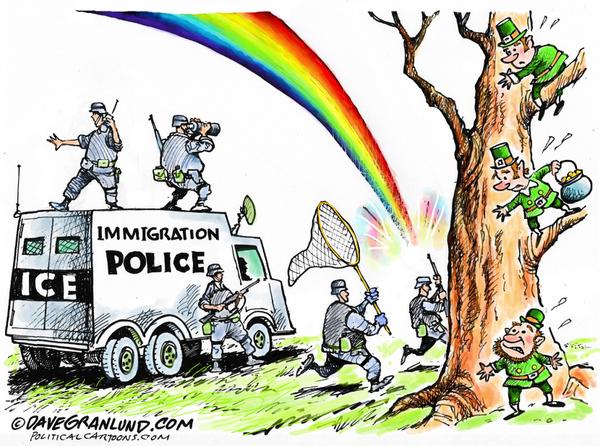
I was not sure whether to put this under corruption or racism. But as they are clearly using race, skin color, and language/accents to stop and detain people, racism won the toss. Hugs
OK more bigotry if not racism. The joy these people get from forcing kids to be cis or straight rather than let people just express themselves as they are is something I don’t understand. Seriously, why the need to go against all the medical science, medical studies that show conversion therapy to not only not work but to be very harmful to those who experiance it. It is torture and child abuse. Kids who are forced into it, who have to suffer through conversion therapy are much more likely to try to commit suicide. For what goal, to please their god? Their god created the trans / gay person as trans or gay.
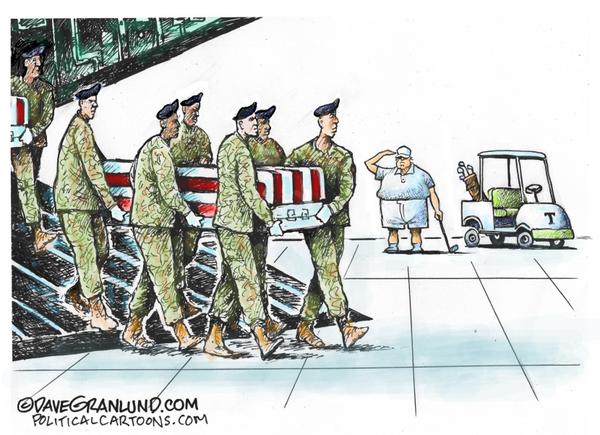
The Army felt it was important enough breach of regulations and rules along with a waste of taxpayer money to suspend and investigate those involved. Pete Kegseth our Fox host wannabe big time war general secretary of defense over ruled their decision and undermined their authority because it looked cool. He is acting like a 10 year old boy playing army with his toys. Kegseth also illegally removed 4 officers from being promoted to flag rank. Two because they were female and two because they were black. The rest he wanted to be promoted were white men of course. Hugs
More illegal actions by the wannabe dictator and his administration who believe anything tRump mumbles is the law of the land and they do not have to follow any rule or law. Hugs
tRump illegally deciding that his administration can decide who gets to vote and how voting is done. All by his decree. The dear leader has spoken. Hugs
More crime? Why am I surprised that people that rioted and attacked the US Capitol, breaking in and causing mass damage might not respect the laws? In that act they assaulted police, staff, and tried to kill congress members. Hugs
These hateful Christian bigots think any mention or media showing that LGBTQ+ people exist is pornography. It isn’t and makes a mockery of protecting kids from real porn. But they use these words and equate any mention or sign of LGBTQ+ with porn to make it seem as harmful and dangerous as showing hardcore rape porn to children. See the quote below. Their goal is again to wipe any mention of the LGBTQ+ from society and public view. They learned from Putin who used the same protect the children tactic. Think of this if this bill passes how do they justify the Bible in libraries and schools? But these people want a straight cis white male dominated society where they get to force their church doctrines on the public. However these same people scream parental rights or religous freedoom if you ask them to give others respect and equality. They want to oppress everyone else but any attempt to get them to give the same respect they demand for their ideas to others who have different beliefs is persecuting them. Hugs
On the full House floor, sponsor Rep. Doug Bankson called HB 1119 a “commonsense policy that answers a simple question: Should pornography be available to minors in our schools?”
‘Our focus right now is on making legislators aware of the bill’s constitutional problems.’
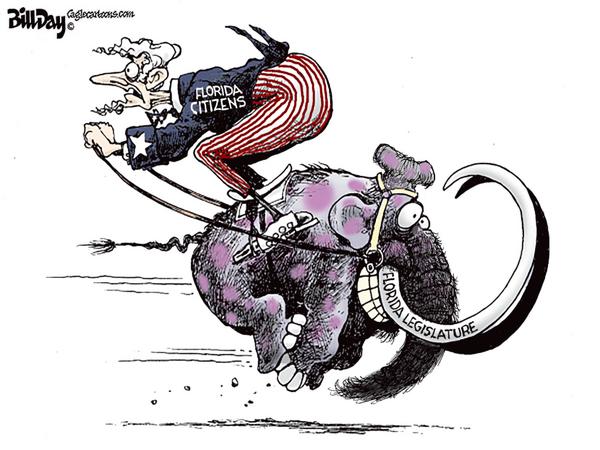
The Foundation for Individual Rights and Expression (FIRE) is urging the Senate to kill a bill passed by the House that First Amendment advocates fear will increase book banning in Florida schools.
“Library book removals can raise serious First Amendment issues,” FIRE’s Public Advocacy Director Aaron Terr wrote in a letter last week to Senate President Ben Albritton. “The bill creates a powerful incentive for individuals to object to any book they dislike or consider inappropriate, knowing it will be immediately pulled from circulation for all readers.”
The House passed HB 1119 via a 84-28 vote following a partisan debate. An identical Senate bill (SB 1692) has not moved in the upper chamber since it was filed last month.
HB 1119 would block schools from considering the literary, artistic, political or scientific value of books if the material is deemed otherwise harmful for minors.
On the full House floor, sponsor Rep. Doug Bankson called HB 1119 a “commonsense policy that answers a simple question: Should pornography be available to minors in our schools?”
“The answer is an emphatic no,” he told lawmakers.
Bankson and other Republicans argued some inappropriate books still exist on the shelves because of a loophole from the application of the Miller Test, which is a Supreme Court decision dealing with adult material.
The Apopka Republican filed similar legislation last year that advanced in the House but died in the Senate.
FIRE argues that HB 1119 goes too far.
“To be clear, not every book is appropriate for every student,” the Philadelphia-based First Amendment advocacy nonprofit wrote in the letter.
“Again, FIRE recognizes that school districts have a responsibility to assess whether library materials are appropriate for students of different ages. But any such assessment must be carefully crafted to ensure that students are not broadly denied the opportunity to read age-appropriate works that speak to their particular interests.”
The bill wouldn’t allow school officials to take into account the full content of the book or if the work has serious literary, artistic, political, or scientific value for minors of any age since it doesn’t consider grade levels, FIRE said.
“These elements of the Miller test are critical to preventing censorship of literature, art, medical textbooks, history texts, and other speech that depicts or alludes to sex simply because someone finds them offensive,” FIRE said.
“In other words, older students’ access cannot be restricted based on what may be unsuitable for younger children. But HB 1119 disregards this commonsense principle. It requires districts to ‘discontinue use of the material’ if they determine it is ‘harmful to minors,’ without regard to age or grade level.”
Florida passed a 2023 law that allows people to challenge book titles they find offensive for young people in schools.
“Under the current statute, Florida school districts have removed hundreds of books from libraries, including titles that are by no stretch of the imagination ‘pornography’ and come nowhere close to the legal definition of obscenity,” FIRE said in the letter.
“The Florida Department of Education’s own report shows that during the last school year, literary classics and widely acclaimed modern works — including ‘One Hundred Years of Solitude,’ ‘A Clockwork Orange,’ ‘The Human Stain,’ ‘The Kite Runner,’ and ‘Life of Pi’ — were removed even from libraries serving students in grades 9-12. If enacted, HB 1119 will only accelerate this trend and further narrow the range of ideas on school library shelves.”
When asked by Florida Politics whether FIRE would sue if the Legislature passes the bill, the organization did not answer.
“Our focus right now is on making legislators aware of the bill’s constitutional problems,” FIRE spokesman Jack Whitten said. “That’s a decision that would require internal discussion and depend on various factors.”
Gabrielle Russon
Gabrielle Russon is an award-winning journalist based in Orlando. She covered the business of theme parks for the Orlando Sentinel. Her previous newspaper stops include the Sarasota Herald-Tribune, Toledo Blade, Kalamazoo Gazette and Elkhart Truth as well as an internship covering the nation’s capital for the Chicago Tribune. For fun, she runs marathons. She gets her training from chasing a toddler around. Contact her at gabriellerusson@gmail.com or on Twitter @GabrielleRusson .
A newly introduced bill at the Colorado State Capitol would allow LGBTQ individuals to sue for damages caused by so-called conversion therapy, or therapy aimed at changing the sexual orientation or gender identity of a person.
The practice was banned in Colorado in 2019, and the American Medical Association – among other medical and mental health organizations – has said it is ineffective and can lead to depression, anxiety, and other psychological injuries.
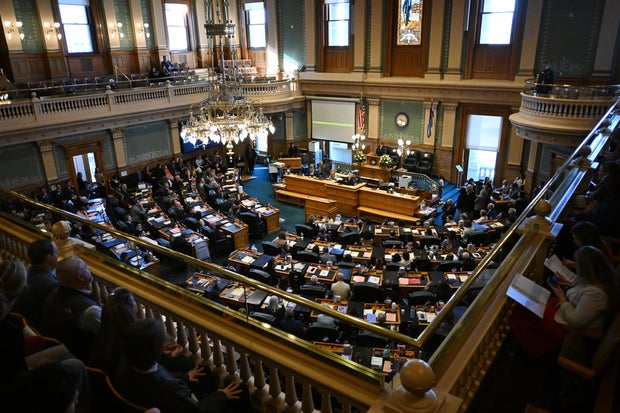
DENVER, CO – JANUARY 14: Speaker of the House Julie McCluskie in front of the House Gallery starts the 2026 legislative session at the Colorado State Capitol in Denver, Colorado on January 14, 2026.RJ Sangosti/MediaNews Group/The Denver Post via Getty Images
Sponsors of HB26-1322 say many of those harmed by the therapy don’t come forward for years. Their bill would eliminate the statute of limitations in cases involving conversion therapy.
Individuals could sue their therapists, facilities that hired the therapists, and anyone who knew or should have known about the therapy and didn’t take reasonable steps to stop it.
Plaintiffs could recover economic and punitive damages if they could prove that the therapy was a substantial factor in their psychological injuries.
The bill is sponsored by State Representatives Alex Valdez and Karen McCormick in the House and State Senators Lisa Cutter and Kyle Mullica in the Senate.
The House Judiciary Committee will hear the bill this Wednesday.
The game plan is clear and was used to accomplish the genocide of the LGBTQ+ from society in Russia. Attack the most vulnerable and smallest members of the LGBTQ+ trans people in the name of saving the most vulnerable, who are the little children espcailly little girls / daughters. Every study proves that the ones in real danger or under threat are not the kids but the trans people. Then use the momentum and rising bigotry to remove all rights and equality from the rest of the LGBQ+ based on the same lies. End goal is to create a straight cis country where the Christian white male is making the country safe / regressive enough for their bigoted view of Jesus to feel comfortable enough to return and pat them on their heads. Hugs
The Idaho Senate has widely passed a bill that would fine local and state governments for flying flags that aren’t on the Legislature’s pre-approved list.
The bill’s House sponsor, Rep. Ted Hill, an Eagle Republican, has said House Bill 561 is meant to target the city of Boise for flying an LGBTQ+ pride flag. Boise’s City Council voted to declare the pride flag and the organ donor flag as official flags, in an apparent move to work around the Legislature’s flag ban law passed last year.
The bill would add a $2,000 daily fine, per offending flag, to the flag ban law from last year, which lacked an enforcement process. The bill widely passed the House earlier this month. But since the Senate amended the bill, it must return to the House before it would go to Gov. Brad Little for final consideration.
Rep. Ted Hill [photo] appeared here yesterday for his successful bill that criminalizes using the “wrong” bathroom. Violating that law would be a misdemeanor punishable by up to one year in prison. A second offense within five years would be a felony, carrying up to a five-year prison sentence.
Hill appeared here in 2024 for his successful bill banning teachers from referring to students with their preferred pronouns.
Earlier this month, the Idaho House passed a resolution to petition the US Supreme Court on overturning Obergefell.
In February, the Idaho House advanced a bill to overturn all local LGBTQ rights ordinances statewide. Thirteen Idaho cities and counties, including Boise and its home county, have such laws on the books.
Project 2025 was very clear. The goal is to remove all representation of LGBTQ+ people from society. Pride flags are determined to be political incitement and agitation; media representation and books with even an LGBTQ+ character are called sexualizing children while the same with straight kids is not, and letting a child express how they deeply feel inside by letting them change their hairstyle and clothing is called child abuse while doing the discredited / harmful conversion therapy to force a person of any age to be straight and cis is considered to be healthy for the child. Lies are spread constantly about puberty blockers by people who misrepresent what these medical studies show or only claim in fake medical studies that have no peer reviewed status by medical personnel in that field of study. The goal is to do what Russia, Hungary, and several other highly religious authoritarian countries have done, which is to wipe the existence of anything not straight and not cis from being. I don’t know if this is due to their being highly religious and wanting to force everyone in the country to live by their church doctrines or if they just are straight / cis so they don’t think if they don’t feel it that it can’t be true. I ran into that decades ago as a gay man with straight people claiming everyone was straight because they were and that was normal, but some people choose to be weird deviants and have bad types of sex. But if you ask them when they chose to be straight they think it is a stupid question as they never chose; they just were. Clips below. Hugs
“They go in the bathroom they’re supposed to, they upset people. If they go in the one that they now look like, they’re breaking the law, which could include pretty severe penalties” Guthrie told senators. “ … We seem to be really focused on this space and ignoring the fact that there are people that are just like us, human beings, just like us. What are they supposed to do?”
‘Do I feel like going to jail today, or do I feel like being attacked?’ trans man testifies
The bill builds on a wave of anti-LGTBQ+ bills that the Legislature and the governor have approved in recent years.
“Over the last several years, legislators have gone from refusing to protect us to actively targeting us,” Nikson Mathews, who serves as chair of the Idaho Democratic Queer Caucus, said at a news conference in February.
“Every single day when I’m out in public, I have to decide: Do I feel like going to jail today, or do I feel like being attacked,” Mathews told lawmakers.
A bathroom sign as seen on March 16, 2026, at the State Capitol Building in Boise. (Photo by Pat Sutphin for the Idaho Capital Sun)
The Idaho Legislature widely approved a bill that would criminalize “willfully” entering public and government bathrooms and changing rooms designated for another sex.
The bill — which heads to Gov. Brad Little for final consideration — would effectively block transgender people from using their preferred public bathrooms in Idaho, expanding on the state’s transgender bathroom ban in public schools.
House Bill 752 would create criminal misdemeanor and felony charges for people who “knowingly and willfully” enter a bathroom or changing room designated for the opposite sex, with some exceptions. The bill would apply in government-owned buildings and places of public accommodations, like private businesses.
A first offense would carry a misdemeanor, punishable by up to one year in prison. A second offense within five years would be a felony, punishable by up to five years in prison.
Only three states — Utah, Florida and Kansas — have criminal bans on trans people using bathrooms that align with their gender identity, according to the Movement Advancement Project, an LGBTQ+ advocacy group.
In a statement, Planned Parenthood Alliance Advocates — Idaho called the bill “the most extreme anti-transgender bathroom ban in the nation.”
One Republican opposed the bill in the Senate
In the Idaho Senate, the bill passed on a near-party line 28-7 vote Friday, with all six Democrats opposing. One Republican, Sen. Jim Guthrie, from McCammon, broke with Republicans support of the bill.
He called legislation like it “harmful.”
“They go in the bathroom they’re supposed to, they upset people. If they go in the one that they now look like, they’re breaking the law, which could include pretty severe penalties” Guthrie told senators. “ … We seem to be really focused on this space and ignoring the fact that there are people that are just like us, human beings, just like us. What are they supposed to do?”
Idaho Sen. Ben Toews, R-Coeur d’Alene, walks through the halls at the State Capitol building on Jan. 9, 2023. (Otto Kitsinger for Idaho Capital Sun)
Bill sponsor Sen. Ben Toews, R-Coeur d’Alene, told senators that the bill protects “common sense realities.”
“The Legislature has a fundamental duty to protect the bodily privacy and safety of Idaho citizens,” Toews said. “House Bill 752 provides a clear, proactive tool to secure sex-separated private spaces in our state, while accommodating common-sense realities.”
Once the bill is transmitted to Little, he has five days to decide on it. He has three options: sign it into law, veto it, or allow it to become law without his signature.
In the House, the bill passed on a 54-15 vote earlier this month, with six Republicans joining the House’s nine Democrats in opposition.
‘Do I feel like going to jail today, or do I feel like being attacked?’ trans man testifies
The bill builds on a wave of anti-LGTBQ+ bills that the Legislature and the governor have approved in recent years.
And for more than a decade, efforts to add anti-discrimination protections for LGBTQ+ people to state law have failed.
“Over the last several years, legislators have gone from refusing to protect us to actively targeting us,” Nikson Mathews, who serves as chair of the Idaho Democratic Queer Caucus, said at a news conference in February.
Mathews, a trans man with a beard, told a House committee earlier this year that the bathroom bill would force him to use the women’s restroom.
“Every single day when I’m out in public, I have to decide: Do I feel like going to jail today, or do I feel like being attacked,” Mathews told lawmakers.
A 2025 study by the UCLA School of Law’s Williams Institute found “no evidence of increased harms to people who are not transgender when transgender people are allowed to use restrooms and other gendered facilities according to their identity.” But when trans people are refused access to facilities that align with their gender, the study found that trans people report verbal harassment and physical assault.
Bill is about discrimination, Democratic senator says
Sen. Ron Taylor, a Democrat from Hailey, said the bill is about discrimination. He said constituents told him that they’d move out of Idaho if it passed — because it would throw their transgender children in jail.
Idaho state Sen. Ron Taylor, D-Hailey, enters the House of Representatives chamber for the governor’s State of the State Address on Jan. 12, 2026, at the State Capitol in Boise. (Photo by Pat Sutphin for the Idaho Capital Sun)
“Now maybe that’s what some of us want, is to chase a population that’s marginalized out of Idaho,” Taylor said. “But that’s not Idaho. Idaho was founded by a population that was marginalized.”
Sen. Brian Lenney, a Republican from Nampa, said the bill is about keeping women and girls safe from having men in their spaces.
“Trans women aren’t women,” said Sen. Joshua Kohl, a Republican from Twin Falls. “They’re men. And they need to be treated as such.”
Sen. Jim Woodward, R-Sagle, listens to proceedings during the Joint Finance-Appropriations Committee meeting on Jan. 13, 2026, at the State Capitol Building in Boise. (Photo by Pat Sutphin for the Idaho Capital Sun)
Sen. Jim Woodward, a Republican from Sagle in North Idaho, said the bill is largely borne out of an event where he said a man was found in a women’s locker room in a YMCA in Sandpoint. He said he’d vote for the bill, but he had some reservations.
“What comes next and how much further do we venture inside of a private building?” Woodward said. “I don’t support the punitive measures in this bill, but the policy does reflect the sentiment of my community, and so for that reason, I will support it. It is the best for the most.”
Sen. Melissa Wintrow, a Boise Democrat, said she saw people crying after a recent committee hearing on the bill.
“They were crying because they just didn’t feel as if they were human. That a simple little thing they had to do, like go to the bathroom, would have to be in a law,” Wintrow said.
Idaho Fraternal Order of Police opposed the bill
The bill was opposed by some law enforcement groups and several transgender Idahoans.
The bill outlines several exceptions, including to give medical assistance, law enforcement assistance, and if someone “is in dire need of urinating or defecating and such facility is the only facility reasonably available at the time of the person’s use.”
The Idaho Fraternal Order of Police flagged that exception as concerning.
“Officers responding to a complaint would be placed in the difficult position of determining an individual’s biological sex in order to enforce the statute,” Idaho Fraternal Order of Police President Bryan Lovell wrote. “In many circumstances, there is no clear or reasonable way for officers to make that determination without engaging in questioning or investigative actions that could be viewed as invasive and inappropriate.”
Kyle Pfannenstiel
Kyle Pfannenstiel is a reporter for the Idaho Capital Sun, covering health care and state politics. He previously reported for the Post Register/Report for America, Idaho Education News and the Idaho Press. Kyle is a military brat who calls Idaho home. He has a bachelor’s degree in journalism and political science from University of Idaho.
Idaho Capital Sun is part of States Newsroom, the nation’s largest state-focused nonprofit news organization.
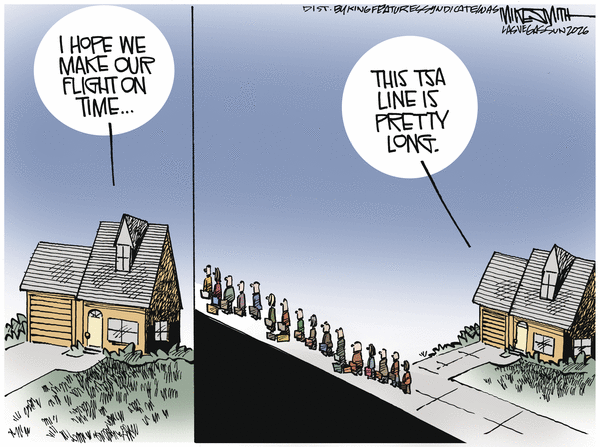
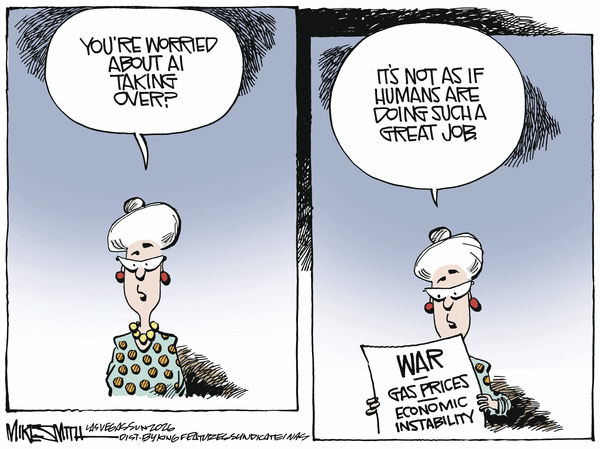
As Belle says tRump started a war and is blocking the funding for the very department in charged with securing the country against foreign threats until the all important trans people playing sports are banned. tRump is putting paid unmasked ICE agents in airports so why can’t they go unmasked on the streets of our towns and cities to stand around watching TSA agents work for free all because his feelings are hurt by trans people. She said something similar about FEMA but it all comes down to tRump using the scape goat of trans people and the Christian nationalists need to have a white male straight cis nation to live in even though those people are not representative of most of the nation nor of all Christians. But to not fund FEMA during horrific flooding and wildfires, to not fund DHS and TSA for security, to not fund the coast guard for our protection and assistance in local waters, and more just because he has a hard time understanding the truth that trans people exist and are normal members of society that deserve full unconditional civil rights and equality. Hugs
Someone should tattoo ‘E Pluribus Unum’ across his forehead.
Ogles is from Kentucky. They have a .4% Muslim population. Roughly 18,000 people.
This dickbag is trying to pick on a marginalized community because HE HAS NOTHING ELSE TO TALK ABOUT. He protects pedophiles and explodes the deficit. He delivered nothing to his constituents and will die a thousand cowardly deaths for enabling Dementia Donnie.
“I searched ‘funny cat videos,’ but things are so bad that they’re all making serious ones.”
Punish the rich? They have been underpaying their taxes for decades.
Also, at 70, they likely have no income from a job, but are managing their wealth. Capital gains tax rate is 15% up to $600,000, and 20% for over $600,000.
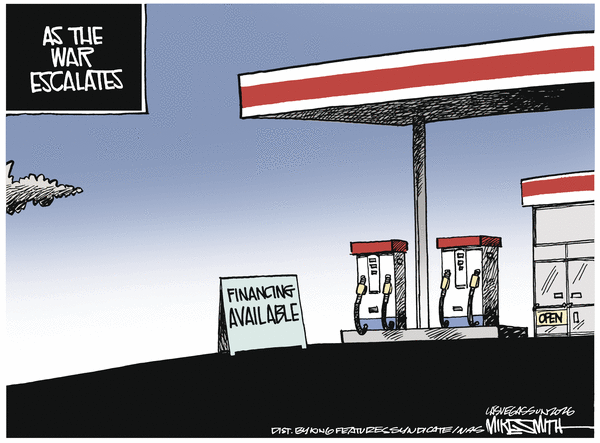
“I thought I’d walk to work because the weather is nice, and because I abandoned my car at the gas station when I saw the prices.”
A reminder that Jared Kushner could not pass a top security clearance when he worked with his father-in-law in the White House.
He now is a shadow negotiator with Russia and Israel.

 Gabrielle Russon














































 Scottie's Playtime