😢😭😿😓☹😥

😢😭😿😓☹😥
The president’s deportation agenda has failed in the courts. Now he’s trying to cheat the system
Senior WriterPublished
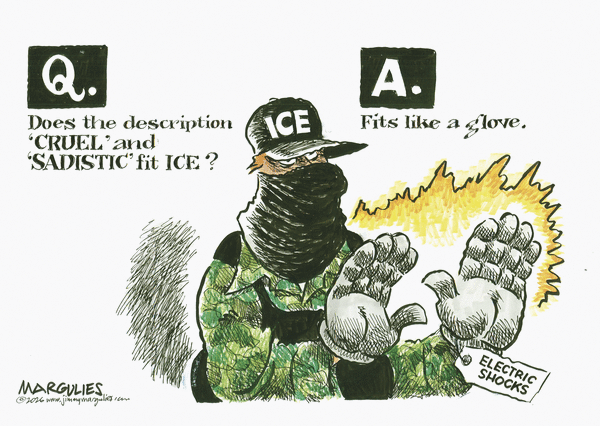
(Illustration by Salon / Getty Images / John Moore / Nikos Frazier / Omaha World-Herald / Compliant Technologies Manual)Since Markwayne Mullin took over the Department of Homeland Security in March, Immigration and Custom Enforcement has dialed back on the trolling. Gone are the videos and memes, posted regularly under the leadership of Mullin’s predecessor Kristi Noem, that mocked detainees for crying and celebrated ICE agents for being recklessly violent. There have been no more showy “invasions” of cities like Minneapolis or Los Angeles, as Mullin has aimed to draw less attention to ICE’s incompetent and legally dubious methods. His strategy has largely worked in getting the unpopular agency’s name out of the headlines.But that doesn’t mean ICE has given up on fulfilling Donald Trump and Stephen Miller’s cruel fantasies. The xenophobic Miller agenda is still being treated as the vanguard in White House efforts to will an authoritarian police state into being, circumventing both law and tradition to attack due process and inflict fear on the nation’s immigrant population. In early August, DHS posted a notice that they plan to buy $20 million worth of electrified shock gloves that are euphemistically described as “conductive distraction and de-escalation devices.” The gloves are truly Orwellian, cheered on by police because they inflict pain but leave “no burn marks or scars,” making it easier for law enforcement to hide the abuse and cruelty they inflict. Amnesty International opposes the use of these devices, arguing they are “readily misused for torture.”
Trump, of course, has fantasized aloud about unleashing state violence on Americans, regardless of the laws against it. The gloves provide an avenue to hurt both immigrants and protesters, while avoiding due process and legal accountability.
The gloves’ torturous potential seems the biggest part of their appeal to the administration. Mullin has previously defended the killing of nonviolent anti-ICE protesters, while Miller regularly paints progressive protesters and immigrants as apocalyptic threats that need be countered with violence. Trump, of course, has fantasized aloud about unleashing state violence on Americans, regardless of the laws against it. The gloves provide an avenue to hurt both immigrants and protesters, while avoiding due process and legal accountability.
As the courts keeps getting in the way of Trump’s desire to persecute people he doesn’t like, the pressure to find a way to cheat the laws guarding human rights is only intensifying. Liz Dye, legal analyst and host of the “Law and Chaos” podcast, told me that “U.S. Attorneys are being pressured to bring politically motivated cases based on shoddy or even fabricated evidence, with the predictable result that the cases implode on impact with the court system, sometimes spectacularly.”
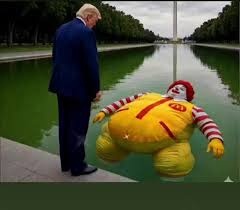
The most recent high-profile example is the attempt by U.S. Attorney for the District of Columbia Jeanine Pirro to prosecute David Hearn, a former Olympian who was accused of vandalizing the Reflecting Pool at the Lincoln Memorial. As it turned out, Hearn was being used as a scapegoat to hide Trump’s embarrassment over ruining the pool by hiring poorly qualified cronies to renovate it. Pirro eventually had to admit that the case was without merit and dropped it, even though doing so meant a well publicized dressing-down from Trump at the White House.
The failed attempt to prosecute Hearn was just the latest in a series of high-profile prosecutions of people Trump hates for criticizing him or attempting to hold him accountable, including against former FBI director James Comey and New York Attorney General Letitia James.
In a recent column for the New York Times, Jamelle Bouie observed that “The principal aim of President Trump’s second term is revenge.” Worse, most everyone Trump fixates on is innocent of wrongdoing. Their only “transgression” has been upholding the law, criticizing the president or, in many cases, simply being of a race or class of people he doesn’t like. But Trump, Bouie argued memorably, also wants revenge on the American people “for rejecting him in 2020 and dealing a grievous blow to his ego.”
As Dye explained, Trump’s efforts to use the Justice Department to exact revenge have only backfired. It has “hemorrhaged staff” because honest attorneys have rejected pressure to “drop meritorious prosecutions” so they can “bring garbage political cases” instead. The department’s reputation is in tatters. Zahid Quraishi, a federal judge in New Jersey, said it best. When throwing a federal prosecutor out of his courtroom earlier this year, Quraishi said, “Generations of Assistant U.S. Attorneys had built the goodwill of that office for your generation to destroy it within a year.”
The new ICE gloves are part of this systemic destruction, representing the pathetic means the Trump administration will use, all so they can inflict maximum punishment before the judicial system lets their targets go. The immigration system is far easier to manipulate for authoritarian purposes than the federal justice system. Undocumented residents don’t enjoy the same legal rights as citizens, and deporting someone is a much lower lift, legally speaking, than prosecuting someone for a crime they didn’t commit. And yet, as POLITICO reported this week, the administration is losing most of its deportation cases in court. Of the 20,500 tracked by the media outlet, the White House lost at least 17,600, or 85% of the time.
Unable to win in court, Trump and his officials are looking to turn the process itself into the punishment. Immigrants are held in detention camps for months, often under torturous conditions, while waiting for their cases heard. ICE raids are frequent and often violent, sometimes targeting people who have legal paperwork to be in U.S. The result is that immigrants are being kept in a constant state of psychological terror, especially with the knowledge that having legal status — or even citizenship — may not provide sufficient protection. These electric gloves are just the latest part of what amounts to a torture campaign being waged by the administration — a way for ICE to hurt and punish immigrants and their defenders under the guise of “crowd control” or “de-escalation.”
While the situation is dire, it’s also a sign that Trump is weak. This is evident in the special grand jury Pirro recently convened in Washington following rumors that her job was at stake due to her inability to successfully prosecute a series of fall guys the presidents wants to blame for his own failures. But it’s doubtful she will be able to improve on her losing record. Since Trump can’t imprison people at the scale he wants, he has to settle for harassing them instead. That’s not the behavior of the all-powerful leader he was trying to be a year ago. They are the actions of a spoiled brat trying, and failing, to cover up the stench of losing.
By Amanda Marcotte
Amanda Marcotte is a senior politics writer at Salon and the author of “Troll Nation: How The Right Became Trump-Worshipping Monsters Set On Rat-F*cking Liberals, America, and Truth Itself.” Follow her on Bluesky @AmandaMarcotte and sign up for her biweekly politics newsletter, Standing Room Only.
I have to get back to responding to comments. But I woke at 2 am all upset. Later when he got up Ron told me I was loudly begging them to take their hands off me, to stop grabbing me, to stop hurting me, and Ron said my voice was very strained, like I was trying to talk while someone had their hands around my throat. I can’t remember doing anything for the first few hours being up. I just watched videos and was in my own thoughts / head. I promise I will get back to comments. But I have to learn to function again while not seeing well, being so tired from not sleeping, and trying to do so much in the house. But I promise I will find a way. Even if I have to cut the cartoon / meme post to only a few days a week. Hugs


































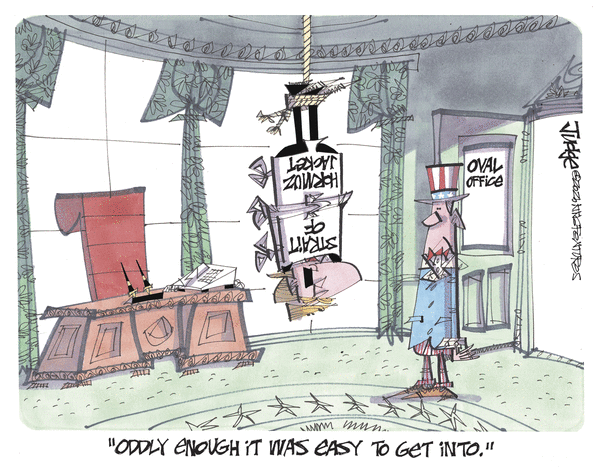
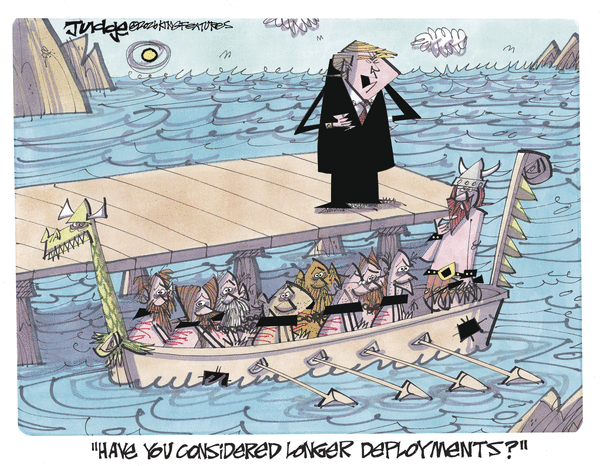



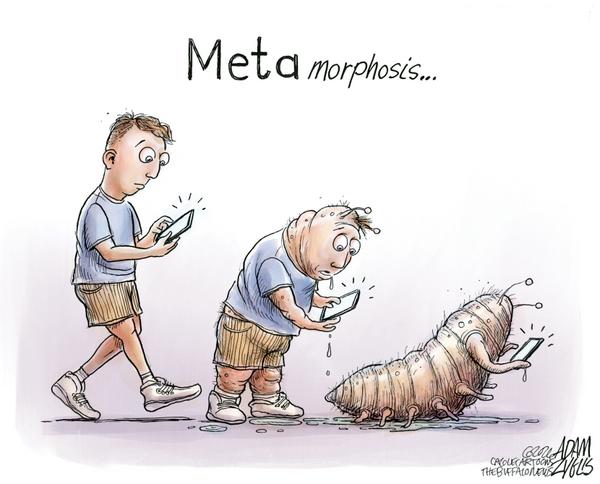
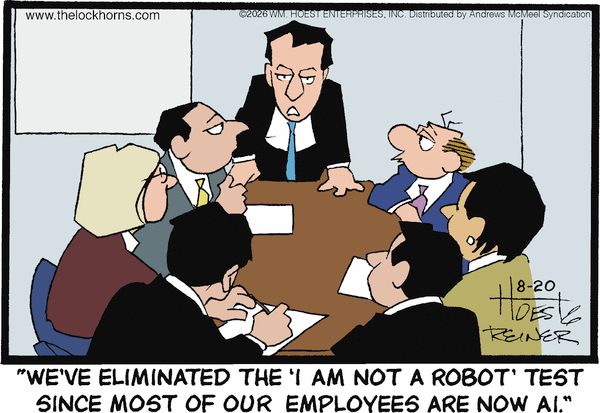
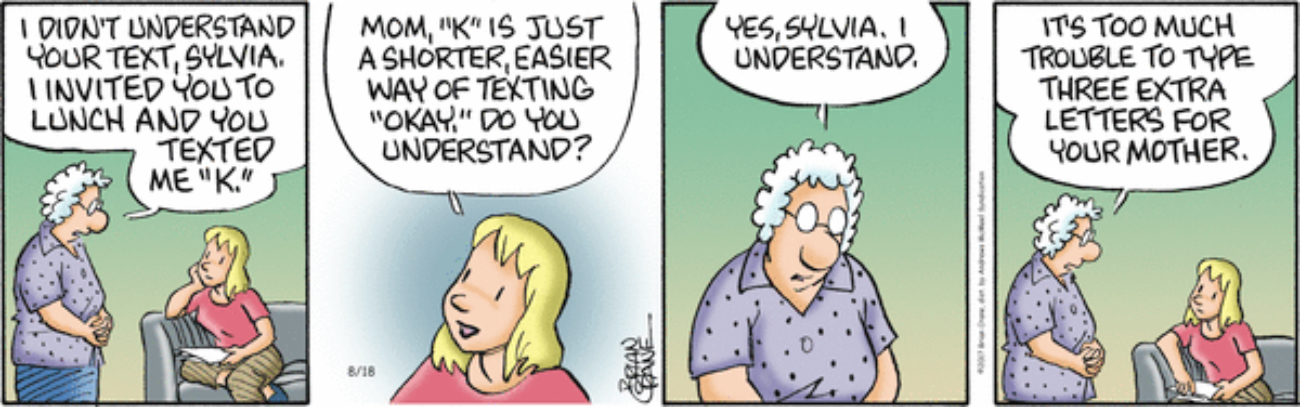
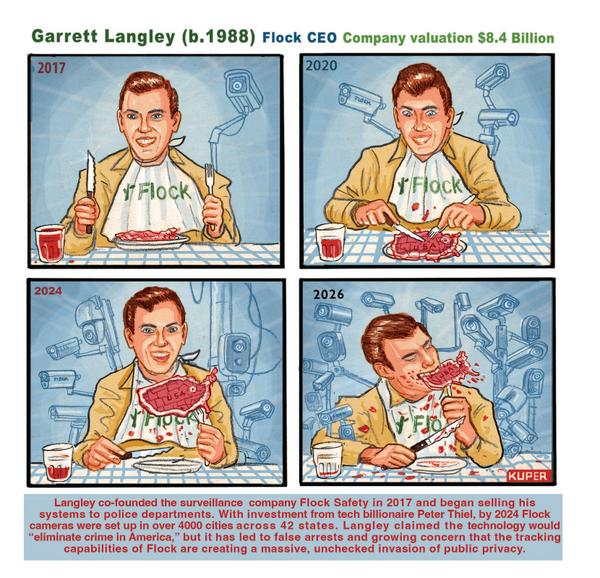
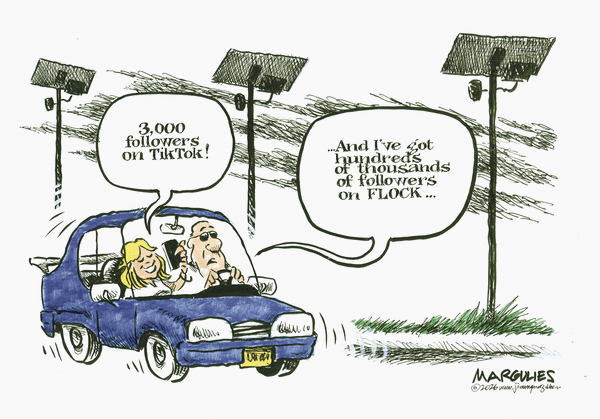
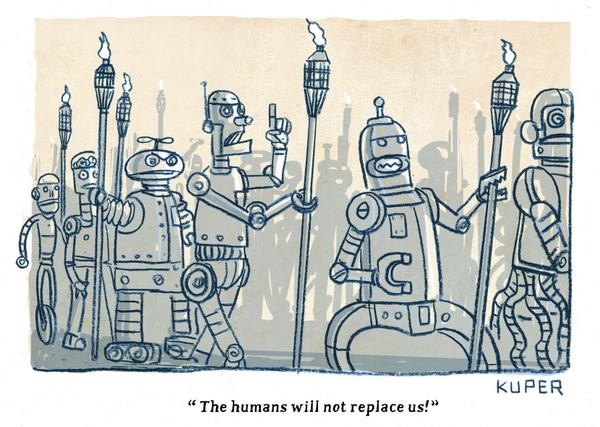











 Not much these days, end up walking in circles around the house. Hugs




















































https://www.notus.org/health-science/nih-holding-up-medical-research-funding-status-19
Hundreds of grants, including for maternal health, contraceptives and drug abuse, are in limbo, subject to political reviews.
The Trump administration is implementing more political oversight of grants. Alex Brandon/AP
It used to be that once a National Institutes of Health grant award hit “status 19,” the money was about to go out the door.
That’s not the case anymore. The Trump administration has enacted an unprecedented political review process, pushing hundreds of awards into limbo. Status 19 — an administrative code describing awards with senior leadership sign-off — is being used as the holding cell.
Current and former career staff say this extra review by senior leaders is occurring after grants have undergone peer review, been approved by multiple offices in NIH, and screened for red-flag words around race, gender or other behavioral and social sciences. The extra political reviews are required not only for newly funded grants but also for annual payment installments for previously awarded projects.
As a result, some grants are lingering in status 19 for weeks or even months, gumming up the works as grant officers try to get awards out the door ahead of the new fiscal year starting in October. Flagged grants reviewed by NOTUS had to do with maternal health, contraceptive use, aging, dementia and opioid abuse.
“The notion that Francis Collins or Mike Lauer would ever have reviewed individual grants like this is so beyond the realm of comprehension,” a senior career staffer said, referring to the former directors of NIH and its Office of Extramural Research. “It’s laughable to me.”
A second senior NIH official called status 19 a “graveyard for grants.” The NIH staffers were granted anonymity because they weren’t authorized to speak to the media.
As one of the largest grant funders in the federal government, NIH’s process is a prime example of how the Trump administration is implementing more political oversight of grants across a wide swath of agencies, even as its efforts to formalize those reviews face pushback.
Senate Republicans voted to temporarily block a White House regulation to formalize political review, which has already led to delays in posting and awarding grants at the Centers for Disease Control and Prevention, the Substance Abuse and Mental Health Services Administration, the Department of Interior and other agencies.
Researchers, patient advocates and biotech companies are outraged by the proposed regulation, which the White House is seeking to implement by Oct. 1 but could be blocked until December if the House also approves a delay.
Senior NIH leaders sent around a new agency review flowchart in May outlining additional steps once an award hits status 19. The flowchart, viewed by NOTUS, mandates a review by the NIH Office of Extramural Research (OER) and an HHS counselor before grantees are given a notice of award. There are no political appointees at OER, but its director reports to NIH Director and Trump appointee Jay Bhattacharya.
As a result of the extra reviews, the number of grants sitting for weeks in status 19 have surged. Around 8% of new grant awards are sitting in status 19 for anywhere from two to seven weeks, according to internal data shared with NOTUS.
In past years, around 11% of first-time awards had been released to the recipients within a week. This year, it’s 2%.
The delays are even more pronounced for annual payment installments for ongoing grants. The vast majority previously left status 19 within three days; now it takes 53 days to get 90% of payments out the door.
Lauer, who served as NIH’s extramural research director from 2015 to February 2025, said he couldn’t recall a time when a political appointee — including the NIH director — halted awarding of a research grant after it had gone through the review and approval process.
“Status 19 was not something I thought about,” Lauer told NOTUS.
NIH career staff stress that by the time grant awards reach status 19, they have been through dozens of editing and review steps. They’ve undergone peer review and a second look by an advisory council. Grant officers have gone through a checklist, including confirming that women and racial minorities have been appropriately included, something required by statute.
In grants reviewed by NOTUS, HHS or EOR staff flagged words including “diverse,” “equity,” “structural” and “underrepresented” and asked for clarification about what the researchers meant by them. In one project, a staffer wrote that the word “structural” could include concepts that are inconsistent with NIH priorities.
They asked for more clarification in projects that focused on health disparities or racial groups. Officials wrote that focusing on specific racial groups required more justification. In one project that expressed support for scholars and researchers from a variety of backgrounds, an official responded that the language could raise legal concerns if interpreted as targeting people based on demographics.
In multiple flagged grants, officials expressed concerns that they weren’t worth funding because their only practical use might be to support the writing of new laws.
HHS spokeswoman Emily Hilliard disputed the notion that status 19 is being used to hold up grants under extra political reviews. She said grants can remain in status 19 for five to 10 days while they are given final review by the Office of Extramural Research.
“There is no political appointee review stage in the NIH grant review process,” Hilliard said in a statement. “OER’s review is a longstanding part of NIH’s grant review process.”
Lauer said releasing grant money might face occasional delays, but it was almost always because Congress had failed to pass a budget for NIH, leading to uncertainty about how much total grant funding would be available.
Trump appointees are also conducting extra layers of review to the notices posted by the government to let researchers know money is available for specific projects or programs. Researchers say they’ve seen more delays in posting those notices — another obstacle in getting grant funding out the door.
“It’s this black box of HHS review,” said Colleen Kelley, an associate dean for research at Emory University.
Author