
Infant formula botulism cluster, black box warning for HRT, flu is waking up, new blood pressure guidelines, and more by Katelyn Jetelina
This is your weekly Dose. Read on Substack
The shutdown may finally be coming to an end. Our health care costs, unfortunately, will not. I’ll be back on Wednesday with a deep dive into just how spectacularly absurd our health care system has become.
In the meantime, RSV and flu are picking up speed, and a concerning infant formula recall has been linked to a rare botulism cluster, thanks to a small but mighty team in California. The FDA is expected to remove the black box warning from hormone replacement therapy—a move that’s scientifically sound but bound to spark drama from HHS. We also have new blood pressure guidelines that could make prevention a lot more personal. And amidst it all, a few more pieces of genuinely good news to end on a high note.
Let’s dive in!
Disease “weather” report: RSV and flu gaining momentum
It will take some time for the CDC data systems to ramp up again after being offline for over 40 days. For now, we’ll continue to rely on the alternative sources, such as Dr. Caitlin Rivers’ updates and the PopHive dashboards.
RSV continues to climb slowly but steadily, especially among children under five. National growth is still linear—not yet exponential—but that acceleration could occur at any time.
The flu remains relatively low but is beginning to increase, particularly among young children. As Dr. Rivers notes, “Hawaii has moved to moderate activity, Arizona has surpassed its seasonal baseline, and New York cases jumped 49% in the past week.”
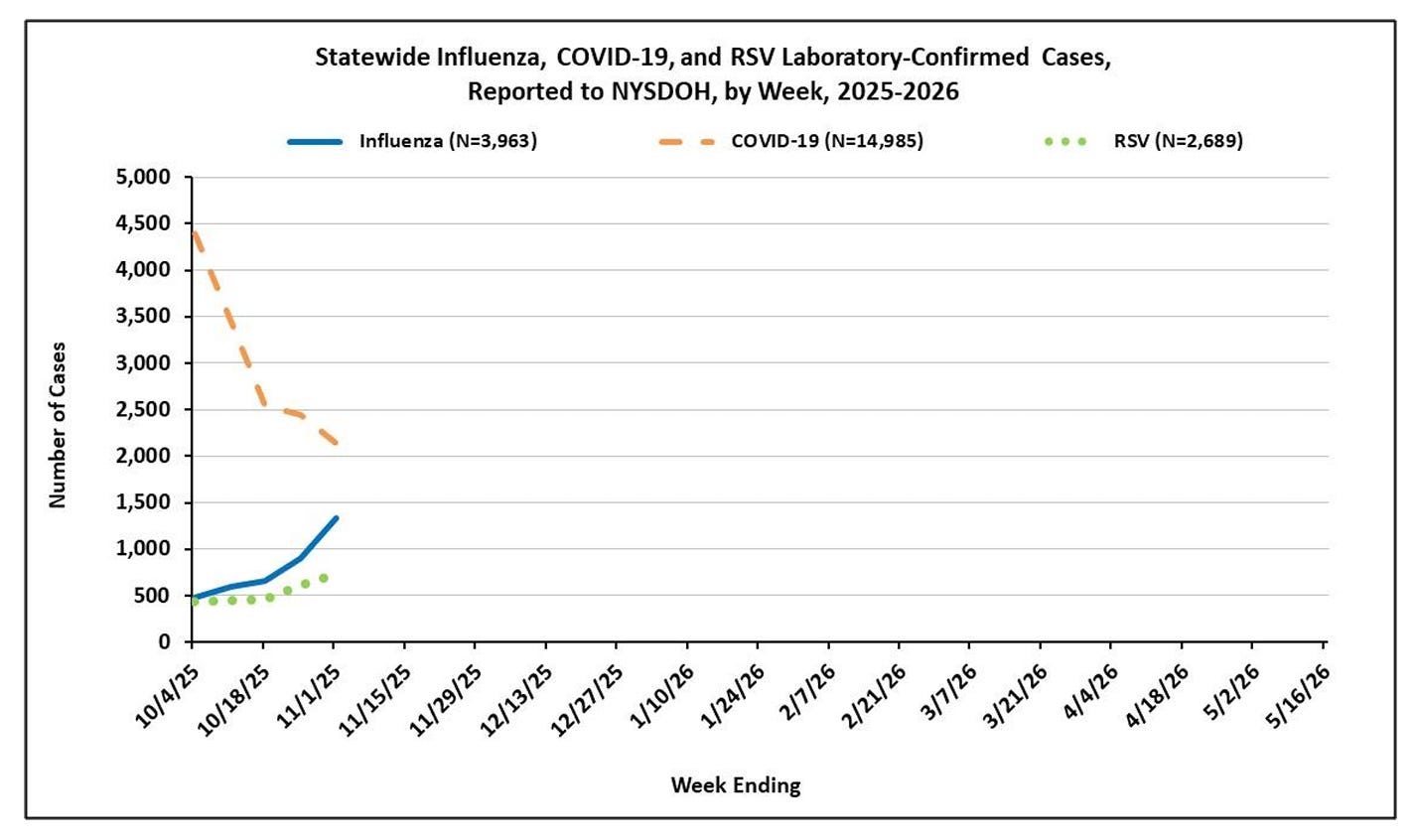
U.S. childhood flu vaccination rates have dropped from 62% to 49% over the past five years. Last year saw one of the deadliest seasons on record, with 280 pediatric deaths—the highest since tracking began in 2004. About 90% of those children weren’t fully vaccinated. Our deadliest flu season came at a time of historically low vaccination rates, which can’t be a coincidence. We don’t yet know this season’s coverage, but if it falls further, we could be facing another tragic record.
Covid-19 remains in a lull, though we typically see a winter rise starting in mid-to-late November.
I’m really hoping these three viruses don’t peak simultaneously. Hospitals strain under just a bad flu season; I couldn’t imagine the “big three” all at the same time. Historically, their peaks have staggered, but given how little we truly understand about these overlapping patterns, that may have been more a matter of luck than a rule. Time will tell.
What this means for you: This is the best time to get vaccinated. It’s certainly not too late.
Infant formula outbreak and Listeria in pasta
Over the weekend, a troubling cluster of infant botulism cases was linked to ByHeart Whole Nutrition Infant Formula. Even during a government shutdown and an increasingly challenging environment, outbreak teams have been working around the clock to protect our most vulnerable.
What this is: Infant botulism is extremely rare but serious. It occurs when Clostridium botulinum spores—commonly found in soil, dust, and some foods—germinate in a baby’s intestines and release toxins that can paralyze muscles, interfere with breathing, and require intensive care. In a typical year, the U.S. sees 160–180 cases, often linked to environmental exposure or foods like honey. Even a small cluster of cases is a clear red flag.
What we know: Clostridium botulinum spores have been detected in ByHeart infant formula, resulting in the hospitalization of 13 infants across 10 states. The California Department of Public Health (CDPH) played a key role in identifying this cluster. CDPH is the only source in the world for BabyBIG—the lifesaving antitoxin—and manages all clinician calls and treatment distribution. Their team noticed a spike in requests and discovered that the affected infants all consumed the same formula brand, prompting an alert to CDC. Importantly, ByHeart produces just 1% of U.S. infant formula, so this alone is unlikely to cause a national shortage. (Be sure to sign up for YLE CA for a deeper dive this Thursday.)
What we don’t know: Epidemiologists are investigating whether contamination is truly confined to ByHeart or reflects a broader issue in the manufacturing or ingredient sourcing process.
What to do: Stop using ByHeart Whole Nutrition Infant Formula immediately. Retailers should pull it from shelves, including Amazon, Kroger, Walmart, Whole Foods, Target, and Sam’s Club.
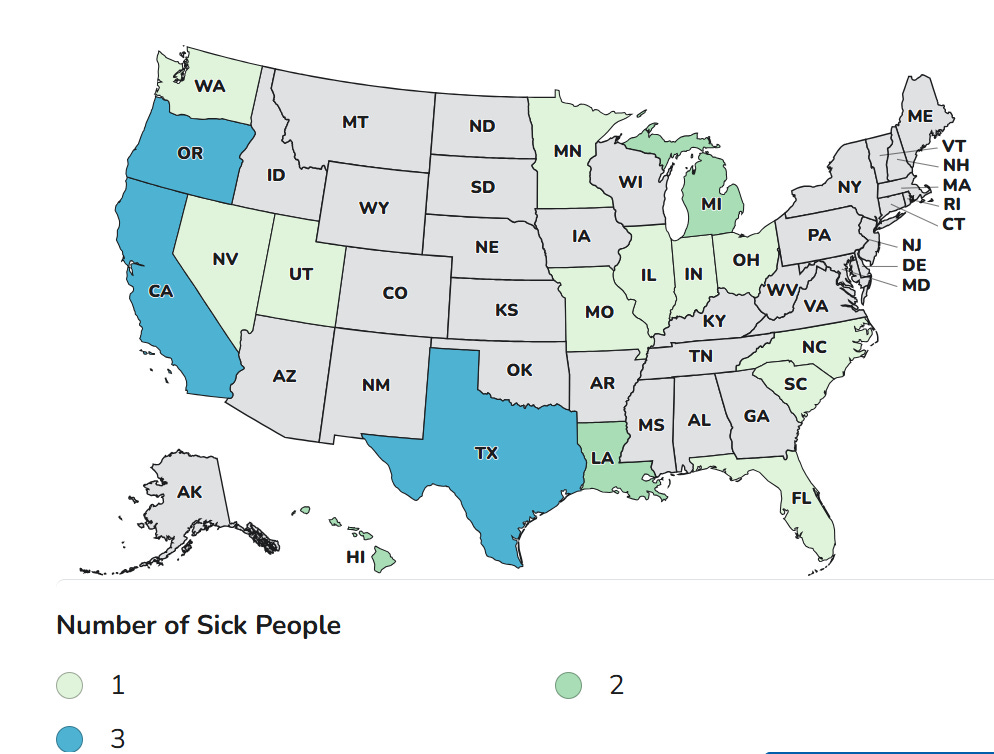
There is also the ongoing Listeria outbreak associated with frozen pasta dishes, including some sold at Trader Joe’s and other grocery chains. We’ve covered this before, but according to the agency’s ongoing investigation, two more brands of food are linked to the outbreak. There’s a long list of recalled products you can find here. Throw out immediately.
In total, there have been 27 illnesses reported, 25 hospitalizations, and six deaths in 18 states since late September.
HRT ‘black box’ warning may be gone soon
Word is that the FDA will remove the black box warning from hormone replacement therapy (HRT) this week. (It may now be pushed back with the government reopening.) If this announcement reflects the HRT review conducted at HHS last month, it will likely be messy and riddled with inaccuracies. However, if you look at the science without the drama, removing the black label is not unreasonable.
The black box warning—the strictest warning label, meant for drugs with potentially life-threatening risks—was enacted after a 2002 Women’s Health Initiative study found increased risks of stroke and breast cancer. Since then, research has revealed crucial nuance: risks depend on timing, dose, and delivery. Starting HRT earlier, using low-dose or localized estrogen, and tailoring therapy to each woman can be both effective and safe.
What this story is really about: Menopause is universal, yet too often misunderstood. While the science continues to evolve, the major problem is that clinical practice and training have lagged far behind. Women deserve evidence-based care, informed clinicians, and the freedom to make choices rooted in both science and compassion. We are still far from what is needed for women.
POLL
(snip-poll won’t embed here; go to the Substack page. The question is if readers would like to see a deep dive into HRT. If you wish to vote, click “read on Substack”, above.)
New blood pressure guidelines
Major new blood pressure guidelines dropped for the first time in years.
At the center of the update is an enhanced assessment tool called the PREVENT calculator, developed by the American Heart Association. It’s designed to estimate a person’s 10-year risk of cardiovascular disease using factors like blood pressure, cholesterol, smoking, and diabetes. The model was built using data from 6.5 million U.S. adults aged 30 to 79, making it one of the most representative tools available.
Here’s what stands out:
- A new threshold for medication. The key number to watch is 7.5%. If your 10-year risk of heart disease is at or above that level, physicians are now encouraged to consider medication even if your blood pressure hovers around 130/80 mmHg. If your risk is below that, lifestyle changes, like healthy eating, exercising, and better stress management, remain the first step.
- A focus on home monitoring. The guidelines also emphasize checking blood pressure at home. Growing evidence shows that home readings may actually be more accurate predictors of long-term risk than in-office measurements. So spending $45 on an arm monitor if you have hypertension might be a great (even lifesaving!) idea.
What this means for you: This makes heart health more personalized than ever. You can calculate your own 10-year risk using the PREVENT calculator (although you will need some pretty specific numbers from your last blood panel). Regardless, aim for blood pressure readings below 130/80, and use these new tools to guide smarter—and earlier—prevention.
Good news!
Here are some of the great things worth highlighting:
- The American Academy of Pediatrics (AAP) is standing up for science. The organization filed an updated lawsuit last week against HHS Secretary Robert F. Kennedy, Jr., asking a court to disband a panel (ACIP) appointed by RFK Jr. and to overturn recent decisions made by that panel. Then, to proceed under court supervision. The legal move is a direct push to restore expert-led vaccine policymaking.
- The Vaccine Integrity Project (VIP) is stepping up on Hep B. With the next ACIP meeting coming up in early December, where the agenda will likely include the Hepatitis B vaccine for infants, the childhood vaccination schedule, and HPV—VIP, an independent group of scientists formed in response to waning trust in RFK Jr.’s ACIP, is conducting an evidence review ahead of what could be a contentious meeting. Their work helps ensure the science remains front and center.
- Vaping among youth has seen a decline; but we still have a long way to go. A new study has found that the number of U.S. teens vaping has decreased overall. That’s progress. But among those who still do it, vaping is becoming more frequent and harder to quit—signs that use is shifting from experimentation toward dependence for some. If you have a teen who vapes, check out the EX Program, which is a free, anonymous text-messaging program designed specifically for young people who vape. There’s also SmokefreeTXT for Teens.
Question grab bag: You ask, we answer!
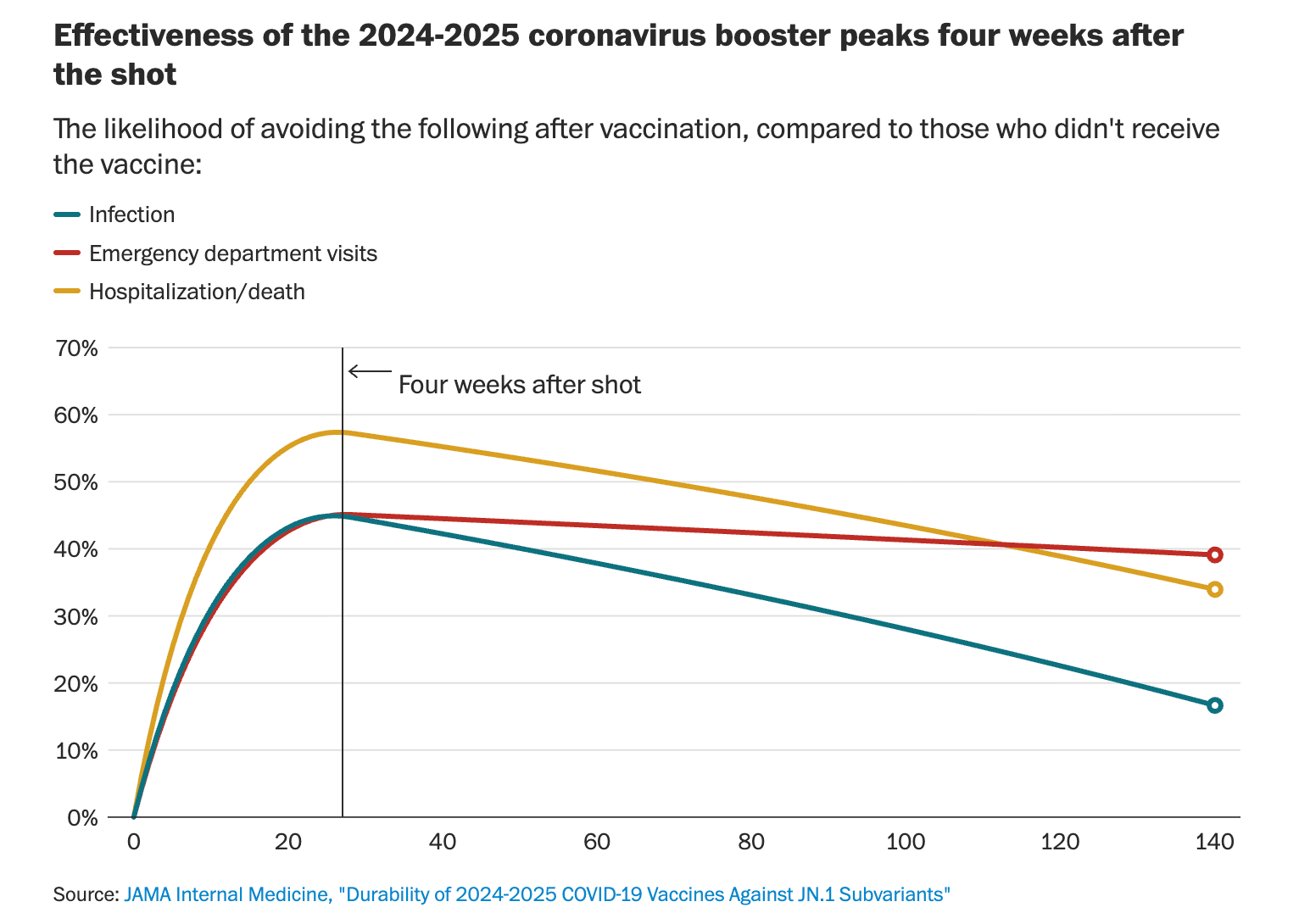
How long does the Covid-19 vaccine last? I got mine in September, do I need to get another?
A study published last week confirmed what we’ve consistently seen: protection against Covid-19 wanes over time. A study of more than 1.8 million Americans from the previous season showed protection against infection and severe disease declined after 4-5 months. The findings underscore the benefit of getting a Covid-19 vaccine every six months, especially for adults over 65, who accounted for nearly 80% of hospitalizations in the study.
In case you missed it
- Help shape our AI + Health conversation. Thanks to everyone who responded to our survey last week! We’re running the AI and health survey to hear your thoughts on using tools like ChatGPT, Claude, Copilot, and PerplexityAI to get health information. If you missed it, take the survey here.
- New York YLE’s Marisa discussed the state reaching a historic low in youth tobacco use.
- California YLE Matt discussed the impact of ICE raids on access to healthcare.
Have a wonderful week!
Love, YLE (snip)


 Scottie's Playtime
