In a Wall Street Journal op-ed published last week, Speaker Mike Johnson, R-La., declared 2025 “a great year” for House Republicans, calling it “one of the most productive first years of any Congress in our lifetimes.”
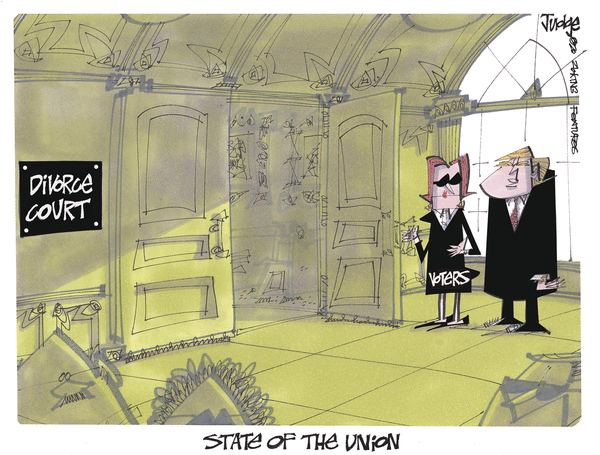
But in interviews with more than a dozen House Republicans last week, a far less rosy picture emerged. And as lawmakers prepare to return for what could be the final year of unified Republican control in Washington during Donald Trump’s presidency — if current polling holds — some members are already talking privately about new House leadership in the next Congress.
For Johnson, the case for GOP success rests almost entirely on one accomplishment: the reconciliation bill. Republicans passed the legislation this summer, with Trump signing it into law on July Fourth. In his op-ed, Johnson highlighted the package’s tax cuts, the billions in new border enforcement funding and the more than $1 trillion in cuts to Medicaid.
The House Republicans who spoke to MS NOW agreed the reconciliation bill was a major accomplishment for their party. (It’s worth noting that no Republican took issue with any of the policies that became law in the reconciliation bill, like the tax cuts that are projected to reduce tax revenue by $4.5 trillion over the next decade or those Medicaid cuts that are projected to cause 10.9 million Americans to lose health insurance coverage over that same time period.) But many of these Republicans wondered what the GOP had accomplished since.
Beyond overseeing the longest government shutdown in history and passing a few mandatory bills, many Republicans said they have little to show for their time controlling the White House and both chambers of Congress.
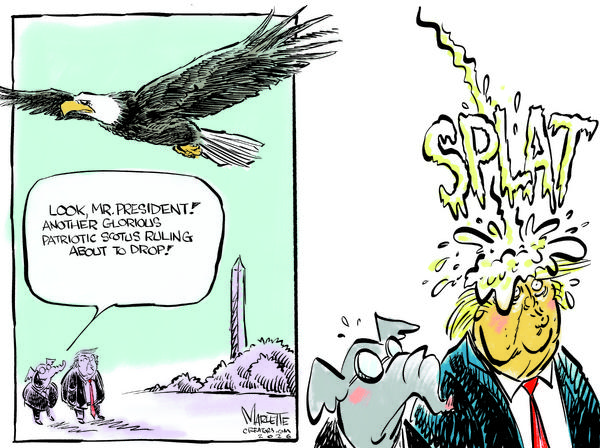
“The latter half of the year, in particular, starting with the speaker’s baffling decision to keep the House out of session for two months while the country was mired in a very harmful shutdown, that did not really match the tone of the op-ed,” Republican Rep. Kevin Kiley of California told MS NOW.
Kiley, a frequent Johnson critic, said the low productivity during the second half of the year was a consequence of the speaker choosing to keep the House out of session during the historic 43-day government shutdown.
“The decision to absent the House from Washington for two months and cancel six great weeks of session,” Kiley said, “I’m not sure the speaker or the House really recovered from that at the end of 2025.”
A second House Republican, who spoke to MS NOW on the condition of anonymity, said the tax cuts delivered through the reconciliation bill were good. “But other than that, like, what else have we done?” the member asked. “Like, I can’t tell you, because we haven’t.”
This GOP lawmaker added that Trump had been very productive, particularly calling out what the Treasury Department, the Department of Homeland Security and the Justice Department had been doing. “Quite the opposite story when you get to both chambers of Congress,” this member said.
“I understand the point Johnson is trying to make here,” another House Republican told MS NOW, “but I don’t think his claims ring true for most Americans. With all due respect, this characterization does not reflect the reality facing the American people.”
This member added that Trump won “a resounding victory in 2024 with a clear mandate,” and yet now, Congress’ approval rating is near all-time lows and the American people are “rightly frustrated that we have not delivered more boldly on that mandate.”
And asked for their thoughts on Johnson’s op-ed, another House Republican called it “a very rosy way of writing their own story.”
The frustration isn’t particularly surprising, given the lack of legislative progress in the second half of last year. But what may be notable, however, is that Republicans are now discussing new leadership in the next Congress.
Yet another House Republican, who asked to remain anonymous to discuss the sensitive conversations, told MS NOW that the current GOP leadership team “is generally viewed as weak, reactive and unintelligent.”
“It is the increasing sense across the entire continuum of the Republican Conference, from the Freedom Caucus to the Tuesday Group, that there is a need to elect an entirely new leadership team in the 120th Congress,” this member said, referring to the hard-line conservative and moderate GOP groups.
“Expect the silent majority in the GOP conference to push for entirely new faces, and an entirely new approach, in the next Congress,” this lawmaker added. “We are already hearing from those who will move to force the legacy figures to step aside at the end of this Congress, and replace them with new, fresh faces — new ideas and a new approach.”
While these conversations are mostly happening behind the scenes — with little appetite to change leadership in the middle of this Congress — some of the chatter has been making its way into public view.
In early December, Rep. Elise Stefanik of New York, a member of House GOP leadership and a close Trump ally, told The Wall Street Journal in an interview that Johnson “certainly wouldn’t have the votes to be speaker if there was a roll-call vote tomorrow.”
Of course, there isn’t a vote tomorrow. And if Johnson loses the House majority, he would obviously face challenges to retain his position as the No. 1 Republican. But if the GOP were to somehow hold on to the majority, removing Johnson would be difficult.
Still, another GOP lawmaker agreed with Stefanik’s assessment that Johnson would lose a vote tomorrow: “A good attorney. A good man. A bad politician,” this member said.
Kiley said there were “definitely frustrations” with Johnson’s leadership among a cross section of the conference. “I don’t discount how challenging the job is, but he seems to have done the one thing that frustrates pretty much everyone in our conference, by simply making the House of Representatives a lot less relevant in recent months,” Kiley said.
That decaying relevance has come as Johnson has deferred much of Congress’ power to the executive branch. The legislative branch’s reduced role in the checks-and-balances system of government came into greater focus over the weekend, when Trump bombed Venezuela and put U.S. boots on the ground to capture Venezuelan president Nicolás Maduro — without congressional authorization.
Where congressional leaders of previous eras might take issue with the president conducting offensive strikes without authorization — or at least insist on congressional input — Johnson applauded the president Saturday for a “decisive and justified operation that will protect American lives.”
“President Trump is putting American lives first, succeeding where others have failed, and under his leadership the United States will no longer allow criminal regimes to profit from wreaking havoc and destruction on our country,” Johnson wrote on X.
Johnson has seemed to grasp that his power as a Republican leader depends greatly, if not entirely, on Trump’s approval. And as Trump has seized power from the legislative branch — through tariffs, through impoundments, through executive orders, through emergency declarations and by his administration ignoring congressional orders — Johnson has been an enthusiastic partner of the president.
Reached for comment, the speaker’s office referred MS NOW to the message in the op-ed and the more than 100 influential conservative and industry and community leaders touting the House GOP’s accomplishments in 2025.
Still, the numbers paint a more humble picture.
With Republicans controlling the House, Senate and White House, 38 bills became law this year — exactly half of the 76 bills that were enacted under full Democratic control in 2021 and far short of the 74 bills that were signed under full GOP control in 2017. (In 2009, when Democrats also had unified control of Congress and the White House, they passed 115 bills into law.)
Johnson wasn’t without defenders. Several Republicans pointed out that Johnson was grappling with a razor-thin majority — decreasing to a two-vote cushion at one point — which makes passing major legislation difficult.
Rep. Eric Burlison, R-Mo., a second-term lawmaker who is part of the Freedom Caucus, called 2025 “one of the best years Congress has had.”
“While we may not have passed a bunch of individual bills, the amount of legislation, and good legislation, that was passed in the ‘one big, beautiful bill’ is quite a bit,” Burlison said.
He did, however, push back on Johnson’s description of 2025 as “one of the most productive first years of any Congress in our lifetime.”
“I don’t know if you’d say the most productive,” Burlison said. “I’d say it’s the best in at least a generation. And by best, I mean we didn’t pass a bunch of swampy things; we passed really good legislation.”
Rep. Don Bacon, R-Neb., a retiring moderate, similarly touted the breadth of policy in the reconciliation bill, as well as the annual defense policy bill, which Congress has passed every year for more than six decades.
“If you just look at the number of bills passed, it’s easy to say, I guess, that’s a low production, but I think if you have a little bit of nuance, it was probably more than just that low number, because the reconciliation bill had tons of tax policy in it,” Bacon said, though he added that “the real answer” is that “I sure wish we could have got more done.”
Notably absent from the list of accomplishments? A fix for health care, as Obamacare subsidies expired, driving up prices for tens of millions of Americans.
“Substantively, what we’ve done, the biggest thing is that ‘big, beautiful bill,’” one of the previously quoted lawmakers said. “And the biggest deficiency is certainly the health care.”
At the end of his op-ed, Johnson said “the best is yet to come.” But some House Republicans are just wishing for some normalcy.
Asked what they were most hopeful for in the second half of the 119th Congress, another one of the previously quoted lawmakers had a modest ambition: “Little or no drama.”
It was all a lie. Rubio has always pushed for regime change in Cuba, and may experts say it should start with Venuzalia. Rubio doesn’t care about the oil, he wants all support for Cuba stopped so the US can go into Cuba and return it to what his family fled so many years ago when they were abusing the locals for profit. It is all a personal agenda he hopes will lead him to the presidency. Hugs
The Trump administration has set its sights on Venezuela in its latest campaign against illegal drugs, but data shows that the country is responsible for just a sliver of drug trafficking directly to the United States.
The Get the Facts Data Team analyzed data on cocaine and fentanyl trafficking. While Venezuela is a player in cocaine manufacturing and trafficking, drug seizure data shows that it’s not as prominent a supplier of cocaine to the U.S. as other South American and Latin American countries.
There is also no evidence that any significant level of illegal fentanyl — the primary killer in U.S. overdose deaths — is produced in South America, according to the United Nations Office on Drugs and Crime (UNODC).
UNODC analyzes global drug trafficking based on reporting from its member states, open sources and drug seizure information.
Yet President Donald Trump has linked his administration’s attacks on drug vessels in Latin America to the fentanyl crisis, among other drugs.
After the Sept. 19 attack on a boat in the Caribbean that killed three people, Trump posted on Truth Social, claiming that the boat was carrying drugs and headed for America. “STOP SELLING FENTANYL, NARCOTICS, AND ILLEGAL DRUGS IN AMERICA,” his post said.
The next day, in a speech, Trump said that thousands are dying because of “boatloads” of fentanyl and drugs. He’s also repeatedly said that each boat strike would save 25,000 lives.
As of Friday, the number of known boat strikes was 35, and the number of people killed stands at least 115, according to the Trump administration.
Previously, Trump said that the U.S. is engaged in an “armed conflict” with drug cartels and has justified the boat strikes as necessary to stem the flow of drugs into the U.S. Hearst Television’s partner PolitiFact labeled that 25,000 number mathematically dubious.
Maduro’s capture on Jan. 3
On Saturday, the Trump administration struck Venezuela in a new, stunning way, capturing its leader, Nicolas Maduro, and his wife. Both are being taken to the United States to face charges related to drug trafficking.
The strike followed a monthslong Trump administration pressure campaign on the Venezuelan leader, including a major buildup of American forces in the waters off South America and attacks on boats in the eastern Pacific and Caribbean accused of carrying drugs. Last week, the CIA was behind a drone strike at a docking area believed to have been used by Venezuelan drug cartels — the first known direct operation on Venezuelan soil since the U.S. began strikes in September.
Venezuela’s role in cocaine trafficking
Venezuela is not among the primary direct traffickers of cocaine to the U.S.
Like fentanyl, most cocaine enters the U.S. from Mexico and typically gets to Mexico via maritime transportation on both the Pacific and Caribbean sides, according to UNODC research officer Antoine Vella. Some also arrives in Mexico via land transportation.
While the Trump administration’s early September attacks targeted Venezuelan boats, there is no known direct cocaine trade route from Venezuela to the U.S. via sea. The only known direct Venezuela to U.S. trafficking route is via air, according to drug seizure data from UNODC. Cocaine could still arrive from Venezuela to the U.S. through intermediary countries.
Colombia, Ecuador and Panama are among the main direct traffickers of cocaine to the U.S. via boat.
From harvest to production
Coca, the plant that cocaine is made from, is grown primarily in Colombia, Peru and Bolivia.
Once coca is harvested, the cocaine in the leaf needs to be extracted. That processing occurs at illegal manufacturing facilities around the globe.
The three coca-growing countries also have the most illegal processing facilities. Colombia had by far the most of any country at about 26,400 detected and dismantled from 2019 to 2023, according to UNODC data. It’s followed by about 3,200 processing facilities in Bolivia and 2,400 in Peru.
Venezuela, which neighbors Colombia, had about 260 illegal processing facilities detected and dismantled from 2019 to 2023, according to UNODC data. It’s ranked fifth among countries with the most processing facilities.
“Every country that borders Colombia has an issue with cocaine in terms of cocaine trafficking,” Vella said.
Throughout its history, the United States has characteristically remained a country of two things: a country of immigrants, and a country of unmatched religious diversity. And yet when compared with the rest of the world – where these two very factors alone have so often engendered horrible religious wars and decades of enduring conflict – the history of religious conflict in the United States seems almost nonexistent.
That is not to say the United States has been immune to its share of conflict explicitly rooted in religion. This paper explores the various manifestations of religious conflict throughout the history of the United States, from the Revolutionary War to the attacks of September 11th and their fallout. A distinction is drawn between religious intolerance, which is not the focus of this paper, and outright religious persecution or violence. Similarly, the paper reflects efforts made to de-conflate religious conflict from ethnic and racial conflict, which has been much more prominent throughout the history of the United States. In examining the history of religious violence, intolerance, discrimination, and persecution in the United States, we arrive at some possible explanations for why the United States has seen such minimal religious conflict despite being so religiously diverse.
The Revolution
It has been said that the United States is a nation founded on religious conflict. The colonies were settled by those escaping religious persecution in Europe. There is even some evidence that religion played a major role in the American Revolution and that revolutionaries believed it was willed by God for the Americans to wage war against the British.[1]
As the Church of England was striving to establish one, uniform religion across the kingdom, colonial America was divided, each of the colonies being dominated by their own brand of Christianity. Due to the distance from England and the room in the colonies, many religions were able to establish themselves in America, colony by colony. For example, Anglicans, who conformed to the Church of England, populated Virginia. Massachusetts was home to the Puritans. Pennsylvania was full of Quakers. Baptists ruled in Rhode Island. And Roman Catholics found a haven in Maryland, where they could establish themselves amid the other colonists’ protestant majority. Each of these colonies maintained a distinct religious character and favored one religious denomination’s power.
The American colonists saw the revolution not only as a war for political independence, but to protect the religious diversity of the thirteen colonies. Put in other terms, it was a war for religious independence and freedom. To sever ties with Mother England would be to ensure that the various Christian denominations could co-exist on the American continent. The conflict was, in part, a conflict that pitted the various American religious denominations against the Church of England, who wanted to impose a uniform, Anglican religion on the colonies.
Early Religious Persecution
The period after the Revolutionary War saw a lot of infighting between the various states and Christian denominations. Virginia, which was home to the largest portion of Anglicans loyal to the Church of England, was the scene of notorious acts of religious persecution against Baptists and Presbyterians. Anglicans physically assaulted Baptists, bearing theological and social animosity. In 1771, a local Virginia sheriff yanked a Baptist preacher from the stage at his parish and beat him to the ground outside, where he also delivered twenty lashes with a horsewhip. Similarly, in 1778, Baptist ministers David Barrow and Edward Mintz were conducting services at the Mill Swamp Baptist Church in Portsmouth, Virginia.[2] As soon as the hymn was given out, a gang of men rushed the stage and grabbed the two ministers, took them to the nearby Nansemond River swamp, and dunked and held their heads in the mud until they nearly drowned to death.
The period during and soon after the Revolutionary War also saw abundant political manifestations of religious conflict. At the time, some states abolished churches, while supporting others, issued preaching licenses, and collected tax money to fund and establish state churches. Each state constitution differed in its policy on religious establishment, or state-supported religion. It would not be until well after the adoption of the Constitution of 1789 and the First Amendment religion clauses that the disestablishment for which the United States is so recognized became the de facto practice.
1800s
The early part of the 19th Century was relatively quiet in terms of religious conflict in America. The religious conflict that stands out in this period involves tensions between Catholics and Protestants, culminating in violence directed at Irish Catholic immigrants. The surge in immigration from Europe during the 19th Century coincided with and influx of Catholics and the rise of activist Protestantism in the U.S. As strong Protestant values permeated the country, immigrants who were Catholic also became viewed as outsiders and undemocratic. These views are separate from, but on top of, the harsh anti-Irish sentiment that also spread during the period.
In the 1830s and 1840s, anti-Catholic violence broke out in the Northeast and elsewhere. In 1835, one incident was ignited by a speaking tour by Lyman Beecher, who published Plea for the West, a book about a Catholic plot to take over the U.S. and impose Catholic rule. After Beecher’s speaking tour passed through Charlestown, Massachusetts, a mob set fire to the Ursuline convent and school.[3] In Philadelphia in 1844, pitched gun battles broke out between “native” Americans and mostly Irish Catholics. Martial law had to be declared in order to end the violence.[4]
The Mormon War, the Utah War
Around the same time as anti-Catholic violence broke out in the Northeast, another religious group was being chased out of the same area. The Mormons, who emerged after the 1830 discovery of The Book of Mormon, were a religious community chased out of New York, out of Ohio, out of Missouri, and out of Illinois, to Utah, where they finally settled.
In Illinois in 1839, the Mormons settled Nauvoo and built a thriving Mormon town there, complete with a large Mormon temple. In the short period of three years, the Mormons prospered, announced the doctrine of polygamy, and founder Joseph Smith announced his candidacy for president of the United States. Locals were intimidated and envious. Smith and his brother Hyrum were arrested on morals charges and held in jail. On June 27, 1844, an anti-Mormon mob attacked Nauvoo and burned it to the ground.[5] They also invaded the jail cells where Smith and his brother were being held, and executed them.
Shortly after the sacking of Nauvoo, Brigham Young announced his leadership of the Mormons and led them to Utah, where they flourished. In 1857, fears of a religious state of Mormons grew and the president ordered federal troops to enforce the installation of federal judges and a new non-Mormon governor. At some point in the interim, this is still a subject of debate, the infamous Mountain Meadow Massacre happened – in which local Mormons slaughtered a group of 120 California-bound pioneers who were openly hostile toward their religion and making threats to return from California to attack them.[6]
The massacre only fueled anti-Mormon sentiment. Tensions escalated. The Mormon army, also known as the Nauvoo Legion, was called out to respond to the imminent arrival of 2,000 U.S. Army troops. Salt Lake City was evacuated on standing orders to burn the city should an invasion occur. No violence was to break out, as attention was diverted to the Civil War.
As the federal government focused its energies on fighting the Civil War, legal sanctions and political oppression of the Mormons continued that virtually dissolved the church by 1887. It wasn’t until the 1890s, when the Mormons ended the practice of polygamy, that Utah finally achieved statehood in 1896.[7]
The Jewish Experience
At the end of the 1890s, the U.S. began seeing the first wave of anti-Semitism, just as the federal government began restricting immigration from Europe. While concentrations of Jews have lived in America since colonial times, they were largely tolerated and discriminated against in localized incidents. By the 1920s, immigration quotas had taken effect and limits on the basis of national origin. These quotas were not repealed during the Holocaust, even as Jewish refugees were fleeing Hitler’s Europe.
Between 1933 and 1939, the period of the Great Depression, anti-Semitic fervor reached heights never before seen or later seen in entire the history of the Jewish experience in America. In urban areas such as New York and Boston, Jews were violently attacked.[8] Most anti-Jewish sentiment was manifested in social and political discrimination. Assaults, propaganda and intimidation were mostly carried out by special societies, such as the Silver Shirts or the Ku Klux Klan.
Overall, the experience of Jews in America has been encouragingly free from the violent persecution seen elsewhere in the world. Indeed, racial and social intolerance persisted since the colonial days until the 1950s, as Jews were not allowed membership in country clubs, excluded from colleges, banned from practicing medicine, and from holding political office in many states. However, religious conflict rooted in anti-Semitism has been largely non-violent.
Hate Crimes as Religious Conflict
The incidents of violence against individual Jews that characterized the anti-Semitism of the Great Depression would have fallen under the category of religious hate crimes if the FBI, then known as the Bureau of Investigation, were collecting those statistics at the time. Despite the diversity of the United States, in all aspects such as race, national origin, religion and sexual orientation, the federal government (by way of the FBI) did not start keeping tabs on hate crimes until 1992. Religiously speaking, anti-Semitic hate crimes have always dominated the national hate crime statistics gathered by the FBI for the past ten years. However, the current numbers paint a changing landscape.
According to the ACLU, the U.S. is home to more than 1,500 religions and 360,000 religious centers.[9] Christianity has long dominated the country’s religious make-up, followed by Judaism. According to the latest statistics released by the Harvard University Religious Pluralism Project, Islam has surpassed Judaism and is the country’s Number Two religion.[10]
Following the terrorist attacks of September 11th, the FBI found that anti-Muslim sentiments spiked and verifiable, religiously motivated hate crimes against Muslims in the U.S. increased 1,600 percent in 2001 from the prior year.[11]
In fact, the FBI, which has tracked hate crimes since 1992, reports that Anti-Muslim hate crimes had previously been the second-least reported. But in 2001, they became the second-highest reported, second only to anti-Jewish hate crimes. It should be noted that these statistics are separate from crimes motivated against race, national origin or ethnicity – these are crimes against person and property in which religion was a motivating negative factor.
Conclusion
The U.S. has been fortunate in that it has not witnessed religious war and conflict of the scale seen in the Middle East and Europe. Although the number of different religions in the U.S. has steadily grown over the decades, this diversity has not let to conflict. Some propositions for why this may be:
The United States as a country of immigrants
This factor defuses historical and religious claims to territory, which are not as strong as they are in places such as the West Bank and Ireland. It also may explain a greater likelihood for a system of conflict to eventually resolve itself in favor of tolerance rather than further conflict, as each new group of immigrants to America has generally shared a story of persecution.
Constitutional protections and religious disestablishment
The American tradition of the separation of church and state cannot be overlooked in mediating and possibly preventing religious conflict to erupt. In many other parts of the world, religion is still highly influential and, in some cases, sponsored by the state. However, in a country with such religious diversity, religious disestablishment has proved necessary so that the government could not take sides in a religious conflict.
Diversity creates tolerance
The argument also exists that the immense diversity in and of itself has promoted tolerance among religions. Religious pluralism inspires attitudes that homogeneity is a natural part of the religious environment and that there is room for each religion to exist in America.
As the United States enters the 21st Century, these important factors will prove to be influential in the face of catastrophic events, and economic, social and political changes that challenge the level of religious tolerance the nation has maintained for over two centuries.
On Saturday, it tells us that Nicolás Maduro is such a uniquely dangerous despot — so criminal, so destabilizing, so irredeemable — that the United States had no choice but to remove him from power by force. Maduro, we are told, is a narco-dictator, a human rights abuser, a menace to his own people and to regional stability.
On Sunday, the same administration will continue putting Venezuelan asylum seekers on planes and deports them back to the country that, according to its own rhetoric, was so dangerous it required regime change.
This is not just hypocrisy. It is a logical impossibility masquerading as policy.
Imran Ahmed, the founder of the Center for Countering Digital Hate (CCDH), giving evidence to joint committee seeking views on how to improve the draft Online Safety Bill designed to tackle social media abuse. Credit: House of Commons – PA Images / Contributor | PA Images
Imran Ahmed’s biggest thorn in his side used to be Elon Musk, who made the hate speech researcher one of his earliest legal foes during his Twitter takeover.
Now, it’s the Trump administration, which planned to deport Ahmed, a legal permanent resident, just before Christmas. It would then ban him from returning to the United States, where he lives with his wife and young child, both US citizens.
After suing US officials to block any attempted arrest or deportation, Ahmed was quickly granted a temporary restraining order on Christmas Day. Ahmed had successfully argued that he risked irreparable harm without the order, alleging that Trump officials continue “to abuse the immigration system to punish and punitively detain noncitizens for protected speech and silence viewpoints with which it disagrees” and confirming that his speech had been chilled.
US officials are attempting to sanction Ahmed seemingly due to his work as the founder of a British-American non-governmental organization, the Center for Countering Digital Hate (CCDH).
“An egregious act of government censorship”
In a shocking announcement last week, Secretary of State Marco Rubio confirmed that five individuals—described as “radical activists” and leaders of “weaponized NGOs”—would face US visa bans since “their entry, presence, or activities in the United States have potentially serious adverse foreign policy consequences” for the US.
Nobody was named in that release, but Under Secretary for Public Diplomacy, Sarah Rogers, later identified the targets in an X post she currently has pinned to the top of her feed.
Alongside Ahmed, sanctioned individuals included former European commissioner for the internal market, Thierry Breton; the leader of UK-based Global Disinformation Index (GDI), Clare Melford; and co-leaders of Germany-based HateAid, Anna-Lena von Hodenberg and Josephine Ballon. A GDI spokesperson told The Guardian that the visa bans are “an authoritarian attack on free speech and an egregious act of government censorship.”
While all targets were scrutinized for supporting some of the European Union’s strictest tech regulations, including the Digital Services Act (DSA), Ahmed was further accused of serving as a “key collaborator with the Biden Administration’s effort to weaponize the government against US citizens.” As evidence of Ahmed’s supposed threat to US foreign policy, Rogers cited a CCDH report flagging Robert F. Kennedy, Jr. among the so-called “disinformation dozen” driving the most vaccine hoaxes on social media.
Neither official has really made it clear what exact threat these individuals pose if operating from within the US, as opposed to from anywhere else in the world. Echoing Rubio’s press release, Rogers wrote that the sanctions would reinforce a “red line,” supposedly ending “extraterritorial censorship of Americans” by targeting the “censorship-NGO ecosystem.”
For Ahmed’s group, specifically, she pointed to Musk’s failed lawsuit, which accused CCDH of illegally scraping Twitter—supposedly, it offered evidence of extraterritorial censorship. That lawsuit surfaced “leaked documents” allegedly showing that CCDH planned to “kill Twitter” by sharing research that could be used to justify big fines under the DSA or the UK’s Online Safety Act. Following that logic, seemingly any group monitoring misinformation or sharing research that lawmakers weigh when implementing new policies could be maligned as seeking mechanisms to censor platforms.
Notably, CCDH won its legal fight with Musk after a judge mocked X’s legal argument as “vapid” and dismissed the lawsuit as an obvious attempt to punish CCDH for exercising free speech that Musk didn’t like.
In his complaint last week, Ahmed alleged that US officials were similarly encroaching on his First Amendment rights by unconstitutionally wielding immigration law as “a tool to punish noncitizen speakers who express views disfavored by the current administration.”
Both Rubio and Rogers are named as defendants in the suit, as well as Attorney General Pam Bondi, Secretary of Homeland Security Kristi Noem, and Acting Director of US Immigration and Customs Enforcement Todd Lyons. In a loss, officials would potentially not only be forced to vacate Rubio’s actions implementing visa bans, but also possibly stop furthering a larger alleged Trump administration pattern of “targeting noncitizens for removal based on First Amendment protected speech.”
Lawsuit may force Rubio to justify visa bans
For Ahmed, securing the temporary restraining order was urgent, as he was apparently the only target currently located in the US when Rubio’s announcement dropped. In a statement provided to Ars, Ahmed’s attorney, Roberta Kaplan, suggested that the order was granted “so quickly because it is so obvious that Marco Rubio and the other defendants’ actions were blatantly unconstitutional.”
Ahmed founded CCDH in 2019, hoping to “call attention to the enormous problem of digitally driven disinformation and hate online.” According to the suit, he became particularly concerned about antisemitism online while living in the United Kingdom in 2016, having watched “the far-right party, Britain First,” launching “the dangerous conspiracy theory that the EU was attempting to import Muslims and Black people to ‘destroy’ white citizens.” That year, a Member of Parliament and Ahmed’s colleague, Jo Cox, was “shot and stabbed in a brutal politically motivated murder, committed by a man who screamed ‘Britain First’” during the attack. That tragedy motivated Ahmed to start CCDH.
He moved to the US in 2021 and was granted a green card in 2024, starting his family and continuing to lead CCDH efforts monitoring not just Twitter/X, but also Meta platforms, TikTok, and, more recently, AI chatbots. In addition to supporting the DSA and UK’s Online Safety Act, his group has supported US online safety laws and Section 230 reforms intended to protect kids online.
“Mr. Ahmed studies and engages in civic discourse about the content moderation policies of major social media companies in the United States, the United Kingdom, and the European Union,” his lawsuit said. “There is no conceivable foreign policy impact from his speech acts whatsoever.”
In his complaint, Ahmed alleged that Rubio has so far provided no evidence that Ahmed poses such a great threat that he must be removed. He argued that “applicable statutes expressly prohibit removal based on a noncitizen’s ‘past, current, or expected beliefs, statements, or associations.’”
According to DHS guidance from 2021 cited in the suit, “A noncitizen’ s exercise of their First Amendment rights … should never be a factor in deciding to take enforcement action.”
To prevent deportation based solely on viewpoints, Rubio was supposed to notify chairs of the House Foreign Affairs, Senate Foreign Relations, and House and Senate Judiciary Committees, to explain what “compelling US foreign policy interest” would be compromised if Ahmed or others targeted with visa bans were to enter the US. But there’s no evidence Rubio took those steps, Ahmed alleged.
“The government has no power to punish Mr. Ahmed for his research, protected speech, and advocacy, and Defendants cannot evade those constitutional limitations by simply claiming that Mr. Ahmed’s presence or activities have ‘potentially serious adverse foreign policy consequences for the United States,’” a press release from his legal team said. “There is no credible argument for Mr. Ahmed’s immigration detention, away from his wife and young child.”
X lawsuit offers clues to Trump officials’ defense
To some critics, it looks like the Trump administration is going after CCDH in order to take up the fight that Musk already lost. In his lawsuit against CCDH, Musk’s X echoed US Senator Josh Hawley (R-Mo.) by suggesting that CCDH was a “foreign dark money group” that allowed “foreign interests” to attempt to “influence American democracy.” It seems likely that US officials will put forward similar arguments in their CCDH fight.
Rogers’ X post offers some clues that the State Department will be mining Musk’s failed litigation to support claims of what it calls a “global censorship-industrial complex.” What she detailed suggested that the Trump administration plans to argue that NGOs like CCDH support strict tech laws, then conduct research bent on using said laws to censor platforms. That logic seems to ignore the reality that NGOs cannot control what laws get passed or enforced, Breton suggested in his first TV interview after his visa ban was announced.
Breton, whom Rogers villainized as the “mastermind” behind the DSA, urged EU officials to do more now defend their tough tech regulations—which Le Monde noted passed with overwhelming bipartisan support and very little far-right resistance—and fight the visa bans, Bloomberg reported.
“They cannot force us to change laws that we voted for democratically just to please [US tech companies],” Breton said. “No, we must stand up.”
While EU officials seemingly drag their feet, Ahmed is hoping that a judge will declare that all the visa bans that Rubio announced are unconstitutional. The temporary restraining order indicates there will be a court hearing Monday at which Ahmed will learn precisely “what steps Defendants have taken to impose visa restrictions and initiate removal proceedings against” him and any others. Until then, Ahmed remains in the dark on why Rubio deemed him as having “potentially serious adverse foreign policy consequences” if he stayed in the US.
Ahmed, who argued that X’s lawsuit sought to chill CCDH’s research and alleged that the US attack seeks to do the same, seems confident that he can beat the visa bans.
“America is a great nation built on laws, with checks and balances to ensure power can never attain the unfettered primacy that leads to tyranny,” Ahmed said. “The law, clear-eyed in understanding right and wrong, will stand in the way of those who seek to silence the truth and empower the bold who stand up to power. I believe in this system, and I am proud to call this country my home. I will not be bullied away from my life’s work of fighting to keep children safe from social media’s harm and stopping antisemitism online. Onward.”
Ashley is a senior policy reporter for Ars Technica, dedicated to tracking social impacts of emerging policies and new technologies. She is a Chicago-based journalist with 20 years of experience.
Criminal Israel has violated every aspect of the “ceasefire” and made a mockery of the promises of security guarantees tRump gave Hamas / the Palestinians. It should make Ukraine really nervous of the same things he has promised them. All tRump can see or cares about is his personal profit of building on Palestinian lands making profits over the dead bodies of the Palestinians. He is OK with Israel hurrying up the slaughter to get to that profit point. I hate this. You should also. Hugs
People attend the funeral of Dr. Hussein Najjar, a member of the Doctors Without Borders team who was killed by shrapnel from an Israeli airstrike, in Deir al Balah, Gaza on September 16, 2025
(Photo by Alaa Y. M. Abumohsen/Anadolu via Getty Images)
“The humanitarian response in Gaza is already highly restricted, and cannot afford further dismantlement,” the renowned organization warned.
The Israeli government said Tuesday that Doctors Without Borders, one of the largest medical organizations currently operating in Gaza, is among the 25 humanitarian groups that will be suspended at the start of the new year for their alleged failure to comply with Israel’s widely criticized new registration rules for international NGOs.
According to the Associated Press, Israel’s Ministry of Diaspora Affairs “said the organizations that will be banned on January 1 did not meet new requirements for sharing staff, funding, and operations information.” The Israeli government specifically accused Doctors Without Borders, known internationally as Médecins Sans Frontières (MSF), of “failing to clarify the roles of some staff that Israel accused of cooperation with Hamas and other militant groups,” AP reported.
In addition to providing medical assistance to desperate Palestinians, MSF has been an outspoken critic of what has it described as Israel’s “campaign of total destruction” in Gaza. The group said in a report released last December that its teams’ experiences on the ground in Gaza were “consistent with the descriptions provided by an increasing number of legal experts and organizations concluding that genocide is taking place.”
Ahead of Tuesday’s announcement, Doctors Without Borders warned that the looming withdrawal of registration from international NGOs “would prevent organizations, including MSF, from providing essential services to people in Gaza and the West Bank.”
“With Gaza’s health systemalready destroyed, the loss of independent and experienced humanitarian organizations’ access to respond would be a disaster for Palestinians,” the group said in a statement last week. “The humanitarian response in Gaza is already highly restricted, and cannot afford further dismantlement.”
“If Israeli authorities revoke MSF’s access to Gaza in 2026, a large portion of people in Gaza will lose access to critical medical care, water, and lifesaving support,” the group added. “MSF’s activities serve nearly half a million people in Gaza through our vital support to the destroyed health system. MSF continues to seek constructive engagement with Israeli authorities to continue its activities.”
Pascale Coissard, MSF’s emergency coordinator for Gaza, noted that “in the last year, MSF teams have treated hundreds of thousands of patients and delivered hundreds of millions of liters of water.”
“MSF teams are trying to expand activities and support Gaza’s shattered health system,” said Coissard. “In 2025 alone, we carried out almost 800,000 outpatient consultations and handled more than 100,000 trauma cases.”
Israel’s announcement came shortly after Prime Minister Benjamin Netanyahu met with US President Donald Trump in Florida, where both dodged questions about their supposed “peace plan” for Gaza after more than two years of relentless bombing. The Israeli military has been accused of violating an existing ceasefire agreement hundreds of times since it took effect in October.
Al Jazeera reported Tuesday that “Israeli forces have carried out strikes across the Gaza Strip as they continue with their near-daily violations of the ceasefire agreement, with Israel’s genocidal war on the besieged enclave continuing apace and displaced Palestinians enduring the destruction of their few remaining possessions in flooding brought about by heavy winter rains.”