Just How Far?

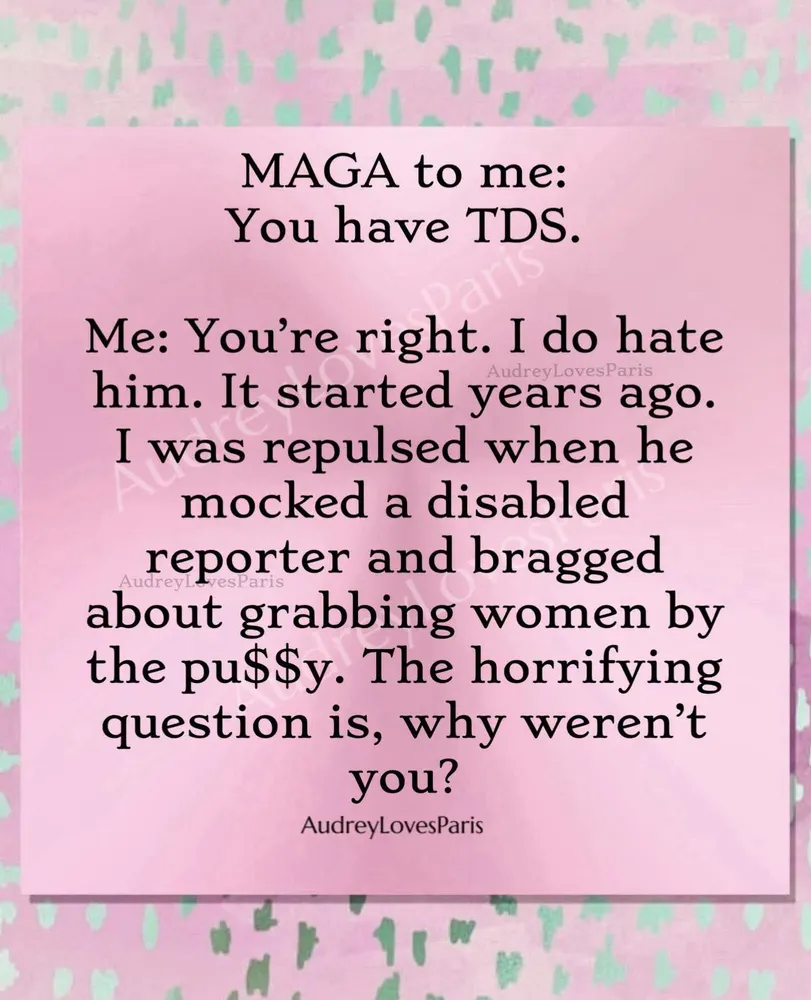
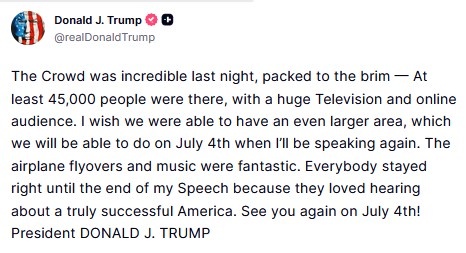
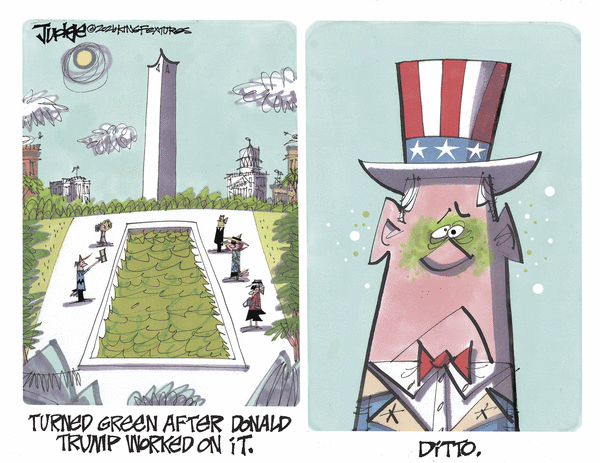
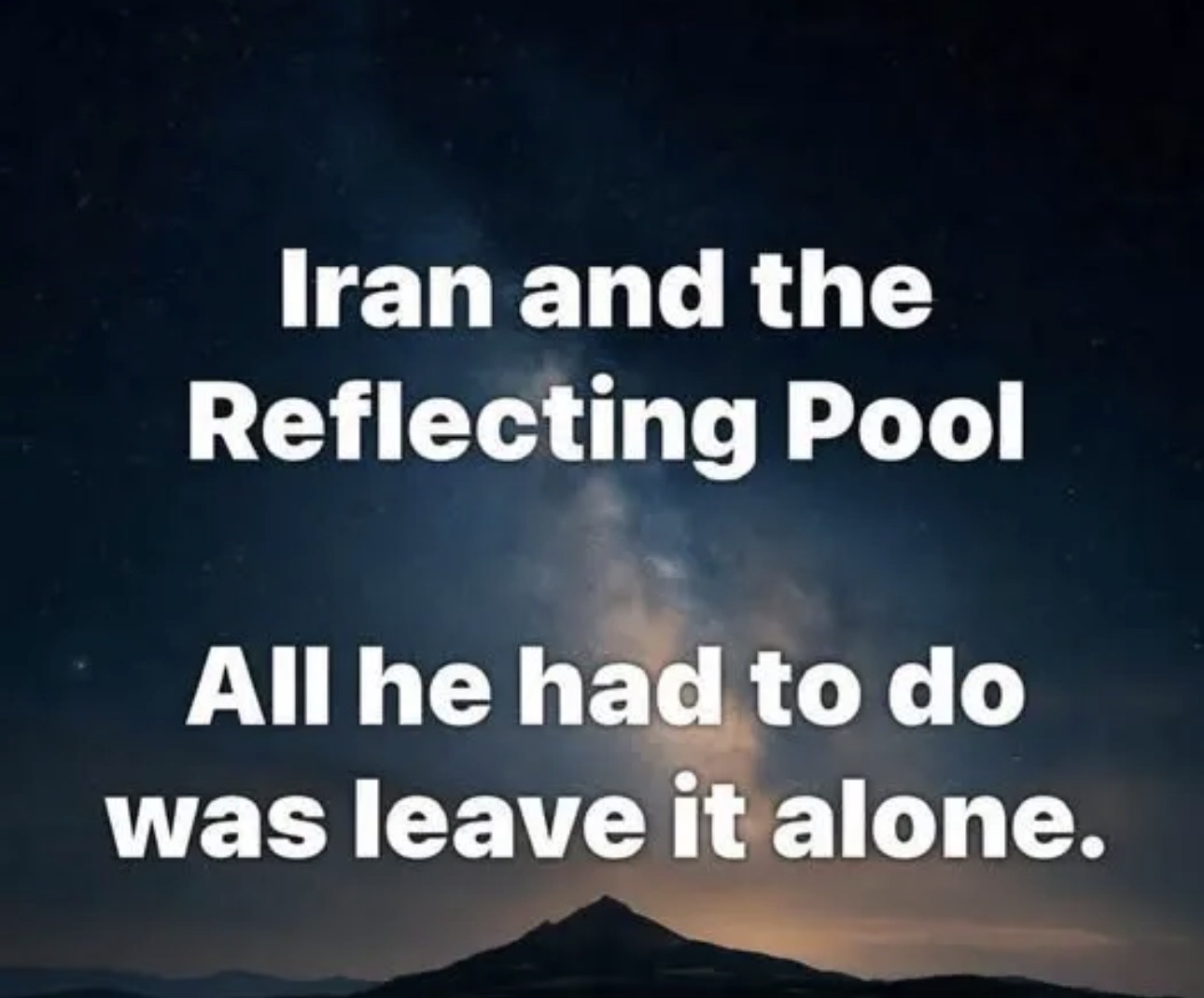
Hello All. I have not had a lot to say for a while, but there are some things that just can’t be unseen, some events that just can’t be ignored any longer. I’ve asked before, any who would support him, Just what will it take? Just how far can he go before it’s too far?
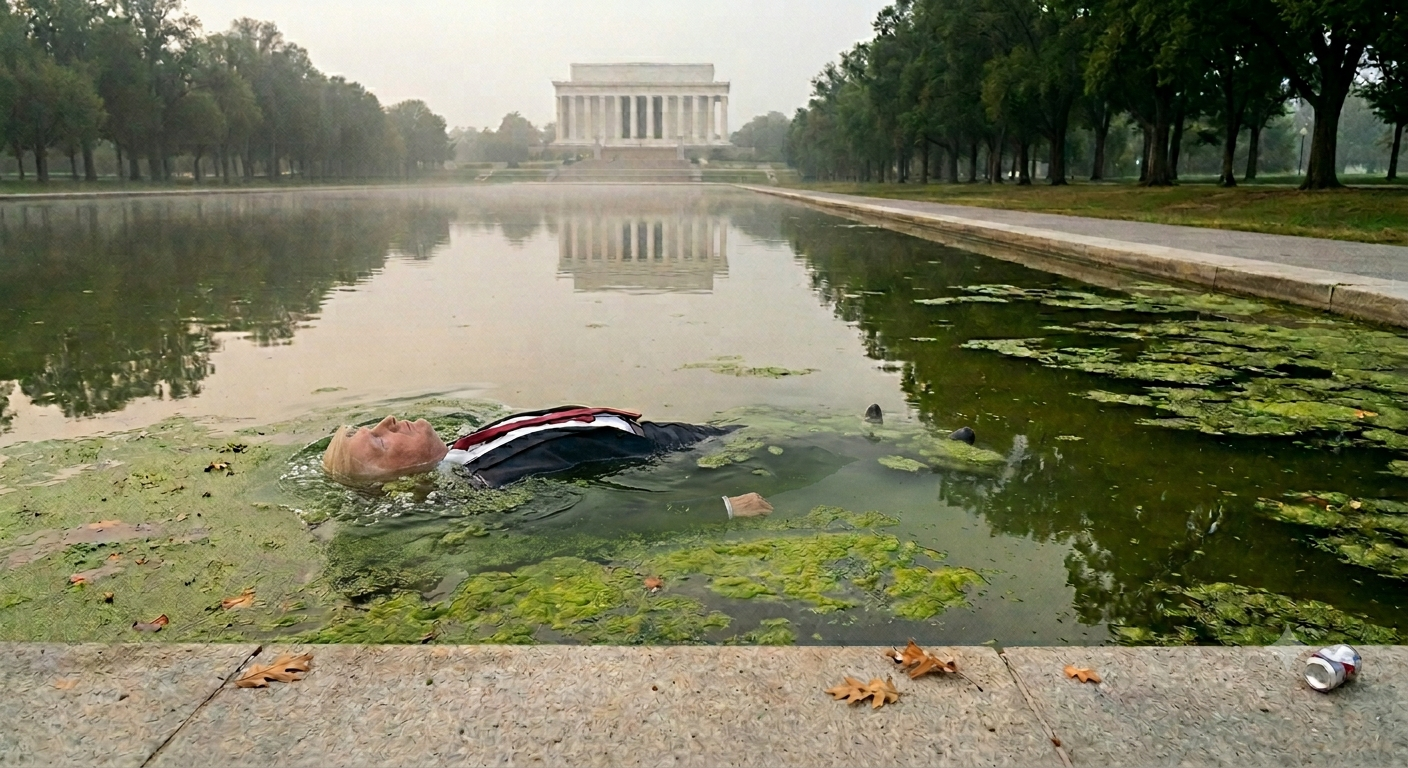
Please forgive me for reposting such a vulgar picture, but I think it gives credence to what follows. Sorry to spoil your dinner.

I promised Judy that I would delete the very offensive pic of the very offensive ass-clown. You all likely saw the pic, it was the one where this putz placed himself in the position of Jesus. I agreed with Judy that it was extremely offensive and asked for one day to make my point before I removed it. This one is still likely to spoil your dinner.

By now, everyone has seen this pic. For me, no – this was not the final straw, I just have to hope it is for others. So, does this ass-clown meet the full representation of the Biblical Anti-Christ? I think so. The following was written in February of 2014, so no, it is not a set up. Here is the link: (link) It is absolute plagiarism, unabashed shameless copying, purposefully done, so they aren’t my words or my prejudices. It was written before said ass-clown was in office for the first time, before he was a politician. I think there are plenty of examples for each of these seven characteristics, and I am sure any reader of the blog can find plenty of examples of their own. And, while some may not believe in the Christian Bible much less that representation of what the Anti-Christ will look like, simple logic would show he’s extremely unfit. Ok, here we go…

Serious, yes. In that way may I ask: Seriously, Republicans, Democrats, Supreme Court Justices; just what the hell is it going to take?

Will They Do It?

Something to keep track of.

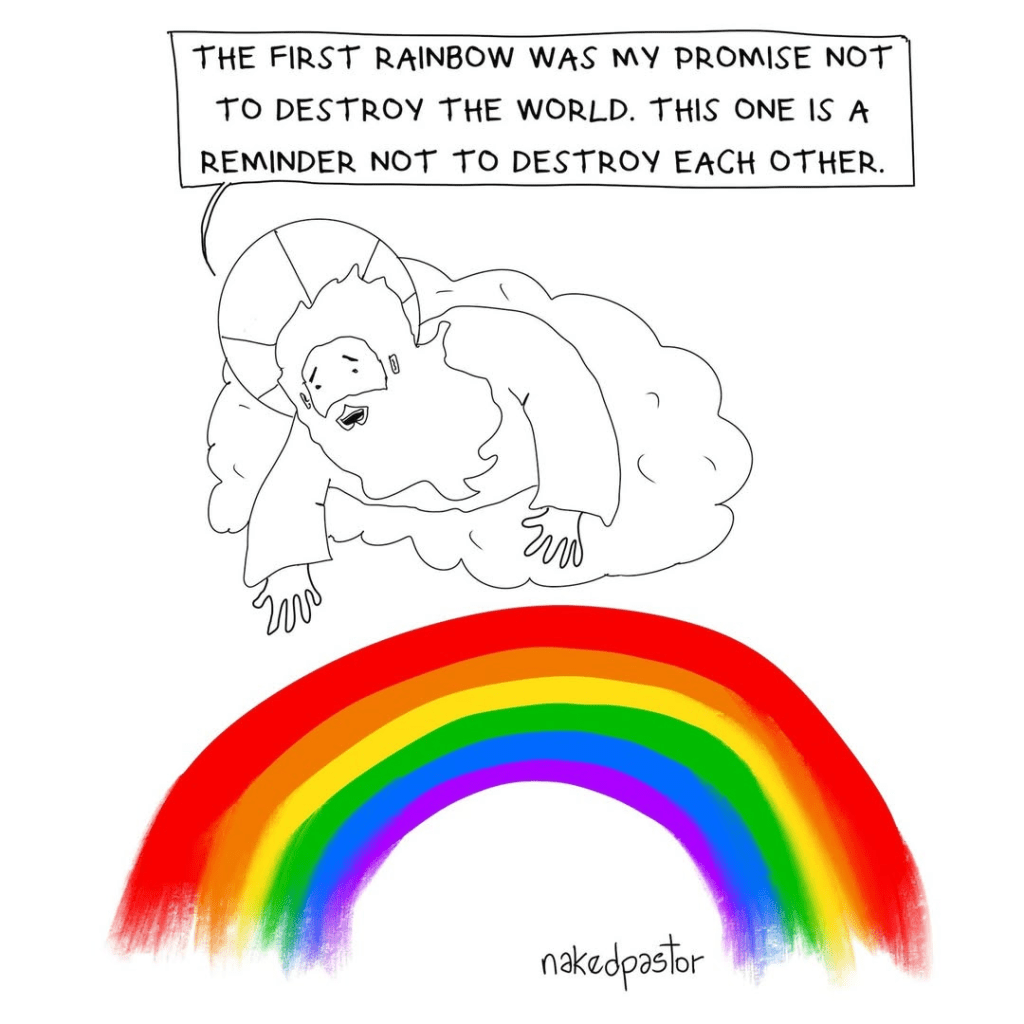
Trump administration agrees to return rainbow Pride flag to New York’s Stonewall monument

By  JENNIFER PELTZ and MICHAEL R. SISAK

NEW YORK (AP) — The Trump administration said Monday it will resume flying a rainbow Pride flag on a federal flagpole at the Stonewall National Monument in New York City, reversing course two months after removing the banner from the first national monument commemorating LGBTQ+ history.
The government revealed the decision in court papers as it agreed to settle a lawsuit filed by advocacy and historic preservation groups who had sought to block the Feb. 9 removal. A judge approved the deal.

The Interior Department and National Park Service “have confirmed their intention to maintain a Pride flag at Stonewall,” lawyers for the government and the groups wrote in a joint court filing.

The flag — one of several Pride banners at the 7.7-acre (3.1-hectare) park — won’t be removed, except for “maintenance or other practical purposes,” the filing said. (snip-details of position and measurements of the Pride flag)

https://apnews.com/article/stonewall-rainbow-flag-trump-lgbtq-historic-preservation-ac4ab59d3251476139700db6687828ca

Hrmphh. Nobody Ever Listens To Us.

Feminists began raising the alarm about the manosphere decades ago – and we were ignored

Laurie Penny

We were told we couldn’t take a joke, and that social media isn’t real life. Now the misogyny of early chatrooms and Gamergate has reached the White House

Harrison Sullivan, known as HSTikkyTokky, in Louis Theroux: Inside the Manosphere. Photograph: Netflix/PA

Why has it taken so long for us to treat misogyny as a political problem? The modern manosphere has been metastasising for many years – and for years, mainstream culture has responded with a helpless shrug. There was nothing unusual about men hurting women, even if the technology was new.

In the early aughts, angry and alienated men began indulging in recreational misogyny online, bombarding women and girls in the public eye with threats, insults, harassment, hacking, and hideous “revenge porn”. Strange as it may now sound, though, “the internet” was still seen as separate from “real life”.

That, at least, was what I was told the first time I went to the police about the death threats I was receiving as a young columnist. Nothing could be done, because what happened on social media wasn’t real and didn’t count. If I didn’t like it I should get offline, and presumably continue my work via rotary phone and fax. Those of us who were early targets of what would become the manosphere did not have the luxury of ignoring the issue. For us, it was easy to see that this was something new and serious, easy to understand how the tactics used against us might be deployed elsewhere – and how quickly matters could escalate.

Which is what happened in 2014. In May of that year, the terrorist Elliot Rodger killed six people and brought global attention to “incels” – young men radicalised by sexual resentment.

Three months later came Gamergate, a global orgy of online harassment targeting women in the video game industry. It all started when up-and-coming game creator Zoe Quinn was attacked by a bitter ex-boyfriend in a book-length tirade of sexual and professional jealousy. The non-scandal became a lightning rod for tens of thousands of gamers furious that women were intruding on a medium that was meant to be their personal power fantasy.

On anonymous forums like 4chan, men coordinated an extraordinary campaign of abuse dressed up as concern for “journalistic ethics”. Quinn and other creators were driven from their homes, but the firestorm was already out of control. Over the next few years, as “incels” continued to carry out acts of mass murder, every entertainment industry, from comics and publishing to film and TV, was besieged by obsessive trolls casting themselves as brave rebels against illiberal “social justice warriors”. The more they got away with it, the more they treated it like a game.

Gamergate brought together the disparate strands of what we now call the manosphere: the grifting pickup-artists, the Christian nationalists, the bitter “incels” and the furious fans triggered into mass social vandalism whenever they heard a story they weren’t the hero of. This slurry of half-formed fixations congealed into a coherent ideology of aggrieved entitlement, with its own language – “escaping the matrix”, “taking the red pill” – and their own logic of heroic victimhood in the face of women’s sexual power. The rage and alienation of men abandoned by post-crash capitalism was channelled towards a common cause – one ripe for co-option by the worst possible actors.

Throughout the mid-aughts, mainstream media continued to underestimate the manosphere. The fringes of the right did not make the same mistake. Gamergate was the proving ground for some of the central propagandists of the new “alt-right”. Steve Bannon, the political svengali and co-founder of Breitbart News, saw the potential in this cohort of cranks. He went on to run Donald Trump’s first presidential campaign, helping to deliver that key demographic to a president who personified everything the new cult of male supremacy most admired, as he crowed about sexual violence and held the notionally free world hostage to his every emotional spasm.

In hindsight, it is startling that all of this was normalised for so long. It was apparently inconceivable that violence against women could constitute a crisis – unless, of course, the violence was blamed on immigrants or on transgender people, at which point women’s safety suddenly shot to the top of the political agenda. When feminists and others in the infected eye of the storm tried to raise the alarm, we were told we were exaggerating for attention, or that we couldn’t take a joke. Under the posturing, cartoon frogs and memespeak, these were lost young men who deserved patience and understanding, and if we didn’t offer it we were heartless, humourless killjoys.

Identical arguments were used to dismiss the rise of Maga until it was far too late. The playbook tested out on feminists and on Black, queer and female creators in the mid-aughts was replicated in far-right movements across the global north – as was the response of muted both-sidesism. Then as now, politicians, pundits and industry leaders officially disapproved of the worst excesses of the manosphere, but declined to take an explicit stand, terrified that any display of moral integrity would alienate their base.

As the 2010s turned into the 2020s and the manosphere continued to expandfunnelling its recruits towards ever more extreme, explicitly racist ideas, it became fashionable to cast “social justice warriors” as the pressing danger to human freedom. Politicians and public figures seemed far more concerned about the #MeToo movement, which seemed proof positive that feminists had gone too far – and deserved, perhaps, to be punished for it. After the third or fourth time a documentary crew came to interview me about all the death threats, I realised that they didn’t want to help – they wanted to watch.

Lots of people did. After Gamergate, bigotry became a growth industry for enterprising young lads unburdened by conscience. As a journalist, I interviewed many young far-right men who admitted that what they really wanted was to be influencers and film-makers. For clicks and views they courted controversy and flirted with the far right – but it didn’t take long for the relationship to get serious. As Kurt Vonnegut writes in his anti-fascist masterpiece Mother Night, “we are what we pretend to be, so we must be careful what we pretend to be”.

Today, nobody is pretending that this is a joke any more. Trump, in his deranged dotage, is openly courting the manosphere, and the young men of gen Z are veering towards the far right en masse. There’s a clear line from the social vandalism of Gamergate to the mega-grifting male supremacists, scamming their followers with the promise of a reality where women and girls are non-player characters, to be defeated, exploited or traded for tokens in a brutal marketplace of human value. Many young men have lived their entire lives in the shadow of this weaponised misogyny – and so have young women. And that sinister ideology is still gnawing at the heart of power.

A few weeks ago, in a break from encouraging his deranged president to take over Greenland, White House adviser Stephen Miller found time to post a tweet on X that appears to be mocking the new Star Trek series for being too diverse. Elon Musk emerged from his fug of racial conspiracy theories and transphobia to agree. This is embarrassing, and not just because any half-literate nerd knows that Star Trek has been woke since 1966. Because even after turning the world into their personal thunder dome, the representatives of aggrieved white male power are still unsatisfied, still demanding we cater to their every petty whim. They will continue to do so until the rest of us, at last, refuse to tolerate their nonsense.

  • Laurie Penny is a journalist, author and screenwriter. They write the substack Force of Culture

What leading Planned Parenthood is like now

Apr 08, 2026 Errin Haines

This story was originally reported by Errin Haines of The 19th. Meet Errin and read more of their reporting on gender, politics and policy.

This column first appeared in The Amendment, a newsletter by Errin Haines, The 19th’s editor-at-large. Subscribe today to get early access to her analysis.

When Alexis McGill Johnson took the helm as leader of Planned Parenthood in 2020, the nation’s largest provider of reproductive care and a major force in American politics was already at a critical juncture.

The organization’s last president had lasted just eight months; she followed Cecile Richards, the charismatic and connected leader who was in the role for a dozen years. The future of abortion rights looked potentially shaky, and Donald Trump was in his first term. 

In the six years since, the U.S. Supreme Court ended federal protections for abortion, a major challenge both for providing care and for the organization’s political arm — then Trump won a second term and moved to take away federal funding, slashing a third of Planned Parenthood’s budget. Under the first Trump administration, Planned Parenthood had more than 600 health centers. Since the start of 2025, 53 have closed. More are threatened since Trump on July 4 signed into law a measure to block them from accepting Medicaid. 

The end of federal abortion protections led to a surge in energy around the issue from Democrats and the left. It has faded since then as the president’s military actions and mass deportation strategy dominate attention — but McGill Johnson still has to figure out how to galvanize supporters; keep Planned Parenthood clinics serving patients; and elect Democrats in key races in states including Georgia, North Carolina and Ohio. 

As one of the abortion rights movement’s key standard bearers, McGill Johnson is navigating expectations from activists, donors and voters who want a fighter and expect her to deliver. Their sense of urgency can obscure what it means to both lead the fight and provide essential care to millions of Americans in an intentionally overwhelming and chaotic news cycle. 

Johnson stands in front of a group of women speaking while those behind her hold signs.
Alexis McGill Johnson’s presence at the top of Planned Parenthood reflects a broader pattern in American institutions, in which Black women are often called on to lead in moments of crisis while having limited room for error and a lack of support. (Jessica Rinaldi/The Boston Globe/Getty Images)

“When I look at where Planned Parenthood is in this moment, we are navigating all of the chaos, but also looking for where the opportunities are inside that chaos,” McGill Johnson said. “Chaos is a strategy: throw everything at people so they don’t know where to look or how to fight.”

McGill Johnson describes her style as collaborative; those who know her best say she’s a master strategist, confronting a challenging political climate with courage, clarity and creativity. 

The political climate in which McGill Johnson has led can really not be compared to any other past leader, said Fatima Goss Graves, president of the National Women’s Law Center.

“This isn’t something that’s happened over three decades; this has been the last six years,” said Goss Graves, who first met McGill Johnson in 2017 after Goss Graves became the first Black woman to head her organization. “Alexis was the right person at the right time. It is a big deal that surviving the level of attacks they have faced, that they are still here, they are serving patients, they are still committed, and they have had to make adjustments. The work is what she’s doing.”


Planned Parenthood is shorthand for dual entities: Planned Parenthood Federation of America, the nonprofit supporting affiliate clinics across two dozen states; and Planned Parenthood Action Fund, the group’s political arm, focused on organizing, advocacy and voter education. 

McGill Johnson’s path to leading both came after a career working on voting rights and civil rights, and she approaches the work through a racial and gender lens. She is only the second Black woman leader in the organization’s existence of more than a century. 

Her presence at the top of Planned Parenthood reflects a broader pattern in American institutions, in which Black women are often called on to lead in moments of crisis, with limited room for error and a lack of support.

McGill Johnson talked about the added weight of doing this work as a Black woman in a movement that has been largely White at the national level. She said that having lived and worked at the intersection of race and gender has been an asset in her current role.

McGill Johnson is familiar with leading in moments like the one Planned Parenthood is facing, “moments where our leadership is judged more harshly, where we may be granted more scrutiny, less grace.” 

“Those are the places where I’ve had to find my center, to remind myself that I’m in this role to be unapologetic about fighting for the liberation of women of color, Black women, at the center of that liberation, because I think that actually transforms the liberation of everyone else,” she said.

Former Democratic U.S. Sen. Laphonza Butler, the first Black woman to head EMILY’s List, the political action committee focused on electing Democratic women, put it this way when asked about the challenges of leadership for Black women: “It is an expectation whose bumper sticker reads: ‘Fix it for us, please.’ When you look across the movement spaces where both crisis and care are on a collision course, it is Black women like Alexis who are stepping up.”


The Supreme Court’s 2022 decision in Dobbs v. Jackson Women’s Health Organization, which ended the nearly 50-year precedent of legal abortion access nationwide, angered many Democratic women and motivated them in record numbers in the 2022 midterm elections. 

Then-Vice President Kamala Harris championed reproductive rights as a pillar of her 2024 presidential campaign — but her loss was criticized by some, in part, as prioritizing abortion access over the economy. Now, the Democratic Party’s uncertainty around whether and how to talk about abortion to voters adds to McGill Johnson’s challenges in this moment.

The stakes on the ground are still life and death for many Americans, but political strategists say the issue of abortion has proved less politically potent as the national spotlight has moved on.

“For someone fighting on this issue, the progressive movement that was so galvanized is less so because they’re focused on many of the other things that Trump is doing that are dangerous to the country,” said Democratic strategist Karen Finney.

Abortion can still be a motivating issue for Democrats — especially as it’s related to the two biggest issues at the moment, health care and affordability, said Democratic pollster Celinda Lake. 

“It’s still motivating to voters for turnout,” Lake said. “Right now, everything is being pushed out by the war and the economy. I think it will reemerge as a much more powerful issue in 2028. Health is the number one issue, the number one pocketbook issue. When you talk about abortion and broaden it, it’s very powerful there.”

McGill Johnson worked to do just that, emphasizing Planned Parenthood’s presence particularly in communities with a lack of options for reproductive care. Politically, she has framed the issue as one of affordability and of democracy, and is focused on a message to voters about how the administration’s actions in recent years are impacting them. 

“It may not feel as though abortion is as front and center as it was in the year or two after the Dobbs decision … but when you bring it to people and remind them that these things are happening, it taps directly into that rage,” McGill Johnson said.

She added that part of the job now also looks like acknowledging the concerns of those in the movement as a leader of a complex organization with little room for error. Supporters of abortion rights — and even supporters of McGill Johnson herself — have criticized her for not responding strongly enough to attacks on access, saying they don’t see her fighting in the way they want.

What does it mean when some on the left are more in the mood for a wartime general than a collaborator? 

“In the day-to-day, it is a lot of navigating people’s frustrations, anxieties and hopes, and how to keep people focused on that hope and a strategy for how to get there,” McGill Johnson said. “We’re living in moments where philanthropy has pulled back from a number of institutions where there is a federal defund, which has impacted a lot of my colleagues. One day, you’re navigating ICE and the next day, the country’s at war, right? All within the same time period. I think my kind of special superpower is the ability to kind of keep myself at the 30,000-foot view to understand how all of these things are interacting with each other.”


McGill Johnson said the urgent question for her is: Who are we going to be now that we’re no longer defending Roe? It’s one that no other president of Planned Parenthood had to grapple with after the landmark 1973 case that made abortion the law of the land.

Since 2019 when she became interim leader, Planned Parenthood’s supporter base — which includes volunteers, donors, activists and email subscribers — has grown from 13 million to 20 million. 

In addition to her focus on the campaign trail, McGill Johnson will also have to continue the work of reimagining Planned Parenthood’s network of clinics as part of the national health care infrastructure. According to the organization, 1 in 3 women in the United States has visited a Planned Parenthood clinic. 

“I believe that Planned Parenthood could become the Cleveland Clinic of sexual and reproductive health care, because we have such great clinical excellence,” McGill Johnson said. “We are already a leader in standardizing best-in-class care, on sexual, reproductive health care, including abortion, so I think a lot about what it would mean for us to to focus on seeing as many patients as Planned Parenthood can, but to also export that influence into ensuring everybody else’s is standard of care is raised.”

To get there, McGill Johnson will have to endure and survive the current climate and the demands of the post-Roe era. Reproductive Freedom for All President Mini Timmaraju said meeting the multiple challenges at the local, state and federal level with diminished resources and competing areas of attention is daunting.

“We have to do more than we’ve ever done before, and the funding is not what it should be,” said Timmaraju, the first woman of color to lead her organization. “We are all scrambling to make sure that in the moment where abortion funds need funding, clinics need funding, we also have enough resources for advocacy at every single level, and that’s really challenging in an environment where donors are understandably a little frustrated with progressive entities right after 2024 so we’re having to prove ourselves again, and continually having to prove and reprove, over and over again, the salience of abortion electorally.”

Some Peace & Justice History For 4/12:

April 12, 1935
60,000 students across the U.S. took part in the first nationwide student strike. The protest was against fascism and participation in any war.
 
Posters from the anti-war movement of the 1930’s
One of the events that day 
April 12, 1963
Martin Luther King, Jr. and his fellow ministers Fred Shuttlesworth and Ralph Abernathy, along with 60 others were arrested on Good Friday in Birmingham, Alabama, for marching downtown.
They had been denied a parade permit, and were violating a court order banning them from all protest activities. Public Safety Commissioner Theophilus Eugene “Bull” Connor had sought the injunction to put an end to a series of sit-ins, kneel-ins, boycotts and other nonviolent actions designed to challenge the local and state segregation laws.

Fred Lee Shuttlesworth (left), Ralph David Abernathy (center), and Martin Luther King Jr. (right) march on Good Friday on April 12, 1963, in Birmingham.
The Birmingham campaign of 1963  Arrest in Birmingham 
April 12, 1971

Protest at Fessenheim
The first European demonstration against nuclear power brought together 1300 peacefully to oppose construction of a nuclear power plant at Fessenheim, on the Rhine in the Alsace region of France. The four 900 megawatt reactors have been in operation since 1977.

https://www.peacebuttons.info/E-News/peacehistoryapril.htm#april12

A.I. In Telehealth-Yeah, That’ll Make It Better!

Dental Student Dies in ‘Fake ICU’ as Telehealth Doctor Monitored Him from a Video Screen, Lawyer Claims

Conor Hylton’s family alleges in a lawsuit that he was pronounced dead by a “provider on a video screen” who had been monitoring him remotely

By Cara Lynn Shultz

Cara Lynn Shultz is a writer-reporter at PEOPLE. Her work has previously appeared in Billboard and Reader’s Digest. People Editorial Guidelines

NEED TO KNOW

  • Conor Hylton’s family has filed a wrongful death lawsuit against Yale New Haven Health-Bridgeport Hospital
  • The ICU where Hylton was treated had no on-site doctors and relied on off-site telehealth monitoring, the complaint alleges
  • A representative for the hospital tells PEOPLE, “We are unable to comment on pending litigation”

A dental student died in a Connecticut ICU where he wasn’t being cared for by an on-site doctor, but instead, was monitored remotely by an off-site physician via video.

The family of Conor Hylton has filed a wrongful death lawsuit against Yale New Haven Health-Bridgeport Hospital after the 26-year-old died in the Milford Campus’s intensive care unit. According to the complaint obtained by PEOPLE, the site is a “tele-ICU meaning there are no qualified ICU intensivists on site.” The complaint further states, “ICU intensivists are located off-site at a centralized remote location, purportedly monitoring critically ill patients through a video screen.” 

In a statement to PEOPLE, a representative for the medical group said, “Yale New Haven Health is aware of this lawsuit and is committed to providing the safest and highest quality of care possible, however, we are unable to comment on pending litigation.”

Hylton first arrived at the hospital at 11:08 a.m. on August 14, 2024, with abdominal pain and vomiting, per the complaint, which says he was admitted and diagnosed with “pancreatitisdehydration, metabolic acidosis, and alcohol withdrawal.” His condition “continued to change and deteriorate over the evening.”

At 4:30 a.m., the complaint says, “Mr. Hylton slid down in bed, his eyes rolled back and he became unresponsive and exhibited seizure-like activity, vomited, became bradycardic and code was called. He was intubated, but he could not be resuscitated, and he was pronounced dead.”

The complaint states that although the pronouncement of Hylton’s death was said to be made by an on-site doctor, it was actually done by a ‘tele-health’ provider on a video screen.” 

According to the complaint, an on-site doctor was called to intubate Hylton, but “the provider summoned to perform the intubation did not know how to find the ICU and had to find someone else to show him where it was located. This led to a delay in [care].”

An expert medical opinion included with the lawsuit wrote, “no on-site doctor assessed Mr. Hylton from the time he was admitted to the ICU until after he exhibited seizure activity at 4:30 a.m.”

Joel T. Faxon, partner at Faxon Law Group, which is representing Hylton’s family, said in a press release: “It’s alarming to think in a supposedly intensive care setting: Where is a doctor? Where are the nurses? How does the emergency doctor not know how to get to the ICU to provide life saving care?” 

Faxon confirmed to PEOPLE that neither Hylton nor his family were informed there were no on-site doctors at the ICU. As Faxon told PEOPLE exclusively, “If the Hylton family knew that their son was being placed in a fake icu with no doctor present they would have demanded he be transferred to a hospital that could properly treat him. They were never given that option and, tragically, Conor died as a result.”  

Every State Has One Of These Candidates Running For Something

Find them, and help them. Then remember to stay on their rear once they’re in office.

Boise Has Moxie-

Idaho Banned Pride Flags. Boise ‘Complied.’

Delicious compliance.

Doktor Zoom

The new Pride-themed flagpole wraps outside Boise City Hall. Photo: Doktor Zoom.

The Idaho Legislature is steadfastly devoted to terrible ideas, like banning abortion (and losing maternity care), eliminating “pornography” that isn’t in libraries anyway (and forcing some libraries to close), and making the lives of trans people miserable. Last year, just to be jerks, the Lege passed a bill aimed at forcing the city of Boise to stop flying the Pride flag outside City Hall, where it has flown for a decade, just a few blocks down the street from the state Capitol.

The 2025 law forbade any flags on public property other than the flags for US America, Idaho, cities and tribes, military services, and a few other official flags of “a governmental entity.” The bill’s Republican sponsor insisted that this wasn’t culture war, heavens no, it was about promoting unity, and America, and “stuff that we can all agree on.”

The Boise City Council promptly turned right around and passed a resolution adopting the Pride flag as one of three official City of Boise flags, and ran the rainbow colors up the flagpole again. Hooray!

Unwilling to accept such rampant disrespect to their edict, Republicans in the Lege this year passed a whole new flag law, this one adding a new rule saying that only official city or county flags “designated prior to 2023” will be allowed. The new law also added a $2000 per day / per flag fine, to show Boise what serious business this flag war is. The bill’s sponsor, state Rep. Ted Hill (R), explained the fine was absolutely necessary to force compliance from “insubordinate government officials. […] It sets a tone of anarchy.” He too said that we must have “unity” under the stars and stripes, or else.

Screenshot of rainbow pride flags flying from light posts in the tree-lined median strip of a residential street in Boise. The  grassy median and the trees are lush and green. (In more recent years, the trans-inclusive version of the Pride flag has made up about 50 percent of the flags)
Pride flags along Harrison Blvd. in Boise, 2023. Since Trump’s first term, assholes have stolen and even burned multiple flags each year. They’re then replaced by the volunteers who put ‘em up in the first place. Screenshot, KTVB-TV on YouTube.

In an extra little kick at Boise, where light poles on the median of one major residential street have long displayed Pride flags throughout June, the bill specifically applies to land along “parks, roads, and boulevards.” No nice things for you, Boise.

Just to be a real prick about it, Gov. Brad Little signed the bill on March 31, the Trans Day of Visibility. Little also signed another far worse bill criminalizing trans people who use bathrooms or locker rooms that match their gender identity, not only in schools and public buildings, but also in “public accommodations,” like private businesses. First offense is a misdemeanor, with up to a year in prison, and a second offense would be a felony, with up to five years in prison. The Idaho affiliate of Planned Parenthood Alliance Advocates called it “the most extreme anti-transgender bathroom ban in the nation.”

In response to the two new laws, Boise Mayor Lauren McLean ordered the Pride flag lowered outside City Hall, but also presided over a special session of the City Council to honor the Trans Day of Visibility. Choking back tears, McLean said to the Council and an audience of about 60 Boiseans, “Many people in this state and around this country are seeking to divide us. They’re seeking to divide us by targeting the most vulnerable among us. I want the people in this room to know that I see you. We see you. You are wanted, important, and unique members of our community.”

That night, City Hall was lit in the colors of the transgender flag.

Photo via Boise State Public Radio.

Then, a week after the Pride flag came down, the three flagpoles in front of City Hall sported new vinyl wraps in the colors of the Pride/Progress flag, and a big new banner was visible in the building’s windows, with the rainbow and the slogan, “Creating a city for everyone.” Yr Dok Zoom went downtown to take some photos, and damn right he plugged in his EV at one of the two free EV chargers at City Hall (still hadda feed the meter, though, so that explains the $1.50 on my company card, Rebecca).

You can see the poles up top, and here’s that nice new sign:

Photo by Doktor Zoom

Boise merchants downtown are also reminding us of that other heretical idea that got a local teacher forced out of her job last year, the divisive phrase “Everyone is welcome here.”

Lightpole banner reading 'Everyone is welcome here,' with colorful abstract blobs, musical notes, and two dancing human figures that resemble Keith Haring paintings if his figures were rounded off instead of angular.
Photo by Doktor Zoom

And now at nighttime, City Hall is lit up in rainbow colors as well. Gosh I like my city a lot!

City Council President Meredith Stead told local TV station CBS2 that the city is observing the new state law to the letter, and joyfully at that. “The law was based on the flag and we are using rainbows, and it’s not at all a flag,” Stead explained, and I hope she was grinning. “So I would say we are in full compliance of the law, that’s certainly the most important thing to us. So we’re going to be sure that we always are, and this was just a different way to celebrate our diversity and values.”

The cost of the flagpole wraps and new banners was $5,931.87, from the city’s operating budget. We think that may also have included the printing costs for these spiffy new stickers you can pick up at City Hall; I got a nice big one that looks great in the rear window of my EV:

Heart-shaped sticker with the multi-colored stripes of the Pride/Progress rainbow flag. Text in white letters: '"A city for EVERYONE means EVERYONE" — Boise Mayor Lauren McLean.' Text in black letters on the white stripe: 'City of Boise.'
We like this “everyone” thing the mayor is going on about! Photo: Dok Zoom.

Needless to say, while all the folks you’d like to hang out with in Boise are delighted by the city’s latest reply to the Lege, the Usual Suspects are big mad about this latest besmirch statement by the city, and we can only imagine what sort of stupid crap law the Idaho Lege will pass next year in another futile attempt to control the wayward capital city. We’ll close with this line from the very timely second season of Andor, which Dallas ally, former Obama official, and teamonger Brandon Friedman says nicely sums up Boise’s Rainbow Battle: “Tyranny requires constant effort. It breaks, it leaks. Authority is brittle.”

Keep up the good fight, Boise. (snip)

Toons ‘n’ Stuff

Bazookas For Bibi

Gazongas for goobers

Clay Jones Apr 09, 2026

A new report by The New York Times details how Israeli Prime Minister Benjamin Netanyahu persuaded Donald Trump into going to war with Iran. Details in the story show that Donald Trump was oversold on the idea. But Trump wasn’t just oversold; he wanted to be told what he wanted to hear, even if it was wrong.

There was deep skepticism from his inner circle about going to war, and despite polling his top advisers, he often only heard “what he wanted to hear,” and his team wound up serving as an echo chamber for his gut instincts.

According to story written by Jonathan Swan and Maggie Haberman, JD Vance was the most vocal in his opposition to the United States going to war with Iran, while CIA Director Jim Ratcliffe, Secretary of State Marco Rubio, and Gen. Dan Caine, Chairman of the Joint Chiefs of Staff, warned Trump that Netanyahu had “oversold” him on what could be achieved by the bombing campaign. Defense Secretary Pete Hegseth, on the other hand, was gung-ho on going to war. (snip-MORE, and it’s hot)


No suffering on Hegseth’s part

Sec. of Defense Pete Hegseth’s war mongering just inflicts pain on others

Ann Telnaes


Trump Wins

Trump TACO’ed out again

Clay Jones

As predicted, Donald Trump taco’ed out again after threatening to commit genocide against the Iranian people.

Make no mistake about it, threatening to destroy an entire civilization is threatening genocide. Donald Trump was threatening to commit war crimes. (snip-MORE, also hot)


“Trump officials cite white supremacists in bid to end birthright citizenship”

Gross. (snip)


Staying Safe Online

A ‘Self-Doxing’ Rave Helps Trans People Stay Safe Online

Janus Rose ·Apr 8, 2026 at 10:18 AM

At a New York party, attendees spent Trans Day of Visibility dancing, DJing, and learning how to become less visible online.

Imani Thompson, digital security trainer and organizer of the event / Photo by Janus Rose

It’s Trans Day of Visibility, and I’m at an event space in the heart of New York City’s Commie Corridor to learn how to become less visible online.

The crowd gathered at the aptly-named Trans Pecos in Ridgewood, Queens is here for “404: Deadname Not Found,” a digital self-defense workshop which promises to teach trans people how to find and remove their sensitive personal information from the internet (and which also has no relation to this website). The vibe is giving OpSec rave happy hour—attendees sip colorful drinks, groove to DJ sets, and huddle around laptops using online tools to track down their own digital footprints.

The goal of the exercise is to find holes in your digital defenses, a practice cybersecurity folks call “red-teaming.” A slide deck guides participants through this “self-doxing” ritual, instructing them to use websites like IntelBase, PimEyes, and haveibeenpwned to find addresses, selfies, passwords, old names and aliases, and other personal info that might have been left sitting around on the open internet.

It makes for great cocktail party banter. One participant raises their arms in triumph upon receiving a clean bill of health while checking if their information was leaked in a data breach. Others swivel laptop screens and compare notes on the various places their digital detritus had cropped up. In my case, I was lucky: I mostly found data brokers with incorrect information, a long-forgotten MySpace page, and a woman whose spam calls I’ve been receiving for the past 10 years. Finally, participants are directed to various pages where they can request data to be removed, or sign up for discounted services like Kanary and DeleteMe that do the removals on your behalf.

Behind the fun and light atmosphere, everyone here knows the unspoken reality that drives tonight’s activities: an unrelenting wave of discriminatory bills and executive orders that are rapidly demolishing trans rights across the US. “Trans Visibility” is a nice idea, but it turns out it really sucks to be visible in a fascist surveillance state where the highest levels of government are obsessively trying to destroy your ability to live.

“In this world of hyper-surveillance, I want to make sure all my stuff is safe and that no one is trying to harvest my data for anything,” Anna, a workshop participant, told 404 Media. Anna asked to use a pseudonym to protect her identity, which is not surprising given that the goal of the workshop is to make it harder to be doxed. “Especially now that there’s lots of incentives for the federal government to get into that business, I just wanna make sure all of that is under wraps.”

Like the event’s name suggests, many attendees are looking for traces of their “deadnames,” which is how some trans folks refer to the names they were given pre-transition. Trans people face a disproportionately high risk of being doxed online, and deadnames and other sensitive info are frequently dug up on right-wing hate forums like KiwiFarms and social media sites like Elon Musk’s X, where harassment campaigns and hate speech are allowed and even encouraged.

“We have to protect ourselves,” said Ryan, who also used a pseudonym. “It’s great to know how to find stuff like this, because you never know what’s still out there.”

Imani Thompson, a digital security trainer who organized the event as part of her series Cache Me Outside, says she started hosting the free workshops at queer bars in Brooklyn a year ago, after noticing trans and intersex friends who were noticeably shaken by the opening salvos of the second Trump administration.

“I hadn’t seen cybersecurity events that looked like they would attract or resonate with the crowds I felt needed this information the most,” she told 404 Media. “I wanted to make this fun and un-intimidating and doing digital security training at the bar is kind of silly and fun and gives us a built-in VPN and protection from sensitive convos being recorded.”

There are specific reasons many trans people are anxious about their personal data and online presence these days. For one, trans identities often don’t fit neatly into government boxes, and the name and gender they are assigned at birth may or may not match their government-issued IDs. Recently, a new law in Kansas resulted in hundreds of trans people being told that their drivers licenses and IDs had been invalidated overnight, forcing them to obtain new documents that revert to the sex marker assigned at birth. Journalist Marissa Kabas later reported that the 300 trans IDs in question had been flagged and not immediately invalidated, but the goal of the law and its ensuing chaos was clear: requiring trans people to have IDs that don’t match their appearance or lived reality, forcing them to out themselves and introducing friction and discrimination into their everyday lives.

The same Kansas law also implemented the first state-level “bathroom bounty,” making it a crime for trans people to use appropriate bathrooms and changing rooms and promising rewards to random passersby who feel “aggrieved” by someone they think might be trans. Lawmakers in Idaho have passed an even harsher bill, which would charge repeat trans bathroom-users with a felony and up to 5 years of jail time. These bills threaten not only trans people, but anyone whose appearance might fall outside of someone’s normative expectations of “male” and “female.” And they are especially dangerous at a time when facial recognition can near-instantly identify someone with a quick search.

Thompson also worries about the information that queer folks can reveal while asking for help online. Trans people experience unemployment, housing insecurity, and violence at exponentially higher rates than cis people, and it’s not uncommon to see Gofundme pages and Venmo accounts flooding social media feeds. These posts will sometimes include personal details like a person’s name, face, transition status, location, immigration status, and even how much they have in their bank account—great for getting donations, but not so great for the doxable breadcrumbs they leave behind.

“I think the risk is tenfold for the dolls and Black trans siblings because of disproportionate scrutiny in light of these bathroom bills and also how we do mutual aid,” said Thompson. “Whenever I see a mutual aid request being reposted or processed it makes me nervous, because we’re basically doxing our most vulnerable friends.” To reduce risk, she recommends people take down mutual aid posts as soon as needs are met and set their Venmo activity to private. “I feel like the intention in listing off how all these systems of oppression impact our friends are meant to create a sense of urgency and care, but then months later it’s still floating around and is a goldmine for someone who wants to claim they were made to feel unsafe in a bathroom so they can claim $3k or further an agenda.”

The privacy attitudes on display at the event contrast with the dominant media narratives about trans communities a decade ago. Fresh off the Supreme Court victory in Obergefell vs. Hodges that legalized same-sex marriage, many at that time were convinced that trans visibility would pave the way to equality, as glossy magazine covers featuring stars like Laverne Cox declared a “Trans Tipping Point.” But while conditions for some trans people marginally improved, we all know what happened next: a wave of reactionary anti-trans state laws, culminating in the re-election of Donald Trump and a series of executive orders aimed at destroying trans peoples’ access to healthcare, sports, bathrooms—essentially the ability to live a normal life.

At the same time, protection can’t be a retreat back into the closet. “It’s still important for trans voices to be heard in online spaces,” said Anna. “It’s not like I wanna go into the shadows or anything. I just don’t want people to know my personal data, my personal records, any of that.”

“Being Black, I also understand the distinction between visibility and hypervisibility and the precarity and lack of agency that hypervisibility creates,” said Thompson. “It’s tricky to find language around digital security that doesn’t imply queerness is something to hide or a shameful thing, because of course it’s not. I think having agency and purpose in how we can show up online and interact with tech as well as literacy around how technology and surveillance operates makes us better equipped.”

Janus Rose is New York City-based journalist, educator and artist whose work explores the impacts of A.I. and technology on activists and marginalized communities. Previously a senior editor at VICE, she has been published in digital and print outlets including e-Flux JournalDAZED MagazineThe New Yorker, and Al Jazeera.