Here’s a smile to remind you that you’re not alone during the Holidays ❤ It is often a very stressful and anxiety-inducing moment for trans and queer folks, making it twice as important to look out for each other. Self-care is key!
Madrid traffic lights to promote gender equality and LGBT toleranceBen Vine
Thirty-nine percent of U.S. adults still believe homosexuality is “morally unacceptable,” according to a new report from the Pew Research Center published last week.
Pew researchers surveyed a representative sample of 3,605 adults in the U.S. last March, as part of a study about moral attitudes in 25 different countries, according to the report. Respondents were asked whether they believed certain behaviors — including homosexuality — were morally acceptable, unacceptable, or not a moral issue. (In U.S. surveys, the word “unacceptable” was changed to “wrong.”)
Within the U.S. sample, 39% viewed being gay as morally wrong. That placed the U.S. ninth among all countries surveyed by rate of anti-gay sentiment, between Israel (47%) and Hungary (34%). There was a slight net shift upward compared to Pew research from 2013, which found 37% of adults in the U.S. believed homosexuality was immoral.
Researchers did find significant differences in opinion between demographics, however. Sixty-two percent of U.S. women said it was acceptable or not a moral issue to be gay, compared to 56% of men. Disapproval also skewed older, with 43% of U.S. adults 40 years old or older saying homosexuality was unacceptable, compared to 33% of those aged 18-39. People with lower levels of formal education were also more likely to disapprove of all the behaviors surveyed, which included getting an abortion, gambling, and watching pornography.
The largest gaps in acceptance appeared to be based on religiosity. Fifty-eight percent of U.S. adults who said they pray daily disapproved of being gay, compared to just 24% of those who said they pray less often or not at all. That was especially true for Christians, who were “often among the most likely to consider each of the nine behaviors to be morally unacceptable,” researchers noted. In Nigeria, one of several African nations where U.S. evangelical groups have heavily influenced anti-gay laws and public opinion over the past two decades, 96% of respondents said being gay was immoral. (The most gay-accepting countries of the 25 surveyed were Germany and Sweden, where only 5% said homosexuality was unacceptable.)
The government wants to ban care nationwide, and hospitals are shutting down treatment. Parents just want it all to stop.
The Pew questions specifically asked respondents for their views on homosexuality, rather than the broader LGBTQ+ umbrella, and did not ask about transgender people. A Pew survey of LGBTQ+ adults in the U.S. last year found that most believed attitudes toward gay, lesbian, and bisexual people were becoming more positive, but that acceptance of trans people had declined.
The new Pew report also found that the U.S. was the only country where a minority of respondents (47%) viewed their neighbors as “very” or “somewhat” morally good. Democrats and left-leaning independents were more likely to view other citizens as morally bad, researchers noted, but that trend was also true for people outside the U.S. who did not support their country’s governing party. Overall, the U.S. is “in the middle of the pack” on most behaviors surveyed and was not uniquely judgmental, researchers noted, though U.S. respondents were generally less approving of extramarital affairs than most other countries and more positive about marijuana use than any country other than Canada.
Samantha Riedel is a writer and editor whose work on transgender culture and politics has previously appeared in VICE, Bitch Magazine, and The Establishment. She lives in Massachusetts, where she is presently at work on her first manuscript. … Read More
This is very interesting. The doge guy is under oath so can’t lie. But he realizes he is going to have to admit to be antisemectic. He works for a nazi and it is well known a lot of the doge people were Nazis themselves. He suddenly realizes he will have to say it was the Jews people who were discriminating during the Holocaust. First he tries to say it is DEI due to focusing on women which is gender so the grant had to be slashed. But then he says women were discriminating against the males. Finially when the lawyer asks how, he just gives up and admits it was the jewish people / Jewish women. He probably thinks women discriminate against men because he can’t get a girl to date him or have sex he doesn’t have to pay for. I think Brandon who is the black gentleman on the far right of the screen has the best and correct take on why the doge man / kid simply did not want to or couldn’t honestly answer the question. Hugs
I need to apologize for the lack of posts the last three days. I have been spending a lot of time with Ron and I have been cooking three meals a day and doing the dishes and laundry which has left little time for posting. Then late last night Ron realized how much he had been taking of my time and so today he wanted to leave me alone. But then I did something I had not done for a month or more, I went to the abuse survivor site. And one post led to the next and eventually to eventally 40 open tabs of fellow abuse survivors discussions of what they went through. When Ron got back at 3:30 he noticed I was very upset. He kept asking why until I told him. Then he was angry. He wanted to go in and close the entire window of open tabs. He joked of taking my computer away from me like a teenager who went to the wrong websites. I had to explain it to him. I can’t talk to anyone about my childhood / young adult abuse. I don’t have anyone to share the memories with other than the blog and I feel horrible when I do that even though it helps me because I can’t help but think I am hurting people I care about like it hurts Ron when I share my memories with him. But on that site, on the male survivor website are people who went through what I did, and they understand, they can hear me, and I can hear them with out it harming us, except that it becomes a loop I struggle to break out of. I want to read every post and give a reply because I was there as they were, I am suffering as they are, and I can understand their pain and anger as they can mine. It is a place to share my memories with people and not feel I am damaging them because they are already hurt. Ron struggled to understand that and I told him. “You did not know my abusers like I did. But by the time you met them I had moved out of their home and they had moved on to their own homes and families. I reminded him my abusive hellspawn sister who threw parties offering me as a party flavor to any teen who wanted me male or female required her own son to sleep in her bedroom from his preteen years until he left the house as an adult”. I know she made me please her, did she do the same to him? I was paralyzed to help him. At the time ron did not know of my abuse but he felt something was wrong. It was well known in the “family” and no one thought it wrong. I suspect my oldest male hellspawn did the same to his two young daughters. I reminded Ron how my adoptive mother kept trying to kiss me on the lips when she was in the park model we owned. He looked stricken and walked away, I think he had not connected the dots of that and how I had to try to avoid that. Anyway I have deleted the window those tabs were in and I am going to reply to a few comments do the few dishes, and then try to do a cartoons / memes / news roundup hopefully for tomorrow. Hugs
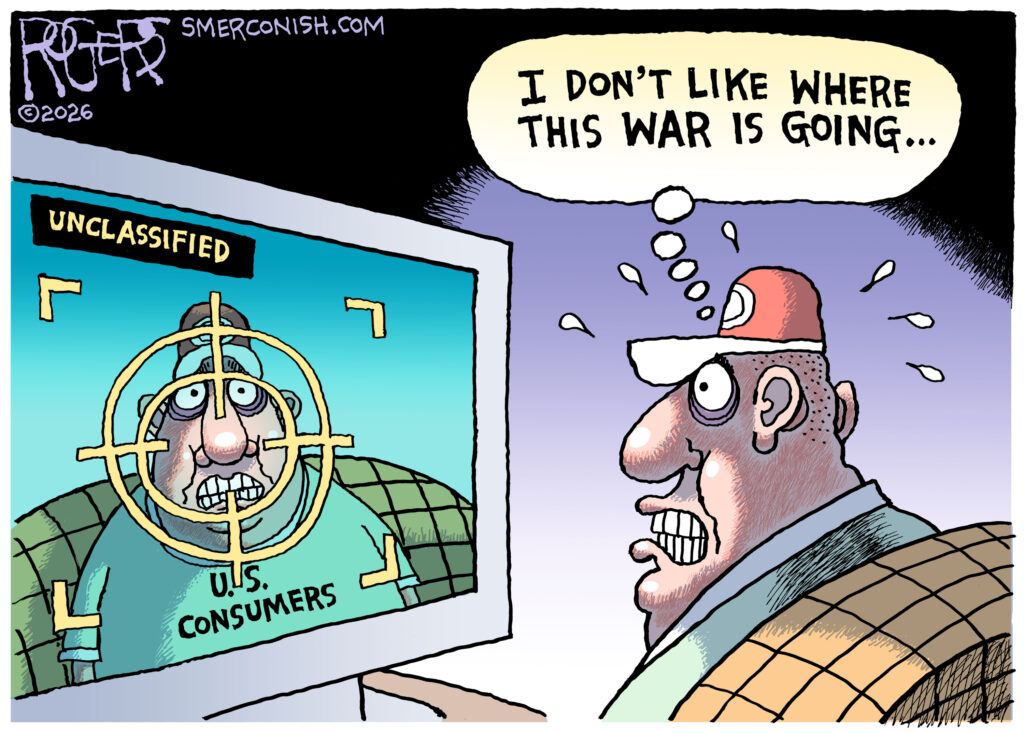
Trump told his Republican henchmen when he was going to attack Iran. The day before the war started they all invested in defense stocks and made a fortune.
Sorry this article is so old. I have dozens more older than this in open tabs with the hope of one day being able to get what I think is important news out to those who may have missed it at the time. Here is the southern states patriarchy punishing women for not bringing forth a well formed offspring of a male who bred them. That is the way this reads to me. The woman means nothing, just the fetus, zygote, the failed issue of a man must be the fault of a woman. Think of this being promoted as prolife while they are willing to torture live females for a few cells in the human body that act parasitic. Remember no man is required to give any part of his body to another even his own dying child. Tht is the law. But a woman, a female is required to give her body over entirely and all actions of her life entirely to that male inserted parasitic entity that will drain her life force and can cause life long medical problems. It tells you exactly how these male law makers and their Christian supports see women. Hugs
Hundreds of US women charged with pregnancy-related crimes since fall of Roe
Study finds prosecutors targeting low-income women mainly in US south – and figure likely to be an undercount
Abortion rights supporters protest outside the supreme court in Washington in June last year. Photograph: Aashish Kiphayet/Middle East Images/AFP via Getty Images
In the first two years after the US supreme court overturned Roe v Wade, prosecutors in 16 states charged more than 400 people with pregnancy-related crimes, new research released on Tuesday found.
Of the 412 cases tracked by Pregnancy Justice, the vast majority took place in the US south, targeted low-income women and involved allegations that women broke laws against child abuse, endangerment or neglect, according to the research, which was compiled by the reproductive justice group. About 300 prosecutions took place in Alabama and Oklahoma. In 16 cases, law enforcement charged women with homicide.
Because there is no national database of US arrest or court records, the group believes the tally is likely to be an undercount. In a report released in September 2024, Pregnancy Justice said it had recorded 210 pregnancy-related prosecutions in the first year after Roe fell – the highest number ever recorded at that time. Pregnancy Justice is now devoting more resources to unearthing records of pregnancy-related prosecutions, so the group can’t say for sure whether these prosecutions are on the rise post-Roe or whether they are simply tracking them more closely.
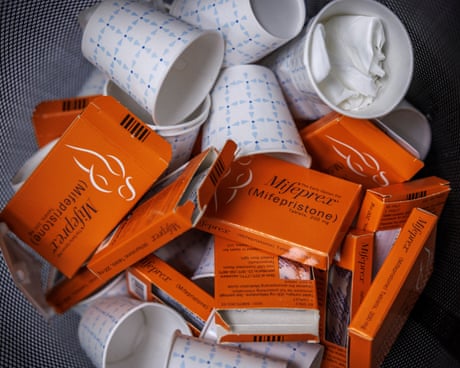
Louisiana issues warrant for California doctor accused of mailing abortion pills
Read more
Nearly 400 of the cases included in the new report involved allegations of substance use during pregnancy. In an example described to the Guardian, after one woman gave birth, the hospital tested her umbilical cords for drugs. When the test came back positive for marijuana, the woman was arrested for felony child neglect, even though she had a medical marijuana card.
The laws used in most of these prosecutions, Pregnancy Justice pointed out, are typically meant to protect children, not fetuses. By prosecuting pregnant women under them, the group says, states are cementing the legal doctrine of “fetal personhood”, which seeks to grant embryos and fetuses full legal rights and protections – sometimes at the cost of the rights of the woman carrying them. Alabama and Oklahoma are both hubs for the growing fetal personhood movement.
“That is the ultimate goal of the anti-abortion movement,” said Dana Sussman, the senior vice-president at Pregnancy Justice, which scoured court and police records to find the cases. “It wasn’t just to overturn Roe. It is to establish full personhood, full rights for embryos and fetuses.”
Sussman said a number of women have faced criminal consequences for taking substances that were legal or prescribed to them. For that reason, Donald Trump’s claim last week that pregnant women who take Tylenol may give their children autism, raised alarms. Scientific research does not support this claim.
“It’s a perfect storm of all of the things that we work on: stigmatizing pregnant people for not being perfect pregnant people, blaming them for their perceived failures, and relying on misinformation and junk science to create a panic when there shouldn’t be one or isn’t one – while also increasing surveillance in the police state to monitor and potentially criminalize people when they don’t meet these impossible ideals,” Sussman said.
Only 31 of the cases documented by Pregnancy Justice included a stillbirth or miscarriage, while almost 300 of the cases led to a live birth.
A woman whose case was included in the Pregnancy Justice report reportedly didn’t realize she was pregnant until she started to feel intense pain in her stomach. The woman, a new immigrant to the US, suspected that she had food poisoning and decided to drive herself to the hospital.
Before she could get in the car, however, the woman started to give birth. She ultimately delivered what police records listed as a stillbirth. Pregnancy Justice did not factcheck the cases in the report and could not say whether the fetus was past 20 weeks of pregnancy, after which the term stillbirth is used. After police found the remains, the woman was charged with abuse of a corpse.
Abortion pill providers targeted by new Texas law refuse ‘anticipatory obedience’
Read more
The report indicates there are far more cases of miscarriage criminalization than have made national headlines. In one widely covered case in late 2023, police charged an Ohio woman with felony abuse of a corpse after she miscarried into a toilet. In another, earlier this year, a Georgia woman who had been found bleeding and unconscious after a miscarriage faced one count of concealing the death of another person, and one count of throwing away or abandonment of a dead body. The charges against both women were ultimately dropped.
Nine cases discovered by Pregnancy Justice involved allegations that women had considered abortions, such as ordering abortion pills or looking for information about abortion online. Only one woman in those cases was charged with violating a criminal abortion ban, likely because it is legal in most states to “self-manage” one’s own abortion. US abortion bans tend to penalize providers and people who help abortion patients, not the patients themselves.
In 2025, lawmakers in at least 12 states – including Alabama and Oklahoma – introduced legislation that would treat fetuses as people, which would leave women who have abortions vulnerable to being charged with homicide. In several of those states, that charge would carry the death penalty.
“What our work has proven is that, unfortunately, anything is possible when it comes to policing pregnancy,” Sussman said.


 Here’s a smile to remind you that you’re not alone during the Holidays ❤ It is often a very stressful and anxiety-inducing moment for trans and queer folks, making it twice as important to look out for each other. Self-care is key!









Abortion rights supporters protest outside the supreme court in Washington in June last year. Photograph: Aashish Kiphayet/Middle East Images/AFP via Getty Images



 Scottie's Playtime