So today I have been having a very full day. I have been helping Ron with the bathroom stuff as well as I could. Did our morning walk. I talked to Ron a bought evening meals. I have been watching videos. I have been answering comments which always makes me happy even though I am getting tired. I am working on a post right now on the blogging computer how Ron and I redesigned the hallway bathroom. But even during all that old issues come up. I am so tired of it, and I am sorry to again hit you with it. But two videos showed up in my YouTube feed and I clicked on them. I have to say I shouldn’t have clicked on them, my own damn fault. Ok I admit that. But like a moth to a flame sometimes. What do I say? I should run, and keep running. But far too often I click. And I watch. And I hurt. But each of them tried to send me into the void. Luckily I have strong friends who keep that void from me. Here are the two videos below. I am not opening any more YouTube links for now except for those from those I know and respect. Hugs.
Unlike the story of the teen above I was shared willingly by my older hell spawn female siblings with their boyfriends / future husband. I was way to please the boyfriend without them having to do the work. When the oldest one’s second husband moved into our home and started raping me and her really young kids she laughed to my adopting mother saying it was so cute her soon to be husband thought he was sleeping with a girl. A year later her soon to be 8 years old son came to me saying he wished he had been born a girl so he could be a better girlfriend. I was so entrapped in my own abuse I couldn’t help him. Hell at that time I couldn’t even understand what he was saying, none of my abusers had told me I needed to be the girl, I just was. I regret that to this day. All I could do then was hold him and say please be glad of your man parts and don’t let anyone take them from you. I don’t know if that helped him or if he is angry because he told someone like I did, and they did not help. Sadly he told me who was being abused by the very people abusing him.
Both of these boys were me. Sadly in the first I had no one to go to, the teachers I told only abused me freely and the only time I pulled a gun on one of my abusers … something, maybe a higher power, maybe just a future me, or a better part of me, convinced me not to and to lower the gun, remove my hand from the trigger and to replace everything to the places they belonged. Of all the events in my life that once scares me the most. The idea if I had pulled that trigger that night. What might I have become. Horrible to think of. I was only 9 or so that night. How I might have destroyed the Scotty that was to be. But I had just been violently raped by one of my main hell spawn sibling abusers who had made me do unspeakable things before while growing up. Yet with the gun pressed to his passed out temple, my finger on the trigger, something held me back. I have never understood why. Surly I would have been let off by any court. Blood still tricked down my leg from his sexual assault. But really that was not the point. Something more was. At this point in my life at 62, I doubt I will ever know or understand. Love to all. Best wishes to those that don’t want hugs. Hugs.
I don’t know about you, but I’m ready for the weekend. Living through an attempted coup is exhausting. And yet here so many of you are—more every day! Our movement, or whatever we’re calling it now, is growing by leaps and bounds. This newsletter has gained well over 50,000 new subscribers in the last thirty days. That’s NUTS, and also shows that Americans continue to be fired up and determined to fight back. I am so glad.
I know it feels like Trump and Musk are “getting away with everything” right now, but I want to remind you that, as they say in twelve step programs, sometimes we have to just “let time take time.” We’re not even a month into this thing yet. Already the country has seen large demonstrations, swamped Congressional phone lines, mass Senate office visits, the first Stop-Shopping day scheduled (for February 28), and the rise of the 50501 movement. Indivisible groups are exploding, new coalitions are being built, and new connections being formed.
This is a moment when old heroes to many—Adam Schiff, the New York Times, Snoop Dogg?—are proving disappointments, but also when new ones—Chris Murphy, the AP, Kendrick Lamar— are rising with brilliant fierceness. Entire media empires are crumbling, yes, but out of those ashes are emerging a whole new crop of great publications and tough, fearless journalists. Political content creators are taking their rising visibility seriously and forming new groups to coordinate their messaging. State Attorneys General and Governors are stepping up in a big way. Career Prosecutors at the DOJ are, as we speak, exhibiting stunning courage in standing up to Trump.
Progress, in short, is being made, and the work being done. Not always by whom we want, and not always as fast as we want. But that stands to reason: There is a massive and necessary reorganization taking place in response to Trump’s attacks. It can’t be instant—that simply defies the laws of physics. We’ve never been here before, so it stands to reason that none of the old rules apply.
So we’re all going to have to keep building the plane while flying it, remembering that new mechanics and pilots are joining us all the time.
Now a word about the many protests and strikes being planned. I have received a LOT of emails asking me for more information on the ones I’ve mentioned here. I have very little. These events are happening organically in a decentralized way. They are being organized on discords and in signal messages. I am not organizing them. What I put in the newsletter is the extent of what I know.
I did glean some helpful resources from a fellow activist today, though: This site is encouraging groups (not just of these events, but all groups doing on the ground actions) to list their events to create a centralized hub for movement work. You can search by state and see if there’s an action listed. You may also find some events on this website (although it is not organized in a way that is as user friendly). The 50501 Bluesky account is also sharing flyers for events as they learn about them. 50501 also has a Reddit page and a website. They seem to be emerging as a major force in this effort; I intend to follow them. And before you ask—no, I don’t know who “they” are. But last week’s 50501 protests went off without a hitch. I’m not going to keep avoiding them just because they have diffuse leadership. This just may be how resistance to an autocracy has to look. I’m grateful for the work they’re doing.
OK, all. I’m running way behind today, so I’m going to leave you with my favorite Vaclav Havel quote; I resort to it often in moments of duress:
Either we have hope within us or we do not.
It is a dimension of the soul and is not essentially dependent on some particular observation of the world.
HOPE is an orientation of the spirit, an orientation of the heart. It transcends the world that is immediately experienced and is anchored somewhere beyond its horizons.
HOPE in this deep and powerful sense is not the same as joy that things are going well or willingness to invest in enterprises that are obviously headed for early success, but rather an ability to work for something because it is good, not because it stands a chance to succeed.
HOPE is definitely not the same thing as optimism. It is not the conviction that something will turn out well, but certainty that something makes sense regardless of how it turns out.
It is HOPE, above all which gives the strength to live and continually try new things.
Hi, I’m a constituent calling from [zip]. My name is ______.
(snip)
I know Congress is going on recess soon and I’d like to know when the Senator is holding his/her Town Hall. We constituents have a lot to say about the coup attempt that’s happening and we expect an opportunity to have our voices heard. Thanks.
Hi, I’m a constituent calling from [zip]. My name is _______.
I am upset about House Republicans’ proposed cuts to SNAP and Medicaid. Grocery prices and hunger are increasing in the country. Cutting the program that helps over 42 million people put food on the table is unacceptable. Same with Medicaid. 72 million Americans rely on it for healthcare—mostly children, seniors, and veterans. Republicans’ desire to cut these programs in order to pay for tax cuts for rich people is disgusting. What is the Congressmember doing to protect SNAP and Medicaid? Thanks.
Extra Credit ✅
VERY IMPORTANT! A group of 17 states (all Republican) have sued the United States government in a case called Texas v Becerra. These states are asking the court to get rid of Section 504—a critically important law that says you can’t discriminate against disabled people if you get money from the US government. Section 504 does everything from requiring schools to include students with disabilities and help them learn to requiring doctors and schools to have sign language interpreters for people who are deaf and hard of hearing. There’s so much more. The fact that they’re suing to kill this rule is really shocking. I guess Texas started the lawsuit when they found out that gender dysphoria can get you 504 protections. But they’re not trying to get rid of just that provision. They’re trying to kill the whole thing.
One of my subscribers sent me a document that explains the situation in super clear language. It also gives us ways to reach out to the Attorneys General involved and ask them to drop the lawsuit. I’m asking all of us who live in one of the 17 states involved to take the time to do this, please.
The document is here. Please read it, share it, and, if you live in one of the 17 red states that are part of the lawsuit, use the sample letter as a template and write to (or call) your Attorney General. This MUST be stopped!
Extra Extra Credit for NY State Residents
You can do this if you’re not a NY resident but obviously it will pack more punch if you live there. There’s also an email form here.
Call Governor Kathy Hochul at 1-518-474-8390 and say:
My name is ____ and I live in [NY zip]. The Trump administration and NYC Mayor Eric Adams seem to have engaged in an overt quid pro quo – dropping the criminal case against Adams in exchange for the Mayor facilitating the Trump administration’s indiscriminate immigration crackdown. The Governor has the power to remove Mayor Adams. She needs to do so. He’s a criminal and a disgrace. Thanks.
Get Smart! 📚
As many of us engage on urgent threats to democracy, it is also vital to prepare and plan for the 2025 elections that will need a robust voter protection effort. Early planning and coordination will be key to protecting voters.
To help kick start that work, I’m pleased to announce a short Zoom presentation on February 25, convened by Voter Protection Corps and featuring voter protection experts analyzing the 2024 elections and providing insight into what to expect in 2025.
Please join them for this interactive virtual event.
Speakers: Caroline Hutton (Voter Protection Director, WisDems), Cecelia Ugarte Baldwin (Voter Protection Director, Democratic Party of Georgia), Jenny Guzman (Common Cause Arizona), Jesse Littlewood (Voter Protection Corps), moderated by Quentin Palfrey (Voter Protection Corps)
Date: Tuesday, February 25, 2025 Time: 5:30 PM – 6:30 PM ET
With RFK Jr. now the HHS Secretary access to abortions is more threatened than ever. I truly believe we’re going to see the FDA ban (or severely restrict) abortion pills soon. Fortunately the amazing org Plan C is not backing down.
From them:
At this time of uncertainty we know several things: evidence-based information is critical in healthcare and beyond. People will continue to have abortions. And the evidence shows that abortion pills are safe, effective, life-saving medications, whether obtained through a clinic visit, via telehealth, or as a self-managed option. Abortion pills are accessible in all states and territories, including states with heavy restrictions, and can be kept on hand for two years.
Here are a few specific actions people can take to protect this access. PLEASE share this information:
Learn about pills in advance. People can access highly affordable (as low as $70) abortion pills now before they need them, so they have access to this vital form of health care. Visit plancpills.org/pills-in-advance to learn more and find pill options.
Order Plan C stickers. To date, we’ve distributed more than 4M stickers that direct people to our website with accurate, up-to-date information about how people are accessing abortion pills. We plan to continue to share this information under a Trump administration. plancpills.org/stickers
Spread the word about resources. We encourage people to know about and bookmark the following resources which will have information on how to access abortion:
For pills by mail sources and info on using them, visit plancpills.org
For clinics, travel and pills by mail visit ineedana.com
And for a one-stop URL for reproductive access information, youhaveoptions.com.
Give 💰!
Movement Voter Project has just launched The Comeback Campaign: a plan for the first 100 days which is an all-hands-on-deck push to fund the most effective frontline groups around the country working to protect communities, block MAGA, and plant the seeds to win back power in 2026 and beyond.
Y’all, I’m doing a bit of work with Gay Valimont’s team to help publicize her upcoming special Congressional election in Florida. This race is a super long shot but in this climate I actually think a victory is possible. Watch the video for more info, then sign up to volunteer here or make a donation here.
Hey Missouri!
I’ve launched yet another state newsletter! This time it’s Missouri (here’s the link). My co-author is Anna Eggemeyer, a St. Louis-based activist, and we’ll be sending out legislative updates, actions, events etc. once every two weeks or so starting today. If you’re from MO, go check it out! Or if you know someone who is, send them the link. Thanks!
No Resistbot letter today, sorry!
OK, you did it again! You’re helping to save democracy! You’re amazing.
February 15, 1898 The man-of-war (battleship) USS Maine was sunk in Cuba’s Havana Harbor as the result of an explosion, 260 American naval personnel dying as a result, another 58 wounded. An insurrection against Spanish colonial rule in Cuba had persisted for years, and brutal Spanish tactics had engendered strong American reaction. That is why Consul General Fitzhugh Lee had asked President William McKinley to send the Maine “for the moral effect it might have.” Spain’s Governor-General Weyler had forced 300,000 Cubans into towns and cities to insulate them from the insurgents but had made no preparations for their food, housing or health care. Half of the reconcentrados, as they were called, died as a result. Pres. McKinley had tried since coming into office to reach a settlement through negotiation but Spain rejected his efforts. Following the sinking of the Maine, popular opinion in the U.S. moved toward war with Spain, partially in response to inflammatory press coverage. Congress then voted McKinley $50,000,000 to be used for the national defense at his discretion, and provided for a contingent increase of the army to 100,000 men. The cause of the explosion ???
February 15, 1998 About 2,000 people – including a tractor convoy consisting of over 100 farmers – staged a demonstration in the north German town of Ahaus in protest against the planned shipment of nuclear waste to a storage facility in the town. A consignment of full CASTOR (Casks for Storage and Transport of Radioactive Material) containers was expected at the Ahaus interim nuclear storage site within the next two weeks.
February 15, 2002 President George W. Bush approved Nevada’s Yucca Mountain as the site for long-term disposal of 70,000 metric tons (77,000 tons) of highly radioactive nuclear power plant waste. 12 years and $6.8 billion worth of study and construction had gone into the site 90 miles from Las Vegas. It is officially estimated that, by the time it is completed in 2017, the total construction cost will be $23 billion. 2000 additional metric tons of such waste are generated by U.S. nuclear power plants each year, leading to concerns that the facility would be full shortly after its opening. All such waste is currently stored onsite at individual nuclear power plants. Problems with the Yucca Mountain site What are the alternatives FAQs on Yucca Mountain
February 15, 2003 The world said NO to war… In the single largest day of protest in world history, millions on 6 continents demonstrated against the U.S./U.K. plans to invade Iraq. Reported totals included 1 to 2 million in London and Rome; 1.3 million in Barcelona, Spain (a city of 1.5 million); 500,000 each in Berlin, Paris, Madrid, and New York. Smaller demonstrations were held in over 600 cities and towns across the U.S., including tens of thousands in several cities, and 150,000 the following day in San Francisco. Total participation is estimated at 25 million in more than 100 countries.
This has been a bad week. Here it is Thursday and this has been cues for days. Sorry I have a few of these to catch up on and post. Even though this was done back in 2014, it is also relevant and something we need to understand for today. Don’t shrink back, push forward. The few times I have corrected someone after telling them my spouse was a he when they assumed she, I received wonderful reactions of inclusion and acceptance. Hugs
Shh! Silence Helps Homophobia asks people to stand up and speak out against homophobia! This campaign ran during 2014-15.
We are Scotland’s national charity for LGBTI young people, working with 13–25 year olds across the country. We also deliver the LGBT Charter programme to schools, organizations and businesses. Our goal is to make Scotland the best place to grow up for lesbian, gay, bisexual, transgender and intersex young people.
We play a leading role in the provision of quality youth work to LGBTI young people that promotes their health and wellbeing, and are a valued and influential partner in LGBTI equality and human rights.
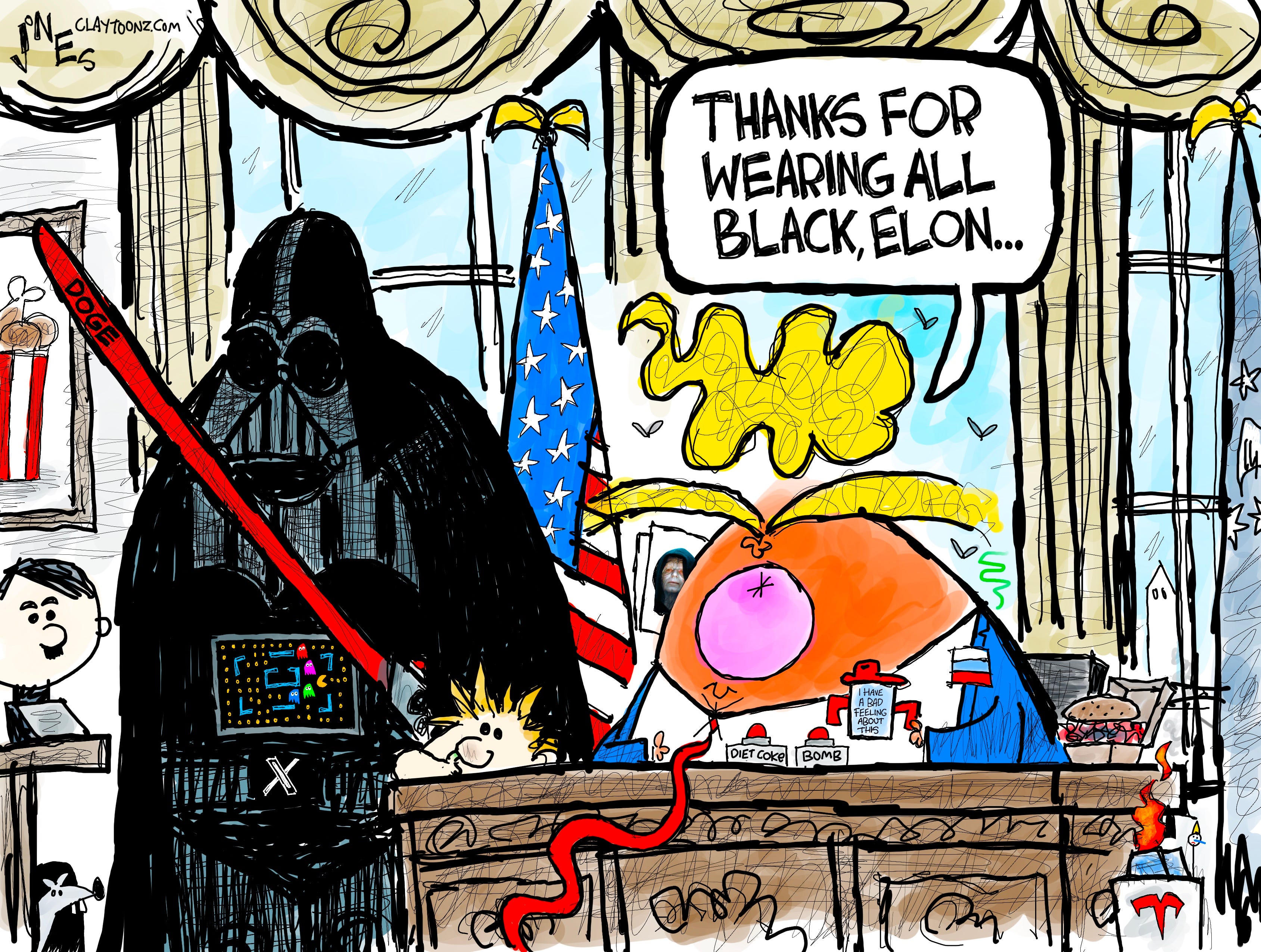
Elon Musk visited Donald Trump in the Oval Office yesterday and was a total disgrace.
Elon, who was in all black, wearing a black T-shirt and a black MAGA hat, said he was “open” and “honest” in his work finding waste and fraud in federal spending.
When asked about his lie that $50 million was spent on condoms for Gaza, Elon said, “Some of the things that I say will be incorrect and should be corrected. Nobody’s going to bat 1.000.” A good example of “some” of the things he says that are incorrect is his statement that DOGE was “open” and “honest.”
Before you tell a lie, like Elon’s condom bullshit, you can easily look up the facts, like when Elon lied about the last budget and claimed it included $300 billion for a football stadium in Washington DC, Congress would get a 40 percent pay increase, or that it funded bioweapons labs. Elon could have looked all this shit up before posting about it on his platform X/Twitter…over 100 times within 24 hours.
Unfortunately, we can’t fact-check Elon’s claims that the federal bureaucracy had been corrupted by cheats and officials who had approved money for “fraudsters.”
We can’t fact-check his claim that officials at USAID were taking “kickbacks.”
We can’t fact-check his claim that some officials “managed to accrue tens of millions of dollars in net worth while they are in that position.”
We can’t fact-check his claim that some people were receiving Social Security benefits at the age of 150.
We can’t fact-check his statement, “There are quite a few people in the bureaucracy who have ostensibly a salary of a few hundred thousand dollars but somehow managed to accrue tens of millions of dollars in net worth while they are in that position.”
The reason we can’t fact-check any of that is because Elon didn’t provide any proof of his claims and DOGE is operating in secret. There is no transparency with DOGE. None, nada, zip, zip, zippity-doo-dah, none.
Here’s a case of irony: The employee Musk claims made millions off the government had to file a financial disclosure form. Elon does not because Trump designated him a “special employee.” So just as we can’t see Trump’s tax returns, we can’t see Elon’s either.
When asked about the conflict of interest of him scouring billion-dollar contracts while his company Space X has billion-dollar contracts with the government, he said, “First of all, I’m not the one filing the contract. It’s the people at SpaceX or something.” As Sarah Marshall said in the great film Forgetting Sarah Marshall, “bullshit, bullshit, bullshit, bullshit.” It’s still a conflict of interest, even if he’s not lying.
Elon said, “I don’t know of a case where an organization has been more transparent than the DOGE organization. He also said, “We are actually trying to be as transparent as possible,” and then some more crap came out of his mouth when he said, “So all of our actions are maximally transparent.”
Bullshit, bullshit, bullshit, bullshit.
Without exhibiting any self-awareness, Elon said the bureaucracy is an “unelected, fourth, unconstitutional branch of government, which has, in a lot of ways, currently, more power than any elected representative. That might be the only thing Elon said that is true other than when he said, “There are boogers in my ears.” We’ll get to that.
Elon also lacked self-awareness when he said this bureaucracy “does not match the will of the people.” That’s true because nobody voted for Elon.
A lot of Elon/Trump defenders say we did vote for Elon because Trump said Elon was going to find government waste if he won the election. What Trump did NOT say was that Elon would fire people himself, cut government spending himself, gain access to all our financial information, or hire Nazis to help (which he has rehired after momentarily firing him).
Elon also really really really really really lacked all fucking self-awareness when he said, “The goal is to “restore democracy. If the bureaucracy’s in charge, then what meaning does democracy actually have?”
People like Musk and Trump don’t know the meaning of words like “democracy.” When they say “democracy,” they mean fascism. When they say “patriot,” they mean traitor beholden to Vladimir Putin, whom Trump surprised with a phone call today because it’s two days before Valentine’s. And when Trump says “vegetable,” he means ketchup.
Every MAGAt who defends Elon’s claims is too stupid to realize they don’t see any evidence of his claims. A few days ago, an Elon-defending MAGAt asked me, “What do you have against transparency?”. Again, total lack of awareness. People who defend Elon and Trump take them at their word, which is bizarre because they’re both huge sack-of-shit liars.
Trump and Elon talk about fraud and theft in the federal government while taxpayers are paying millions for Trump to sleep in his own bed at his bedbug-ridden golf resorts. Remember when Trump tried to host an international summit at one of his golf clubs? If you believe that was the best venue in the nation for a G7 summit, then let me sell you some golf club memberships and some bridges.
The only person who didn’t lie to the press in the Oval Office yesterday was Elon’s booger-mining kid, named X. At one point, X, who is Elon’s 11th child, stuck his fingers in his father’s ears…the same fingers he was picking his nose with. Trump seemed very uncomfortable with the kid in the room, probably because he’s jealous that X has at least outgrown his diapers. X can probably also hold a water bottle with one hand.
Elon wants to cut funding to feed children living in poverty, but his little trust-fund baby has so much White privilege that he gets to pick his nose in the Oval Office because his dad has so much White Privilege that he’s not required to wear a suit and tie in the Oval and instead can come dressed as a Bond villain.
Now there will have to be DNA experts to figure out which boogers under the Resolute Desk belong to Little X…and which belong to Trump.
But please don’t delete without scrolling down to the Extra Credit item, which is of particular and specific pertinence to our interests here on Playtime, and just do that one if you can’t stomach bothering your congresscritters today. Seriously, just do the Extra Credit item-you won’t be sorry, and you will make a difference!!!Thanks, A.
I hope you’re hanging in there today. I know things remain gobsmackingly awful, but I remain cautiously optimistic that the opposition is at last finding its sea legs.
A few reasons for this are:
1) House Democrats announced this morning that they have formally established a Rapid Response Task Force and Litigation Working Group! Good! We need a committee specifically dedicated to this fight, and this one, it seems, will be. I also happen to know that a huge political influencer is meeting with the Democrats this morning (and all week) to teach them how to make effective posts for social media. It’s overdue, and I’m very glad it’s happening.
2) There are now several big rallies or actions in the works—a nationwide protest on February 17, a one-day general strike on February 28, and a “total shutdown” on March 15. I’m sure many more things are being planned. There’s also now a website for a General Strike, and 200K people—including me—have already signed a strike card. The organizers offer a weekly Discord discussion, by the way, if you have questions about how a general strike might work. All are welcome.
3) Finally, my sister Lily went to her first Indivisible meeting last night. She called me from her car—in high excitement, I might add—to tell me that the meeting, which was hosted by a brand new Indivisible group, Rockland Indivisible, was so full that she couldn’t even get into the parking lot of the library where it was being held! Cars were backed up on the freeway trying to get in! She eventually found parking a ways away and walked over, but the room was so full she couldn’t get inside. She listened from the hallway and was blown away by the energy and enthusiasm of the 300 people (!!) in the room. More were watching on Zoom. This kind of out-of-control enthusiasm for (and turnout at) a new Indivisible group is just wildly encouraging.
I could go on. It’s building. It’s coming. I feel it. We just need to keep fanning the flames.
Our job is to not quit while it’s hard. They want us to. They’re counting on it. They literally think we’re snowflakes. They think their orgy of destruction will force us to walk away in exhaustion.
They’re going to find out that they’re very wrong.
Breathe in strength. Breathe out fear. I’m not downplaying the danger. It’s real. I simply believe in our power more than I fear their malevolence. You should too.
Hi, I’m a constituent calling from [zip]. My name is ______.
I’m calling to demand that the Senator vocally support the Consumer Financial Protection Bureau and protect it from being dismantled by the Trump administration. The CFPB does vital work to protect consumers like me from being scammed by predators. A block to its funding is both illegal and also puts me at direct risk for financial harm. [H/T]
Speaking of which, almost everything Elon Musk is doing is illegal. Does the Senator stand for law and order or doesn’t s/he? If s/he does, then s/he needs to fight to take Congress’s power back. Agencies like the CFPB and USAID can’t be shut down without Congressional approval. That’s the LAW. Standing up for it is literally the Senator’s job. Thanks.
Hi, I’m a constituent calling from [zip]. My name is _______.
[If Republican:]
I’m calling in strong opposition to defunding USAID. Why is Congress letting Musk do this? It’s illegal. Any closing of an agency established by Congress can only be approved by Congress. Also, USAID gives the US massive influence overseas, it keeps diseases at bay, and it gives U.S. farmers a place to sell their produce. By gutting it you are hurting Americans. Please restore support for USAID immediately. I didn’t vote for Elon Musk and I’ll be damned if I’m going to let him hurt my country. Thanks.
[If Democrat]
I’m upset about the gutting of USAID. I appreciate Democrats’ support for it, but the message needs to be stronger, louder and more effective. Congress needs to take its power back—any major reform or closing of an agency established by Congress can only be approved by Congress. More needs to be done now to stop the dismantling of USAID and other vital agencies, and to provide appropriate protections to the federal workforce. Thanks.
The Children’s Hospital of Los Angeles, a former leader in gender-affirming health care in the bluest of blue states, has stopped offering vital health care to new patients, cancelling scheduled appointments for hormone treatments. We know that a lack of access for trans kids leads to higher rates of depression and suicide so we must call this out for what it is, a callous and fear-based decision to capitulate in advance to a transphobic White House trying to rule by Executive Order. Gender affirming care is protected under California state law so denying this care is also illegal.
CHLA’s patient relations line is 323-361-4682 (you have to let the entire outgoing message play to get to the VM. The “press pound” function doesn’t work.
Say something like:
My name is ____ and I am deeply disappointed by CHLA’s decision to stop providing gender-affirming care to new patients. This sends a terrible message to the rest of the country that even hospitals in blue states are unwilling to provide vital healthcare for trans patients. It also goes against California State Law. Please reverse this horrible decision. It will only lead to increased rates of depression and suicide for trans children. Thank you.
You can also call California Attorney General Rob Bonta. He’s written a letter to put CHLA on notice, but needs to know that is not enough. His office’s number is 1-800-952-5225 (press 1 for English, then 7 to leave a message). If you live in CA be sure to say that but you can call even if you don’t.
My name is ____ and I want to make sure you’re doing everything you can to protect trans kids in our communities. I was extremely disappointed to hear that Children’s Hospital of LA recently stopped providing gender-affirming care for new patients. This sets a dangerous precedent for other medical providers in California and violates the Unruh Civil Rights Act. I understand your office has put CHLA on notice but we need you to do more until this dangerous decision is reversed. Thank you.
Get Organized
Join Indivisible’s weekly discussion with co-founders Ezra Levin and Leah Greenberg on Thursdays, 3pm ET/12pm PT.
When horrendous news comes at us as fast as it has the last few weeks, the only way to process it and stay grounded is to come together in community and discuss what’s happening. And, more importantly, discuss how we fight back. I can’t adequately describe how helpful these weekly Indivisible calls are to me. Ezra and Leah are so smart, so strategic, and so tough. They give me a lot of hope.
Want to stay apprised of what’s happening in the news but need it in a not-overwhelming format? I really like Matt Kiser’s Substack “What the F**k Just Happened Today?” (The actual name contains the full curse word, so if that’s a dealbreaker don’t click on it.)
Matt describes it this way:
WTF Just Happened Today? is a clear, once-a-day newsletter helping normal people make sense of the news. It’s curated daily and delivered every afternoon around 3 pm PT.
My job is to help distill news that deserves attention into a clear, understandable, and accurate first draft of history for normal people who might not otherwise engage with the news. WTFJHT covers the news through the lens of the executive branch specifically – and the president in particular – followed by the legislative and judicial branches in general, and in that order.
I find it to be a useful way of keeping track of the top headlines without drowning in information overload. Maybe you will, too. Check it out here.
Messaging! Messaging! Messaging! 📣
Truth Bombing is a new means of communicating that tackles the misinformation problem. Learn to use your creativity and social media to create & distribute pro-democracy messaging where it will do the most good.
This is Civic Sunday’s 6th zoom about it, by popular demand. Thursday Feb 13, 2pm PST/5pm EST.
Join Grassroots Democrats HQ and WisDems to make calls to voters for the Wisconsin Supreme Court election! Join them every week on Wednesdays to recruit volunteers from 3-5pm PT/6-8pm ET and Sundays to contact voters from 10am-12pm/1pm-3pm ET.
You’ll be making calls to talk to voters in Wisconsin about what issues are important to them & the importance of the Supreme Court Race and Spring Elections!
First time making calls? Phone banking is easy, fun, and rewarding! You’ll receive comprehensive training at the start of your shift.
Right now, ICE agents and other federal immigration officers are racially profiling and detaining U.S. citizens and people with valid visas because of how they look. For example, some Native residents of Arizona and New Mexico have already been questioned or detained by federal immigration agents. Some federal agents have also rejected Tribal ID cards or Certificates of Degree of Indian Blood (CDIB) as proof of citizenship. In response to these civil rights violations, Tribal leaders across the country are encouraging their members to carry documentation and to know their rights if ICE agents stop them on the street or knock on their door.
In these ICE roundups, federal agents are also violating people’s constitutional rights — which apply regardless of immigration status — by arresting people without reasonable suspicion. Additionally, although being here as an undocumented person is a civil violation and not a crime, federal agents are arresting undocumented people who have no criminal records.
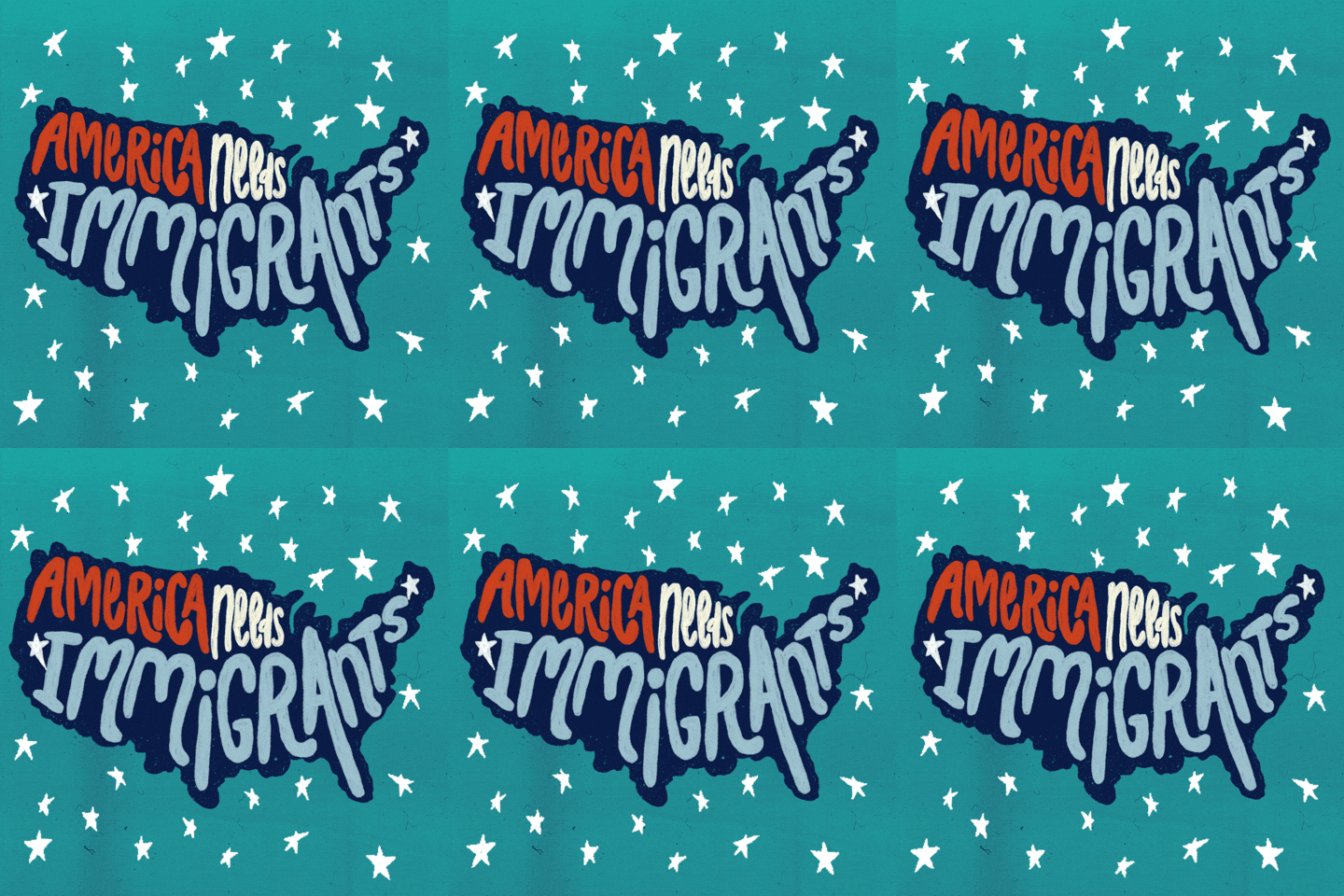
Please do everything in your power to stop the presidential administration’s illegal and unconstitutional actions, including by rejecting Trump nominees who plan to break the law, speaking out forcefully to pressure the White House to walk back violations of the law, refusing to fund immigration raids and detention, and conducting oversight visits of immigration detention centers. Immigrants and Indigenous people make America great. Thanks.
OK, you did it again! You’re helping to save democracy! You’re amazing.
with which to address and direct our government, the American Bar Association has provided very good such words. I was thinking I was going to make this a morning post, but I’m going ahead and publishing so people can get to work in the morning. Thanks for everything you can do! It matters, and we have to really push our legislators to do the right things, now more than ever before in my own lifetime, and I thought that was when we invaded Iraq. This is exponential amounts of that.-A.
The American Bar Association Pulls The Fire Alarm by Rebecca Schoenkopf
Yesterday, the American Bar Association did something it pretty much never does: It spoke out on politics. If you’re a cow with a head injury or an alien from outer space or a typical Trump supporter, you might think the organization is being partisan in so doing, but that word doesn’t apply when the president and his party are in the midst of committing a Nazi terrorist attack to destroy the United States once and for all, and with it, the Constitution, the rule of law, and the rest of our 249-year experiment.
But that’s what’s happening, which means groups like the ABA must speak out. It’s not the kind of thing that’s going to make a ripple at the next Make Cousins Love Again Trump Nazi Jamboree in Pig Whistle, Alabama, but it might be instructive for some of the real lawyers currently trading their integrity and legal ethics to work for Donald Trump, or real lawyers quietly hanging on in government agencies facing a choice over whether or not to do that.
Y’all know how lawyers who work for Trump tend to get disbarred, right?
The Trump regime, unsurprisingly, is being very clear that if the choice for lawyers is between following the law and breaking it for Trump, they’ll pick the latter every time. Pam Bondi’s Justice Department has already let it be known in no uncertain terms that their alliance is to den Führer.
Letters have been drafted begging the ABA to stand up against the two-bit dictator. The ABA has already had to come out in opposition to Trump’s executive order threatening targeted investigations into DEI in bar associations of all kinds, at all levels. The clear implication being that if you speak out against Stupid Hitler in any way, Stupid Hitler will target you. NBC News has much more on what the conversations surrounding bar associations are looking like right now.
Now we have this very long statement from Bill Bay, the president of the ABA. Again, if you’re a MAGA Nazi supporter, it might seem “partisan.” To normal people who don’t hate America and everything it stands for, it’s just patriotic.
The full statement, which is titled “The ABA Supports The Rule Of Law,” with a few things bolded for emphasis:
It has been three weeks since Inauguration Day. Most Americans recognize that newly elected leaders bring change. That is expected. But most Americans also expect that changes will take place in accordance with the rule of law and in an orderly manner that respects the lives of affected individuals and the work they have been asked to perform.
Instead, we see wide-scale affronts to the rule of law itself, such as attacks on constitutionally protected birthright citizenship, the dismantling of USAID and the attempts to criminalize those who support lawful programs to eliminate bias and enhance diversity.
We have seen attempts at wholesale dismantling of departments and entities created by Congress without seeking the required congressional approval to change the law. There are efforts to dismiss employees with little regard for the law and protections they merit, and social media announcements that disparage and appear to be motivated by a desire to inflame without any stated factual basis. This is chaotic. It may appeal to a few. But it is wrong. And most Americans recognize it is wrong. It is also contrary to the rule of law.
The American Bar Association supports the rule of law. That means holding governments, including our own, accountable under law. We stand for a legal process that is orderly and fair. We have consistently urged the administrations of both parties to adhere to the rule of law. We stand in that familiar place again today. And we do not stand alone. Our courts stand for the rule of law as well.
Just last week, in rejecting citizenship challenges, the U.S. District Judge John Coughenour said that the rule of law is, according to this administration, something to navigate around or simply ignore. “Nevertheless,” he said, “in this courtroom and under my watch, the rule of law is a bright beacon which I intend to follow.” He is correct. The rule of law is a bright beacon for our country.
In the last 21 days, more than a dozen lawsuits have been filed alleging that the administration’s actions violate the rule of law and are contrary to the Constitution or laws of the United States. The list grows longer every day.
These actions have forced affected parties to seek relief in the courts, which stand as a bulwark against these violations. We support our courts who are treating these cases with the urgency they require. Americans know there is a right way and a wrong way to proceed. What is being done is not the right way to pursue the change that is sought in our system of government.
These actions do not make America stronger. They make us weaker. Many Americans are rightly concerned about how leaders who are elected, confirmed or appointed are proceeding to make changes. The goals of eliminating departments and entire functions do not justify the means when the means are not in accordance with the law. Americans expect better. Even among those who want change, no one wants their neighbor or their family to be treated this way. Yet that is exactly what is happening.
These actions have real-world consequences. Recently hired employees fear they will lose their jobs because of some matter they were assigned to in the Justice Department or some training they attended in their agency. USAID employees assigned to build programs that benefit foreign countries are being doxed, harassed with name-calling and receiving conflicting information about their employment status. These stories should concern all Americans because they are our family members, neighbors and friends. No American can be proud of a government that carries out change in this way. Neither can these actions be rationalized by discussion of past grievances or appeals to efficiency. Everything can be more efficient, but adherence to the rule of law is paramount. We must be cognizant of the harm being done by these methods.
Moreover, refusing to spend money appropriated by Congress under the euphemism of a pause is a violation of the rule of law and suggests that the executive branch can overrule the other two co-equal branches of government. This is contrary to the constitutional framework and not the way our democracy works. The money appropriated by Congress must be spent in accordance with what Congress has said. It cannot be changed or paused because a newly elected administration desires it. Our elected representatives know this. The lawyers of this country know this. It must stop.
There is much that Americans disagree on, but all of us expect our government to follow the rule of law, protect due process and treat individuals in a way that we would treat others in our homes and workplaces. The ABA does not oppose any administration. Instead, we remain steadfast in our support for the rule of law.
We call upon our elected representatives to stand with us and to insist upon adherence to the rule of law and the legal processes and procedures that ensure orderly change. The administration cannot choose which law it will follow or ignore. These are not partisan or political issues. These are rule of law and process issues. We cannot afford to remain silent. We must stand up for the values we hold dear. The ABA will do its part and act to protect the rule of law.
We urge every attorney to join us and insist that our government, a government of the people, follow the law. It is part of the oath we took when we became lawyers. Whatever your political party or your views, change must be made in the right way. Americans expect no less.
– William R. Bay, president of the American Bar Association
Again, if you’re a Nazi Republican, that probably feels like an attack. All good and true things feel like attacks to Nazi Republicans, we reckon.
This is a plea to lawyers to remember that they’re lawyers and act accordingly, unlike the freaks Trump has installed atop the Justice Department and in OMB and everywhere else, many of whom have represented Trump so many times that the concept of legal ethics is probably a foreign language at this point. (Use it or lose it! It applies to high school Spanish and also legal ethics, we guess.) And it’s a plea to elected officials to at least pretend like they weren’t making jerk-off motions behind their backs when they took their oaths.
Note that the full statement, while referring to specific things, doesn’t invoke the dictator by name. That seems intentional.
Bay said last week at a speech in Phoenix that the ABA “will not shrink from the things we believe in.” More:
“We will stand tomorrow for what we stand for today and what we stood for yesterday: the rule of law, the importance of our judicial system, the essential role of lawyers, an inclusive profession,” he said. “These are our north stars. We will hold fast to our core principles in the face of shifting winds.”
Bay closed out his speech to a standing ovation, saying, “I believe this will be our finest hour.”
We certainly hope so. The times we live in require it.
EJ Dionne quotes Erwin Chemerinsky, dean of UC Berkeley Law, who emphasizes that “We are in the midst of a constitutional crisis right now. There have been so many unconstitutional and illegal actions in the first 18 days of the Trump presidency. We never have seen anything like this.” It’s not coming. We’re in the thick of it. The speaker of the House — an avowed Christian extremist insurrectionist — will not say out loud that Trump and Elon Musk should obey court orders. JD Vance and Elon Musk are pretty sure the answer to that is “no,” and that courts should have to physically make them obey orders.
Because guess what? The speaker of the House is one of those domestic enemies people swear to protect America from, and so is the president, and so is the vice president, and so is their unelected South African apartheid terrorist buddy.
I don’t know if it’s a scam, phish, spam, or real. I wonder if anyone else got one of these, though, so let me know, and please don’t click anything within it. Meanwhile, I got a macabre giggle out of this email I received this morning from noreply@studentaid.gov ; Help your child submit their FAFSA form today. (You know how I love my giggles.)
Yeah, after all the news for over a week about access to such sites by unauthorized, unsworn, unelected, non-government employees actually younger than our “child,” who needs no help with such things nor even needs such things, we’re gonna log right on and put all that info in there! (Yes, we did it way back when he did need it done.)
The graphic won’t show here, but the body is very like my recollection of things from FAFSA.
I don’t know if anyone here has or knows someone who will need to fill out these forms with their kids for college in Fall. I simply hope we all remember to not click through from anything in an email, but to go directly to the site to do our work, OK? Thanks!
This is a local cartoon drawn for the FXBG Advance, which is looking into the ways Trump’s Executive Orders will affect the 540 region.
I think it’s funny when readers of mine who don’t live here mention Gary the Goose. A lot of people were making Gary the Goose the region’s mascot, but I wasn’t aware of that until he disappeared. Maybe he didn’t want the job and that’s why he left. Or, maybe he heard about Trump’s tariffs and planning to make Canada the 51st state, so he protested by flying back to Canada. Or, maybe when the otters came back, they said, “Beat it, Goose.”
Or maybe Gary, who got used to being around humans, paddled too close to the Stafford side of the river, which is full of yee-haw fuckers, and Gary the Goose’s goose got cooked.
Creative note: I was thinking last week that I needed to get the train bridge into a local cartoon. I also got a Rappahannock Otter into a cartoon. I asked my editor, Martin, if Gary was starting to get a little long in the tooth. Is he still relevant? He’s been missing for about a year, I think. We decided that if it’s funny, then we still go with it.
Also, a proofer didn’t get the cartoon and neither did a friend. I was like, whaaaaat?
Dear Laura: I got your check for a paid membership (anyone can do that), but I can’t find your email address. Please email me at clayjonz@gmail.com so I can get you up and running. We want your comments. I’m starting to think Gary the Goose will be found before we find Laura.
Another update: When I publish these cartoons for the Advance, I make sure to state on social media that they’re on local issues. I don’t get upset when readers who don’t live here don’t get the local cartoons. Why should you understand it? What does make me pull my hair out is when readers complain they don’t understand it even though I left a comment with the cartoon on social media that it’s on a local issue. Sheesh. Now if you do live here and don’t get it, that’s on me.