The No Labels Party, Also Free Suicide Prevention Training

No Labels Kansas is no more as a political party, despite bizarre bid to hijack the organization

Party didn’t fulfill plan to nominate candidates for president, vice president

By: Tim Carpenter

TOPEKA — Demise of the No Labels Kansas political party was inevitable after it neglected to fulfill the organization’s central objective when formed in January 2024 to nominate candidates for U.S. president and vice president.

The failure of No Labels Kansas to field candidates for any type of statewide office or to win at least 1% of the total votes cast for that office in a general election meant the organization would eventually lose its standing in Kansas among the state’s five political parties. Instead of leaving Kansans to speculate when that might occur in 2026, No Labels Kansas secretary and treasurer Shane Mathis requested May 15 the termination of state recognition of the political party.

“Because No Labels Kansas declined to nominate candidates for those offices in 2024 and has no intention of doing so in the future, its central organizational purpose no longer exists,” Mathis said.

Secretary of State Scott Schwab complied Monday with the request and notified county election clerks and commissioners of state law requiring voter registration records be amended so 5,955 people registered with No Labels Kansas would be reclassified as unaffiliated.

In Kansas, the Republican Party dominates with 897,000 registered voters compared with the 575,000 unaffiliated and 495,000 Democratic Party registrants.

While founders of No Labels Kansas didn’t make a dent in Kansas elections, the existence of its organizational shell led a pair of longtime Republican operatives to attempt a hijacking of No Labels Kansas so it might be transformed into an organization with a broader mission that included nomination of candidates for state offices. (snip-MORE)


Kansas organization launches free suicide prevention training focused on LGBTQ+ community

By: Baya Burgess

TOPEKA — A Wichita organization created an online training program for suicide prevention and mental health education to improve the care that LGBTQ+ Kansans receive when reaching out to crisis resources, including the 988 Suicide and Crisis Lifeline.

The organization, Center of Daring, focuses on inclusivity and leadership training. Its 10-part training program takes nine hours to complete and is available for free on the center’s website, according to an April 28 press release announcing the program.

“We believe this training series will fill a deep need here at a time when many LGBTQ+ Kansans don’t feel safe in our state,” said Liz Hamor, the Center of Daring founder, in the release.

Through learning activities, videos and surveys, the training covers trauma-informed intervention, intersectionality and promoting equity within a crisis response organization. The training was designed with input from LGBTQ+ residents and Kansas crisis care providers, according to the press release.

The 988 helpline is a mental health crisis resource available 24/7. It went nationwide in 2022. Kansas’ line received more than 34,000 calls, 12,000 texts and 9,000 chats in 2025, according to a state-mandated annual report.

The 988 Suicide and Crisis Lifeline is a free, confidential hotline available 24/7 for individuals in crisis or those looking to help someone else. To speak with a certified listener, call or text 988 or visit 988lifeline.org.

Some Short Vids For Fun Today


Behind & Present With Jenny Lawson

I am forever behind, but there is joy in that

Jenny Lawson (thebloggess)

Do you remember last month when everyone was so excited about Moon Joy as we watched Artemis II? I have a confession to make.

I did not watch it.

Perhaps a combination of my anxiety plus a little leftover trauma of watching in Challenger live in Elementary school? Regardless, I couldn’t enjoy it until I knew that they were safely back home, but then I did a deep dive and that is why I am forever experiencing pop-culture moments behind the rest of the world. It’s also why this week I decided to draw something that might have been more timely before, but I suspect you will forgive me.

It reminded me of how amazing space is…of exploration and joy…and of the idea that we are each an actual part of the magic of that universe, even when we feel that we are so tiny and unremarkable.

So this is just a reminder to you that you are truly made of stardust. Nearly all of the elements in your body where made in a star, and many have come through several supernovas. The actual iron in your body is from a star going supernova. So if today you are feeling small, remember that you are magic in astounding ways.

PS. I know I normally just talk art here but I thought maybe you’d want to see this. Yesterday I started fostering a feral rescue kitten to try to fill the kitty-sized hole in my heart right now and I’m pretty sure this tiny, nameless orange gentleman will not be leaving us because omg, y’all.

A Beautiful, Calm Morning-

Let’s talk about Trump and children and seniors not getting food….

‘Leave or we’ll kill you’: Settler’s warn Palestinians in Jerusalem’s Old City

It’s horrifying that these Jewish settlers who want to eradicate entirely the Muslim population.  One woman described Islam as a cancer and wants the Islamists killed or reeducated.  Muslims who own businesses can’t even open their shops.  But there is a small minority trying to protect the arabs.  Hugs

Lots Happening This Week; Joyce Vance Previews And Comments:

The Week Ahead

May 17, 2026

Joyce Vance

Coming this week:

Looks like the law firms win

Last week I flagged that oral argument was set in the D.C. Circuit for this past Thursday in the combined challenges filed by four law firms against Trump’s executive orders seeking to keep them from conducting much of their business. All four firms won in the lower courts. Based on the panel’s reception, they seem on track to do it again.

These cases are highly significant because they go to the heart of a major abuse of executive power: Trump’s insistence that he has the ability to put entities that oppose him out of business. Former Solicitor General for George W. Bush, Paul Clement, representing the firms, argued that Trump’s executive orders “run afoul of the better part of the Bill of Rights.” Not just one or two provisions, mind you, but “the better part.” He argued that they threaten the right to counsel, the separation of powers, and the rule of law.

Clement explained, “The executive orders here strike at the heart of the First Amendment and the ability of lawyers to zealously represent their clients. Lawyers cannot zealously represent their clients while walking on eggshells for fear of reprisals; thus, the executive orders strike at the heart of the rule of law and the zealous representation on which the judiciary and the adversary process depend.” That seems entirely clear. It could even be possible that firms might avoid representing certain clients—one of Trump’s early attacks was on Covington and Burling, a D.C. firm that gave advice to Jack Smith, the special counsel during the Biden administration who oversaw the two prosecutions of Donald Trump.

Clement also explained the headlock Trump had put firms in: “I either keep my security clearance, or I can sue the Trump administration, not both.” For many defense firms, the ability to obtain a security clearance is essential to doing certain types of work. Trump’s orders purported to remove those clearances for lawyers at firms that ran afoul of him. He also tried to suspend active government contracts and prevent attorneys who worked at the interdicted firms from entering government buildings, including federal courthouses. As we discussed here, it was always going to be a nonstarter because the orders, if permitted to go into effect, would allow a president to pick and choose which attorneys could continue to make a living and put ones he didn’t like out of business.

During argument, the panel seemed unpersuaded that the executive orders were discretionary national security decisions made by a president that aren’t subject to review by the courts. If the case makes its way to the Supreme Court, Trump will undoubtedly argue that the district judges who first considered the case were biased. Assuming Trump loses at the Court of Appeals, the Supreme Court could take the case on appeal, but is not obligated to. For instance, Judge Richard Leon, one of first district judges to consider a law firm executive order case, is also the judge who issued a preliminary injunction halting construction of Trump’s ballroom, finding that the president is the “steward” of the White House and not the “owner,” and that Trump had no statutory authority to proceed, absent authorization from Congress. So prepare yourself for meritless arguments about judicial bias if Trump suffers a loss here. There is no way of predicting how long it will take the court to rule, and the administration is enjoined from putting the orders into effect while the cases are being litigated.

Closing the loop on mifepristone

With only two justices, predictably, Thomas and Alito, writing in dissent, the Supreme Court has prevented Louisiana’s law, which would make mifepristone unavailable via telehealth, from going into effect while the litigation moves forward.

It’s not skeptical to question whether this happened because the Court is well aware of the risk of agitating voters in advance of the midterm elections.

Trump is hyperfocused on trying to salvage the November election despite his sinking performance in the polls.

We always knew that, backed into a corner, Trump would become ever more willing to damage democracy to save himself. It’s on.

NOTUS is reporting that meetings are being held, out of the public eye, between the White House, DOJ, DHS, and the Postal Service to try and interfere with the election. The goal seems to be building a national voter database that can then be used to determine who can and can’t vote—which is up to the individual states—and implement Trump’s order that the Post Office should interfere with mailing ballots.

The report in NOTUS included comments from an unidentified White House staffer speaking on background, who declined to acknowledge that the conversations were taking place, but did say that “it is standard process for administration officials to coordinate on implementing President Trump’s executive orders. We do not comment on private meetings that may or may not have happened.” That’s as good as a yes.

Trump’s executive order directing USPS to interfere in state-run elections is under challenge in court. At a hearing last week, DOJ argued that the court can’t act because the issue being raised is an “abstract legal question unless and until the Postal Service actually issues a rule that injures the plaintiffs and it does so only because it was directed to by the president — rather than, for example, as an exercise of the agency’s own independent judgment.” Judge Carl Nichols seemed inclined to buy that argument at one point in the hearing, asking how there could be irreparable injury, which he must find before he can enjoin the executive order, when no action has been taken as of yet. But at other points in the hearing, he pushed the government on the constitutionality of the president’s executive order.

We’ll watch carefully for a forthcoming ruling in this case, which will tell us a lot about whether the courts will entertain presidential interference in each state’s administration of its own election. But the White House is making its position clear.

Stephen Miller, who it’s always worth noting is not a lawyer and doesn’t seem to appreciate what the Constitution says, seems to be continuing to look for a new way to militarize the country for reasons that don’t hold water in advance of the election. We’ll take up the issue of the illegality of sending federal troops or federal agents to the polls first breather we get.

Also …

On Wednesday, the state of Tennessee has a court date to defend itself against the NAACP’s allegations that it cannot, without violating state law, redraw its voting maps this late in the decade.

On Thursday, SCOTUS will be issuing more opinions.

By Friday, the Government has to produce discovery to the defendants in the Minnesota church protest case against Don Lemon and individual protestors who were indicted for violating the FACE Act. A judge ruled that heavily redacted discovery that prevents the defendants from identifying witnesses, including members of law enforcement, so they can prepare their cases violates the law. He has given the government until Friday to rectify its errors and “produce discovery consistent with its Rule 16(a) obligations, unredacted as to all victim and witness names, addresses, and telephone numbers; as well as fully unredacted as to law enforcement PII [personally identifiable information]” to every defendant who has agreed to abide by a protective order preventing its public dissemination. The government’s case has been widely viewed as likely violating the First Amendment from the outset.

Next up on the list of bad cabinet secretaries

Agriculture Secretary Brooke Rollins is being sued for violating employees’ right to be free from establishment of religion by the government. She’s been proselytizing in emails to the captive audience that is her workforce.

I recall once handling a case where a public employee was being subject to far less overt religious commentary, and the government agency immediately conceded error and fired the offender. This case is even more clear. Government employees are not disciples of Christ.

But don’t hold your breath for the president to fire her. This was a weekend characterized by a full-scale display of support for Christianity being promoted by the White House. The administration held a “Rededicate 250,” which many observers, both approvingly and disapprovingly, referred to as a Christian religious service featuring high-ranking government officials on the National Mall.

Rededicate 250 was “a White House-backed prayer festival dedicated to America’s Christian roots.” Trump gave a video speech. Speaker Mike Johnson, Secretary of Defense Pete Hegseth, and Secretary of State Marco Rubio were present, standing with evangelical leaders on the stage. Johnson told the crowd, “Our founders boldly proclaim that our rights do not derive from the government. They come from you, our Creator and Heavenly Father.”

Podcaster Brian Allen posted this snippet from MAGA radio host Eric Metaxas’ speech at the federally funded prayer event on the National Mall today: “It’s hard to believe that it would take two centuries for the Lord to raise up a great man to bring that ballroom finally to stand where it needs to stand. It’s extraordinary. We only had to wait two hundred years.”

As Allen put it, Metazas “told a crowd of thousands of Christians that God spent two centuries waiting to raise up Donald Trump — to build a ballroom.” The crowd responded by cheering.

The only way to overcome this sort of thing, a clear violation of the Constitution, is with a relentless commitment to telling the truth and sharing it widely. We know from Trump’s poll numbers that some of it is breaking through. The utter lunacy of the Christian God wanting a ballroom is something to ask people to stop, and instead of just following like sheep, spend a moment thinking about.

More Kleptocracy

Bloomberg is reporting that Trump’s disclosure forms for the first quarter of 2026 show that he made 3,600 Stock trades, and that they are worth as much as $750 Million (the reporting is done in bands, so it’s impossible to determine the exact amount from the forms). Former Undersecretary of State Rick Stengel pointed out that Bush and Clinton kept their assets in a blind trust and neither Obama nor Biden traded stocks or bonds while in office.

“3,700 trades,” Stengel tweeted, “is probably more than all the trades of all the presidents until now. And he is trading stocks that are affected by his decisions. A walking conflict of interest, at the least, and perhaps insider trading. Just as members of Congress should not be able to trade stocks, so too the president.” Stock trades aren’t official acts; they’re clearly personal ones. Stengel has certainly identified reasons that merit a closer look at these trades.

So, lots happening this week. We’ll be here through everything as we head into the Memorial Day weekend, trying to make it make sense. I’m grateful to all of you who spend part of your week here with me, thinking carefully about the law, democracy, and where we go from here. Thank you for being a part of Civil Discourse.

We’re in this together,

Joyce

“A Mother Of A Revolution” by Omar Thomas:

Your Weekly Birds: The Songs, The Cuteness … And A Bonus!


Mourning Warbler

Geothlypis philadelphia

Also Known As

  • Reinita Enlutada (Spanish)
  • Chipe Llorón (Spanish)

About

Though relatively common over much of its range, the Mourning Warbler is secretive and notoriously hard to observe. These birds mostly stay close to the ground in dense thickets and brush where they forage and nest. Outside of the breeding season, Mourning Warblers are also fairly quiet and can easily go unnoticed. As a result, very little is known of this bird’s life history outside of the breeding season. In fact, there are sizable gaps in our understanding of its breeding biology as well — for instance, no researchers have documented the courtship behavior of this species.

However, one thing we do know is that these birds are fairly particular about their habitat requirements. Mourning Warblers are reliant on thick, brushy second-growth forest, the result of big ecological disturbances, such as fire or major storms, that kill numerous trees and open up gaps in the canopy. Following such a disturbance, habitat becomes acceptable after about two or three years. After another seven or eight years, the forest will have grown back enough that Mourning Warblers will no longer use it. This means that breeding areas for this species are constantly shifting, as one forest regrows and a new opening is (hopefully) created elsewhere. Sometimes referred to as a “fugitive species,” Mourning Warbler populations are frequently “on the run,” fleeing the regenerating forest and searching for another suitable opening.

Fortunately, these birds are not terribly picky about exactly what kind of disturbance creates this ideal habitat. Drought, disease, insect outbreaks, and especially fire are natural disturbances that this species probably relied on historically. In the current day, large forest fires are far less common, but for the Mourning Warblers, human activities seem to work just as well. These birds are commonly found in old clearcuts, abandoned agricultural areas, along logging roads, and even mining and oil well sites. While these heavily disturbed areas do not benefit most species, the Mourning Warbler makes it work. (snip-see MORE here)


From U.S. Senator Alex Padilla:

Padilla Joins Kelly, Durbin, and Immigration Advocates to Speak on Why Threats to DACA, Dreamers Make Case for Legislative Fix

WASHINGTON D.C. —TodayU.S. Senator Alex Padilla (D-Calif.), Ranking Member of the Senate Judiciary Immigration Subcommittee, Senate Democratic Whip Dick Durbin (D-Ill.), Ranking Member of the Senate Judiciary Committee and lead author of the Dream Act, and Senator Mark Kelly (D-Ariz.), joined immigration experts and advocates at a press conference and spotlight forum to highlight examples and implications of the growing threats to Dreamers, including Deferred Action for Childhood Arrivals (DACA) processing delays and detention and deportation concerns.

At the press conference, speakers highlighted examples of DACA recipients being unable to work and live safely in the United States due to the Trump Administration’s unjustified processing delays on their renewal applications, including a San Francisco-based DACA recipient who is at risk of losing her job. Held directly before the DACA spotlight forum, Padilla and his Democratic colleagues uplifted Dreamers’ stories and called attention to the devastating impact of unnecessary processing delays. Padilla emphasized the importance of passing the Dream Act and the urgent need for a permanent legislative fix that creates a pathway to citizenship to support our Dreamers who significantly contribute to our communities and economy.

“We hear cases of both DACA participants, and Dreamers more broadly, being detained and deported. Many DACA recipients just simply waiting for what used to be, and should be, a routine renewal of their status,” said Senator Padilla. “We’ve heard reports of the Justice Department’s handpicked panel of judges saying that DACA protections, ‘don’t actually protect dreamers from deportation.’ Why the change? This is the entire point of the DACA program – to recognize that young people who are contributing to our country and have no criminal record, who were brough here as children, should not be deported. They deserve protections.”

“Since the beginning of this year, my office alone has seen an increase in requests for help from hundreds of people dealing with delays in getting their renewals and bureaucratic chaos. Let me tell you about one woman named Ariel – a nurse in San Francisco who has lived in the United States since she was just two years old,” continued Padilla. “Ariel filed her renewal paperwork at the beginning of the year, 135 days before her expiration date. She followed every rule. She did everything she was supposed to do just like she always does, every two years like clockwork. But Ariel’s DACA status expired in April, and to this day her renewal status still hasn’t been processed. That’s not her fault! Yet she’s about to lose her job caring for sick people and the promotion she was working towards, because of the failures and cruelty of the Trump Administration. And here’s the thing that they don’t seem to understand in the gilded Oval Office: it’s not just Dreamers who are hurting because of these actions. It’s all of us.”

Following the press conference, Padilla and his Democratic colleagues participated in a spotlight forum on protecting Dreamers, hosted by Senator Durbin, to further highlight the contributions of DACA recipients and Dreamers in our communities, the threats that the Trump Administration has inflicted on DACA recipients, and the importance of a pathway to citizenship for Dreamers.

Padilla discussed the impacts of wrongful detention and deportation exercised by the Trump Administration, highlighting testimony from Maria de Jesus Estrada Juarez, a DACA recipient who was wrongfully detained at her green card interview and quickly deported, and who Padilla met with earlier this year. As countless stories of wrongful detention and deportation of DACA recipients under this Administration increase, Padilla emphasized the need for permanent protections and immigration reform.

“DACA is so much more than a work permit. It’s a promise. A promise to young people […] who proudly contribute so much to their families, their communities, and their countries,” said Senator Padilla. “A promise that if you come out of the shadows and you work hard and follow the rules, you will be protected. Because this is your home and you belong here. But tragically we’ve seen, in recent months, this administration doing everything they can to break that promise.”

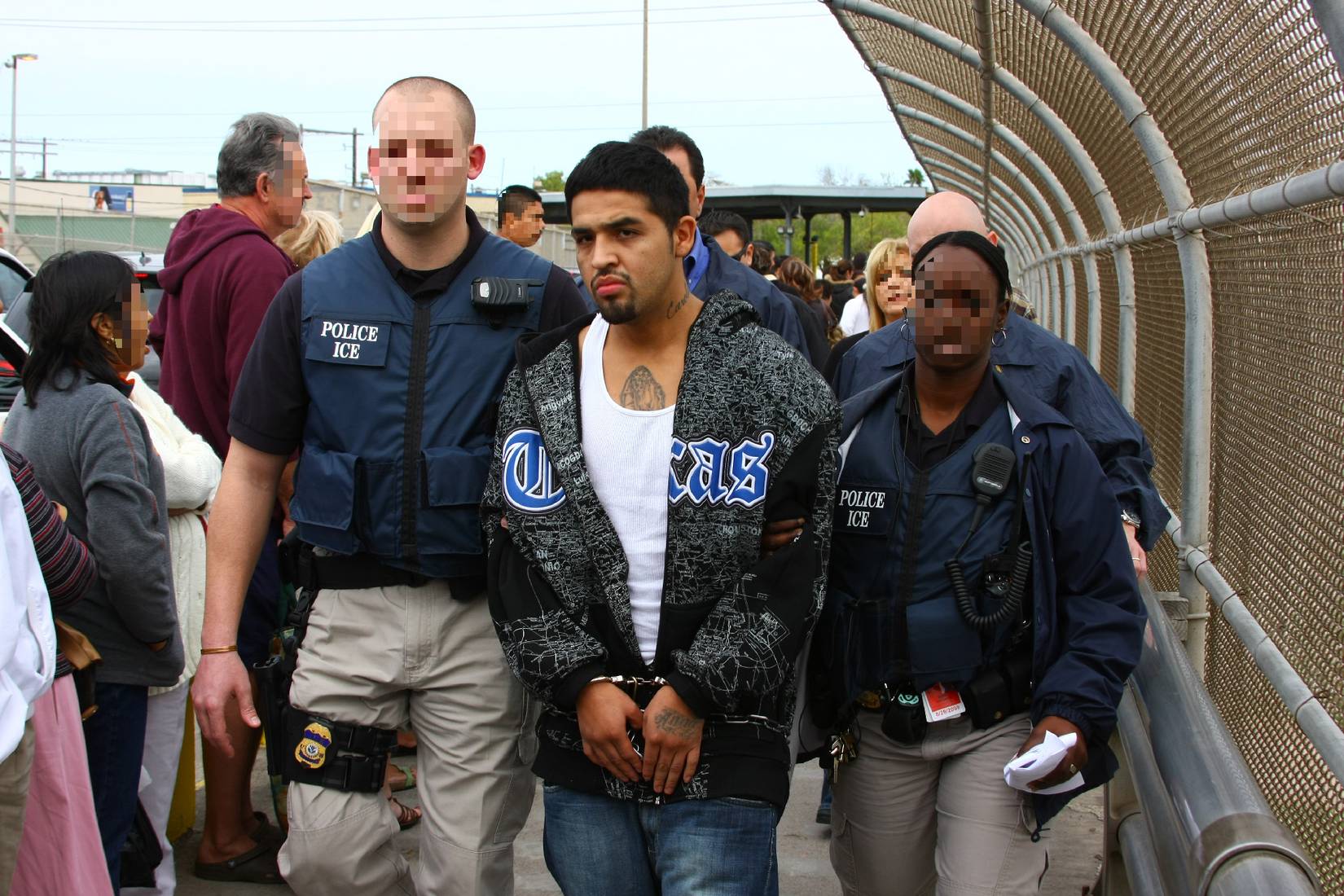
Padilla further discussed the administration’s wrongful targeting of DACA recipients in its mass deportation campaign. In 2025, 261 DACA recipients were detained and at least 86 deported, despite having active DACA protections. DACA renewal processing times have skyrocketed; Padilla highlighted the growing number of Californians who have reached out to his office for assistance. Padilla emphasized the need for DACA and Dreamer protections from detention and deportation and criticized President Trump’s cruel attempt to cease DACA application processing. 

Padilla has long championed permanent protections for Dreamers and DACA recipients and has been a leading voice in Congress for providing long-term undocumented immigrants with pathways to citizenship. In 2025, Padilla joined U.S. Senators Lisa Murkowski (R-Alaska) and Durbin in introducing the Dream Act of 2025 to provide permanent protections for Dreamers and DACA recipients. The legislation would allow noncitizens without lawful status who were brought to the United States as children and meet certain education, military service, or work requirements to earn lawful permanent residence and a pathway to citizenship. Padilla and his Democratic colleagues have joined immigration experts and advocates to renew their urgent call for the passage of the Dream Act to provide a permanent pathway to citizenship.

Earlier this year, Padilla and his Democratic colleagues demanded that former Department of Homeland Security Secretary Kristi Noem and U.S. Citizenship and Immigration Services (USCIS) Director Joseph Edlow reduce the severe delays in processing DACA renewal applications. In February, Padilla, Durbin, and Senator Kelly blasted DHS for wrongfully targeting and removing DACA recipients in a joint statement. Padilla has called attention to the increased risk of detention and deportation faced by DACA recipients when their renewal applications are not processed before their status expires. He emphasized that these long-term residents — who were brought to the country as children — have been working, studying, and living legally in the United States since 2012 and are vital members of American communities.

Padilla’s remarks at the press conference are available here.

Padilla’s remarks at the spotlight forum are available here.

###